

‘Tis the season for all things spooky and weird! I’ve been fascinated by the Salem Witch Trials since I can recall – a tragic and shameful moment in American history, for sure, but also undeniably compelling. Salem has provided material to fiction writers and historians alike; I don’t know what it is about the trials that draws so much interest even today. Perhaps it is the sense of the tragedy having a beginning, a middle, and an end. Perhaps the mob mentality, which unfortunately is still prevalent in these troubled times. In any event, it’s definitely fertile ground for writers. Here are three of my straight-outta-Salem favorites:
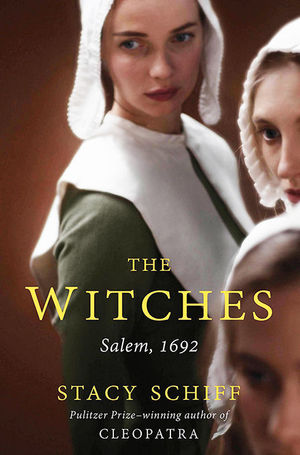
The description of The Witches: Salem, 1692, by acclaimed historian Stacy Schiff, notes: “Along with suffrage and Prohibition, the Salem witch trials represent one of the few moments when women played the central role in American history.” Which makes Schiff, author of acclaimed biographies such as Cleopatra: A Life and Vera (Mrs. Vladimir Nabokov), especially well-qualified to write it. Schiff’s exhaustive research shows on every page, but it never overwhelms her engaging writing style. Definitely a must for those of us who are fascinated by Salem.
If you’ve read Schiff’s massive nonfiction work and you want to dive even deeper, go straight to the source… material, which you can find in The Penguin Book of Witches, compiled by Katherine Howe. This fairly slim collection gathers major primary sources for centuries of witch-related strife – including depositions and court documents from Salem. But there’s also other interesting stuff here, including a witch-hunter’s manual and media coverage of witch trials in other cities, towns and hamlets.

The Crucible, by Arthur Miller, is one of my most recent reads – and probably the most famous account of Salem to be immortalized in fiction (or drama, for that matter). Miller focuses on John Proctor, one of the accused, and his efforts to free his wife – another accused – and clear his name. He takes considerable dramatic license, particularly in the relationship between Proctor and his accuser, Abigail Williams. The real Abigail, who worked for the Proctors for a time, was eleven or twelve at the time of the witch trials – for which she was the first accuser – and John Proctor was at least 60; Miller portrays them as 17 and 35, respectively, so that his “woman scorned” storyline isn’t quite so cringey (although it’s still gross to 2020 eyes). But strict historical accuracy isn’t necessary for a good story; The Crucible is, and I’d love to see it on stage one day.
Are you as fascinated by Salem as I am? Any recommendations for my next witchy read?
 covered in flour
Salem! I love Salem. Have you read Howe’s The Physick Book of Deliverance Dane? Definitely one of my favorite witchy reads.
I haven’t! But it’s on my list. Everyone I know who has read it, said it was great!