
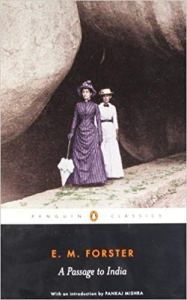
A Passage to India is E. M. Forster’s final novel – and while Howard’s End has its champions, I think this is his masterpiece. Forster loves to have his characters travel; a good portion of A Room With a View takes place abroad, of course, and so does Where Angels Fear to Tread (which I’ve not yet read, but which is on my list). In A Passage to India, Forster’s characters go even further afield, to the India of the British Raj.
The action takes place in Chandrapore, an outpost of the Raj that seems to be mostly forgettable. It doesn’t have the teeming romance of the bigger cities, nor the natural wonder of the countryside; it just is. A tight-knit English community has grown up around the local English Club, headed informally by a government official and social tastemaker known as “the Collector.” The English society in Chandrapore is tenuously balanced by a diverse array of Indians – Muslims, Hindus, and Sikhs – who don’t have much in common and don’t get along particularly well.
Into this potentially explosive mix appear two English women: Adela Quested, newly arrived with plans to marry the local magistrate, Mr Hislop, and Hislop’s mother Mrs Moore, who accompanies Adela. Both Adela and Mrs. Moore are curious travelers, and Adela expresses a wish to see the “real India.” Not Indians, mind you – India. The local English community views both Adela and Mrs Moore with an indulgent skepticism, but assumes that each will fall into line after they’ve had the chance to tourist around a little bit (and if not then, certainly after a hot season).
Early in the novel, we also meet Aziz, a Muslim doctor, who will be swept up in Adela’s wish to see the “real India” – with far-reaching consequences. Cycling into town from a gathering at a friend’s home, Aziz stops in a local mosque, where he encounters Mrs Moore for the first time. Forster’s descriptive writing is at full power:
His seat was the low wall that bounded the courtyard on the left. The ground fell away beneath him towards the city, visible as a blur of trees, and in the stillness he heard many small sounds. On the right, over in the Club, the English community contributed an amateur orchestra. Elsewhere some Hindus were drumming–he knew they were Hindus, because the rhythm was uncongenial to him–and others were bewailing a corpse–he knew whose, having certified it in the afternoon. There were owls, the Punjab mail… and flowers smelt deliciously in the station-master’s garden. But the mosque–that alone signified, and he returned to it from the complex appeal of the night, and decked it with meanings the builder had never intended. Some day he too would build a mosque, smaller than this but in perfect taste, so that all who passed by should experience the happiness he felt now.
As Aziz contemplates the fragrant night and listens to the sounds of the small city, it becomes clear that he is not alone. Mrs Moore has stumbled into the mosque with her shoes on – a major offense, and one that symbolizes the English community’s cultural tone-deafness. Aziz, ever the gracious host, instantly befriends Mrs Moore and through her, Adela. Adela, meanwhile, persists in walking the tightrope of behaving unconventionally while also being engaged to marry the local magistrate.
“People are so odd out here, and it’s not like home–one’s always facing the footlights, as the Burra Sahib said. Take a silly little example: when Adela went out to the boundary of the Club compound, and Fielding followed her. I saw Mrs Callendar notice it. They notice everything, until they’re perfectly sure you’re their sort.”
“I don’t think Adela’ll ever be quite their sort–she’s much too individual.”
“I know, that’s so remarkable about her,” he said thoughtfully. Mrs Moore thought him rather absurd. Accustomed to the privacy of London, she could not realize that India, seemingly so mysterious, contains none, and that consequently the conventions have greater force. “I suppose nothing’s on her mind,” he continued.
“Ask her, ask her yourself, my dear boy.”
“Probably she’s heard tales of the heat, but of course. I should pack her off to the hills every April–I’m not one to keep a wife grilling in the plains.”
“Oh, it wouldn’t be the weather.”
“There’s nothing in India but the weather, my dear mother; it’s the alpha and omega of the whole affair.”
Early in their stay, Adela and Mrs Moore attend a tea party at which Aziz is also present. Aziz makes a wild invitation to the English ladies to have tea at his lodgings, but in another cultural misunderstanding, discovers that they actually thought he was serious. To save face, and avoid letting the women see his humble home, he plans a picnic instead, and gathers a large group to explore the Marabar Caves, a landmark outside of town. Aziz values hospitality, and he is intent that every detail be perfect – from the elephants he engages to take the group to from the train station to the picnic spot, to the servants and the weather and the walking route. It all has to be perfect.
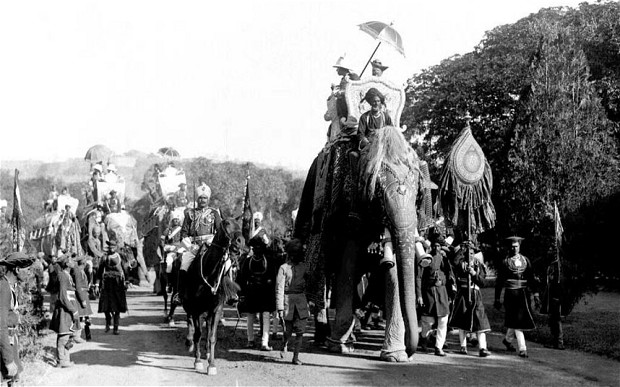
(source: telegraph.co.uk)
From the beginning, the day is a disaster, despite Aziz’s efforts. Aziz’s English friend, Professor Fielding, misses the train – a critical piece of ill luck – the guests are discontented, and a confusing encounter in the shimmering heat of the caves leads to Adela fleeing from the picnic. When Aziz arrives back in Chandrapore after the disastrous day, he is arrested and accused of assaulting Adela – and the fragile racial detente of the city erupts while the local officials strain to keep the peace.
The others, less responsible, could behave naturally. They had started speaking of “women and children”–that phrase that exempts the male from sanity when it has been repeated a few times. Each felt that all he loved best in the world was at stake, demanded revenge, and was filled with a not unpleasing glow, in which the chilly and half-known features of Miss Quested vanished, and were replaced by all that is sweetest and warmest in the private life. “But it’s the women and children,” they repeated, and the Collector knew he ought to stop them intoxicating themselves, but he hadn’t the heart.
Forster’s characters are wonderfully complicated. It would be easy to portray Adela as a monster and Aziz as an innocent victim – but Forster draws the reader into Adela’s confusion and her distress as the situation spirals out of control. It is clear that something happened to Adela in the caves, but – what? Aziz, meanwhile, does not help himself by insisting that he is innocent because he would never assault a woman as hideously ugly as Adela. (Speaking as a lawyer, here: that is not an awesome defense.) As the tension builds, it becomes obvious that no one is entirely at fault, no one is entirely blameless, and definitely no one is in control.
I loved A Passage to India. From the finely-crafted landscape details to the complex characters and the simmering tension of the courtroom scene – in which Aziz is tried for assault – every word is pitch-perfect. It also struck me that Forster’s sensitive portrayal of a community torn apart by racial tensions was well ahead of its time. Forster wrote this book in 1924, decades before Indian independence, and well in advance of rising global consciousness about race. It’s a wonderful book in any event, but when considered against the backdrop of the period in which Forster was writing, it’s a rare achievement indeed.

 Life Among the Savages, by Shirley Jackson – I’ve never read anything by Shirley Jackson before, because I am not really into psychological suspense or horror, so The Haunting of Hill House and We Have Always Lived in the Castle and Jackson’s other work struck me as probably too scary. But Jackson is a major American literary figure and I did want to give her a try – and her lightly fictionalized memoir of living in a rambling Vermont farmhouse with her bumbling husband and hilariously mischievous children was much more my speed. I laughed until I cried, especially at the antics of Jackson’s two elder children, Laurie and Jannie, although I was disappointed to discover that Jackson’s husband was actually a controlling, cheating jerk, who was considerably sanitized in her memoir. All things told, though, LOVED. Fully reviewed
  A Passage to India, by E. M. Forster – I am gradually working my way through Forster’s bibliography and enjoying each book more than the last. I liked A Room with a View, loved Howard’s End, and was enthralled by A Passage to India. Forster’s last novel – and masterpiece, in my opinion, although I know Howard’s End has its champions – he explores the race relations of an outpost in the India of the British Raj. Adela Quested, a young woman contemplating marriage to a colonial government official, arrives with her prospective mother-in-law – both keen to see the “real India.” They soon encounter a number of local characters, including Aziz, a Muslim doctor, who invites them to picnic at an area landmark. The day goes wrong, and in a very confusing way, and leads to a momentous accusation that upends the city and throws its tenuous balance completely off-kilter. It’s a beautifully written book, I think quite ahead of its time, and I thought it was wonderful. Full review to come on Friday.
 Wish You Were Eyre (Mother-Daughter Book Club #6), by Heather Vogel Frederick – Frederick intended this volume to conclude the Mother-Daughter Book Club series, and she wraps up each of the characters’ stories neatly at the end. (Of course, she ended up writing a seventh book – I think people were too curious about where the girls ended up going to college.) Wish You Were Eyre picks up pretty much where Home for the Holidays left off – it’s now January, and Concord has put away its Christmas finery and settled in for a loooooong winter. Several of the book clubbers are looking forward to spring vacation travel – Megan to Paris with her grandmother, and Becca to Mankato, Minnesota, with hers – and all are facing change and upheaval. Megan’s family is growing in unexpected, and not entirely welcome, ways. Cassidy is experiencing boy trouble for the first time ever, Jess is unfathomably accused of cheating on a test, and Emma is struggling with jealousy. Also, Mrs. Wong is running for mayor! I’d vote for her.
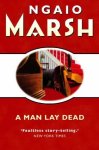 A Man Lay Dead (Roderick Alleyn #1), by Ngaio Marsh – Marsh is a New Zealand writer, a contemporary of Agatha Christie and Dorothy Sayers, and one of the only “Queens of Crime” I’d not yet read. A Man Lay Dead is the first in a series featuring Marsh’s most famous sleuth, Scotland Yard detective Roderick Alleyn. It’s a classic country house mystery – there are parlor games turned deadly and witty repartee. Alleyn is called to investigate a murder that took place during a game of “Murder” (because of course) and arrives on the scene to find that all of the possible suspects have alibis. Now, how can that be? There was an exciting subplot involving a Russian secret society and a reveal with a flourish (once again I guessed the who but not the how). I can see how Marsh can be a bit more difficult going than the other Queens of Crime – some of her tropes have not aged well. But I’ll definitely continue with the Roderick Alleyn mysteries.
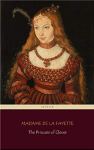 The Princess of Cleves, by Madame de Lafayette (translated by Nancy Mitford) – I was attracted to this obscure classic because of the title, so let’s get this out of the way first: this is not about Anne of Cleves. It does take place during the Tudor period – Mary I is on the throne – but the titular princess is a French noblewoman and the action takes place in and around Paris. So if you’re thinking, “Excellent! Something else to add to my Henry VIII reading list!” (just me?) stop thinking that. Okay, that out of the way: the best part of the book was the hilarious and witty introduction by Nancy Mitford. The rest of it… I just felt sort of blah about it. The Princess of Cleves is a little too beautiful and too well-behaved, and I found myself unable to care about her marriage or about the unfulfilled love affair with her husband’s friend, which is the subject of the book. None of the characters resonated with me, and while I liked the little gems of wit in Mitford’s translation, I just found it hard going and impossible to invest.
 American Royals (American Royals #1), by Katharine McGee – I’ll be honest, I probably wouldn’t have thought to pick this up had I not seen it all over social media, so: congratulations, marketing team, you have succeeded with me. American Royals was fun. The premise is great: at the end of the American Revolution, when soldiers and politicians begged George Washington to become king, he said – yes. And the Washington family has occupied the throne of America ever since. American Royals tells the story of the present-day royals – Princess Beatrice, eldest daughter and in line to be the first ever Queen Regnant of America, and her younger siblings, twins Jefferson and Samantha. The story was engaging enough and I found the pages flying pleasantly by, but I think the most fun part was McGee’s imagination of what an America governed by a royal family and an aristocracy would look like – there were Dukes of Boston, Tidewater, etc., Telluride was an American version of Klosters, and so forth. It was a total hoot and I will definitely read on in the series.
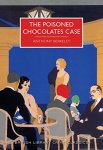 The Poisoned Chocolates Case, by Anthony Berkeley – While Berkeley is one of the most renowned golden age detective fiction writers – and the founder and leader of the Detection Club that also included Agatha Christie, Dorothy L. Sayers, and others among its members – I haven’t really seen much of his writing in libraries and bookstores. The Poisoned Chocolates Case, recently republished in the British Library Crime Classics series, was a delightful introduction to Berkeley’s writing. The premise is great fun – an informal group of writers and practitioners interested in sleuthing (a nod to Berkeley’s Detection Club) take on the task of solving a mystery that has baffled police. Starting from the limited set of facts available to Scotland Yard, they take it in turns to present their solutions to the crime on successive nights, and each one comes up with a different answer to the puzzle. The BL Crime Classics paperback includes two new theories at the end of Berkeley’s original text. It was a unique and different approach to detective fiction.
 Well-Read Black Girl: Finding Our Stories, Discovering Ourselves, ed. Glory Edim – Well-Read Black Girl began as a t-shirt that Glory Edim’s supportive partner had made for her, turned into a thriving book club and literary discussion circle in New York City, and is now a wonderful book. Edim gathers together some of the most vivid and brilliant voices in literature, drama, poetry, activism, and more, and challenges each to answer the question: when did you first see yourself in literature? The essays and oral responses she received, from lights such as Jacqueline Woodson, Jesmyn Ward, Rebecca Walker, N.K. Jemisin, Tayari Jones and others, are beautiful and moving to read. I’ve read some of the words these well-read black women have put out in the world, but not enough, and Edim’s thoughtfully curated reading lists, sprinkled throughout the book, and the lovely essays collected herein, exploded my TBR.
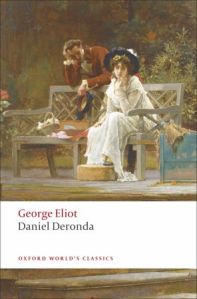 Reading. Consistent with a week in which work was absolutely crazy – not quite 70 hours, like the week before last, but upwards of 60, and totally exhausting – I did not get much reading done. Some days, like Friday, I didn’t read at all (gasp). I knew that I would probably be late in the office, and rather than take Metro home I drove into the city, so obviously that takes the commute reading out of the day. And if I’m working until after 10:00 you can bet I’m not taking lunch breaks, either. So I’m still on Daniel Deronda. If I was reading anything but George Eliot, I probably could have gotten through at least a book and a half even during a hectic workweek, but Eliot requires time and attention, which are two things that have been in short supply recently. I have about 240 pages left to go as of the writing of this blog post, so I’ll definitely finish it this week, no matter how the work schedule looks, and have a review for you next week.
 covered in flour