It’s Monday! What Are You Reading? (March 30, 2020)

Morning, fellow hermits.  How goes the social distancing?  It was a long week of being stuck in the house, although I did escape for a couple of runs around my neighborhood, which helped.  I’m trying hard to be gentle on myself; my Type A perfectionist side needs to unclench and realize that she is not going to be the perfect parent, teacher and lawyer all at the same time.  I’m trying to do three full-time jobs here, and it’s tough.  I’m lucky in that I have a job that allows me to work remotely, and so does Steve (in fact, he works remotely all the time – so as he told his colleagues in an all-firm videoconference they had, the luxuries of working for a small boutique instead of for Biglaw, and I can’t imagine if all 900+ lawyers in my firm tried to Zoom at once – it’s just a regular Monday for him).  But trading off kid-duty, making sure they don’t murder each other or fall too far behind in their reading and math skills, and respond promptly to every email I get is… well, it’s challenging.  All the more reason I have been looking forward to weekends, when I only have one job (Mom) instead of three (Homeschooling Mom, attorney at law).

This weekend was much of the same, obviously.  It rained cats and dogs on Saturday, so going out wasn’t tempting at all.  Steve and I each escaped for a run, in turn, during breaks in the precip.  The rest of the day I spent baking bread and breaking up fights between the kids.  Sunday dawned misty and gloomy, but not raining, so we drove out to Manassas National Battlefield Park to hike a different bluebell trail (recap on Wednesday).  The rest of the weekend – again, more of the same.  Cooking up a storm in the kitchen; talking to our next-door neighbors from opposite ends of the porch; and curling up on the couch for comfort reading while the kids watched cartoons (this week: Miraculous!, and Jim Henson’s Word Party, neither of which excites me much).  Sunday Scaries hit hard yesterday afternoon, as I wonder afresh how I am going to juggle everything this week.
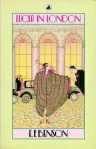
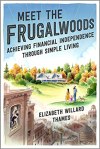
Reading.  I know we are all having trouble concentrating – tell me it’s not just me?  In stressful times, I always turn to books for comfort; that’s nothing new.  But it has been hard to stop scrolling through my phone, reading the news and checking in on folks through social media (now that’s the only “social” we have).  When I do read, I’m looking for something none too taxing.  I finished Lucia in London mid-week and then turned to Meet the Frugalwoods, which was on my library stack.  Not particularly urgent – with the library closed, all deadlines have been extended until late April – but some fast-reading nonfiction seemed right for the moment.  I ripped through Frugalwoods in a day, then spent another day on the latest issue of Slightly Foxed before returning to E. F. Benson’s perfectly-tuned comedic world.  I’ve been waiting four books for Emmeline “Lucia” Lucas and Elizabeth Mapp to have their cataclysmic encounter, and it has finally arrived.  A good way to close out the weekend and gin myself up for the coming week.

Watching.  I always say “um, nothing, just whatever the kids watched” but I keep forgetting to mention that I have been tuning into Miranda Mills’ delightful BookTube videos.  For true bookish comfort, there is really nothing better than watching Miranda wax poetic about her favorite reads, against a backdrop of her beautifully curated bookshelves.  I highly recommend the classics episode, and the episode on cozy mysteries.  I’m saving her latest videos, on comfort reads and books to read while social distancing, for when the situation gets more dire, as I know it will.  I also nominally watched – although I admit my attention was sporadic – the first episode of “Continent 7” from the National Geographic Channel on Disney+.  I’ve been dreaming of a trip to Antarctica for years, but for the moment, this is the closest I will get.

Listening.  A few podcast episodes – I finished up an old back episode of The Book Riot Podcast over a run this weekend; I may unsubscribe as it’s starting to feel repetitive.  I know they’re just covering the news, but there are other things that are more enticing.  Other than that, the main listening has been to Jim Dale reading Harry Potter and the Sorcerer’s Stone – excellent comfort listening, and I’ve been putting it on while the kids do art projects midway through our homeschooling mornings (just about when Mom really needs a break).

Making.  The quarantine kitchen remains open for business!  This weekend I baked a loaf of rosemary sourdough bread (recipe courtesy of King Arthur Flour) and stocked the larder with leftovers for the week – tofu stir-fry with kale and broccoli on Saturday, and the kids’ favorite goulash on Sunday.  We’ll be eating well this week, but we’re getting low on green veggies – just half a family-sized bag of broccoli florets and one green cabbage left – so I foresee a trip to the grocery store in my future, wish me luck, friends.

Blogging.  Taking you with me to the bluebells on Wednesday – and local friends, take note, there’s a good week of blooms left – and sharing the first Poetry Friday post of April 2020 on Friday.  If you’ve been reading for more than one second, it will not surprise you at all to see that I am opening this year’s National Poetry Month posting, as always, with e.e. cummings.

Loving.  This will likely not interest ANY of you at all, but in a week that was mostly devoid of joy, the thing that brought the biggest smile was: Camp Little Notch, where I spent many a happy hour falling off boats, shared a copy of the camp songbook on Facebook this week.  I downloaded it and promptly spent several days walking around humming the theme song for Tall Timbers, the tent unit where my group nearly always bunked up (as it had its own private dock and was near the fleet of sailboats).  Somehow I didn’t realize that every tent unit had their own theme song – likely because Tall Timbers was home, so its song was the only song that mattered.  Little Notch belonged to the Girl Scouts when I was a camper there, but it’s now privately held by a foundation established by former campers when the Girl Scouts put the camp up for sale some years ago, and I have a newly-hatched dream of taking Steve and the kids there for one of their Family Camp weekends.  We will, of course, be sleeping at Tall Timbers, and everyone will be required to sing the song.

Asking.  How are you holding up, and what are you reading this week?
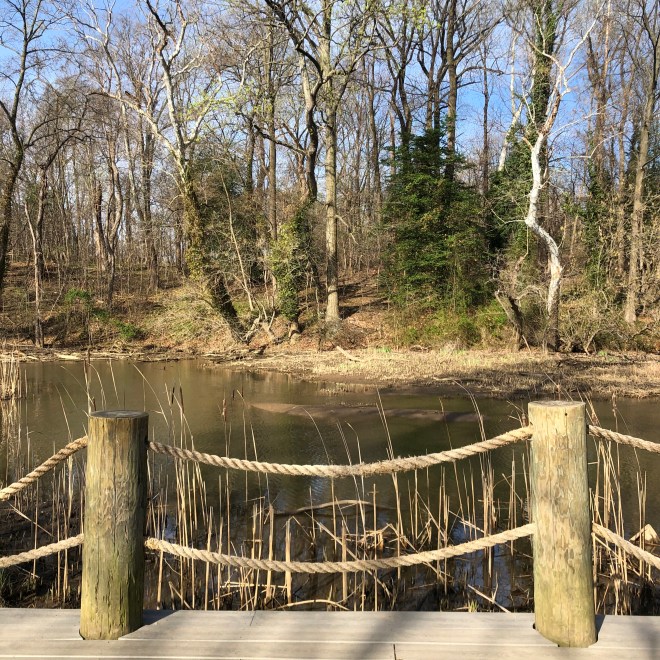
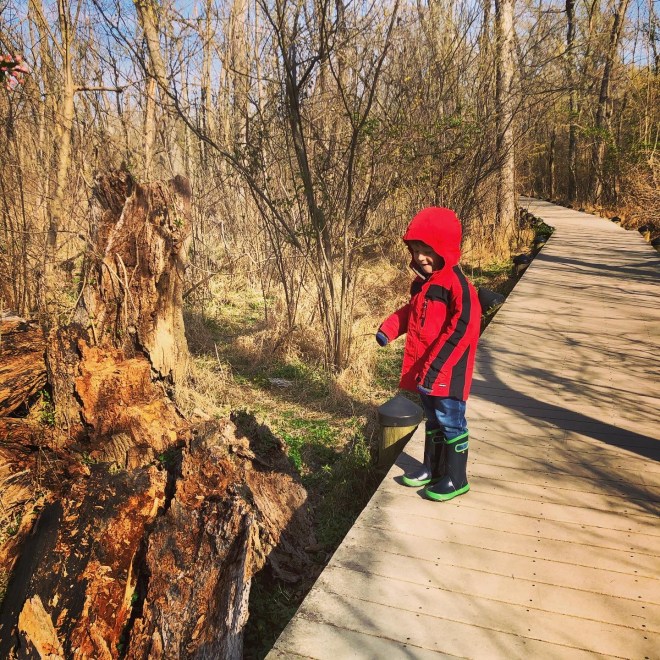
Twelve Months of Trails: March 2020 – Theodore Roosevelt Island, Washington, D.C.

Well!  How about a hiking recap, while we’re all stuck inside?  So – a couple of things about this.

  1. You may be thinking, “I remember January’s monthly hiking recap, but where was February’s?”  Good question.  The answer is that we didn’t hike in February.  I know.  Grrr.  I was preparing for a federal jury trial (which didn’t end up happening) and on the rare occasion when I was able to poke my head out of my laptop and suggest a hike, I got voted down.  I know.  Double grrr.  So for the first time, I’ve missed a month in a hiking challenge.  But that’s the explanation.  Or maybe you didn’t notice, in which case – Nonni, look, is that the Pope?
  2. This should go without saying, but STAY HOME.  Follow the instructions of your state and local authorities (since the feds are useless).  To be honest, I wish we hadn’t gone on this hike.  Roosevelt Island is a fairly popular trail running spot in D.C., so I expected to see some people out and about, but I was shocked at how crowded it was – too crowded.  And clearly not with regulars, because the normal hiking and trail running crowd would be following recommendations for social distancing, and not all of the people out on the trails were doing that.  We were able to avoid people, but only because we were actively trying to do so.  Next time, we either won’t hike, or we’ll pick something much more remote.  It’s sad, because I needed this trail release, and now I feel guilty about it.

Well, that’s that.  To the recap?

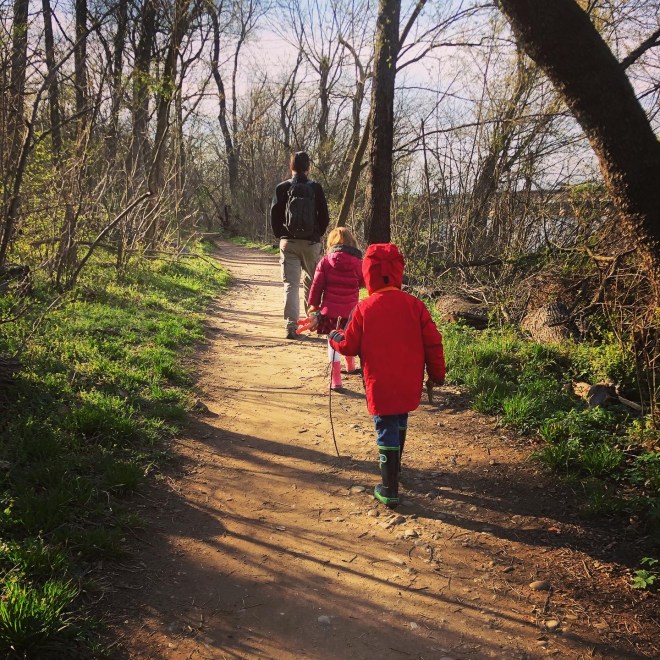
It was a long week stuck in the house with the kids.  We took a few walks in the neighborhood, and spent a couple of hours digging in the Lloyd House garden before the City of Alexandria closed all fenced-off parks, but I was desperately in need of a nature release – I think we all were.  We decided (unwisely) to go somewhere close to home, and drove fifteen minutes up the Parkway to Roosevelt Island.  I love the view of Georgetown from the footbridge.

Social distancing on the trail!  None of us are sick.  We did encounter other people on the trail and tried to give them their space, but a lot of folks weren’t following recommended guidelines, which was alarming.

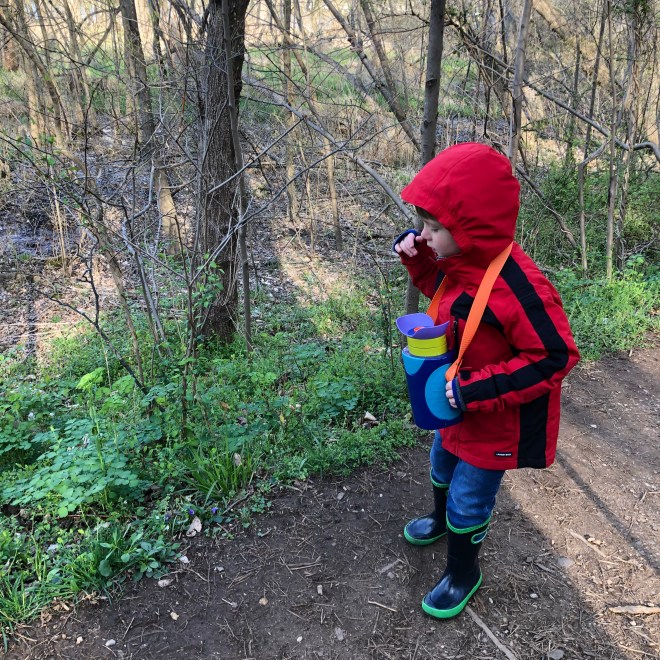
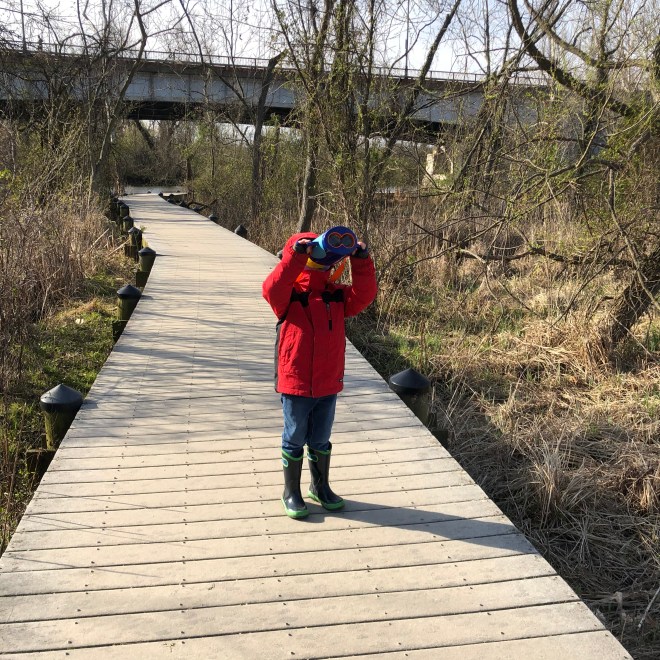
Nugget brought his birdwatching binoculars with him.  He’s all about observing things lately, which is very cool.  We didn’t see too many birds this time – a few, but nothing especially exciting – but we heard a lot of birdsong.

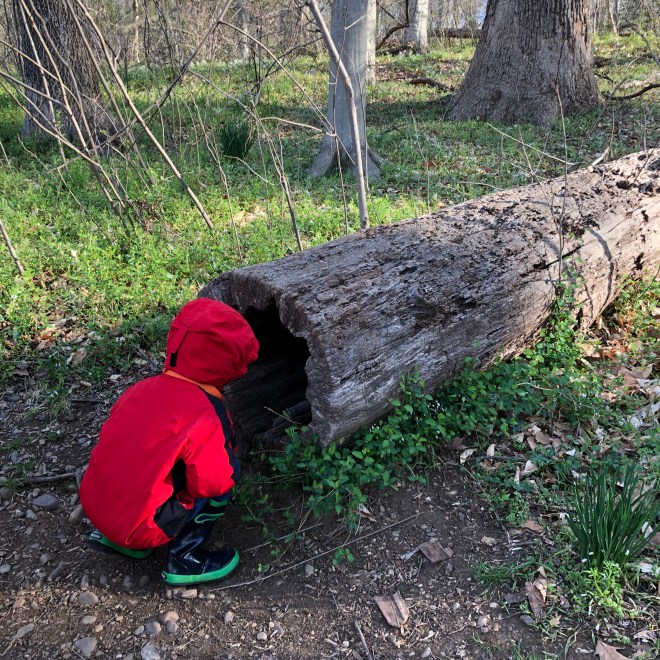
Mom, come quick, I see something!  A habitat!

Checking out a nest.  There was a smallish black bird up in a tree that might have been a red-winged blackbird, but we didn’t have a good angle, so couldn’t say for sure.

Serene.  Just us, nature, the other hikers we were trying to avoid, and some ducks pooping in the water.

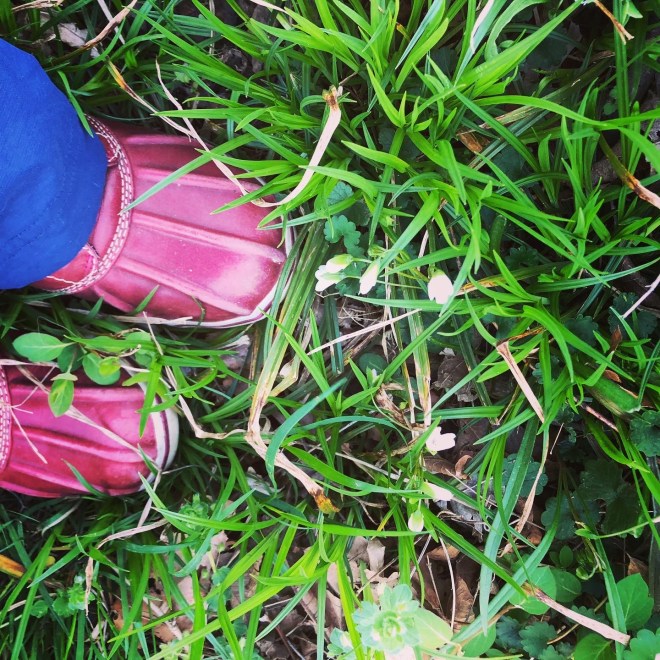
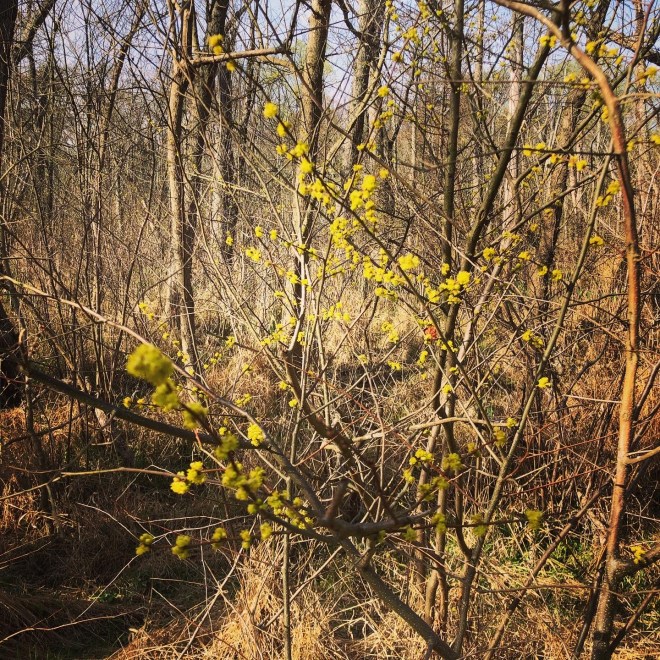
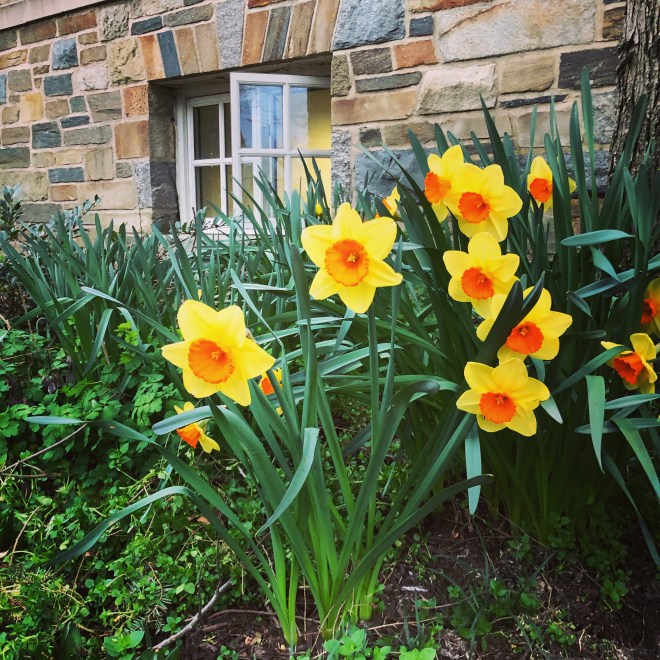
I did like seeing the brave little flowers poking up from the dead leaves.  Spring is here, it came, even though everything else is weird and scary and uncertain.  Spring is here.  And right on schedule, Steve asked me: “When do the bluebells bloom?”  (The answer: usually mid-April, but everything has been early this year because we really had no winter to speak of.  I follow Bull Run Regional Park – the park at which the bluebell trail is located – on Facebook, and they’re posting regular updates.  So far, plants, but no blooms yet.)

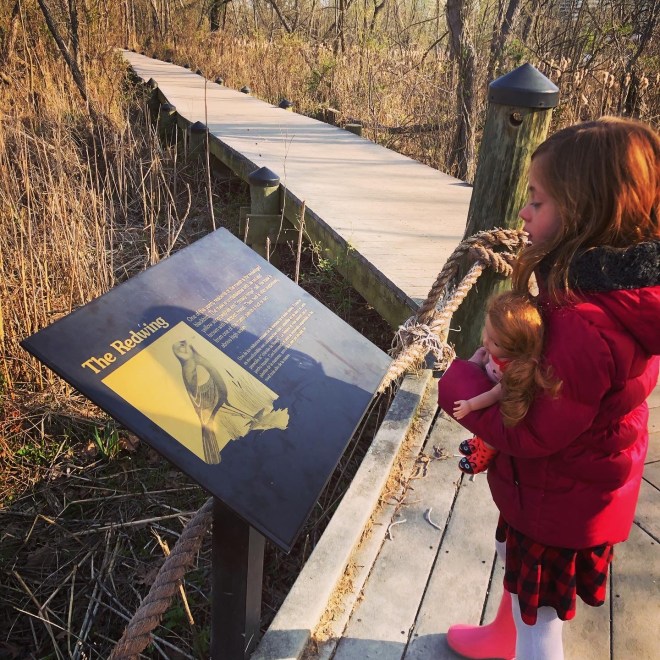
Peanut brought Willa on our hike, which was an appropriate choice.  Willa, of course, loved all the nature.  Also, it’s not like Peanut reading is a new development, but every time she stops to read a trail-side placard I am amazed and impressed and charmed all over again.

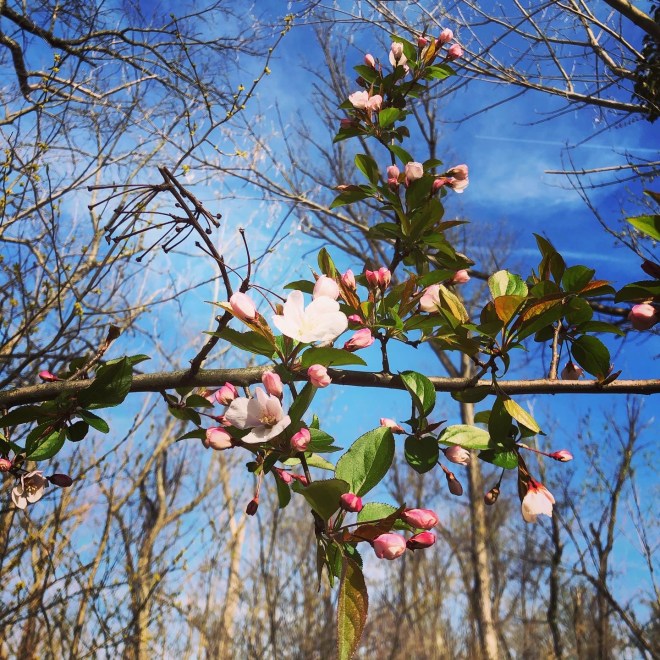
Blossoms!

AND EVIL, EVIL POLLEN.

It felt good to get out on the trail.  I hope we can do it again – a week is a long time to be stuck indoors – or on a small patio – with two energetic children (and also try to work full-time).  It’s definitely been a challenging week, and we’re nowhere near the end of this; there’s a long slog to get through before things get better.  I will need hiking to get me through, but we’re going to have to go somewhere more remote next time.  I feel a little guilty about this, but I also know that we all needed it.

How do you stay sane in a quarantine?

The Classics Club Challenge: The Priory, by Dorothy Whipple

Dorothy Whipple is completely underrated!  One of the coterie of “middlebrow” writers of the Interwar period, her books have been famously slighted by Virago (which has a rule that it will not reprint anything “below the Whipple line”) – but fortunately for readers, Persephone recognizes Whipple’s merits and has reprinted all of her novels, most (or all?) of her short stories and, soon, her memoirs.  Whipple is a mainstay of Persephone’s stable of (reprinted) authors, and I’m glad of it, because it means her books are in print and accessible, even if my library doesn’t stock them.

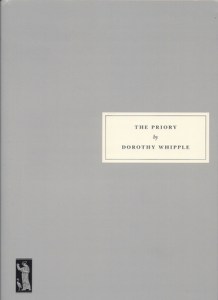
I read my first Whipple, Greenbanks, a few years ago, and it’s taken me far too long to get back to Whipple’s vivid world.  I have two dove grey Persephone Whipples on my shelf, though, and they’ve been calling to me.  And I knew exactly where I wanted to start – with The Priory, which sounded (and was) right up my street.  The Priory is the story of an eccentric gentry family living in Saunby Priory, a fictional great house in the English Midlands.  When the novel opens, the house is populated by the widowed Major Marwood, long retired from His Majesty’s Army and caring only for his annual cricket tournament; Victoria Marwood, the Major’s artist sister; and Christine and Penelope Marwood, the Major’s two nearly-grown daughters.  Christine and Penelope are still living in their childhood nursery – it hasn’t occurred to anyone that they should move downstairs – and have created a world unto themselves.  Saunby itself is a world of its own, but it’s all upended when the Major decides to remarry, ideally someone suitable and sensible, who can help him manage Saunby’s expenses (except during cricket, of course).  The Major settles on Anthea Sumpton, the 37-year-old spinster daughter of a neighbor, who appears to like cricket.  Anthea is at first overwhelmed by Saunby, with its unmanageable servants and junk-filled rooms, and then events begin to move fast and furious.  The first thing that happens is: Christine falls in love, gets engaged, and has to face the idea of leaving Saunby.

She unloosed Rough and went her round.  She went to stand in her favourite places.  Under the chestnut tree, bare now and like a many-branched candlestick without candles.  Under this tree she and Penelope had always found the best chestnuts.  They peeled off the spiked cases, so fierce without and lined so soft within, and picked out with delighted fingers the smooth, highly polished nuts.  They took them back to the nursery, saying to each other that you could make the most beautiful doll’s furniture out of chestnuts if only you knew how.

She went into Lake Wood.  She stood in the avenue and looked across to the grey gables and chimney-stacks of the house, with the towering West Front alongside, pierced with blue sky in place of windows.  Lovely, lovely Saunby, she thought.  Wherever I go, there’ll never be anywhere so lovely.

Penelope, meanwhile, is furious with her sister for changing everything and upending their cozy nursery lives.

“Everybody’s having babies,” she said.  Everybody.”

“Women do have babies,” remarked Victoria.  “Even in these days.  You’ll find as you go through life that your friends are all doing the same thing at the same time.”

She buttered more toast.

“First they’re all going away to school, then they’re all being presented, then they’re all getting engaged and married.  Then they’re all having babies, then they’re all attending their children’s weddings and by and by you’ll find they’re all actually being buried.  If you’re not doing the same things yourself, you notice it more.  You’d better hurry to join the series, Penelope, or you’ll feel out of it.”

“Did you feel out of it, Aunt Victoria?”

“No, my dear, but I don’t think I ever wanted to be in it, particularly,” said Victoria, helping herself liberally to marmalade.

“Perhaps I shall be like you,” said Penelope.

Eventually, Penelope comes up with a life plan of her own, marrying for companionship and to escape Saunby, which is becoming a bit too hot for an adult daughter of the house, thanks to Anthea (who the reader can’t help but sympathize with – the Major is far from an ideal husband).  The second half of the novel focuses on Christine’s marriage and how it impacts the sisters’ relationship.  Christine finds marriage more challenging than she expected, and she pines for Saunby – to her, a true spiritual home.  Meanwhile, as the shadow of war grows longer over England – the action takes place in 1939 – Christine finds herself despondent, jaded, and worried about the future and what it will bring to her children.

‘People say: “Oh, it’s not like that for girls now.”  But it is, and it’s going to be more like it than ever, it seems to me.  According to these papers it is.  Women are being pushed back into homes and told to have more babies.  They’re being told to make themselves helpless.  Men are arming like mad, but women are expected to disarm, and make themselves more vulnerable than they already are by nature. No woman is going to choose a time like this to have a baby in.  You can’t run very fast for a bomb-proof shelter if you have a baby inside you, and a bomb-proof shelter is not the place you would choose to deliver it in.  No protection against gas is provided for children under three, this paper says, so presumably the baby you have laboured to bring into the world must die if there is a gas attack.  Look at this,’ Christine directed herself.  ‘In this paper, the headlines are about the necessity of preparation for war and the leader is about the necessity for an increase in the population.  “The only hope,” they say.  They urge women to produce babies so they can wage wars more successfully with them when their mothers have brought them up.’

What a world!  For herself, for everybody, what a world!

It’s impossible to stop turning pages in a Dorothy Whipple novel.  Despite the fact that The Priory was over 500 pages long, I flew through it.  Whipple’s works are often regarded as the type in which “nothing much happens” – but that’s not true, unless you consider marriage, and babies, and love affairs, and family drama, to be “nothing much.”  (Hey, maybe there’s a separate blog post here?)  Christine, Penelope, Anthea, the housemaid Bessy, and even Aunt Victoria go through monumental changes from the moment the novel opens upon Christine and Penelope bent over their sewing in the nursery to the end, in which the characters are jubilant that war with Hitler seems to have been averted (what will happen to them all, the reader wonders, will it all work out?).  And over it all, Saunby is an eternal presence, although only Christine pauses to consider how Saunby stood long before the Marwood family took residence there and will outlast them all.

March was coming in this year like a lamb.  The morning was mild and the sun gained moment by moment on the mist.  The swathes of mist in the hollows of the park were moving and the trees seemed to swim.  Saunby seemed to be materializing from a dream.

“It’s like a dream that we ever lived here,” said Christine.  D’you remember how happy we were?”

“Yes, I realize it now,” said Penelope.

It’s (Quarantine) Monday! What Are You Reading? (March 23, 2020)

Well, friends, we have one week (and some change) of social distancing behind us.  How are you holding up?  I know we’re all under different strictures – depending on geography, some of my friends are under strict shelter-in-place orders, and others have just their own social consciences to go on, but it’s clear that staying home is the right thing to do right now – but that doesn’t mean it’s easy.  Steve and I worked from home all week, and the kids were knocking around the house, too; their school is closed until at least April 13.  (I’m guessing it will be longer, and Steve and I have started to wonder aloud to each other whether we will still be on the hook for tuition if we get to June and the school hasn’t reopened.)  I can’t say I had a very productive week, work-wise, although I did my best.  For the time being, Steve and I are working in shifts – he has the morning and I have the afternoon.  The non-working parent is in charge of the kiddos.  They’re nominally on “spring break” – they have distance learning packets to do, but the school has asked that we not start those until March 30, so I’m following a slightly looser schedule in the mornings and just trying to do some workbook pages and some enrichment activities, and otherwise let them spend a lot of time on art projects, which is what they prefer to do.  We’ll tighten it up once distance learning begins, but we’re just easing in for now.

That was my week – stressful, for sure.  I have some thoughts about the pressures of this quarantine, so stay tuned for a post in the next couple of weeks.  Anyway – the weekend was welcome, when it came.  Not because it was all that different from the week, but it was a relief to me not to have to juggle the kids and work.  Steve put in several hours on both Saturday and Sunday, and I mostly just kid-wrangled.  I did go out twice – on Saturday, I drove down to Wegmans to pick up some of the food we were running low on (most critically, coffee and ovaltine), and on Sunday we headed out for a family hike.  The trails were more crowded than I was expecting, and I ended up feeling guilty for going, even though I really needed a nature release.  Steve and I agreed that if we hike again during this quarantine, we are going to have to go somewhere much more remote.  I really hope I don’t have to give up hiking, since it’s such an important mental health activity for me.  I’d rather go quietly insane indoors than get COVID-19, but still.

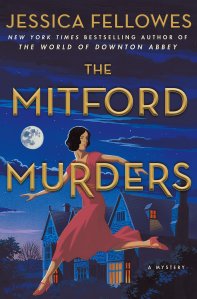
Reading.  ‘Twas a pretty active reading week, which was to be expected (even without commuting).  On Monday, I finished The Mitford Murders, which was predictable but fun.  Moved on to Girl, Woman, Other, because it was a two-week book at the library – I couldn’t have predicted that before I finished it, the library would shut down completely and extend everyone’s deadlines to April 20th.  Oh, well – I finished it anyway, and it was astonishing.  Definitely not the comfort reading that I’m craving at the moment, but a really remarkable achievement and well worthy of the Booker Prize (and much better than The Testaments, which I admittedly liked very much).  Anyway, between quarantining and Girl, Woman, Other, I really needed my next book to be something that was going to make me feel good – Jane Austen to the rescue.  I read Sanditon, which is on my classics club list, so you can look out for a review in the next few weeks.  Fourth and final book of the week is Lucia in London, also from the classics club list, and just the kind of lighthearted romp that I so badly need right now.

Watching.  Lots of the kids’ choices, as usual – way too much of The Lion Guard, but more satisfactorily, Inside Out and Moana.  (This quarantine is brought to you by Disney+ and Pastabilities dinosaur mac ‘n cheese.)  On a more grown-up note, somewhat tragically, Steve and I are on the last episode of the current season of The Great British Bake-Off.  There are still the holiday episodes to get through, so we have that.  Once those are done, I will have to fight against my current overwhelming desire to go back to the beginning and start all over again.  Emma is calling my name, and I have a long queue of episodes of Rock the Park, and I’m not done with Grantchester, and I want to explore the National Geographic Channel section on Disney+, and it’s long past time for a Parks and Recreation re-watch, but I’m just going to watch Bake-Off over and over and over.

Listening.  The latest episode of Shedunnit, on romance in crime fiction, was the highlight of the week.  Not much listening other than that – I put on a bit of Harry Potter and the Sorcerer’s Stone for Nugget while he was building with Lincoln Logs one morning, and spent a little time with The Book Riot Podcast playing in the background as I baked pomodori al forno and sourdough crackers over the weekend, but that’s about it.

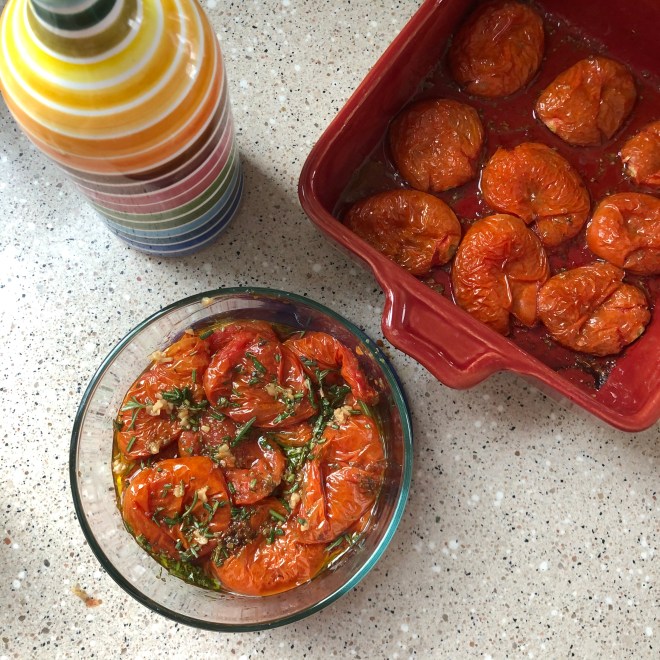
Making.  Right, so about that – not much over the course of the week; just some work product and a lot of yelling.  But I had a very soothing afternoon in the kitchen on Sunday.  I made a batch of pomodori al forno – slow-roasted Roma tomatoes, recipe courtesy of my mom’s BFF, Denise.  A double batch of my “Impossibly good bolognese” – vegan bolognese sauce with Impossible burger ground.  A batch of tangy sourdough crackers (not as crunchy as I’d like, but definitely edible and the recipe uses discard sourdough starter, so I’ll basically forgive all faults).  Several containers of sliced cucumbers and peppers for crunching during the week.  And a cleaned-out fridge, so it’s abundantly clear what we have in there.  No one is allowed to complain that there’s nothing to eat.

Blogging.  Book review on Wednesday, for the Classics Club (I’m on FIRE lately, people).  And a recap of our Sunday hike is coming on Friday.  I still feel a bit guilty about it, but I took a lot of good pictures and it seems like a waste to not show them to you.

Loving.  If you’re in need of a new hand-washing song, Nugget made up a good one.  Write this down: “Happy birthday to me, I’m one hundred and three, I smell like a monkey and I look like a donkey.”  (Note that it’s one hundred, not hundred, and if you sing it wrong he WILL correct you.)  Repeat twice.  You’re welcome.  WASH YOUR HANDS, PEOPLE.

Asking.  What are you reading this week?  And how are you staying sane in the quarantine?
Themed Reads: Women and Wartime

It’s Women’s History Month, which I always love – while I’m down for celebrating the contributions and successes of women any old time, it’s particularly fun when women’s lives are at the forefront of the conversation and on everyone’s minds.  I love seeing the Women’s History Month display in the window of Hooray for Books!, my local indie that I walk past every day, and I enjoy fitting my month’s reading around this cultural conversation.  Fiction and nonfiction books about women are always a focus of my reading, in any month, and I love delving into women’s lives at different periods in history – but today I want to talk specifically about women’s lives during a time period that interests me especially: World War II.

Home Fires: The Women’s Institute at War, 1939-1945, by Julie Summers (also published as Jambusters) explores the significant role British women played on the Home Front as they organized into local Women’s Institutes for the purposes of serving, learning, and socializing.  The Women’s Institute movement started as a flicker, but soon caught fire, with local WI groups forming in almost every community.  Interest and participation in the WI movement went up to the very highest levels of society: Queen Elizabeth (later to become The Queen Mother) was an honorary chair of the Windsor branch of the WI.  While the WI was best known for their efforts at food preservation – especially jam-making – which made a substantial difference during the long years of rationing and food shortages, they were heavily involved in all sorts of war efforts and provided a natural mechanism for women who were not employed in wartime industries or involved in the armed forces to pool their skills and make a difference.
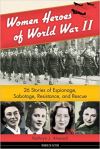
Women Heroes of World War II: 26 Stories of Espionage, Sabotage, Resistance and Rescue, by Kathryn J. Atwood is technically a young adult title, although it has appeal to every age group.  I happened across it in my library while looking for books about Marie-Madeleine Fourcade, a heroine of the French Resistance (this was before the publication of Madame Fourcade’s Secret War, which I own but have not yet read).  Madame Fourcade is profiled in Women Heroes of World War II, but so are twenty-five other women, of every age and nationality, whose acts of courage helped to win the war.  Daring women took great risks to rescue fugitives from the Nazis, carry messages to the Allies, sabotage Axis efforts, and more.  In this age of political disaffection and polarization, it’s refreshing and bracing to read about women who banded together, often at great personal risk, to do what is right.
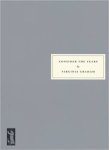
Consider the Years, by Virginia Graham, offers a contemporary perspective on the war years – and the long drab decade that followed – through a different lens: poetry.  Graham was a well-off young woman when the war began, and evacuated with her family to avoid the danger of living in London during the Blitz.  She writes movingly of daily life; I featured my favorite poem from this slim Persephone-published collection, Evening, in a Poetry Friday post during 2018’s National Poetry Month.  (Still love that one, with its evocative depiction of office workers lined up for a bus, collars turned up against a cold and damp evening, spirits yearning for home.)
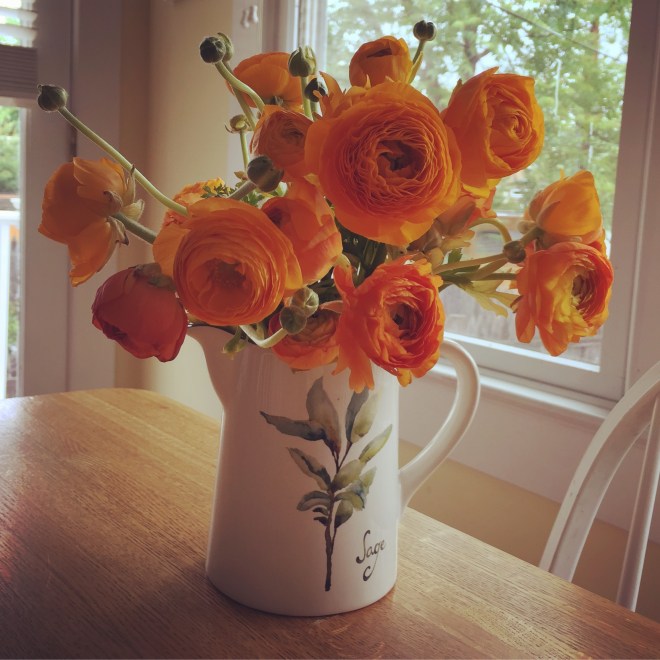
Women have contributed meaningfully in every time period, of course.  But there is something particularly fascinating about the role of women during World War II – at least, there is to me.  Those years were a bellwether for women’s greater inclusion and expansions of social and economic freedoms; once peace was achieved, there was no going back to the way things were in the interwar years and before.

What historic time periods are especially interesting to you?

Shirley Jackson on Spring Cleaning

I look around sometimes at the paraphernalia of our living–sandwich bags, typewriters, little wheels off things–and marvel at the complexities of civilization with which we surround ourselves; would we be pleased, I wonder, at a wholesale elimination of these things, so that we were reduced only to necessities (coffeepot, typewriters, the essential little wheels off things) and then–this happening usually in the springtime–I begin throwing things away, and it turns out that although we can live agreeably without the little wheels off things, new little wheels turn up almost immediately.  This is, I suspect, progress.  They can make new little wheels, if not faster than they can fall off things, at least faster than I can throw them away.

Shirley Jackson, Life Among the Savages

…Oh, Shirley.  Me too, girl.  Me too.

It’s Monday! What Are You Reading? (March 16, 2020)

Hi, friends.  How goes the social distancing?  I’ll be honest – as I took stock of my bookshelves sagging under the weight of all my unread books; of my fully stocked tea cupboard; of the new containers of cocoa powder and bread flour in my baking pantry, I thought – I’ve been preparing for this moment all my life.  Fellow introverts!  It’s time for us to lead the people!  If only I didn’t have to figure out a way to get work done with two kids knocking around the house for the next few weeks, this would be a piece of cake.  Mmmm, cake.

So – yeah.  It was quite a momentous week in the world, huh?  It was pretty momentous for me personally, too.  About that: I started the week preparing for a huge project to come to fruition.  (I’ve been vague, but I guess I can actually tell you without divulging anything confidential: the big work thing that has been keeping me chained to my desk for the last month is a federal jury trial – my first, actually.  We rarely try cases, so this is a major source of work and nerves.)  But late Monday afternoon, we got word that the trial is indefinitely postponed, not actually because of COVID-19, but for unrelated procedural reasons.  It was welcome news, although I still found myself in the office, meeting with the trial team until after 9:00 on Monday night, just sorting through this new development.  So instead of spending last week getting ready to start jury selection this morning, I was catching up on other work.  Then toward the end of the week, the news started coming fast and furious.  On Thursday, I was notified that I am being promoted (not entirely unexpected) and that a bigger promotion (definitely unexpected) may be in the offing.  And then while I was still reeling from that surprise, my phone pinged with an email from the kids’ school notifying us that they would be shutting down effective today.  We were scheduled to go on spring break on the 20th, so they decided to close a few days early – we had no snow days this year, so I guess it was doable – and then revisit opening on March 30, when the kids would have been heading back.  They sent everyone home with distance learning packages just in case they’re not able to reopen, #gulp.

And that just gets us to Friday.  Wowsers.  Thankfully, the weekend was much more uneventful than the week.  We are being good community members and practicing social distancing as recommended by our Virginia health authorities, so we barely left the house all weekend.  On Saturday, I did walk to the library to pick up two books I had on hold, and Steve took the kids to run off some energy on the soccer field half a block from our house, but we were all careful not to touch anything and to stay several feet away from other people, and to wash our hands thoroughly when we got home.  (There were actually quite a few people out walking in the neighborhood, which surprised me a little bit.)  On Sunday, we stayed even closer to home.  Other than an hour with Nugget on a mostly deserted playground, I stayed in all day.  The kids watched movies and played games, and I cleaned and then baked up a storm in the kitchen (read on).  It was actually sort of relaxing, if you could forget for a minute why we had to stay home.

Reading.  My reading time tanked, rather, because my first concession to COVID-19 was to stop riding the metro a week ago.  I love taking public transportation, not least because it’s an hour and ten minutes, every day, when I just read.  But given that we have documented community spread of the virus in the D.C. area, it seemed like too big of a risk, so I’m either working from home or driving to work until things calm down.  That’s meant a dip in my page totals, and both of the books I read last week were on the longer side, so this is a short list.  I spent most of the week over The Priory, by Dorothy Whipple, and LOVED every second of it.  Review coming soon.  Over the weekend, I made it about three-quarters of the way through The Mitford Murders, first in a series by Jessica Fellowes (niece of Julian Fellowes, creator of Downton Abbey).  It’s a lot of fun, and I’m enjoying it – I’ll finish it up today and then be on to the next thing, which will probably be Girl, Woman, Other, by Bernardine Evaristo.  (It was one of the books I picked up from the library holds shelf this weekend, and there’s a long list of neighbors patiently waiting their turn with it, so I’ll have to prioritize it.)

Watching.  Not too much.  Frozen II again, of course.  (Benefit to a deserted playground: Nugget can belt out the songs while swinging to his heart’s content.)  That’s about it.  The kids watched some nature documentaries but I was in another room, so I missed out.

Listening.  The silver lining to my loss of commute reading time is: more listening time.  I started a new Great Courses audiobook (The Art of Reading), listened to a few episodes of The Book Riot Podcast, and sang along to The Book of Mormon while sailing down the GW Parkway.  But the highlight was The 46 of 46 Podcast‘s first installment in a new “ADK Campfire Stories” series, about a kayak fisherman who was stalked by a Bigfoot while camping on the Sacandaga River.  Shiveringly spooky!

Making.  So pretty much all public spaces are shutting down one by one, but do you know what’s not closed?  My kitchen!  On Saturday I baked a loaf of chocolate banana bread, which is already pretty much gone – the whole household loved it.  Sunday was the big cooking and baking day of the weekend, though.  I made my first attempt at baguettes, which turned out fairly well; a big pot of butter bean soup with vegetables; and a loaf of sourdough sandwich bread.  Between the butter bean soup and the sandwich bread, we’re set for the week’s lunches.  This bread-baking hobby that I’ve been working on is a huge source of comfort.  When times are weird and scary, it feels good to do something analog and tangible – like knead dough.

Blogging.  Another bookish week, of course!  I have a fun quote about spring cleaning, from indifferent housewife Shirley Jackson, on Wednesday.  And on Friday, March’s installment of Themed Reads.  (I’m excited about the topic.)  Check in with me!  And wash your hands!

Loving.  This week on social media, I stumbled across Subpar Parks – how had I never seen these hilarious travel posters before?  If you’re as clueless as I was, here’s the concept: artist and graphic designer Amber Share was astonished to find one-star Yelp reviews of our country’s most beautiful places.  But once she shook off her shock, Share turned the park-panning reviews into funny posters, quoting some of the worst.  For example, Capitol Reef National Park: “Somewhat Bland.”  Zion National Park: “Scenery is Distant and Impersonal.”  Joshua Tree: “The Only Thing to Do Here is Walk Around the Desert.”  And the crowning jewel – Grand Canyon: “A Hole.  A Very, Very Large Hole.”  There are a lot more, and the art is great, so do check them out and buy a print, a sticker or a postcard if the spirit moves you.  (Share is planning to design a one-star poster for all 62 national parks, so I’m waiting patiently for my backyard park, Shenandoah National Park, and then I will probably buy a few.)

Asking.  What are you reading while social distancing?

A Dubious Milestone

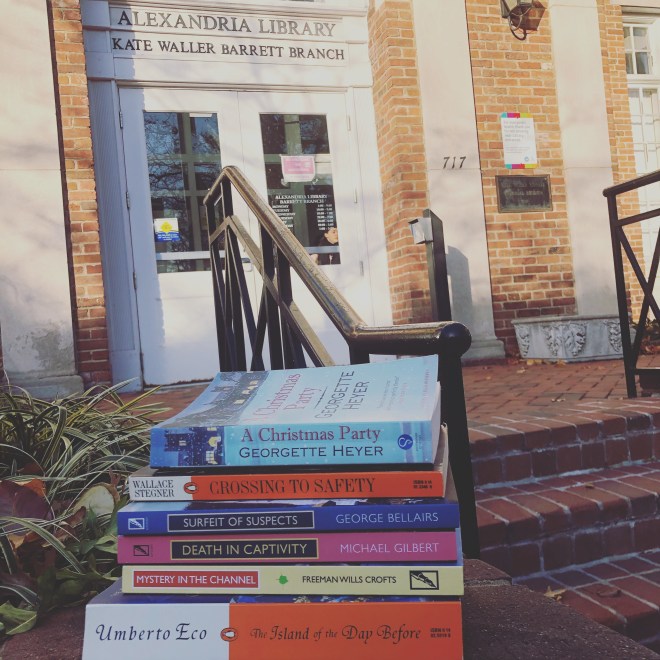
I had a banner day at my library branch’s recent book sale.  After I went from shelf to shelf snatching up every British Library Crime Classic I could find (there were three!) I spotted a pretty orange Penguin edition of Umberto Eco’s The Island of the Day Before.  Snagged that too, of course.  And as I stood in the maelstrom of library patrons elbowing each other aside to get to the $2 hardcover new releases, I thought to myself – I don’t have this one, right?

I knew I had The Name of the RoseFoucault’s PendulumBaudolino and The Prague Cematery.  But I was pretty sure I didn’t have this one.  Added it to the pile.

After lugging my haul home – all that for $12.00! – I started shelving and… whoops.  There it was, right with the rest of the Ecos.  The Island of the Day Before.  And I think that would be the first time I’ve ever forgotten that I owned a specific book and bought a duplicate copy – unintentionally, at least.  It goes without saying that everyone needs at least three copies of Pride and Prejudice and that the correct number of editions of Anne of Green Gables for a home library is “one more” – but that’s different.

Oh, well.  An extra $2 for the library is still money well spent.

Have you ever done this?  Please tell me I’m not alone.

The Classics Club Challenge: Daniel Deronda, by George Eliot

Daniel Deronda was George Eliot’s final and most ambitious novel – even more ambitious than her most famous work, Middlemarch.  Like MiddlemarchDaniel Deronda follows two main characters on parallel paths that occasionally join up.  But while in Middlemarch Dorothea Brooke and Dr. Tertius Lydgate rarely encounter one another until the end – they are in different social spheres, with Lydgate being a fairly prosperous but still middle class country doctor, and Dorothea an heiress and member of the local gentry – the two focal points of Daniel Deronda, the titular Deronda and local beauty Gwendolen Harleth, are thrown into one another’s company regularly even as they follow their separate paths.


The novel opens with a memorable scene: Gwendolen, a tall, striking and classic beauty, is at the roulette table, winning spectacularly – until she feels the disapproving eyes of a stranger upon her, and begins to lose spectacularly.  At a ball later that night, she asks about the stranger and is told that his name is Daniel Deronda.  Gwendolen is fascinated by the handsome and enigmatic Deronda, but before she is able to finagle an introduction she receives word that her family has lost all their fortune (whoops) and she must return to England immediately.  She quickly pawns a necklace to get money for the journey, but is surprised to find the necklace promptly restored to her; someone has freed it from the pawn shop and sent it back to her anonymously.  With no actual evidence of her benefactor’s identity, Gwendolen suspects Deronda.

The reader is then, somewhat confusingly, whisked back in time to the previous year, when Gwendolen, her mother, and her four half sisters arrive at Offendene, a country house of middling size that is to be their new home (as it is close to the recently widowed mother’s sister and brother-in-law, who is obviously a rector, #someonegottadoit).  Gwendolen quickly captivates the community and, in particular, attracts the attention of her cousin Rex Gascoigne, as well as Henleigh Grandcourt, cousin and heir to the local baronet, Sir Hugo Mallinger.  Gwendolen isn’t especially interested in marriage, and she quickly throws cold water on Rex’s suit, but Grandcourt, with more to offer, is a more enticing prospect, to the degree that it promised freedom from the social constraints of singledom.

Of course marriage was social promotion; she could not look forward to a single life; but promotions have sometimes to be taken with bitter herbs–a peerage will not quite do instead of leadership to the man who meant to lead; and this delicate-limbed sylph of twenty meant to lead.  For such passions dwell in feminine breasts also.  In Gwendolen’s, however, they dwelt among strictly feminine furniture, and had no disturbing reference to the advancement of learning or the balance of the constitution; her knowledge being such as with no sort of standing-room or length of lever could have been expected to move the world.  She meant to do what was pleasant to herself in a striking manner; or rather, whatever she could do to strike others with admiration and get in that reflected way a more ardent sense of living, seemed pleasant to her fancy.

Grandcourt has an oily and obnoxious personal secretary, Mr. Lush, who – for his own reasons – does not want to see Gwendolen marry his employer, so he engineers a meeting between Gwendolen and a figure from Grandcourt’s past, who reveals a secret about Grandcourt’s character and elicits a promise from Gwendolen never to marry the man.  Gwendolen flees England for Leubronn, Germany – where she first encounters Deronda, in that memorable opening scene.  Eventually, it becomes apparent that Deronda has connections to Gwendolen’s neighborhood: Deronda turns out to be something of a ward or protege of Sir Hugo, and Gwendolen wonders why she finds him so fascinating.

“I wonder what he thinks of me really?  He must have felt interested in me, else he would not have sent me my necklace.  I wonder what he thinks of my marriage?  What notions has he to make him so grave about things?  Why is he come to Diplow?”

These questions ran in her mind as the voice of an uneasy longing to be judged by Deronda with unmixed admiration–a longing which had its seed in her first resentment at his critical glance.  Why did she care so much about the opinion of this man who was “nothing of any consequence”?

With no fortune left, and no prospects of anything better than a position as a governess, Gwendolen is persuaded to accept Grandcourt’s offer of marriage when he renews his pursuit of her.  She does so against her scruples (which are, admittedly, limited) and against her better judgment (also limited) and the newlywed couple decamps first for Grandcourt’s stately house, where Gwendolen receives a horrifying shock (which extinguishes any affection Grandcourt may have had for her) and then, eventually for London.

Gwendolen is catastrophically disappointed in her marriage.  Her expectations that she would be able to use her feminine influence over Grandcourt to right old wrongs is sadly mistaken, as Grandcourt proves more than equal to her efforts to master him.  The next time Deronda encounters Gwendolen, she is a shadow of her pre-marriage self.

But a man cannot resolve about a woman’s actions, least of all about those of a woman like Gwendolen, in whose nature there was a combination of a proud reserve with rashness, of perilously-poised terror with defiance, which might alternately flatter and disappoint control.  Few words could less represent her than “coquette.”  She had a native love of homage, and belief in her own power; but no cold artifice for the sake of enslaving.  And the poor thing’s belief in her power, with her other dreams before marriage, had often to be thrust aside now like the toys of a sick child, which it looks at with dull eyes, and has no heart to play with, however it may try.

Lest you be tempted to hate Grandcourt, George Eliot – who has to be George Eliot, after all, surprising no one who read Middlemarch – makes sure to remind you that he has a perspective, too:

And Grandcourt might have pleaded that he was perfectly justified in taking care that his wife should fulfill the obligations she had accepted.  Her marriage was a contract where all the ostensible advantages were on her side, and it was only one of those advantages that her husband should use his power to hinder her from any injurious self-committal or unsuitable behavior.  He knew quite well that she had not married him–had not overcome her repugnance to certain facts–out of love to him personally; he had won her by the rank and luxuries he had to give her, and these she had got: he had fulfilled his side of the contract.

(When reading the above passage, I was reminded of nothing so much as the chapter that Eliot devotes to defending the sepulchral and cold Casaubon, after spending about 300 pages persuading the reader that he is a grossly unworthy husband to the beautiful and brilliant Dorothea.)

Meanwhile, what is our friend Daniel Deronda up to?  He is rescuing half of London, it seems – the saintly Deronda can’t seem to stop himself saving people from themselves.  Most consequentially, he happens across a young woman on the verge of drowning herself.  Deronda talks her off the riverbank, installs her with the mother and sisters of his college friend Hans, sets her up with a career as a singing teacher and drawing-room performer, and then takes it upon herself to track down her long-lost brother and mother.  Meanwhile, he becomes captivated by Mordecai, a consumptive philosopher and Jewish nationalist, who is himself convinced that Deronda is going to carry on his life’s work after Mordecai’s imminent death.  Between Mordecai and Mirah – the young woman Deronda saves from drowning herself, who is also Jewish – Deronda experiences a cultural awakening.  He is drawn to Mordecai’s philosophy and begins to seek answers about his parentage.  But as Deronda navigates his growing feelings for Mirah and his fascination with Mordecai, he has no one to turn to for support, having always been the pillar of strength for others.

Perhaps the ferment was all the stronger in Deronda’s mind because he had never had a confidant to whom he could open himself on these delicate subjects.  He had always been leaned on instead of being invited to lean.  Sometimes he had longed for the sort of friend to whom he might possibly unfold his experience: a young man like himself who sustained a private grief and was not too confident about his own career; speculative enough to understand every moral difficulty; yet of equality either in body or spiritual wrestling;–for he had found it impossible to reciprocate confidences with one who looked up to him.

Basically, that’s Deronda’s problem: everyone looks up to him, so he has no one to confide in.  Even Gwendolen relies on Deronda as a sort of confessor and moral guide (and he does give decent advice, even though he often only has half of the story).  Deronda is a little too saintly (essentially, he is Dorothea Brooke without the forbidden crush), so it’s nice to have Gwendolen – who is a sort of more complex version of Middlemarch‘s local siren Rosamund Vincy – to add a bit of salt to the narrative (and even Grandcourt, who is a gigantic jerk, is fun to read about).

Overall, I loved Daniel Deronda, although I can’t say it will replace Middlemarch as my favorite of Eliot’s novels.  Deronda himself is almost annoyingly perfect, but he’s well-balanced by Grandcourt, as Mirah is balanced by Gwendolen.  The parlor and country-house scenes are impeccably drawn and the London setting makes for a fun change from Eliot’s usual village territory.  Daniel Deronda was a commitment, for sure, but well worth the time and energy it demanded.

It’s Monday! What Are You Reading? (March 9, 2020)

Morning, folks.  How were your weekends?  Ours was busy.  The reason?  See above picture: this is Go Dog.  He’s a stuffed version of one of the dogs from the classic children’s picture book Go Dog Go (remember that? it was one of my favorites).  This Go Dog belongs to Nugget’s class, and each of the kids is getting a chance to take him home for a weekend.  This past weekend was our turn, FINALLY – Nugget has been talking about Go Dog and asking when his turn would come since September.  Go Dog has a travel journal in which each family contributes a few pages of pictures and text about Go Dog’s adventures while visiting them, and we were determined to show Go Dog a good time and give him some excellent material for his travel journal.  On Saturday, we had a birthday party to attend for one of the other kids in Nugget’s class – Go Dog came along – and then my dear friend Zan came over and we all headed out to the neighborhood St. Patrick’s Day Parade (yes, I know it’s early, no, I can’t explain why).  After the parade, we had pasta at Mia’s Italian Kitchen, walked around the waterfront, and took the trolley home.  Whew!  Go Dog was exhausted.  On Sunday, we took Go Dog to one of our favorite places – Great Falls Park.  Go Dog was impressed by the waterfall and rapids, and he enjoyed spotting birds with Nugget and tested out a whitewater kayak.  In the afternoon, we headed back down to the waterfront and had pizza at Pizzeria Paradiso – Nugget’s special request, since it was his birthday weekend – and rode the trolley home, again.  I think Go Dog had an excellent weekend.  I think the birthday Nugget had an excellent weekend, too.


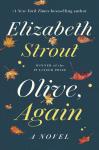
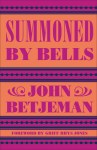
Reading.  After several weeks of telling you I’m making progress on Daniel Deronda, guys, I promise!, I have a busy week in books to recap for you.  I finished Daniel Deronda on Wednesday (see, I told you I was making progress) – review coming to you this Wednesday.  Next, with a library deadline breathing down my neck, I flew through Olive, Again – Elizabeth Strout’s new collection of linked short stories about Olive Kitteridge.  For the weekend, I was in the mood for some comfort reading; it’s been a hectic few weeks, and it’s not going to let up for at least two more weeks.  And I was also in the mood to read from my own shelves, and not from the library stack.  So I picked up Ex Libris on Friday night, read that over the course of Friday evening and Saturday evening, then followed it up with Summoned by Bells (John Betjeman’s memoir-in-verse) in one sitting on Saturday night.  Ended the weekend with The Priory, by Dorothy Whipple – I’m about 120 pages in as of the writing of this post, and loving it so far.

Watching.  Nothing for myself, although I have had several more viewings of Frozen II out of the corner of my eye, and seen more than I care to admit of Trolls: The Beat Goes On!  Steve and I spent a lot of time talking about our viewing plans – we need to finish the current season of Great British Bake-Off, and catch up on Rock the Park, and watch the latest season of The Crown, and also I want to check out that CNN docuseries on the Windsors.  But as of this week, we’re all talk and no actual viewing.

Listening.  Lots of podcast potpourri – a couple of episodes of Shedunnit, a couple of episodes of The 46 of 46 Podcast, snatches of The Mom Hour and Tea or Books?, an episode of A-Pod…cast for Killer Whales and an episode of Outside/In about penguin-counting in Antarctica.  Well-rounded or all over the place?  You decide.

Making.  Nothing in the kitchen this weekend and nothing in particular on the needles, either.  I made a lot of pictures of Go Dog having adventures, though, and a five-page essay about our weekend fun to add to Go Dog’s travel journal, though!

Blogging.  I have a book review (of Daniel Deronda) for you on Wednesday, and a funny post about a dubious bookish milestone I experienced recently(-ish… back in December) on Friday.  Check in with me then!

Loving.  This article about a young girl who established read-aloud libraries in her local NICUs (part of her Girl Scout Silver Award project) is so wonderful.  I can vividly remember my days sitting next to Peanut’s isolette, reading to her from Emily of New Moon.  The kids are all right, you guys.  The kids are all right.

Asking.  What are you reading this week?