

Reading is my oldest and favorite hobby. I literally can’t remember a time in my life when I didn’t love to curl up with a good book. Here are my reads for January, 2017…
 Simplify: Seven Basic Principles to Help Anyone Declutter Their Home and Life, by Joshua Becker – Has there ever been a more New Years-y book to start off a year? This was hanging out half-finished on my kindle, so I polished it off on the first day of the year. Inspiring, for sure, as Steve and I begin a year-long quest to purge and declutter. But a little short on specific tips and pointers.
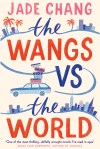 The Wangs vs. The World, by Jade Chang – This debut novel, about a Chinese-American businessman who loses his fortune in the Great Recession, and how his family handles the loss, was one of the big buzz novels of 2016. I enjoyed it, although not as much as I expected. It took me awhile to warm up to the characters, and while I finished the novel liking the kids, I didn’t really feel connected to any of the characters. I also spent a lot of my time scratching my head and trying to understand how Charles Wang could have lost all of his millions and all of his holdings in one stroke of a pen. Didn’t he have financial advisors? Wasn’t he diversified? I get the point that he took a big risk and it didn’t pan out, but the plot just rang sort of false to me.
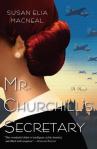 Mr. Churchill’s Secretary (Maggie Hope #1), by Susan Elia MacNeal – I had been meaning to dive into the Maggie Hope mysteries and now, with a brand new installment just hitting the shelves, seemed like as good a time as ever to pick up the series. In the first installment, Maggie – a British citizen raised in America – has just taken a job as the newest typist at 10 Downing Street. A mathematical genius, Maggie has applied to be a private secretary but is frustrated to find that she is barred from the more intellectually rigorous work on account of being female. She’ll have plenty of material to which she can devote her considerable brainpower – between solving the mystery of what happened to the murdered typist she replaced, delving into long-buried questions about her family, decoding a threat against the Prime Minister, and debating whether England should get more involved in the brewing conflict with Nazi Germany, Maggie is busy indeed. I loved this introduction to a new-to-me sleuth and can’t wait to continue on with the series.
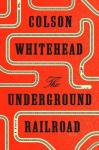 The Underground Railroad, by Colson Whitehead – Another big 2016 buzz book, The Underground Railroad lived up to all the hype. When Oprah gets involved and speeds up the release date of a book, you know it’s going to be big – and it was. The Underground Railroad is the story of Cora, a slave from Georgia who escapes with a fellow slave, Caesar, and runs for the north with the help of the Underground Railroad. The bit that’s new? In Whitehead’s imagination, the Underground Railroad is an actual railroad running underground. Cora and Caesar descend onto a subterranean platform and make for freedom in a train car. As Cora travels from state to state, her journey is fraught with all kinds of terrors. Whitehead doesn’t mince words about the horror of slavery, and it’s not an easy read. But it’s a stunning, sweeping work of genius that everyone should read.
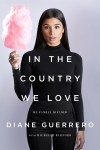 In the Country We Love: My Family Divided, by Diane Guerrero – Diane Guerrero was only fourteen years old, a freshman in high school, when she came home from school to find her house empty and her undocumented immigrant parents seized for deportation. In the weeks, months and years that followed, Diane drifted from one friend’s house to another. No social worker, no immigration official, bothered to check on Diane or make any provision for her – a minor and a U.S. citizen – after she was left completely alone in the United States. Through sheer force of will, she finished high school, worked her way through college and became an actress, all the while hiding from all but her closest friends the truth about her parents and her past. I have not seen Diane act – she’s one of the stars of Orange is the New Black, but I don’t watch the show – but I am now a fan and can’t wait to see what she does next. I hope that, at some point, she will be able to reunite her family.
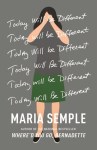 Today Will Be Different, by Maria Semple – I’ve been looking forward to a new book from Maria Semple since 2013, when her last book – one of my all-time favorites, Where’d You Go, Bernadette – was published. Sadly, I found Today Will Be Different to be a disappointment, and not up to my expectations after reading and loving Bernadette so many times. Eleanor Flood, a graphic artist and mom living in Seattle, decides that today will be different. She will live her best life, be a loving wife and mom, and generally have her ish together. Of course, it all goes haywire almost immediately. Eleanor was as neurotic as Bernadette (and her past was more harrowing, so she had more reason for being neurotic) but somehow, she lacked Bernadette’s charm. I did enjoy the one shoutout to Bernadette and Galer Street School – but beyond that, sadly, I was underwhelmed.
 March: Book Three, by Representative John Lewis, Andrew Aydin and Nate Powell – I’ve been eagerly anticipating the third and final volume of Rep. John Lewis’ graphic memoir, after the first two volumes blew me away when I read them last February. It was a long wait for the release date, and even longer until my name cycled to the top of the library holds queue, but the conclusion of March was worth the wait. In it, Rep. Lewis describes his work registering voters, organizing on behalf of the Voting Rights Act, and finally leading the march from Selma to Montgomery in support of voting rights. It’s a stunning and powerful finale to the graphic memoir, but of course, it doesn’t depict the end of Rep. Lewis’ astonishing career. I happened to be reading March: Book 3 both during Rep. Lewis’ testimony against the Sessions nomination, and on Martin Luther King Day, and while that was serendipity, it felt very right. Can’t recommend the series highly enough – especially these days.
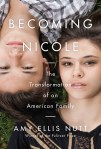 Becoming Nicole: The Transformation of an American Family, by Amy Ellis Nutt – Nicole Amber Maines is in many ways a typical teenaged girl. She grew up loving Barbie and The Little Mermaid, aspiring to be an actress, and sharing a special connection with her twin brother Jonas. But in a major respect, Nicole is very special – she was not born Nicole Amber Maines. She was born Wyatt Benjamin Maines. Nicole always knew that she was really a girl, and her mom, Kelly, knew as well – as did Jonas. Becoming Nicole is the stunning, powerful story of how Nicole became who she is, her legal fight against a school district that failed to protect her from bullying, and her dad Wayne’s journey to full acceptance and celebration of Nicole’s identity. It was a beautiful family story, interspersed with well-researched and fascinating scientific information about gender identity and the brain. We are still learning about the gender spectrum and the full range of gender identities, and I think Becoming Nicole does an incredible amount to further the discussion and add to our knowledge of the subject. I laughed, cried, and hugged the book when I was done.
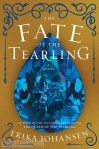 The Fate of the Tearling (The Queen of the Tearling #3), by Erika Johanssen – In this conclusion to the Queen of the Tearling fantasy trilogy, Kelsea Raleigh Glynn has been captured by the Red Queen and dragged to Demense, the capital of Mortmesne. Kelsea has left her kingdom in the hands of the Mace, her head guard, and he is sparing no effort to get her back. Meanwhile, rebellion is brewing in Mortmesne, led by a mysterious rabble-rouser named Levieux, and a dark evil stalks the border between Mortmesne and the Tearling. The imprisoned Kelsea strikes up an uneasy alliance with the Red Queen of Mortmesne and continues to fall into trances in which she sees visions of the Tearling’s past – which, if she can understand them, might give her the key to saving her kingdom once and for all and creating a lasting peace in William Tear’s Better World. So, the third book in the trilogy, like its predecessors, was fine. It’s an interesting and engaging story and it’s well-written. For some reason, though, I just can’t see what all the fuss is about with any of the Tearling books. They’re good, and they’ve certainly got a following, but I wasn’t feeling it. During the really exciting, climactic parts, I just read placidly on, where with other books I’d be rushing through page after page in a frenzy to find out what happens. With the Tearling books, they were pleasant enough diversions, but I couldn’t bring myself to care overmuch – that, coupled with the fact that the ending was flat-out weird, meant that these were sort of a miss for me. But they do have legions of fans, so I’m probably wrong and totally missing out.
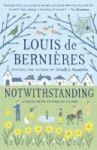 Notwithstanding: Stories From an English Village, by Louis de Bernieres – I can’t remember how I became aware of this short story collection, but I put it on hold at the library and then took forever to get to it. The Guardian described it as akin to “being wrapped in a tartan blanket and handed a nice mug of cocoa,” and I found that was true some of the time and not true other times. There was certainly whimsy overload, and I really enjoyed some of the stories – but others were much less cosy than I was led to expect they would be. Some of the stories were downright upsetting – for instance, if you decide to pick this up and you’re either soft-hearted or weak-stomached – or both, as I am – learn from my mistake and skip the story entitled The Rabbit. Trust me on that one. In any event, it was a well-written book and parts of it were really quite enjoyable, but it wasn’t quite what I was looking for at that particular moment. I was wanting something really and truly cosy, not cosy on the surface with an undercurrent of tragedy. That’s not the fault of this really very good book. It just was bad timing.
 The Little White Horse, by Elizabeth Goudge – Now here is something really and truly cosy. I ordered an absolutely gorgeous edition of The Little White Horse from The Folio Society and could hardly wait to read it when it arrived from England. The book itself, first of all, is a dream to read. The full-color illustrations were breathtaking and the cover (that’s my edition to the left there) is pure magic. The story itself was an absolute delight. It is the tale of Maria Merryweather, a thirteen-year-old girl on the cusp of womanhood who finds herself orphaned and sent to live with her father’s second cousin, Sir Benjamin Merryweather, at the family estate of Moonacre Manor. At first blush everything about Moonacre seems like a pleasant dream – each discovery more beautiful than the next, everyone perfectly kind, the food delicious and the activity delightful. But Maria soon discovers that Moonacre and its surrounding environs are troubled by a bad decision made generations ago, and it is up to her to fix the mistakes of her forebears and make things right again. This she sets out to do with determination, and you never have any doubt that she will succeed, nor any real fear for her safety from the wicked Men From the Dark Woods. The only recurring complaint that I read in Goodreads reviews was that the book (which was written in the 1940s and sought to approximate Victorian literature) was too heavy on the descriptions. Every single one of Maria’s outfits or meals, the outfits worn or meals enjoyed by side characters, every bit of architecture, room décor or natural beauty is painstakingly described over multiple paragraphs or pages. I can see how that could be tiresome – but it was just what I loved most about the book. I say, bring it on. Tell me everything about Maria’s midnight blue riding habit. Spare no detail. Take all the time and words in the world and don’t forget to describe any crystal beads not immediately visible to the eye. I’m with J.K. Rowling – I adored this book. Can’t believe I’d never read Elizabeth Goudge before, and can’t wait to read more of her books.
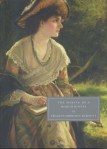 The Making of a Marchioness, by Frances Hodgson Burnett – FHB wrote one of my childhood favorite books, The Secret Garden. I must have read that, and A Little Princess, dozens of times. Yet despite that, I find myself amongst the legions of Mary Lennox and Sara Crewe fans scratching their heads and expressing amazement that (1) FHB wrote books for adults, too, and (2) we didn’t know about them until just recently. Thanks to Persephone reprints, I got to discover and enjoy this wonderful book (and there’s another FHB reprint, which I also own, to which I still look forward to reading). The Making of a Marchioness is a two-part tale of a decidedly unromantic, undramatic hero and heroine, and the romantic and dramatic things that happen to them. Emily Fox-Seton is a “gently bred” Englishwoman. A poor relation of a grand family who ignores her, she earns her living by running errands and doing odd jobs for rich women including one Lady Maria Bayne. When Lady Maria asks Emily to help out at a house party, she rejoices at the thought of escaping her drab life for a period of time in the country. Present at the party is the Marquis of Walderhurst, an eligible widower to which all the young society beauties have set their prettily adorned caps. Walderhurst is in his mid-50s, so not doddering, but not young either, and he has the decided idea that if he must take a wife, he would like one who will not be too much work or bother – so definitely not a society beauty. I’m sure you can guess what happens – Walderhurst discovers Emily and proposes to her, unromantically, over a bucket of fish. (Saw that one coming.) The courtship, culminating in engagement, comprises the first part of the book, and the second part discusses Emily’s adjustment to life as the new Marchioness of Walderhurst, the deepening of her feeling for her husband from gratitude to love (and his for her, likewise, from admiration to love) and, because this is a Victorian novel, a plot against Emily’s life by the distant relation who was Lord Walderhurst’s heir presumptive until the splendidly healthy Emily came on the scene. It was a fun and delightful read, and I stayed up way too late turning pages.
So, at the beginning of the month I thought it might be nice to slow down the pace of my reading, and really enjoy my books instead of tearing through them. Then I went and read 12 books in January, so I guess that’s off. I started the month off reading more diverse books – The Underground Railroad, In the Country We Love, and Becoming Nicole – and they were universally good reading experiences. Knowing what was coming, I almost felt as if I needed to stock up on diverse voices. But after the Inauguration and the hellish couple of weeks that followed, I just want to read comfort books at the moment. Enter Elizabeth Goudge and Frances Hodgson Burnett. I’ll go back to my political reading at some point soon, but for now, I am feeling drawn to cozy, calming reads in which you know everything is going to be fine in the end – so expect to see more of those over the coming months.
What did you read in January?
 covered in flour
Hi Jaclyn, we’re so pleased you enjoyed your Folio edition of The Little White Horse! A lovely blog, and some lovely reads. The Folio Society.
Thank you so much! It’s a beautiful book. I love your products!