

Reading is my oldest and favorite hobby. I literally can’t remember a time in my life when I didn’t love to curl up with a good book. Here are my reads for July, 2016…
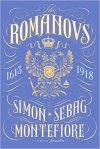 The Romanovs: 1613-1918, by Simon Sebag Montefiore – I was clamoring to read this doorstopper of a new release even before it came out – because I’m always down for a new Romanov biography. (And it seems like lately there’s been one ever year? Keep ’em coming, I say.) Montefiore’s contribution is truly epic and ambitious, profiling twenty Romanov Tsars and Tsarinas from Michael I (who ascended the throne in 1613 as the first Romanov ruler) to Michael II (the younger brother of Tsar Nicholas II, who ruled for all of one day after his elder brother abdicated and who was one of the first Romanovs to be murdered by the Bolsheviks). At more than 600 densely-packed pages, this book was an effort, but it was fascinating and thorough.
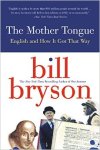 The Mother Tongue: English and How it Got That Way, by Bill Bryson – I actually started this (one of Bryson’s first books) on audio, but returned it to Audible when I decided that I didn’t like it enough to keep it in my audio library. It was interesting, but not as funny as Bryson’s travelogues, and since I was expecting to be laughing throughout, I was slightly disappointed. But I was still really interested in the subject matter, so I borrowed a copy from the library to finish after I returned the audiobook. It was an interesting and very thorough exploration of the English language, and I picked up a lot of cool facts; just wish that it had delivered more laughs. (Word of warning if you do listen on audio: at one point, the “N” word is used. It’s not gratuitous, but it is jarring, and I wish I’d had some warning, because I often listen to audiobooks with my kids in the car.)
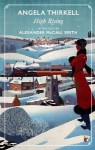 High Rising (Barsetshire #1), by Angela Thirkell – High Rising introduces us to Thirkell’s Barsetshire and to the villages of High Rising and Low Rising, through the eyes of author Laura Morland, who makes her living by writing “good bad books” and is popularly considered to be the alter ego of Thirkell herself. Laura and her young train-obsessed son, Tony, descend upon Laura’s cottage at High Rising for the Christmas holidays and periodically thereafter, where Laura works on her next book, Tony roams the train depot, and several of the characters band together to arrange marriages and save their friend and another local author from a social-climbing secretary (the horrors!). Thirkell’s books are like comfort food – not taxing, perfect for curling up with over a cup of tea on a dark evening. My one caution: they are very much of their time, and there are several stereotypical comments about a Jewish character that did not age well at all. I’ve heard this warning about Thirkell – that she’s delightful comfort reading (albeit of uneven quality) but that every so often language creeps in that is extremely jarring to the modern reader. I don’t think it’s something to throw out her books over – I’ve had the same concern about other classics, like The Scarlet Pimpernel – but it’s definitely a problem with an otherwise enjoyable read.
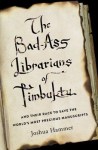 The Bad-Ass Librarians of Timbuktu: And Their Race to Save the World’s Most Precious Manuscripts, by Joshua Hammer – When Al-Qaeda in the Islamic Mahgreb occupied Timbuktu, they didn’t reckon on Abdel Kader Haidara. Haidara was a longtime Timbuktu resident who had been instrumental in collecting and preserving hundreds of thousands of ancient, priceless African manuscripts; the libraries of the city were filled with treasure thanks to him. Although the terrorists pledged that they would not destroy Timbuktu’s treasured manuscripts, Haidara knew they would not keep their word as they worked their path of destruction through Mali’s traditional values of tolerance and literacy. Gathering his network of cousins, neighbors, fellow librarians and concerned citizens, Haidara oversaw a massive heist in which 300,000 priceless manuscripts were smuggled out of Timbuktu’s libraries and into safe hiding spots until the terrorists were defeated by French forces. This was a fascinating true story, and Haidara deserves a place in history as a hero and champion of knowledge.
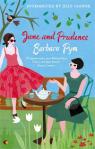 Jane and Prudence, by Barbara Pym – Although I didn’t love Pym’s most acclaimed work, Excellent Women, I fell hard and fast for Jane and Prudence. Jane is a clergyman’s wife who has recently taken up residence in a rural parish. Prudence is Jane’s former student, now younger friend, who is living the single life and going from love affair to love affair in London. When Jane decides it’s time for Prudence to marry, she makes the worst possible choice for her friend – but really, is Jane’s taste in Prudence’s boyfriends any worse than Prudence’s own? This was a charming read – I loved flighty, affable Jane and rooted for Prudence to find happiness, whatever her personal definition may be. And now Pym is officially rescued for me, and I’ll be seeking out more of her books.
 Homegoing, by Yaa Gyasi – I was nervous about this one. I knew it was going to be intense, and I was also worried that it wouldn’t live up to the hype it has been getting. Well, it was intense, but it did live up to the hype. Homegoing is the story of a dynasty, starting with Maame and her two daughters, born in the 1800s in Ghana. Effia, the elder, is married off to a white British colonial officer and lives in luxury in the Cape Castle. Esi, the younger – of whom Effia is unaware – is captured by slavers, imprisoned in the dungeons of the same castle where her sister is living, and ultimately shipped to America. The story follows both Effia’s and Esi’s descendants down through the generations, reading like a series of interconnected short stories and touching upon African wars, the Civil Rights struggle in America, and many other themes. It’s upsetting (particularly Ness’s story) but well worth reading. This is one of the important fiction debuts of the year, and I can’t wait to see what Yaa Gyasi will do next.
 Belgravia, by Julian Fellowes – After Homegoing, I needed to read something light and not taxing, and Belgravia fit the bill. In 1815, the Duchess of Devonshire hosts a ball on the eve of the Battle of Waterloo. The events of that night will change the destiny of two families. Twenty-five years later, as the titled aristocracy has to come to terms with the proximity of the nouveau riches, secrets buried since the Duchess’s ball will begin to trickle out. So, this was classic Julian Fellowes upstairs-downstairs drama. It was completely predictable – I guessed every single twist chapters ahead of time – completely far-fetched, and excellent fun. I just wish that I’d read it when it was first released – in eleven installments, via an app, like a modern-day Dickens novel. What a cool concept! I hope he does that again, and I will be more on top of things next time.
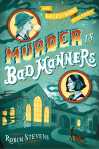 Murder is Bad Manners (Wells and Wong #1), by Robin Stevens – This recent American release of a YA detective series got some rave reviews on the bookish internet, but I confess I didn’t like it. I found the boarding school narrative a little blah, the murder was not shocking, and the characters bugged me. As one Goodreads reviewer lamented (and I agreed after reading), Daisy Wells is a bully and Hazel Wong’s self-loathing was depressing. I usually try to give a mystery series a couple of books, because in my experience it sometimes takes awhile to get going, but I’m probably not going to continue with this one.
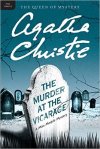 The Murder at the Vicarage (Miss Marple #1), by Agatha Christie – The cure for a disappointing mystery novel is Agatha. Always Agatha. I bought my favorite mystery novel of all time on audio and had a blast listening to it on my commutes over the second half of the month. The murder of generally despised Colonel Protheroe is just as mystifying, the herrings just as red and the solution just as ingenious as ever. I dearly love brilliant, unassuming Jane Marple.
That ought to do it for me for July. What a month of reading! Don’t ask me to explain how I squeezed all these books into a month otherwise filled with packing, closing out projects at work, and reading all the political convention coverage – because I can’t. But it was a good one. I started off with some fascinating non-fiction, worked my way through a classic novel and a couple of big debuts, and finished up with two cozy mysteries. Can’t ask for more than that…
What was the best thing you read in July?
 covered in flour
Some interesting choices here! I definitely want to read the librarian book. Reminds me a bit of the Monuments Men.
It was a little bit like Monuments Men, but shorter and less dense. I definitely recommend it! I had a good July in books, for sure.
Miss Marple! Love. And now I want to read High Rising. And Belgravia.
I read a few really good novels in July – Everyone Brave is Forgiven (Chris Cleave’s new one), Lady Cop Makes Trouble (Amy Stewart’s second novel featuring Constance Kopp, lady sheriff), and The Atomic Weight of Love by Elizabeth Church. Also the Hamiltome, which was fantastic.
I think that both High Rising and Belgravia would be right up your street!
I need to read the Constance Kopp books. They didn’t sound like my cup of tea until you posted about how much you had enjoyed the first one, and got me all intrigued… and the Hamiltome is still on my list (and on my bedside table!). Must get to that ASAP.
Jane and Prudence looks perfect for me!
I will be interested to hear if you read it (and I hope that you like it if you do!). I enjoyed it so much more than Excellent Women!