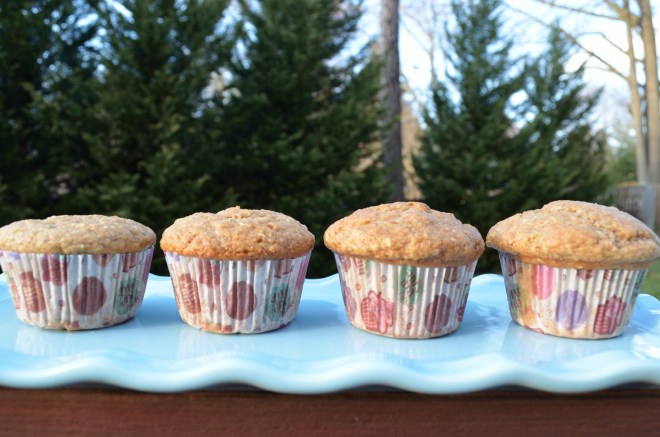
Tropical Banana Muffins

Life lately has been all go-go-go.  It seems like I’m constantly running out the door and bouncing all over creation.  One of these days I’m sure things will slow down again, but until they do I’m really in need of portable healthy breakfasts and snacks.  Which is where these muffins come in.  I was lying awake in the middle of the night last weekend, thinking I really should make some banana muffins.  My original plan was to make classic banana-nut muffins (or classic-ish; I usually make mine with pecans because I don’t really care for walnuts, which I think are more traditional).  But then I remembered that I had a bag of frozen pineapple in my freezer and a can of lite coconut milk in my pantry, and a different idea started to take shape.  I fell asleep with the idea of “tropical” banana muffins with pineapple and coconut on my mind, and it was still there when I woke up and rushed down to the kitchen on Sunday morning.  Happily, these muffins definitely lived up to my imagination – they’re relatively healthy (I cut the sugar in half, replaced the butter with applesauce, and subbed in whole wheat flour for some added protein and fiber) and perfectly portable, great for breakfast on the go.  I’ll definitely be making these again, and perhaps freezing a few batches for busy mornings to come.

Tropical Banana Muffins

2 cups whole wheat flour
1 cup all-purpose flour
1 cup granulated sugar
2 teaspoons baking powder
1 teaspoon baking soda
1/2 teaspoon salt
2 ripe bananas, mashed
3/4 cup lite coconut milk
1 cup unsweetened applesauce
2 eggs
2 teaspoons vanilla extract
1 cup unsweetened shredded coconut
2 cups medium-diced pineapple chunks (fresh or frozen)

  • Preheat oven to 350 degrees Fahrenheit.  Line or grease muffin tins: either 18 large muffins, or 12 large muffins and 12 mini-muffins.
  • In a large bowl, whisk together the flours, sugar, baking powder, baking soda and salt.
  • Add mashed banana, coconut milk, applesauce, eggs and vanilla and mix until well combined.  Don’t overmix!
  • Fold in shredded coconut and pineapple chunks.
  • Transfer batter to muffin tin wells.  Bake 25-30 (if using frozen pineapple, this recipe will likely take closer to 30; if using fresh, closer to 25) minutes, until a toothpick inserted into the center of muffins comes out clean.

Source: Loosely adapted from The Barefoot Contessa Cookbook (not an affiliate link)

PARIS TO THE PAST

Several of the comments on the back of Paris to the Past called it a book about love. That’s exactly what it is. On every single page, Ina Caro’s love shines through – love for France, its history and people, its food, and for the husband who is by her side as she “travels through time.”

When Ina and Bob were married, decades ago, they couldn’t afford to take their dream trip to France. After putting in their time and accumulating their success, they finally left for the vacation of a lifetime in 1974 or so. And they’ve gone back every year, driving all around France and experiencing its architecture, culture and food with glee. Then one day Ina had an epiphany: she organized their planned driving route chronologically, allowing them to visit the oldest cathedrals and castles first and work their way up through history. This allowed them to, quite literally, see France evolve before their eyes, and it led to a book about driving through French history. But after years of returning again and again, driving around for a month or so, Ina and Bob decided, one year, that they didn’t want to hit the road. They wanted to stay in their comfortable Paris apartment.

Did this cramp Ina’s time traveling style? Never! She discovered that, between the Paris metro, the RER suburban trains, and the TGV high-speed trains, it is possible to travel through the entire course of civilized French history, from Clovis and Abbe Suger at Saint-Denis all the way to Napoleon III. This fantastic feat could be done entirely in day-trips that don’t require, generally, more than 90 minutes on a train from Paris. Ina could travel through time back to the fifth century and be back in time to hit up the neighborhood bistro for dinner. C’est magnifique!

Ina is a fabulous tour guide. Her interest in history tends toward the fluffy, so she glosses over battles and bloodshed and devotes far more time to juicy court gossip. You’ll hear of power-hungry and plaigarizing monks, effeminite kings, scheming queens and nobles, and one very famous peasant girl who gave the English fits during the Hundred Years’ War. Ina perfectly treads the line between giving good information about how we can bear witness to French history by examining its architecture and sharing dirty deets like your best eighteenth-century girlfriend. And she throws in mini-reviews of the restaurants she visits near each monument, too. Paris to the Past was a wonderful read… in fact, my only complaint was that it made me even more anxious to go back to Paris than I already was! Highly recommended.

Paris to the Past: Traveling Through French History by Train, by Ina Caro (not an affiliate link)

(Image Source)

Ann Romney Pins ANNA KARENINA… So?

This bizarre little news item popped up on my Yahoo! home page and it was just too wacky for me not to share.

At this point, I assume most of you have heard of Pinterest.  (For those who haven’t, it’s a social networking site on which members create “pinboards,” which are essentially collages of bits of inspiration – decorating, food, travel, reading, fitness, quotes, or basically any kind of inspiration you’re looking for.)  I joined early on and have run hot and cold on the site – I’ll indulge in marathon pinfests, and then ignore the site for weeks.  Oh, and there was one drunken bout of pinning that left me with a picture of a giraffe licking a squirrel on my “Just Makes Me Smile” pinboard… and there it stays to this day, because I’m oddly reluctant to erase it.

So one of the standard pinboards that Pinterest starts users off with is a “Books Worth Reading” pinboard.  (You can delete it, but I kept mine.  And Anna Karenina is on it.)  Ann Romney put two books on her “Books Worth Reading” pinboard – The Forgotten Garden, by Kate Morton, and Anna Karenina, which she professes to be one of her favorite books.  And now the political world is all atwitter (see what I did there?) over Mrs. Romney’s choices of reading material.  What does it mean, the pundits and analysts are gasping, that Mrs. Romney enjoyed reading a book about an adulterous affair and open marriage and following one’s heart even if it goes against society’s mores, enough to pin it and declare it “worth reading” to all the world?

Sheesh.  Why would Ann Romney choose to pin Anna Karenina as a book worth reading?  Maybe because it IS worth reading.  Why would she consider it one of her favorite books?  Maybe because it’s a wonderful book.  Maybe because Anna’s journey from doting mother to social outcast to desperate woman is powerful, moving and beautifully written.  If we love a book, does that automatically mean that we’re going to act on every mistake the characters make, or replicate all of their bad choices?  Or that we agree with every message in the book?

Look, guys.  Anna Karenina is FICTION.  It’s also a great world classic.  To be honest, I’d judge Mrs. Romney a little bit if she couldn’t get past the fact that Anna makes some bad choices and appreciate the gorgeous language and the emotion of the story.  (Plus, hey, there’s a whole other storyline about two characters finding true love in a traditional marriage.  But nobody talks about that part.)  I don’t think it means anything that Mrs. Romney considers Anna Karenina one of her favorite books… except that she has good taste in books, that is.

N.B. This obviously isn’t a blog about politics.  In fact, I work hard to keep my politics off this blog.  (Oh, I have definite opinions.)  I’m not going to tell you who I am supporting for the 2012 presidential election, so please don’t take this as a declaration that Romney is getting my vote.  I’m just baffled that anyone would consider Mrs. Romney’s public admission that she (gasp!) loves one of the most beautiful and moving books ever written as a declaration of policy or a statement on the values of the Romney campaign.  Please, political pundit friends, PLEASE don’t read anything into Mrs. Romney’s reading choices.  They don’t mean anything, except that she read and loved a magnificent book.  Good on her.

Do you think a candidate’s wife’s reading choices are a statement on the candidate’s campaign values?  Or do you think that we should all back off and let Mrs. Romney read and pin in peace?

The North Devon Coast

After four days in Cornwall we headed out, sad to leave but certain that we’d be back.  It was just too beautiful a place for us to stay away for long!  I considered staging a protest and refusing to leave – ever – but I did want to see the rest of the places we had planned, so I decided to be a big girl and stick to the road trip schedule.  Our next stop was a quick overnight to break up what would have otherwise been a long drive, but it ended up being a blast.

On our way out of Cornwall, we made one final stop: Tintagel.  Tintagel is famous as the birthplace of King Arthur, who… I hate to break this to you guys, I really do… probably didn’t exist.  (The legendary King Arthur is probably an amalgamation of regional kings, one of whom was indeed born at Tintagel.)  Tintagel was pretty cool.  The “castle” was mostly a pile of rubble, but the cove was beautiful, with more dramatic rock formations and bottle green water.  We scrambled down into the cove and spent about half an hour picking our way around the beach and exploring Merlin’s cave (the dark opening just above the water line in the pic above).

We set up camp for the night in Lynton, a lovely town on the north Devon coast.  Hubby chose this stop because it was just a few hours’ drive from Cornwall and made for a good in-between stop before our next destination.  I didn’t know anything about the town and had no idea what to expect, but I was charmed.

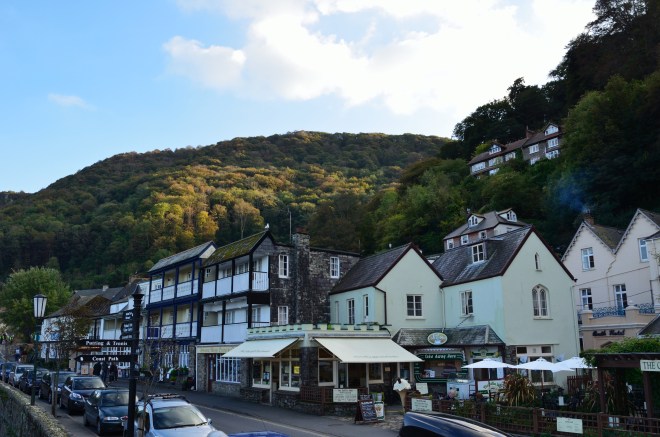
The town was not deserted by any stretch of the imagination.  There were a number of British families vacationing there, even in October, enjoying the peace and the natural beauty of Devon.  We stopped for sandwiches (I had cheese and pickle – so good) and tea at a small cafe, then wandered up and down the main drag, snapping pictures of the lovely Victorian-style buildings and the clear blue sky.

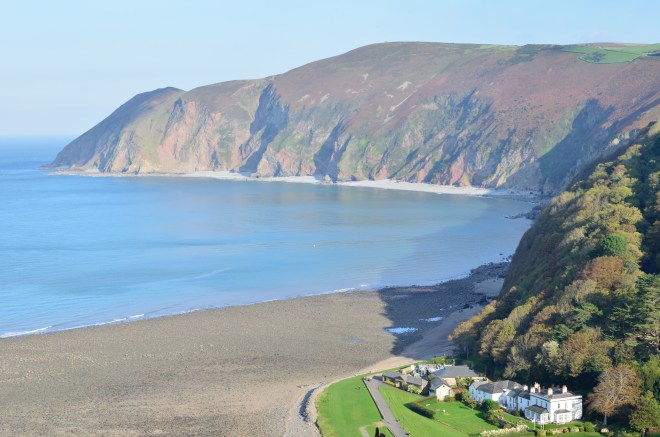
Lynton perches atop a steep hill – more of a cliff, really – overlooking the north Devon coast, and nestled into the base of the hill is its sister town, Lynmouth.  There is an extremely steep path with about a half dozen switchbacks leading from Lynton to Lynmouth (the path is part of the famous South West Coast Path we’ve already explored) so hubby and I decided to head on down and check out the beach and the town.

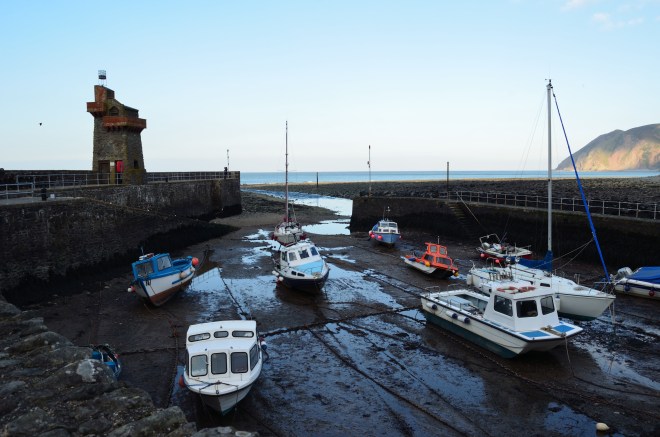
Here are more boats sitting on the sand in a drained harbor.  At this point we were starting to think that beached fishing boats were some kind of recurring theme of our trip.  Obviously we had to take more pictures.

Lynmouth was just as charming and adorable as Lynton, and we had a fabulous afternoon wandering around and looking into the shops.

The steep path isn’t the only way to get back up to Lynton from Lynmouth – there’s also the famous Lynton-Lymouth Cliff Railway, which runs straight up; I mean it, it’s practically vertical.  Hubby and I briefly debated taking the railway up, for the experience, but decided that we’d rather have the exercise and so we walked up the path.  Part of the path includes bridges that you can hang out on and watch the cliff railway from, so we took a few stops to catch our breath and watch the train go up and down.

When we got back, we were clearly starving after having burned a multitude of calories hiking pretty much straight up.  Our B&Ber recommended a tapas restaurant nearby, so we hit it up and enjoyed a fantastic Spanish meal with some wonderful fruity red wine.  For dessert we decided to try leche frita, a fried custard dish that we’d never had before, and this conversation ensued:

Waitress: “How is your dessert?”
Me: “Delicious, thank you!”
Hubby: “It reminds me of Cinnamon Toast Crunch.”
Waitress: “What is Cinnamon Toast Crunch?”
Hubby: “It’s this cereal I have at home.  It’s baked rice and wheat squares coated in cinnamon and sugar.”
Waitress (enthralled): “That sounds lovely!”
Hubby (solemn): “It is lovely.”
Me: “It’s a children’s cereal.”

If looks could kill… I’d have died twice, because hubby and the waitress gave me identical poisonous glares.  Okay, okay, I’m the weirdo who doesn’t like cereal.  SORRY!  The leche frita was fabulous, though.  As was the entire meal.

The next morning, we headed out early.  We had a full day ahead of us, but we couldn’t leave Lynton without checking out one of the main attractions of the area: the Valley of Rocks.  This is a spectacular natural area within Exmoor National Park, and it’s less than a five minute drive from the center of town.  Hubby and I headed there and spent a blissful half hour or so poking around and watching the play of early morning sunlight on the rocks and the water – so beautiful.

For a quick overnight stop, Lynton more than delivered its share of charm and beauty!  Stop by next Friday for the next installment in our road trip of a lifetime.

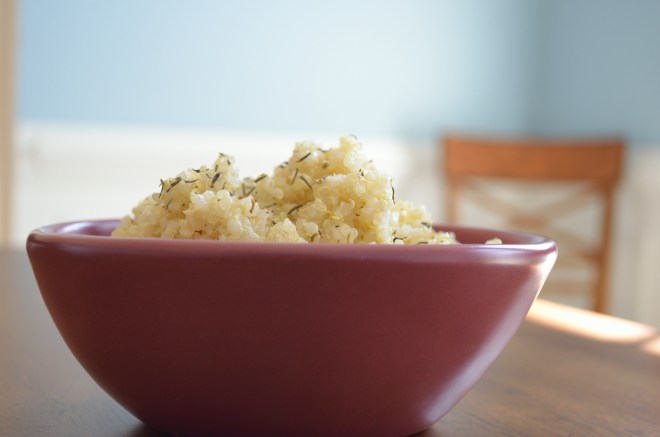
Lemon Herb Quinoa

Today I have a super versatile side dish for you.  It’s quick and easy and can be eaten hot or cold.  How’s that for a staple?  I had a scoop of this quinoa while it was still warm for lunch on Sunday, served it hot as a side on Monday and ate the rest over a salad later in the week.  I’ve indicated here enough quantity to last several meals as long as you don’t make it your main course, so you might consider whipping up a batch on a weekend  and eating it over the course of the week.  And of course, it would easily double if you need to feed more people or if you go through grain salads quicker than I do.  Enjoy!

Lemon Herb Quinoa

1 cup dried quinoa (or substitute brown rice, millet, or another small grain)
2 cups water
juice of 1/2 lemon
1 scant teaspoon kosher salt
1/2 teaspoon dried oregano
1/2 teaspoon dried thyme
freshly ground pepper to taste

  • Combine quinoa and water in a pot and bring to a boil.  Reduce heat to low, cover, and let simmer for 25 minutes (or otherwise according to the directions on your particular package of quinoa).
  • When quinoa has absorbed all its cooking water, fluff with a fork.  Add the rest of the ingredients and stir to combine well.  Taste for seasoning and adjust as necessary.
  • Serve hot, warm, or cold.

Source: Covered In Flour

Reading Round-Up: February 2012

Reading is my oldest and favorite hobby.  I literally can’t remember a time in my life when I didn’t love to curl up with a good book.  Here are my reads for February, 2012…

Birds of a Feather, by Jacqueline Winspear (Maisie Dobbs #2) – I always love reading the second book in a mystery series, because I think it is really the first chance the reader has to tell whether the series will be good or not.  The first book is always lots of backstory, introducing characters and settings and future multi-book plotlines.  After all that, it’s very hard to make the mystery exciting and compelling, too.  So while I liked Maisie Dobbs very much, I was anxious to see how Birds of a Feather would shake out.  I’m pleased to report that it was great!  Maisie and her assistant Billy are able to sink their teeth right into the main mystery, from the very first chapter.  And it’s a doozie – they are hired to track down a missing heiress, but soon find themselves in the midst of a string of murders… and wondering whether the young woman they are searching for is the next victim or the killer.  There are a couple of interesting side plots about Maisie’s relationship with her father, and some tough stuff Billy goes through with his old war injuries.

Betsy-Tacy, by Maud Hart Lovelace (Betsy-Tacy #1) – I don’t know how I have been missing these books all my life!  I thought I was hip to most of the good vintage children’s classic literature, but I had never heard of Betsy-Tacy before reading Katie’s blog and hearing her rave about the series.  These stories about five-year-old Betsy Ray and her friend Tacy Kelly, and the adventures they have thanks to Betsy’s imagination, are simply adorable.  I loved my first visit with Betsy and Tacy in Deep Valley, Minnesota!

The Social Animal, by David Brooks – I have been a fan of David Brooks’ writing since I was assigned to read Bobos in Paradise back in college.  We might be of opposite political persuasions, but I love reading his meticulously researched and wittily written columns and books.  The Social Animal, which examines human socialization and achievement in the early 21st century, was fascinating and funny.  Win!

The Kitchen Counter Cooking School, by Kathleen Flinn – This one took me just a few hours to read.  Kathleen Flinn, a recent culinary school graduate, was adrift and looking for her next project one day when she found herself stalking a woman in the supermarket.  Flinn was fascinated by the woman’s buying choices – everything in a box!  She was buying “meals” – pot roast, mac ‘n cheese, fettucini Alfredo – but all in boxes.  Flinn finally approached the woman and gave her a crash course in home cooking.  That chance encounter sparked Flinn’s “chefternal” instinct and she put together a course to teach nine women, all of whom were “from the box” cooks, to cook creatively and joyfully.  Flinn taught her students that cooking from scratch was healthier and cheaper, and that it could be just as easy as buying shelf-stable goods.  Over the course of the summer, Flinn’s students gained friendships and lost their fear of the kitchen.  Great quick and inspiring read!  I’m not afraid of the kitchen and I love buying ingredients for a fresh and healthy meal, so I wouldn’t have been in Flinn’s target group… but she definitely inspired me to get into the kitchen and play with food as much as possible, and to be more mindful of using my leftovers and finishing up all those greens I buy each week!

The Palace of Illusions, by Chitra Bannerjee Divakaruni – I decided to read this book solely because of the gorgeous cover.  I’m attracted to all things gold and sparkly, and apparently books are no exception.  The Palace of Illusions is a re-imagining of the Indian epic “The Mahabharata,” told from the perspective of Draupadi, or Panchaali as she is called in this book, one of the female characters.  I’m not at all familiar with the original epic – had never even heard of it before; it’s just not part of the vernacular I grew up with.  So I don’t know how faithful Divakaruni was to the original epic, although some Goodreads reviewers who knew the original story said that she was quite faithful, only taking liberties with a couple of plot points (but in my mind, those plot points – Panchaali’s relationship with Krishna and her secret attraction to Karna – were kind of important).  Regardless, it was a great story, easy to follow even if you didn’t know the original epic, and very well-written.  I enjoyed it!

Betsy-Tacy and Tib, by Maud Hart Lovelace (Betsy-Tacy #2) – The second book about friends Betsy, Tacy and Tib takes place in 1900.  The girls are eight years old and their world is starting to expand.  Although they have their moments of getting into trouble – usually over the protests of the sensible Tib – they are best friends making the most of every day.

Betsy and Tacy Go Over the Big Hill, by Maud Hart Lovelace (Betsy-Tacy #3) – In the third Betsy-Tacy book, the girls fall in love with the King of Spain and decide to write him a letter.  (Well, Betsy and Tacy are in love, and Tib just likes to do what they do so she goes along with it.)  They decide to “have a Queen” for the summer, but get into a big fight with Betsy’s sister Julia and Tacy’s sister Katie, who also want to have a Queen.  Betsy, Tacy and Tib end up wandering over the Big Hill behind their houses and down to Little Syria to solicit votes for Tib as Queen, where they learn about another culture and make some wonderful friends.

At Home in Mitford, by Jan Karon (Mitford #1) – Things were getting a little intense for awhile this month and I really needed some escapist reading (more escapist than usual, that is).  I decided to check out the first book in a series about Father Tim, Episcopal priest in a small southern town, as a way to soothe my exhausted and overactive brain.  It definitely worked.  Father Tim spends his time visiting little old ladies, courting his next-door neighbor (who is an author and illustrator of children’s books starring her cat, natch), and ministering to the town homeless guy, who has a cottage and quotes Thoreau.  Oh, and he helps solve a jewel heist and saves the criminal’s soul.  Bad stuff does happen in Mitford – people get sick and kids are abandoned – but it’s mostly just a sleepy, idyllic place.  Not the most intellectually stimulating book I’ve ever read, but Mitford worked for what I wanted it to do.  I’ll be continuing to read the series, but I’m saving the next book for the next time I get overwhelmed.

Paris to the Past: Traveling Through French History by Train, by Ina Caro – This nonfiction book has been on my TBR for some time now.  I love what the back cover says – it’s a book about love.  While ostensibly a book about history, art and architecture, love shines through on every page.  It’s obvious that Ina Caro truly loves France – its history, people and food – and Paris, and the husband who travels “through time” alongside her.  Ina and Bob have been visiting France for decades, traveling “chronologically” through its history, visiting cathedrals and castles from the oldest to those inhabited by Napoleon.  In this book, Ina shares her favorite historical journeys – chronologically, of course – within an hour or two’s journey from Paris by train.  Her interest in history tends toward the gossipy, so she glosses over bloodshed and battles and devotes far more energy to divulging juicy details of courtesans’ plotting and queens’ love affairs.  Works for me!  I was afraid that Paris to the Past might be a bit dry, but it never was – it was just a fascinating, fun, informative and chatty journey through French history (with your new smart best friend who also happens to have an iron stomach, an enviable metabolism and a great memory).  Can’t recommend this one highly enough!

The 19th Wife, by David Ebershoff – I was fascinated by the news reports of raids on a modern-day polygamist sect a few years ago, so this book caught my attention immediately while I was browsing in an airport bookshop, and I put it on hold at my library as soon as possible.  It’s actually a story of two 19th wives – one Ann Eliza Young, the infamous 19th wife of Brigham Young, second Prophet of the Mormon Church (who apparently is a real historical figure; I’m not Mormon and had never heard of her, but I’ll probably look into her story to see how much in this book was true and how much was fictionalized); and one BeckyLyn Scott, wife #19 of a deceased modern-day polygamist, who awaits trial for his murder.  The story alternates between Ann Eliza’s tale of how she became a plural wife and how she escaped the lifestyle, and the tale of BeckyLyn’s estranged son, Jordan, who becomes convinced that BeckyLyn is innocent of his father’s murder and sets out on a dangerous quest to find the real killer.  I picked up the book because I was interested in reading the Ann Eliza parts, but I found Jordan’s story actually more compelling.  It’s not one I’d recommend to everyone, but if you like historical novels and/or murder mysteries and you don’t mind some disturbing content and strong language, check this one out.

Betsy and Tacy Go Downtown, by Maud Hart Lovelace (Betsy-Tacy #4) – The fourth book in the Betsy-Tacy series was just as cute and sweet as the previous three.  Betsy, Tacy and Tib are now twelve years old and are discovering new pursuits every day.  Some involve boys!  (Regular ones this time; not the King of Spain again.)  As always, the girls have fascinating adventures – Tib rides in a horseless carriage for the first time; new friend Winona takes them all to the theatre, and Betsy gets permission to visit the new library downtown and begins to harbor dreams of becoming a writer.  Loved this one even more than the first three, and I can’t wait to dig into the fifth book in the series!

I had such fun reading through this month!  I started February on a tear and read steadily through mid-month, when I slowed down a bit.  But I can honestly say I enjoyed each book I read this month.  Finally discovering the Betsy-Tacy series, thanks to Katie, was the bookish highlight of my month for sure.  How did I not know about these books before?  LOVE.  I’m not sure if Deep Valley will ever supplant Avonlea in my heart, but I do love it there.  The rest of the month was spent delving into cultures that are unfamiliar to me, and enjoying some fascinating nonfiction.  A good month indeed!

Sister Lit

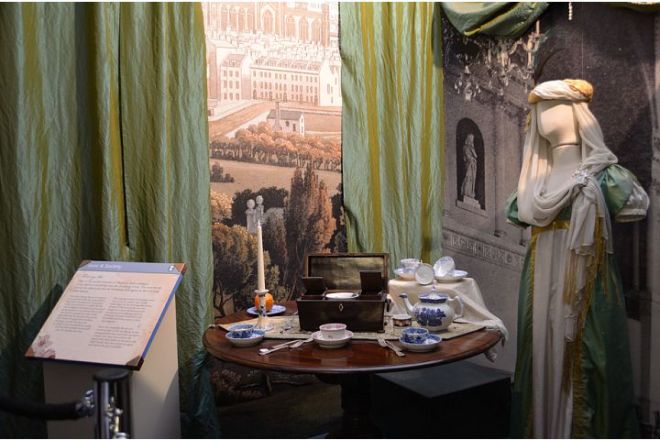
Sister Lit World Headquarters: the Jane Austen Centre, Bath, UK

Last month I read The Weird Sisters, a debut novel by Eleanor Brown.  In many ways, it followed a formula.  Sisters butt heads but love each other at the same time.  (Well, to be honest, the Andreas sisters of The Weird Sisters did more head-butting… metaphorical, of course… than loving.  But there was some loving.)  As I was reading The Weird Sisters, I started to think a lot about that literary sub-genre that I fondly call “sister lit.”

Sister lit – the primary example of which, in my mind, is Little Women – seems to be everywhere.  Anyone with an appetite for family sagas likes to read about the heart-warming and often heart-wrenching relationship between sisters.  I expect that there are plenty of women out there who say to themselves, “Oh, I’m definitely Jo.  And my sister is Amy.”  Or amend that as you will.

I can’t relate to this.  You see, I don’t have a sister.  Despite repeated requests – ahem, Mom – all I got was a brother.  Now, don’t get me wrong – I love my brother.  He’s a smart, funny guy and we have a lot in common (although he does some things – like shark diving – that you couldn’t pay me enough to try).  He loves to read, travel, ski and make sarcastic comments, all hobbies that we share.  And, as an added bonus, he never stole my clothes.  I may have borrowed his flannel shirts on occasion, though.  (So soft!  Sorry, bro.)

But I’ll admit I’ve always been a little bit jealous of people who have sisters – especially when they are also best friends.  I’ve come close to that relationship; I joined a sorority full of smart, funny women; made some extremely close female friends at every stage of my life; and married a guy with two lovely sisters that I adore.  As much as I cherish my sisters-in-law, sorority sisters, and girlfriends, I know I am never going to get to experience what it’s like to have a biological sister.  (Good and bad stuff alike.)  That doesn’t mean that I don’t enjoy and appreciate books like Little Women or The Weird Sisters, or the opportunity to live vicariously through them.

In fact, sometimes I think that maybe I enjoy those books more as a result of not having a sister – because diving into the relationships between Jane and Lizzy Bennet of Pride and Prejudice… or Meg, Jo, Beth and Amy of Little Women… or Rose, Bean and Cordy of The Weird Sisters… gives me the opportunity to see what life is like inside the head of a woman who has been given the gift of a sister.  But I sometimes do wonder if sister lit books would resonate differently with me if I had a sister and could draw on that relationship to inform my reading.  Alas, I’ll never know.

If only I could find a good grown-up book (and no, The Lion, The Witch and the Wardrobe doesn’t count) about siblings of the opposite sex.  Maybe I’ll write one.  Dan, you have been warned.

Do you have a sister?  Do you enjoy “sister lit” more because you have that real-life relationship to draw upon?

Cornwall, Part IV: Exploring St. Ives

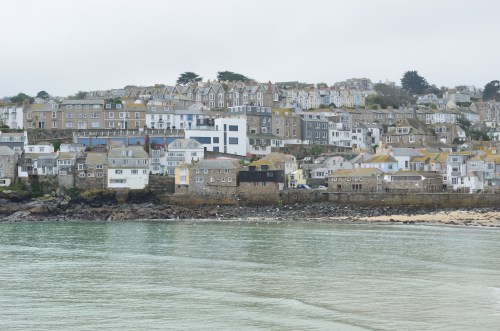
We’re winding down our time in Cornwall, but before we leave I’d like to spend a little time exploring St. Ives with you.  On our last full day in Cornwall – which happened to be my birthday – hubby and I decided to stick close to home and spend a low-key day enjoying our surroundings.  We spent the morning checking out the cool modern art in the Tate St. Ives and while modern art usually isn’t my favorite, I really enjoyed the bright splashes of color and texture on the canvasses there.  After our dose of culture, we wandered around town and looked into the shops and alleys, then fortified ourselves with tea and scones at a cafe overlooking the harbor.  Hey, it’s my birthday – I can eat scones for lunch if I want!

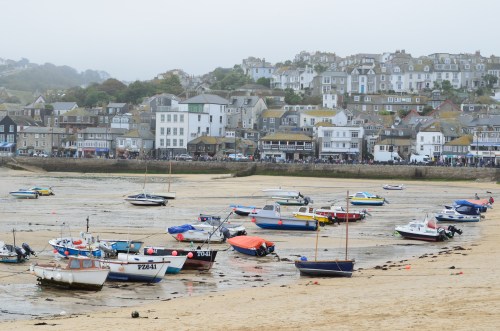
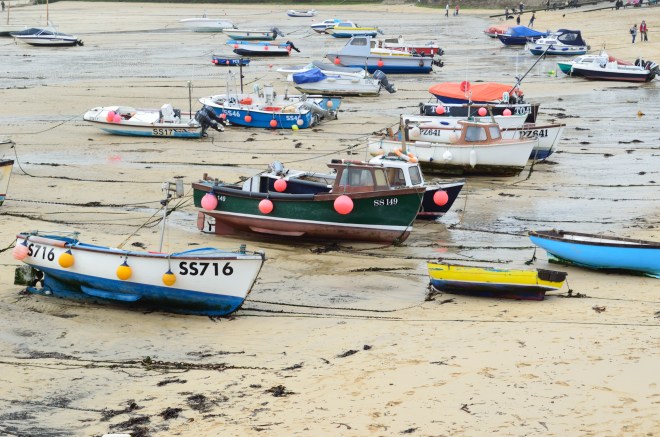
As you can see, St. Ives is situated around a small harbor.  These boats were floating most of the time, but every day they would drain the harbor and the boats would lie beached until the water came back.  During that time kids and dogs would run around on the wet sand while the fishermen did their work on the piers.  Seeing the fishing boats sitting on solid ground was such a different and unique view – we couldn’t get enough staring at the rows of boats neatly lined up on the harbor floor.

So cool!  The bright pops of color on the boats against the taupe sand were such fun.  I’ll be blowing up at least one St. Ives picture for my house.

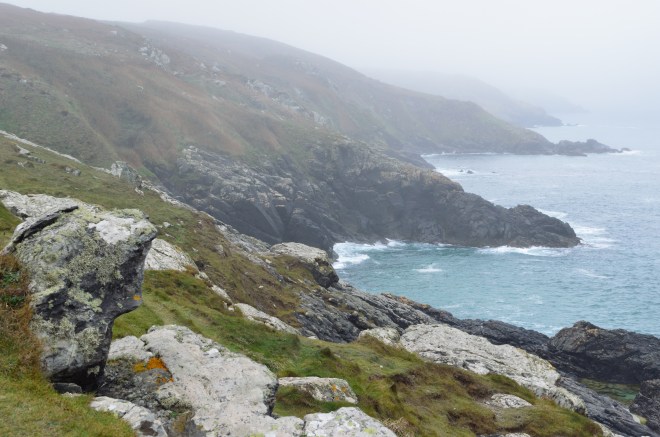
After wandering around town, we decided to venture out and walk a bit of the South West Coast Path just outside of town.  We checked out some beautiful views less than 10 minutes’ walk from the main drag of St. Ives.

Lovely.  I loved the dramatic waves crashing against the rock faces of the cliffs.  Like a painting.

Finally we found a flat rock and just sat down and enjoyed the view for awhile.  The Cornish coastline reminds me a great deal of northern California.  I felt like we were on a mistier, cooler version of our Point Reyes hike from 2009.  And if you know me well, you know I can’t resist a good view like this.  I was happy to sit there and drink it in for an hour.  In that moment, all I wanted for my 30th birthday was to teleport everyone I loved to St. Ives so they could see it too.  Since I couldn’t (I tried), you get this picture.  It doesn’t do justice to the wild beauty of Cornwall, but it’s the best I can do.

After meandering along the cliffs a bit more, we headed back to the B&B, where the sweet managers had left a wonderful bottle of Malbec in our room as a birthday present.  (Thanks, Tony and Carol!)  We savored it while looking at the stunning view from our room, then dressed up and walked back into town for a fabulous dinner and local Cornish wine.  Altogether, it was as perfect as days can get.  I couldn’t think of anywhere else I’d rather have turned 30!

All good things must come to an end, and this is the end of our time in Cornwall (for now, anyway – we’ll be back for sure).  Check back next Friday to find out where we went next on our epic road trip through southern England!

Staying Warm

I was a little bit surprised by my first winter in D.C.  I moved down here because I thought it would be warm.  And it is – most of the year.  I can run outside and hubby can grill almost all year ’round.  But winter still exists here.  We get our occasional Snowmaggeddons that make national news (which is hilarious to me – it’s SNOW, folks) but mostly it’s a long, grey, chilly stretch of days leading from the bonanza of Christmas to the beginning of allergy season.

But I like winter.  I honestly do; it may come from having grown up in a place where winter arrived with a vengeance and stayed for months.  You had to learn to accept it, even embrace it, or you were destined to be miserable for long stretches of the year.  (There’s a well-known joke that there are four seasons in upstate New York: almost winter, winter, still winter, and construction.  I wish I knew who to attribute that to – I heard it from my brother.)  That’s why we ski and skate and build igloos.  You need to do something to pass the time and stay warm.  Of course it’s not as bad in D.C., but it’s still winter, and I’m still trying to stay warm.

Here’s what’s keeping me warm this winter:

~Tea!  Of course!  Especially Mariage Freres Bolero and Rouge Bourbon Vanille from R’s stash (thanks, R!) and Etoile de France from my own.

~Smartwool socks.  They are the warmest, cuddliest socks ever made and they keep my feet completely dry and toasty on winter hikes with hubby.  Bonus points because my freakishly tiny feet fit into a kids’ size medium.  Half price, BOO-YAH!

~Downton Abbey.  Hubby and I are watching on Blu-Ray and LOVING Season 2!  I look forward all day to nights wrapped up in a blanket, nestled next to hubby on the couch, watching the Crawleys’ dramatic lives unfold.

~The prospect of curling up with a good book always warms me up.  Next month I have plans to revisit some old favorites, like the Emily of New Moon series by L.M. Montgomery, Cold Comfort Farm by Stella Gibbons, and I Capture the Castle by Dodie Smith.  And I’m sure I’ll spend at least one winter afternoon under a blanket with a cup of tea and Pride and Prejudice.  It’s basically a winter must for me.

How are you staying warm this winter?

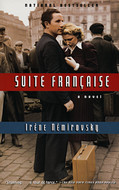
SUITE FRANCAISE

Amazing… spectacular… breath-taking… monumental… no, I give up.  I just can’t think of enough superlatives to describe Suite Francaise.  Irene Nemirovsky’s final work is, even in its unfinished form, one of the most important books of the twentieth century.  I’d feel that way even if I didn’t know the author’s remarkable story, but having some context in which to place the book makes it that much more marvelous.

Irene Nemirovsky intended Suite Francaise to be a literary symphony composed of five novellas and modeled after Beethoven’s Fifth Symphony.  Tragically, she was only able to complete two of her intended five parts – and those in rough draft form, although rarely have I met a more polished draft.  Before she was able to complete her masterwork, Nemirovsky, a Ukranian-born Jew living in France, was arrested by the Nazis and died in Auschwitz.  She wrote the first two sections of her work as she was living them – the first part, “Storm in June,” depicts the June 1940 Paris evacuation, in which Nemirovsky and her family took part.  The second novella, “Dolce,” concerns life in a small French village under Nazi occupation.  Both novellas start quietly and build up to dramatic conclusions.  The truly remarkable thing about Suite Francaise is that Nemirovsky “held a mirror up to France,” as the French prologue reads, showing life in wartime France with great empathy but without glossing over truth.  Many of the characters are unsympathetic, yes.  But that’s reality.  In a crisis, we’d all like to think that we’d be heroes and heroines, but the fact of the matter is that heroics are often cast aside in favor of the rather stronger self-preservation instinct.  Nemirovsky tells it like it is, but somehow without judging her characters.  And the reader understands that as much as we might want to judge Madame Pericand, Corte, Hubert or any of the other characters, odds are we’d behave in exactly the same way in their position.  Nemirovksy’s extraordinary empathy even extends to the German soldiers in “Dolce,” some of whom she portrays as cruel, but others of whom she depicts as young, talented, with their lives and potentials tragically wasted by a war they did not start and in which they are only doing a job.  The fact that Nemirovsky was able to find the grace and courage to not judge German soldiers as a group and to paint them as individuals and not a collective, many-headed monster, is incredible.   That’s what makes Suite Francaise so amazing – Irene Nemirovsky lived in the pages of her book, yet somehow remains above it all, dealing with her characters fairly, honestly, and kindly even when she is eviscerating them for their human failings.

The third part of the book helps to place Nemirovsky’s work in context with the times.  It presents her plans for the three remaining novellas, which she was never able to write, as well as her correspondence prior to her arrest and her husband’s correspondence in his attempt to have her returned to her family after she was stolen from them.  The book concludes with the prologue from the French edition, which explains the historical significance of the book and the story of its publication: Nemirovsky’s ten-year-old daughter took the manuscript with her into hiding, believing it was a diary, and kept it for sixty-four years before she was able to bring herself to read it.  When she finally opened the book and realized it was an unfinished masterwork, she published it immediately.  As a result, we have a ten-year-old with extraordinary presence of mind to thank for preserving one of the most important pieces of French literature.  It’s tragic that this book ever had occasion to be written, but it is transcendent in its beauty.

Suite Francaise, by Irene Nemirovsky (not an affiliate link)

(Image Source)