CATHERINE THE GREAT

Robert K. Massie is arguably the best modern biographer of the Russian tsars.  His works are richly detailed and meticulously researched, but readable.  I loved his account of the last Russian Imperial family, Nicholas and Alexandra, and so I was very excited to read his newest biography, Catherine the Great.

Catherine the Great begins with an account of Catherine’s childhood as Princess Sophia of Anhalt-Zerbst.  Sophia was born to a minor German prince and his rigid, unhappy, ambitious wife.  Sophia’s mother, Princess Johanna, resented Sophia for being a girl… at least, until the Empress Elizabeth of Russia chose Sophia as the bride to her nephew and heir, the Grand Duke Peter.  Johanna and Sophia immediately journeyed to Russia together, where Sophia set about winning the affection and confidence of Empress Elizabeth (overcoming the roadblocks that Johanna set up by viewing herself as a secret agent of Prussia’s Frederick II and constantly bungling her “spying” endeavors).  Sophia converted to Russian Orthodoxy, became Catherine, and was betrothed and then married to Peter.  Unfortunately, it took her nine years to accomplish the one task Elizabeth had in mind for her – producing an heir to the Russian throne – because her husband slept next to her for nearly a decade while rebuffing every attempt she made to, um, carry out Elizabeth’s orders.  Catherine finally was persuaded to take a lover and it’s unclear whether her heir, Paul, was the result of her marriage or her extracurricular activities.

Eventually, Elizabeth died and passed Russia to Peter, who was an immensely unpopular emperor.  Peter hated Russia and idealized Prussia; he called Frederick II “the king my master” and instituted an ill-fated alliance with Russia’s historic antagonist, as well as number of unpopular and idiotic policies.  The pressure mounted and eventually, supported by the Russian military and church, Catherine mounted a sudden coup and took over the throne from her hapless husband.  She proceeded to rule for over 30 years.  Catherine’s reign was not always smooth – there were wars and attempted peasant revolts – but there were few monarchs in Russian history who proved as dedicated or inspired as she.  Catherine first attempted to create a new code of laws based on Enlightenment principles.  She went on to become a philosopher-empress who read widely, always entertained opposing viewpoints, assembled Europe’s foremost art collection of the day and built schools, hospitals, towns and cities, and persuaded thousands of Russians to be inoculated against smallpox.  She added vast swaths of territory to the Russian empire through wars and annexations (the wars were fair; the annexations were not).  Her personal life was often criticized: she took a parade of ever-younger lovers.  But her legacy remains as one of the greatest rulers Russia has ever had and, likely, ever will have.

Catherine would be a challenging figure for a biographer.  Her life was dramatic and full, her accomplishments vast.  But in the hands of Robert K. Massie, she comes to life.  This is a LONG, dense book, but worth reading for anyone who has an interest in Russian history.

Get the book!  Catherine the Great: Portrait of a Woman, by Robert K. Massie (not an affiliate link)
(Image Source)

London, Part V: St. Paul’s and Shakespeare’s Globe

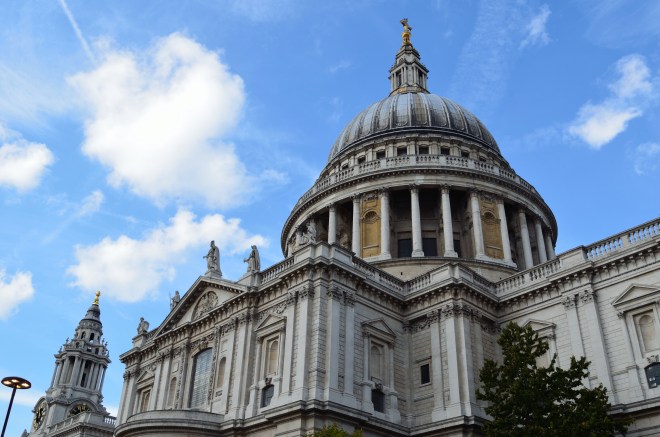
When we left off, I teased that we’d had an interesting visit to St. Paul’s Cathedral.  St. Paul’s is a gorgeous cathedral, designed by the great Christopher Wren (who did many iconic London buildings).  When we visited in 2008, we went inside the cathedral and were awestruck by the magnificent gold ceilings.  This time, there was a ceremony going on involving a bunch of little boys and their families (it had the air of a graduation of some sort, but there were no caps and gowns, so I’m at a loss) and we didn’t get inside – which was okay, as we simply wanted to walk around and admire the dome.  But what made the visit interesting was that St. Paul’s was the site of the Occupy London encampment.  Somehow, I’ve been able to make it through the entire Occupy movement without crossing paths with Occupy DC; I had to journey across an ocean to come face to face with any Occupiers.  (Please note: I don’t talk politics on here, so I won’t take a position one way or the other on Occupy.  I have an opinion, but it’s not blog material.)  We were literally stepping in between sleeping bags and ducking through groups of Occupy protesters as we made our way around the cathedral.  I actually thought it was pretty cool to be treading through what I think is a movement destined for the history books.

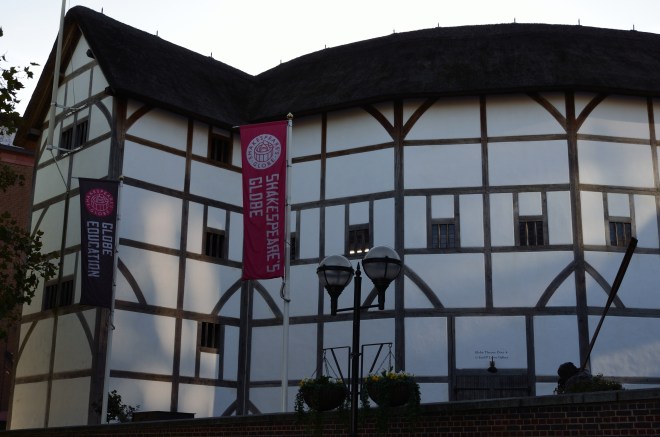
Anywho.  That same day we crossed the Thames and visited Shakespeare’s Globe on the South Bank.

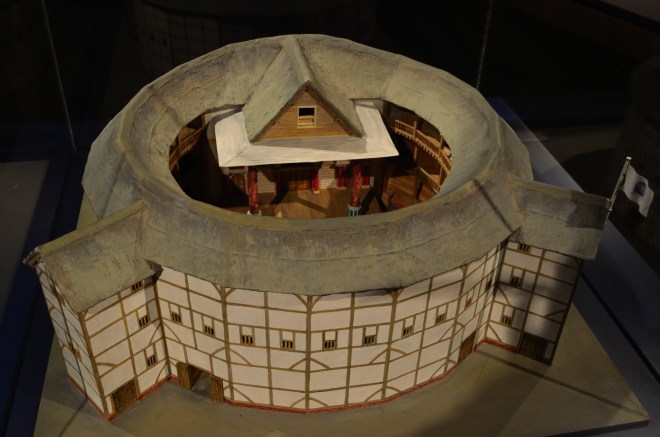
I was totally geeked out over getting a backstage tour of the Globe.  Now, okay, I realize this isn’t the actual Globe, where Shakespeare performed and staged his plays.  (The original Globe Theatre burned down in 1613; it was later rebuilt, put on a few more years of shows, and closed permanently in 1642.)  Shakespeare’s Globe is a modern reconstruction, which opened in 1997 not far from the original Globe site and was built using as many authentic materials and techniques as practicable.  In its heydey, the Globe was just one of several theatres on the South Bank of the Thames, which acquired quite the reputation.  The Puritans were constantly agitating for shutting down the theatre district – it was raucous and noisy and the theatre-goers got up to all kinds of drunken shenanigans.  That was how Shakespeare and his pals rolled!  I would have loved to see that fun-loving crew in action.

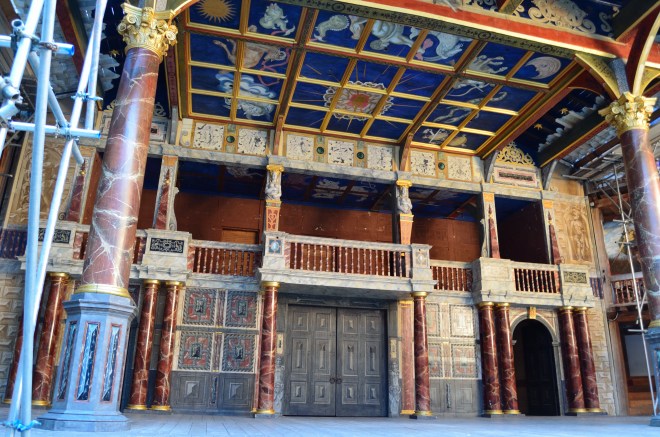
The stage!!!  So while Shakespeare’s Globe isn’t “the real thing,” it was still darn exciting for this theatre nerd.  I own The Complete Works of Shakespeare; I’ve read many of his plays and seen a few – including some extremely funky interpretations, which I think are the best – and I’m giddy with dorky glee over anything associated with the Bard.  So to get a behind-the-scenes tour of a theatre where Shakespeare’s plays are performed regularly in London was very, very cool for me.  In fact, it was the off-season for tourists, which meant that hubby and I got our own awesome private tour of the theatre (but was also a bad thing, because it meant there were no shows being performed).  One of these days, I’m going to get to a Shakespeare production at the Globe.  I don’t even care which play – I love them all, except Titus, yuck.

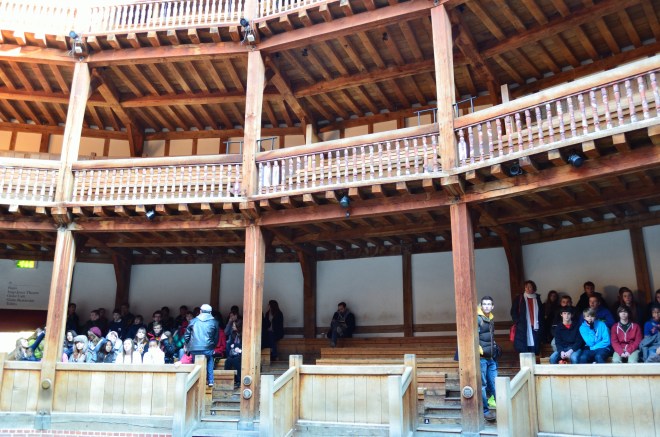
We sat in one of the boxes while our guide explained fun facts about the history of the original Globe and the construction of the new theatre.  And then two enormous, loud groups of middle-schoolers came in, and we fled.

The Globe also included an interesting backstage museum that was devoted more to showcasing costumes and props from productions in the new theatre than any historical artifacts – but that was okay with me.  I love checking out actual production-worn costumes and used props.  Like I said, nerd alert.  (As much as I love theatre, I like to be on the periphery.  That’s why I played in the pit orchestra instead of acting in my high school musicals – every year except senior year, when I was sick of dressing in all black and being tethered to my violin for every school show.   So I requested, and received, a very tiny, non-speaking part in the dance chorus in Brigadoon.  But yeah, meandering around backstage and checking out props is more my speed than starring in the show, thankyouverymuch.)

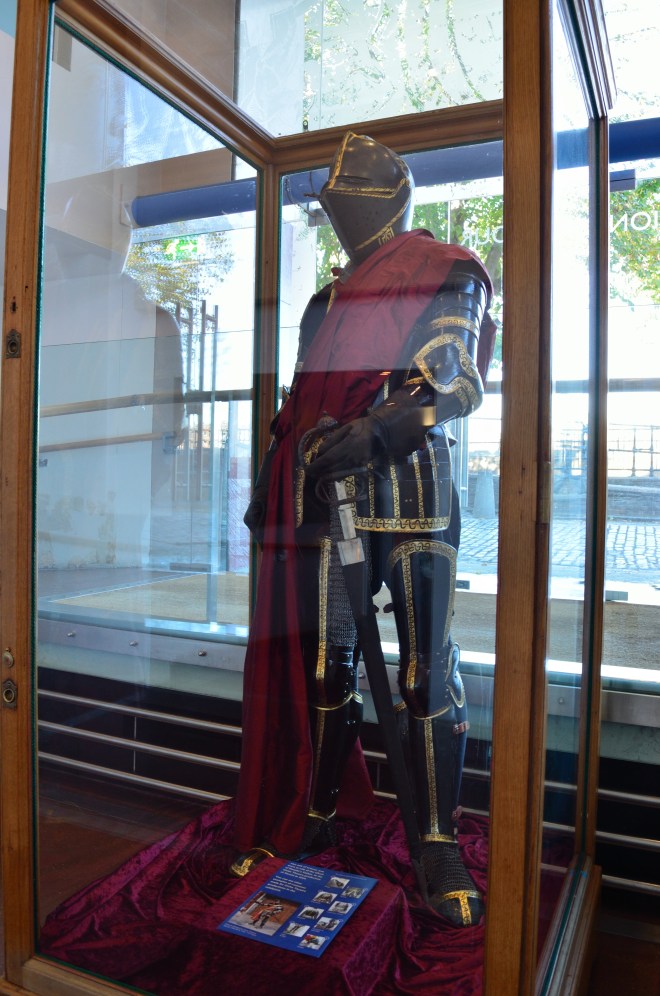
See?  Costumes!  Fun stuff, right?  Hubby would have looked cute in Hamlet’s father’s suit of armor.  (He probably disagrees, but my blog, my opinions.)  We had so much fun touring the Globe and basking in the backstage glory of the museum.  My only regret is that we didn’t get to see a performance.  Next time, I’m definitely going to try to get there during the theatre season and see a play.  (I’ll take any Shakespeare, but I’d particularly hope for The Taming of the Shrew, A Midsummer Night’s Dream, Macbeth or one of the Henries.)

Next Friday will wrap up Messy and Hub’s Great England Adventure 2011, although I’ll have another post or two to follow, inspired by the trip (like a special post on the experience of having afternoon tea in England).  So be sure to come by as I put my food photographer hat on next week…

Two Plus One

Okay, so National Poetry Month was actually LAST month (did you have fun?) but I’m not quite done.  Today I have one more of my favorite poems to share, and then afterward there’s something I’ve been dying to tell you guys…

Us Two, by A.A. Milne (source)

Wherever I am, there’s always Pooh,
There’s always Pooh and Me.
Whatever I do, he wants to do,
“Where are you going today?” says Pooh:
“Well, that’s very odd ‘cos I was too.
Let’s go together,” says Pooh, says he.
“Let’s go together,” says Pooh.

“What’s twice eleven?” I said to Pooh.
(“Twice what?” said Pooh to Me.)
“I think it ought to be twenty-two.”
“Just what I think myself,” said Pooh.
“It wasn’t an easy sum to do,
But that’s what it is,” said Pooh, said he.
“That’s what it is,” said Pooh.

“Let’s look for dragons,” I said to Pooh.
“Yes, let’s,” said Pooh to Me.
We crossed the river and found a few-
“Yes, those are dragons all right,” said Pooh.
“As soon as I saw their beaks I knew.
That’s what they are,” said Pooh, said he.
“That’s what they are,” said Pooh.

“Let’s frighten the dragons,” I said to Pooh.
“That’s right,” said Pooh to Me.
“I’m not afraid,” I said to Pooh,
And I held his paw and I shouted “Shoo!
Silly old dragons!”- and off they flew.
“I wasn’t afraid,” said Pooh, said he,
“I’m never afraid with you.”

So wherever I am, there’s always Pooh,
There’s always Pooh and Me.
“What would I do?” I said to Pooh,
“If it wasn’t for you,” and Pooh said: “True,
It isn’t much fun for One, but Two,
Can stick together, says Pooh, says he.
“That’s how it is,” says Pooh.

So.  That thing I was going to tell you?  Well…

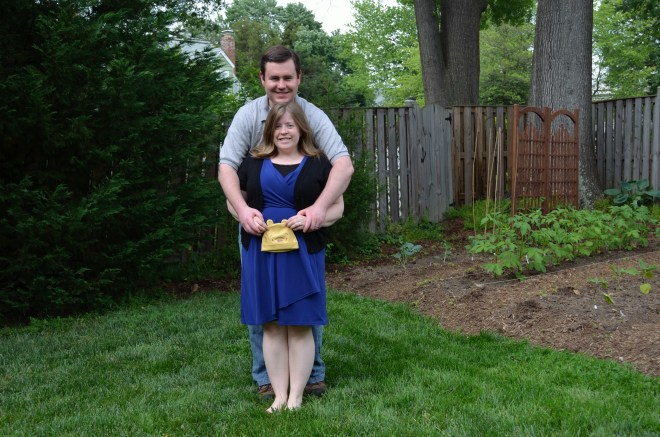
After almost seven years of marriage, our little family of “us two” is finally becoming “us THREE.”  Hubby and I are beyond thrilled and counting down the days until we get to meet our little Pooh Bear.

Playtime begins in October.

WE, THE DROWNED

For hundreds of years the town of Marstal in Denmark stood between land and sea.  The boys of Marstal gather to terrorize their teacher and sing their hymns beneath model schooners, knowing that one day they will be sailing on life-size ships like their fathers.  The men of Marstal look to the sea – it is more than the way they make their living, it’s their destiny.  The women of Marstal say goodbye to husbands, sons, brothers, knowing that many will never return – they will be swallowed by the sea.  We, the Drowned tells their stories, spanning over the course of 100 years.  The story begins with a sea battle in 1848, as Danish sailors take on German rebels.  The Danes suffer horribly, but Laurids Madsen manages to survive the battle thanks to his boots.  Not long after, however, he disappears and his son Albert searches the Pacific for years, looking for the facts behind his father’s disappearance.  Years later, Albert retires to Marstal and takes a young widow, Klara, and her son Knud Erik under his wing.  Klara is determined that Knud Erik should not be a sailor.  When Knud Erik defies her wishes, Klara declares war on the town of Marstal and the entire sea.
I don’t normally go in for seafaring literature.  I’ve never read Moby Dick and I didn’t care for The Old Man and the Sea at all.  But We, the Drowned was really wonderful.  It didn’t gloss over the brutality of a naval battle or a life at sea.  (Indeed, parts of the book could get quite violent and gory, so be warned.  I found that the violence made sense for the story, so it didn’t bother me – but if you’re sensitive to that, it’s something to consider.)  The descriptions of Albert’s prophetic dreams before World War I and Knud Erik’s experiences in World War II were heart-wrenching.  To my surprise, I found myself glazing over a little bit during the scenes that took place on land, wanting the characters to get back out on the open waters.  (Not a lot; the shore scenes were still extremely good.)  I can see why this book is considered “an instant classic” in Europe.  It’s well-written, fast-moving, emotional and gripping.  Highly recommended.

(Image Source)

Get the book!  We, the Drowned, by Carston Jensen (not an affiliate link)

London, Part IV: Iconic Views

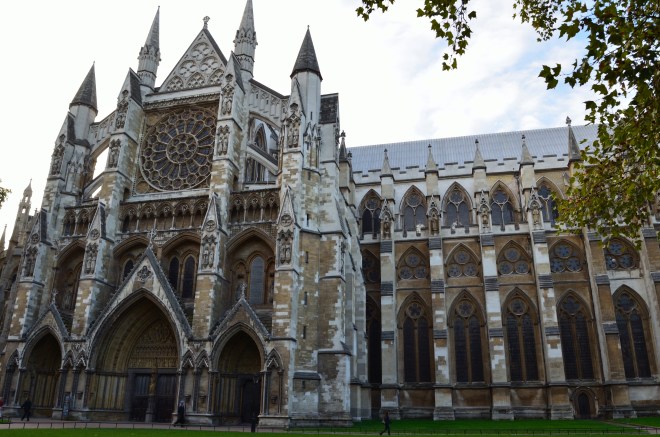
No trip to London is complete without a walk past some of London’s most iconic buildings – or that’s my opinion, anyway.  This year, hubby didn’t want to go into Westminster Abbey; he’s not as into history as I am, and he has a problem with the idea of illustrious historical figures (or just rich people) being buried inside churches.  I can understand where he’s coming from, but for me that viewpoint takes a total backseat to the thrill of seeing the effigies of Elizabeth I and Mary Tudor, or the plaque dedicated to Chaucer – people I’ve read about for years.  Still, I settled for just motoring by the Abbey this time.  On the next trip, we’ll go back in and get our audioguide on for sure.

Fortunately, hubby was not opposed to posing for a self-portrait outside the Abbey.  Isn’t he cute?

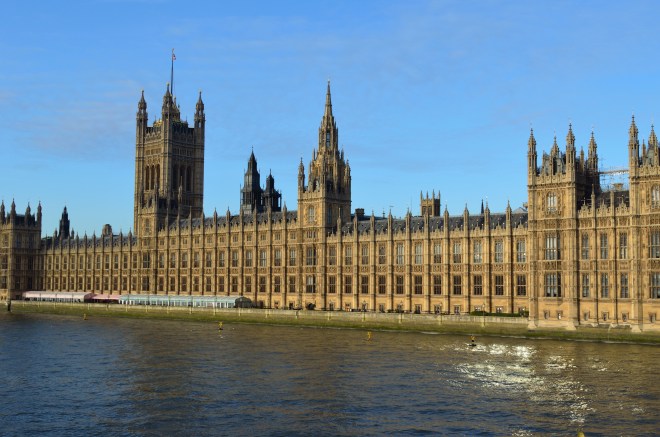
Not far from Westminster Abbey is the Thames River and the Houses of Parliament.  Someday I would love to take a tour of Parliament.  I have friends who’ve done it and told me that the tour is spectacular.  It’s another reason for me to go back to London ASAP…

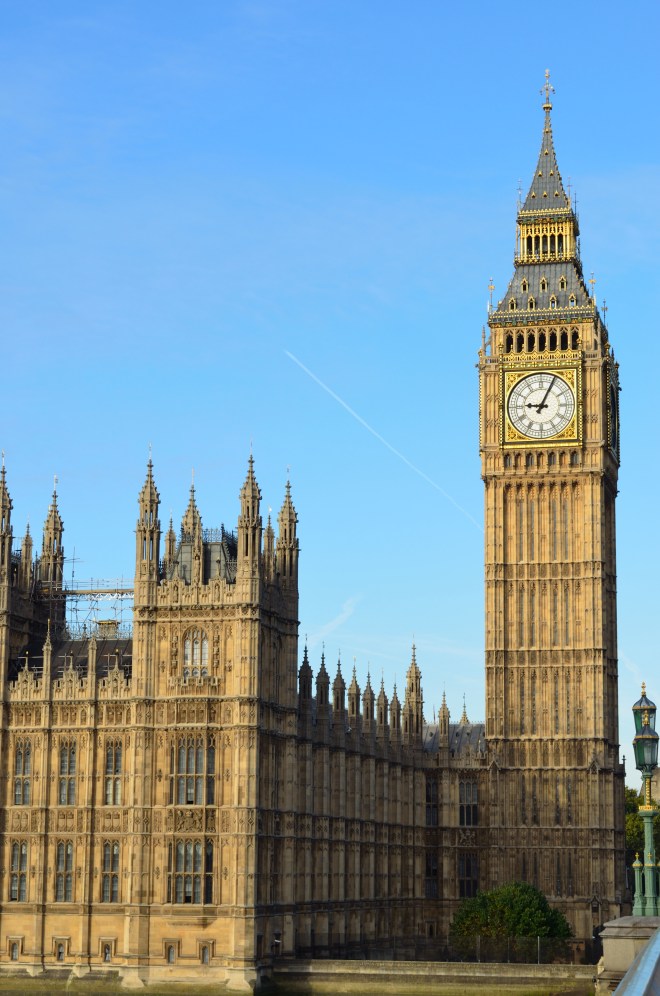
And of course, any London visitor must wave hello to Big Ben.

I’ll leave you – for now – with this spectacular view across the Thames.  See the dome of St. Paul’s in the back?  We had quite the interesting visit there this time…

But you’ll have to wait until next week to find out about that!  Check back on Friday for more London.

Spring Brunch

Another one from the archives… Life has gotten in the way of cooking, but I’m hoping things will calm down soon.  In the meantime, enjoy this menu (complete with recipe links) – and if you’re planning to celebrate the moms in your life, just add love!

 Just in time for Mothers’ Day, here is a spring brunch menu packed with yummy flavors and bright colors.  Whether you’re planning to celebrate Mom tomorrow, or to throw an impromptu brunch next weekend just because the April showers are over and the May flowers are finally blooming, these dishes will bring some warm spring sunshine to your table.  Set the table with bright linens and crisp white china, and fill bud vases with spring blooms and line them up in a cheerful parade down the center of the table.  Or – better yet – eat in the garden!


Cucumber Coolers


Minted Fruit Salad


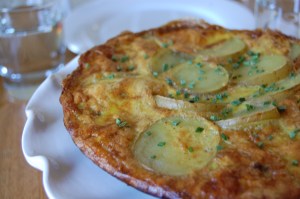
Potato Leek Frittata


Peach Oatmeal Muffins

Enjoy, and Happy Spring!

Library Mishap Update: Week 3

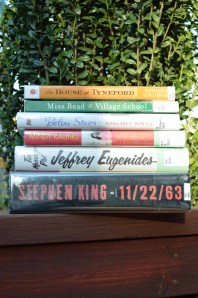
Well, kids, this is it.  The moment of truth.  Did I, or did I not, manage to read 1,927 pages in three weeks?  And more importantly, did I learn one single blessed thing from the experience?  Read on.
Tuesday (5/1): Still a touch burnt out from 11/22/63, so I didn’t do any reading today.  Instead, I spent the evening watching The Biggest Loser season finale (I was totally pulling for Kim).  Totals are the same as at the conclusion of last week: 1,522 pages read; 405 to go.

Wednesday (5/2): Headed off on my second business trip in two weeks, this time to a conference sponsored by my firm at our headquarters.  I was excited to see some of my colleagues from other offices and wonderful firm clients.  On the plane, I got a little bit of reading done, knocking off 55 pages of The Marriage Plot.  Not quite sure yet what I think of the characters or the book, but the writing’s great.  1,577 pages down; 350 to go.

Thursday (5/3): I wasn’t expecting to get any reading done today, but I woke up early and wasn’t expected at the conference registration until 9:30 a.m., so I kicked back in my hotel room and read 72 pages of The Marriage Plot before breakfast.  That was it for the day – I spent the rest of the time in workshops and socializing with clients and work friends until way past my bedtime.  But considering I thought this would be a lost day as far as bookish pursuits were concerned, I was thrilled with my page total.  1,649 pages read; 278 remain.

Friday (5/4): Another plane flight, another hour and a half of uninterrupted reading time.  Then, when I got home, hubby switched on a hockey game and I did some more reading while keeping an eye on the TV.  115 pages of The Marriage Plot dispatched with today between the plane and post-dinner time.  1,764 pages down; 163 to go (and starting to think I might pull this off).

Saturday (5/5): Annnnnnnnd… SHE’S DONE.  163 pages of The Marriage Plot completed today.  Permit me a Boom Shaka?  I got into the zone – meant to do housework for most of the day, but I ended up turning page after page.  I saw the finish line and decided to just go for it.  (In between trips downtown for lunch and grocery shopping with hubby, that is.  I read fast and was done by the time the Kentucky Derby aired.)  So… that’s that. 1,927 pages read; 0 to go.

I am still in a bit of a state of shock.  When I realized the magnitude of the task I had to get through in three weeks, I didn’t really think it could be done.  I mean, maybe I thought it could be done on vacation.  But working 50 hours per week, with two business trips thrown into the mix?  Yeah, I wasn’t too optimistic.  I’m amazed that I managed to pull it off, and – I’ll be honest – feeling pretty proud of myself right now.

So, for the important question: did I learn anything?  Well, considering I checked out two more library books since beginning this challenge (one the new 625-page Robert K. Massie biography of Catherine the Great, which I had on hold) and got two more books off the holds shelf when I returned The Marriage Plot, I’d say… it sure doesn’t seem like it.  Right now I have those books right where I want ’em… but stay tuned.  There will probably be another library mishap in the future.  I might be a fast reader, but I seem to be a slow learner.

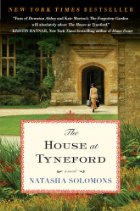
THE HOUSE AT TYNEFORD

Elise Landau is part of the glittering set of Vienna in 1938. (A peripheral part, to be sure – she’s really just a kid. But a part, nonetheless.) Daughter of a famous opera singer and an avant-garde novelist, sister of an up-and-coming (and beautiful) violist, Elise is accustomed to a world of parties, champagne, silk dresses, pastries in the famous hotels and cafes of Vienna. She is steeped in culture and luxury, living a life of ease as the petted baby of a well-off family. Until she’s not. Because, you see, it’s 1938 and Vienna and Elise is Jewish. Her parents, Anna and Julian, are bound for New York; her sister Margaret and brother-in-law Robert are headed for San Francisco. But Elise is not famous – she’s not part of the intelligentsia or glitterati, and so nobody wants her. Yet she must escape Vienna and she does – on a “domestic service visa” – a means for privileged young Jewish girls from the Continent to flee to England by taking up positions as housemaids in the great country houses. Elise finds herself a place at Tyneford House, with the Rivers family – one of the oldest, most respected non-titled English families. Life as a housemaid is hard, especially for one used to getting her way in everything. Elise has to learn to work hard, keep long hours, and ignore the disrespect she is expected to absorb as a maid. She has to keep silent through petty indignities from the other staff, and real cruelty from a nasty houseguest. But while Elise’s life in England is hard, Tyneford comes to feel like home. Elise makes friends – a local girl named Poppy, and Kit Rivers, the son of the master of the house. Elise’s friendship with Kit will transform them both – but when the war escalates, everyone at Tyneford is going to have to accept the big changes that are coming.
Elise’s struggles were wrenchingly real.  From the early fish-out-of-the-water moments she experiences as she tries to navigate London without much English-speaking ability, to her initially awkward, but later more natural, friendship-turned-romance, to her suffering at being considered an “enemy alien” by England when she has had to flee her own country, Elise certainly goes through a great deal.  Her experiences change her, in realistic ways – the reader sees her evolve from the spoiled, pampered young girl of the first pages to a more world-weary woman, old beyond her years.  Yet Elise does not allow the injustices she suffers to harden her.  She remains the same Elise – insecure, but capable of loving deeply.  It is a skillful writer indeed who can take a character through the many assaults Elise suffers without letting her become angry at the world.

I loved The House at Tyneford. I honestly wasn’t sure what to expect, because this is exactly the kind of book that I have a tendency to build up in my mind until nothing could possibly live up to my expectations, no matter how good. But Tyneford was well-written, exciting, heart-rending and evocative of a lost period of time. I’m so glad that it proved to be a worthwhile read, because I so wanted to love it. Don’t you love when you want to love a book, and it lets you love it?

Get the book!  The House at Tyneford, by Natasha Solomons (not an affiliate link)

I’m submitting this book review to the What’s In A Name? Challenge hosted by Beth Fish Reads, in the category “House.”  Cruise on over to her blog to see the other submissions!

London, Part III: Let’s Get Our Culture On

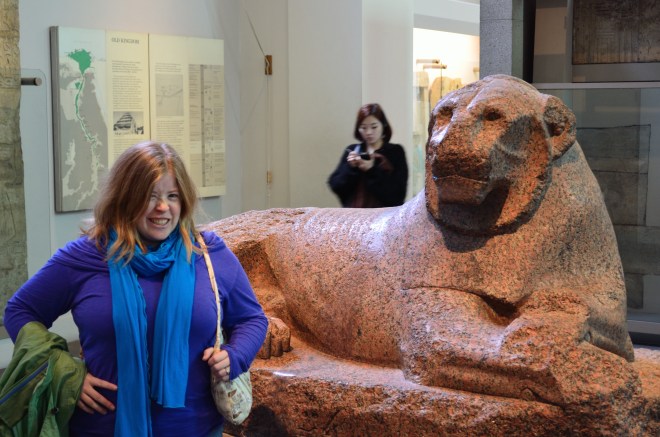
The British Museum is a must-stop when hubby and I visit London.  There’s just so much to see there – it’s unbelievable.  (When we traveled to the UK in 2008, we took a cab to the museum and after we told our cabbie where we wanted to go, he said “Oh, yeah, we’ve stolen some marvelous stuff.”  He also said that hubby looks “not unlike” Harry Potter.  It was a fun cab ride.)

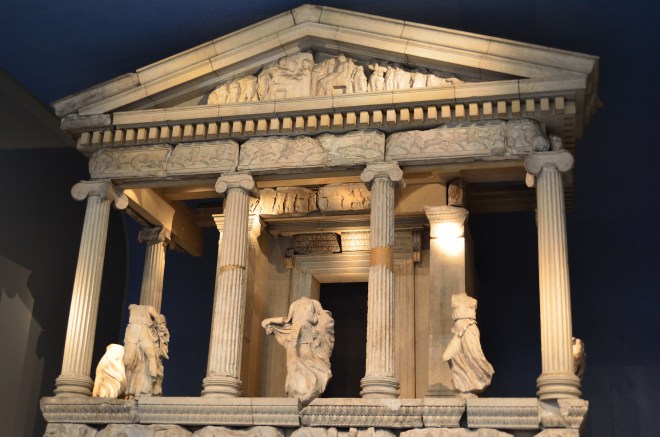
We checked out the Greek and Roman art and architecture…

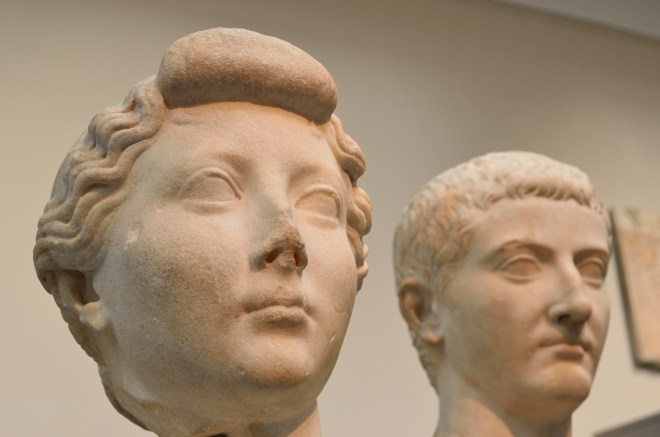
Including some heads and busts I was very excited to see!  This ^ is Livia and Tiberius, who I considered old friends (or frenemies) after reading I, Claudius this summer.

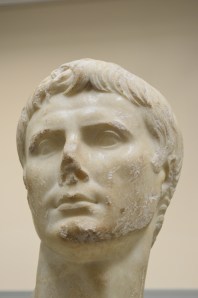
Augustus

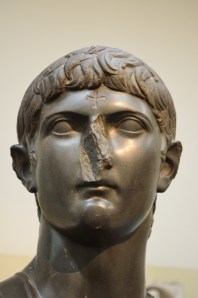
Germanicus (one of my favorite characters in the book – I felt sorry for him in the book because of that nutter butter Caligula, and in reality because some zealot carved his forehead up – poor guy).

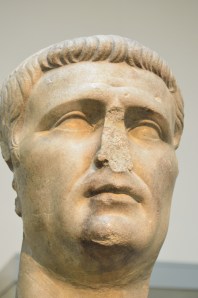
And, last but not least, the man himself – Poor Uncle Claudius…  If you haven’t read Robert Graves’ classic, please do check it out!

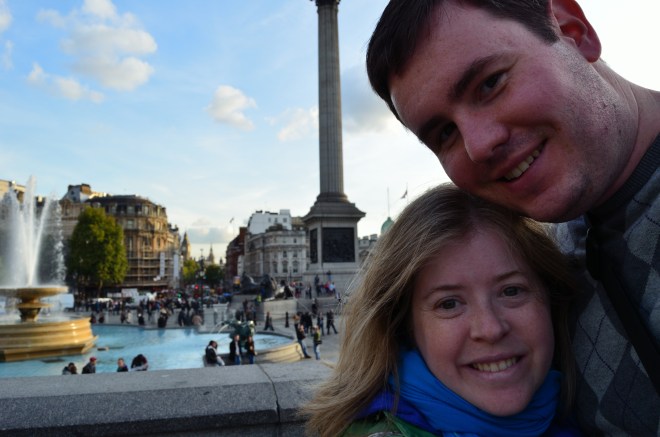
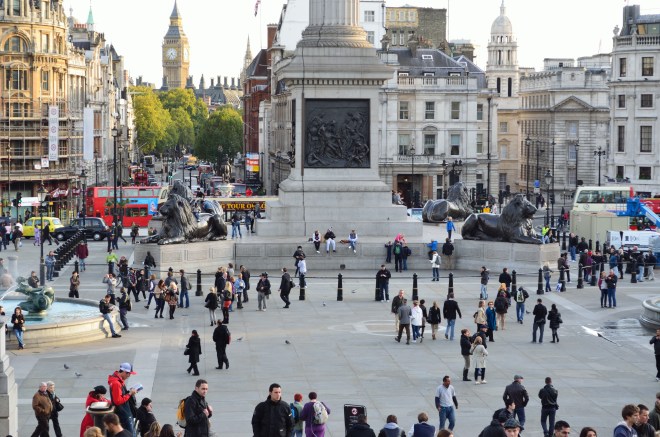
After a few hours at the museum, we walked (yes, walked – we’re a hoot on vacation) over to the National Gallery and the National Portrait Gallery for a quick run-through before closing time.  I love the British National Gallery and I can’t visit London without popping in to see the portraits of Henry VIII and wives, Elizabeth I, Shakespeare and Jane Austen.  (We also swung through the modern portrait rooms on this trip and were lucky enough to see a very nice portrait of Prince William and Prince Harry looking particularly dashing.)  Then we spilled out of the museums and onto Trafalgar Square, where we posed for self portraits and checked out…

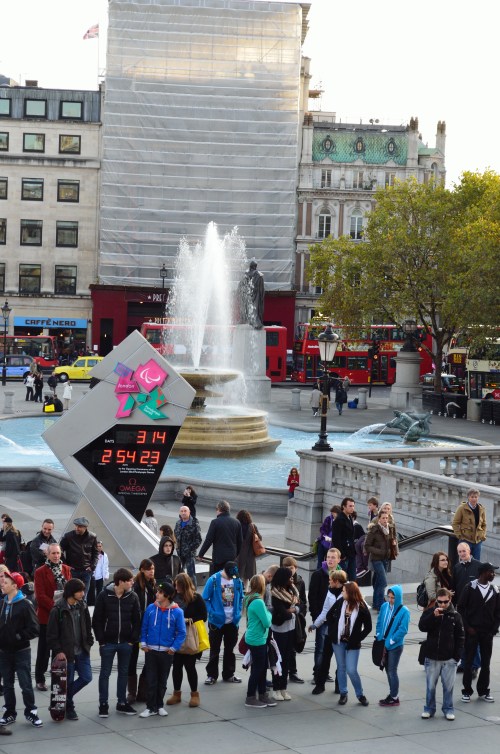
The Olympic Countdown Clock!  How fun.  I would love to go to the Olympics someday, but I’m more of a Winter Games type of girl.  (Hubby and I tried to get Vancouver tickets in 2010 but were foiled.  Maybe another year.)  But any Olympics are fine with me – I love the pomp, the sportsmanship, the Parade of Nations… Being in London as the UK started to psych itself up for hosting was pretty exhilarating!

We enjoyed the hustle and bustle of Trafalgar Square a bit longer, turned to leave, and practically ran smack into this guy…

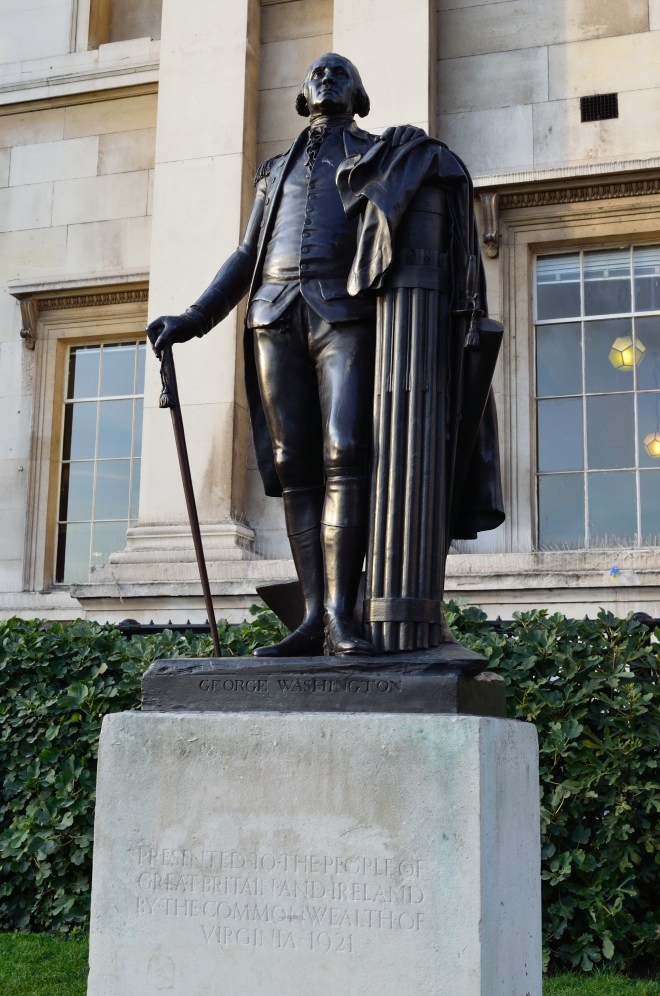
Yes, that IS a large statue of George Washington, gifted to the people of Great Britain by the people of Virginia.  I know what you’re probably thinking, and believe me, we were thinking the same thing: “Huh.”  We’re used to seeing statues of G-Dubs everywhere we turn at home – that’s par for the course when you live in northern Virginia, work in DC, and attended law school at The George Washington University (go Colonials!).  But it did seem a little… I dunno, weird?… for us to give the British people a statue of the man who led our rebellion against the British government.  Hubby and I both had identical confused looks on our faces when we ran into George.  And we’re proud Virginians. But… okaaaaaaaay then.

Whew, that was a whirlwind day of statues, from Poor Uncle Claudius to the Father of the American Nation.  Come back next Friday for more London adventures!

Eggplant and Orzo Stuffed Peppers

DSC_0017

Here’s another blast from the recipe archive past for you, because I’m on my second business trip of two weeks and have barely cooked in days.  And also because I love looking at my beautiful granite countertops from my old condo.  Sigh.  I haven’t made this recipe in a LONG time and now I’m thinking of picking up the ingredients next time I hit the market.  Stuffed peppers are one of my favorite foods… Hope you enjoy these!

This dinner started out planned, in my menu notebook, as Zucchini and Orzo Stuffed Peppers, a Giada de Laurentiis recipe.  But then a certain someone – who shall remain nameless – threw out my zucchini.  He thought it was a weird cucumber, apparently.  This sort of thing happens occasionally – little elves raid my produce drawer – and fortunately, I was prepared this time.  A few quick adjustments, some fly-by-the-seat-of-your-pants sauteeing, and I had some incredibly delicious Eggplant and Orzo Stuffed Peppers on my hands.  You know what?  I like eggplant better anyway.

DSC_0022

Eggplant and Orzo Stuffed Peppers

2 Japanese eggplants, peeled and finely diced
4 Roma tomatoes, coarsely diced
1/4 cup full-bodied red wine, such as Cab or Zin (2012 edit: or sub mushroom broth)
1 teaspoon dried oregano
1/3 cup + 4 teaspoons freshly grated Parmesan
1/2 cup orzo
Kosher salt and cracked pepper to taste
4 red bell peppers
4 teaspoons Italian-seasoned breadcrumbs
Fresh chives

  • Preheat the oven to 375 degrees Fahrenheit and simultaneously begin heating vegetable oil (a moderate amount) in a saute pan, and water in a saucepan.  Add the diced eggplant to the saucepan, season with salt, and saute until browned and crispy in parts, soft in others.
  • Add red wine – not too much, just enough to deglaze the pan.  Stir eggplant around and be careful to scoop up the browned bits from the bottom of the pan.  Add cracked pepper and dried oregano.
  • Meanwhile, cook orzo until al dente, according to the instructions on the box.  Drain and reserve.
  • When eggplant starts to smell too divine for words (it’s a scientific process), add diced tomato and stir just until warm.  Dump the whole mess into a bowl and stir in 1/3 cup freshly grated Parmesan and orzo.
  • Prepare the red peppers – slice off the top (and if necessary, a tiny sliver from the bottom so the peppers will stand upright in the baking dish).  Carefully cut out the ribs and remove the seeds, but don’t bother being too terribly precise.
  • Scoop the eggplant and orzo filling into the red pepper shells.  Top with breadcrumbs, remaining Parmesan, and a drizzle of olive oil on each pepper.
  • Bake at 375 degrees Fahrenheit for 20-25 minutes, until tops are golden and peppers are slightly soft.  Let cool slightly before serving.
  • Garnish with chopped fresh chives, if desired.

Yield: Serves 4 moderately hungry people (with sides) or 2 very hungry people.

Source: Adapted from Giada’s Kitchen, by Giada de Laurentiis