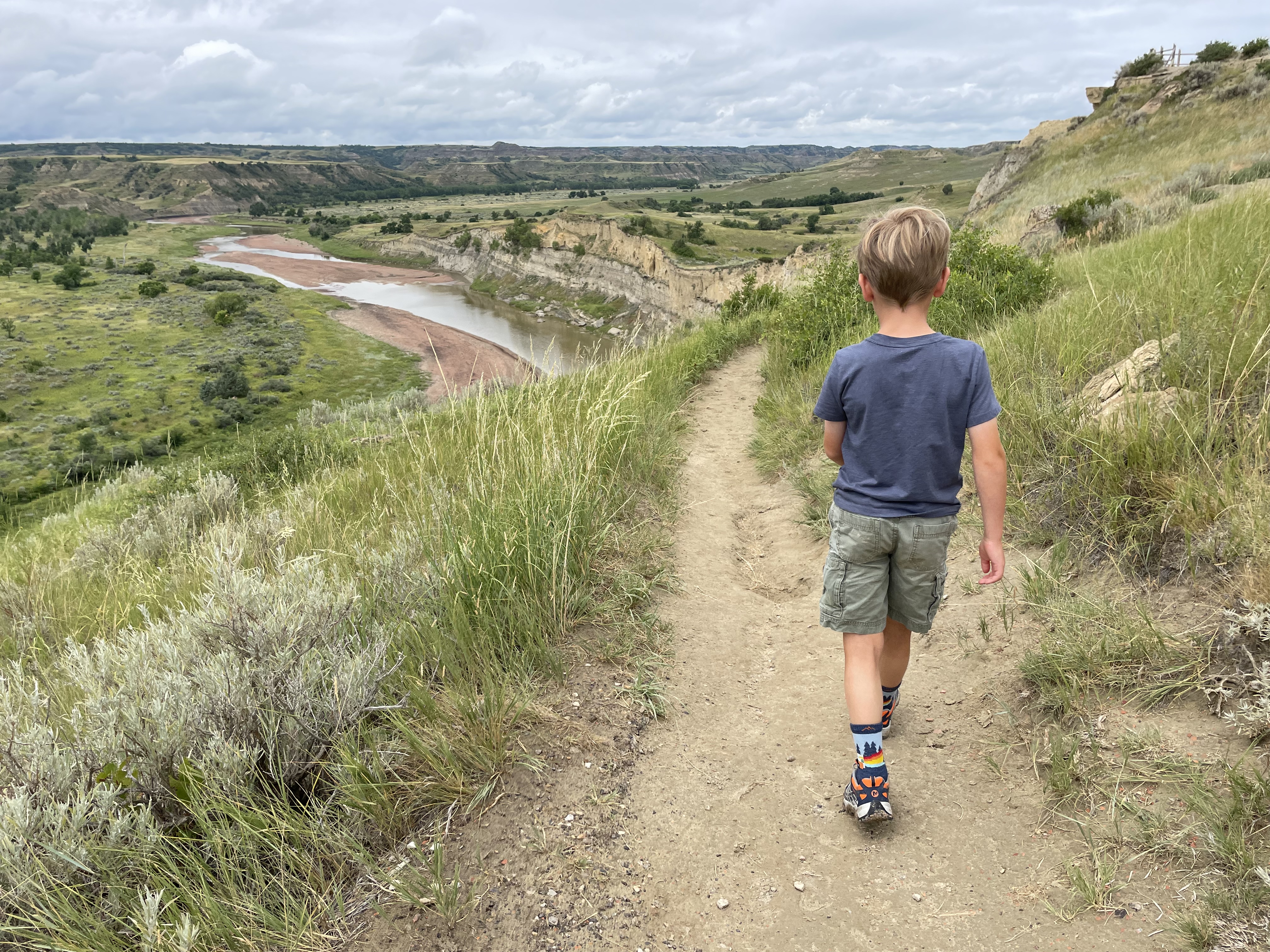
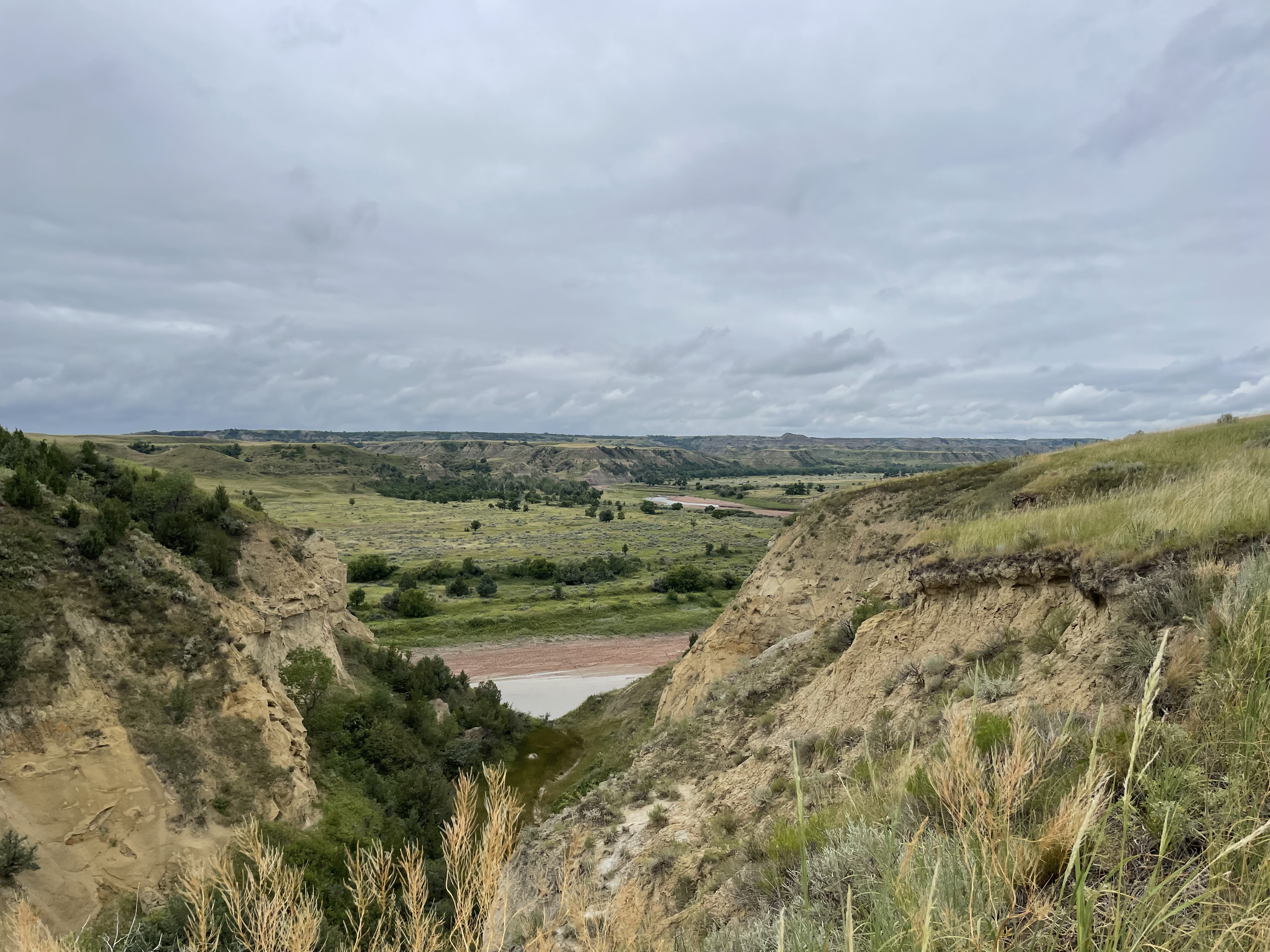
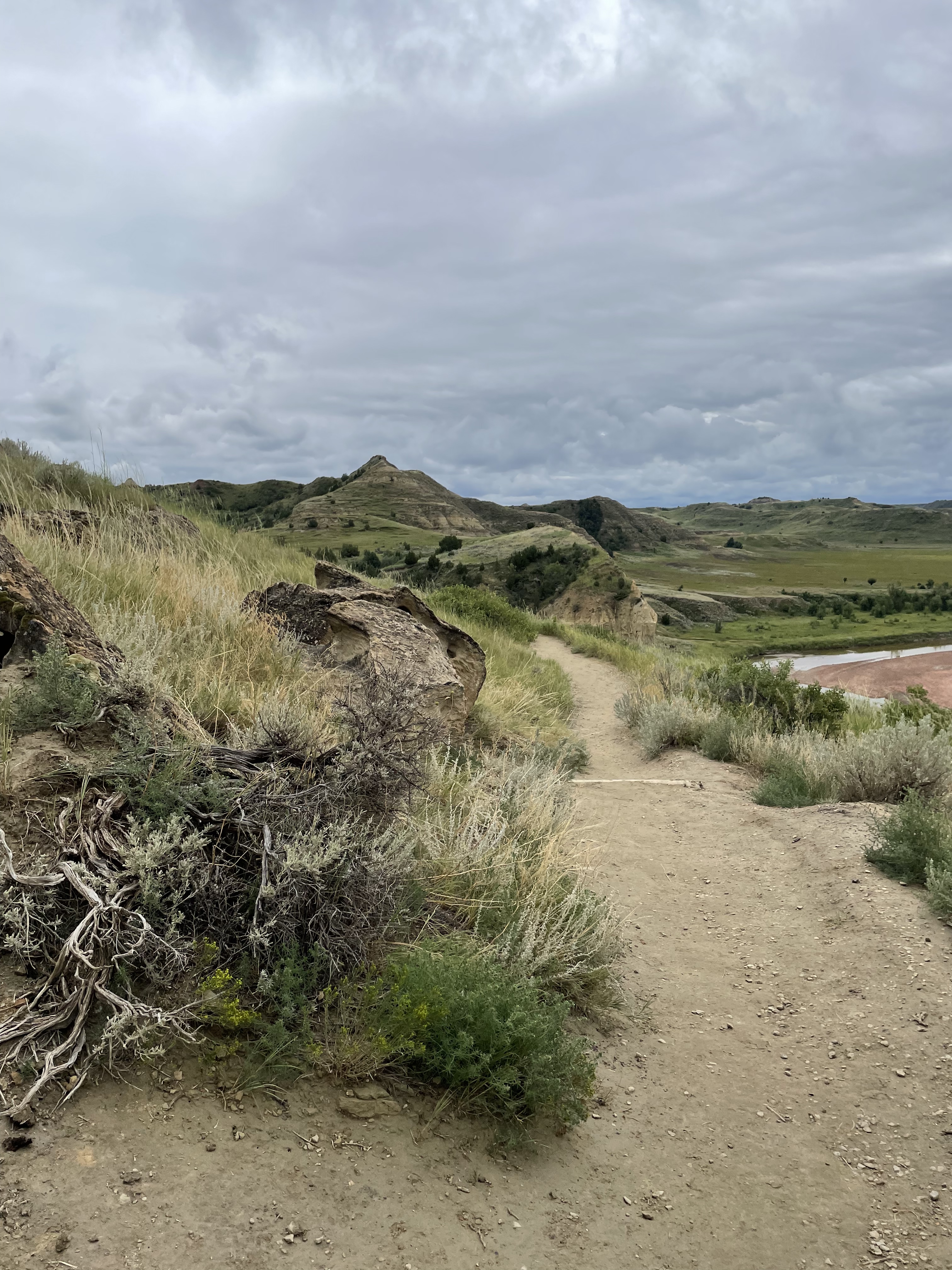
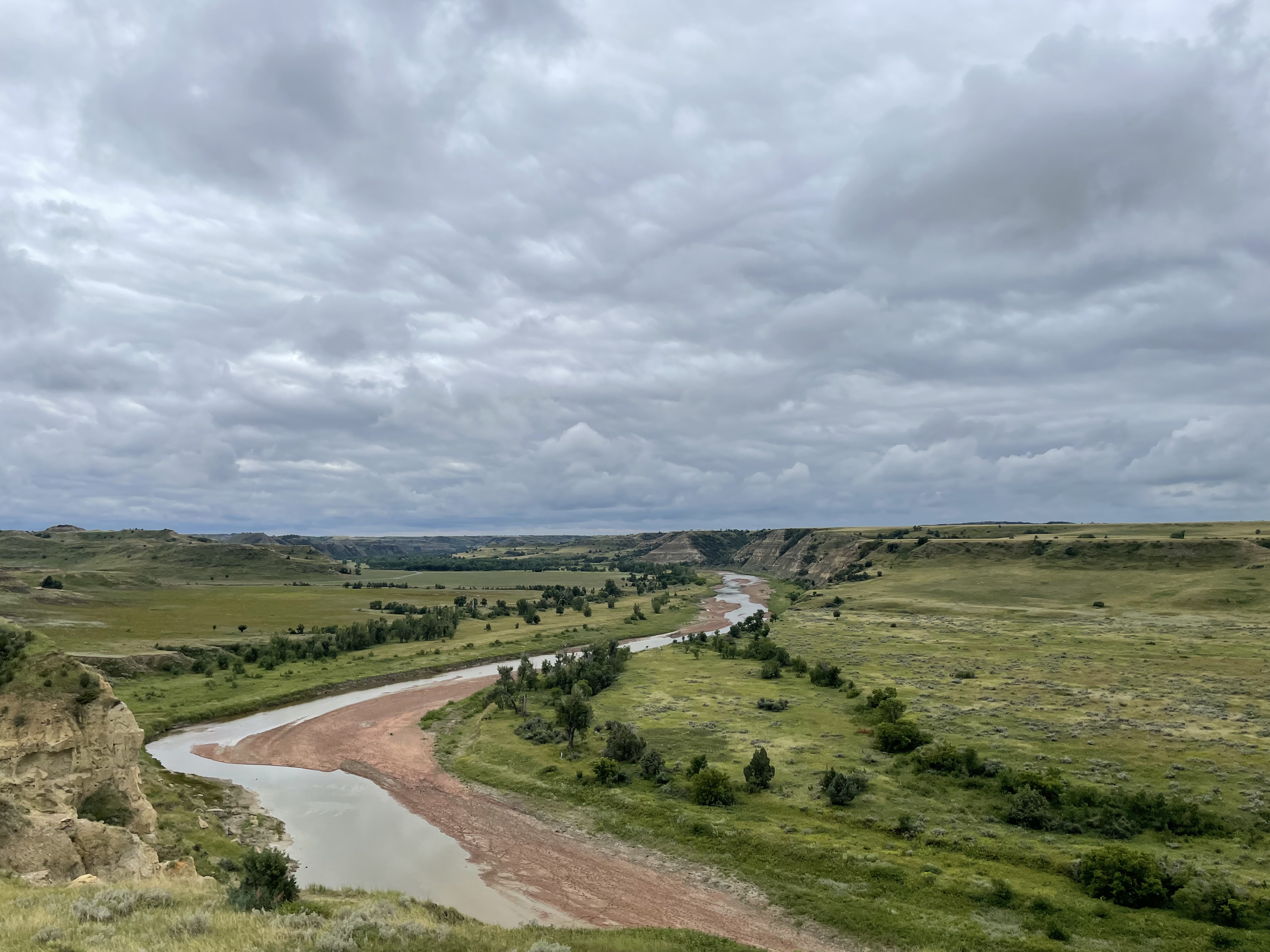
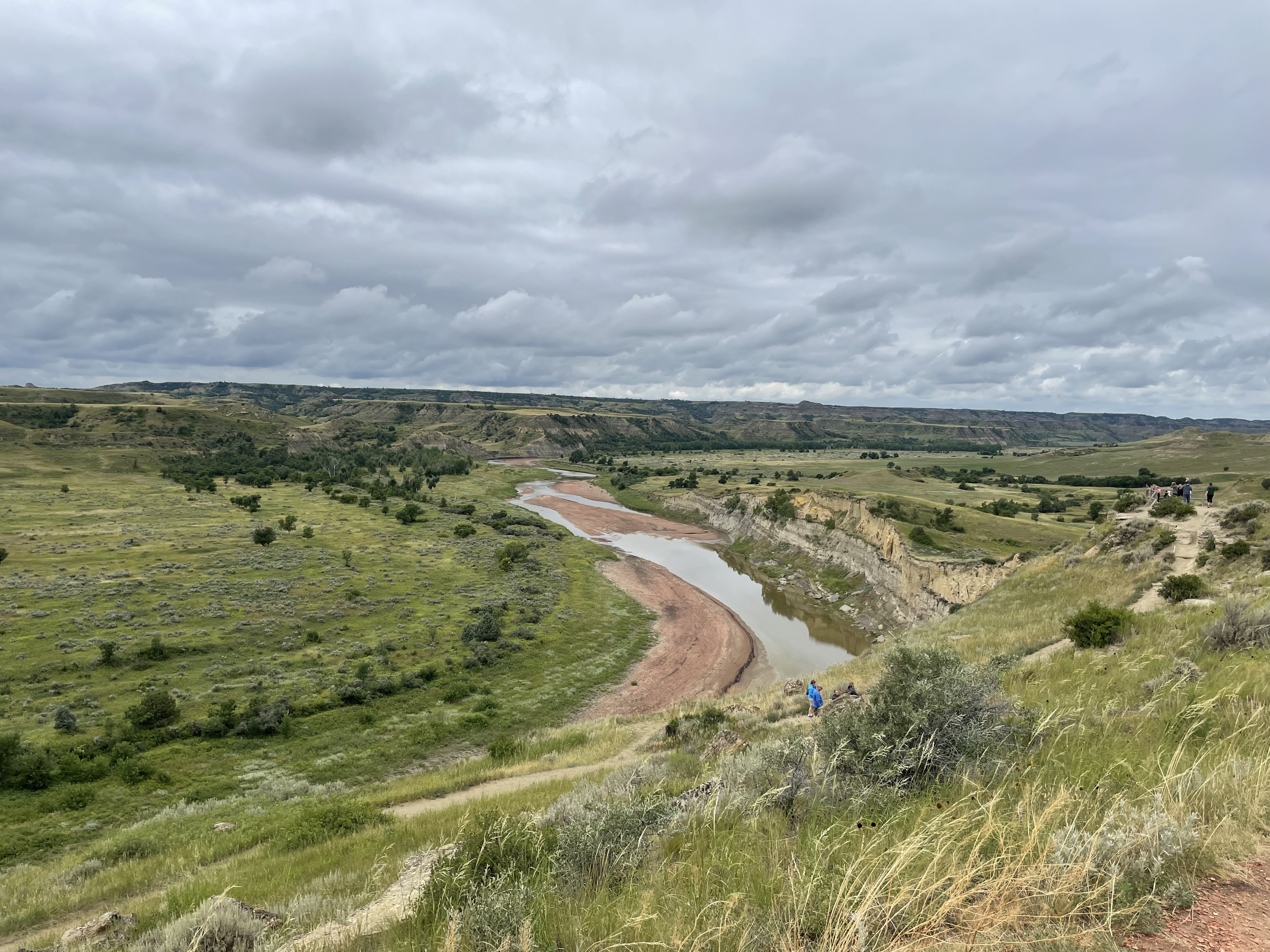
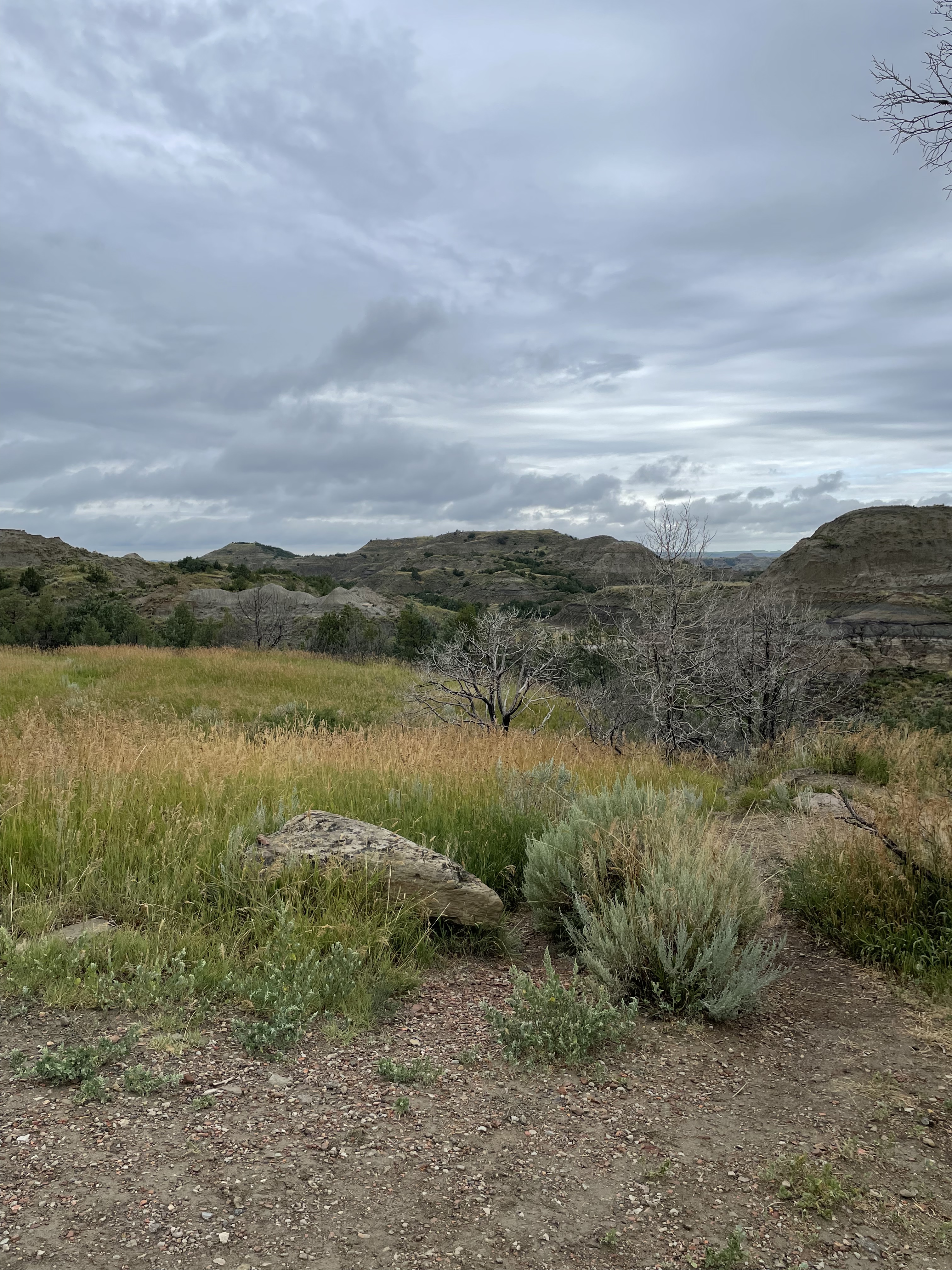
When on a hiking vacation, one must hike multiple trails per day, right? After hiking the Coal Vein Nature Trail, we drove directly to another trail on my list: the Wind Canyon Trail, a winding path high above the Little Missouri River valley.
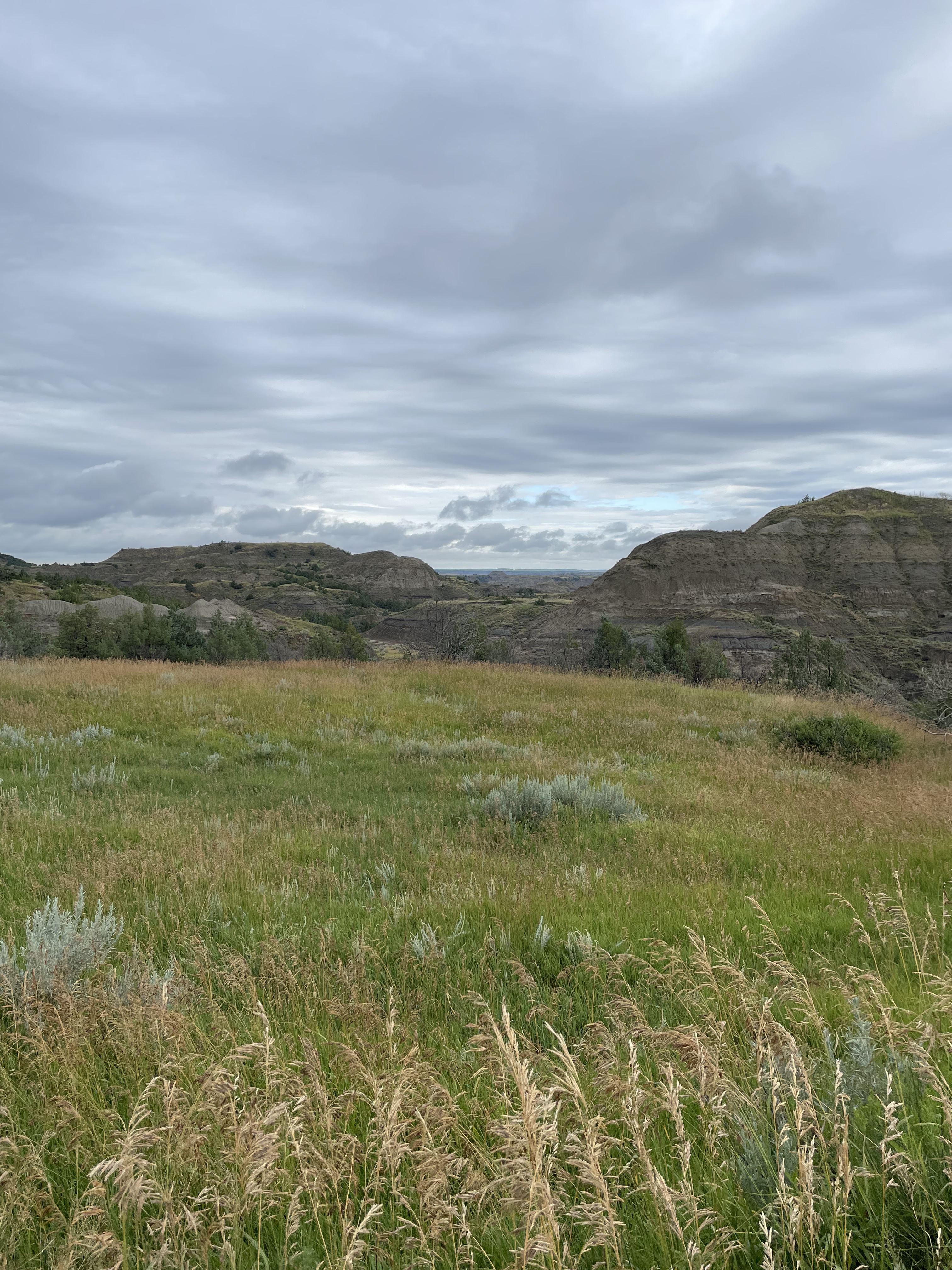
It’s not an especially challenging trail – being mostly flat – so the bang for hiking buck is outstanding. With hardly any effort at all in payment, we were treated to gorgeous vistas for the length of the trail.
I was a little worried about whether this path would work for us, to be honest. I have a couple of hikers in the family who are afraid of heights, so I always like to know what the exposure situation is before deciding on a hike. Despite the great views and the trail situated high above the river, this one did not bother my acrophobic family members. The river-side slope was gradual enough that no one felt exposed or had vertigo. Winning!
We were really hoping to see some bison on this hike. There were hundreds of bison tracks in the mud down by the riverbank, so they were definitely around – but we didn’t see any of them (this time; stay tuned).
But this hike was still fabulous even without the bison. I mean – how can you go wrong with those views?
Still on a search for bison, we decided to drive over to another spot that we thought might prove more successful – a small ranch house that provided the trailhead for a five mile loop, and was less than a ten-minutes’ drive away. We’d met an older couple on the Wind Canyon trail, who told us they had seen bison there that very morning.
We didn’t want to do the whole loop – not realistic with the small hikers – but we decided to walk down to the riverbank and see what we could see.
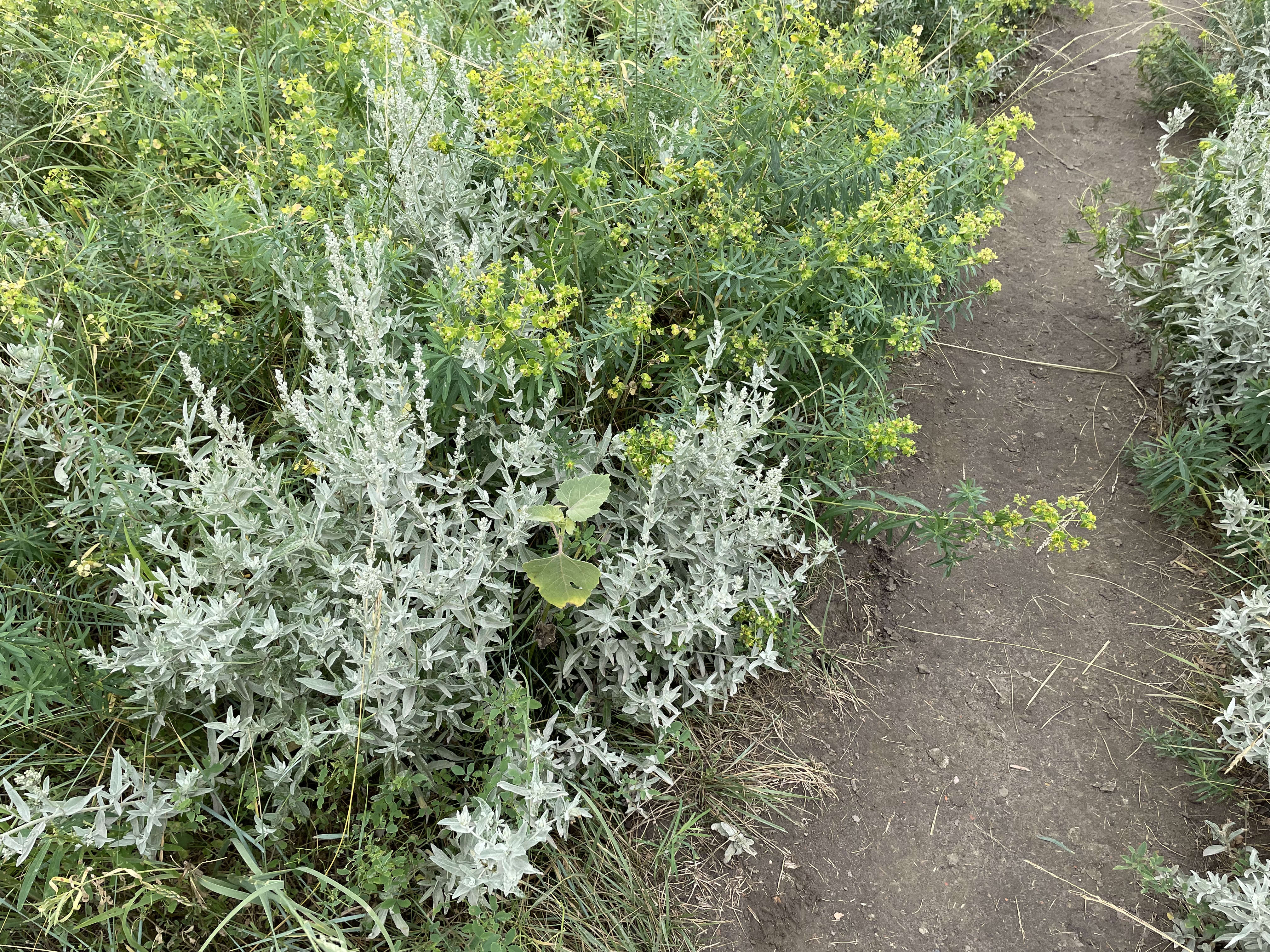
Plenty of sage along the trail! I love the smell of sage – one of my favorite things ever.
Little Missouri! (Note: I am not keeping the name of this hike a secret, I swear. I forgot it, and despite extensive googling I can no longer find it. And that’s also why I am not devoting an entire post to this pretty walk. If you’re in TRNP, it’s in the South Unit and there is a white house and a small parking lot, and that’s all I can remember. Sorry!)
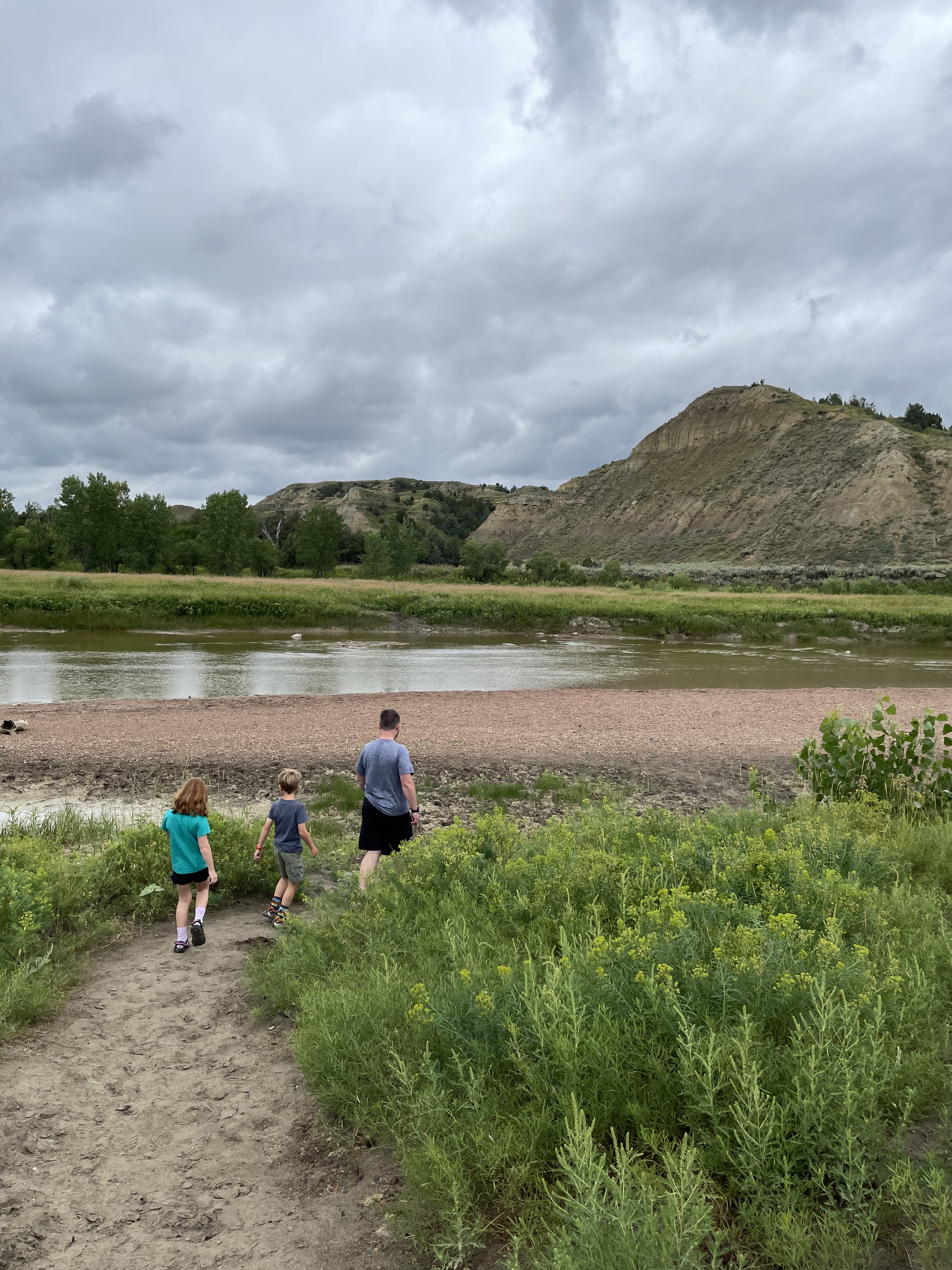
Here’s a pretty riverbank picture to make up for my poor memory.
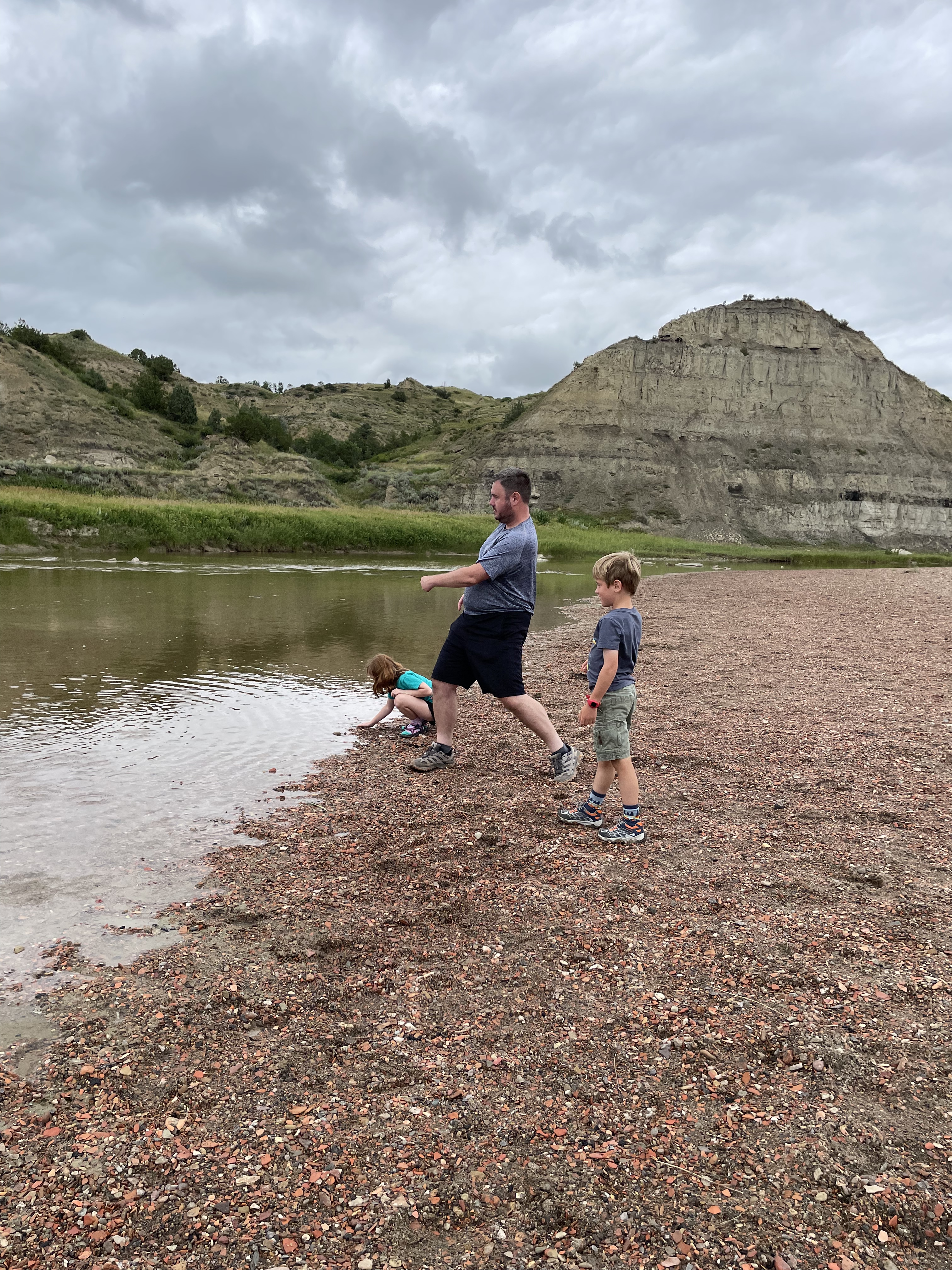
Despite no bison, we enjoyed our riverbank sojourn. We watched two hikers who were hiking the full five-plus mile loop cross the river (they had a good-natured argument over whether to take their shoes off or not – one did and the other didn’t), and the boys practiced their fastballs and sliders.
I love to build a little unplanned time into a vacation and this is a great example of why – we didn’t intend to do this walk; it was a spur of the moment decision that worked because we didn’t have anything else to do, and it was a lovely interlude to wander around the riverbank and do some splashing.
Next week: we visit the park’s cutest residents! Check in with me then.
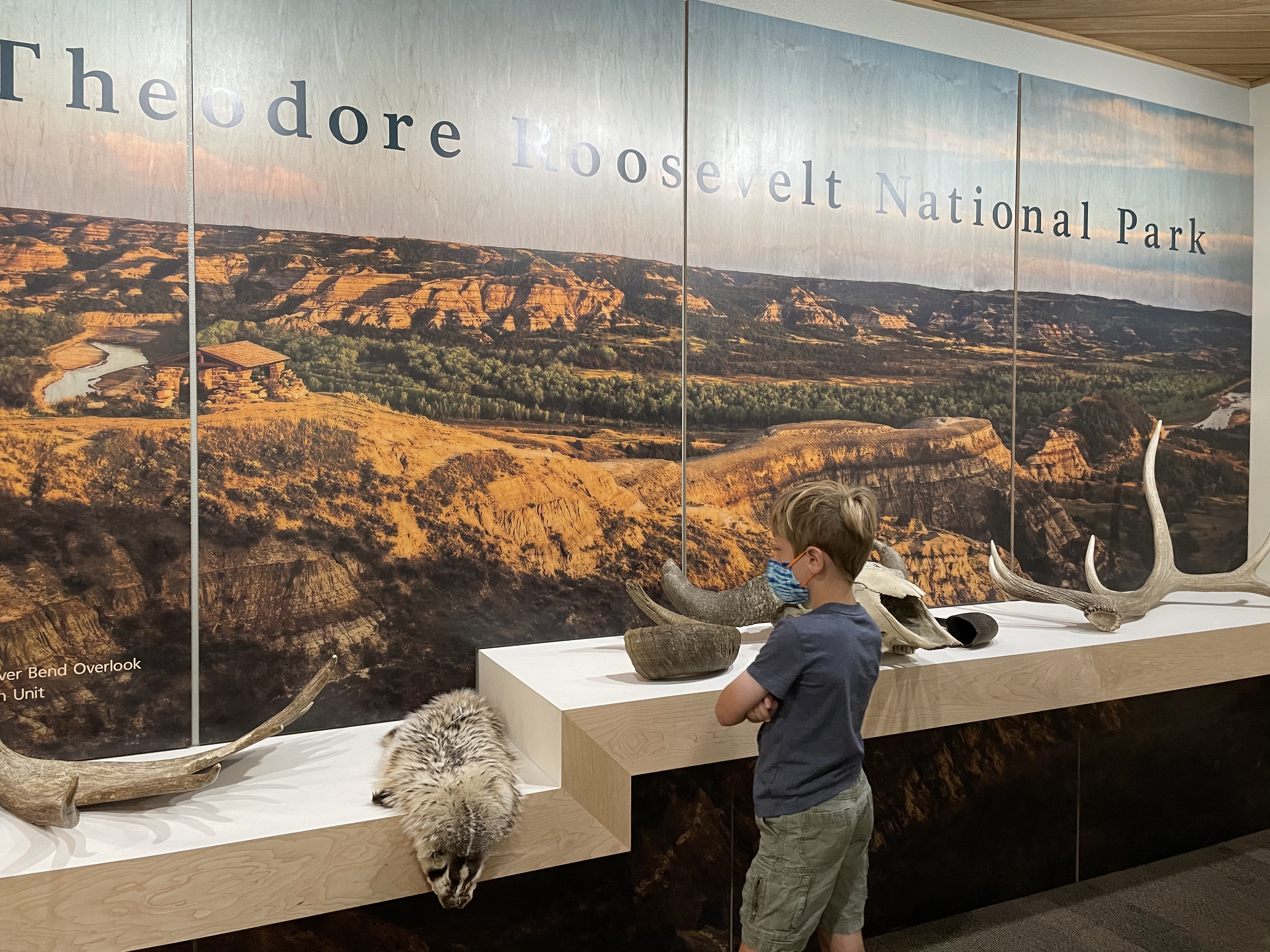
Our first stop on the Dakotas road trip agenda was Theodore Roosevelt National Park in Medora, North Dakota. Before the trip, I didn’t devote much thought to Theodore Roosevelt National Park – I expected it would be nice, and that I’d be glad to have visited, but beyond that I didn’t really consider. Just like with Joshua Tree, I ended up being surprised at how much I loved this park.
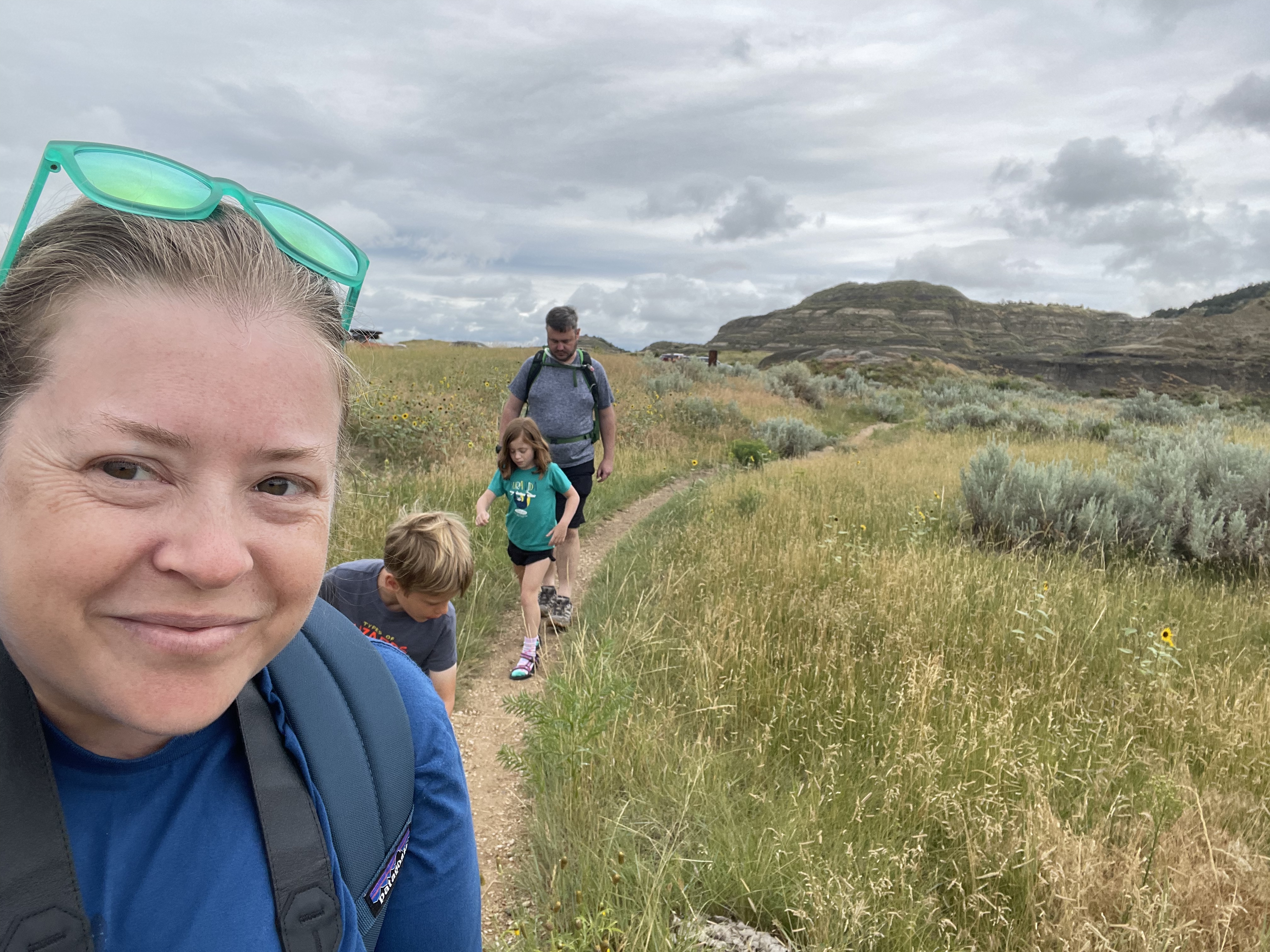
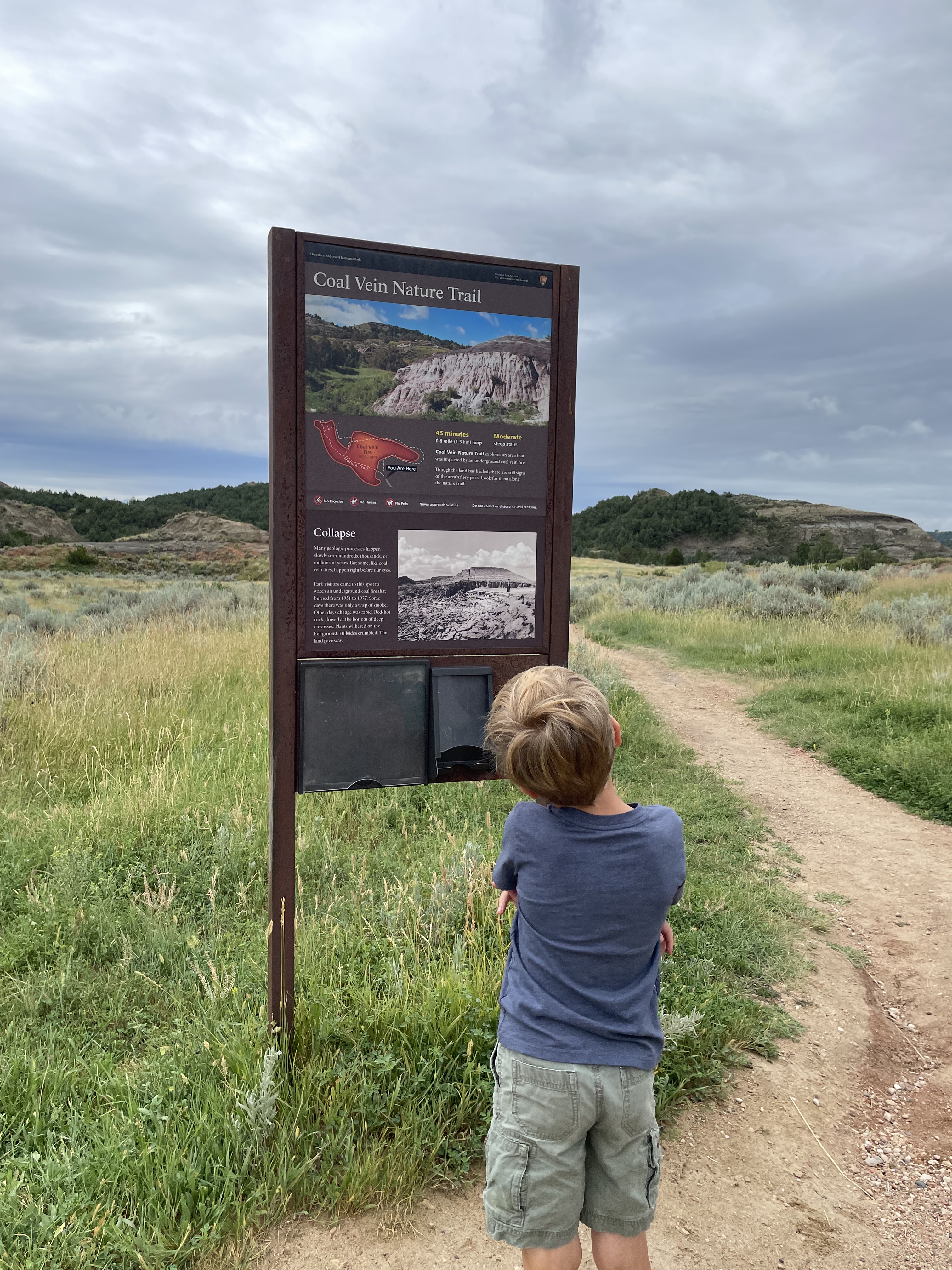
We stayed at a hotel in Medora, just outside of the park gates, and drove our rental car into the park each morning. TRNP is even more spread out than most national parks, so this was a perfect solution. On our first day in the park, we ignored the heavy cloud cover and chilly wind and made for our first stop: the Coal Vein Nature Trail. The coal vein is what it sounds like – a vein of coal running through this section of the park – and this vein is famous for having caught fire and burned continuously for twenty-six years. It’s not still burning, but I read that you can still smell it smouldering. (I couldn’t smell anything, though.)
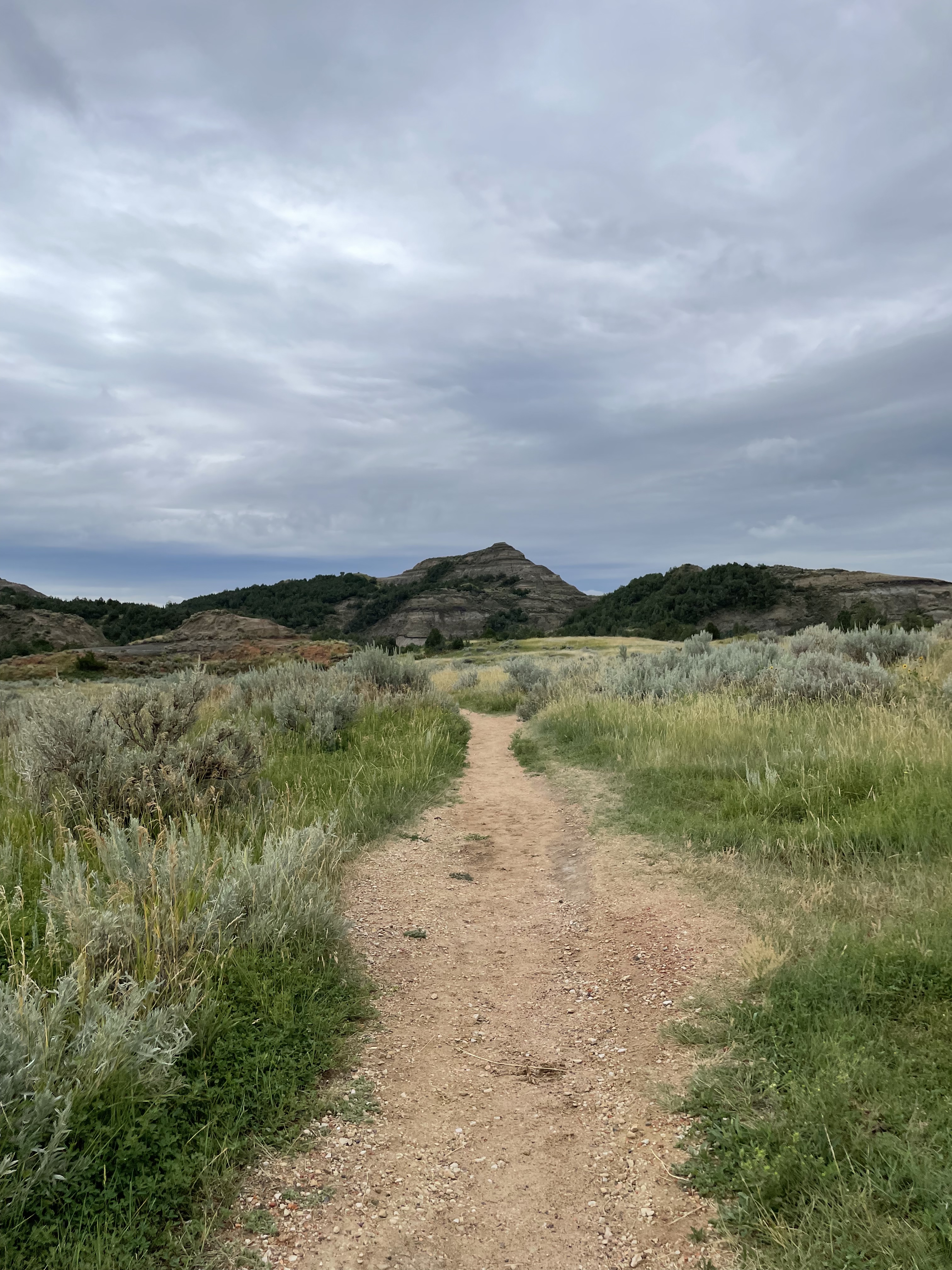
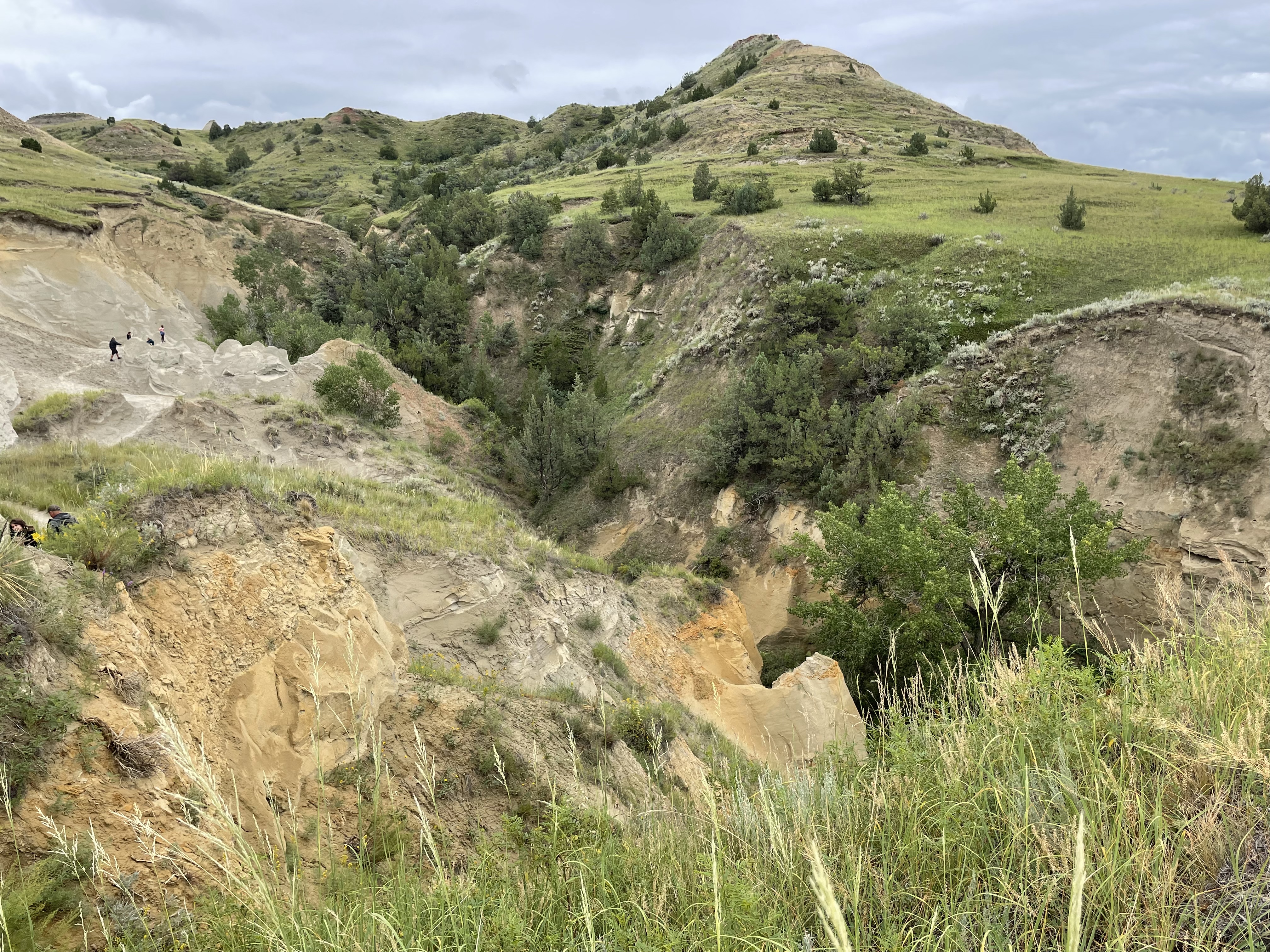
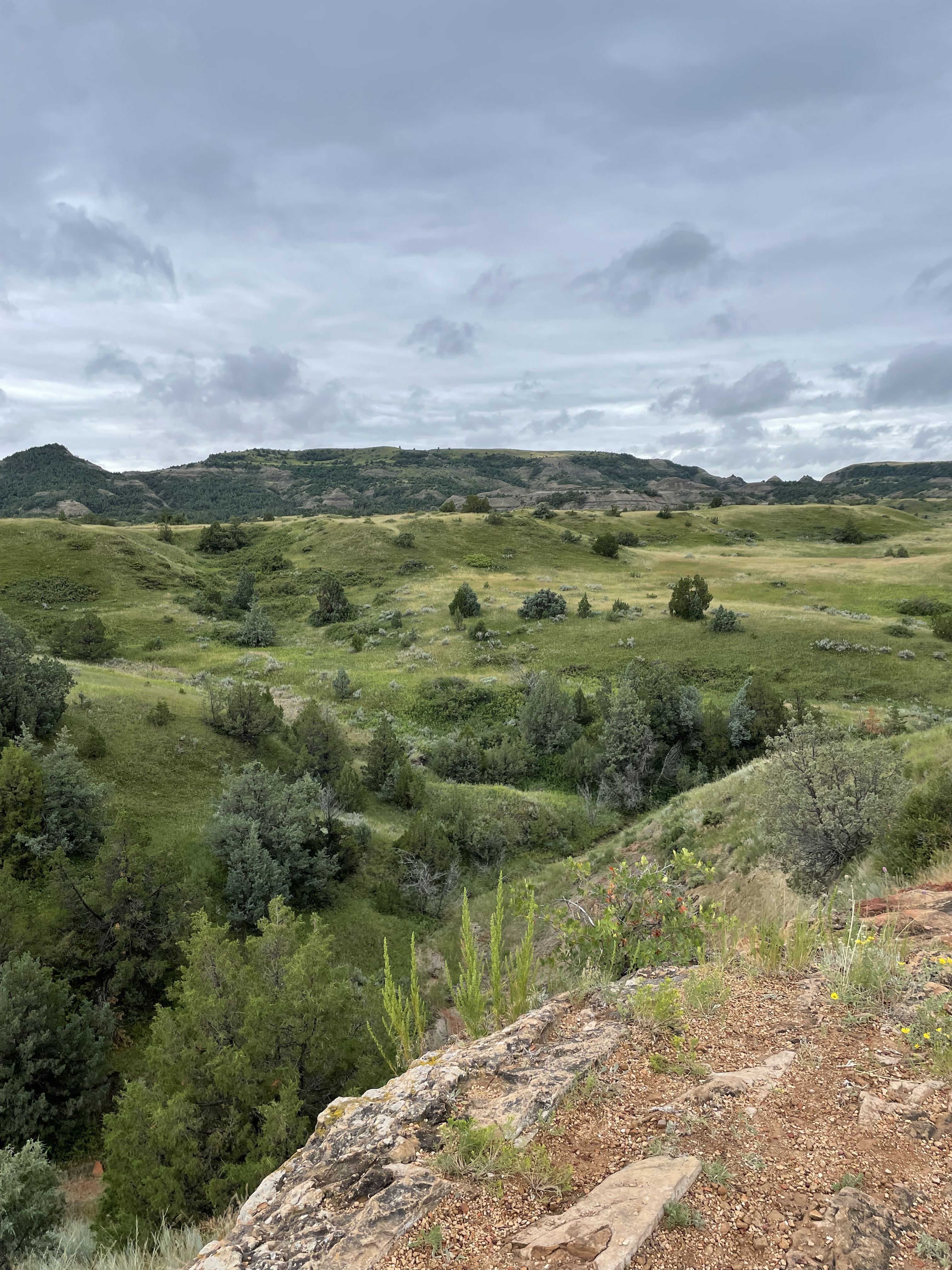
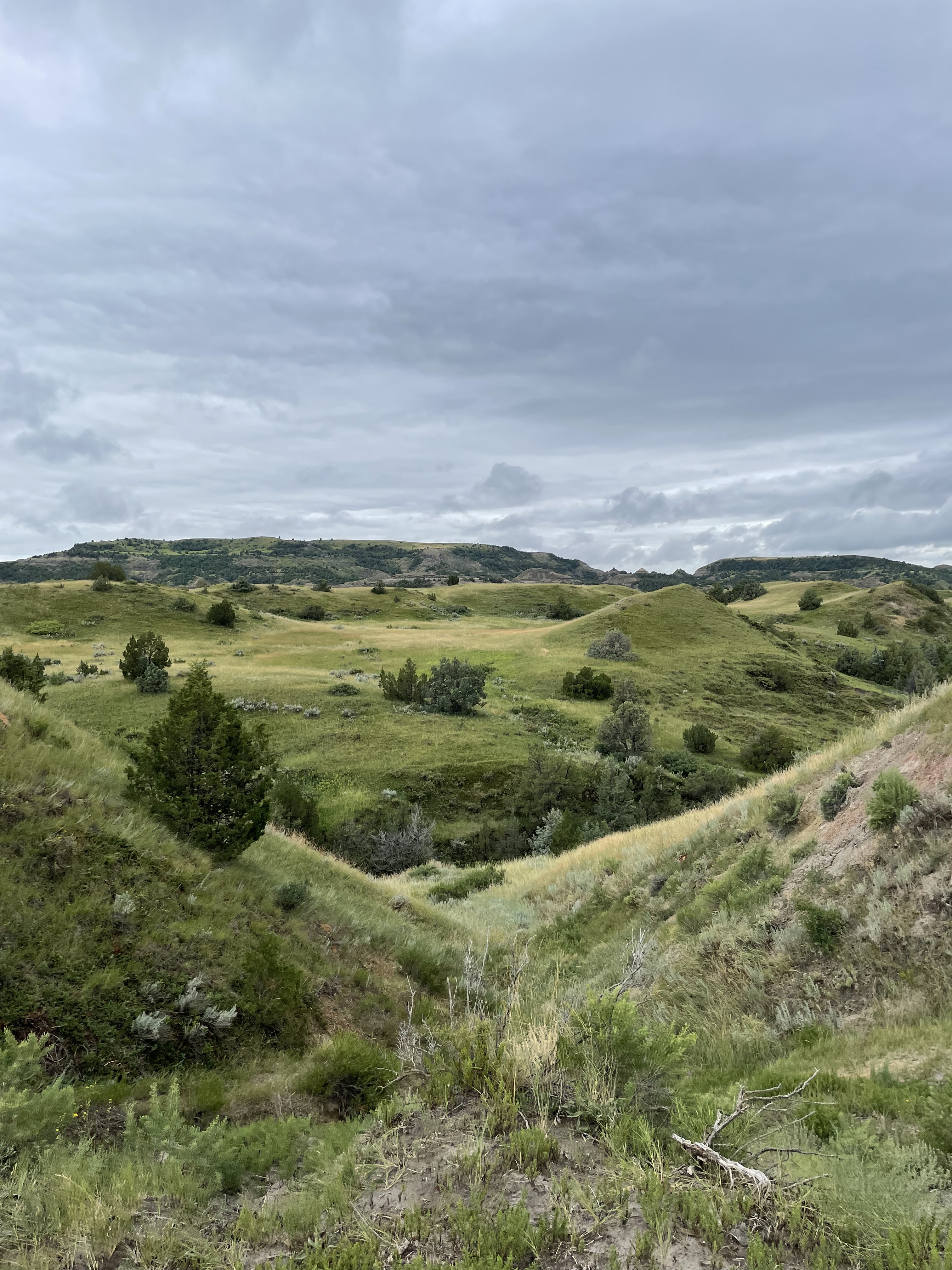
The landscape was stunning! I would come to learn that there is a marked difference between North Dakota badlands and South Dakota badlands (which we would see later in the trip). The North Dakota version of the badlands was still green and verdant, with plenty of interesting plants to examine.
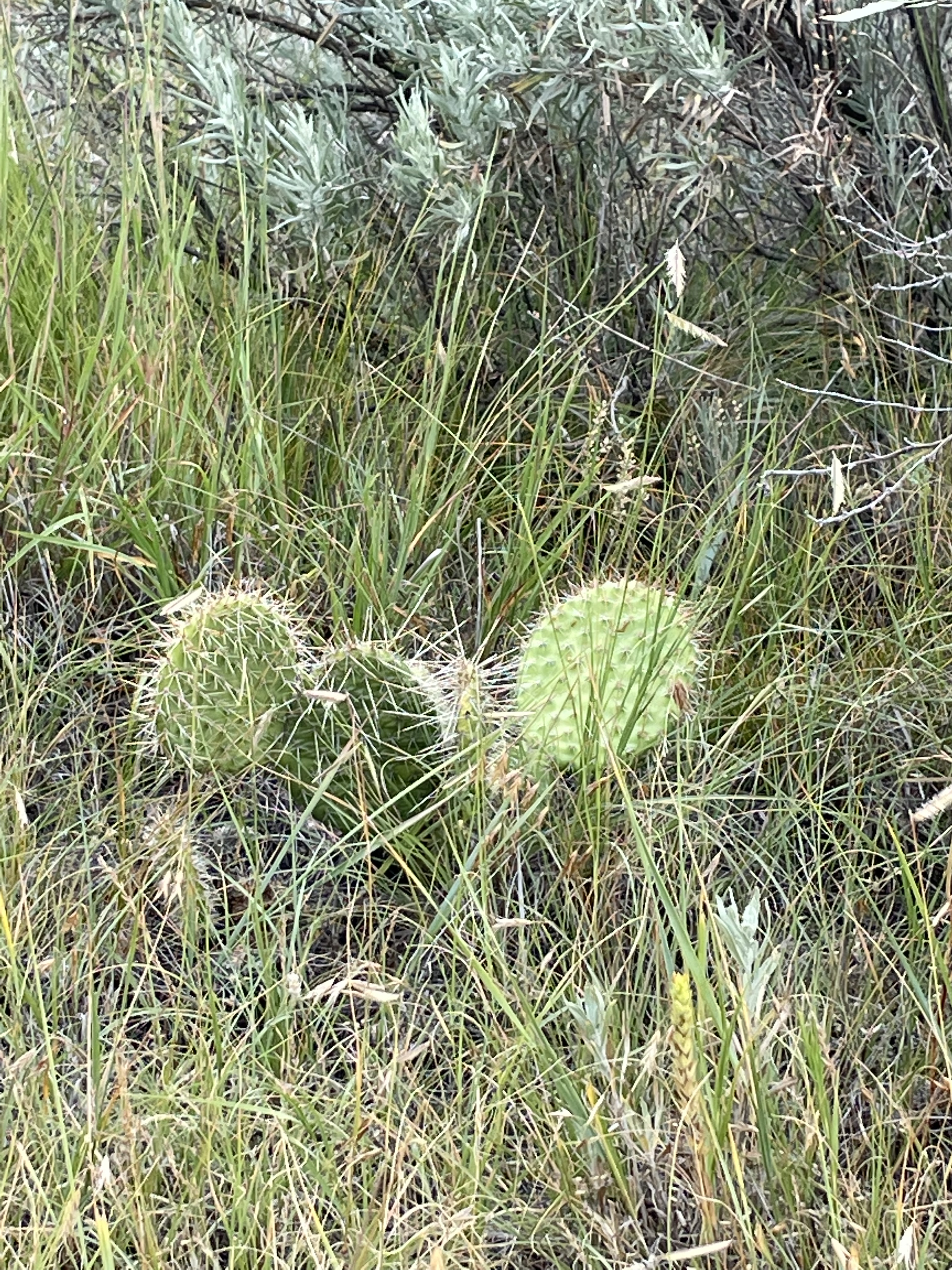
Like prickly pear cacti embedded right in the grass! Now there’s something you don’t see every day.
And there were plenty of varieties of juniper and sage – two of my favorite plants. I must have stopped ten times to sniff. And then ten more times to goggle at the gorgeous landscape spread out below us.
Strong start to the vacation! This first hike was one of my favorites of the entire week. But TRNP had plenty more riches in store for us.
Next week: the first day of our trip was a two-hike day as we explored another easy nature trail with stunning vistas.
After spending what felt like most of our 2022 travel days underwater, Steve and I were craving a good hiking vacation. We planned a family trip to Yellowstone and Grand Teton National Parks, and were looking forward to that with great anticipation when news dropped of catastrophic floods that closed huge sections of Yellowstone – including the area where our hotel was. Of course, our first concerns were for the people and animals who lived in the park area and were impacted. But once the dust settled and the waters started to recede, we realized that our planned vacation was not going to happen, and we started looking around for an alternative. On the strength of a recommendation by a random mom at Goldfish Swim School, we decided on a quick shift in strategy and booked a rather last-minute trip to the Dakotas. (The last-minute nature would have an unforeseen effect: it turned out the Sturgis Bike Rally, which was not something I knew about, was going on while we were there. My takeaway – from now on, when booking a trip, I will check to see if there are any big events in the vicinity that might end up drawing unusually large crowds.)
We flew into Rapid City, but immediately turned northwards and headed to our first stop – Medora, North Dakota, home of Theodore Roosevelt National Park.
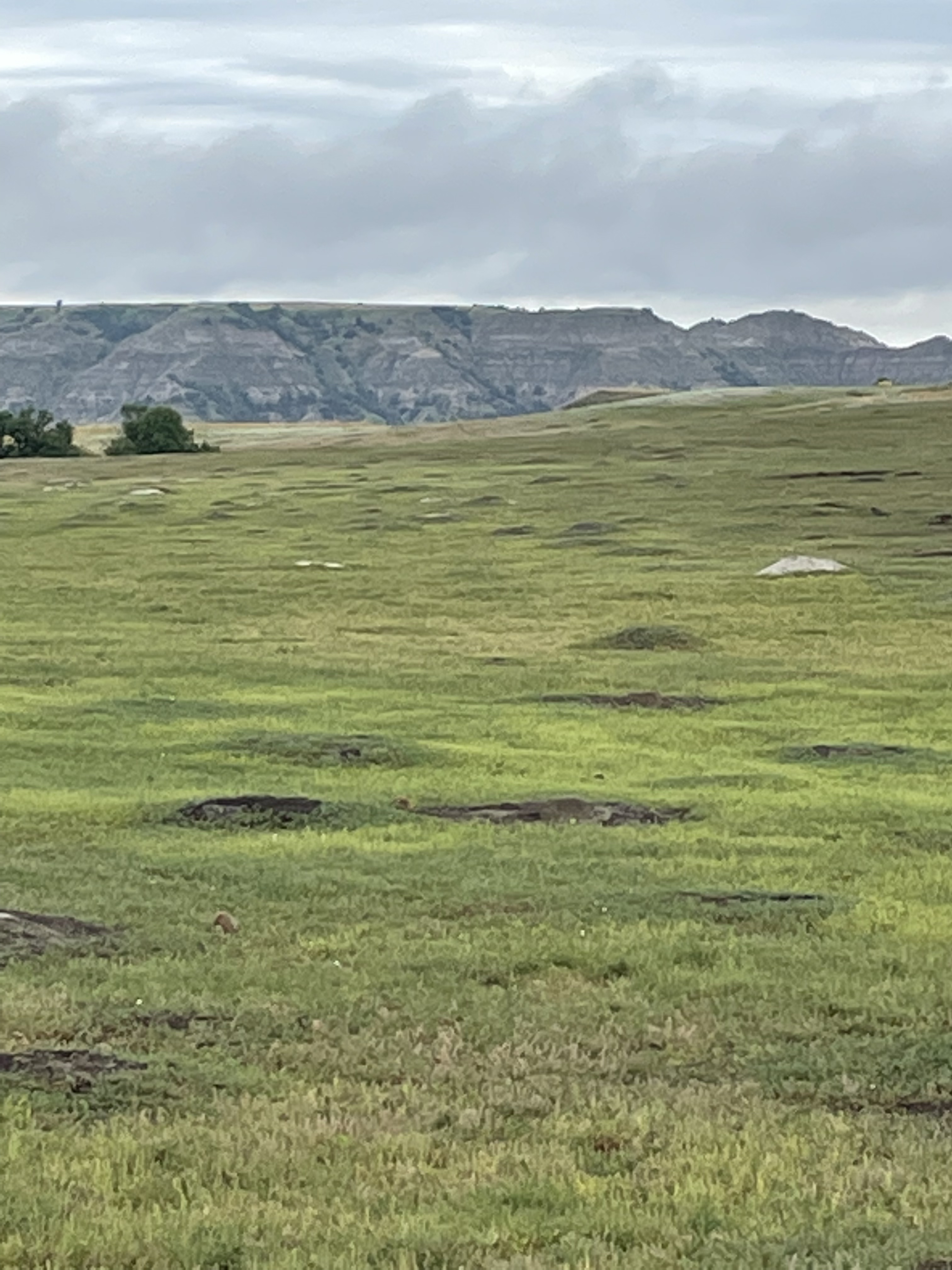
Settling in for three days of stunning vistas… and thousands of prairie dogs living in “Prairie Dog Metropolis.” Goodness, they were adorable.
It was a busy week – six national parks, countless trails, multiple atmospheric adventures – and I have so much to show you. So for the next few months, we’ll be road-tripping around the Dakotas together. Next week – first tracks in Theodore Roosevelt National Park!
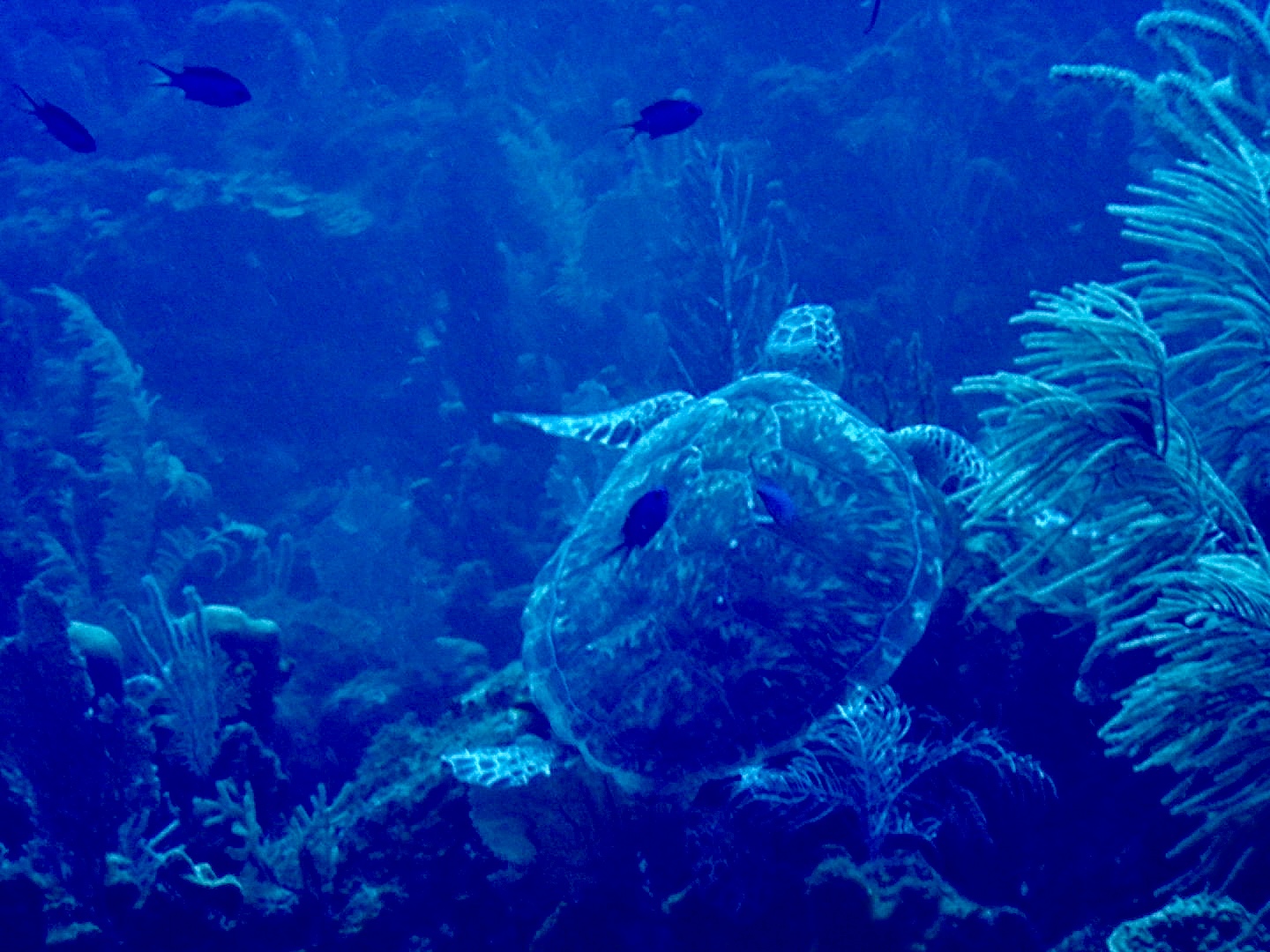
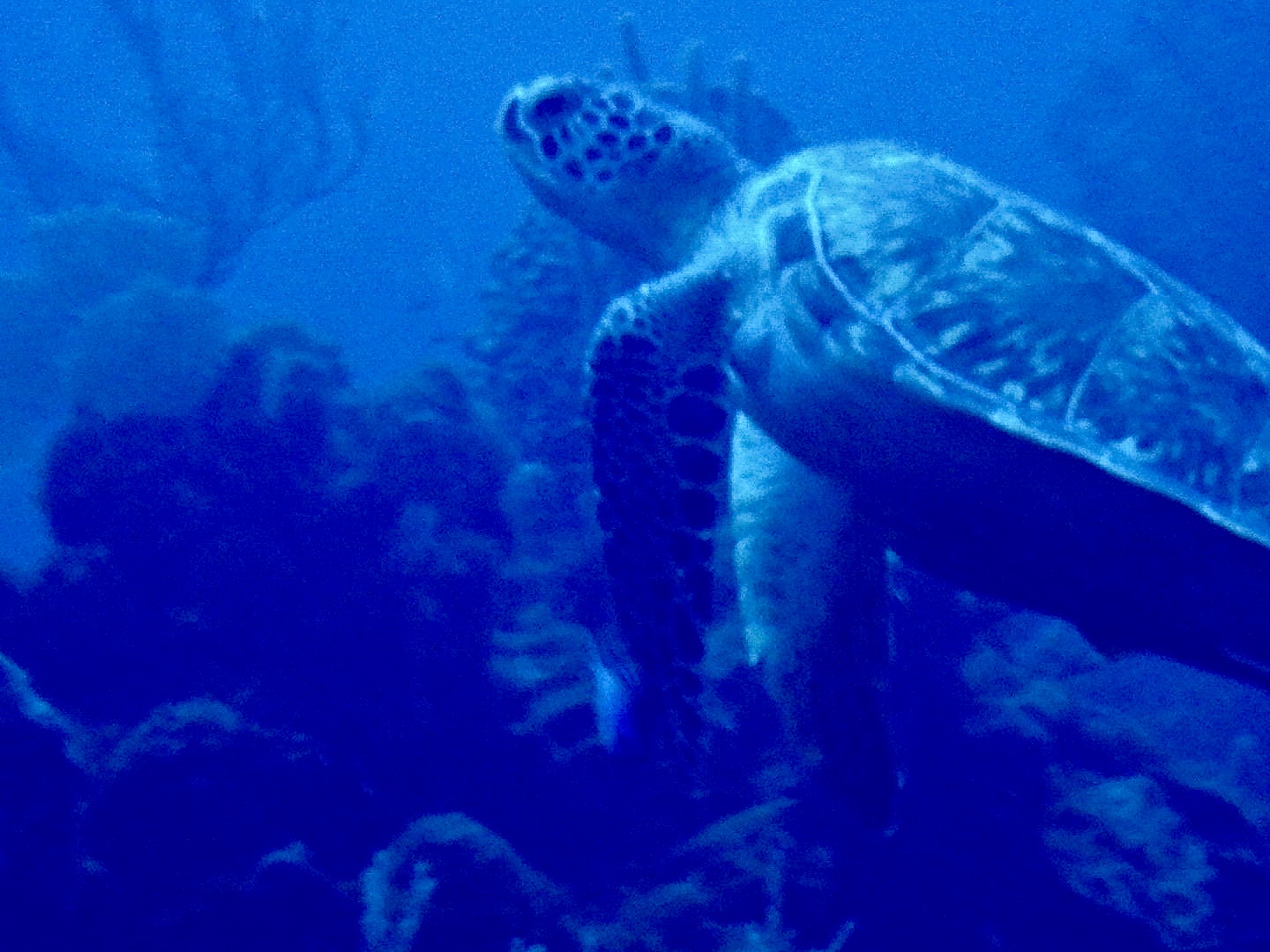
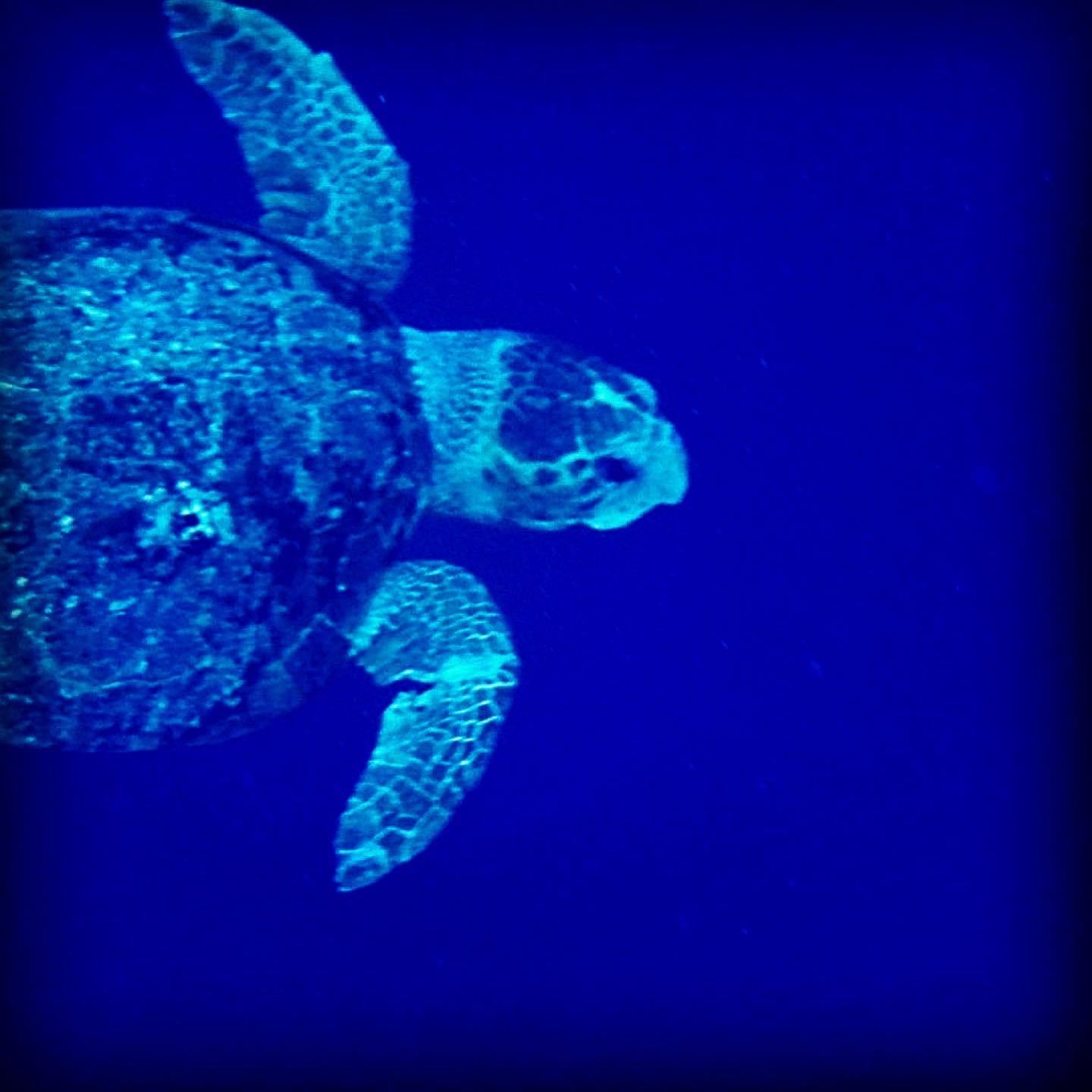
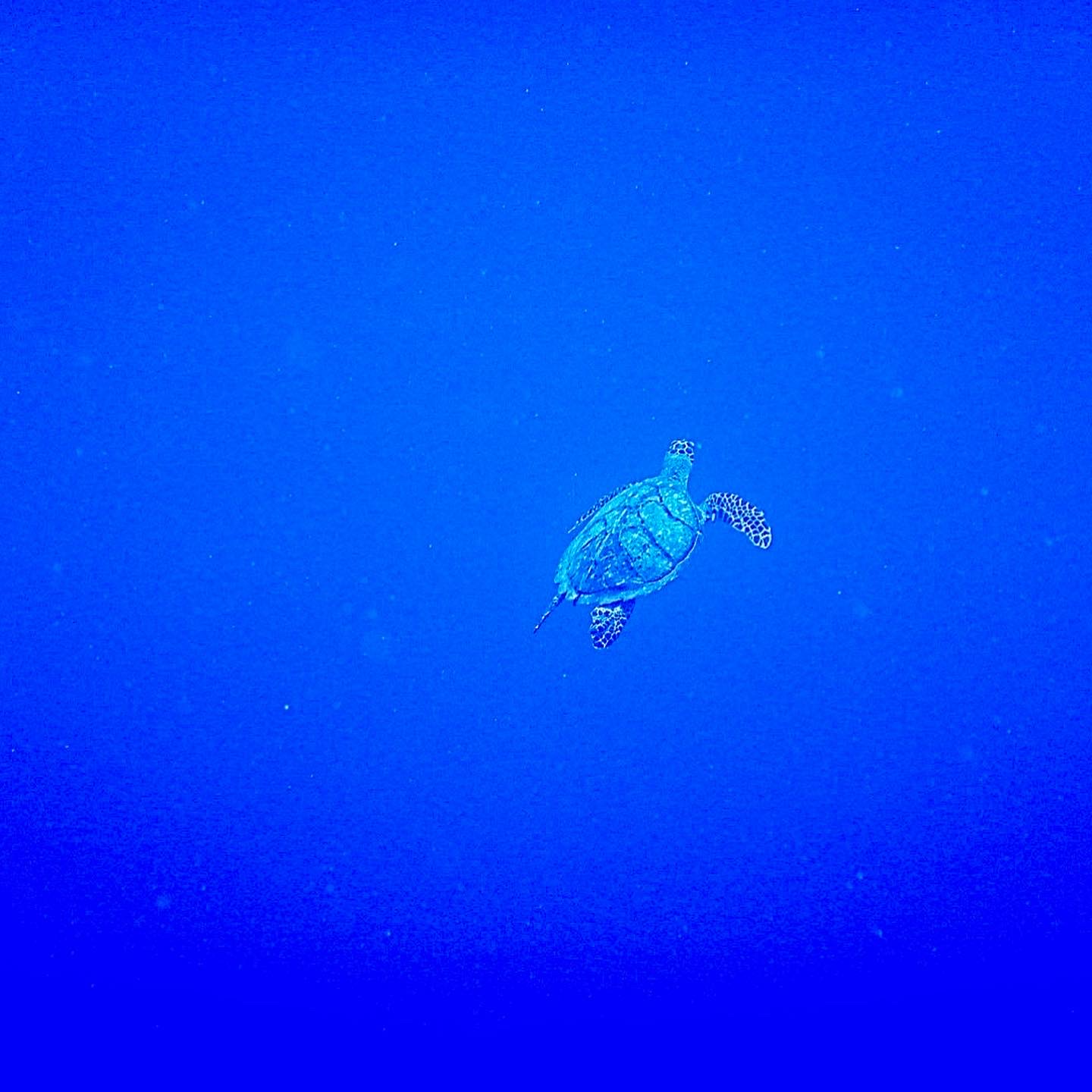
It’s no secret that my favorite animals on the planet are cetaceans – whales especially, but I love dolphins and porpoises too. But my second favorite marine species – which I love almost as much – has to be sea turtles. And so far I’ve been on two dive trips and lucky enough to see sea turtles on both. In fact, in Roatan, we saw them multiple times.
The first time we saw a sea turtle, he was a massive beastie – about the size of a Volkswagen. Even the divemaster was gobsmacked. Sadly, my camera battery was dead and my camera was chilling in my bag on the boat, waiting for a charge back at the hotel. But the sea turtles obliged by showing up three more times after that – none as big as that first guy, but still plenty exciting for all that.
This one was very busy exploring the reef. Looking for snacks, probably.
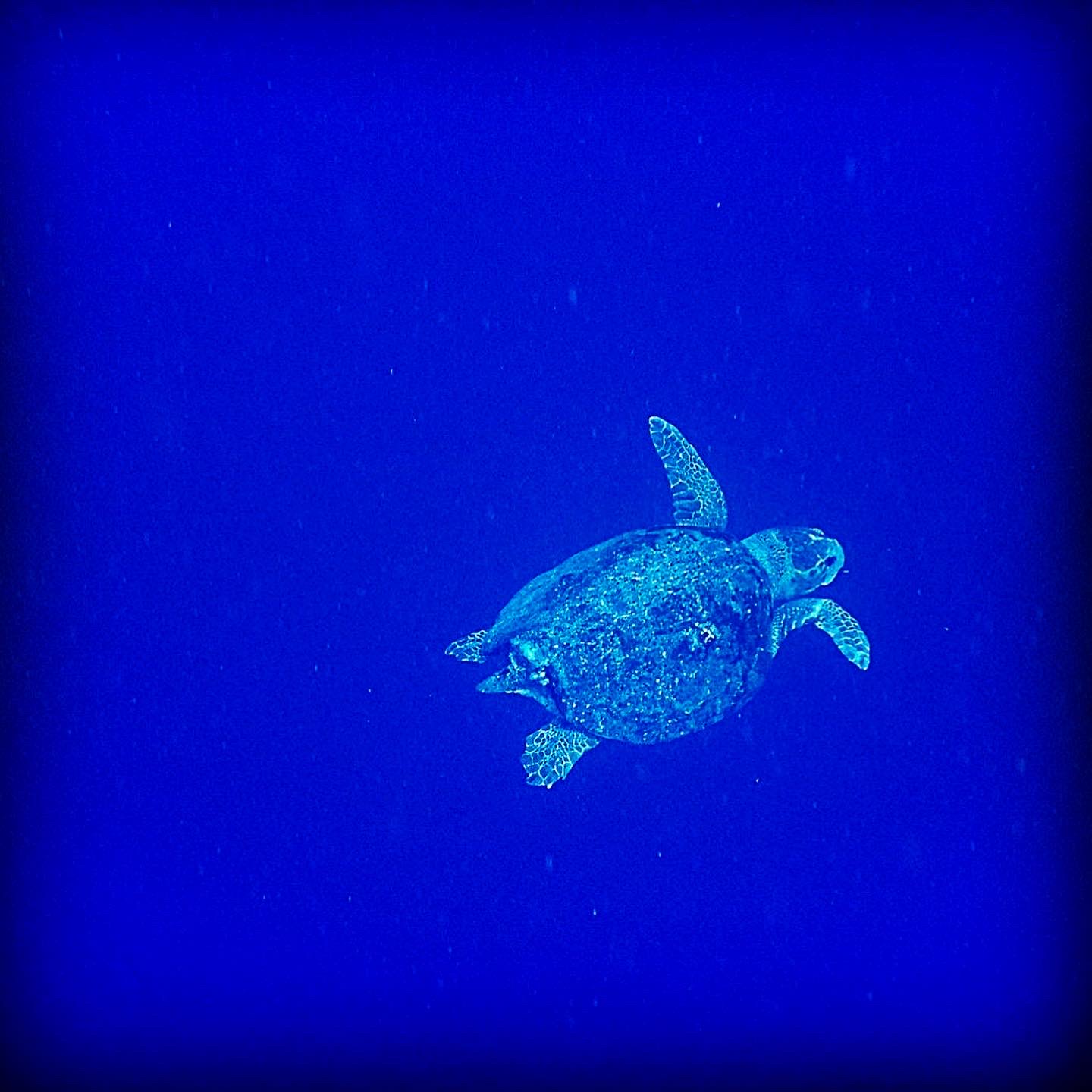
Eventually he drifted off into the blue.
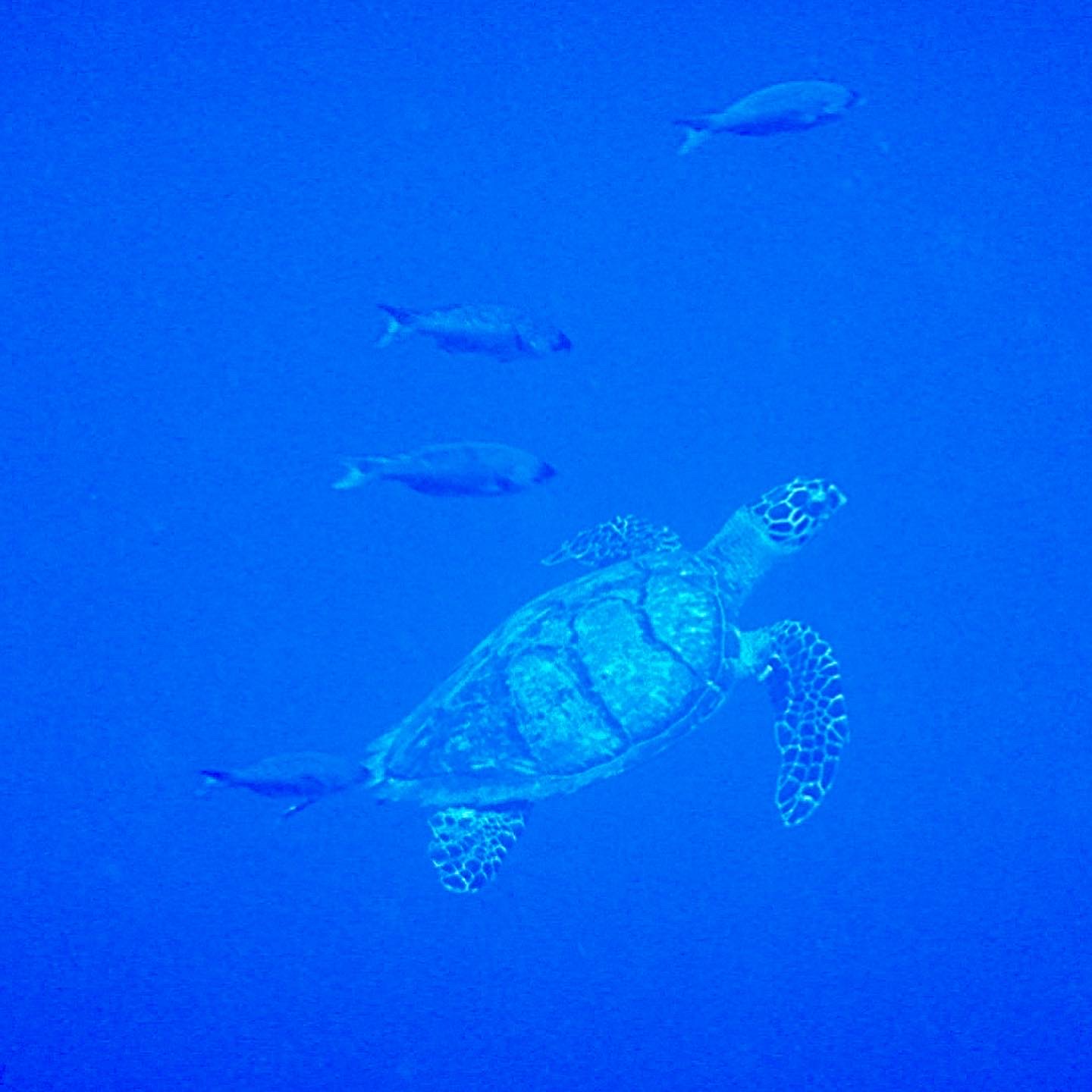
One of the highlights of our final dive (this time, because we’ll definitely be back to Roatan) was a visit from three sea turtles who circled around us for our entire safety stop. Our dive buddy Alex had a moment with one of them – almost swam off into the great ocean together.
Oh, sea turtles! Words cannot express how much I love you. Please join me on every single dive.
That concludes this short series of highlights from my digital nomad week on Roatan Island, Honduras! For the next couple of weeks, I will be taking off Friday travel posts and replacing them with holiday fun. Starting in the new year, Friday travel posting continues with something COMPLETELY different. Check in with me then to find out!
In diver lingo, a surface interval is basically exactly what it sounds like: an interval of time that you spend at the surface between dives. On multi-dive days, you need a certain amount of time between dives in order to let the nitrogen bubbles dissipate from your blood. Between dive trips, it’s all surface interval – ha.
Our surface intervals on Roatan were mostly spent typing away on our laptops – it was another digital nomad week for us. Mornings were for scuba, afternoons were for lawyering. Not a bad life.
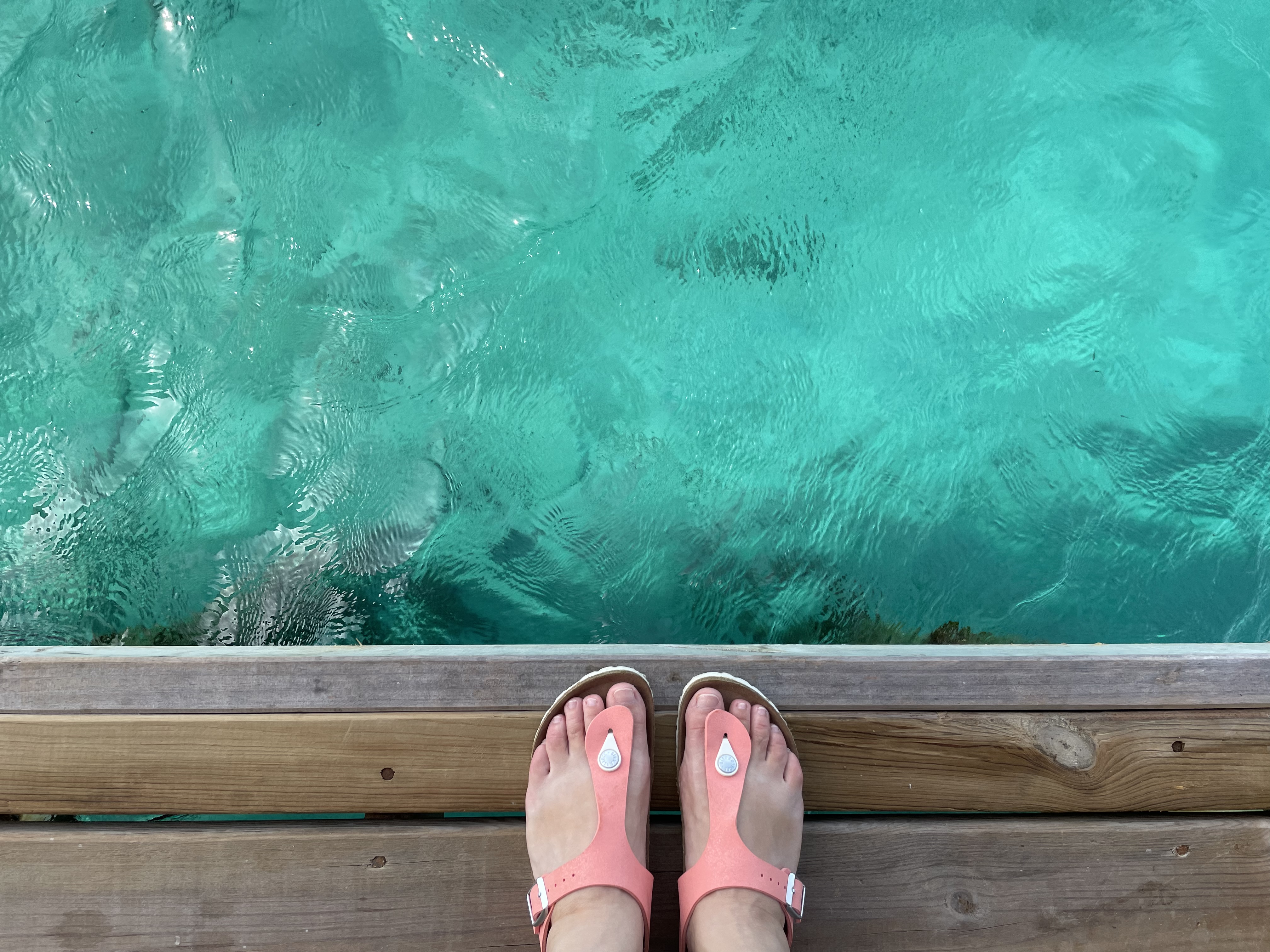
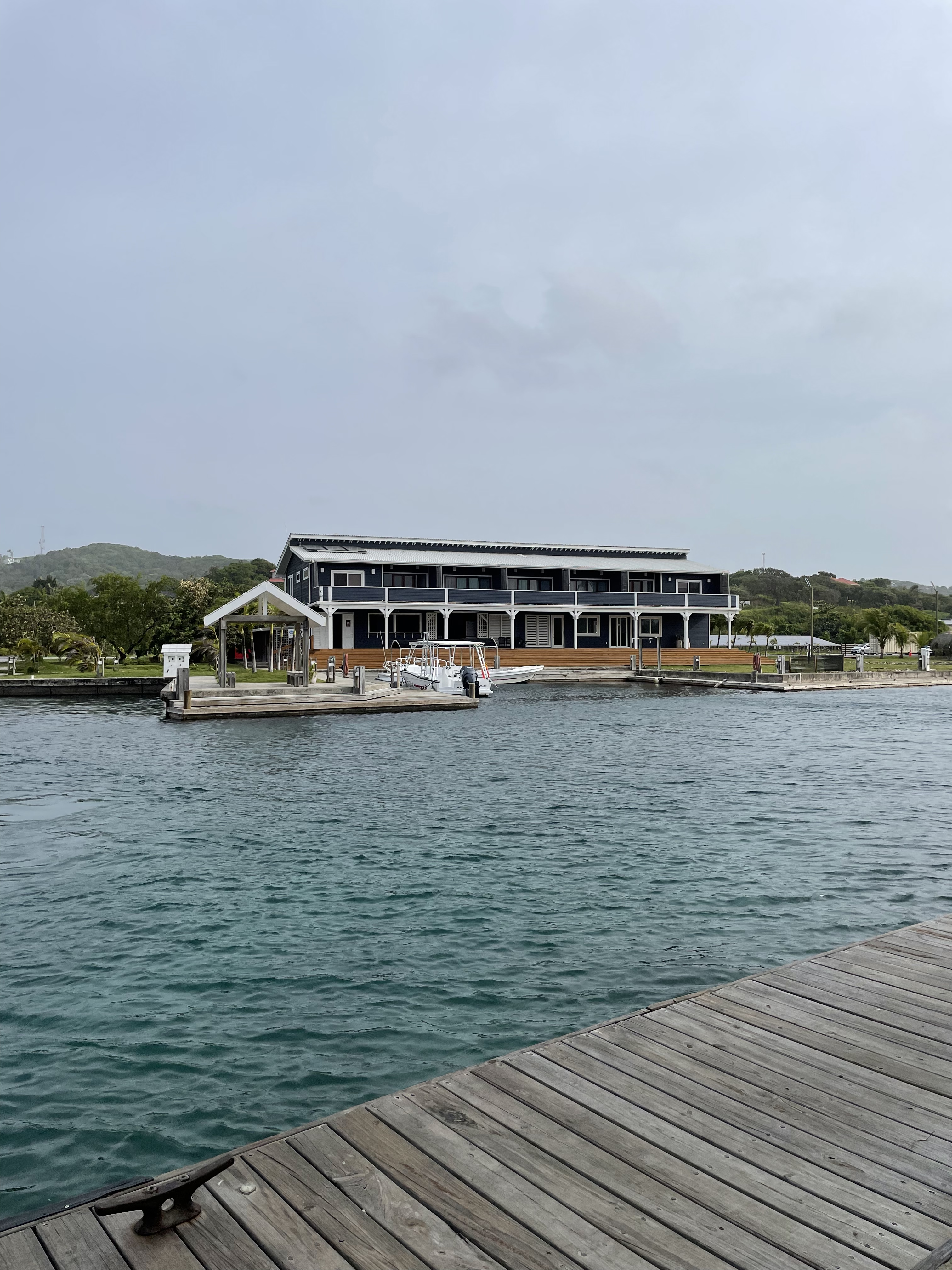
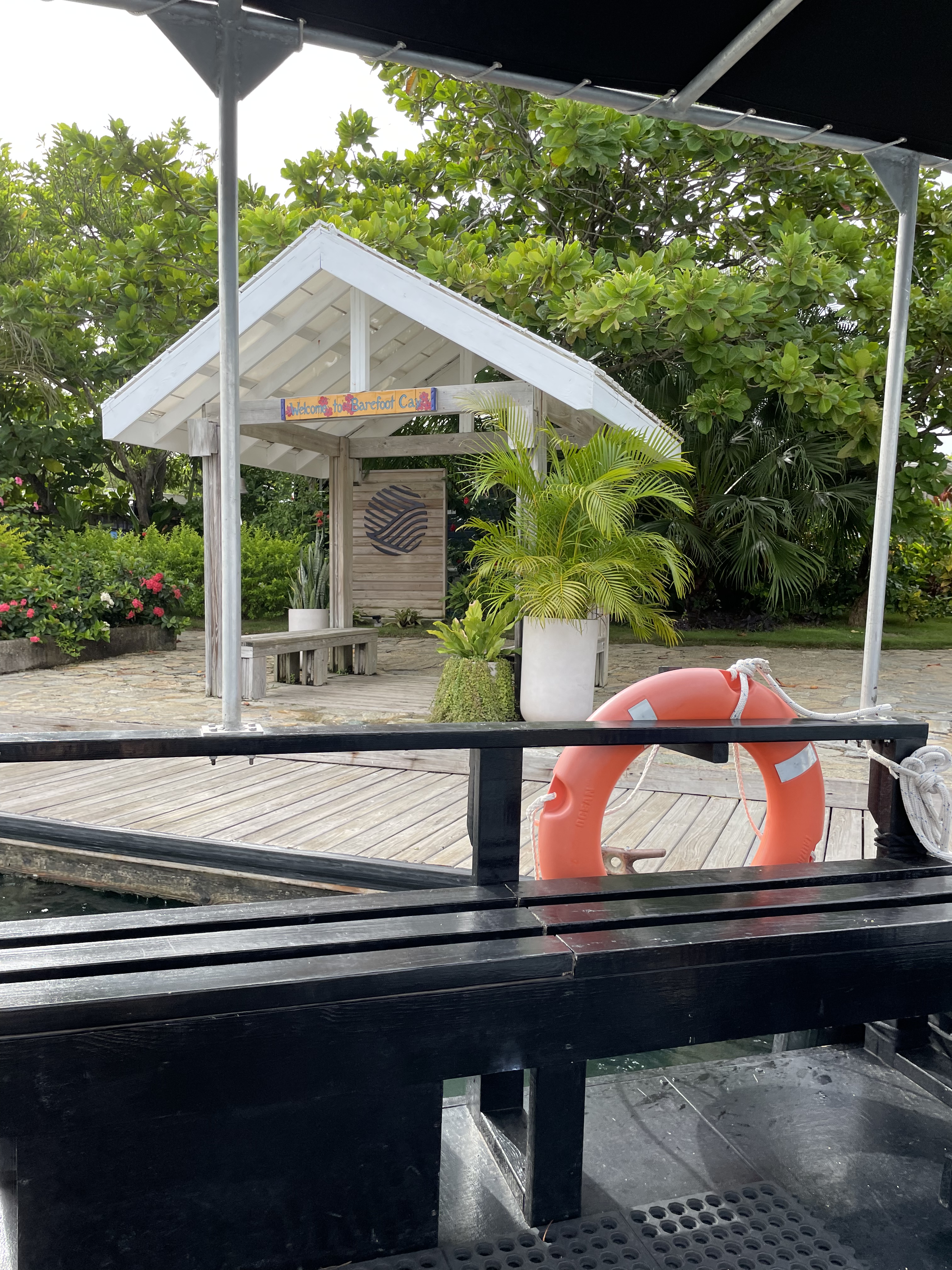
Especially when your afternoon lawyering is done at this beautiful place! We stayed at Barefoot Cay Resort, on the East side of Roatan. It was a beautiful, peaceful spot.
Most of the Barefoot Cay buildings are on a private island. It’s a tiny little island, and in the evenings before dinner Steve and I circled it over and over, getting our steps in (no days off for the Garmin watches!).
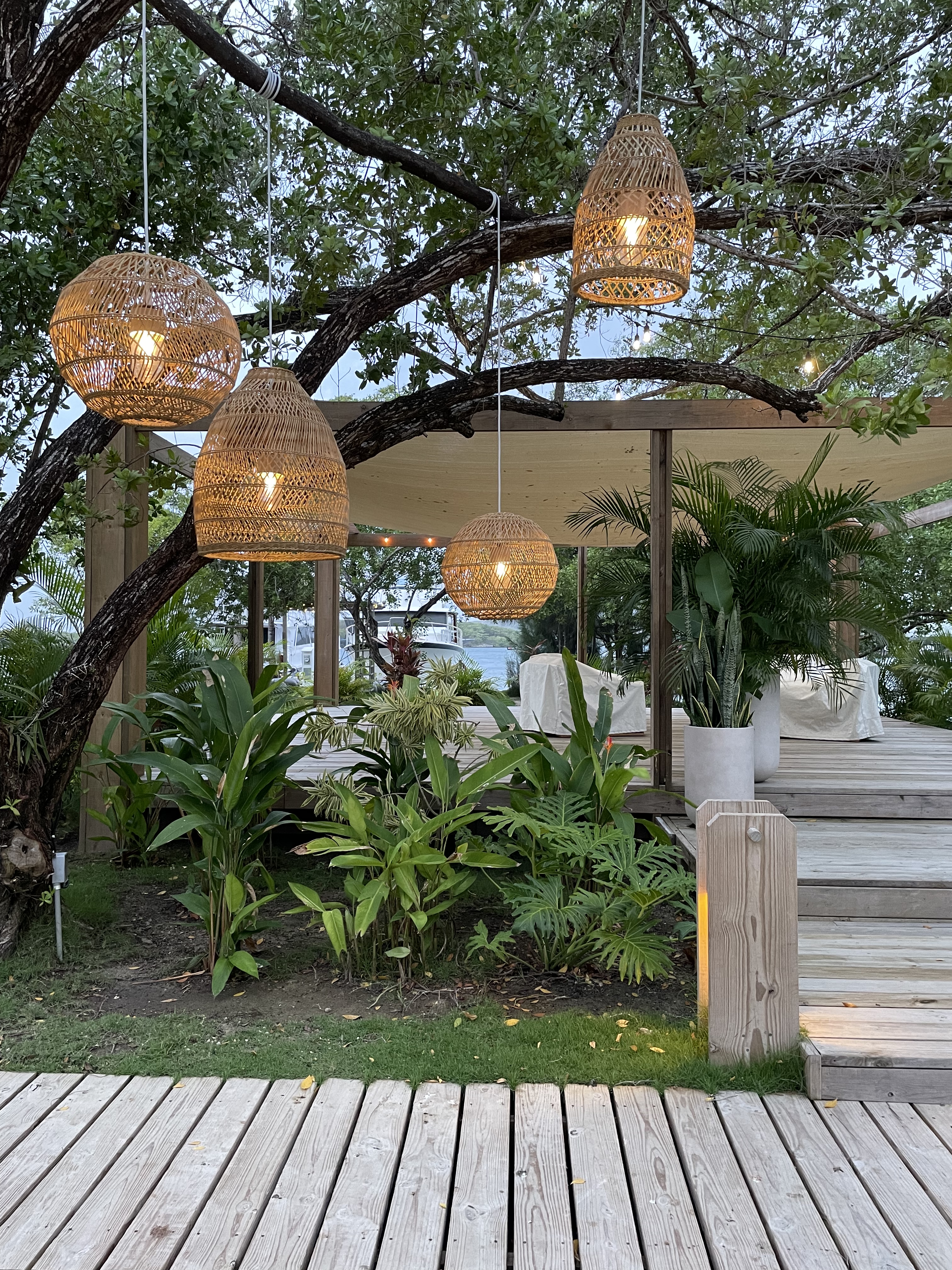
We stayed in a little bungalow right on the beach. There was a family of bats that stayed with us – cuddled up together in the eaves of our porch by day. Too cute! Speaking of cute, but in a totally different sense, I was obsessed with the woven pendant lights hanging from the trees near the resort’s restaurant, Silversides.
In the mornings, due to the high winds on the East side of the island, we were loaded into a hotel van and driven to the West side to do our dives. One of the hotel’s dive boats was docked by this gorgeous sandy beach, where our captain, Justin, and our divemasters, Danny and Ron, waited for us every morning.
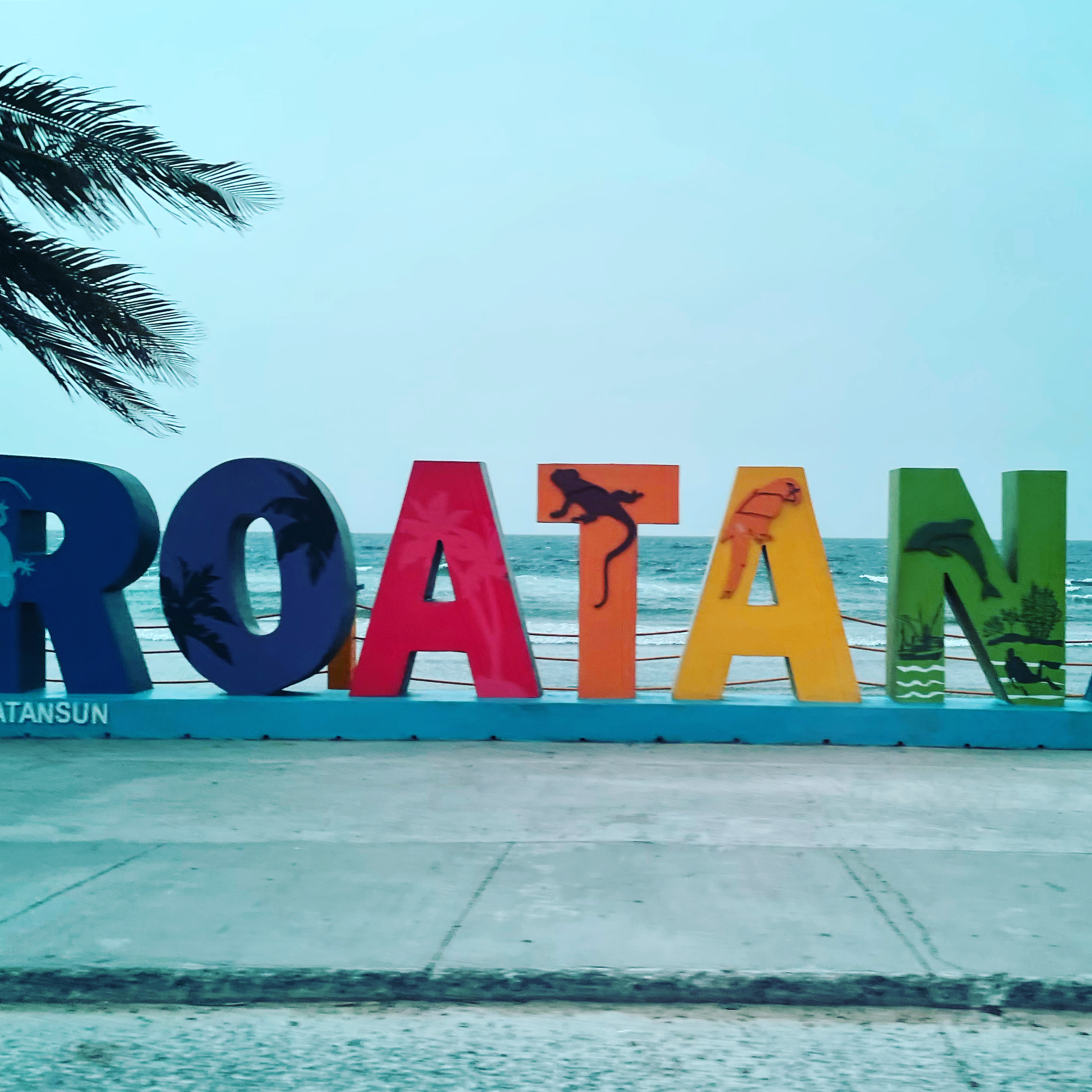
The street was lined with dive shops. It’s easy to see what Roatan’s favorite activity is!
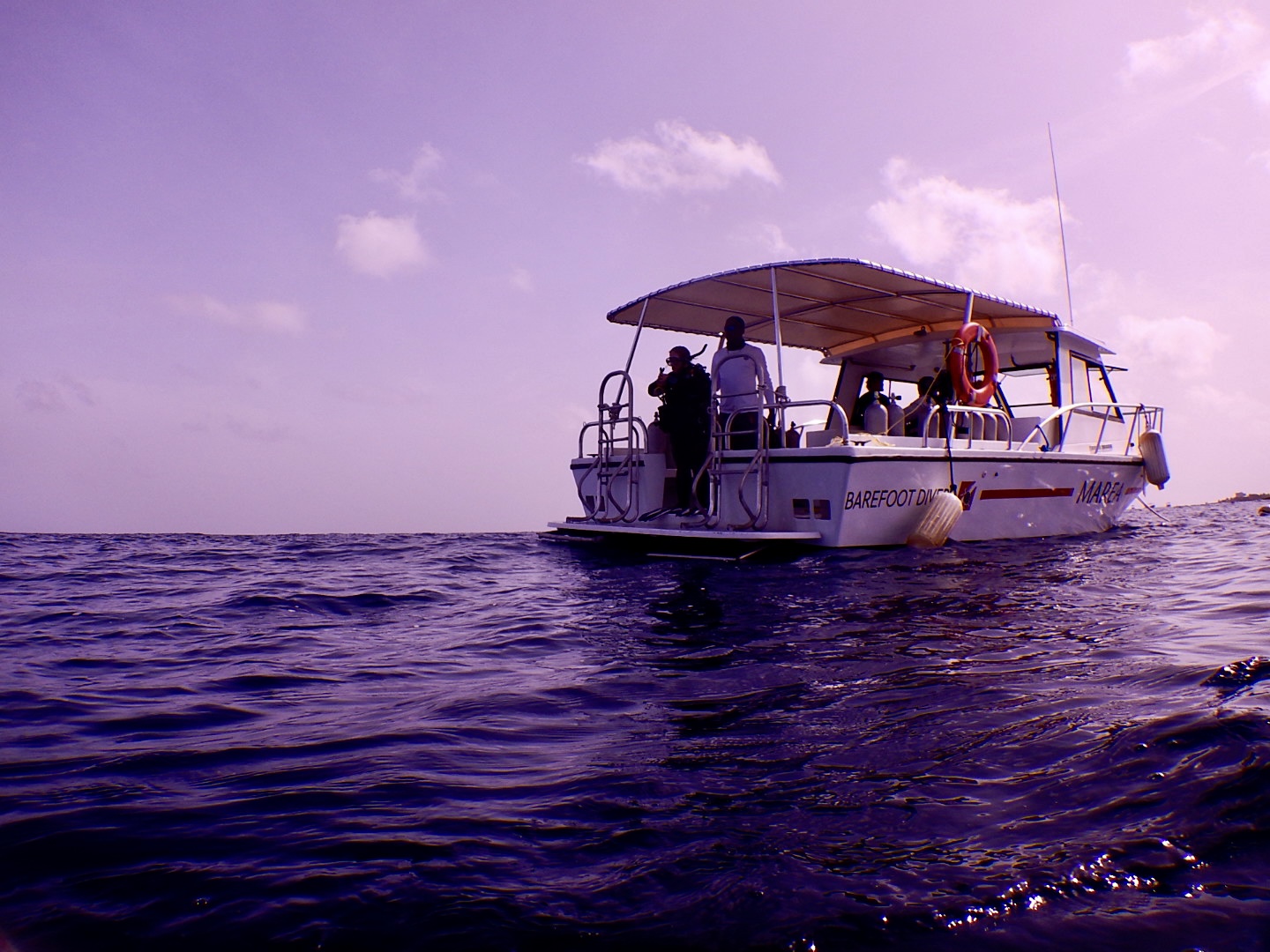
In between dives, we hung out on our boat – the Marea – chatting with Justin, Danny and Ron, and the other divers (and on one day, snorkelers) while we drove between dive sites or bobbed around waiting for the green light to hop back in the water.
During one surface interval, Justin drove us past the dolphins at Anthony’s Key, one of the biggest resorts on the island. Worth noting: this is not a holding pen. The dolphins are free to come and go as they please; those that were swimming around between the docks were there by choice, much to my relief. (Also, please excuse whatever is happening with the color in this picture. I don’t know why it’s all purple.)
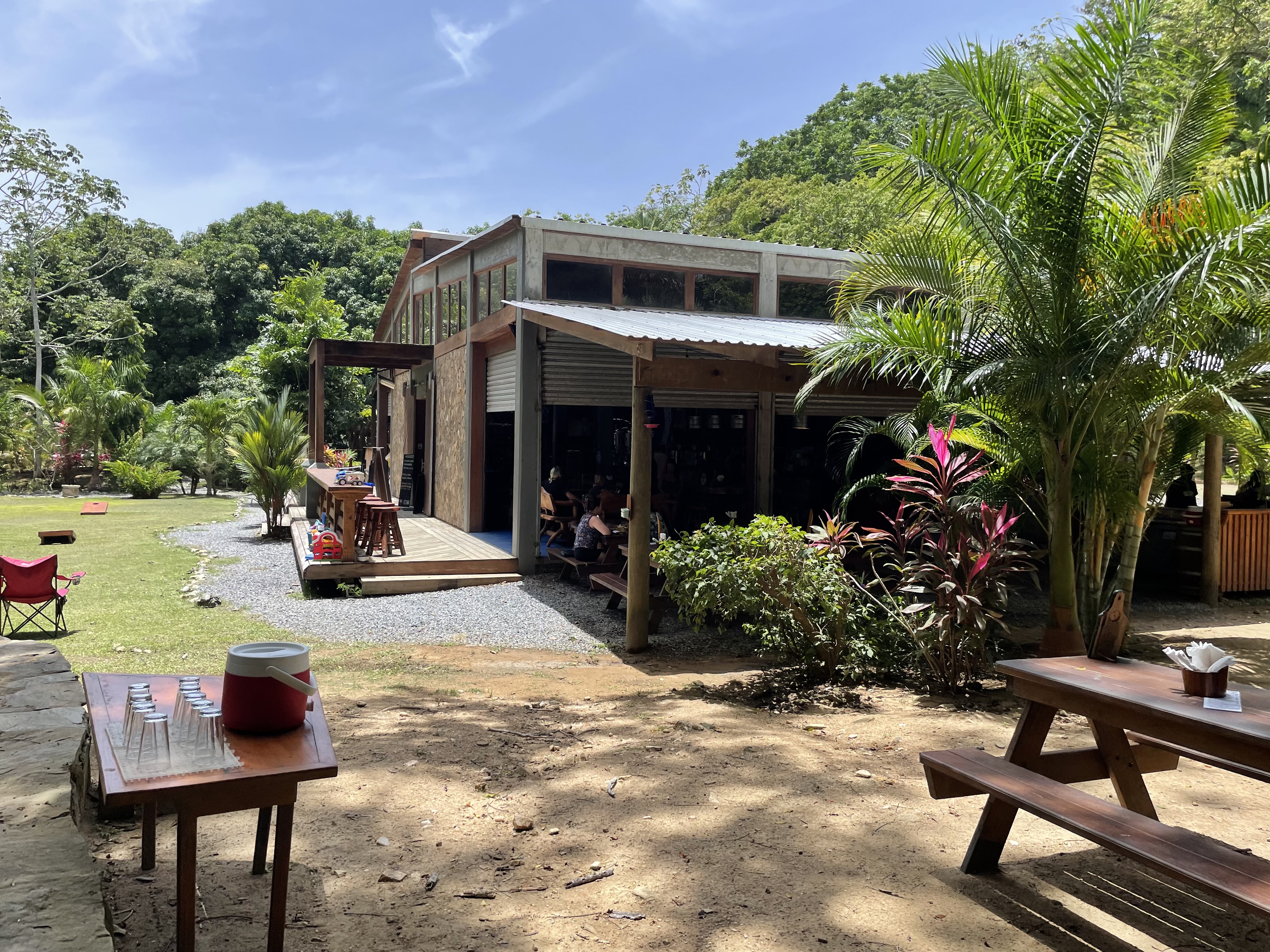
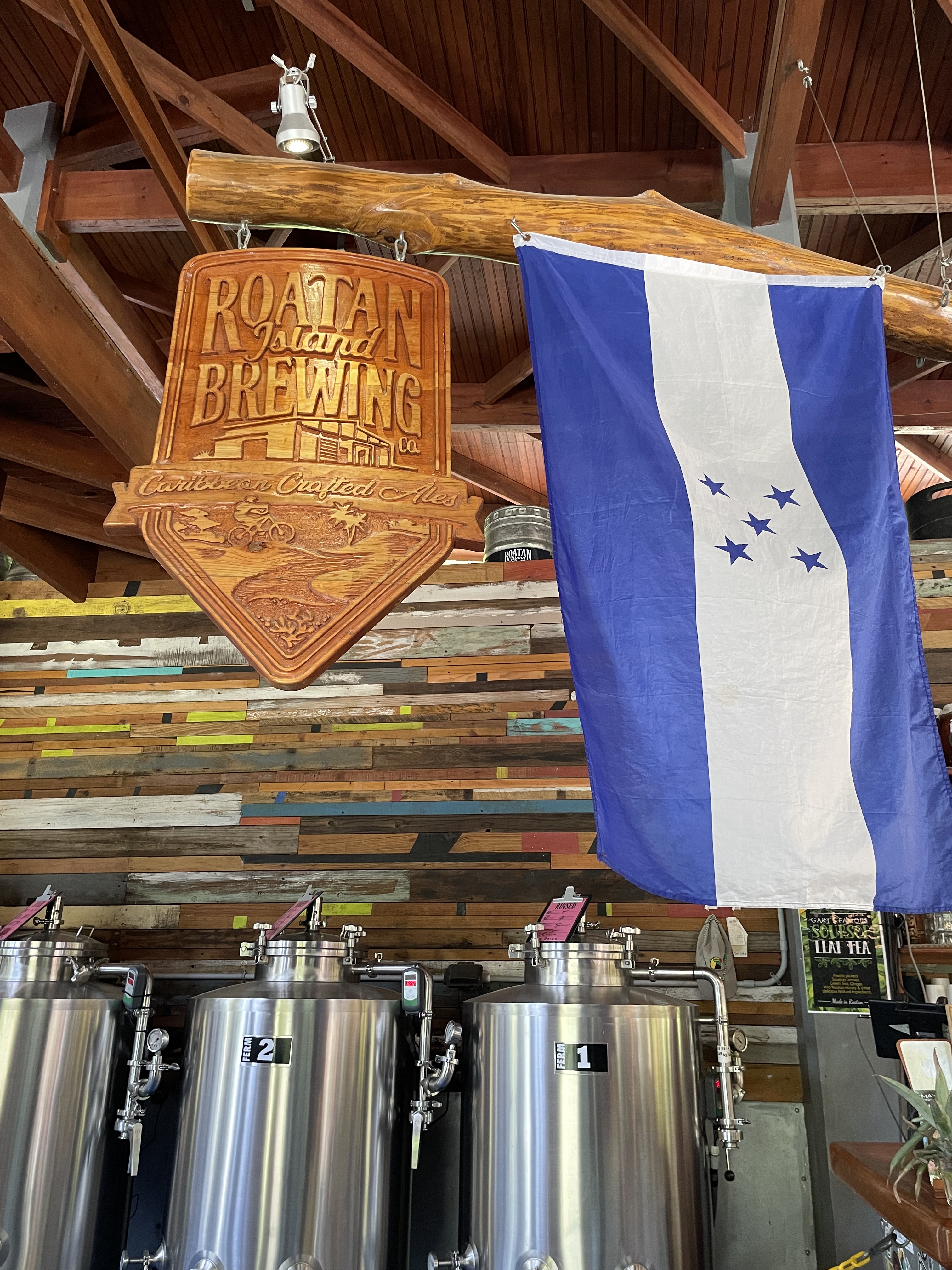
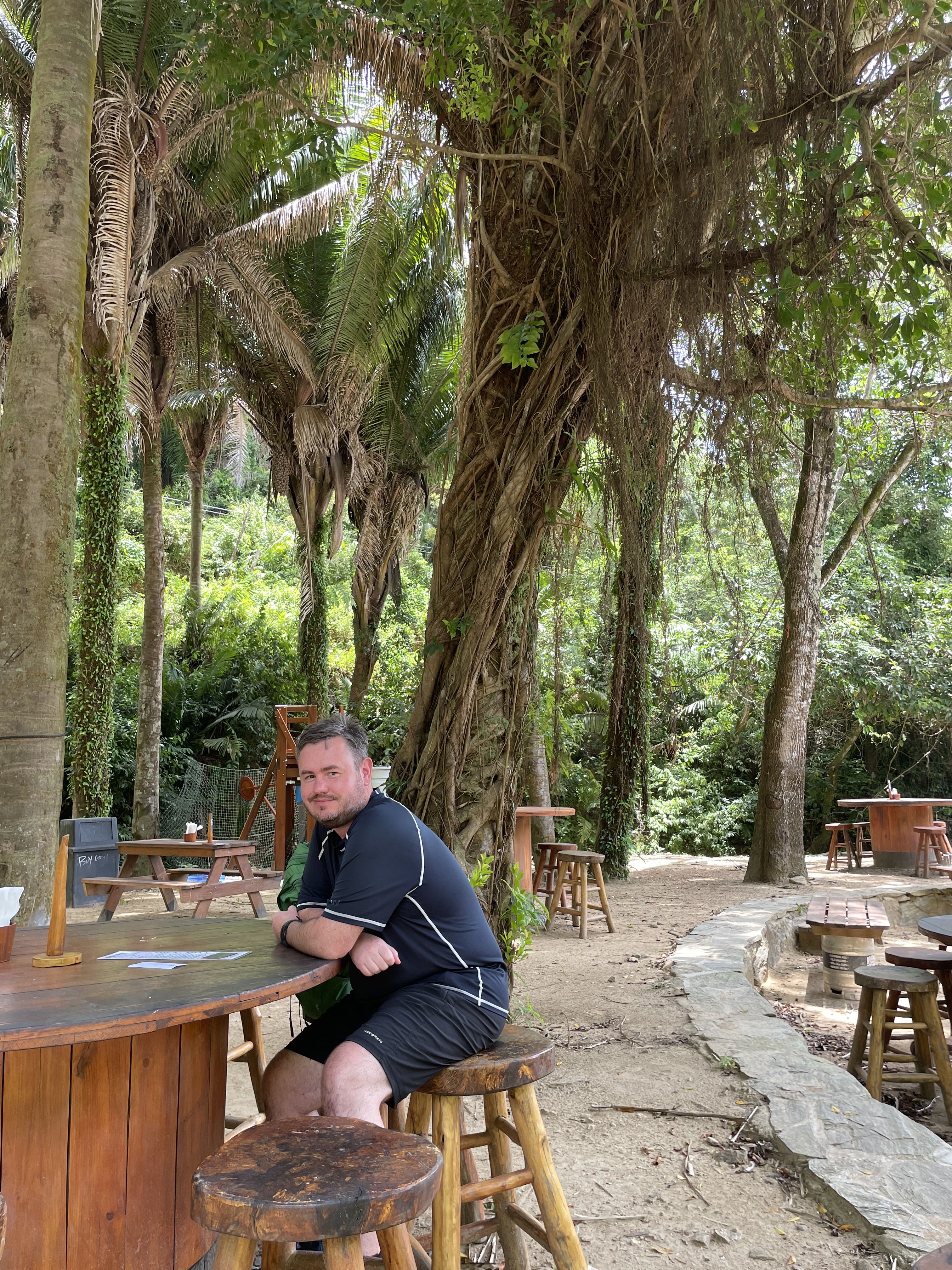
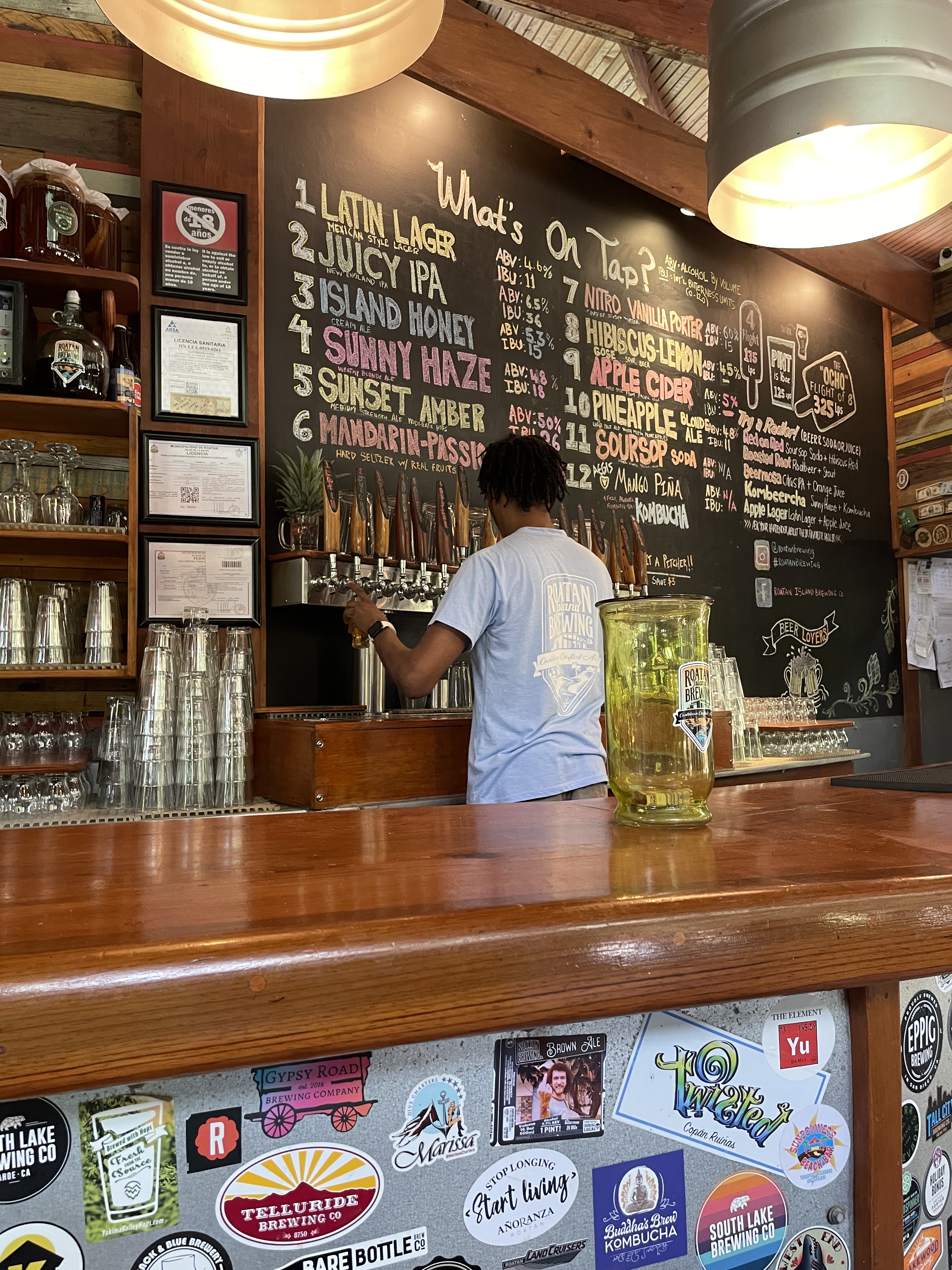
Most days, we wrapped up our dives shortly before lunchtime and headed back to eat at Silversides before diving into work for the afternoon. But on our last day, our dive buddies Alex and Emily suggested that the four of us get dropped off at the Roatan Island Brewing Company for lunch – just to do something a little different.
We shared flights of beer, mango slices with dipping spices, crispy breadfruit – a Roatan favorite – and chicken quesadillas. Yum.
Definitely a fun way to celebrate adding twelve dives to our resumes!
Next week: back in the water for the biggest (literally) highlight of the week. Check in with me then!
Over the past few years – starting in 2020 – we’ve dispatched Peanut and Nugget off to New York for a couple of weeks of grandparent fun over the summer. In 2020, we just stayed home in Virginia and worked, but in 2021, Steve and I snuck off for a “digital nomad” week in the Adirondacks – hiking and kayaking around our remote work schedules. This past summer, my mom called and asked if we were thinking of doing the same thing this time. We shrugged and said we would be happy to loan out the kids again, and started planning Adirondack paddles. Then one evening, as I was surfing the internet on my phone while sitting with Nugget at bedtime, it occurred to me – we didn’t have to go to the Adirondacks. We love it there, of course, but there’s no law saying that’s where we have to go when the kids stay with my parents in the summer. We’d been talking wistfully about scuba diving, after the fun we had getting certified in Costa Rica, and it hit me: we could go anywhere. We could go diving. I started researching potential locations and immediately narrowed the options down to two: Cayman Brac and Roatan. After some extra research, I decided – Roatan it was.
Roatan is the largest of three Bay Islands – Islas de la Bahia – off the coast of Honduras. It sits in the midst of a section of the vibrant, healthy Mesoamerican Reef. The reef is teeming with life all year long – everything from tiny nudibranchs and seahorses – to large pelagic species like whale sharks and hammerheads. It’s also warm, relatively shallow, and mostly free of currents: perfect for novice divers. Seemed like a no-brainer, so we quickly booked into Barefoot Cay Resort, a five-star PADI dive center, and booked our dive package.
We arrived at Barefoot Cay, checked in at the dive shop, and learned about what to expect for the week. Unfortunately, the weather wasn’t looking promising; one of the main points that sold me on this resort was the ability to get to dive sites within a ten minutes’ boat ride from the dock. As it happened, we were there during the windiest month of the year – July – and it wasn’t safe to dive on the side of the island where our resort was located. Instead, we were loaded into a van each morning and driven to the other side of the island (where the wind was much lower and the weather better, thanks to a line of hills breaking the wind along the backbone of the island).
Instead, we dove from a resort-owned boat that was docked off this beautiful sandy beach and charming stretch of shops and dive centers. The island is surrounded by dive sites on all sides, so we had plenty of options for incredible diving. I won’t recap every dive in its own post – each one felt very different to me, but it’s a lot of blue pictures that will probably run together. But there were a few standouts that I just have to show you.
This was our divemaster, Danny. We were paired with another couple – who were on their honeymoon, just like our dive buddies from Costa Rica; we seem to attract honeymooners – and the four of us dove with Danny all week. Our Roatan dive buddies, Alex and Emily, turned out to be just as fun, funny, interesting and kind as our Costa Rica dive buddies, Garry and Donna. The four of us hit it off immediately and I couldn’t think of anyone else I’d rather spend the week diving with – or dissecting the dives over cocktails with every evening.
The first couple of dives were nice and shallow – a good way to get our fins wet.
Ain’t no party like a garden eel dance party, ’cause a garden eel dance party is underwater! Mandy’s Eel Garden was a highlight in a week of highlights. And the garden eels swaying in the gentle current – well, I never thought I’d use the word “adorable” to describe eels, but they really were.
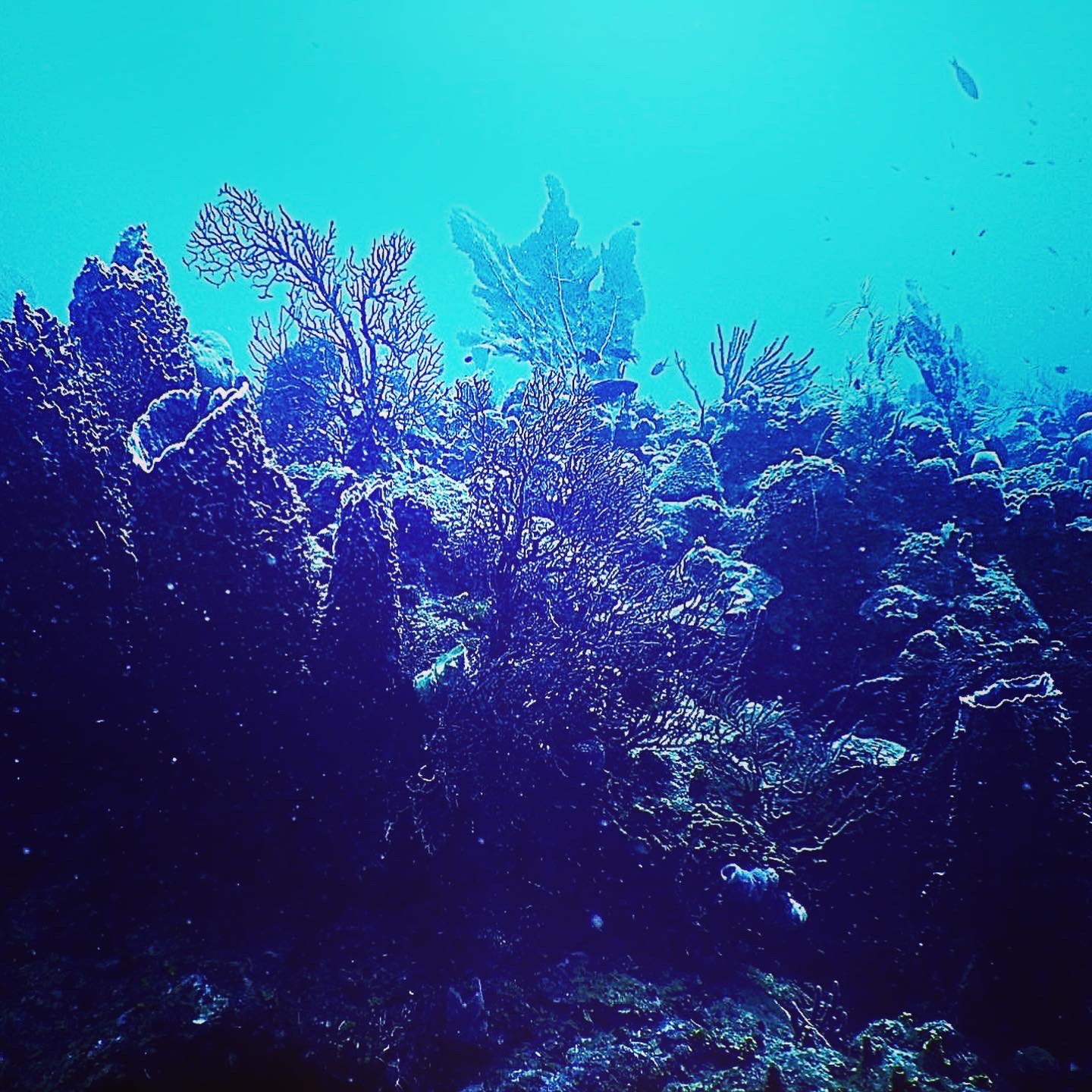
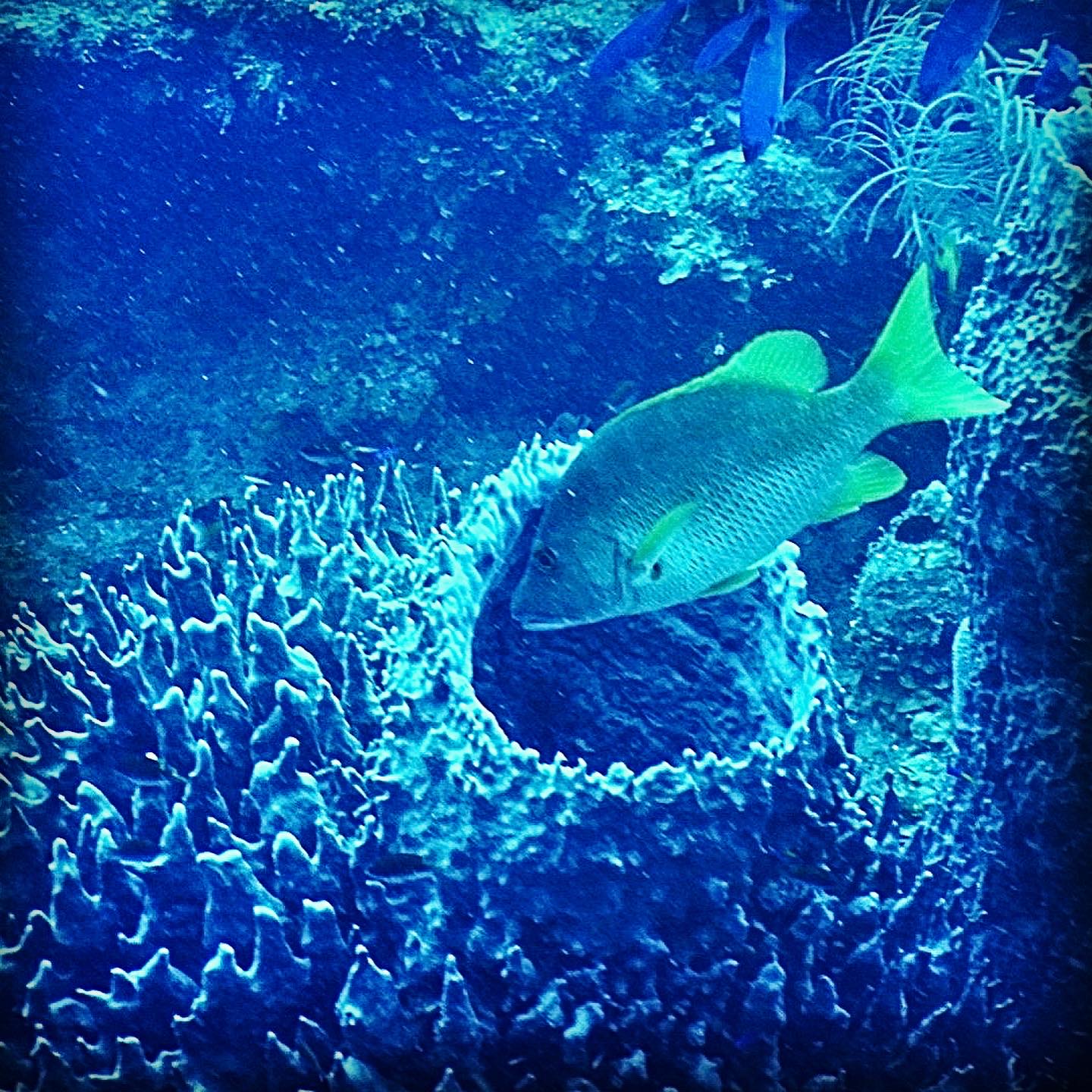
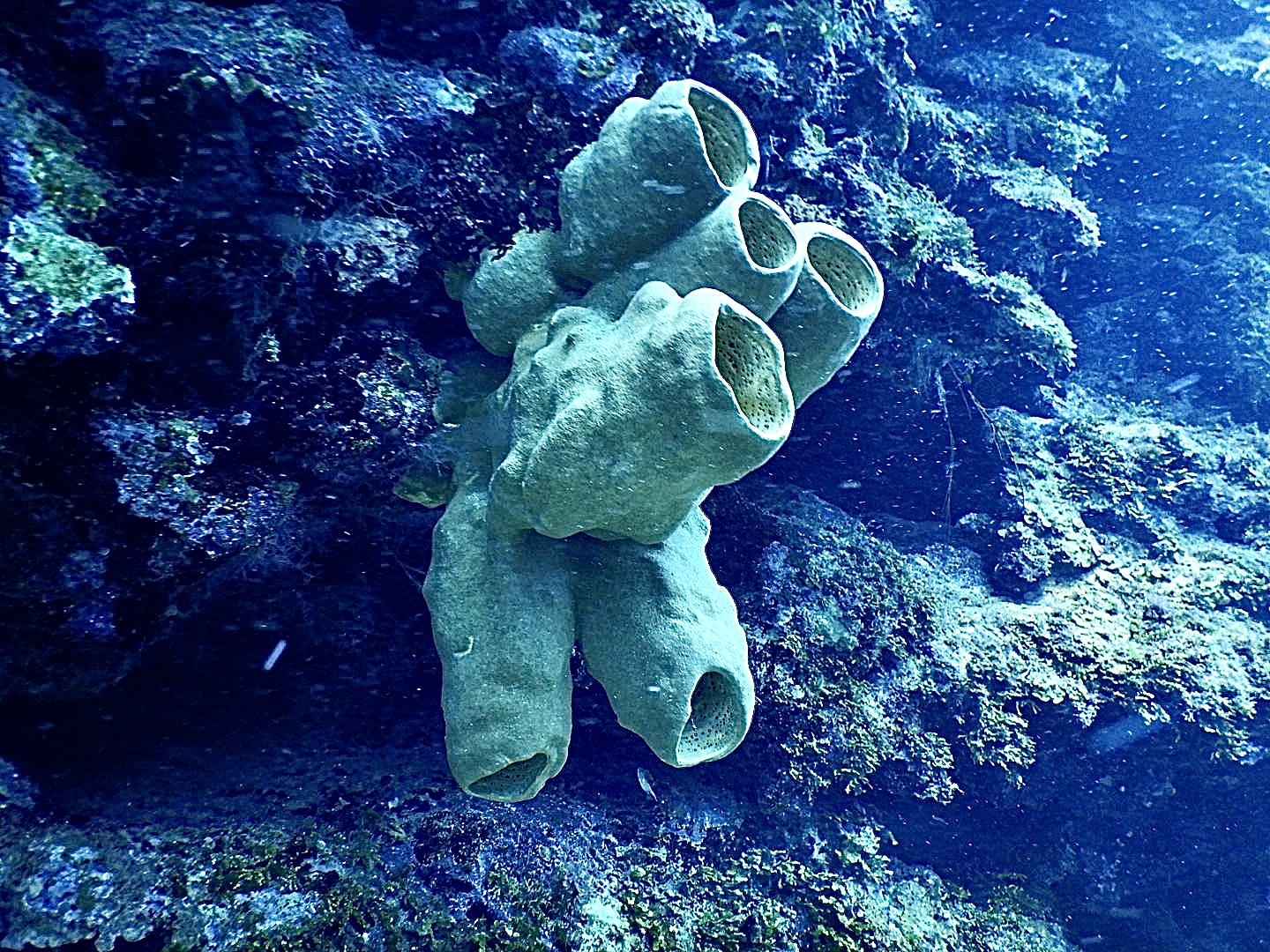
The Mesoamerican Reef was incredible – gloriously healthy and colorful. Our new dive buddies, Alex and Emily, described the bleached coral in the Caymans, and assured us that we were lucky to be exploring such a vibrant reef in Roatan. (Don’t mind the blue/green tint of the pictures here – I am still getting the hang of underwater photography. The reef was a rainbow.)
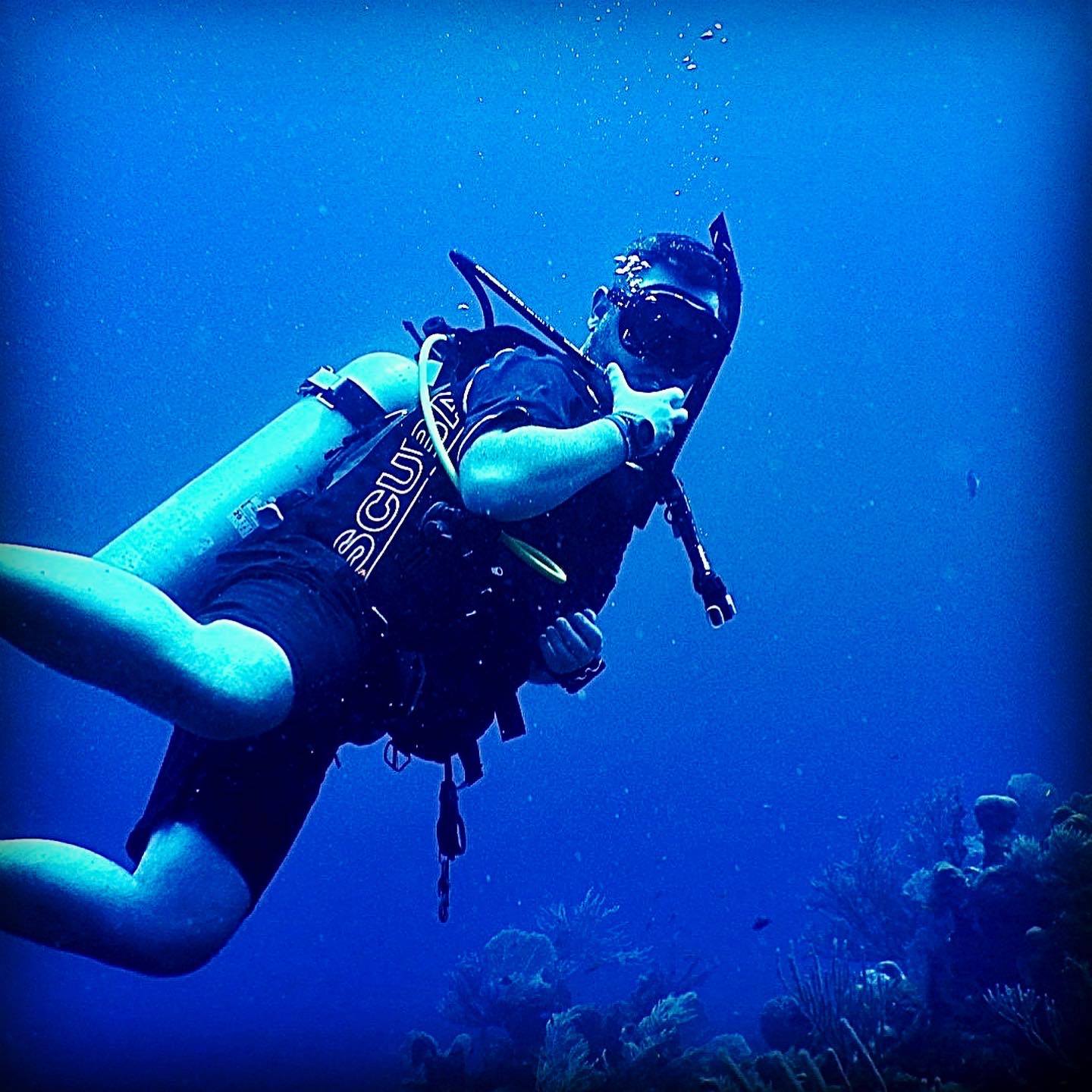
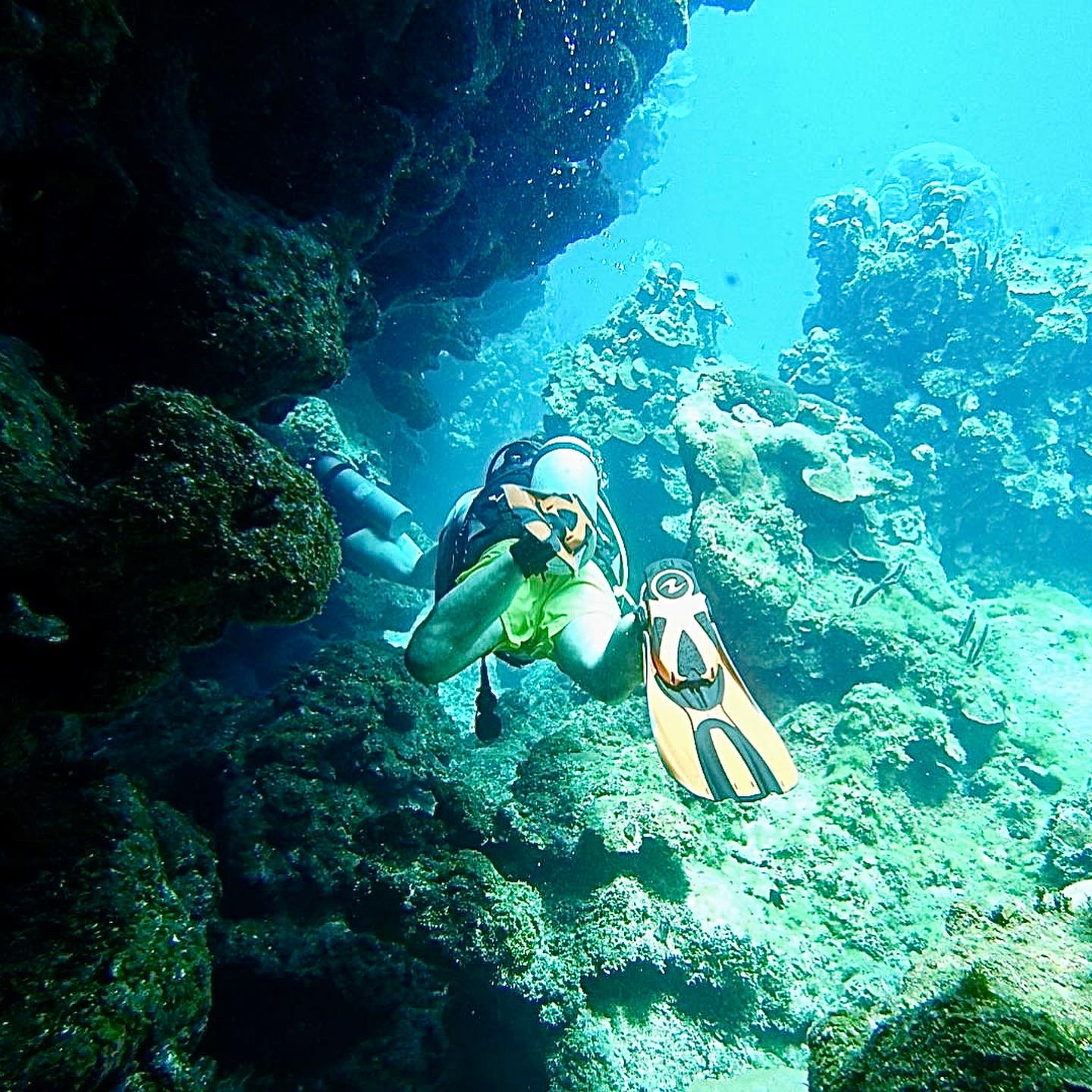
Of course, the biggest highlight of any dive is getting to swim alongside the best dive buddy. I can’t think of anyone I’d rather dive with.
Trying to use my fins to white balance. It didn’t work.
Brain coral! So spooky.
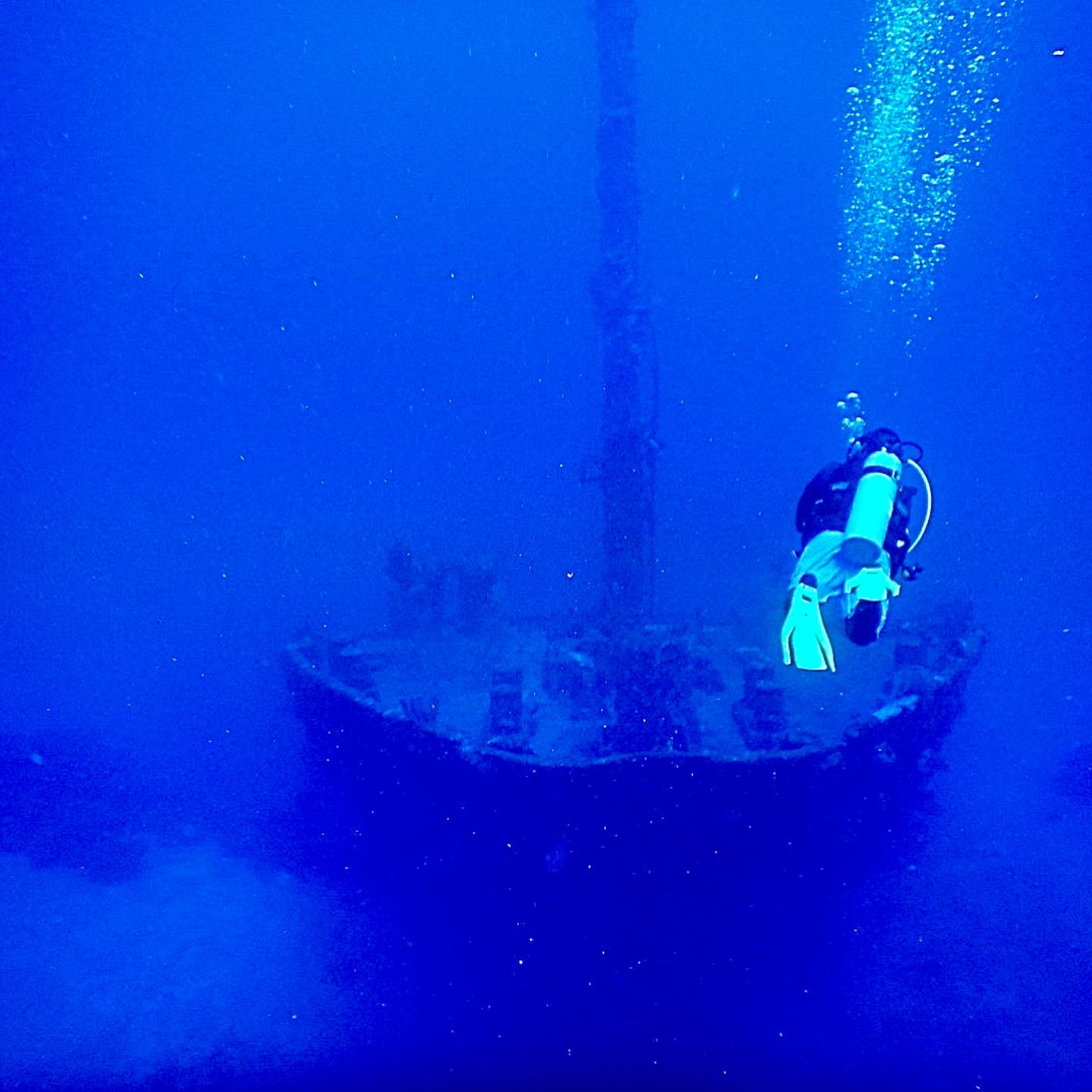
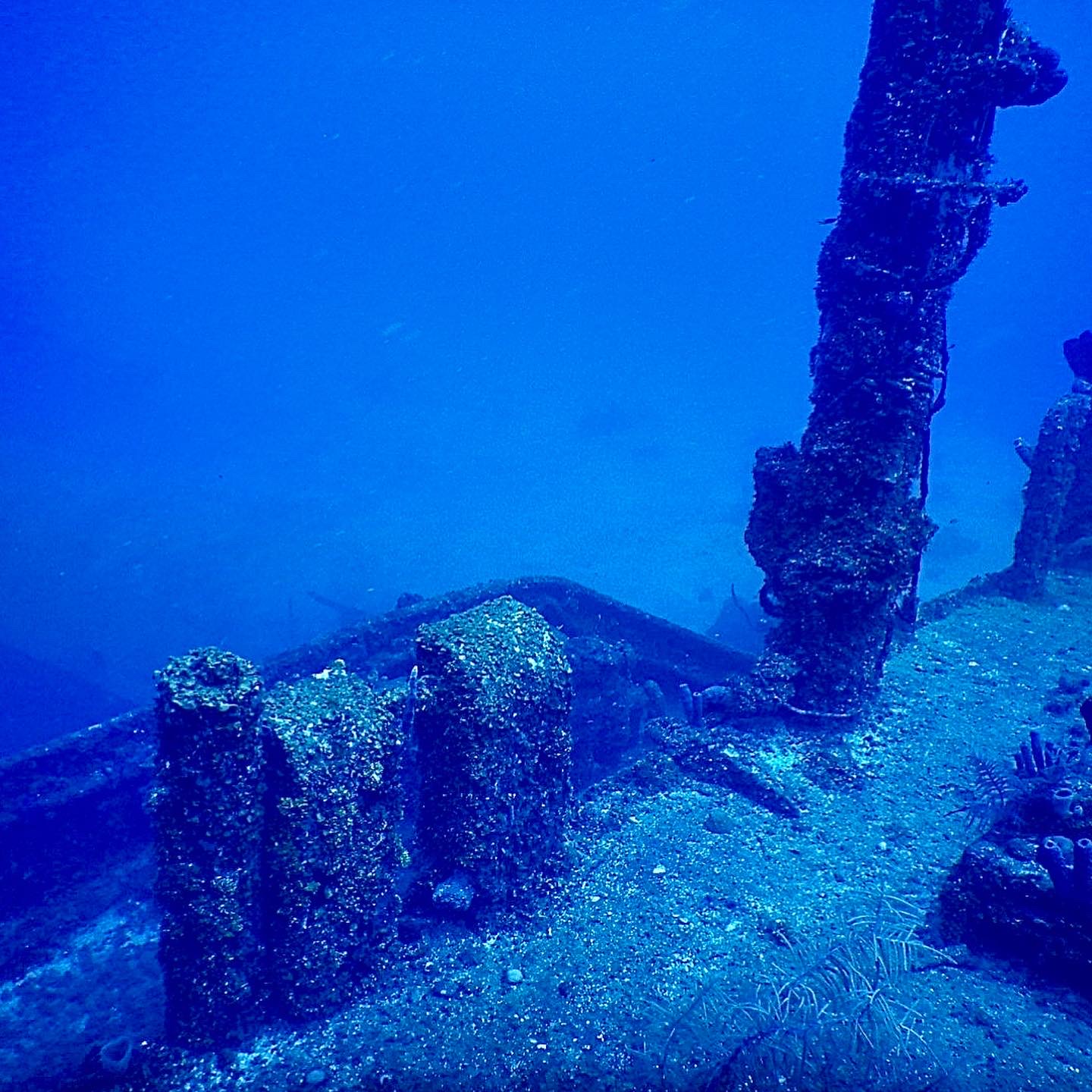
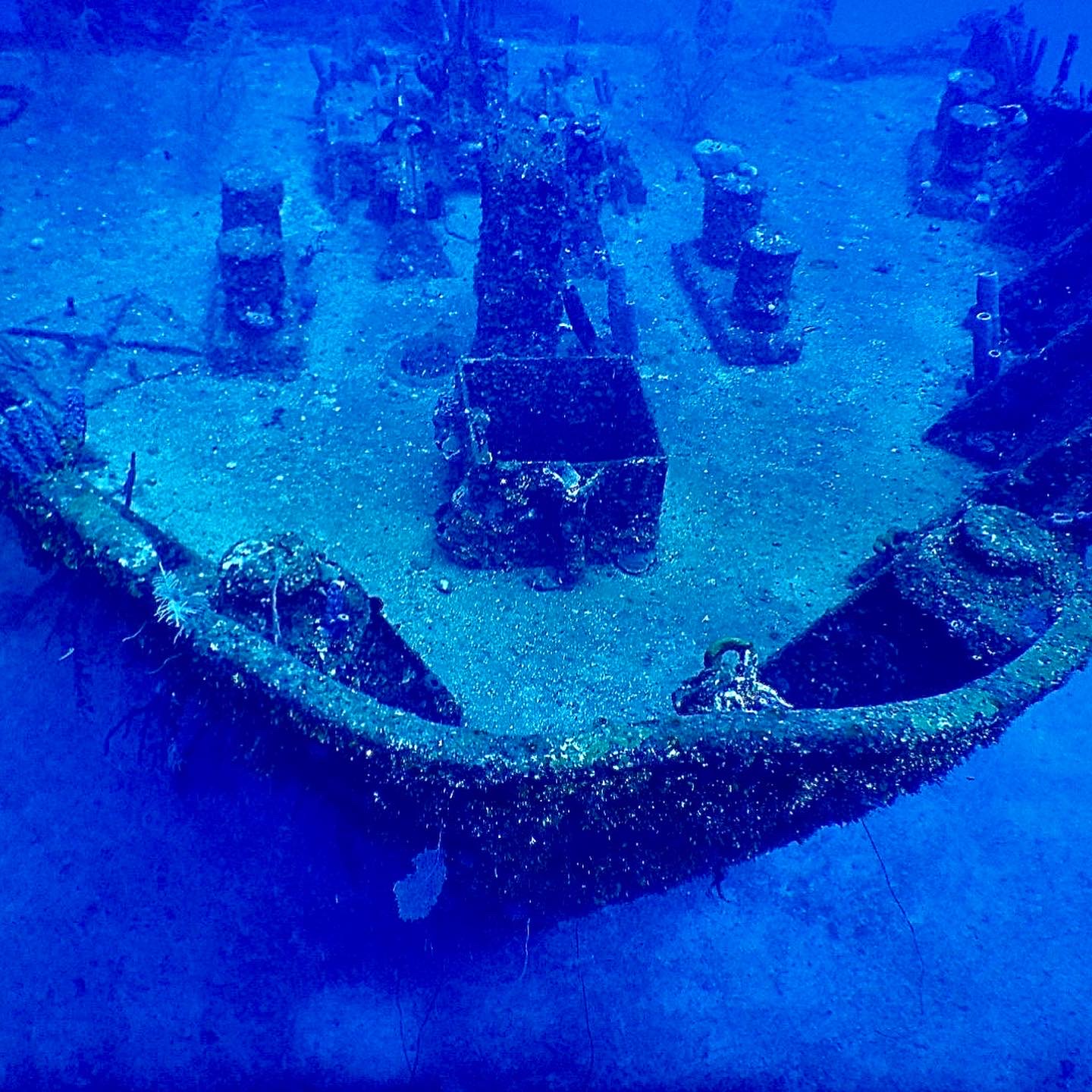
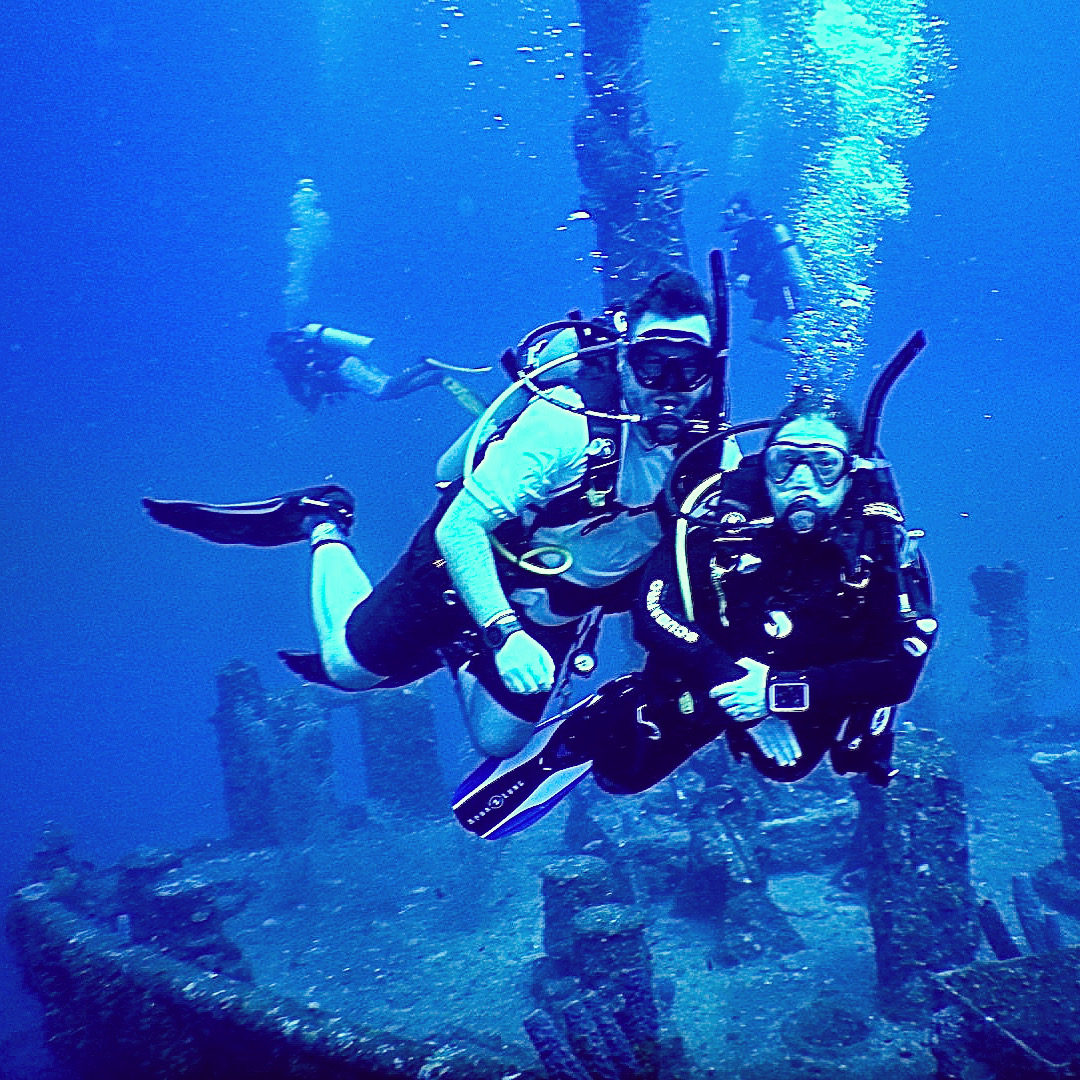
Speaking of spooky, Danny took us on one dive to the El Aguila shipwreck. Let me tell you, swimming along through endless blue gloom and then a mast looms up in front of you is a vibe. I felt a little bit like The Little Mermaid.
The couple that wreck dives together stays together, right Steve? I love this picture. Look how hardcore we look!
The opposite of hardcore: this seahorse. He was actually very large for a seahorse – several inches, with a big pregnant belly – and bright yellow. Our dive buddy, Emily, described him as a Giant Cartoon Seahorse.
Also not hardcore: this parrotfish. We saw them all over the place, and every single one looked like a child’s squeaky bath toy.
We did not see any whale sharks (wrong season – they do turn up anytime during the year, but July is not their big migration time so they’re a rare sight) or hammerheads, much to Steve’s dismay. (We’ll just have to go back to Roatan – twist my arm.) But we did see a massive nurse shark sleeping on the seafloor. See the dorsal fin and long tail tucked away? Look closely.
One pelagic species we did see: spotted eagle rays, which flew past us as casually as you please. They were gone in a flash, but what a flash it was.
On one of our first dives, Emily spotted a conch. After she mentioned seeing one, I started seeing them everywhere.
A river of “goggle eyes” on our last dive. I started diving to face and overcome a fear of fish, so to rest peacefully in the water and take in this site – and find it impressive and moving instead of terrifying – was a huge victory for me.
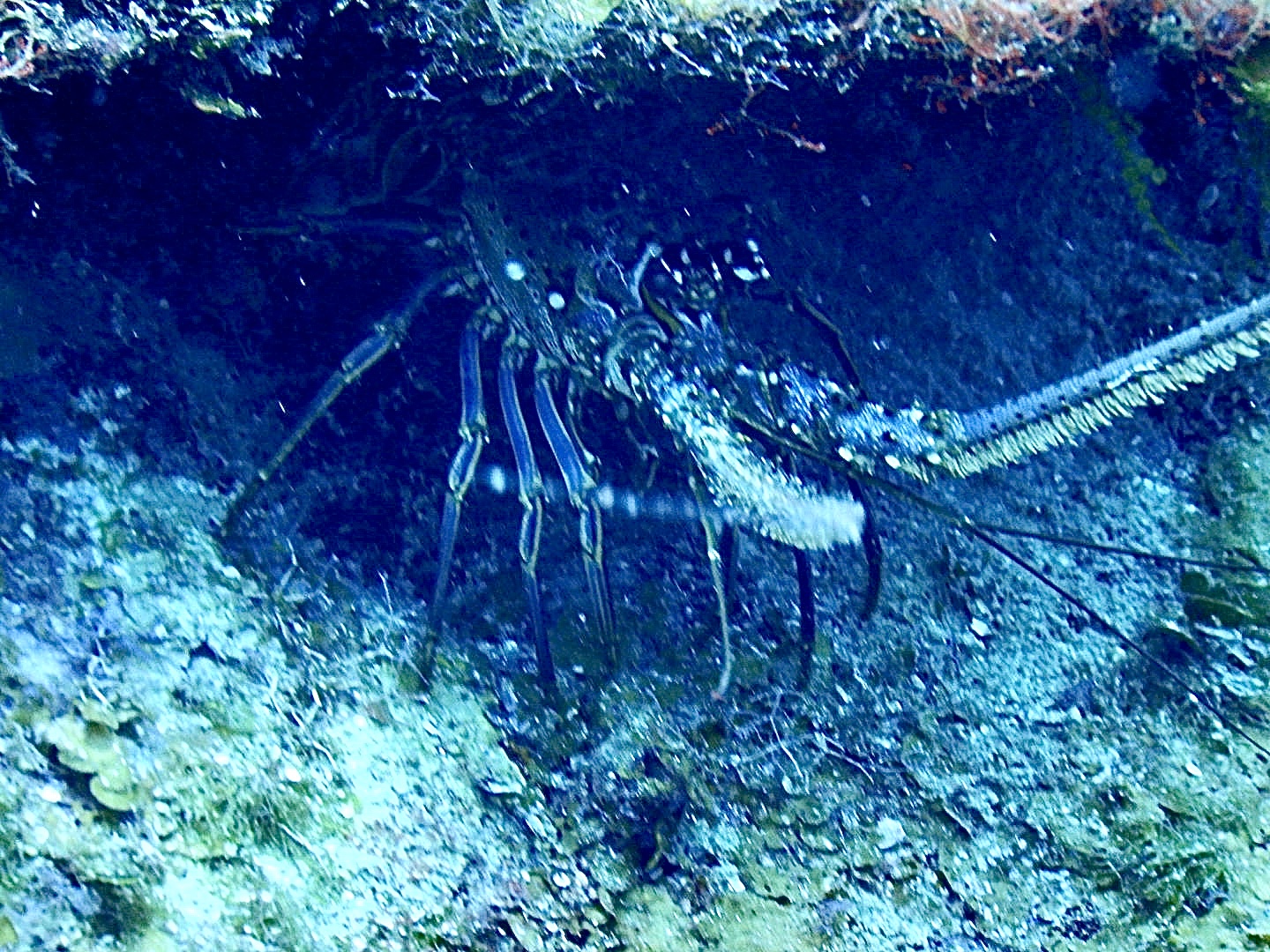
We also made a game out of spotting as many Caribbean spiny lobsters as we could.
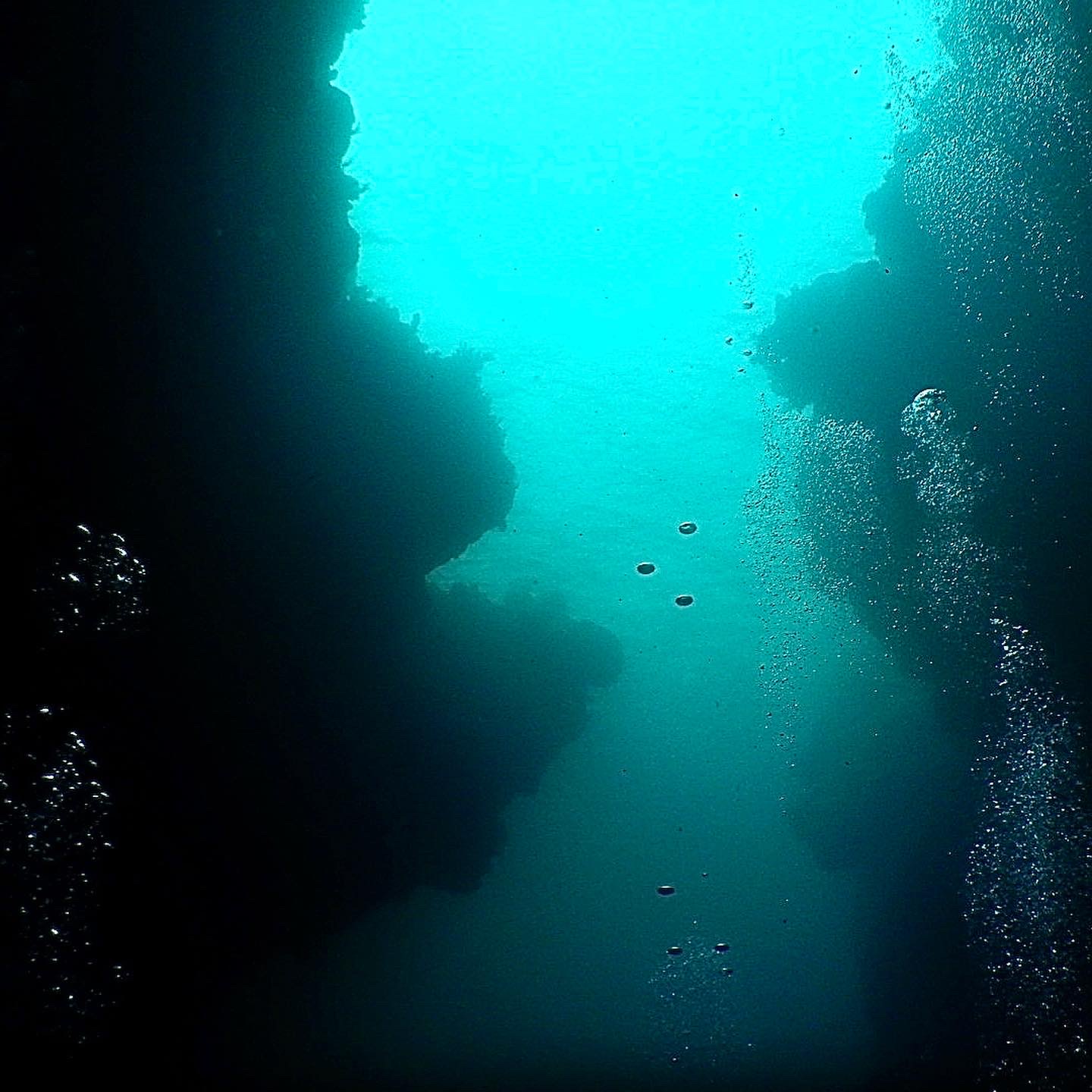
Tunnels, swim-throughs and tight squeezes. Steve didn’t really enjoy these, but our divemaster added them into a few dives because Alex and Emily did. (Important for everyone to get to do what they like!) I viewed them as a personal challenge: could I make it through a swim-through without freaking out? I was really proud of myself for tackling this more intermediate level diving.
These are just a few of the highlights Roatan had to offer! Next week, I’ll show you where we spent our surface intervals. Check in with me then!
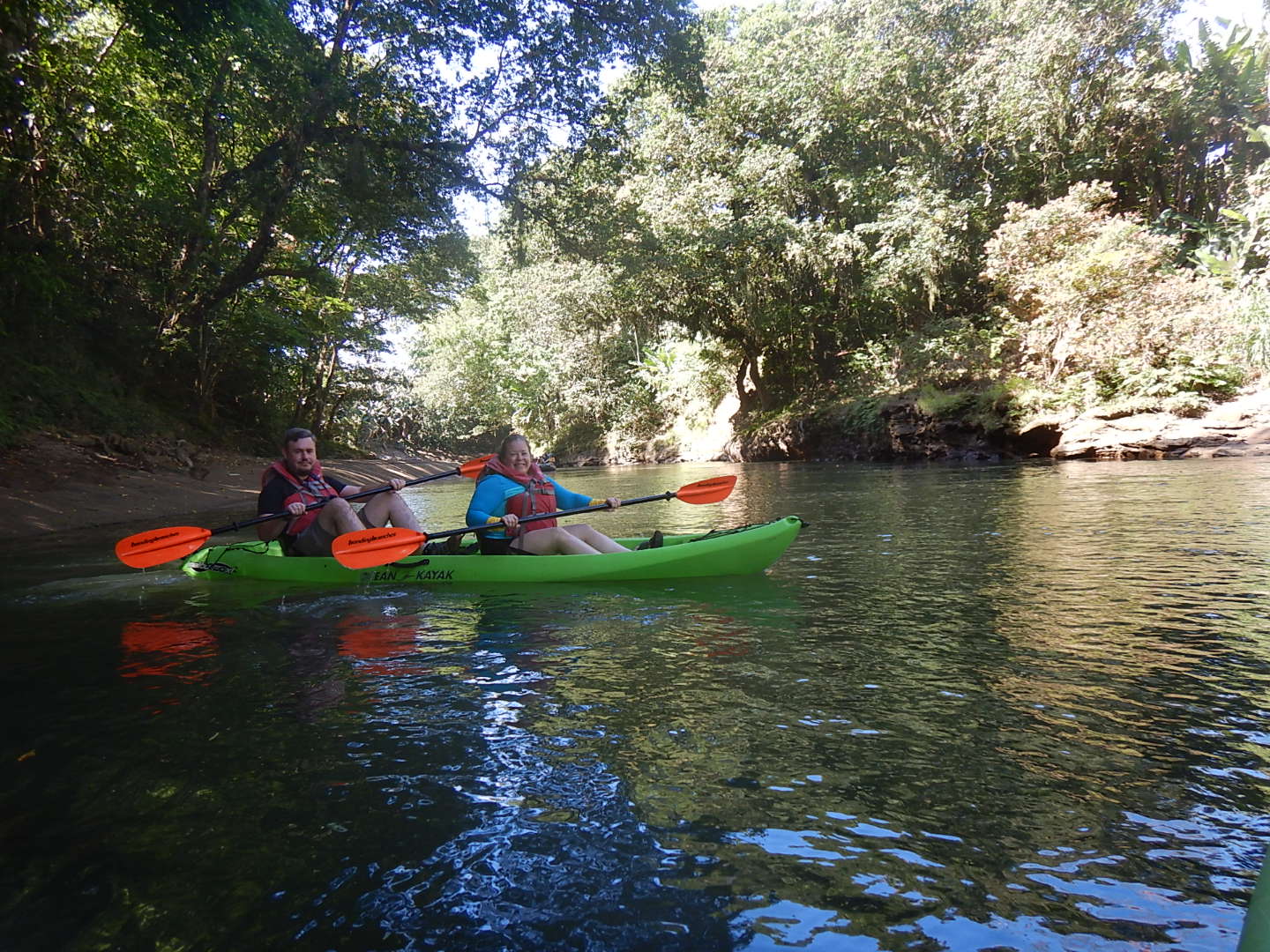
Our last morning in Costa Rica was spent kayaking the Rio Penas Blancas with a “float safari” group – I’m not doing a full post because it actually was the only experience we had in Costa Rica that wasn’t great. We did see some cool animals, including long-nosed bats, squirrel monkeys, several kinds of kingfishers, an American crocodile, and a juvenile sloth way up in a tree.
I was also a little on edge because when we got back to our hotel, we had our COVID test scheduled – this was the days when a negative COVID test was required to get back into the United States, and while I felt fine (and had barely been inside for the last week and a half) I was terrified of the idea of a positive test stranding me in Costa Rica. I breathed a huge sigh of relief when the test was over – and negative, so we were cleared to go home the next day, whew – and we decided to celebrate with one more adventure. Our guide from Monteverde, Felix, had recommended a trail called the Bogarin Trail, which starts from practically the middle of downtown La Fortuna.
We ate a quick lunch, then drove over to the trail and decided our mission was going to be to spot a sloth.
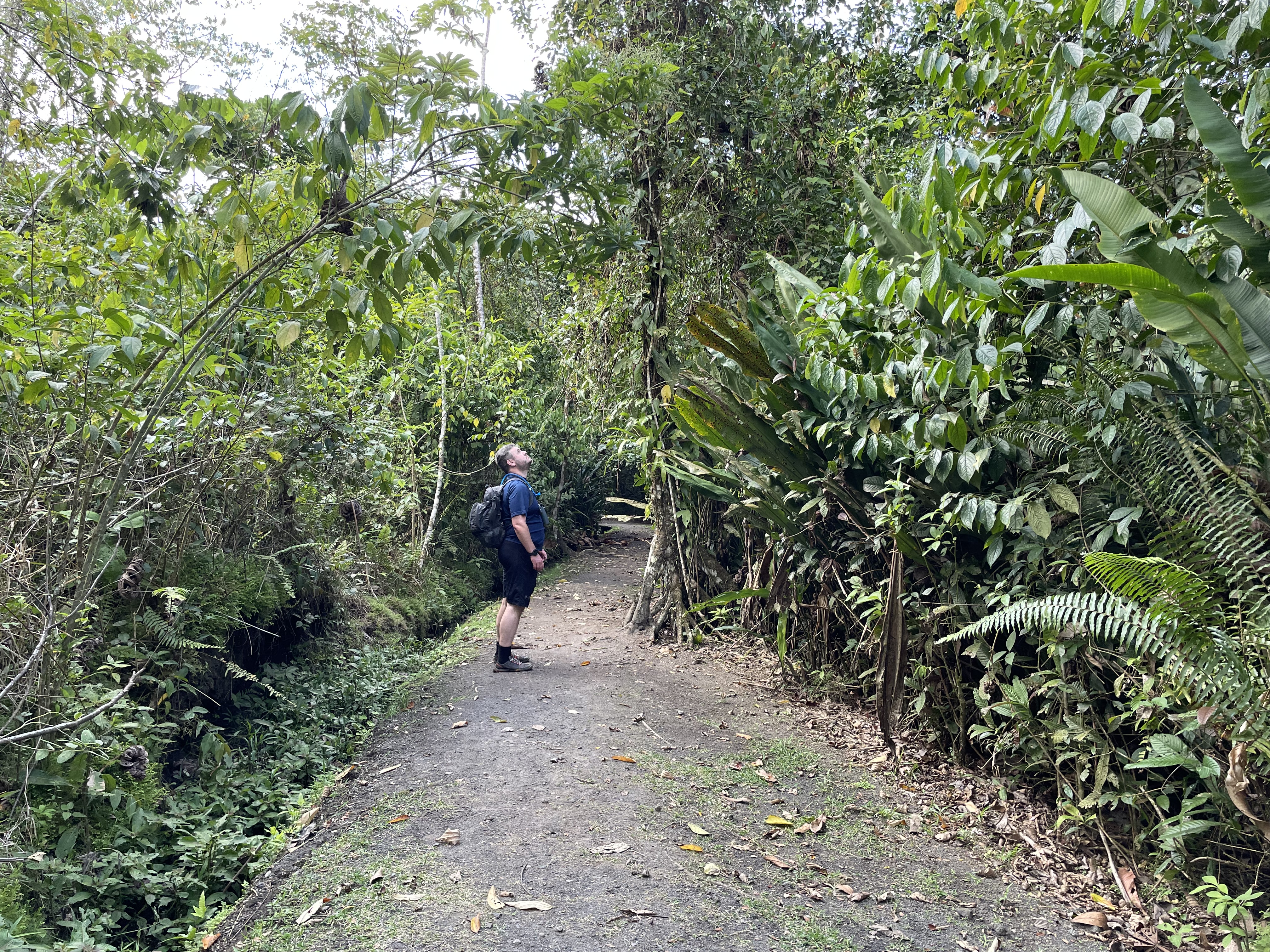
This looks promising.
We’d seen a sloth about a hundred feet up in a tree in Corcovado National Park, and a young one nestled – and well camouflaged – in a tree on the Rio Penas Blancas that morning, but we wanted a really good view before we went home. The first clue came when we saw a cluster of people gathered around a guide with a scope, peering up into a tree.
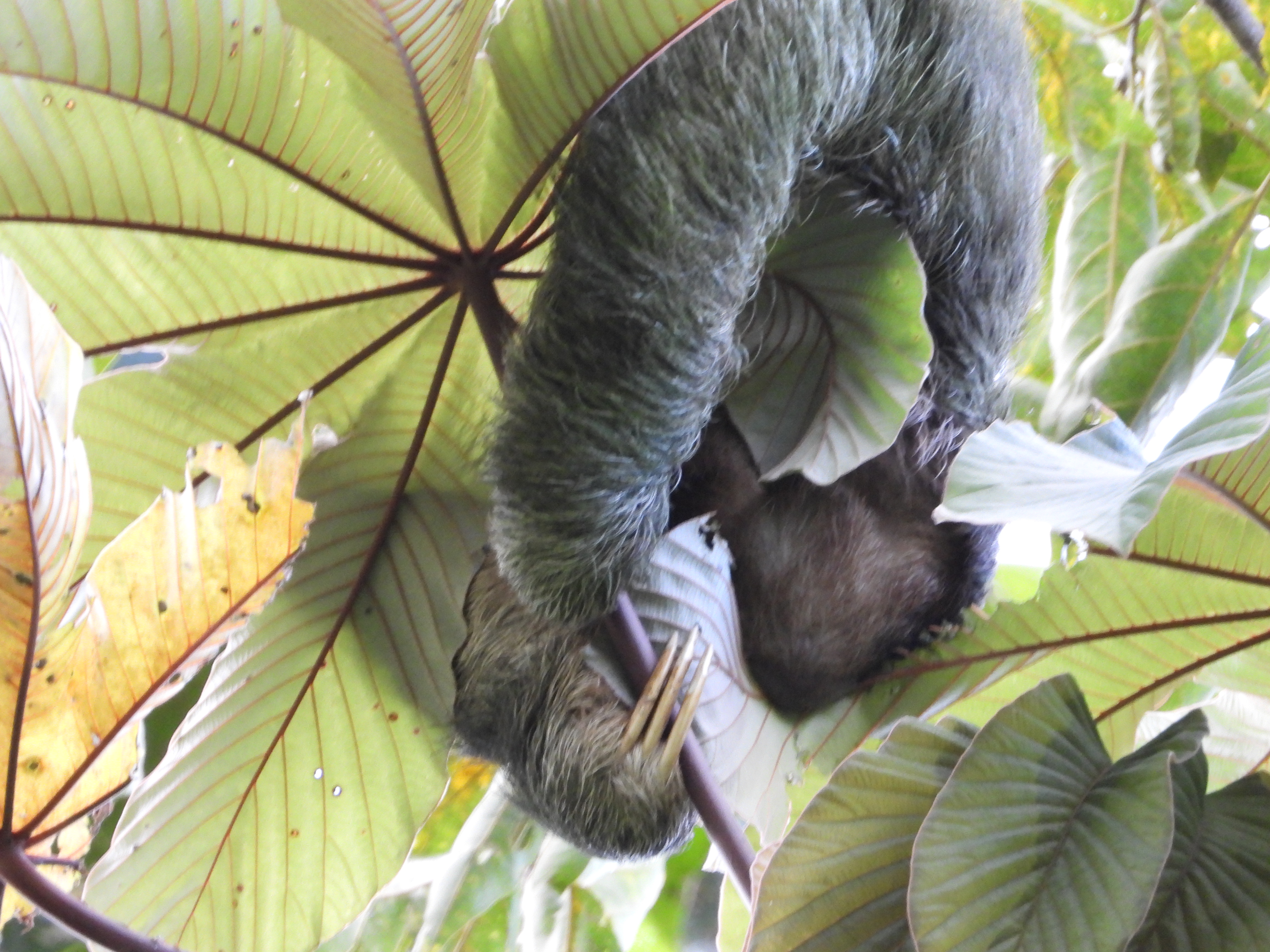
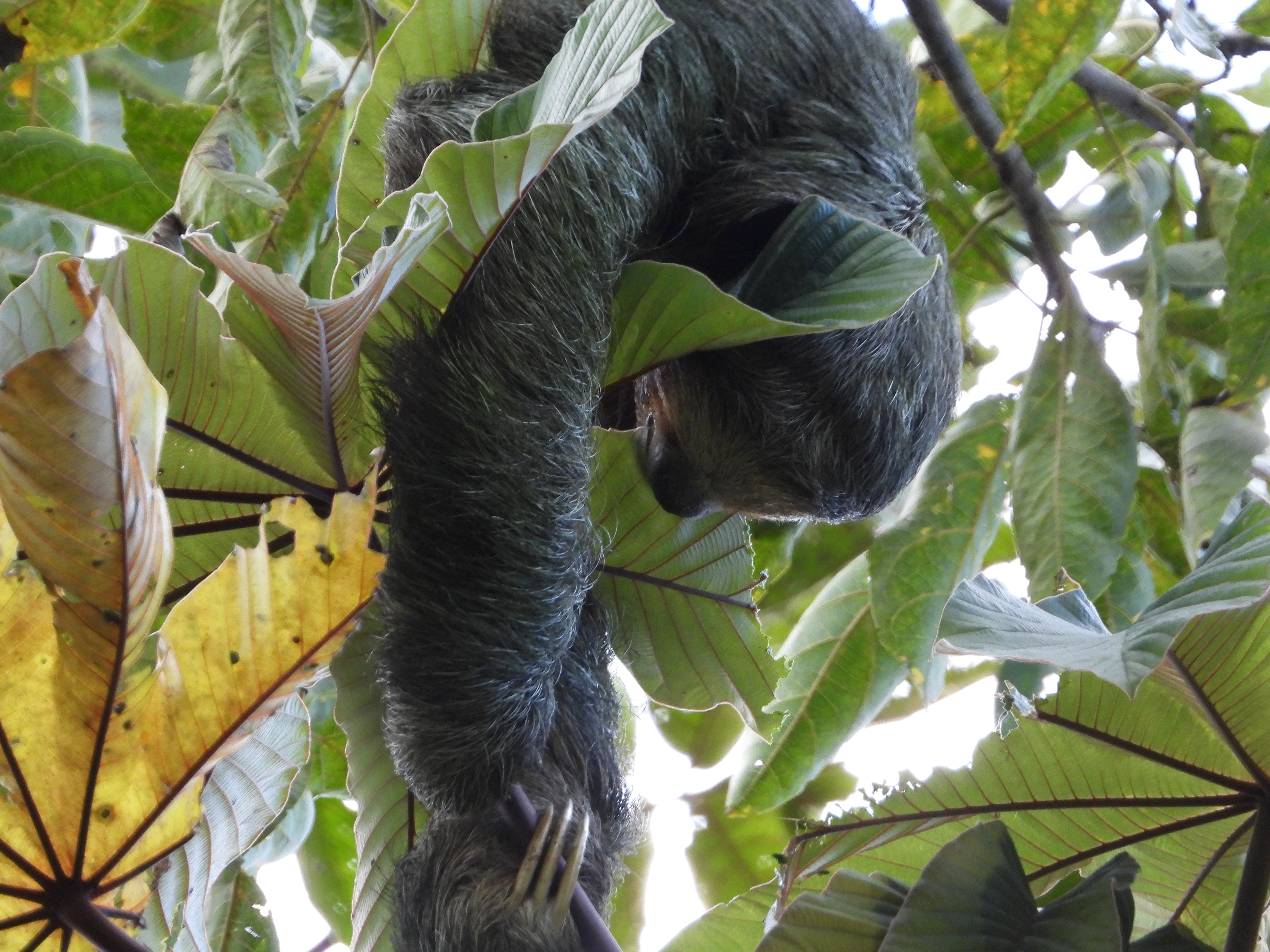
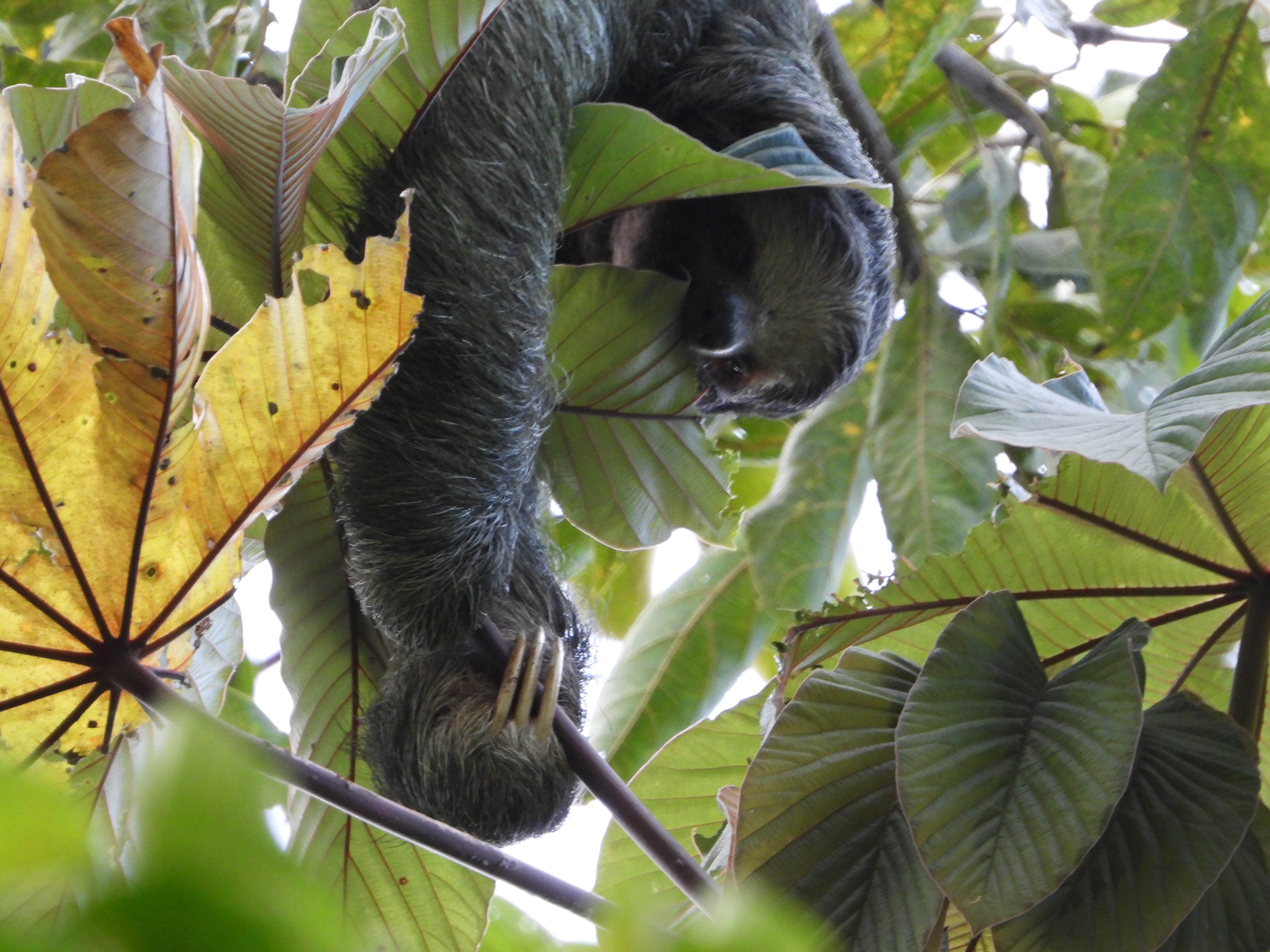
Well, there you are!
This was an adult female, very slowly and meditatively chewing her way through a lunch of green leaves.
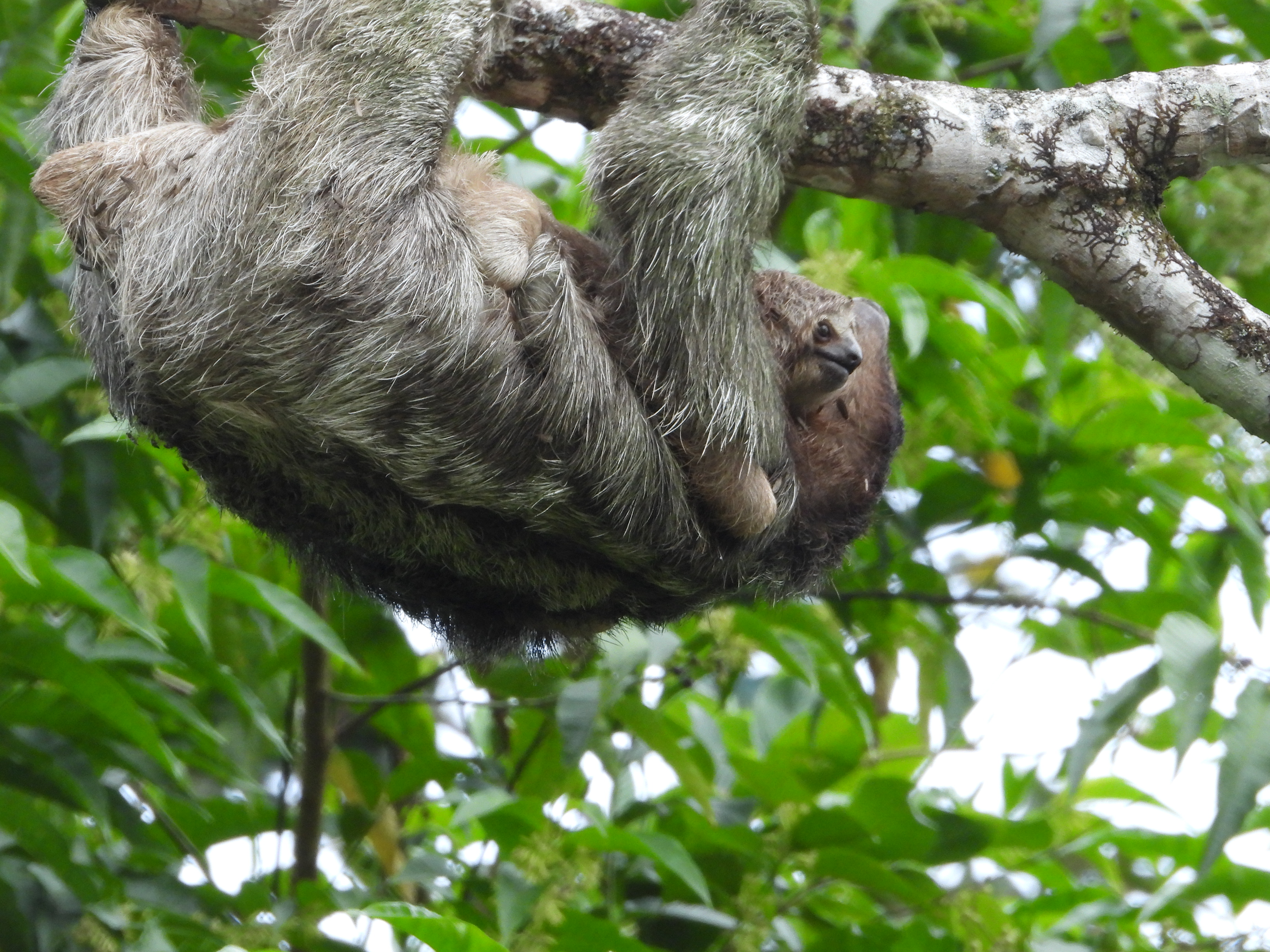
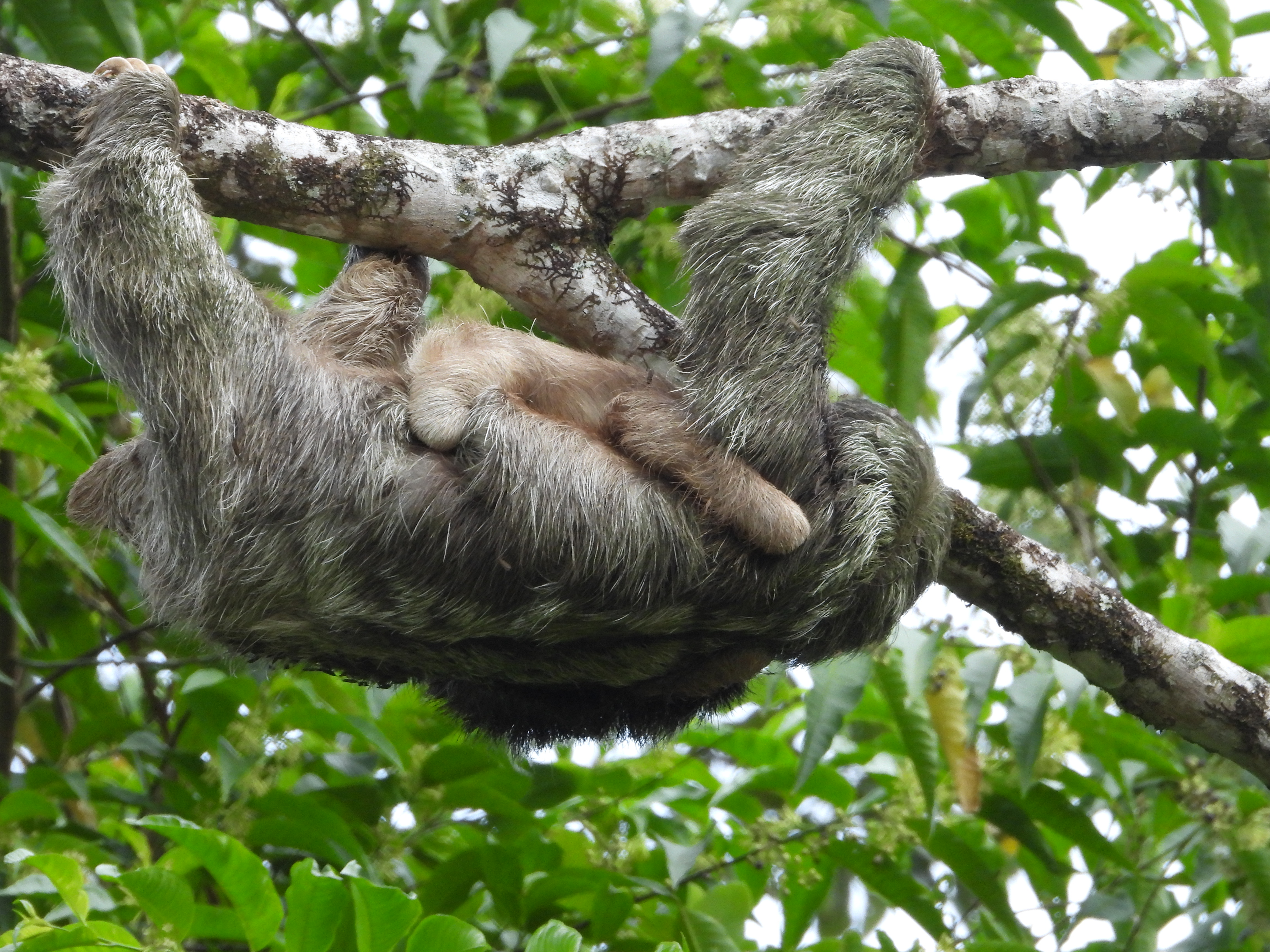
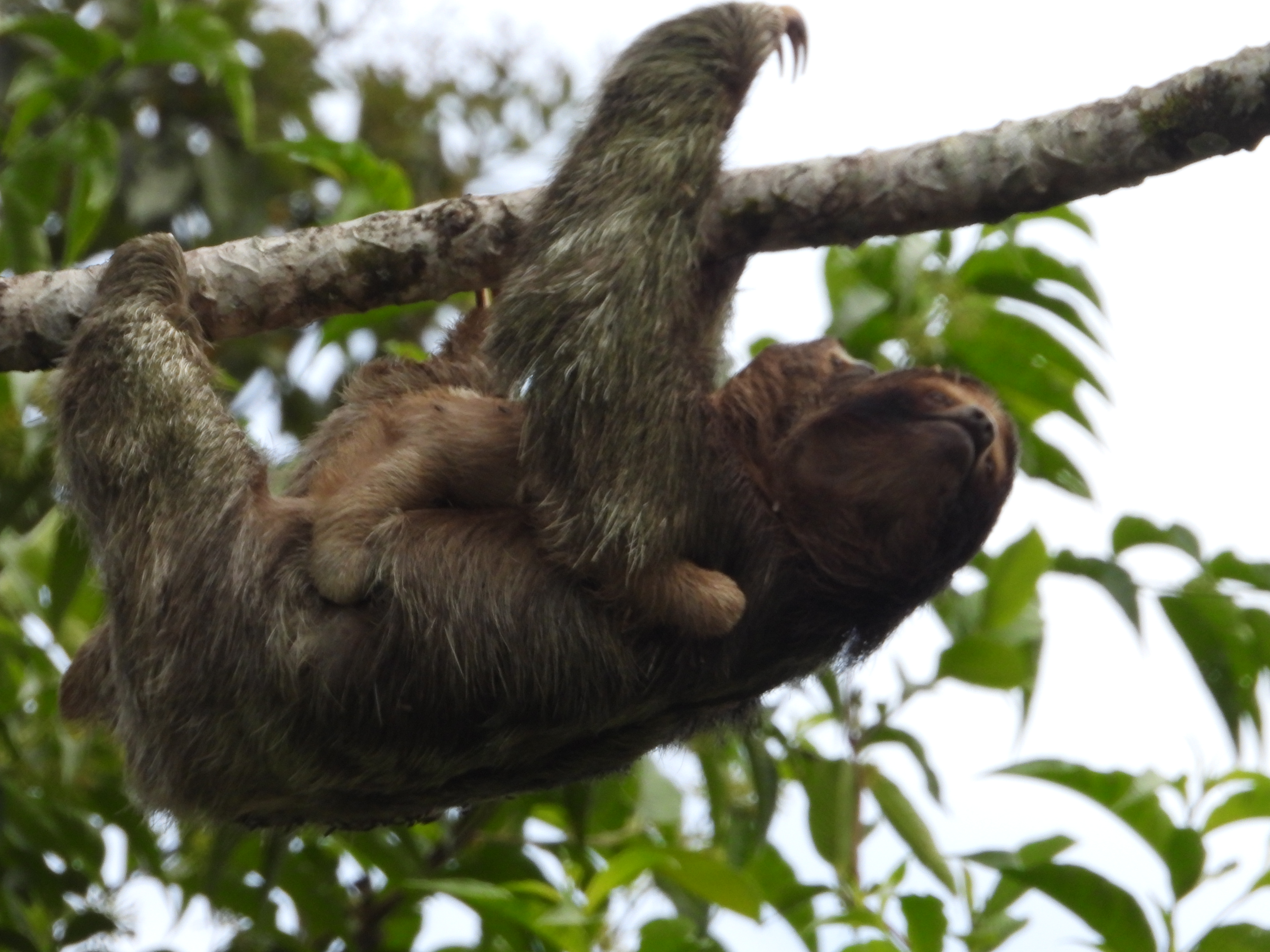
We walked a bit further along the trail and were stopped by another group, who pointed out a small spur trail and promised an extra special treat just on the other side of a line of trees – a mother sloth and baby! We thanked them, hurried over the spur trail, and found several guided groups gathered around and taking in this sight:
It does not get cuter than this.
Eventually, the mother sloth decided to move up the tree, and we watched as she cautiously picked her way along the branches.
I seriously could not get over those fuzzy little arms and legs clinging to Mom. Reminded me of Nugget, but you know – fuzzier.
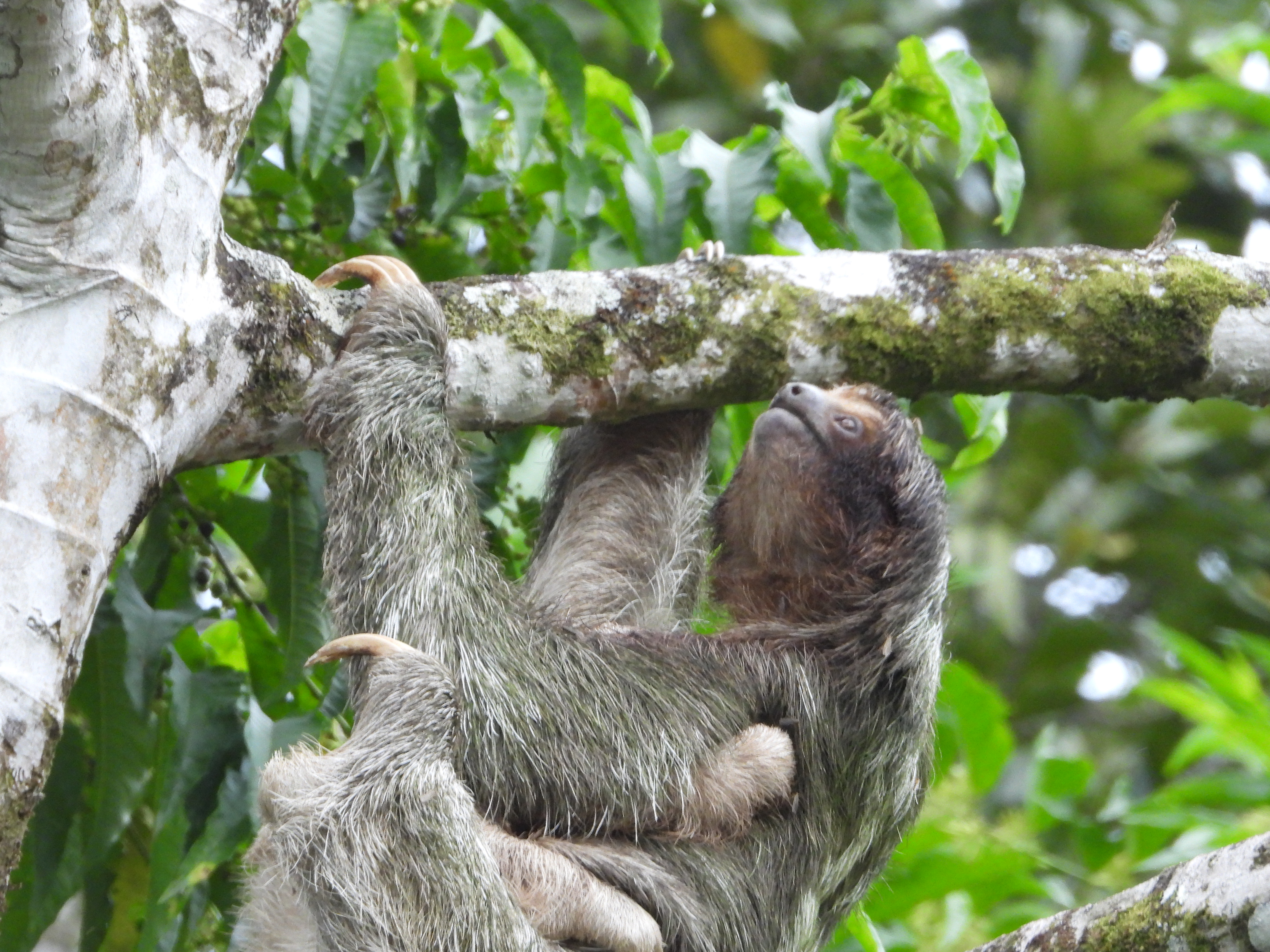
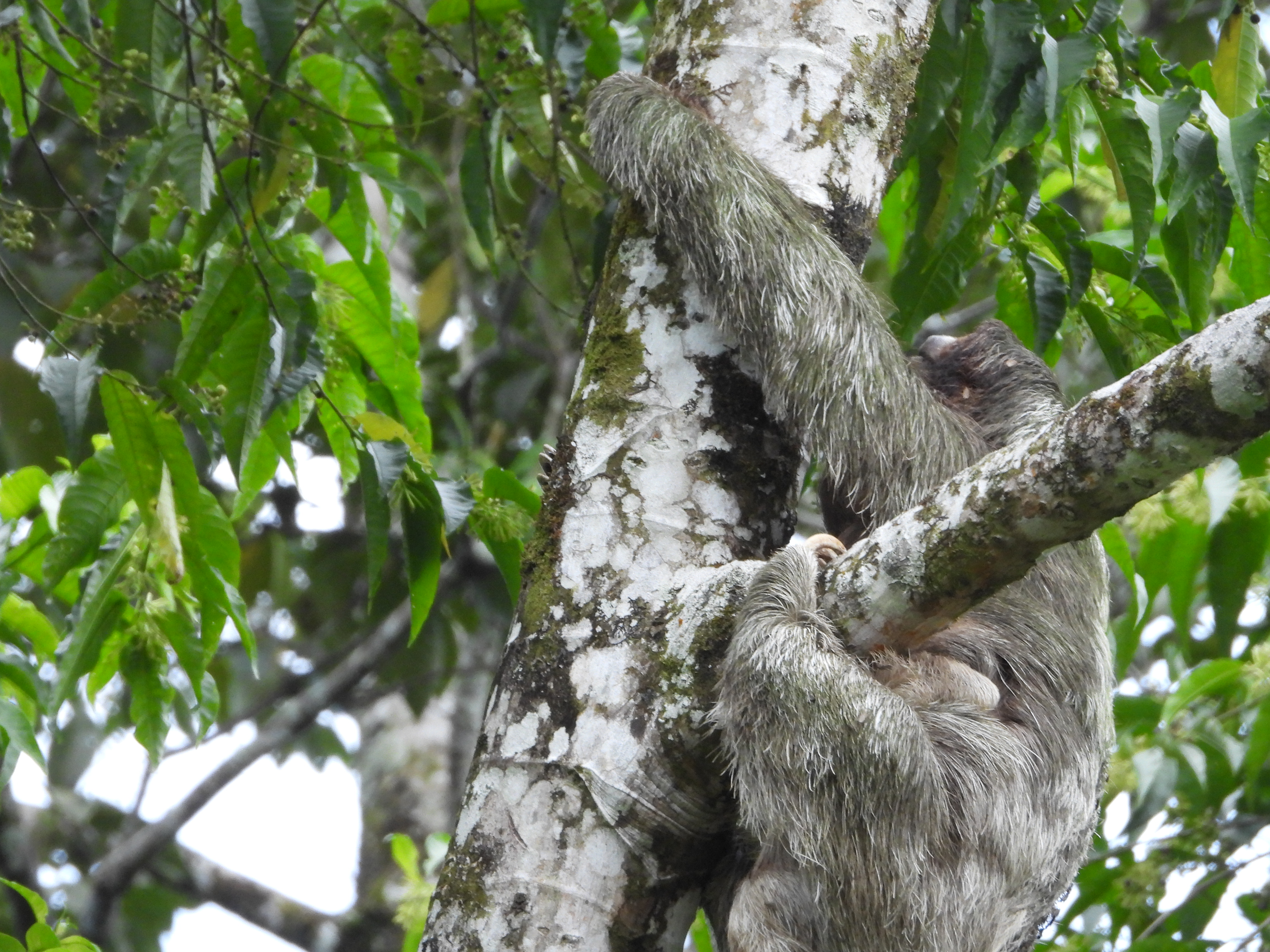
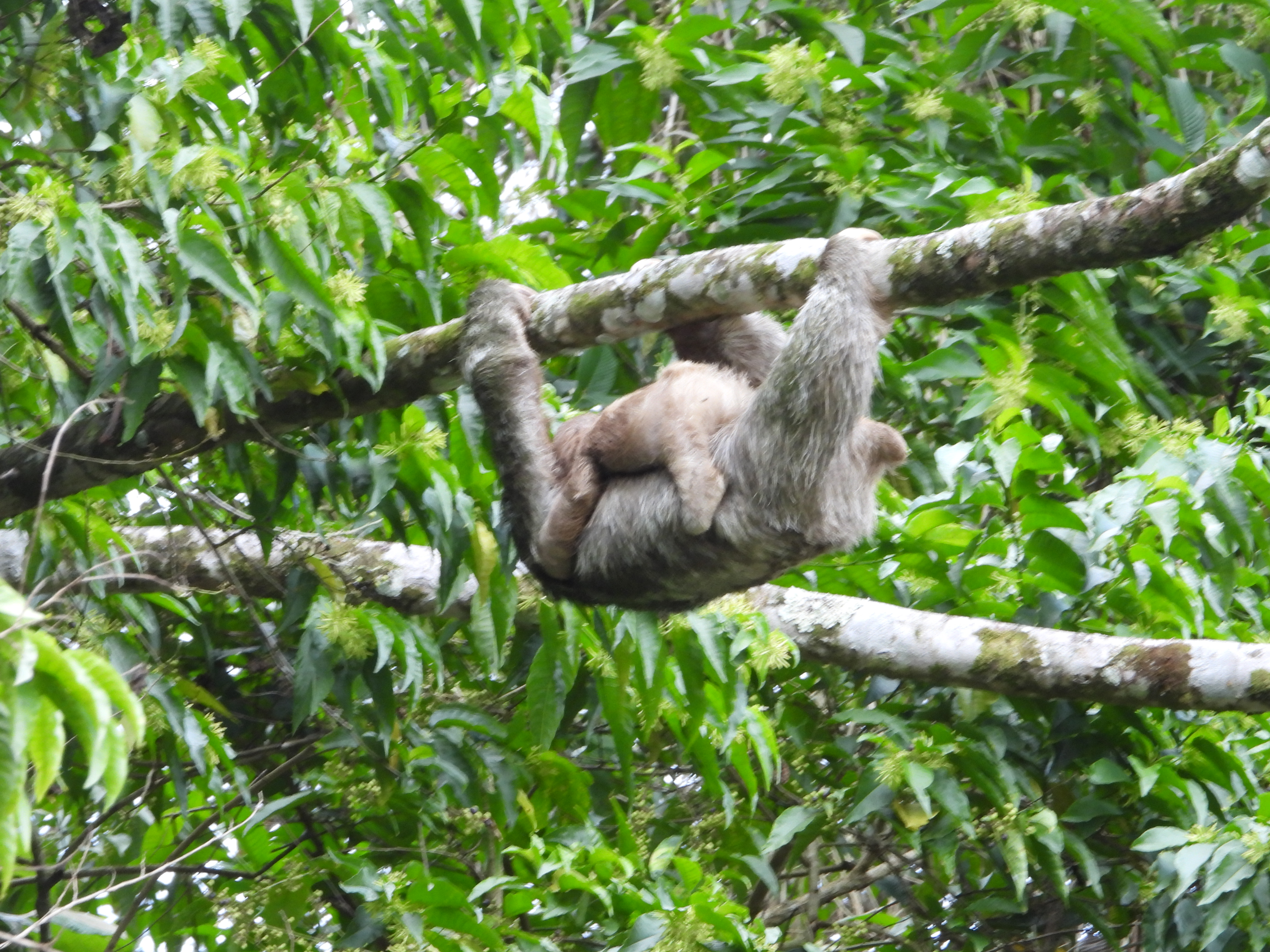
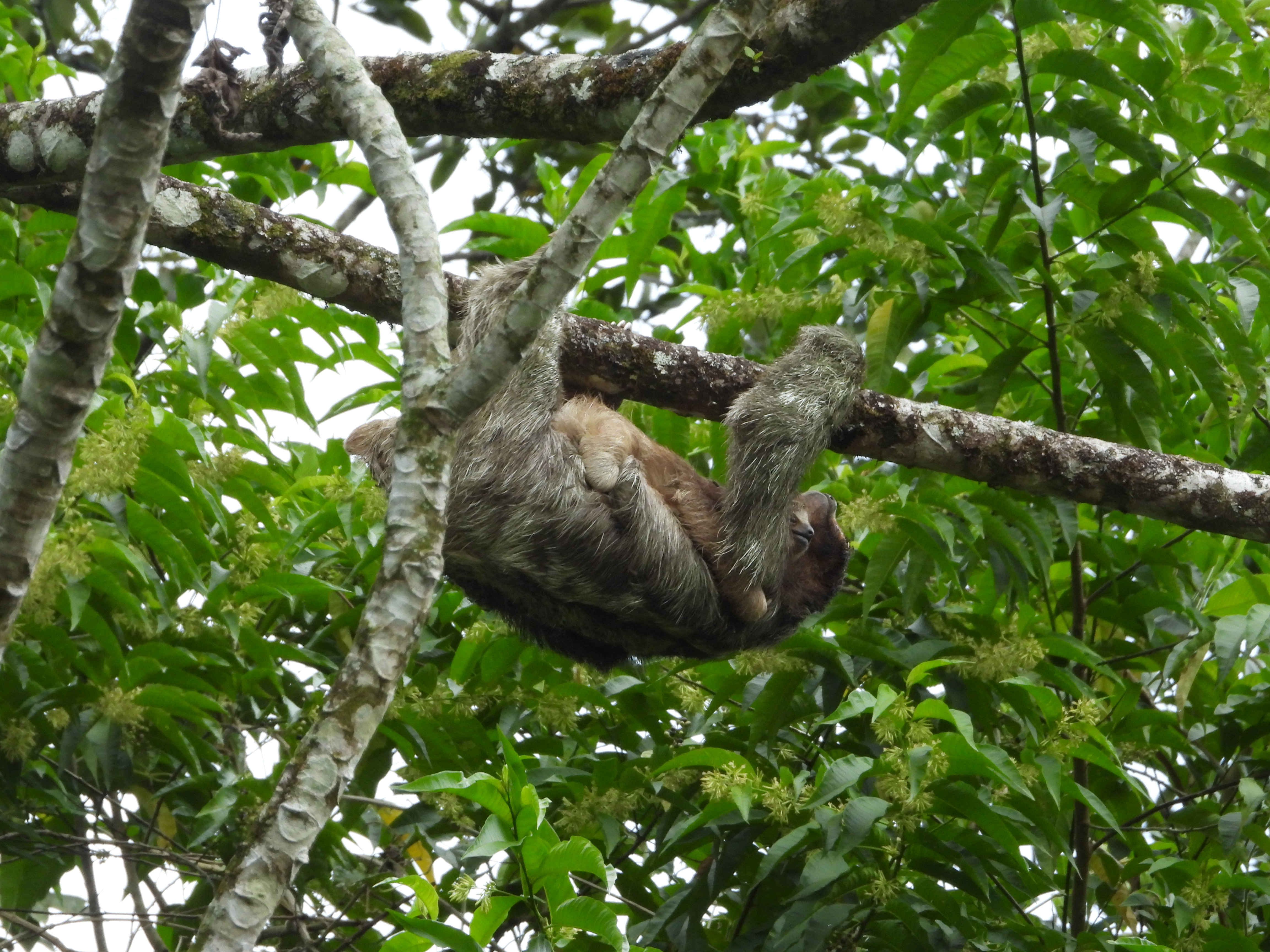
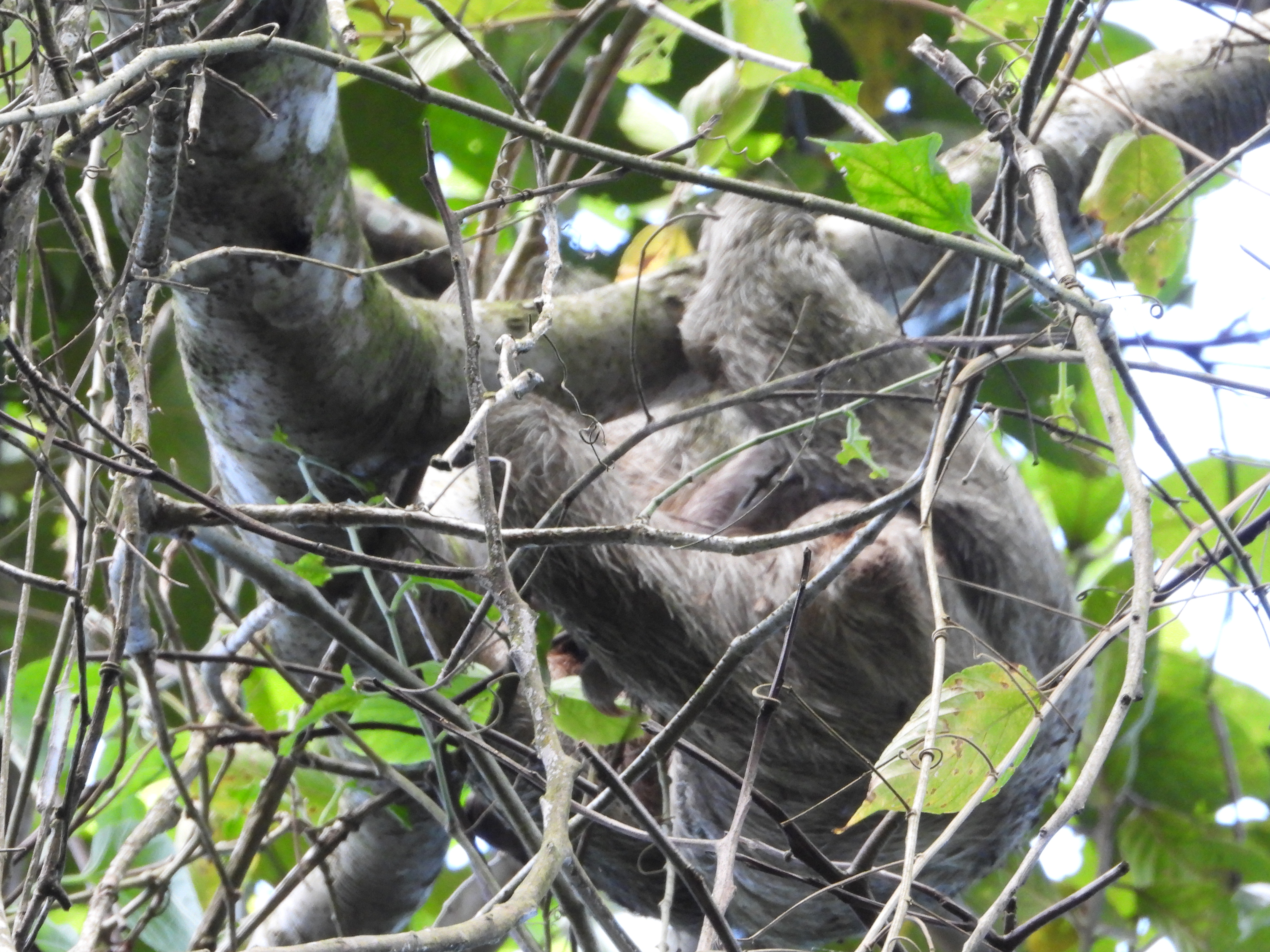
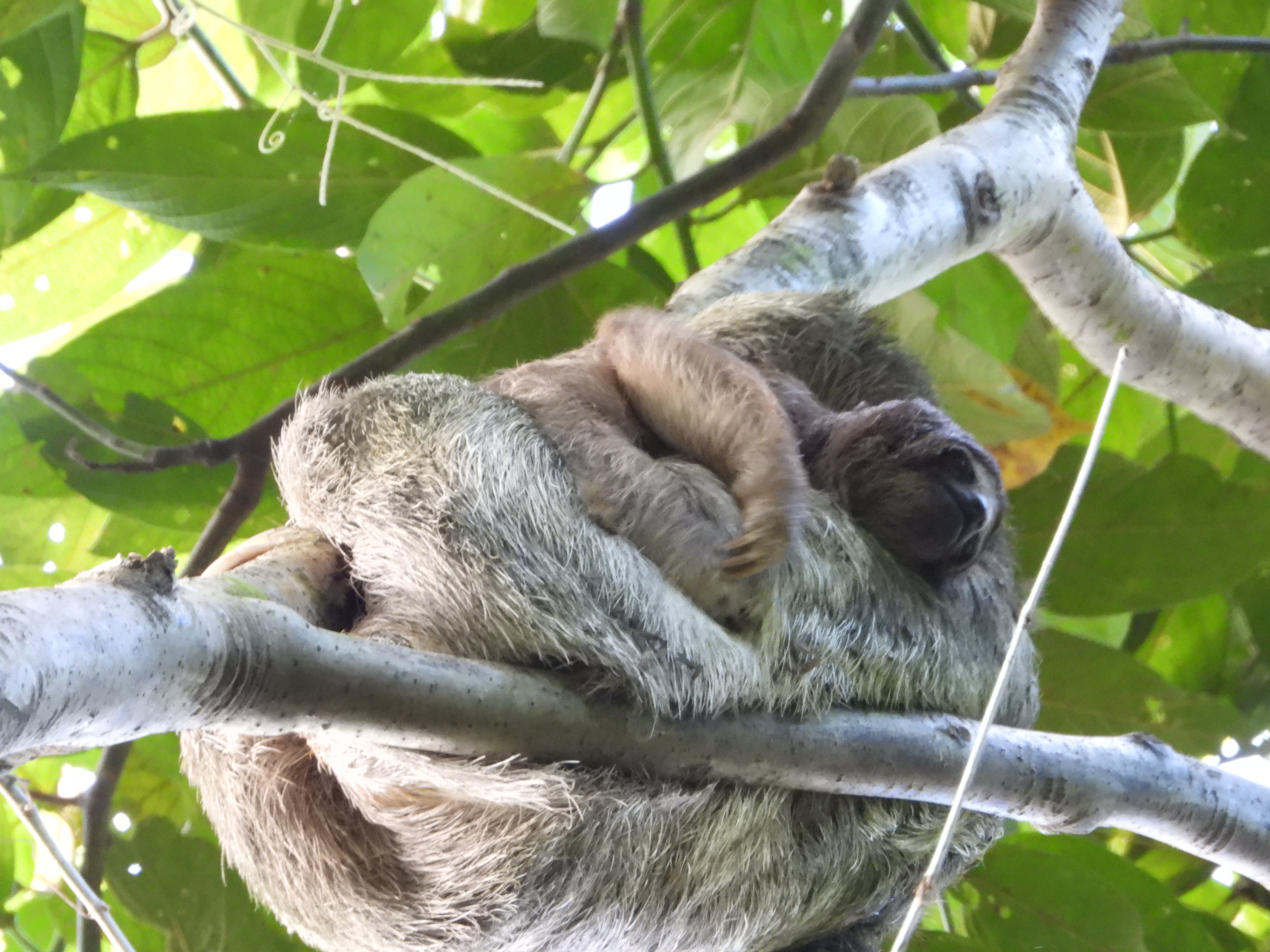
Eventually, Mom and baby made their way up into the higher branches, and we decided to move on and see if we could find “our own” sloth – i.e. without the clue of a big group of tourists clustered around a guide. We picked our way along the trail at sloth pace – it was definitely the slowest we’ve ever hiked – craning our necks up into the treetops. Eventually, we were rewarded when Steve pointed and called out that he’d spotted something:
That’s another mom and baby pair!
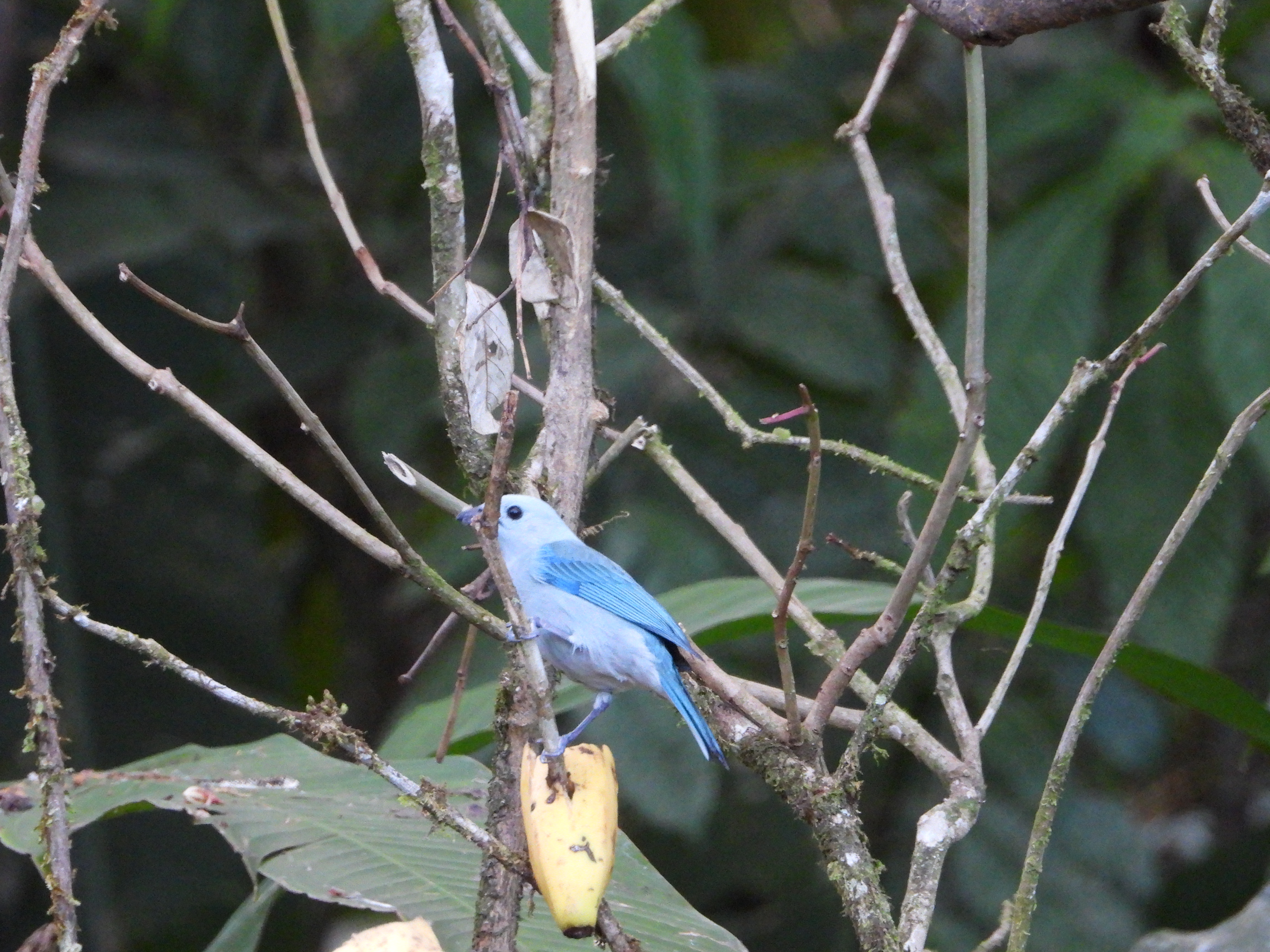
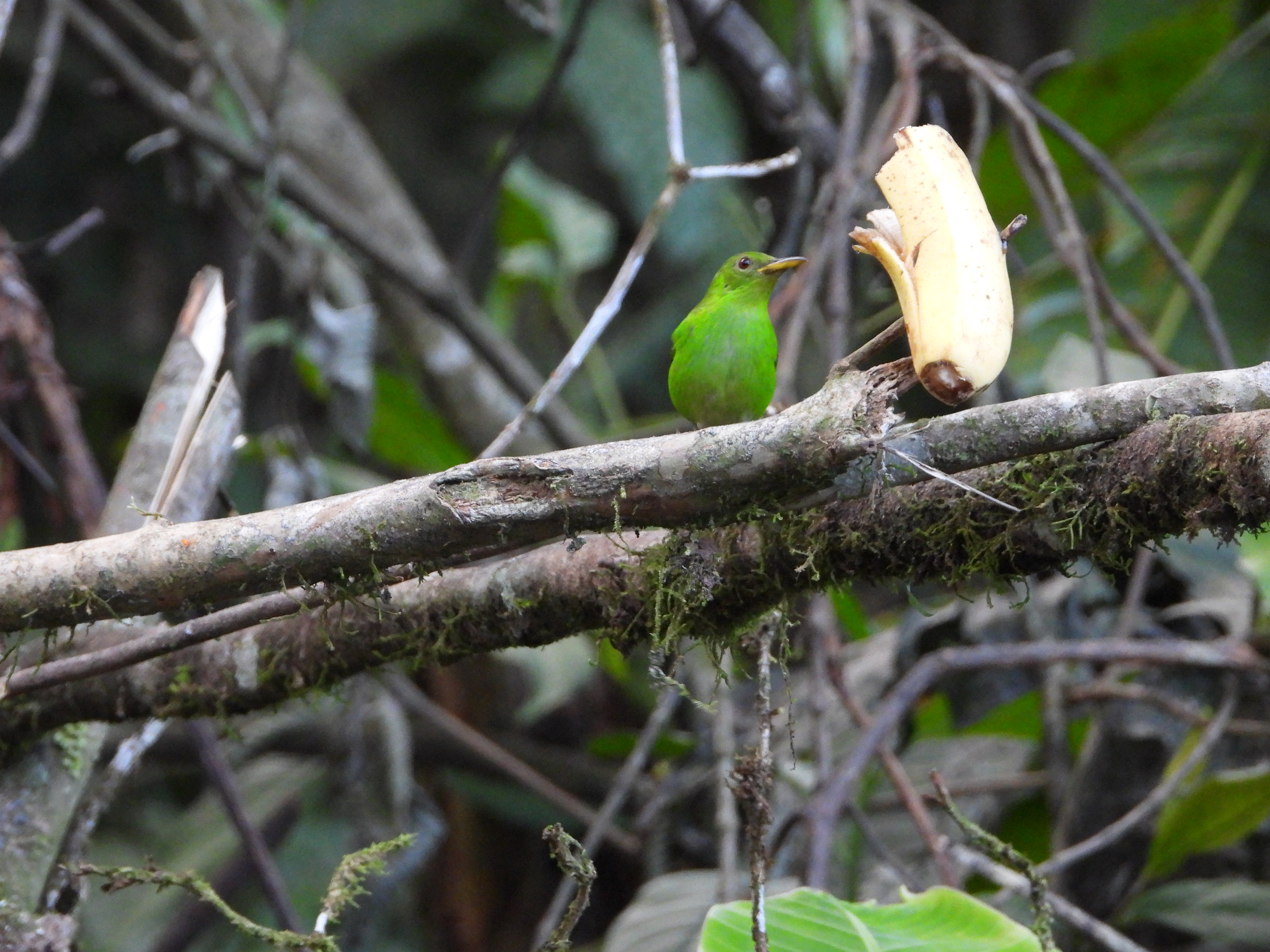
Such an amazing sight and a total treat – definitely the best way to say goodbye (for now, because we’ll definitely be back) to Costa Rica. We watched this pair for a long time, then – grinning broadly – made our way back to the trailhead. There was one more treat in store for us, though: the park staff had a suite of birdfeeders and tropical fruits that they kept constantly replenished, and a rainbow of colorful birds were hopping around enjoying the feast.
What a way to bid Costa Rica farewell! We were ready to go home – missing the kids, that is; I think we could have stayed for years if they were with us. But we were bringing home a store of memories of adventures and surprises, and definitely planning to return. For now, though, it was time to get back to real life.
This is the end of our time in Costa Rica – for now, anyway, because as noted above we’ll definitely be back. But it’s not the end of Friday travel posts! I’m still way behind and have plenty of adventures to share. Next week, it’s back to Central America: over the summer, Steve and I spent a week being “digital nomads” in Roatan, Honduras – scuba diving in the mornings and working in the afternoons. I won’t go day by day, but I do have some underwater highlights to share with you. Check in with me then!
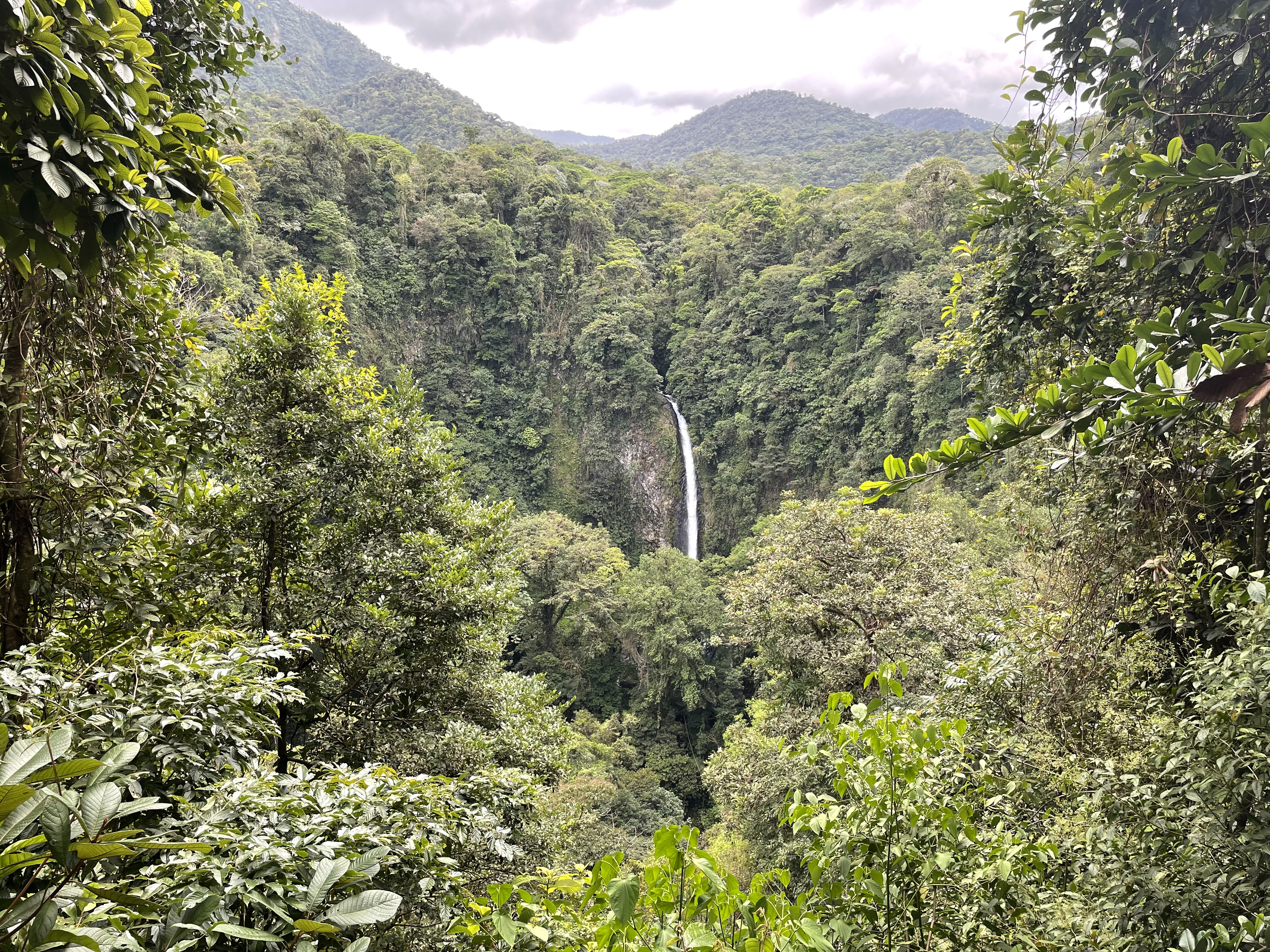
Our Costa Rica agenda was funny. We started in Osa, the most off-the-beaten-path corner of the country – accessible only by boat or small plane (unless you wanted to drive probably ten hours over bumpy dirt roads) and sought out generally by the most hardcore of nature lovers. Then we moved up to Monteverde, which was definitely more populated and more visited by tourists, but relatively relaxed all the same. And we finished our trip in Arenal, based in the bustling town of La Fortuna, which – thanks to an abundance of hot springs – is probably the most touristy part of the entire country. But all the same, we were not planning to seek out the biggest tourist attraction in La Fortuna – Catarata Rio Fortuna. Instead, we had designs on renting kayaks on Lake Arenal, and taking in the imposing view of Arenal from the water. Arenal had other plans, though: it kicked up a massive rainstorm that sent us fleeing inside from the restaurant deck while we were eating a pre-paddle lunch, and scrambling to find another activity for the afternoon (because even after the rain stopped, the wind and waves continued).
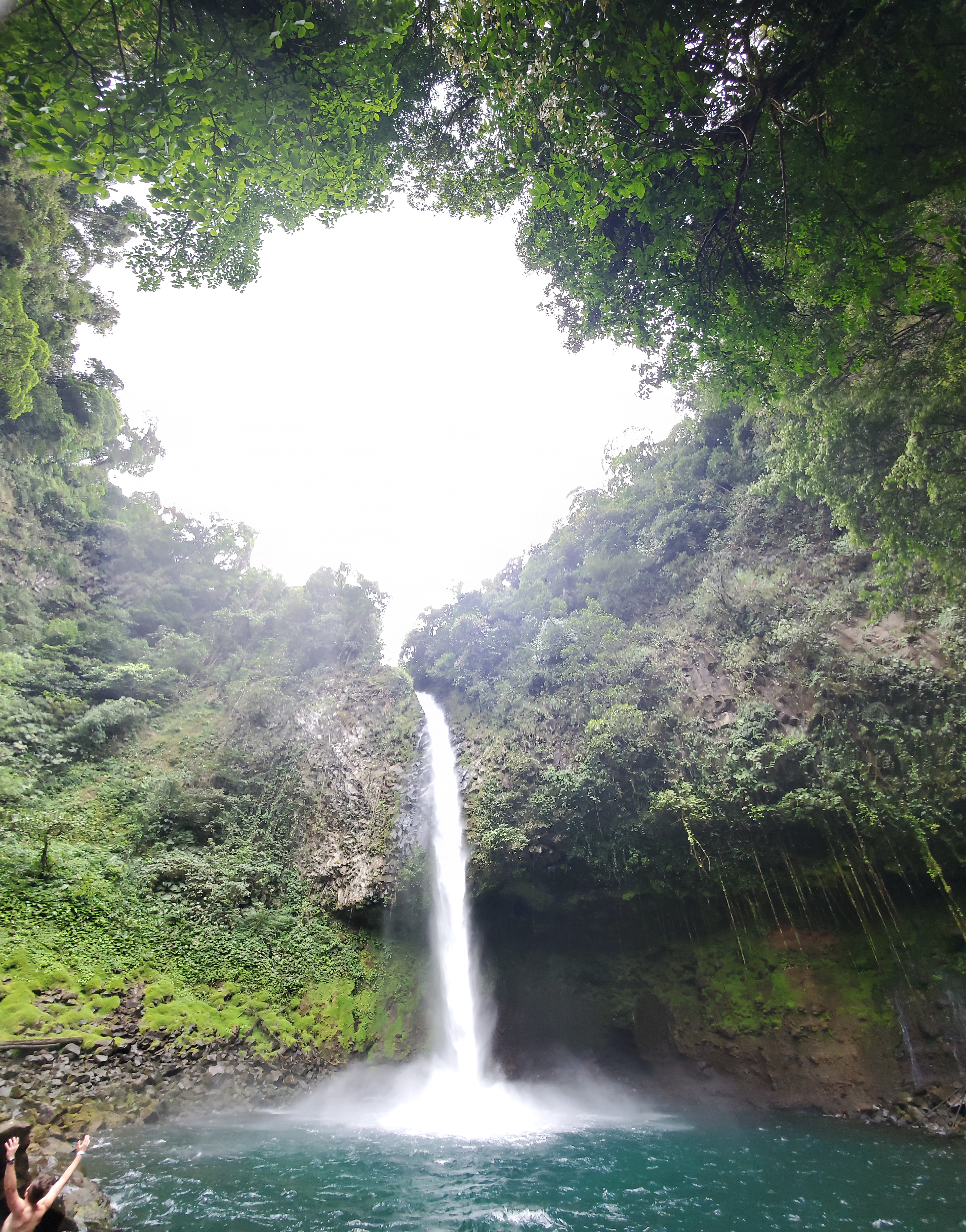
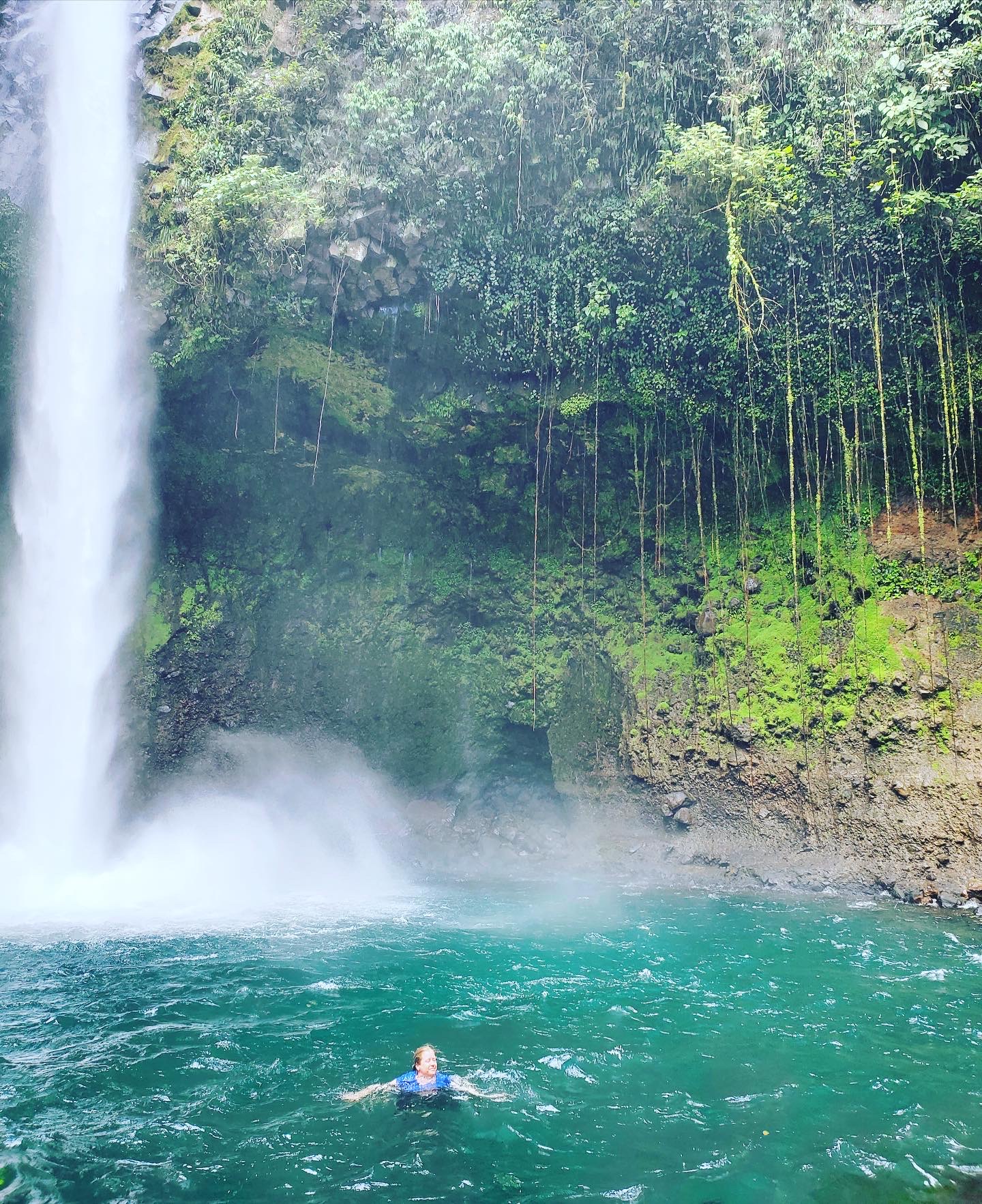
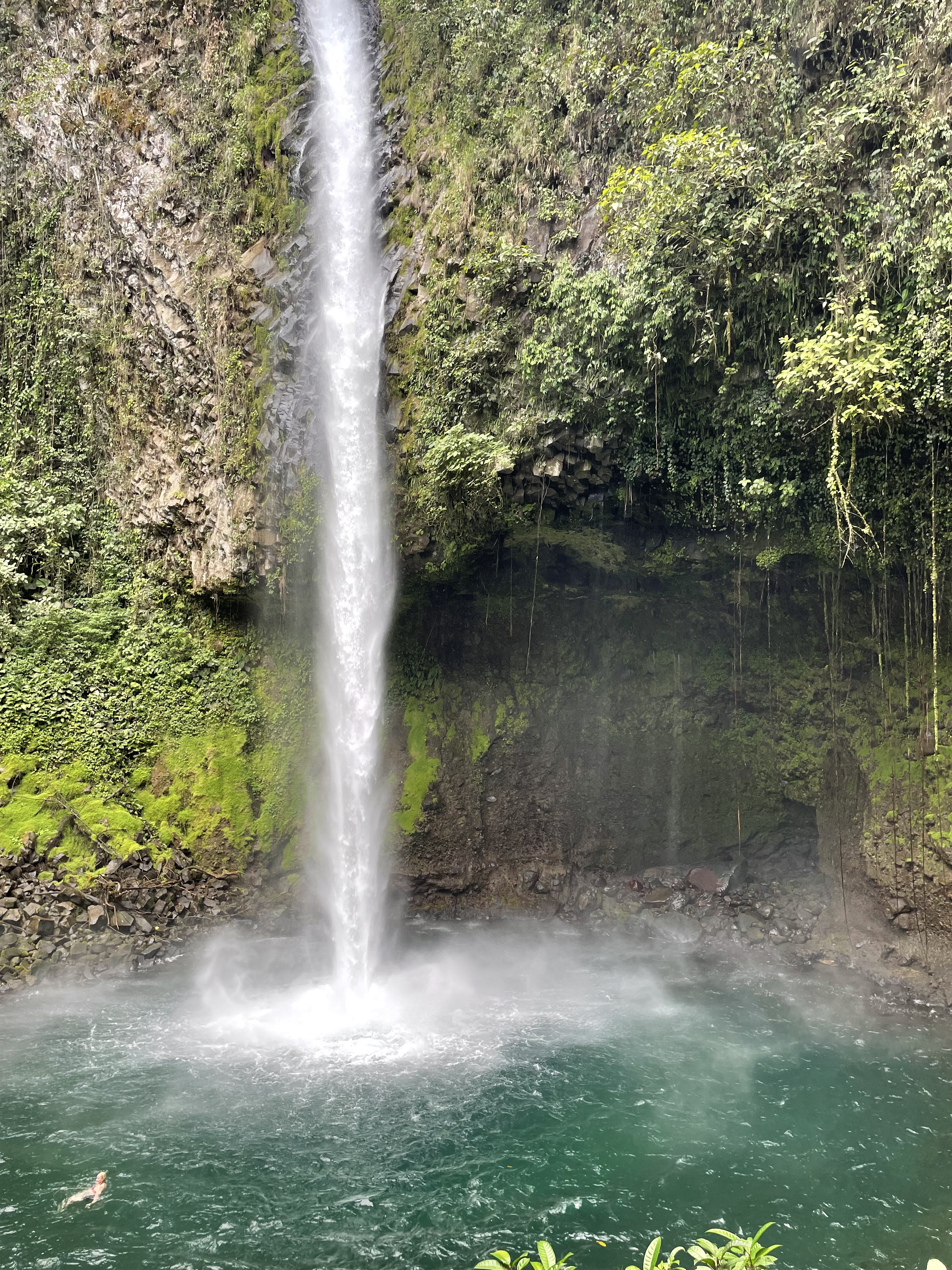
Enter the Rio Fortuna waterfall.
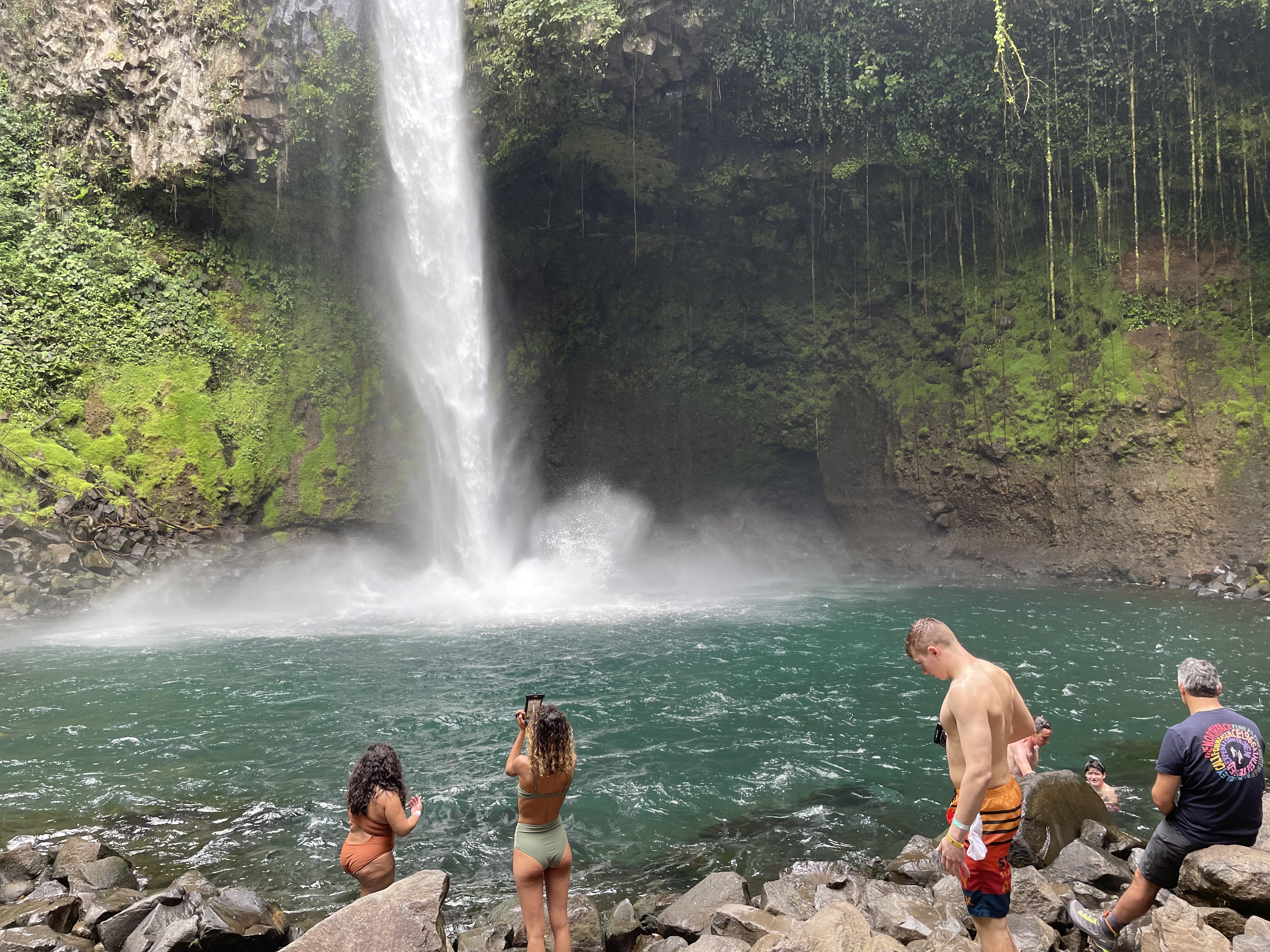
Steve suggested it as an alternative; I agreed without any idea of what the activity was all about – I hadn’t even researched it past hearing it was a big tourist attraction and deciding to skip it (since we’d already seen the incredible Catarata Rio Celeste). My first indication that it was something different came at the Disney-esque ticket booths just off the parking lot, and the lines of bikini-clad tourists. This doesn’t seem to be an ordinary hike to a waterfall? Suspicions were confirmed as we walked along the manicured path past a snack restaurant and a large gift shop – all of which we passed before catching our first glimpse of the waterfall.
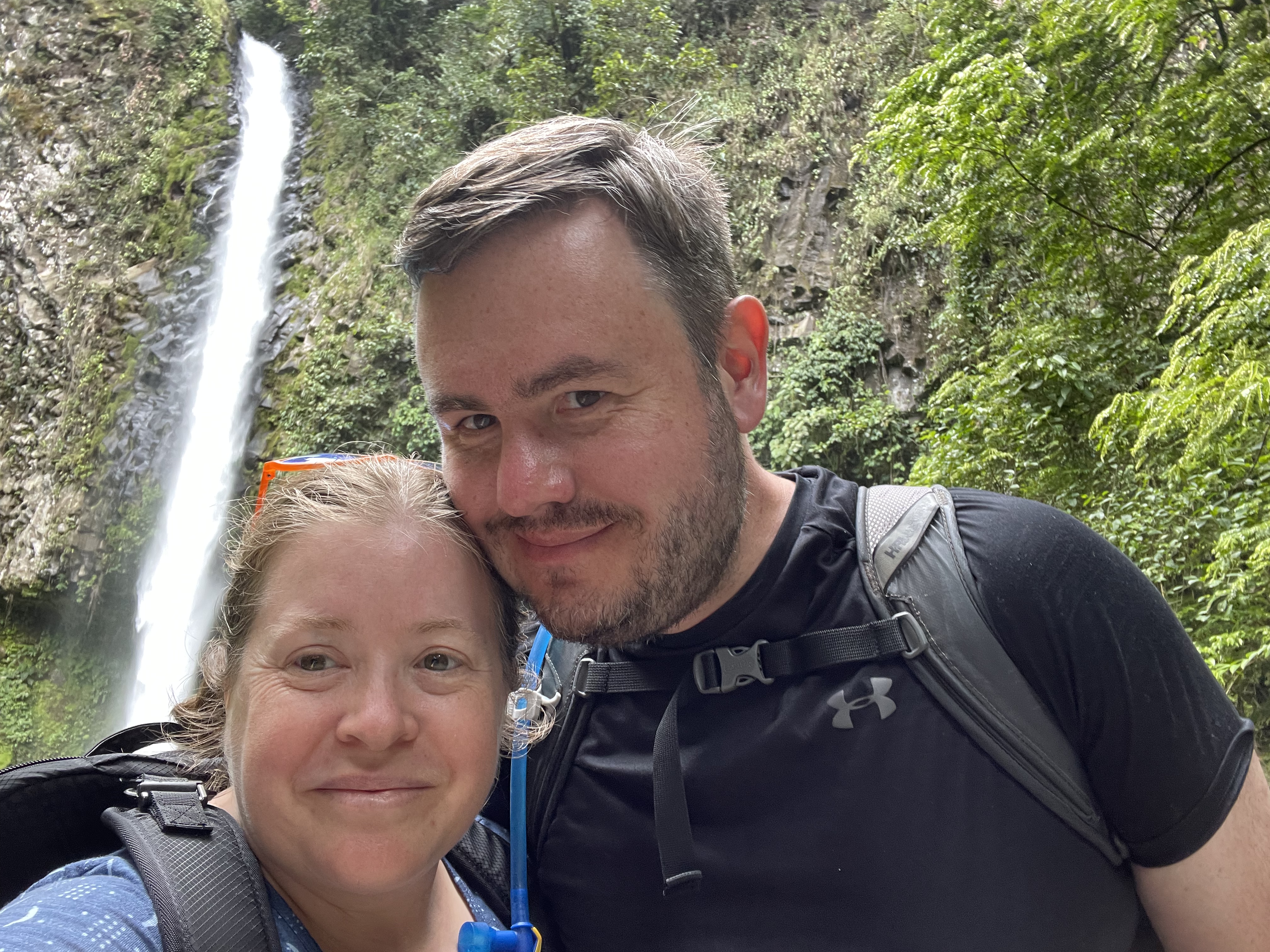
The only ones dressed for hiking, not swimming – ready to walk 500 steps down to the waterfall.
We climbed down the stairs – I’m not kidding about there being 500, that’s exactly how many there were, and with each step down I worried more about the climb back up – and picked our way over the rocks and around the swimmers to check out the waterfall. (Hiking boots do come in handy, folks.) Going by the grimaces on the faces of the few people who had actually gotten in the water, I gathered it was very cold.
We sat on the rocks and took in the view for awhile – touristy, yes, but darn spectacular all the same. The water cascaded down in a thinner stream than Catarata Rio Celeste, and the pool below was a deeper green-blue: just stunning. After a few minutes of sitting and gazing, though, I started to get a bit of an itch. A little voice in my head started to whisper…
It would be a shame to come all this way and not jump in.
You’ll probably never come back here. This is probably your only chance.
It’s an adventure.
Wet clothes will feel nice walking up all those stairs.
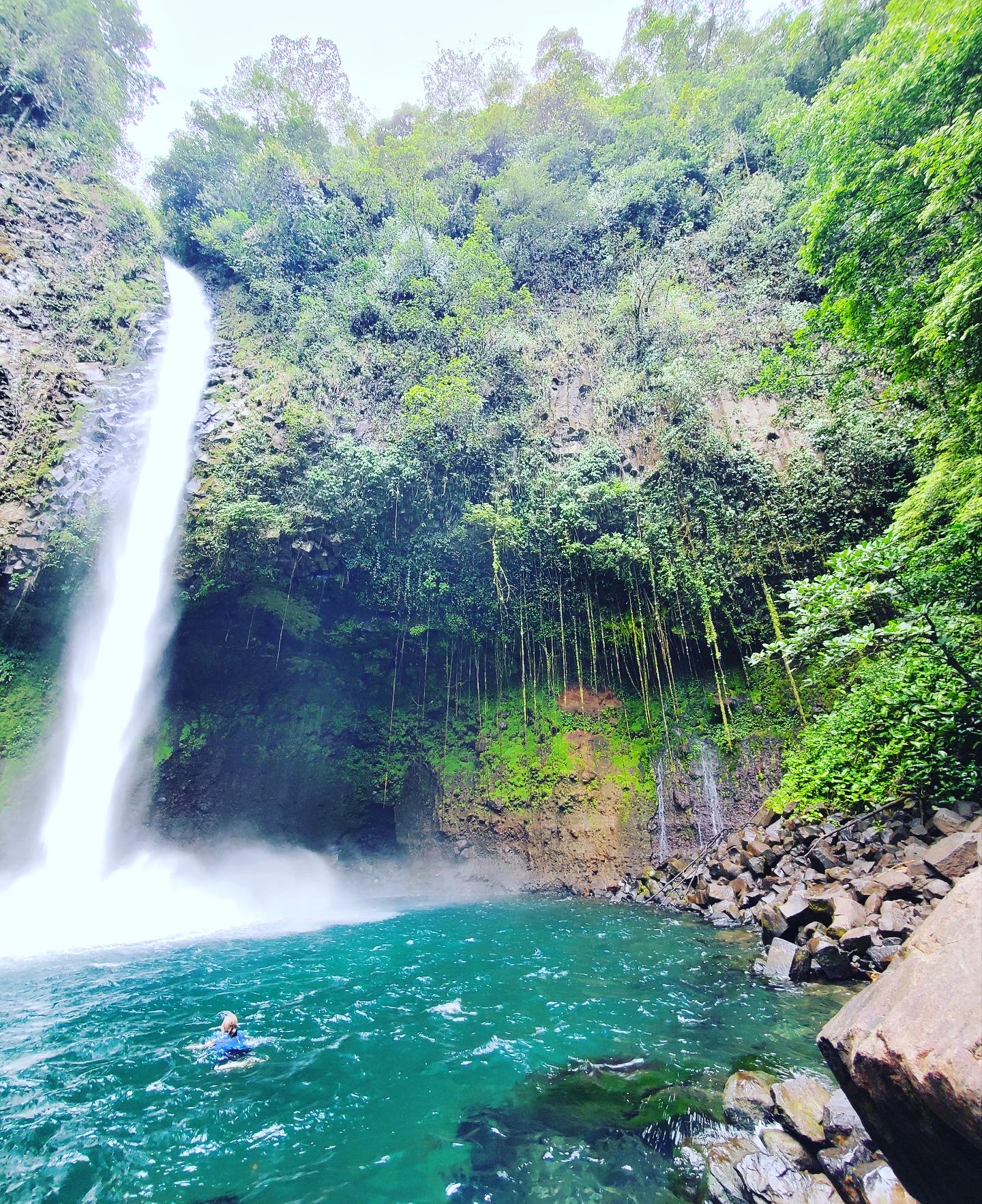
Well, I’m not one to turn down an adventure. I took off my boots and socks and waded onto the first layer of submerged rocks, then jumped forward. The water was frigid and the waves kicking back from the waterfall kept slapping me in the face so that I could barely see anything but water.
I think I had a giant grin on my face the entire time.
I think I stayed in for about ten minutes? I don’t really know – it was cold, and time seemed to slow down. I did manage to tread water while several couples hopped in and then out, shivering, so I felt pretty bad@$$ for that.
Jumping into Catarata Rio Fortuna with all of my clothes on definitely wasn’t the plan for the afternoon – but it was an experience I won’t forget.
Next week: wrapping up our time in Costa Rica with an encounter with one of its most iconic wildlife species.
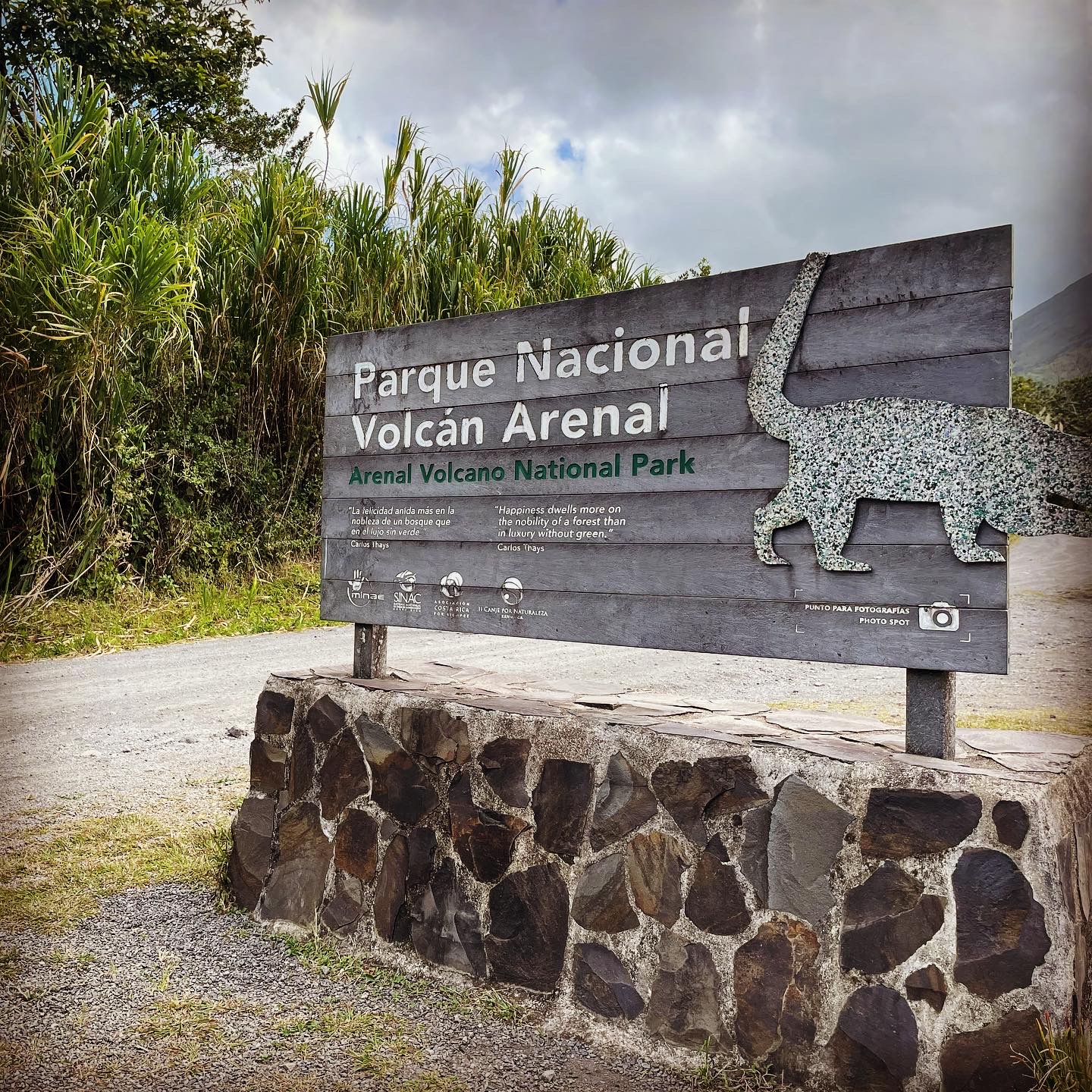
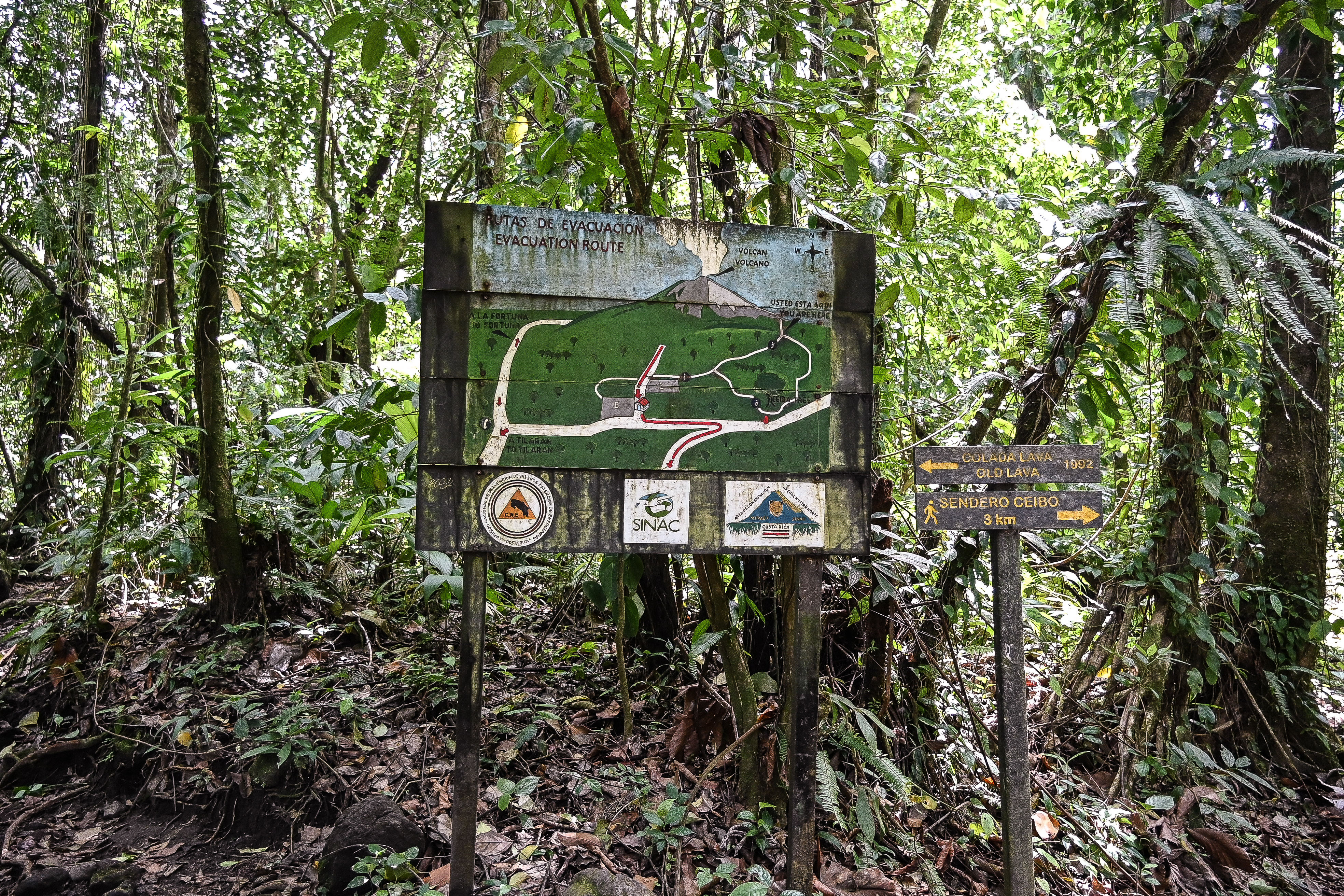
After the Arenal 1968 trail, our next stop was just a few short minutes down the road – Arenal Volcano National Park.
We thought that hiking another trail to another volcano viewpoint might be a little bit redundant, but we weren’t willing to miss out on a beautiful national park when we had the opportunity to visit it. And the clouds were finally starting to clear, so it seemed like we might have another chance at a view of the entire volcano, this time not shrouded in clouds and mist.
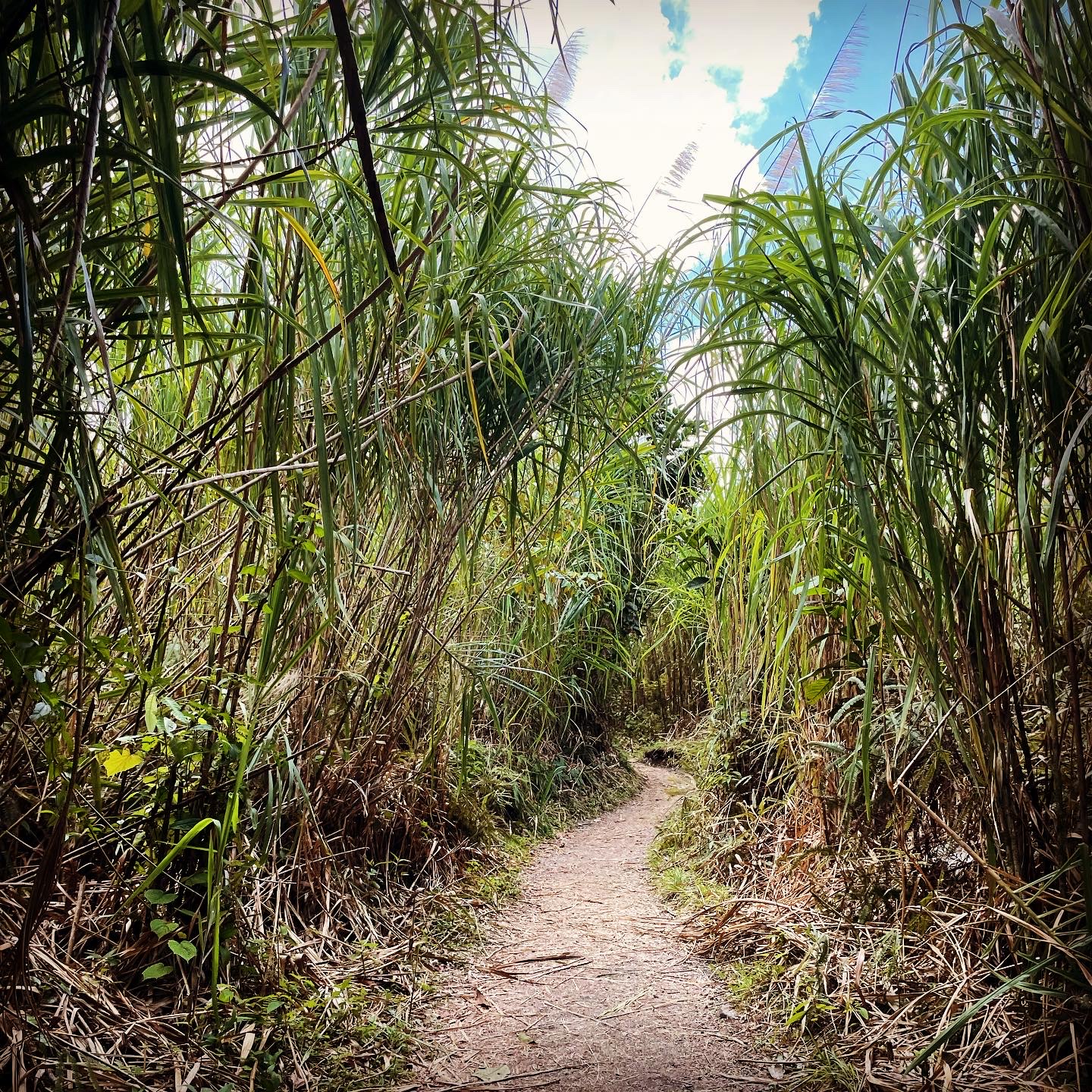
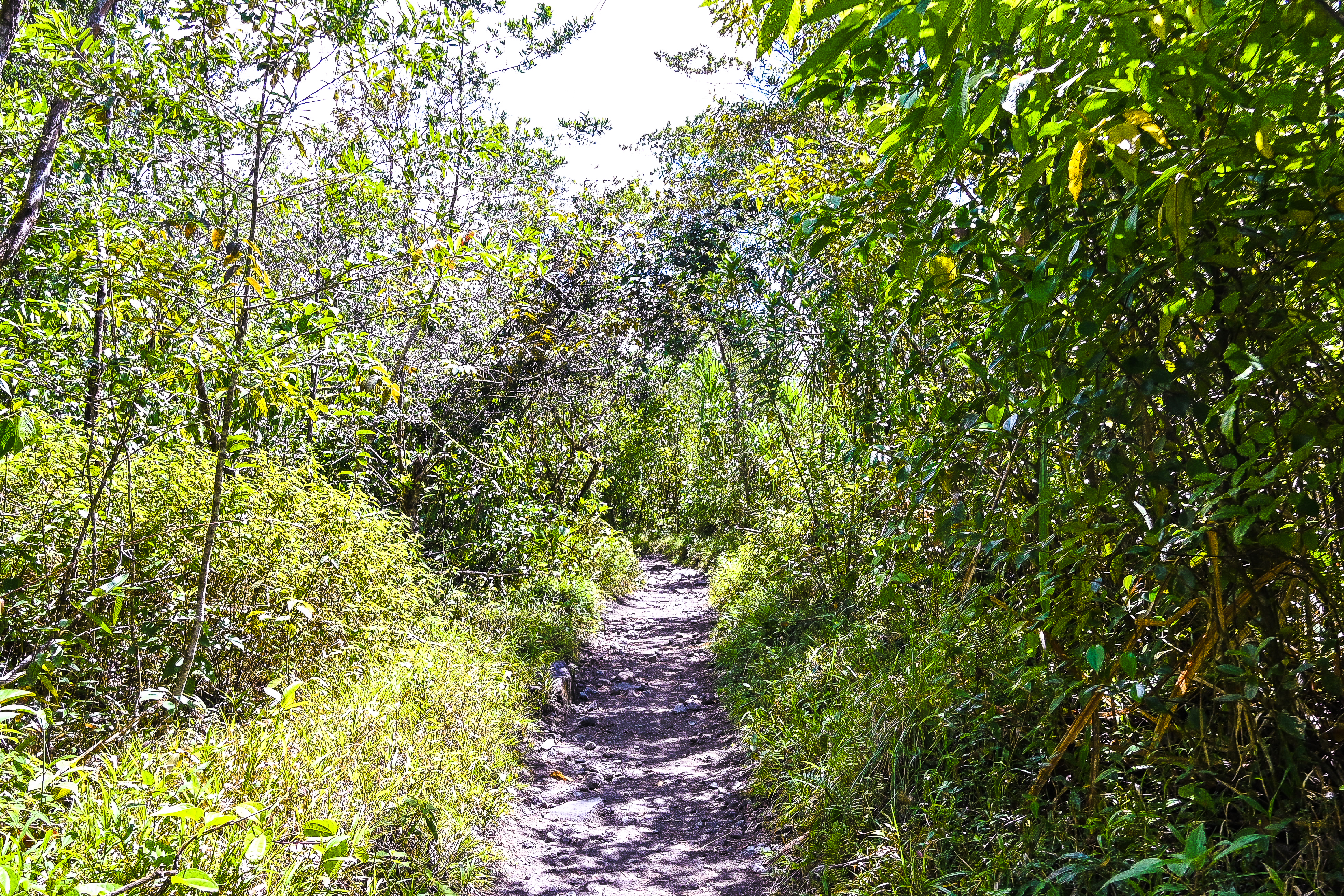
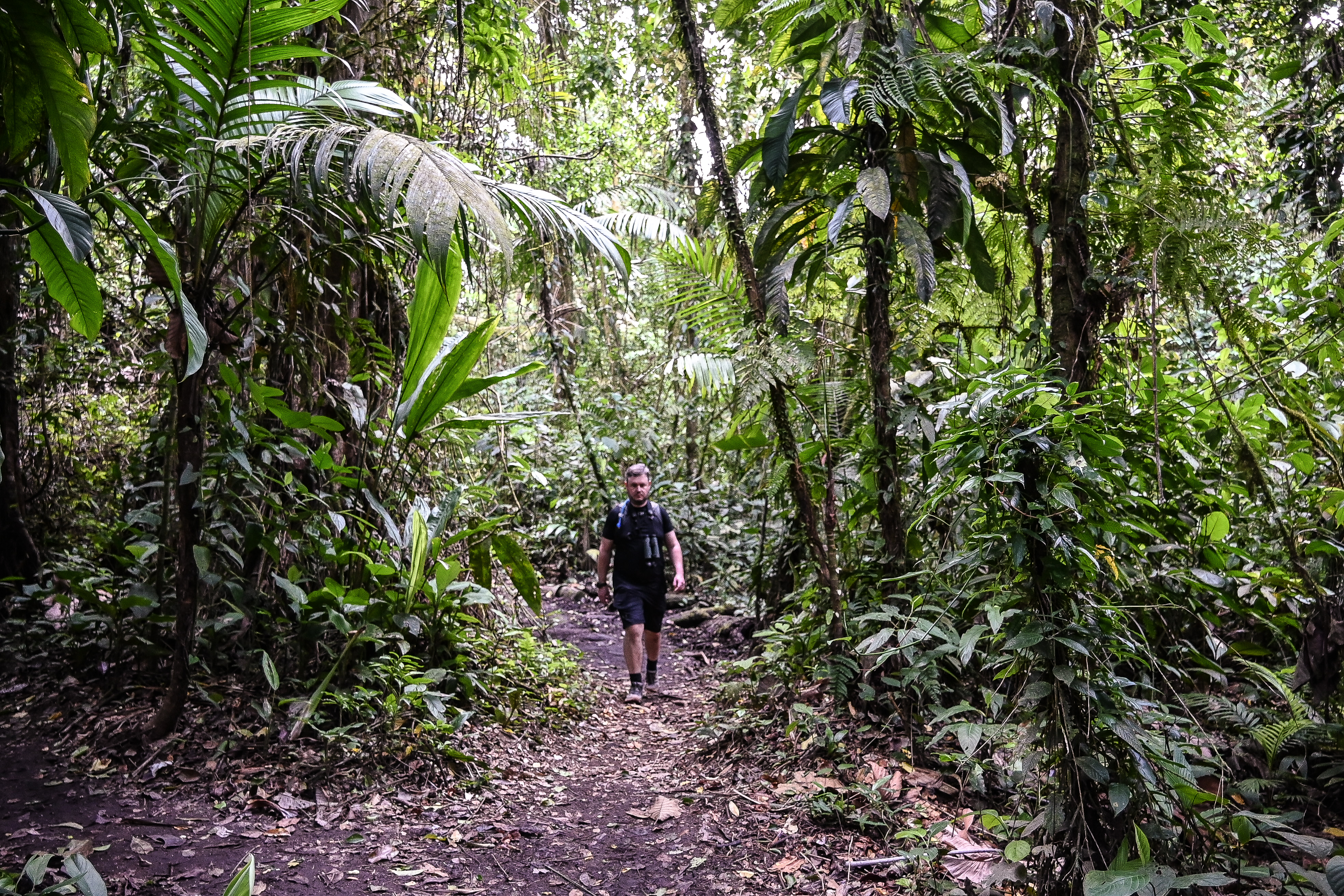
Setting off down this short trail, Steve remarked, “I feel like I’m in Honey, I Shrunk the Kids!” I knew exactly what he meant. I wouldn’t have been at all surprised to see an elephant-sized ant come wandering down the trail.
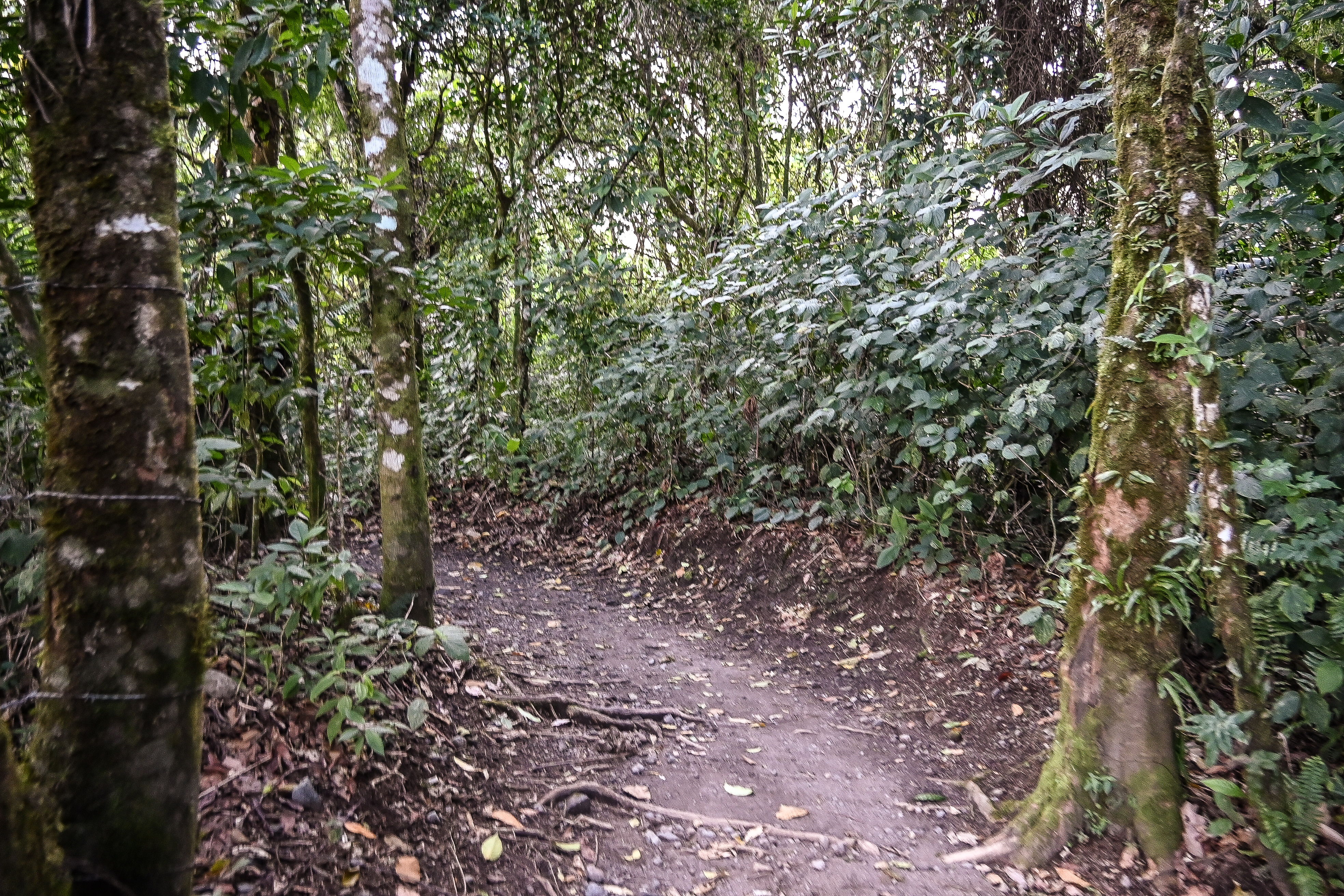
Eventually we made it out of the dappled sunshine of the trailhead and into a shadier forest.
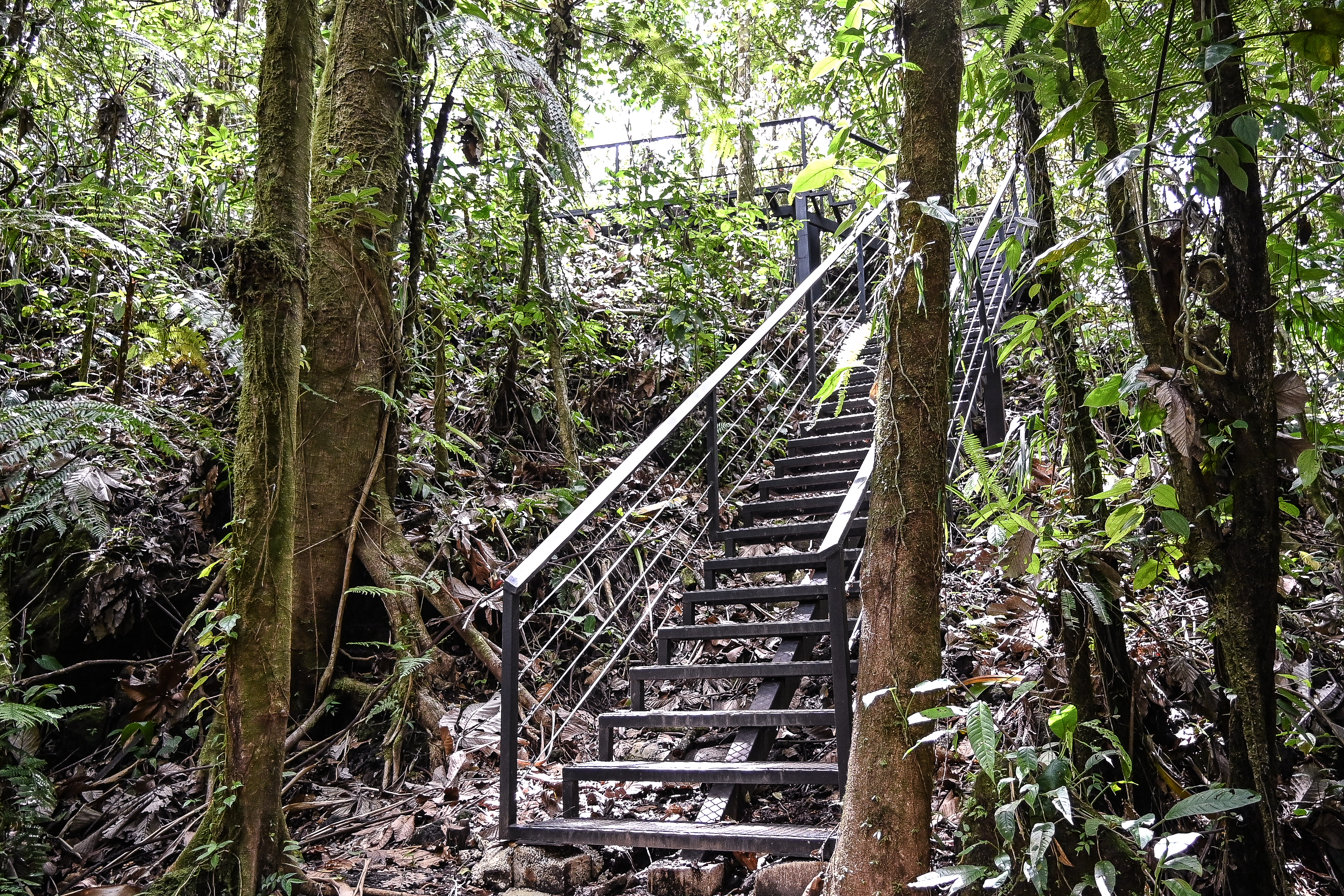
Most of the trail elevation gain was via a couple of green-painted metal staircases that blended in with the canopy.
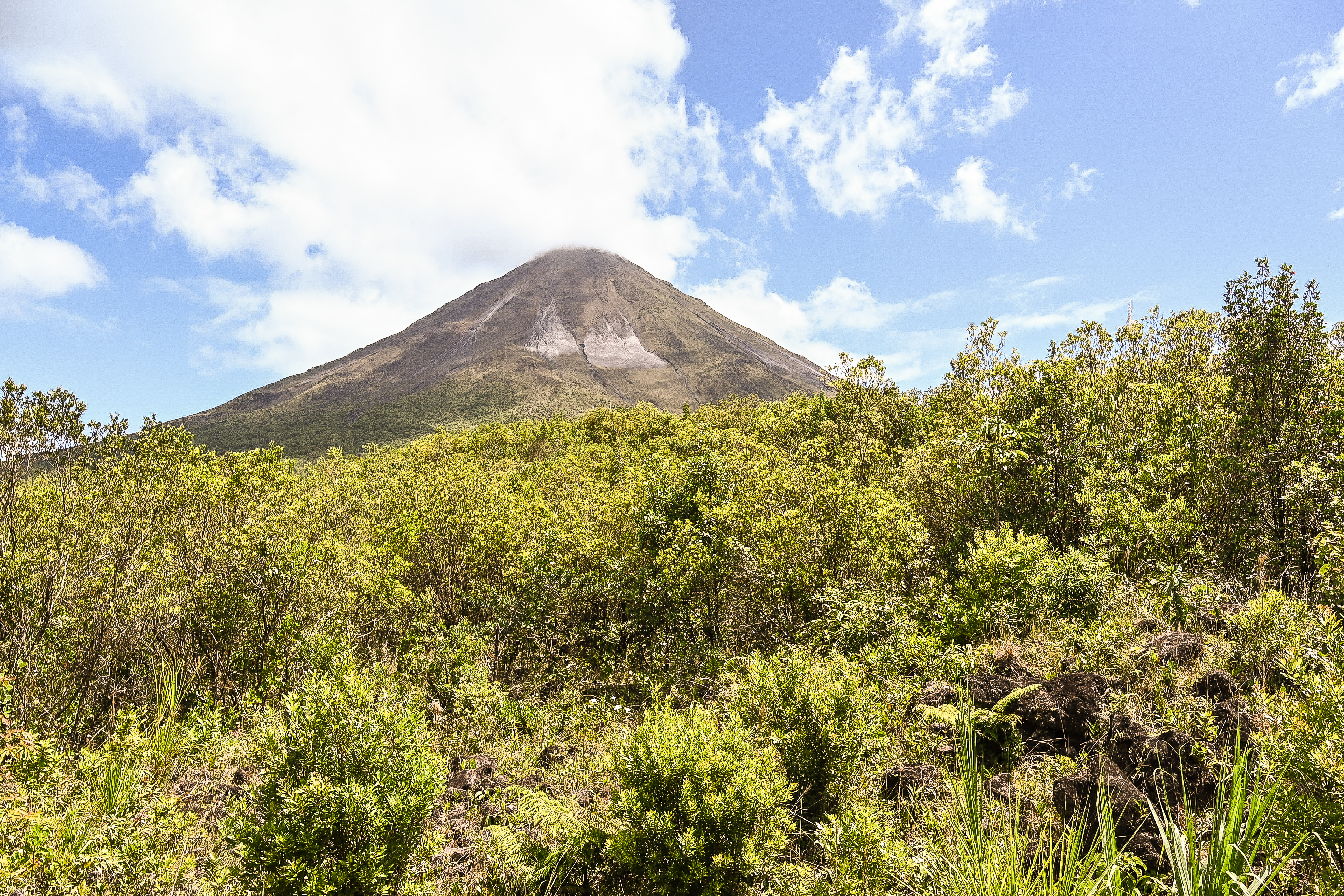
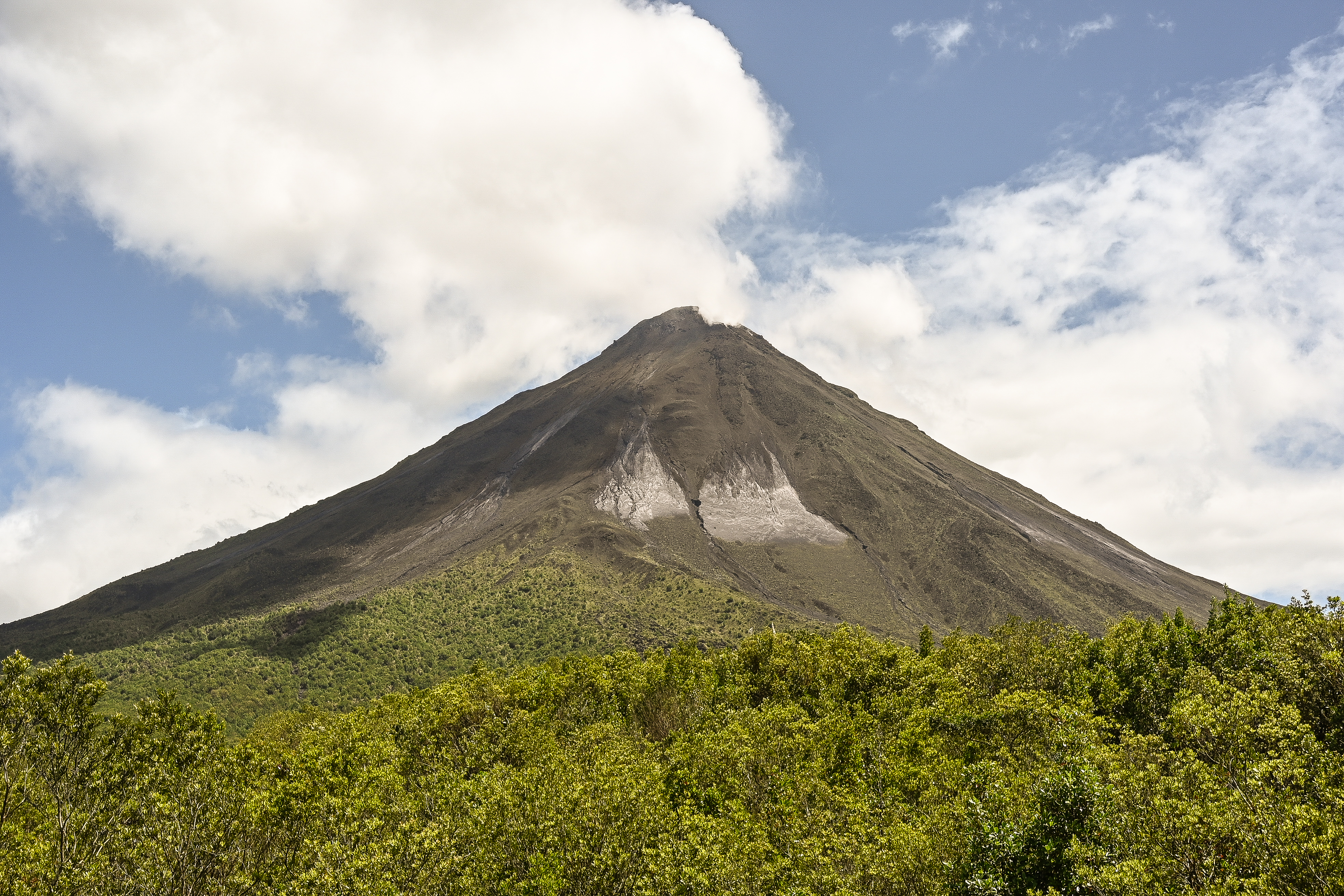
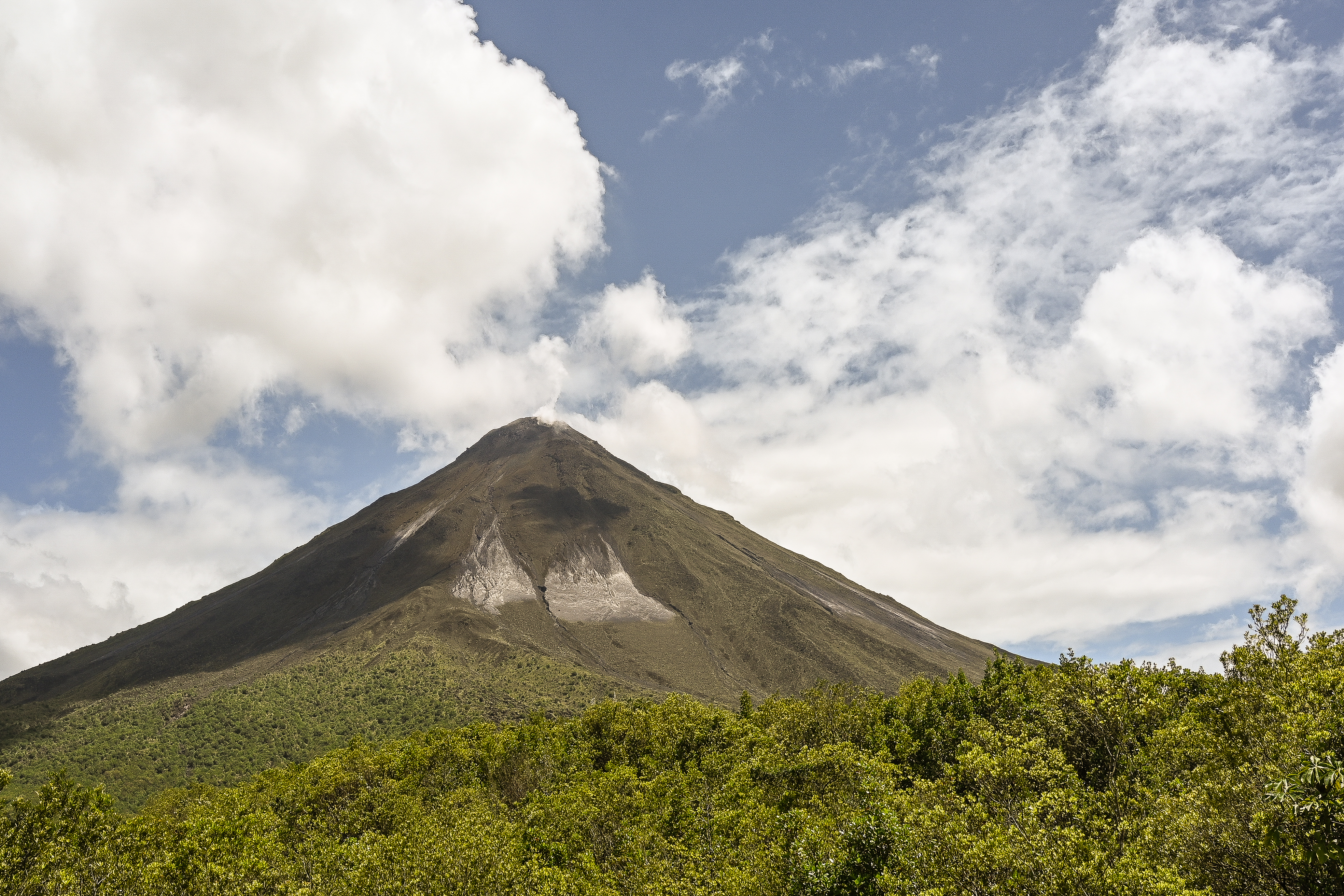
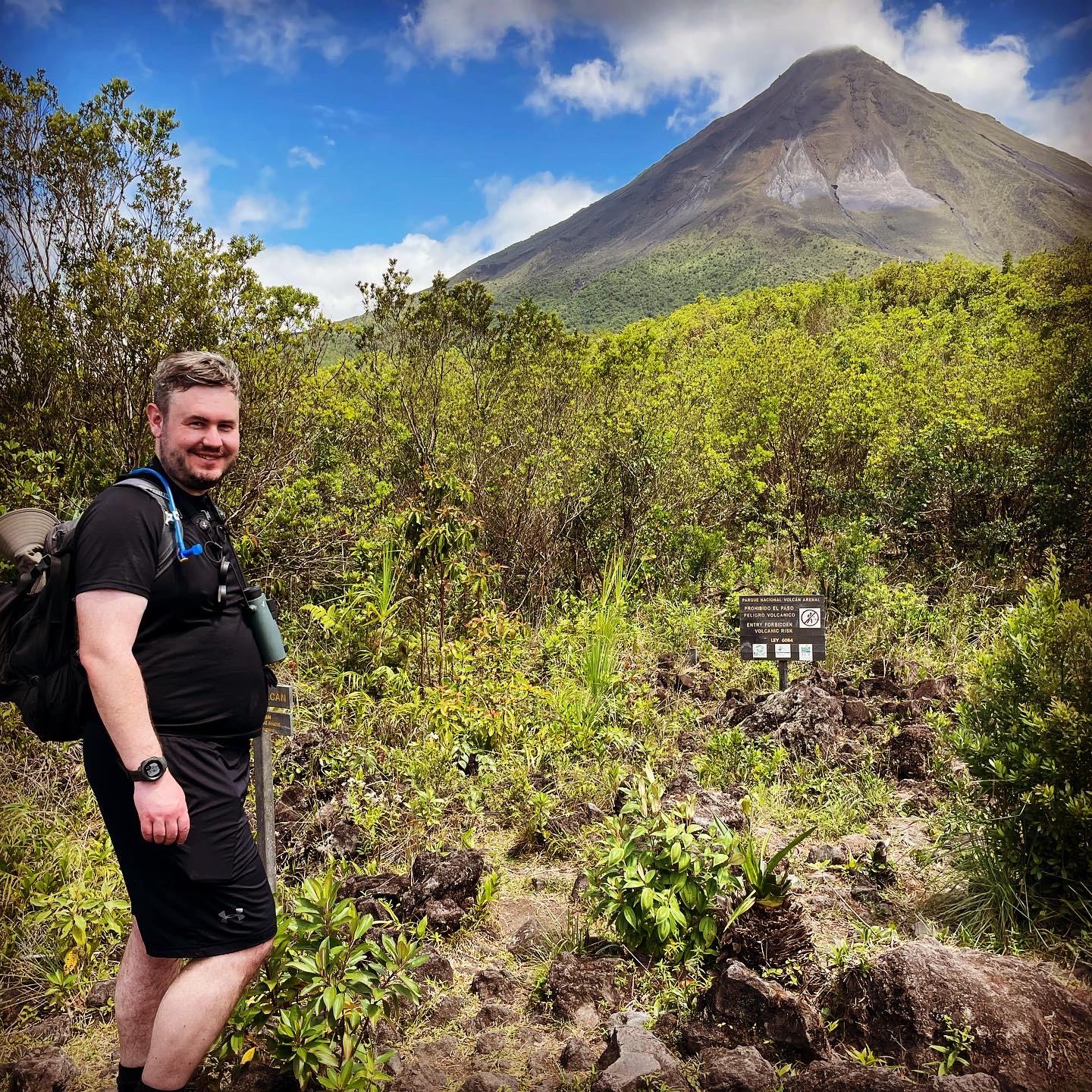
Before we knew it, we reached a clearing and got our first really good volcanic view of the day. The skies had cleared and Arenal was out in all its imposing glory.
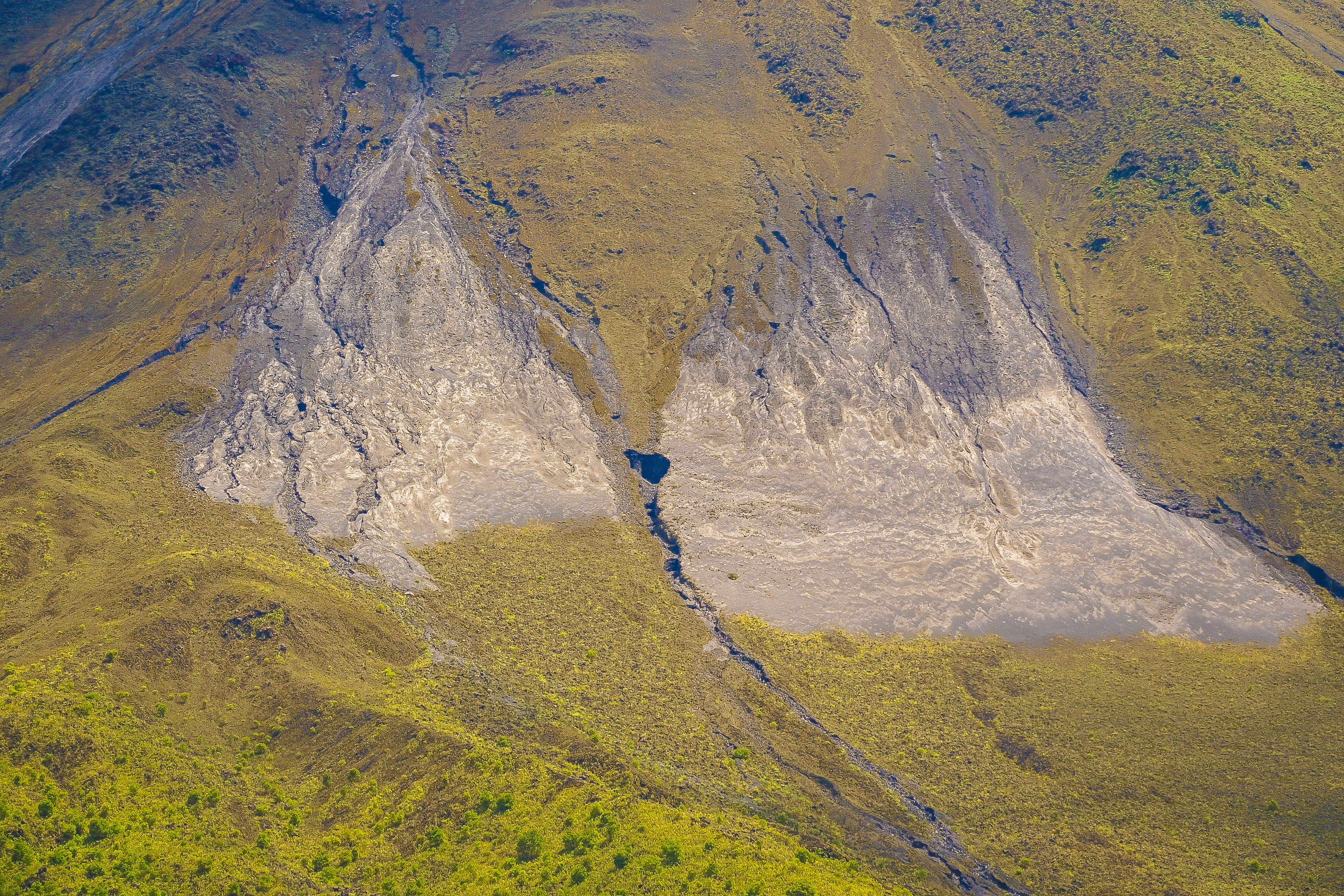
We spent a long time looking out over the volcano and taking in all the details – like this heart-shapped fissure.
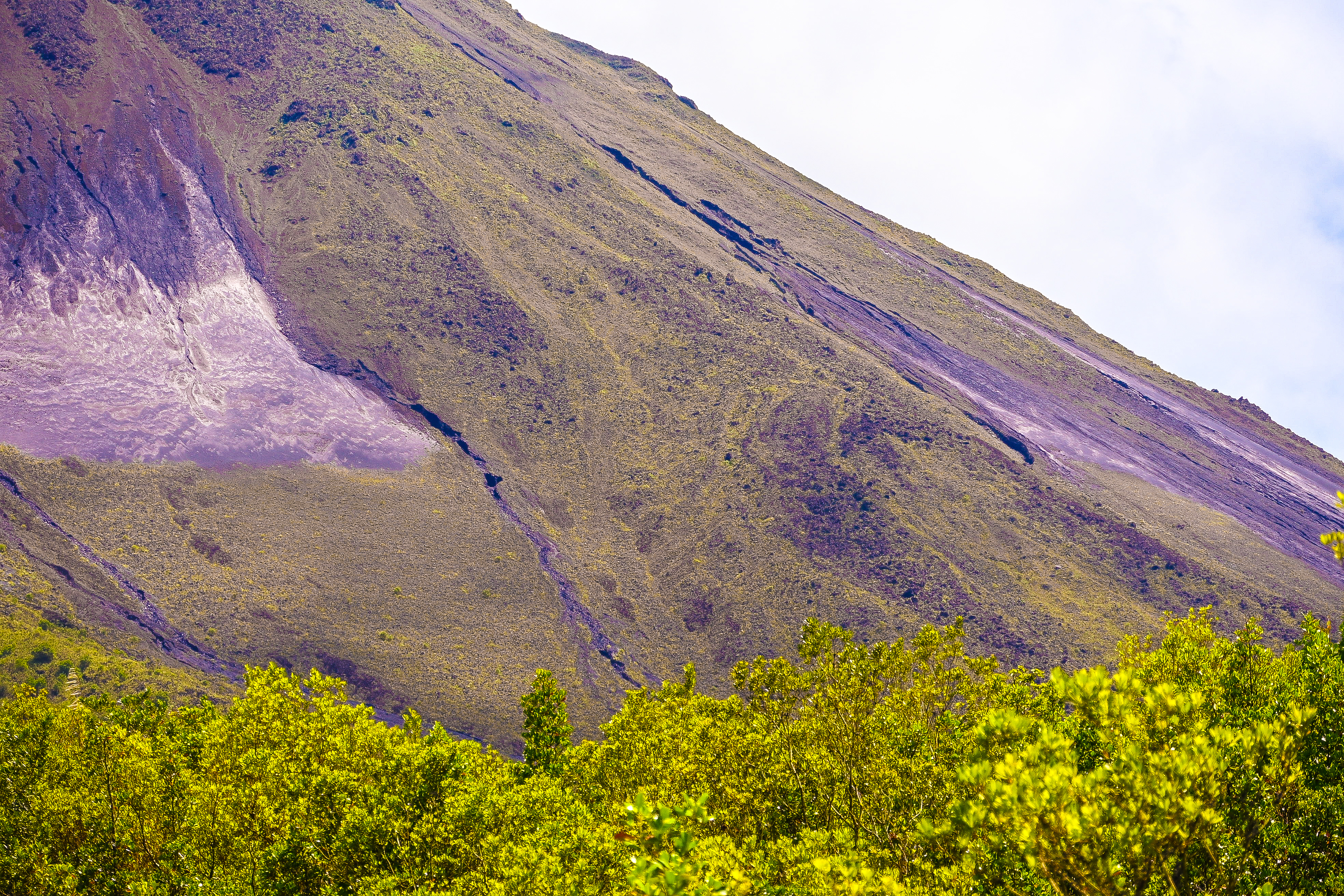
It was fascinating to watch the clouds roll across the landscape and see the interplay of light and shadow on the volcano.
This was a really fascinating day. In addition to all the flora and fauna of the trails, it was just fascinating to see the volcano and talk about it. I felt a little guilty about enjoying myself so much – it felt a bit jarring to be out on the trail, soaking up sunshine and enjoying movement and fresh air and this compelling landscape when I knew that this volcano was deadly and was the source of a horrific tragedy within my parents’ lifetime. Interesting to reflect on how hiking can be personally enriching but we are walking through landscapes that have much larger context.
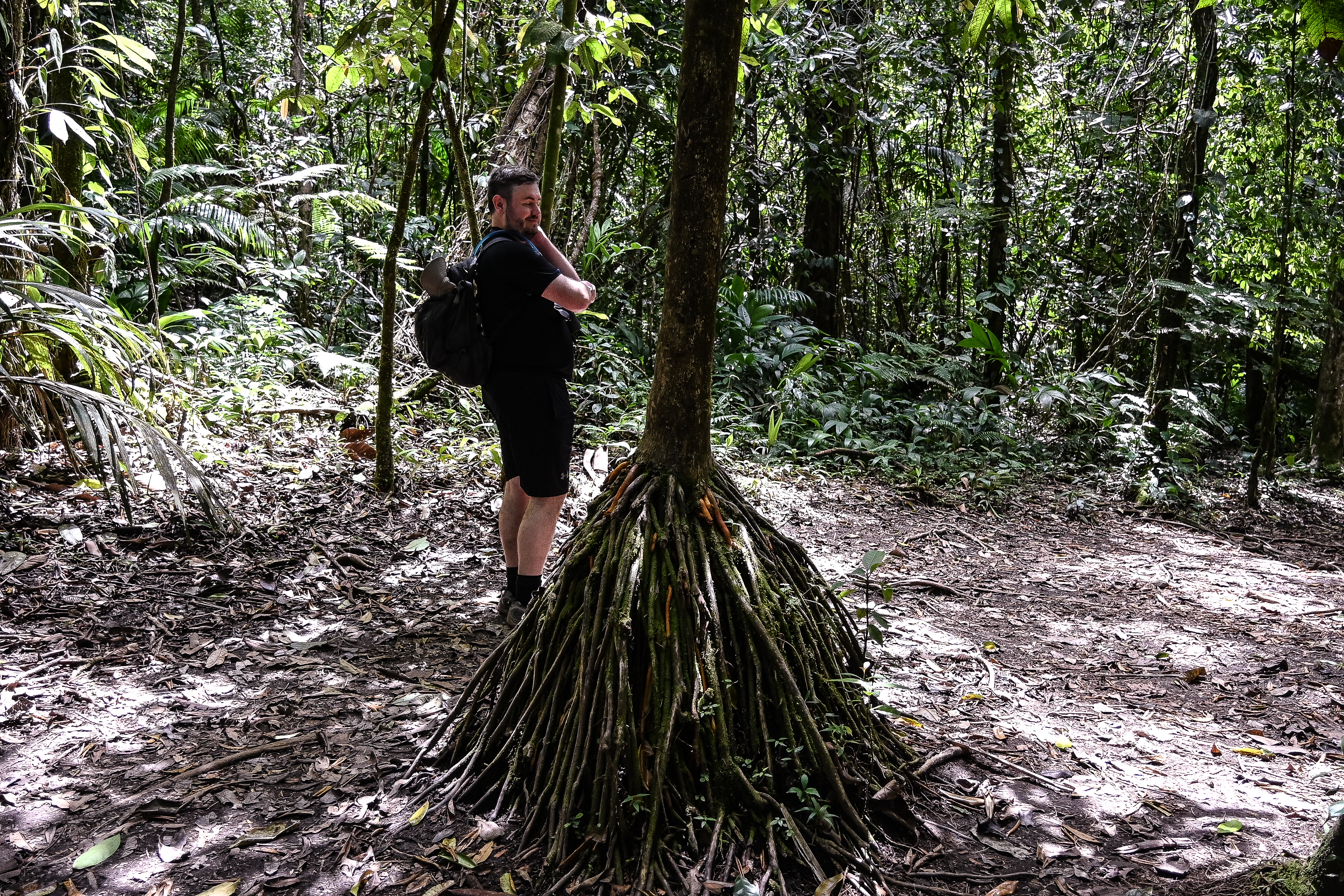
The trail back was fascinating too. It was always cool to see the famous walking palms (socratea exorrhiza). The trees “walk” from sunlight to shade by growing their roots in the direction they want to travel and then allowing old roots to lift out of the ground and die – wild. Did we call them Ents? You know we did.
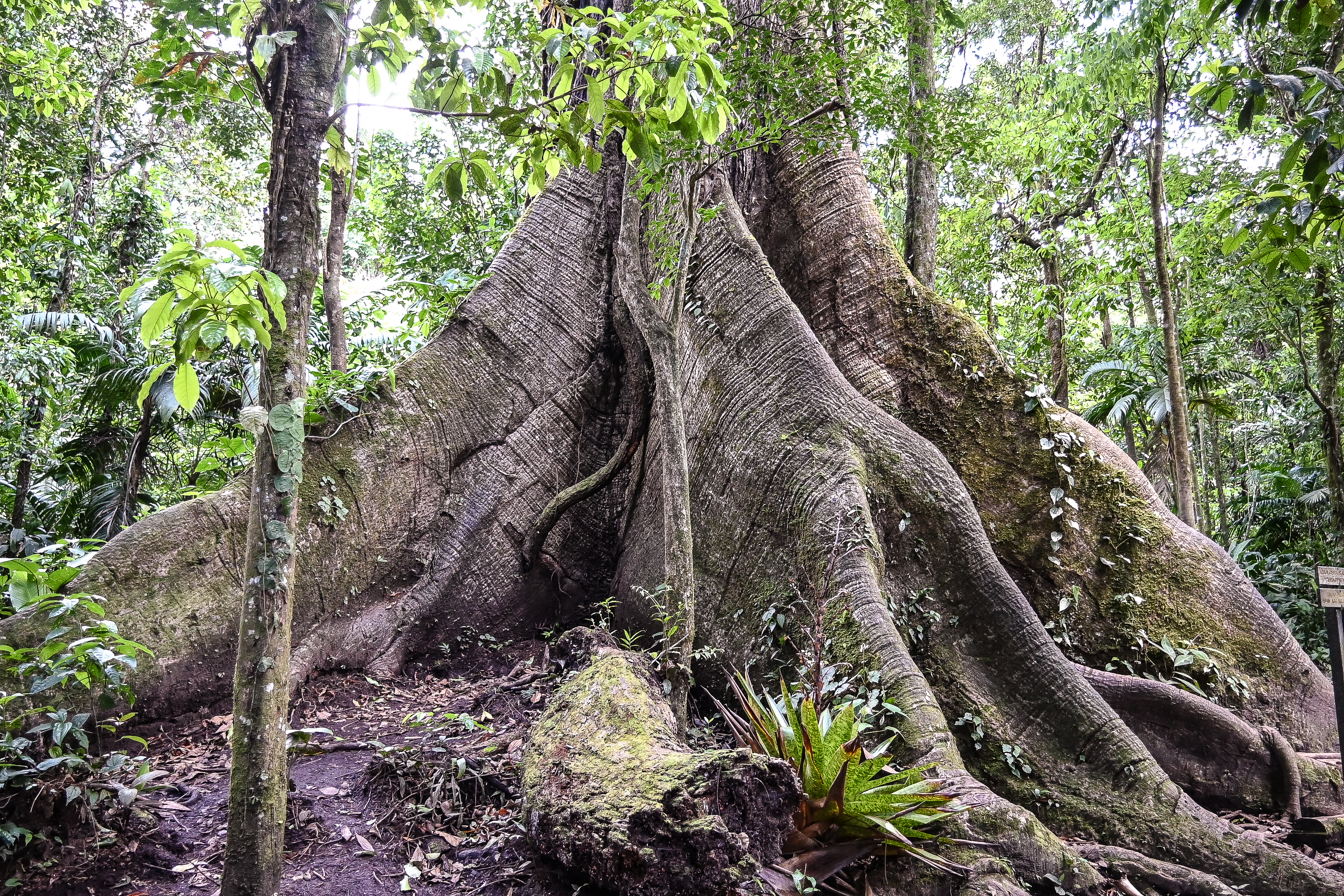
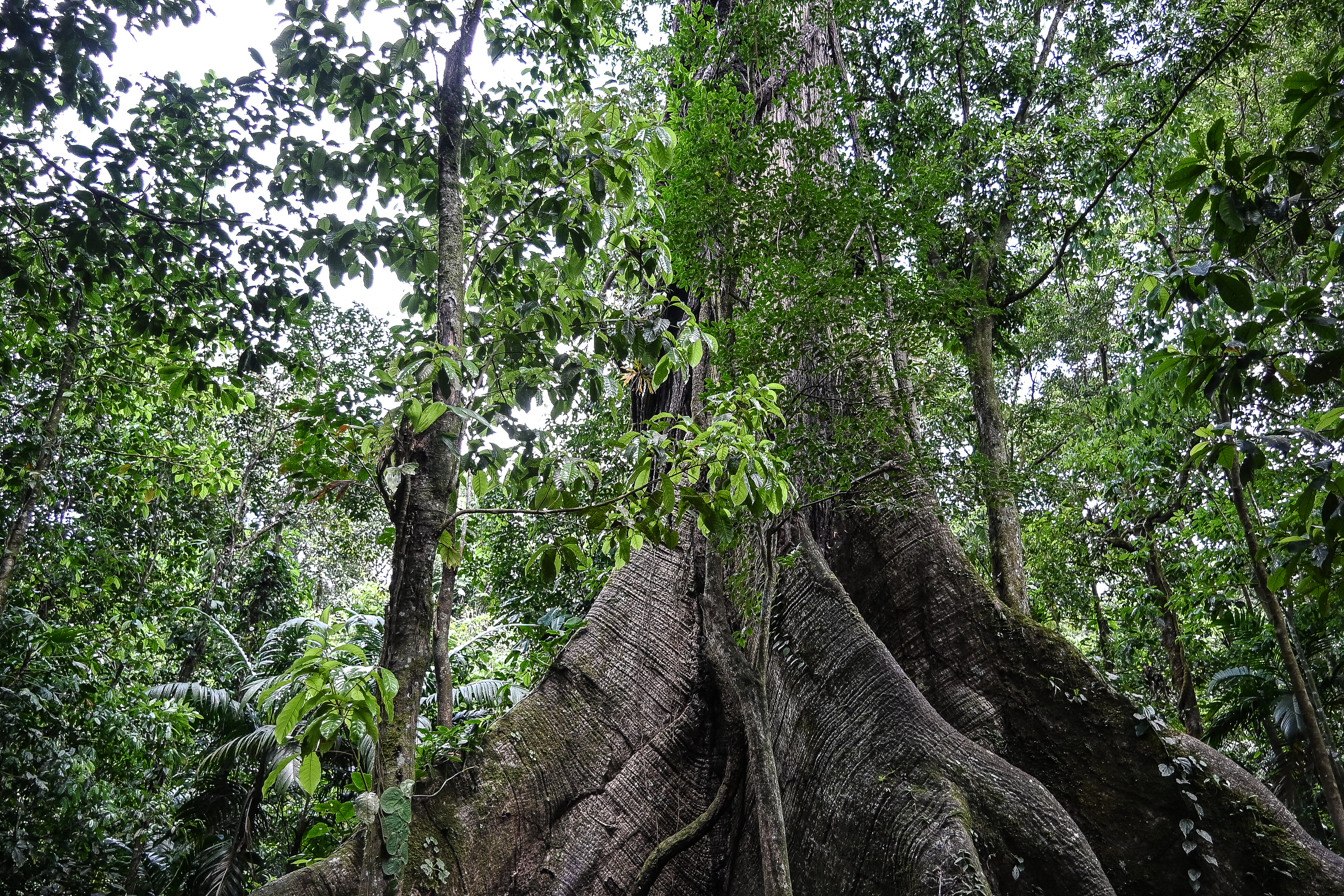
We also saw a massive kapok tree, which we especially loved because Peanut starred as a caiman in a play called “Save the Great Kapok Tree!” in her kindergarten class.
Back at the trailhead! What a special place and a beautiful, fascinating hike.
Next week: when in Arenal, you swim in Catarata Rio Fortuna.
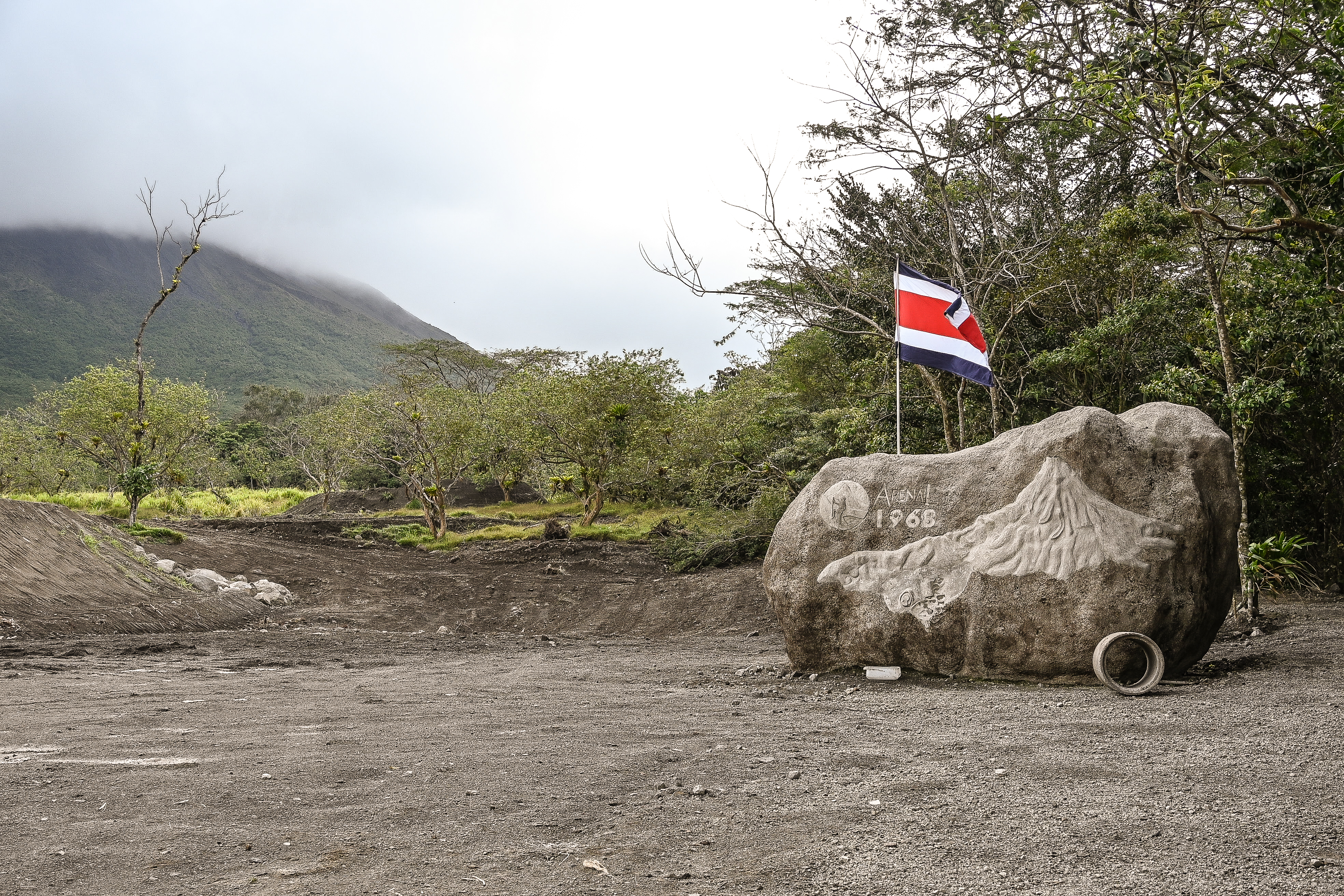
Arenal is a massive cone-shaped volcano that towers over the surrounding area, including the town of La Fortuna and the neighboring Lake Arenal. The rich volcanic soil, bubbling hot springs and gorgeous flowers growing in the rich volcanic soil draw enthusiastic visitors – including us. Arenal erupted in 1968 and buried a village, and the Arenal 1968 trail acts as a monument to the tragic event.
Just off the parking lot was an exhibit with some information about the tragedy, and a scale model.
We set off on the trail in a cool mist – the day felt suitably somber to be hiking this particular trail.
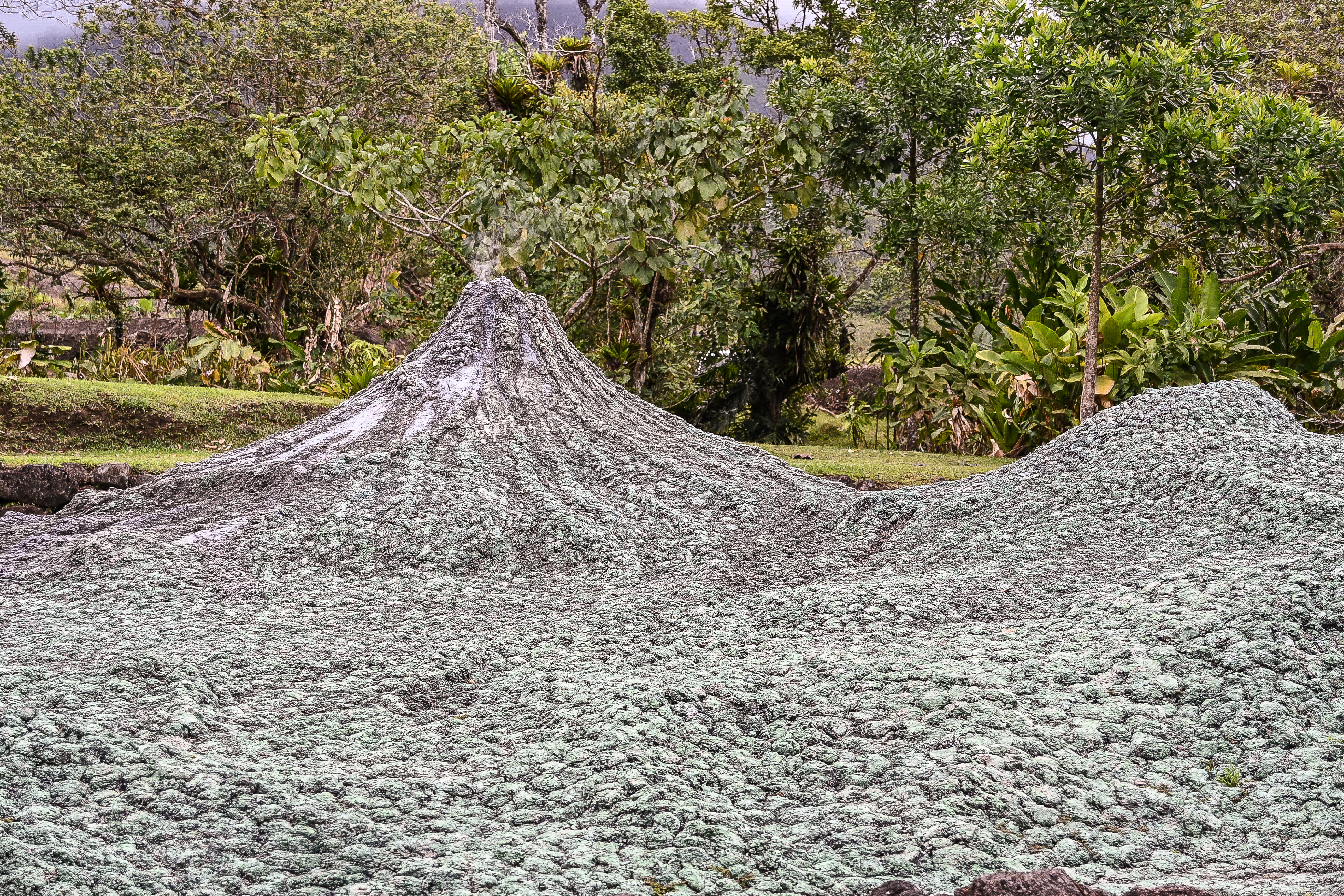
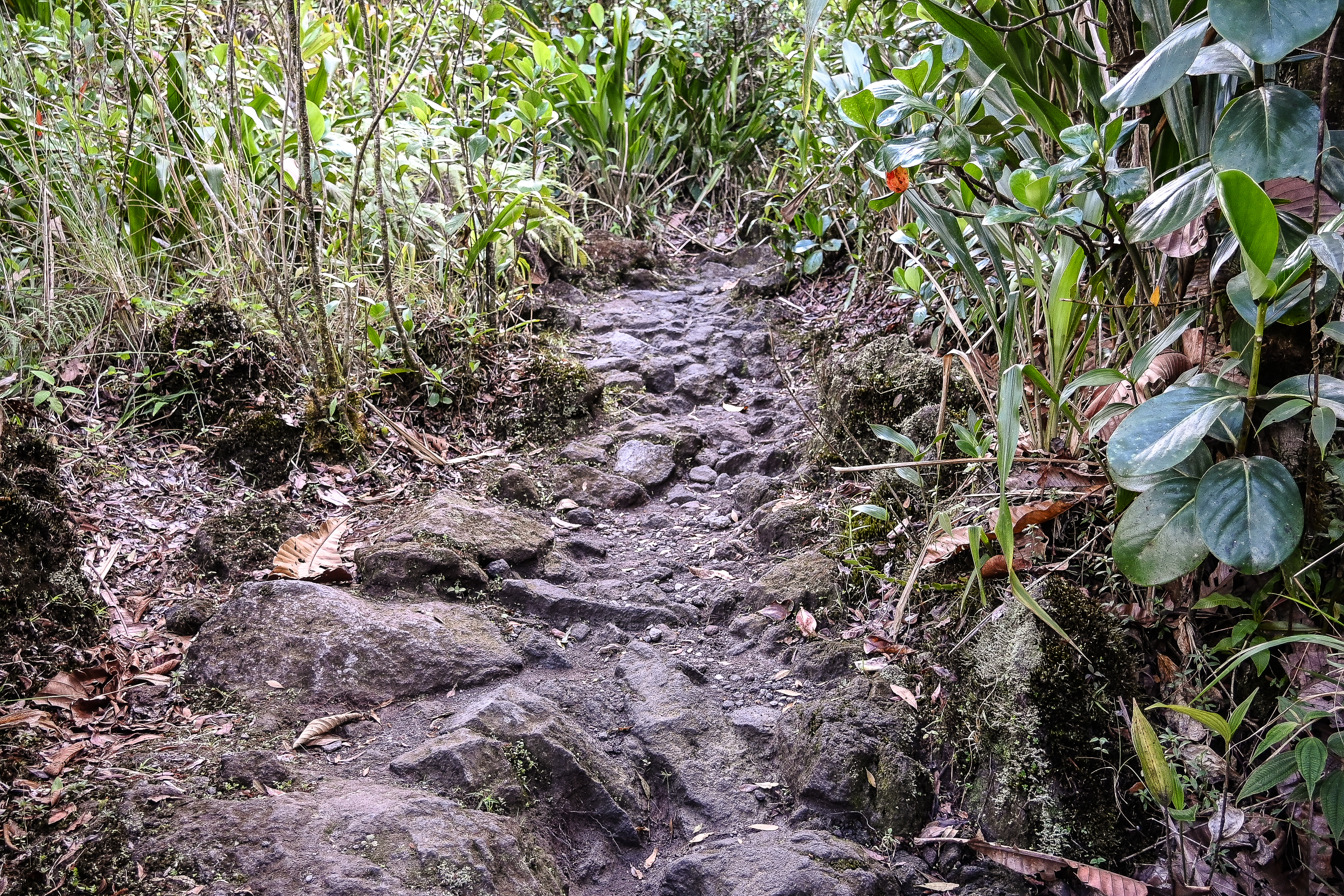
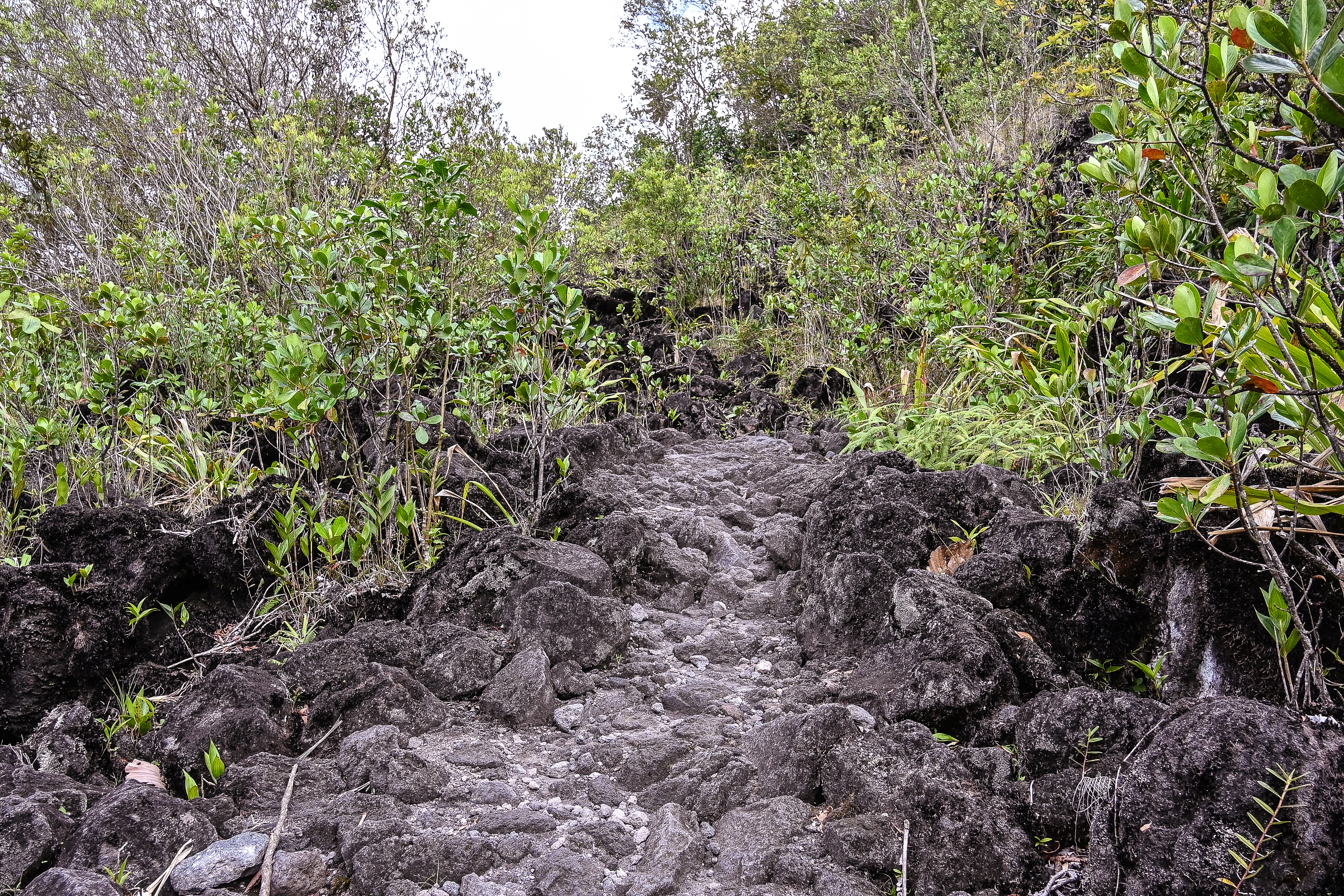
The dirt trail was much darker in color and grittier in texture than other trails we had hiked in Costa Rica – that’s the volcanic soil.
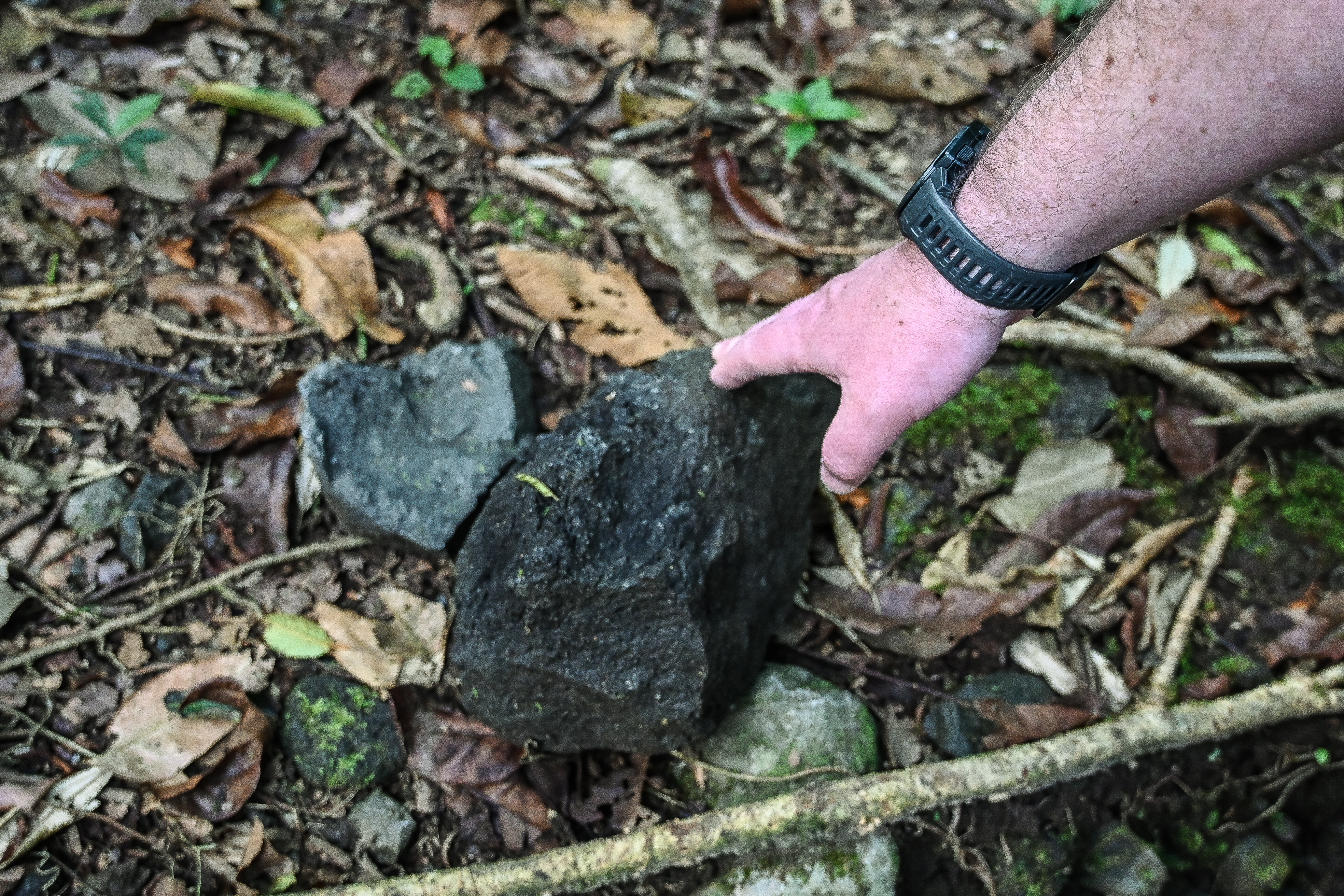
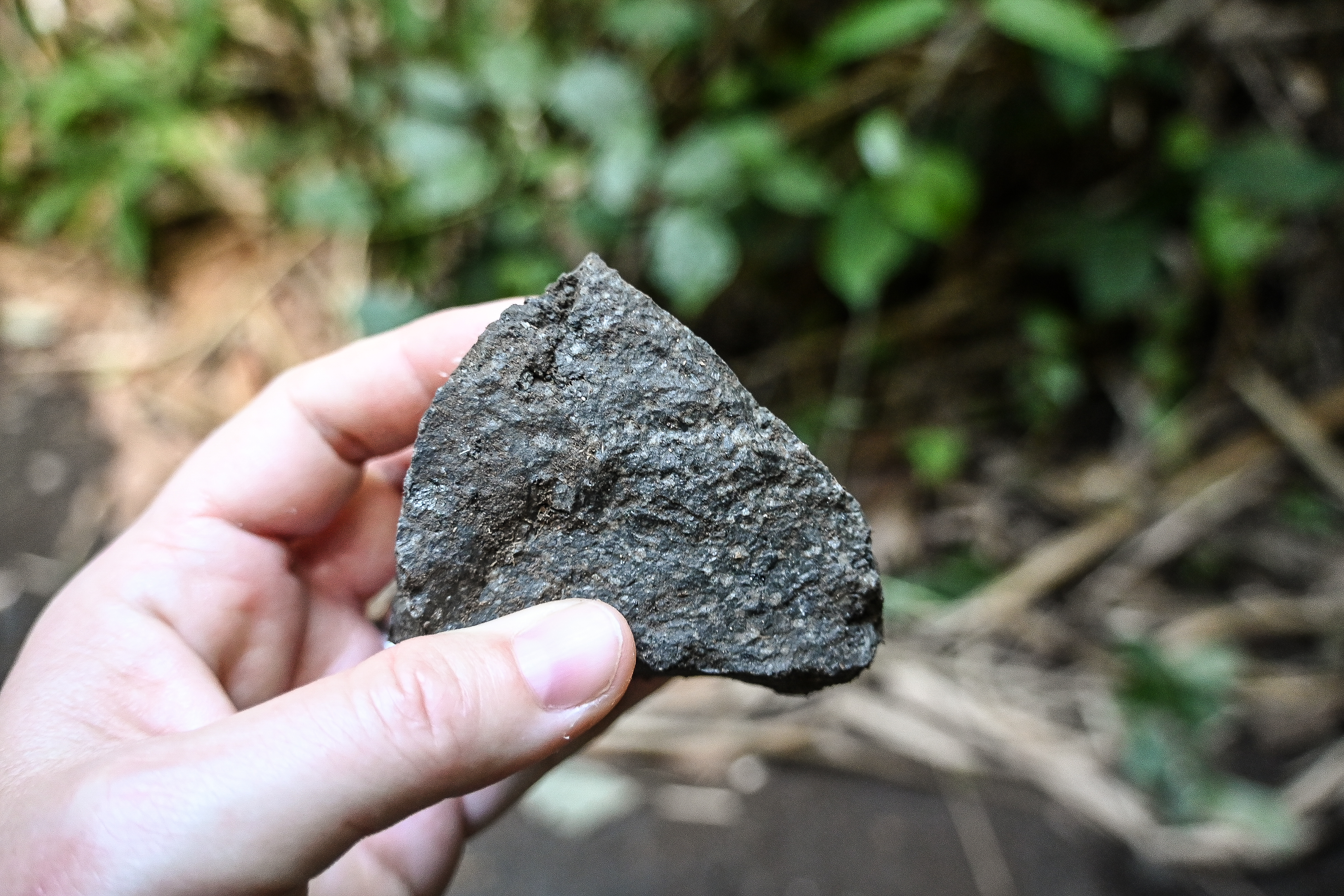
There was also pumice all along the trail – we picked it up to see how light it was (and then put it back where we found it! #leavenotrace).
Massive tree roots! Pretty amazing to think that all of this foliage grew up after 1968.
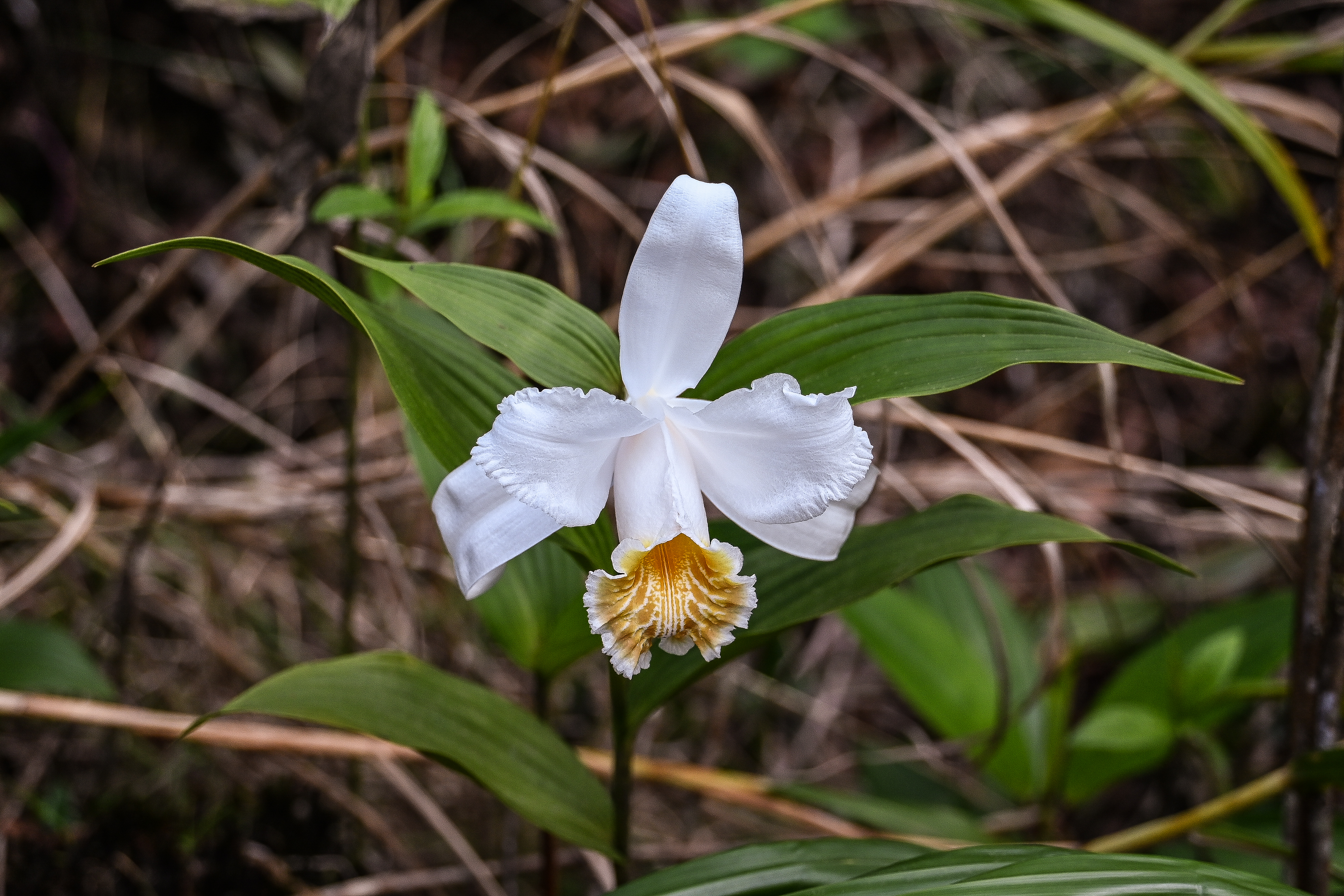
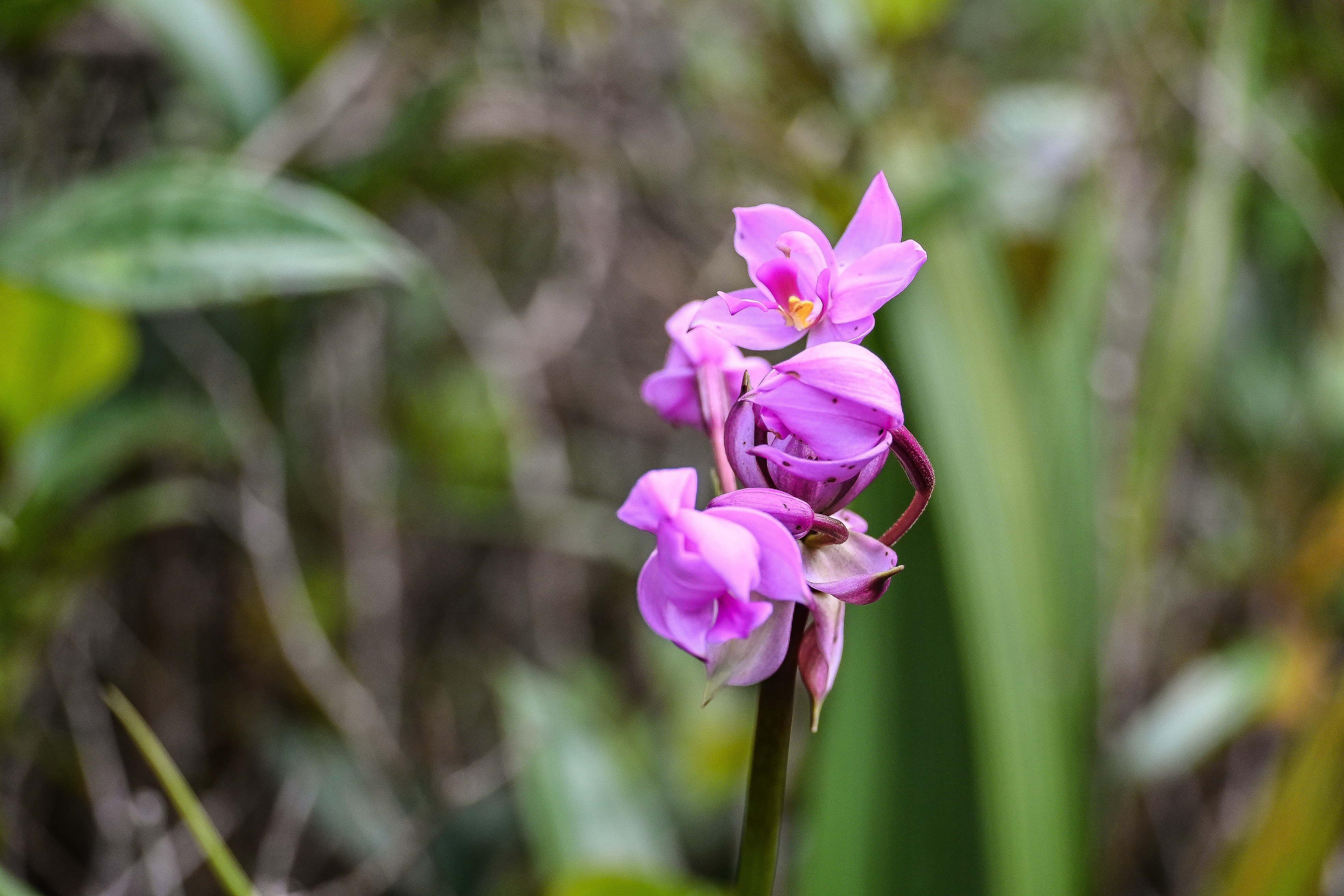
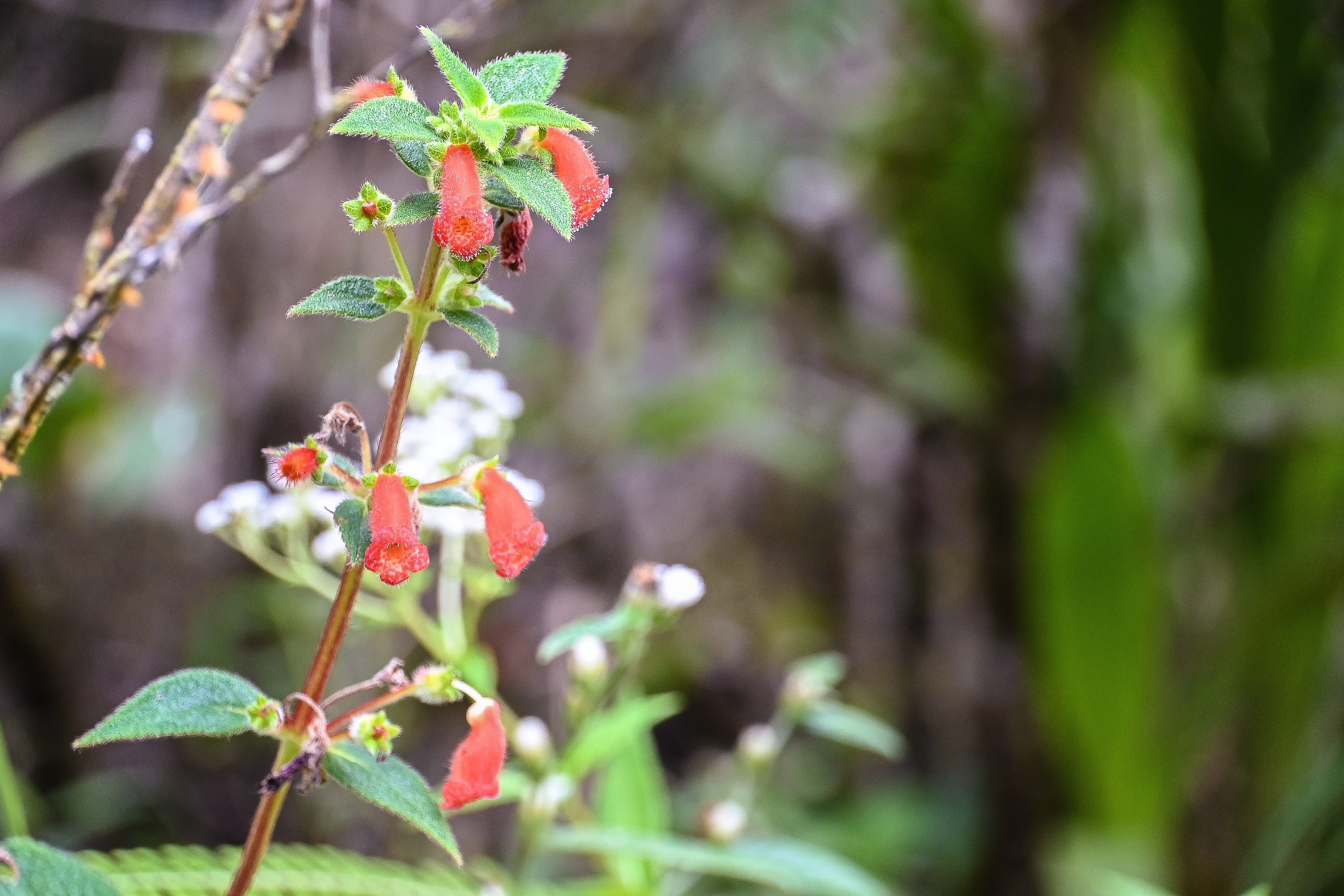
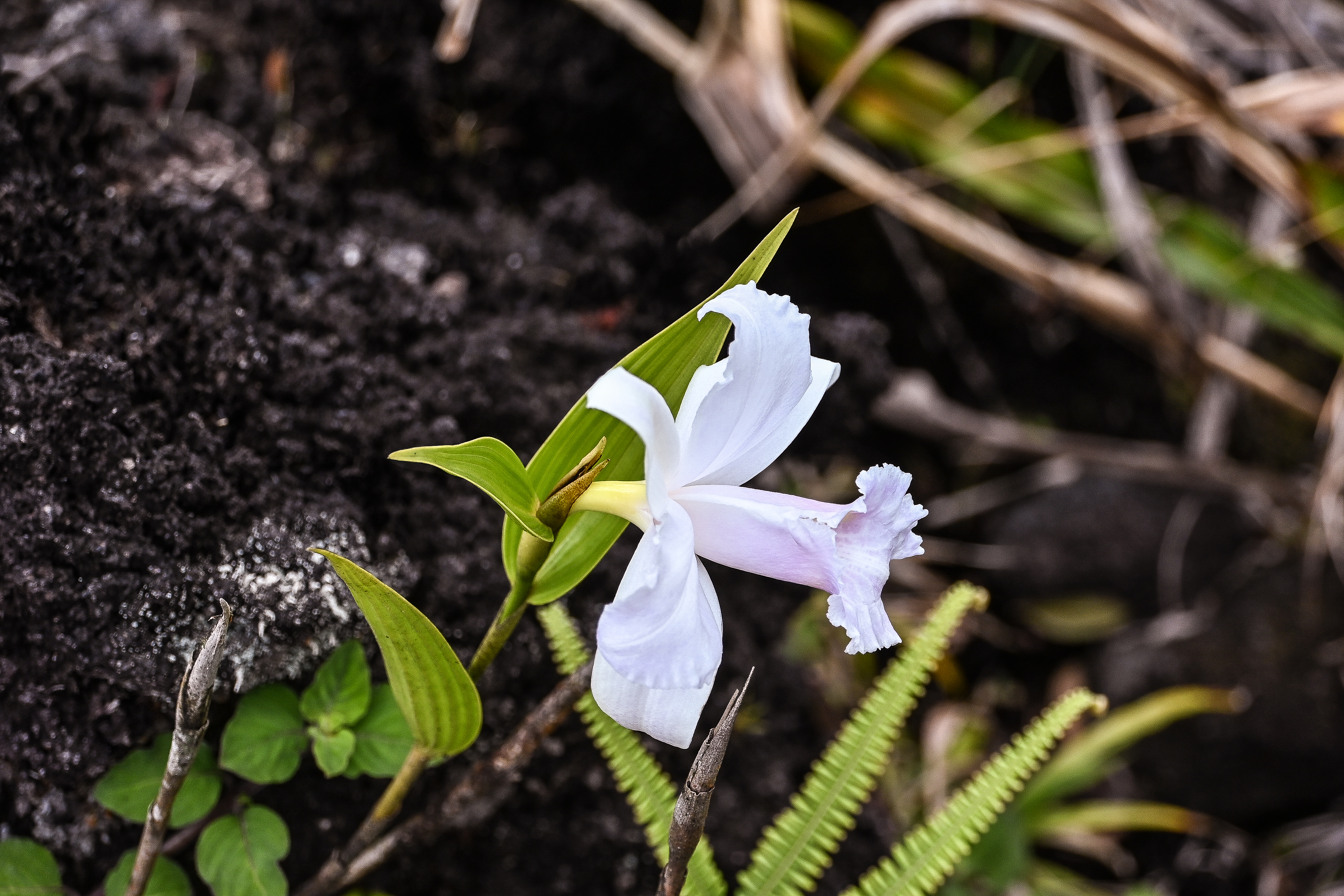
Thanks to the rich volcanic soil, the trail was starred all the way up with absolutely spectacular orchids and lilies.
I’m sure I was driving Steve crazy, but I had to stop and take a picture of every! single! flower!
The trail climbed gently to a viewpoint that looked out over the side of the volcano.
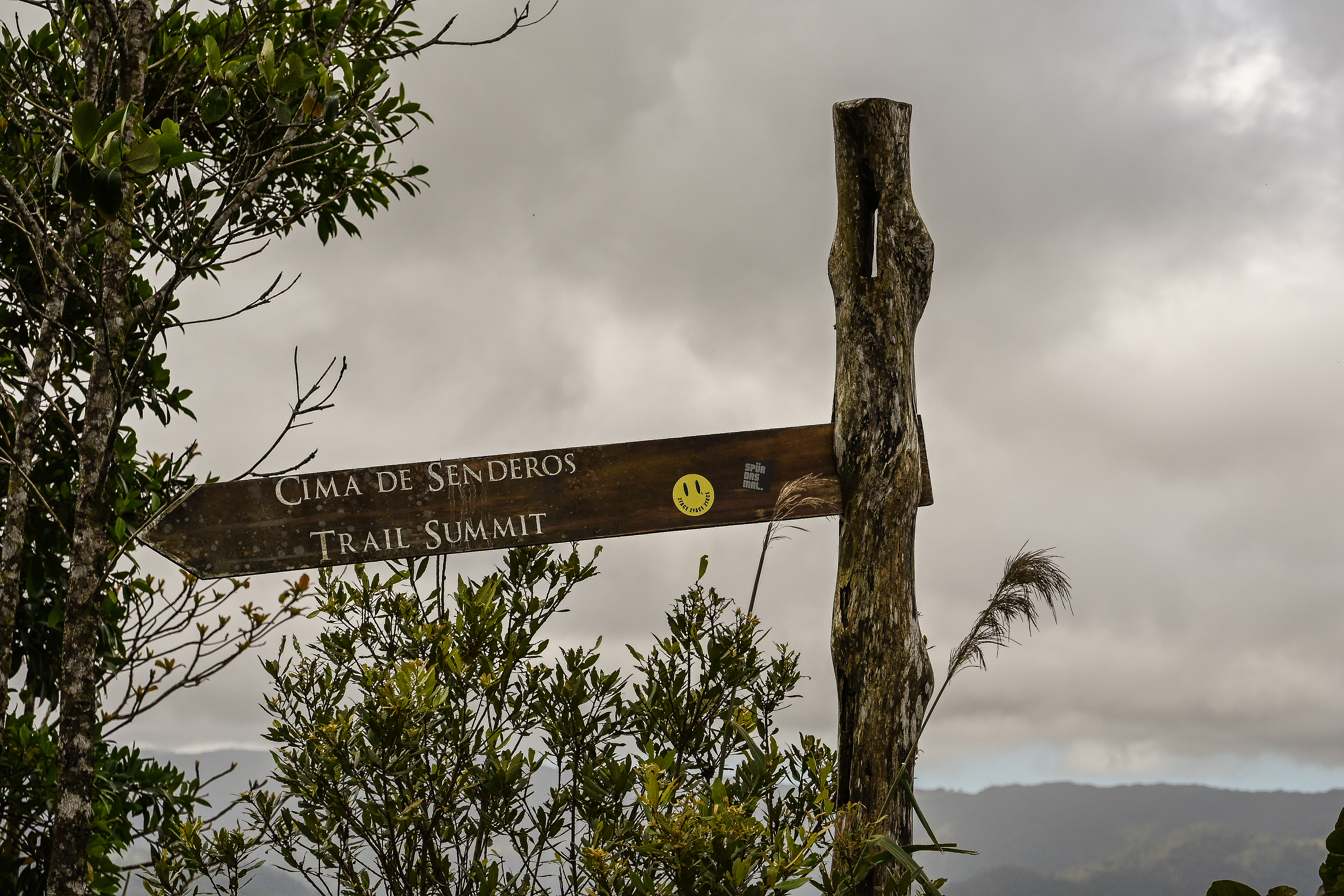
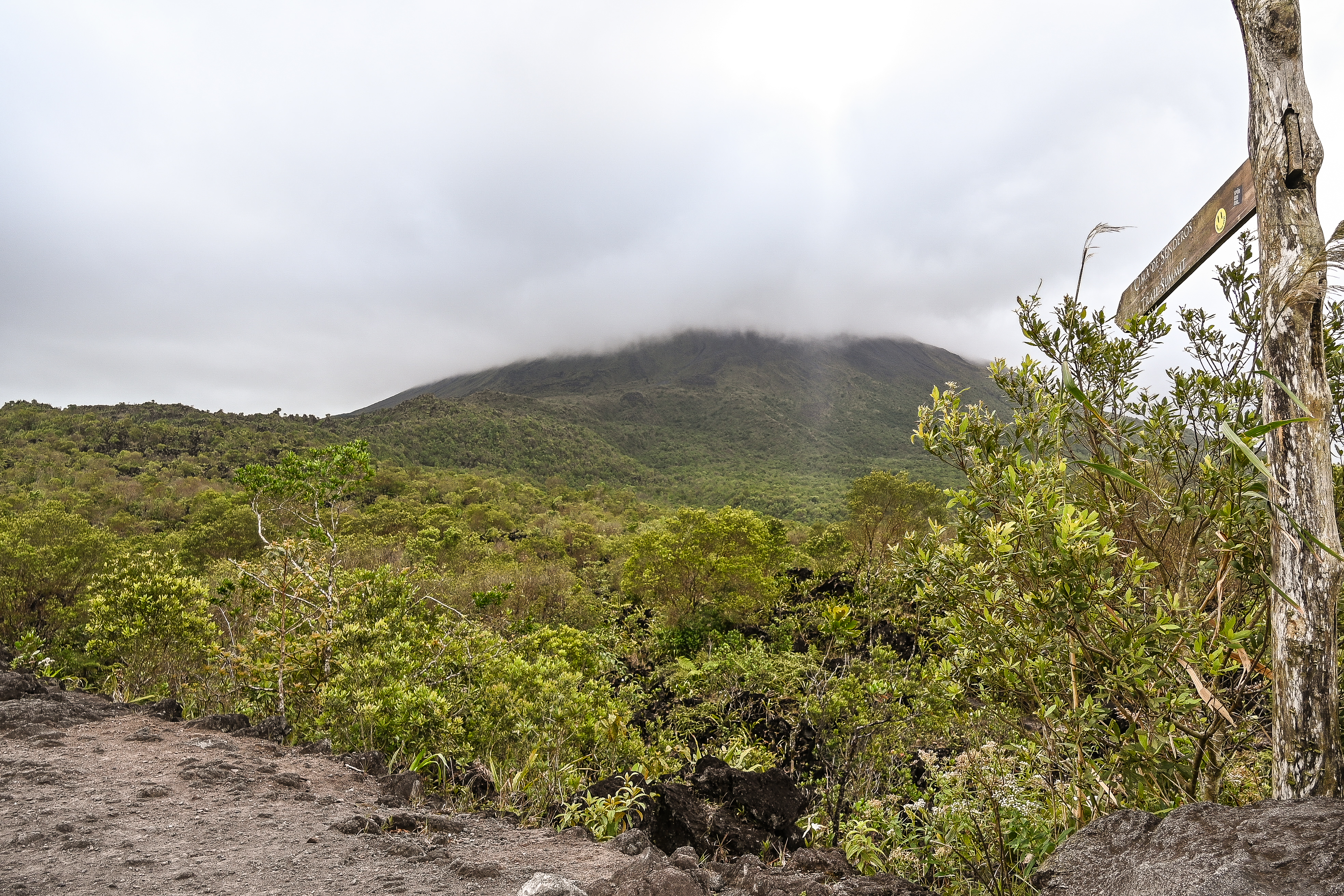
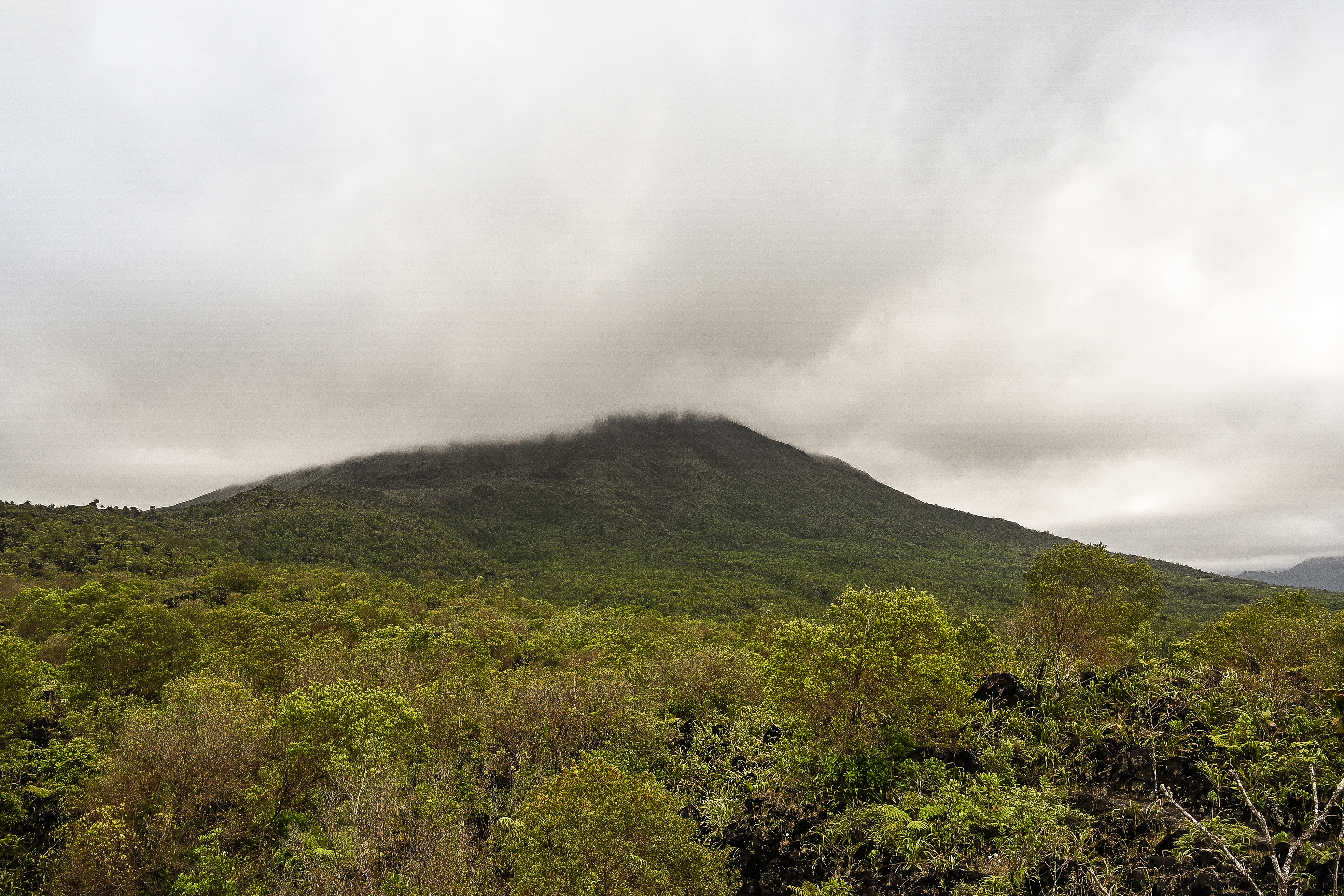
Eventually, we reached the trail summit and were rewarded with a spectacular view. Even with the top of Arenal shrouded in mist, it was an arresting sight.
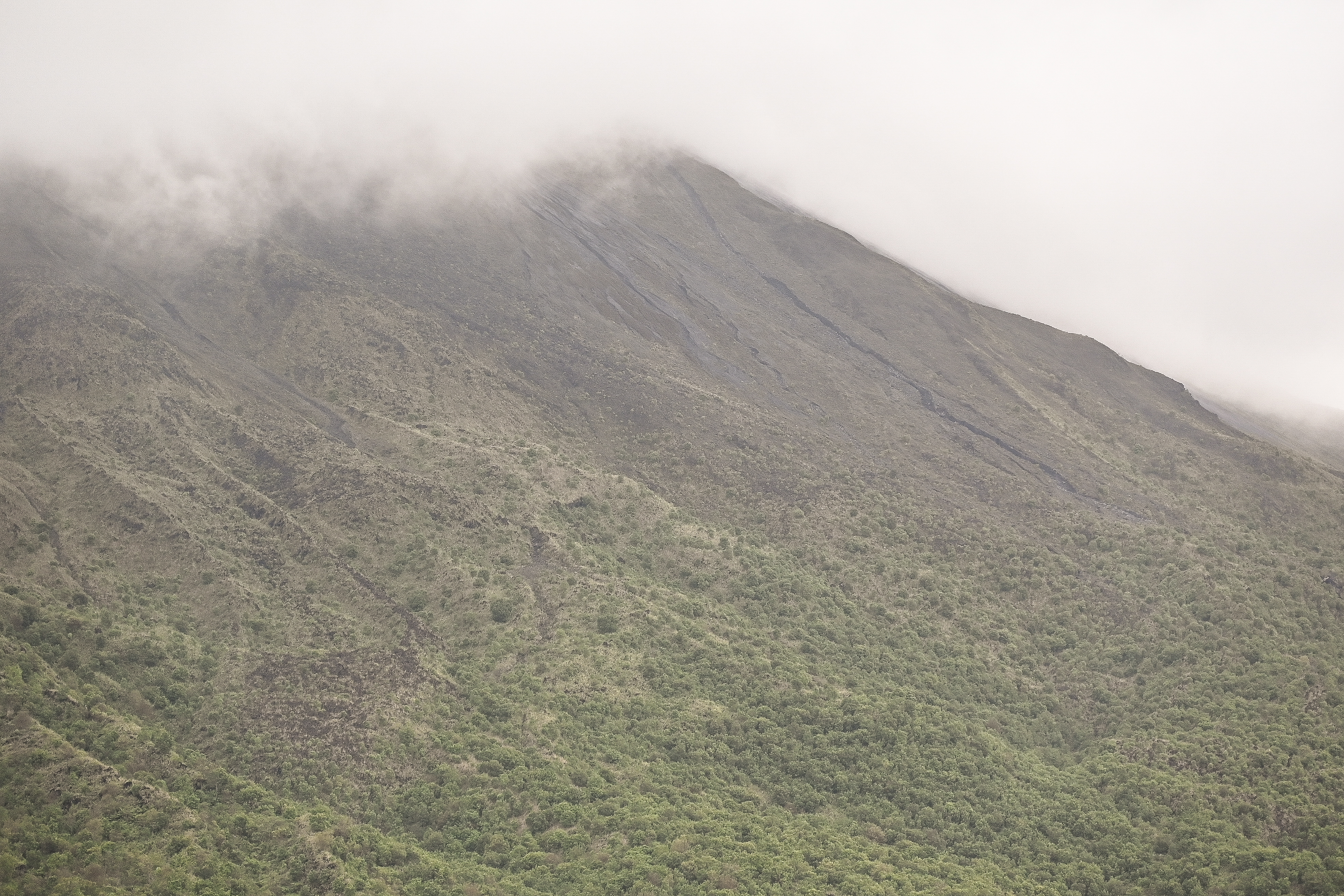
We watched for awhile as the clouds started to roll down off the mountain – hoping that the cone would come out so we could really take it in. The slope of the mountain did start to clear, but eventually we had to turn back and head for the car and our next hike.
More stunning flowers on our way down from the viewpoint…
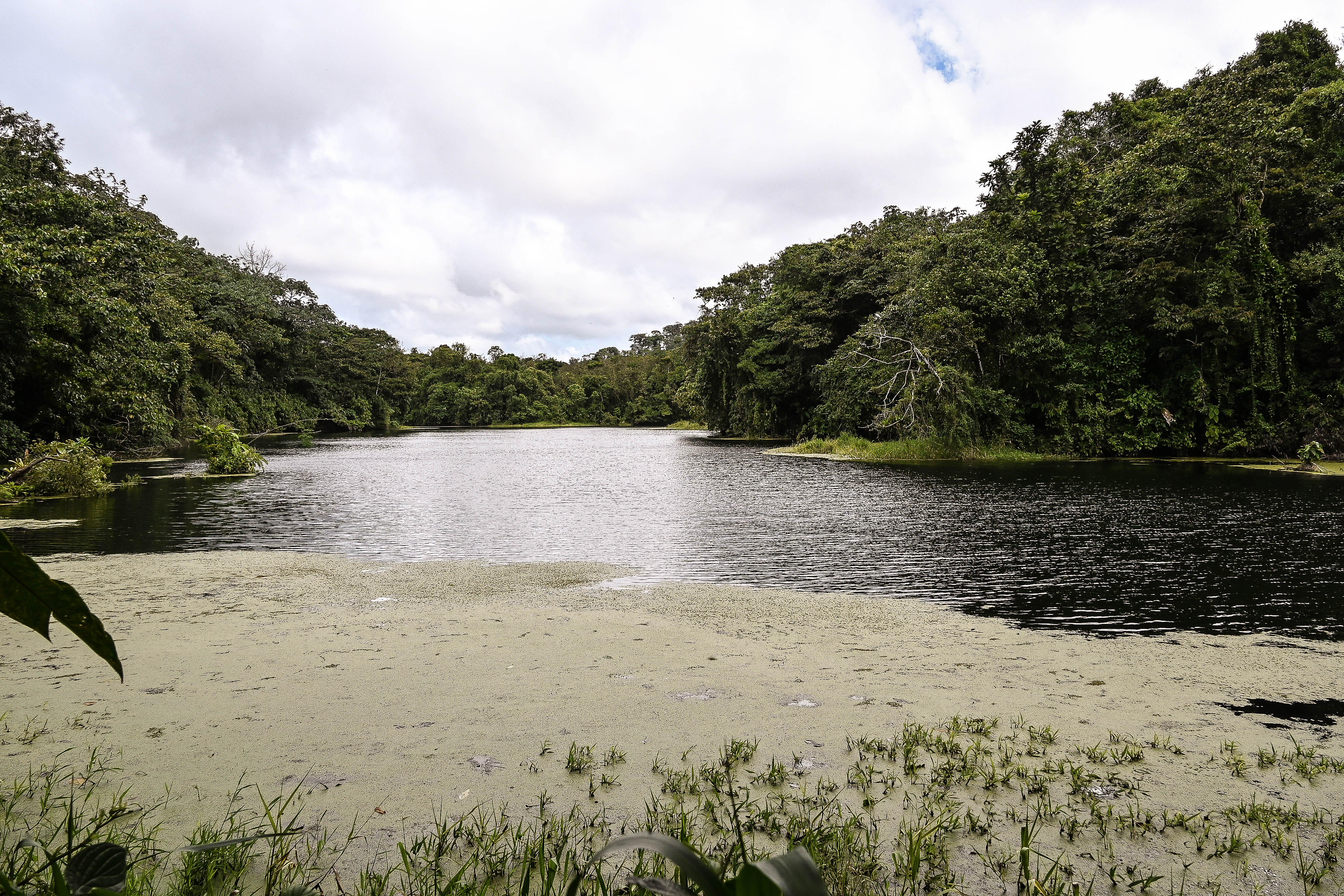
We stopped to take in the view of Lake Los Patos and were surprised by two toucans swooping out of the trees and across the lake – easily identifiable by their huge yellow beaks. Sadly, I was not quick enough with my camera to capture them – those guys are fast. Steve mused that he hadn’t realized what a treasure the roosting toucan was that we saw while kayaking around Drake Bay on our first afternoon in Osa; all of the others we saw were almost impossible to capture.
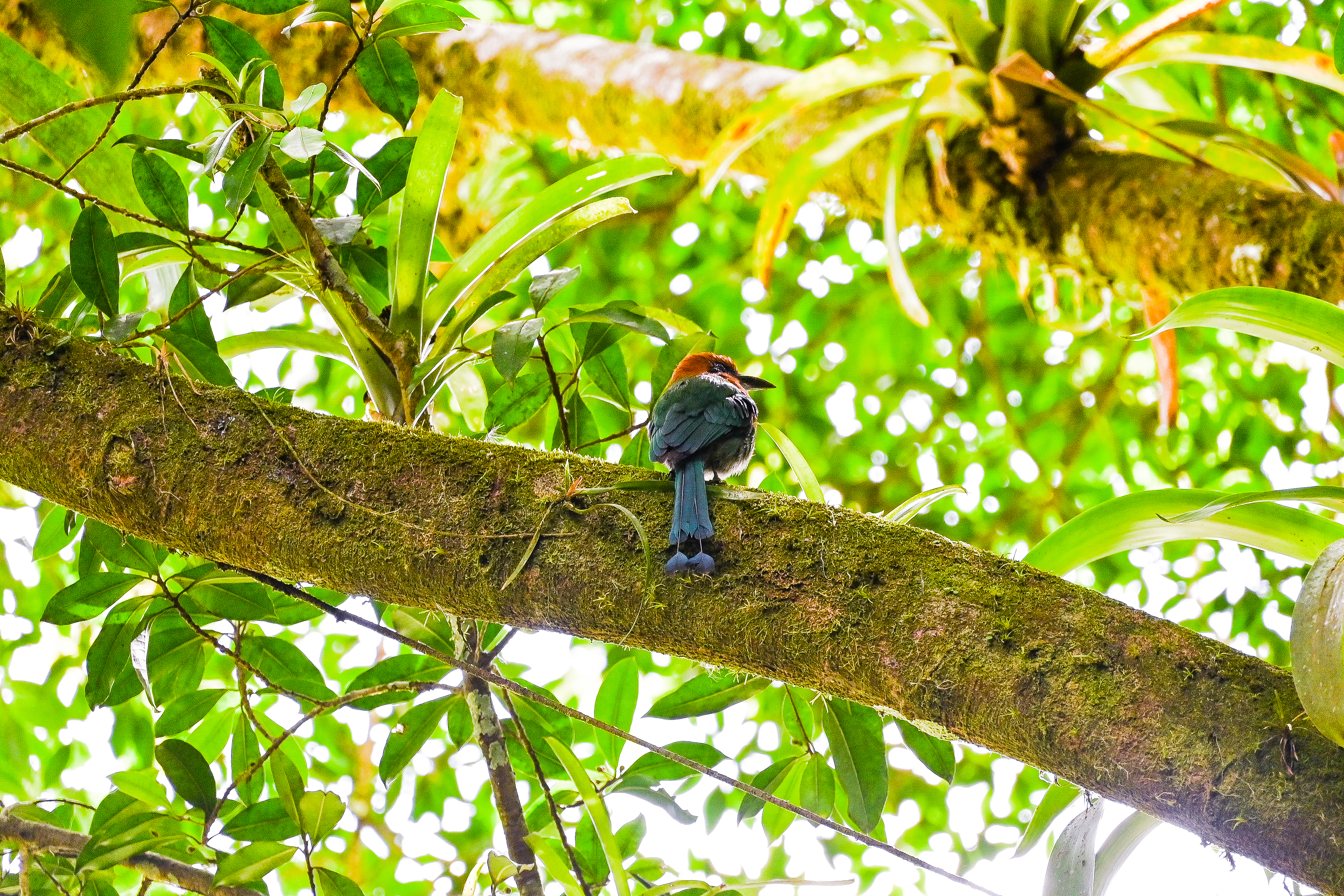
We did get a good look at a Lesson’s Mot-Mot! Look at those tail bobbles!
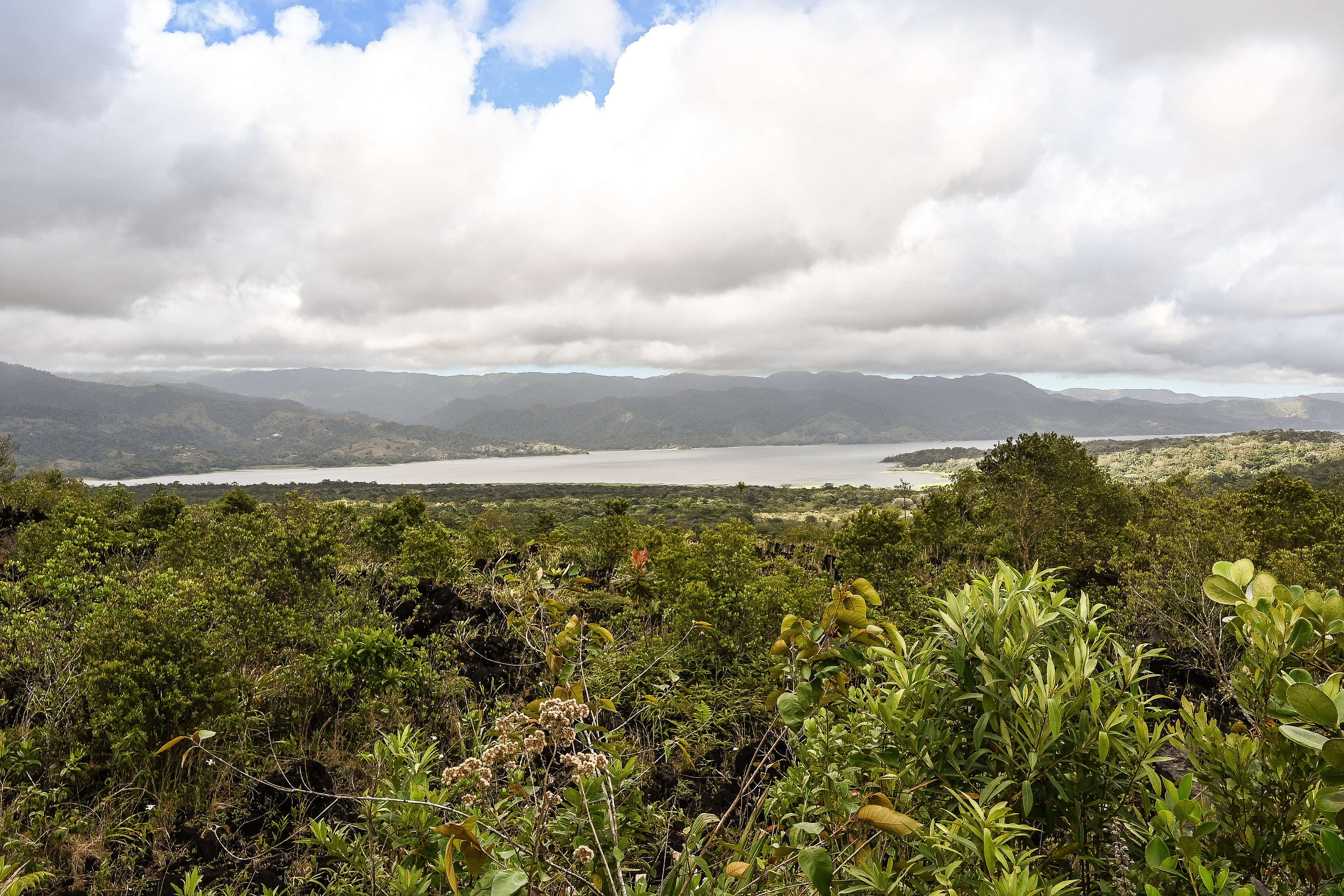
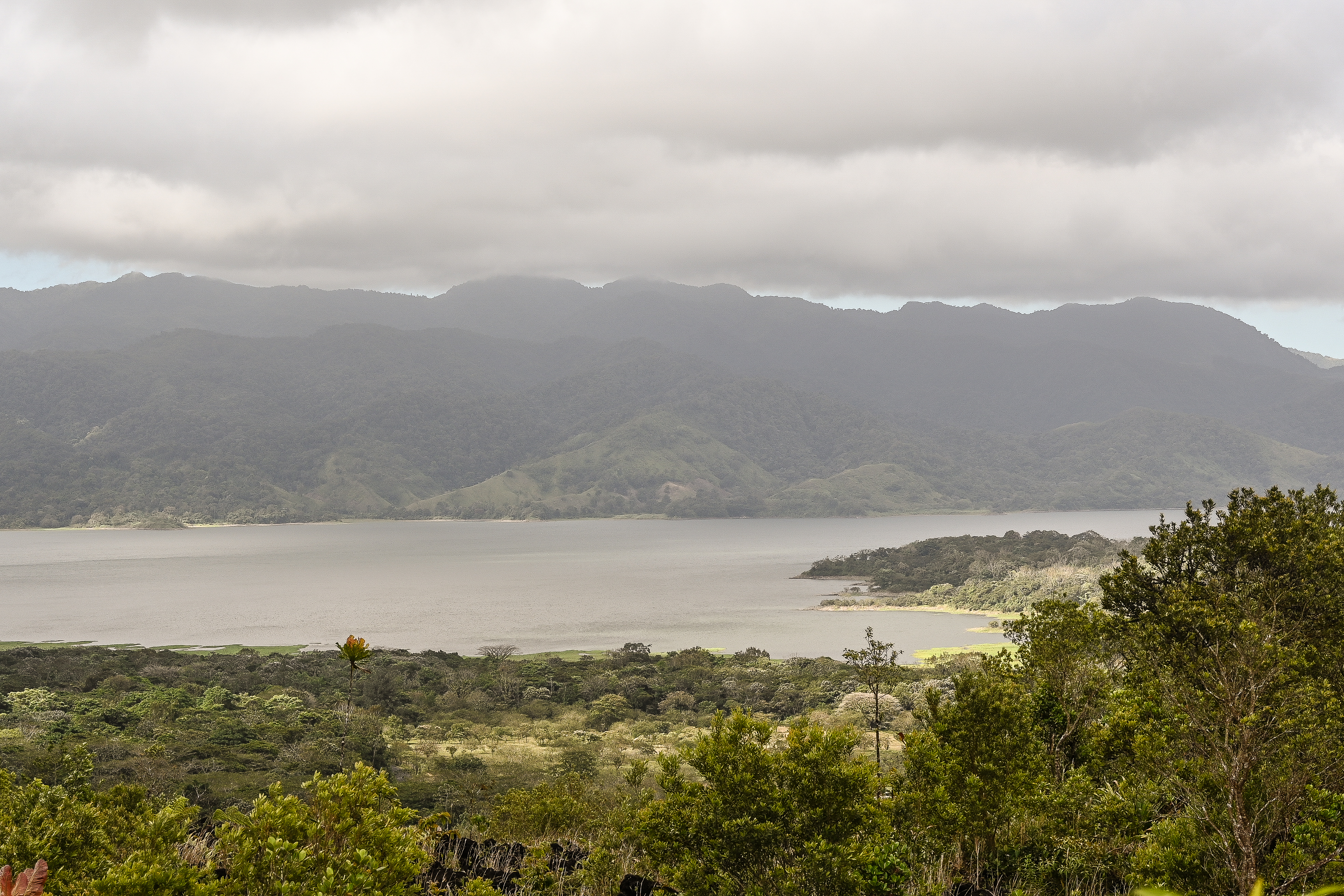
Towards the end of the hike, we came up on a beautiful viewpoint overlooking Lake Arenal – look at that! I was really hoping to get out on the lake for a paddle, but the weather didn’t cooperate. Still such a treat to take it in from this vantage point.

















































 covered in flour