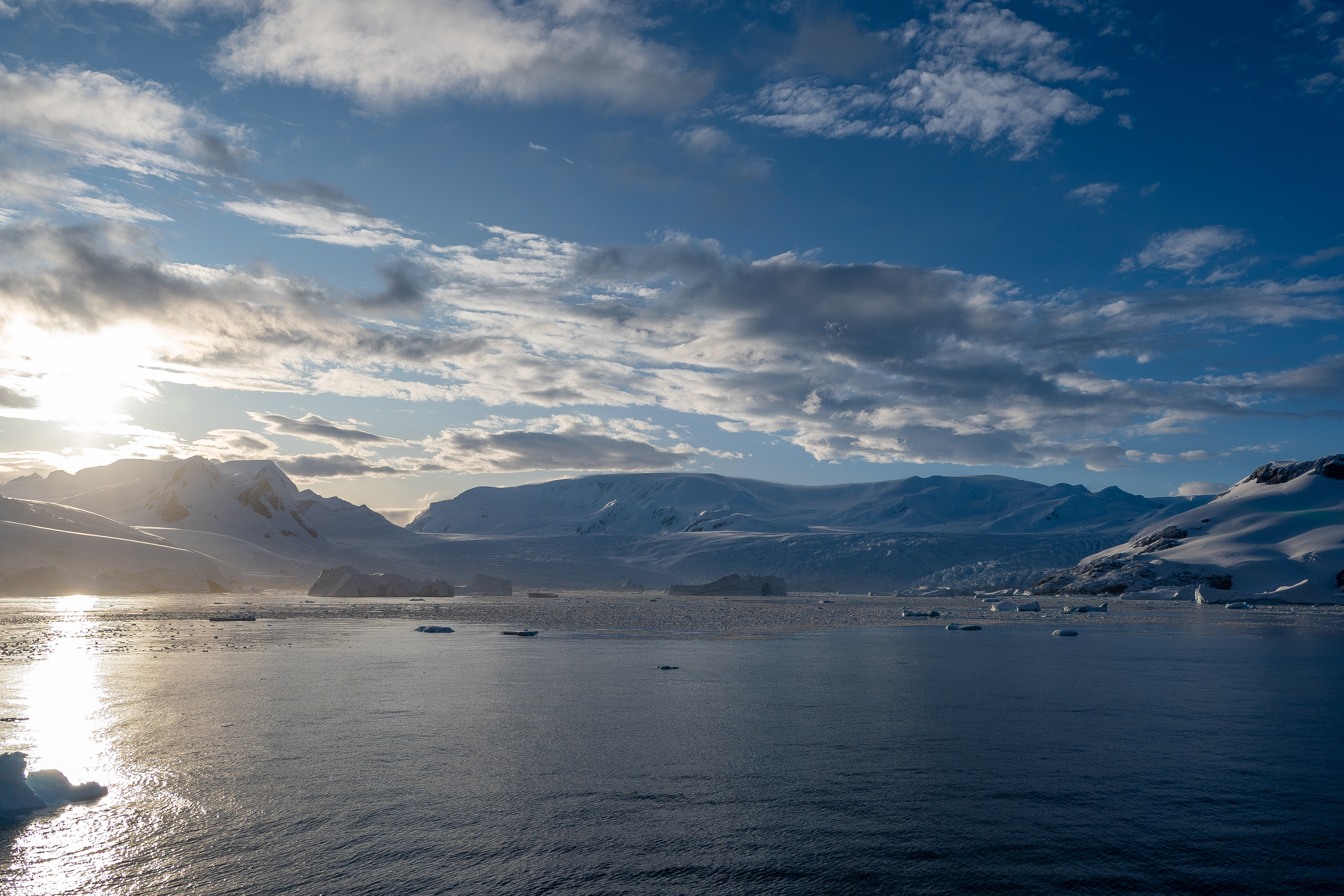
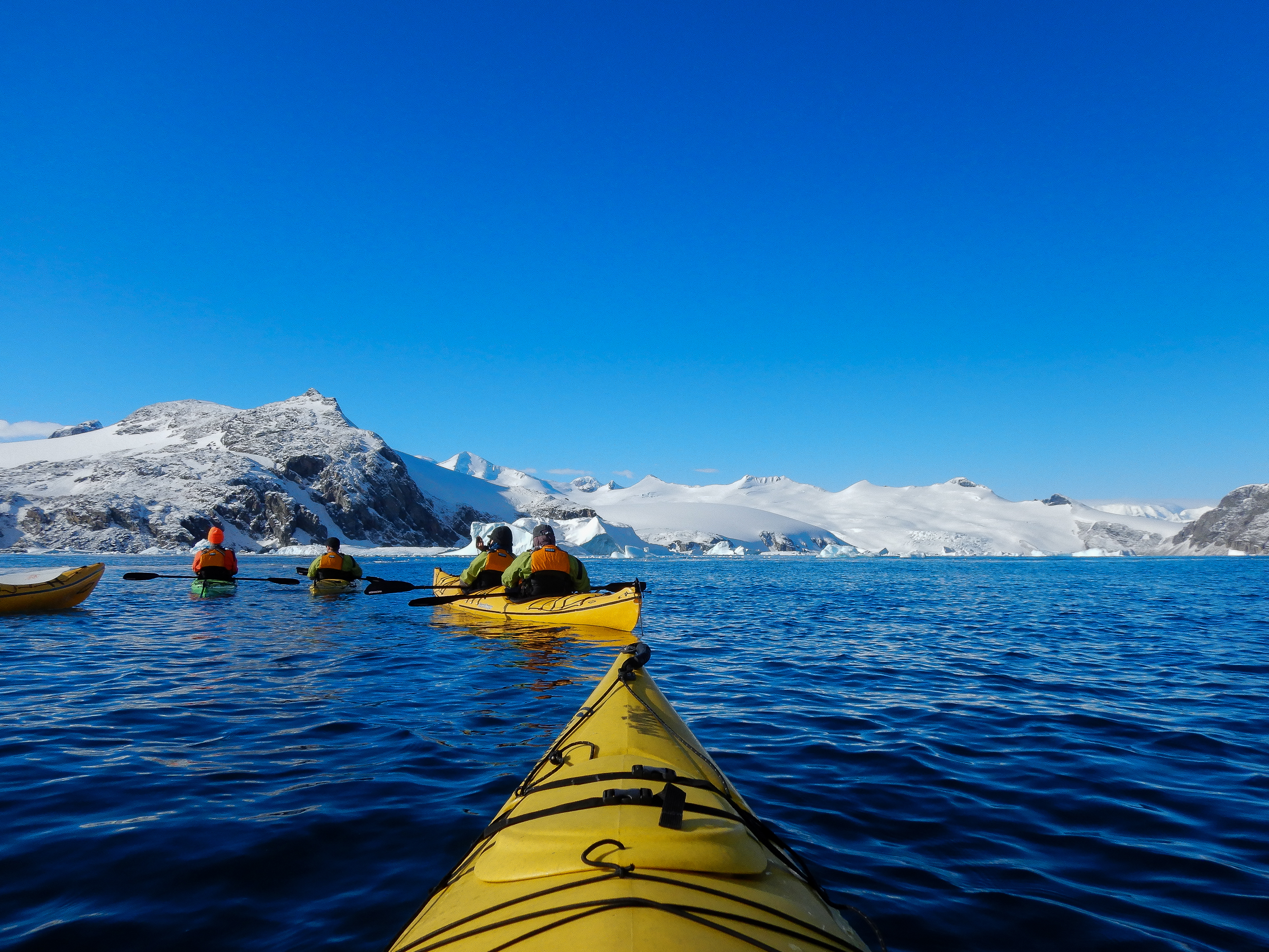
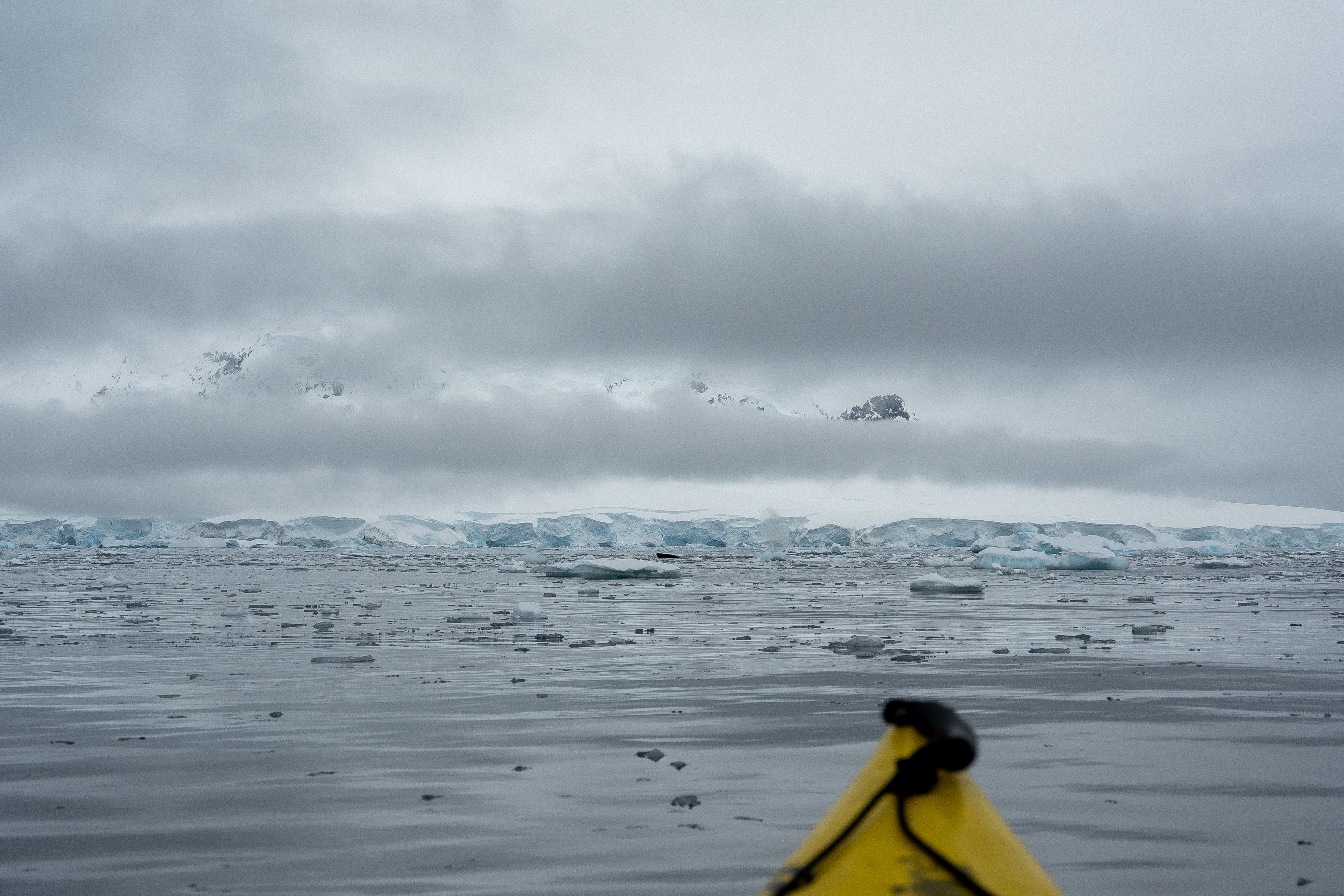
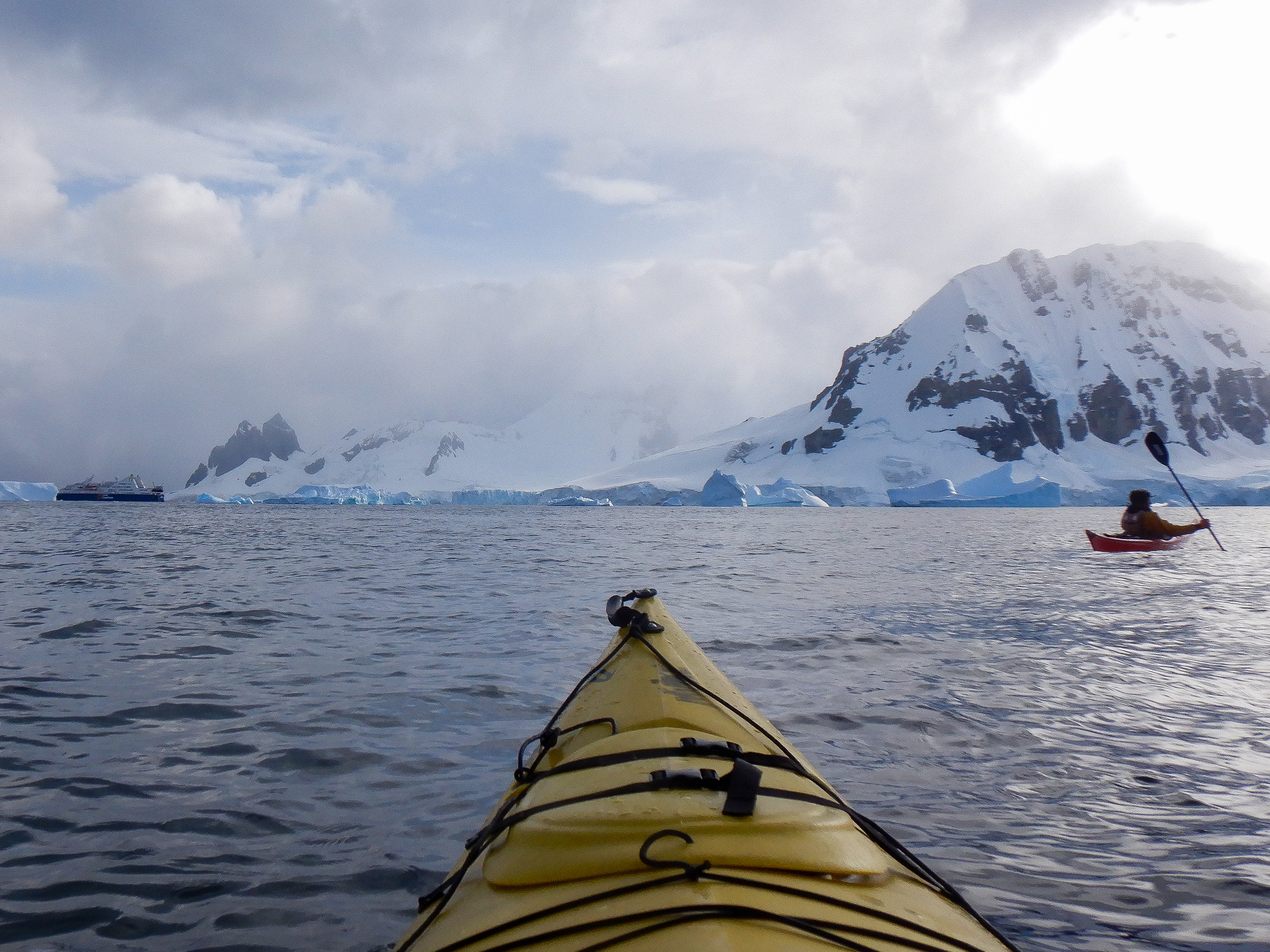
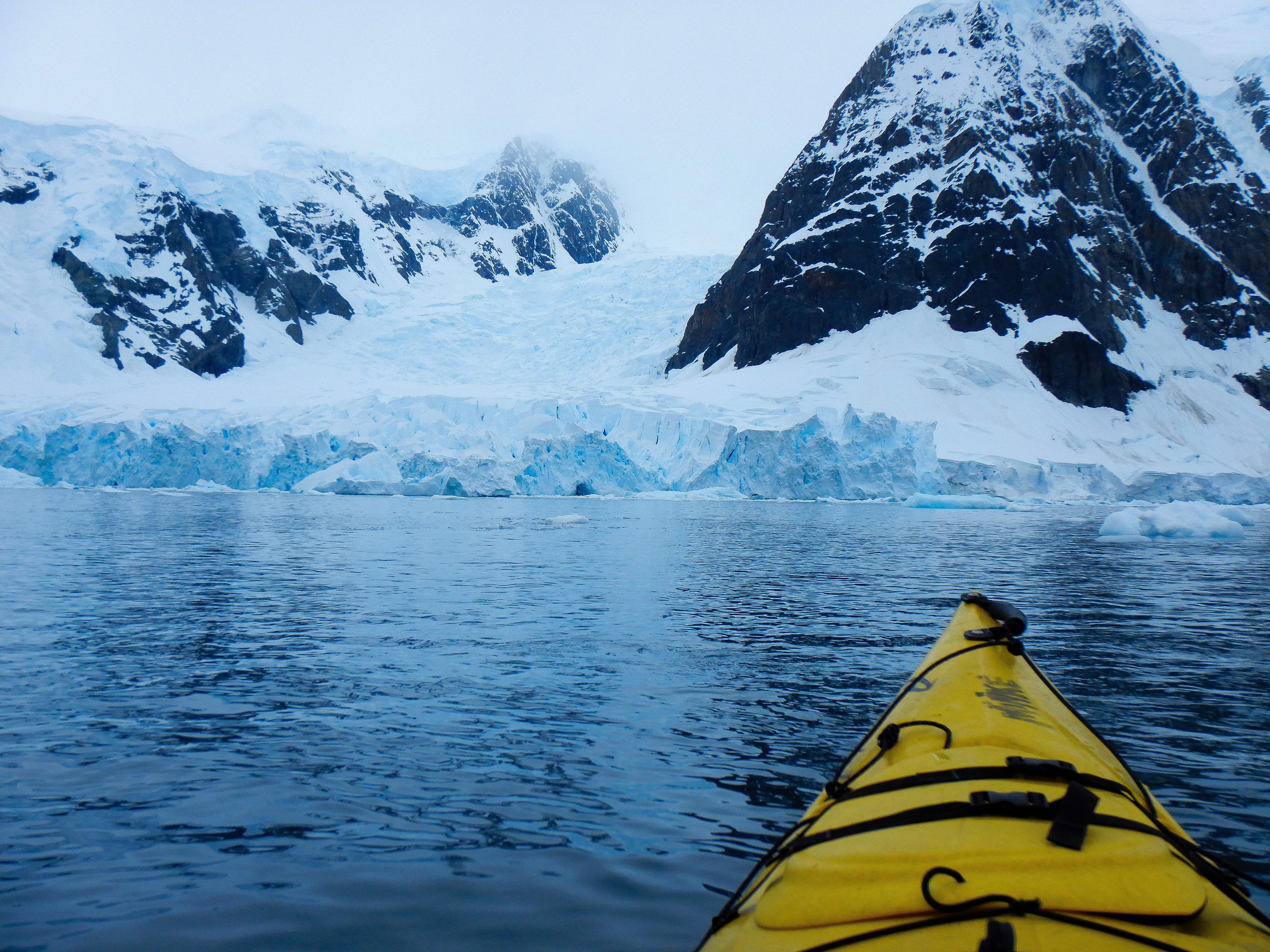
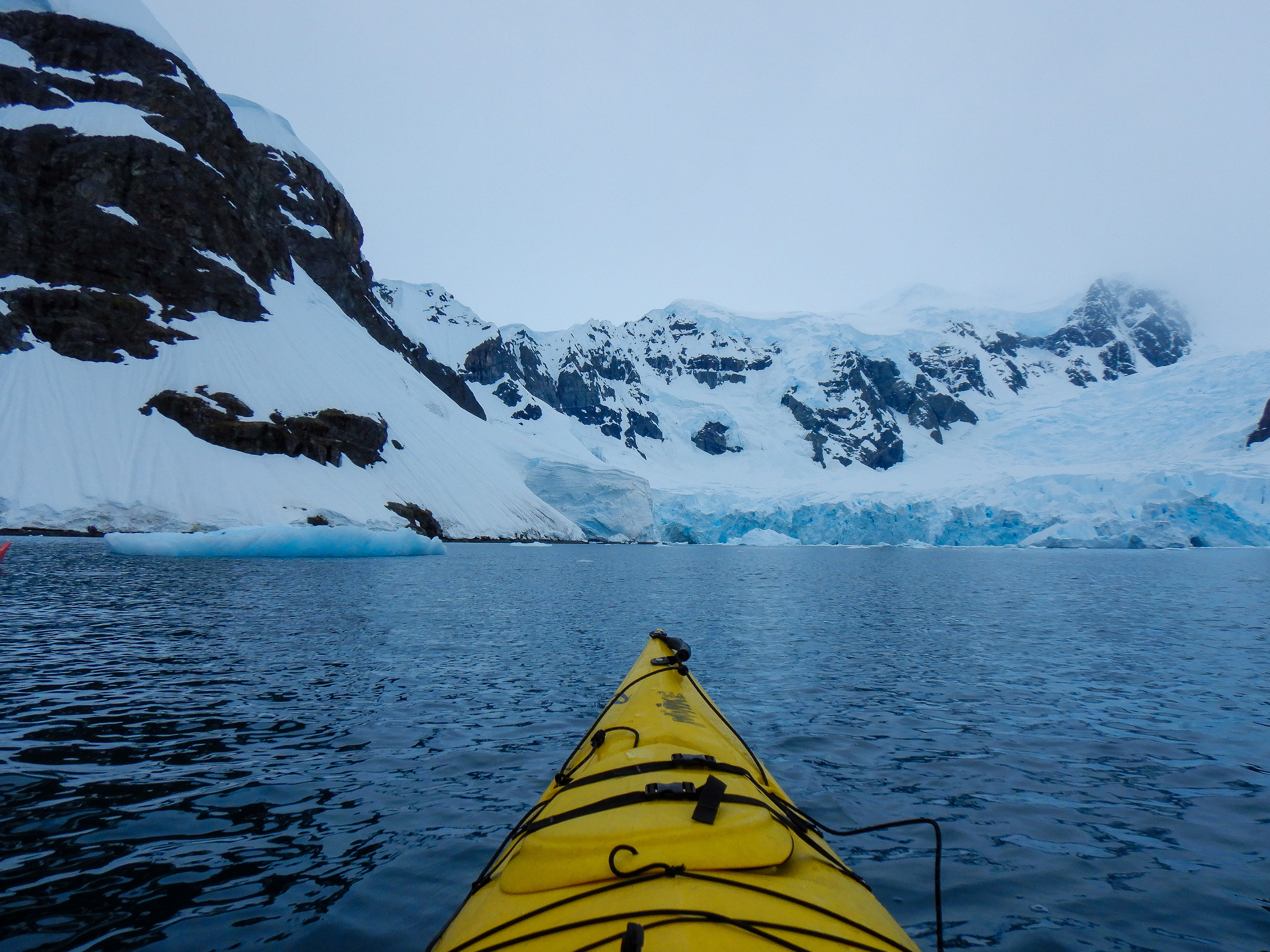
Another spectacular morning in Antarctica! There was a bit of cloud cover as we cruised into Cierva Cove, but the sun was breaking through and the ice was sparkling.
I was excited about the morning’s paddle. First, the ocean conditions looked perfect – it was an absolutely gorgeous day. But second, and perhaps more importantly, our expedition leader had hinted that we might get to see chinstrap penguins here. Sign me up!
But first: seriously. It doesn’t get more stunning than this.
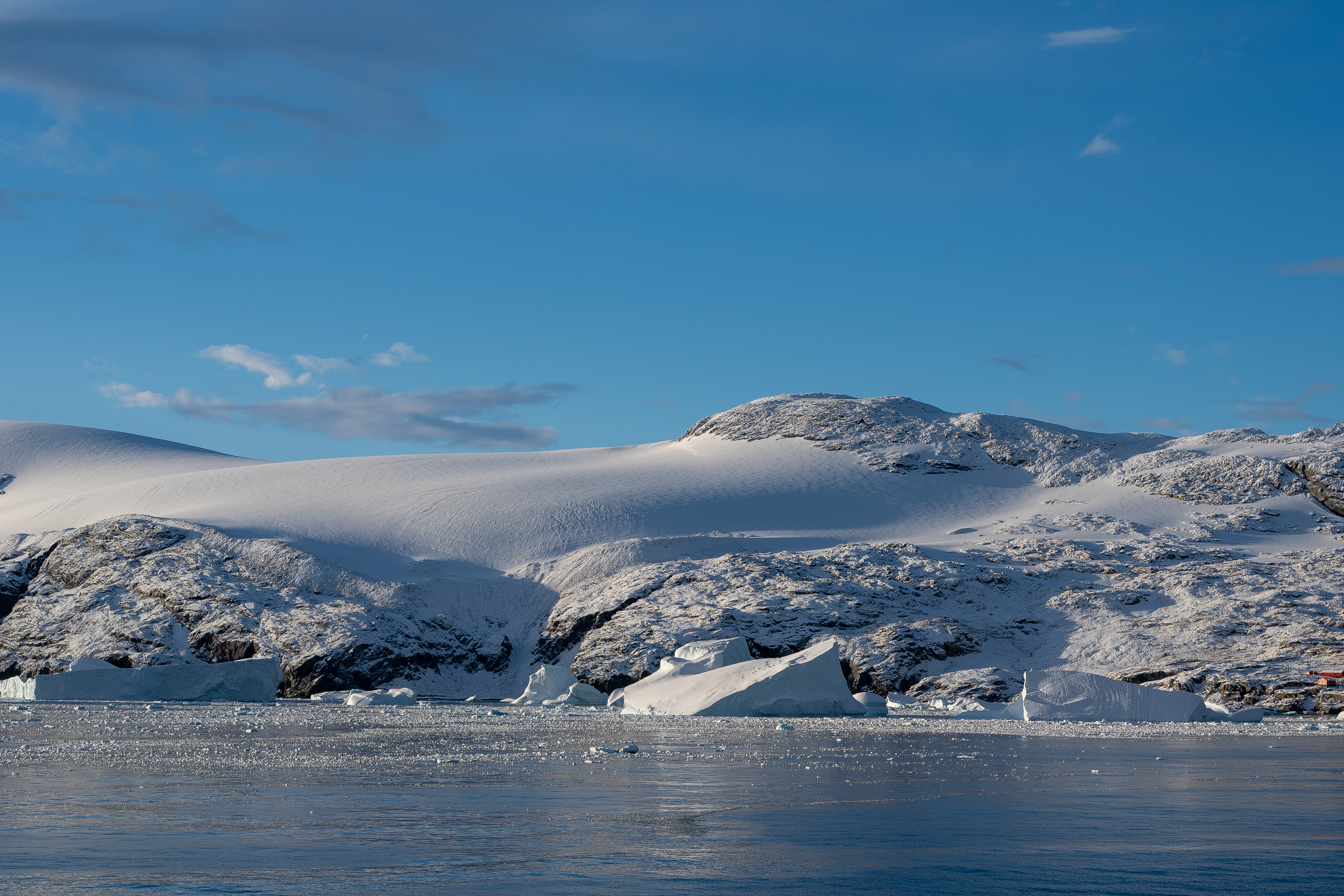
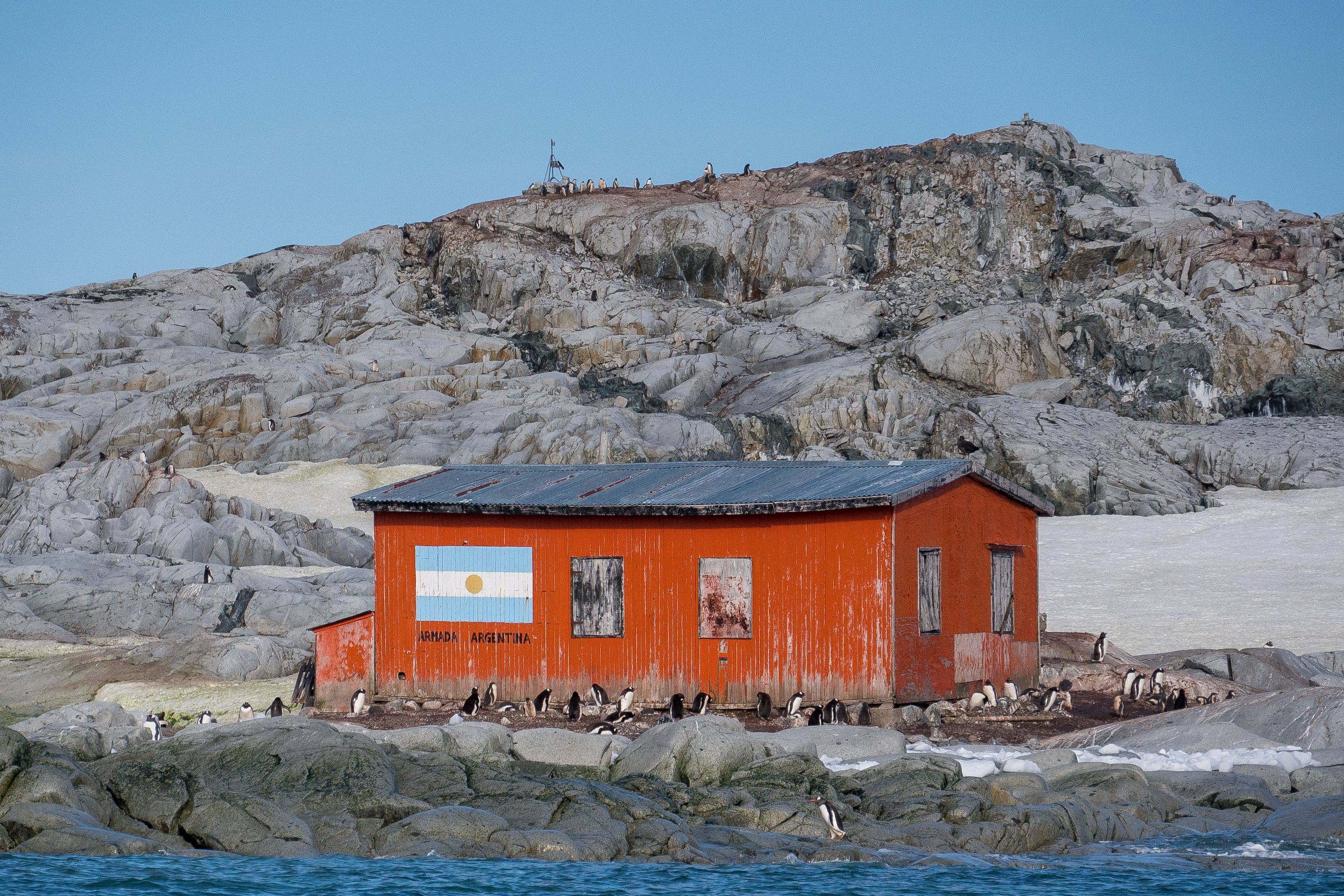
There was another Antarctic research base here. While I loved the pristine landscapes of some of our other stops, the red buildings against the blue and white ice were undeniably picturesque.
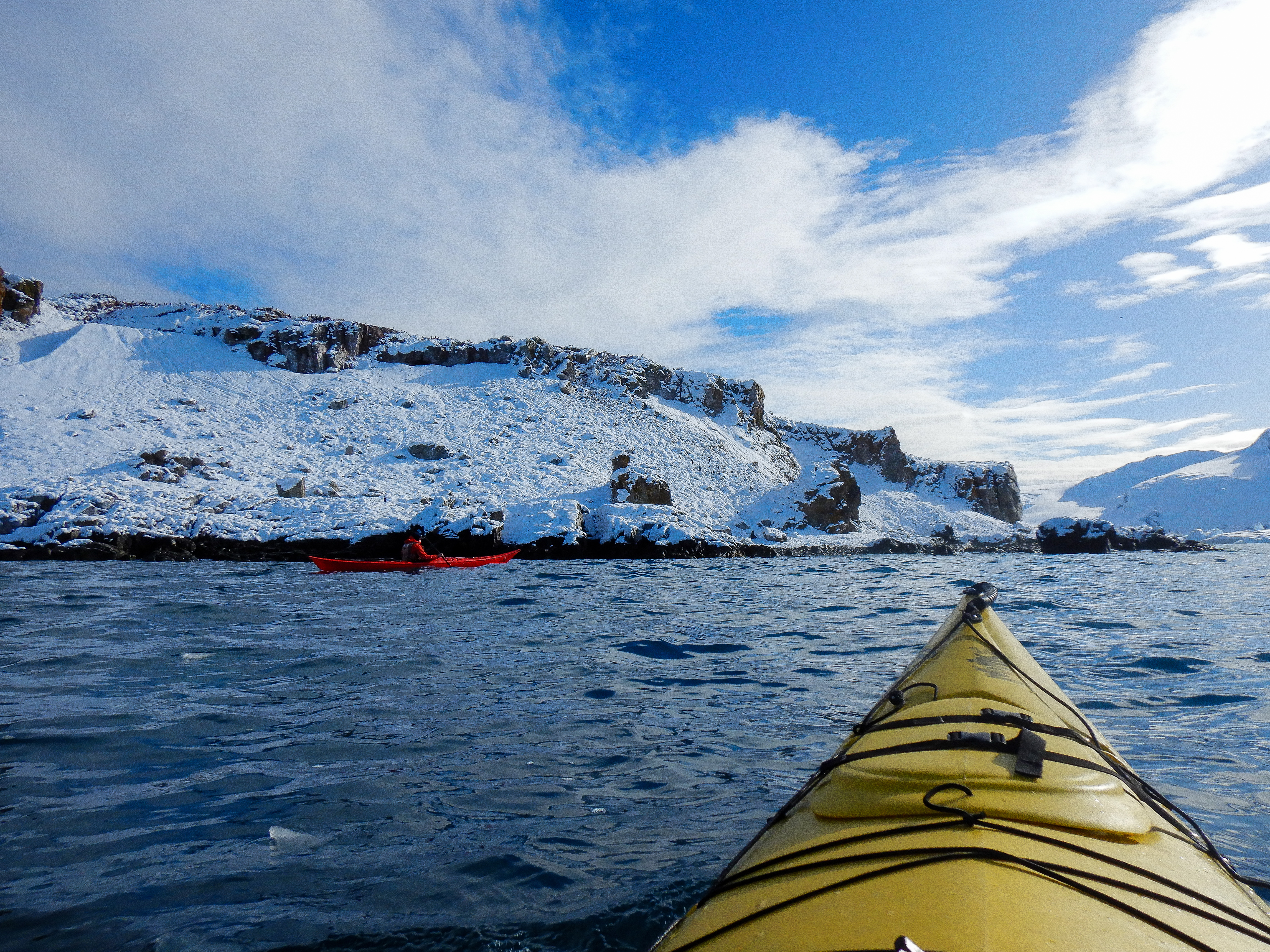
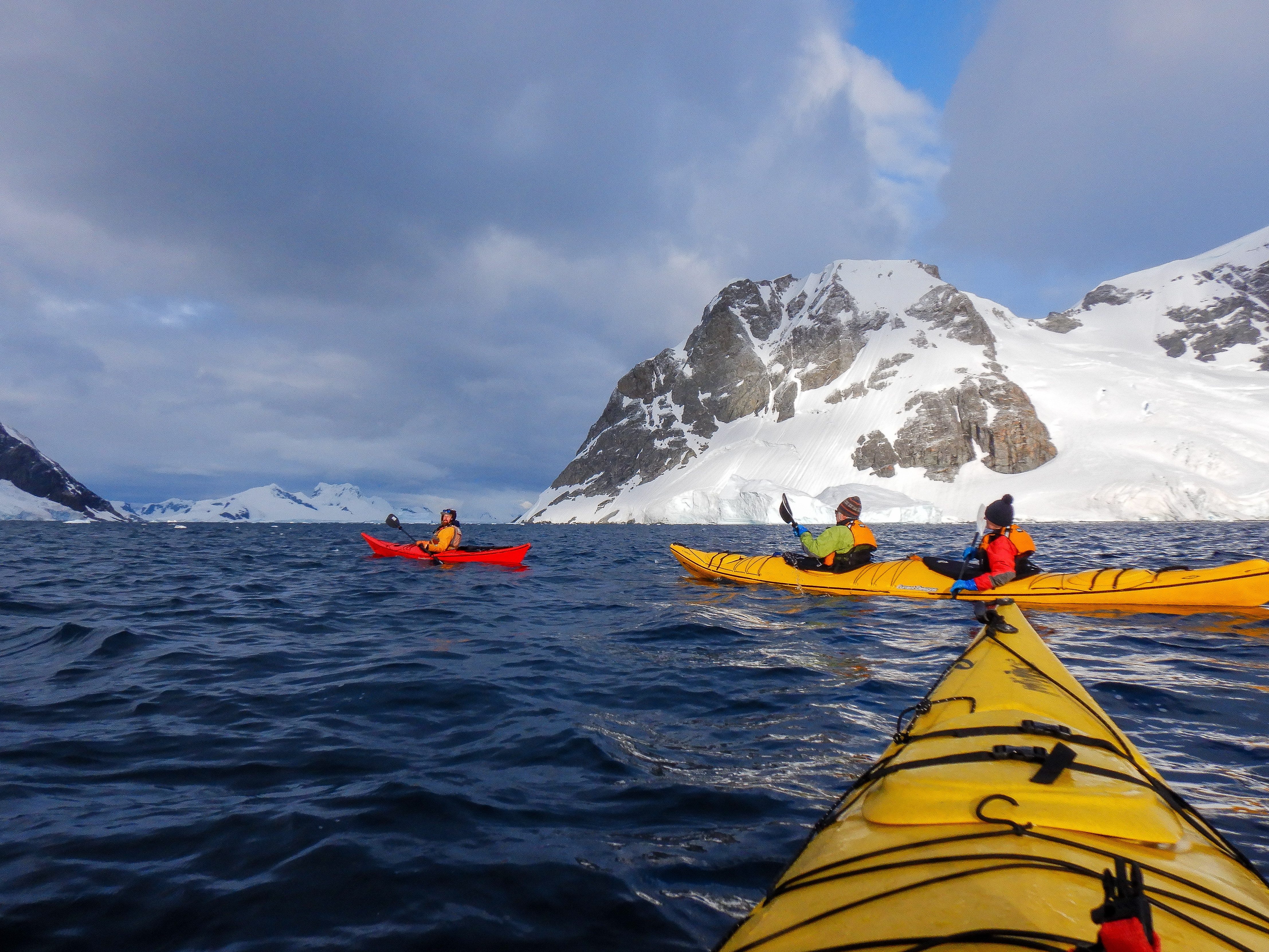
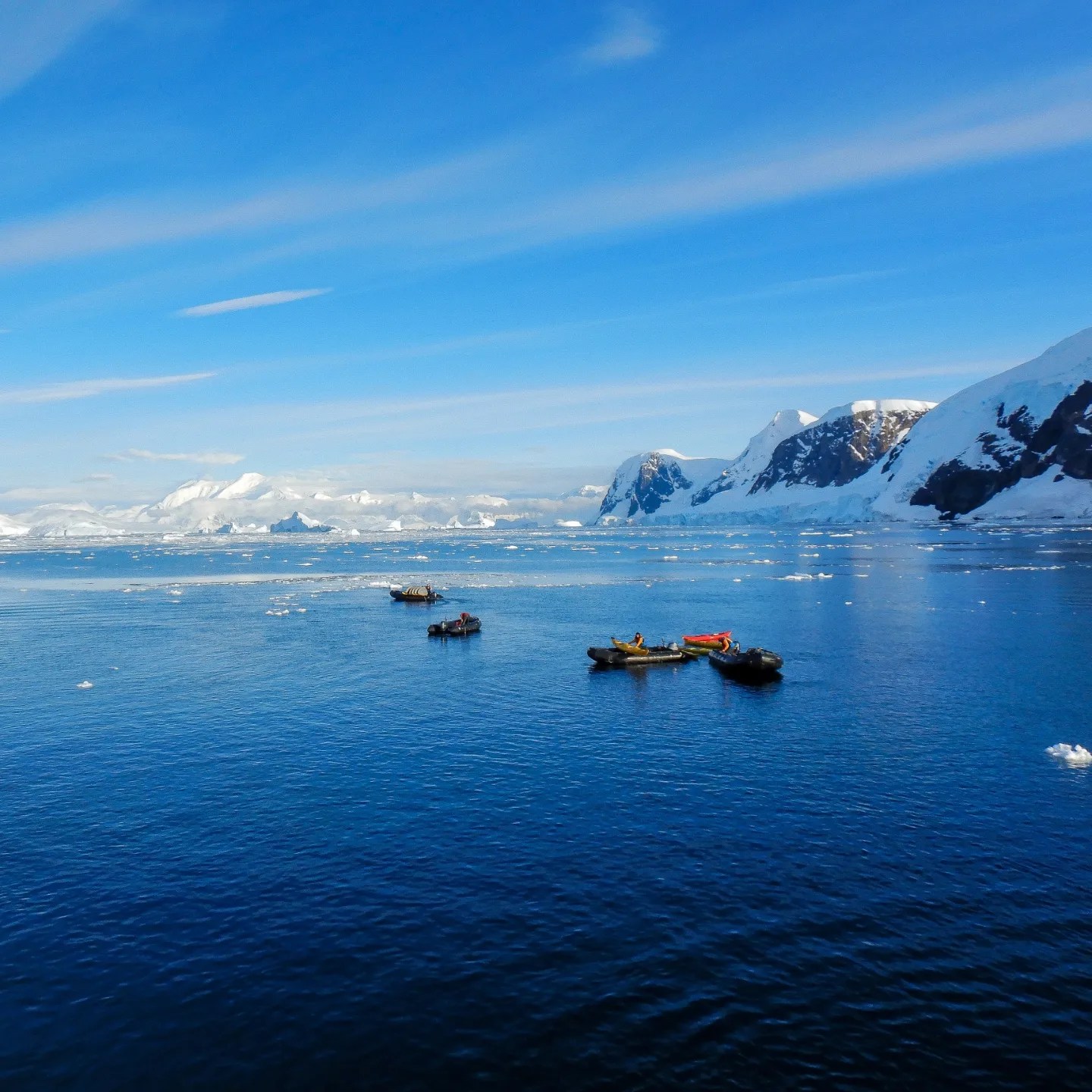
We launched our kayaks – this was a paddling-only (or zodiac only, for those non-kayakers on the trip) morning; no shore landing.
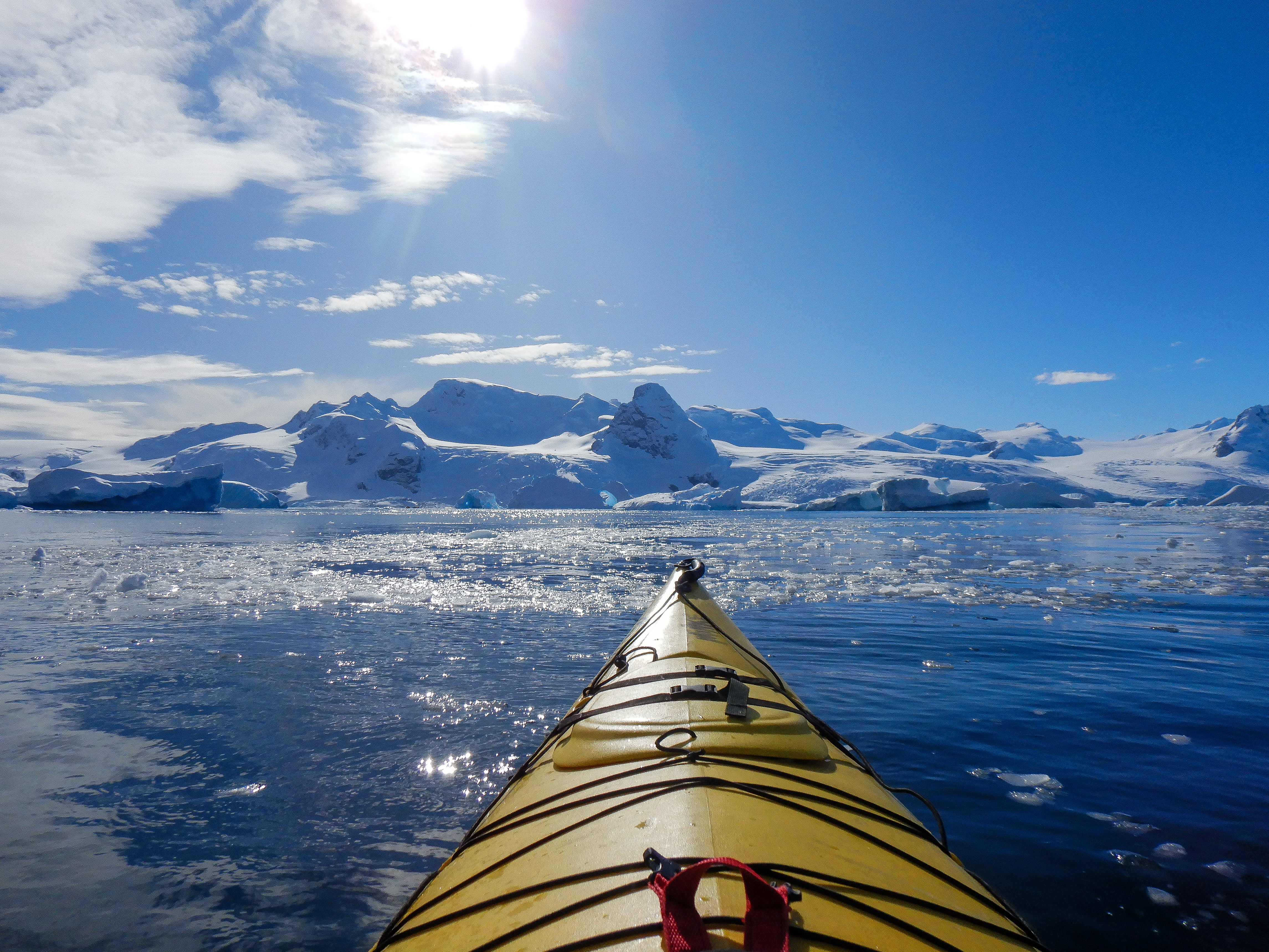
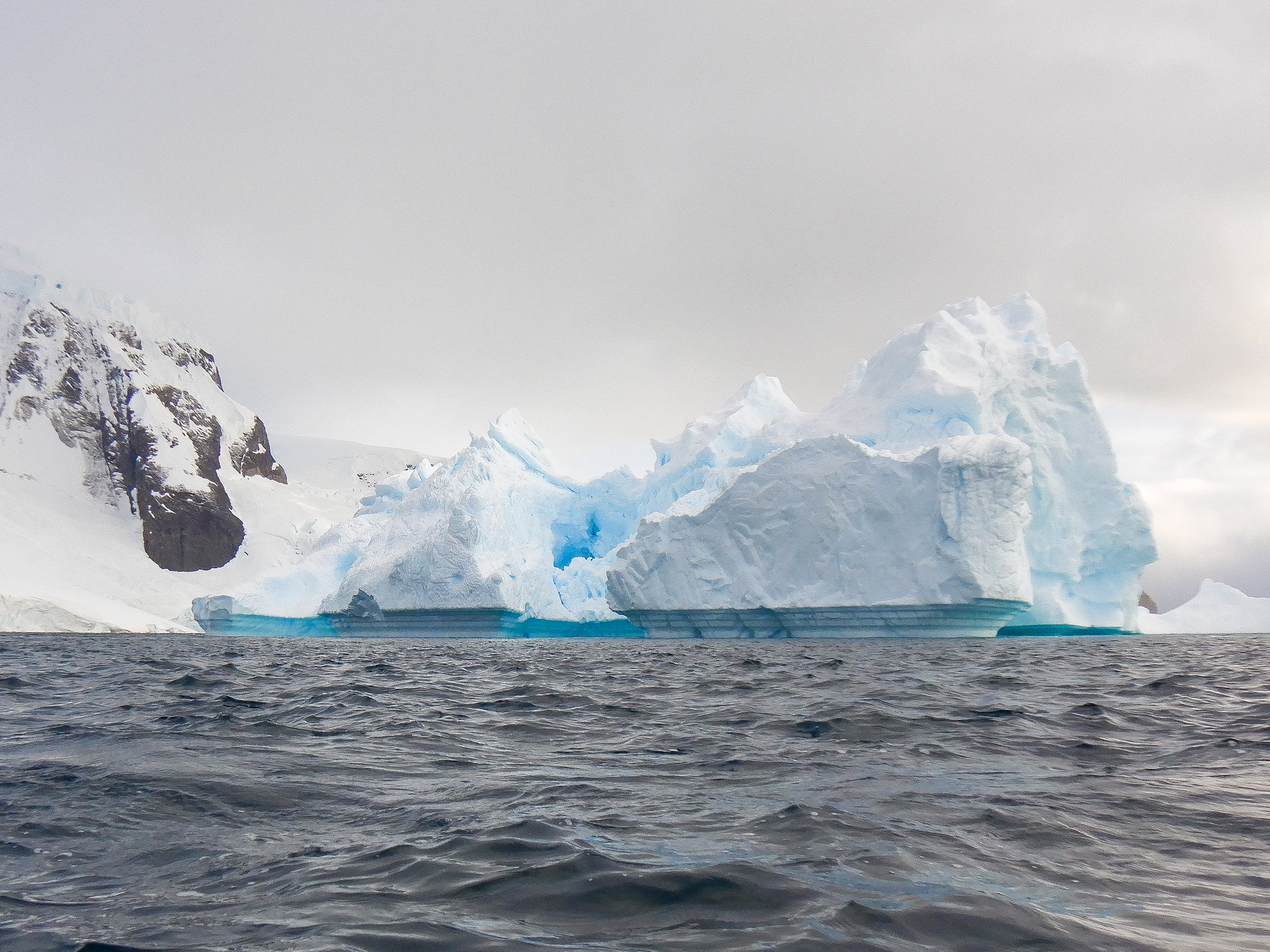
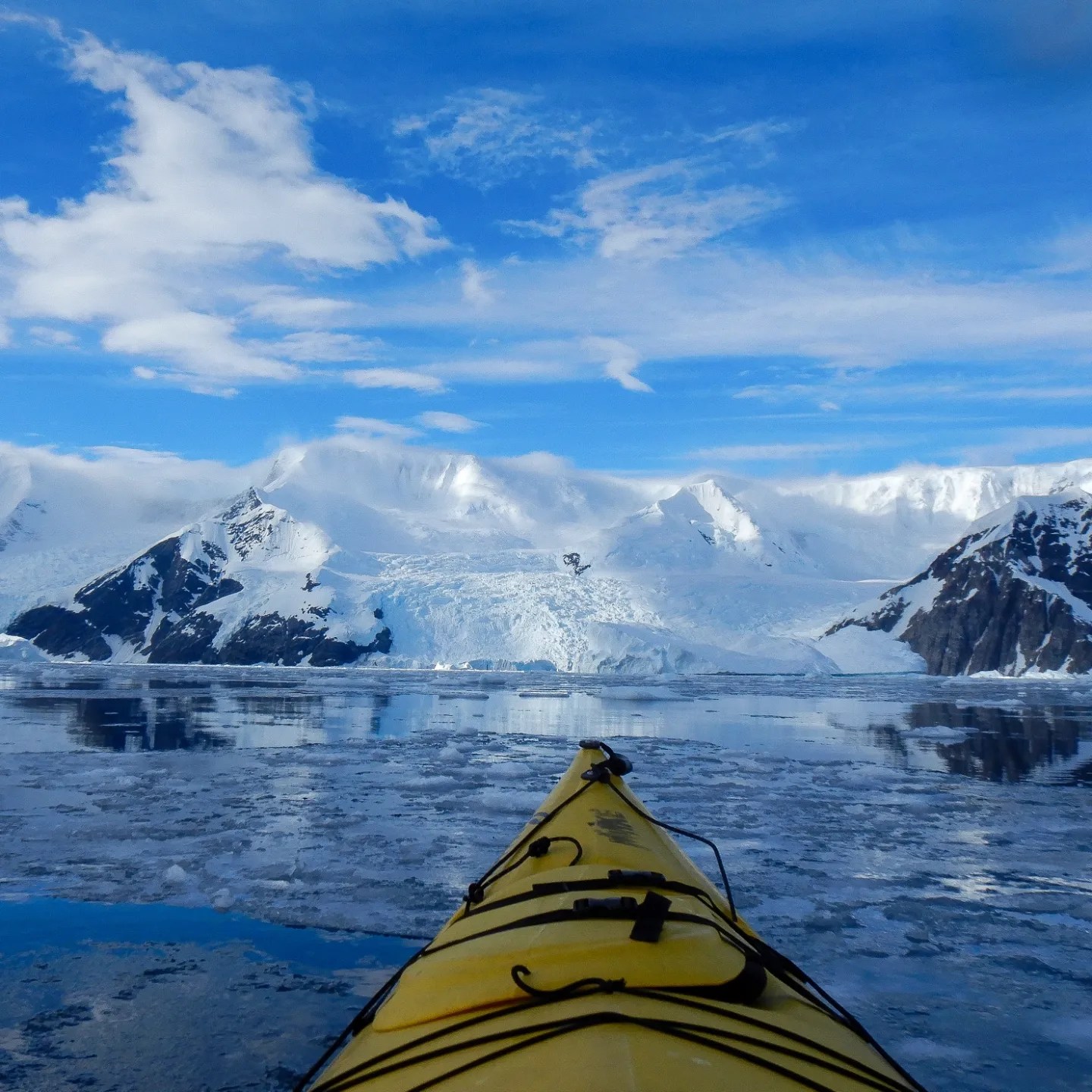
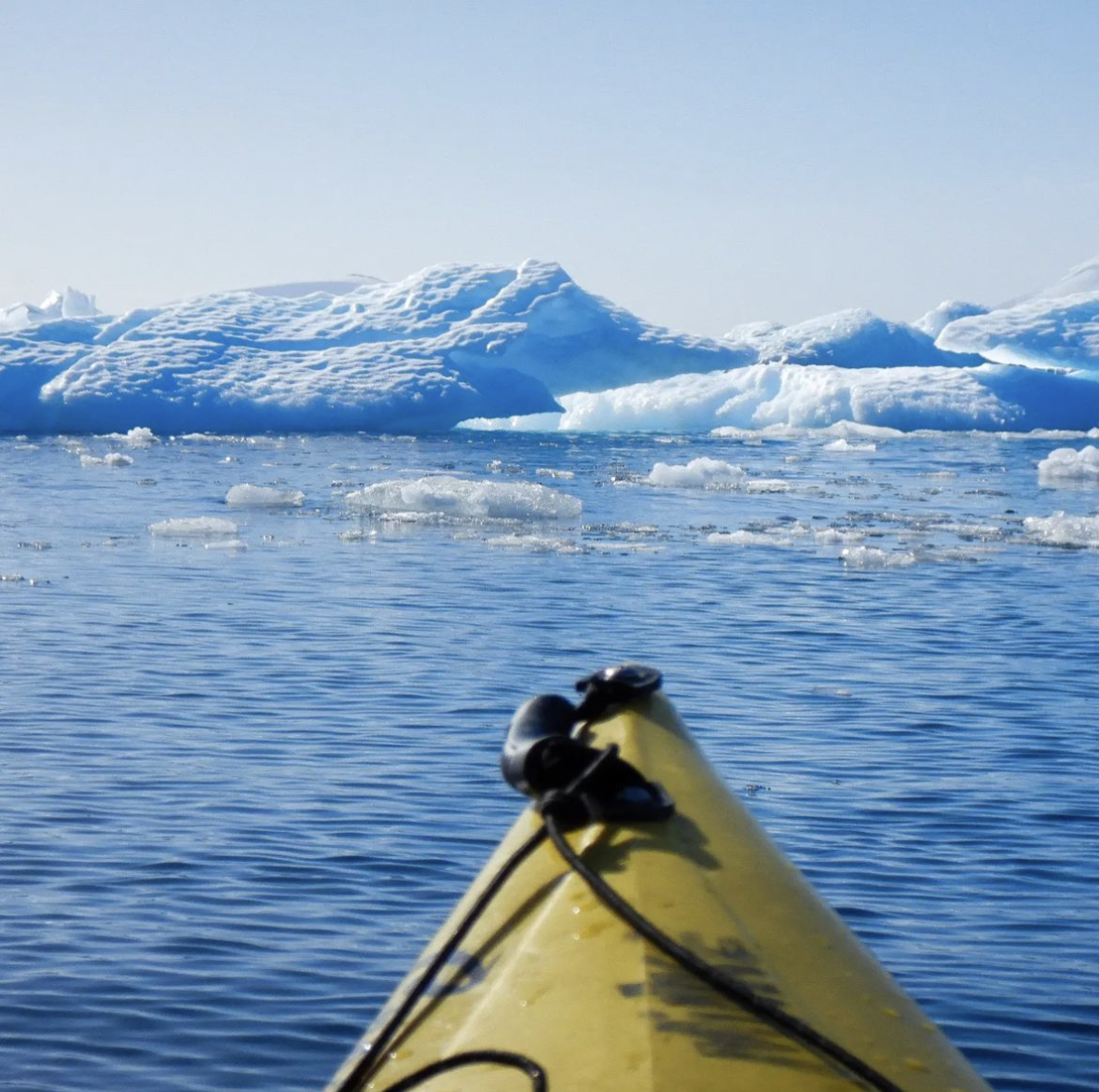
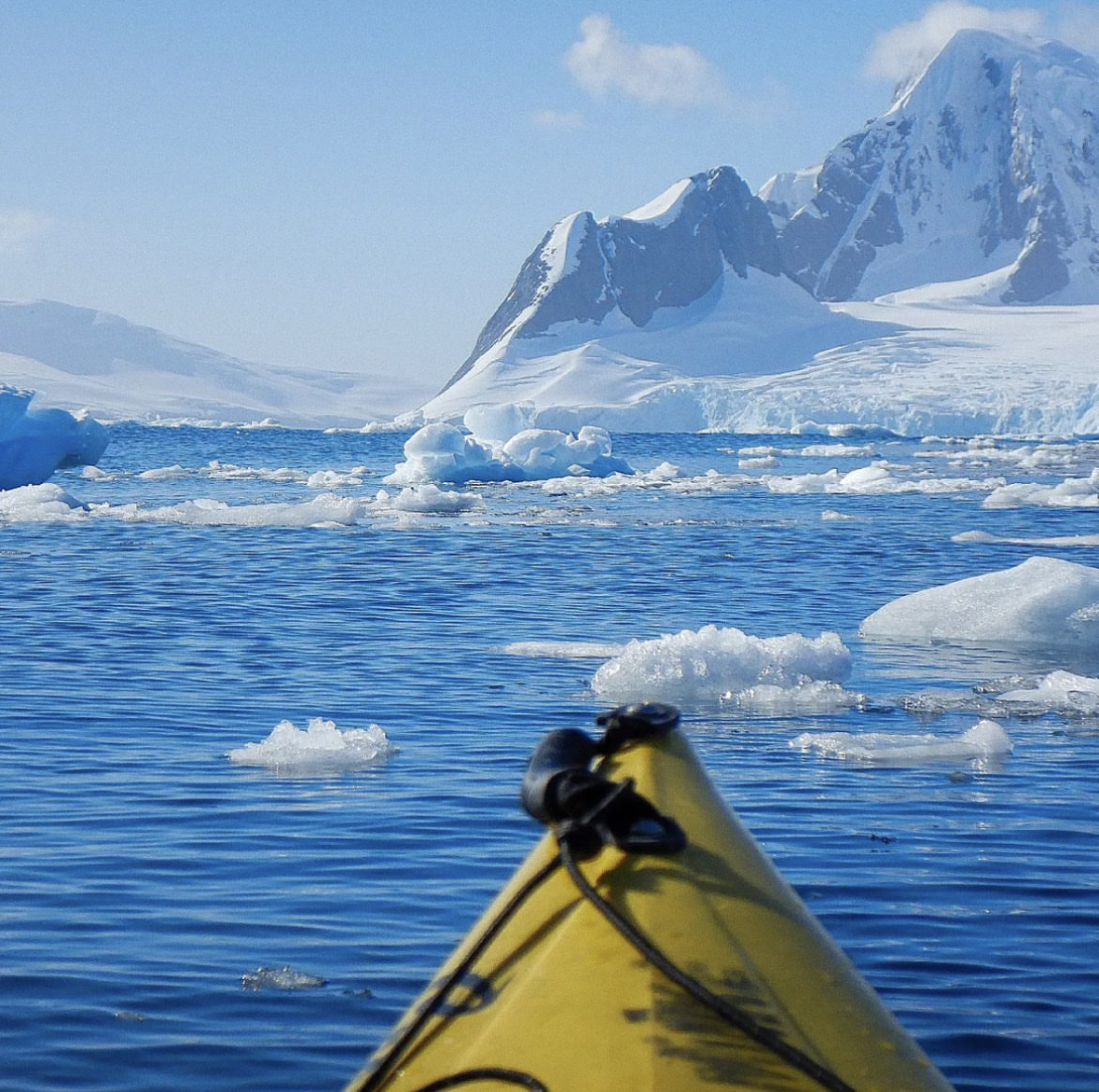
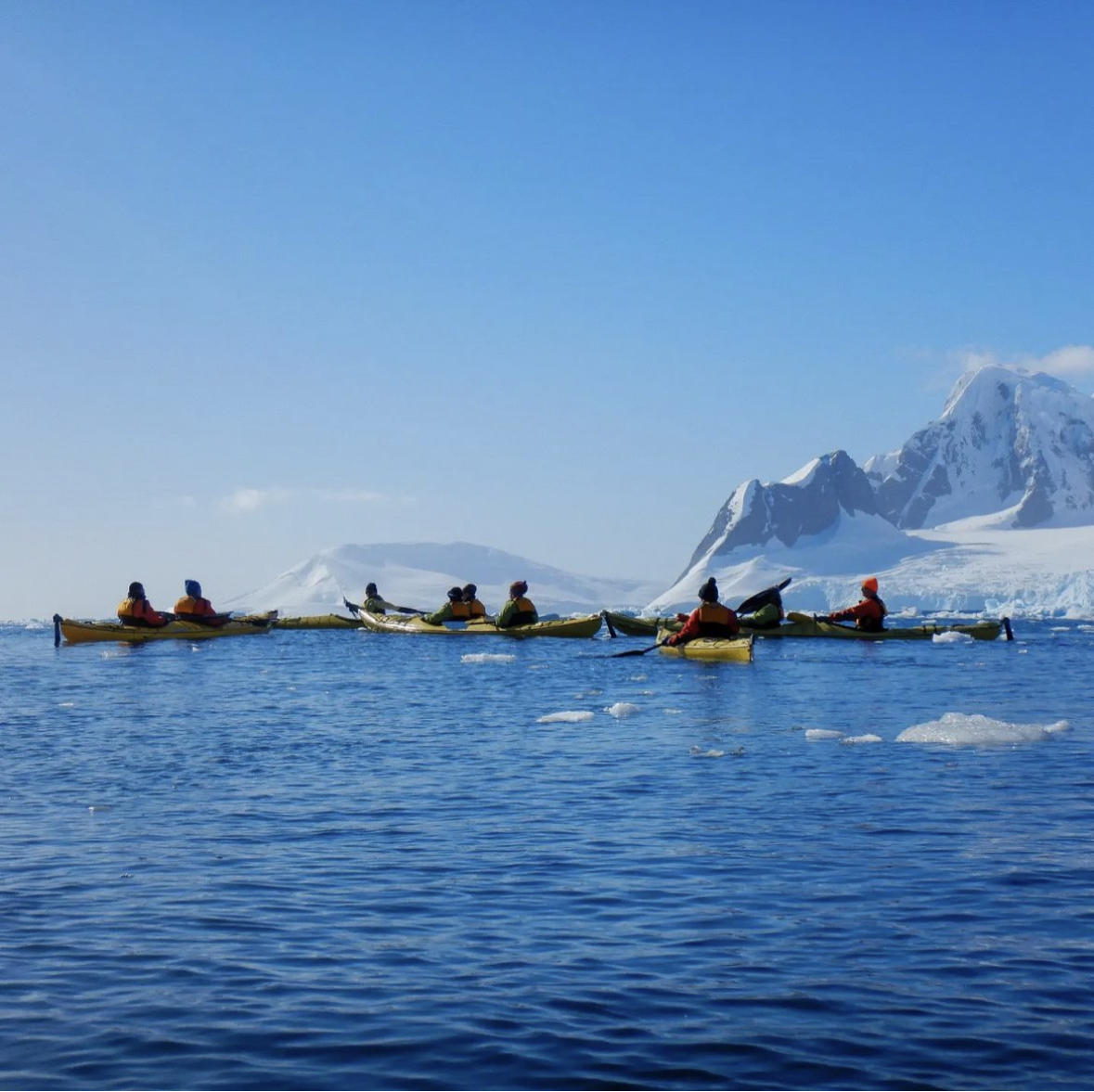
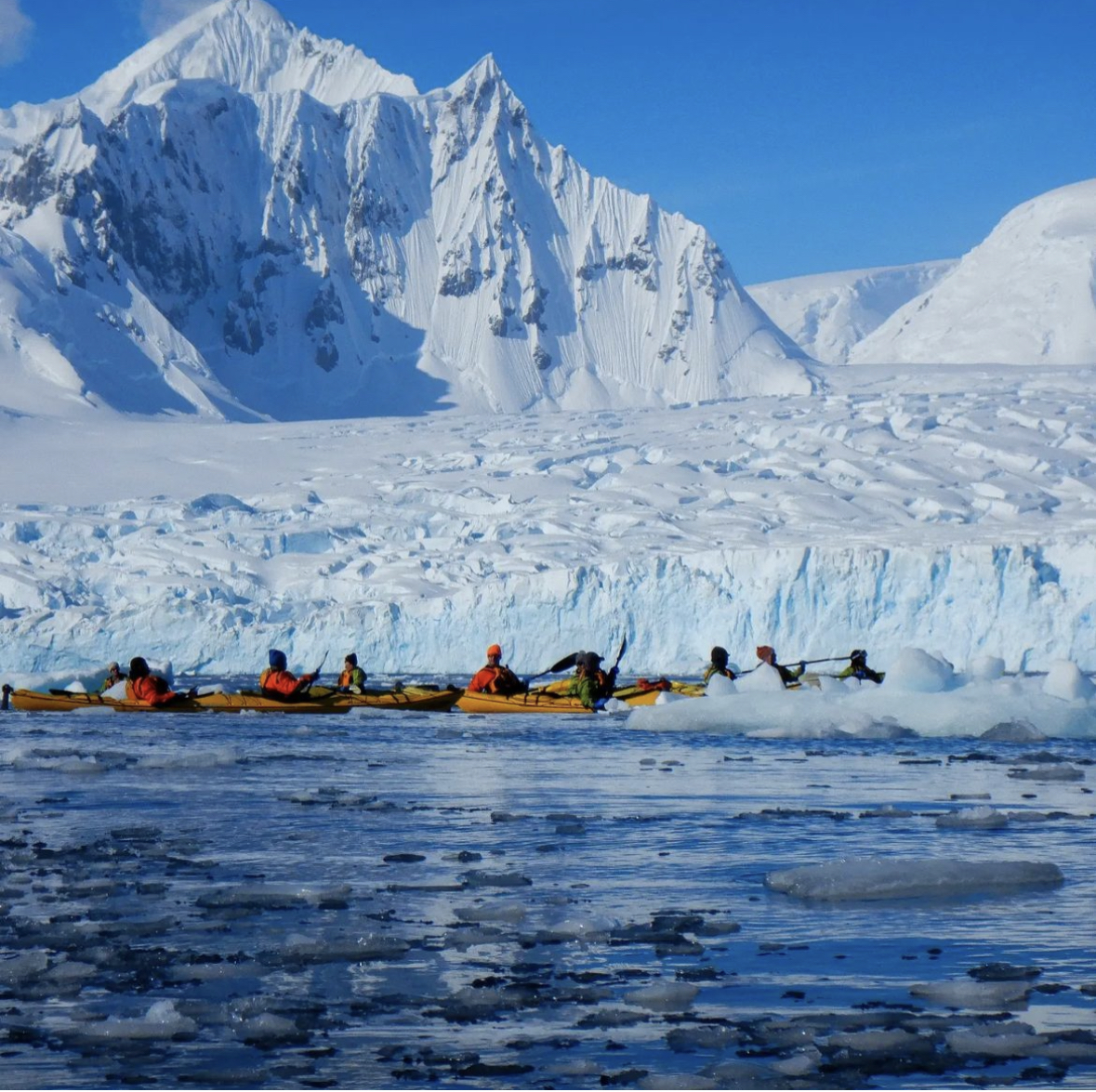
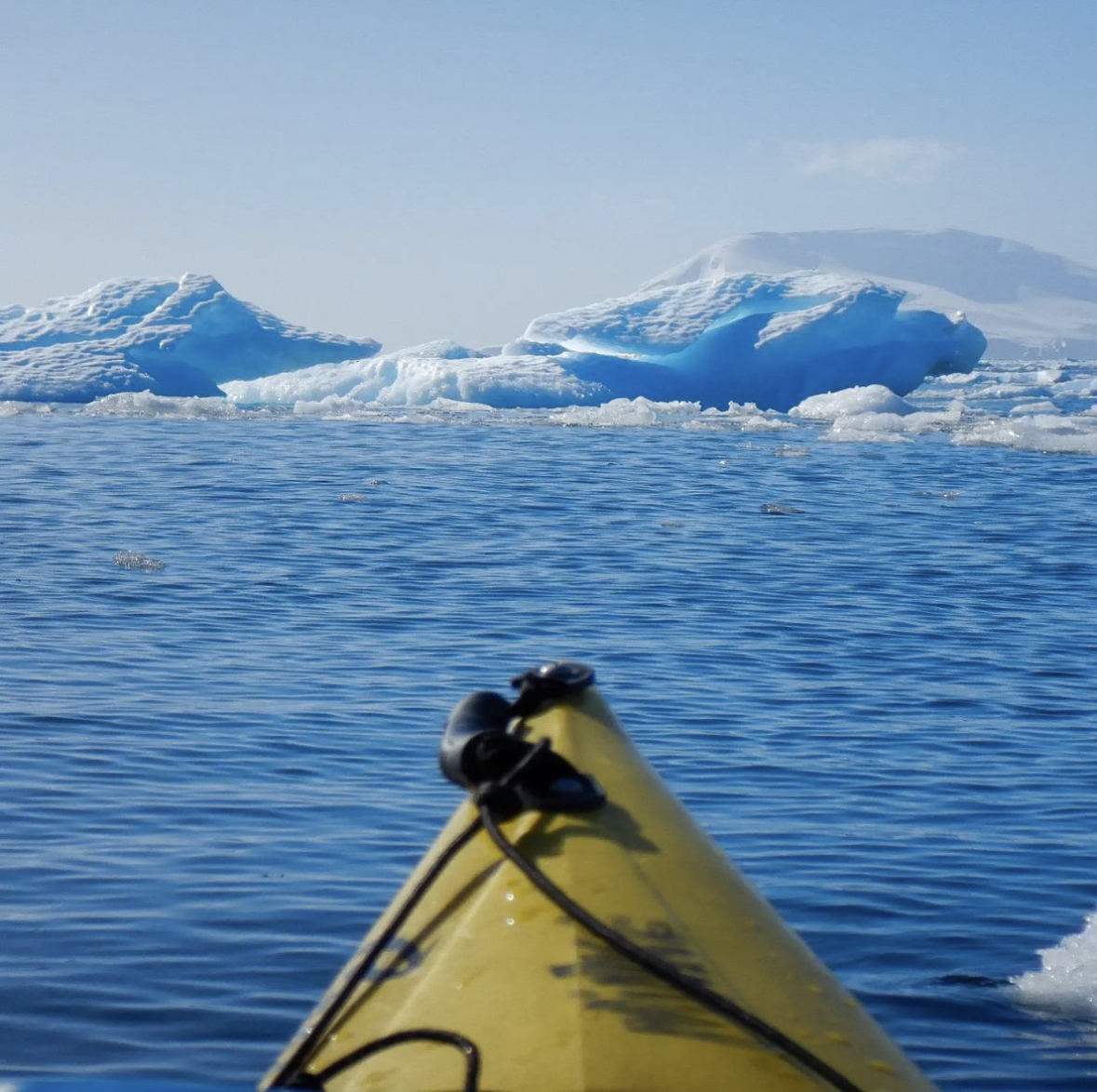
One of the best things about kayaking in Antarctica: every spot was different; you’d think that all that ice and water would just start to run together, but it doesn’t. Each paddle was memorable in its own unique way. This time, it was the bright and sparkling icebergs and brash ice that stood out.
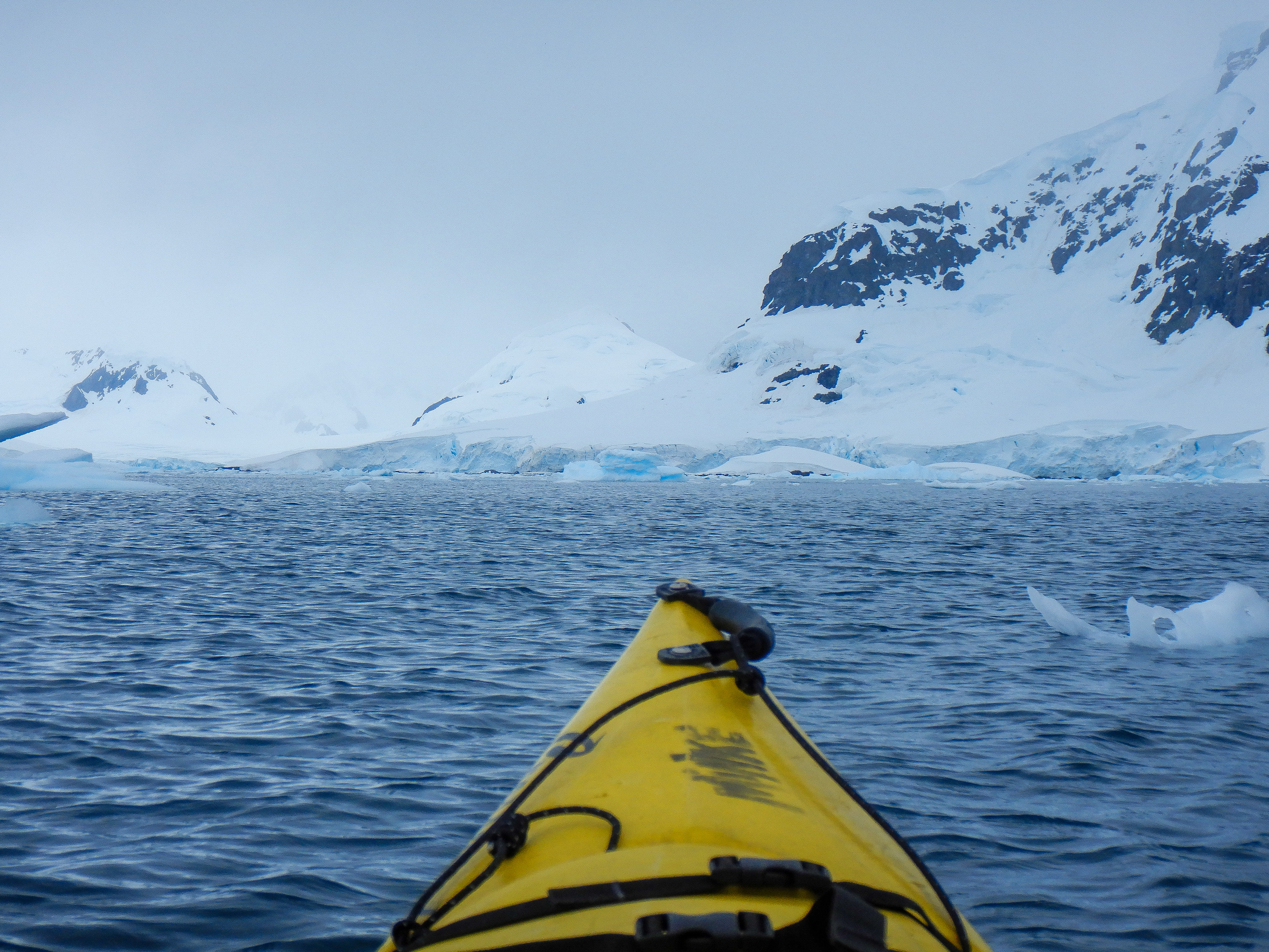
If you’re wondering what brash ice is, it’s this^. Like paddling through a giant frozen margarita. Steve commented that I seemed to be paddling effortlessly through the chunky floating icy bits – my paddle just knew where to go to find clear water. That’s what more than 25 years of kayaking experience will do.
Couldn’t get enough of the gorgeous blue and white icebergs and bergy bits, either.
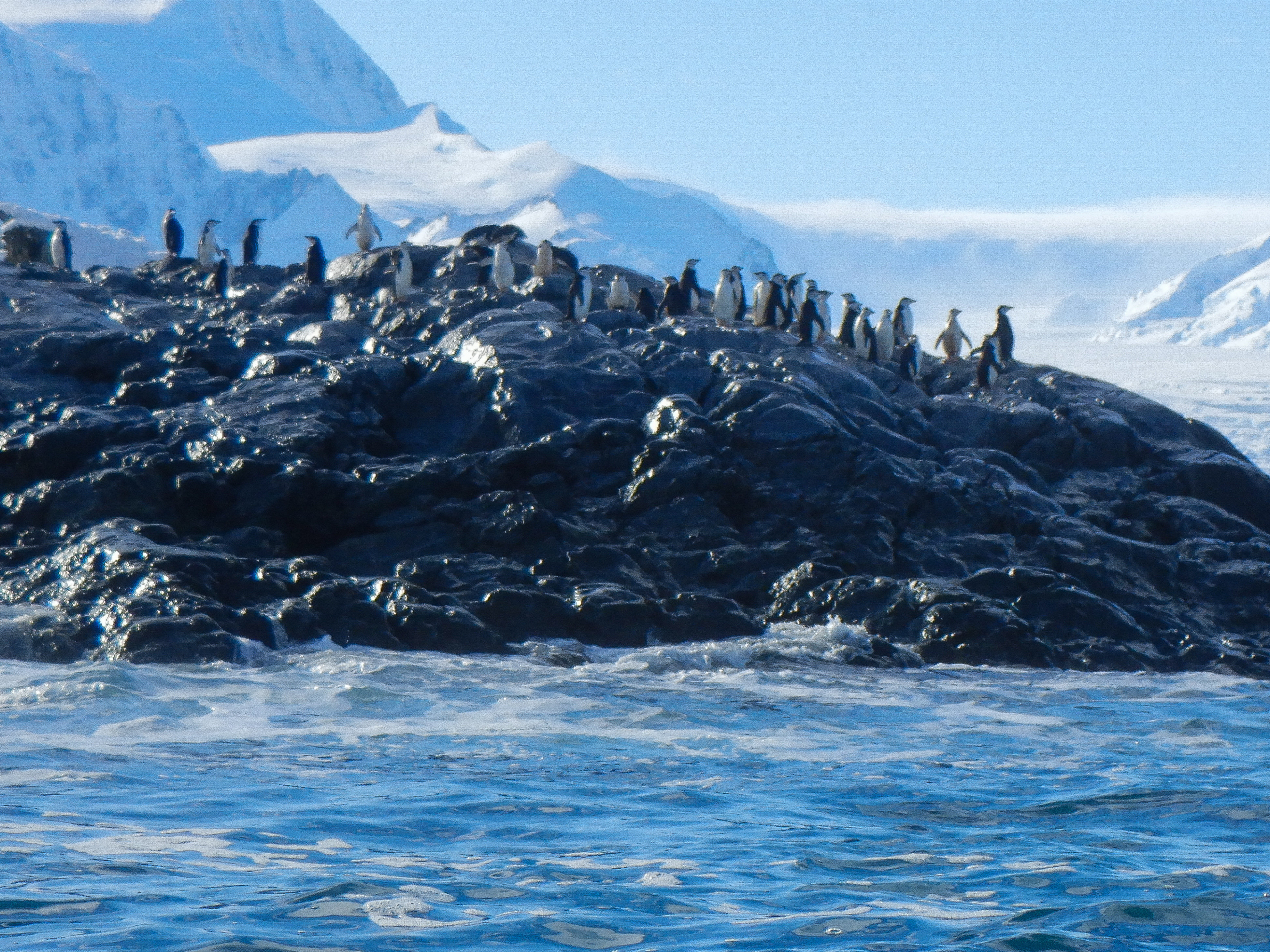
So, did we see the hinted-at chinstrap penguins?
We did.
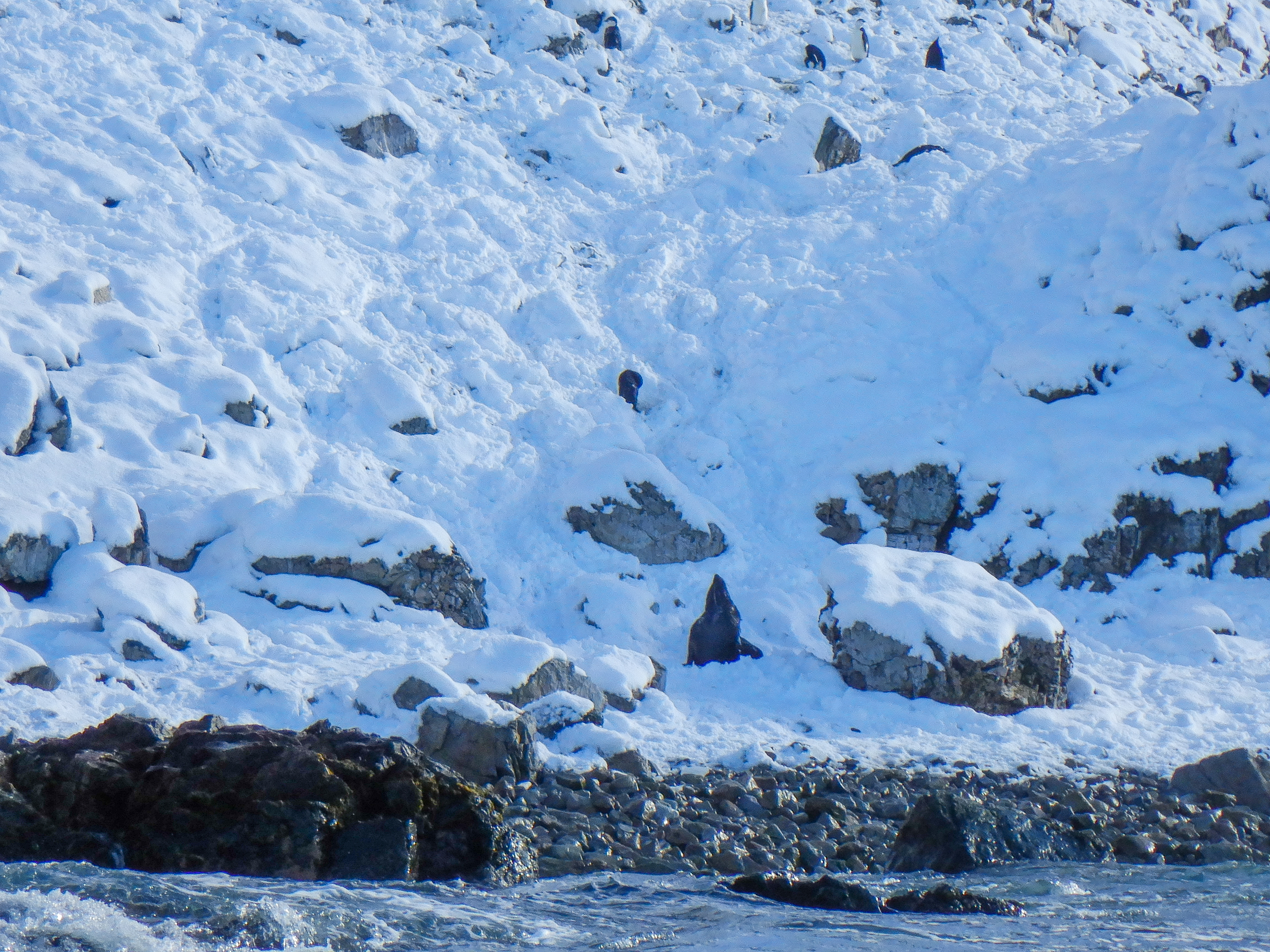
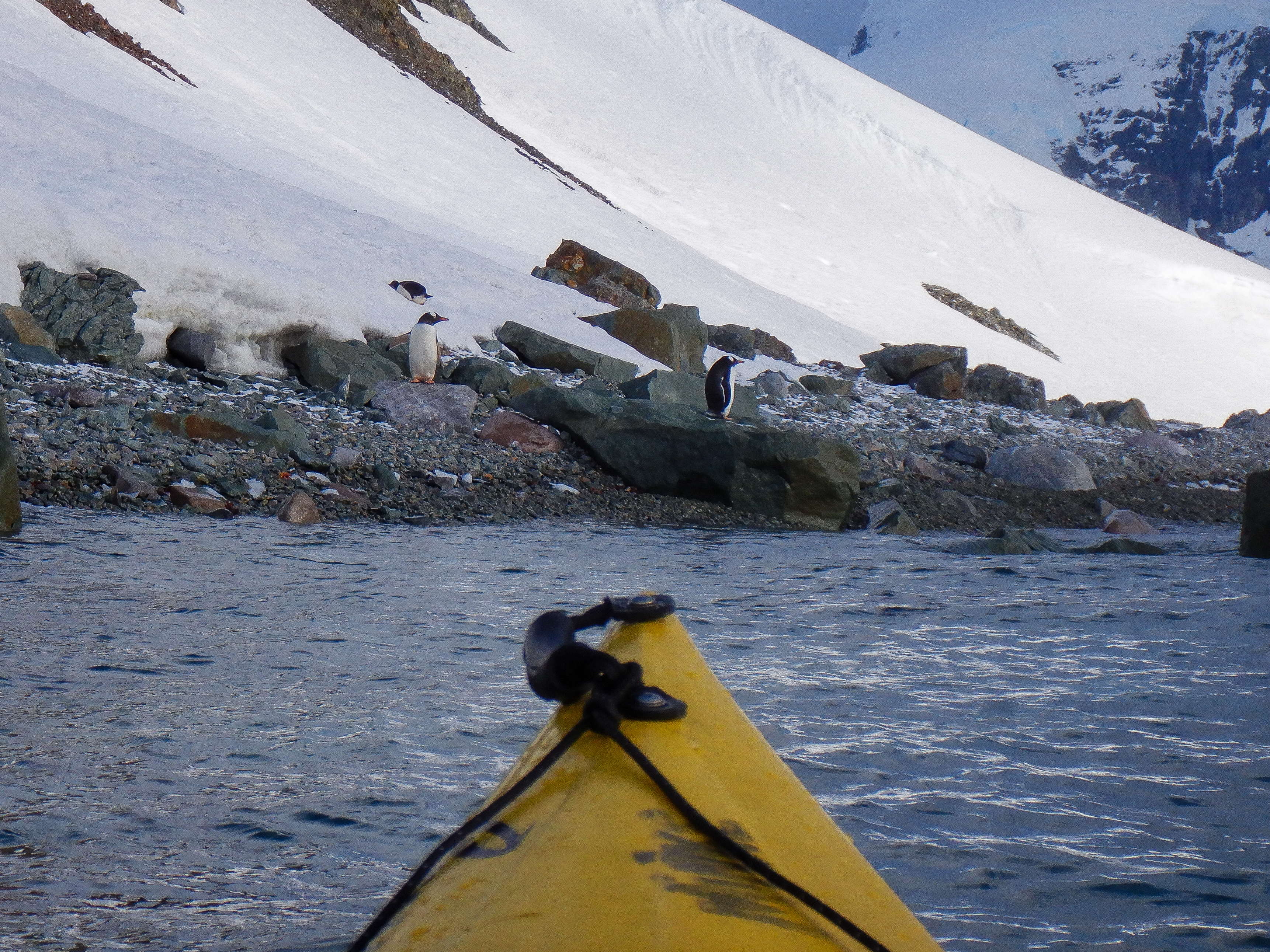
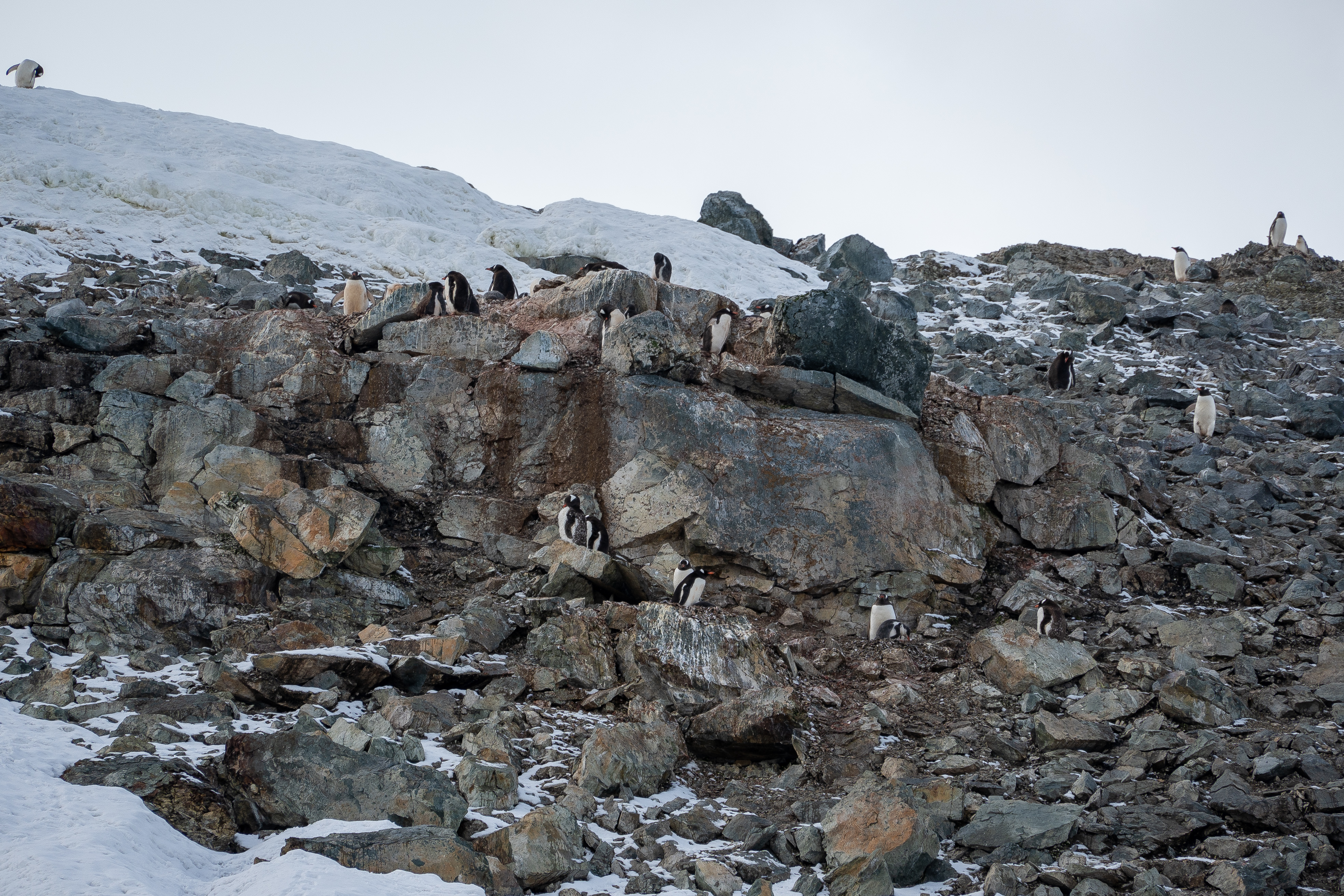
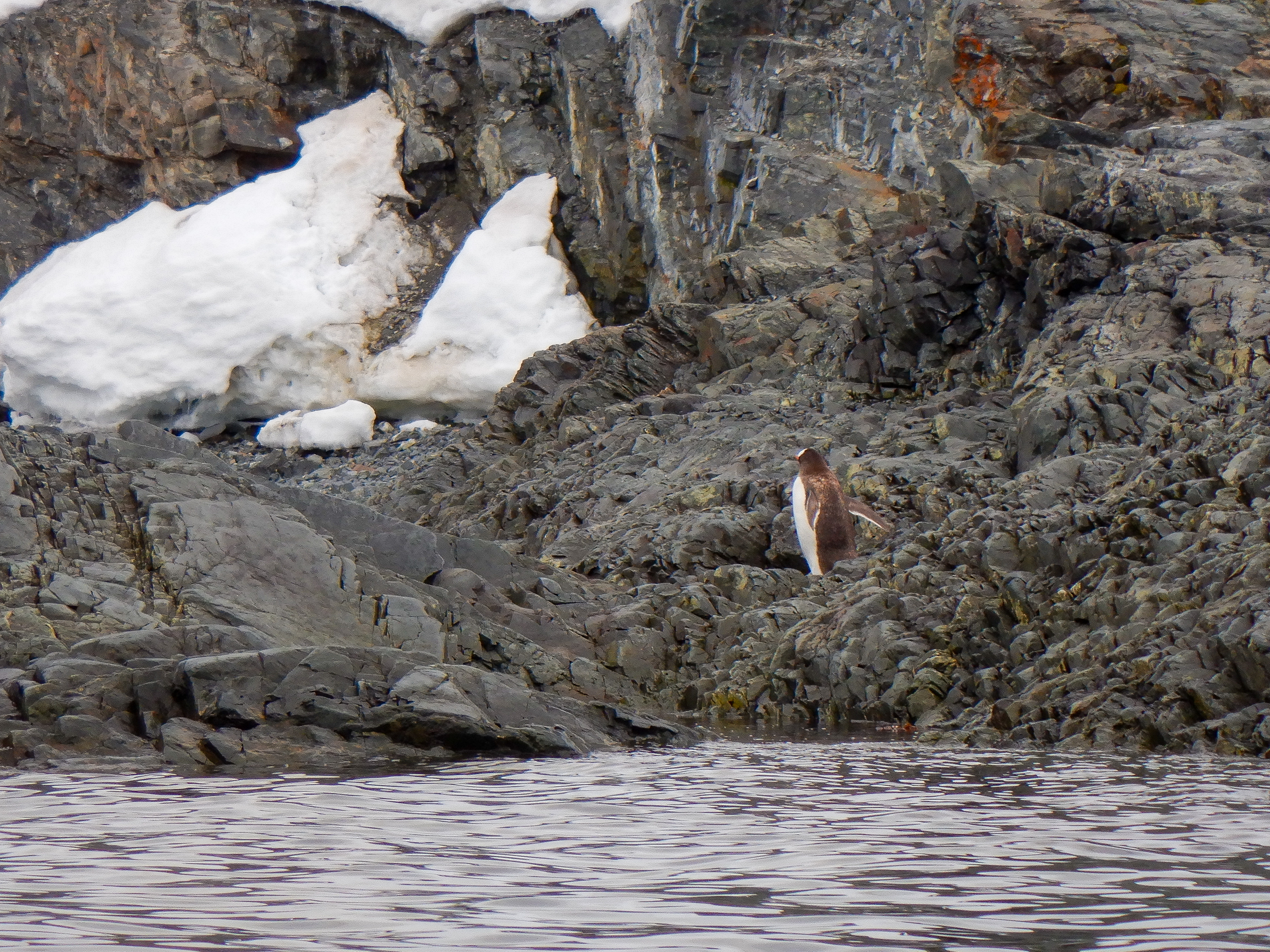
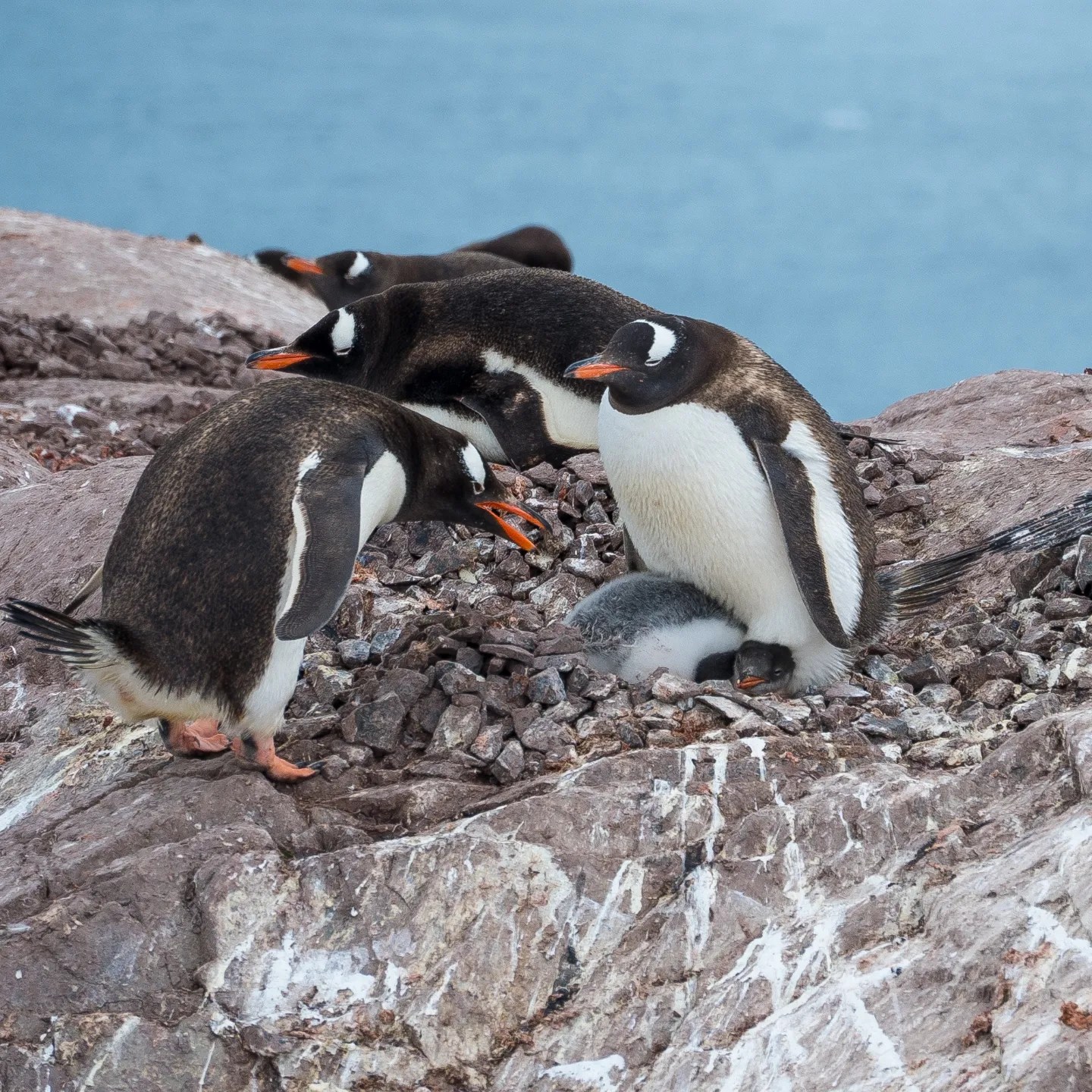
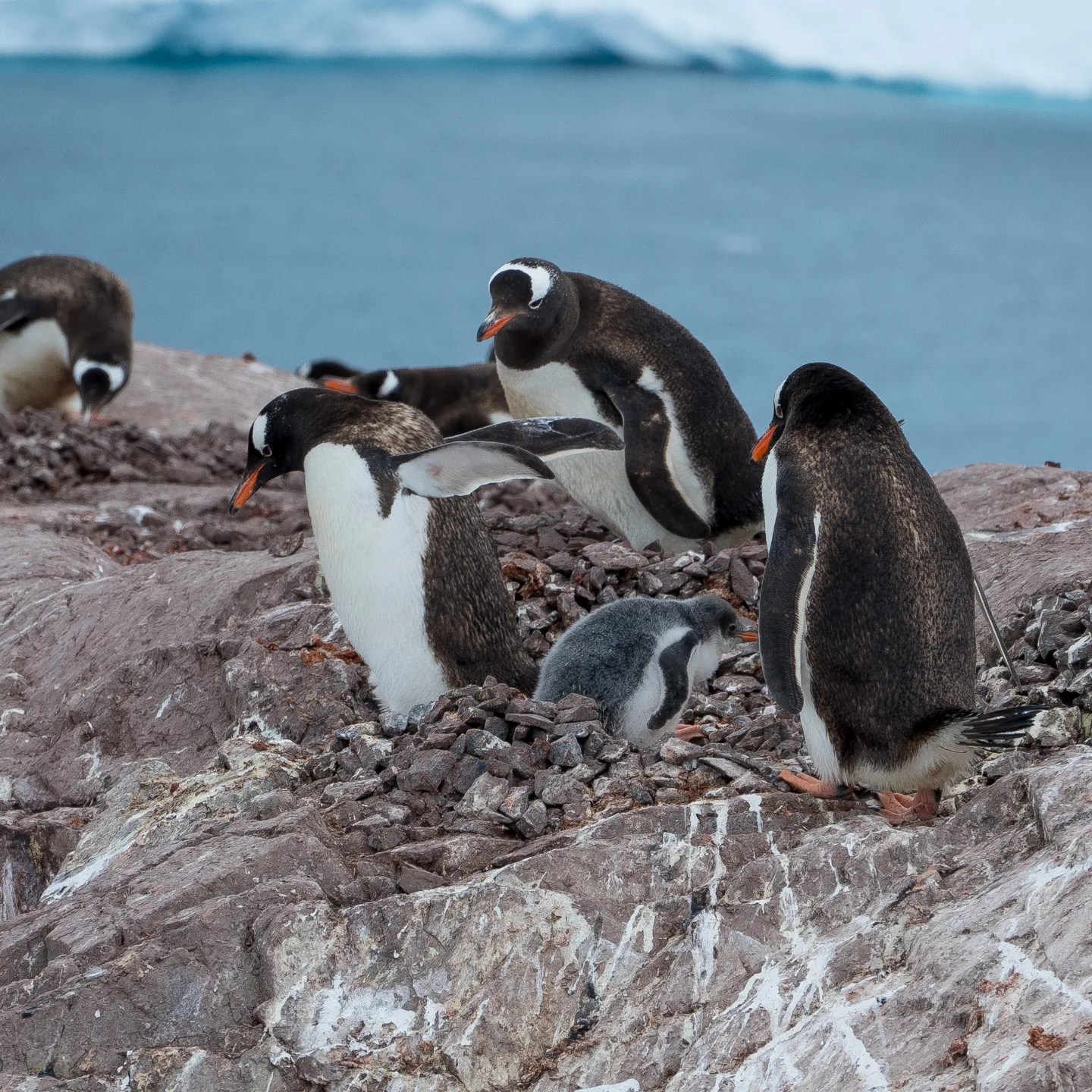
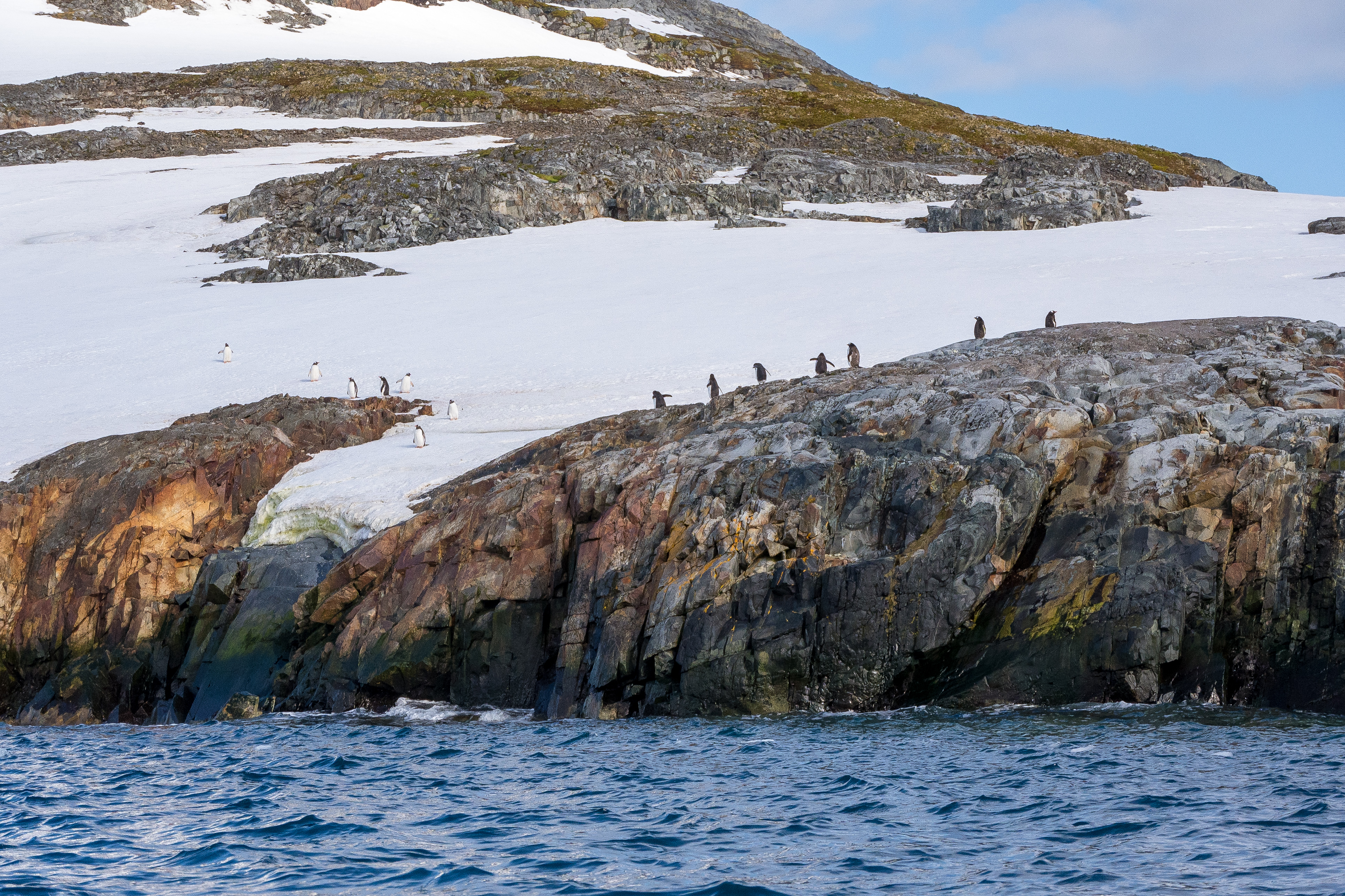
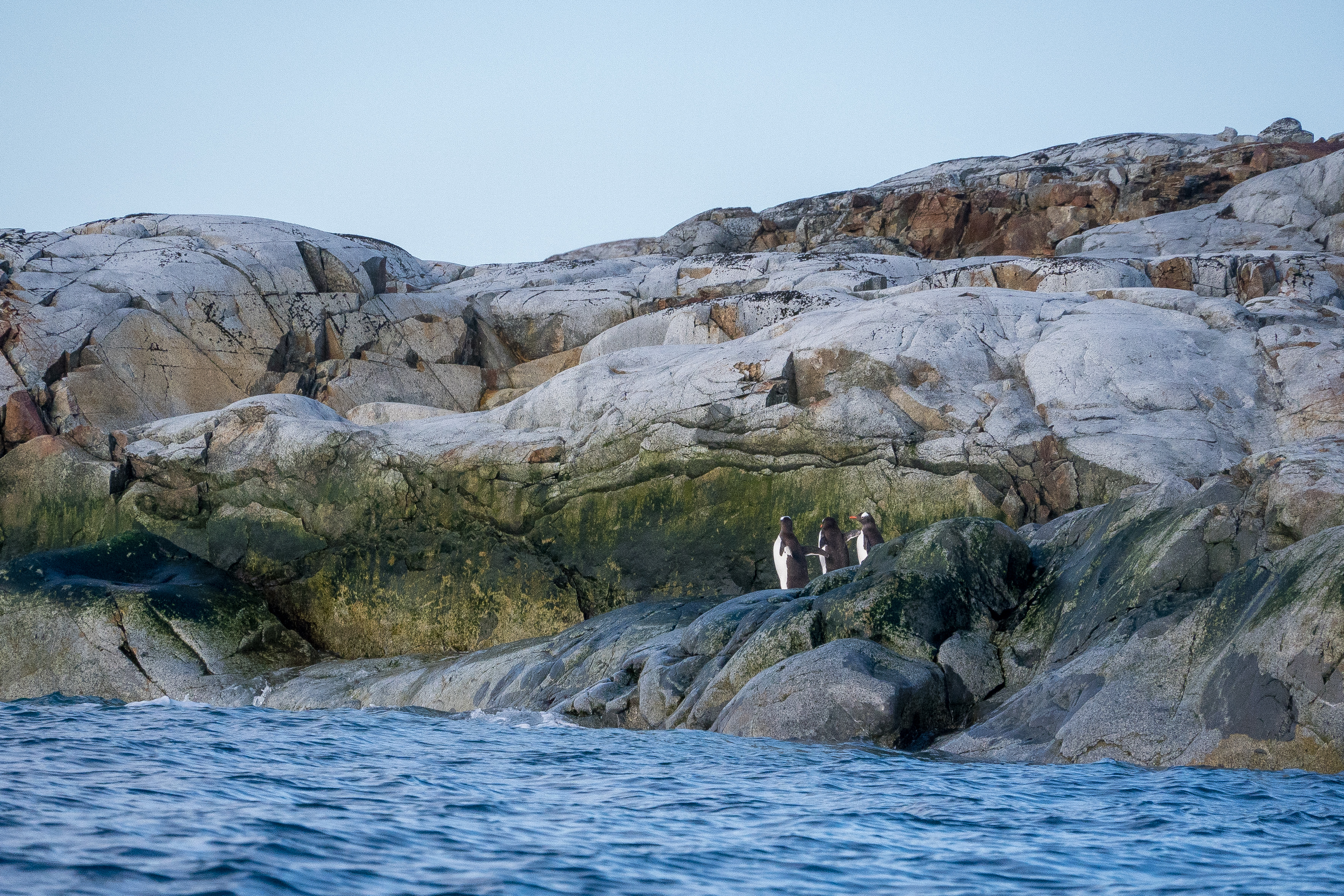
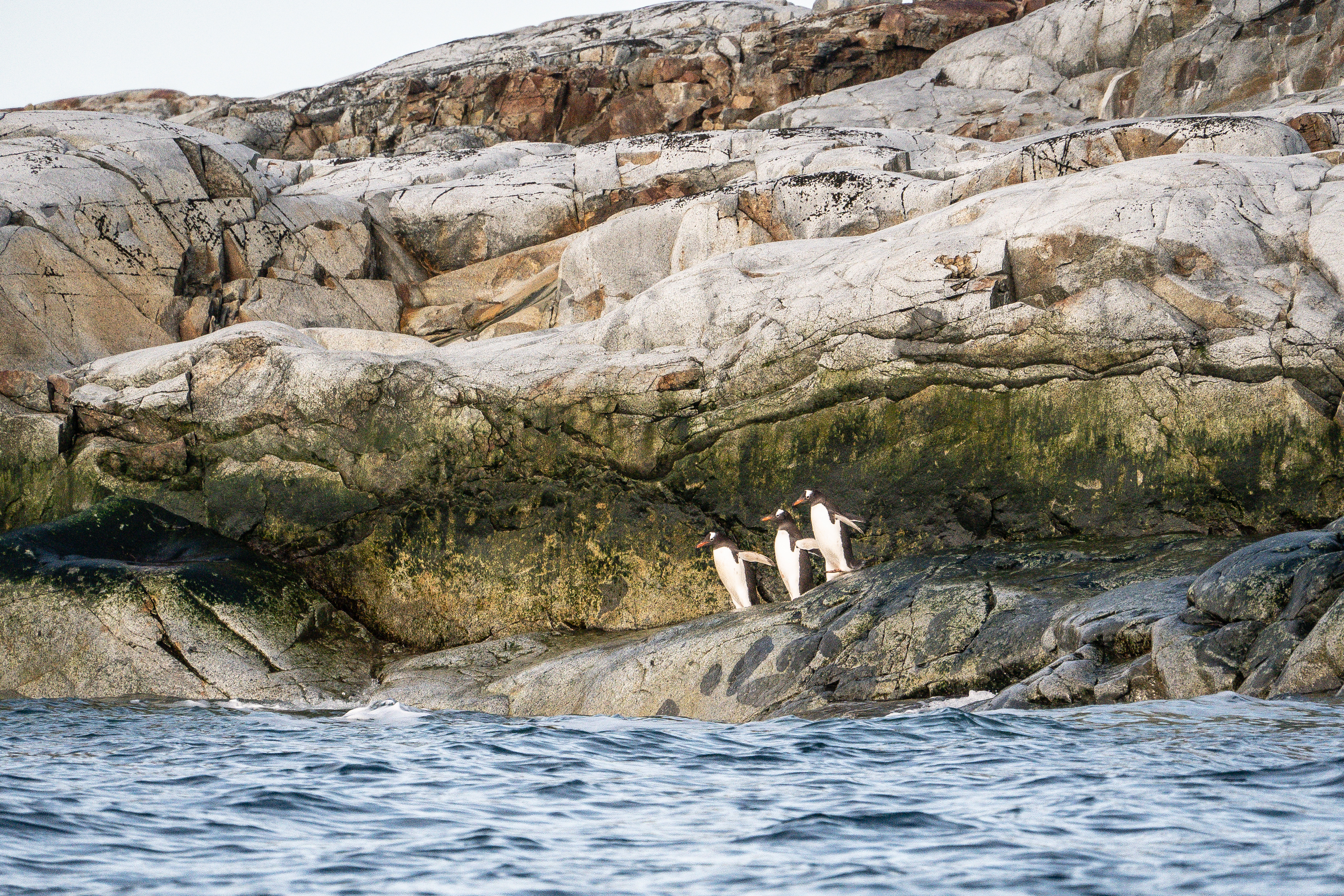
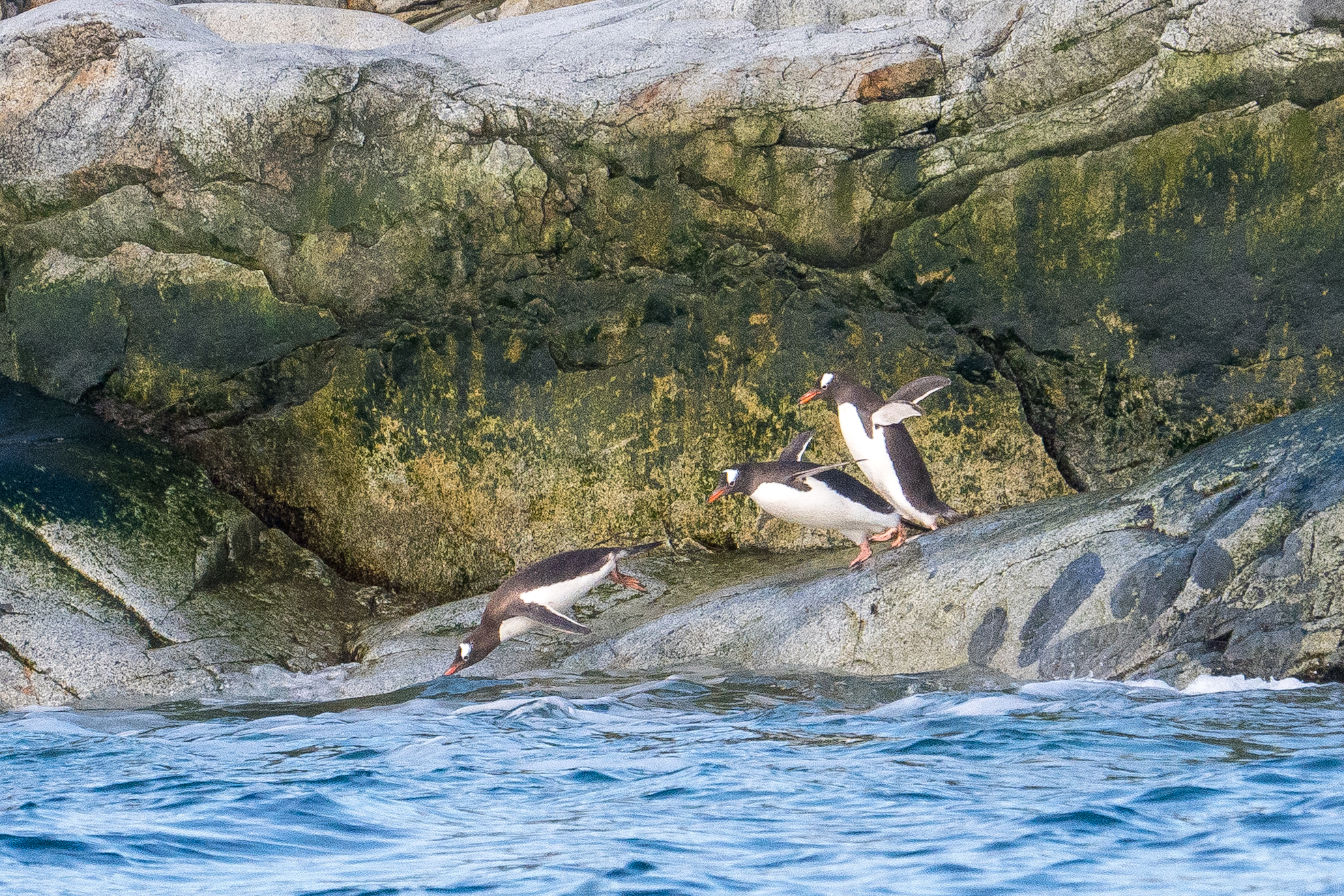
These adventurous little guys were waddling all over the slick black wave-washed rocks. Definitely the mountaineers of the penguin family!
Team Mammal, not to be outdone, delivered a gigantic Antarctic fur seal down by the shoreline.
What a glorious blue and white morning in Antarctica. The highlight, of course, was finally getting a glimpse (even if a bit far away, from the water) of chinstrap penguins…
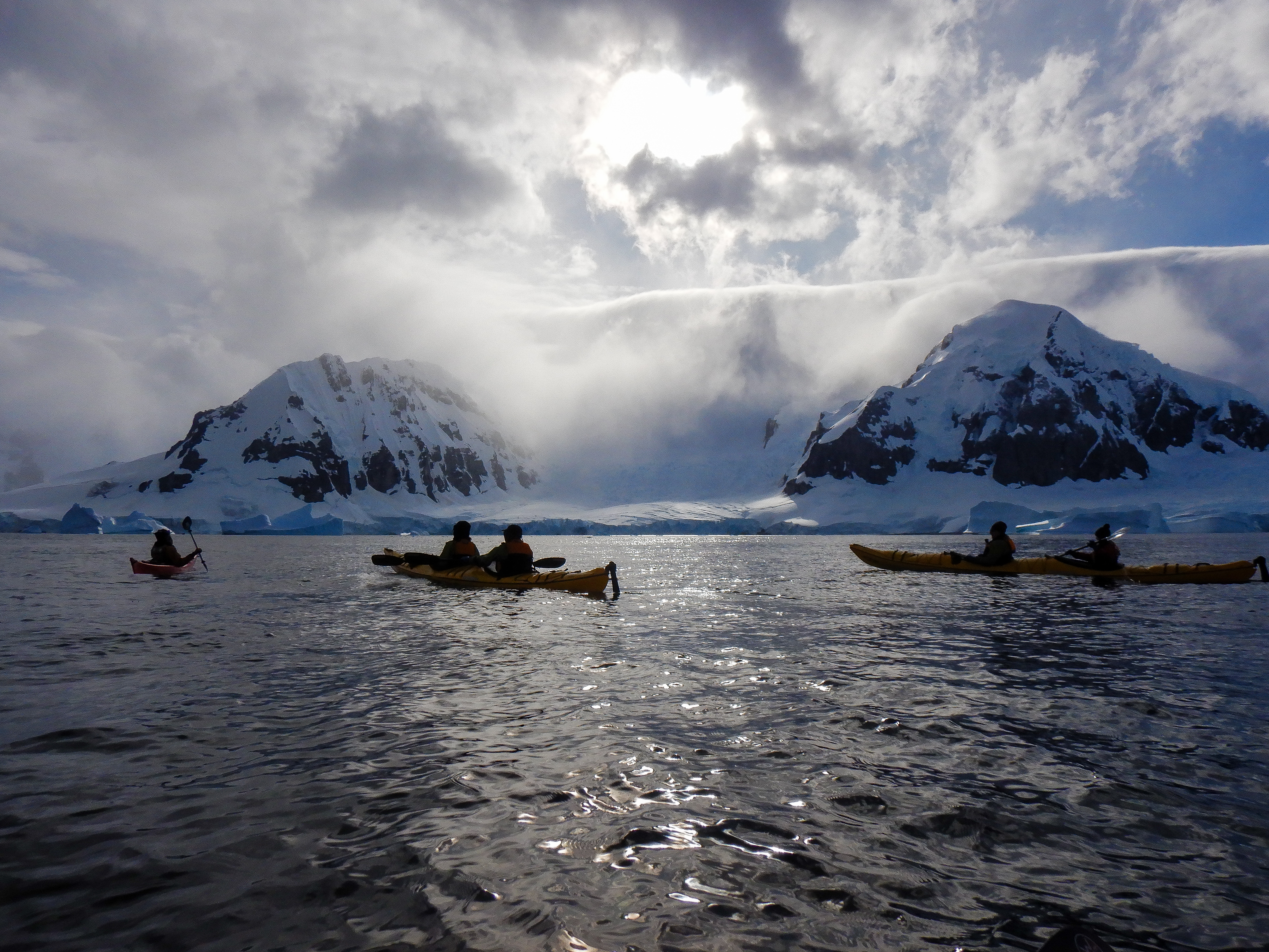
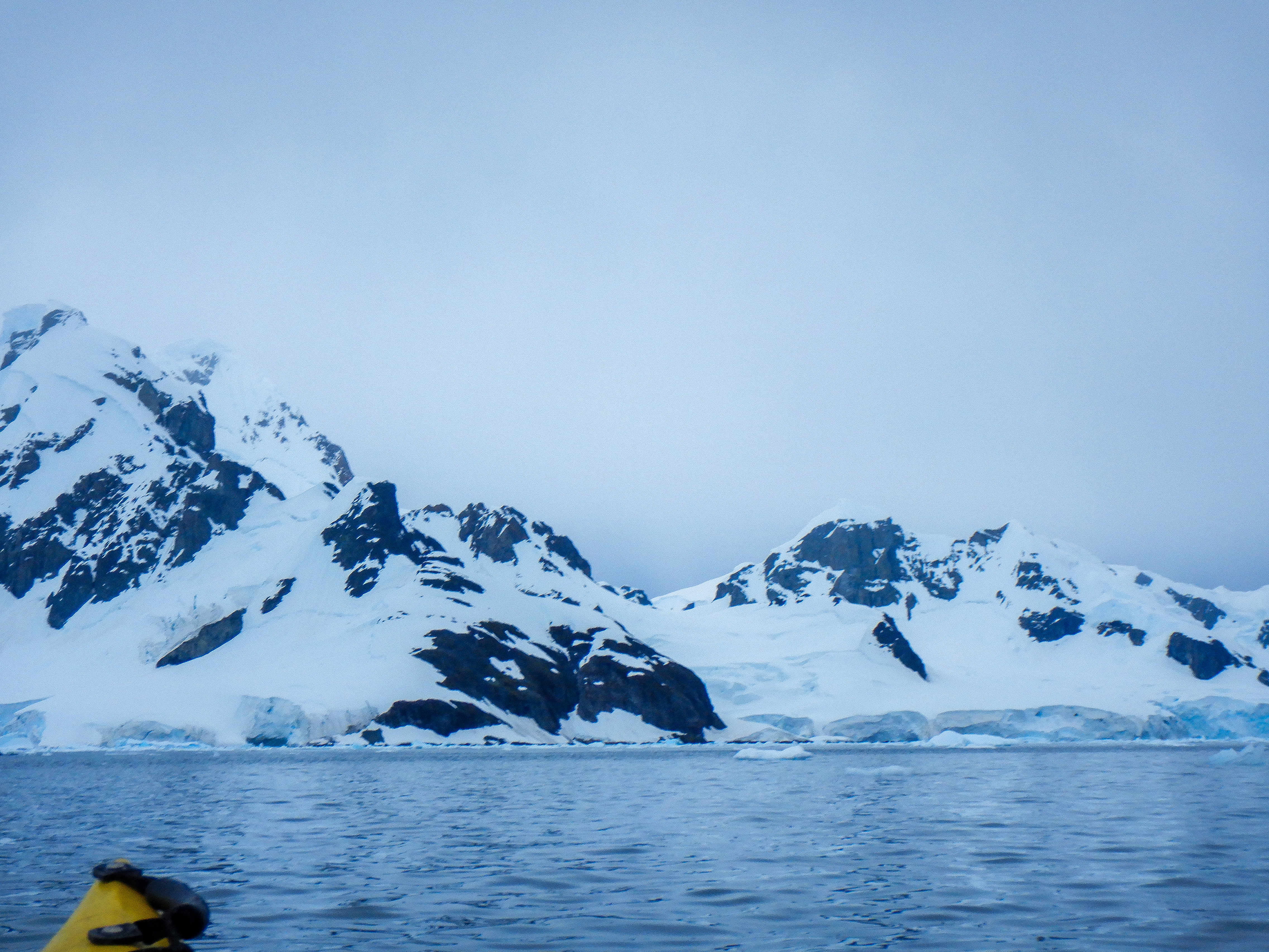
But the entire cove – the water, the ice, the sky – seemed to sparkle the entire time.
Very nicely done, Antarctica. Very nicely done indeed.
Next week: we come face-to-face with the darker side of Antarctica’s history.
We had a lot of downtime on our Antarctica trip: between four days crossing the Drake (two in each direction) plus all the time in transit between adventures, there was lots of opportunity to chat with fellow passengers. And a frequent topic of conversation was: what brings you to Antarctica? It’s not exactly a hop, skip and jump from anywhere: everyone on the ship had gone literally to the end of the world to be here. You don’t generally do that for no reason.
Quite a few of our fellow passengers were joining the coveted Seven Continents Club. (Hope that’s me someday, but I’ve still got three to go.) Others were there to cross the Southern Circle or to step foot on mainland Antarctica. When asked “why Antarctica?” by fellow travelers, I’d usually demur: “because it’s there.” (Quoting George Mallory on climbing Everest.) But that actually wasn’t the truth. Yes, I wanted to come to Antarctica because its very existence was drawing me there. But there was something in particular I was looking for.
On the Antarctic Peninsula, along the route frequented by tour operators, is a bay called Wilhelmina Bay. On the surface, it looks much like any other bay along the craggy Antarctic coastline. Towering black mountains, blue ice glaciers, a heavy marine layer and occasional bursts of blowing snow from the katabatic winds. But under the surface, there’s a confluence of krill in such numbers as to draw, at any time, dozens and dozens of whales – so much so, that the bay has earned the nickname “Whale-mina Bay.” When I started researching a possible Antarctic voyage, all the way back in 2018, Wilhelmina Bay jumped off the (web)page at me. It became the fulcrum around which all of my Antarctic dreams swung: the idea of kayaking in this remote wilderness and seeing a whale.
I wasn’t picky – I’d take any type of whale and any behavior. And while I’d love a close-up visitation, just to be there and to share space with one of these giants – that’s all I asked.
For days before, knowing we were headed for Wilhelmina Bay (our kayak guide, Jess, celebrated a birthday on our trip and used her birthday wish on my dream), I was a mess. What if we didn’t make it there? What if we couldn’t kayak? Worst – what if we didn’t see a whale? Steve told me to get a grip and try to just look forward to it without turning it into a fountain of anxiety. But I couldn’t. It was a dream that had been living in the very center of my heart for years, and on the eve of it finally coming true, I was afraid I’d come all this way, and get so close, only to miss it.
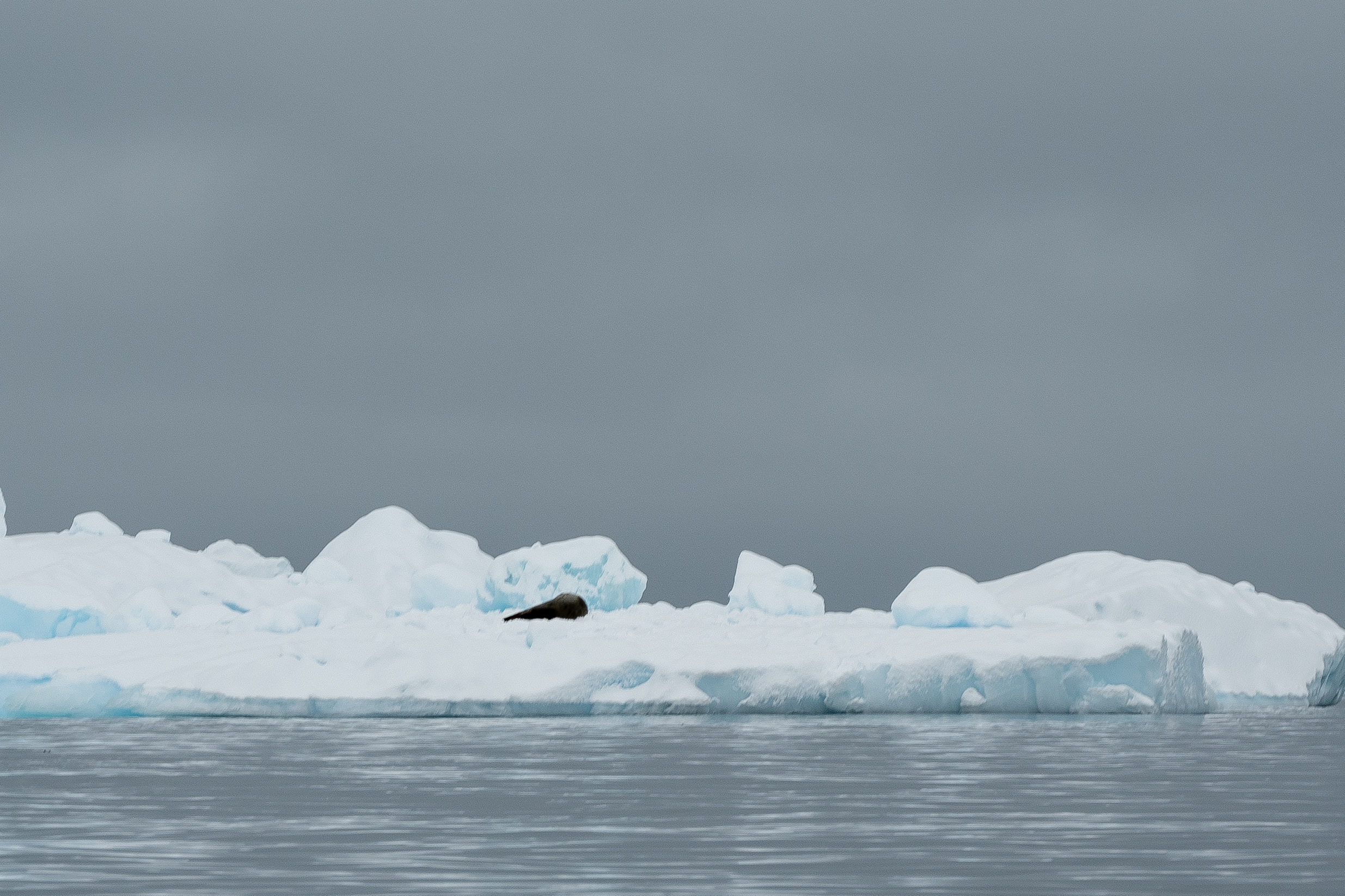
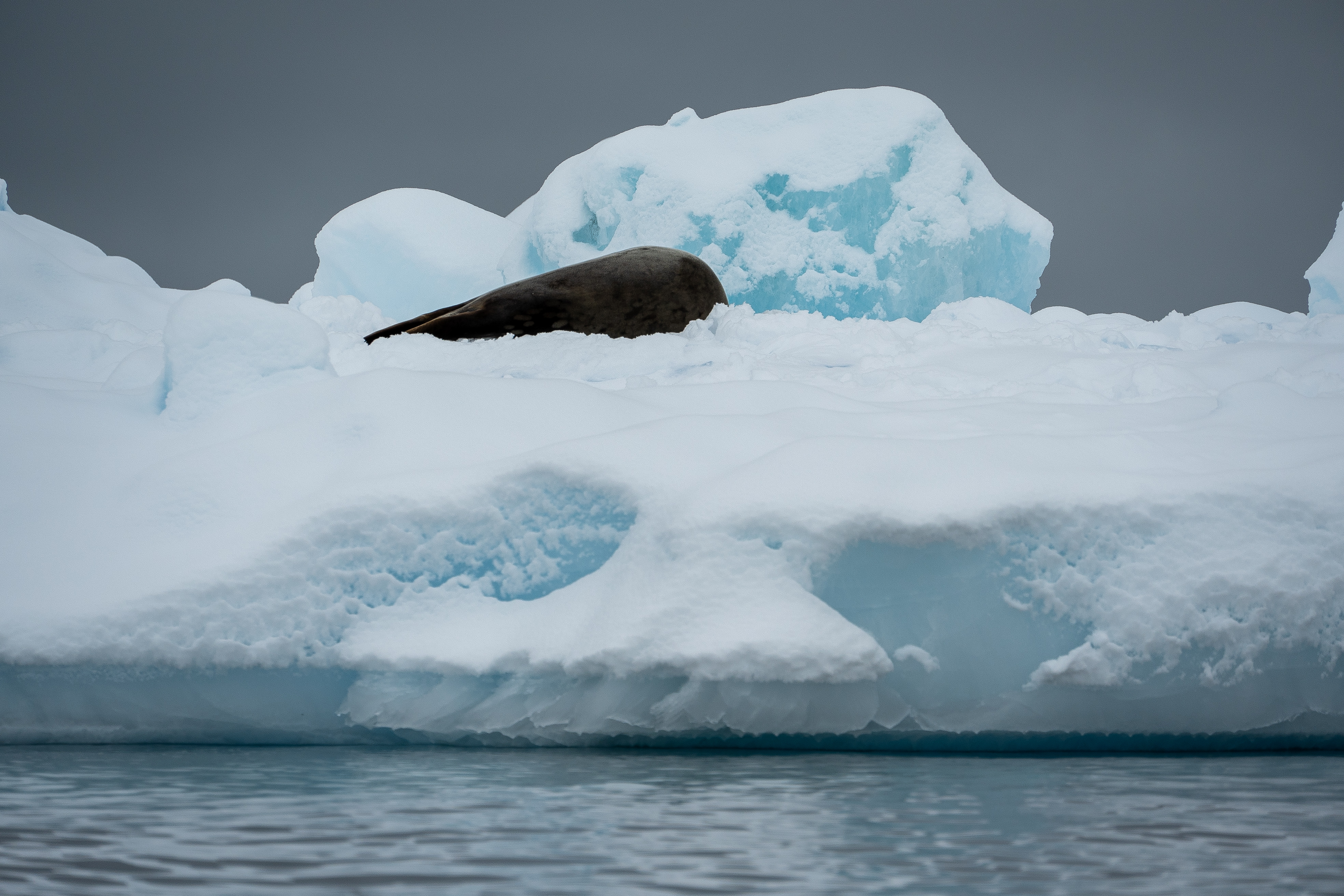
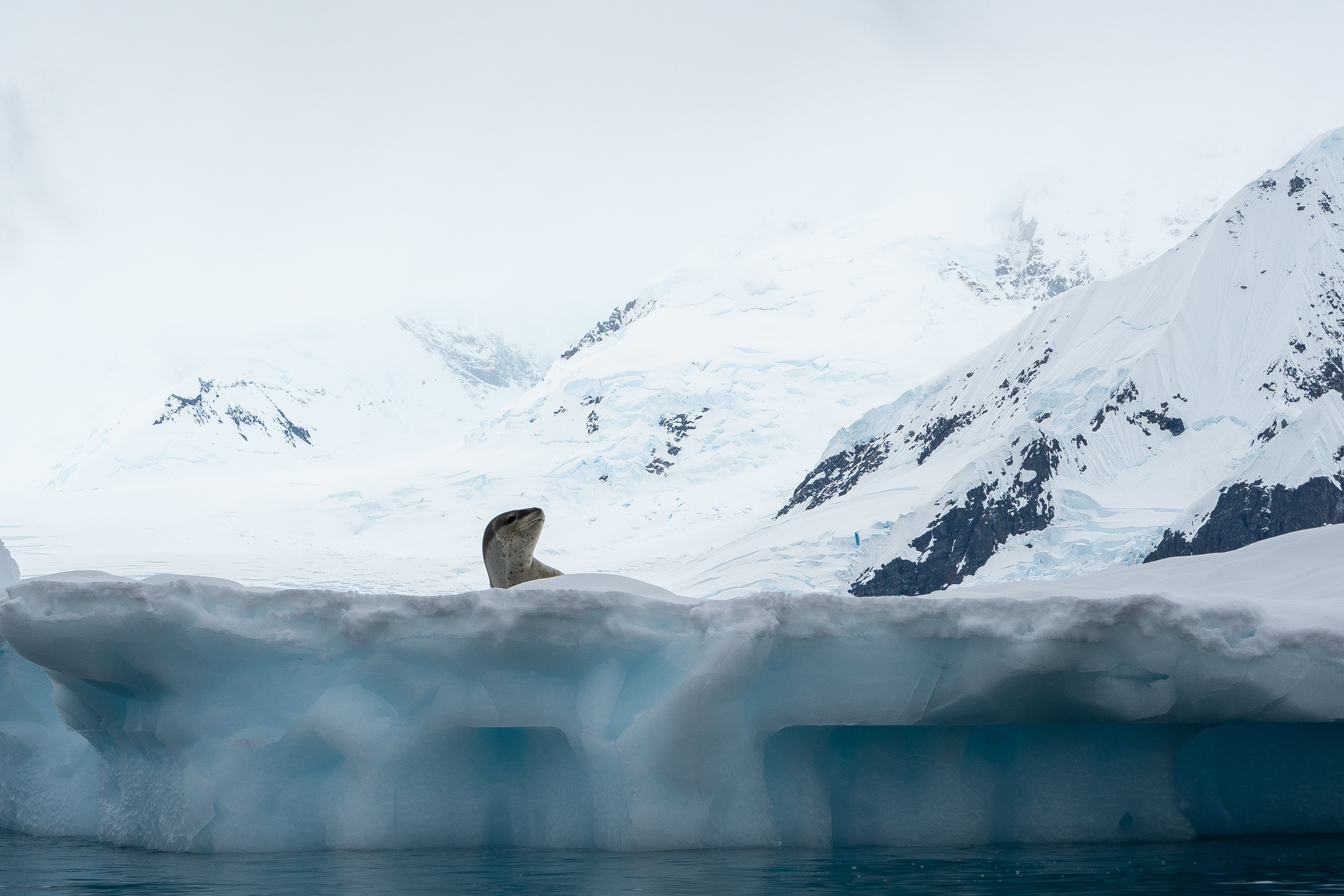
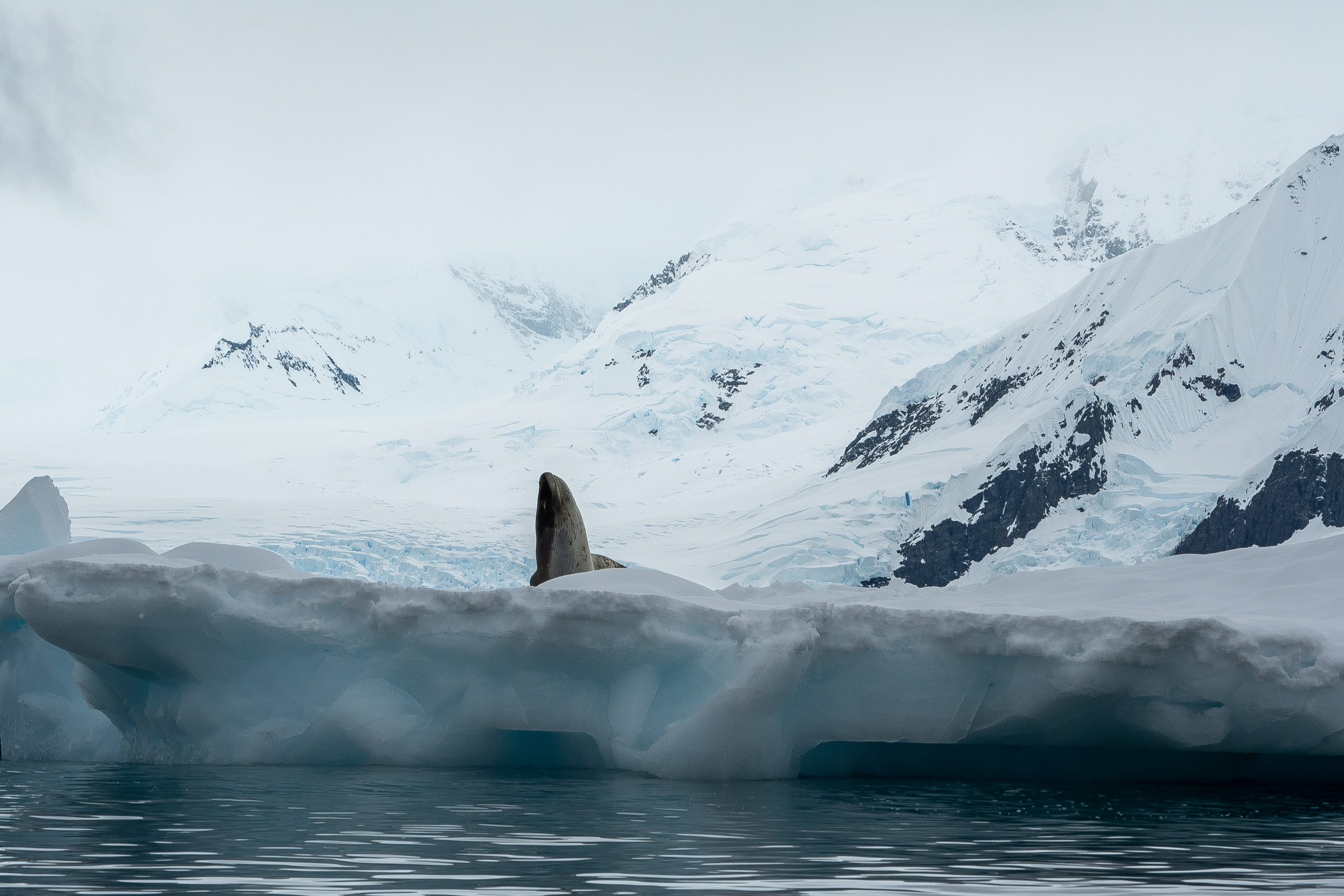
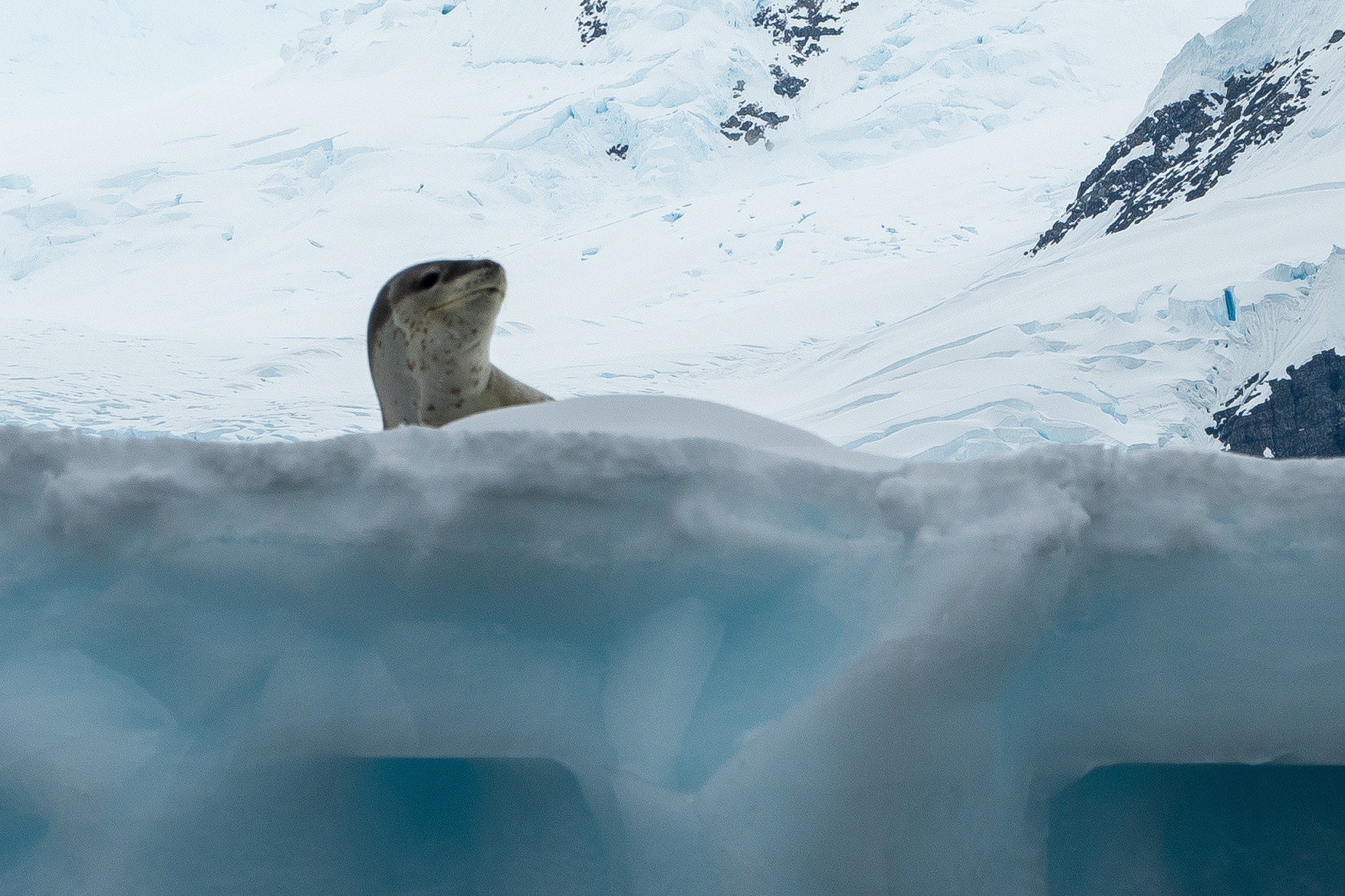
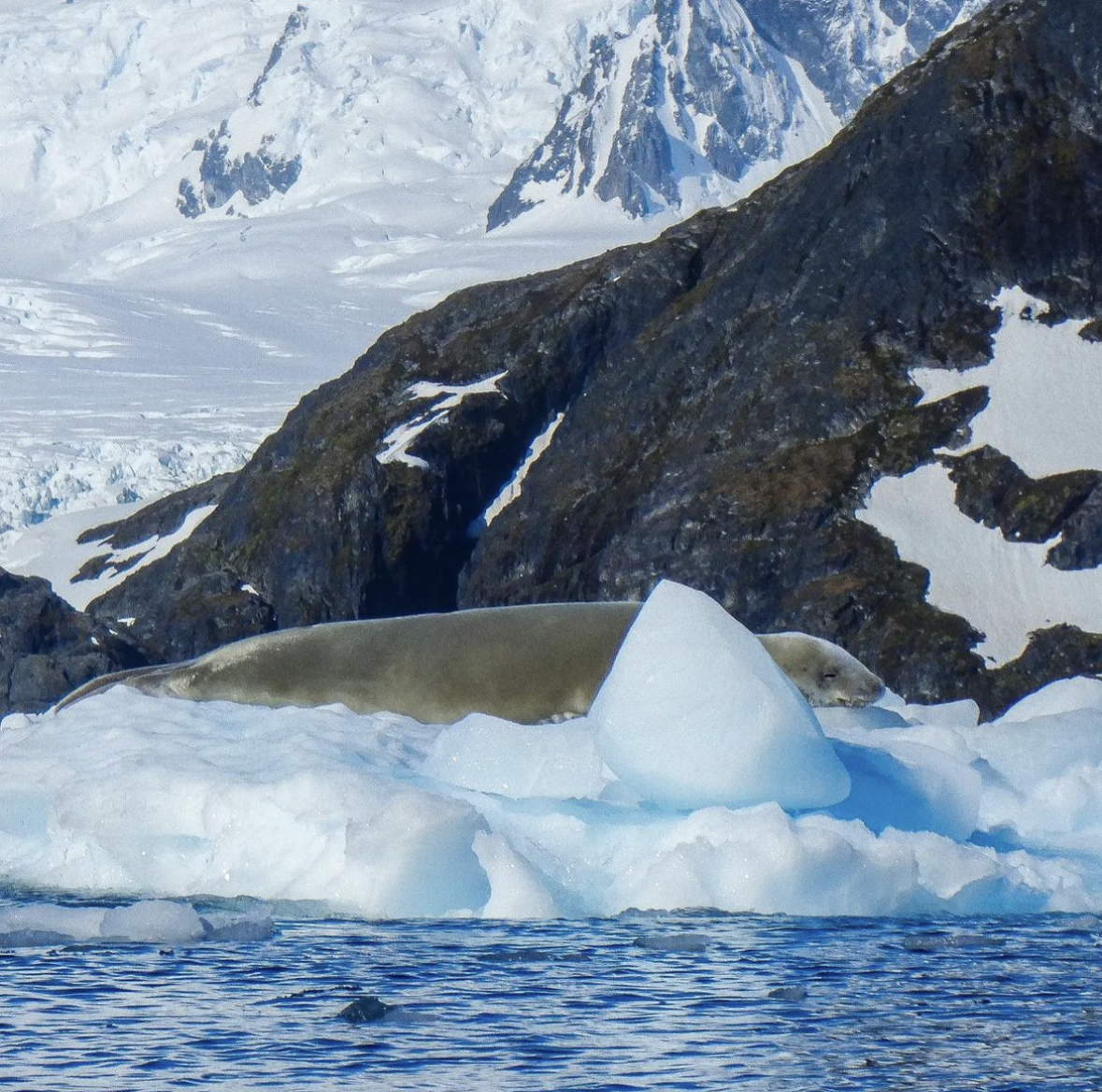
We did see a big mammal right off the bat, but it wasn’t a whale – it was a massive leopard seal, hauled out on the sea ice.
This was Steve’s absolute favorite moment of the trip. (Being taller, he had a better view than I did of the leopard seal, and a better sense of its scale. But I could see it fine – and it was gigantic. Pictures do it no justice; its head was the size of a male lion.)
We bobbed around watching the seal for awhile, but then YT’s radio fizzed to life. There was a whale in the vicinity.
Dreams. Do. Come. True.
I’d thought that if I did see a whale from my kayak, I’d be in floods of tears. But I was just at peace – just being there with this majestic animal.
I still can’t believe this afternoon was real and that it really happened to me.
Reluctantly, we tore ourselves away from the whale (actually, it left us after a few of our fellow kayakers decided to try to get closer than the whale wanted) and headed slowly back to the ship. We changed into cozy clothes and climbed up to the observation dock, not wanting to miss a moment as we cruised out of Wilhelmina Bay. And as we slowly motored out to sea, whales began surfacing all around our ship – so many that we couldn’t tell which direction to look; there were whales to port, whales to starboard, whales surfacing off the stern, whales diving off the bow: we counted more than forty. We had to scrape our jaws off the deck before heading inside.
What a gift this place was. Thank you, Antarctica.
Next week: we paddle the sparkling waters of Cierva Cove.
A new day brought a lot of excitement when the expedition guides unveiled the agenda: starting with a morning’s shore landing at Danco Island. Danco is considered one of the biggest penguin hotspots (coldspots?!) in Antarctica, so the penguin-huggers and bird nerds were pretty excited. (Don’t worry, there was excitement ahead for the whale lovers, too.)
Because ocean conditions were again good, we started out in the kayaks (as with any shore landing, half the guests went zodiac cruising and half were onshore at any given time, and the kayakers were paddling). The icebergs around Danco were absolutely glorious.
Our paddle started out under grey skies, but not long into the morning, the sun broke through the clouds and we saw some stunning blue sky.
Towards the end of each paddle, whenever it was feasible (i.e. we were far enough from the ship and zodiacs not to hear engine noise), our lead guide YT would gather the group together and direct us to be as quiet as we possibly could for two minutes. We’d bob around in the water, dipping our paddles in only when necessary to avoid bumping into another boat, and just listen.
We’d hear seabirds and penguins calling, ice cracking, waves lapping, and even occasionally a glacier calving. These were some of the most peaceful, serene and present moments I’ve ever experienced.
Eventually, it was time to leave the kayaks behind and go explore Danco Island. We unloaded at Big Bertha and steamed off for our shore landing.
Perhaps Danco was over-hyped, but it wasn’t the penguin mecca I’d expected. There were plenty of penguins, certainly, and they were waddling around adorably, doing penguin things. But there were more penguins at Port Charcot and Neko Harbour.
Any penguin time, however, is great!
Steve and I explored the island a little bit, but I didn’t want to walk around too much. At this point in the trip, going from penguin colony to penguin colony wasn’t that satisfying. What I really wanted to do was set up camp in one spot and stay there as long as possible, immersing myself in the penguins’ world and watching their behaviors. So after we’d seen the entire walking route the guides mapped out, Steve and I stood on a rock looking down on the beach and just watched.
Penguin rager!
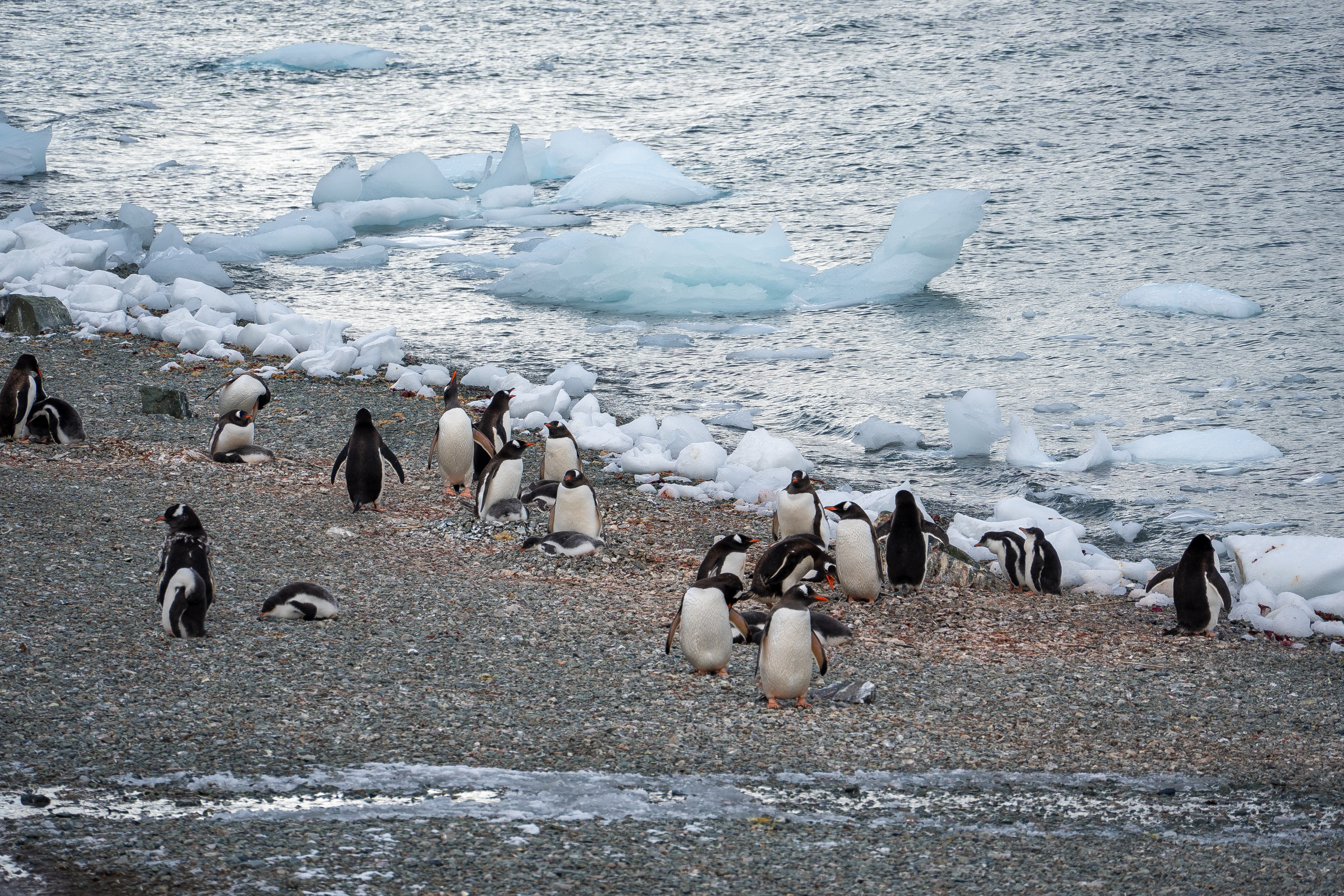
One interesting observation – made by Jomi, the trip ornithologist, and pointed out to those of us who were standing around watching – was that the penguins on the beach had chicks. Gentoo penguins generally do not nest on the beaches, so this was a bit surprising. No idea why – perhaps just a side-effect of the weird nesting season that saw chicks being born at staggered intervals all summer instead of in one big baby boom?
I guess we’ll never know, but it was fun to watch, all the same. I filmed for a bit, caught a handful of penguins going for a swim, and just enjoyed taking in the bustling scene. At one point, everyone jumped out of the water in one big wave…
And then we saw why…
A Weddell seal, cruising by the beach looking for lunch. The penguins all stayed safely up on dry ground – or ice – until the seal was gone. It would be anthropomorphizing to say they looked nervous, but they were definitely on high alert.
Every day I’m shuffling.
(Who’s that^ guy? Wink.) It was a fun morning on Danco with my favorite paddling buddy! Before we knew it, we were hustling back to the zodiacs, ready to head back to the ship and warm up, because we had the most exciting activity of all on the schedule for the afternoon…
After our exciting morning at Neko Harbour – first an absolutely stunning paddle, followed by a mainland landing and penguin-watching – we headed for another breathtaking Antarctic location: Paradise Bay. Although the cloud cover that had descended just as we were landing at Neko stayed around all afternoon, there was no wind and the ocean conditions were good, so kayaking was a go. Yay! We launched from Big Bertha as usual and I was immediately wowed by the incredible mountains all around us.
One of the things the trip photographer had told us was that the icebergs seem to glow from within when the skies are moody. It was definitely true.
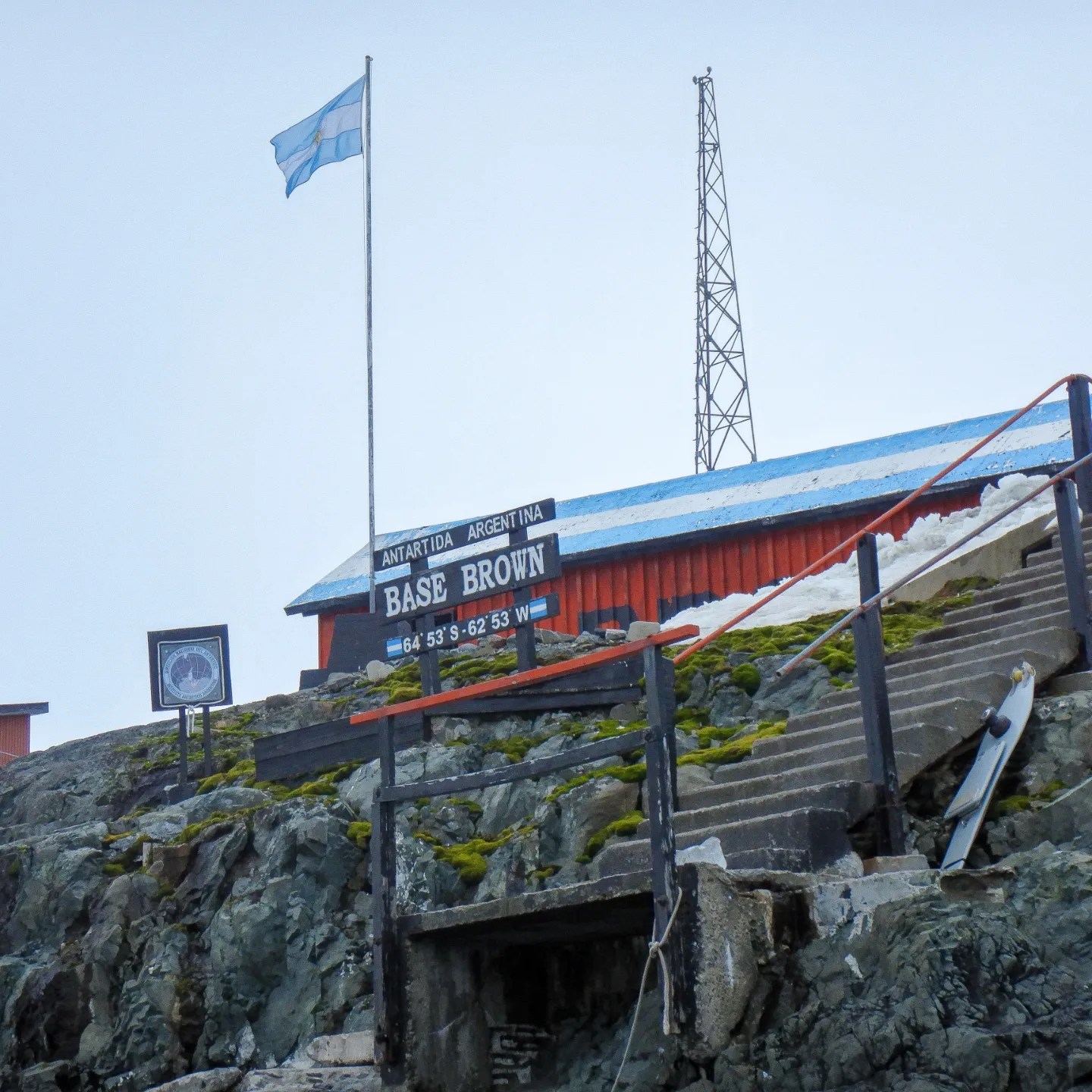
Paradise Bay promised some fun sights. First, we paddled by Base Brown – formerly a British outpost that is now in the hands of the Argentinians, it has an interesting history. As we’d learned in one of the history lectures we attended to pass the time while crossing the Drake, Base Brown was burned down by a doctor who was over-wintering there when it was still a British base – apparently he couldn’t handle the darkness and loneliness. Over-wintering in Antarctica is definitely not for everyone.
We paddled right under the sea cliffs on which Base Brown perches and I tossed off a comment to Steve, over my shoulder, about “that crazy doctor.” One of our kayaking buddies, who happens to be a doctor – a psychiatrist, actually – was paddling by just as I made the remark, and shouted over: “What? You mean me?” Nope! The other crazy doctor! Just keep paddling, nothing to see here.
The penguins seemed comfortable enough at Base Brown.
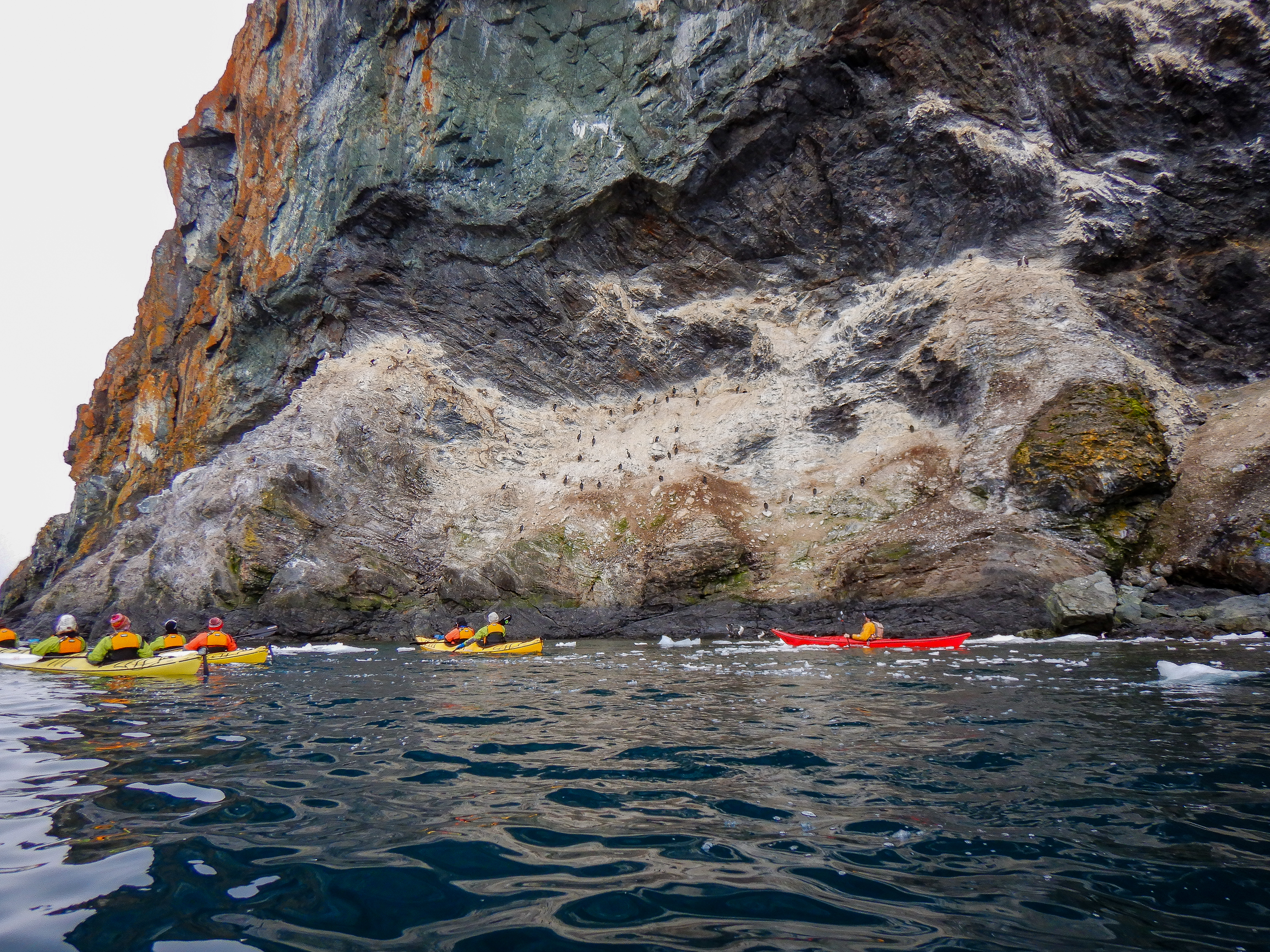
After we had a chance to check out the scene, our lead kayak guide YT beckoned to us to follow him over to a big nesting colony of Antarctic cormorants.
The cormorants were perched all over a massive sea cliff – it was a really impressive sight. And they had two chicks!
We spent awhile bobbing around under the sea cliffs watching the cormorants. Steve and I joked that Antarctic cormorants must be better at flying than other cormorants, or maybe they climbed up there. We love to rag on cormorants. Who doesn’t?
There were a couple of solitary penguins too.
After Base Brown and the cormorants, we paddled around a bit more looking at the stunning scenery. Paradise Bay was well-named, indeed.
Ahhhhh – too beautiful. Before any of us were ready to say goodbye, it was time to load up Big Bertha and head back to the ship to warm up. One by one, we clambered out of our kayaks and into the zodiac while guides Jess and YT bobbed in their red kayaks offering helping hands. As we settled into Big Bertha, with just the guides to follow, we heard a theatrical shout from YT, and then a splash. A similarly dramatic scream from Jess, and another splash.
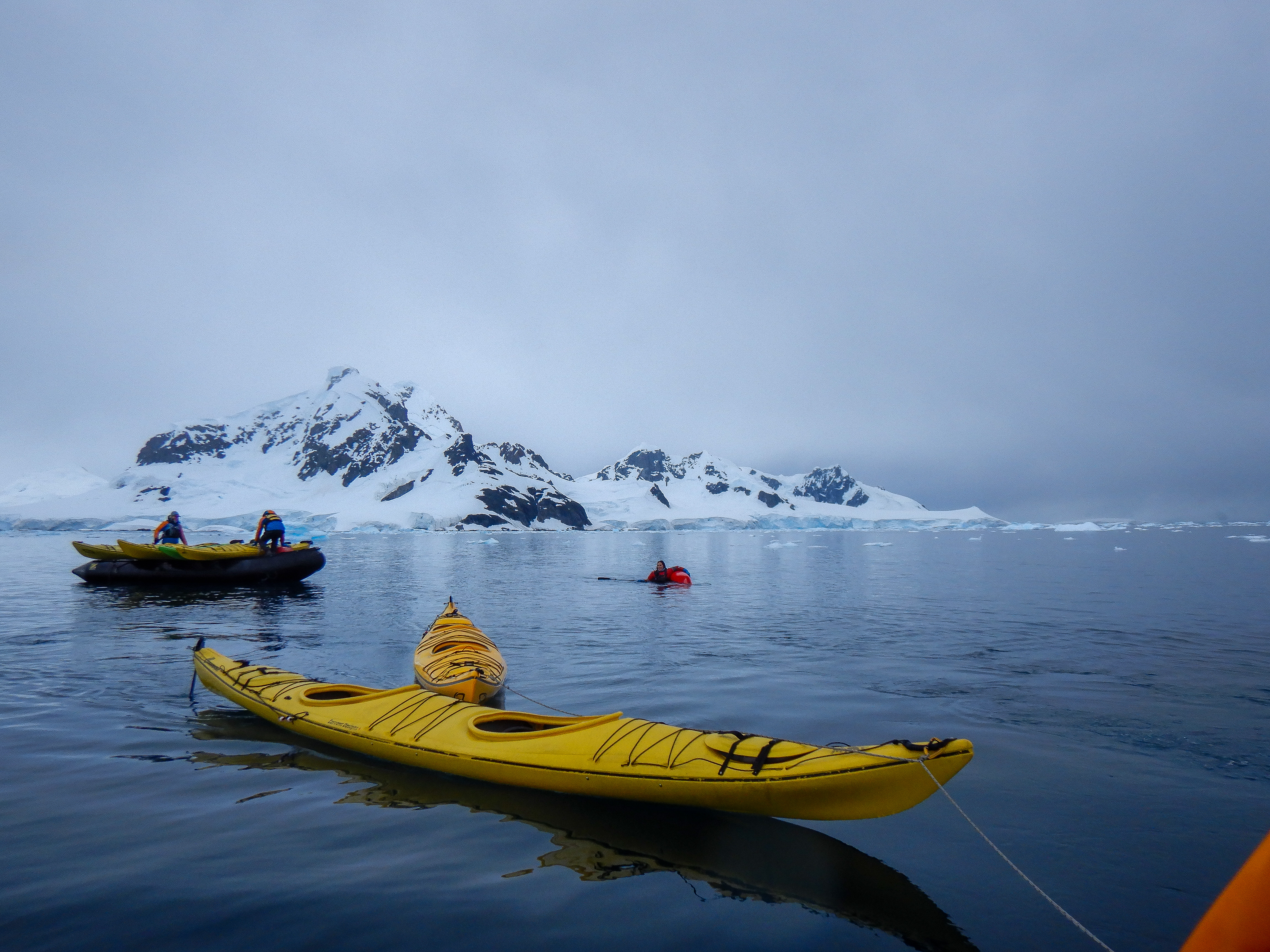
Mark, our zodiac driver, immediately ordered us all onto one side of the zodiac. Thinking he was going to capsize us next, one of the group said “Mmm-mmm!” and immediately adjusted her wool hat. But Mark didn’t capsize Big Bertha, and the guides had not simultaneously lost their minds. It turned out this was a rescue drill for Mark, which – as the kayak group’s safety zodiac driver – he is required to complete once a season. He never knows when the guides will intentionally capsize themselves, so he has to be ready at all times to make a rescue.
Working as a team to help Mark, we hauled Jess and YT back into the zodiac, where they sat on the floor looking cold and drenched. Definitely time to go back to the ship and warm up – or was it?
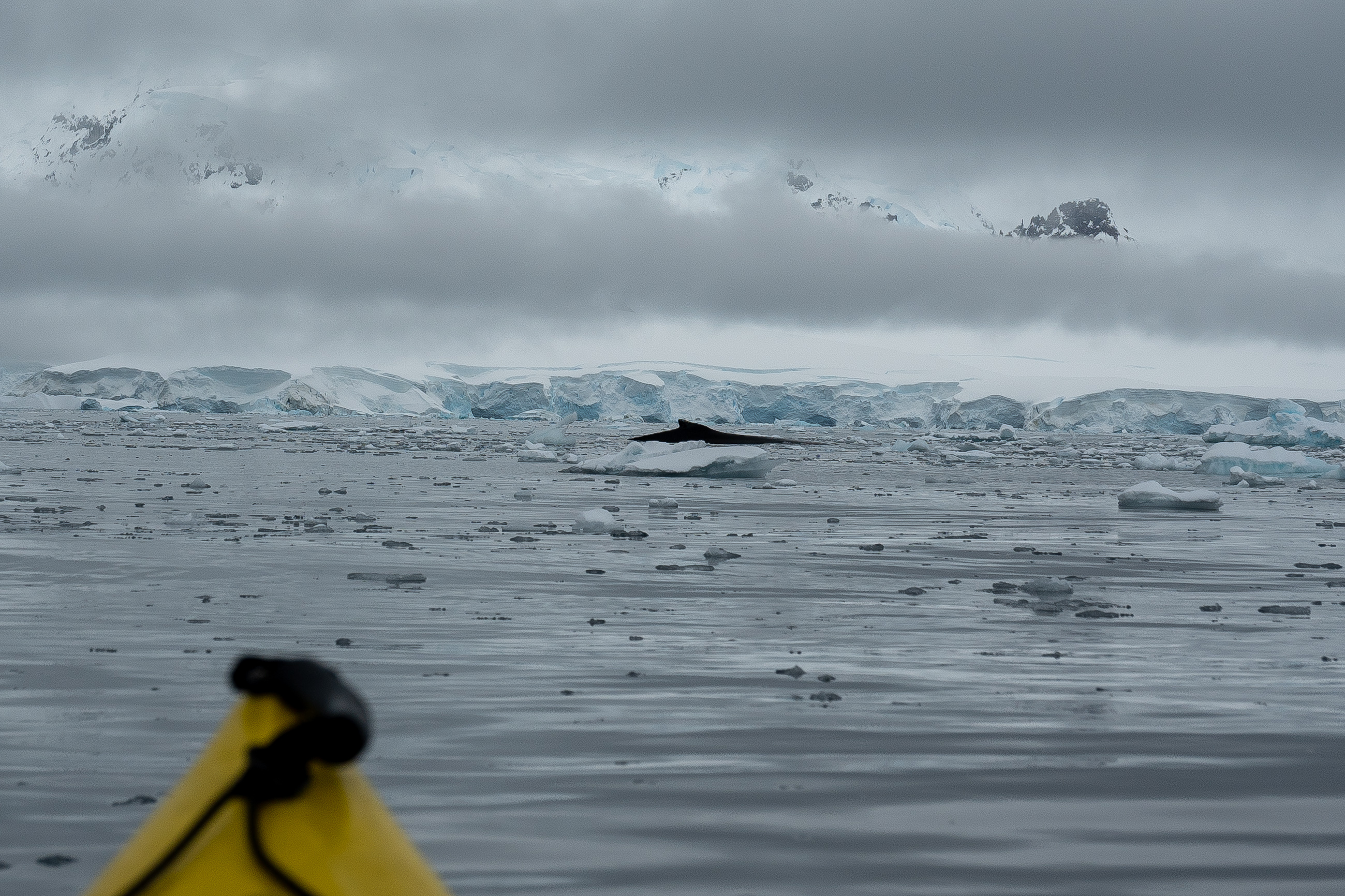
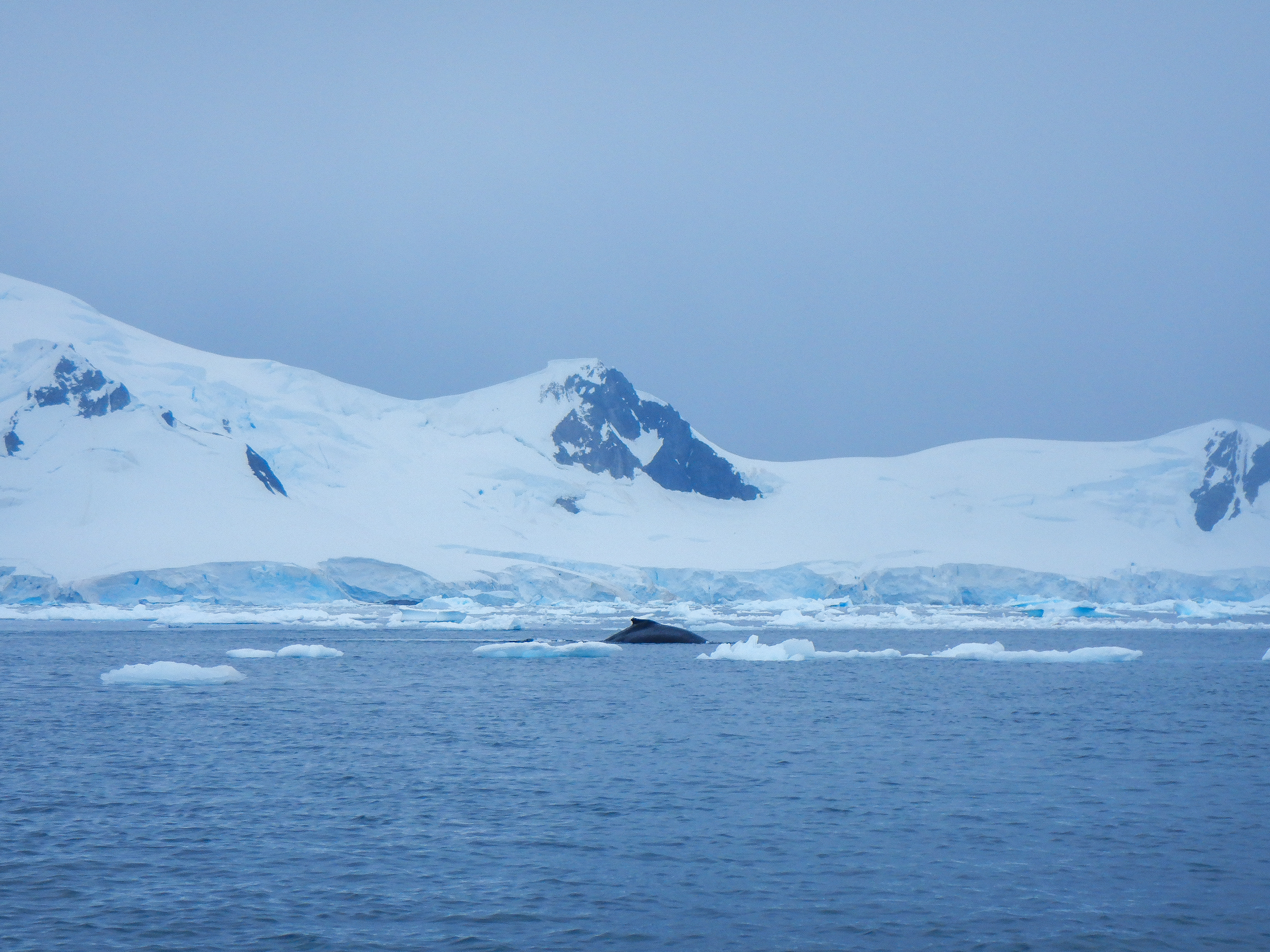
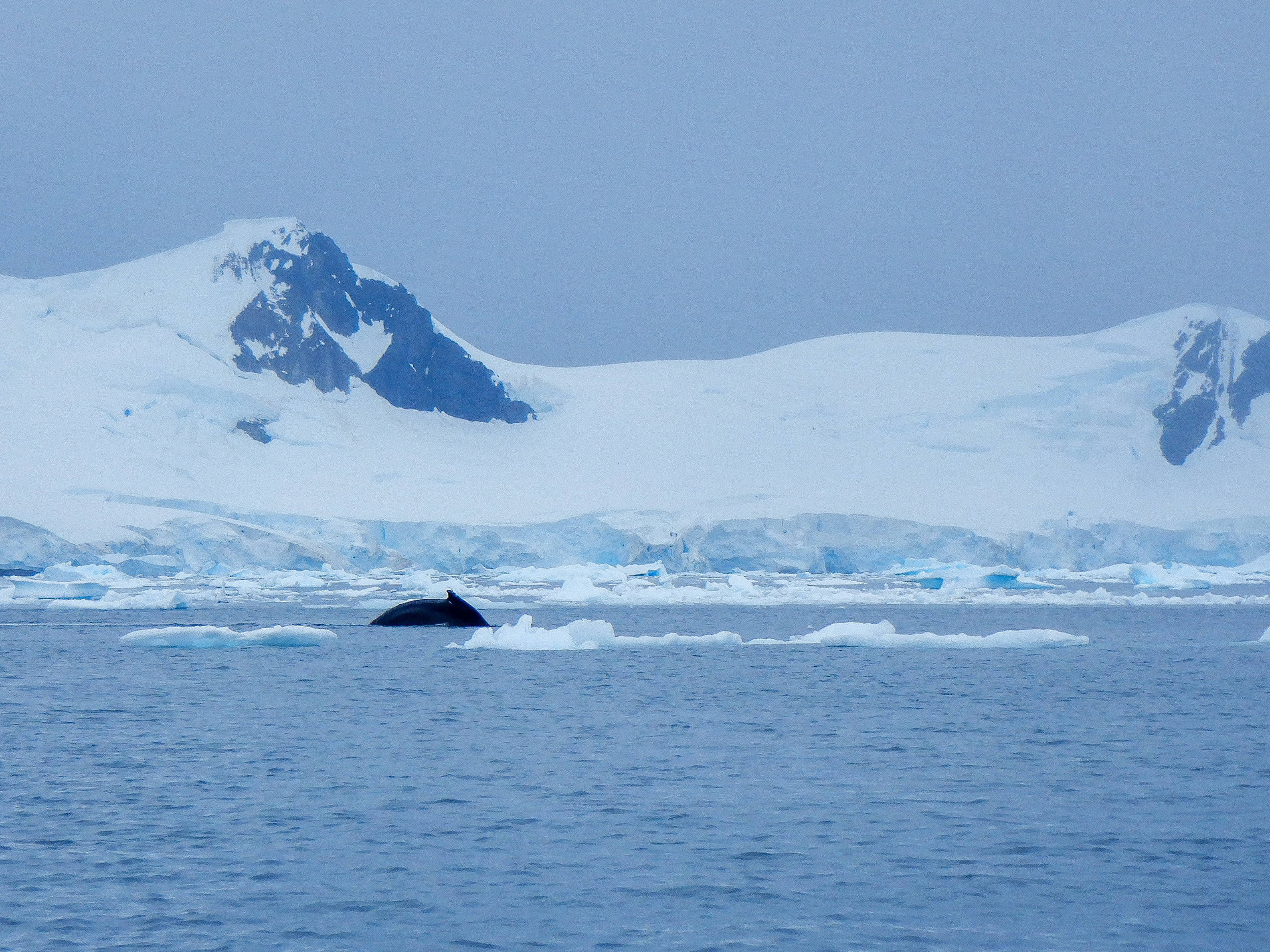
As we steamed towards the Ocean Diamond, we caught sight of something exciting off in the distance – a black back in the water! Mark asked YT and Jess if they were good to stay out for just a bit longer. They confirmed they were warm enough, and we zoomed off to have a look at a whale.
We got a bit closer, then killed the engines and watched our new friend diving and surfacing. This was a quite young juvenile – not quite a calf, but young enough that we were surprised he was on his own. Hopefully he was just having a little explore and wasn’t separated from Mom.
What a lovely way to cap off a fun and engaging paddle! First Base Brown, then cormorants, then guides in the water, and now a playful humpback whale!
Thank you, Antarctica, for delivering treasured memories once again.
Next week: more penguins in one of their favorite spots – Danco Island!
Just as we wrapped up our morning paddle and unloaded from our kayaks into Big Bertha the zodiac, the sky darkened and the clouds rolled in – perfect timing to get off the water. We made for a small demilune shaped beach: our landing spot on mainland Antarctica. I couldn’t believe this day had finally come!
As with all of our shore landings, the expedition guides had landed first and staked out a hiking route for us to follow. This time, we’d be climbing about 45 meters up a steep hill to a ridge overlooking the bay – a spectacular view.
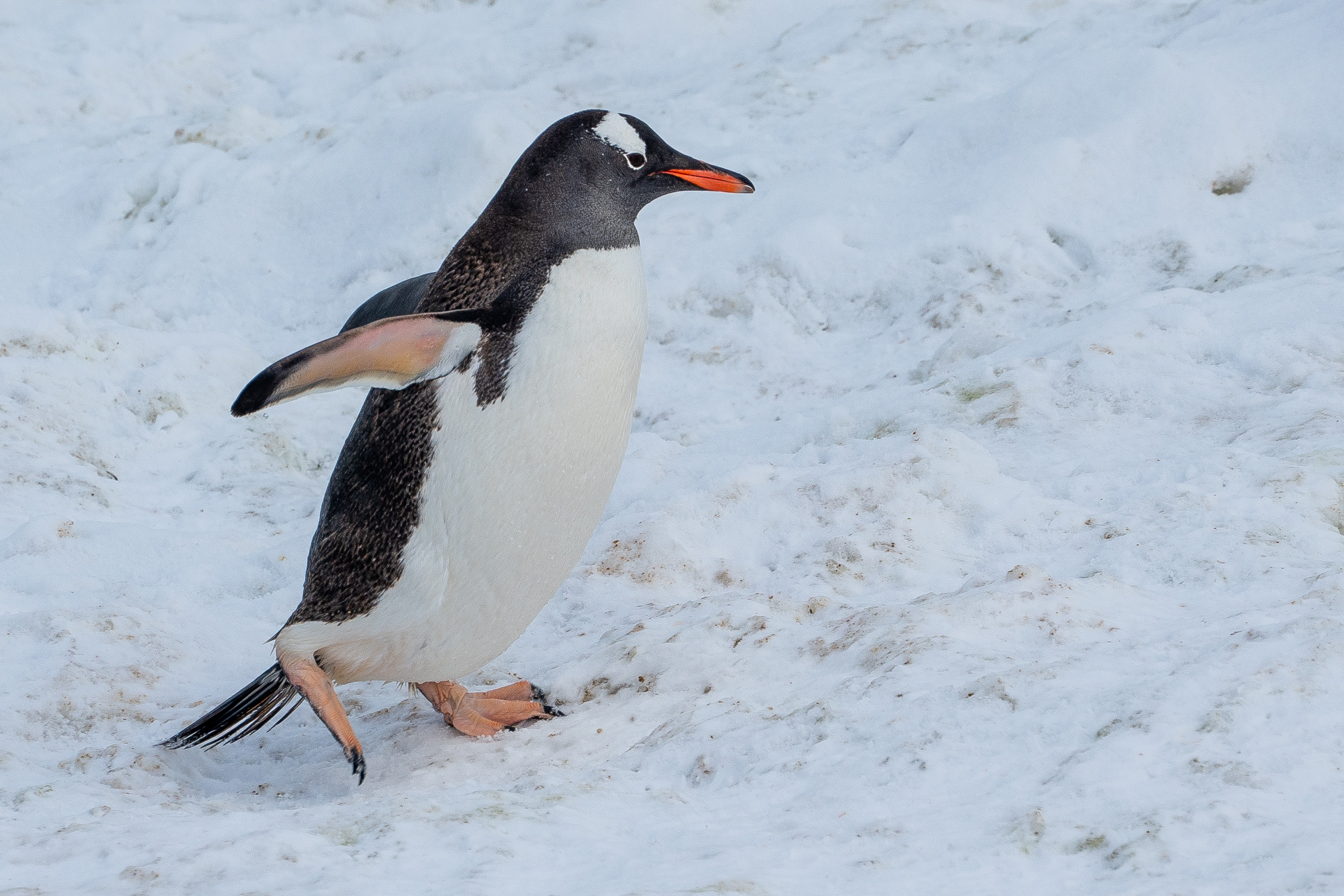
The penguins, of course, had their own ideas about where to walk. These deep grooves in the ice were called “penguin highways” – the favorite routes for penguins going to and fro between the nesting colony and the shore. Our route crossed the penguin highway, and one of the expedition guides was standing at the intersection to hold up traffic when a penguin was coming or going; the wildlife always has the right of way! I don’t know about anyone else, but I personally didn’t mind being held up for a few minutes and watching the penguins waddle adorably up and down their highway.
Steve and I felt rather like orange and green penguins in our drysuits and neoprene kayak skirts.
We picked our way over the ice, past a smallish colony of nesting penguins – fluffy chick alert! – and finally reached the high point in our climb.
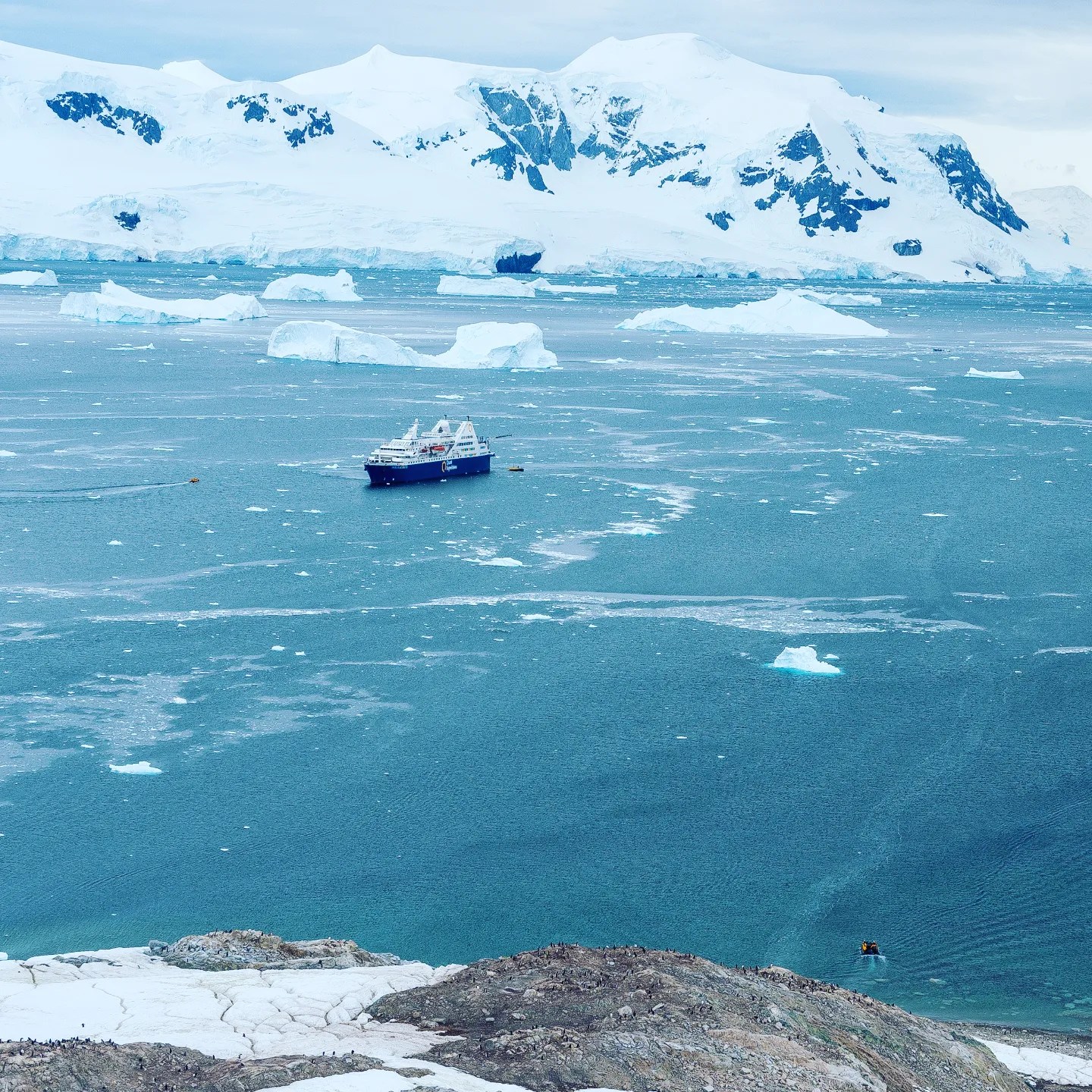
The view was indeed spectacular. Our massive ship looked like a toy from up here!
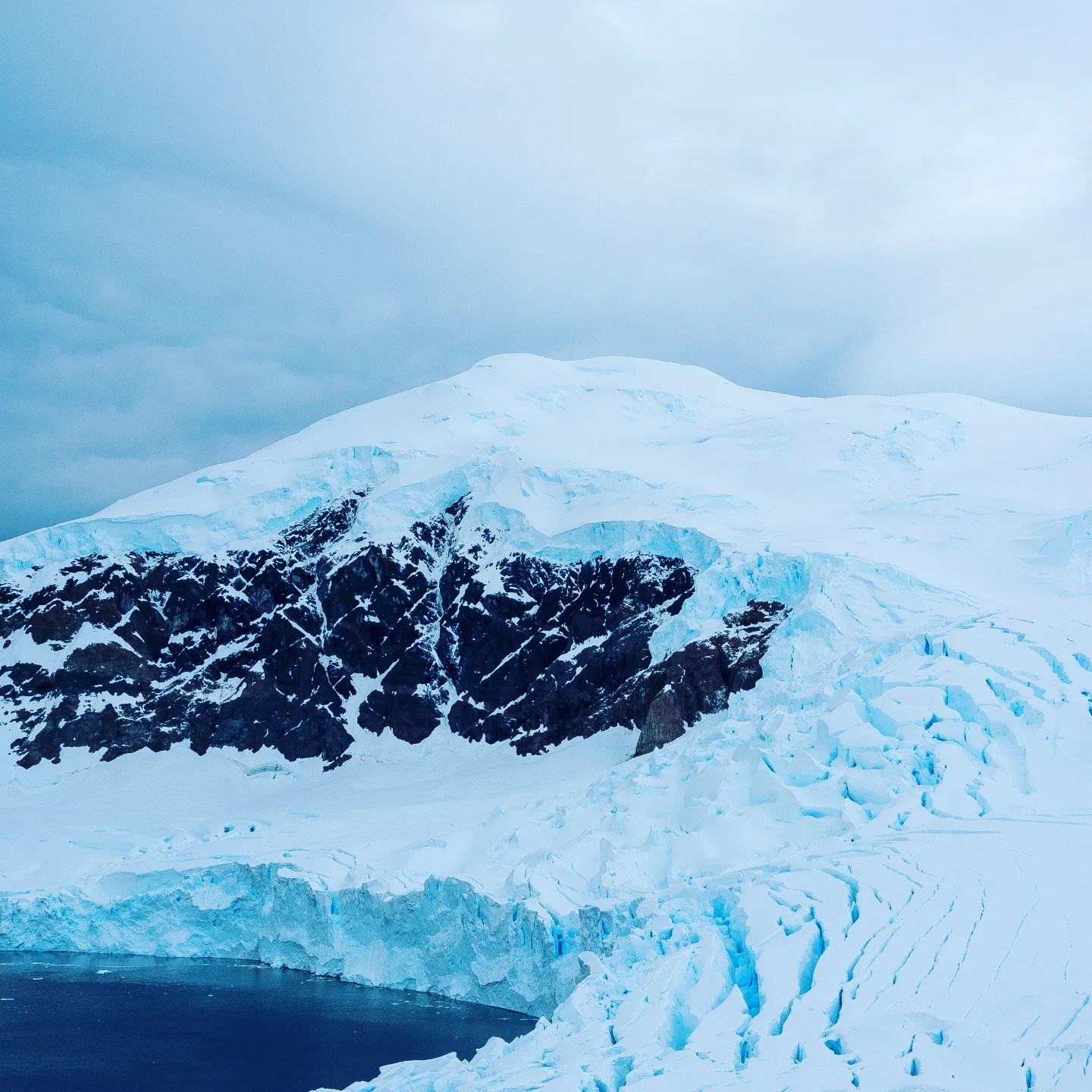
And we could look down on a huge glacier – WOW.
I got in line to take a picture on a little ledge overlooking the bay. As I was stepping onto the ledge, the previous guest – who was stepping off – slipped and grabbed me by the arm, almost taking us both over the edge. I quipped, “A little notice next time,” and she replied, “I just figured if I’m going to die, I’m taking a friend with me.” “I really don’t know you that well,” I replied. Clumsy McSlippingfall giggled – no, but seriously, lady, we’re not friends – and went on her way. And I had the ledge to myself.
I’m the queen of the world!
On our way down the slope, with plenty of time before our zodiac would be leaving to head back to the ship, Steve and I stopped to spend some time with Jomi, the expedition ornithologist, who was posted up near the largest penguin colony at the landing site. We watched the penguins comfortably brooding their little grey bundles of joy – and then I noticed some interesting behavior.
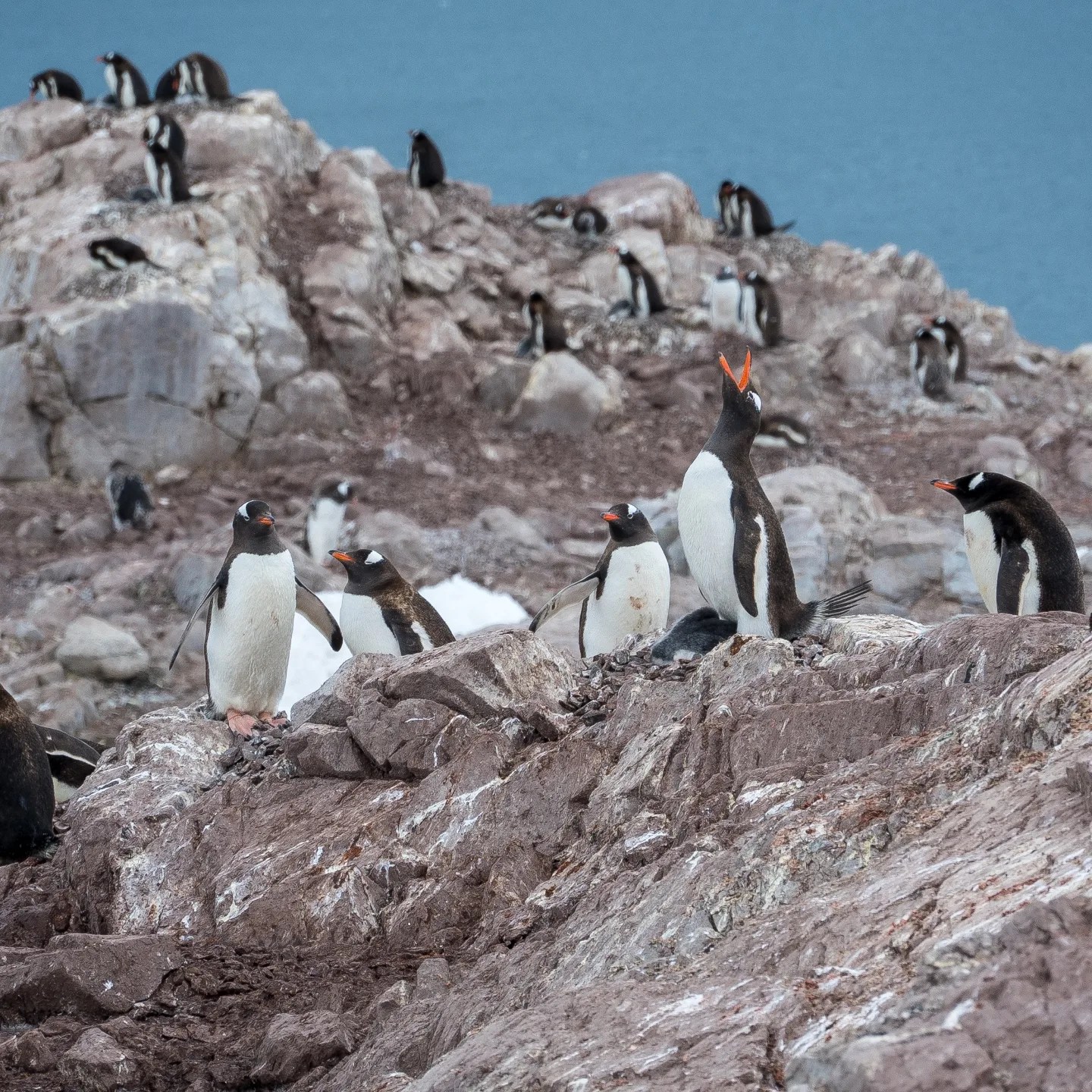
One of the brooding penguins suddenly tilted its beak to the sky and gave a trilling call. It looked like the alarm calls I’d seen at Port Charcot, but none of the other penguins at the nesting site looked bothered at all; they just went about their business. I concluded, then, that this couldn’t be an alarm – it must be a contact call to a partner just returning from the water.
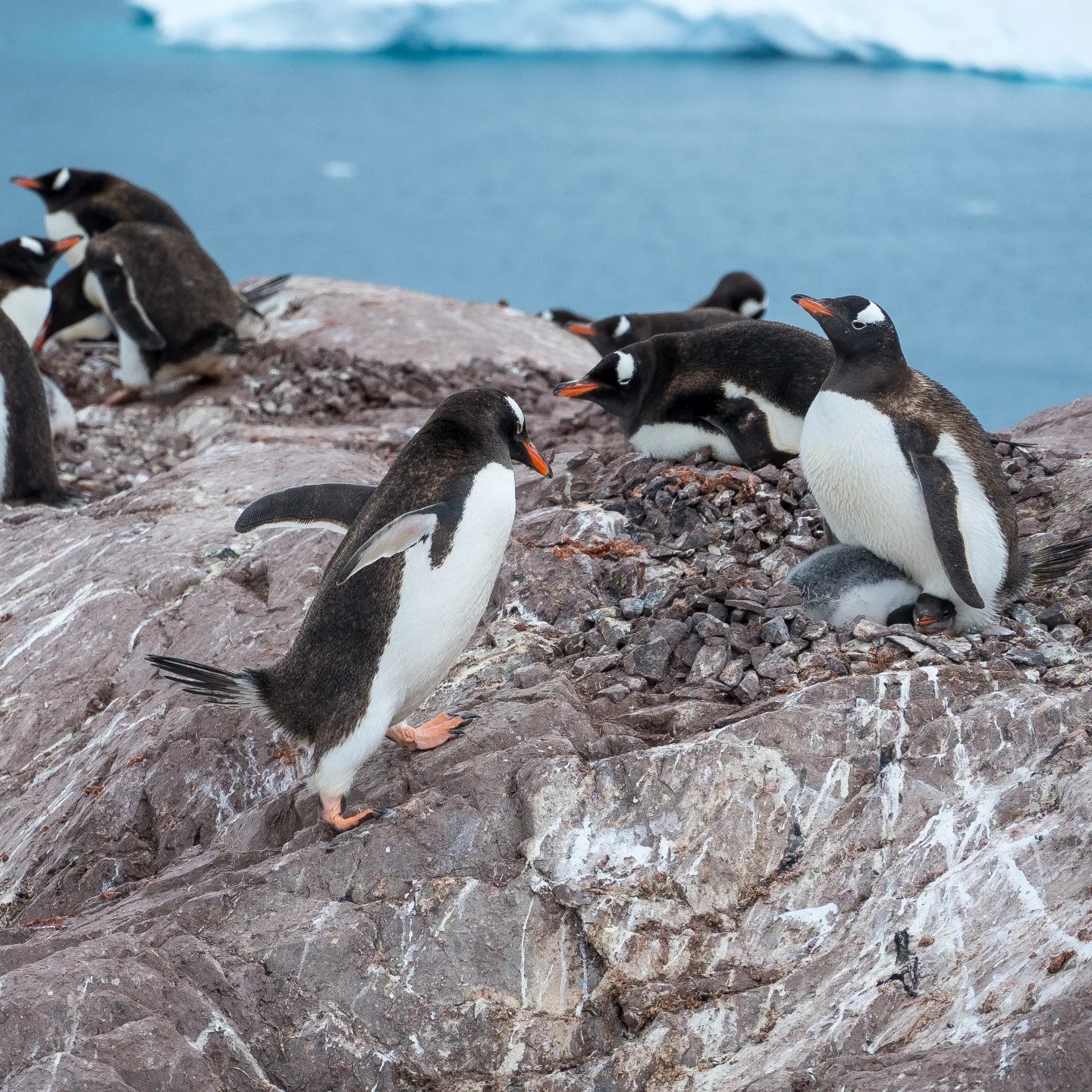
Sure enough, before long another penguin arrived and made a beeline for the nesting penguin and chick I’d been watching. I leaned over to Jomi, pointed them out, and said, “Is that the partner?” He looked at the pair and replied, “Must be, or the nesting parent would never let the other one get that close to the chick, it would be snapping at it.”
The next moment, both penguins raised their beaks to the sky and made the same trilling call. Clearly the partner, then, and this was their contact call. I was tickled to have figured it out.
The returning penguin craned its neck down to inspect the chick. I imagined that this was mom returning from a fishing trip, and not entirely trusting Dad but wanting to see the chick for herself, in one piece and not playing video games.
LOL. Obviously not – but I don’t care what anyone says, it’s fun to anthropomorphize penguins. (Also, this could easily have been Dad returning to Mom; male and female penguins are indistinguishable. I just like making up little stories for them.)
The returning parent then bent down and fed the chick with fish from its beak; sadly, this is the best picture I got. And then the returning parent took over the nest while the brooding parent left for its own fishing trip. I was beyond thrilled to have witnessed the entire encounter from beginning to end – and really pleased with myself for deciphering what was happening throughout (with my hypotheses confirmed by Jomi!). Especially being a bird nerd, it added a layer of meaning to the whole day that I understood enough about penguins and their behavior to know what was happening.
See you later, Dad (or Mom!) – have a good fishing trip, bring me back lots of krill!
Next week: we kayak in Paradise Bay and see more whales!
Our fourth day in Antarctica dawned bright and sunny, with calm seas and blue skies – perfect kayaking weather! The excitement was palpable as people checked the daily schedule and saw the plan for the day – morning was to be a shore landing at Neko Harbour. This was what many of our fellow passengers had been waiting for: what the expedition staff was calling a “continental landing.” Up to this point, our shore landings had been on islands – still Antarctica, but the Neko Harbour landing would have us stepping foot on the mainland. For the people who had come to Antarctica dreaming specifically of a mainland landing – and there were quite a few of those folks – this was the day they’d been waiting for.
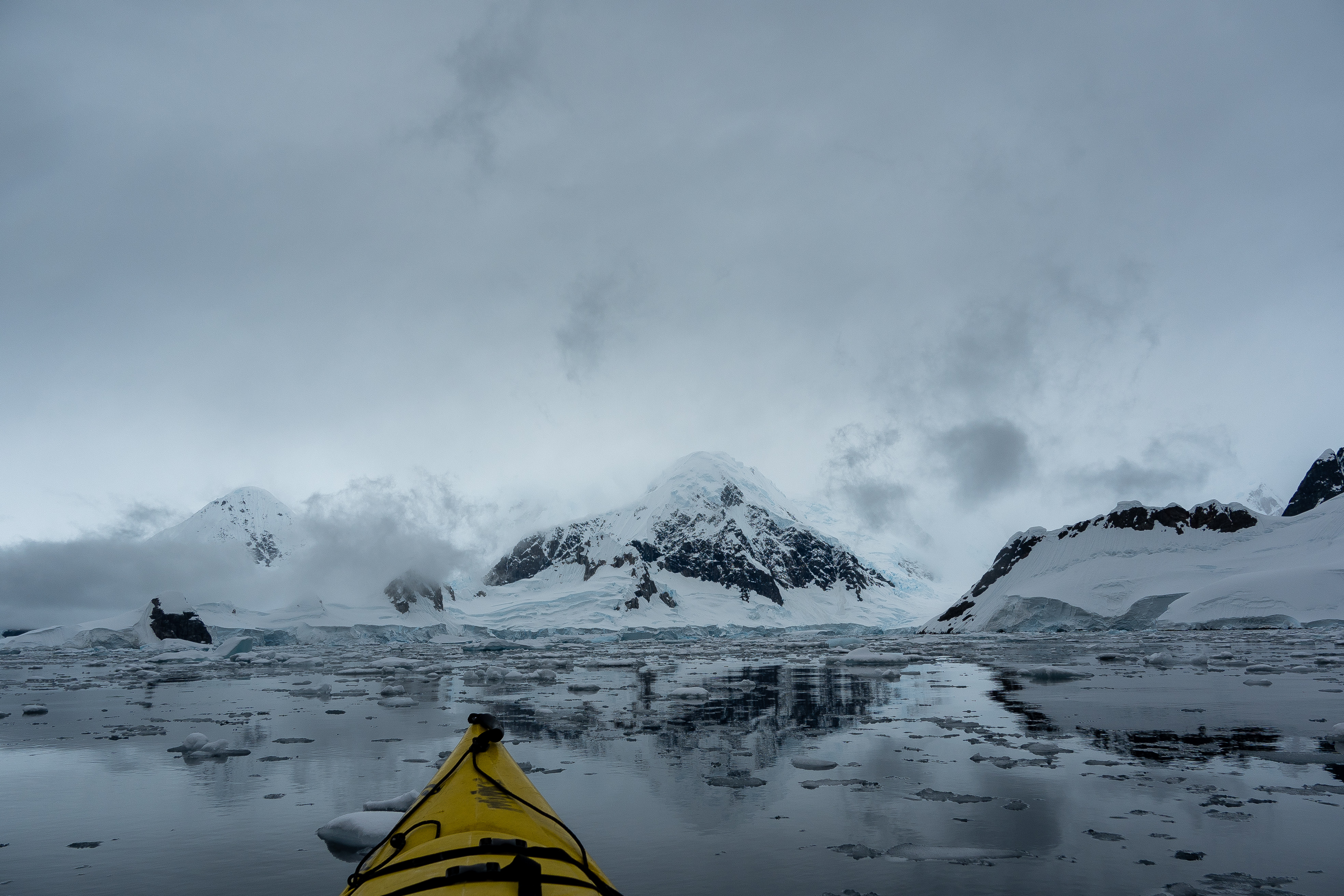
I was excited about a mainland landing, too, but even more excited to paddle the glassy waters of Neko Harbour (with just enough brash ice to keep things interesting…) under these towering black and white mountains.
We loaded up into our kayaks and set off. The solo travelers in the group were taking turns paddling single kayaks; Steve and I stuck together in a double, as did the two other married couples in the sea kayak group. We both prefer to paddle a single, but we can paddle together – we survived five days in a double kayak in the Salish Sea in 2019 and lived to tell the tale, after all – so we were happy enough to share and let the people who felt more strongly about wanting the single kayaks have them.
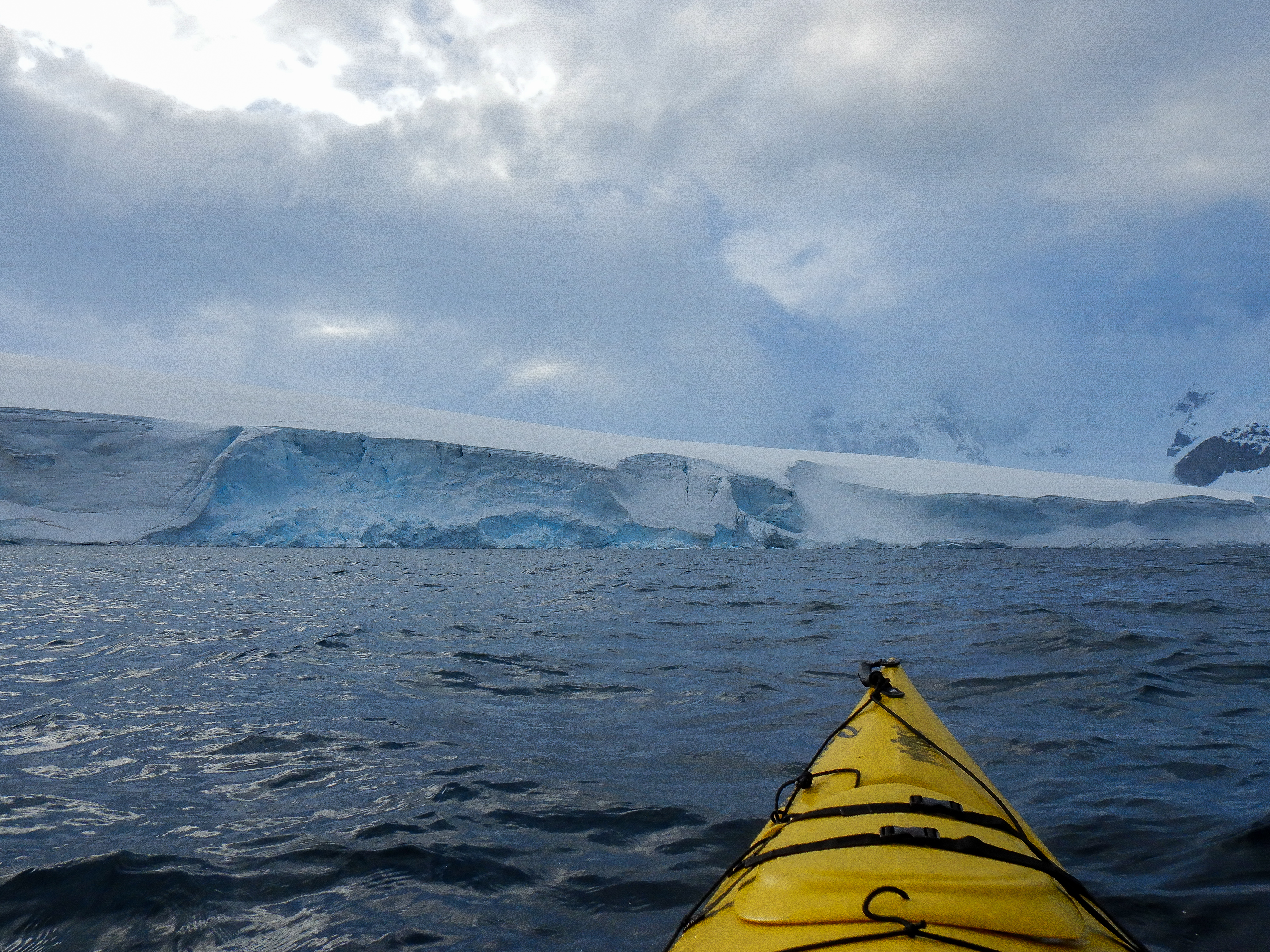
Sitting in the front seat, I was the designated photographer, and I also got the best views of these incredible glacial walls.
Just look at that blue!
We didn’t have any major wildlife sightings while paddling Neko Harbour, but I wasn’t disappointed at all – I was content just to listen to the sounds of calving glaciers and my paddles slipping in and out of the water. What a glorious day!
Next week: Neko Harbour, Part II – stepping foot on mainland Antarctica!
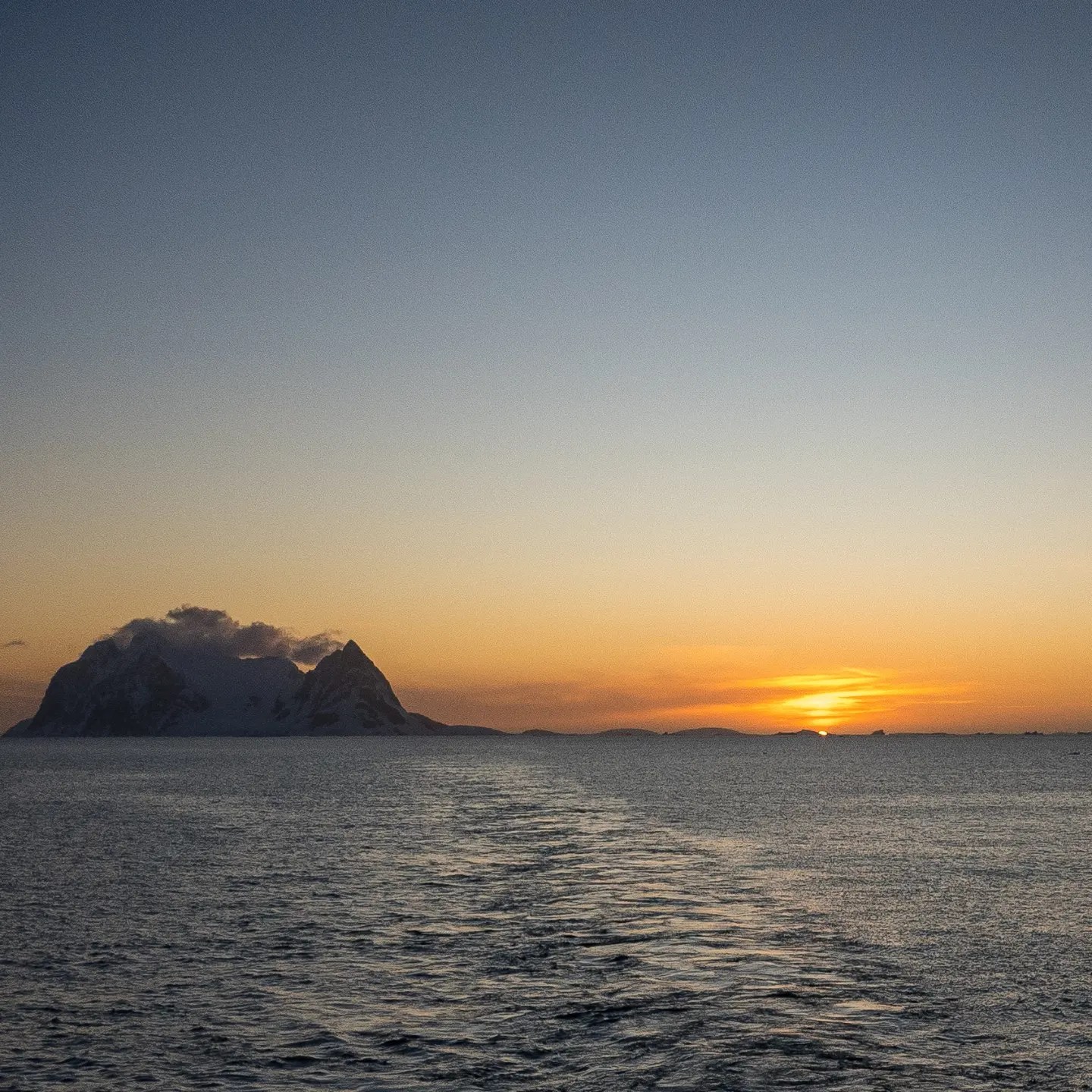
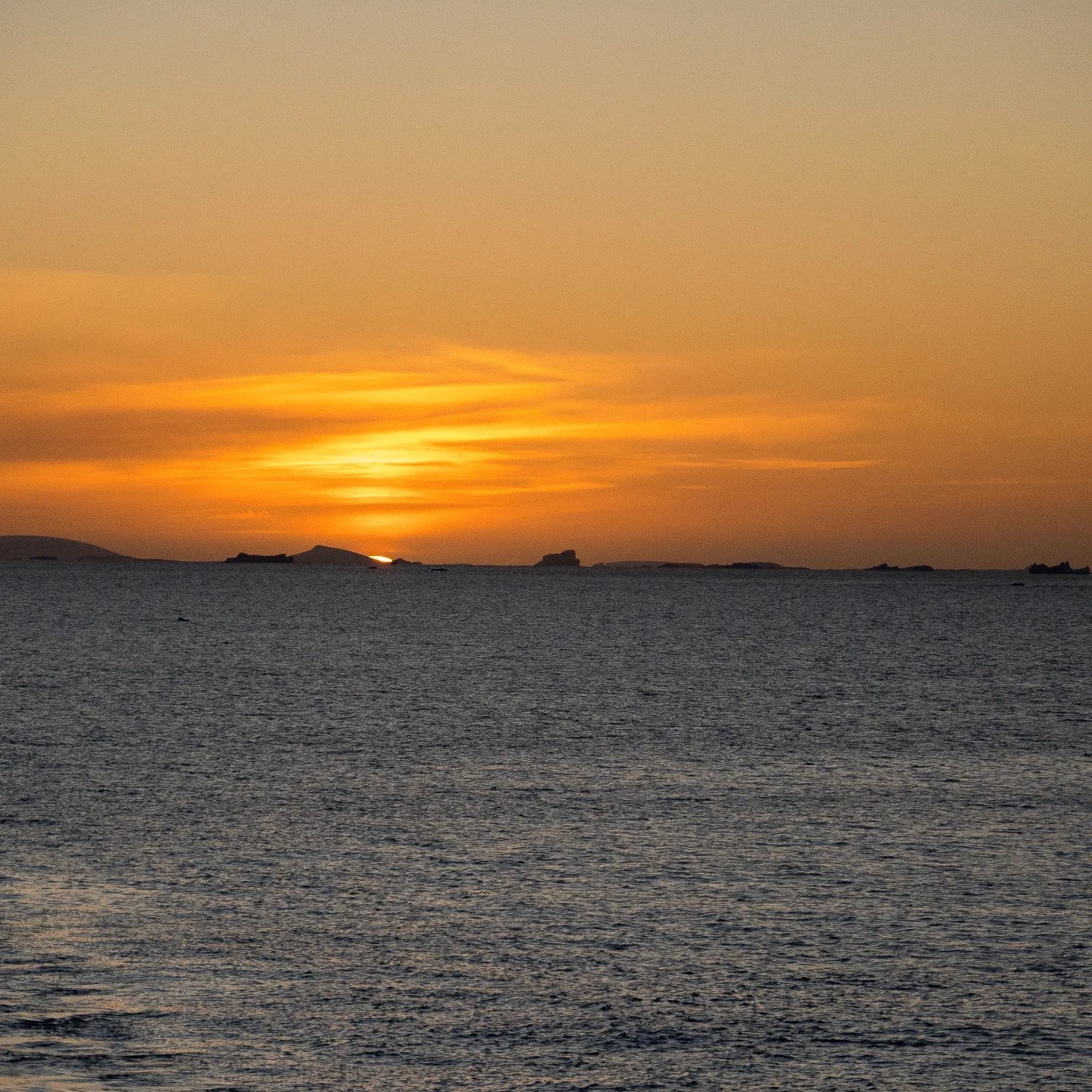
Another of my hopes for our Antarctic adventure was the chance to see the sun set in one of the most remote landscapes on Earth. This wasn’t a given; first of all, the weather’s gonna weather, and I didn’t know if the skies would cooperate with a spectacular sunset at all. And second, the sun sets late this far south – well after 10:00 p.m. – and I wasn’t even sure I’d be awake. But there were a few nights when I made it to sunset, and on one night in particular it was just gorgeous. I stood on the stern of the ship and watched as the sun dipped lower and lower in the sky while we cruised over calm seas.
The orange to blue ombre effect of the Antarctic summer sky – might be the happiest color combination there is.
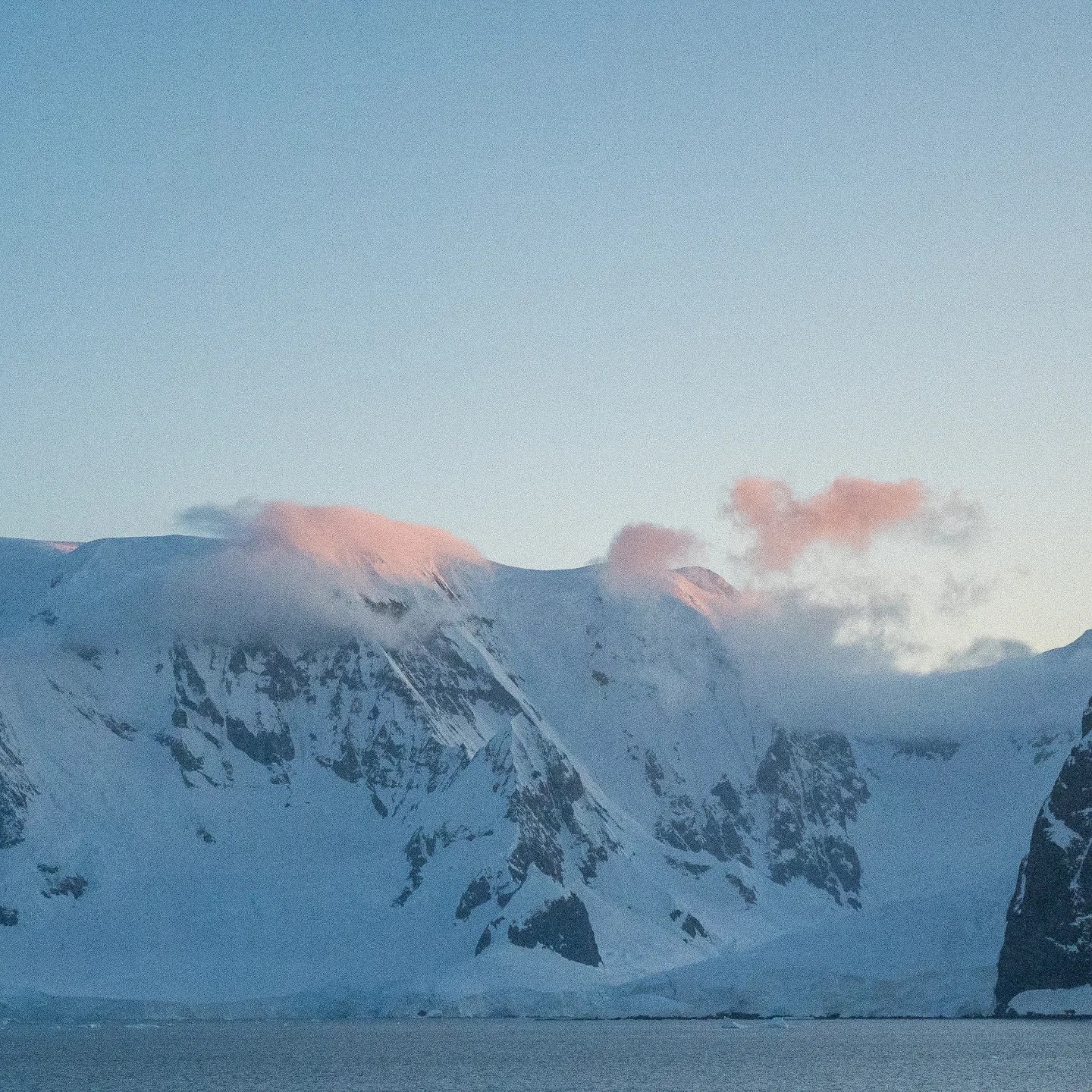
I stayed out in the biting cold wind as long as I could, watching the orange of the sky deepen and burnish all of the craggy mountaintops.
I finally went in when the sun was gone, although it still wasn’t dark and wouldn’t be dark for a few more hours. Antarctica is spectacular in every light, but there is something very special indeed about sunset.
Next week: paddles back in the water at Neko Harbour!
As we worked our way north from our adventures south of the Antarctic Circle, our Expedition Leader came on the PA and announced to the ship that we were going to sail the Lemaire Channel again. When we’d sailed it southwards, it was early in the morning and still a bit foggy. Now the sun was out and there were no other ships trying to make the passage – so basically, just for fun, we were going to do it again. Absolutely no one complained, because why would anyone ever not want to sail this?
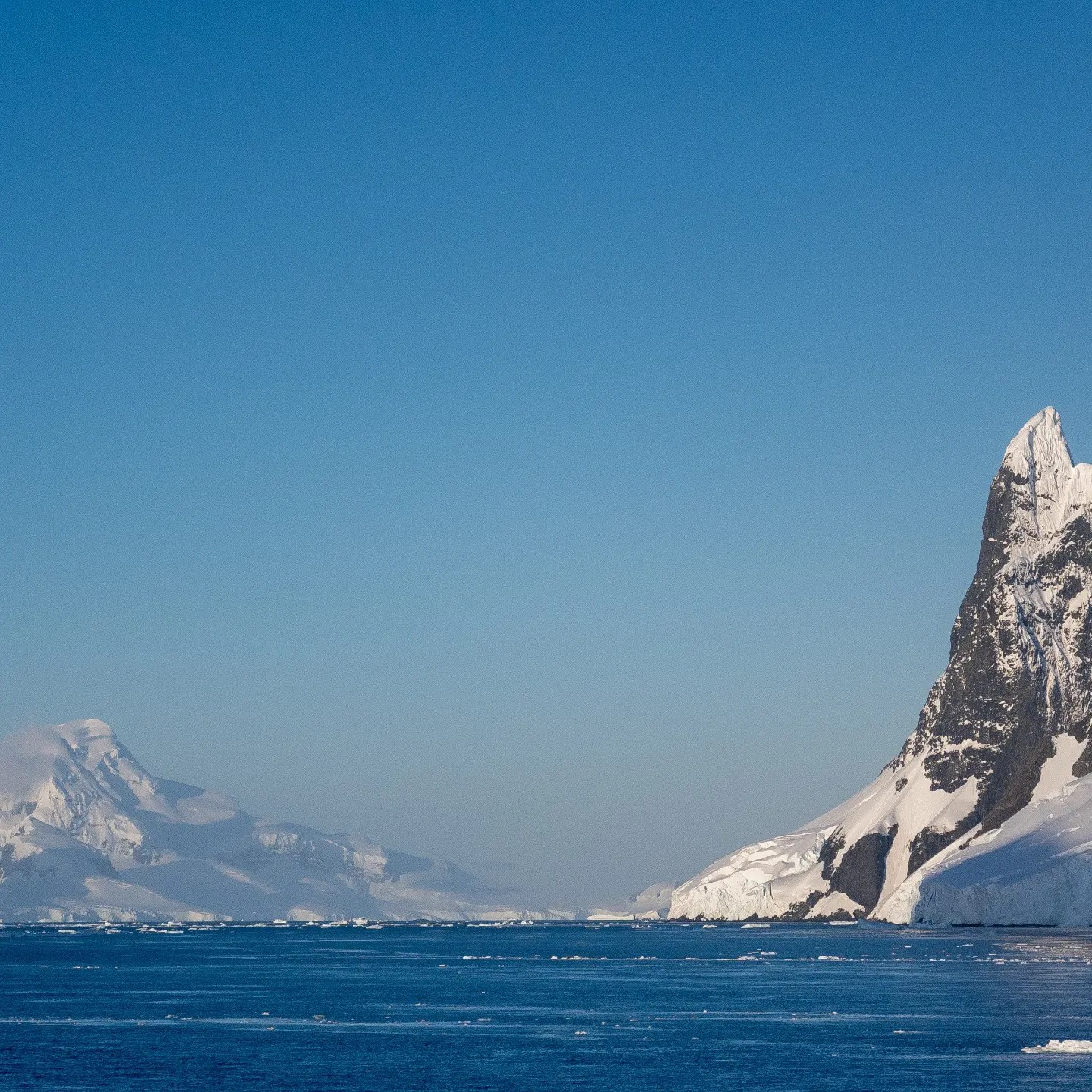
The water was sparkling and the sunlight was dancing along the ridgelines of the ice-crusted mountains. It was absolutely otherworldly.
The glaciers were spectacular and impressive. I think I mentioned in a previous post that I’d never seen a glacier before Antarctica. No such thing as starting small.
At one point, a gaggle of gentoo penguins swam past us, porpoise-style, cresting the water and then diving gracefully below. I hoped they were catching plenty of fish for their chicks back at the colony!
Just a short little detour for you today, as this was just a short little detour through the Lemaire Channel. But when it’s there, and the sun’s out, this glory is unmissable.
Next week: speaking of glory, I’ve got an Antarctic sunset for you!
On the afternoon of our third day in Antarctica, it was finally time for the moment we’d been anticipating for years – the first dipping of our kayak paddles into Antarctic waters! Our sea kayaking group had met several times for briefings and gear checks, but we’d been stymied until now in our efforts to actually get out on the water. But finally, the weather and ocean conditions were good enough that the sea kayak guides, YT and Jess, decided that we could go out. YAY!
The Yalour Islands were scheduled to be a zodiac cruise only, so there was no shore landing. So as all of our fellow passengers lined up to board their zodiacs, we zipped each other into dry suits and neoprene booties, shimmied into kayak skirts, and clambered into Big Bertha, an oversized zodiac that was piled with paddles and dragging about a dozen or so sea kayaks, ducky-style, behind it. Mark, our zodiac driver, motored us out to a secluded spot where YT – the lead guide – decided it was calm enough to launch.
I’m not sure what my fellow kayakers were most nervous about, but for me the biggest worry was this – launching from the zodiac. I have launched kayaks in all different ways – from beaches, docks, and knee deep water – but the idea of a zodiac launch was nerve-wracking. I was picturing a graceless tumble over the huge inflated pontoon, ending at best in an unattractive slide into the kayak cockpit and at worst in a capsized boat, an embarrassing splash, and me in the water with one or more of my new friends. Fortunately – none of that happened, and launching from the zodiac was easier and quicker than I feared.
And before we knew it, we were all launched, bobbing gently in the rolling waves, and waiting to set off on our first sea kayaking adventure!
I’m planning a Q&A post for later in this series, and I’ll explain more about the mechanics of the sea kayaking experience then – so just briefly, for now, sea kayaking is an add-on adventure for most Antarctic tour companies (including ours). We paid extra for the experience and the idea was that we would kayak as much as possible on the voyage, going out whenever weather and ocean conditions permitted. Kayaking replaced zodiac cruising but we’d still have shore landings – we would just unload our kayaks at Big Bertha and zodiac to shore, then catch whatever zodiac we could to head back to the ship after a landing. On days like this one, where no shore landing was planned, we’d kayak the entire time.
I could immediately tell that kayaking in Antarctica was going to be like nothing I had ever experienced. We paddled through brash ice and past towering glacier walls and icebergs. (Giving the icebergs a wide berth, because as YT explained, if one decided to roll over while we were paddling past: “Death. Death. Death. Death. Human crushers.” Got it.) And almost right away, we experienced another of the amazing experiences kayaking in Antarctica brings: close-up wildlife encounters.
We spotted a crabeater seal hauled out and enjoying a nap on a little slab of pancake ice. In our almost silent kayaks, we glided up to the closest spot where we could watch and still be safe and respectful of international wildlife viewing laws. The seal didn’t seem to notice us or care about our presence at all.
This paddle was one of the most fun experiences of my life – that’s not hyperbole, that’s true. Between the sparkling brash ice (such fun to paddle; it was like kayaking in a giant slushee), the amazing scenery, the napping crabeater seal… it was just totally different, unique, and such, such fun.
Little known to us, this was just the first of eight kayaking adventures on this trip – the most of any voyage all season. We were truly blessed in the weather and ocean conditions. So – plenty more paddling pictures to come!
Next week: we go through the Lemaire Channel again, because why not? But this time, there’s SUNSHINE! Check in with me then…
After a blissful hour spent gazing at whales (HEAVEN!) we turned our zodiac towards Petermann Island for our turn at a shore landing. As we cruised past the exposed rocks, we pointed delightedly at adorable penguins waddling around on the ice.
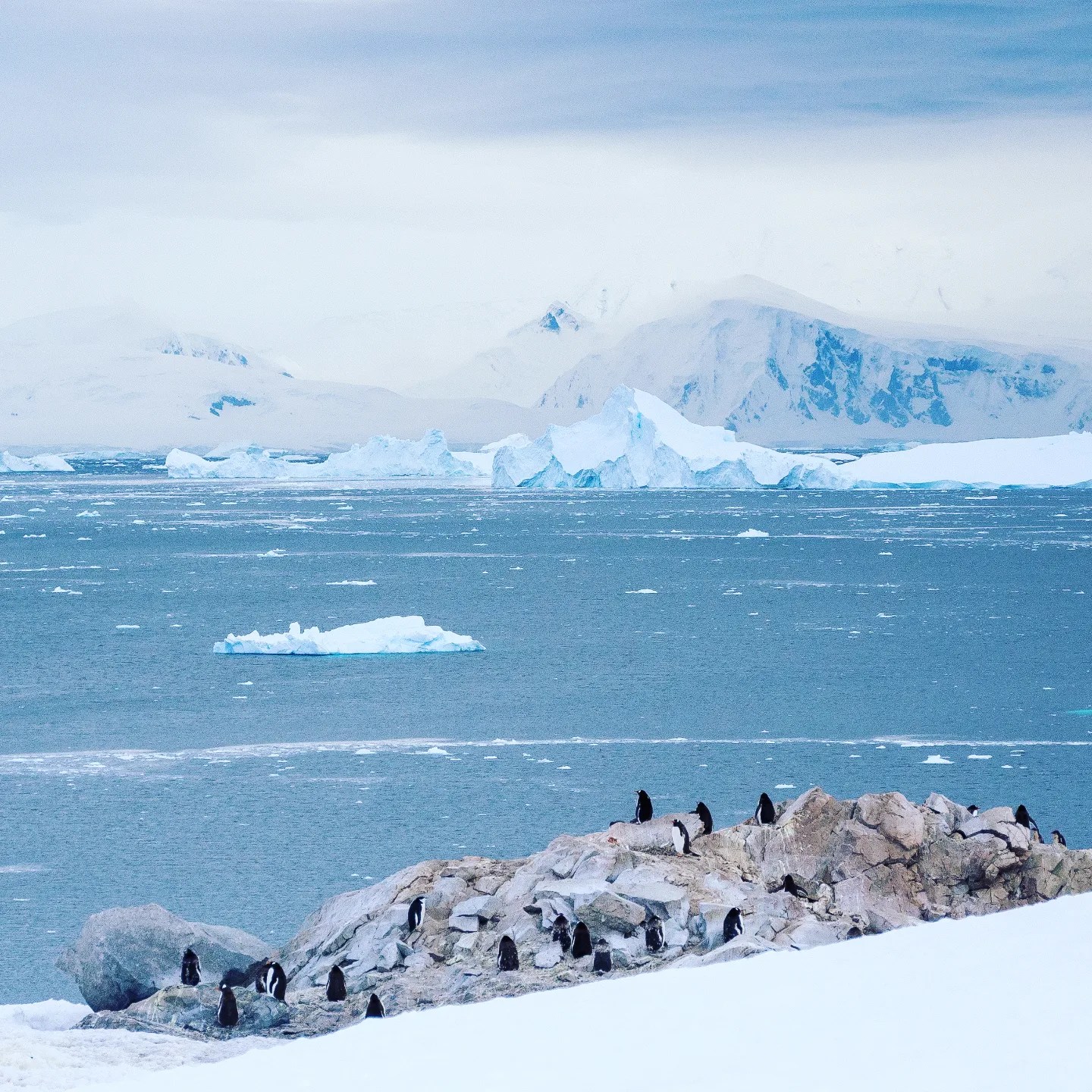
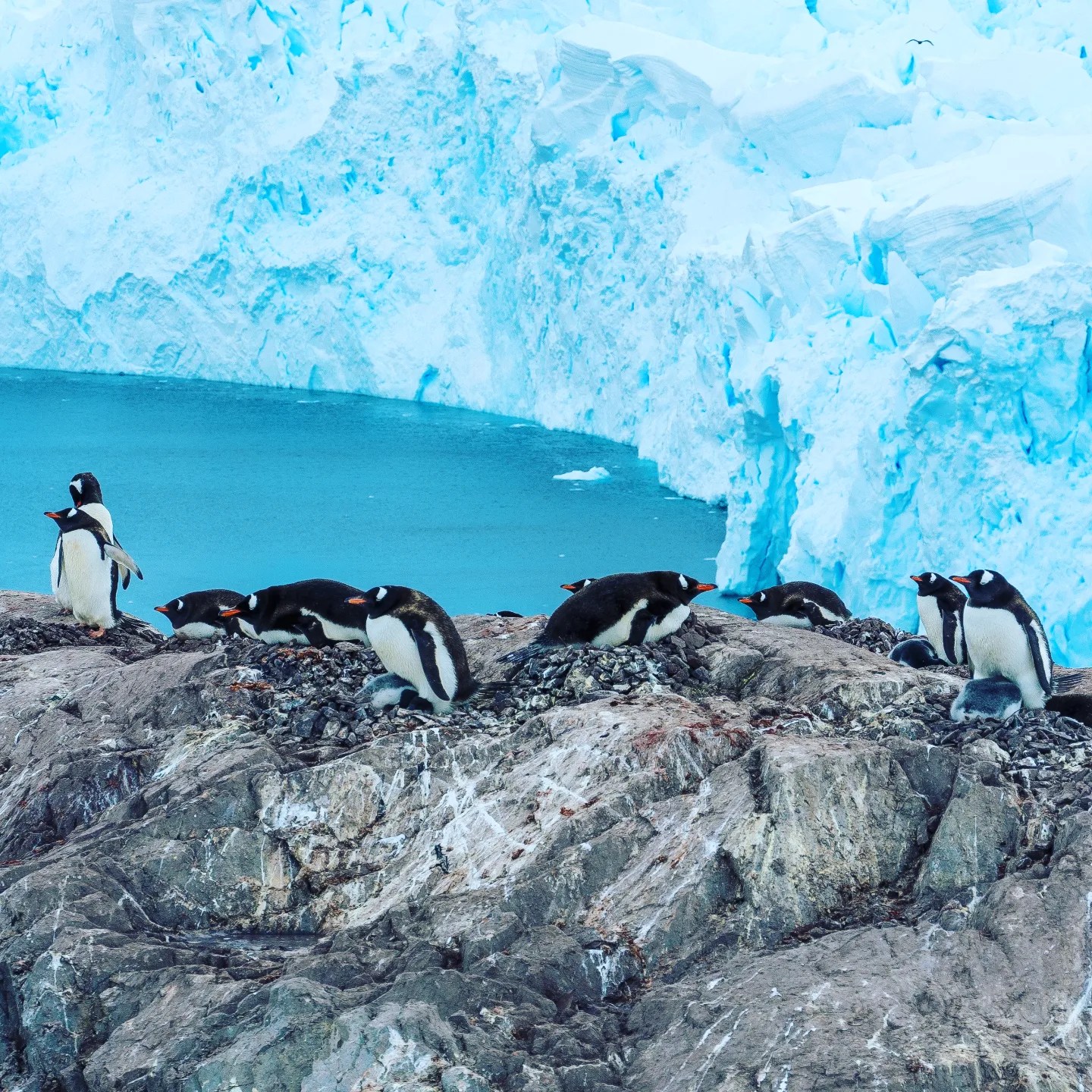
The vast majority of the penguins on Petermann Island were gentoos – the same type of penguins we’d seen at Port Charcot two days before.
One of my hopes for Antarctic wildlife viewing: to see a group of penguins dive in sync. Penguins generally don’t do anything individually – they are group-oriented animals – so the odds were good. I just thought it would be a neat thing to witness. And by neat, I mean… CUTE. Very, very CUTE.
Here’s a likely looking group. Are they contemplating a swim, maybe?
Everybody in formation!
AND GO.
We cruised up to the landing beach and – after a brief spot of trouble with our engine – hopped out and got to our land-based explorations.
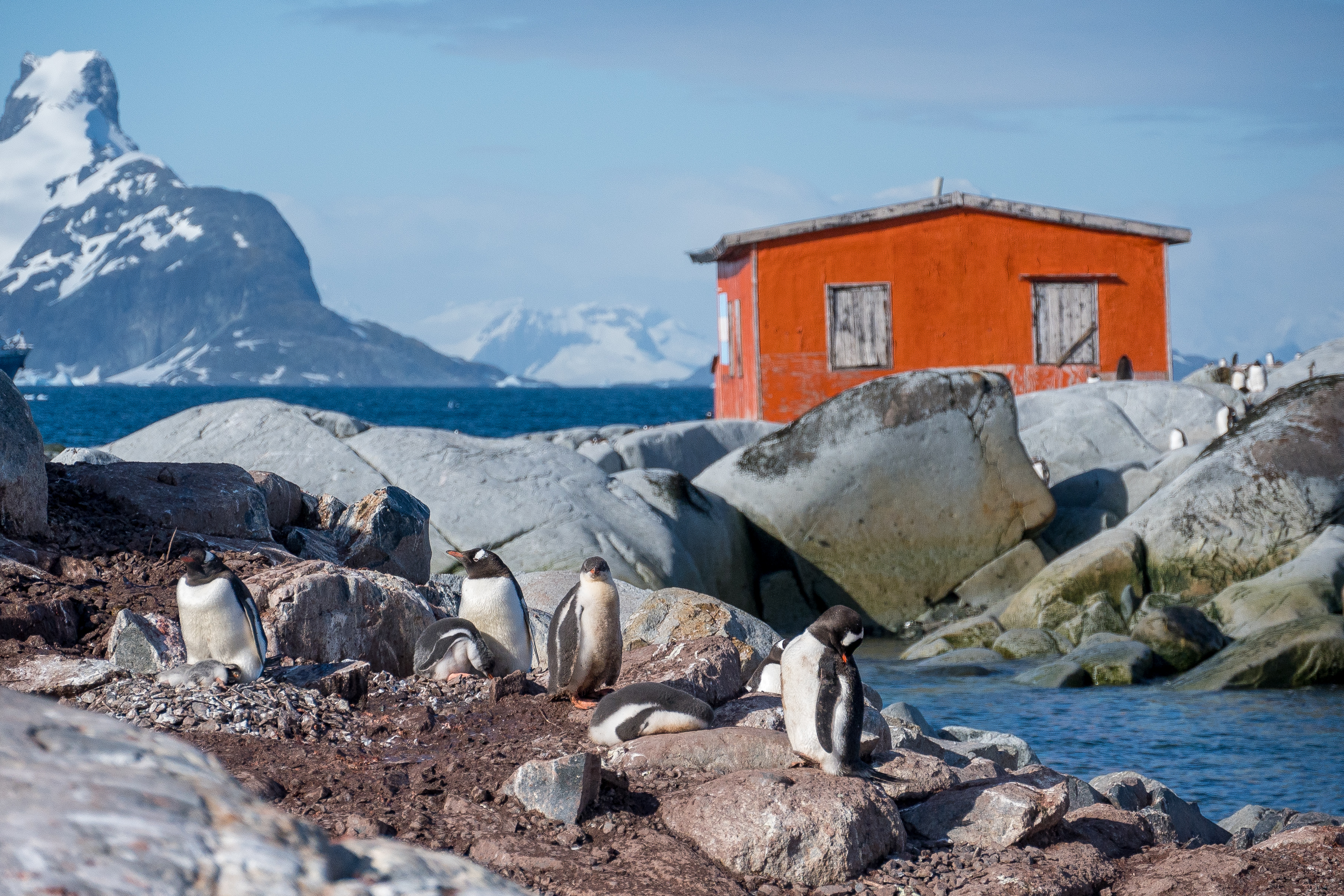
Petermann Island is home to one of the many “refuge huts” scattered around Antarctica – this one is maintained by Argentina. The refuge huts contain food and hydration and some first aid and personal supplies in case of emergency. Travelers are warned to stay away from the refuge huts (unless you actually need them, in which case things have gone wrong) but no one told the penguins.
They just view the refuge huts as a nice sheltered spot to build their nests, apparently.
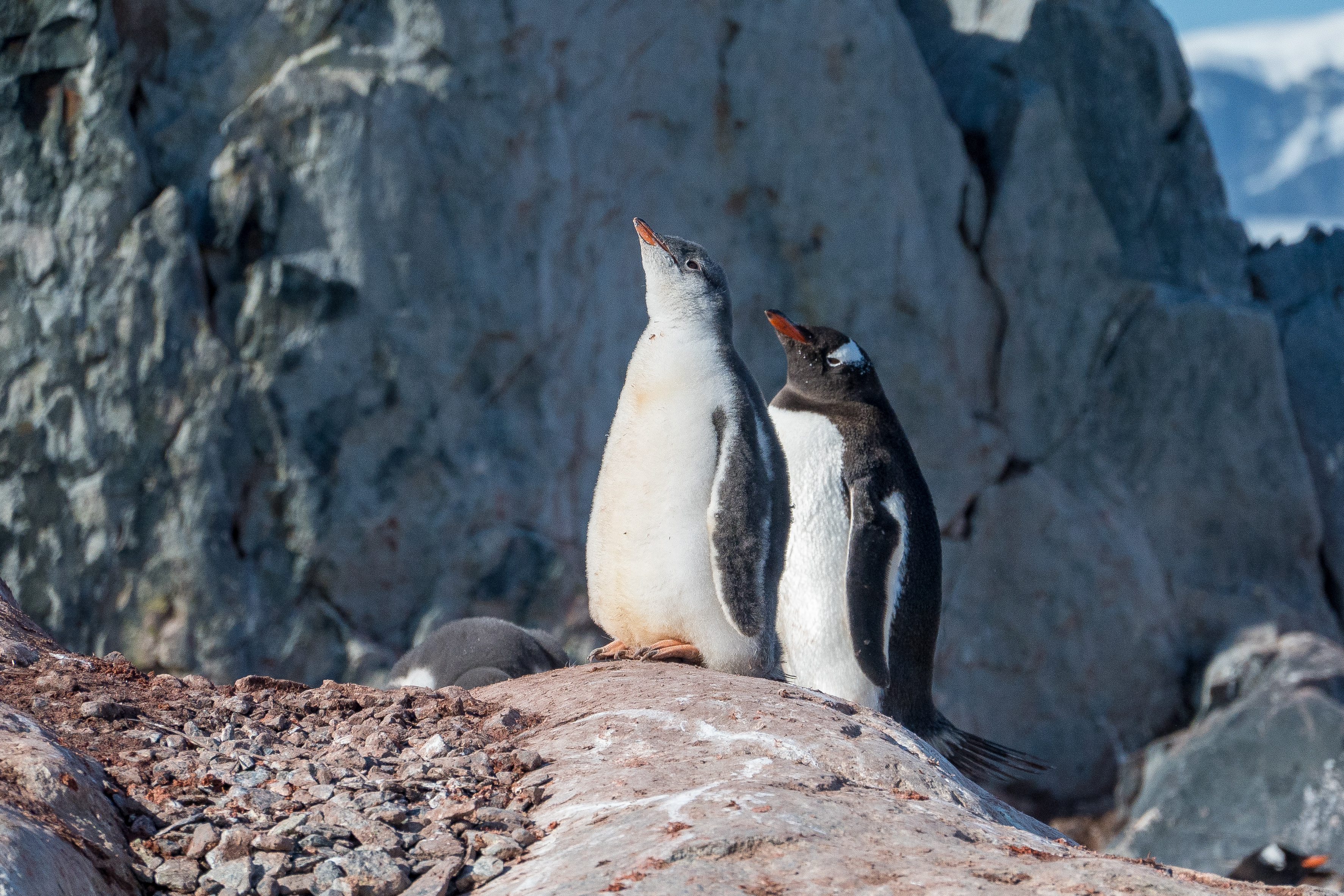
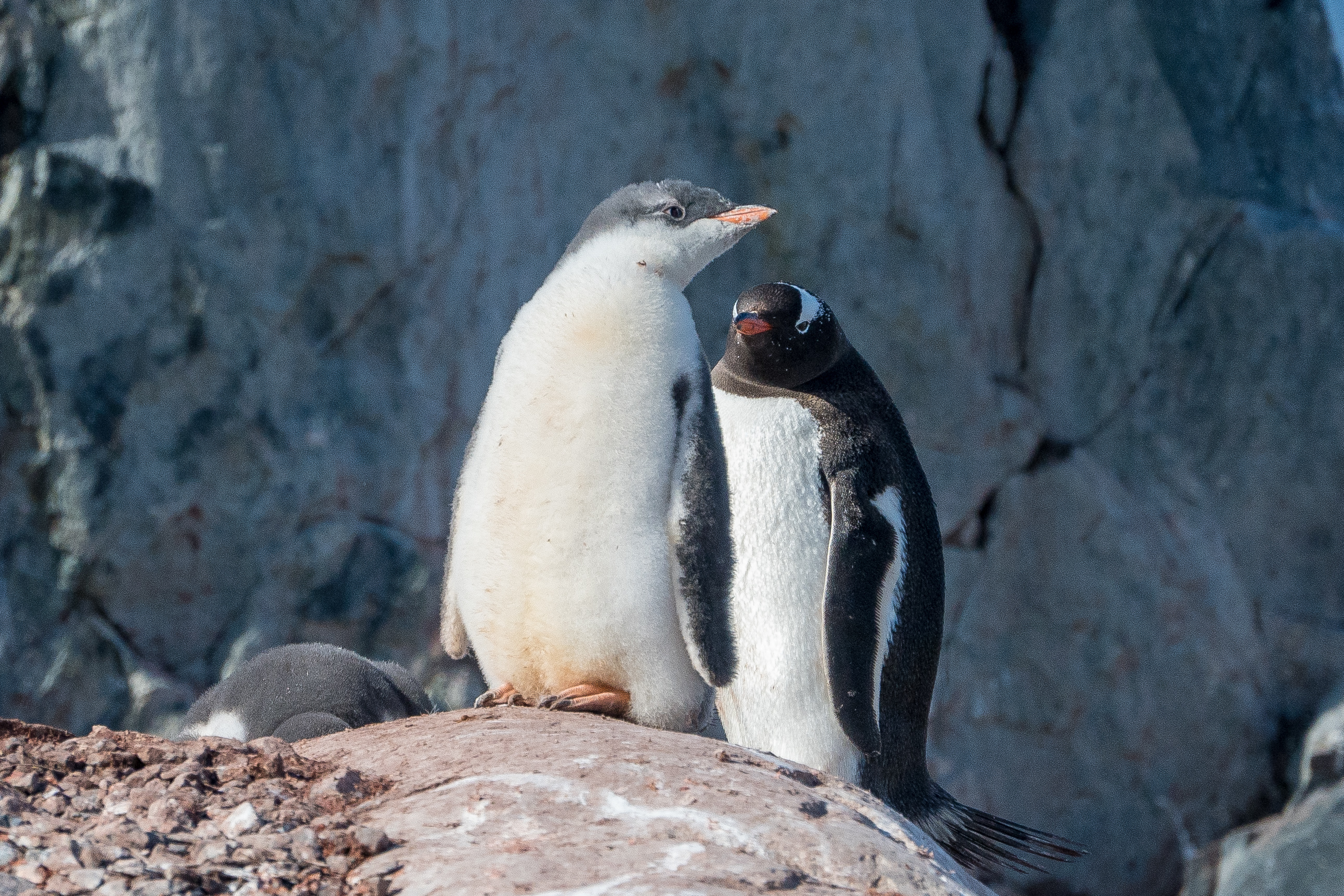
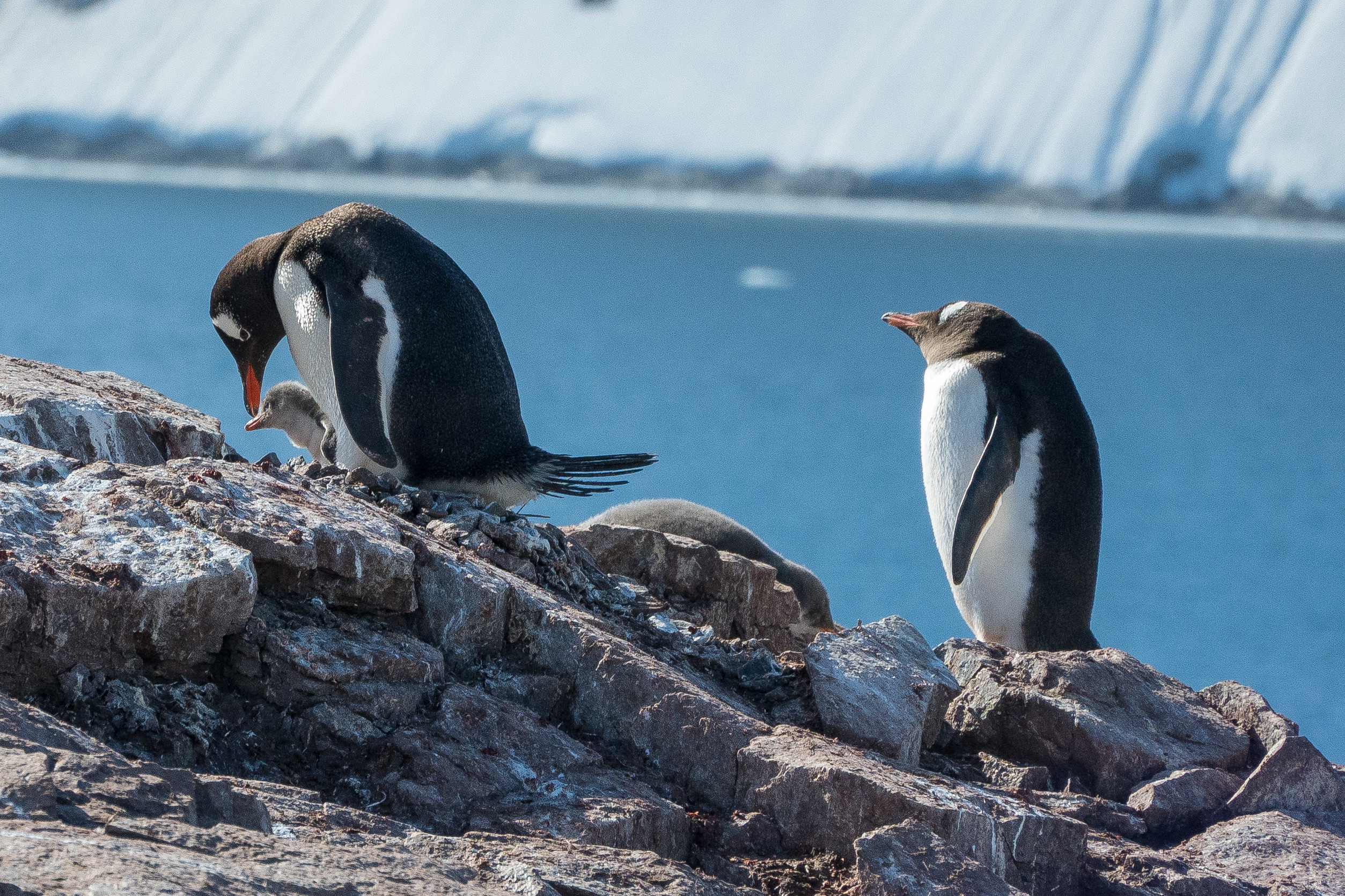
Chicks! As with every other landing spot, the chicks this year were a wide range of ages and sizes. This one was older. And very chubby and fuzzy and cute.
Ready for my close-up!
This landscape! It was incredible.
Just awesome. Emphasis on awe.
To protect the natural landscape and wildlife, the expedition guides would plot out walking routes on the landing sites before guests got on shore. There was always plenty to see and enjoy on the routes, and the expedition guides would be posted strategically around to answer questions and talk about the incredible natural beauty we were all experiencing.
The penguins, of course, do not pay attention to the flagged walking routes. They go wherever they darn well please.
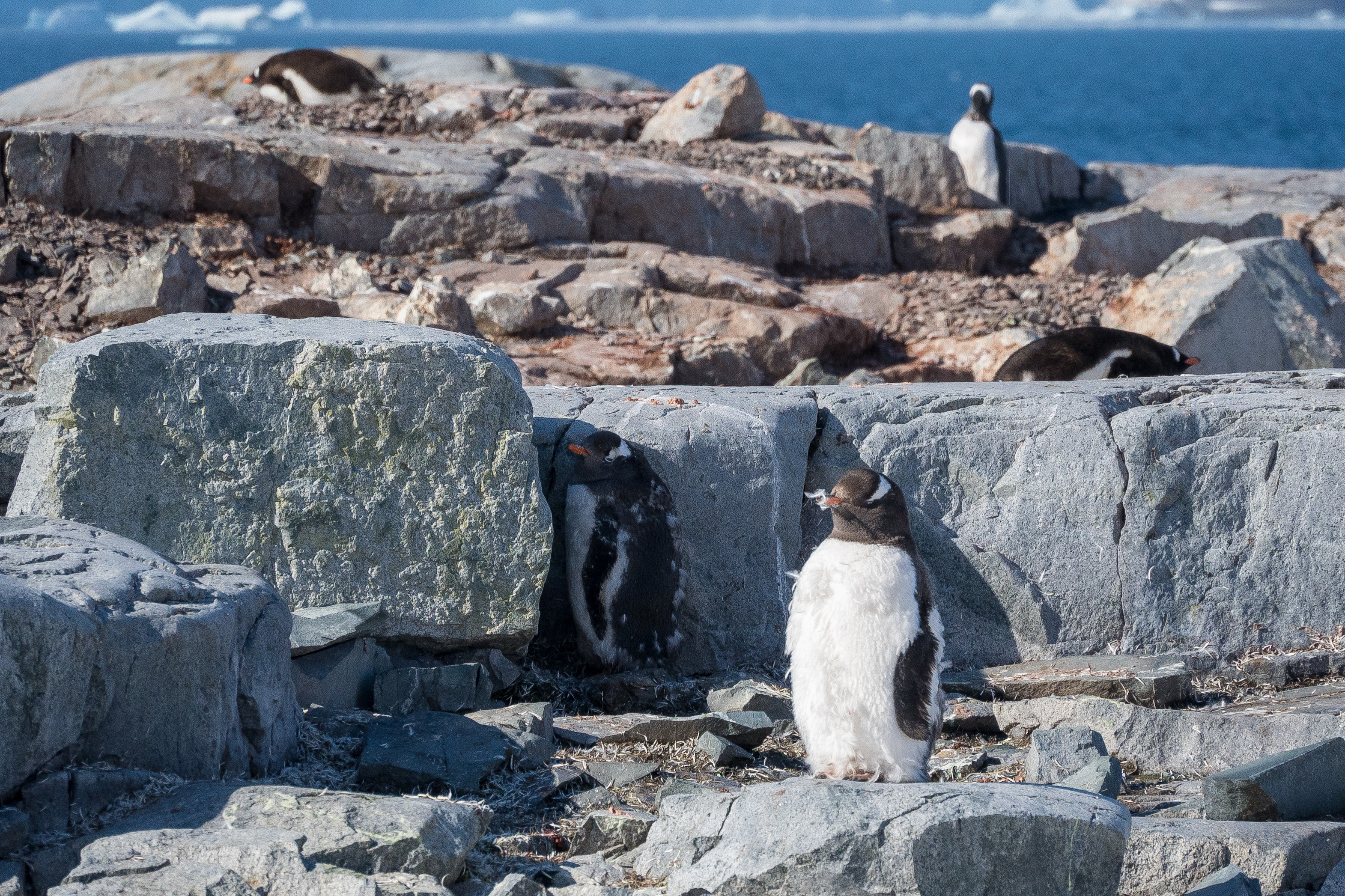
Many of the penguins in Antarctica were undergoing a “catastrophic molt,” where they shed all of their feathers and regrow new ones. Penguins that are molting cannot swim, and so they mostly sleep and pick at their feathers.
They looked so itchy and uncomfortable. I felt bad for them! But it’s natural and happens every year and they were just getting on with it.
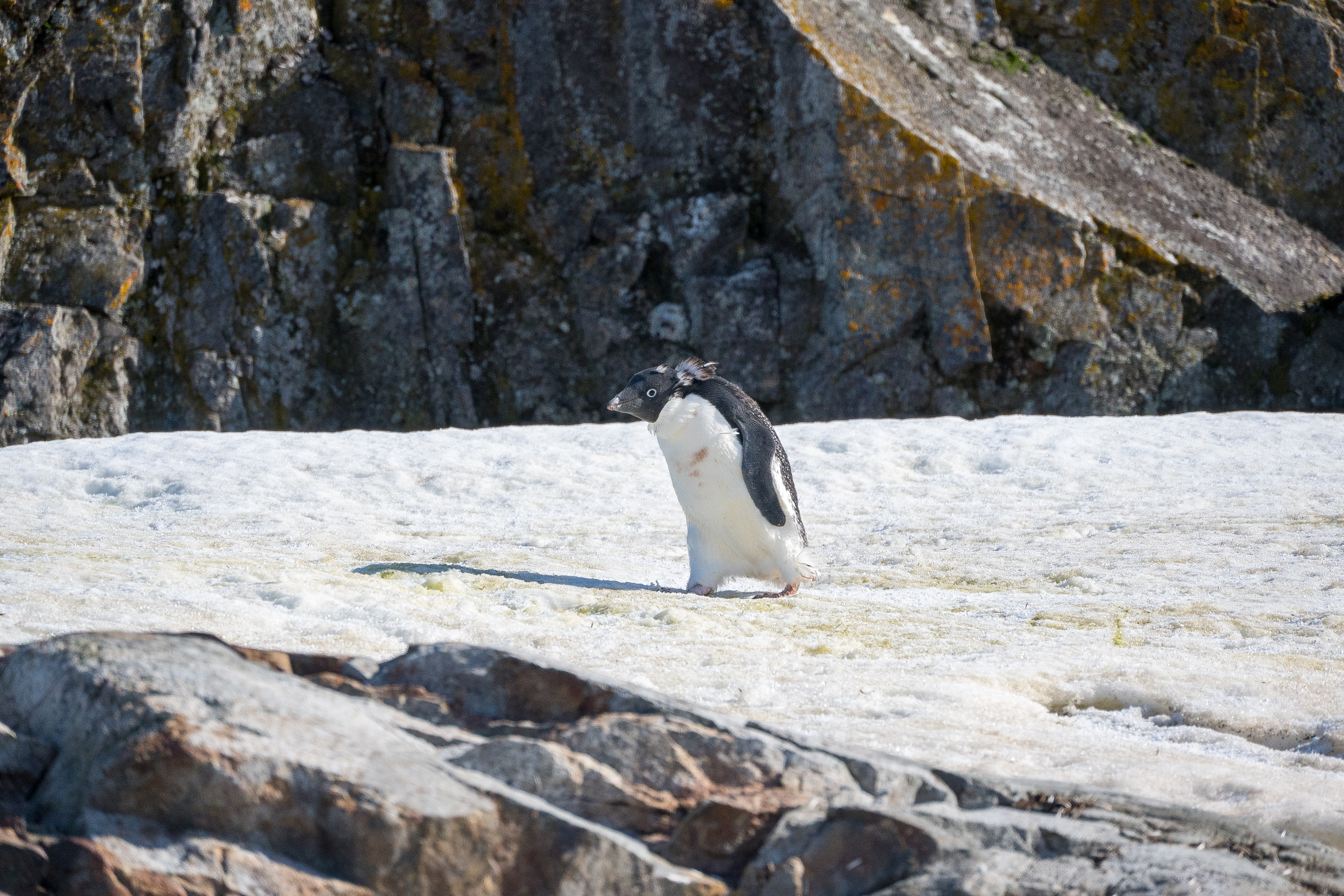
While we had been seeing exclusively gentoos, the trip ornithologist told us there was a small handful of adelie penguins on the island. Adelies are my favorites (because of Disney Nature: Penguins, of course) so I was beyond excited.
These little terrors are so full of sass and attitude. I just love them. Case in point: as I excitedly fiddled with my camera lens to try to get it in focus, this adelie bent over and…
It was disgusting. I was so happy.
He’s ashamed of himself.
All right, back to the gentoos.
Most of the chicks in this colony were older, and they were full on into “fat and happy” stage. And I learned something interesting: when the chicks get to be this age, the parents won’t feed them right away – instead they make them chase for their meals. This is intentional: it’s to help them develop the muscles and endurance they will need once they start to swim.
Welcome home, Dad! Did you bring me anything?
Dad! Dad!
Dad! Dad! Dad! Dad!
(Also could have been Mom. Male and female penguins are indistinguishable.)
Disney Nature: Penguins showed this chasing behavior, but didn’t explain it. So it was fun to learn that it’s an actual teaching mechanism and not just over-enthusiastic penguin babies and harassed parents.
This post is getting absurdly long, and I promise I’m almost done (see why I decided to break it into two?) but I can’t end without sharing with you the most adorable resident of Petermann Island. Yes, even cuter than the penguin chicks.
Meet the world’s roundest Weddell seal.
This guy (or gal) was stretched out on the ice on a little rise just off the beach where we were landing our zodiacs, just enjoying the sunshine. Fam. You have no idea how much I wanted to cuddle. If it wasn’t for my twin goals of Not Interfering With Antarctic Wildlife and Not Getting Bitten, I might even have tried. Because SO! CUTE!
See how close he was to the walking path? And just couldn’t have cared less about us. That’s a good nap.
What a wonderful, magical morning – truly one I’ll remember for the rest of my life.
Next week: we finally get our paddles wet – it’s time for our first kayak expedition!





















































 covered in flour