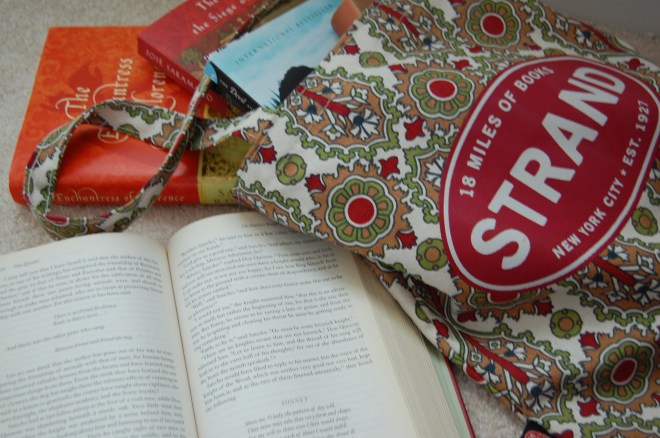
I’ve been a reader for as long as I can remember. I mean that literally. I cannot recall a time when books were not a huge part of my life. On the first day of kindergarten, I remember sitting at my table and wondering when we were going to learn to read. Now, I already knew how to read – my mom taught me when I was in preschool – so I’m not sure what I expected. To be inducted into some sort of secret society, perhaps. A secret society of readers. Or maybe some kind of turning point where I officially became a book person. Which I already was, and had been practically since birth.
There was never a time in my reading life where I had to learn to love reading and books. That came naturally to me. Turning pages, scanning printed words, imprinting stories upon my memory and imagination – those things took no effort. So most of my reading life has been spent honing my tastes… figuring out what I like, and what I don’t like… in short, forming an identity as a reader. For me, just identifying as a reader doesn’t go quite far enough. Of course I’m a reader. The question is, what kind of reader? That is something I’ve been figuring out all my life.
In elementary school and middle school, I read wide varieties of “young adult” fiction, although I’m not sure that’s what anyone called it. I read good stuff and junky stuff indiscriminately. I was just as likely to be glued to a book from the Sweet Valley series, or especially The Baby-Sitters Club, as I was to a copy of Anne of Green Gables or From the Mixed-Up Files of Mrs. Basil E. Frankweiler. I think the turning point for me, the point at which I started to think about content and get picky, came the summer after eighth grade. I don’t remember now what I did (probably mouth off), but my parents were punishing me for something. I was a weird kid, and normal punishments like taking away television or phone privileges had next to no effect on me – I barely watched television anyway and I’ve never been a phone person. So I suppose my parents had to get pretty creative when it came to discipline, and the punishment they dreamed up on this particular occasion was this: no books, except for “classics.” Functionally, that meant no Baby-Sitters Club. Oh, the humanity.
It was a week of enforced good taste. Not reading was obviously not an option. So I picked up a book that no one could argue with or take away: To Kill a Mockingbird. I still remember sitting on the couch with my book and my parents occasionally coming into the room to ask me, accusingly, what I was reading. My response, emphatic and defensive, was always: “To Kill a Mockingbird! It’s a CLASSIC!” Take that, parents. As it turned out, when the summer ended and I started ninth grade Honors English, I was glad to have already read To Kill a Mockingbird. By then, it had become one of my favorite books – I’d already read it twice by the time it was assigned in the spring semester – and I was able to delve more deeply into the characters and the story. For a class project, I wrote a journal from the perspective of Atticus Finch and my very demanding, altogether wonderful teacher was thrilled with it. She said I became Atticus. Looking back, I owe quite the debt of gratitude to To Kill a Mockingbird. Not only was it the catalyst for a change in my reading life, but Atticus Finch is one of the reasons I became a lawyer.
Ninth grade changed my reading life beyond To Kill a Mockingbird. I read Jane Austen for the first time – Sense and Sensibility was my introduction into Regency England; I identified with serious, pragmatic Elinor and rolled my eyes at dreamy Marianne. My English teacher – the same one who assigned To Kill a Mockingbird – encouraged me to read Eudora Welty. I read my first Shakespeare play. By the end of the year, I was a full-on book snob. By the end of high school, all of my Baby-Sitters Club books were in the basement, replaced on my shelves by meticulously organized, scrupulously chosen classics. For years, my criteria for any book I read was that I had to be proud to tell my ninth grade English teacher that I was reading it. If it wasn’t a book I would want to show to her, I wouldn’t touch it. In 1997, I set a goal to read 50 books, all books that I hadn’t read before, that were not assigned for school, and that I would be proud to show that particular teacher. I met that goal, but I was reading up until about 9:00 p.m. on December 31st to make it – and book 50 was actually an epic poem, which I wasn’t sure should really count, but desperate times and all that. In 2007 I set the same goal, only this time I had to read 100 books, all books I hadn’t read before. But the other criteria was the same – I had to be proud of each and every book if I happened to see my English teacher.
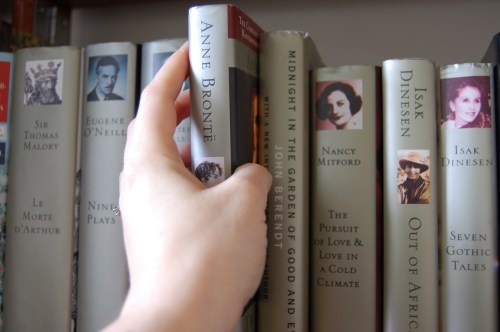
I never stopped “reading for fun,” even when life got very busy. My college major, Industrial and Labor Relations, was notoriously heavy on reading assignments. It was a campus joke to refer to ILR as “I Love Reading” – in fact, I remember my grandparents dropping me off for accepted students’ weekend in March of my senior year in high school. We bumped into some upperclassmen, who asked what school I would be in. I told them ILR and they laughed, “Oh, I Love Reading!” My grandparents – coming to my defense – said seriously, “She really does love reading.” The campus joke was right on; ILR kept me busy with reading assignments. I probably had quadruple the books on my windowsill – maybe even more – in comparison to my roommate, a nutrition major. Still, I still found time to squeeze non-labor books in (just not too many; I did have a G.P.A. to think about in light of my looming law school applications). If I ever fell off the book bandwagon, it was in law school, especially second and third year when every moment of every day was accounted for. But I always caught up during the summers. And then came my first job – a government job, with enforced maximum hours and a handful of new friends who happened to be as book-obsessed as I was. My reading life exploded into activity (hence the 100-books-in-2007 challenge). And I haven’t slowed down since. Sometimes I’m asked how I can read and write all day – which, indeed, I do: cases and contracts and briefs, oh my! – and then go home to curl up with a book all evening. I can’t really explain it, except to say that I have yet to bump up against my limit when it comes to words I can stand to read or pages I can stand to turn. And legal writing is very different from the fiction I favor in my off hours. I don’t feel overloaded at all.
I’ve been a reader for more than two decades now. (I don’t know how long, precisely, because as I said I don’t remember not being able to read.) In that time, I’ve read good books and bad books, and a very few books that I had to stop midway through because they were just awful. I’ve discovered what I don’t like: science fiction, most fantasy (except for my beloved Harry Potter), most dystopia, and most “young adult” fiction. And I’ve honed a description of what I do especially like: classics (especially English literature), new literary fiction, well-researched historical fiction with strong characters, travel memoirs, and British mysteries. More than just knowing my likes and dislikes – which was a long process – I feel that I have finally assembled my identity as a reader: I am mainly a fiction reader with a preference for both historical classics and new literary fiction with well-drawn characters, but I will read non-fiction books that evoke a sense of place or personality. I favor simple but evocative language and tight plots. I’ll give most books a chance, especially in my preferred genres, but in order to earn a spot on my permanent shelf a book has to engage me from the beginning, give me relatable characters and a well-drawn plot, and reward me with a satisfying ending. My preferences may change over time – in fact, I’m sure they will – but I’m sure I’ll always have strong opinions about books.
What about you – what kind of reader are you?




 covered in flour