Lit Bits, Volume IV

Random thoughts about books and reading…

I currently have 36 books checked out of the library.  The maximum that a patron can check out at any one time is 50, so I am well over halfway to the max.  The pile is so tall that the North Carolina whelk shell that lives on top of my library checkouts is just barely clearing the underside of the kitchen cabinet.  Now, just to be clear: this is not all my doing.  The kids have contributed to the excessive library stack.  But – still.  Ridiculous.  (N.B. This is no longer true, as of the date of publication of this post.  It’s way down now.  But it was true when I started the post, and is still ridiculous.)

It’s funny how a book that you thought was just a good time can surprise you with a message.  A few weeks after finishing Time’s Convert, I was driving along on the highway (taking the kids to the Udvar-Hazy Center to meet up with a school friend) and the thought popped into my head that Time’s Convert had a lot to do with consent.  A vampire novel could easily slip across an invisible line, but Deborah Harkness’s vampires are very concerned with consent.  They don’t always seek it, especially while hunting, but the more modern vampires in particular are very uncomfortable with the idea of “feeding” without it.  There is a scene in which Miriam produces a woman to feed Phoebe, and Phoebe finds the whole scene distressing.  She finally mumbles “thank you” and the woman – who is perfectly aware of why she’s there and what Phoebe is supposed to be doing – congratulates Miriam on how well-brought-up her vampire “daughter” is.  And when the vampires actually create a new one of their number, they have a long speech they go through to make sure the human in question knows exactly what they are getting into and is 100% on board.  (It doesn’t always work, because what human actually believes they are about to be made into a vampire?  But they try.)  I found it fascinating that the vampires were worried about consent, and tried to obtain it, and I wish that they always did.  I’m still not sure that Harkness handled the issue as well as I would have liked, but it was just interesting that a book I thought was purely a fun read could have prompted this line of thinking weeks later.

Apparently everyone knows I have a problem?  My BFF, Rebecca, recently urged me (again) to read a book by her favorite author, Susan Fletcher.  She also said: “I was going to loan you my copy, but I decided if I did, you’d never read it.  I figured I’d let you get it from the library instead, and then maybe you’ll actually read it.”  Point taken.  Point taken.  I’m a library junkie.  And I guess everyone knows.

Steve and I watched the adaptation of Good Omens together.  As expected, he loved it.  But he still hasn’t read the book.  I keep pressing it on him and telling him he’d love it (and to be fair, I don’t push books on him unless I’m sure he would really enjoy them; no one is telling him to read Cranford).  He says he’ll get to it after he’s done with his current Patrick Rothfuss doorstopper.  So – next year sometime?  I’m on record as saying I don’t mind being married to a non-reader, because HELLO, more bookshelf space for me.  But still, I want him to read the books I want him to read.  Is that normal?  I’m a complicated lady.
Poetry Friday: The Seven of Pentacles, by Marge Piercy

The Seven of Pentacles

Under a sky the color of pea soup
she is looking at her work growing away there
actively, thickly like grapevines or pole beans
as things grow in the real world, slowly enough.
If you tend them properly, if you mulch, if you water,
if you provide birds that eat insects a home and winter food,
if the sun shines and you pick off caterpillars,
if the praying mantis comes and the ladybugs and the bees,
then the plants flourish, but at their own internal clock.

Connections are made slowly, sometimes they grow underground.
You cannot tell always by looking what is happening.
More than half the tree is spread out in the soil under your feet.
Penetrate quietly as the earthworm that blows no trumpet.
Fight persistently as the creeper that brings down the tree.
Spread like the squash plant that overruns the garden.
Gnaw in the dark and use the sun to make sugar.

Weave real connections, create real nodes, build real houses.
Live a life you can endure: Make love that is loving.
Keep tangling and interweaving and taking more in,
a thicket and bramble wilderness to the outside but to us
interconnected with rabbit runs and burrows and lairs.

Live as if you liked yourself, and it may happen:
reach out, keep reaching out, keep bringing in.
This is how we are going to live for a long time: not always,
for every gardener knows that after the digging, after
the planting,
after the long season of tending and growth, the harvest comes.

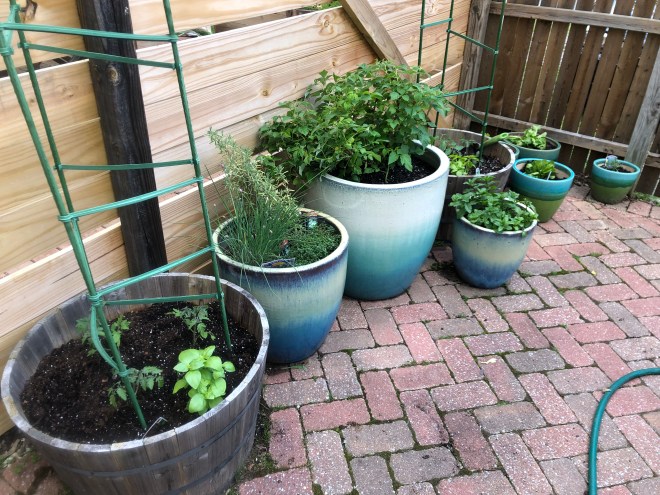
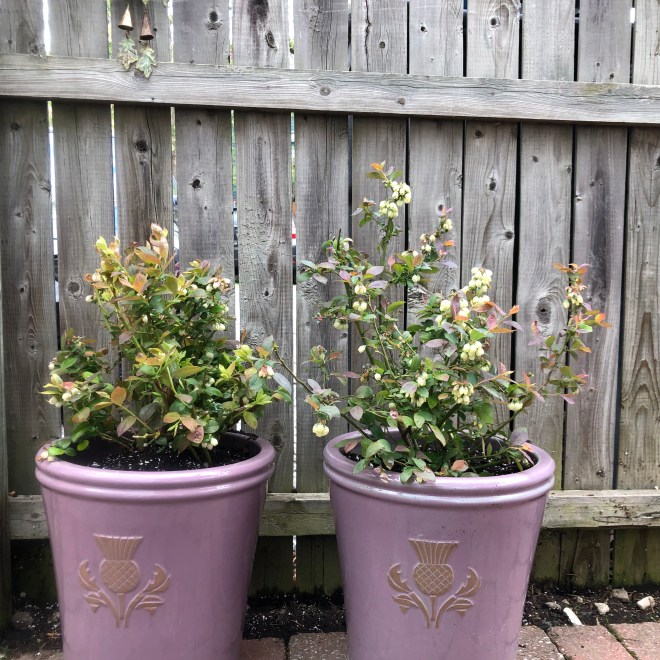
My garden is planted – not in the ground, but in pots, again.  I’ll be tending it over the rest of spring and throughout the long, hot northern Virginia summer.  And I’ve planted hopes in here along with the tomatoes, herbs, butter lettuce, berries.  Hopes for a bountiful harvest – both of fruits and vegetables and of memories as I tend these pots with my littles.  Hopes of faces puckered with the juicy tang of a fresh cherry tomato, of the wonders of blueberries growing right on our patio, of blessings blooming in this home all year round as I’ve bribed the goddess with the lavender by my garden gate.  And of bountiful harvests of food and connection to you, my friends.

Poetry Friday: Children, It’s Spring, by Mary Oliver

Children, It’s Spring

And this is the lady
Whom everyone loves,
Ms. Violet
in her purple gown

Or, on special occasions,
A dress the color
Of sunlight. She sits
In the mossy weeds and waits

To be noticed.
She loves dampness.
She loves attention.
She loves especially

To be picked by careful fingers,
Young fingers, entranced
By what has happened
To the world.

We, the older ones,
Call it Spring,
And we have been through it
Many times.

But there is still nothing
Like the children bringing home
Such happiness
In their small hands.

~Mary Oliver

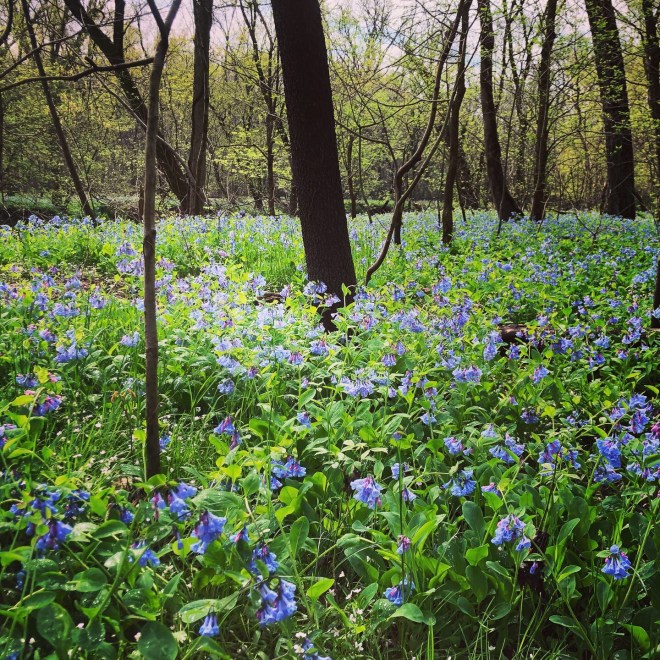
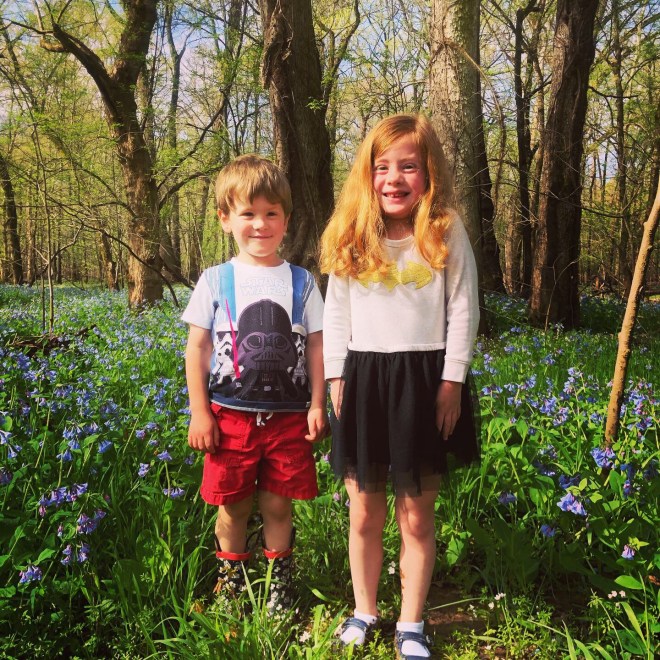
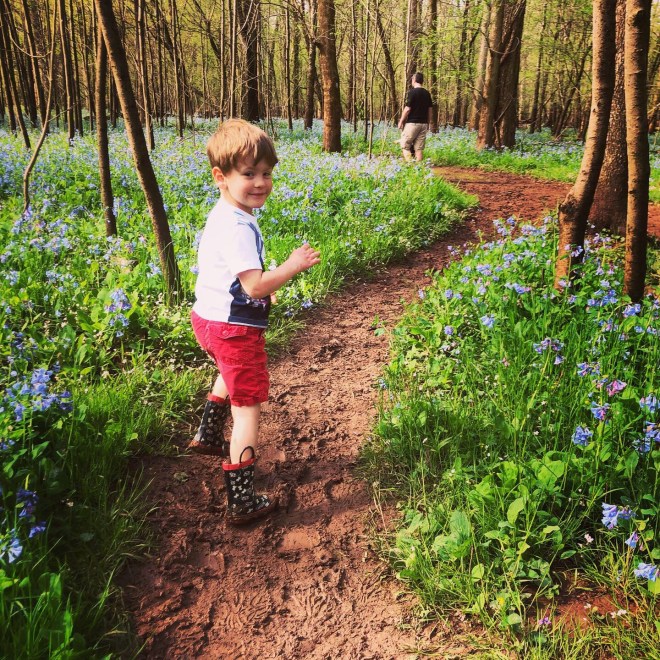
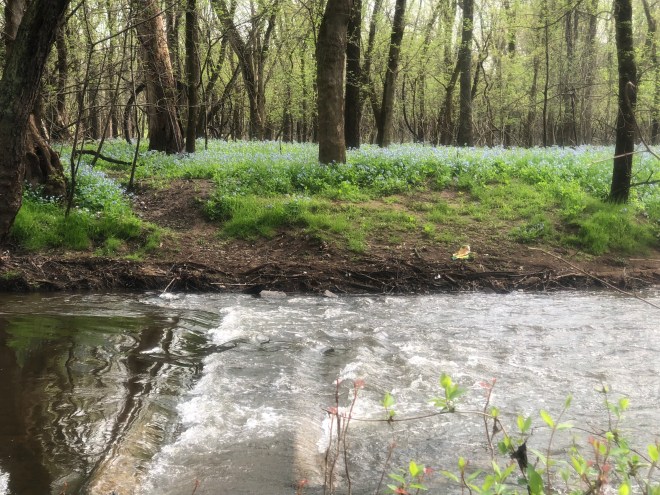
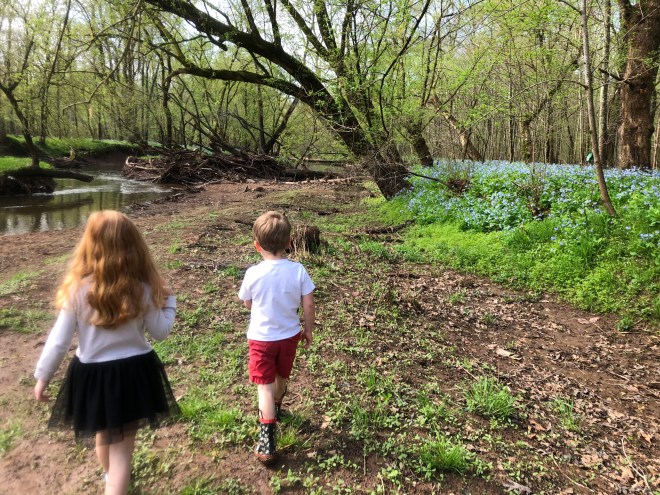
Of all the wonderful things about kids, one of the best is the joy with which they approach life.  Everything is new for them, and seeing it through their eyes, the world is new for us too.  We didn’t pick any of these bluebells – so this wasn’t a case of bringing happiness home in their small hands, as Mary Oliver would say – but I know they remember these fairy bells and look forward all year long to this one day of glory.  And if there’s a chance to stomp in puddles and get covered with mud at the same time, well, so much the better.

Do you have a favorite spring memory from your childhood?

Oliver Cromwell, Or Actually Maybe Not, Never Mind

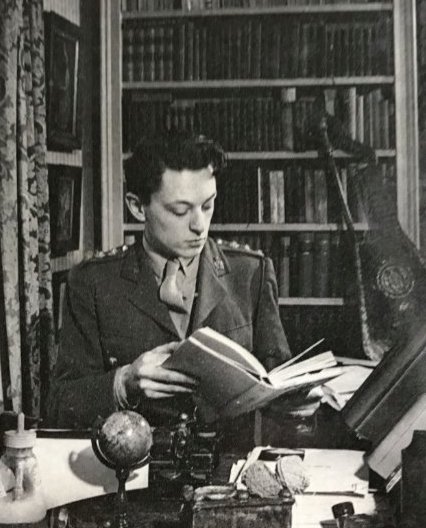
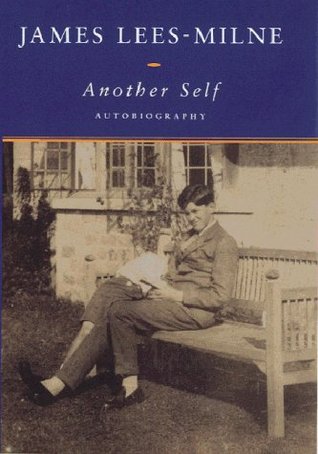
I’ve been reading James Lees-Milne’s memoir, Another Self (in preparation for, I hope, picking up his diaries very soon) and came upon a passage near the end, which made me laugh so hard I spit out the wine I was drinking – JL-M would have been horrified.  Ordinarily I’d read it aloud to Steve, but he’s in the middle of a video game and I can’t get his attention.  So – I take to the blog.  Here’s Lees-Milne talking about his days fighting for His Majesty during World War II:

I had spent barely a month at the training barracks at Lingfield, when I was posted to Dover.  The Battle of Britain was in full swing.  Hitler’s invasion of England was expected at any moment.  We lived on the alert.  Day and night an officer was kept on duty awaiting from some higher intelligence the warning code signal, ‘Oliver Cromwell.’  When this ominous name came down the telephone the officer knew that the invasion was on the way.  He must instantly without wasting a second ring through to the Colonel and arouse the whole battalion.  At 3 o’clock one morning it was my turn to be on duty.  Rather drowsily I was reading Barchester Towers.  The telephone rang.  I picked up the receiver.  ‘This is Higher Command QE2X speaking,’ came from a rather cissy voice a long way off.  ‘I say, old boy, sorry to tell you – Oliver Cromwell!’  ‘What?’ I screamed, my heart in my boots.  ‘Are you sure?  Are you absolutely sure?’  I had no reason for questioning the man’s words beyond the utter horror of the announcement.  ‘Well, I may have got it wrong,’ the voice said affectedly.  ‘Then for dear Christ’s sake,’ I pleaded, ‘do get it right.’  There was a pause, during which I had my finger on the special telephone to the Colonel’s bedroom, as it were on the pulse of England.  ‘Sorry, old chap,’ the voice came back again.  ‘It’s only Wat Tyler.  I get so confused with these historical blokes.’  ‘Wat Tyler,’ I said sharply, ‘was a very different sort of bloke indeed.  He didn’t unleash hell and damnation like the other.  No doubt he would have liked to.  But he was strung up by the Lord Mayor before he got a chance.  You deserve no less for giving me the fright of my life.  So good night to you, or good morning, or whatever it is!’

We have James Lees-Milne to thank, largely, for the National Trust, for writing twelve volumes of witty and slightly rude diaries that I can’t wait to read, for being singularly unimpressed by Princess Margaret, and for causing me to choke on my sauvignon blanc.  That is a contribution to the arts and letters indeed.

Have you ever read Lees-Milne?  Do you happen to know if he’s related to Christopher Robin?

Poetry Friday: Loveliest of Trees, by A.E. Housman

Loveliest of trees, the cherry now
Is hung with bloom along the bough,
And stands about the woodland ride
Wearing white for Eastertide.

Now, of my threescore years and ten
Twenty will not come again,
And take from seventy springs a score,
It only leaves me fifty more.

And since to look at things in bloom
Fifty springs are little room,
About the woodlands I will go
To see the cherry hung with snow.

~A.E. Housman

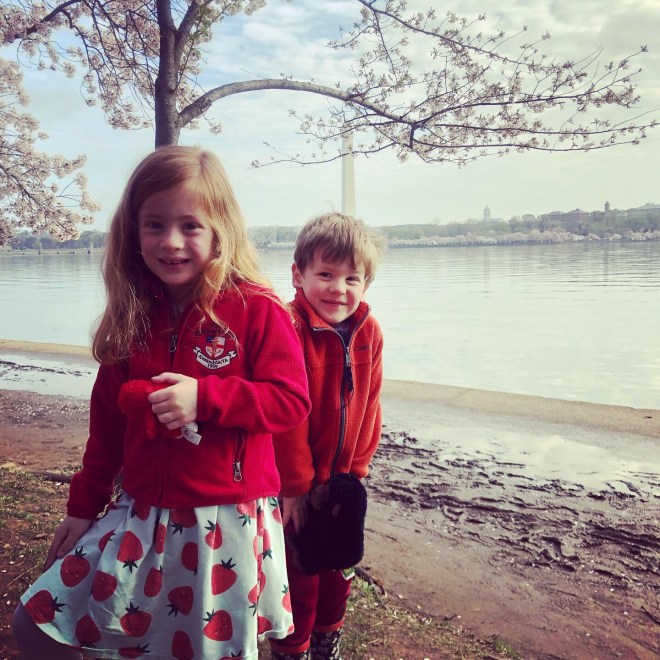
What better poem to celebrate cherry blossom season?  We don’t go to the Tidal Basin every year because the crowds are always ridiculous, but this year – we just felt like taking in the blooms from the prime spot.  Housman’s poem is a little melancholy, it’s true, but it speaks to the fleeting glories of spring.  We all take them in when we can, don’t we?

Is there a must-do spring activity in your part of the world?

Poetry Friday: i am a little church, by e.e. cummings

i am a little church

i am a little church(no great cathedral)
far from the splendor and squalor of hurrying cities
–i do not worry if briefer days grow briefest
i am not sorry when sun and rain make april

my life is the life of the reaper and the sower;
my prayers are prayers of earth’s own clumsily striving
(finding and losing and laughing and crying)children
whose any sadness or joy is my grief or my gladness

around me surges a miracle of unceasing
birth and glory and death and resurrection:
over my sleeping self float flaming symbols
of hope, and i wake to a perfect patience of mountains

i am a little church(far from the frantic
world with its rapture and anguish)at peace with nature
-i do not worry if longer nights grow longest;
i am not sorry when silence becomes singing

winter by spring,i lift my diminutive spire to
merciful Him Whose only now is forever:
standing erect in the deathless truth of His presence
(welcoming humbly His light and proudly His darkness)

~e.e. cummings

I know that I post this poem every year at this time, but it’s my favorite, so I’m just going to keep right on sharing it over and over again.  I love everything about it: the carefully chosen words, the beautifully constructed images, the rhythm of the lines as they roll on.  I’ve said plenty of words about this spare set of verses, so this time I’ll just urge you to read, read again, and enjoy.

Happy National Poetry Month!

In Which I Can’t Remember If I’ve Read THE MURDER OF ROGER ACKROYD

(No spoilers ahead!)  I expect most avid readers have this experience at one time or another: the distinctly unsettling inability to recall whether or not one has read a particular book.  There’s the feeling that you probably have read it, at some point or another – but before you joined Goodreads or Library Thing, so it’s impossible to verify.  You dread it coming up in conversation, because you’ll have to confess your uncertainty: you might have read it, but then again, you might not have.  If the confession is made to other bookish folks, odds are they’ll understand.  But the general public is less likely to make allowances.  They’ll either assume it was a forgettable book, or they’ll think you scatterbrained.

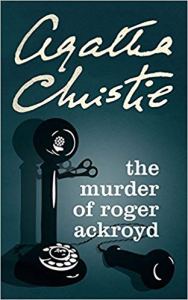
For me, the book was The Murder of Roger Ackroyd.  I went through my early adulthood assuming I’d read it.  You see, the library in my small town was correspondingly small when I was growing up.  It has since expanded into a huge, beautiful building and added to the collection – happily for my town.  But when I was a kid, the library was housed in one or two rooms in the town hall, and the collection was fairly limited.  Once I’d tornadoed through the middle grade books and moved on to books for adults, choices were somewhat restricted.  Two authors the library had near complete collections of were Pearl S. Buck and Agatha Christie, so I worked my way through both of them.

Since The Murder of Roger Ackroyd is one of Christie’s earliest books and also one of her most famous, I’m sure the library had a copy of it, and I’ve been equally sure I read it in high school.  But somewhere, along the way, I started to have some doubts.  Whenever I heard Roger Ackroyd mentioned – in conversation or on podcasts – the speaker would invariably marvel at the surprise ending.  The more I heard about Roger Ackroyd, the more I started to think I couldn’t have read it after all.  Although I’ve forgotten the ending to every Agatha Christie I’ve ever read (except for Murder on the Orient Express, which is both extremely memorable in its own right and is also a movie starring Lauren Bacall, who I love) I figured if the ending to Roger Ackroyd was that shocking, I’d have remembered it.  So I must not have read it after all.

Torquay, home of Agatha Christie

After hearing The Seven Deaths of Evelyn Hardcastle, which I enjoyed, compared to Roger Ackroyd, I decided it was about time I read this classic crime novel I’d somehow – clearly – missed.  I spent the first half of the book enjoying myself immensely and completely convinced I’d not read it before.  Then somewhere after the midpoint, I started to harbor doubts about a particular character, and by about the third or fourth chapter from the end, I was distinctly suspicious.  Several pages before Hercule Poirot’s big reveal, I confidently declared “Oh! So-and-so did it.”

I was right.

I don’t usually guess the endings to mystery novels, least of all those crafted by the Queen of Crime.  One of the things I love about Christie is that she keeps me guessing until the end, and when all is unveiled, she never fails to surprise me – but once I know whodunit, I can easily go back and see the clues laid out for me, plain as day, and marvel at the construction of the mystery.  (My mystery novel pet peeve is when authors conceal a clue until the big reveal.  It’s only an ingenious puzzle if the pieces are there in broad daylight, to be assembled if you can.)

So why was I able to figure out the solution to The Murder of Roger Ackroyd?  I can think of three possible reasons:

  1. I’m smarter than I thought.
  2. I’m getting better at this mystery novel thing.
  3. I’ve read it before.

At least now I know for sure that I have read The Murder of Roger Ackroyd.  In 2019.  The proof is on Goodreads.  But had I read it before?  I don’t think I’m ever going to know the answer.

What books are you not sure you’ve read?

Reading Round-Up: February 2019

Reading is my oldest and favorite hobby. I literally can’t remember a time in my life when I didn’t love to curl up with a good book. Here are my reads for February, 2019

Doctor Thorne, by Anthony Trollope – Finally continuing my sojourns in Barsetshire; getting back there is like taking a big breath of fresh air that smells like country walks and old churches and a cream tea with scones all at the same time.  I won’t go too much into detail, because I reviewed Doctor Thorne at length here, but will just say that it was everything I have been needing right now, and may be my favorite Barsetshire novel (Trollope or Thirkell) yet.

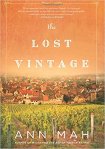
The Lost Vintage, by Ann Mah – No matter what I read after Doctor Thorne, it was going to suffer in comparison, and The Lost Vintage did.  But you shouldn’t let that stop you from reading this novel, which was actually quite fun.  The story alternates back and forth between modern day sommelier Kate, visiting her family vineyard in Burgundy and maybe rekindling an old flame, and a long-buried secret about Kate’s family, told through the World War II journal of a relative Kate didn’t know she had.  There’s history, adventure, and LOTS of wine.  It reminded me of Steve’s and my visit to Burgundy, and made me want to go back to France immediately.

The World As It Is, by Ben Rhodes – You can tell it was a stressful February (between work, school drama and snow days) because this Obama staffer memoir took me almost a week to read, when I would normally have burned through it in a few days.  I don’t regret the extra time spent with Rhodes and Obama, though.  As I’ve come to expect from everyone who was connected to the Obama Administration, Rhodes’ memoir was smart, thoughtful, insightful and fascinating.  I learned a ton about foreign policy, and brushed away tears thinking about how much I miss President Obama and the bright, caring people who staffed his Administration.

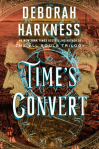
Time’s Convert, by Deborah Harkness – Here’s what Time’s Convert is not: great literature.  Here’s what it is: a fun addition to the world of the All Souls Trilogy.  If you’ve enjoyed spending time with Diana, Matthew, Marcus, Miriam, Sarah, Ysabeau, Marthe and the gang, you’ll be glad to see them again.  This book mostly focuses on Marcus, which I enjoyed because he’s one of my favorite characters from the trilogy.  Marcus’s human love, Phoebe, is about to be made into a vampire (terrifyingly, Miriam is her vampire mom, which, I think I’d stay home) so that she and Marcus can be together for eternity.  Time’s Convert tells the story of Phoebe’s transition, interspersed with flashbacks to Marcus’s own early days as a vampire after Matthew plucked him from the battlefields of the American Revolution.  Also, Diana and Matthew’s toddler son gets a familiar, and hijinks ensue.

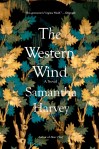
The Western Wind, by Samantha Harvey – Harvey has been described as this generation’s Virginia Woolf, and I suppose I can see the parallels in writing style (I hope her life is longer and happier than Woolf’s) but The Western Wind didn’t really speak to me.  Normally I would be all over a murder mystery set in medieval times and starring a priest, so maybe it was a case of right book, wrong time?

The Shepherd’s Life: Modern Dispatches From an Ancient Landscape, by James Rebanks – Helen Macdonald (of H is for Hawk fame) called The Shepherd’s Life “bloody marvelous” and I’d have to agree.  Rebanks weaves in a bit of everything here – lots of memoir, some real talk about life on a farm, a history of the Lake District, and a poignant musing on how the people who were native to the landscape were erased from the region’s story when the Romantic poets and backpackers descended.  It was a short, quick read, but I loved it.  And it made me yearn for another rainy hike around Buttermere.

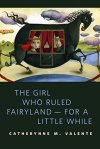
The Girl Who Ruled Fairyland – For a Little While, by Catherynne M. Valente – Let this beautifully-written, vibrantly-imagined standalone short story stand as a testament to the fact that everything Cat Valente does is perfect.  The story of how Mallow, also known as the Empress (she has a hat!) came to rule Fairyland “for a little while,” was vintage Valente.  Her writing can be an acquired taste, but here’s the trick: you have to give yourself over to her imagination, let her take you where she’s going to take you, and bask in the gorgeous, glowing language.  I did, and I loved every moment.

Only seven books this month, but it was a short month, with a heavy workload, several snow days, and a lot of school drama.  (These days, snow days mean chasing two kids with cabin fever as they bounce off the walls and trying desperately to squeeze work in around their shenanigans – not relaxing with a cup of tea and a good book, alas.)  But there were some good ones in there.  Doctor Thorne was the highlight of the month, of course.  But The Shepherd’s Life was wonderful, and The World As It Is was fascinating.  And I read TWO books that took me back to adventures past, which is always a delightful thing.  So – a good month.  Now onward to March, to buds on the trees, hopefully no more snow days, and the beginning of spring reading.

Lit Bits, Volume III

Random thoughts about books and reading…

I’m playing library roulette.  It occurred to me that I am living dangerously when it comes to library renewals.  I like to wait until the last possible day to renew my books – to give myself more time with them, you understand.  But if someone puts a hold on a book and I can’t renew it, I’m beating myself at my own game.  Lately I’ve started checking a few days in advance of a library deadline to see if there are any holds, any other copies circulating, etc. – but that inevitably leads to more strategizing.  There aren’t any holds but all the copies in circulation are checked out; should I renew early and cut off three days (or what have you) from my time with the book, or should I wait?  I realize this isn’t exactly what most would call living dangerously, but I’m just speaking my truth.

Speaking of the library, we tried out a new babysitter recently – the children’s librarian from our local library branch.  (Why had I never thought of this before?)  She was sweet and lovely and did a great job, although the kids made a point of letting her know that she was not their beloved regular babysitter, Bre.  Anyway – she told me I had the best home library she’d ever seen and that the kids owned books that she used for storytime at the library but had never seen in a kid’s personal collection before.  Winning!

Oh, and Nugget has a favorite library book.  He has checked out a book called Dirt Bikes twice now.  He knows exactly where it is in the stacks and he goes right for it.  Steve said that he used to do the same thing; he remembers a book about military jets that he borrowed from his elementary school library on multiple occasions.  Like father, like son…

Library luck is good, but my Amazon luck is bad lately.  I’m really trying not to buy too many books this year, so it’s especially frustrating that the books I do buy keep showing up damaged.  I had to return A Vicarage Family because the top half of the spine was crushed, and A Nature Poem for Every Day of the Year because the cover was visibly dirty (and I tried to clean it; the spots wouldn’t come off – am I the Lady Macbeth of books?).  What the what?  It’s so weird, how this keeps happening to me.

The Folio Society New Year’s Sale is almost over, guys!  I think there’s just a few days left, and stock is pretty low.  The selection is pretty good this time, so do go take a peek if you’re a Folio Society devotee.  The Folio Society semi-annual sales are exceptions to my general book-buying rule, and I make use of the exception.

2018: A Year in Books, Part III – Book Superlatives

I love writing all three parts of my annual reading retrospective, but the Book Superlatives post might be one of my favorite things to write all year.  It’s just so darn silly and fun.  What’s not to love about giving high school yearbook awards to the books I read each year?  There’s no reason for it – it’s just goofy and fun.  So here we go.

Brainiest.  You don’t go from complete ignorance to Cambridge Ph.D. without some serious intellectual firepower, and it’s clear Tara Westover has that in spades.  The obstacles Tara overcame on her path to becoming educated were really shocking to read about.

Best Looking.  It isn’t often I pull my book out of my bag ten times in a day and say “Look how gorgeous this cover is!” but I did that when I was reading Penelope Lively’s Life in the Garden.  I mean – look how gorgeous that cover is!

Best Friends.  April, Jo, Mal, Molly and Ripley (honorable mentions to Barney and counselor Jen) are shoo-ins for the “best friends” title.  I mean, the Lumberjanes’ motto is Friendship to the Max!  And they live it, they really do.

Class Clown.  Sellar and Yeatman are worthy predecessors to Philomena Cunk, and that should tell you everything you need to know.  Oh, and in case that doesn’t: they’re freaking hysterical, and 1066 and All That is the best completely inaccurate history I’ve ever read.  I wish the actual class clowns in my high school were this witty.

Biggest Jock.  Look, I love Walden as much as the next girl.  But real talk: Henry David Thoreau is That Guy who has no sympathy for you weaklings (just don’t mention that his mom still washes his underpants, because he will have to beat on you a little bit).

Teacher’s Pet.  This award usually feels like a pejorative, but I mean it in the best sense.  Because if you think of the teacher’s pet as being someone who really, really, really, REALLY cares about school – no one cares about school more than Malala does.  And she is an icon, and for very good reason.

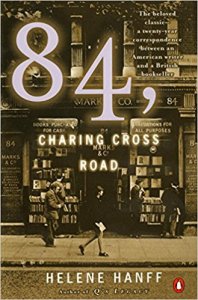
Biggest Nerd.  You know what?  I like nerds.  I think we should all be so lucky to have something we love enough to geek out about it shamelessly.  For me, that would be Jane Austen and L.M. Montgomery.  For Helene Hanff, that’s her course of philosophy and the Western canon via her favorite used booksellers across the pond.  When it comes to unbridled enthusiasm, no one geeks out better than Hanff.

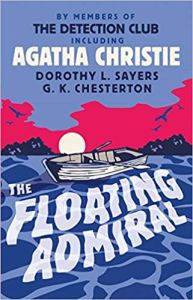
Most Creative.  It was a little ridiculous, but so many of the most creative experiments are, right?  When you get a baker’s dozen (or so) mystery writers drunk, weird stuff happens.  And sometimes the end result is The Floating Admiral, which didn’t make a whole lot of sense, but no one would accuse it of being boring.

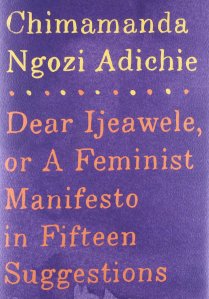
Most Opinionated.  2018 was the new year of the woman (between #MeToo taking off, an already historic number of female U.S. Senators running for President even before Kamala and Amy have decided, and the awesome woman-powered 116th Congress) and who better to speak for the sisterhood than Adichie?

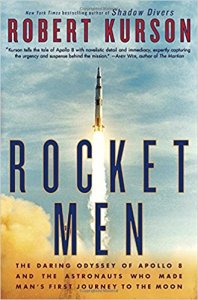
Most Likely to End Up in Hollywood.  Total cop-out, and I know we’ve already had a floppity jillion movies about the golden age of space exploration, but let’s be honest here.  How many movies about the golden age of space exploration is the right number of movies about the golden age of space exploration?  One more.

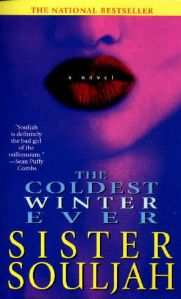
Biggest Rebel.  Winter Santiaga is the consummate rebel.  Do not double cross her, because she will double cross you more, and in higher heels.

Biggest Loner.  Poor Vera!  Summer camp isn’t for the timid.  My heart ached for her as she searched for friends and learned – painfully – that true friends like you for who you are and not for what you can do for them.  (Also, Vera, if you’d have come to Camp Little Notch, we would have made you feel very welcome.)

Cutest Couple.  Alif and Dina are the sweetest ever.  They’re unassuming and a little nerdy and that just makes you root for them harder.  Also, the scene in which Dina wraps her veil around Alif and he sees the star-spangled world she’s created within I’M NOT CRYING YOU’RE CRYING.

Prom King.  How on earth did Decibel Jones get elected Prom King?  This was clearly a case of a write-in campaign going amazingly, hilariously wrong.  But look, you guys, you’re stuck with him now.  At least – hey, he can really rock a crown, although it’s not quite sparkly enough for him.

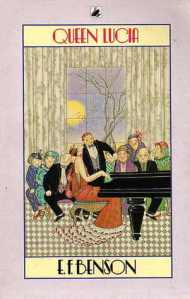
Prom Queen.  I’ll be honest, I picked Emmeline “Lucia” Lucas for Prom Queen mostly because the idea of Lucia dancing to The Way You Look Tonight with Decibel Jones tickled me so much that I couldn’t stop myself.  But also, if I had picked anyone else, Lucia would never have let me hear the end of it.

Most Likely to Succeed.  I almost named the most popular woman in America my Prom Queen for 2018, but see above – Lucia Lucas was too powerful.  And anyway, I thought Michelle fit better in this category, and that it would mean more to her.  This is one driven, talented, smart and hardworking woman, after all.

And there we have it!  I’m still laughing at the idea of Lucia and Dess as Prom King and Queen, while Mira Wonderful Star sulks in the corner with Elizabeth Mapp and valedictorian Tara Westover looks on disapprovingly.

Who would be your literary Prom Couple this year?