
Like so many of my friends (online and off) I am watching the events in our American cities with horror and sadness, and looking for ways to educate myself and to help out. I’ve donated to the NAACP Legal Defense Fund, as a first step, and I’m looking around the internet for reading lists and other resources to become more informed. I don’t pretend to have all (or even many) of the answers, and I have a lot more reading to do myself, but a few years ago I committed to making my reading list more diverse – adding BIPOC, LGBTQ+, different/underrepresented religious groups, and others to my list of authors to support. I still have so many more books to read, but in the meantime, here are a few that I’ve read over the past few years, that have added to my understanding and compassion, and made my reading list so much richer.
(Pssst: for a good start, check out this anti-racist reading list from my friend Katie, and a massive diverse booklist from my friend Shan, and go get yourself a copy of The Well-Read Black Girl, by Glory Edim.)


Classics
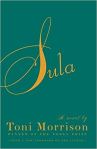
Sula, by Toni Morrison. A beautiful celebration of friendship between two very different Black women.
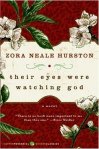
Their Eyes Were Watching God, by Zora Neale Hurston. THE ultimate classic, and gorgeously written.
In Love and Trouble: Stories of Black Women, by Alice Walker. A moving and powerful collection.
Second Class Citizen, by Buchi Emecheta. The experience of an African immigrant in 20th century London.
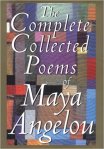
The Complete Collected Poems, by Maya Angelou. Essential!
Of all the genres, I think I’ve read the fewest Black authors in the classics genre. I don’t know how that happened! Must correct that right away.


Modern Literary Fiction
Girl, Woman, Other, by Bernardine Evaristo. Totally enthralling, and reads like poetry.
The Mothers, by Brit Bennet. I loved the Greek chorus style of the church mothers.
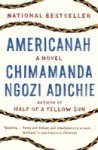
Americanah, by Chimamanda Ngozi Adichie. A different perspective on race in America, through the lens of an immigrant.
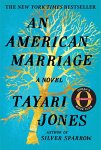
An American Marriage, by Tayari Jones. This sad story of justice gone wrong is on just about every anti-racist reading list, for good reason!
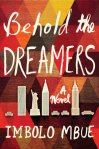
Behold the Dreamers, by Imbolo Mbue. Another immigrant story, and absolutely beautiful.
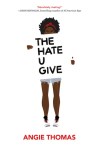
The Hate U Give, by Angie Thomas. Incredibly powerful and true for the times.
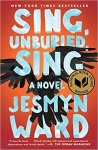
Sing, Unburied, Sing, by Jesmyn Ward. Heart-wrenching and sad and a total page-turner.
The hardest thing about making this list was keeping it a manageable length. There are SO many wonderful pieces of writing out there by Black writers and they touch on all aspects of the modern Black experience. As someone who is only going to experience that by reading and hearing about others’ experiences, I am looking for all of the information I can get.

Historical Fiction
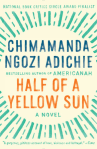
Half of a Yellow Sun, by Chimamanda Ngozi Adichie. Powerful novel about a period in history that I didn’t know much about.
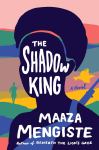
The Shadow King, by Maaza Mengiste. Sad and powerful novel of Ethiopia during World War II.
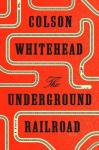
The Underground Railroad, by Colson Whitehead. A novel of escaping slavery, with a heavy dose of magical realism.
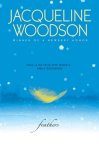
Feathers, by Jacqueline Woodson. Brooklyn in the 1970s – gorgeously crafted like everything Woodson does.
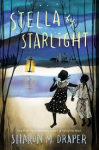
Stella by Starlight, by Sharon M. Draper. A middle-grade book about segregation.
Homegoing, by Yaa Gyasi. Linked short stories following two branches of an African family – beginning with two sisters separated by slavery, one of whom stayed in Africa and one of whose descendants witnessed history in the United States.
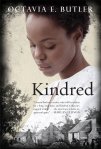
Kindred, by Octavia E. Butler. Can’t have an anti-racist reading list without Butler’s time travel classic.
There is so much rich historical fiction out there, telling Black stories and amplifying Black voices. I’ve loved historical fiction since I was a little girl, and it’s a wonderful and approachable way to start learning history. (I can’t tell you how many times a historical fiction novel has sent me running for a nonfiction book or scholarly work to learn more.)



Memoir
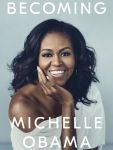
Becoming, by Michelle Obama. I loved every word of this memoir; forever my First Lady.
The Girl Who Smiled Beads: A Story of War and What Comes After, by Clemantine Wamariya. Horrifying and powerful memoir of war, displacement, and the refugee experience.
When They Call You a Terrorist: A Black Lives Matter Memoir, by Patrisse Khan-Cullors. This should be required reading for everyone, especially right now.
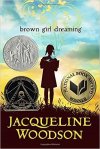
Brown Girl Dreaming, by Jacqueline Woodson. I love a good memoir in verse, and I think this might be my favorite ever.
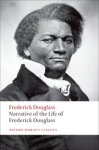
Narrative of the Life of Frederick Douglass, by Frederick Douglass. This could go in the “classics” section, but regardless of where it’s listed – totally essential.
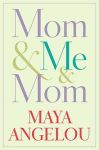
Mom & Me & Mom, by Maya Angelou. Most folks are familiar with the classic I Know Why the Caged Bird Sings, but Angelou wrote several other memoirs as well, including this moving memoir of her relationship with her mother.
March, Vols. I, II and III, by Representative John Lewis. This is an incredible three-volume graphic novel style memoir by Rep. John Lewis – an icon in Congress – describing his experiences as an activist during the Civil Rights Movement.
There have been SO many incredible Black memoirs – it’s hard to choose a short list to share, but the good news is there are many, many more to discover.


Essays
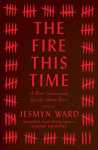
The Fire This Time: A New Generation Speaks About Race, ed. Jesmyn Ward. Incredible collection of essays, curated and edited by one of the most talented American writers of all time. (Sing, Unburied, Sing was also magnificent.)
Why I’m No Longer Talking (To White People) About Race, by Reni Eddo-Lodge. Really fascinating perspective from a Black British thinker; I learned a lot that my American-focused history classes didn’t cover.
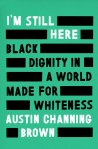
I’m Still Here: Black Dignity in a World Made for Whiteness, by Austin Channing Brown. Of all the essay collections I’ve read by Black writers, I think this beautiful collection is my favorite.
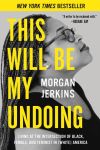
This Will Be My Undoing: Living at the Intersection of Black, Female and Feminist in (White) America, by Morgan Jerkins. Important perspectives on intersectionality.
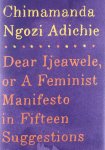
Dear Ijeawele, or, A Feminist Manifesto in Fifteen Suggestions, by Chimamanda Ngozi Adichie. It’s probably obvious from this list, but I absolutely love Adichie’s work. This is a fast read, but really powerful.
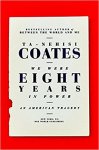
We Were Eight Years in Power: An American Tragedy, by Ta-Nehisi Coates. Not including Between the World and Me on this list, mostly because I think pretty much everyone has read it (but start there if you haven’t). This collection of Coates’ essays on race, published in The Atlantic during the Obama Administration, is also fantastic.
The Origin of Others, by Toni Morrison. I’ve had Morrison on my list forever, but have been intimidated. Starting with this slim essay collection was perfect.
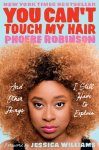
You Can’t Touch My Hair, And Other Things I Still Have to Explain, by Phoebe Robinson. Insightful, but also hilarious – there’s definitely a space for that.
Again – so many wonderful essay collections by Black writers! (And mostly Black women, which is not surprising since I tend to gravitate to women’s voices more in general.)
So – an incomplete list, but a list nonetheless: a jumping-off point. I’m definitely not done reading through the wealth of material that’s out there, and I have been collecting anti-racist reading lists for more ideas. Speaking of which – what’ve I missed? Hit me with your best recommendations.
How are you working to educate yourself on race and justice issues during this time?
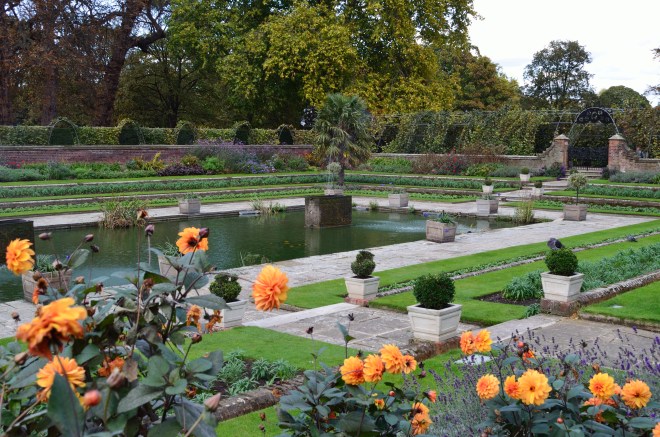
 Merry Hall, by Beverly Nichols – Speaking of massive country estates, meet Beverly Nichols – perhaps a rather salty successor to Elizabeth von Arnim. Merry Hall is the first in a trilogy (followed by Laughter on the Stairs and Sunlight on the Lawn, and what is it with me and lightly fictionalized memoir-ish garden trilogies?) featuring Nichols as he purchases and renovates an old Georgian manor house and surrounding garden, attended reluctantly by the wizened and grumpy head gardener “Oldfield,” his cats “One” and “Four” and a cast of local eccentrics. There is Miss Emily, who is always flinching and trying to buy vegetables from Nichols’ prolific kitchen garden; Marius, whose chief attribute is erudition; and Our Rose, a famous floral arranger who becomes Nichols’ adversary and bugaboo. Nichols is at his rapturous best when describing his beloved flowers; his descriptions of lovingly brushing aside fallen leaves to reveal the first snowdrops of spring are gorgeous, for example. He is definitely a mid-century writer and some of the writing is very much of its time – a.k.a problematic for modern readers. (I keep considering whether to write a blog post about this sort of thing, and waffling, because I’m not sure I have anything unique to say about it.) Ultimately, I enjoy Nichols’ voice and his garden writing enough to overcome the occasional jarring note, but the reader should not go in unprepared.
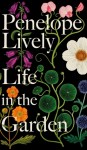 Life in the Garden, by Penelope Lively – For a more modern note, Penelope Lively’s memoir-ish (apparently all three of these themed books are memoir-ish) look back at the gardens of her life is gorgeous. From the cover art to the beautiful prose – gorgeous. Lively is a prolific and important writer of fiction (I read her astonishing Booker-winning novel, Moon Tiger, after becoming acquainted with her through this garden book) and she brings a writer’s sensibilities to the plant plot. Lively writes of her childhood in Egypt, the gardens of her adult years, and the small London establishment of her current golden years, and sprinkles in sections and chapters about gardens in literature. If you can tear yourself away from the stunning cover, you’ll find much to appreciate in Lively’s writing.

 First of all, no virtual trip to Switzerland could possibly be complete without Joanna Spyri’s childhood classic, Heidi. I’ve lost count of how many times I read Heidi as a little girl, but I’d never picked it up as an adult – although I own a copy of the gorgeous Puffin in Bloom edition. Despite the decades-long hiatus, I found the image of little five-year-old Heidi, struggling along up a mountainside to her grandfather’s hut immediately familiar. I’d forgotten most of the other plot points, but something of the aura – of mountain wildflowers and goat’s cheese – had certainly stayed with me. Heidi is as pure and wholesome as the Alpine air, and cynical adults may find the plot contrived and unsatisfying – certainly everything always works out tidily for Heidi, Grandfather (or “Uncle Alp” as the villagers call him, because of course they do) and the other characters. Deserving characters like Clara, Grandmamma, and Peter’s grannie are rewarded with things like soft white rolls, cozy beds, and the ability to walk; those who need to be punished are punished. And the sun continues to rise and set the mountains aglow. This is a children’s book, and it reads like a children’s book, but it’s a rich and colorful one with a strong sense of place, and there’s something to be said in these anxious times for picking up a book in which you know it’s all going to turn out just fine and everyone will eat cheese.
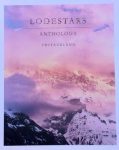 All right, you’ve read Heidi and you’re ready to plan your trip. Where to begin? Switzerland is a gorgeous country with all kinds of diverse scenery – from crystal clear lakes to towering Alpine peaks to sophisticated European cities. Before you book your tickets to Zurich, Lodestars Anthology: Switzerland can help you narrow down your destinations. (Lake Lucerne and the Bernese Oberland for me, please!) I’ve been following along with this gorgeous quarterly travel journal for some time now, picking up the issues that interest me; I’m not looking to track down out-of-print issues, but if a destination appeals I’ll grab a copy on its run. Last year, Lodestars published their issue on Switzerland and I knew I needed to add it to my shelves, if only for the stunning photographs of the Alps. I’ve flipped through it a few times, but earlier this month I finally sat down and read the whole thing cover to cover. It has everything – from profiles of sophisticated hotels to an evocative piece about the winter wanderweg tradition to a breathtaking article about flying over the mountains in a hot air balloon (new bucket list item alert!) and I closed the cover even more anxious to visit and explore.
 BUT since we’re all still stuck at home and most of us are not going to be wandering those Alpine paths anytime soon, the best that we can do – the best I can do, anyway – is Meredith Erickson’s absolutely stunning Alpine Cooking. This was the one and only cookbook I requested for Christmas this year, and I was delighted to unwrap it on Christmas morning. Erickson is a Canadian tastemaker who has a long-standing love affair with the Alps and everything about them. Alpine Cooking is her love letter to these mountains – part cookbook, part photography collection, part travelogue – and it is lush and gorgeous and so tempting. The book is organized into chapters for each country that can claim an Alpine tradition, so you’d better believe that Switzerland features, and prominently. Raclette is there, of course (CHEESE!), and so is Rosti, but there are more unexpected joys. I’ve got my eye on the hot chocolate with Alpine herbs. It’s acceptable to have that even if you haven’t been skiing all day, right?
 Home Fires: The Women’s Institute at War, 1939-1945, by Julie Summers (also published as Jambusters) explores the significant role British women played on the Home Front as they organized into local Women’s Institutes for the purposes of serving, learning, and socializing. The Women’s Institute movement started as a flicker, but soon caught fire, with local WI groups forming in almost every community. Interest and participation in the WI movement went up to the very highest levels of society: Queen Elizabeth (later to become The Queen Mother) was an honorary chair of the Windsor branch of the WI. While the WI was best known for their efforts at food preservation – especially jam-making – which made a substantial difference during the long years of rationing and food shortages, they were heavily involved in all sorts of war efforts and provided a natural mechanism for women who were not employed in wartime industries or involved in the armed forces to pool their skills and make a difference.
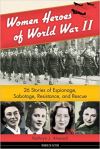 Women Heroes of World War II: 26 Stories of Espionage, Sabotage, Resistance and Rescue, by Kathryn J. Atwood is technically a young adult title, although it has appeal to every age group. I happened across it in my library while looking for books about Marie-Madeleine Fourcade, a heroine of the French Resistance (this was before the publication of Madame Fourcade’s Secret War, which I own but have not yet read). Madame Fourcade is profiled in Women Heroes of World War II, but so are twenty-five other women, of every age and nationality, whose acts of courage helped to win the war. Daring women took great risks to rescue fugitives from the Nazis, carry messages to the Allies, sabotage Axis efforts, and more. In this age of political disaffection and polarization, it’s refreshing and bracing to read about women who banded together, often at great personal risk, to do what is right.
 Consider the Years, by Virginia Graham, offers a contemporary perspective on the war years – and the long drab decade that followed – through a different lens: poetry. Graham was a well-off young woman when the war began, and evacuated with her family to avoid the danger of living in London during the Blitz. She writes movingly of daily life; I featured my favorite poem from this slim Persephone-published collection,


 covered in flour