#VotedEarlyReadathon Tally

Doomscrolling! It’s real, right? Like – it seems – everyone else, I have fallen victim to the practice of scrolling Facebook and my Washington Post app (fortunately, I don’t have Twitter – I deleted it several years ago and haven’t looked back). Relaxing, this is not. And I’m in good company; I have lost count of the number of readers that have bemoaned the siren call of the phone in these stressful election days. Jessica Howard, a Shelf Awareness contributor and sometime book blogger that I have been following on social media for years, had a proposal to deal with the doomscrolling: a #VotedEarlyReadathon.

The basic idea: if you’ve already voted, instead of following the news about the candidates, polls, all of it – put the phone in another room and read a book. Seemed like good advice. And I got some good pages in.

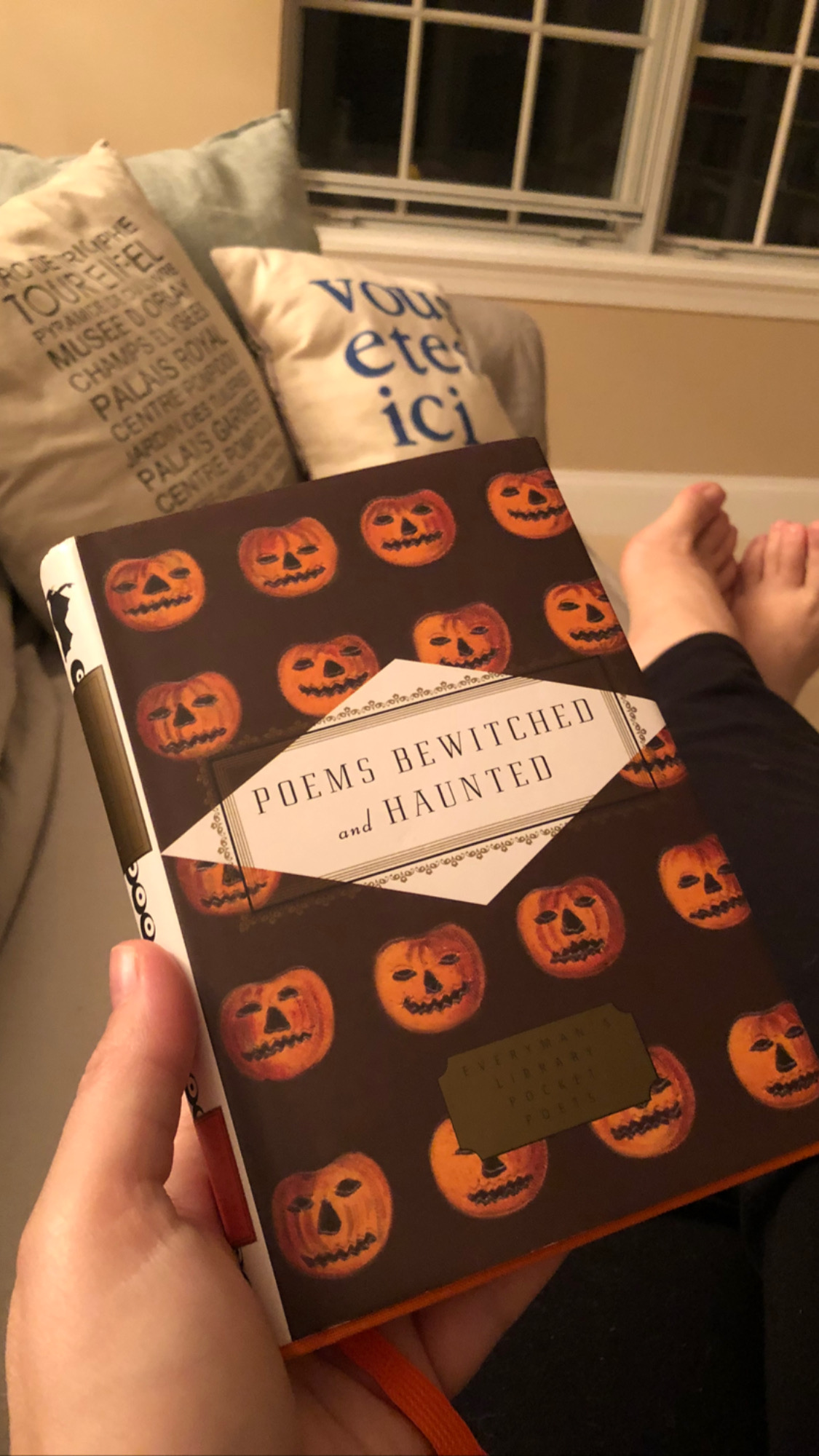
First up was Poems Bewitched and Haunted, which was on my Halloween reading list (self-imposed, of course). A re-read (this was my third – or fourth? – time through the collection), so that seemed like a good place to start. Nice and comforting, no surprises.

Next was another re-read, and another Halloween favorite: Hallowe’en Party, by Agatha Christie. It’s not one of Christie’s most earth-shattering mysteries; it’s no Roger Ackroyd or Orient Express or even Murder at the Vicarage. But it’s fun, especially around Halloween. And knowing “whodunit” doesn’t spoil the book for me – I like to try to solve it myself the first time, but I’m happy to re-read a well-written mystery, and the Queen of Crime always delivers with sparkling dialogue and captivating settings.

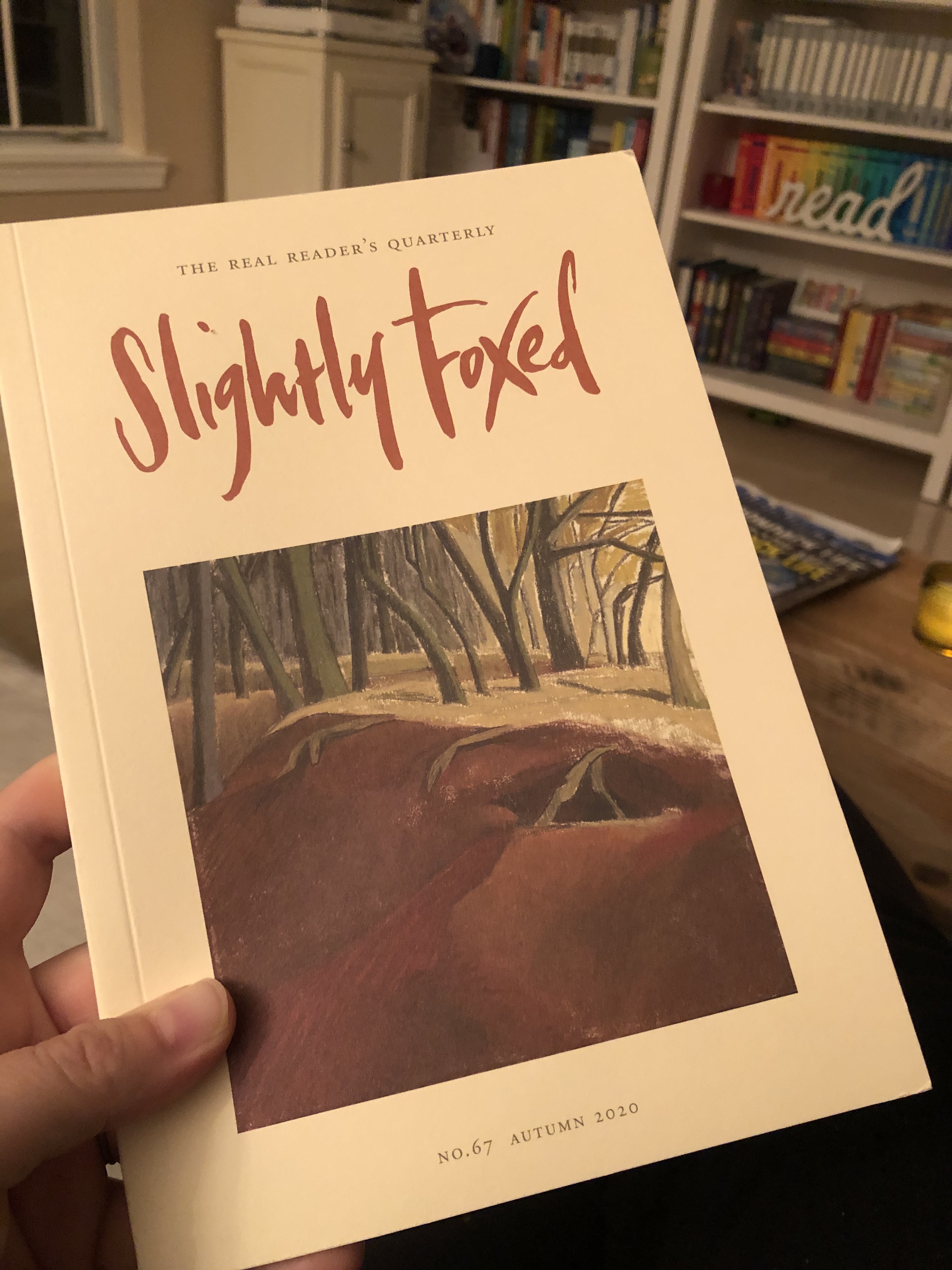
Next, after finishing up with Poirot & co. on Halloween night, I grabbed the fall issue of Slightly Foxed – trying to stay on top of those. The winter issue should arrive next month, so now I’ll be ready for it when it comes.

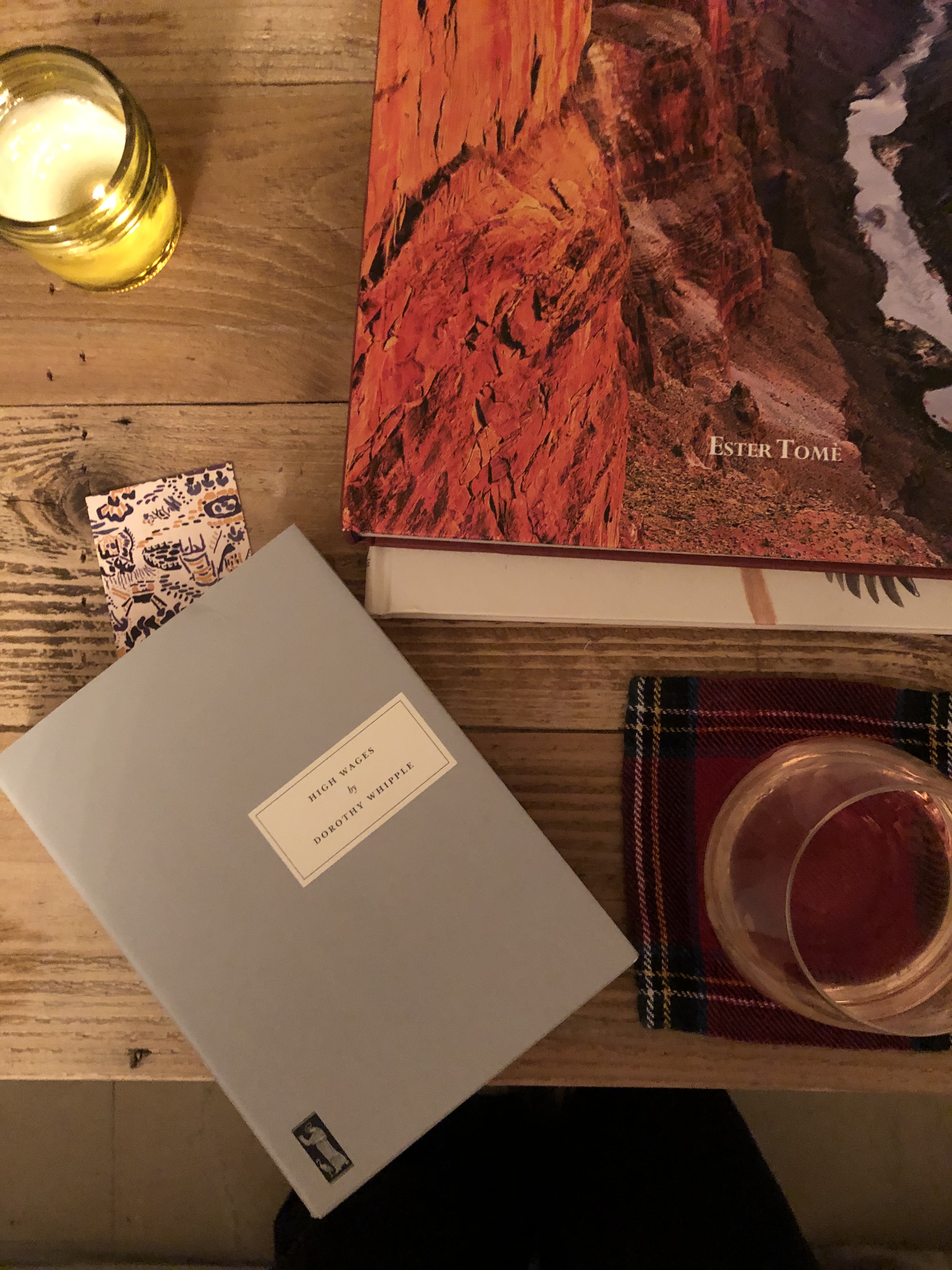
Finished the readathon with another novel – Dorothy Whipple’s High Wages. It actually opens on a cold January day, but I felt like a story about a shopgirl in a dress boutique would be the perfect beginning to the holiday shopping season.

One stressful week, made less stressful by four good reads! I am always slow to start the week these days; Monday evenings I’m basically out of commission for books, because after I put the kids to bed that’s my day to drive down to Wegmans and pick up the week’s groceries (I’ve been doing curbside lately) – between the drive there and back, and then wiping everything down and putting it away, I don’t crash on the couch with my book until 9:30 at the earliest, and that’s almost my bedtime. So I was still clutching High Wages by the time I turned on CNN’s Election Night coverage. But you know what? Dorothy Whipple, with her detailed settings and descriptions and her fully realized characters, is the perfect antidote to 2020 political stress.

I’m glad that Jessica hosted this readathon! It definitely gave me the spark I needed to back away from the phone, stop the doomscrolling, and take care of my own mental health.

What have you been reading to take your mind off election stress?

Elizabeth Von Arnim on Contentment

Living face to face with nature makes it difficult for one to be discouraged.  Moles and late frosts, both of which are here in abundance, have often grieved and disappointed me, but even these, my worst enemies, have not succeeded in making me feel discouraged.  Not once till now have I for farther in that direction than the purely negative state of not being encouraged; and whenever I reach that state I go for a brisk walk in the sunshine and come back cured.  It makes one so healthy to live in a garden, so healthy in mind as well as body, and when I say moles and late frosts are my worst enemies, it only shows how I could not now if I tried sit down and brood over my own or my neighbour’s sins, and how the breezes in my garden have blown away all those worries and vexations and bitternesses that are the lot of those who live in a crowd.  The most severe frost that ever nipped the hopes of a year is better to my thinking than having to listen to one malignant truth or lie, and I would rather have a mole busy burrowing tunnels under each of my rose trees and letting the air get at their roots than face a single greeting where no kindness is.  How can you help being happy if you are healthy and in the place you want to be?

~ Elizabeth von Arnim, The Solitary Summer

When the Book You Need Swims Up to You at the Exact Right Time

‘I know that if I made myself sit with the panic and look at spiders again – you know, like, faced my fear – eventually I’d feel fine.  But that process, well. . . It’s just so horrible.  I really don’t want to.  And it’s fine most of the time anyway.  I mean, it’s an issue in September, when they come into the house.  And I know I could never visit Australia because there are spiders everywhere.  But apart from that it’s bearable.  I can live with it.

‘You need a decent motivation to stick with fighting a phobia,’ says Mandi.  ‘I just don’t have it.  Do you?’

Most of my friends know that I have a huge, irrational, overwhelming phobia of butterflies.  Chat with me long enough and it will eventually come up.  The very thought of them fills me with revulsion and horror.  Their bodies, their wings, the flapping, the erratic movements – ugh.  I just can’t with them.  It’s a fear that dates back to a bad experience one summer when I was about Peanut’s age; I’ve hated them ever since.  At this point, I’ve accepted that this is a thing about me and it’s never going to change, and I’ve decided that I’m pretty much good with it.  I’ve gotten much better about managing it; these days, I don’t even yelp and run anymore when I spot a butterfly on a hike.  (I do walk a little faster, and sometimes I shout “GO AWAY, UGLY BUG.”)
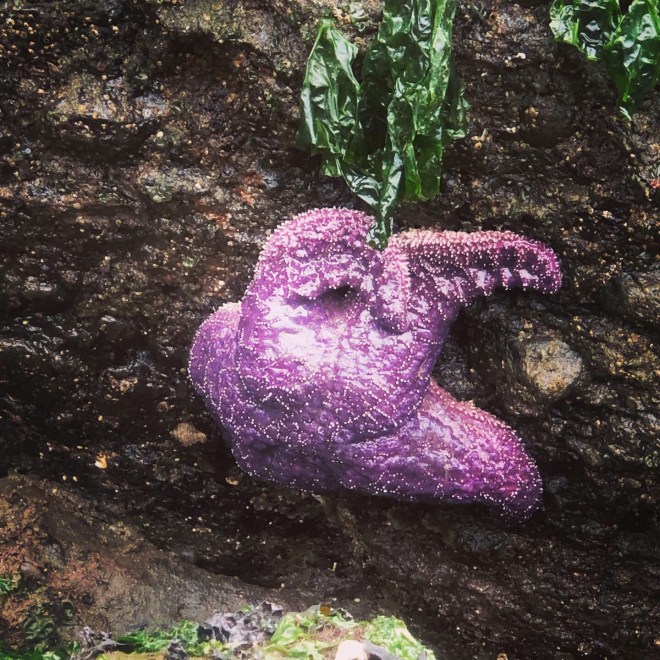
A less well-known fact: I also have a moderate thing about fish and other marine life.  Specifically, I cannot abide the idea of them touching me.  I know what you might be thinking: But don’t you visit aquariums on the regular, when it’s not a pandemic?  And watch “Blue Planet” religiously?  Didn’t you spend five days sea kayaking just last summer?  Yes, yes to all of these things.  But I don’t touch the critters.
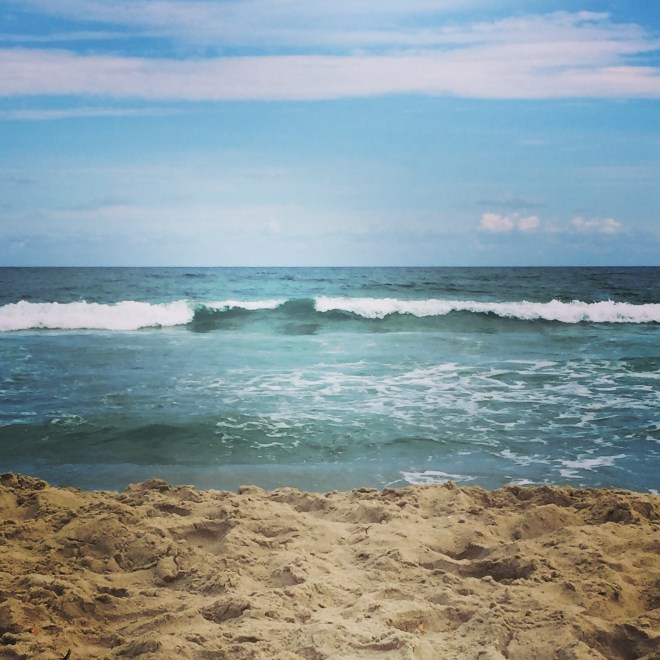
For a couple of years now, I’ve been thinking that this thing I have about fish – which I don’t think extends to marine mammals or sea turtles – I’d like to get over it.  I’ve basically accepted that I am always going to be repulsed by butterflies and I’m fine with that.  But I love the ocean, and I want to experience it more fully and with less fear.  Specifically, I’ve been toying with the idea of becoming scuba-certified.

English author Georgie Codd had the same idea.  She too struggled with a fear of fish; hers, far more intense than my moderate squidginess, was full-on ichthyophobia.  In Georgie’s mind, the shadows in her dining room were sharks.  The London buildings she walked past on her way to work were entwined by the tentacles of colossal squid.  Georgie had lived with her intense fear since childhood, and she did not want it to dominate her life.  So she decided to do just the very thing that I’ve been considering doing: she decided to cure herself of her fear by learning to scuba dive.  But Georgie wanted to take it one step further: not content to just dive with any fish, she set her sights on the biggest fish of all – the massive, mighty, elusive whale shark.

The truth I need to face up to is that fish do not exist to scare land mammals like myself.  For millions of years, before humans even existed, before even the existence of trees, they have sat at the top of the ocean food chain, weeding out unhealthy marine life and sustaining the overall balance of eco-systems.  Without sharks, smaller herbivore-eaters flourish, the herbivores themselves decline in number and algae growth is left unchecked, meaning less space and fewer resources for life-giving reefs.  The effect of shark intimidation in grassy areas also stops ocean herbivores overgrazing.  In turn, this prevents the collapse of habitats.  And helps the sea do what it has done for aeons: regulate the carbon dioxide released into our atmosphere.

Georgie’s journey to learn diving and to track down her leviathan takes her from the fishy metropolis of Thailand’s Richelieu Rock, to underwater caves in Mexico, to chilly Scottish waters, an island off of western Africa, and beyond.  Along the way, she meets and talks to diving experts and psychologists, learning simultaneously about diving history and culture, and the science of overcoming fears.  Many of the divers she interviews encourage her to learn as much as possible, pounding home variations on the same refrain: knowledge dispels fear.  Through her journey, Georgie discovers that this is precisely what she needs to do in order to manage her ichthyophobia and stop it from taking over her life.  Preparing for a dive on which she hopes to finally meet a whale shark, Georgie travels to Scotland to attempt to swim with the second-biggest shark, the basking shark, and has the following epiphany:

When the lecture is over I feel like I know basking sharks better than ever.  I feel like this knowledge will get me through.  Help me stay calm in the water.  I also feel horribly culpable.  The violations Luke described seem to form compelling evidence of what can happen when something living (a human, a fish, a shark) is reduced to no more than a concept (a source of income, a pest).  And isn’t that what I’ve been doing?  For years now I’ve been turning fish into something abstract and other: fear, danger, death, the unknown.  What I still haven’t done is accepted what they are.  Accepted that they are different.  Accepted that their difference is not intrinsically negative.

I’m not going to spoil the book by telling you whether Georgie succeeds in swimming with a whale shark.  And this isn’t a book review, either (although if it was, I’d be raving about it; as it is I suspect I am going to be buying multiple copies to give as gifts this holiday season).  What I want to talk about is the way that sometimes the exact book you need to read finds you, at the exact right time.
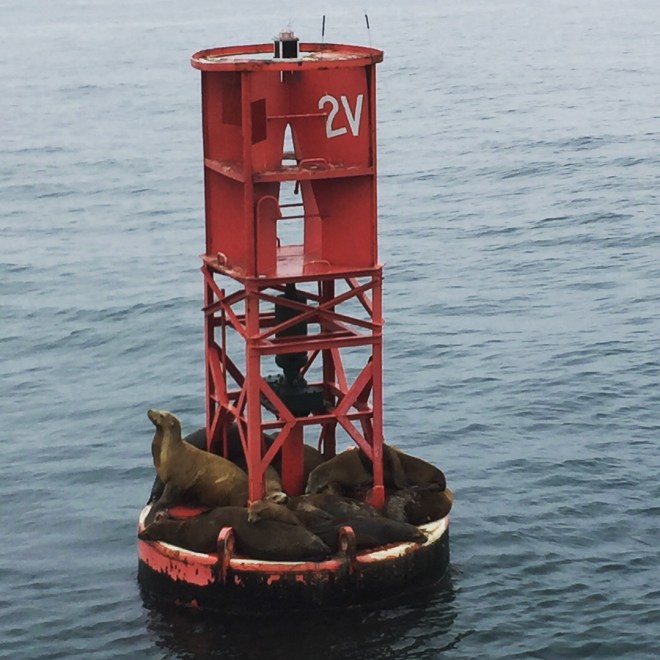
Like I said, I’ve been thinking for awhile now that this thing I have with fish, I want to get over it.  I’m not afraid of them.  I know the little ones can’t hurt me even if they wanted to, and most of the big ones won’t.  I know the statistical likelihood of an unprovoked attack by a marine animal – any marine animal – is extremely low.  So I am really not afraid.  What I am is intensely creeped out by the idea of a fish touching my bare skin.  But what if… I had no bare skin to touch?

My BFF is in the process of getting scuba-certified.  She’s completed the coursework, but was prevented from doing her final open water dive by hurricane season descending on Florida.  She plans to finish her certification this year, and she and her husband have a big trip booked for next year – to Australia, to dive the Great Barrier Reef in celebration of her fortieth birthday and their ten-year relationship.  My brother and sister-in-law also dive, and I have not even tried to swallow my jealousy while watching my sister-in-law’s serene videos of diving in a kelp forest off the Channel Islands.  I’m not a follower; I won’t do something just because someone else is doing it.  But these are people I know and love who have strapped on air tanks and jumped into the water, and I want to do it too.

I had already been thinking that scuba was something I wanted to try.  I worked out that my issue with fish is related to the idea of them brushing against my skin (shudder).  But if I was encased in a long-sleeved, long-legged wetsuit, with every possible inch of my body covered and protected against fishy affection, I think… I could be okay?
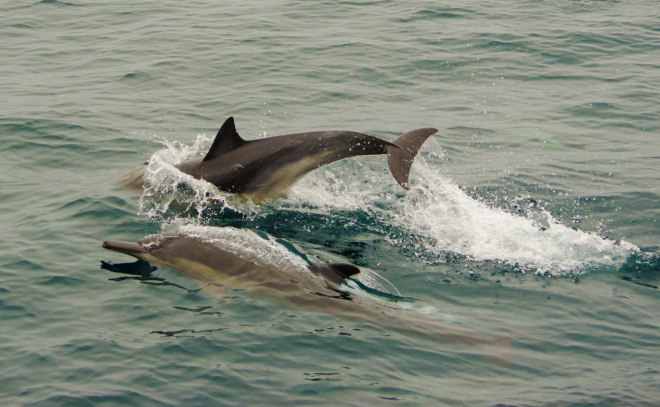
Enter COVID.  I had already been turning the idea of diving over in my mind when the pandemic hit.  As we all adjusted to, ugh, the “new normal,” I mostly stopped thinking about it.  There were too many other things to focus on – figuring out a new schedule for working from home and educating my kids, staying safe at the grocery store, you know.  But it’s stretched on for more than seven months now, and while I am still not seeing a light at the end of the tunnel, I’ve started to think about what I want post-COVID life to look like.

I’ve never been a big one for sitting on the couch at home.  I like to be out, having experiences, making memories.  The pandemic has forced me to slow down and wait, and I’ve mostly avoided thinking about what we’re all missing out on right now.  But as I consider what will happen when we all emerge from our shells, the life I want is taking shape before me.  I want to travel more, be more open to new experiences.  (As the kids are getting older, I believe this is possible.)  I don’t want to be controlled by fear.

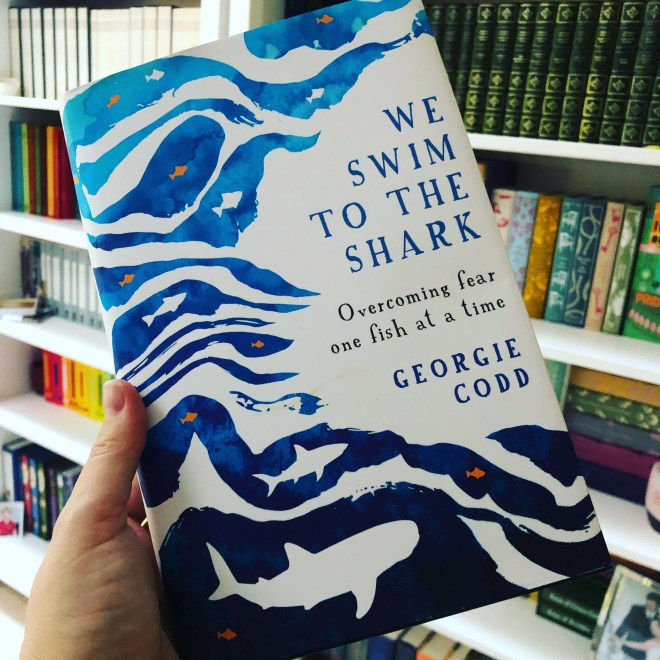
I noticed We Swim to the Shark while scrolling through a list of recommendations from a book blogger I follow, and it immediately grabbed my attention – I focused first on the absolutely stunning book jacket, before being stopped in my tracks by the subtitle: Overcoming Fear One Fish at a Time.  I clicked over to Amazon to read the description and knew immediately that I had to read it.  And right away.  It was odd; here was this idea I’d been turning over in my head for some time – overcoming my moderate fear-ish-thing about fish by learning scuba – sharpened and made urgent by pandemic-induced life musings, and here was a book about THAT EXACT THING.  Does that ever happen to you?  The exact book that I needed to read, showing up on my computer screen at the exact time that I needed to read it.  It felt like a message: do the thing.  Go live.
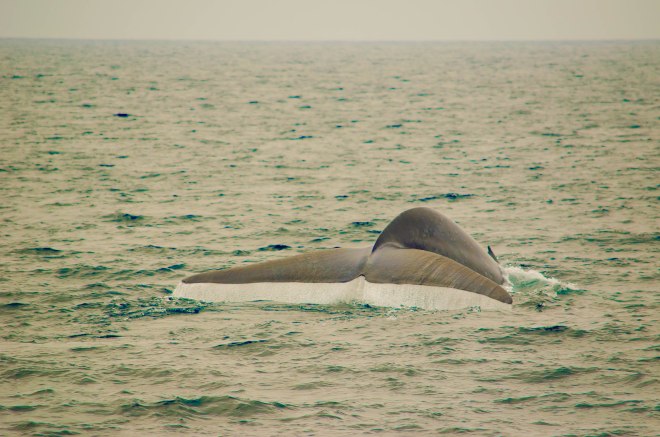
This time in the water, I reassure myself that the present moment is all that matters.  That and the gauge.  The breaths.  The line.  I accept that I am going into darkness.  Shining a light towards the unknown.  And while the thought of this unknown may be appalling, at least it’s a direction I can aim for.

Have you ever gotten an unmistakeable message from a book showing up, unexpectedly, just when you needed it most?

 

Themed Reads: In Case You Need More Politics

Well, for those of us in the U.S.A., politics season is in full swing – with less than 75 days to go until the election, the onslaught of news coverage and candidate outreach has begun.  I’ve donated to a few different campaigns and requested my absentee ballot, so I’m on my way.  I’m also looking around for some volunteer opportunities that I can do safely.  With all this political activity, of course, comes waves and waves of nonsense on Facebook (and Twitter, I know, but I’ve deleted Twitter and couldn’t be happier about that).  I’m trying to steer clear of the vitriol, and if you are too, but you’re still looking for some engagement – or if you just loved that speech by President Obama at the Convention and want to wallow in memories – might I suggest an Obama staffer memoir?

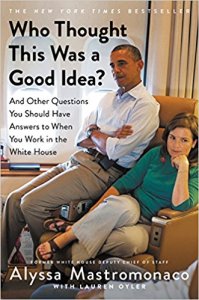
First of all, the classic – Who Thought This Was a Good Idea? And Other Questions You Should Have Answers to When You Work in the White House, by Alyssa Mastromonaco, was the first Obama staffer memoir I read, and might still be my favorite.  Mastromonaco combines memories of her time as a senior advisor to President Obama with a manual on leadership for women, and it’s everything.  I listened to it on audio, read by the author herself, and that enhanced the reading experience.  (There is that kind of out-of-place chapter about her cats, but you know, Mastromonaco devoted a lot of her life to her White House job and if she wants to tell me about her cats, I’ll listen.)

Another serious one, and an especially good read for the foreign policy wonks among us, The World As It Is, by Ben Rhodes, is a great reminder that once upon a time, we had normal relations with other countries.  And maybe one day, we can have that again!  In the past few years, I’ve taken great comfort in one of Rhodes’ metaphors: he writes that U.S. foreign policy is like a massive cruise ship (or was it an aircraft carrier? in any event, a really big boat) – you can’t just turn it on a dime, the course is pretty much set and it’s mostly going to chug along.  When I think about how abnormal the past few years have been, I am reassured by that idea.

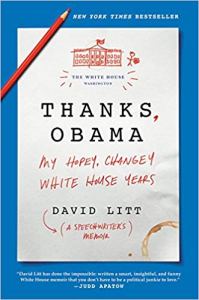
Whew.  Women and leadership, and foreign policy – two heavy subjects.  If you need something lighter after that, and somehow have not already read Thanks, Obama: My Hopey, Changey White House Years, by David Litt, you are in for a total delight.  Litt was a speechwriter on President Obama’s staff and quickly rose to become the funny guy in the room.  Meaning: when President Obama made a joke, it was probably Litt’s work.  Litt describes his rise to comedy speechwriting, explaining how some of his lines fell flat, but he eventually got a handle on President Obama’s sense of humor and was able to harness it for some spectacular zingers.  If a political memoir can be fun, this one is.

Of course, you may be overwhelmed with all the politics already, and just not into any of it: fair enough.  Living in the D.C. area, I’m both steeped in politics and out of it.  I’ve got relatives who often ask me to share all of my inside political information with them, and I am forever explaining that I don’t have any – I get my news from NPR and the Washington Post, like lots of people, and I don’t know any more than a reasonably informed citizen anywhere in the country; I’m not an insider.  While I’m often frustrated and made late for appointments because of motorcades, that’s really the extent of the D.C. experience.  But at the same time, living here is often like living in a churning stew of opinions – you can’t ever really forget what’s going on, because at any moment you might look up and see Marine One buzzing along overhead or see a recognizable face walking down M Street.  This is a weird place to live, for sure.  And I mostly just try to inform myself and then live my life.  But every now and again, it’s good to remember a normal time – and Obama staffer memoirs are just the balm for that.

Top 10 Books of 2020 (So Far)

You know what I just realized?  I haven’t done a mid-year look at my top books of the year (so far).  Whoops!  Blame it – and so many other things – on the pandemic.  I’m still battling my way out of a major reading slump, and not all that excited by books, period.  But I have read some great stuff this year – both before the pandemic hit (when I could squeeze a few pages in – pretty much up until the moment life shut down, I was majorly underwater with trial prep) and during.  While this has been an odd year for reading, for sure, here are my favorites so far.  In no particular order:

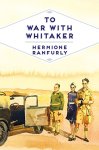
To War with Whitaker – The moment I read the synopsis in Slightly Foxed’s “new and forthcoming” section, I knew I was going to love this book.  The Countess of Ranfurly, newly married, follows her husband to war and takes up residence in the desert theatre as an “illegal” wife.  Lady Ranfurly steadily outwits everyone from baggage porters to generals in her efforts to stay near her husband, and it’s wonderful.  Sweet and poignant, and also fascinating as she writes about encounters with famous historical figures and gives her own take on the war.  I loved every word.

Sword of Bone – Another Slightly Foxed; what can I say?  They’re always winners.  This one was described as “an amusing book about Dunkirk,” so how could I not?  The chapters leading up to the evacuation were certainly amusing, and the evacuation part itself was fantastic – tense and riveting.

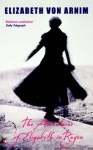
The Adventures of Elizabeth in Rugen – I really needed another visit with Elizabeth this spring, and I loved the week I spent reading my way through the Elizabeth and Her German Garden trilogy.  All three were wonderful, but I think I enjoyed The Adventures of Elizabeth in Rugen the most.  It was laugh-out-loud funny, combined with beautiful nature writing.  Definitely my sweet spot.

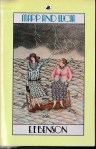
Mapp and Lucia – I am down to just two of the Mapp and Lucia books left and I am hesitant to pick them up, because I don’t want it to be over.  This one has been my favorite of the series – the much-anticipated cataclysmic encounter between two outsized personalities: Queen Emmeline “Lucia” Lucas of Riseholme and Elizabeth Mapp of Tilling.  It was absolutely hilarious.

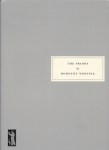
The Priory – I just love Dorothy Whipple’s writing.  It’s so everyday, but she draws you into the lives of her characters like no one else.  The descriptions of Saunby Priory were a total delight and the characters so engaging.  I sympathized with Althea, but my heart went with Christine.

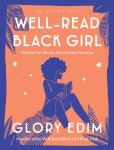
Well-Read Black Girl – This one lingered on my list for way too long before I made time for it.  Glory Edim collects essays – written and oral – by brilliant Black female writers, dramatists, poets, artists and activists, asking them to answer one question: when did you first see yourself in literature?  It was gorgeous and I came away with a long “TBR.”

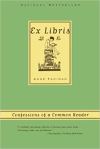
Ex Libris – I can’t resist a book about books, and Anne Fadiman is the gold standard.  I devoured this slim volume in one evening on the couch, and promptly added Fadiman’s other books about books to my Amazon wishlist.  “My Ancestral Castles” was my favorite of the essays in here, but really – they were all great.

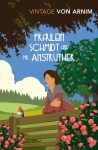
Fraulein Schmidt and Mr Anstruther – One of the first books I read this year was also one of the best!  Fraulein Rose-Marie Schmidt is an impoverished German girl who falls in love with an English student boarding in her house and studying with her father (a poor Professor).  The relationship doesn’t last, but the two become pen-pals (although the reader only sees Rose-Marie’s side of the correspondence).  Rose-Marie writes about books, her neighbors, food, nature, friendship – and so many other topics.  She is an absolute treasure and Mr Anstruther is clearly an ass if he didn’t recognize that.

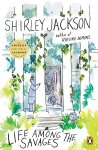
Life Among the Savages – I think I snort-laughed on every page.  Shirley Jackson’s fictionalized memoir of her out of control children and rambling Vermont farmhouse is hysterically funny.  It became a little poignant when I considered that Jackson’s life, if slapstick, was definitely not exactly as she portrayed it – her husband, of whom she writes fondly as an endearing, bumbling, big kid, was actually a cheating, controlling jerk.  But to rise above that and choose the face you want to present to the world is something special, and Jackson’s sense of humor shines through in every word.

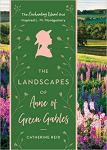
The Landscapes of Anne of Green Gables – I loved this beautiful book!  The biographical details about L. M. Montgomery – one of my favorite authors – were fascinating, but the photographs of Prince Edward Island were the real draw.  Every turn of the page brought something new and lovely.  I want to read it again right now.

It’s been an odd year for reading.  I think that’s true for all of us, right?  For my part, I spent most of spring and summer in a reading slump, pandemic-induced.  I’m still not really out of it, although I’m seeing the light at the end of the tunnel (I think).  Many of the books on this list are books I read this winter, before the pandemic, or in early spring, before uncertainty turned to disaster.  We’ll see if the year-end version of this list looks the same, or if the reading is better on the back end.  So far, I’m hopeful, but not especially optimistic.

What have been the highlights of your 2020 reading so far?

CC Spin #24 — The Results!

So The Classics Club has spun the wheel of destiny and the lucky number is: 18!  Number 18 on my personal list of twenty books for this round of the Classics Club spin was…

The Pickwick Papers, by Charles Dickens – from the “can’t wait to read” section.  Yeah!  I’ll be honest: I don’t really know anything about this book, and I have the impression that there isn’t actually much of a plot.  I’ve been keen to read it because it features in Little Women as one of Jo March’s favorite books.  (At least, it does in the movie version starring Winona Ryder.  It’s been awhile since I read the book, and I haven’t yet seen the Emma Watson movie version.  I should probably get on both of those things.)

So there it is: between now and September 30th, I will be reading – and reviewing, of course – The Pickwick Papers.  Looking forward to it!

Are you participating in The Classics Club?  Did you partake in the latest round of the CC Spin?

Classics Club Spin #24

Happy… Wednesday, whoops.  Sorry I missed you on Monday.  I had a big work thing that morning and I was completely consumed with it – to the point of stressing about it for days leading up, and dreaming about it all night.  Needless to say, everything else (other work and personal) flew out of my head until that was over.  And now it is, and obviously I’m behind on everything that I neglected while I was buried under that project.  I’ll have a regular Monday post for you next week, promise.

In the meantime, it recently occurred to me to check and see if there was another Classics Club spin coming up.  It’s been a long time – years? – since I participated in one.  As a reminder, The Classics Club periodically runs “spin” events in which participants list twenty unread books from their personal challenge lists on their blogs, and then the Club “spins” a (virtual) disk to come up with a number, and whatever number book that is on your list, you read within a prescribed period.  I’ve been struggling to pick up any book as the pandemic stretches on and life gets busier and busier, so the timing was just right – for me – for another spin, and as luck would have it there’s a new one posted.  The Classics Club will announce the spin number on August 9, and the reading period lasts until September 30 – plenty of time!

So without further preface, here’s my list for Classics Club Spin #24:

Five Chunksters

  • 1. The Greek Myths, by Robert Graves
  • 2. East of Eden, by John Steinbeck
  • 3. Framley Parsonage, by Anthony Trollope
  • 4. The Three Musketeers, by Alexandre Dumas
  • 5. Great Expectations, by Charles Dickens

Five by Women

  • 6. Delta Wedding, by Eudora Welty
  • 7. The House of Mirth, by Edith Wharton
  • 8. The Song of the Lark, by Willa Cather
  • 9. The Tenant of Wildfell Hall, by Anne Bronte
  • 10. The Professor, by Charlotte Bronte

Five by BIPOC Authors

  • 11. Things Fall Apart, by Chinua Achebe
  • 12. Invisible Man, by Ralph Ellison
  • 13. The Color Purple, by Alice Walker
  • 14. Beloved, by Toni Morrison
  • 15. Song of Solomon, by Toni Morrison

Five I Can’t Wait To Read

  • 16. The Worshipful Lucia, by E. F. Benson
  • 17. Sylvia’s Lovers, by Elizabeth Gaskell
  • 18. The Pickwick Papers, by Charles Dickens
  • 19. The Silmarillion, by J. R. R. Tolkien
  • 20. Agnes Grey, by Anne Bronte

There we have it!  It was actually a bit of a challenge even making this list, because I’ve been making surprisingly good progress on my list (currrent challenge scheduled for completion in July, 2023).  I’m down to not much more than twenty unread, total.  But this should be a good spark to knock off one of the books that’s lingered on the list – and if the spin choice ends up being one of the few I don’t own, it will also be a good spark to go get a library card at my new local library (still on the to-do list, post move).  The choice will be announced on August 9, and I’ll let you know next Wednesday which of these titles I will be picking up next.

Happy (classic) reading to all of us!

Themed Reads: Still At Home

Well, here it is July and things don’t seem to have gotten much better, at least not ’round these parts.  We all tried cautiously poking our noses out of our front doors, only to go scurrying back inside.  Multiple states have issued travel advisories – including Massachusetts, which has effectively scuttled my summer vacation plans – and Steve and I are just waiting for the next all-in stay-at-home order to drop.  As we watch our summer plans evaporate – always mindful of the fact that there are so many people out there who have it worse – even armchair travel is starting to feel frustrating.  Since it looks like we’re going to be staying home for awhile yet, here are three books about staying home, to remind you that… I don’t know… it could be worse, even if we’re all bored as we sit around watching Disney+ and working on the butt divots in our couches.

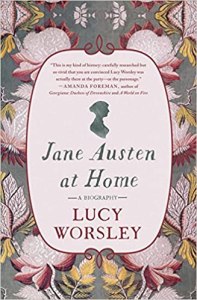
Jane Austen at Home, by Lucy Worsley, literally explores Jane Austen’s work through the lens of her homes.  The reader is treated to a progression through Austen’s life, starting with the Steventon parsonage and moving with the Austen family, first to and around Bath, to various seaside spots, to Chawton, and finally to Winchester.  Worsley has plenty to say about decor, about social customs, and about the many colorful characters who wended their way into and out of Austen’s life.  And it’s worth noting: as tempting as a trip to Chawton sounds these days, it seems it wasn’t the most comfortable place to live back in Jane’s day.  I, for one, am glad to be watching Netflix in the air conditioning and not sweltering in the damp or shuddering with the walls every time a stagecoach drives past my house (which, realistically, happens exactly never).

If Chawton sounds damp and noisy, the Claremont is dreary.  Mrs. Palfrey at the Claremont introduces the reader to the titular lady as she is on her way to a new home at London’s Claremont Hotel.  The Claremont doubles as a respectable lodging for aging ladies and gentlemen, although, as Mrs. Palfrey remarks to a new friend, “We’re not allowed to die here.”  The reader follows Mrs. Palfrey as she cautiously dips her toe into the social life of the Claremont’s parlor and gets caught up in a web of deception.  Hate when that happens!  So here’s another plus to being stuck in our own houses: at least we’re not stressed about maintaining the lie of a fictional grandson while we drink our mediocre wine.

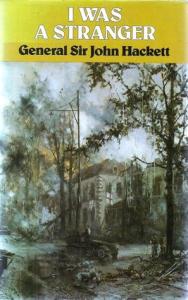
Okay, so we’re not sweating in a swamp like Jane or yawning away life like Mrs. Palfrey, and we can probably also check off “hiding in one room literally on the other side of a wall from a nest of Nazi soldiers” as another situation that is worse than what we’ve got.  I Was A Stranger, General Sir John Hackett’s memoir of his time hiding in the home of a Dutch family while recovering from his wounds after the Battle of Arnhem, might be the perfect book to read during this time.  Gen. Hackett literally couldn’t leave the house except to go for super-short walks under cover of darkness, and sometimes not even that.  And when surprise inspections happened, he had to either hide in a cubby or stay in bed pretending to be a sick relation.  At least the rest of us get to visit the backyard, right?

So, there we have it.  This was originally supposed to be a post about books showcasing the joys of being at home.  I’m sure those exist, but actually – at the moment, this is the best I can do.  There but for the grace of Artemis go I, and that sort of thing.  You can relate, right?

What are your favorite books about being stuck at home?

Watching The Season Change, With Elizabeth

The sight of the first pale flowers starring the copses; an anemone held up against the blue sky with the sun shining through it towards you; the first fall of snow in the autumn, the first thaw of snow in the spring; the blustering, busy winds blowing the winter away and scurrying the dead, untidy leaves into the corners; the hot smell of pines – just like blackberries – when the sun is on them; the first February evening that is fine enough to show how the days are lengthening, with its pale yellow strip of sky behind the black trees whose branches are pearled with raindrops; the swift pang of realization that the winter is gone and the spring is coming; the smell of the young larches a few weeks later; the bunch of cowslips that you kiss and kiss again because it is so perfect, because it is so divinely sweet, because of all the kisses in the world there is none other so exquisite – who that has felt the joy of these things would exchange them, even if in return he were to gain the whole world, with all its chimney-pots, and bricks, and dust, and dreariness?  And we know that the gain of a world never yet made up for the loss of a soul.

It’s official!  Winter and spring are behind us, Midsummer was this weekend, and we’re into my favorite half of the year.  I find things to enjoy in every season, but summer and fall have my heart.  And I love the above words by Elizabeth von Arnim, whose German garden hosted so many turnings of the earth and changings of the seasons, with all the joys and wonders that follow.

Happy summer!

Themed Reads: Tent Panels

It’s late June, which is well past the time by which my kids’ summer camp would ordinarily have started – but alas, no camp this year.  Instead of tie-dyeing t-shirts with their friends and indulging in “Ice Cream Wednesday” and “Free Swim Friday” every week, they’re knocking around Camp Corona, a.k.a. the house.  Although we are planning a backyard camp-out sometime this summer (or maybe more than one) the traditional camp experience is not to be this year.  Which is sad!  I have fond memories from my own camp days, and my kids have absolutely loved the camp they’ve attended for the past few years.

If you’re in the same position, confronting a campless summer – and that’s most of us, right? whether we’re parents or just working adults with a tragic lack of summer camp fun in our lives – maybe I can help.  If we can’t go back to summer camp in person (either because of the pandemic or because, you know, we’re grown-ups) we can indulge in a little bit of nostalgia via comics and graphic novels, quite a few of which seem to be set at summer camps.  It’s not surprising, right?  Between the natural settings – which make for excellent art – and the potential for drama and shenanigans whenever a bunch of kids are thrown together, it’s a no-brainer.  Here are three that I’ve enjoyed…

First of all, no summer-camp-comics booklist would be complete without Lumberjanes.  The BOOM Studios comic series has been going strong for years and has expanded to include graphic novels, a YA/middle grade novel series, a crossover with Gotham Academy and a few fun standalones (like a summer camp songbook!).  The series focuses on five friends – Jo, April, Mal, Molly and Ripley – and their adventures punching mythical monsters and dodging their rule-abiding counselor, Jen (who does loosen up) during very eventful summers at Miss Quinzilla Thiskwin Penniquiqul Thistle Crumpet’s camp for hard-core lady-types.  It’s a wonderful, affirming, welcoming series – the characters come in all shapes and sizes, skin colors, sexual orientations and gender identities, and they love and support each other fiercely while also arm-wrestling statues and punching giant river monsters.  In the first two volumes alone there are anagrams, the Fibonacci sequence, Greek gods, ancient monsters, capture the flag, velociraptors, and pop culture references galore.  I want to go to Lumberjanes camp…
If you’re looking for a more realistic graphic novel take on the summer camp experience, Honor Girl is an incredible memoir exploring friendship and deeper feelings during one eventful summer.  The author, Maggie Thrash, writes of her experience developing feelings for one of her counselors at an all-girls camp in Appalachia, and it’s a sensitive and moving read.  There are hikes, late nights, and lots of suspense – will Maggie summon the courage to share her feelings, and will they be reciprocated?  And if they are, how will her very conservative camp react?  I read this several years ago, when I was just getting into graphic novels and memoirs, and I couldn’t put it down – between the gorgeous panels of artwork and the beautiful coming-of-age story and awakening, it was absolutely wonderful.
For another fitting-in-at-camp reading experience – albeit one tailored to a younger audience – Vera Brosgol’s Be Prepared is a total delight.  Vera is a young girl growing up in suburbia, but very much on the outside looking in.  Her family, headed by a single mother, lives paycheck-to-paycheck, always just one step ahead of financial disaster, and clinging to their Russian heritage for comfort and connection – which doesn’t help Vera fit in with the wealthy, spoiled girls in her class.  Vera craves two things – a (loosely disguised) American Girl doll, and the chance to go to summer camp.  The doll is never going to happen, but Vera’s mother scrimps and saves to send Vera and her brother to a summer camp for the children of Russian immigrants.  Vera is overjoyed, thinking this is a place where she can finally fit in.  But camp has quite a few surprises in store.  I expected to love this – after all, I first heard of it through Colin Meloy‘s Instagram stories, so, of course – and I did love it.  Vera’s good heart and sweet soul shine through, and you can’t help but feel confident that they’ll win her true friendship in the end.

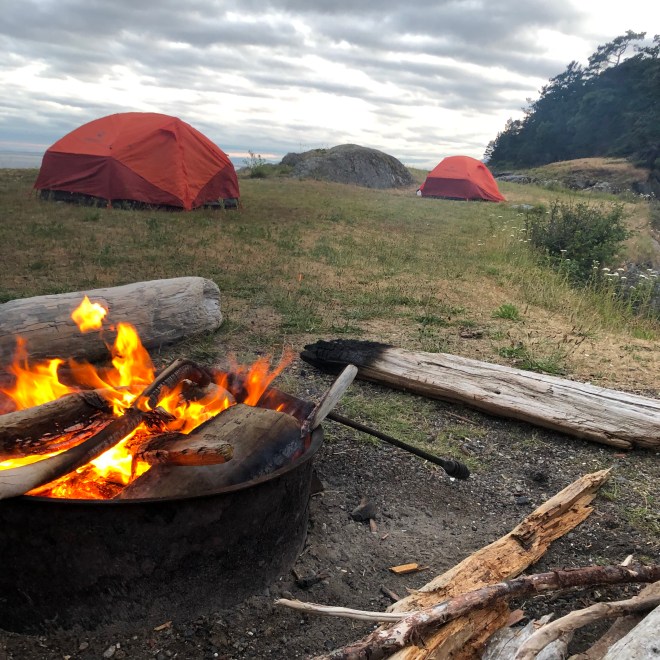
My summers at Camp Little Notch in the Adirondacks were not nearly as eventful as Lumberjanes camp, but camp was still a formative experience for me!  To this day, I sing campfire songs to my kids as I put them to bed at night, and I dream of taking Steve and the kids there for one of their family camp weekends.  This summer is not to be – maybe next year? – so in the meantime, I’m shopping for tents at REI and backyard fire pits at Lowe’s, reviewing my Little Notch songbook so that we can sing along while we toast s’mores in the backyard, and reading my Lumberjanes.

Do you relive your summer camp experiences through graphic novels?  Am I missing any good ones?