Reading Round-Up: March 2012

Reading is my oldest and favorite hobby.  I literally can’t remember a time in my life when I didn’t love to curl up with a good book.  Here are my reads for March, 2012…

Loving, by Henry Green – I plucked this book off a list of “things to read if you are addicted to Downton Abbey,” but I’m sorry to say I was disappointed.  A story of the interactions between servants and the family living in an Irish castle during World War II seemed like a perfect choice for me, and it was very well written, but I just felt like I was forcing it the entire time.  I can’t put my finger on exactly what rubbed me the wrong way.  Sometimes I thought maybe there was too much dialogue, which seems strange, because I like books with lots of dialogue.  I suppose I’ll be vague and just say that while I admired the writing, I didn’t like the atmosphere that I felt in the book.  I just couldn’t get into this one and it was a slog all the way to the finish, sadly.

A Wrinkle in Time, by Madeleine L’Engle – A re-read of one of my favorite books was just what the doctor ordered after the previous disappointment.  I first read A Wrinkle in Time when I was nine, and I’ve read it countless times since and loved it more every time.  I picked up a copy of the recently released 50th anniversary edition from Kramerbooks, and loved it as much as I ever have.  The tale of Meg and Charles Wallace Murray and their friend Calvin O’Keefe’s miraculous journey through space and time to rescue Meg and Charles’ father from the forces of evil on a distant planet was enthralling when I was younger, but has so many more layers of meaning now that I’m an adult.  Love it forever.

Elizabeth I, by Margaret George – I had never read any Margaret George before, because for some reason I thought she would be fluffy, and I just don’t like fluffy historical fiction that much.  But after reading great reviews of this one, I checked it out, and it BLEW. MY. MIND.  So well researched and written, meticulously detailed, yet still compulsively readable.  I will now be reading everything Margaret George has ever written.  Fully reviewed here.

Pardonable Lies, by Jacqueline Winspear (Maisie Dobbs #3) – The more I read of the Maisie Dobbs series, the more I like it.  In this installment, our intrepid heroine is hired to confirm the death of an aviator lost during World War I.  As Maisie digs deeper into her quarry’s history, she discovers that he had a connection to the still-missing, presumed-dead brother of her college friend Priscilla, and that all may not be as it seems with either of their deaths.  Maisie relentlessly and doggedly pursues the truth about both men’s fates, even as it seems that someone would rather she die than find out what really happened.  This series is just such fun!  I can’t stop cheering Maisie on as she tracks down answers for her clients and continues to confront her own wartime demons.

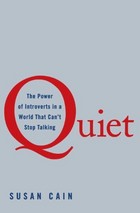
Quiet: The Power of Introverts in a World That Can’t Stop Talking, by Susan Cain – I really enjoyed this thoughtful, well-researched look into the introvert psyche.  As an introvert myself, I appreciated both the encouragement and the advice that Cain generously doled out, about how to harness your own special skills in the workplace and the social arena.  And I also loved her chapter on how to love an introvert, since my hubby is one as well and just being an introvert myself doesn’t make him less mysterious to me at times.  Fully reviewed here.

The Snow Child, by Eowyn Ivey – This debut was gorgeously written.  Jack and Mabel, a childless couple, move to Alaska to start a new life together.  One night they build a little girl out of snow.  The next day, the little snow girl is gone, but a real little girl is running around the woods near their cabin.  As Jack and Mabel begin to get to know Faina, the “snow child” they believe they created, they love her as a daughter.  But at the same time, they are haunted by the sad ending of a Russian fairy tale that bears striking similarities to Faina’s story, and they start to fear losing her.  Fully reviewed here.

March was a bit of a slow month for me.  One novella, one re-read, and a mystery made up half of my book total for the month.  I had some out of town visitors over three weekends, and I’ve been fighting off exhaustion for the entire month, which has cut into my reading time dramatically.  Lately my eyelids have been drooping by 8:00 p.m., and my weekends – when I’m not entertaining – invariably involve naps.  Still, I did manage to chew through Elizabeth I, which was almost 700 pages – I’m pretty proud of that.  Here’s hoping for some more energy in April.

Some Thoughts On QUIET

I’ve been looking forward to reading Quiet: The Power of Introverts in a World That Can’t Stop Talking since it was released.  But I had to wait awhile, because there was a looooooong holds queue at the library.  Apparently there are a lot of introverts in Fairfax County, and we all have library cards.

It took me a long time to recognize and embrace my introvert tendencies.  As the child of two very extroverted parents and the product of a school system that pushed group work and socialization, I got used to “faking extrovert” at a young age.  By the time I was in high school, I had completely internalized the “Must be bubbly and chatty!” compulsion, but it never stopped feeling like work.  Hard work.  Especially in college.  Every time I left a party early or skipped a social event to read, I mentally berated myself for being boring.

Still, I was shocked when I took the Myers-Briggs Type Indicator (for a class in college) and my results came back “INTJ.”  I had been faking extrovert for so long that I had even convinced myself that I was an extrovert – just a really, really bad one – so seeing that “I” for “Introvert” was a big surprise.  Even knowing that there was a reason I preferred books to keggers and downtime to party time, though, I still continued to push myself out the door to the frat parties.  I’m a slow learner, I guess.  It wasn’t until I started dating hubby – who is decidedly introverted – that I experienced the sweet, sweet relief of not having to force myself to loud parties every weekend.  We bonded over dinners out as a duo and long quiet hikes in the state park around our campus.  It was nice to finally feel like I could relax and stop trying so hard.

Of course, that didn’t mean that I completely embraced my introverted personality.  I went into law – a profession that would seem to attract introverts but requires a certain degree of extroversion if you want to build a client portfolio.  I’ve forced myself to get involved in community activities as part of my career-building efforts.  But networking and schmoozing do not come naturally to me.  My dad was shocked when I told him I hated networking.  “But you’re so good at it!” he said, shaking his head.  I explained that, yes, I am pretty good at networking – that’s the result of a LOT of hard work and practice and making myself do things (like attend big events) that don’t necessarily appeal to me and even stress me out.  (And I learned a technique that changed my networking life: zero in on the other uncomfortable-looking introvert standing in the corner and latch onto them.)  I won’t stop forcing myself to interact with people, but I don’t  expect it to ever come as easily to me as formulating an argument or a tackling a research problem does.

Quiet is a book for and about people like me.  It starts by explaining that our modern society is set up to reward extroverts.  From an early age, kids in school are socialized in the most extroverted ways possible.  Desks are arranged in pods, and group work is pushed at all education levels.  I always hated group work, mainly because I was usually the only one in the group actually doing any work.  My group government project in high school slapped me with a C because the teacher said it looked like it was done by one person.  It was: me.  In college, my International Human Resource Management professor assigned a group project but let me opt out and work alone… which led to an “A+++ I can’t believe you did this by yourself!!!” on my paper.  To which I said: it was easy when I didn’t have to pull three other people along with me.

Introverts are considered unappealingly shy, even anti-social, while extroverts are favored.  But introverts aren’t necessarily shy and anti-social – I don’t consider myself shy, although it takes me awhile to warm up to new people and I don’t care for large groups.  And while I might prefer a book to a big party, I’m not anti-social.  I have a group of close friends that I love spending time with, and I have a great marriage.  There’s NOTHING wrong with my personality.

Quiet goes on to discuss the biology of introversion, how introverts might train themselves to excel in the professional world, and how to love an introverted partner or raise an introverted child.  It’s a fascinating mix of social science, anecdotes, and encouragement for those of us who need our downtime more than most.  Some have criticized the book for being too “rah rah introverts!” but I say it’s about darn time someone cheered us.  We’re not all creepy loners.  Just because my perfect Friday night is a glass of wine and a book, or a quiet dinner with my husband, doesn’t make me weird at all.  It makes me… well, me.  It’s just who I am.

Read it: Quiet: The Power of Introverts in a World That Can’t Stop Talking, by Susan Cain (not an affiliate link)

(Image Source)

Creative Consumption

Sometimes it seems like all we do is buy and consume, buy and consume.  We burn gas on our long, stressful commutes.  Pick up takeout for lunch and bolt it down at our desks while we stare at our preferred news outlet’s website.  Grab a pizza on the way home – more food that we took no part in creating – and spend the evening staring at the television, letting messages sink into our brain without any help or hindrance from us.  As the economy spirals further out of control and the world teeters on the brink of complete insanity every day – and the bad news, always the bad news – it’s easy to understand why people want to create things with their hands.

There has been a resurgence in handicraft.  DIY blogs are exploding in popularity as people look for ways to save money and create a personal space in their homes.  The popularity of crafts like knitting and of art like photography is soaring, and it seems everyone and their mom wants to grow a garden – wants to get their hands dirty and work the earth and nurture something that wouldn’t be there without them.  When you spend all day consuming, sometimes you just want to create.  You want to feel real and connected and grounded again, by using your hands as they were meant to be used.

There are plenty of ways that I can be creative.  I cook – healthy meals and snacks for hubby and myself – and bake yummy treats to fatten up hubby’s coworkers.  (I don’t think they mind.)  I write, both here and offline (in journals and other projects).  I do decorating projects at home, working on making personal space for hubby and me to unwind and relax.  And, although I don’t think I’ve mentioned it here before, I knit.  (I tend to run hot and cold on knitting and I usually lose focus before completing a project, which is why I don’t blog about my creations – they are usually unfinished and/or riddled with mistakes.)

Yet I also do plenty of consuming.  As a reader, I spend hours each week downloading messages from a printed page to my brain.  I don’t tend to be one for zoning in front of the television for large chunks of each evening, but that doesn’t mean I’m not taking in more information than I’m putting out.  I read, on average, two books each week.  I don’t write two books’ worth of blog posts each week, for sure.  I’m wordy – but not that wordy.  So my choice of consumption methods might be a little more old-school (flipping pages, rather than channels).  Does that make me any less of a consumer of information?  Well, no.

Still, I don’t feel that by reading as voraciously as I do, I’m sacrificing my place in the creative process.  After mulling it over, I’ve concluded that I view certain acts of consumption – like reading a book (which I didn’t write), listening to a song (which I didn’t record) or playing a piano sonata (which I didn’t compose) – as acts of creativity.  When I read a book, yes, I take in the messages that the author is attempting to convey; or at least I do if I’m reading closely.  But I don’t approach a book in a vacuum.  I bring my own perspectives to each reading experience.  I endow characters with personality points and physical traits that might not be written in black and white, but that come from my own experience and fit with the character as I have read him or her.  I relate to books in a way that is completely unique because it’s based on my own accumulated knowledge over 30 years.  You do the same thing, when you read.

You might read a book and have a completely different response than I would have, because we’re approaching the same book from different perspectives, different world-views.  And that is creative.  That is adding to the information out there in the world – especially when we talk about our perspectives.  But even if I don’t talk about a book – even if I just pause and think a new thought, and never voice it, that’s still creative.  That’s still a thought that wouldn’t have been thought if I hadn’t opened this particular book and applied my own personality and experience to the words inside.

It’s not just reading, either.  When you listen to a song (pop, classical, or otherwise) or look at a painting or photograph, your experience (your consumption) of that art is informed by your own experience and personality.  So you’re not the musician or the painter – you’re still part of the creative process; you’re the “appreciator.”  I simply can’t view myself or anyone else as dumb information receptacles.  My understanding and appreciation of a piece of art or music (whether I’m listening to or playing the music – it’s still someone else’s score) is unique to me.  Without me, it would be a different piece.

And that makes all the difference to me.  I can curl up with a book on my sofa and feel like I’m still creating something.  I may not be working with my hands, cooking or baking or gardening, but I’m still creating.  I’m creating feelings, experiences, and unique perspectives – me and my books.  Or music, or paintings, or what-have-you.  By reading/viewing/listening critically and thinking intelligently, by letting myself become emotionally involved in a plot or with a character, I am actively participating in the act of creating.

Do you view reading (or other information consumption) as a creative act?

Ann Romney Pins ANNA KARENINA… So?

This bizarre little news item popped up on my Yahoo! home page and it was just too wacky for me not to share.

At this point, I assume most of you have heard of Pinterest.  (For those who haven’t, it’s a social networking site on which members create “pinboards,” which are essentially collages of bits of inspiration – decorating, food, travel, reading, fitness, quotes, or basically any kind of inspiration you’re looking for.)  I joined early on and have run hot and cold on the site – I’ll indulge in marathon pinfests, and then ignore the site for weeks.  Oh, and there was one drunken bout of pinning that left me with a picture of a giraffe licking a squirrel on my “Just Makes Me Smile” pinboard… and there it stays to this day, because I’m oddly reluctant to erase it.

So one of the standard pinboards that Pinterest starts users off with is a “Books Worth Reading” pinboard.  (You can delete it, but I kept mine.  And Anna Karenina is on it.)  Ann Romney put two books on her “Books Worth Reading” pinboard – The Forgotten Garden, by Kate Morton, and Anna Karenina, which she professes to be one of her favorite books.  And now the political world is all atwitter (see what I did there?) over Mrs. Romney’s choices of reading material.  What does it mean, the pundits and analysts are gasping, that Mrs. Romney enjoyed reading a book about an adulterous affair and open marriage and following one’s heart even if it goes against society’s mores, enough to pin it and declare it “worth reading” to all the world?

Sheesh.  Why would Ann Romney choose to pin Anna Karenina as a book worth reading?  Maybe because it IS worth reading.  Why would she consider it one of her favorite books?  Maybe because it’s a wonderful book.  Maybe because Anna’s journey from doting mother to social outcast to desperate woman is powerful, moving and beautifully written.  If we love a book, does that automatically mean that we’re going to act on every mistake the characters make, or replicate all of their bad choices?  Or that we agree with every message in the book?

Look, guys.  Anna Karenina is FICTION.  It’s also a great world classic.  To be honest, I’d judge Mrs. Romney a little bit if she couldn’t get past the fact that Anna makes some bad choices and appreciate the gorgeous language and the emotion of the story.  (Plus, hey, there’s a whole other storyline about two characters finding true love in a traditional marriage.  But nobody talks about that part.)  I don’t think it means anything that Mrs. Romney considers Anna Karenina one of her favorite books… except that she has good taste in books, that is.

N.B. This obviously isn’t a blog about politics.  In fact, I work hard to keep my politics off this blog.  (Oh, I have definite opinions.)  I’m not going to tell you who I am supporting for the 2012 presidential election, so please don’t take this as a declaration that Romney is getting my vote.  I’m just baffled that anyone would consider Mrs. Romney’s public admission that she (gasp!) loves one of the most beautiful and moving books ever written as a declaration of policy or a statement on the values of the Romney campaign.  Please, political pundit friends, PLEASE don’t read anything into Mrs. Romney’s reading choices.  They don’t mean anything, except that she read and loved a magnificent book.  Good on her.

Do you think a candidate’s wife’s reading choices are a statement on the candidate’s campaign values?  Or do you think that we should all back off and let Mrs. Romney read and pin in peace?

Reading Round-Up: February 2012

Reading is my oldest and favorite hobby.  I literally can’t remember a time in my life when I didn’t love to curl up with a good book.  Here are my reads for February, 2012…

Birds of a Feather, by Jacqueline Winspear (Maisie Dobbs #2) – I always love reading the second book in a mystery series, because I think it is really the first chance the reader has to tell whether the series will be good or not.  The first book is always lots of backstory, introducing characters and settings and future multi-book plotlines.  After all that, it’s very hard to make the mystery exciting and compelling, too.  So while I liked Maisie Dobbs very much, I was anxious to see how Birds of a Feather would shake out.  I’m pleased to report that it was great!  Maisie and her assistant Billy are able to sink their teeth right into the main mystery, from the very first chapter.  And it’s a doozie – they are hired to track down a missing heiress, but soon find themselves in the midst of a string of murders… and wondering whether the young woman they are searching for is the next victim or the killer.  There are a couple of interesting side plots about Maisie’s relationship with her father, and some tough stuff Billy goes through with his old war injuries.

Betsy-Tacy, by Maud Hart Lovelace (Betsy-Tacy #1) – I don’t know how I have been missing these books all my life!  I thought I was hip to most of the good vintage children’s classic literature, but I had never heard of Betsy-Tacy before reading Katie’s blog and hearing her rave about the series.  These stories about five-year-old Betsy Ray and her friend Tacy Kelly, and the adventures they have thanks to Betsy’s imagination, are simply adorable.  I loved my first visit with Betsy and Tacy in Deep Valley, Minnesota!

The Social Animal, by David Brooks – I have been a fan of David Brooks’ writing since I was assigned to read Bobos in Paradise back in college.  We might be of opposite political persuasions, but I love reading his meticulously researched and wittily written columns and books.  The Social Animal, which examines human socialization and achievement in the early 21st century, was fascinating and funny.  Win!

The Kitchen Counter Cooking School, by Kathleen Flinn – This one took me just a few hours to read.  Kathleen Flinn, a recent culinary school graduate, was adrift and looking for her next project one day when she found herself stalking a woman in the supermarket.  Flinn was fascinated by the woman’s buying choices – everything in a box!  She was buying “meals” – pot roast, mac ‘n cheese, fettucini Alfredo – but all in boxes.  Flinn finally approached the woman and gave her a crash course in home cooking.  That chance encounter sparked Flinn’s “chefternal” instinct and she put together a course to teach nine women, all of whom were “from the box” cooks, to cook creatively and joyfully.  Flinn taught her students that cooking from scratch was healthier and cheaper, and that it could be just as easy as buying shelf-stable goods.  Over the course of the summer, Flinn’s students gained friendships and lost their fear of the kitchen.  Great quick and inspiring read!  I’m not afraid of the kitchen and I love buying ingredients for a fresh and healthy meal, so I wouldn’t have been in Flinn’s target group… but she definitely inspired me to get into the kitchen and play with food as much as possible, and to be more mindful of using my leftovers and finishing up all those greens I buy each week!

The Palace of Illusions, by Chitra Bannerjee Divakaruni – I decided to read this book solely because of the gorgeous cover.  I’m attracted to all things gold and sparkly, and apparently books are no exception.  The Palace of Illusions is a re-imagining of the Indian epic “The Mahabharata,” told from the perspective of Draupadi, or Panchaali as she is called in this book, one of the female characters.  I’m not at all familiar with the original epic – had never even heard of it before; it’s just not part of the vernacular I grew up with.  So I don’t know how faithful Divakaruni was to the original epic, although some Goodreads reviewers who knew the original story said that she was quite faithful, only taking liberties with a couple of plot points (but in my mind, those plot points – Panchaali’s relationship with Krishna and her secret attraction to Karna – were kind of important).  Regardless, it was a great story, easy to follow even if you didn’t know the original epic, and very well-written.  I enjoyed it!

Betsy-Tacy and Tib, by Maud Hart Lovelace (Betsy-Tacy #2) – The second book about friends Betsy, Tacy and Tib takes place in 1900.  The girls are eight years old and their world is starting to expand.  Although they have their moments of getting into trouble – usually over the protests of the sensible Tib – they are best friends making the most of every day.

Betsy and Tacy Go Over the Big Hill, by Maud Hart Lovelace (Betsy-Tacy #3) – In the third Betsy-Tacy book, the girls fall in love with the King of Spain and decide to write him a letter.  (Well, Betsy and Tacy are in love, and Tib just likes to do what they do so she goes along with it.)  They decide to “have a Queen” for the summer, but get into a big fight with Betsy’s sister Julia and Tacy’s sister Katie, who also want to have a Queen.  Betsy, Tacy and Tib end up wandering over the Big Hill behind their houses and down to Little Syria to solicit votes for Tib as Queen, where they learn about another culture and make some wonderful friends.

At Home in Mitford, by Jan Karon (Mitford #1) – Things were getting a little intense for awhile this month and I really needed some escapist reading (more escapist than usual, that is).  I decided to check out the first book in a series about Father Tim, Episcopal priest in a small southern town, as a way to soothe my exhausted and overactive brain.  It definitely worked.  Father Tim spends his time visiting little old ladies, courting his next-door neighbor (who is an author and illustrator of children’s books starring her cat, natch), and ministering to the town homeless guy, who has a cottage and quotes Thoreau.  Oh, and he helps solve a jewel heist and saves the criminal’s soul.  Bad stuff does happen in Mitford – people get sick and kids are abandoned – but it’s mostly just a sleepy, idyllic place.  Not the most intellectually stimulating book I’ve ever read, but Mitford worked for what I wanted it to do.  I’ll be continuing to read the series, but I’m saving the next book for the next time I get overwhelmed.

Paris to the Past: Traveling Through French History by Train, by Ina Caro – This nonfiction book has been on my TBR for some time now.  I love what the back cover says – it’s a book about love.  While ostensibly a book about history, art and architecture, love shines through on every page.  It’s obvious that Ina Caro truly loves France – its history, people and food – and Paris, and the husband who travels “through time” alongside her.  Ina and Bob have been visiting France for decades, traveling “chronologically” through its history, visiting cathedrals and castles from the oldest to those inhabited by Napoleon.  In this book, Ina shares her favorite historical journeys – chronologically, of course – within an hour or two’s journey from Paris by train.  Her interest in history tends toward the gossipy, so she glosses over bloodshed and battles and devotes far more energy to divulging juicy details of courtesans’ plotting and queens’ love affairs.  Works for me!  I was afraid that Paris to the Past might be a bit dry, but it never was – it was just a fascinating, fun, informative and chatty journey through French history (with your new smart best friend who also happens to have an iron stomach, an enviable metabolism and a great memory).  Can’t recommend this one highly enough!

The 19th Wife, by David Ebershoff – I was fascinated by the news reports of raids on a modern-day polygamist sect a few years ago, so this book caught my attention immediately while I was browsing in an airport bookshop, and I put it on hold at my library as soon as possible.  It’s actually a story of two 19th wives – one Ann Eliza Young, the infamous 19th wife of Brigham Young, second Prophet of the Mormon Church (who apparently is a real historical figure; I’m not Mormon and had never heard of her, but I’ll probably look into her story to see how much in this book was true and how much was fictionalized); and one BeckyLyn Scott, wife #19 of a deceased modern-day polygamist, who awaits trial for his murder.  The story alternates between Ann Eliza’s tale of how she became a plural wife and how she escaped the lifestyle, and the tale of BeckyLyn’s estranged son, Jordan, who becomes convinced that BeckyLyn is innocent of his father’s murder and sets out on a dangerous quest to find the real killer.  I picked up the book because I was interested in reading the Ann Eliza parts, but I found Jordan’s story actually more compelling.  It’s not one I’d recommend to everyone, but if you like historical novels and/or murder mysteries and you don’t mind some disturbing content and strong language, check this one out.

Betsy and Tacy Go Downtown, by Maud Hart Lovelace (Betsy-Tacy #4) – The fourth book in the Betsy-Tacy series was just as cute and sweet as the previous three.  Betsy, Tacy and Tib are now twelve years old and are discovering new pursuits every day.  Some involve boys!  (Regular ones this time; not the King of Spain again.)  As always, the girls have fascinating adventures – Tib rides in a horseless carriage for the first time; new friend Winona takes them all to the theatre, and Betsy gets permission to visit the new library downtown and begins to harbor dreams of becoming a writer.  Loved this one even more than the first three, and I can’t wait to dig into the fifth book in the series!

I had such fun reading through this month!  I started February on a tear and read steadily through mid-month, when I slowed down a bit.  But I can honestly say I enjoyed each book I read this month.  Finally discovering the Betsy-Tacy series, thanks to Katie, was the bookish highlight of my month for sure.  How did I not know about these books before?  LOVE.  I’m not sure if Deep Valley will ever supplant Avonlea in my heart, but I do love it there.  The rest of the month was spent delving into cultures that are unfamiliar to me, and enjoying some fascinating nonfiction.  A good month indeed!

Sister Lit

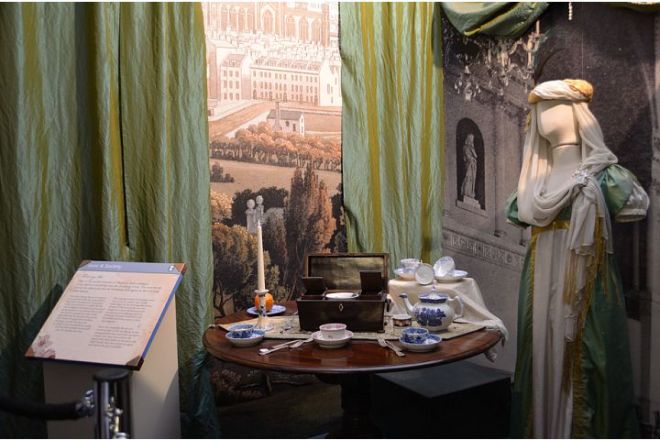
Sister Lit World Headquarters: the Jane Austen Centre, Bath, UK

Last month I read The Weird Sisters, a debut novel by Eleanor Brown.  In many ways, it followed a formula.  Sisters butt heads but love each other at the same time.  (Well, to be honest, the Andreas sisters of The Weird Sisters did more head-butting… metaphorical, of course… than loving.  But there was some loving.)  As I was reading The Weird Sisters, I started to think a lot about that literary sub-genre that I fondly call “sister lit.”

Sister lit – the primary example of which, in my mind, is Little Women – seems to be everywhere.  Anyone with an appetite for family sagas likes to read about the heart-warming and often heart-wrenching relationship between sisters.  I expect that there are plenty of women out there who say to themselves, “Oh, I’m definitely Jo.  And my sister is Amy.”  Or amend that as you will.

I can’t relate to this.  You see, I don’t have a sister.  Despite repeated requests – ahem, Mom – all I got was a brother.  Now, don’t get me wrong – I love my brother.  He’s a smart, funny guy and we have a lot in common (although he does some things – like shark diving – that you couldn’t pay me enough to try).  He loves to read, travel, ski and make sarcastic comments, all hobbies that we share.  And, as an added bonus, he never stole my clothes.  I may have borrowed his flannel shirts on occasion, though.  (So soft!  Sorry, bro.)

But I’ll admit I’ve always been a little bit jealous of people who have sisters – especially when they are also best friends.  I’ve come close to that relationship; I joined a sorority full of smart, funny women; made some extremely close female friends at every stage of my life; and married a guy with two lovely sisters that I adore.  As much as I cherish my sisters-in-law, sorority sisters, and girlfriends, I know I am never going to get to experience what it’s like to have a biological sister.  (Good and bad stuff alike.)  That doesn’t mean that I don’t enjoy and appreciate books like Little Women or The Weird Sisters, or the opportunity to live vicariously through them.

In fact, sometimes I think that maybe I enjoy those books more as a result of not having a sister – because diving into the relationships between Jane and Lizzy Bennet of Pride and Prejudice… or Meg, Jo, Beth and Amy of Little Women… or Rose, Bean and Cordy of The Weird Sisters… gives me the opportunity to see what life is like inside the head of a woman who has been given the gift of a sister.  But I sometimes do wonder if sister lit books would resonate differently with me if I had a sister and could draw on that relationship to inform my reading.  Alas, I’ll never know.

If only I could find a good grown-up book (and no, The Lion, The Witch and the Wardrobe doesn’t count) about siblings of the opposite sex.  Maybe I’ll write one.  Dan, you have been warned.

Do you have a sister?  Do you enjoy “sister lit” more because you have that real-life relationship to draw upon?

World Book Night 2012

As you have, no doubt, already figured out, I love to read and I love to talk about books with anyone who will listen to me.  As a result, I get super excited about events like World Book Night.  World Book Night started last year in the U.K. and was a huge success.  The basic premise is to give away books to “light or non-readers” in the hopes of sparking those people to – hopefully – become readers.  This year, on April 23, 2012, World Book Night is coming to America.

How is it done?  Through armies of Book Givers, volunteers who hand out books (which the WBN organization provides at no cost to the Book Givers) at subway stops, cafes, hospitals, nursing homes… wherever they might find people whose lives could be enriched by the power of words and stories.  I applied to be a Book Giver for World Book Night USA, and over the weekend I got the email letting me know that I have been selected – yay!  (I don’t know what book I’ll be giving out yet – we were told to rank three from a list of 30 – but my first choice was Bel Canto by Ann Patchett, and my second choice was I Know Why the Caged Bird Sings, by Maya Angelou.  My third choice was The Hunger Games, by Suzanne Collins, but that was such a popular request that not even all of the people who ranked The Hunger Games first will get to give it away, so it looks like I’ll be giving away one of my other two choices, which is A-okay by me.  They’re both amazing books.)

Oh, and guess what?  The deadline to apply to be a Book Giver in the USA has been extended until midnight tonight!  So if you’re interested in handing out books… and maybe inspiring someone else to read… cruise on over to World Book Night and apply.  (Note that’s the US site.  For those in other countries, I encourage you to find out if WBN2012 is coming to your homes as well, and apply to give books if it is!)

Happy reading, friends!  And happy Book Giving!

Reading Round-Up: January 2012

Reading is my oldest and favorite hobby.  I literally can’t remember a time in my life when I didn’t love to curl up with a good book.  Here are my reads for January, 2012…

Arthur and George, by Julian Barnes – I plumbed this one from the depths of the TBR and really enjoyed the story of George Edalji, a half-Indian vicar’s son who is unjustly accused of mutilating cattle, and the champion he finds in Sir Arthur Conan Doyle.  It was especially cool to read, knowing that it was based on a true story.  The only thing I disliked was that the author kept switching tenses with no apparent rhyme or reason.  I still find it hard to believe that the author, editor and publisher would all have missed such an obvious mistake, so I’m thinking it’s me and I was too dense to understand the reasons behind it.  Otherwise, great writing and wonderful characters.

Morality for Beautiful Girls (No. 1 Ladies’ Detective Agency #3), by Alexander McCall Smith – Each book I read in the No. 1 Ladies’ Detective Agency series, I like better than the last.  This one in particular was a sweet, simple read but managed to pack in a fair amount of philosophizing about morality, African culture, depression, and other issues.  I’ll be continuing to read through this cozy mystery series for sure.

Haroun and the Sea of Stories, by Salman Rushdie – Another book that I had been meaning to read for quite some time and finally got to this month, I loved this gentle tale of a storyteller’s son trying to help his father gain his abilities back.  Although it was sweet and funny, Haroun also visited upon themes of environmental destruction and the power of language.  Loved.

The Weird Sisters, by Eleanor Brown – I enjoyed this story of three sisters who reunite at their family home to nurse their mother through a bout with cancer and, in the process, must learn to forgive old hurts and relate to one another as adults.  I was slightly bothered by the way the author lumped each sister into traditional birth-order stereotypes (there was the staid, responsible eldest, the “bad girl” middle child, and the flighty, volatile youngest), but I did like the writing.

The Coffins of Little Hope, by Timothy Schaffert – This one disappointed me.  It was well-written, but I simply didn’t find either the plot or the characters to be engaging.  I kept turning the pages, thinking “maybe in the next chapter something will really grab me in this story,” but it never happened.  I think my opinion is the minority though, so don’t let me dissuade you from reading it if you had Little Hope on your TBR.  It just didn’t quite hit home for me.

We, the Drowned, by Carston Jensen – This tome has already been praised as “an instant classic” in Europe and as the newest addition to the genre of great seafaring literature.  And although I don’t normally go in for sailor-lit (I’ve never read Moby-Dick and The Old Man and the Sea did nothing for me), I really enjoyed it.  Jensen doesn’t gloss over the harshness of the sailing life, or the atrocities of war.  From the very beginning, We, the Drowned was violent and dark.  But the writing was beautiful – couldn’t believe this was translated – and the characters were compelling.  I particularly loved Albert Madsen’s search for his father (except one scene which terrified this lepidopterophobe) and the relationship between the aging Albert and young Knud Erik Friis.

Maisie Dobbs (Maisie Dobbs #1), by Jacqueline Winspear – I’d been wanting to get into this mystery series for awhile and finally got around to checking the first book out of the library.  Maisie is a charming and vivid heroine.  A brilliant young woman who worked her way up from a housemaid’s position to Cambridge, she has set up a detective business with the help of her old mentor, Maurice Blanche, and has begun taking on cases.  But Maisie’s first case will require her to revisit her memories of nursing in the Great War – memories which she had long buried.  Maisie Dobbs was a charming and exciting mystery and I’m looking forward to reading the rest of the series.

The Dean’s December, by Saul Bellow – I chose The Dean’s December for my first entry in Beth Fish Reads‘ “What’s in a Name?” challenge.  It is the story of Albert Corde, Dean of Students at a Chicago university, and the mess he has made as he meddled in a murder trial and published an expose of the crime and corruption in the Chicago jails.  As the Dean’s mother-in-law lay dying in Rumania, he accompanied his wife to say goodbye and, during the interminable waiting that was part of life behind the Iron Curtain, reflected on the American psychology as he observed it in Chicago.  The Dean’s December was a difficult, challenging book, but rewarding if you could stand the graphic descriptions of violence.  I found myself glazing over during introspective passages, while reading over my lunch break in a particularly noisy place.  I was only able to really appreciate the great writing when I sat down with it for a quiet afternoon at home over the weekend.

Un Amico Italiano: Eat, Pray, Love in Rome, by Luca Spaghetti – Yes, he exists, and yes, that’s really his name.  I loved this cute memoir by Luca Spaghetti, best known as the ebullient Roman who shows Elizabeth Gilbert around during the Italy section of Eat, Pray, Love.  Luca loves soccer, American music, the Grand Canyon, and pasta (of course!).  He shares his incomparable love of life in this charming memoir, which left me yearning for un amico Italiano (an Italian friend) of my own.

WOW, what a January!  Is it just me, or did this month seem really long?  And how did I ever manage to cram in nine books – especially when you consider that We, the Drowned was 675 pages long?  I mean, sheesh.  I’m scratching my head about this one, really, because I also lost a lot of reading time this month due to the fact that I’m driving myself to work three days a week (I usually ride with hubby, which means I get to read while he drives).  I sort of feel like this month might have been two months, maybe I missed the January recap and it’s actually the end of February.  But my calendar says it’s January, so I suppose not.  Anywho, I had a great reading month.  I mixed up the reads, including some darker or more violent books than I would normally choose (We, the Drowned and The Dean’s December), and it was certainly interesting to read some different styles.  But I made sure to mix in plenty of fluff, including two cozy mysteries (one Precious Ramotswe and one Maisie Dobbs – and I started the second installment, so expect that in February’s round-up) and Luca Spaghetti, who had me running to the pantry for pasta and dreaming of Rome.  I have another gigantic stack of library books for February, and I’m hoping to mix in some comfort reading with the library books next month to ward off the chill.  So look for another long list at the end of February!

Reason #1,465,327 Why My City Rules

Special Saturday post because I’m excited about the news that came out last week – for the second year in a row, Washington, D.C. is officially ranked as the most literate city in the United States!  (Read the USA Today BookBuzz article here.)  The rankings are based on factors such as number of bookstores (and we have some awesome indies, like Kramerbooks and Politics & Prose), library resources, newspaper circulation and internet resources.

I love living in the D.C. metro area – I love the sunshine, the free museums, the great restaurants, music and theatre at the Kennedy Center, and this news just reinforces why I love this city so much.  No wonder I was drawn to D.C. – it’s a city of readers!

TBR Insanity

Please, someone tell me that I’m not the only person who alleviates boredom by running through my “To Be Read” list… or gets inordinately excited about checking books off.  Seriously, any other booknerds out there?  Anyone?  Bueller?

In this digital age, my current TBR list resides, in part, on Goodreads… but the main list is on two sheets of lined paper that live in my purse, because I’m old school that way.  Here, in no particular order, are the books on my “main TBR” list.

THE NAME OF THE ROSE, by Umberto Eco
FOUCAULT’S PENDULUM, by Umberto Eco
BAUDOLINO, by Umberto Eco
FRENCH LESSONS, by Peter Mayle
THE PARTLY CLOUDY PATRIOT, by Sarah Vowell
CROME YELLOW, by Aldous Huxley
THE PHYSICK BOOK OF DELIVERANCE DANE, by Katherine Howe
PARROT AND OLIVIER IN AMERICA, by Peter Carey
AUNTS AREN’T GENTLEMEN, by P.G. Wodehouse
GREAT EXPECTATIONS, by Charles Dickens
A TALE OF TWO CITIES, by Charles Dickens
UNFAMILIAR FISHES, by Sarah Vowell
CUTTING FOR STONE, by Abraham Verghese
DOCTOR ZHIVAGO, by Boris Pasternak
EUGENE ONEGIN, by Alexander Pushkin
DEAD SOULS, by Nikolai Gogol (this would be a re-read)
THE HOBBIT, by J.R.R. Tolkein
THE DEAN’S DECEMBER, by Saul Bellow
MIDDLEMARCH, by George Eliot
LES LIASONS DANGEREUSES, by Choderlos de Laclos
THE DEVIL IN THE WHITE CITY, by Erik Larson
THE BOOK THIEF, by Marcus Zusak
A ROOM WITH A VIEW, by E.M. Forster
WHERE ANGELS FEAR TO TREAD, by E.M. Forster
DIMANCHE, by Irene Nemirovsky
YEAR OF WONDERS, by Geraldine Brooks
THE RAZOR’S EDGE, by W. Somerset Maugham
THE CANTERBURY TALES, by Geoffrey Chaucer
MIDDLESEX, by Jeffrey Eugenides
THE MARRIAGE PLOT, by Jeffrey Eugenides
SPEAK, MEMORY, by Vladimir Nabokov
LES MISERABLES, by Victor Hugo (another re-read)
THE GOOD EARTH, by Pearl S. Buck (another re-read)
VANITY FAIR, by William Makepeace Thackeray
TESS OF THE D’URBERVILLES, by Thomas Hardy (another re-read)
THE CAIRO TRILOGY, by Naguib Mahfouz
SWANN’S WAY, by Marcel Proust
BRIDGE OF SIGHS, by Richard Russo
THE FORGOTTEN GARDEN, by Kate Morton
TWELFTH NIGHT, by William Shakespeare
ALIAS GRACE, by Margaret Atwood
BRAVE NEW WORLD, by Aldous Huxley
PEYTON PLACE, by Grace Metalious
WE, THE DROWNED, by Carsten Jensen
THE INVISIBLE BRIDGE, by Julie Orringer
METAMORPHOSES, by Ovid
THE DIVINE COMEDY, by Dante
BLEAK HOUSE, by Charles Dickens
TOM JONES, by Henry Fielding

Ridiculous, no?  That’s not even counting the books I’ve checked off since putting this particular list on paper.  Eeks.  And, yeah, this list is fluid.  Things get checked off and added all the time – and my Goodreads list has selections that aren’t on here (and vice versa).  Oh, and I’ve been known to read books that don’t appear anywhere on either list, just on a whim.  Think I’ll be busy in 2012?

What’s on your TBR list?