Ending My Journey (For Now) With Mma Ramotswe

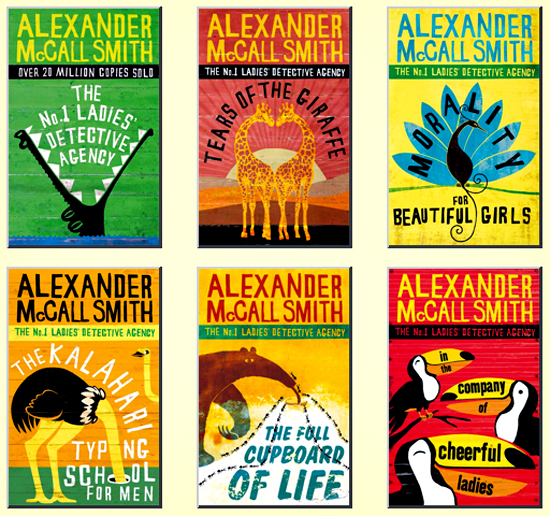
No 1 Ladies Detective Agency Books (Source)

Recently I wrapped up the thirteenth and final (for now) book in the No. 1 Ladies’ Detective Agency series, The Limpopo Academy of Private Detection and, in doing so, closed the book on a group of characters I’ve grown to love.  There’s Mma Precious Ramotswe, traditionally built lady, tea lover, and proprietress of the only private detective agency in Botswana.  Mma Grace Makutsi, her loyal (although sometimes a bit envious) secretary-turned-assistant-detective, and of course, Mma Makutsi’s pithy “talking” shoes.  Mr. J.L.B. Matekoni, the finest mechanic in Botswana, and Mma Ramotswe’s love interest.  And the side characters: Charlie and Fanwell, the two feckless apprentices serving under Mr. J.L.B. Matekoni; Mr. Phuti Radiphuti, Mma Makutsi’s love interest; the treacherous Violet Sephotho; sweet Motholeli and challenging Puso; mild Mr. Polopetsi; and of course, the indomitable Mma Potokwame.

The mysteries themselves are usually fairly mild, even a bit tepid – not nearly the intellectual puzzles expected from an Agatha Christie or Dorothy L. Sayers novel.  They’re background, more than anything else: they provide the stage on which the characters can act out their everyday dramas.  Indeed, the plots usually focus more on the lives of the characters, and their problems and encounters are far more interesting than the central mysteries.  When will Mma Ramotswe and Mr. J.L.B. Matekoni finally marry?  What about Mma Makutsi and Phuti Radiphuti?  Will Charlie ever show even the slightest bit of initiative – or will he forever be a stain on the good reputation of Tlokweng Road Speedy Motors?  And oh no, Mma Potokwame has brought by an entire fruitcake – what will she rope poor Mr. J.L.B. Matekoni into fixing for her now?

I have an odd little reading quirk: I’m a mystery monogamist.  I can’t seem to read two mystery series at the same time, so I’ll either wait to start a new series until I’ve finished the current one, or I’ll throw one completely over in favor of another.  (That’s what happened to Mma Ramotswe & co. when I discovered Maisie Dobbs.)  For a few weeks now, I’ve been itching to start reading the Flavia de Luce novels, but I was so deep into the No. 1 Ladies’ Detective Agency that I decided to finish those first, and now that I have, I’m a little bit sad.  These people have become friends, and I’m going to miss them.

I’m going to miss Mma Makutsi’s shoes and their snarky commentary, not to mention the way they call her “Boss.”  I’m going to miss Mr. J.L.B. Matekoni’s musings on all things mechanical, and the way Mma Potokwame is completely dedicated to the orphans in her care, and the spirited arguments between Mma Makutsi and the apprentices.  And I’m especially going to miss Mma Ramotswe’s “traditionally built” wisdom, her ruminations on the power of tea to cure all ills (we have that in common), her incessant references to Clovis Andersen and his book The Principles of Private Detection, and especially her penchant for adding the phrase “That is well known” to her own statements of opinion, or else attributing common-sense quotes – which she makes up on the spot – to Sir Seretse Khama.

I wish that I could meander down the Gaborone street and pop by the detective agency – on donut day, of course.  Or that I could sit with Mma Ramotswe on her porch, savoring a cup of red bush tea and looking out at the pumpkins growing ripe and round in her garden.  But it’s nice to imagine that, somewhere, my friends are living their full, busy lives.  Mma Makutsi is shopping for shoes.  Mr. J.L.B. Matekoni is fruitlessly trying to convince Mma Potokwame to replace a piece of vintage machinery at the orphan farm.  Charlie is cruising for dates, and he’s dragged poor Fanwell along with him.  And Mma Ramotswe is sitting at her kitchen table, helping Motholeli and Puso with their homework while a big pot of stew bubbles nearby, her hands curled around her thirtieth cup of red bush tea of the day.

Poetry Challenge: Reading Anna Akhmatova

DSC_0029

Well, fellow bibliophiles, it’s National Poetry Month again!  And you know what that means: lots of bloggers reading, writing, and posting poems all month.

I’m not a big poetry reader.  I have a poetry sweet spot – not too simplistic, not too everyday, not so complex or flowery that the whole thing goes over my head – and there are hardly any poems out there that hit it.  I have my small group of beloved poets – A.A. Milne, Robert Frost, Emily Dickinson and, most of all, my cherished e.e. cummings.  (I have a recurring fantasy of sitting A.A. Milne and e.e. cummings down together and forcing them to like one another.  No, love.  Forcing, if I have to.)

But when all’s said and done, I just don’t read much poetry at all.  I’d prefer a good historical classic, or an atmospheric new release, or a biography or memoir of a favorite personality, to a volume of poetry.  Since I read for the joy of it, I don’t have any problem with skipping books or genres that don’t bring me happiness.  (Which is why you never see true crime or thrillers on here.)

Still.  Every so often, a girl wants to expand her horizons a little bit.  You know, find something – or someone – new, and fall in love afresh.  So I’ve decided to find someone new on the poetry front and hope to fall in love, and I’ve chosen Anna Akhmatova.

I had never heard of Akhmatova until 2011, when I read Molotov’s Magic Lantern, a nonfiction pseudo-memoir-slash-travelogue-slash-history by journalist Rachel Polonsky, who discovered that she was living in a flat below the former residence of a notorious Soviet honcho, who – ironically – was an “ardent bibliophile” who collected the works of many writers and intellectuals he personally sent to the Gulag.  Akhmatova came up as an essential reading experience for anyone who considers herself a fan of Russian literature, and I’m ashamed to say I had no idea who she was.

I’ve read many of the major Russian writers – Tolstoy, Chekhov, Bulgakov, Gogol – but there are major holes in my tour of Russian literature, if I can even say I’ve embarked on one.  (There’s a difference between a fan of Russian writers and a fan of Richard Pevear and Larisa Volokhonsky.  I’d like to think I’m both, but if I’m being scrupulously honest, it really may be that I’m just the latter.)  I want to read more Russian literature – and comprehend it, ideally – and I want to “discover” a new-to-me poet, and what better place to start than the realm of Anna Akhmatova?

Akhmatova was born in 1889 near Odessa.  She grew up in Tsarskoye Selo and Kiev, attended Kiev University, and went on to become the preeminent Russian female poet.  She was a modernist who favored clarity and simplicity (thank you) in her work, and her themes ranged from love to religion to the experience of living through the Soviet regime.  She was in “official disfavor” for much of her career and her work was banned in the U.S.S.R., but she was one of the few writers who chose to remain in her homeland and bear witness to events there, rather than seek friendlier writing climates elsewhere.

For National Poetry Month 2013, I am challenging myself to read at least one Anna Akhmatova poem every day – and I’ve already started.  I bought a selection of her poems (a selection that, according to Amazon reviews, is missing some of her best work – but I’m looking for an introduction; I can always delve deeper later) and I intend to read it slowly and savor it over the course of the month.  I’ll try to pick a favorite or two to share with you all along the way, too.

Have you read Anna Akhmatova?  Which of her poems should I simply not miss?

National Poetry Month 2013

UK_10_21_2011_08_56_39

I’m not a great reader of poetry.  It has never been my favorite thing to read, and I eye-rolled my way through the poetry units in my high school English classes.  Still, I love to expand my horizons and there are a very few poets who have my bookworm heart captured – none more so than my all-time favorite, e.e. cummings.  Every April, we celebrate National Poetry Month, and last year I started the tradition of marking it by subjecting you all to an e.e. cummings poem.  In fact, I’ve shared several of his poems here – my favorite, to celebrate back-to-school, a lovely piece for Easter last year, and one to celebrate Christmas.  Since it wouldn’t be National Poetry Month without a little e.e. cummings, here’s another piece that I think is sweet and Easterly and a perfect kickoff to a month spent reading poems:

love is more thicker than forget
more thinner than recall
more seldom than a wave is wet
more frequent than to fail

it is most mad and moonly
and less it shall unbe
than all the sea which only
is deeper than the sea

love is less always than to win
less never than alive
less bigger than the least begin
less littler than forgive

it is most sane and sunly
and more it cannot die
than all the sky which only
is higher than the sky

~e.e. cummings (source: The Poetry Foundation)

I’ll be back on Wednesday with a recap of Peanut’s first Easter.  In the meantime… have a Cadbury egg on me, and read a poem!

On Authors and Conversation

DSC_0031

It’s 2013, and the world has shrunk to the size of a microchip, and in many ways, that’s a great thing.  There have never been so many conversations as there are going on right now, at this very moment.  It has never been so easy to connect with others, at least on a superficial level.  (Getting to know someone – really know them, inside and out – is a very different matter, but that’s a topic for another day.)  And for the first time in history, thanks to the miracle of Twitter, it’s never been so easy to strike up a conversation with an author.

I’ve had the experience of getting tweets from several authors I admire, and it hasn’t yet stopped being excruciatingly cool.  On a few occasions, I’ve tweeted my #fridayreads and received a response from the author.  Alex George, for instance, told me I made his day when I praised his novel A Good American on the mini-blogging site.  (Well-deserved praise, by the way.  A Good American is incredible.  If you haven’t read it yet, what are you waiting for?)  Alex George telling me that I “made his day” pretty much made my month.  And when I tweeted during a Friday lunch hour that I was enjoying a salad and Mrs Queen Takes the Train, William Kuhn shot back a charming tweet that Mrs Queen prefers walnuts on her arugula, leaving me grinning for the rest of the day.

I started thinking about authors and their various levels of engagement with their fans when Amal posted this interesting take on a Bryan Garner article she read.  While I agreed with her critiques of Garner (and she formed them much better than I would, so go read her post), I had to chime in with a comment noting that he was extremely gracious to his fans.  My best friend, unlike me, is a huge Garner fan.  While serving as a civilian U.S. government employee in a war zone that I personally would find pretty terrifying, R got into a debate over an esoteric point of grammar with her colleagues and emailed Garner to get his opinion.  He responded with a very kind email in which he answered her question, thanked her for her service, and asked her where he could send her some free books.  Since she’s basically the guy’s biggest fan, you can imagine how excited she was.

When I told Amal that story, via comment (and you can see our exchange in the comments section of her post), she responded that it was nice to hear that Garner took more of a “Dr. Seuss” attitude in responding to fans, and then linked me to a letter that a “grumpy” E.B. White once sent to a young fan.  The acclaimed author answered his little admirer’s request for another book by suggesting that the child start a national movement dedicated to NOT sending letters to E.B. White until he produces another book.  The response wended its way to the recipient’s librarian, who wrote to White to complain about his tart response, which he answered with a long letter explaining the demands that fan mail places on him.  While he made some good points – what a time-consuming effort it must be to answer thousands of fan letters personally – I still give the side-eye to his sarcastic response to a young child who probably wasn’t capable of grasping the snarky point, and who was just excited about Charlotte’s Web, anyway.  I think he probably just snapped after too much time spent trying to be gracious in fan responses and not enough time doing what he really wanted to do, which was writing, and I do sympathize.  But still.  There’s no need to get huffy, especially not when the recipient is a young child.  (If my Peanut received a letter like that from an author she admired, you can bet I’d be dashing off a reply of my own.)

The exchange between the author, the child and the librarian was a very interesting one to read, and I was grateful to Amal for pointing it out to me.  It also got me thinking about the things that writers must do to earn their incomes – aside from just writing, that is – and wondering whether the profession has gotten more demanding in recent years.  E.B. White bridled at answering fan letters.  Well, nowadays there’s the book tour, which can mean weeks on the road if you’re an author with bestseller potential.  (Have you seen John and Sherry Petersik’s posts about their Young House Love book tour?  Yowza.)  There’s the added work of “networking” on Facebook and Goodreads, maintaining your own blog or website as many authors do, and tweeting at starry-eyed fans like me.  On the one hand, the Internet makes it easier for authors to reach many more fans at once, just by updating their Facebook pages or putting up 140 characters.  On the other hand, when it’s easier to do, people demand that you do more.  If authors feel compelled to respond to every fan tweet, when exactly do they have time to write?  After all, we all know that the Internet can suck away hours of the day.  (Ever logged into Pinterest and lost two hours of your life?)

The relative ease of online communication has emboldened fans to insist on more contact with their heroes.  And I expect it’s probably added work for the writers who depend on readers to buy their books.  They now have to “sell” to readers online, or risk losing a reader to an author who is more engaging toward fans.  E.B. White-style reticence just doesn’t work in the Internet age, and an author who snaps back that fans should stop tweeting him if they want another book is probably going to alienate a few people.  (There are plenty of cases of Authors Behaving Badly that have enraged the book community – usually when an author responds angrily to a blog review.  I’m not even going to get into those sticky situations.)

It’s a tricky balancing act.  On the one hand, I like tweeting my favorite authors and seeing their responses.  I get excited at the thought of making contact, however superficial that contact is, with a writer whose work I admire.  And I also like giving credit where credit is due: if I really enjoyed a book, I want to tell people that I enjoyed it and congratulate the author on a job well done.  If I was a published author, I can’t imagine I would ever get tired of hearing from people who enjoyed my hard work.  But maybe we readers, as a group, need to back off a little bit.  Maybe we need to give our favorite authors some space to do what they do best: write books.

I’m not going to stop tweeting about the books I like, or telling the authors how much I enjoyed their work, because I know that if I had written a book I’d really want to hear from the people my words touched.  But when I tweet or blog about authors I like, I don’t expect a response from them.  I don’t expect them to take time out of their schedules to engage me in conversation.  When they do, though, it makes my day.

And with that, I’ll leave you with my absolute favorite quote about fan mail, from the great Maurice Sendak:

Once a little boy sent me a charming card with a little drawing on it. I loved it. I answer all my children’s letters — sometimes very hastily — but this one I lingered over. I sent him a card and I drew a picture of a Wild Thing on it. I wrote, “Dear Jim: I loved your card.” Then I got a letter back from his mother and she said, “Jim loved your card so much he ate it.” That to me was one of the highest compliments I’ve ever received. He didn’t care that it was an original Maurice Sendak drawing or anything. He saw it, he loved it, he ate it.”

In Which I Ponder Genre-Bending

DSC_0029

Like many readers, I love to look back at what I’ve read over the course of a month, a year, or even more.  (There are other readers who do this, right?  Please tell me I’m not the only one.)  I make lists in my email and on my blog, I track my reads on Goodreads, I assign book superlatives, and I make pie charts

When I sat down to look over my 2012 books and make my pie charts, I spent a lot of time agonizing over what genres to assign to certain books.  (Yes, I said agonizing.  I realize that’s melodramatic, and I don’t care.)  Here’s the chart I ended up with for my fiction books:

Download Your Pie Chart

It’s likely no one would notice or remark upon this next fact except for me, but: the chart shows that I only read one historical fiction book in 2012.  That would be Elizabeth I, by Margaret George (which was fabulous, by the way).  But Elizabeth I is not the only hi-fi I read in 2012.  I’ve always been one to read books set in other time periods, and 2012 was no exception.  So why does my pie chart say I only read one hi-fi book last year?  Well, because the chart only shows what I considered the “primary” genre of each book, and poor hi-fi got stripped as those books dropped more neatly into other genres.  Like what, for instance?  Well, there were the Maisie Dobbs books, which were set in the late 1920s in London and which relied heavily on historical detail to inform their storylines.  They’re mysteries, so they slotted into the mystery genre, but I could easily make a case for them as historical fiction.  Then there were books like The Snow Child, by Eowyn Ivey, and Wolf Hall and Bring Up The Bodies by Hilary Mantel, which were certainly historical fiction (The Snow Child is about early Alaskan settlers, and the Wolf Hall novels are set during the reign of Henry VIII) but their strong prose pushed them into the literary fiction category.  (Hmmm, now that I’m thinking about it, Elizabeth I was very well-written, too.  Should I have called that lit-fic and completely raided the hi-fi category?  And what makes something lit-fic instead of general fiction or hi-fi, anyway, and who decides?  These are the things that keep me up at night.)  Then there were books like The Hobbit, which could have been considered children’s lit (or fantasy, a genre which didn’t even make it onto my chart) but instead landed in classics, a genre that tends to be whatever people say it is.  Or the Fairacre books, which could have populated a genre of gentle fiction, but instead got plopped into classics, too – because I say so.

I realize that this pie chart is not important to anyone but me.  But it’s fun for me to look back and see what I read the previous year, and I like my reads to be neatly organized.  Cross-referencing genres, or thinking about how I should have cross-referenced genres, really drives home the point that I read a lot of genre-benders.  And this past month has been a perfect example of that.  While I was flying through The Midwife’s Tale – for example – I stopped to scratch my head and wonder whether I would categorize it as a mystery (since it is a murder mystery with a classic whodunit plot) or historical fiction (since the setting of York in 1644 is so important to the plot, and so richly detailed too).  I’ll probably call it a mystery, but then, there’s an argument the other way too.  And there was The Song of Achilles – hi-fi, clearly, since it’s set during the Trojan War, but the beautiful, alluring, almost poetic prose is certainly going to tip the scales in favor of this one going in the lit-fic bucket.  And poor hi-fi gets raided again.  Then there’s the Lord of the Rings trilogy, which I’m working my way through (I’ve already read the first two this year) – fantasy?  Or classic?  On balance, I think classic.  But again, a case could be made in the opposite direction.

When I’m not lying awake at night debating these things because my life is apparently too easy, I’m pretty happy to be reading all of these genre-benders.  A mystery with strong historical fiction elements?  A lit-fic offering that nods to an age-old classic?  A classic fantasy?  How could I go wrong with any of these?  I’m not going to stop reading genre-benders anytime soon.  I’m having too much fun with these books that pick and choose from among different genres and refuse to be pigeonholed.  And at the end of the year… well, I guess I’ll have to come up with some system for cross-referencing.

This may call for more pie charts.  Oh, darn.

Cover Stories

There’s been quite a lot of book news this past week or so.  Some big-deal news items, like the US Department of Justice’s approval of the proposed merger between Random House and Penguin (I’ll have more to say about that on Wednesday), some infuriating, like the best-selling author who panned the concept of libraries and inspired passionate defenses of libraries by other authors (who happen to be much more famous – Neil Gaiman and Joanne Harris, wut wut), some charming, like the NYC public school that was remamed the “Maurice Sendak Community School.”
 
And then there are two news stories about books that got cover remodels, and all the folks who have opinions, yo.
 
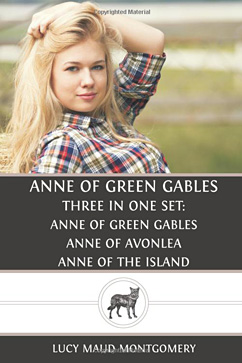
First up, how do you like this new look for Anne of Green Gables?
 
Anne of Green Gables BLONDE (Source)
 
I am feeling many things.  Devastated, confused, rage-stabby, nauseous.  Obviously, someone got horribly mixed up here.  Anne Shirley is not a buxom blonde.  She is a skinny twelve-year-old redhead.  And she doesn’t wear flannel shirts, not even when helping Matthew in the barn, because it’s the 1800s, OMG.  There’s so much wrong here, I’d like to talk more about it but I’m starting to feel ill again.  (And so are lots of other people.  I think this cover must be responsible for the most negative Amazon reviews the universally beloved L.M. Montgomery has ever gotten, all along the lines of ANNE’S HAIR IS RED WHYYYYYY WHYYYYYY WHYYYYYY CANNOT UNSEE EW EW EW EW EW, which is pretty much how I feel about this too.)
 
Before you tear out your eyeballs (I know, I wanted to as well, a thousand apologies, okay?), I have another new cover to show you, and you might like this one better.  (I said might.)
 
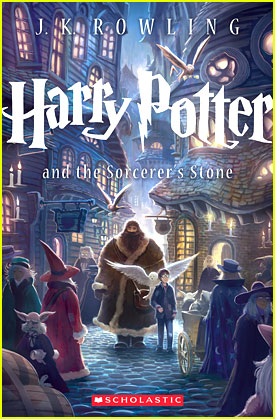
new HP (Source)
 
This is the new cover for Harry Potter and the Sorcerer’s Stone, unveiled in honor of the series’ fifteenth anniversary.  (The rest of the books are getting new duds too – all in the paperback editions.)
 
So, I have feelings about this, too (so many feelings today) but they’re more complicated.  Here, in no particular order, are my thoughts:
 
1) How has this series been around for fifteen years?  I’m old.  #needwinenow
2) I like the Diagon Alley background.
3) This is wrong.  Only the original US and UK illustrations are permitted.
4) Hedwig is so pretty.
5) This is clearly Lord Voldemort’s doing.
6) I like the colors.
7) I need a nap.
 
So, as you can see, I haven’t decided how I feel about the new HP cover art.  It’s kind of irrelevant because I already have all of the books and wasn’t planning to buy them again anytime soon (maybe someday, way down the line, if Peanut wants her own copies).  I like the new covers and I think that Scholastic did a great job with them, but I’m not sold on change in general when it comes to my favorite books, and the HP series is up there with my favorite books so I’m thinking maybe the cover art should remain inviolate.  I don’t know, guys, my head is spinning.  Maybe I should use Peanut’s method for deciding if she likes something.  #chewonit
 
Are you totally judging the new Anne of Green Gables cover too?  And what do you think about HP?  Like, dislike, confused, scared?

Literary Places in a Literate City

UK_03_11_2012_15_25_44

This may be old news to some, but to those who haven’t yet heard, permit me to brag a bit: for the THIRD year in a row, Washington, D.C. is the most literate city in the US!  (The study, of cities with 250,000+ residents, is conducted annually and looks at variables such as number of bookstores, newspaper circulation, and internet resources, among others.)  Fellow Washingtonians, we should be very proud.

Last year when we won, I tossed up a quick celebratory post. This year, though, I think more of a party is in order. Because… Three years running. That’s good stuff. And what better way to toast my town than with a literary crawl of Washington, D.C.?  This is a town that’s full of history and promise alike, and amply blessed with things to see, places to eat, and literary gems.  So, here are ten D.C. attractions, places to read nearby, and books to check out that celebrate, portray, or speak to our nation’s very literate capital.

10.  Mount Vernon

George Washington’s estate sits on the banks of the Potomac, looking from Virginia to Maryland.  You can stroll through history here, walk in the footsteps of Presidents on the well-trod floors of the Mansion, feed heirloom sheep, marvel at Farmer George’s ingenious barn, and wander amongst cherry trees in the nursery.  And you can wonder at the spirit of a small band of rebels who dared to take on an Empire, and at their leader who could switch from drawing up battle plans to instructing Martha on what curtains to purchase for the new dining room in the blink of an eye.

What to Read:  1776, by David McCullough.
Where to Read: the Mount Vernon Inn, over a steaming bowl of “pretty terrific” peanut and chestnut soup.

9.  Old Town Alexandria

It’s older than America!  In GW’s day, Old Town was… well… not that old, and it was a thriving small city south of the wetlands that would one day become Washington, D.C.  The Potomac was a thoroughfare and all kinds of travelers passed through on their way to and from Mount Vernon, or to stay.

What to Read: March, by Geraldine Brooks.
Where to Read: Misha’s Coffeehouse, with a cup of something hot, or The Grape and Bean.

8.  The Library of Congress

It’s America’s Library, so you know I’m all over this.  I used to work near the LOC and I’d walk over there on my lunch break just to marvel at the domed ceiling and the public exhibits.  I can’t imagine a better shrine to books and words.

What to Read: The Portable Thomas Jefferson, by Thomas Jefferson (Merrill Peterson, Ed.).
Where to Read: Mitsitam Restaurant at the National Museum of the American Indian – yum.

7.  The Supreme Court

The highest court in the land, and a temple for those of us who stammered our way through moot court competitions.  You can catch an argument there – they’re open to the public and only the most contentious cases fill the court gallery.  Or you can just goggle at the crisp white shrine to justice and recite Article III of the Constitution in your mind.  (Just me?)

What to Read: The Nine, by Jeffrey Toobin (obviously!).
Where to Read: Walk over to Eastern Market and plop down at Market Lunch.  Have pancakes.

6.  The Capitol

It’s where the people’s work gets done… or not, depending.  (Mostly not.)  You can watch floor debates from the gallery or get a tour if you contact your Representative ahead of time (or if you know someone inside, as most Washingtonians do… there are almost as many Hill staffers as there are K Street lawyers in this town), or you can just pose for a snapshot and admire the iconic dome.

What to Read: The Partly Cloudy Patriot, by Sarah Vowell (Americans should be informed!).
Where to Read: Over a beer at Hawk and Dove, rubbing elbows with Dem staffers from the House.

5.  The White House

1600 Pennsylvania Avenue, N.W. is the most famous address in the United States.  And whether you like the current resident or not, it’s probably the coolest photo op in D.C.

What to Read: Murder in the White House, by Margaret Truman (yes, President Truman’s daughter).
Where to Read: Breadline, where the staffers get their sandwiches and cookies, or the Hay-Adams Hotel if you’re fawncy.

4.  The National Archives

The most famous, important, heart-stirring documents from our nation’s history are here, and you can see them for free!  If you want to get up close and personal with the Declaration of Independence, this is the place to do so (but hands off, Nicholas Cage!).  Or you can be like me – bypass the Declaration and make straight for the Constitution.  I like to have a moment with Article III and the First Amendment.  What?  You totally have favorite parts of the Constitution, too.

What to Read: Common Sense, by Thomas Paine (another important historical document!)
Where to Read: Pop over to the National Gallery of Art and grab a gelato from the Cascade Cafe while you read.

3.  Kramerbooks

It’s part bookstore, part cafe (with an emphasis on pie… mmmm, pie) and that’s reason enough to visit this D.C. institution just north of Dupont Circle.  But it also has the dubious honor of being a favorite hangout spot for Monica Lewinsky (remember her?).  So you can shop for books, have a slice of their amazing blueberry pie, and indulge your secret love of scandal, all in one spot.  Best bang for the buck in D.C., and that’s even if you buy lunch and a book.

What to Read: A Vast Conspiracy, by Jeffrey Toobin, or anything from the shelves – support indie bookstores!
Where to Read: Afterwords, the attached cafe and bakery – have the crab and avocado salad, and a slice of pie.

2.  The Watergate

Oooooh, more scandal!  (Like it or not, there’s plenty of it to go around inside the Beltway.)  This upscale apartment building and hotel is the scene of the famous Watergate break-in that ultimately brought down a President (and that also caused us to add -gate to the end of every scandal that followed).  The apartments are popular with Washington bigwigs (when I first moved to D.C., I lived two blocks away on New Hampshire Avenue and used to go to the Watergate for Chinese food all the time; once hubby and I were mistaken for staffers and almost charged $75 for Condi’s order – then we fainted, because we were poor, yo) and – bonus – you’re just across the street from the Kennedy Center, if you fancy a musical interlude.

What to Read: All the President’s Men, by Bob Woodward and Carl Bernstein (what else?!).
Where to Read: Grab a table at Chen’s and have the eggplant in spicy sauce.

1.  Georgetown

One of my favorite haunts, this upscale neighborhood that grew up around the intersections of Wisconsin Avenue and M Street, N.W. has shops, restaurants, and history in abundance.  Jackie Kennedy once walked these brick sidewalks.  And The Old Stone House, the only surviving pre-Revolution structure in the District, still stands here (and freaks out the more nervous among us after dark – it’s said to be haunted by the ghost of a murderous misogynist).

What to Read: Katharine Graham’s Washington, by Katharine Graham.
Where to Read: At the Haagen-Dasz shop, where you can nurse a shake and check out the Georgetown map mural.

Have you been to D.C.?  Do you have favorite literary haunts, or Washington-inspired reads?

Reading Round-Up: January 2013

Reading is my oldest and favorite hobby.  I literally can’t remember a time in my life when I didn’t love to curl up with a good book.  Here are my reads for January, 2013…

The Olive Farm: A Memoir of Life, Love and Olive Oil in the South of France, by Carol Drinkwater – This one popped up in my Goodreads recommendations because I’ve read three Peter Mayle books, and an account of a couple who buy a ramshackle, falling-down old olive farm in Provence and turn it into a haven (which happens to produce olive oil) sounded great.  I love stories of people who escape the rat race and find a way to do something they’re passionate about and while Carol and Michel made this more of a vacation venture, it was still a story along those lines, so that was good.  My problem was that I just didn’t really invest, and I didn’t find Carol quite as charming of a narrator as I find Peter Mayle.  I still liked the book, but I didn’t love it and I didn’t find myself on Kayak looking at plane tickets the way I do after reading one of Mayle’s books.  So, good, but not great.

Blue Shoes and Happiness (No. 1 Ladies’ Detective Agency #7), by Alexander McCall Smith – Mma Ramotswe has some personnel issues on her hands in this installment.  As she tries to investigate an insidious fear spreading around a game preserve and an allegation that a doctor is falsifying blood pressure readings, she also has to worry about reining in her over-eager new part-time employee, Mr. Polopetsi.  And then there’s Mma Makutsi, who may have driven her fiance away by disclosing that she is a feminist.  But Mma Ramotswe can surely find solutions to these problems, and impart some life lessons and traditionally built wisdom along the way.  Like, for instance, the fact that you can buy blue shoes but you can’t buy happiness.

The Fellowship of the Ring (Lord of the Rings #1), by J.R.R. Tolkein – I’ve been meaning to read this trilogy for ages (even set it as a goal to reach before my 32nd birthday) so it was time to get a move on.  I found the tale of the ring and the beginning part of the journey to be captivating, as I knew I would.   Still, I think I missed a lot.  I had a vague sense of the events of this book, since I’ve wandered through the family room on occasion while hubby has been watching the movie, but it was still complicated!  Everything had confusing names, sometimes more than one name, and I found myself constantly looking back at the map trying to figure out where the Shire was relative to everything else (and didn’t quite get it).  I’ll probably have to re-read this a few times to really get a hook in it.  But for a first read-through, this was wonderful.

The Unlikely Pilgrimage of Harold Fry, by Rachel JoyceAmal recommended this to me and I’m so glad that she did.  I waited a LONG time on the library queue, but it was worth the wait and then some.  Harold Fry is a recently retired, unhappily married man who receives a letter from an old acquaintence, Queenie Hennessey, telling him that she’s dying of cancer in a hospice some 600 miles away.  Harold scribbles a quick reply and walks to the box to post it.  Then he walks past the box, and keeps right on walking – because he has unfinished business with Queenie and he is convinced that all she needs to make a recovery is someone to believe in her, and that if he keeps walking, Queenie will survive.  Along the way he meets a cast of broken characters, each of whom teaches him about himself.  Meanwhile, Harold’s wife Maureen, left at home to ponder why Harold went out to post a letter and never came back, begins to wonder if Harold was really such a bad husband after all.  Moving and beautifully written.  I cried.  Full review to come.

The Good Husband of Zebra Drive (No. 1 Ladies’ Detective Agency #8), by Alexander McCall Smith – Well, it’s finally happened.  Mma Makutsi, who has been growing an attitude in proportion to her shoe collection, has resigned from the detective agency.  It’s a sore blow for Mma Ramotswe.  And Charlie, one of Mr. J.L.B. Matekoni’s useless apprentices, has quit too (a case of addition by subtraction, if you ask me).  Meanwhile, Mma Ramotswe has some particularly serious allegations to look into by a pair of whistleblowers, and Mr. J.L.B. Matekoni has expressed an interest in becoming a detective.  But Mma Ramotswe isn’t the top (and only) lady detective in Botswana for nothing.  She’s more than capable of handling things.  Fun as always.

The Snows of Kilimanjaro and Other Stories, by Ernest Hemingway – I’ve been a Hemingway detractor since high school (The Old Man and the Sea did nothing for me, NOTHING) but I decided to give him another shot, since I’d heard The Snows of Kilimanjaro was good.  Well, in some ways I’ve revised my opinion about Hemingway, and in other ways, not.  I still think he’s a misogynist – there was not a single interesting, multi-dimensional or sympathetic female character in the book, making me wonder if Hemingway respected women at all, or even liked them.  I’m sure I’m missing all kinds of points here, but I just didn’t enjoy his portrayal of women.  So I’m still not a fan.  But I did like his writing style much better than I did in high school.  The crisp prose struck me as elegant instead of choppy.  And, unlikeable female character or not, the title story was fantastic.

Laura Lamont’s Life in Pictures, by Emma Straub – Meh.  I probably put too much pressure on this one, but the golden age of Hollywood is such a rich topic and Emma Straub’s previously published short story collection was so acclaimed that I expected more out of this book.  The story of Laura Lamont, a fictional movie star in the studio era, was good but not great.  Not enough time was spent on Laura’s rise to fame, and wayyyyyyy too much on her tumble from the heavens.  I wanted glitz and glamor and a glimpse into Old Hollywood, and there was some but not enough.  The writing was good, but not good enough to make up for the lack of glitter, so.  It was okay.

Well, that’s January.  Kind of spotty on the enjoyment front – I was cool on a few of the books I picked up this month, although The Fellowship of the Ring and The Unlikely Pilgrimage of Harold Fry made up for the others.  But to be honest I’m kind of impressed with myself for reading as much as I did.  I spent the first two weeks of the month gazing at my baby and trying to maximize every last moment of maternity leave, and the last two weeks back to the office grind (and finding WAY less time to read).  I’ve been squeezing in a few pages here and a few pages there, mostly during commutes, at lunchtime, and after Peanut goes to bed (in between bottom-patting and shushing sessions during our nightly I DON’T CARE WHAT YOU SAY MOM I AIN’T SLEEPING dance).  I’ll be happy with any month this year as long as I keep up my reading, consistently, when and where I can.

Scholastic’s 2012 Kids and Family Reading Report is Here!

lets read

Last week, Scholastic released its 2012 Kids and Family Reading Report, and it’s chock-a-block full of interesting information.  This is the fourth time Scholastic has prepared the report, which comes out every two years, and it’s the first time that it was at all on my radar screen.  I immediately downloaded the report and read the entire thing (not hard to do; it’s a lot of graphics).  As a new mom myself, I was very interested to read what Scholastic (a company I remember fondly from my school years) had to say about today’s kids and their reading behaviors.  Much of the report focuses on e-books, which promise to become more prevalent each year, and most of the findings were not particularly earth-shattering, at least not to me.  My thoughts:

On Parenting a Reader

Even before Peanut was born, I was thinking about how I’d go about bringing her up to be (I hope) an avid reader.  I posted here about my plans to be a Reading Mom, and later told you about Growing a Reader from Birth, a fascinating book I read back in November.  I was not at all surprised to find that a large part of Scholastic’s study focused on how parents can help to bring up little readers.

Unsurprisingly, of the parents that Scholastic polled, almost half (49%) believed that their children did not spend enough time reading books for fun.  Meanwhile, many parents believed their children spend too much time in front of screens – watching TV, playing video games, surfing the internet and Facebook – and texting on their smartphones.  As kids become more technologically adept, and have more choices for their screen time, I expect to see the numbers rise – more and more parents will be of the opinion that their kids spend too much time in front of screens, and not enough time reading.  (One of my few criticisms of the report was that while it looked at kids’ time spent reading and doing sedentary activities in front of screens, it didn’t address kids’ time spent playing outdoors or participating in sports.  I understand the report can’t address everything, but I’d like to have seen physical activity included, since I think that it’s very important for kids to be active outside.  I would have loved to see what parents thought about their kids’ time spent being active; it didn’t surprise me at all that most parents felt their kids spent too much time in front of screens and not enough time reading, but what were parents’ views on, say, soccer?  If the study wanted to look at reading time in comparison to time spent doing other activities, I felt that omitting outdoor activity left a big hole.)

That said, there are things that parents can do to encourage reading, and they start very early – from birth, in fact.  The study found that the three most effective things that a parent can do to encourage kids to read are to (1) set a good example by reading frequently yourself; (2) provide a home environment with an abundance of books; and (3) spend lots of time reading to your children.  I thought Scholastic’s finding here was fascinating, because it proves that you don’t need lots of money to grow a reader.  Any parent, regardless of how much money the family makes, can encourage their child to read: time spent reading with your child is more effective than money laid out.  Books purchased on the cheap from library sales (or even borrowed from the library – FREE!), thrift shops or bargain sales won’t set you back much, but they’re worth their weight in gold when it comes to encouraging kids to read.  And time spent cuddling with your kids and reading stories together costs nada, but will pay out huge dividends when it comes to growing a reader – and can you think of a more precious memory?  Along with this encouraging news goes the – frankly, kind of surprising – finding that there’s absolutely no correlation between household income and frequency of reading among kids.  Scholastic collected information about family income of frequent readers and infrequent readers and there was almost no difference at all – the median was $71,000 for frequent readers and $70,000 for infrequent readers, a negligible difference.  It debunks the conventional wisdom that kids from high-income families read more than kids from low-income or middle-income families.  (And I think, by extension, it shows that kids from low-income families aren’t doomed to struggle academically.  Caring teachers and parents who make the time to read with their kids and use the resources at their disposal to encourage reading mean far more than paychecks.  Isn’t that awesome?)

storytime

On E-Books

Jonathan Franzen, deal with this: e-books are here to stay.  Much of Scholastic’s study was devoted to questions about kids and e-books, and that makes perfect sense, since they’re the new wave of reading.  I know there are plenty of paper devotees and book purists, and that’s great and all, but the fact remains that kids are attracted to e-books, now more than ever.  Scholastic found that the numbers of kids reading e-books on various devices (including dedicated e-readers like Kindles or Nooks, desktop computers, tablets such as the iPad, or smartphones) has increased across the spectrum since 2010.  The percentage of kids who have read an e-book has almost doubled in the last two years, and among kids who read e-books, 20% say they now read more for fun (especially boys).  Most e-book reading happens at home, but more schools are offering the opportunity to their students, and half of kids ages 9-17, who have read at least one e-book, say they would read more for fun if they had more access to e-books.

There are plenty of reasons for this, according to Scholastic.  For one, e-readers help kids who lack self-confidence, perhaps because they’re slower readers than their peers, who might not want to tote around a below-grade level book that their friends can see (and mock).  Many kids said that part of the lure of e-readers is that their friends can’t see what they’re reading.  (This holds true for moms, too.  I know there are plenty of ladies out there who claim to be reading Anna Karenina but are really reading Fifty Shades of Grey.  C’mon ladies, Count Vronsky isn’t making you blush like that.)  I think there’s another reason too, one that Scholastic didn’t explore much (other than vague allusions) – kids like technology, they like the new hot thing, and e-readers and devices are cool and of-the-moment.  My kid is five months old, so her interest in my Nook doesn’t extend beyond wanting to put it in her mouth, as she wants to put everything in her mouth.  But when she is old enough to read to herself, I’ll let her read in any format she wants, and I might even get her an e-reader of her very own when she’s reading longer books.

Still, print books aren’t going anywhere.  Although kids are fascinated by e-readers, they still love to turn pages.  80% of frequent readers (who have read an e-book) say they still primarily read print books for fun.  And parents of younger children prefer print to e-books by a large margin.  Makes sense to me; Peanut’s books wouldn’t look nearly as good on my Nook as they do in print.

I think there are several lessons here.  First, we all need to make peace with e-books (if we haven’t already; I personally love my Nook for its convenience, especially when traveling, and wouldn’t dream of getting rid of it, although I still primarily read print books too).  They’re here and they’re not going away.  Second, if e-books will encourage kids to read, we should get them e-books.  You don’t have to have boatloads of disposable income to make e-books available to your children.  Many classics are in the public domain and available to download for free, and you can read them on a desktop computer, which many families own even if they can’t afford a fleet of other devices.  Again, I think Scholastic’s report is wonderfully encouraging in that it proves, over and over again, that there are plenty of low-cost ways to encourage reading, and you don’t have to be rich to raise a reader.

On Boys and Girls and Books, Oh My!

It’s been the conventional wisdom since time immemorial that girls read for fun more than boys do.  I have lots of thoughts about why this might be.  For one thing, I think that as a society, collectively, we haven’t done the best job of encouraging boys to be avid readers.  There are more good choices for girls’ reading material, and many of the children’s classics – like The Secret Garden, A Tree Grows in Brooklyn, Anne of Green Gables, Betsy-Tacy, and A Little Princess to name just a few – seem to be geared towards girls.  (That’s not to say boys can’t read those books too, and maybe there are boys that do, but I don’t believe as many boys are attracted to them.)  Of course, there are classics that appeal to boys, too – like The Wind in the Willows, Frog and Toad, The Hardy Boys, but I think the difference is that those books appeal to both boys and girls, where the girls’ classics really appeal only to girls, with few exceptions.  And then there’s the fact that little boys have, for generations, been encouraged to be rough-and-tumble, and reading has been considered somewhat less than manly, and as a result I believe that society has missed many opportunities to instill a love of reading in both sexes.  (It’s not impossible – as I mentioned in my post Are readers born or made?, my brother was not an avid reader – although he always loved to be read to – until my mom found him a series of young adult books set in the “Star Wars” universe, which he loved, and now today he reads more than any other guy I know.)

However, according to Scholastic, boys are catching up to girls in the love-of-reading department.  The number of boys reporting that they consider it important to read for fun, and that they enjoy and spend a lot of time reading for fun, has increased slightly since 2010.  Yay!  But… there’s bad news too.  The number of girls reporting they consider it important to read for fun, and that they enjoy and spend a lot of time reading for fun, has decreased slightly since 2010.  No!  It’s true.  Girls are leveling or dropping off in their enjoyment and pursuit of reading (although they still read for fun at higher numbers, and more frequently, than boys).  What this finding says to me, as a mom of a girl, is that we can’t afford to neglect girls’ reading and assume that they’ll come to reading naturally; girls need to be encouraged too.  Parents and educators often focus on the question “how do we get the boys to read?” because girls, as a group, often seem to have their reading habits ingrained without much effort from the adults.  But we can’t ignore the girls!  I think it’s a mistake to assume that girls will love reading just because they’re girls, and I will put just as much effort into encouraging Peanut to read as I would have if she happened to be a boy.

The good news for adolescents is that many of most popular the young adult books on the market seem to appeal to boys and girls equally.  (Twilight is the exception.)  Scholastic polled kids on the last book they read for fun, and the most popular responses were books that appealed to both boys and girls.  The Diary of a Wimpy Kid series won the 9-11 set (and came in a close second to Junie B. Jones among 6-8s), and the Harry Potter series and the Hunger Games trilogy had the 12-17 market cornered.  I don’t know if there are more choices now that both boys and girls can enjoy equally, or if they are just getting more press, but either way, I like it.

These are just my random thoughts from the 2012 Kids and Family Reading Report.  There’s a lot more food for thought in there!  Download it and see for yourself – and if you do, I’d love to hear your impressions.

Have you read the 2012 KFRR?  What did you think?  Parents, do you agree or disagree with the report’s conclusions?

Happy 200th Birthday, Lizzy Bennet!

Emily and Jane

Today is the 200th anniversary of Pride and Prejudice – that’s right!  Two hundred years of Lizzy, Jane, Darcy, Bingley, Lydia, Wickham and the rest of the crew.  Peanut is celebrating by reading her BabyLit Pride and Prejudice counting primer.  One English village, two rich gentlemen…

Every so often, a book comes along that changes everythingPride and Prejudice was one of those books.  It has been popular for two hundred years, and for good reason.  It’s biting social commentary and satire, wrapped up together in a neat blanket of comedy-of-manners and love story.  Pride and Prejudice has captured the imaginations and the hearts of people all across the world.  It’s more complex than it gets credit for most of the time, but more than anything else, it’s just good reading.  I for one am so glad it exists, and I hope that Peanut loves it as much as I do.

Happy birthday, Pride and Prejudice – and thanks for all the good page turns.  Here’s to another two hundred years of popularity.