Audiobook Week: Post II (Mid-Week Meme)

DSC_0031

Audiobook week continues with a meme!  Fun, fun.  Here are Jen’s questions and my answers:

Current/Most Recent Audiobook:

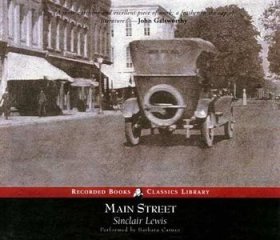
Main Street Audio (Image Source)

Right now, I’m listening to Main Street, by Sinclair Lewis – specifically, to this version from Recorded Books Classics Library.

Impressions:

I’d been meaning to read Main Street for quite some time, so getting it on audio is a good way for me to check it off my list.  I’m on the seventh disc now and really enjoying it.  Barbara Caruso’s narration is wonderful – and very true to the times in which the story was set, and I’m well into the story of Carol Kennicott’s bumpy introduction to small-town life and loving it.

Current/Most Recent Favorite Audiobook:

The Lightning Thief Audio (Image Source)

Before starting Main Street, I was enjoying the Percy Jackson and the Olympians books on audio.  I’ve listened to the first two (The Lightning Thief and The Sea of Monsters) and had so much fun that they almost made me forget that I was sitting in traffic for most of the time that Percy and pals were battling monsters from Greek myths.  I have the third installment, The Titan’s Curse, waiting for me on audio as soon as I finish Main Street, and I can’t wait.

Favorite Narrator You’ve Discovered Recently:

Never Let Me Go Audiobook (Image Source)

I really, really liked Rosalyn Landor’s voice narrating Never Let Me Go, by Kazuo Ishiguro.  She was exactly the way I’d have imagined Kathy H. sounding, and her matter-of-fact tone made the book even more chilling to hear.  She also didn’t do my pet peeve among audiobook narrators: change her voice in a silly, distracting way when reading lines spoken by a character of the opposite sex.  (It drives me nuts when male audiobook narrators talk in a squeaky voice to suggest a woman’s voice, and when female narrators become weirdly gruff to suggest a man.)

One Title From Your TBL (To Be Listened) Stack Or Your Audio Wishlist:

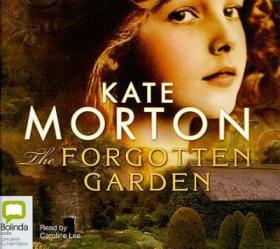
The Forgotten Garden Audiobook (Image Source)

I’m dying to hear Kate Morton’s books read on audio – any of them.  I’ll probably start with The Forgotten Garden.  My library branch doesn’t have it, but I’m planning to reserve it soon and have a copy brought over from another branch.  But first I want to finish the rest of the Percy Jackson and the Olympians books on audio – I have, I believe, three more to go.

Psst – since I’m still trying to deal with the consequences of my library shenanigans, there’ll be TWO posts on Friday – my final Audiobook Week post on Friday morning, and a Mo’ Books, Mo’ Problems update on Friday afternoon.  Books overload!  You’re welcome, or my apologies, depending on your perspective.

Audiobook Week 2013: Post I

DSC_0460

So, this week (June 17-21) is Audiobook Week, an annual event hosted by Jen at Devourer of Books.  This is the fourth year running, but I’ve never participated before, because I never really listened regularly to audiobooks before.  I own three audiobooks: Harry Potter and the Prisoner of Azkaban, Harry Potter and the Half-Blood Prince, and Knit Happens.  (Which one is not like the others?, she sings.)  Up until this spring, the only time I listened to audiobooks was on long car rides (hence the Potters).

But this spring, hubby’s work schedule changed and with it, our commuting arrangements.  We used to drive to work together; by that, I mean hubby drove and I read in the car, which I’m lucky enough to be able to do without getting carsick.  But when his work schedule changed to a less convenient time, I didn’t want to change my schedule too, because it meant less time with the baby.  And since I don’t live close enough to take advantage of public transportation (the nearest metro stop is 20 minutes from my house, and the train ride is longer than I’d spend in the car just driving to the office) I’ve joined the ranks of rush-hour drivers.  Since I was losing all that reading time and actually having to contend with traffic instead of ignoring it, I decided there was only one thing to do: become an audiobook convert.

Since I started driving myself, I’ve listened to People of the Book, by Geraldine Brooks; Never Let Me Go, by Kazuo Ishiguro (shiver – so good); Knit Happens, by Stephanie Pearl-McPhee; Fire in the Blood, by Irene Nemirovsky; and The Lightning Thief and The Sea of Monsters, by Rick Riordan.  Now I’m four discs into Main Street, by Sinclair Lewis, and if I can’t say I’m enjoying my commutes, at least I’m surviving them.

So.  For audiobook week, Jen has created prompts for each day and I’m going to follow them while sticking to my normal posting schedule (M, W, F) by answering Monday and Tuesday’s prompts today, Wednesday’s on Wednesday, and Thursday and Friday’s on Friday.  (Confused yet?)  Here goes.

Monday

Jen asks: Are you new to audiobooks in the last year? Have you been listening to them forever but discovered something new this year? Favorite titles? New times/places to listen? This is your chance to introduce yourself and your general listening experience.

Well, I answered a lot of these above, so I won’t go too nuts with this.  I’m not exactly new to audiobooks in the past year, but I’m new to listening to them regularly; before the commuting arrangements changed I was a road-trip-only listener.  I’m still listening only in the car, but now I’m listening almost every day and only pausing when I need some silence after a particularly verbal day.  Audiobooks are certainly helping me keep up my reading even though I’ve lost about 90 minutes of time each day, so I’m grateful for that.  As for favorite titles, I was completely hooked on Never Let Me Go, by Kazuo Ishiguro – between a chillingly compelling story and a fantastic narrator, it was a big win for me.  And things have been a bit stressful lately, but they could have been a lot worse – Rick Riordan’s Percy Jackson and the Olympians series has stepped in and given me plenty to laugh and cheer about, even during the worst rush hour snarls.  (I have the third book on hold at the library, on audio again, and I can’t wait to start it just as soon as I finish Main Street.)  I also loved Fire in the Blood, with its beautiful writing and incredible narrator, but the library discs I borrowed were badly scratched and skipped constantly, which really put a damper on the listening experience.

Tuesday

Jen asks: How do you decide what you’ll listen to? Do you mostly listen, or split time between listening and reading? Particularly if you split time, how do you decide what you’ll consume in audio and what in print?

I do split my time between print and audio; as described above, I listen to audiobooks in the car, generally only when I’m the one driving, or on road trips.  I’m still devoting the bulk of my reading time to print – the audiobooks are really to make my commute faster and friendlier.  I don’t have much rhyme or reason as to how I decide what to listen to.  Mostly, I just wander the audiobook shelves at the library until something I feel like reading or hearing jumps out at me.  I did make a conscious decision to listen to the Percy Jackson books, because I wanted to read them and didn’t know when I’d get to them otherwise.

If I don’t have a specific plan, I just try to find something from my to-read list and or look for anything else that seems appealing, whether I was meaning to read it or not.  I have been borrowing all of my audiobooks from the library and there isn’t much selection at my small branch, so soon I think I’ll have to become more intentional about what I choose to listen to, since I’m going to have to start reserving more audiobooks and having them brought from other branches.  When that day comes, I’ll be looking through the TBR more carefully and reserving my selections online, then picking them up at my branch.  I think that system will work for me.  At some point I may look into Audible or other means of acquiring e-audiobooks, but right now the library shelves are my mainstay.

Wednesday’s post is a meme that Jen plans to put up on the day of, so my post won’t go up until Wednesday evening.  So check here Wednesday night or Thursday morning for the next Audiobook Week post.  And, this goes without saying, but – Jen, thanks for hosting!  This is fun.

#Villettealong: Reading Companions

Villette
(Image Source)

I had so much fun reading along with the #Villettealong.  I’ve never belonged to a book club, or participated in a readalong before, because the timing has just never worked out for me.  I’ve been busy with other things, buried under a pile of my own reading, or unavailable at the times a book club I might join meets.  So I was so excited to have the opportunity to read in a sort of community – a community extending, quite literally, over international borders.

Because I write and schedule my posts ahead of time (it’s the only way I can manage this blog, what with a baby and a demanding job), I posted all three of my #Villettealong updates without linking back to my reading companions.  That’s a shame, because I had two of the best: Beth of Too Fond, and Amal of The Misfortune of Knowing.  These two women are intelligent and insightful.  Reading their impressions of Villette helped me to inform my own opinions.  We shared laughs about the sly bits of humor Charlotte Bronte snuck into the text, debated points made vague by Bronte’s narrator’s dubious honesty, and enjoyed a reading experience made richer by the fact of sharing it with friends.  (Note: there were other readers who followed along on Twitter, but it was Beth and Amal who posted updates on their blogs.)

I want you to see what they said about Villette because their posts were smart and thoughtful, and I truly enjoyed reading them.

So, here’s Beth:

Readalong: Villette by Charlotte Bronte
Villette Readalong: Week One
Villette Readalong: Week Two
Villette Readalong: Wrap-Up

And here’s Amal:

Our Shrinking World
Cats Are the Solution to Writer’s Block (Well, Sort Of)
VILLETTE & A Cup of Tea
Charlotte Bronte and I Can’t Agree on Everything (not a readalong post, but related)
Cold as Snow(e) (What’s in a Name?)

I highly recommend that you check out their posts.  And, of course, that you read Villette, which was wonderful.  Beth, by the way – the next time you decide to host a readalong, count me in.

P.S. If you missed them, here are my posts about Villette and the readalong:

So, Guess What I’m Doing?
#Villettealong: Volume I
#Villettealong: Volume II
#Villettealong: Volume III

#Villettealong: Volume III

Villette (Source)

“Lucy, I wonder if anybody will ever comprehend you altogether?” asks Paulina in Volume III of Villette.  Indeed, for most of her acquaintances, Lucy is content to remain an enigma.  But even an enigma needs some lovin’ – and that’s the lesson of Volume III.

The Story

By now, Lucy has realized what she probably knew all along: she and Dr. John are not meant to be.  While he has shed his first, less fortunate infatuation, Dr. John has found a new angel to idolize, and Lucy finds it within herself to approve of his choice.  Meanwhile, Lucy is undergoing a love metamorphosis of her own, finding herself more and more attracted to M. Paul.  Where he once put her off with his appearance, now she finds him pleasant to look at.  Where she once was irritated, dismayed, or upset by his irritable mood swings, now she finds him ready to be soothed and consoled.  She grows to appreciate his intellect and to overlook his possessive, imperious side.  But alas – forces outside the two of them see that Lucy and M. Paul are growing closer, and deem any kind of match completely unsuitable, because Lucy is a Protestant (and vocal about it, too).  M. Paul, guided by his teacher, Pere Silas, first attempts to convert Lucy to Catholicism.  When she refuses to go along with him, M. Paul must decide whether to accept Lucy as she is – reforms and all.  And even if he so decides, what of the “three-headed Basilisk” that wants to keep them apart?

Concluding Thoughts

Lucy never gives us a peek into her past; there is no explanation given for how she came to develop the character that stands before the reader, coolly setting forth events, throughout Villette.  Nor, irascible as she is, will she humor us with any kind of closure about the future.  Lucy demands that the reader fill in the blanks about both her past and her future.  While most of the sub-plots are neatly wrapped up for the reader, Lucy makes us work for resolution to the main story.

I liked Volume III the best out of the three volumes.  Perhaps it was because I had fallen back into a rhythm with Charlotte Bronte’s prose – Jane Eyre is my favorite book, it’s true, but it’d been awhile since I’d last read it – and found Lucy’s voice more readable.  Then, it was in Volume III that I recognized more Bronte style in the prose and in the plot: a heroine determined to be independent but to welcome love should it come her way; a leading man who grows on the reader as slowly as he grows on the protagonist; lots of weather, too.  No one does the old-grouch-with-a-heart-of-gold bit as well as Charlotte.

Overall Impressions

Obviously, I was going to compare Villette to Jane Eyre and… I’ve got to say… while I enjoyed Villette immensely, Jane Eyre still holds the prime place in my bookworm’s heart.  I think, however, that Jane and Lucy would have gotten along famously.  Both forced to make their own ways in the world, both not much to look at but with deep wells of emotion beneath their calm exteriors.  And both would agree on what, I think, is the central concern of each of their stories, articulated so beautifully by Lucy:

The love born of beauty was not mine: I had nothing in common with it: I could not dare to meddle with it, but another love, venturing diffidently into life after long acquaintance, furnace-tried by pain, stamped by constancy, consolidated by affection’s pure and durable alloy, submitted by intellect to intellect’s own tests, and finally wrought up, by his own process, to his own unflawed completeness, this Love that laughed at Passion, his fast frenzies and his hot and hurried extinction, in this Love I had a vested interest; and for whatever tended either to its culture or its destruction I could not view impassibly.

Thank you, Beth, for hosting this read-along and giving me the excuse to finally pick up a book I’ve long meant to read.   Everybody else: if my spoilery posts didn’t completely give things away and put you off (a thousand sorries), you can buy the book here (not an affiliate link) or from your local indie bookstore.

Mo’ Books, Mo’ Problems

Mo Books Mo Problems

So, um, remember how I said I wasn’t going to go crazy at the library this month?  Well…  Well.  I swear I didn’t.  The crazy just… sort of… happened.  This sort of thing has happened before, and I never, ever learn.

What goes down is this: if I see a book that looks interesting, either on a book blog, or Goodreads, or in the Shelf Awareness newsletter, I head on over to my library website and reserve a copy.  If it’s a new release – as they often are – I end up on the waiting list.  Which is fine, except that various books have different numbers of people waiting for them, and sometimes it happens that I reach the top of the list for five or so… or more… books at the same time.  Oops.  And then when I do things like decide I’d rather finish the Lord of the Rings trilogy, or sign up for a Villette readalong, the situation just gets more dire as I pretend the library stack doesn’t exist.  And then more books pop up on the holds shelf, and eventually you have… the library apocalypse.

Here’s the status:

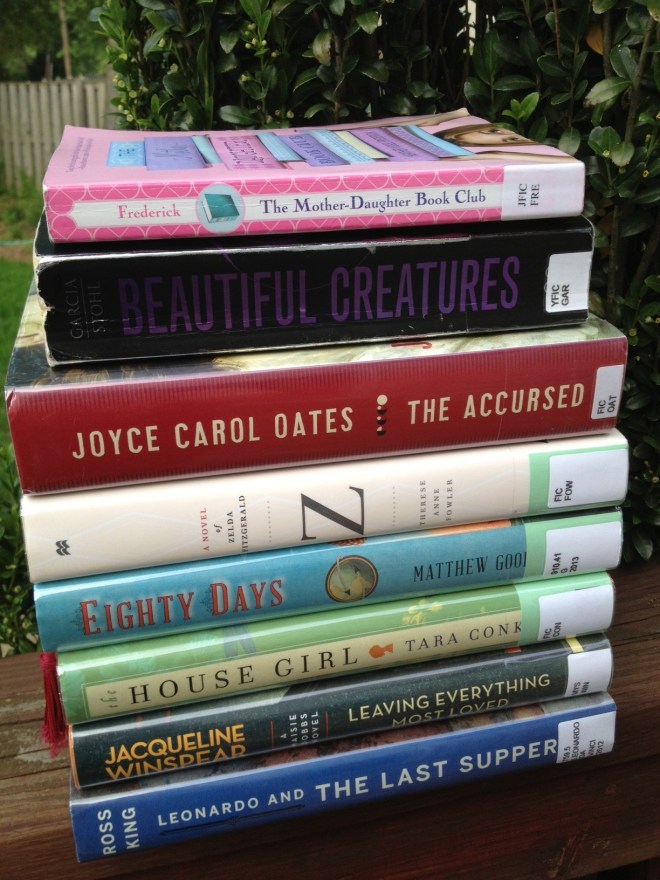
Due back June 3rd:

Z: A Novel of Zelda Fitzgerald
The Accursed

Due back June 8th:

Eighty Days
Beautiful Creatures
The Mother-Daughter Book Club

Due back June 18th:

Leaving Everything Most Loved
Leonardo and the Last Supper
The House Girl

Somewhere in there, I also need to make time to keep up with the #villettealong.  Oh, and there’s the little matter of raising a baby and holding down a job.  Man, it was so much easier to keep up with my reading when I was on maternity leave.  I miss maternity leave.

Here’s the plan:

1) I probably will return The Accursed without reading it and download a copy for my Nook.  It’s really long, and it looks incredible, so I think there’s a chance I might re-read it, and it’s worth a purchase for that reason.  Normally I like to read a book before buying it, but desperate times call for desperate measures, and if I can’t get to all of these before they need to go back, this is the one I think I’m most likely to want to own.

2) I’m already into Z and I think I can get it out of the way before the deadline, since it’s been reading quickly… IF I get reading time this weekend, that is.  I also have to balance it with Villette, but a good Peanut nap or two and a pot of tea will help.

3) Among the June 8th books, I’ll tackle Eighty Days first.  I’m most excited to read that one, anyway.  Besides, I can return Beautiful Creatures and get back on the wait list, and I’ll have it back in no time, since the list is short.  (I’m not even sure if I’ll enjoy Beautiful Creatures, but I promised R that I’d give her new favorite book a chance.)  And I can renew The Mother-Daughter Book Club: there’s no wait list for it, but my branch didn’t have a copy, so I had to reserve it.

4) Maisie Dobbs is always a quick read, so I’ll get Leaving Everything Most Loved out of the way next and then move on to Leonardo and The House Girl.

Last time this happened – last time I had an avalanche of holds books fall on my head all at the same time – I was determined to get through them all.  I made it my mission, and it meant some weekend days were entirely spent with book in hand, but I did it.  This time, I really don’t think I can get through this entire stack, and I’m not going to drive myself crazy trying.  I’m just going to do my best to get through as many of these as possible before they’re due back, and prioritize the ones I most want to read first, and be okay with getting back on a wait list or two.  And someday, maybe, I’ll actually be able to read one of the books from the stacks I already own.

(Pssst – speaking of reading piles of books, I’ve updated the “Books” page.  It’s now current with all of my monthly Reading Round-Ups, longer book reviews, and Peanut’s Picks.  Go check it out!)

#Villettealong: Volume II

Villette

Well, here we are two-thirds of the way through the Villette read-along, and the story is certainly heating up.  Last week, I posted before I was quite done with Volume I – I had a chapter and a half to go, but didn’t want to be late to the link-up – and those last fifteen pages were eventful.  Lucy discovers the object of Dr. John’s admiration, and let’s just say it does him no credit.  Nor does his attribution to Lucy of “motherly” feelings toward the insipid girl (what 22-year-old wants to hear that about a younger potential rival? ouch).  Personally, I’d have slapped him, but Lucy is quicker-thinking, and she lays some well-deserved, blistering sarcasm on the doctor.  After this high note, the school breaks up for summer vacation.  With nowhere to go, Lucy stays at the school, virtually alone, and suffers a nervous breakdown.  And that brings us to Volume II.

The Story

Volume II begins with a major revelation: Lucy has been rescued while insensible from her nervous breakdown, and is recovering in the home of Dr. John, who turns out to be a figure from her past.  (Lucy claims to have known Dr. John’s true identity for months, but I’m not entirely sure that’s not just face-saving.)  Eventually, Lucy recovers and returns to Madame Beck’s, and she enjoys a few letters from her old friend, the doctor.  When the letters abruptly stop coming, Lucy struggles with her feelings of abandonment, loneliness and jealousy.  Eventually, Dr. John’s mother reaches out and draws Lucy back into the fold, and she re-kindles her friendship with the doctor.  While on an outing together, they encounter another old friend and, once again, Lucy discovers the old friend’s identity before the rather opaque Dr. John.  As their groups converge, Lucy speculates on the difference between her friends’ personalities, and seems to be forming some definite opinions about the doctor’s prospects for happiness.  Meanwhile, Lucy has several bizarre encounters with another teacher, M. Paul Emmanuel, whose strange manners make it impossible for her to decide whether she has feelings of friendliness or antipathy for him.

Thoughts Thus Far

Toward the end of Volume II, Ginevra Fanshawe asks, “Who are you, Lucy Snowe?” and I must confess, I’m wondering the same thing.  We still know next to nothing of Lucy’s backstory.  She is obviously an educated person, and someone who knows how to behave in the highest circles.  Yet she’s forced to work for a living at a time when gentlewomen didn’t do so, and she never mentions her family.  Lucy is just as much an enigma in Volume II as she was in Volume I; perhaps she’s even more so.  She has reservoirs of deep feeling and I want to smack Dr. John for considering her nothing more than “quiet Lucy Snowe . . . an inoffensive shadow.”  To my mind, Lucy is obviously worth ten of the prissy dolls Dr. John is attracted to, yet he doesn’t seem to see this.  Meanwhile, I’m also wondering about M. Paul, and what his story is, and what his true feelings toward Lucy might turn out to be.  I suppose this will all become clear in Volume III…

Overall Impressions

Volume II moved along at a much faster clip than Volume I.  We’re done with backstory and into the meat of the novel.  Some things are clear, and some things are still mysterious.  I’m growing very attached to Lucy and frustrated with those who don’t seem to see her merits as clearly.  (Of course, Bronte treats the reader to a view inside Lucy’s head, so it’s easier for us to comprehend how wonderful she is than for the other characters, since Lucy is very reserved with them and only displays her wild, passionate nature in her internal monologues.  Her struggle between Reason and Hope was particularly wrenching.)

I started the book off hoping that Dr. John would fall for Lucy, but I’m beginning to care less if he does or not, since he doesn’t strike me as worthy of her.  He’s a nice enough character, pleasant and good-natured, but he doesn’t recognize Lucy for the ardent spirit that she is, so I think she could do better and probably will.  I expect Bronte is setting the reader up to care less about Dr. John’s prospects so as to introduce a stronger depth of feeling between Lucy and another character – M. Paul being the other contender – and I’m interested to see how she’ll go about doing that, since for the first half of the novel, M. Paul has been nothing short of obnoxious.  Still, I’m already rooting for him a little bit, given how frustrated I am with Dr. John.  Although as a matter of fact – and romantic that I am, I almost never feel this way – I’m rooting even more for Lucy to end up single and independent.  We’ll see.  Onward to Volume III.

#Villettealong: Volume I

Villette

Well, this Sunday ended the first part of the Villette readalong, hosted by Beth over at Too Fond.  We were to read Volume I of the novel, which introduces the characters and spends a little time placing them into their setting.  (My edition of the book – part of a volume collecting the complete novels of Charlotte and Emily Bronte – inexplicably doesn’t break the story down into volumes, so I looked up the table of contents on the Internets, and the Internets told me that Volume I corresponded to chapters 1 through 15.  I hope I didn’t get fed a line.)  I had a tough time making time to read this week, between three nights of working late during the week and hosting the grandparents, two aunts, and two godparents for Peanut’s Baptism over the weekend.  So I didn’t quite get through the end; I’m up to about midway through chapter 14.  But I promised you a Villette post today and I don’t want to be late for the link-up, so I’ll give you the story and my thoughts as far as I’ve gotten.

The Story

In the first part of Villette, we meet most of the important characters, including the main protagonist, Lucy Snowe.  Lucy is something of a mysterious character.  She seems to be in reduced circumstances, although just how reduced isn’t clear.  (She seems to be better off than Jane Eyre – she’s not quite as destitute as Jane, and her childhood is rather friendlier.)  The story opens with the young (age 12 or 13, most likely) Lucy staying at her godmother’s pleasant home in quiet Bretton.  Lucy’s godmother, Mrs Bretton, has a son slightly older than Lucy, and she soon takes on another houseguest: the precocious child Polly Home.  Polly’s mother has recently died and her father, to whom she is devoted, is traveling.  Polly at first is bereft, but soon comes to idolize Graham Bretton, the son of the house.  Graham, for his part, enjoys the attention little Polly lavishes on him, but doesn’t seem to realize the depth of the sensitive child’s feelings.

The party at Bretton breaks up, we jump about eight years forward in time and Lucy has moved on, eventually spending one chapter tending to a sick old woman, Miss Marchmont, and it is here that we learn that Lucy is more or less penniless and friendless – although she still doesn’t seem to have been as cruelly handled as Jane Eyre was.  Lucy and Miss Marchmont develop a tentative bond, and Miss Marchmont shares her tragic love story.  When Miss Marchmont dies, Lucy takes her remaining salary and strikes off for parts unknown – first London, where she shows herself around, and then to the continent, to try to land herself work as an English governess (or anything else).  On the ship to the continent, Lucy meets a spoiled young woman named Ginevra Fanshawe, who babbles on about her uncle and godfather, M. de Bassompiere, and her destination: Madame Beck’s, a school for young ladies in the posh city of Villette.  After dawdling in the port city, Lucy decides to head for Villette herself.

Lucy arrives at Villette in the dark and the rain, only to find that her luggage has been left behind.  A young Englishman gives her directions to an inn, but through an accident of luck, she finds herself at Madame Beck’s door instead.  In the dark and the rain of the late night, Lucy knocks on the door and talks herself into a job as governess to Madame Beck’s three children.  Madame Beck is a formidable character, who hires and fires at will, snoops in her employees’ possessions, and rules the school with her whims.  It is through one of these whims that Lucy finds her comfortable governess job snatched from her, and a terrifying post as the school’s English teacher thrust upon her.  After a rocky start, she finds herself at least respected by her students.  She also re-makes the acquaintance of the helpful Englishman who directed her (unintentionally) toward Madame Beck’s: he turns out to be a doctor who attends to Madame Beck’s children in the absence of their regular physician.  Lucy is shy around “Dr. John,” and he doesn’t seem to notice her at all – but she thinks he might have feelings for someone at the school.

The school is an odd garden for Lucy to bloom.  She doesn’t share the other students’ or teachers’ Catholic faith and she’s naturally more reserved and serious than most of her pupils – including the spoiled Ginevra Fanshaw – and colleagues.  This point is brought home when a little box is flung from the window of a neighboring building into Madame Beck’s garden and Lucy picks it up.  It contains a love note, clearly meant for someone at the school, and referring to the “dragon” of an English teacher  Dr. John arrives moments later and takes the box from Lucy, promising to hand it over to Madame Beck.  Does Dr. John know who the letter-writer is, or who the intended recipient is?  Is he himself the letter-writer?  Lucy ponders these mysteries while Madame Beck snoops around and listens in on her conversations.  Meanwhile, the school prepares for its annual fete of Madame Beck and Lucy finds herself swept up into a more central role in the preparations than she had hoped for.

Thoughts Thus Far

After Volume I (or, at least, most of it) there’s still a great deal that we don’t know about Lucy.  How did she come to be so alone in the world?  Her childhood, while not exactly grim – I keep comparing her to Jane Eyre, who did seem to have it worse – was not exactly idyllic, and in her adulthood, she finds herself in the position of having to earn her own living by constantly proving her worth to strangers.  I expect Bronte is withholding the details of Lucy’s early life – while giving us just enough so that we know who we’re dealing with – because she wants the reader to take Lucy as she is, at least for now.

On Twitter, I mused that Lucy is quite brave when she has nothing to lose – departing for London, and then Villette, on a whim when she knows no one in either city – but timid when she is asked to give up a comfortable position.  Left to her own devices, it’s possible that Lucy would have happily spent years tending to Madame Beck’s children.  Instead, she finds herself an English teacher, interceptor of love notes, and play-actress.  Lucy rises to these challenges reluctantly, but rise to them she does.

Madame Beck is another interesting character.  My twenty-first century American sensibilities were offended by her spying and her snooping through Lucy’s personal effects.  Indeed, Lucy shrugged off Madame’s multiple violations of her privacy far more easily than I did.  Perhaps it’s a personality quirk of Lucy’s – that she’s able to forgive and forget (well, forgive) Madame’s spying – or perhaps it’s the times, and employees expected their employers to take liberties with their possessions, or perhaps it’s just that Lucy can’t afford to irritate Madame because if she does, she’ll be “out on her ear” with no money, no reference and nowhere to go.  At the moment, Lucy and Madame are working together a bit uneasily.  I could see the relationship developing into that of great allies or great rivals.

Then there’s Dr. John.  The household staff is convinced that Madame is in love with him and Lucy believes that, if he has feelings for anyone at the school, Madame would be the recipient of his affections.  But Madame is older, likely older than Dr. John, and rather formidable.  I’m not so sure that Dr. John comes to the school so frequently out of some feeling for Madame.  Lucy also speculates about the household staff.  Rosine, the portresse, seems a likely possible recipient of the love note Lucy intercepted.  And Dr. John was on the scene promptly when Lucy picked up the note.  He had a simple explanation – he was attending a patient in another house, saw a handkerchief wave from the school and a box drop from a window – but Lucy doesn’t seem to be completely convinced by his story.  There’s another one to watch.

Overall Impressions

Villette is a more complicated novel than Jane Eyre.  There are more characters to keep straight and more mystery; in Jane’s sphere, things are relatively black and white, but Lucy’s world is populated by ambivalent characters with unclear motives.  Lucy herself is an enigma.  Clearly, she’s got a past, but she’s not telling.  Reading Villette is something of an exercise in filing away clues and anecdotes because I’m convinced they’ll become important later.  It’s almost like solving a fun mystery.

It’s been a tough week for reading.  I have another huge library stack to contend with – more on that later – a big, stressful project at work, and family in town.  There were times over the weekend when Peanut was napping and I wanted nothing more than to curl up with Lucy and friends – but I couldn’t, because I was “hostessing.”  I’m looking forward to life getting back to my nice normal, quiet pace this week, and I expect to make up ground on Villette as soon as it does.

So, Guess What I’m Doing?

My first read-along!

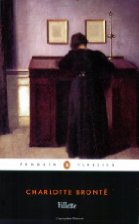
Villette (Source)

I can’t believe I’ve never done one before.  It always seems that either I don’t find out about the read-along until it’s halfway over, or else it’s a book I’ve already read or don’t want to read, or I’m too swamped with other books and won’t be able to keep up.  But when I saw Amal’s tweet about the Villette read-along, hosted by Beth of Too Fond, the stars aligned.

A read-along that hasn’t actually started yet.  A book I want to read.  A library stack that I can safely ignore (for a little while).  I’m so there.

I count Jane Eyre as my favorite book, and I consider myself a Bronte fangirl – despite not having read any of Charlotte’s other works.  (I’ve read Jane Eyre more times than I can count, though, and Emily’s Wuthering Heights , which I didn’t especially like, and both of Anne’s – Agnes Grey and The Tenant of Wildfell Hall, which I loved.)  Still, no self-respecting Bronte fangirl can get by on only one Charlotte , so it’s time for me to conquer the mountain that is Villette.

If you want to join in, Beth’s sign-up post can be found here.  We’ll be reading over three weeks: Volume I from May 12th-19th; Volume II from May 20th-26th; and Volume III from May 27th-June 2nd.  Sounds do-able, right?  Beth will be re-capping the week’s reading on Sundays, but I’ll put my own thoughts up here on Mondays, since that makes more sense with my blog schedule (and gives me a day to catch up, if I need to).

I’ll also be participating in the Twitter conversation about the book.  We’re using the hashtag #villettealong – so jump right into the discussion, if you’d like.

I’m so excited.  Bring on the Bronte!

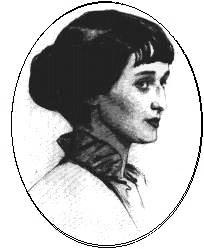
Anna Akhmatova and National Poetry Month

akhmatova (Source)

Well, another National Poetry Month has come and gone.  I had a good time this year, challenging myself to read a poem by Anna Akhmatova every day.  (I didn’t get one in every day, but I did have some days when I read quite a few, so on balance, I finished a selection of her poems and I definitely got to know a new poet.)  Oh, and Peanut got in on the action too, sharing her favorite A.A. Milne poem with you!

Anna Akhmatova was a brilliant talent and an incredibly brave woman.  As I noted in my introductory post, she was one of the only writers who chose not to flee the Soviet Union but instead to remain and bear witness to events there.  The decision cost her: she was in “official disfavor” for much of her life, and was alternately mocked and condemned for her “political indifference” – i.e. choosing to write about age-old themes of love and grief, rather than propaganda.  In reality, Akhmatova was anything but politically indifferent, and quite a few of the poems in the selection I read were love letters to her country – to Russia, that is, and to Russians, not to the Soviet government.  (No wonder she bugged the high-ups.)

For example, on her decision not to join her writing compatriots in exile:

I’m not one of those who left their country
For wolves to tear it limb from limb.
Their flattery does not touch me.
I will not give my songs to them.

Yet I can take the exile’s part,
I pity all among the dead.
Wanderer, your path is dark,
Wormwood is the stranger’s bread.

But here in the flames, the stench,
The murk, where what remains
Of youth is dying, we don’t flinch
As the blows strike us, again and again.

And we know there’ll be a reckoning,
An account for every hour … There’s
Nobody simpler than us, or with
More pride, or fewer tears.

Akhmatova wrote feelingly about her times, but she also wrote on themes like love, which transcend politics.  And she wrote poems from Bible stories and sprinkled literary references throughout her work.  But my favorites were those poems where her use of vivid imagery immortalized the Russia that she knew and loved, like this one:

SEASIDE SONNET

Everything here will outlive me,
Even the houses of the stare
And this air I breathe, the spring air,
Ending its flight across the sea.

Unearthly invincibility…
The voice of eternity is calling,
And the light moon’s light is falling
Over the blossoming cherry-tree.

It doesn’t seem a difficult road
White, in the chalice of emerald,
Where it’s leading I won’t say…

There between the trunks, a streak
Of light reminds one of the walk
By the pond at Tsarskoye.

So.  Another year gone, but a new-to-me poet discovered.  And continuing my trend of posting poems after National Poetry Month has actually ended… although this year I don’t have a big announcement to give you as the conclusion to this post.  But I had a good month, and Peanut and I read lots of poems, and I hope you did too.

You Know You’re A Bookworm When…

DSC_0031

~ You look up and realize that you got on the wrong subway train, because you were reading.  And that you’ve gone several stops past the last transfer point, because you were reading.  And now you’re going to have to turn around and retrace your path back, and it’s going to add an hour to your commute, and the first thing you think upon discovering all of this is, “Yay!  More time to read.”

~ You have spent, cumulatively, about a week of your life combing Etsy for vintage books, book crafts, book jewelry and accessories and especially, especially bookmarks.

~ You own a magnet with an alien flashing a peace sign and the words “Take Me To Your Library” and you’re contemplating a matching totebag.

~ You have an entire Pinterest board dedicated to libraries, bookshelves and reading spaces.

~ Your daughter owns a t-shirt that says, “I Have My Own Mr. Darcy: His Name Is Daddy,” and you’re wondering if it would be too nerdy (or just nerdy enough to be awesome) to dress her in it on the day you wear your own Pride and Prejudice tee.  You’re leaning towards just nerdy enough to be awesome.

~ You are considering a bubble bath, but you decide against it because you’re reading a library book and you can’t get it wet.

~ You secretly enjoy long car rides… and long flights… and sometimes even flight delays, because you love getting “borrowed time” when you can read for hours without feeling guilty that you’re not cleaning or working.

~ You miss your old library so much, it hurts sometimes.

~ You are nostalgic for summer vacations, not because of the weather or the cookouts, but because you had no responsibilities that got in the way of reading all night long.  On that note…

~ When purchasing a new flashlight, your main criteria is that it be light enough to hold up for hours while reading under a pile of blankets.  Even if you don’t do that anymore.  Because… well… you never know.

~ You have the devil of a time finding a “dressy” handbag because hardly any of them are big enough to hold even a mass market paperback.

~ You own at least one literary guide to a foreign country and are actively attempting to persuade your significant other to make it the theme of a vacation.  (Come on, hubby, you’ll love a Jane Austen tour of southern England.  I promise.)

~ On the day you find out that your baby-to-be is a girl, you immediately start shopping not for baby clothes, but for a fancy edition of Anne of Green Gables.

~ If you don’t read every day, you get a twitch.  A real, honest-to-goodness, physical twitch.

 What makes you a bookworm?