Poetry Friday: “Tell Me Tell Me”

Emily Bronte
(Image Source)

Tell Me Tell Me
by Emily Bronte

Tell me tell me smiling child
What the past is like to thee?
An Autumn evening soft and mild
With a wind that sighs mournfully

Tell me what is the present hour?
A green and flowery spray
Where a young bird sits gathering its power
To mount and fly away

And what is the future happy one?
A sea beneath a cloudless sun
A mighty glorious dazzling sea
Stretching into infinity

Happy National Poetry Month!  Have you read a poem today?

Hark! It’s National Poetry Month!

CentralLibrary3

It’s April, which means rain showers (that’ll hopefully bring May flowers), Easter, warmer days, and… National Poetry Month!  Every year, I like to get in on the action by making an effort to read more poetry and share some of what I’m reading here.  Last year I celebrated by dedicating my month to reading a new-to-me poet, Anna Akhmatova, in what proved to be a very enriching experience.  Peanut also got in on the action, presenting When We Were Very Young, by A.A. Milne, in a special National Poetry Month edition of “Peanut’s Picks.”  The year before, I shared one of my favorite poems, by my very favorite poet, to celebrate both National Poetry Month and Easter, and I extended the celebrations a bit by using another poem to make a very special announcement.

This year, I have plenty of poetical fun planned to celebrate National Poetry Month!  You can expect another special edition of “Peanut’s Picks,” and of course, some e.e. cummings.  And since I enjoyed exploring the works of a new-to-me poet so much last year, I’ve decided to do the same thing this year.  For 2014, I’ve chosen:

Emily Bronte

Emily Bronte!

If you’ve been reading my blog for more than five minutes or so, you probably know that I’m a big fan of Charlotte and Anne Bronte.  Jane Eyre is my favorite book, and I love Anne’s works The Tenant of Wildfell Hall and Agnes Grey as well.  Of the three readalongs in which I’ve participated, two have been devoted to Charlotte’s work.  In May of last year, I read Villette with Beth and Amal, and in September I participated in the Septemb-Eyre readalong hosted by Kerry.

So yes, I love me some Bronte sisters.  Except, I just can’t get behind Wuthering Heights.  I’ve tried, goodness knows I have.  I’ve read Wuthering Heights three times now and disliked it more each time.  So much so that when Maggie of An American in France announced that she was hosting a Wuthering Heights readalong, I begged off.  I knew I wouldn’t enjoy it and I didn’t want to spoil the readalong for others.

I really, really want to like Emily Bronte’s work.  I’m tired of giving the caveat “except for Emily,” when I share my Bronte love with fellow readers.  So I’m going to see if I get along better with her poetry.  I expect I will.  The only redeeming quality that I found in Wuthering Heights was its forbiddingly romantic (or romantically forbidding) descriptions of the wild natural world that surrounded the Heights.  Emily’s sensibilities and her attraction to the remote and desolate strike me as a perfect quality for some seriously intense, brooding poetry.  Basically, all of the Bronte, none of the Heathcliff?  That’s what I’m hoping for.  I’ve been flipping through the copy of her collected poems that I acquired for this month (the Everyman’s Library Pocket Poets, which is the same edition I picked up for Anna Akhmatova last year) and so far, I’m a big fan.  The challenge will be to read a little Emily Bronte each day this month and hope that by the end of the month, I’m a convert – if not to her one and only novel, then to her poetry.

Here’s a little taste:

The night is darkening round me
by Emily Bronte
(source: The Poetry Foundation)

The night is darkening round me,
The wild winds coldly blow;
But a tyrant spell has bound me,
And I cannot, cannot go.

The giant trees are bending
Their bare boughs weighed with snow;
The storm is fast descending,
And yet I cannot go.

Clouds beyond clouds above me,
Wastes beyond wastes below;
But nothing drear can move me:
I will not, cannot go.

Whew!  What wild imagery!  Yep, so far, so good.  I love the rhythm and the compelling words.  I’ll share one Emily Bronte poem every Friday for the rest of the month, so check back next Friday for more from the most enigmatic of the Bronte sisters.
Are you planning to celebrate National Poetry Month this year?

Reading Round-Up: March 2014

Reading is my oldest and favorite hobby.  I literally can’t remember a time in my life when I didn’t love to curl up with a good book.  Here are my reads for March, 2014

Snobs, by Julian Fellowes – Edith Lavery is the daughter of an accountant, working at answering phones in a London office in the late 1990s, when she meets the Earl Broughton, heir to the Marquess of Uckfield, while touring his ancestral home.  Edith might have first encountered the Earl on the wrong side of the silk cord, but she soon hops across and becomes his Countess.  But Edith is honest enough with herself to admit that while she likes her new husband, Charles, she doesn’t feel passionately about anything except her new title and social position.  And it doesn’t help that her mother-in-law dislikes her, her brother-in-law is actively sabotaging her, and her husband’s friends are snobs who exclude her at every opportunity.  So it’s easy for her to be swept off her feet by a handsome actor filming a period drama at Broughton.  Will Edith’s marriage survive, or has she lost her position in the social order forever?  I found this book while browsing in the library as I waited for my literacy student to arrive for a tutoring session, and checked it out immediately.  I had no idea that Fellowes (writer of Gosford Park, and creator of Downton Abbey) had written a novel, but I figured it had to be good.  Oh, and it was.  Scathingly witty, perfectly detailed, and a nail-biter almost to the last page, Snobs is a perfect read for Downton fans.  Fellowes clearly knows both the worlds he portrays here – the world of theatre folk, and the upper-crust world of the British aristocracy – and his novel is just as good as his scripts.  Highly recommended.

Train Like a Mother: How to Get Across Any Finish Line and Not Lose Your Family, Job or Sanity, by Dimity McDowell and Sarah Bowen Shea – I read SBS and Dimity’s first book, Run Like a Mother, when it first came out – before I was even thinking about becoming a mother.  (I’d heard that even if you didn’t have kids, the Another Mother Runner girls were great at helping you find ways to work exercise into a busy schedule and, well, I’ve always had one of those.)  Now I am a mother, and a mother who happens to be looking down the barrel of a marathon in October, so I turned to SBS and Dimity again for motivation and help putting together a training plan.  (I’m not sure I’m going to use their plan, since I’ve always used Hal Higdon in the past and found he works for me, but it was still helpful to see how they recommend training for marathons, since they’re both veteran runners, and Dimity is actually an Ironman!)  I love the “practical motherly advice” they dole out, the hilarious quotes from other “mother runners,” and the down-to-earth wisdom they apply to training, nutrition, tapering, and race day.  If you’re a runner with a busy schedule (whether you’re a mom or dad, or not) let Sarah and Dimity help you get your racing act together!

Out to Canaan (Mitford Years #4), by Jan Karon – I checked this out from the library along with These High, Green Hills and was planning to return it unread, to wait for the next time I really needed some gentle fiction-style comfort reading, but it was there and I have a compulsion, so obviously I ended up reading it.  Father Tim has officially announced his retirement to his congregation, and as expected, they take it poorly.  (Ungrateful!)  Although his time leading a church is drawing to a close, he has plenty to occupy him: worrying over Dooley, who has a girlfriend; finding a buyer who will treat Fernbank (Miss Sadie’s home, which she left to Lord’s Chapel) kindly; helping baker Winnie Ivey figure out her future; searching out Pauline Barlowe’s remaining kids; and (unwisely, if you ask me) meddling in the local mayoral election keep him plenty busy.  A good read for stressful days, of which I did have a few this month.

I am Half-Sick of Shadows (Flavia de Luce #4), by Alan Bradley – Buckshaw continues to face financial difficulties, and to help them out, Flavia’s father has agreed to allow a London film company to use the premises as a movie set.  Soon hordes of actors and other film personnel descend upon the estate – including the famous Phyllis Wyvern, set to star in the movie.  When the vicar proposes that Phyllis and Desmond Duncan, her leading man, perform a scene for the benefit of the church funds, the actress surprisingly agrees.  The entire village turns up for the performance, which means there are no shortage of suspects for Flavia to question when one of the visitors is found strangled with a length of film.  These mysteries get more and more enthralling, and Flavia herself continues to charm.

Speaking From Among the Bones (Flavia de Luce #5), by Alan Bradley – Possibly the most exciting thing is about to happen to the village of Bishop’s Lacey since… well… ever – at least if you ask Flavia.  St. Tancred’s Church is about to dig up the body of its patron saint!  Of course, Flavia plans to be in the front row when the saint’s remains are exhumed, because how could she resist?  Despite the vicar’s attempts to keep her away, Flavia is the first one to see into the tomb – but it’s not St. Tancred she finds there; it’s the body of the church organist, wearing a gas mask but very much dead.  Flavia is determined to unmask the killer and finally get some recognition from Inspector Hewitt and his magnificent wife Antigone.  This was my favorite mystery yet, because I love the character of the vicar, and I just found the premise so intriguing.  The story ends with a bang (spoiler alert!): Flavia’s mother, Harriet, lost in a mountaineering accident ten years before, has been found.

The Dead in their Vaulted Arches (Flavia de Luce #6), by Alan Bradley – (caution, spoilers abound although I will try not to ruin everything) – A week has passed since the events of Speaking from Among the Bones, and Flavia is gathered with her father, sisters, Dogger, Mrs. Mullet and the entire village of Bishop’s Lacey to meet the train that is bringing her mother home.  As Flavia stands on the platform, Winston Churchill appears and asks her a cryptic question.  Then a strange man appears and requests that Flavia pass a cryptic message on to her father – and is immediately pushed under the oncoming train.  Flavia can’t really focus on these events, though, because she is dealing with some very intense emotions surrounding her mother’s return (gahhhhh, I’m trying SO hard not to give anything away) and so she doesn’t do much sleuthing.  She will learn a great deal, however, about Harriet’s history, including what exactly she was doing on that Tibetan mountain, and this information is going to change Flavia’s life forever.  I read this book in a day and was completely absorbed in it from start to finish.  Now I’m simultaneously excited to see where Bradley takes the series from here, and bummed that I have to wait – like everyone else – for the next book.  This series just keeps getting better and better.

Updated, because I’m a spazz and I forgot:

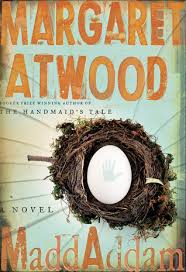
The Penelopiad, by Margaret Atwood – Back in October, when I was on a major Margaret Atwood kick (I read all three novels in the MaddAddam Trilogy, plus a collection of short stories, in short order), my mother-in-law suggested I check out Atwood’s retelling of The Odyssey from the perspective of Penelope, Odysseus’s faithful wife who waits in Ithaca for his delayed return.  Penelope, in Atwood’s hands, is far more than simply the patient wife of the myth.  She is a strong-willed, independent woman who is intensely troubled by events outside her control.  Helen of Troy, naturally, makes an appearance and is a fun character (when is Helen ever not a fun character?).  I enjoyed The Penelopiad immensely, although I know that it will color my impressions of The Odyssey when I finally get around to reading it.  (Team Penelope!)

Sorry to those of you who saw this post go up yesterday in incomplete form and were confused.  I started a new job last week and am still trying to figure out new routines, and a draft slipped through the cracks.  (I know, I know, this shouldn’t be challenging, since I’ve done the working mom thing before – but it’s been seven months and I have to adjust to having much less time on my hands than I did.)  Anyway, March was a slow, but good, month of reading.  As a big “Downton Abbey” fan (indeed, who isn’t) I loved Snobs, and I hope Julian Fellowes has more novels up his sleeves.  The other highlight of the month, of course, was Flavia.  I love a good mystery series, and the Flavia de Luce mysteries are destined for my “favorites” shelf.  That kid is just so endearing, the mysteries are absorbing, and the series is primed for a really fun new direction.  And now, on to April.  I have some library books out and I’m hoping to start a new (to me, although historically popular) mystery series, so stay tuned for more book thoughts to come next month.

Reading Round-Up: February 2014

Reading is my oldest and favorite hobby.  I literally can’t remember a time in my life when I didn’t love to curl up with a good book.  Here are my reads for February, 2014

The Novel Cure: From Abandonment to Zestlessness: 751 Books to Cure What Ails You, by Ella Berthoud and Susan Elderkin – No matter what your particular problem might be, you’ll find a cure here.  Berthoud and Elderkin, two exceptionally well-read friends, recommend fiction as cures for every ailment known to man… and maybe one or two that they made up.  My favorite cure?  The Hobbit, to cure “short, being.”  This was a witty and creative premise, and I’m hooked on the books-about-books sub-genre, so it was a clear win for me.  (Not perfect, though.  I had a few complaints: referring to Jess Walters, author of Beautiful Ruins, as “Jesse Walters” – grrrr, typos; calling Beth March a “goody-goody” – no, Beth was just a naturally sweet person; and mistakenly identifying Briony and Cecilia Tallis as cousins when in fact they’re sisters, which is kind of important to the plot of Atonement.)

Big Stone Gap (Big Stone Gap #1), by Adriana Trigiani – I’ve been meaning to read Adriana Trigiani for ages now, and I decided after walking by her newest release on a “new and notable” table at Barnes & Noble, that it was time.  Big Stone Gap is the first in a series of four books about Ave Maria Mulligan, town pharmacist in a rural Virginia mountain hamlet.  Ave Maria has made it through 35 years of life without anything particularly exciting happening to her.  But all that changes when she receives a letter from her recently deceased mother.  Suddenly Ave Maria is the subject of the hottest gossip in town, the center of a firestorm of family feuding, and the object of two marriage proposals.  Oh, and on top of all this, Hollywood light Elizabeth Taylor is coming to town on a campaign stop for her husband, Senator John Warner.  I loved every moment of reading about this not-so-sleepy town, and I’ll be checking back in with Ave Maria for the second installment just as soon as I can get my hands on it.

These High, Green Hills (Mitford Years #3), by Jan Karon – I have this thing with these books.  Every so often I get a little overwhelmed and I want some emotional candy in the form of a book where everything is guaranteed to turn out for the best (even if it’s a little bumpy there along the way).  That’s when I reach for a cozy mystery or a Miss Read book, most of the time, but the Mitford books work too.  Sometimes I feel like these books are a little too perfectly packaged – know what I mean?  (I mean, for heaven’s sake, the town homeless guy is named “Homeless” and actually lives in a cottage and doles out soup to his neighbors.)  But I did like this one better than the first two.  Father Tim is now married to his erstwhile next-door neighbor, Cynthia, and he’s showing a little bit more self-awareness than he did in the earlier installments, so he didn’t drive me nearly as crazy this time.  Cynthia is a delightful character and I loved watching her dance around the old church biddies as they tried to strong-arm her into leading every committee.  I actually checked the fourth book out of the library along with this one, but I’m undecided as to whether I’ll read it or return it and wait for the next time life gets overwhelming.

The Writing Class, by Jincy Willet – I’d been meaning to read The Writing Class for at least six months, and I’m so glad I finally got to it!  Amy Gallup is a reclusive, bitter has-been: an author who reaped instant critical success with her first few novels and hasn’t been able to bring herself to write one since.  Amy passes her time doing freelance content creation and copy editing, writing her blog “GO AWAY.”, and teaching a writing class at the local university extension.  Most of Amy’s writing classes are awful, but this semester’s group promises to be a pretty good bunch… until a few unsettling events occur, that is.  First, Amy gets a weird phone call.  Then, a student receives a cruel, biting parody of a poem she’d shared.  Things get stranger and stranger until one member of the class turns up dead.  And then another.  Amy is determined to find out which of her students is the sick ticket, and she’ll need them all to help her – including the writing class “sniper.”  This was one of those books that really had me torn.  On the one hand, I kind of wanted to crawl under the covers with it and read all night.  But on the other hand, I didn’t want to read it at all, because that would mean I’d finish it and then it would be over.  A good problem to have!  The Writing Class is going to be a 2014 highlight for sure.

The Happiest Toddler on the Block, by Harvey Karp, M.D. – I’d read Dr. Karp’s first book, The Happiest Baby on the Block, back when Peanut was itty bitty, and found it pretty interesting and informative.  (It wasn’t the most helpful for me this time around, because it was mainly written for parents with colicky babies, which Peanut – thankfully! – was not.  I might need the info more with baby #2.)  The Happiest Toddler shares some great insights into what makes toddlers tick (and why they act like little maniacs from time to time) and how to connect with them, minimize problem behaviors and encourage good ones, and come out on the other side with a child who is well-behaved, confident and independent.  Like with The Happiest Baby, I found that a lot of the advice would be more helpful for parents with a more troublesome kid.  I’ve been lucky in that, much like Peanut was not a particularly challenging baby (NICU notwithstanding), so far she’s a very easygoing toddler.  We don’t have a lot of tantrums or meltdowns, may it continue this way.  That may be, in part, because I’ve put in a lot of time “feeding the meter” as Dr. Karp calls it, but I think Peanut’s easy disposition is the main reason.  Still, even though we’re not desperately in need of help managing an unruly toddler, I found The Happiest Toddler as interesting, informative, and useful as its little brother volume.  Hubby and I have been using the tactics recommended and experimenting with what works best for Peanut.  I’d definitely recommend this read for fellow toddler parents.

I’m sort of surprised I read as many books this month as I did.  My total is down, though I’m sure I’ll read more in March.  February is a short month, and my reading always takes a bit of a hit when the Olympics are on.  (Go Team USA!)  The string of comfort reading continues and probably will until the weather outside is a little warmer and less dreary.  The Writing Class was the highlight of the month, for sure – I love me a good poison pen mystery, and this one was full of both wit and suspense.  I’m not sure what I’ll be reading next month, but I’m looking forward to a blank slate on which to fill in my readerly impressions.  (And I’m also looking forward to SPRING!)

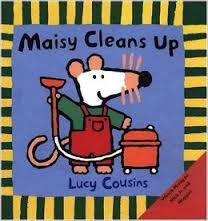
Peanut’s Picks: MAISY CLEANS UP

Maisy Cleans Up

Fellow shorties: today I have a public service announcement to share with you.  BEWARE of the book Maisy Cleans Up.  This book is part of a nefarious scheme by tall people to get you to pick up after yourself.  Do not be taken in.  I repeat: DO NOT BE TAKEN IN.

For those of you not acquainted with Maisy, she is the star of a series of books about a goody-two-shoes mouse and her socially awkward friends.  I have several of these books and let me tell you, they are head scratchers.  Like, for instance, in Maisy Takes a Bath, Maisy’s friend Tallulah, who is some kind of bird, repeatedly rings Maisy’s doorbell and then (after being told at least three times to go away) pirates Maisy’s bath.  That would SO not fly in my house.  (<–See what I did there?  Bird?  Fly?  Bird?  Fly?)  And in Maisy Makes Lemonade, Eddie the Elephant comes over and steals all of Maisy’s lemonade.  But anyway.

In Maisy Cleans Up (spoilers ahead!) Maisy is cleaning her house.  (Red flag #1 – what kind of kid voluntarily cleans the house?  I’m assuming Maisy is a kid, since she goes to preschool.  Although you never see her parents, which is another head scratcher.)  She has mopped the kitchen when her “friend” Charley the Crocodile comes over and immediately goes into the kitchen to steal food from Maisy.  I like the way Charley thinks, but sadly for him the floor is wet because Maisy had mopped it (WHO is she trying to impress here?) so Charley has to wait.  Rather unrealistically, he uses this time to help Maisy do things like pick up toys and wash the windows.  (Red flag #2 – do you really want to let a crocodile near your toys?)  Then Maisy and Charley both eat cupcakes.  (Red flag #3 – do you really want to let a crocodile near your cupcakes?)

Ankle-biters, I want to share a cautionary tale with you.  Santa very cruelly brought me this book (why, Santa?  I’m a good baby!), and my mom very cruelly (and pointlessly) keeps reading it.  At the same time, and completely coincidentally I assure you, I have developed an intellectual interest in putting small objects into receptacles.  One day, I made the mistake of putting my blocks into the basket that my mom uses to hide them from me.  This got my mom freakishly excited.  She screeched “LOOK AT YOU PUTTING YOUR TOYS AWAY!  GOOD GIRL!  GOOD GIRL!  GOOD BIG GIRL PUTS HER TOYS AWAY!” and then she called my Nana to brag.  And ever since then she keeps asking me these inane questions like “Can my big girl put her blocks in the basket?  Can my big girl put her books back on the shelf?  Can my big girl put her tractor away?”  Sheesh.  You make one little mistake and they can’t let it go.

Kids: THIS BOOK IS NOTHING SHORT OF PROPAGANDA.  PURE AND SIMPLE.  If you read it once and then put any of your toys in a place where your mom thinks they should be (like I can understand the chaos in her head) YOUR PARENTS WILL THINK IT IS TIME TO TEACH YOU TO CLEAN UP AFTER YOURSELF.  Do not fall for this trick.  Let’s all stand together and tell our parents that whatever nonsense Maisy and Charley get up to, WE WILL NOT BE OPPRESSED INTO PICKING UP OUR TOYS.  Now, talk to me about these cupcakes.

Lesson for parents: What, do you think I was born yesterday?

Parents who want to oppress their children into indentured block collection can buy Maisy Cleans Up here, or support your local indie bookstore!  This is not an affiliate link, because if it was I would have more blocks to leave on the floor.

Bookish Treats for Mini Foodies

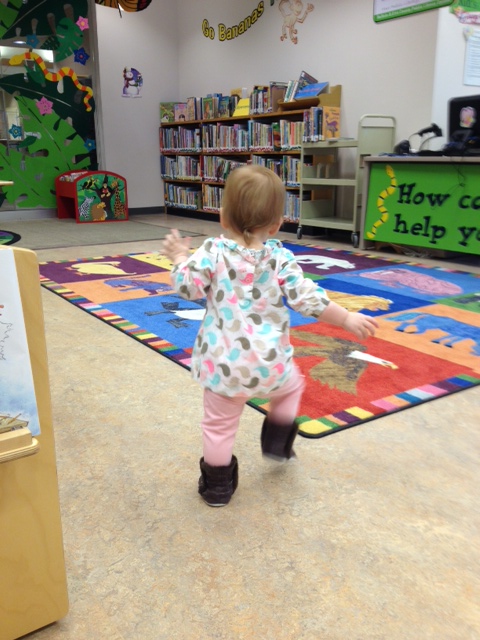
In slightly less than 18 months on the planet, my little bookworm has amassed quite the library.  The kid just flat-out loves books.

LibraryDay2

With all the reading we do (and all the time I spend picking up the books she leaves everywhere and putting them back on the shelves) I definitely notice patterns in the themes of the books we tend to acquire.  We have a lot of books featuring beloved characters (Angelina Ballerina, Olivia, Fancy Nancy, Babar, Madeline, Clifford…) and plenty of Dr. Seuss, but Peanut also has been amassing quite the collection of food-themed books.  Here are some of our favorite books for gastro-babies:

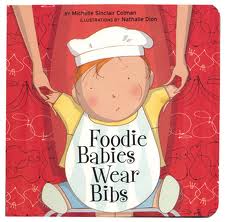
Foodie Babies Wear Bibs

Foodie Babies Wear Bibs, by Michelle Sinclair Colman – This installment in the Urban Babies Wear Black series of board books is too cute.  The “foodie babies” in the book have quite sophisticated palettes, but they’re still babies… so they get up to all kinds of mischief: raiding Dad’s backpack at the farmers’ market, tossing peas at Mom, feeding cookies to pigeons, and so forth.  The pictures have a kind of 1960s mod flair, the text is charming and witty, and the babies are a riot.

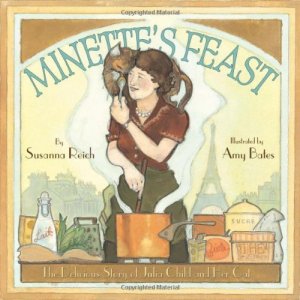
Minettes Feast

Minette’s Feast: The Delicious Story of Julia Child and Her Cat, by Susanna Reich – I bought this adorable story book when my pen-pal Katie was visiting, back when I was still expecting Peanut.  (It seemed appropriate to buy it while bookstore browsing with Katie; after all, the book As Always, Julia – a collection of letters between Julia Child and her pen-pal Avis de Voto – brought us together and inspired us to write one another.)  In the book, Minette – Julia’s mischievous poussiquette – takes a starring role as she judges all of Julia’s culinary concoctions.  Julia is inspired to attend Le Cordon Bleu, but will her newly acquired culinary skills impress Minette?  Or will Minette remain devoted to her favorite meal: mouse?  Peanut loves to flip the pages and announce “Cat!” each time Minette appears (which is every page, since, ya know, she’s the main character… but Peanut is surprised and delighted anew with every turn of the page).

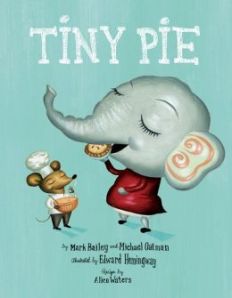
Tiny Pie

Tiny Pie, by Mark Bailey and Michael Oatman; Recipe by Alice Waters – This is one of our favorite books in Peanut’s entire library, and a must for any parents who consider themselves fans of Food Network.  In fact, Peanut herself requests it all. the. time.  (“Ti Pi!  Ti Pi!  Ti Pi!”)  Ellie is a little elephant who can’t help but get underfoot at her parents’ sophisticated cocktail party.  She’s hungry, but no one is paying any attention to her.  Ellie follows her rumbly tummy into the kitchen, where she discovers a celebrity chef mouse hosting a cooking show.  The illustrations are sweet, the story is so creative, and the recipe for “tiny apple pies” in the back of the book – by culinary great Alice Waters! – looks delish.  I can’t wait until Peanut is big enough to cook with me; we’ll definitely be baking some tiny pie!

Tea Rex

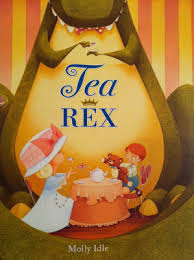
Tea Rex, by Molly Idle – Every foodie needs a good entertaining manual.  Tea Rex will stand you in good stead… especially if you’re planning to host an elegant tea party with any prehistoric guests.  Molly Idle’s charming, hilarious guide to throwing a tea for a t-rex has every situation covered, from how to make small talk with a dinosaur to how to handle those little upsets… like Mr. Rex attempting to eat your brother’s stuffed bear.  Peanut has been taking notes for the next time she throws a party for a dinosaur.

(Psst – all images are sourced from Google.)

Do you have a favorite food-themed children’s book?  Do share!

On Re-Reading the Little House Books

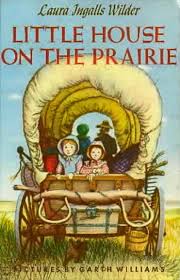
Little House on the Prairie

For several years when I was growing up, there were three authors of consequence.  There was L.M. Montgomery, there was Madeleine L’Engle, and there was Laura Ingalls Wilder.  (Honorable mention to Frances Hodgson Burnett.)  I loved all three authors, and when I got a little older, L.M. Montgomery edged out into first place (I even named Peanut after one of her heroines).  But for awhile there, it was all Laura, all the time.

I dreamed about riding in a covered wagon and living in a little house just like Laura’s, out on the wide expanse of prairie.  I read book after book about the pioneers.  I even convinced my grandma to sew me a “prairie girl” costume for Halloween and I wore it two years in a row.  (I’d have worn it a third year, but I grew out of it.)  I can’t even count how many times I read, re-read, and re-re-read the entire series of Little House books.

Last year, I bought the entire set in beautiful hardcover editions.  My childhood copies were long since lost, and I wanted Peanut to have especially nice copies to enjoy when she is old enough.  But first, I was going to enjoy them again.  I’ve had them sitting in a pile ever since, waiting for me to get around to re-reading them again, for the first time as an adult.  This month, I decided it was time and I dove in headfirst.  I’ve just now come out of two-and-a-half weeks of living blissfully in Laura’s world once again.

When Laura’s story begins, with Little House in the Big Woods, Laura is just a very young, very small little girl living with her Ma and Pa, her older sister Mary, and Baby Carrie, in – you guessed it – a little house in the Big Woods of Wisconsin.  Laura and Mary play amongst the trees outside their home, roast a pig’s tail, attend a “Sugaring-Off” dance at Grandpa’s house, and listen to their Pa spin yarns and sing along with his fiddle every night.  But Pa is restless, and in the next book – Little House on the Prairie – the family packs up all their wordly possessions into a covered wagon and moves out to Indian Territory.  The remainder of the series follows them from little house to little house – first on Plum Creek in Minnesota, then finally to Silver Lake and what becomes the town of De Smet in the Dakota Territory.  There Laura finds herself a group of girlfriends, stands up to a mean girl, and meets Almanzo Wilder, the man who would become her husband.

There were a few scenes that I remembered vividly from my many readings of the Little House books as a child – the “Sugaring-Off” dance in Little House in the Big Woods, the exciting river crossing in Little House on the Prairie, the Ingalls family settling in town during The Long Winter, and blind sister Mary braiding her rugs using colored strips organized for her in separate boxes.  But there was so much more that I discovered again – or maybe even for the first time – reading this series again as an adult.

When I first read the Little House books, I was most interested in Laura and, to a lesser extent, in Mary.  (Most of my friends had little use for goody-two-shoes Mary, but as a people pleaser myself, I felt rather in sympathy with her.)  As an adult, I still loved reading Laura’s story, but I also found riches in the books that I don’t remember being there the last time I read them.  The descriptions of railway building work warmed my labor history-lovin’ heart.  The scenes in which Pa deals with a mob of angry workmen, or joins a group in confronting a storekeeper who has raised his wheat prices above what anyone can afford to pay in a time when half the town was starving, were far more interesting (and nerve-wracking) because I was able to read through the lines and comprehend how dire those situations were and how easily they could have gone very, very badly for Pa (and consequently, for the whole Ingalls family), in a way I never could have understood as a child.  And I loved, absolutely loved, watching the town of De Smet grow from just the Ingalls family to a thriving community in the Dakota territory.

I wish I hadn’t waited so long to re-read these books, which were such a big influence on me years ago.  I found so much to love – again – in Laura’s pioneer story: her family, her relationship with Pa and with Mary, her explorations of her various prairie homes, her selfless determination to contribute to the family income (even through teaching, which she hated) so that Mary could go to college, her friendships with Mary Power, Minnie Johnson and Ida Brown, and her love story with Almanzo Wilder, and so much more.  It may be awhile before I re-read the entire series, but I’ll be sure to re-visit my favorites (Little House on the Prairie, On the Banks of Plum Creek, The Long Winter and Little Town on the Prairie) much sooner.

Have you read the Little House books?  Did you love them?  Did you follow Pa’s instructions and build yourself a rocking chair?

2013: A Year in Books

Bookshelf 2

Last year I drafted up a post with bookish stats and my top ten favorite books completed (not necessarily published) in the previous year.  I had so much fun looking back over my year of reading that I knew I had to repeat the exercise this year… only this time, I had even MORE pie chart fun!  Here’s 2013 by the numbers, followed by my top ten favorite books read this year.

In 2013, I read 118 books, for a total of 38,566 pages.  Of those books, 98 were fiction and 20 were non-fiction.

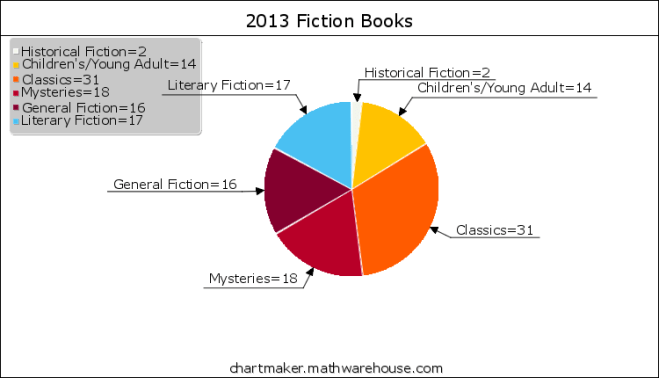
Here’s a detailed breakdown of the different fiction genres I read:

2013 Fiction Books

(It’s worth noting that I assigned these categories myself.  There were probably some books that I assigned as “literary fiction” that someone else might call “general fiction,” or books I put into “classics” – like the Anne of Green Gables series – that another reader might consider “children’s.”  But this pie chart is based on my own impressions of what I read, so there you have it.)

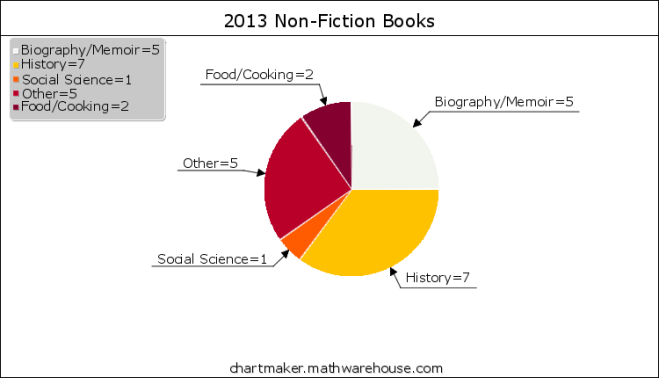
Then, there’s the 20 non-fiction books:

2013 Non-Fiction Books

(The “other” category included two knitting books, one book of poems, one advice book, and one travel book.)

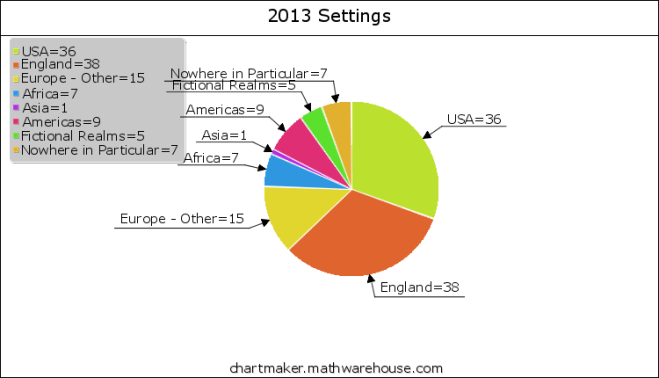
Well, that was fun!  In fact, it was so much fun that I thought this year I’d make a few more pie charts, you know, for giggles.  First, I thought it would be neat to see where most of the books I read were set, geographically speaking:

2013 Settings

A couple of things, I thought, were interesting about this chart.  For one, I thought England would wipe the floor with the rest of the categories, and it did win out with 38 of my books having English settings.  But the good old US of A was right behind, with 36!  I also read five books set in fictional realms, which is unusual for me.  (Note that the setting I chose was the main setting of the book.  So, for instance, Royal Blood and Naughty in Nice both got assigned to “Europe – Other,” because although the stories begin in England, Georgie spends most of her time on the Continent in both novels.  And A Tale of Two Cities was also assigned to “Europe – Other,” because the main action took place in Paris, although plenty happened in London, too.  If a book involved multiple settings, I just chose the setting where either the majority of the action took place, or where the most important events took place, as I saw fit.)

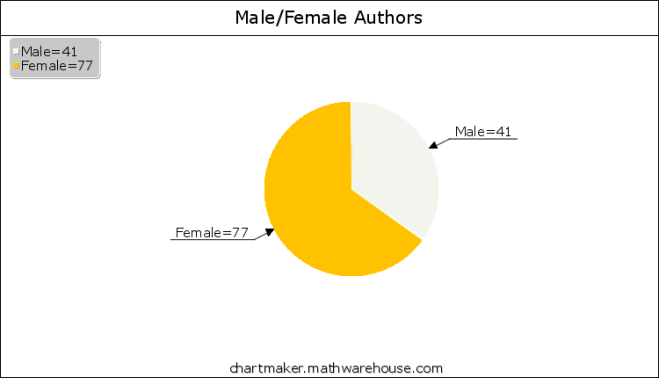
I also thought it would be fun to take note of how many books by male authors and how many by female authors I read:

2013 Male Female Authors

Well, I’m definitely not that dude who only likes male authors!  Next year, I need to work on giving the guys a bit more attention, clearly.  (Note: this pie chart counts the number of books read, not the number of authors.  So authors by whom I read more than one book last year, got counted more than once.  For example, I read five books by Rick Riordan, so Rick Riordan counted five times for the guys.  I read eight books by L.M. Montgomery, so L.M. Montgomery counted eight times for the ladies.  Make sense?)

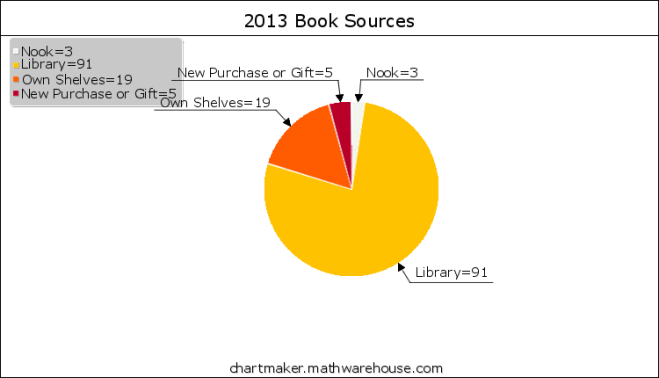
Since we also know that I have no willpower when it comes to the library, I thought it would be interesting to see where the books I read this year came from:

2013 Sources

So, the vast majority were from the library – no surprise there!  (Twenty of the library books were from the Buffalo library; the rest hailed from Fairfax County.)  Maybe next year I’ll do a little more reading off my own shelves… but probably not.  I’m always going to be an enthusiastic library patron.

Whew!  Okay, I think that’s probably enough pie charts for now.  So onward to the last part of my 2013 reading retrospective: my top ten favorites, in no particular order.

Middlemarch 

MaddAddam 2

bernadette cover 

Attachments 

Anne of Green Gables 

jane_eyre_large 

The Boys In The Boat 

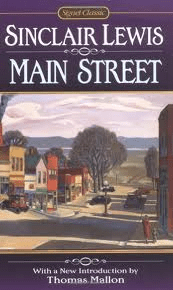
Main Street 

Eighty Days 

Lord of the Rings 

What a year 2013 was!  I read some really amazing books, by some fantastic authors.  Can’t wait to see what 2014 will bring!

2013 Book Superlatives

For the past two years, I’ve had a blast doling out high school yearbook-style awards to some of the books I read over the course of the previous year.  (Fun fact: I actually won a Senior Superlative in high school… “Shortest.”  Womp, womp.)  Here are my Book Superlatives for 2013:

Middlemarch

Brainiest: Middlemarch, by George Eliot

One of the last books I read this year was also one of the most challenging.  Not only is this novel an absolute tome, but it touches on all kinds of political, religious and economic issues of 1830s England.  You’ll absolutely need to wear your thinking cap for this one.  Middlemarch is definitely the Class of 2013 Valedictorian.
Beautiful Ruins

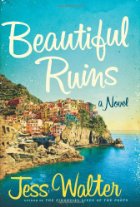
Best Looking: Beautiful Ruins, by Jess Walter

I wanted to read this book in large part because it received so many raves around the book blogosphere.  But it didn’t hurt that the whole package – cover design, story, writing – was absolutely stunning.  Full review here.
Anne of Green Gables

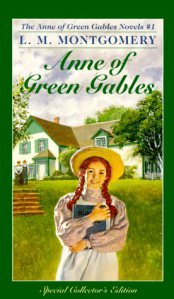
Best Friends: Anne of Green Gables, by L. M. Montgomery

Anne and Diana are one of the classic BFF duos in the entire literary canon.  From their early friendship, where Anne convinces Diana that it would not be a sin to “swear” to be friends forever, to their brief separation thanks to Diana’s mother freaking out when Anne accidentally gets Diana drunk on currant wine, to their lives as young women, wives and mothers, these two are the definition of kindred spirits.

poet's pub

Class Clown: Poet’s Pub, by Eric Linklater

Linklater’s little-known classic starts out ponderously, but the hijinks kick in midway through and then it’s hilarious.  Three words: charabanc. car. chase.
The Boys In The Boat

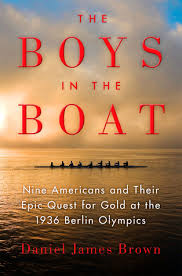
Biggest Jock: The Boys in the Boat, by Daniel James Brown

I don’t read a lot of sports books, so this was an easy one to pick, but it would have been on my list of 2013 reading highlights no matter what.  This non-fiction account of the University of Washington crew team that went to the Berlin Olympics in 1936 and won gold (that’s not a spoiler, people, HISTORY!) was an absolutely fantastic read.  There were one or two pages that got a bit over-technical and a little dry on the subject of rowing theory or boat-building, but mostly, it was just a great story of some remarkable young men and the sport they loved.
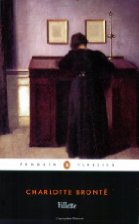
Villette

Teacher’s Pet: Villette, by Charlotte Bronte

I read Villette with Beth and Amal back in the spring and loved the story of Lucy Snowe, a young woman of reduced means who takes a post teaching in a girls’ school in the Continental city of Villette.  Lucy is a teacher, but she also does a fair amount of learning – some from experience, and some from a cantankerous master in the school who turns out to have more depth of emotion than originally thought.  Fabulous book, and you can find my readalong posts here: Vol. I; Vol. II; Vol. III; Reading Companions.
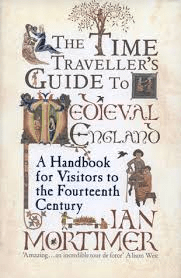
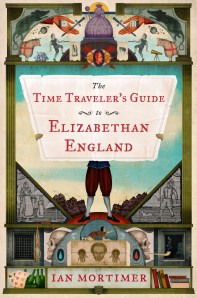
The Time Traveler's Guide to Medieval England The Time Traveler's Guide to Elizabethan England

Biggest Nerd: The Time Traveler’s Guide to Medieval England and The Time Traveler’s Guide to Elizabethan England, by Ian Mortimer

Or am I the biggest nerd for totally geeking out over these?  Mortimer’s histories (the first focusing on medieval England – roughly, the 1300s – and the second on Elizabethan England) are written like travel guides, covering things like where to stay and eat, what to do, and how to handle money, just like a travel guide to a modern country.  Both were fun and fascinating, although I enjoyed the Elizabethan England guide just a tiny bit more.
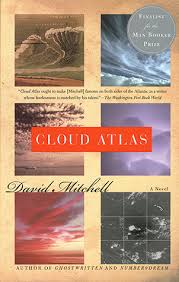
Cloud Atlas

Most Creative: Cloud Atlas, by David Mitchell

This was something new that Mitchell accomplished here.  Six different stories, set in six different time periods – from the 1800s to the dystopian future – each told through a different vehicle (a journal; an epistolary format; straight narrative; and a statement of a condemned prisoner are some examples) and each connected to the other stories in a mysterious way.  It didn’t grab me immediately, but once it did, holy WOW.
MaddAddam 1 MaddAddam 2 MaddAddam 3

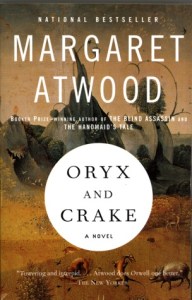
Most Opinionated: The MaddAddam Trilogy (Oryx & Crake, The Year of the Flood, and MaddAddam), by Margaret Atwood

This was the year I decided I love Margaret Atwood, and it was the MaddAddam trilogy that did it for me.  (I’d previously read The Handmaid’s Tale and appreciated it but concluded that I didn’t care for it.  Now I want to read it again and see if my opinion has changed.)  Oryx and Crake was my least favorite of the trilogy, because the child abuse scenes really upset me and I didn’t think they were necessary to the story.  But The Year of the Flood and MaddAddam were marvelous.  So why did I award them “Most Opinionated” in this game?  Well, on top of being a good, well-written, exciting story, the MaddAddam Trilogy is Atwood’s warning to all of us about what will happen if we neglect the environment and continue to pursue the insane path of progress at the expense of our humanity.  There was SO much material for thought here.
Lexicon

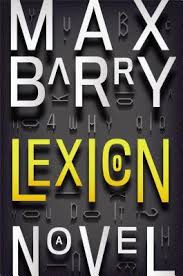
Most Likely To End Up In Hollywood: Lexicon, by Max Barry

There are car chases, secret organizations at war with one another, and massive explosions… how could Hollywood fail to make this one into a movie?  But if (when?) they do, it will be a doubly cool movie because all the action is set off by a WORD.  Yep, behind the made-for-Hollywood action is a thrilling story about the power of language.
The Goldfinch

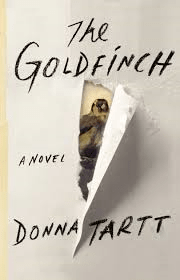
Biggest Rebel: The Goldfinch, by Donna Tartt

Theo Decker has good reason for being a disturbed kid – his dad ran off and his mom was killed in a terrorist attack.  So it’s no wonder that Theo grows up troubled, or that he falls in with another troubled kid, Boris.  Theo is good at heart, though, and he wants to do the right thing.  It’s just that, in his efforts to do the right thing, he often goes awry.  He’s that kid who puts up a tough front but is really looking for some understanding.

bernadette cover

Biggest Loner: Where’d You Go, Bernadette, by Maria Semple

Bernadette Fox is a brilliant architect, but she’s been a recluse for years, ever since one of her projects met an unfortunate end.  Now she’s hiding out in Seattle, a mom to precocious Bee, troublesome wife, and reviled member of the parent community at Bee’s school.  That is, until Bernadette disappears.  Bee assembles letters, emails and documents that she is sure will help her to track down her missing mom.  But does Bernadette even want to be found?  This was another of my 2013 reading highlights.  I loved every moment of Bee’s search, and I recommend it to everyone.

Attachments

Cutest Couple: Attachments, by Rainbow Rowell

Lincoln is an “internet security officer” at an Omaha newspaper, which he thought would be way more exciting than it turned out to be.  Instead of leading the charge against internet vice, he’s stuck monitoring red-flagged emails that show up in his folder every time someone forwards an inappropriate joke.  The only thing that keeps Lincoln going is the chance of seeing an email pop up between copy editor Jennifer and entertainment reporter Beth, who know their email is being monitored but can’t seem to stop discussing every detail of their private lives.  It doesn’t take Lincoln long to realize that he’s falling for Beth… right around the time that Beth notices a cute IT guy in the break room.  It only took me a day to read this because I was rooting so hard for Lincoln and Beth that I couldn’t put it down.
Eighty Days

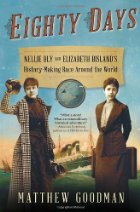
Most Likely To Succeed: Eighty Days: Nellie Bly and Elizabeth Bisland’s History-Making Race Around the World, by Matthew Goodman

This one’s a no-brainer – everyone knows Nellie Bly!  Bly made headlines by being up for anything – from exposing the ruthless “Lobby King” of Albany to posing as insane and writing an expose of a notorious mental institution.  But she really went all out with her challenge to beat Jules Verne’s fictional eighty day record for traveling around the world – a challenge which attracted plenty of interest and a little healthy competition, in the person of Elizabeth Bisland.  Bly and Bisland’s race was such fun to follow, but it’s Bly who gets “most likely to succeed” honors in this yearbook.

That was fun!  What were your reading highlights of 2013?  Oh – and stay tuned, because I have some pie charts coming up next.  Yay!  Pie charts!

Reading Round-Up: December 2013

Reading is my oldest and favorite hobby.  I literally can’t remember a time in my life when I didn’t love to curl up with a good book.  Here are my reads for December, 2013…

Excellent Women, by Barbara Pym – Mildred Lathbury is one of the “excellent women” of her parish.  A clergyman’s daughter in her early 30s, Mildred is unmarried but not idle.  She finds plenty to do, whether its meddling in the marriage of her new neighbors, Rocky and Helena Napier, or chatting about the minister’s new love interest with the other excellent women of the church.  This book was a relaxing, enjoyable read for this Anglophile.  I read Excellent Women as part of the Classics Challenge, and my full review can be found here.

Naughty in Nice (Her Royal Spyness Mysteries #5), by Rhys Bowen – This was my favorite of Lady Georgie’s adventures so far!  Binky and Fig have decided to leave England to winter on the French Riviera.  Georgie would love to get out of the soupy fog too, but Fig cries poverty.  A timely appeal to the Queen sees Georgie sent to Nice on assignment: to retrieve a snuffbox which the queen suspects a self-made baronet of stealing from her, and to spy on Wallis Simpson again.  Georgie traipses off to the South of France and soon finds herself modeling for Chanel, with disastrous results (of course).  And when the thieving baronet is found murdered in his own backyard, Georgie is the prime suspect.  She might have gotten out of the soupy fog, but she’s landed directly in the soup!  I had SO much fun following Georgie through this adventure… and darned if a nice armchair holiday in Nice wasn’t exactly what I needed to get me through some chilly, snowy days.

Village Christmas, by Miss Read – I wanted to revisit Fairacre this holiday season, because there’s really no place better to get some holiday spirit.  Village Christmas is a slim little book (just over 50 pages) but it’s packed with Christmas spirit.  The book focuses on the elderly Waters sisters, their new neighbors, the Emery family, and a new baby who teaches Fairacre to love their neighbors – just like another baby did 1,950 years earlier.  I love this novella – it’s one of my favorite holiday reads.  I read it last year, and I’m sure I will be reading it year after year.

The Twelve Clues of Christmas (Her Royal Spyness Mysteries #6), by Rhys Bowen – I just had to read this one before Christmas, and it was SO much fun.  Georgie escapes a dreary Christmas with Fig and Family up at Castle Rannoch by finding herself a job as hostess of a house party down in Devon.  But no sooner has Georgie arrived on the scene than a local mischief-maker is found dead, apparently accidentally, in a tree.  As the days roll by, the death toll mounts and only Georgie seems to think there is something suspicious about the parade of supposed accidents.  This was my favorite Georgie escapade so far.

Giada’s Feel Good Food: My Healthy Recipes and Secrets, by Giada de Laurentiis –  I usually don’t include cookbooks on these roundups, but this one deserves to be on the list because I actually sat down and read it cover to cover.  Giada is my favorite Food Network personality and I own all of her books.  This most recent was under the tree for me on Christmas morning and I want to make just about everything in it – especially the orange-scented almond muffins, which I can’t stop dreaming about.  Giada also shares her secrets for living a healthy, balanced life.  I’m trying not to acquire too many cookbooks while we’re living in our little rental, but I’m so glad I have this one in my collection now.

Middlemarch, by George Eliot – Loved.  Loved loved loved loved loved.  I could go on and on about how fabulous Middlemarch was, but I’ll just link you to my #Middlemarch13 posts instead: Vol. I and II; Vol. III and IV; Vol. V and VI; and Vol. VII and VIII and Finale.  Read it as soon as possible.

Heirs and Graces (Her Royal Spyness Mysteries #7), by Rhys Bowen – And with that, I’m all caught up on Georgie’s adventures.  Having absolutely nowhere to go, Georgie appeals to the Queen and gets herself an assignment: train up the recently discovered heir to the Duke of Eynsford, who has been found on the Australian outback, on the rules of high society.  It seems like an easy job until the current Duke is found dead with the heir’s hunting knife in his back.  What’s the thirty-fifth in line to the throne to do with this crowd?  Cute and fun, as usual.

No Holly for Miss Quinn, by Miss Read – Another one that I read for the first time last Christmas and had to pick up again this year.  I love the story of introverted Miss Quinn’s rediscovery of the joys of family and mess and noise at the holidays.

Well, December for me can be summed up in one word: Middlemarch.  Okay, it looks like I did read other things – including three mysteries featuring Lady Georgiana, who I have come to love.  I had plenty of fun reading this month, and I am looking forward to January, which I’ve decided to dedicate to comfort reading.  Stay tuned!