Poetry Friday: “Evening,” by Virginia Graham

EVENING

As the dark day moves into darker evening,
and the pale pin-pointed lamps are lit in the street,
as the typists stand shivering by the bus-stop,
wreathed in their warm breaths, stamping their cold feet

on the greasy pavements – I seem to see manifested,
hanging like a foggy aura above their tired heads,
the word Home.  I feel the surge of their silent yearning,
all hearts turned toward fires and food and smooth beds.

This is the sweet hour of expectation.
Only a little while and they will have forgotten this;
only a little while and the day will be drowned
in the sound of a child’s voice, the touch of a lover’s kiss.

Their senses will be washed by music for the Forces,
the cheerful clanking of plates, the running of taps;
and they will sit talking, or nodding over a cup of tea,
with books and knitting and drowsy cats in their laps.

These are their wages, the true fruits of their labour;
vaulted above all things, above dreams or ambitions or
careers;
for a job can be lost, and another as easily forgotten,
but Home is carried tenderly, like a babe, throughout the
years.

The darker evening moves into darkest night.
The typists change their attaché cases to the other hand;
and they turn up their coat-collars and sigh
they put their papers under their arms, and stand.

As the buses thunder by with lidded eyes,
the queues wait sombrely in their appointed places,
but I see the great lights that are lit for a homecoming
blazing like beacons on their patient faces.

~Virginia Graham, 1942

Some things never change.  I can relate so well to this “sweet hour of expectation” as I wait for the metro to take me home to warmly-lighted windows and two sweet babies, who are often in their pajamas when I walk in the door.  And I can relate to that ghost hour between work and home (well, for me it’s more like 35 minutes – my commute is decent) dissipating with the cacophony of children’s voices as soon as I get home – but that’s okay, because like the typists in Virginia Graham’s poem, this home contains my real wages, the riches that I work hard to earn every day.

Flora and Elfine, or, It’s National Poetry Month!

She went skipping round the corner of the little sheep-house and saw Elfine, sitting on a turf and sunning herself.

Both cousins were startled.  But Flora was quite pleased.  She wanted a chance to talk to Elfine.

Elfine jumped to her feet and stood poised; she had something of the brittle grace of a yearling foal.  A dryad’s smile played on the curious sullen purity of her mouth, but her eyes were unawake and unfriendly.  Flora thought, ‘What a dreadful way of doing one’s hair; surely it must be a mistake.’

‘You’re Flora – I’m Elfine,’ said the other girl simply.  Her voice had a breathless, broken quality that suggested the fluty sexless timbre of a choir-boy’s notes (only choir-boys are seldom sexless, as many a harassed vicaress knows to her cost).

‘No prizes offered,’ thought Flora, rather rudely.  But she said politely: ‘Yes.  Isn’t it a delicious morning.  Have you been far?’

‘Yes… No… Away over there…’ The vague gesture of her outflung arm stretched, in some curious fashion, illimitable horizons.  Judith’s gestures had the same barrierless quality; there was not a vase left anywhere in the farm.

‘I feel stifled in the house,’ Elfine went on, shyly and abruptly.  ‘I hate houses.’

‘Indeed?’ said Flora.

She observed Elfine draw a deep breath, and knew that she was about to get well away on a good long description of herself and her habits, as these shy dryads always did if you gave them half a chance.  So she sat down on another turf in the sun and composed herself to listen, looking up at the tall Elfine.

‘Do you like poetry?’ asked Elfine, suddenly.  A pure flood of colour ran up under her skin.  Her hands, burnt and bone-modelled as a boy’s, were clenched.

‘Some of it,’ responded Flora, cautiously.

‘I adore it,’ said Elfine, simply.  ‘It says all the things I can’t say for myself… somehow… It means… oh, I don’t know.  Just everything, somehow.  It’s enough.  Do you ever feel that?’

Flora replied that she had, occasionally, felt something of the sort, but her reply was limited by the fact that she was not quite sure exactly what Elfine meant.

‘I write poetry,’ said Elfine.  (So I was right! thought Flora).  ‘I’ll show you some… if you promise not to laugh.  I can’t bear my children to be laughed at… I call my poems my children.’

Flora felt that she could promise this with safety.

‘And love, too,’ muttered Elfine, her voice breaking and changing shyly like the Finnish ice under the first lusty rays and wooing winds of the Finnish spring.  ‘Love and poetry go together, smehow… out here on the hills, when I’m alone with my dreams… oh, I can’t tell you how I feel.  I’ve been chasing a squirrel all the morning.’

(From Cold Comfort Farm, by Stella Gibbons)

Happy National Poetry Month from Flora Poste, Elfine Starkadder… and me!

The Book Review Jargon That Guarantees I WON’T Read The Book

When you read a lot, and you identify as a reader, it’s almost certain to follow that you’re on the hunt for recommendations.  What’s the big new release that everyone’s talking about?  The under-the-radar sleeper that I need to pick up?  The classic author I’ve somehow missed?  The perfect-right-now next read that I should have on deck?

I’m no exception – I’m always looking for tips and recommendations for my next read.  I get them all over the place – from other blogs, bookish Twitter, bookstagram, podcasts and friends – and I’m invariably interested in hearing a quick summary of a recommended book, so I can judge for myself whether I might like it or not.  (I’m not one of those people who like to go into a book completely blind.  I have limited time in which to read and I’d prefer to know that there’s at least a chance I’ll enjoy a book before I pick it up and devote time to it.)

When you read enough book blogs, follow enough bookish accounts on social media and listen to enough podcasts, you get to know the book reviewing jargon that bloggers toss around in their reviews.  For better or for worse, there are some words that get used a lot, and that can actually be a good thing.  When we’re all speaking the same language, it can be easier to sniff out the books that have the most likelihood of success for a given reader.

But there’s one review word I absolutely hate, and if I hear it spoken by a podcast host, or read it in a review, it’s a guaranteed nope for me.  Doesn’t matter how great the book is.  If I hear this word – I’m done.  I won’t read it.

UNFLINCHING.

I recently realized that the word unflinching is a poison pill for me and books and at first I thought it was because I do tend to gravitate toward cozy reads and comfort books.  No one is going to call Miss Read, Angela Thirkell or Jane Austen unflinching.  They are fully flinching.  (Well, Austen is a straight shooter when it comes to the perils of spinsterhood in Regency and Georgian England.  But she manages to package it well.)

But actually – that can’t be it.  I’ve read plenty of books on difficult subjects.  Between the World and Me was no walk in the park, and The Underground Railroad and The Handmaid’s Tale were straight-up horrifying.  And I’ll give fair, active consideration to books that reviewers describe as “raw” or “honest” or “troubling” or “challenging” or any other number of words.  Certainly, I don’t shy away from the tough stuff.

I just really, really hate the word unflinching.  I feel like it’s a cop-out; it’s what reviewers say when they know a book is hard to read but they don’t want to put the time and emotional energy into explaining why.  Maybe they only have so many on-air minutes to devote to the book, or they’re just tired after a long day and don’t feel like typing another paragraph.  That’s fine – I get it.  I just can’t stand the word, and it’s a deal-breaker for me.

So, please, if I write a book review and I call something unflinching, punch me.  I promise I’ll flinch.

Is there a book review buzzword you JUST! CAN’T! STAND!?

Catherine, Emma, And Liking What You Like

If you’re a Janeite, you probably remember your first Austen novel.  Mine was Sense and Sensibility.  My mom – seeing that I was ready for more “grown-up” reading material – bought me a copy when I was a high school freshman, and I devoured it.  I loved the writing, the restrained drama, and the feeling of being a grown reader.  Most of all, I loved that I could relate to this book that was written so long ago and had become such a classic.  I saw myself in practical Elinor, and I rolled my eyes at Marianne the way I used to do at a particular drama-loving friend.  I was used to identifying with book characters – bookish Elizabeth from the Sweet Valley series, for instance, or casual, green-leaning Dawn from the Baby-Sitters Club books.  But in Elinor Dashwood, I saw for the first time that I could identify with adult characters in classic literature, too, and it opened up a whole new horizon.

Over time, I read all of Austen’s books.  I have always been a character-driven reader, and Austen’s heroines spoke to me.  Sparkling Elizabeth Bennet – quiet Fanny Price – steadfast Anne Elliot.  I seethed at the treacherous antics of Lucy Steele and Mary Crawford, and I fell in love with secondary characters like Charlotte Lucas and Jane Fairfax.  I have read all of the books multiple times now, and I know them like the back of my hand.  And of course, I have my favorites.

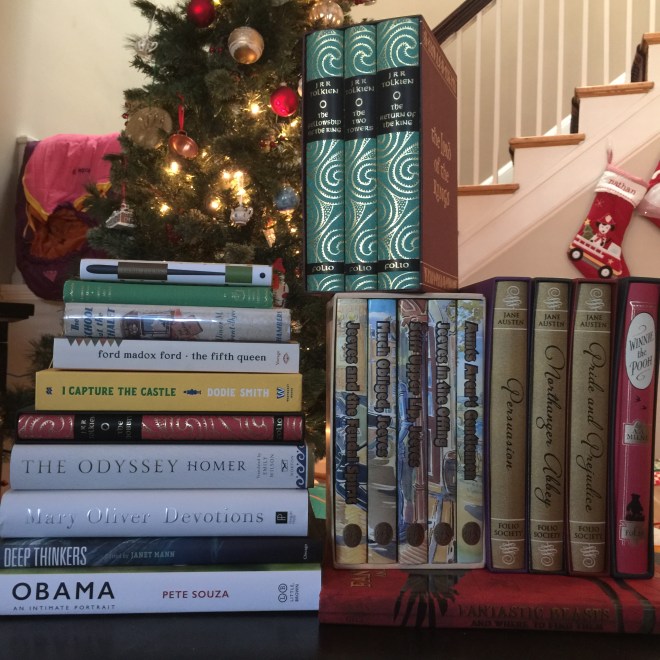
This past Christmas, Steve gifted me with a veritable mountain of books, including the gorgeous (and much-coveted) Folio Society editions of my three favorite Austen novels: Pride and PrejudicePersuasion, and Northanger Abbey.  Yes – Northanger Abbey.  NOT Emma.

Some of you are cheering me right now, I know, and others have their hands on their hips and are getting ready to explain why I’m just wrong about Emma.  I have a good friend and fellow Janeite who adores Miss Woodhouse and can’t abide Miss Morland.  But here’s my thing: I’m a character-driven reader.  While I love a good plot (especially in a mystery novel) and I live for gorgeous nature writing (of the kind L.M. Montgomery does so beautifully) if the main character doesn’t capture my sympathy, nine times out of ten the book is ruined for me.  And I really, really don’t care for Emma Woodhouse.  She is vain.  She is snobbish.  She is selfish.  She is inconsiderate.  She believes herself to be superior to nearly everyone around her.  She meddles in other people’s lives.  I just think she’s a horrible person.  Nearly every time she opens her mouth, I want to shout, “That was badly done, Emma!”

I will say that Emma is one of the small minority of books that I still like despite the main character.  I love the village of Highbury and its denizens – especially the Bates ladies.  And Jane Fairfax is one of my favorite secondary characters in all of literature – I wish Austen had written the book about her.  And of course Emma gets a bit of comeuppance in the form of Mrs. Elton.  I know I give Emma a hard time.  After all, rich or poor, we all need to grow up and mature.  It’s just that most of us don’t get the indulgence of doing our growing up and maturing while leaving a wake of destruction behind us.

By contrast, I just enjoy Northanger Abbey so much more.  Rather like Emma, it’s a coming-of-age story.  Catherine Morland begins the novel as a silly young girl, just leaving home to see the world for the first time.  In Bath, she meets Isabella Thorpe, who introduces the two points of conflict in the book: the novels of Ann Radcliffe and Isabella’s brother John Thorpe.  Catherine then proceeds to let herself get swept away – unable to get out from under the thumb of the domineering John in Bath, and with a runaway imagination once she finally escapes John and heads to Northanger Abbey with Henry and Eleanor Tilney.  At Northanger, Catherine makes a series of dumb decisions – including the decision to go sneaking around the house and investigate Henry and Eleanor’s mother’s room because she believes (thank you, Ann Radcliffe!) that the woman must have been murdered or at least killed by neglect.  (In the “updated” version of Northanger, written by Val McDermid, Catherine is a Twihard, which sounds about right.)  Catherine embarrasses herself (“Remember we are English!”) and nearly loses her chance at happiness with Henry because of her foolishness.  But somehow, it’s more endearing than Emma’s foolishness.  Perhaps because it’s foolishness born of bookishness instead of snobbishness.

I’ve had quite a few debates about Northanger Abbey with a dear Janeite friend of mine.  It seems to inspire great argument and divisiveness even among Jane’s most devoted fans.  This friend considers Northanger her “sixth favorite” Austen novel – she may even dislike it.  (!!!)  She considers Catherine to be a flake (well, she is a flake) and Henry to be a mansplainer (that I don’t agree with, because mansplaining is when a man explains to a woman about something she knows better than he does; I’ve been mansplained plenty, and that’s not what Henry does).  Meanwhile, she loves Emma.  (She adores Mr. Knightley.  I’m quite happy to cede that point to her, as he is one of my favorite Austen heroes too.)

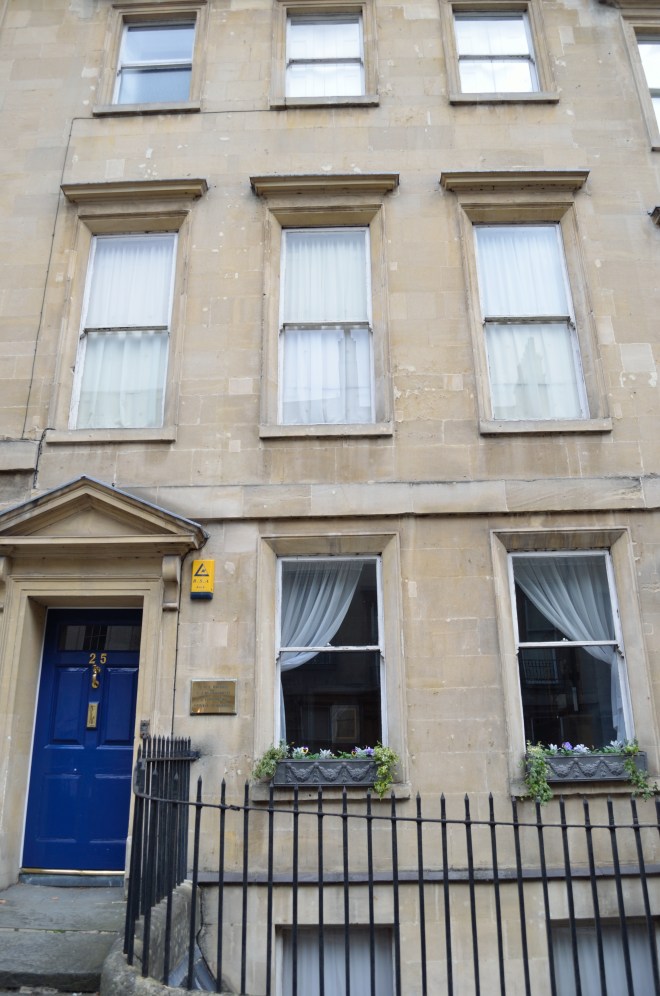
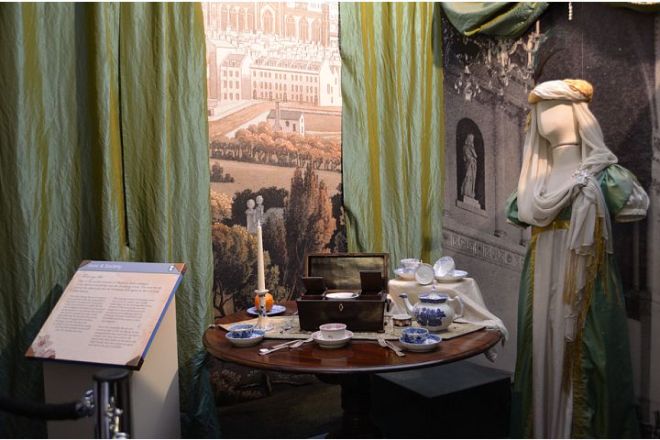
One of Jane Austen’s several residences in Bath.

Meanwhile, it seems there’s nothing you can say to so divide Janeites than to declare that Northanger Abbey is one of your favorites.  (For me, it clocks in at number two, because nothing could displace my dear Pride and Prejudice, which is the most perfect book ever written.)  I recently joined the “Drunk Janeites” group on Facebook (such a fun bunch) and we’ve had a few lively discussions about Northanger Abbey.  (All very polite.  They usually start with someone expressing an intent to read it for the first time, and the responses are about evenly divided between “OMGeeeeeee you’re gonna LOVE it TILNEY SWOOOOOON” and “Not my personal favorite, but I hope you’ll enjoy it!”)  Still, I thought it was interesting how Northanger seems to provoke more (friendly and respectful) disagreement than any other Austen book.  I do wonder why that is.

How do you feel about Catherine Morland and Emma Woodhouse?

Some Recent Bookish Acquisitions

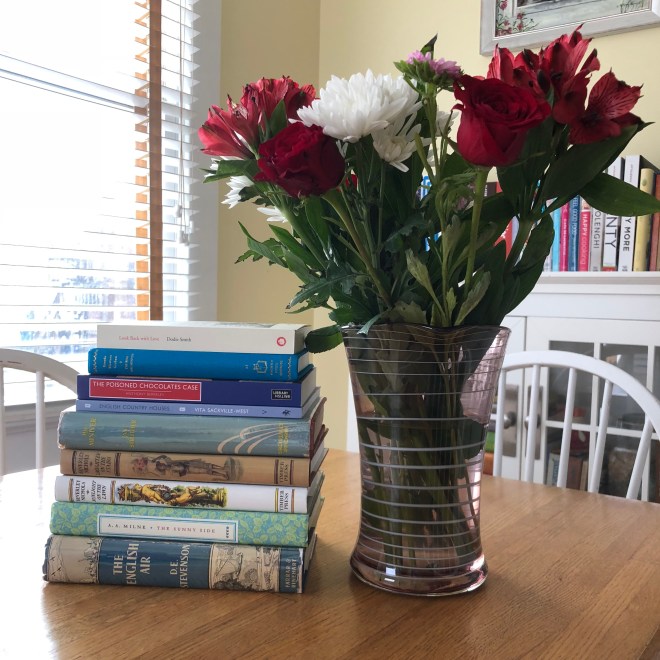
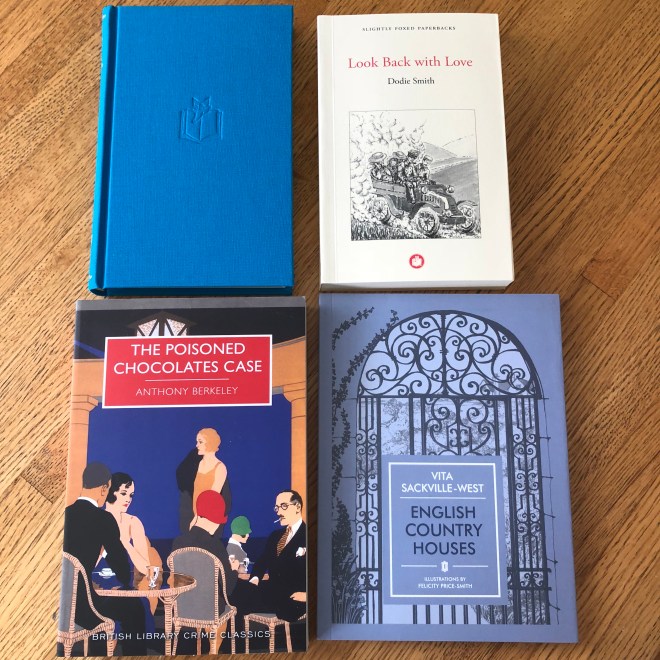
As I mentioned a couple of weeks ago, I have been on a bit of a book-buying bender since finishing Project 24.  It’s been a little insane, but I’ve decided to just strap myself in and enjoy the ride, since I’m sure it will even out eventually once the novelty of just being able to buy a book if I want it, wears off.  I’m particularly excited about the batch that trickled across my threshold over the course of January and February.  (Pictured above, with Valentine’s flowers from my boys and my girl.)

  • The Real Mrs Miniver, by Ysenda Maxtone Graham (Slightly Foxed Editions) – I have a recent love for SFE, and couldn’t resist this addition to the collection because of (a) the gorgeous color, and (b) the subject.
  • Look Back with Love, by Dodie Smith (Slightly Foxed Paperbacks) – Described as a delightful memoir of an Edwardian childhood by the author of I Capture the Castle, how could I possibly say no to this one?
  • The Poisoned Chocolates Case, by Anthony Berkeley (British Library Crime Classics) – I’ve been slowly building up my collection of these forgotten mystery classics, and this seemed like a perfect addition for February.
  • English Country Houses, by Vita Sackville-West – This keeps selling out on Amazon.  Sackville-West was best known for her garden, Sissinghurst, and for having an affair with Virginia Woolf, but she also contributed a few novels and reams of classic home and garden writing, including this WWII home front morale-booster.

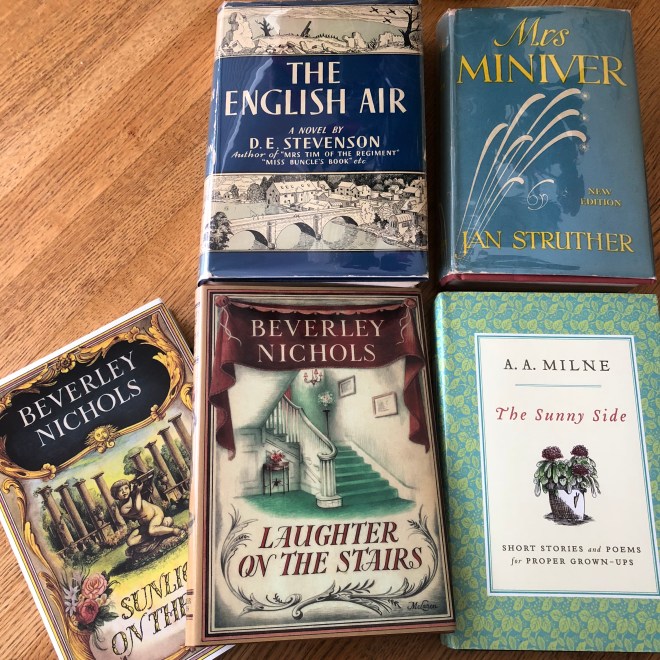
  • The English Air, by D.E. Stevenson – I saw this on a book blog (can’t recall which, now) and was intrigued by the story, and it came highly recommended as one of Stevenson’s best.
  • Mrs Miniver, by Jan Struther – Again, how could I resist?  This is a gorgeous 1942 edition with a “new” Mrs Miniver story.  I can’t wait to read it against The Real Mrs Miniver.
  • Laughter on the Stairs and Sunlight on the Lawn, by Beverly Nichols – Books two and three complete the Merry Hall trilogy (I already owned book one), a loosely factual chronicle of Nichols’ adventures fixing up an old Georgian house and garden.  Can’t wait to dig into these – I think they’ll be perfect spring reading.
  • The Sunny Side, by A.A. Milne – Since no one has seen fit to grant my wish of a complete collection of Milne’s writing for Punch Magazine, I’ll have to be satisfied with this collection selected by Milne himself.

Yes, it’s been a good couple of months for book collecting.  I’m relishing the newfound purchasing freedom and gleefully anticipating some many hours spent with a big cup of tea and each of these books.

How about you – any good additions to your library lately?


Good Neighbors: Emma and Miss Bates, Mary and Miss Matty, and Uncommon Kindness


She had never boasted either beauty or cleverness.  Her youth had passed without distinction, and her middle of life was devoted to the care of a failing mother and the endeavor to make a small income go as far as possible.  And yet she was a happy woman, a woman whom no one named without goodwill.  It was her own universal goodwill and contented temper which worked such wonders.  She loved everybody, was interested in everybody’s happiness, quick-sighted to everybody’s merits; thought herself a most fortunate creature, and surrounded with blessings in such an excellent mother and so many good neighbors and friends and a home that wanted for nothing.  The simplicity and cheerfulness of her nature, her contented and grateful spirit, were a recommendation to everybody and a mine of felicity to herself.

~ Emma

There is a certain variety of spinster that can be found peopling many a village in the dappled realm of imagination that is English literature.  Never flush with cash, their lives could be called simple to the point of dullness, yet they manage to live with a gentility and serenity that is almost too genteel and serene to be believed.  Spinsterhood, in Regency, Georgian, and Victorian times, was something of a dangerous occupation.  In a world where men held all the cards and all the power, women needed a man’s protection – husbands, fathers, or cousins or brothers who understood their relation of power and the responsibility that it ought to entail – in order to live even somewhat comfortably, an unnerving and perilous dynamic that female writers of the eighteenth and nineteenth centuries routinely explored.

Jane Austen’s Miss Bates is often held up as the quintessential example.  Miss Bates is poor.  She lives with her mother, the elderly and ailing Mrs. Bates, and the two ladies manage to scrape along and make ends meet somehow.  They live for visits from niece and granddaughter Jane Fairfax, and for the companionship of their neighbors.  Yet their relatively unprivileged position makes it all too easy for Emma – inconsiderate, selfish Emma – to demean and ridicule Miss Bates.  In condescendingly mocking Miss Bates, Emma thoughtlessly embodies the heedless cruelty of Georgian society toward the relative powerless.  Fortunately, Mr. Knightley calls her on it.

It was badly done, indeed! You, whom she had known from an infant, whom she had seen grow up from a period when her notice was an honour, to have you now, in thoughtless spirits, and the pride of the moment, laugh at her, humble her–and before her niece, too–and before others, many of whom (certainly some,) would be entirely guided by your treatment of her.–This is not pleasant to you, Emma–and it is very far from pleasant to me; but I must, I will,–I will tell you truths while I can.

~ “Mr. Knightley,” Emma

We have always lived genteelly, even if circumstances have compelled us to simplicity.

~ “Matty Jenkyns,” Cranford

Miss Bates stands in stark contrast to her Victorian descendent, Miss Matilda Jenkyns.  Miss Matty, as she is known to friends and compatriots, is a spinster living in reduced circumstances, which become even more reduced when a bank in which she had heavily invested goes under.  Yet Miss Matty survives because her friends rally around her.  Like Miss Bates, Miss Matty is beloved in her community.  Unlike Miss Bates, she receives nothing but respect from the young protagonist of the novel, Mary Smith.

We know far less about Mary than we do about Emma.  Although she is the narrator, she is not the focus of events in Cranford.  Elizabeth Gaskell gives very little information about Mary and her background, but it’s possible to piece together a few details – she’s a well-to-do young woman, if not as wealthy as Emma Woodhouse, her mother hailed from Cranford before marrying and leaving the town, and Matty and her sister Deborah Jenkyns are family friends with a close enough connection to host Mary for extended periods of time in their home and to receive financial advice (which Matty ignores) from Mary’s father.  Throughout the novel it’s clear that Mary, though an outsider, has great affection for Cranford in general and for Matty Jenkyns in particular.  While she may occasionally poke gentle fun at some of Miss Matty’s foibles (Miss Matty’s favorite economy – conserving candles – drives Mary batty, but she manages to play along and hide her exasperation) she never treats Miss Matty with anything less than kindness and deference.

For instance, in one scene, the Cranford ladies gather to watch a magician perform sleight-of-hand tricks.  Miss Matty is flutteringly anxious, worried that somehow the magic show might be offensive to Christianity.  She begs Mary to look discretely around the room and confirm if the clergy is present.

“‘Will you look, my dear—you are a stranger in the town, and it won’t give rise to unpleasant reports—will you just look round and see if the rector is here? If he is, I think we may conclude that this wonderful man is sanctioned by the Church, and that will be a great relief to my mind.”

~ “Matty Jenkyns,” Cranford

Mary obligingly cranes her neck around the room and verifies that yes, the rector is indeed present, sitting in the back of the room surrounded by a gaggle of schoolboys.  (Shortly thereafter, it is amusingly confirmed that the rector has agreed to take the schoolboys to the magic show as protection from what he views as the potential predations of another Cranford spinster, Miss Matty’s cousin Miss Pole.  Miss Pole, who is indeed interested in the rector but would rather die than admit it, sweeps imperiously past him and the schoolboys on her way out of the hall, ostentatiously ignoring him – much to his relief and the reader’s amusement.)

Can you see Emma Woodhouse staying with Miss Bates, accompanying her to a magic show, and agreeably spying around the room to verify that the minister is among the attendees?  I can’t.  (Nor can you picture Mr. Elton appearing at a magic show, can you?)

It is very pleasant dining with a bachelor.  I only hope it is not improper; so many pleasant things are.

~ “Matty Jenkyns,” Cranford

When disaster strikes Miss Matty, in the form of bankruptcy – she has heavily invested in the Town and County Bank, against the advice of Mary’s father, and the bank fails and ruins its investors – Mary spearheads Cranford’s efforts to take care of Miss Matty without letting her find out about it.  The Cranford ladies meet covertly and brainstorm ways to funnel cash to Miss Matty yet not damage her pride or her sense of responsibility for the bank, and Mary hits on the ingenious plan of obtaining a license for Miss Matty to sell tea and setting her up in business.  Mary’s father approves the plan and Mary herself stands guard over Miss Matty’s parlor, converted into a very discreet little tea shop – feeding Miss Matty a gentle fib about the dangers of candied almonds to prevent her from disbursing so many to the little boys of Cranford that she ruins her finances all over again.  The Cranford ladies suddenly find themselves in need of more tea than ever before and they buy up Miss Matty’s stock (ignoring her protestations that green tea is unhealthy) while Mary secretly works out a more permanent, and joyous, solution to Miss Matty’s financial woes and loneliness.

We all love Miss Matty, and I somehow think we are all of us better when she is near us.

 ~ “Mary Smith,” Cranford 

Emma learns her lesson, of course.  She’s abashed and ashamed after Mr. Knightley chastises her for her unkindness to Miss Bates, and she resolves to do better in the future – and she does.  She visits the Bates ladies, includes them in the life of the county, and doesn’t roll her eyes when Miss Bates waxes rhapsodic about Jane Fairfax.  In short, she grows up, and that is – after all – the story.  The reader is left feeling proud of Emma for showing personal growth and maturing into the role that has been reserved for her since she was born.

But Mary Smith doesn’t need to mature in order to treat Miss Matty with kindness and respect, the way Emma Woodhouse needs to mature before she recognizes her cruelty toward Miss Bates.  Mary loves Miss Matty, and it shows in every word of Cranford.  She willingly indulges Miss Matty’s eccentricities, misses Miss Matty when away from Cranford, and joyously returns to Miss Matty’s abode as if to her own home.  And Miss Matty, like Miss Bates, doesn’t lack for friends elsewhere in the village, either, as Mary’s father points out.

See, Mary, how a good innocent life makes friends all around.

~ “Mr. Smith,” Cranford

That’s true, but Mary doesn’t really need to be told.  Nor should Emma, and nor should we.

May we all inspire the same wealth of friendship as Miss Bates and Miss Matty do.

Six Month Sabbatical / Six Months to Live

Recently I was pottering around the internet, reading through discussion threads on the “Folio Society Devotees” page at LibraryThing, and I happened upon an interesting topic.  The original poster inquired: what would you read if you had six months off work (with presumably no other responsibilities) to spend entirely with your books?  And what would you read if you found out you had six months left to live?

IMG_8196

Two interesting hypotheticals!  The first – six months to just read – is every book lover’s fantasy, right?  (Although if I’m being honest, when I am dreaming of a reading sabbatical, it’s usually more like three years.)  I’ve had a few periods off work that averaged out to six months each – two maternity leaves, and a seven-month stint as a stay-at-home-mom – but I had other responsibilities during those times, and couldn’t just read.  I still got through quite a few books in those times, though.  I pretty much read whatever I wanted, which looked like a lot of classics, gentle fiction (i.e. Miss Read) and cozy mysteries.

But a six-month dedicated reading sabbatical would be a little different, I think.  While I’m sure I would spend at least some of it re-reading my favorites – like Jane Austen, P.G. Wodehouse, Edith Wharton and L.M. Montgomery – I think my main focus would be tackling my TBR in a really mindful and focused way.  There are still many classics I’ve yet to read, and I’d want to devote most of my reading sabbatical to them.  I’ve barely scratched the surface of Trollope, although I’ve adored the couple of books I’ve read from among his works; I’ve not yet read any Eliot other than Middlemarch (twice); and I’ve never read any Gaskell.  So they’d probably be my focus.  I don’t think I would use that time to make a targeted study of anything in particular, nor would I plan to create an end product – like a dissertation – I’d just spend time with great works of literature I haven’t yet experienced, and for the rest of the time, I would read through my bookshelves and luxuriate in having time to really enjoy authors like E.F. Benson, E.M. Delafield, Nancy Mitford, Angela Thirkell, Dorothy Whipple, and others.  (Six months?  I could spend my whole life on this.)

img_5381

As for six months to live – well, that’s a different question.  I don’t like to ponder mortality, so I tried to avoid thinking about it at first.  But I think I have a short, and maybe surprising, answer to the question: if I suddenly found out I had six months left to live, I don’t think I’d spend much of it reading.  Seems strange – I surprised myself a little – because I do love to read; it’s one of my favorite activities.  And it would be tempting to read feverishly and check books off of my lifetime TBR while I still could.  But – I don’t think that’s what I’d do.

If I had six months to live, I think I’d want to spend it traveling.  I’d want to see as much of the world, and have as many experiences, as I could with the time left to me – riding camels in Morocco; hiking the Swiss Alps and Austrian Tyrol; spotting elephants and lions on safari; kayaking with orcas and humpback whales; visiting every American and Canadian national park; wandering through the great cathedrals of Europe; eating sole meuniere in the Normandy restaurant where Julia Child had her first French meal; walking every inch of the 600-mile South West Coast Path around Devon and Cornwall…  I’d want to rest my eyes on natural and manmade wonders – not words on a page.  (Of course, if I had six months to live, I would probably be sick, so maybe all of this adventuring wouldn’t be possible – in which case I would likely turn to old favorites and childhood classics.)

6F7540E2-69EB-45DD-A9C9-5C0EB961F38E

And I’d want to spend time with my family – especially my little folks.  I’d stroke their hair, pet their soft baby cheeks, and memorize every inch of their faces.  I would want them in my arms as much as humanly possible.  I’d much rather hold them than hold a book.

Shiver.  I like the first question better!

What would you read if you had a six month sabbatical?  And if you want to answer the second question – what would you read if you had six months left to live?

2017: A Year in Reading — Part III (Book Superlatives)

One of my favorite posts of  the year!  For the past several years now, I’ve been assigning cheeky high school-style awards to the books that I’ve read over the course of the year.  It’s always such fun to look back over my booklist and decide on things like “teacher’s pet,” and “prom queen” and “most likely to succeed.”  (Fun fact: I won a senior superlative in my final year of high school, but it was lame – “shortest.”  Blah.)  As usual, and just to be clear, these aren’t necessarily books published in 2017 (although some may be) nor are they all my favorites for the year.  They’re just the books that I think fit best into the categories of a typical high school yearbook, yes it’s completely ridiculous, and now let’s have some fun.

Brainiest.  I must’ve scanned through my booklist five times but there was no help for it – the smartest person on there in 2017 was Hillary Rodham Clinton, whose well-considered, thoughtful, intelligent plans for our country quietly wrecked me.  Her musings on history and feminism, her plans to improve our infrastructure, our economy, our standing in the world and the health and education of our children – imagine, we could have had all that.  Hillary is the 2017 valedictorian of my booklist and I’m off to cry again.

Best Looking.  From the purple and white clothbound cover and silver slipcase to the luminous interior illustrations – the approach to Moonacre, Maria’s colorful tower bedroom – and the sweetly evocative text, Maria Merryweather and The Little White Horse are gorgeous indeed.

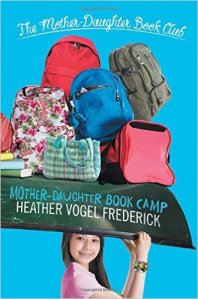
Best Friends.  Jess, Megan, Becca, Cassidy, and Emma take the title this year, as they reconvene for one summer together as camp counselors before going their separate ways to college.  And of course, they deal with challenges from their campers and their surly boss the way their moms taught them – by starting a book club and reading some classic literature!

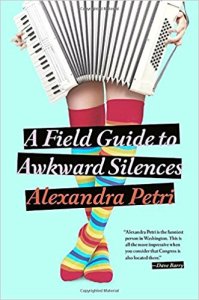
Class Clown.  I laughed until I cried at Alexandra Petri.  She’s the classic class clown – self-deprecating in the most hilarious way.  You haven’t really laughed until you’ve read her account of being hit on while wearing a Jabba the Hutt suit at a Star Wars convention.

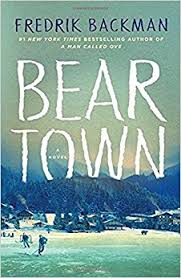
Biggest Jock.  Beartown is a whole town full of jocks – hockey jocks, to be specific.  They run the gamut from mildly obsessed to dangerously so, and when the star player of the town’s junior team commits a horrible crime, they have to decide what is more important – hockey, or the young woman whose life he ruins.  Since it’s a town of hockey jocks, some choose hockey, and it’s chilling.  (I love hockey, but it is only a game.)

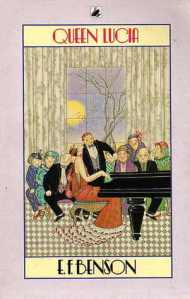
Teacher’s Pet.  When her neighbor brings a “guru” to town, Lucia Lucas sees no way forward except to steal the “guru” for herself and become his star pupil.  When he turns out to be a swindler, she’s disappointed but undaunted.  The image of Lucia in flowing white robes, holding court as a yoga instructor in her guru’s model, is hilarious.

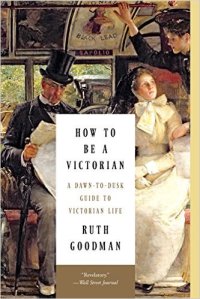
Biggest Nerd.  Who wants to read a doorstopper of a non-fiction book about every aspect of the typical Victorian day down to the minutia of hair-dressing?  Me!  Me, please!  Ruth Goodman’s unabashed enthusiasm for the details of a departed historic era earn her the title of “biggest nerd,” and it is a title I bestow with great love and affection, because nerds are the best people, and everyone should love something.

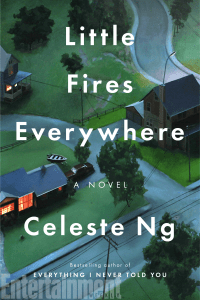
Most Creative.  Mia Warren, avant-garde photographer, gets the title this year for her headfirst, tumultuous approach to photography and life.  I only wish we’d gotten to follow along with her career to the fame that we are assured she eventually finds.

Most Opinionated.  Ta-Nehisi Coates’ writing for The Atlantic is brilliant, comprehensive, and unfailingly honest and raw.  I invariably devour anything he publishes on The Atlantic online, so I’d already read a few of the essays in his collection of eight pieces published during the Obama Administration, but I gladly read them again.  Reading Coates has expanded my horizons in so many ways, and his take on the current events of the day is invariably complex, nuanced and thought-provoking.

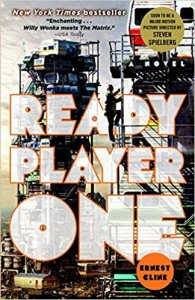
Most Likely to End Up in Hollywood.  It was hard not to cheat on this one, because I read so many books last year that I know are destined for Hollywood because they’re in preproduction or further along in the process of being made into a movie.  But there’s no fun in predicting that Ready Player One will end up in Hollywood, because – duh, it’s already there.  So I’m giving the title to Willie Lincoln and the cast of characters he meets while lingering in the space between death and the afterlife in Lincoln in the Bardo.  I will say, as I believe I have before in this category, that if this is made into a movie I’m not going to see it.  I found the imagery upsetting enough on the page – I don’t need to see it played out before my eyes.

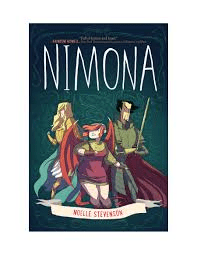
Biggest Rebel.  Nimona is the definition of a rebel – who else would saunter into a villain’s lair and insist on becoming his sidekick?  Of course, as the graphic novel plays out, it becomes clear that Nimona has no interest in playing by the rules that Lord Ballister Blackheart (villain) and Sir Ambrosius Goldenloin (hero) have set up to govern their interactions – and also that Nimona is way scarier than her boss, Blackheart.

Biggest Loner.  He’s a hero, celebrity, and one of a trio of code-breaking geeks as Parzival in the virtual world of The Oasis, but in “reality,” Wade Watts is as alone as you can get – huddled in his hideout, wearing his virtual reality goggles twenty hours a day.  You can’t feel sorry for him, though, because everyone else is locked away in their own virtual worlds, too.

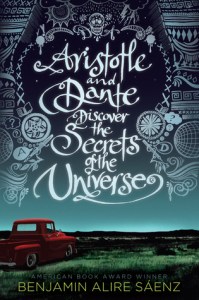
Cutest Couple.  Ari Mendoza and Dante Quintana take this year’s prize!  The boys meet at a swimming pool and become best friends, their friendship lasting through major ordeals and self-discovery.  When they finally kissed, it was all I could do not to cheer (I would have, but I was on the metro, listening to Lin-Manuel Miranda gorgeously read the audiobook version).

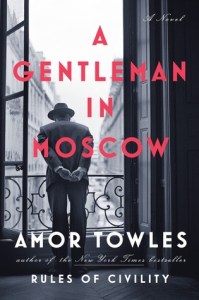
Prom King.  Who is the mysterious guy that makes all the girls swoon?  He’s suave and sophisticated and you know he knows where all the best libations are hidden.  This year’s Prom King is Count Alexander Rostov.

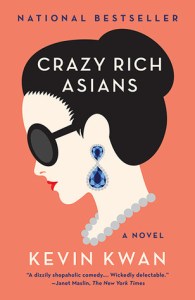
Prom Queen.  The 2017 Prom Queen is even more mysterious than the Prom King.  Astrid Leong comes from a family so rich that they don’t even want their existence known.  She is effortlessly graceful and stylish – she makes Jacqueline Kennedy look like, well, the rest of us.  Astrid would be mortified to be elected Prom Queen, but she shouldn’t worry.  This isn’t exactly the gossip papers.

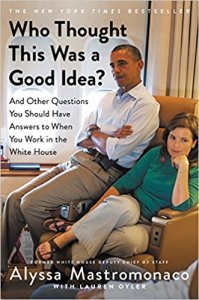
Most Likely to Succeed.  How does a regular young girl end up one of the President’s most trusted advisors?  Alyssa Mastromonaco is going to tell you all about it.  Her memoir of her rise from campaign worker to a senior White House advisor under President Obama is absolutely fascinating, and she also drops in her thoughts about professionalism, preparation, teamwork and more.  If you want to know how to succeed in any venture you choose, the road map is right here.

There they are – the 2017 class of superlatives!  They’re a rowdy bunch but they’ve given me a lot of fun over the past twelve months.  I wonder what the 2018 class is going to do with their time…

Do you give high school yearbook-style awards to your books, too?  Just me?

2017: A Year in Books — Part II (Top 10)

This is always a hard post to write!  Reading around 100 books every year (give or take) it’s a tall order to whittle that down to a list of the ten best of the best.  I usually enjoy the books I am reading – by now, I know my tastes well enough that I do a decent job of choosing what to pick up in the first place – and I give a lot of four and five star ratings on Goodreads.  Plus, how do you decide how to “rank” the books you read?  There are as many schools of thought on this as there are readers, no doubt, but my approach is to choose the ten I enjoyed most – regardless of critical opinion, objective merit, or any other trait.  So, with that preamble and in no particular order – my best of the best, read (but not necessarily published) in 2017:

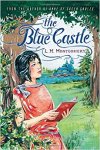
The Blue Castle, by L.M. Montgomery – I delighted in this LMM novel for adults.  Valancy Stirling, the heroine, is an absolute joy, and her progression from cowed and cowering soul to free spirit was one of my favorite things to read all year.  The scene in which Valancy shocks her buttoned-up relatives by saying exactly what she is thinking at a dinner party was pure fun, and the nature writing is – as expected – superb.  I felt as though I was tramping with Valancy and Barney through witchy November woods and skating with them under a riotous January sky.  Oh, to go back there right now.

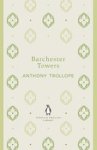
Barchester Towers, by Anthony Trollope – While I read The Warden in 2016, last year was really the year I discovered how delightful Trollope actually is.  The second in his Chronicles of Barsetshire, Barchester Towers focuses on the local upheaval after elderly Bishop Grantly passes away.  While a novel about ecclesiastical succession in a backwater cathedral town could be dull, Barchester Towers is anything but – it’s absolutely hilarious.  The dinner party scene!  The “Countess” on her chaise!  Miss Thorne and her medieval sports!  You have to read it.

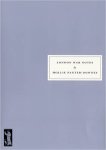
London War Notesby Mollie Panter-Downes – It took me months to read, but that was because of intervening library deadlines, and not a reflection on the book itself.  Panter-Downes’ collection of “letters from London,” originally published in The New Yorker between 1939 and 1945, is a glimpse into wartime London, equal parts bracing, funny, and terrifying.  Panter-Downes doesn’t shy away from the hard stuff, but she captures the indomitable British wartime spirit.  My favorite bit was her send-up of the village of “Mugborne” and its war preparations, but really the entire book is one gem after another.

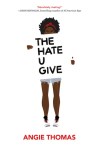
The Hate U Give, by Angie Thomas – I think this book is going to be on a lot of “best books of 2017” lists, and for good reason.  The Hate U Give is a stunning tour-de-force.  Starr Carter is thrust into a nightmare when she witnesses the shooting of her best friend at the hands of a police officer.  Now “the witness,” Starr must come to terms with a legal system that doesn’t want justice, with the latent racism of her private school community, and with her own feelings about family, community, and right.  It’s gorgeous and powerful.

A Gentleman in Moscow, by Amor Towles – I didn’t read Towles’ debut, but I surely will, because I loved this.  Count Alexander Rostov, judged an unrepentant aristocrat and sentenced to “house arrest” in the attic of the hotel where he makes his home, is one of the most delightful literary characters I met all year.  The cast of supporting parts surrounding him in the hotel was nearly as delightful.  Count Rostov’s job in the hotel restaurant was completely fitting (and made me hungry) and his exploits with Nina and, later, Sofia, were utterly charming.  And the ending was edge-of-your-seat exciting.

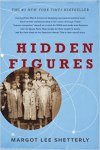
Hidden Figures, by Margot Lee Shetterly – I still haven’t seen the movie (it’s on my list!) but I just loved this history of the heretofore unsung black female NASA mathematicians whose calculations helped win World War II and send men to the moon.  Shetterly’s history is gentle, yet focused, and her real-life characters leap off the page.  I could barely stop myself from cheering when one “computer” removed a “whites only” sign from the cafeteria.  Hidden Figures was a spellbinding story of a group of American heroines who are finally getting their due.

Hag-Seed, by Margaret Atwood – On a scale of one to Handmaid’s TaleHag-Seed barely registers.  It has none of the trademark Atwood disturbing-ness, but it’s still vintage and completely weird.  Atwood’s contribution to the Hogarth Shakespeare project sends up The Tempest via a psychedelic performance by a group of correctional center inmates – and it’s all part of an elaborate plot to get revenge on the government official who ousted their director from his previous post as head of a summer theatre.  See?  I told you.  Totally weird.  And totally great.

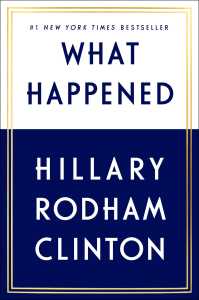
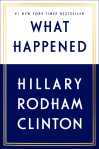
What Happened, by Hillary Rodham Clinton – Another one that will probably be on lots of “best of 2017” lists.  I wish What Happened had never had occasion to be written, because I wish Secretary Clinton was sitting in the Oval Office instead.  But since we have what we have, we get What Happened instead, and it’s sad, illuminating, thoughtful, meticulous, and everything we expect from Clinton.  And to think, we could have had that thoughtfulness in the White House.

March: Book Three, by Representative John Lewis – Lewis is a civil rights icon, a movement leader and an American treasure.  It’s fitting that he should share a memoir of the most formative moments of his life – which coincide with some of the most formative moments of American history – but his approach, through the medium of a three-part graphic novel, is fresh and fascinating.  I read the first two volumes back in 2016, and happened to be reading the third over MLK weekend in 2017, which felt fitting.

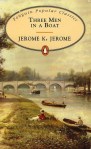
Three Men in a Boat, by Jerome K. Jerome – Don’t let the author’s name turn you off, because Three Men in a Boat is really such a romp.  I read a newly reprinted edition from The Folio Society, and the whimsical cartoon illustrations added an extra pop of fun to the story of – you guessed it – three friends who take a boating holiday up the Thames in Edwardian England.  They make tea, bicker, have trouble packing, and get into all sorts of mischief on the river, and it’s way too delightful.

Well, there you have it – ten favorites from my 2017 reading!  This is never an easy task, and it felt harder than usual because last year I read so many delightful books.  The ten above were the highlights, but man – there are so many that deserve honorable mentions.  What a year.

What were some of your favorite reads of 2017?


2017: A Year in Reading – Part I (By the Numbers)

Well!  Wrapping up another year – here we go.  We’re a couple of weeks into 2018 now, but it always takes me all of January to get through my posts looking back on the last year, especially when it comes to books and reading.  2017 was another banner year for me in books – no matter what else may change, or how crazy life may get, books are always my refuge, so I guess it makes sense that I read as much as I did in 2017.  Here’s how my numbers are looking, now that I’ve closed the book (sorry) on the year.

Just the Facts, Ma’am

Looking at the numbers alone, it looks like I read 102 books this year – which is a pace of juuuuuuust a hair under two books per week.  That sounds about right to me.  It was a busy year, full of travel, parenting and work stress, so it seems that no matter what I do, I come out around 100 books in a year.  That seems to be the sweet spot.
 

My longest book, clocking in at 904 pages, was Middlemarch, by George Eliot (which I actually listened to on audiobook this time around, although I have read it in print, in the past).  My shortest book, at a slim 46 pages, was Simplify, by Joshua Becker.  Funnily enough, Simplify was also the first book I read in 2017.  It’s a good New Year’s book.

Pie-Oh-My

One of my favorite exercises to do at the end of a year (or beginning of a new year) is look back over all of the books I read in the previous year.  It’s always fun to see where I began, where I went, and where I ended – and of course, to relive a list of wonderful books.

Fiction/Non-Fiction

Always the easiest place to begin.  As always, I was a big fiction reader this year – that never changes.  72 fiction to 28 non-fiction – more than twice as much.  Non-fiction represented a little more than a quarter of my reading this year, which – again – is pretty consistent for me.  What did change is that I read two books of poetry this year!  I considered placing them in the non-fiction category, but they didn’t quite fit there, so I’ve got a new category on this graph this year.  I hope it’s a bigger sliver of the pie in 2018.

Format
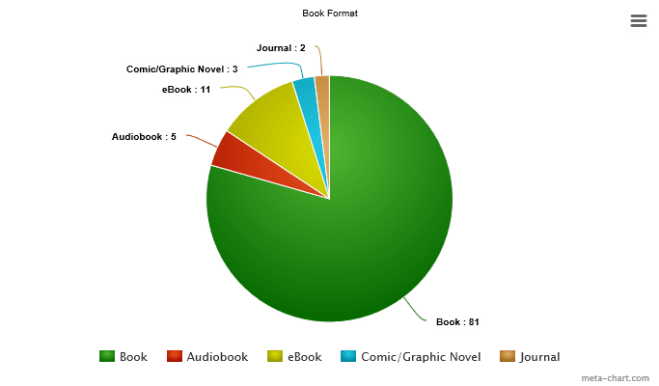
Unsurprisingly, I was heavily into physical books this year – always am.  I don’t have a particular prejudice in favor of physical books; they just tend to be what I pick up.  And when you consider that the comics/graphic novels (only three this year, which is a departure from the past couple of years) and journals that I read this year are also physical objects, that’s even more.  I did read more electronically this year – five audiobooks and eleven ebooks – than I have done in the past, which is interesting.  (Despite what this chart may look like, I don’t place a value on reading physical books or reading electronically, so I have no 2018 goals in either direction.  I gravitate more toward physical books because I can’t read on my phone, as many ebook readers do – too much time looking at my phone screen gives me debilitating headaches.  My kindle doesn’t have the same effect, so most ebooks I’m reading are completed with that device.)  The one thing that I really like is that it appears I read across a number of different formats – including two journals – this year.  I’d like to keep that up, and to read more journals and more comics, in 2018.

Source of Book

As usual, I was a heavy library user this year.  Reading 102 books in a year, I guess I have to be – or I’d break the bank.  (Plus there was Project 24 to contend with this year – I only bought 24 books for myself all year, and while that may seem like a lot to some people, I am confident that here, among my kindred spirits as I am, you all are praising my fortitude and forbearance.)  The change was that I was actually not as heavy of a library user as I have been in the past.  While library books still made up the bulk of my reading this year, Audible (I have a membership) and Kindle (thanks to Modern Mrs. Darcy‘s daily ebook deals emails) chipped away at the graph, and I also made an effort to read from my own shelves.  I have a lot of beautiful editions of classics that I’m hoping to finally get to in 2018, so that number will – I am optimistically predicting – grow even more in 2018.

Fiction Genres
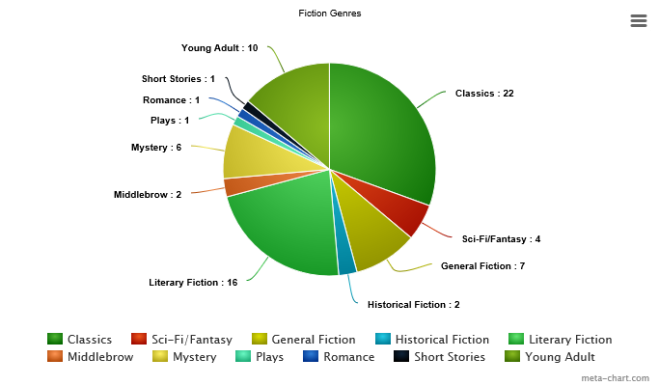
Now comes the fun part – getting into the weeds a bit more.  Starting with fiction genres – I was thrilled to see that I read 22 classics this year; by far the biggest chunk of all the fiction genres.  Literary fiction, clocking in at 16 books, was also a big category for me (it always is) but I love to see classics top the chart.  Mystery is usually a reliable genre for me, too, and six books is respectable.  As for the rest, I was dabbling all over the place this year, and it shows in small numbers over a bunch of categories – one short stories, one romance, two historical fiction – you can see.  This chart is pretty normal for me, and for 2018 I’m predicting an even heavier weight toward classics, since I’m feeling very drawn to them at the moment (could this tumultuous national atmosphere have anything to do with that, I wonder?).

Nonfiction Genres

I was really surprised to see so many memoirs.  I had no idea that genre interested me as much as it does.  Part of it, I think, is the grey area of classification – for instance, I put both Hillary Clinton’s What Happened and Alyssa Mastromonaco’s Who Thought This Was a Good Idea? into the memoir category, but either or both could have fit into the politics category just as neatly.  The discretion and judgment calls involved in assigning categories do sometimes result in one category getting weighted, and I think that’s what’s happening here.  But expect to see a heavy memoir year in 2018, too, because I’ve been stockpiling Slightly Foxed Editions, and those are all classic-but-forgotten memoirs.  Another one to file in the non-surprise category – five books about politics!  (And that’s leaving out Hillary and Alyssa, as noted.)  Usually I lump politics, history and social science into one category; this year, I read so many that I ended up breaking them apart.  Again – I wonder if the tumultuous national atmosphere has anything to do with that.  I’m sure I’m not the only one turning to books to make sense of what’s going on.

Settings

Always a fun one to review!  No surprise here – England and the USA were by far my two biggest categories.  They’re usually fairly close to even, but this year, the USA pulled way ahead.  I’m guessing that was at least partially due to the heavier slate of political books and political memoirs, but I don’t think that can totally explain it.  I’m going out on a limb and speculating here, but I also was actively seeking out books about the African-American and immigrant experiences, as part of my effort to read diversely, and that may have inflated the USA total as well.  Other items of note – four books set in multiple settings, and funnily, two of those were evenly divided between Italy and England (who’d have thunk?).  Also, I read a book set in outer space – Octavia Butler’s Dawn, which takes place entirely aboard an alien spaceship.  Wild stuff.

Diverse Voices

In 2017, I set the goal to read at least 33% diverse voices (which I sketchily defined as including racial minorities, the LGBTQ+ community, and underrepresented religions, or a combination thereof).  That goal doesn’t quite get me to 33% people of color (which is the American population, roughly) because some of the categories – like LGBTQ+ and underrepresented religions – can and do include white writers.  But I like the number 33% because I think it’s a serious goal.  (Note: I didn’t actually set a number or percentage goal for 2018, but I am still paying attention and actively seeking out diverse books.)  Anyway, the chart above shows how I did – and it’s good.  For the second year in a row, I exceeded 33% of my booklist being devoted to diverse books.  At 40 books out of a total of 102, I came in at about 39.6%, and I am really pleased with that.  Some of the best books I read this year were by diverse writers and writers of color – like Little Fires Everywhere, by Celeste Ng, and The Hate U Give, by Angie Thomas – and I don’t know that they would have come my way if I hadn’t been actively seeking them out.  That effort is the thing, and it’s so important.  I don’t say that to congratulate myself – goodness knows I have room to improve – but to point out that it’s easy to fall into a pattern of not seeking out diverse books.  This is a problem in publishing.  It shouldn’t require planning and legwork and commitment by the reader to track down and obtain these books; they are compelling stories told in great prose and they deserve a lot more exposure.

Diverse Groups
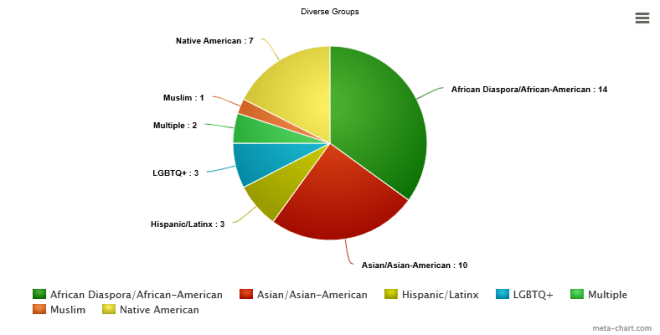
Final pie chart – a bit more detail on my diverse reading efforts.  Consistent with 2016, African-Americans and African Diaspora authors were the largest group.  This is unsurprising, because I try particularly hard to seek out those stories.  I also read a lot of Asian and Asian-American authors this year, and really enjoyed the time I spent with them (Kevin Kwan and Celeste Ng, I’m looking at you).  One thing that disappointed me?  My LGBTQ+ number, which I’d like to see a lot higher.  (It’s not as bad as it looks, though.  Both of the books that I classified as “multiple” diverse groups were from LGBTQ+ authors, who also happened to be people of color.  But five LGBTQ+ authors is still not enough.)  A pleasant surprise was my Native American total, although six of those seven books were Louise Erdrich novels.  I’d love to keep growing there, so please, hit me with your best Native American/Native Canadian/First Nations recommendations.

So – there it is!  A year in reading, broke down in the nerdiest way imaginable.  I had a good bookish year, if you couldn’t tell from the above.  Lots of laughter, lots of thought, some tears, and quite a few new fictional friends.  And now – onward to 2018, which I hope will be a banner year for both classics and diverse books.

Did you have reading goals in 2017?  How’d it go?