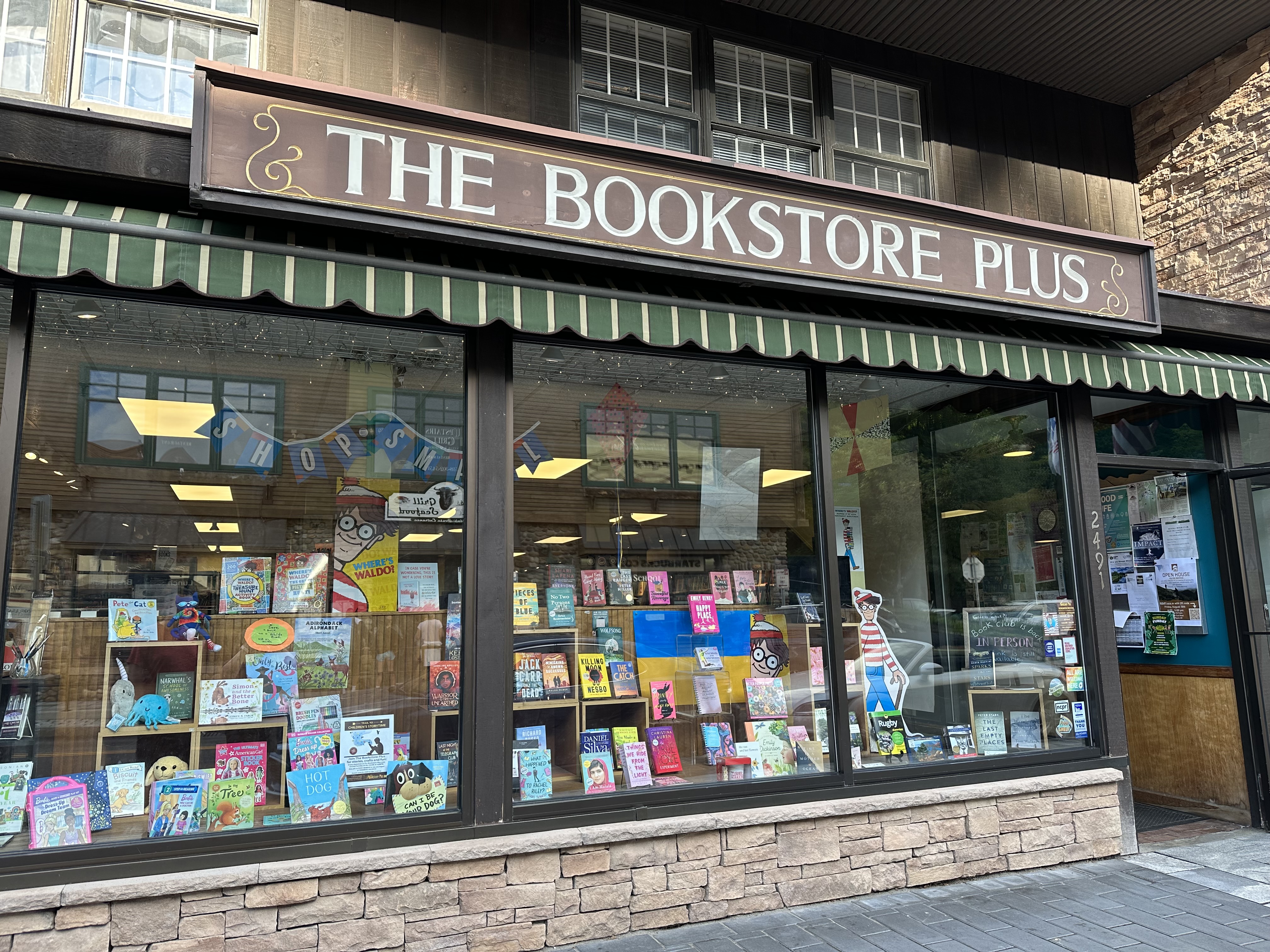
I have many fond memories of childhood visits to Lake Placid – an Alpine town nestled in the heart of the Adirondack Mountains, with the honor of being the Olympic host city in both 1932 and 1980. Although the Adirondacks are fun any time of year, when I was little we mostly went in the winter, to ski at Whiteface Mountain – so the bulk of my Lake Placid memories are tinged with cold: learning to ice skate on the Olympic Oval, skiing every trail on Whiteface many times over, tubing down a long slide onto an icebound Mirror Lake, and ducking into the charming shops along Lake Placid’s main drag to get out of the cold. Some of those shops are long gone and live only in my memory (like a hat emporium where I tried on every piece of headwear in the store, once, or the absolutely captivating toy and game shop where I could get literally anything personalized with my name – oh, the possibilities). But one shop that has remained and still graces its customary spot in town is, naturally, my favorite: The Bookstore Plus.
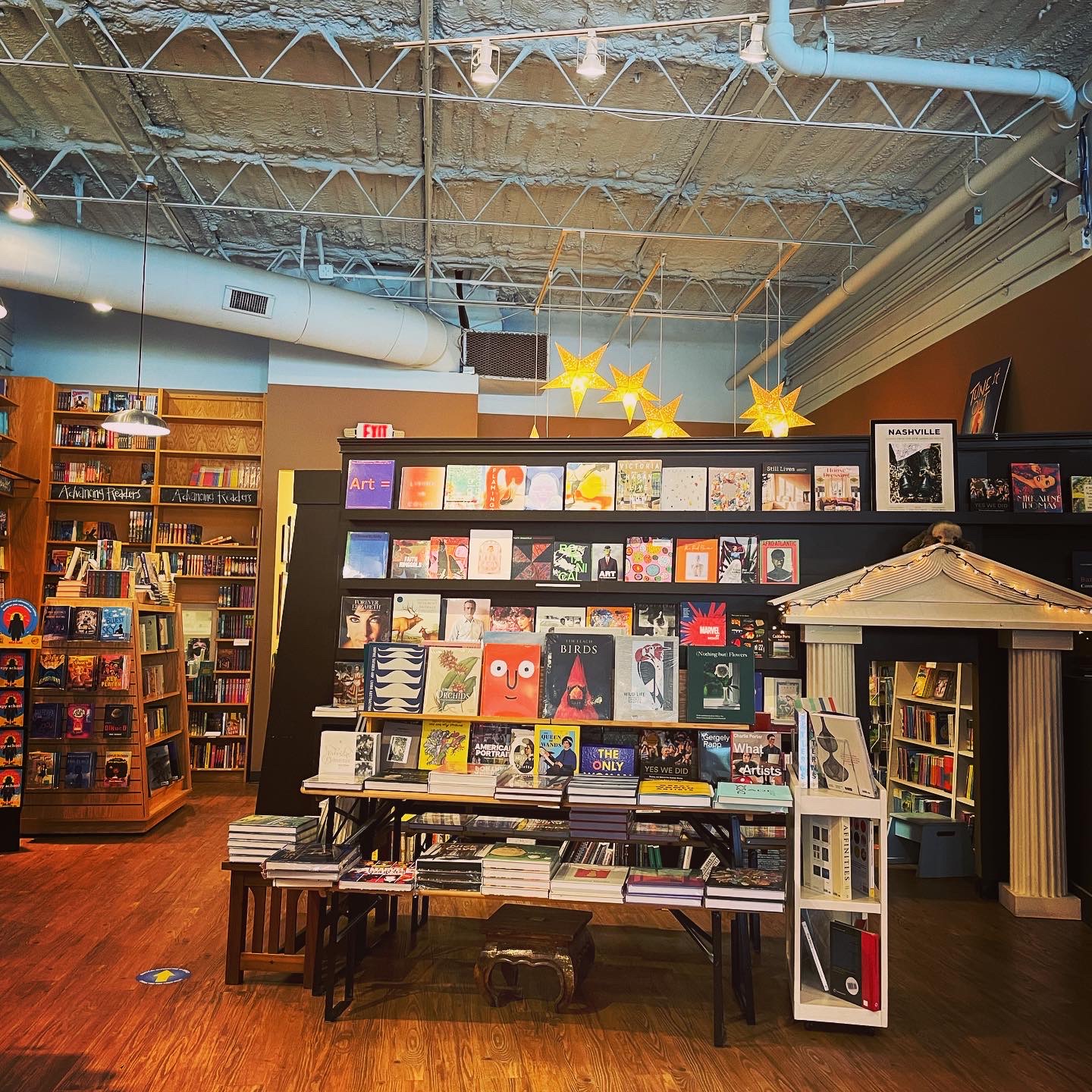
It really is a bookstore plus, by which I mean it’s so! much! more! than just books. (Not that I need anything more than books, mind you.) There’s a well-curated stationery section and lots of art supplies if you’re inclined that way, which I am not. But the books are really the hero – there’s plenty to choose from in every genre and for every taste, but The Bookstore Plus really excels in local offerings and Adirondack-themed reading. (For example, that gorgeous art book in the picture above – Great Camps of the Adirondacks – Steve bought and presented to me as an anniversary gift the last time we were in Lake Placid, back in 2021, and I’ve spent many happy hours turning its pages and gazing enraptured at the lakefront real estate.)
See what I mean? There are entire shelves of books dedicated to the Adirondacks.
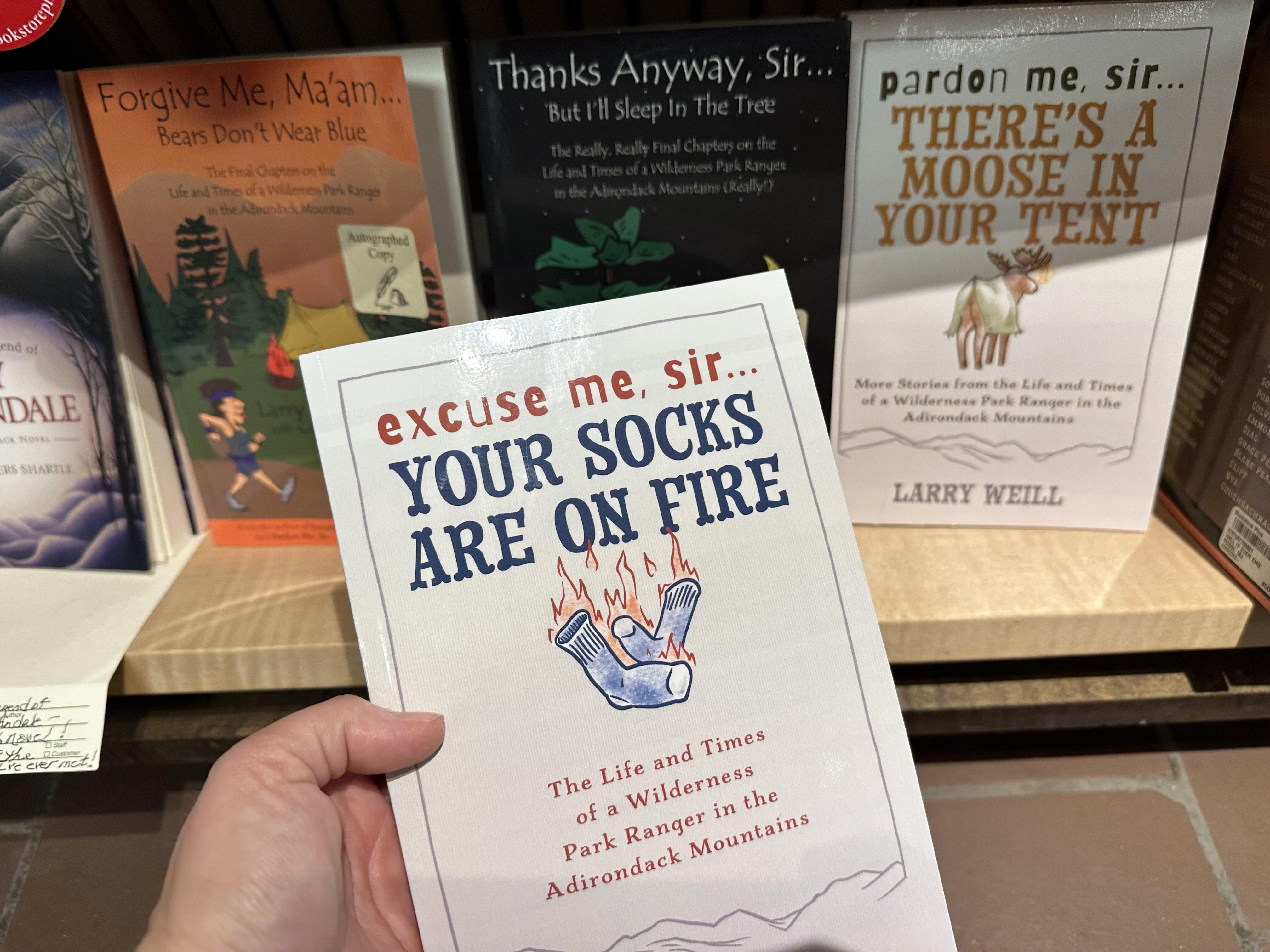
Including this series, which looks fabulous. I didn’t buy this, and now I wish I had, along with the rest of the books in the series. They look absolutely hilarious. I can only hope they’ll still be there the next time I make my way to the Adirondacks.
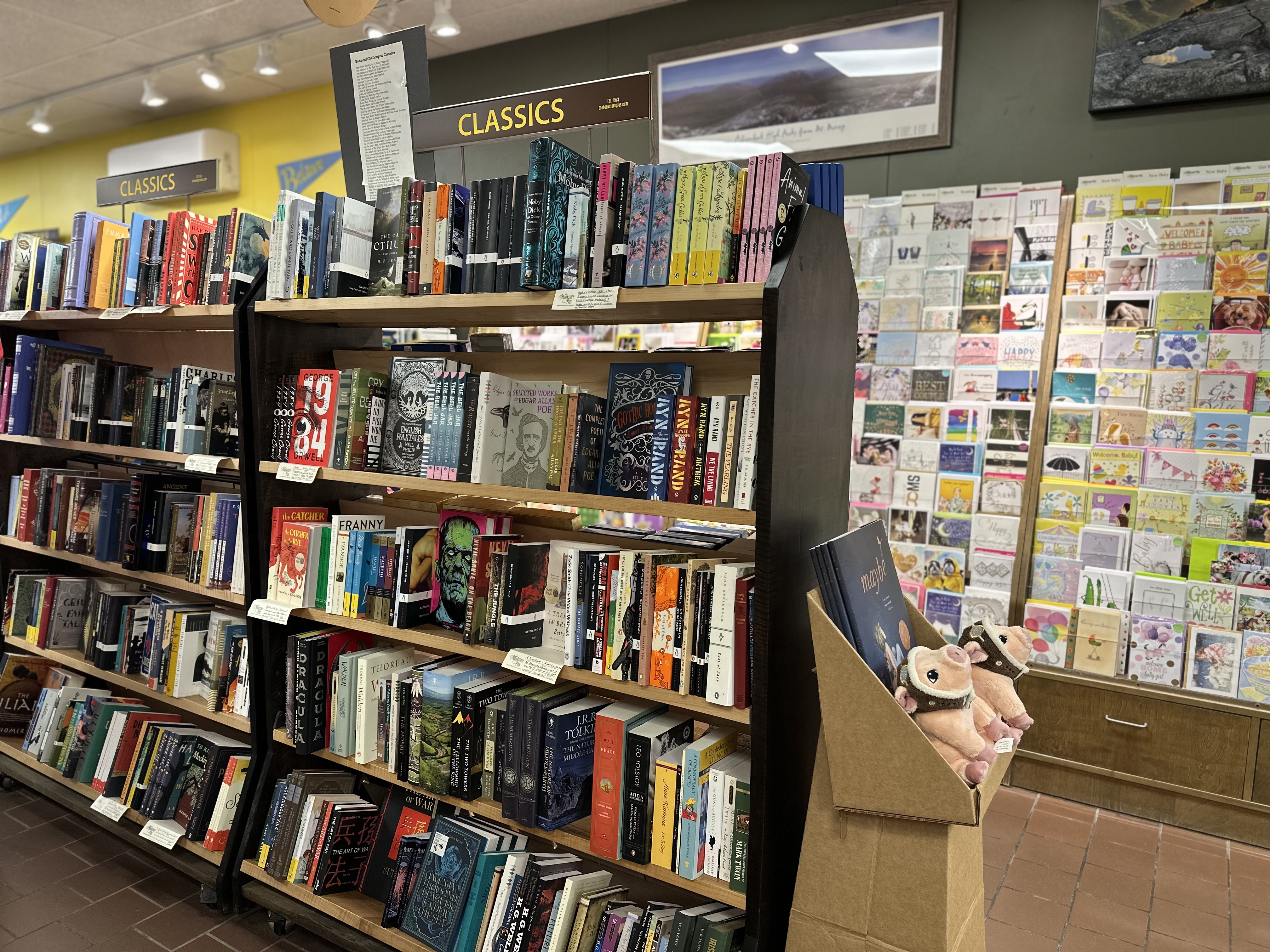
Instead, I made my way here, to my favorite part of any bookstore – the classics section. There’s a good one at The Bookstore Plus. I picked up a lovely hardback edition of Walden (I know Thoreau was not a Barkeater, but a book about life in the woods seemed fitting, I didn’t actually own a copy, and I’ve been gradually buying the Gibbs Smith hardback editions of nature classics.) I never leave a bookstore empty-handed.
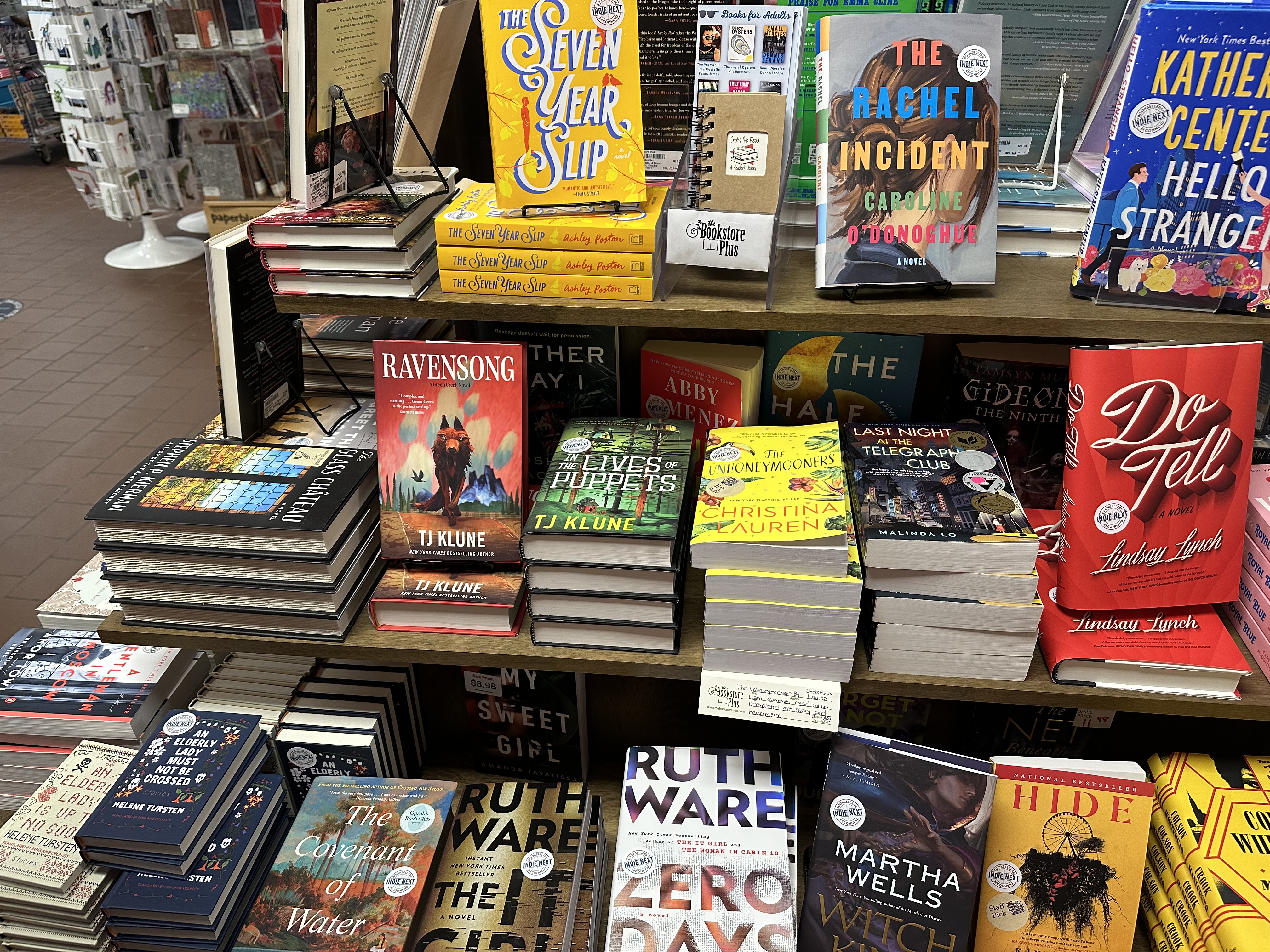
I also almost bought the two Elderly Lady books – An Elderly Lady is Up to No Good, which I borrowed from the library a few years ago and loved, and An Elderly Lady Must Not Be Crossed, which I have not yet read. If I wasn’t trying to avoid overloading my luggage, I probably would have grabbed them.
I’ve bought many books here over the years (and had many books bought for me before I had purchasing power of my own – thanks Mom and Dad) and it never fails to make me smile, to see The Bookstore Plus with its whimsical window displays and wide selection of Adirondack (and other) reading material. Can’t wait for my next visit.
Do you have fond memories of book shopping on childhood vacations?
My old library! So many happy hours turning pages in this spot… they’re all in cardboard right now, but one day I’ll see these books again.
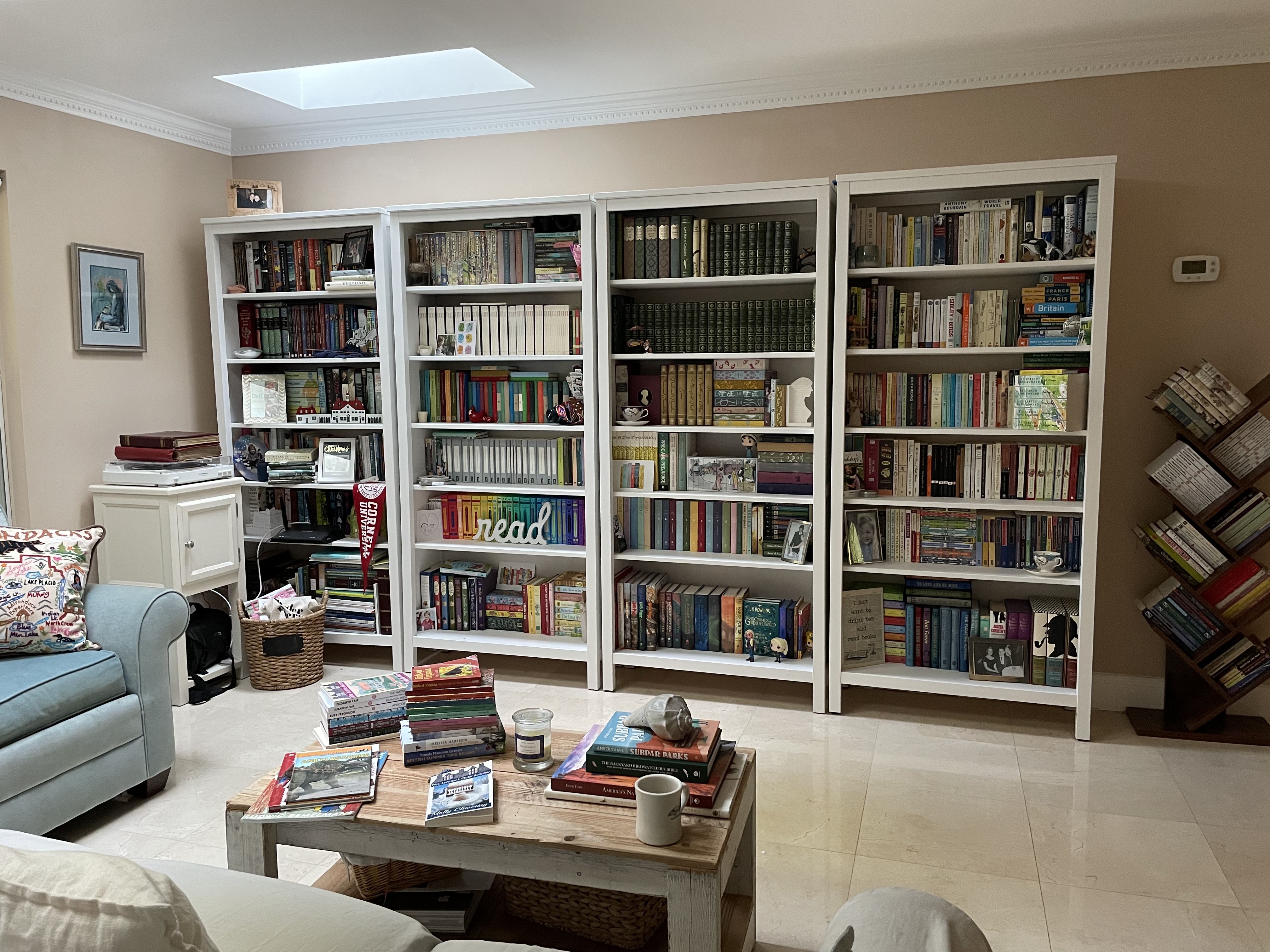
I can’t say that I am especially given to collecting things, but books are definitely the exception. A home library with built-in bookshelves – white ones, or maybe blue – extending from floor to ceiling, with brass goose-necked lamps and a rolling ladder, and a couch or maybe a recliner with a table for my teacup: that’s the dream. And of course it needs to include books. Plenty of them, in beautiful editions, with all of my favorite authors represented.
There are a few pangs that are uniquely known to book collectors. The series books that are slightly different heights: why? Or a series design that inexplicably changes midway through – with a new look for the spine, or just one book dust-jacketed while all the rest are not. Again, why? Or, possibly the worst, the publisher that starts re-printing a favorite classic author or series and then stops without finishing the collection. All of these misfortunes have befallen me at one time or another.
And then there’s the book collecting misfortune that you bring on yourself.
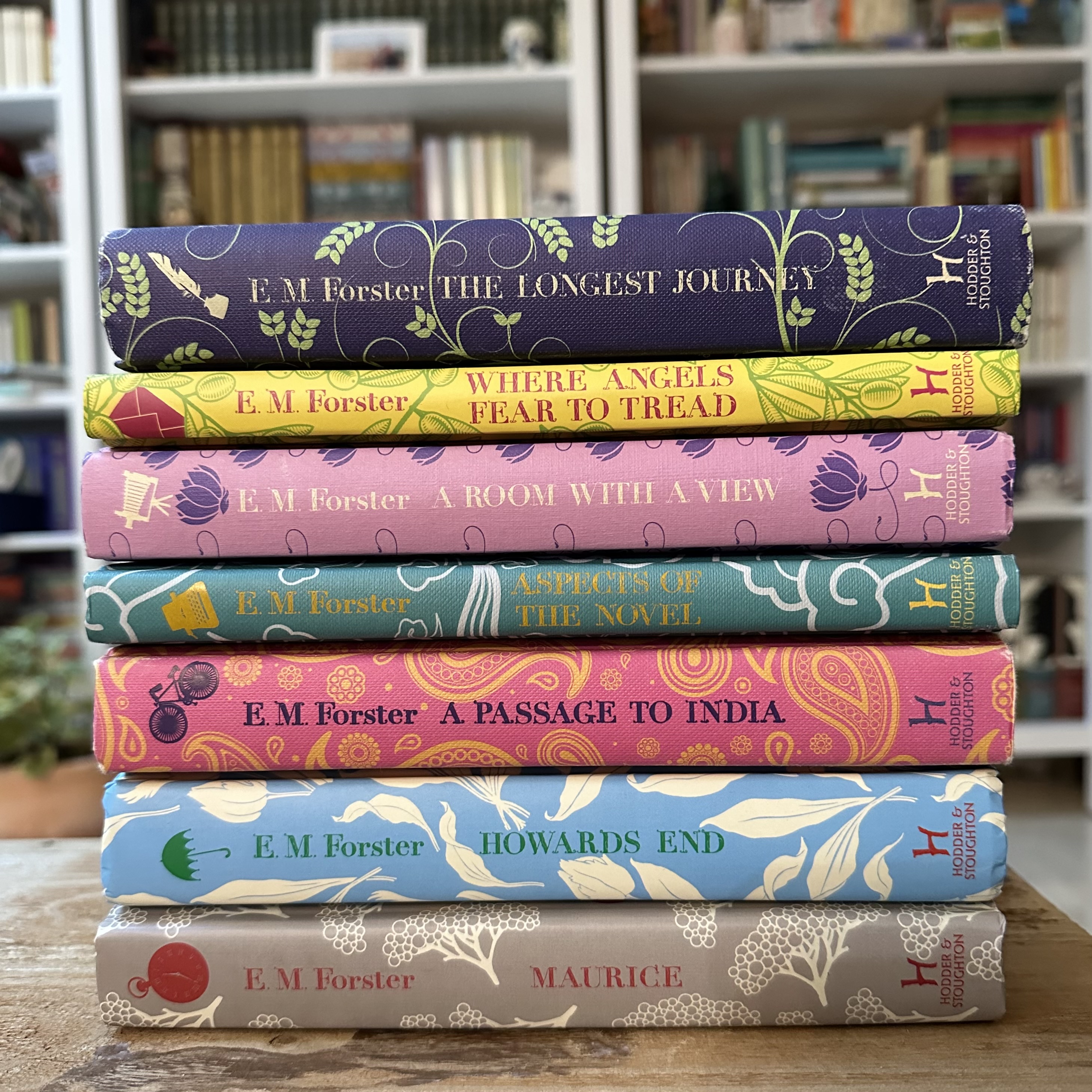
A few years ago, I discovered – thanks, Bookstagram! – this gorgeous set of clothbound hardcover editions of E.M. Forster’s novels. Now, I adore Forster; A Room with a View and A Passage to India are two of my favorite books. And these pretty, colorful hardcover designs were irresistible. I was charmed by the little umbrellas on the cover of Howards End and the pretty pink and yellow colors of Where Angels Fear to Tread and my favorite, A Passage to India. Hodder published this collection around 2011, and for a time they were all over bookish Instagram. I thought it’d be simple to complete my collection, and I wasn’t in a rush.
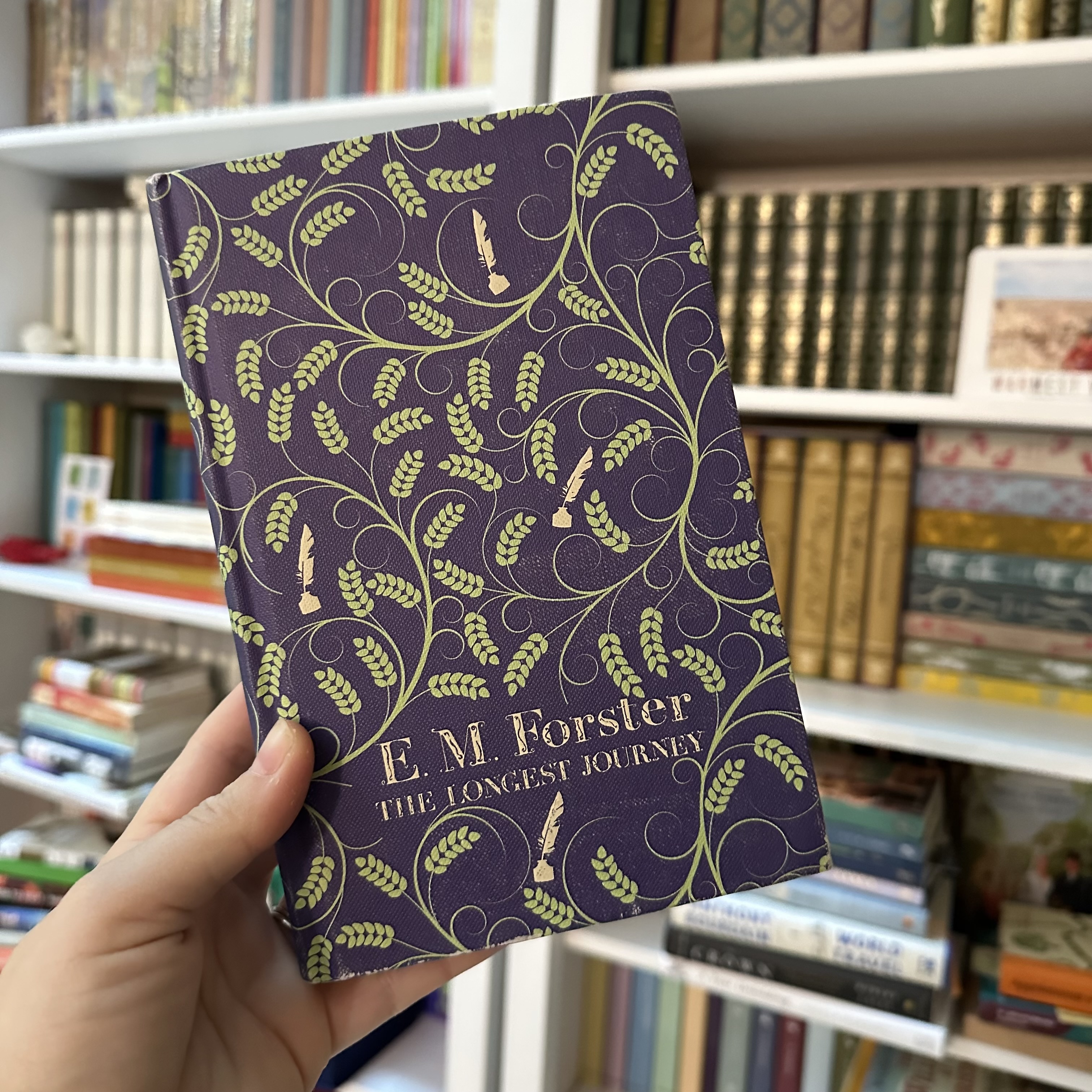
Then I hit a snag. I’d acquired this stack of six books, all reasonably priced and new, with no trouble at all, and in no hurry. But when I tried to complete the collection with the final book, The Longest Journey – not one of Forster’s most popular novels, and not one I’d read – I struck out. Everywhere, and repeatedly. Amazon didn’t have it. Abebooks didn’t have it. Etsy, eBay, Alibris, Blackwell’s – no, no, no, no. In desperation, I almost paid an exorbitant price to buy it from a Swiss academic bookstore’s website – only deciding not to, in the end, because I wasn’t convinced I’d receive the exact edition I wanted (and the idea of paying that much money and then opening a different edition was my book collecting nightmare). I set up google alerts and “wants” on various websites with the Hodder edition’s ISBN, and I waited. I waited for years.
Every so often, Abebooks would alert me that it had “found the book I want!” But it was never The Longest Journey. It was always Angel, by Elizabeth Taylor (the Virago Modern Classics hardcover edition, which I also collect and which I have still not bought). And then one day, I opened my gmail and found another Abebooks alert. Figuring it was Angel again, I opened the email without much hope.
You knew this was going to be a happy ending, right? But it almost wasn’t. I almost didn’t buy this, because it was listed as “acceptable” condition (I usually don’t buy anything below Very Good+) and while it was in the price range I had set, it was more than I really wanted to pay for that condition. But I’d been trying to buy this book for three years; I figured I’d jump on it while I could, and if it wasn’t in the kind of shape I wanted I’d keep looking out for a better copy. But when the book arrived, it was certainly acceptable to me; other than one small black line on the bottom page edge, and a tiny bit of corner bumping – better than I’d seen in other used books with a better condition rating – it was pretty much perfect. And now I had my complete set, just five years after I started the little stack.
Is that not a thing of beauty?
My grand takeaway from this years-long saga was this: YOLO. Life is short. Buy the book. If I’d just jumped on it back in 2019, I’d have had a complete collection all this time. But I was waiting and trying to be sensibly gradual about it and – you see where it got me: years of fruitless searching.
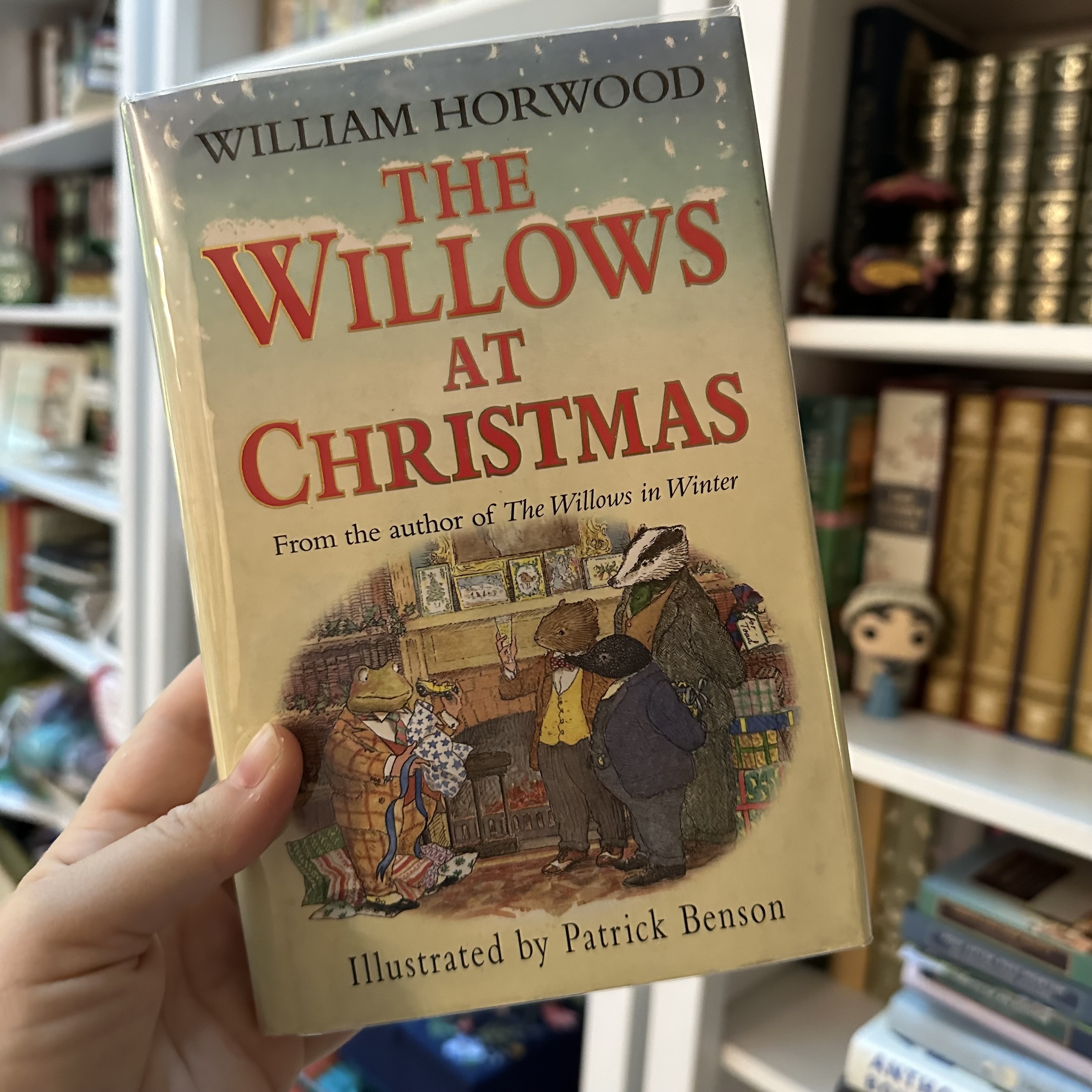
So when I recently became aware of a series of Wind in the Willows sequels – all written and published in the 1990s and now out of print – I decided not to make the same mistake. I love The Wind in the Willows and have read it multiple times, but I was unaware of a series of sequels which are supposed to be as charming as the original. So, I learned from my E.M. Forster experience and I just bought the books. I didn’t space them out at some arbitrary interval. I just found copies that were within what I decided was the price range I was willing to spend to add these sweet books to my library, and then I didn’t overthink it.
And given that this hardcover copy of The Willows at Christmas was the only one on Abebooks, I am glad indeed that I didn’t overthink it. If I had decided to wait until Christmas to buy it – which does sound like something I would do – I am sure it would have been gone, and I’d have repeated the long wait to complete a book collection.
Instead, I’ll be curling up with a cup of cocoa and reading this book by the light of my Christmas tree come December, and I’m delighted by this.
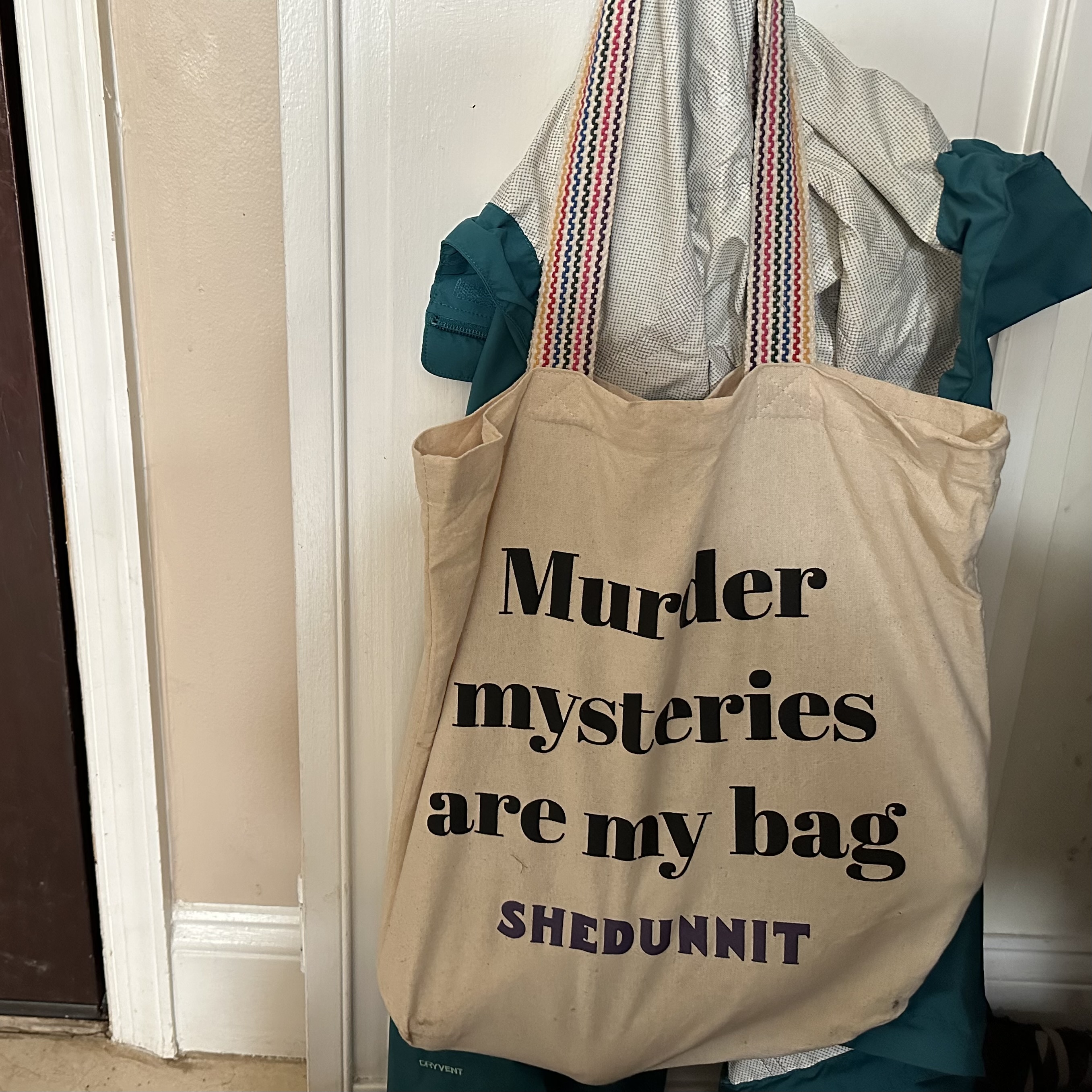
The other day, Nugget and I were headed out the door to meet up with one of his buddies for a play date. As I always do, I threw together a bag with snacks and two full water bottles (because, to quote toddler Nugget, “it’th important to thtay hydwated.”). To carry it all, I reached for one of my favorite tote bags – a canvas bag with rainbow-striped woven straps, which I bought from the Shedunnitshow with a selection of used Ngaio Marsh novels. I love this bag. It’s the perfect size to carry those playdate essentials. And, to be honest, murder mysteries are my bag.
As we walked to the car, Nugget asked me what my bag said. I told him. He thought for a minute, then asked, “Why do you like books where people die?”
A valid question. I’m known for having the reading tastes of your granny (my co-workers like to poke gentle fun at me for it!) – no swears, please, and also no steamy scenes or gratuitous violence, thanks. As he buckled his seat belt, I explained that I like figuring out the clues and that mystery novels have a tidy resolution where everything is wrapped up in the end, and I started to elaborate on convalescent literature before I realized that my audience was now staring out the car window, not listening to me. But it got me thinking about the reasons why I really do like golden age (and modern cozy) mystery novels.
I like a good puzzle. I enjoy piecing together clues, forming a theory, and seeing if I’m right. The intellectual exercise of it is fun for me. (And often I do correctly figure out “whodunit” but I don’t pick up on all of the clues pointing me to the culprit – it’s a sense of “I don’t trust X” or “Why are we so sure that Y is telling the truth?” more than “Aha, the precise time of day that the candlestick went missing means that it must be Mrs. Peacock.”) Figuring out the answer to the puzzle is often the easy part, and it’s fitting all the clues into place that holds the surprises. This fascinates me.
Everything works out in the end. The old convalescent literature thing. When times are tough, it’s comforting to read a book where – no matter the terrible things that happen earlier in the narrative – you can be totally sure that in the end, it will all make sense. The puzzle pieces will fit together. No loose ends. Justice will be served. In real life, mysteries go unsolved all the time and justice is not always served. Things are unfair, people do unaccountable things, and it doesn’t always make sense. To pick up a book where you are guaranteed a tidy resolution is profound self-comfort – I’d argue it can even be self-care – especially in our current tumultuous and uncertain times.
The scary stuff happens off the page. I don’t read modern thrillers and there’s a reason – I really don’t like to read about violence. (See above: there’s plenty of that on the news.) That’s why I stick to golden age and vintage detective stories and cozy mysteries – usually novels and series set in past time periods, to take modern forensic investigation methods out of the detective’s toolbox and cell phones out of the hands of, well, everyone – yes, someone generally dies (it’s a murder mystery) but the real violence happens off page. And usually not to a character that the reader cares about – it’ll either be someone insufferable (not that even an insufferable person deserves to die, of course, but we’re talking about 1930s novels here) or a stranger. Not a character that I’ve grown to love. Dorothy L. Sayers isn’t going to have Lord Peter investigating Harriet’s death, or Bunter’s. Agatha Christie won’t kill off Ariadne Oliver. So the reader can focus on the puzzle and not have to worry about getting upset at the death of a beloved fictional friend.
They’re atmospheric. I’m living a prosaic suburban lawyer mom life in 2023. Books are the only way I’m going to get to enjoy a visit to an English country manor between the wars, or the Orient Express in the golden age of train travel, or a medieval Welsh monastery, or a glitzy nightclub in 1930s London. I’m in it for the settings, the descriptions of long-gone food and fashion trends, and the immersion into a bygone world just as much as I am for the puzzle or the red herrings or the denouement.
At the end of the day, too, you need some stakes or you won’t be able to keep a narrative going for long. Nugget, bless his little readerly heart, is just learning that. (We do have Harry Potter and the Goblet of Fire on his bedside table, so if he doesn’t know what literary stakes are yet, he’s about to find out.)
Are you a mystery reader? Why do you like whodunits?
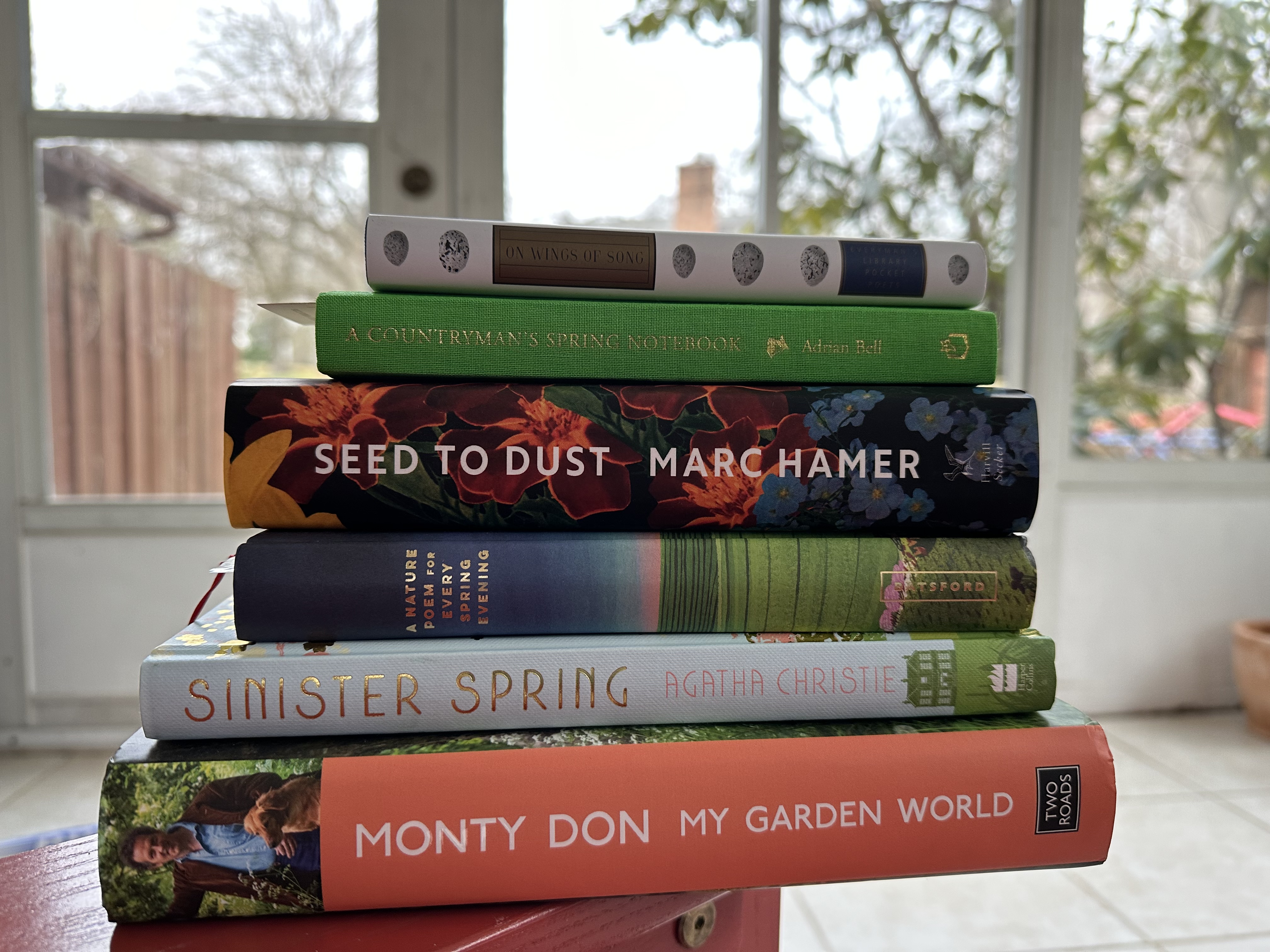
With my Classics Club deadline rapidly approaching in July, I’m full steam ahead on the last few books I have to read from my list of fifty. (When I finish Great Expectations, today or tomorrow, I’ll be down to seven left unread.) So I’m expecting that much of my spring reading time will be dedicated to those few holdouts. But I am planning to sprinkle in some springy reads here and there – for a little relief between doorstoppers, because the remainder of my Classics Club list contains such chunksters as The Three Musketeers and East of Eden, not to mention two Trollopes. I’ve pulled together a spring stack that is winking cheerfully at me from my bookshelf, and I’m already thinking about which one to pick up first this season.
On Wings of Song: Poems About Birds and A Nature Poem for Every Spring Evening will scratch the spring poetry itch. I’ve already started A Nature Poem for Every Spring Evening (and I’m already behind on the nightly selections – whoops) and it’s a delight, as expected.
Spring also wouldn’t be spring without garden writing, don’t you think? My Garden World satisfies the Monty Don category – yes that’s a necessary category – and I’ve been wanting to read the gardening memoir Seed to Dust for ages. Calling it now – this is the season I get to it.
I pre-ordered Sinister Spring, the latest collection of short mystery stories from HarperCollins’ collection of special editions of Agatha Christie. I’ve already read, and really enjoyed, Midsummer Mysteries and Midwinter Murders, and I’m looking ahead to the publication of Autumn Chills later this year. In the meantime, a couple of chilly spring evenings with the Queen of Crime will be just the thing.
Another one I pre-ordered: A Countryman’s Spring Notebook, the latest collection of Adrian Bell’s seasonal nature columns from Slightly Foxed. They published A Countryman’s Winter Notebook a couple of years ago, which I adored, and I’ve been anxiously looking for an announcement of another seasonal Adrian Bell collection ever since. There was actual whooping when this one became eligible for pre-order. I’m saving it for a warm evening in the backyard.
I’ve got some other spring reading I’d love to tackle if I have time – more garden writing, mostly. We’ll see! In the meantime, I’ll be very satisfied if I get through all of these this spring, especially with the Classics Club reading on my agenda. Spring is my fourth favorite season, as I often say, but with reading like this to look ahead to, I don’t anticipate any difficulty getting through the months between me and my beloved summer.
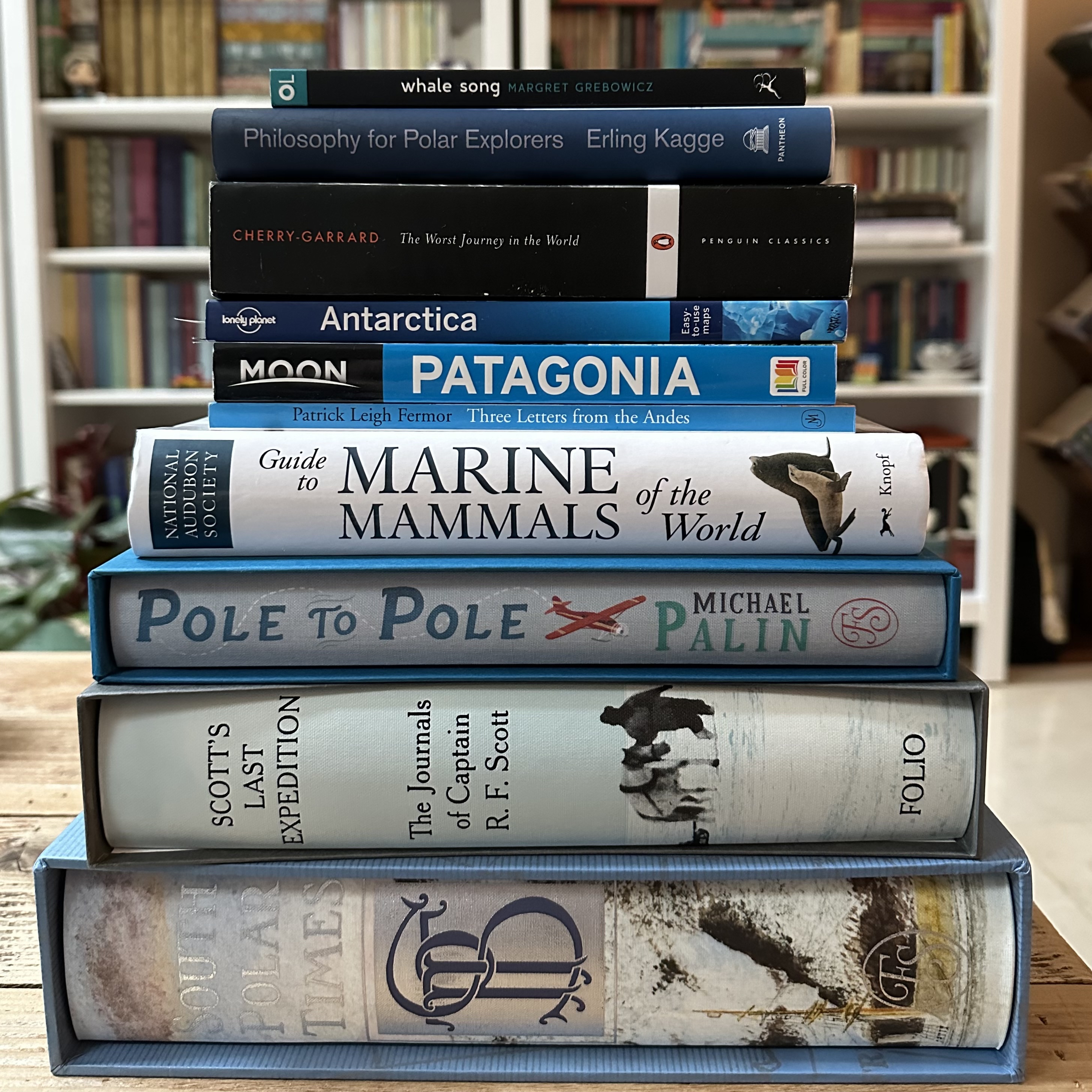
Excitement ahoy! My trip to Antarctica and Patagonia is finally approaching – I’ve been waiting for this moment for literally years. Steve and I booked – and paid in full for – our trip back in 2020, and we were originally booked on a voyage that was scheduled to sail in February 2022, but was later postponed for pandemic travel-related reasons (long story). After three years of hardly daring to believe we’re really going on this dream trip – and to be perfectly honest, I still hardly dare to believe it – it seems like it’s actually going to happen. Our final booking confirmation and documents arrived just days ago, and I’m currently elbows deep in all the literature that the expedition company sent, plus planning activities for the Patagonia portion of the trip. (Because people always ask, we’re traveling with Quark Expeditions and very excited.) And naturally my planning and preparation process includes books – lots of them. Here’s my Antarctica and Patagonia reading list, for both before and during the trip:
Before Embarkation Day:
Scott’s Last Expedition: The Journals of Captain R.F. Scott, by R.F. Scott – Robert Falcon Scott is one of the iconic Antarctic explorers and naturally I have his expedition diaries at the very top of my reading list. (Spoiler: not a happy ending.)
South Polar Times, by R.F. Scott and his crew – The South Polar Times was a magazine compiled by Scott and his expedition crews, and I have this absolutely gorgeous facsimile compilation from The Folio Society. I’ve been saving this to dive into closer to the trip.
Pole to Pole, by Michael Palin – Palin is a classic travel author and this is his account of an epic journey he made from the Arctic to the Antarctic. Because only a small portion of this book is actually devoted to Antarctica, I may save it to read after the trip – I definitely want to read it soon but it’s not my top priority.
The Worst Journey in the World, by Apsley Cherry-Garrard – A decidedly not starry-eyed account of Scott’s ill-fated expedition. It’s a bit of a doorstopper and I don’t know if I’ll get to it before the trip, so I also downloaded a copy for my kindle.
Philosophy for Polar Explorers, by Erling Kagge – I’ve already read this, which was a quick and mostly pretty common-sense roundup of life lessons that Kagge acquired during his quest to be the first person to complete the “three poles” challenge (walking to both the North and South Poles and reaching the summit of Mount Everest).
Whale Song, by Margaret Grebowicz, and Guide to Marine Mammals of the World, by the National Audubon Society – Since the reason we are going to Antarctica is to catch the southern whale migration (hopefully – Gaia permitting) I have whales on the brain right now. I’ve had Whale Song on my TBR for ages and this seems like a perfect time to read it. And I’m not planning to read all of the Audubon marine mammals guide, but I will flip through it and read over the sections on the wildlife we’re likely – or hoping – to see: Antarctic orcas, humpbacks, minke whales, Southern right whales (my dream sighting!), leopard and Weddell seals, etc. I may or may not bring the Audubon guide with me on the trip itself; I judged it worth the weight in my dry bag when Steve and I kayaked the Salish Sea back in 2019, so it has a history of coming with me on trips and it’s been splashed by salt water already. But I have most of my spare ounces dedicated to camera gear, so we’ll have to see if it fits this time.
Three Letters from the Andes, by Patrick Leigh Fermor – I’ve dreamed of hiking in the Andes since I was very young and I’m so excited to step foot in these mountains on the Patagonia portion of the trip, finally! The tiny corner of Argentina that I’ll be in – Tierra del Fuego – is just a small segment of what these iconic mountains have to offer, and I believe Leigh Fermor’s book focuses on other parts of the mountain range, but I still want to read it before Patagonia.
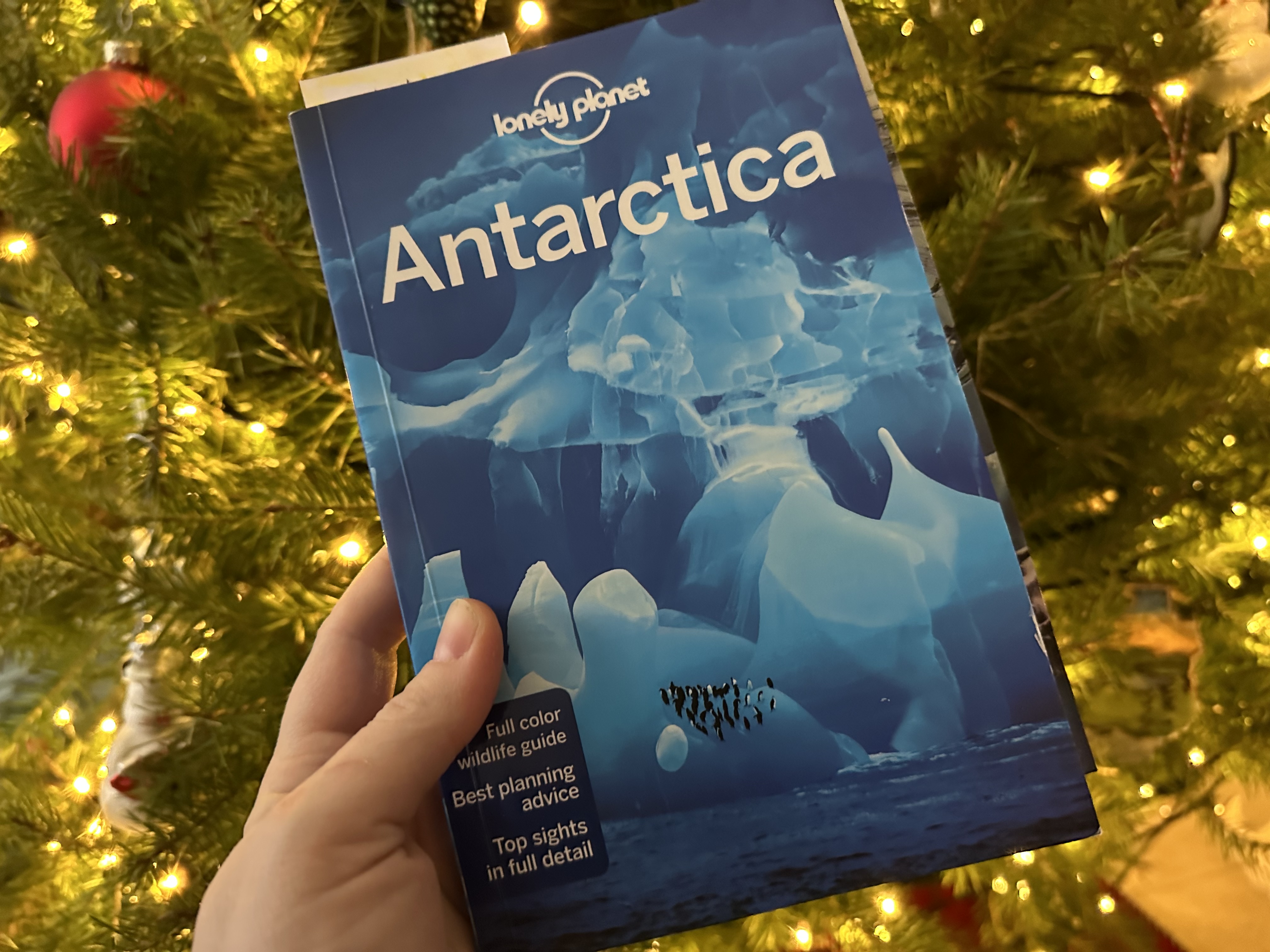
Lonely Planet: Antarctica and Moon Guides: Patagonia – Another couple that I won’t be reading from cover to cover but am definitely planning to review before the trip. The Antarctica guide is for information only, really, because our expedition team will be making all decisions about shore landings and we’ll go where we’re told to go. The Patagonia guide, which I gave to Steve for Christmas, will be handy for planning hikes and activities for a few days in Argentina, when we’ll be on our own.
Antarctica: A History in 100 Objects – Unpictured here, but I gave Steve an art book illustrating… as you can see… the history of Antarctica through a deep dive look at 100 objects. Not sure I’ll get to it before the trip, but I am definitely planning to borrow it from him and read it after we get home, if not before we leave.
En El Mar:
Once we’re actually at sea, I don’t expect to have nearly as much time to read as I do in everyday life – once we get our first sightings of Antarctica I expect all I’ll want to do will be to drink in the views of icebergs, breaching whales and bellyflopping penguins. But there are a few long plane journeys between me and the seventh continent, not to mention four days at sea on the Drake Passage (two days from Ushuaia, Argentina to the first sub-Antarctic islands, and two days back). We will have plenty to do even on Drake days – the expedition teams give wildlife briefings, and Steve and I will also be going through kayak equipment checks with our paddling group, not to mention I’m planning to spend multiple hours per day on the lookout for whale action. But some reading time might still be possible and it’s better to be prepared, right? So I’ve downloaded a suite of kindle content to read on the trip, time permitting. (And Drake Shake permitting, although I’m not prone to seasickness so I’m not really worried about that.)
South Pole Station, by Ashley Shelby – Thanks to Sara for this recommendation! I had not heard of it, but the summary sounded great, so I downloaded a copy to take with me and read on the Drake.
Terra Incognita: Travels in Antarctica, by Sara Wheeler – One of the things that I feel like my list is missing is a woman’s voice. Wheeler’s memoir about seven months she spent living on Antarctica sounds wonderful, and the fact that Beryl Bainbridge described it as “essential” is that much more the selling point.
South!, by Ernest Shackleton – My pre-trip reading is very Scott-heavy, so Shackleton needed a place on the list too. Plus, how can I resist that exclamation point? To paraphrase the great Phoebe Buffay: the exclamation point in the title scares me. It’s not just South, it’s South!
Where’d You Go, Bernadette, by Maria Semple – This is actually one of my favorite books, but I haven’t read it for years. I loaned Peanut’s kindergarten teacher my copy and never actually got it back. Kindle to the rescue. If you don’t know what this has to do with Antarctica I’m not telling.
An Antarctic Mystery, by Jules Verne – I have literally no idea what this is about. But it’s been on my kindle for years, awaiting this trip.
In Patagonia, by Bruce Chatwin – A classic of travel literature, which I’m planning to save for the return trip across the Drake, before the Patagonia segment of our adventure.
Horizon, by Barry Lopez – Lopez is one of the most revered of American nature writers and I’ve never read any of his work. He writes about northern climates much more – he has an entire book about the Arctic, which looks beautiful – but Horizon has some Antarctica sections. I have the audiobook and am planning to listen to it on the plane and at sea, especially if we have a rough crossing and I can’t read my kindle.
Well! Do you think I have enough reading material here? If I get to a third of this, I’ll be lucky – especially once we’re mid-adventure, I doubt I’ll be reading much. But better to have the books and not need them, right?
What disclaimers are there to give about this post, other than what I’ve already said time and time again? Yes, giving high school yearbook style superlative awards to the books I read is completely ridiculous, and obviously I’m going to do it anyway.
Brainiest. It’s all about the Little Grey Cells for this year’s valedictorian! I read several Hercule Poirot novels this year – and a roundup of all of his cases and appearances, which made the case for his status as the greatest detective of all time (move over, Sherlock). The yearbook committee tried to give this award to Miss Marple, but the great Belgian detective wouldn’t hear of it.
Best Looking. Apparently Sylvia Robson was quite the stunner; I can’t think how else to account for the fact that she had two dashing men falling at her feet throughout Sylvia’s Lovers. She wasn’t exactly an intellectual (although she showed remarkable determination at evading her cousin Philip’s attempts to teach her to read) nor was she a very nice person.
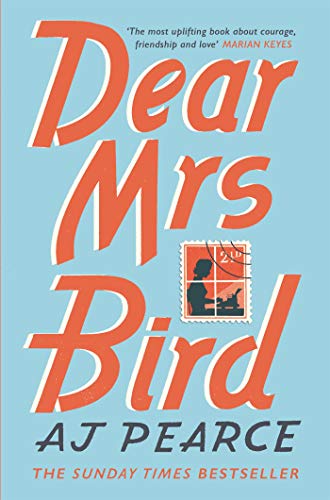
Best Friends. Emmy Lake and Bunty Tavistock are the real thing. Throughout Dear Mrs. Bird the two besties navigate small disagreements and huge, life-altering tragedies. Do they come out of it with their friendship intact? You’ll have to read the book to find out, but I can assure you that these two friends each have a heart of gold.
Class Clown. If William Brown is ever dragged through the door of a school, he will certainly be the class clown. Brimming with mischief, William and his friends are in and out of hilarious scrapes every few pages. They really should not be allowed to babysit.
Biggest Jock. It was not a very sporty class this year. Roald Dahl takes the award mainly because there were no other contenders. But it does take some athletic ability to squeeze into the cockpit of a Spitfire when you’re more than six feet tall, so I guess he deserves it.
Teacher’s Pet. Personally, I don’t see much about Professor William Crimsworth that is attractive – he’s uptight, naive, bigoted and a little smarmy. But Frances Henri, lace mender and star student of Mlle Reuter’s Brussels academy for young ladies, certainly begs to differ. Well, she can have him.
Biggest Nerd. Being a nerd doesn’t mean being a wimp, as the unnamed young narrator of The Historian proves when she geeks out on history in order to solve a centuries-old mystery, track down a notorious vampire, and find out what happened to her mother, all with the help of – what else? – books.
Most Creative. Susan Branch is where it’s at when it comes to creativity. Her gorgeously illustrated books are a joy to read – and in 2022 I loved learning about her journey to her little Martha’s Vineyard cottage and her first book deal.
Most Opinionated. J.B. Priestley is a self-confessed curmudgeon with opinions coming out of his ears on every subject. That’s why he wrote the completely delightful Delight, a collection of short essays about – no surprise here – things that delight him. Turns out I enjoy reading an opinionated person on the things that bring them joy even more than the things that amp up their curmudgeonly tendencies. (I have a co-worker who keeps a running list on his phone of “things that bring me joy.” I suspect he and Priestley would find a lot to agree on.)
Most Likely to End Up In Hollywood. We’re manifesting here, because struggling actress Franny Banks needs rather all the help she can get. But by the end of Someday, Someday, Maybe, things are looking up for young Franny’s career.
Biggest Loner. Can someone be a loner when they live with a parent? If so, Marion Sharpe certainly fits the bill, and she would have had an easier time of it in The Franchise Affair if she didn’t. As it was, Marion and her mother were easy targets for a scheming young woman to frame for kidnapping, and local solicitor Robert Blair had his work cut out for him to prove their innocence.
Biggest Rebel. Iris Origo may not have set out to be a rebel, but no aristocratic Anglo-American likes it when Nazis take over her farmhouse. Serving as an underground railway station for Jews, escaped Allied POWs, and Italian anti-Fascist partisans under said Nazis’ noses – not to mention spiriting sixty refugees to safety in Montepulciano under heavy fire – earns Origo the Biggest Rebel award and a giant gold star.
Prom King. There was an attempt to stuff the ballot box in favor of that young troublemaker William Brown, but I’m glad to report that justice prevailed and Lord Peter Wimsey was crowned Prom King.
Prom Queen. The voting wasn’t exactly fair this year, but no one else stands a chance when Aphrodite is on the ballot. But you know she’ll use her Prom Queen status for the good of humans everywhere, promoting love and kisses and slow dancing for the rest of the school year – and on into eternity.
Cutest Couple. All right, neither of them is much to look at, but when it comes to sheer adorableness this year’s couple has it. Jennifer and James – come on, they even have the name alliteration thing going – are charming, a little hapless, and easy to root for.
Most Likely to Succeed. This is a bit of a cheat, because I think being the youngest Inauguration poet in history means Amanda Gorman has already succeeded. But I also feel sure she has many, many more successes to come over a long career, and I for one cannot wait to read every one of her gorgeous poems.
That was ridiculous, as usual! I’ll never stop writing this bonkers silly post. What were your superlative reads of 2022?
(^Blast from the past! My living room is a bit more crowded these days…)
This is always a hard post to write! Over the course of a year, I average more than one hundred books – actually, I can’t remember the last year when I read fewer than 100 – and many of them are very, very good. How to pick the top ten? It’s never an easy task. And then this year, I added to the difficulty and decided to actually rank my top ten in descending order. I could go on about what a challenge it was to narrow down all the great books I read in 2022, let alone rank them, but – well, it would just be complaining. Let’s get to the books.
10. Welcome to Dunder Mifflin: The Ultimate Oral History of The Office, by Brian Baumgartner and Ben Silverman. One of the first books I read in 2022 was also one of the best. Anyone who was a fan of The Office would love this, but for Dunder Mifflin super nerds, it’s an absolute must.
9. Call Us What We Carry: Poems, by Amanda Gorman. Amanda Gorman shot to national superstardom when she read her spectacular poem, The Hill We Climb, for President Joe Biden’s inauguration. That poem is in her first collection, Call Us What We Carry, but there is so much more. I am not exaggerating when I say that when I finished this book, I hugged it.
8.Death in Captivity, by Michael Gilbert. Considering how many mysteries I read, I am kind of surprised I don’t have more on my top books of the year list. So that goes to show how excellent Death in Captivity is. It has everything – a murder, of course, but also an adventure/escape plot, lots of humor, and a poignant look at a World War II POW camp. And I didn’t guess whodunit. Definitely will be re-visiting this one.
7. Hons and Rebels, by Jessica Mitford. I’m fascinated by the Mitford sisters, and Jessica might be the most interesting one of them all – she certainly broke farther away from her family than any of the rest of them, even Nancy. Her memoir was riveting, and the writing was outstanding too (and so evocative – I loved her description of Nancy as looking like “an elegant pirate’s moll” and I’ll never be able to see Nancy any other way).
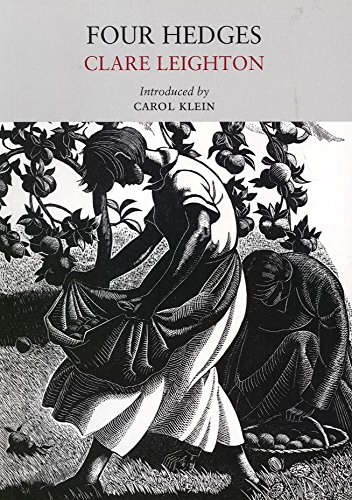
6.Four Hedges, by Clare Leighton. Leighton’s garden writing is beautiful, but what really sets this book apart is the stunning woodblock illustrations. I could stare at them for hours.
5.Just William, by Richmal Crompton. Sometimes you want to read a book and howl with laughter. Richmal Crompton’s collection of linked short stories about possibly the world’s most mischievous little boy, and the scrapes he and his friends get into, will be just the thing.
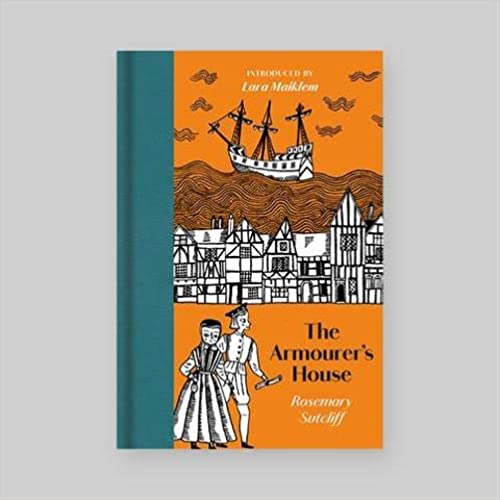
4. The Armourer’s House, by Rosemary Sutcliff. Manderley Press is a new small publisher that is reprinting classics that are especially evocative of a sense of place, and The Armourer’s House, the second volume brought out by the press, takes you right back to Tudor London. I am a big fan of Rosemary Sutcliff’s writing, and this was an especially good one. Just like her Dolphin Ring series (republished by Slightly Foxed, if you’re interested), The Armourer’s House puts you right in it. I would’ve liked it to have been three times as long.
3. Delight, by J.B. Priestley. This 75th anniversary edition of Priestley’s essays about things that delight him is a total joy to read. In addition to the writing – in essays like “Cosy Planning,” which had me nodding along – the book is beautiful and is a delight in and of itself.
2. War in Val d’Orcia: An Italian War Diary, 1943-1944, by Iris Origo. Iris Origo was a really exceptional person – an Anglo-American writer married to an Italian nobleman, she and her husband Antonio sheltered refugee children and Allied soldiers, and provided guidance and sustenance to a string of Jewish refugees, anti-Fascist partisan fighters, and escaped Allied POWs – at great personal risk to themselves. When Nazi soldiers took over their idyllic farm, Origo courageously led a string of sixty refugees, including elderly grandparents and tiny babies, through heavy fire to safety in Montepulciano. Her diaries are riveting reading, capturing what it was like to live through history and make some of it for yourself.
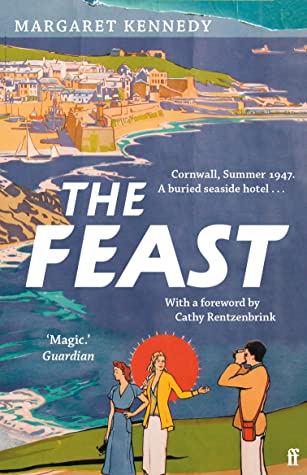
1. The Feast, by Margaret Kennedy. In a year of fantastic reads, this was the standout of all standouts. The Feast opens with a tragedy – a cliff has collapsed on a hotel in Cornwall, and everyone inside the hotel was killed. But not all of the guests were inside, and the plot rewinds to seven days before the disaster, when you see the ill-fated hotel guests arriving. The seven guests killed represent the seven deadly sins, so as the reader gets to know each of the guests and their foibles, it becomes a fascinating intellectual exercise to work out who the victims will be and who will survive (I guessed right on all counts). I was riveted from the very first page, and will read this again and again in coming years.
Whew! I can’t believe I actually did it – my top ten books of 2022, actually ranked in descending order.It was a wonderful year in reading – as they all are, of course. And now, one more lookback post for 2022 before it’s time to turn my readerly attention fully to 2023. Next week: the silliest post of the year, in which I give high school superlative awards to the books I read last year. It’s utterly ridiculous!
Well, January has rolled around again and it’s that time – time for a bookish look-back at 2022! I don’t do too many New Years-themed posts anymore – gone are the days of painstakingly going through the previous year’s resolutions and setting new goals, intentions and words for the upcoming year. But I do still enjoy looking back at the year in reading – and especially at this post, where I break down the year’s worth of books and totally nerd out on data. Let’s get to it, shall we?
First of all, let’s look at the big picture. According to Goodreads, I read 112 books in 2022, for a grand total of nearly 29,000 pages read. Yowsa! So… that’s not entirely accurate, for a couple of reasons. One, I got credit for one book I started at the tail end of 2021 and finished on New Year’s Day. Two, I was mid-way through two books at the end of 2022 and finished those on January 1, 2023, so they’ll count toward this year’s totals. And three, as always, I’m not precious about the edition I record on Goodreads, so some of the page counts might be inaccurate. But I think it all comes out in the wash, and this was a good year of reading indeed.
The longest book I read was The Historian, by Elizabeth Kostova, which clocks in at 704 pages. (That’s a doorstopper. I read it on my kindle.) And the shortest book – also a kindle book, interestingly – was The Wimsey Papers, by Dorothy L. Sayers – just a little collection of letters between Wimsey family members and friends during World War II; a great read if you’re a fan of the Lord Peter mysteries.
On average, according to Goodreads, my books were around 258 pages. I’d say that’s pretty standard.
The most popular book I read in 2022 was Chinua Achebe’s classic Things Fall Apart. I’m heartened to see how many other people shelved that one this year – gives me hope for humanity. But on the flip side, only eighteen other people shelved Diplomatic Passport – now that’s a travesty; y’all are missing out on a wonderful read. Go pick that one up immediately.
All right – time to get really nerdy. Who’s ready to dive into some data?
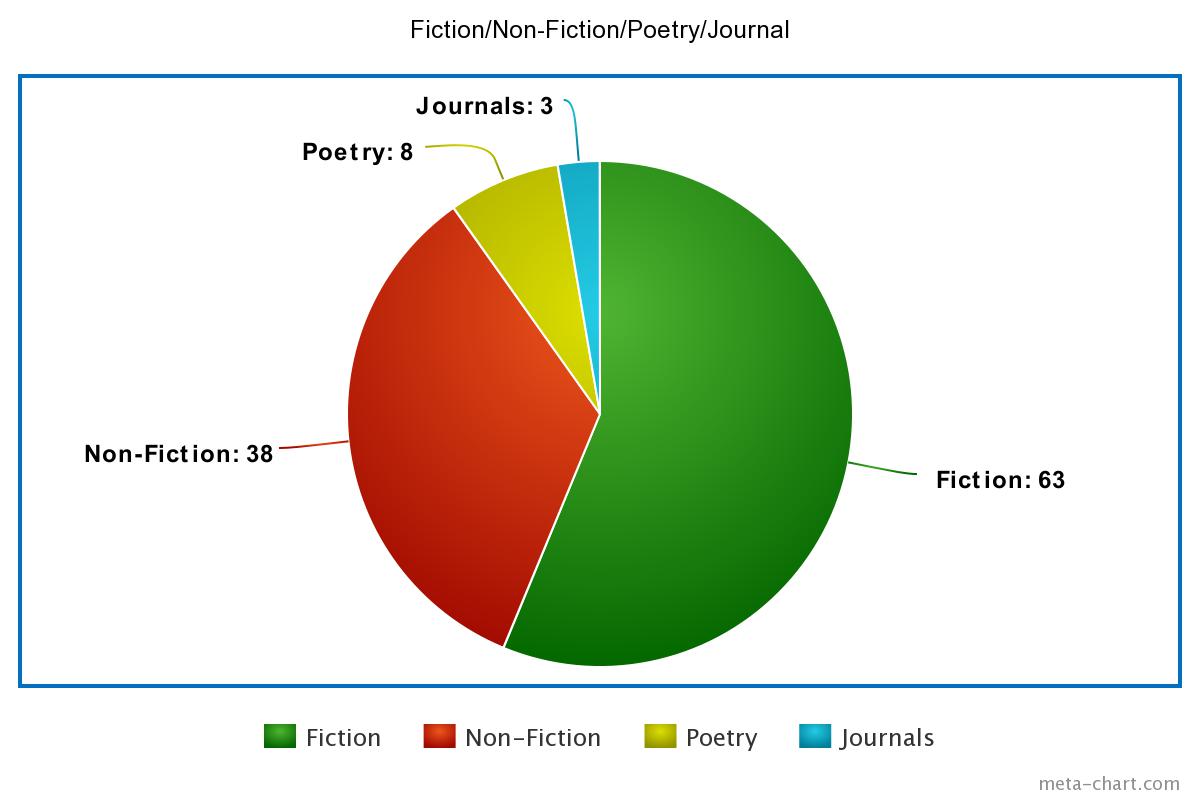
First of all, zooming in a little on the books I read this year, just over half – about 56% – were fiction. I’m usually around 50/50 fiction and non-fiction, so this is slightly more heavily weighted to the fiction side, but not by much. On the other side of the equation, I read eight volumes of poetry this year, which is a lot for me – but I think I can explain it. I usually have a poem-a-day anthology going, but this year I read my way through four seasonal anthologies – A Poem for Every Winter Day, and so forth. So that’s four titles where I’d normally have one. And finally, journals – which really probably belong in the non-fiction category but I’m not re-doing this chart – were a little light this year. I usually read each of the four quarterly issues of Slightly Foxed and possibly a few back issues, but I haven’t gotten to the winter issue yet.
Zooming in a bit more, this time on the fiction genres: 2022 was heavily weighted toward classics; my classics count was more than double the count of the next-biggest chunk (mysteries). And that’s not even accounting for the fact that many of the mysteries I read are classics in their own rights. I’ve always been a big classics reader, so this is no surprise. What is a bit of a surprise: I usually have at least a few good handfuls of other genres, but 2022 was very light on pretty much everything else – only two general fiction titles, two historical fiction, and three literary fiction – no sci-fi or fantasy at all. Perhaps it’s just that as life gets busier and more hectic, and the news on the front page gets worse, I tend to gravitate toward my comfort zone. I do like to challenge myself – don’t get me wrong – but some years I just want to read what I want to read, and that means more Bronte and less speculative fiction, ya know?
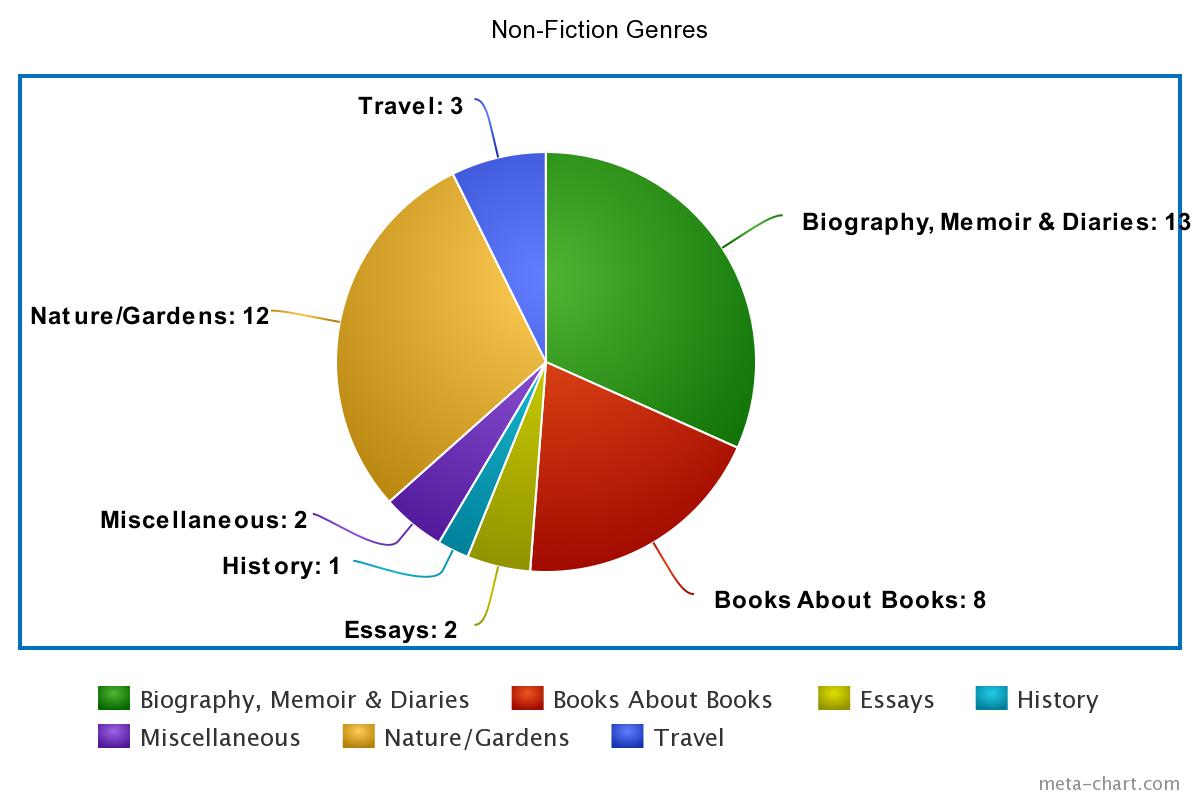
Non-fiction was a bit more varied, but with three major categories. I always read a lot in the books about books genre; my totals are creeping up year over year in the nature-and-gardens category, and I love a good memoir. This year, my biography and memoirs title is slightly inflated by diaries – I read at least three.
All right, let’s zoom back out to the total and look at the sex of the authors I was reading. No surprise here – I am heavily weighted towards female authors. This isn’t unusual at all, and I think if anything male authors might be better represented on 2022’s list than they were on previous years’ lists. (The guys probably have Stephen Moss to thank for that. I think I read four of his books in 2022?) I’m a bit disappointed in myself for not seeking out more non-binary authors; there might be some on here, and I just don’t know about it, but I definitely didn’t read any specifically last year. (Various authors accounts for collections in which both men and women were represented.)
As for the source of the book – i.e. where I got it from – this chart has flipped almost on its head from previous years! Starting in 2020, I really began to try to read more books from my own shelf (with an ultimate goal of reading every book I own – which is going to take me a few more years…). I did pick up a few books from the library, but the vast – vast – majority of my 2022 books came from my own shelves. (And by shelves, I mean not only my physical bookshelves but also the virtual shelves on my kindle and my Audible app.) Oh, and I did borrow two books last year, not from the library, so I have to give shouts to Steve for loaning me Invisible Man, and Peanut for letting me borrow and read Yummy: A History of Desserts. (Can I say, you guys? Borrowing a book from Peanut for the first time was a Bookish Mom Moment for me. Heart flutters.)
In 2023, I think I’ll see the library slice of this pie grow a little – largely because I have a list of books I want to read soon (for a reading challenge I have set myself) but don’t want to buy. But I’ll still mostly be working through my own shelves and I’m happy about that.
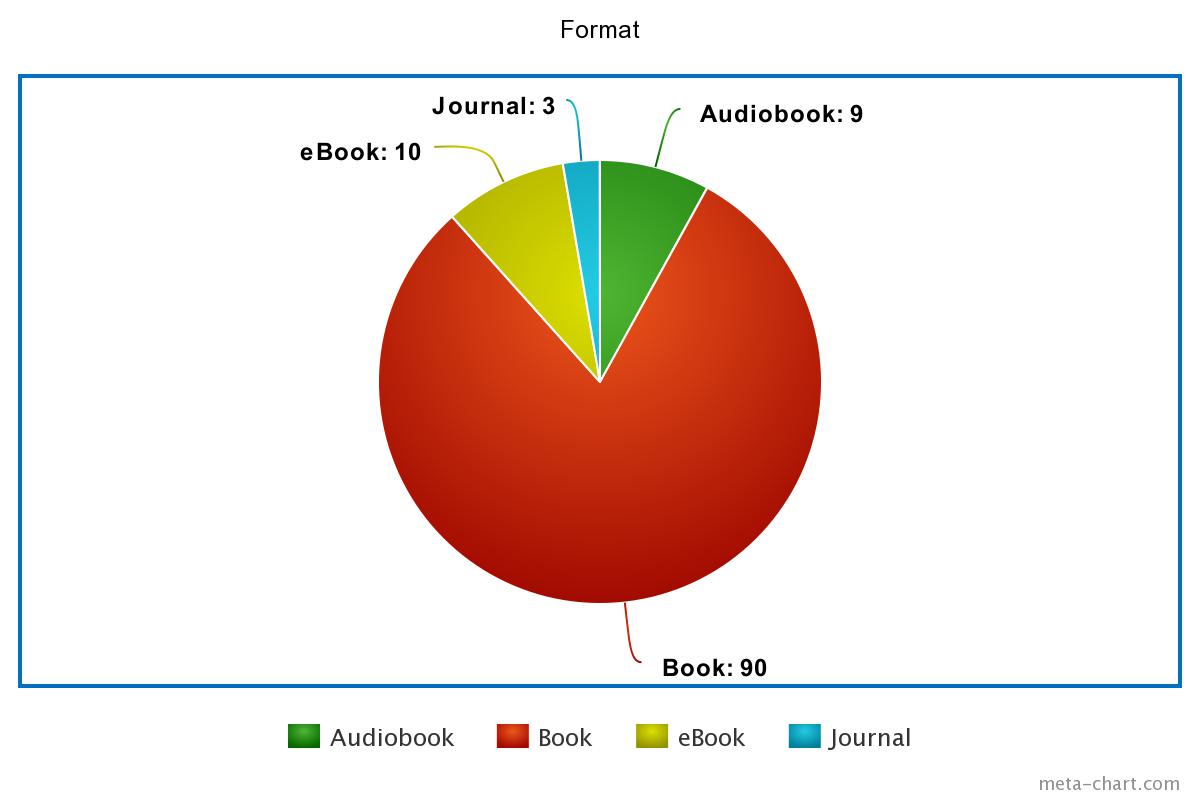
While we’re zoomed out, let’s discuss the format of the book. This is one area – perhaps the only area – where I definitely did diversify in 2022. While the bulk of my reading was still in physical book form, I hit ten eBooks and nine audiobooks, a definite change from years past. The eBook total was driven up by all of the traveling I did last year – between business trips and family travel I was on planes almost every month in 2022, and I prefer not to carry physical books with me. The audiobook total is new though, and represents a conscious effort I made to listen to more audiobooks in 2022. I cleared out my podcatcher and started alternating between listening to an audiobook and then going back to the podcatcher and listening to the episodes that had stacked up in the meantime, and, well – you can see the results. (Will this continue into 2023? I hope so, and I hope for even more audiobooks in next year’s version of this post. But I should note that Steve activated my Spotify account, so music is creeping back into my listening, too – not that I’m complaining.)
Finally, one more chart – always a fun one to look back on – settings! My 2022 books were heavily weighted toward England. I mean, WOW. Almost 60% in England alone, and the rest of the world has to duke it out for the remaining 40-ish%. Usually, England and the USA are roughly equal on my list, often trading back and forth, but there was no contest this year; I read six times as many books set in England as in my home country. In fact, the second largest category was books that had no setting (poetry, journals, and things like advice books or essays that were not geographically grounded in any country). Seven were set in continental Europe and/or Scotland; ten had more than one setting that was equally important to the narrative (like Patsy, where the action was divided 50/50 between the United States and Jamaica), and Africa, Asia and the Caribbean were not well-represented. (This is due largely to my reading so much from my own shelves, and the fact that most of the books I own happen to be classics of English literature. That’s a fault in my own shelves, but I am trying not to buy many new books until I’ve read more of the ones I already own, so it’s going to be the way things are for awhile yet. In the meantime, I often choose diverse authors and settings when I do go to the library, which I think I’ll do a bit more in 2023. So – no goals around this, but I’m tracking on it.)
Whew! That’s a lot of numbers and a lot of information. 2022 was a good year in reading, measured by the only stat that really counts – whether I enjoyed myself or not, and I certainly DID. What did your 2022 in books look like?
As you all know, I love a book haul post. I especially love to read posts about other people’s book hauls, since those give me good ideas for what to add to my own wish list – wink, wink. And while I rarely share any book hauls of my own (because I don’t usually see books entering my house in waves… it’s more of a constant trickle, fam) Christmas is, of course, an exception to that.
2022 was actually a relatively modest book haul by my usual standards. The reason is that I am planning a big adventure this winter (read on) and most of my Christmas list was devoted to specialty gear for that trip. But there are always books – and to be honest, after last year’s stack started swaying dangerously when I tried to photograph it, this year’s more moderate pile was probably better. Even if it is still ridiculous abundance. Here’s what I added to my library:
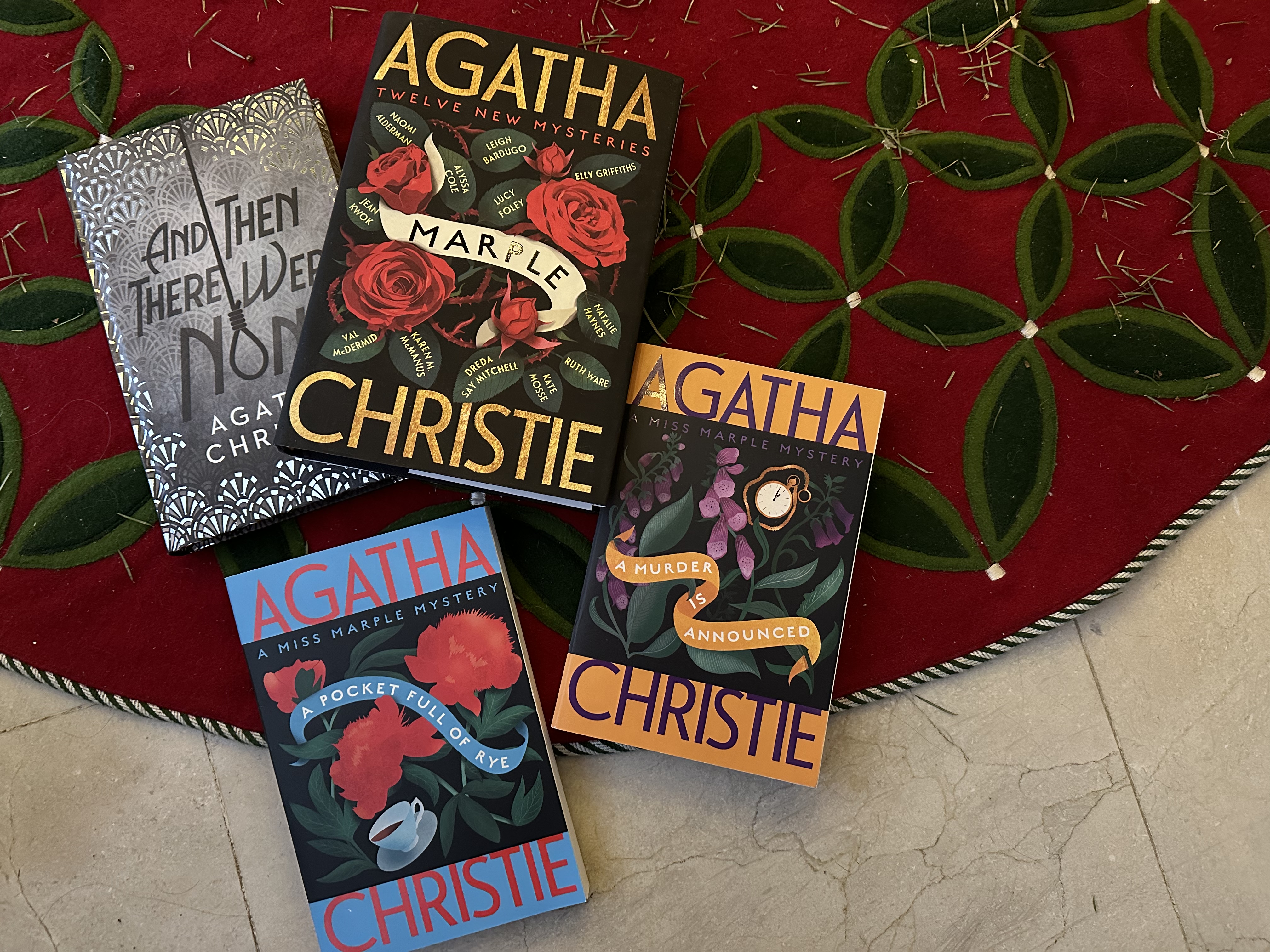
First of all, Christmas always includes mysteries – right? And not just festive mysteries for Advent! Steve and my mom are great at ensuring I have murderous reads all year long. This year, Steve gave me the Harper Collins special edition of And Then There Were None, which completes my collection of those editions – at least until the next three drop this summer. And he also delivered bigtime with the new Marple, a collection of brand new Miss Marple stories by authors currently writing in the crime and detective fiction genre, including big names like Lucy Foley and Elly Griffiths. And then my mom always gets me “a Christie for Christmas” and this year I asked for some Miss Marple mysteries in the new paperback editions with the floral covers – they’re gorgeous. I opened A Murder is Announced and A Pocket Full of Rye, both of which I’ve read but not for many years, so I’m looking forward to revisiting them in these new editions. (And it was a very Miss Marple Christmas, now that I’m thinking about it.)
Steve also presented me with some gorgeous historical non-fiction, including The Windsor Diaries 1940-45: My Childhood with the Princesses Elizabeth and Margaret, which was the very top of my wish list. I’m reading it now and it’s so good and transporting me right to Windsor during World War II. And then there were these two pretty hardcovers of historic guidebooks – The Cathedrals of England and Sussex, Kent & Surrey 1939, which I wanted based at least 50% on their covers. But I am really excited to read them – especially the Sussex, Kent & Surrey book, which I expect will be a fascinating time capsule of that beautiful region of England right at the beginning of World War II.
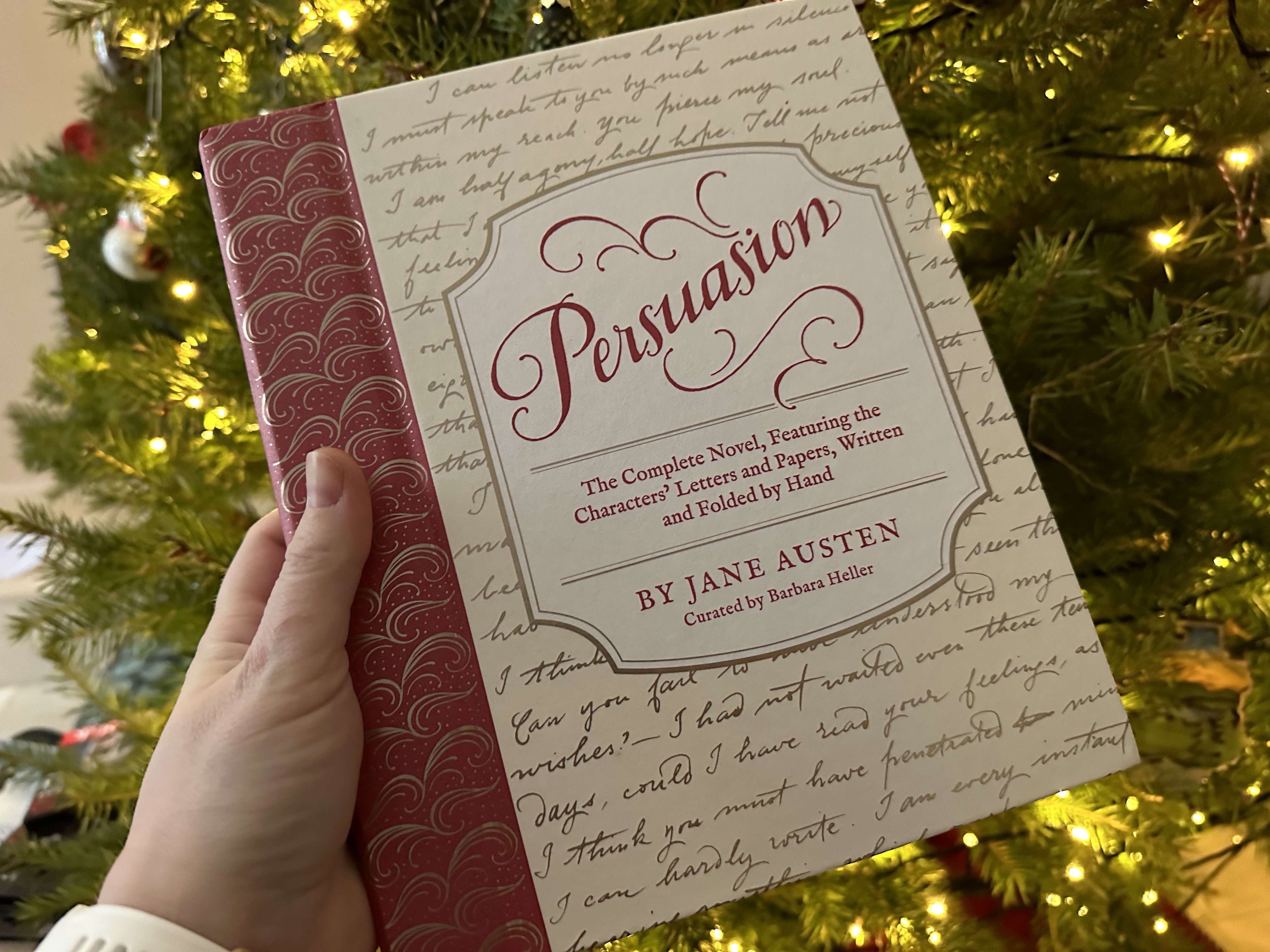
I was also so excited to unwrap this new edition of Persuasion, one of my favorite Jane Austen novels, which is stuffed with thoughtfully presented ephemera. I have Little Women in the same edition, and they are such cool, beautiful books.
Here’s my miscellaneous pile, for lack of a better word. Steve bought me Images and Shadows, Iris Origo’s memoir, which I was very excited about. I read Origo’s World War II diaries this fall and found them absolutely captivating, so I can’t wait to dig into her memoir. And Steve also found this stunning anthology of writing about birds, beautifully illustrated with pen and ink drawings – so I’m really looking forward to reading that one too. And then finally, my mom got me Michelle Obama’s latest book, The Light We Carry, and the latest (I think?) Isabel Allende, A Long Petal of the Sea. Both look wonderful!
Also from my mom, and should have been in the pile above but I forgot and left it upstairs – The Office BFFs: Tales of The Office from Two Best Friends Who Were There, by Jenna Fischer and Angela Kinsey – this is exciting stuff, people! I am a huge fan of The Office and got the audiobook version of this – read by the authors, of course – but was really wishing for the hardback, since I figured it probably had all kinds of cool behind-the-scenes photos in it (spoiler alert: it does). I’ve already finished this, and it was a total joy to read from the first page to the last. And will go great alongside Tales of Dunder Mifflin: The Complete Oral History of “The Office”, which I got last Christmas. Spoiled? Yes.
Another one that deserves its own photo: Nugget bought this copy of the fifth Percy Jackson book at the Scholastic Book Sale, but wrapped it up and gave it to me on Christmas morning. Isn’t he sweet? I can’t accept it, though. I’ll sneak it back onto his shelf and suggest that we can “share it.” Funnily enough, I gave him the first Percy Jackson – which he didn’t have – for Christmas.
Last, but not least…
Remember that big adventure I keep mentioning? My mom got me a guidebook to help me prepare. Yes – Steve and I are going to Antarctica this winter! I am beyond stoked to see the seventh continent. This is going to the top of the pile, because embarkation day is ticking nearer and nearer.
Whew! Even though I opened lots of cold weather gear to pack in my luggage for Antarctica (and Patagonia, can’t forget about that part – which will also be epic) I definitely was still spoiled with reading material. How was your Christmas in books? Did you find anything especially exciting under the Christmas tree? And what did you read over the winter holiday break?
Years ago, back when Peanut was a wee baby, I started a tradition of buying a few Christmas-themed books at the beginning of Advent, with an eye to building a holiday library for her (and later, her brother too). When I was growing up, my mom had a huge stack of children’s Christmas books and it didn’t feel like the holiday season until she pulled them out of storage. (My favorite was The Littlest Angel, although it always made me well up.) Eventually, the kids’ library got pretty extensive, but I’m still buying Christmas books at the beginning of the season and reading them in the lead-up to the holiday. It’s just that – these days – they’re for me.
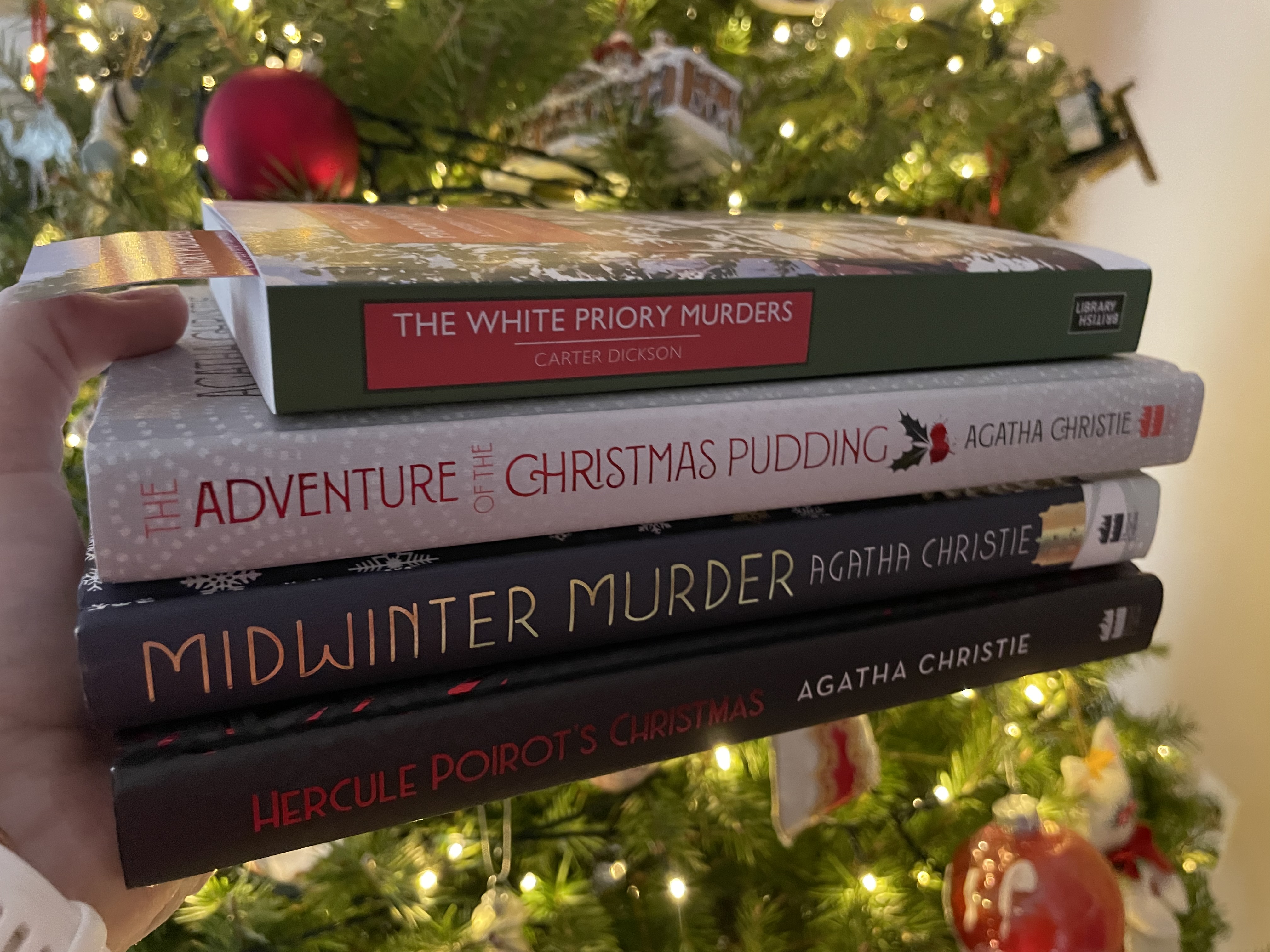
The Advent 2022 additions to my Christmas library, as it turns out, are rather murdery. I ended up adding four mystery novels to the Christmas shelf. Is it better or worse that this was completely unintentional? Recently I discovered that I could get my hands on the Harper Collins special edition Agatha Christies, and I snagged all three holiday-themed volumes – The Adventure of the Christmas Pudding, Midwinter Murder (a collection of short stories – always fun at Christmas) and Hercule Poirot’s Christmas. I also added The White Priory Murders to the stack; it was the October entry into my British Library Crime Classics subscription, but it’s a classic country house Christmas mystery involving footprints (or a lack thereof) in snow, etc. There’s just something about a Christmas murder mystery.
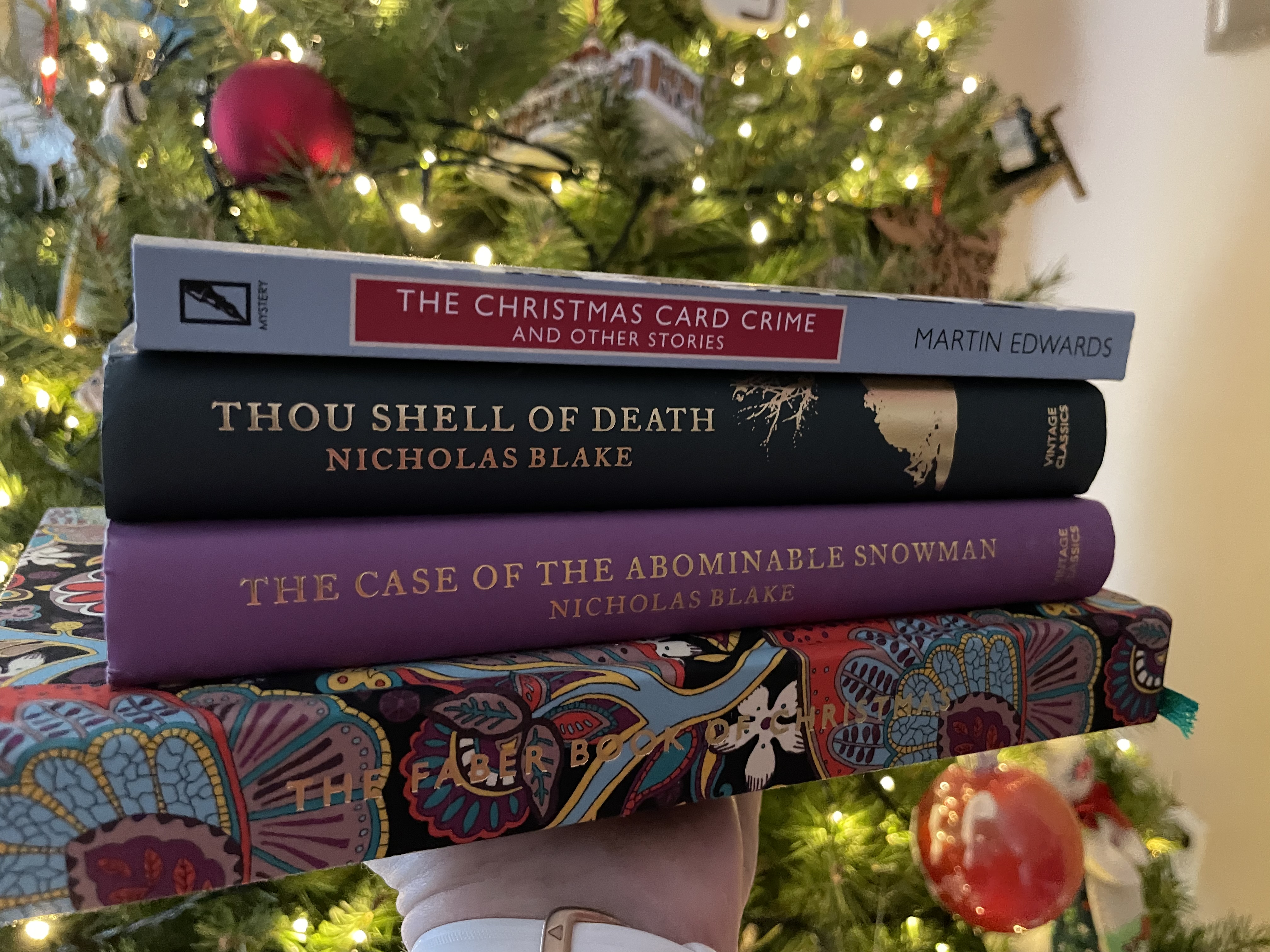
Actually, it appears this is something of a theme – see last year’s stack (at least, the ones I didn’t get to – hopefully this year). Which one is not like the others? Well, The Faber Book of Christmas is actually not a murder mystery, thank goodness there’s at least one nonviolent entry in my Christmas reading. But I did pick up Thou Shell of Death and The Case of the Abominable Snowman, both from The Hatchards Library (they’re just gorgeous), as well as Ngaio Marsh’s Tied Up in Tinsel – unpictured here because I managed to read it last year. And I always add at least one BL Crime Classics per Christmas; last year it was The Christmas Card Crime and Other Stories. These are all on the TBR for this year – we’ll see how many I manage to knock out this month.
In short, I don’t know what it is about Christmas reading that makes me feel extra mysterious, but clearly I’m leaning into it. I’m well prepared for the season; knowing every possible festive way to bump someone off, I’m on high alert and confident I’ll survive this holiday.
Season’s readings! Do you like a murder mystery at Christmas?























 covered in flour