Themed Reads: A Very Murdery Christmas

What is it about Christmas that makes people so particularly bloodthirsty? Is it all the extra relatives in the house (unless it’s 2020, of course)? The intimidating spikes on the ends of a mistletoe leaf? The inhibition-destroying effects of boozy eggnog? The bloody sheen of holly berries on death-pale snow? Okay, I’m creeping myself out now, so I’ll stop. But Christmas is undeniably fertile ground for mystery writers from the Queen of Crime, Dame Agatha Christie (Hercule Poirot’s Christmas) to lesser-known Golden Age mystery writers (like the contributors to British Library Crime Classics’ Silent Nights and Crimson Snow collections) and modern-day writers like Alan Bradley (I am Half Sick of Shadows). Whatever it is about Christmas, there seems to be plenty of shadow under those twinkle lights.

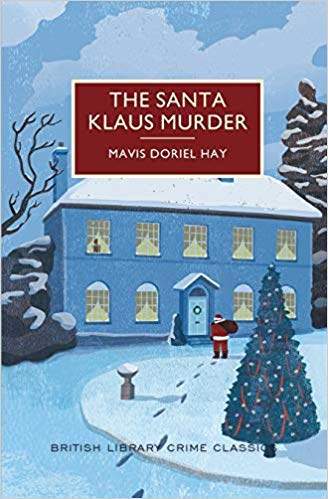
Any Golden Age crime reader these days is familiar with the British Library Crime Classics series – which is growing too fast for me to keep up with these days. The Santa Klaus Murder, by Mavis Doriel Hay, is a particularly fun entry, especially at this time of year. An unpopular, but rich, old gentleman is found murdered in his library, by a guest dressed as Father Christmas, and things only get weirder from there. There are a few obvious twists, one of which is revealed on the back cover (why???) but it’s good fun. You’ll never look at a Santa costume the same way again.

Another country-house-at-Christmas murder mystery, Georgette Heyer’s A Christmas Party is fun and frothy – or at least, as fun and frothy as a crime novel can be. All of the classic holiday-themed Christmas mystery tropes are here: a snowstorm that isolates all of the possible suspects in a house together; several red herrings; lots of family secrets. Good stuff all around.

For a more modern take on the Christmas murder mystery, look no further than Louise Penny, who contributes A Fatal Grace – the second installment in her popular Armand Gamache series. It’s an interesting twist on the locked room trope: CC de Poitiers, the unpopular murder victim – query: is the murder victim ever not unpopular? – is electrocuted in the middle of a frozen lake, during a curling competition as the entire village looks on. I guessed the identity of the killer fairly quickly, but while the who was obvious, only Chief Inspector Gamache can figure out the how. Also, crossing curling off my list of sports to try.

Does Christmas make you bloodthirsty? Any holiday-themed murder mystery recommendations for me?

Reading Round-Up: November 2020

Reading Round-Up Header

Reading is my oldest and favorite hobby. I literally can’t remember a time in my life when I didn’t love to curl up with a good book. Here are my reads for November, 2020:

Slightly Foxed No. 67: A Separate World, ed. Gail Pirkis & Hazel Wood – It’s always a pleasure to curl up with the latest issue of Slightly Foxed (bonus points for a cup of tea to go along with it) and this one was no exception. I particularly enjoyed the article about the latest Slightly Foxed Edition, Jessica Mitford’s Hons and Rebels. (I already own a copy, so won’t be buying it – but I’m inspired to pick it up off my shelf sooner than later.)

High Wages, by Dorothy Whipple – Dorothy Whipple continues to deliver the goods! I really enjoyed her first novel, a story of a young shopgirl with a head for business. Fully reviewed here.

The Tenant of Wildfell Hall, by Anne Bronte – This was a re-read for me, and I loved it as much as I did the first time I read it, years ago. Anne Bronte might be the least-known of the three Bronte sisters, but Tenant is possibly the most revolutionary of their collective bibliography – the story of a woman hiding from an abusive husband in a time when that was just not done, it’s unabashedly feminist. Fully reviewed here.

A Study in Scarlet (Sherlock Holmes #1), by Sir Arthur Conan Doyle – I was feeling a pull to 221B Baker Street, and wanting to read the great detective’s origin story, so I pulled A Study in Scarlet off my shelf. Bit of an oddball story, but fun to finally get to the first appearance of Holmes.

Going Solo (Roald Dahl’s Memoirs #2), by Roald Dahl – I skipped the first volume of Dahl’s memoirs, Boy, having no desire to read about the real-life versions of the atrocious adults from his fiction. (Imaginary Trunchbull is quite bad enough.) But I was in the mood for adventure, and Dahl’s memoir of his young adulthood as a Shell Oil employee in Dar-es-Salaam, followed by his days as a fighter pilot in World War II, was captivating. (“Simba” was my favorite chapter, but really every page was exciting and wild.)

The Grand Tour: Around the World with the Queen of Mystery, by Agatha Christie, with Mathew Prichard – Still in the mood for adventure after blowing through Going Solo, I picked up a book that’s been lingering on my TBR for too long. In the early 1920s, Agatha Christie and her first husband, Archie, embarked on a trip around the world as part of the British Empire Exhibition. The Grand Tour collects the letters she wrote home during the epic voyage, along with Christie’s own photographs from the trip, and is edited by the Queen of Crime’s grandson, Mathew Prichard. It was a fun glimpse into a vanished world, and good for scratching the armchair travel itch during COVID-times.

A Promised Land, by Barack Obama – I pre-ordered President Obama’s memoir (part one!!) and it arrived on release day, and I almost immediately dove in. A Promised Land was a perfect combination of insider political baseball, fun anecdotes, and introspective musings about the most consequential moments of President Obama’s administration (through spring 2011; the remainder of his time in office will be addressed in the second volume). I loved every minute, but I also kind of hated it, because it brought back memories of when we had a President with not only the ability to string three words together, but the capacity and inclination to be thoughtful and considered in his decisions, and who put the country before his own interests… sigh. Those were the days. Is it January 20, 2021 yet?

Persuasion, by Jane Austen – Another re-read, a good one for fall. Persusasion is one of my favorites of Austen’s novels (to the extent that one can have a favorite; they’re all wonderful) but it had been years since I visited Kellynch and Uppercross and Camden-place. I blew through it in a day, but what a day – walking the gravel walk in Bath with Anne Elliot and Captain Wentworth is always such a joy.

Piranesi, by Susanna Clarke – Since Jonathan Strange and Mr Norrell came out more than fourteen years ago, I’d pretty much given up on another novel from Susanna Clarke (although I did enjoy her short story collection, The Ladies of Grace Adieu). So naturally I snapped up Piranesi when it was released and I happened to luck into a copy at my favorite indie bookstore, Old Town Books. It was good, well-written and interestingly plotted, but I didn’t enjoy it as much as Jonathan Strange, nor as much as I’d expected to. A solid three stars, and it’ll stay on my shelf, but I can’t imagine I’ll hanker for a re-read anytime soon.

Miss Pettigrew Lives for a Day, by Winifred Watson – I’ve been meaning to meet Miss Pettigrew for years now, and what took me so long? Another one that I blew through in a day, and I loved it. Miss Pettigrew Lives for a Day is a quotidian novel of an impoverished nursery maid who reports for a job interview and finds herself swept into a world of nightclubs, cocktails, and romance. Other than one or two instances of dated opinions, it was a joy from the first page to the last, and I’ll be re-reading it soon.

What a month of reading! I’m not even sure I can pick a highlight. President Obama’s memoir (which I’ve been awaiting for years, like so many others) was absolutely wonderful. High Wages and Miss Pettigrew Lives for a Day were delightful confections, Going Solo and The Grand Tour were full of adventure and fun, and Tenant and Persuasion were wonderful as ever. I’ve moved on to my Christmas reading now, but November was a banner month in books, indeed.

The Classics Club Challenge: The Tenant of Wildfell Hall, by Anne Bronte

Recently, I was listening to a Great Courses audiobook, “The Art of Reading.”  The lecturer, Professor Timothy Spurgin, shared the common insight that there are really only two main plots, which are recycled and repeated ad nauseum.  They are: “stranger comes to town” and “hero takes a journey.”  Since I listened to that lecture, I’ve amused myself by assigning each book I read to one category or another.  Sometimes it’s more difficult to figure out where a book belongs, but in the case of The Tenant of Wildfell Hall, it’s clear as a bell – this is a classic “stranger comes to town” narrative.

The book opens as a letter from one Gilbert Markham to his brother-in-law (who never appears in the story).  Markham is putting pen to paper to tell a story that the brother-in-law must have asked about regularly: the appearance of a mysterious woman, calling herself Helen Graham, lodging in a few rooms of the crumbling Wildfell Hall with her little son and one old servant – and everything that happens afterward.

Helen is an object of immediate fascination for Markham, his mother and sister, and all of the neighbors in their little hamlet.  Who is she, and what brought her to this desolate spot, and what possibly possessed her to want to live in an abandoned old mansion?  Helen clearly prefers to keep to herself, but anyone who has lived in a small town knows that’s the first cardinal sin – and indeed, the villagers will not rest until she’s been dragged into the community.  They bully her into attending a small gathering at the Markhams’ farmhouse, and there discover that she has some interesting ideas about child-rearing.

“I will lead him by the hand, Mr. Markham, till he has strength to go alone; and I will clear as many stones from his path as I can, and teach him to avoid the rest – or walk firmly over them, as you say; – for when I have done my utmost, in the way of clearance, there will still be plenty left to exercise all the agility, steadiness, and circumspection he will ever have.  It is all very well to talk about noble resistance, and trials of virtue, but for fifty – or five hundred men who have yielded to temptation, show me one that has had virtue to resist.  And why should I take it for granted that my son will be one in a thousand? and not rather prepare for the worst, and suppose he will be like his – like the rest of mankind, unless I take care to prevent it?”

“You are very complimentary to us all,” I observed.

Helen’s insistence on instilling temperance in her son from an early age is interpreted by Markham and the villagers as some sort of man-hating Victorian helicopter parenting, and the village’s curiosity about her quickly turns to animosity.  The more she keeps to herself, the more rumors begin to spread about her virtue (or lack thereof) – especially when some eagle-eyed gossip notes that Helen’s son Arthur bears more than a passing resemblance to the landlord of Wildfell Hall, the young squire Frederick Lawrence.  But as the village looks with greater suspicion on Helen, Markham is falling in love with her (with no encouragement, and rather ostentatiously) – at least until, spying in a hedge (gross), he observes Helen in what seems to be a compromising position with the very same squire, Mr. Lawrence.  Consumed with jealousy, Markham attacks Lawrence and confronts Helen, who presses her diary upon him as evidence of her good faith.  And it turns out (spoiler alert!) that Helen’s name is not Graham after all; she is living at Wildfell Hall under an assumed name, on the run from her cruel, drunken, abusive and cheating husband.  Helen’s journal details the entire progression of her doomed marriage, from when she first meets Arthur Huntington as a high-spirited debutante, to the moment she begins to lose faith in him and the downward spiral that follows.

October 5th.–My cup of sweets is not unmingled: it is dashed with a bitterness that I cannot hide from myself, disguise it as I will.  I may try to persuade myself that the sweetness overpowers it; I may call it a pleasant aromatic flavour; but say what I will, it is still there, and I cannot but taste it.  I cannot shut my eyes to Arthur’s faults; and the more I love him the more they trouble me.  His very heart, that I trusted so, is, I fear, less warm and generous than I thought it.  At least, he gave me a specimen of his character to-day, that seemed to merit a harder name than thoughtlessness.

Reading through Helen’s journal, which Markham faithfully transcribes into the letter to his brother-in-law, is like watching a train wreck happen in real time – Bronte’s intention, no doubt.  And while the journal answers many questions – Helen’s relationship to Frederick Lawrence; the circumstances of her flight to Wildfell Hall; the reason she supports herself as a painter – it raises still more.  Will she return to her horrendous marriage?  If so, will she go back willingly or by force?  If not, how will she get out of it – divorce being basically impossible at that time?  Will Markham’s faith in Helen be rewarded?  Will the villagers ever learn the real story, and if they do, will they ever believe it?  These questions are answered by the remainder of Markham’s letter to his sister’s husband.

I think the conventional wisdom on Anne Bronte is that she is the least known and least read of the sisters, but for those who have read all three Brontes, Anne is often the favorite.  That’s certainly how it is for me – while Jane Eyre will always have my heart, I think I value Anne’s works (which seem less melodramatic and more realistic, but gripping all the same) even more than those of Charlotte and Emily.  (I did not care for Wuthering Heights at all.)  The Tenant of Wildfell Hall is as feminist as Jane Eyre – perhaps even more so.  It’s far ahead of its time in advocating for women’s independence and right to leave an abusive marriage.  (Worth noting for purposes of trigger warnings: other than a time when Arthur Huntington throws a book at his dog and hits Helen instead, accidentally, he does not harm her physically.  Although I’d argue that an injury imposed accidentally in the process of trying to intentionally harm an animal is not better.  And there’s no question that he is an emotional abuser and that his conduct towards little Arthur is reprehensible as well.)  It is very clear what Anne Bronte thinks about the lack of options available to a woman like Helen; Tenant is outspoken in its indictment of Victorian laws and customs relating to matrimony.  Helen is fortunate to find (a few) allies who help her out of her desperate situation; poorer women may not even have that stroke of luck.

I loved The Tenant of Wildfell Hall, but as I read through Helen’s harrowing diary, I remembered why it took me so long to come back to it for a re-read after first picking it up more than fifteen years ago.  It’s a captivating, gripping book with an important message, but not the easiest read.  I’m sure I’ll come back to Tenant again, but I’ll need to let it settle for a couple of years.

Which Bronte sister is your favorite?

Themed Reads: That Certain Autumn Something

Sometimes you run across a book that just feels like fall, know what I mean? Whether the action (all or part) takes place in autumn or not, there is just an undercurrent of crunchy leaves, bluebird skies, wood smoke and chill breezes. These are the kind of books that make me want to breathe deeply to take in those autumnal smells, then curl up beneath a cozy blanket, wrap my hands around a steaming cup of spiced tea, and read the afternoon away.

The Eagle of the Ninth, first book in Rosemary Sutcliff‘s classic Dolphin Ring Cycle about ancient Britain, has that fall feeling. Although the action follows hero Marcus Flavius Aquila throughout the seasons of the year, the pages themselves seem to be pervaded by the scent of smoke from Uncle Aquila’s fire, or the chilly breeze ruffling northern fields as Marcus sets out on his quest to recover the lost Eagle from his father’s old Roman Legion. It’s the type of book that pulls you into the story and holds you steadfast – perfect for reading on a cold night.

I’m not sure what it is about Persuasion that feels so perfectly for fall. Perhaps it’s because it is Jane Austen‘s final completed novel; that melancholy feeling of knowing that – although she was only 40 years old when she finished the novel, she was in the late autumn of her life. Or perhaps it’s the fact that the novel opens in fall and contains classic descriptions of the season – setting the tone for its deeper and slightly darker tone. In any event, it’s a relatively common experience to feel that pull toward Persuasion when the leaves begin to drop.

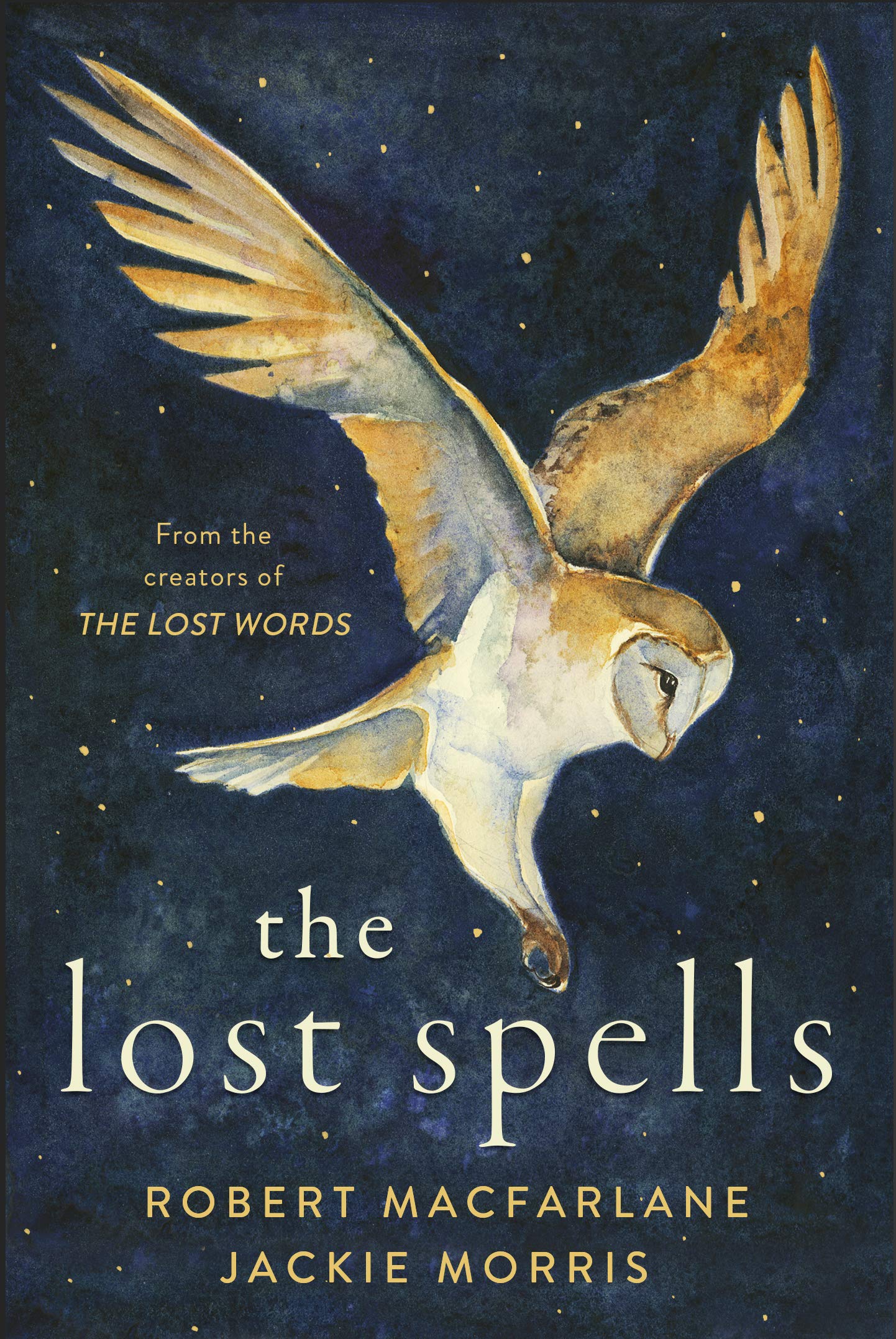
For those afternoons when you just want to curl up with something beautiful, but you don’t have the energy for a long classic, look to The Lost Spells, follow-up to Robert MacFarlane and Jackie Morris‘s gorgeous The Lost Words. Here you’ll find MacFarlane’s stunning poetry featuring British fauna (like the red fox and the goldfinch) accompanied by Morris’s mesmerizing art. Both the subject matter of the poems, and the deep navy, russet, and burnished gold (and more) colors of the art cry out to be read out in the brisk air.

What books call to you in the darkening days of fall?

High Wages, by Dorothy Whipple

I’ve been slowly working my way through Dorothy Whipple’s bibliography – first Greenbanks, then The Priory, and now High Wages.  Whipple is an author who deserves to be better known than she is, although word is spreading thanks to Persephone Books.  High Wages, Whipple’s first novel, is a bit different from her later works; the protagonist, Jane Carter, is a single “working girl” with career dreams rather than a middle-class young woman destined for marriage, like Christine of The Priory.  When the novel opens, Jane is wandering around the marketplace area of a small town outside Manchester, looking for a “place” that will allow her to escape her stepmother’s house.  But for all her prosaic goals, Jane has a poetic streak.

Jane lowered her beauty-dazed eyes to Tidsley market-place. Beneath that canopy, it was transfigured. The peaky roofs of shops and houses stood up darkly in the January air, the windows reflected a green-blue like the shell of a bird’s egg. The lamplighter was going round, and now behind him shone a string of jewels, emeralds pale and effulgent. There was almost no one about. It was a moment. Jane sometimes had these moments. She stood still in them.

Jane quickly finds her “place.”  As she walks through the marketplace on that early morning, she spots the proprietor of a garment shop hanging a “help wanted” notice in his window.  Jane promptly walks into the shop and talks her way into the job.  As a shop assistant, Jane discovers something of a calling – she is good at talking to the customers, even those who are much grander than she is, and she has an eye for pairing fabrics and embellishments that the ladies of Tidsley quickly come to appreciate.  But being a shopgirl isn’t all charm and fun.  Jane is always hungry; her boss’s wife never provides enough food.  And Jane comes face-to-face with her powerlessness when her employer cheats her out of a large commission she earned, which would have made an important difference to her quality-of-life.  Reflecting on the unfairness of her position, Jane asks the same questions that Mr. Barton, and the trade unionists, ask in Elizabeth Gaskell’s novels Mary Barton and North and South.

Why did some people – Sylvia Greenwood, for instance – have so much? Parents, money, a grand house, a grand car, grand clothes. It wasn’t fair. Not that she wanted all that. She wanted her due. She wanted that ninepence.

Why did some people have so much? And yet, compared with Lily, she herself must seem almost rich. Was it all like this? Did everyone look with envy at the one above? Funny. And funny, too, that the thought of someone else being worse off than you were yourself should make you feel more cheerful. Jane smiled grimly in the dark.

With this scene, I started noticing a lot of parallels between High Wages and Mary Barton in particular.  Both Jane Carter and Mary Barton are dress shop assistants.  Both dream of climbing to the middle class (although Mary Barton would prefer to marry her way to grandeur, while Jane Carter is happy to work her way up in trade, like many of the rich businessmen in the town did).  Both cast their eyes at a young man from the moneyed set – in Mary’s case, the despicable Harry Carson; in Jane’s, the kind but flawed Noel Yarde.  As I was reflecting on all the similarities between Mary Barton and High Wages, I came to this little Easter egg:  

‘There’s that Evelyn Wood and Mary Barton going past again. That’s the tenth time, about, this morning. Hope they’ll catch something soon. If you and me walked about the streets like that, Jane, they’d call us a couple of tarts. . .’

I KNEW IT!  It felt like a fun little wink from Whipple to her readers.

Mary Barton parallels aside: High Wages follows Jane as she works hard in the shop, befriends her fellow shop assistant – and then has a falling-out with her – suffers an embarrassment at a social event, and walks and reads through the weekends.  But life circumstances pile on – after an unwanted advance, and the unfortunate consequences thereof, conspire to drive Jane from her hard-won position.  A lucky break comes through just in time; Jane’s kindness to a customer pays off and she earns herself an investor and an opportunity to open her own shop – which she does in the face of her former employer’s insistence that she will fail.

Jane works hard – as the proprietress of her business, she does it all.  (This reminded me of a mentor I once had when I was first starting out in my career.  He and I visited a client who owned some restaurant franchises, and when we walked into one of the restaurants, the owner was behind the host’s stand.  My mentor leaned over and said quietly to me, “This is what you do when you own the business.  You do everything.”)  And Jane’s hard work pays off; at the end of her first year, her accountant delivers the news that the store has been profitable beyond Jane’s wildest expectations, yielding handsome returns for both herself and her investor.  Jane collapses in relief. 

But what a grinding year it had been! How she had worked, early and late, doing everything, cleaning windows, polishing fittings, dusting, sweeping, buying and cooking her own food, interviewing travelers, selling in the shop, stock-taking, having sales, sending out bills, sending them out again and again, insisting on payment, dealing hardily with troublesome customers, going to Manchester and again to London to keep up with the times – Phew! What a year! The struggle had matured her; she felt more capable, more confident, but older. She didn’t think that anyone, looking at her now, would say she was too young to manage a shop.

Jane’s success in business continues to build as she works harder than ever, but her luck in love and personal life is less lavish.  I won’t spoil the story, which is wonderful – if a touch melodramatic at times – suffice it to say, an ill-advised love affair threatens to destroy everything Jane has built, forcing her to examine what she values most in the life she has built, and whether she is truly prepared to throw away her independence for a man.

I enjoyed High Wages immensely.  As I said above, it’s definitely not a “typical” Whipple novel (judging by the two I’ve already read).  Whipple’s later works focus more on family dynamics; Jane is unusual in that she is a single “working girl” who places her career above aspirations of marriage.  Whipple’s later – more family-oriented – novels recall Austen more than any other influence; High Wages, by contrast, constantly nods to Gaskell.  And while I’m not sure any Whipple heroine will replace Christine in my heart, I can see myself cultivating a good solid friendship with Miss Carter, and revisiting High Wages again and again.

Have you read any Dorothy Whipple?

Themed Reads: Welcome to Salem

Mt. Greylock, Massachusetts – site of Ilvermorny School of Witchcraft and Wizardry (since I’ve never been to Salem)

‘Tis the season for all things spooky and weird! I’ve been fascinated by the Salem Witch Trials since I can recall – a tragic and shameful moment in American history, for sure, but also undeniably compelling. Salem has provided material to fiction writers and historians alike; I don’t know what it is about the trials that draws so much interest even today. Perhaps it is the sense of the tragedy having a beginning, a middle, and an end. Perhaps the mob mentality, which unfortunately is still prevalent in these troubled times. In any event, it’s definitely fertile ground for writers. Here are three of my straight-outta-Salem favorites:

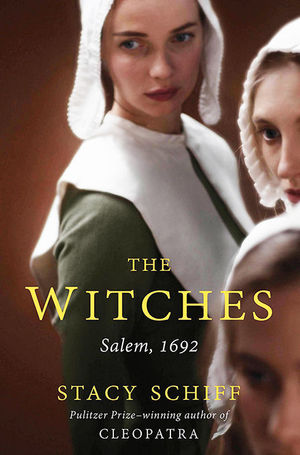
The description of The Witches: Salem, 1692, by acclaimed historian Stacy Schiff, notes: “Along with suffrage and Prohibition, the Salem witch trials represent one of the few moments when women played the central role in American history.” Which makes Schiff, author of acclaimed biographies such as Cleopatra: A Life and Vera (Mrs. Vladimir Nabokov), especially well-qualified to write it. Schiff’s exhaustive research shows on every page, but it never overwhelms her engaging writing style. Definitely a must for those of us who are fascinated by Salem.

If you’ve read Schiff’s massive nonfiction work and you want to dive even deeper, go straight to the source… material, which you can find in The Penguin Book of Witches, compiled by Katherine Howe. This fairly slim collection gathers major primary sources for centuries of witch-related strife – including depositions and court documents from Salem. But there’s also other interesting stuff here, including a witch-hunter’s manual and media coverage of witch trials in other cities, towns and hamlets.

The Crucible, by Arthur Miller, is one of my most recent reads – and probably the most famous account of Salem to be immortalized in fiction (or drama, for that matter). Miller focuses on John Proctor, one of the accused, and his efforts to free his wife – another accused – and clear his name. He takes considerable dramatic license, particularly in the relationship between Proctor and his accuser, Abigail Williams. The real Abigail, who worked for the Proctors for a time, was eleven or twelve at the time of the witch trials – for which she was the first accuser – and John Proctor was at least 60; Miller portrays them as 17 and 35, respectively, so that his “woman scorned” storyline isn’t quite so cringey (although it’s still gross to 2020 eyes). But strict historical accuracy isn’t necessary for a good story; The Crucible is, and I’d love to see it on stage one day.

Are you as fascinated by Salem as I am? Any recommendations for my next witchy read?

Reading Round-Up: September 2020

Reading Round-Up Header

Reading is my oldest and favorite hobby.  I literally can’t remember a time in my life when I didn’t love to curl up with a good book.  Here are my reads for September, 2020

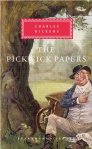
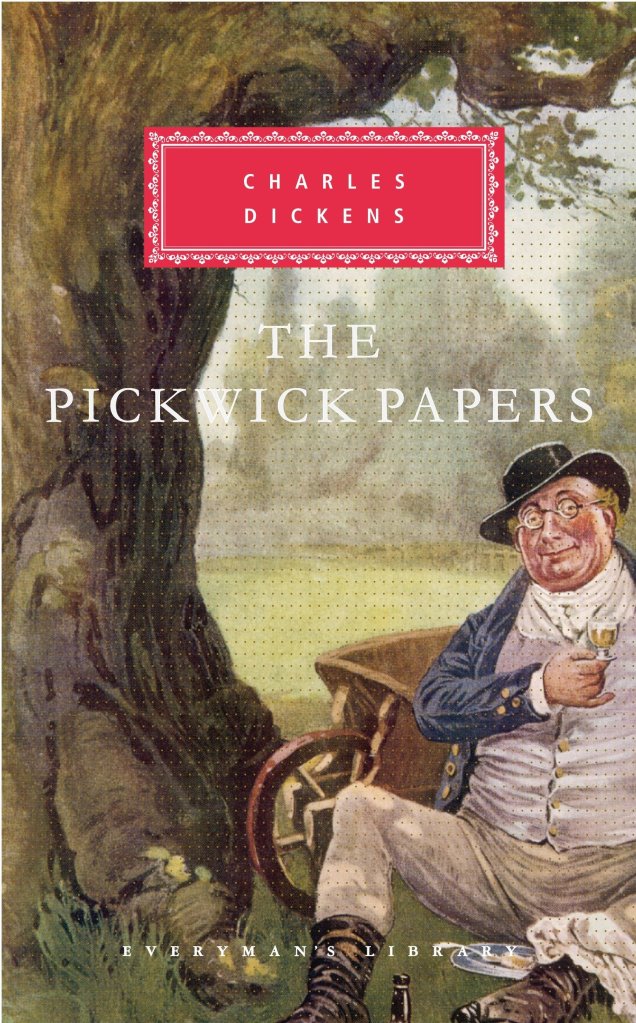
The Pickwick Papers, by Charles Dickens – I so enjoyed this comedic interlude!  The Pickwick Papers was Dickens’ first novel-length effort – published in serial form like so many other Victorian novels.  Following along with the adventures of Samuel Pickwick, Esq., and his disciples Augustus Snodgrass, Tracy Tupman and Nathaniel Winkle was good fun; I reviewed it at length here.  My only complaint was that every five to ten chapters, Dickens would pause the narrative to have some side character tell the Pickwickians a lengthy and irrelevant story; the extra stories added nothing but length and broke up the momentum of the main plot – I’d have dispensed with them.  Other than that, loved every word.

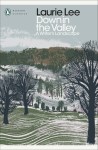
Down in the Valley: A Writer’s Landscape, by Laurie Lee – After Pickwick, I needed something MUCH shorter, and I had a new acquisition that fit the bill.  Down in the Valley reads like an oral history of Laurie Lee’s life and it turns out, that’s pretty much what it was – a collection of recollections, delivered (mostly) down at the pub, about Lee’s youth and his recollections of the landscape of his boyhood.  I blew through it in a day and it was a total delight.

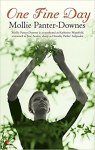
One Fine Day, by Mollie Panter-Downes – Another one that had been on my “to-read” list for years, and I loved every word.  One Fine Day is a slim quotidian novel following the movements of a no-longer-young wife as she goes about her day in newly post-war England.  Laura battles overgrowth in the garden, does her marketing, visits neighbors, and muses about her marriage and the changes that have come to England with the end of World War II.  It was ruminative and beautiful.
A Memoir of Jane Austen, by J.E. Austen-Leigh – I’ve long been interested in reading Austen’s nephew’s “memoir” – really a barely-concealed family effort to control Austen’s image.  So much of the “Dear Aunt Jane” trope (that we now understand from historians’ work was pretty inaccurate) comes from Austen-Leigh’s book, so I wanted to read it to see the origination.  I was also interested in a Victorian perspective on the notoriously rowdy Georgians; Austen-Leigh was at great pains to downplay that, too.  Hilariously inaccurate, but really interesting.

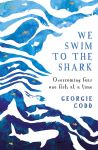
We Swim to the Shark: Overcoming Fear One Fish at a Time, by Georgie Codd – I have a longer post coming about this book, but for purposes of this recap – I loved it.  I happened upon the recommendation on BookTube and immediately ordered it.  Once you get past the gorgeous, eye-catching cover, it’s a totally fascinating and absorbing read.  Georgie Codd is severely ichthyophobic – afraid of fish – as is her grandmother, Granny Codd.  Georgie decides that she doesn’t want her fear to control her life, so she learns to scuba dive with the goal of swimming with the biggest fish of all – a whale shark.  There is so much here about overcoming fears, mixed with the history and culture of the dive community, mixed with Georgie’s own personal diving experiences (my favorite parts of the book).  I loved every word and was tempted to go back to the beginning and re-read the book immediately I’d finished it; not something that happens often.

September, by Rosamunde Pilcher – Had to read this one in September, for obvious reasons.  This was only my second Pilcher – I’d read and loved The Shell Seekers – and I really enjoyed it.  I kept thinking of Jane Austen’s words – “three or four families in a country village are the very thing to work upon” or something to that effect – as I read Pilcher’s doorstopper of a novel about the Blair/Balmerino and Aird families and the characters in their orbits.  September included all of the little details that Pilcher is famous for – she is not going to tell you that someone made tea in the kitchen, she is going to tell you what kind of tea it was, and describe the kettle’s exact shade of copper, and describe the kitchen at length down to the net curtains.  And as I said to Steve, sometimes that is exactly what you want.

Mr Tibbets’s Catholic School, by Ysenda Maxtone Graham – This was a quick read, but great fun – a profile of St. Philip’s, a prestigious Catholic school in London, from its founding in the 1930s through to the 1990s.  Graham is currently a mother in the St. Philip’s system (or at least, she was when she decided to write a history of the school; I don’t know if her son has aged out at this point) and she lovingly describes the early days, in which founder and headmaster Tibbets would bump along in his private car to pick up all four pupils and drive them to school, all the way to near-present day.  I loved the concept – sixty-odd years of history through the lens of one little school – and the execution was flawless and completely delightful.  It made me wish I lived in London so I could send Nugget to St. Philip’s.

Peaceful Parent, Happy Siblings: How to Stop the Fighting and Raise Friends for Life, by Dr. Laura Markham – Hmmm.  What to say about this one?  I read Peaceful Parent, Happy Kids years ago and thought Dr. Markham might have some good tips for getting through this extended period at home.  For many months now, Peanut and Nugget have been one another’s sole playmates, which is not normal.  They’re heartily sick of each other and I can’t blame them.  So – I listened to this on audio and mostly skipped over the third part, which was about introducing a new baby to the family (I’m past that point now).  Some of the tips were helpful but others were unrealistic (does your kid complain that you work too much? just tell your boss that you’ll be leaving at 4:00 p.m. from now on, that will definitely go well!).  I’ve tried to put a few of the tips into practice with varying levels of success.  And I remembered why I stopped reading parenting books: they always make me feel like a total crap mother.

Brendon Chase, by BB – Another one for my “back to school season” reading: BB’s classic novel of wild boyhood.  Young brothers Robin, John and Harold Hensman, faced with the prospect of returning to boarding school for the Easter term, decide that instead, they will run away to the woods and be “outlaws.”  They pull off a brilliant escape and spend the next several months living rough in the woods, shooting and trapping their own dinners, befriending a local hermit, and learning every inch of their forest habitat by heart.  The chapters about the boys are interspersed, every few chapters or so, with hilarious send-ups of the villagers’ frantic reaction to their flight – especially that of the hapless police officer, Bunting.  Total delight.
Dancing Fish and Ammonites: A Memoir, by Penelope Lively – File this in the category of “not what I expected, but still fantastic” – I should have known, since it’s Penelope Lively.  What I was expecting: a relatively linear memoir starting with Lively’s childhood in Egypt and focusing on the war years and mid-century Great Britain.  What I got instead: lovely musings on aging, memory, and books, with a few references to Egypt and world events sprinkled in every so often.  The writing was beautiful, of course, and I enjoyed every word.

Gilead (Gilead #1), by Marilynne Robinson – A re-read to end the month; in anticipation of this past Tuesday’s release of Robinson’s latest novel, Jack, I thought a read-through of the entire Gilead series was in order.  I’ve read Gilead and Lila before, but somehow missed Home, and of course have not yet read Jack.  I think the first time I read Gilead, I was not quite in the right frame of mind for it – I remember liking it very much, and thinking it was an excellent book, but not really being blown away.  Not so this time.  I sunk right into the world of Rev. Ames, Boughton, Glory, and Lila and found myself swept along on the current of Robinson’s beautiful words.

Quite a September in books!  I am still really enjoying reading from my own shelves – as reflected by the fact that I enjoyed pretty much everything I picked up this month.  It would be hard to choose a highlight, but since I must (that’s the rules, which… I made up, whoops) – it’s probably Gilead, because how could Marilynne Robinson not be the high point?  But I also loved One Fine Day and Brendon Chase, and We Swim to the Shark was fabulous.  I couldn’t go wrong in September, apparently.  For October – I’m looking forward to more good reading, naturally.  Starting with the rest of the Gilead books, and then wherever fancy takes me.  I want to read Lolly Willowes in October, so expect to see that on next month’s list, and I’ll probably revisit Poems Bewitched and Haunted and Agatha Christie’s Hallowe’en Party towards the end of the month.  I’m just really anticipating, as you can see.

What did you read in September?

The Classics Club Challenge: The Pickwick Papers, by Charles Dickens

Beginning in 1836, the then-24 year old Charles Dickens, writing under the pseudonym “Boz,” began publishing a series of stories about Victorian gentleman Samuel Pickwick, Esq., and his faithful friends Tracy Tupman, Augustus Snodgrass, and Nathaniel Winkle.  Mr. Pickwick is the founder, patron saint, and conscience of “The Pickwick Club,” a gathering of these and other gentlemen that appears to have no specific purpose.  At a meeting of the club, Mr. Pickwick proposes that he and his friends travel around the countryside observing life, and report back to the club their observations of the same.  The motion is heartily carried, and the four gentlemen set off from London and immediately become embroiled in all sorts of wine-soaked adventures.

“Nothing the matter,” replied Mr. Pickwick.  “We–we’re–all right.–I say, Wardle, we’re all right, an’t we?”

“I should think so,” replied the jolly host.–“My dears, here’s my friend, Mr. Jingle–Mr. Pickwick’s friend, Mr. Jingle, come ‘pon–little visit.”

“Is anything the matter with Mr. Snodgrass, sir?” inquired Emily, with great anxiety.

“Nothing the matter, ma’am,” replied the stranger.  “Cricket dinner–glorious party–capital songs–old port–claret–good–very good–wine, ma’am–wine.”

“It wasn’t the wine,” murmured Mr. Snodgrass, in a broken voice.  “It was the salmon.”  (Somehow or other, it never is the wine, in these cases.)

The four quickly become acquainted with a stranger who gets them into all sorts of trouble.  The stranger – Mr. Jingle, as it turns out – is a “stroller,” or a traveling performer.  He lives by his wits and by outwitting innocent souls with a little too much money for comfort – including Mr. Pickwick and his friends.  Within a short space after making their acquaintance, Mr. Jingle accompanies Mr. Tupman (an admirer of the ladies) to a ball, where he proceeds to insult a very easily-offended and heavily armed gentleman.  As Mr. Jingle was dressed in a suit borrowed from Mr. Winkle at the time (unbeknownst to Mr. Winkle), Mr. Winkle passes a very unpleasant next morning, having been challenged to a duel for an offense he has no memory of giving.  (And indeed, an offense of which he is innocent, having passed the ball upstairs in his room, sleeping off a quantity of wine.)  The duel scene is hilarious, and things only get funnier from there – and always seems to lead to lady trouble.

“Is it not a wonderful circumstance,” said Mr. Pickwick, “that we seem destined to enter no man’s house without involving him in some degree of trouble?  Does it not, I ask, bespeak the indiscretion, or, worse than that, the blackness of heart–that I should say so!–of my followers, that, beneath whatever roof they locate, they disturb the peace of mind and happiness of some confiding female?  Is it not, I say–“

The Pickwickians meet up with an old friend of Mr. Pickwick’s, one Mr. Wardle, who has two charming daughters and a spinster sister.  They all toddle over to Wardle’s manor house at “Dingley Dell,” where more hijinks ensue.  Mr. Jingle is involved, naturally; there is a failed elopement; a high speed chase in a post-chaise; and sundry other silliness.  Having thoroughly embarrassed themselves, the Pickwickians move on and spend two years roaming the country and getting into and out of difficulties.

There’s also a lengthy side plot in which Mr. Pickwick is sued for “breach of promise” by his former landlady, after a misunderstanding leads her to believe he has proposed marriage to her.  He spends some time hiding in Bath – in the Royal Crescent, of course – before returning to London to face the music, and he spends several months in prison alongside his faithful valet, Sam Weller (who is by far the best character in the book – somehow managing to carry out his employer’s business while kissing pretty housemaids on the regular).  The Bardell v. Pickwick plot gives Dickens the chance to vent his spleen about lawyers, which is a practice I heartily endorse.  (And has given me a good line to use on the next opposing counsel that irritates me in discovery: I shall call him a “mean, rascally, pettifogging robber.”  Kidding…)

Pickwick was a delight – no less polished than later works, but much more lighthearted.  Far from bogging down in the more than 950 pages (having been published in serial form, it was perhaps a bit too easy for Dickens to just keep the fun rolling instead of wrapping things up at an earlier point) I settled down with it every evening with delicious anticipation.  All day, every day for a week and a half, I wondered what scrapes the Pickwickians were going to find themselves in, and all evening I laughed away as I found out.

My only complaint about the book: periodically, every five to seven chapters or so, Mr. Pickwick and friends are either regaled by a new acquaintance in a pub, or happen upon a previously unknown manuscript, telling a story that is completely unrelated to the plot or any of the characters.  There is a former debtor who seeks revenge, a demon kidnapping, a talking chair that arranges marriages – you know, the usual sort of thing.  I didn’t find the stories added all that much, and they were an irritating diversion from the plot.  I’m sure “Boz” added them in to keep the serial going longer (and the paychecks coming) but the result in book form is a bloated narrative with annoying diversions.  Had Dickens cut out the storytelling parts, the book still would have been over 800 pages, but it would have been pacier.

That’s a minor quibble, though.  In all, Pickwick was wildly funny and a wonderful read.  I’m sure I will come back to it repeatedly in future years, although I will skip the storytelling chapters.

“I shall never regret” said Mr. Pickwick in a low voice, “I shall never regret having devoted the greater part of two years to mixing with different varieties and shades of human character: frivolous as my pursuit of novelty may have appeared to many.  Nearly the whole of my previous life having been devoted to business and the pursuit of wealth, numerous scenes of which i had no previous conception have dawned upon me – I hope to the enlargement of my mind, and the improvement of my understanding.  If I have done but little good, I trust I have done less harm, and that none of my adventures will be other than a source of amusing and pleasant recollection to me in the decline of life.  God bless you all!”

What is your favorite Charles Dickens novel?

The Classics Club Challenge: Delta Wedding, by Eudora Welty

(Image source: YMD.org)

“You can’t drink wine and not eat cake!” said Battle.  “Look here.  What kind of house is this?”

I’ve written before, here, about my love for Eudora Welty’s writing.  My high school freshman English teacher introduced me to Welty – insisting my mother buy me a copy of One Writer’s Beginnings, which she promptly did.  I immediately fell for Welty’s voice and proceeded to tear through her short stories and most of her novels – but Delta Wedding was my favorite.  I read it multiple times in high school, but hadn’t re-read it in years.  I often find myself craving Welty during the dog days of summer, and it was time to dive back into her world of the Yazoo Delta and Dabney Fairchild’s wedding preparations.

(Image source: Eudora Welty Collection, National Endowment for the Humanities)

The novel begins on a hot September day in 1923.  Nine-year-old Laura McRaven is arriving in Fairchilds, Mississippi, on the Yazoo Delta, aboard a train called the Yellow Dog.  She is en route to attend the wedding of her seventeen-year-old cousin Dabney Fairchild, at Shellmound, the Fairchild family’s plantation.  When Laura arrives, she is met at the station by a gaggle of Fairchild cousins, and is immediately swept back into family life.  The events leading up to Dabney’s wedding are told through a series of vignettes, all of which are gorgeously crafted – Welty is at her best when recording, in minute detail, the incidents of everyday life and the natural landscape.

Grass softly touched her legs and her garter rosettes, growing sweet and springy for this was the country.  On the narrow little walk along the front of the house, hung over with closing lemon lilies, there was a quieting and vanishing of sound.  It was not yet dark.  The sky was the color of violets, and the snow-white moon in the sky had not yet begun to shine.  Where it hung about the water tank, back of the house, the swallows were circling busy as the spinning of a top.  By the flaky front steps a thrush was singing waterlike notes from the sweet-olive tree, which was in flower; it was not too dark to see the breast of the thrush or the little white blooms either.  Laura remembered everything, with the fragrance and the song.

It would be impossible for Welty to focus on every Fairchild – there are so many of them.  So a few characters – Ellen, Laura, Dabney, Shelley, George and Robbie – get the most attention, while others – Battle, the aunts, the younger cousins, baby Bluet – are more sketchily filled in.  As a teenager, reading Delta Wedding for the first time, I was most drawn to Shelley Fairchild.  One year older than the teenaged bride Dabney, marriage couldn’t be further from Shelley’s mind.  She wants to travel and to write, and she is forever finding herself saddled with the little ones – schlepping Laura and India on a mission to inquire about her mother Ellen’s lost brooch, stopping off at the store and forgetting the groceries.

Part of the delight of Delta Wedding, indeed, is that there are so many characters – there is always someone with whom to identify, no matter your stage in life – and there is always a character to draw you in.  I’ve been Shelley, the eldest child longing to flee the nest.  I’ve been Laura, the young visitor, and Robbie, the unwelcome interloper.  (Indeed, on this reading, Robbie touched my heart more than she used to do.)

This time, though, the character who most interested me was Ellen.  Married to the eldest brother – Battle – and lady of the house at Shellmound, Ellen is both of the Fairchilds and apart from them.  To an outsider like Robbie, Ellen is just as much Fairchild as the rest of them.  But there are little droplets of mentions and implications that Ellen is not Fairchild.  It’s repeatedly brought up that Ellen is “from Virginia” and thereby, a little bit “snooty.”  Ellen herself feeds into this – while she has mostly settled down to become a Fairchild baby machine, she can’t help but mention that the “Dabney” china (her family’s) is the good china.  And at one point, she muses about the strangeness of life’s paths, making her the matriarch of a big country family when she is more suited to a bookish life in the city.  (It’s an interesting juxtaposition – Robbie, who has married George, the youngest Fairchild brother, and is living a luxurious life in the city, couldn’t be more discontent with her lot.  Ellen would have thrived there, for all she has made life work at Shellmound.)  I was interested in the contrasts between Robbie and Ellen – both married into the family, but Ellen has been accepted wholeheartedly, if acknowledged as a snooty Virginian, while Robbie is persona non grata.  Why?  Is it because Ellen has been around longer, or because she was from a fancy Virginia family instead of a poor Mississippi family, or because she has made so many Fairchild babies, or because she married eldest brother Battle instead of beloved baby George, or something else?  Was Ellen immediately accepted or did she have to earn her Fairchild stripes?  I could read a whole book about Ellen.

I can’t conclude this review without mentioning the setting – physical and temporal.  As with any book set in the 1920s on a plantation in the deep South, you can expect to encounter racial issues.  There’s not much strife at Shellmound, and I think that’s largely because the characters of color are side characters to this particular narrative.  (Whether or not they should be given a more central place in the narrative is above my pay grade: it’s a story about a wedding in a gigantic family, so maybe Welty just couldn’t cope with any more central characters; several of the family members also get short shrift.)  The characters relate to one another in a fairly standard way and, for the times, it’s nowhere near the most cringeworthy thing I’ve ever read.  It would make this review much too long to address the subject of race relations in classic novels and I’m not sure I am up to taking that topic on, anyway.  Suffice it to say I think there’s value in reading these older works from a contemporary perspective, recognizing that things have improved and there is yet more work to be done, and acknowledging the literary merit apart from the social issues.

This is not a story about race relations – there is much more class tension than race tension.  Both George (with Robbie) and Dabney (with Troy) are considered to have married, or be marrying, “beneath” them and “beneath” the Fairchilds.  Troy has an easier time getting accepted by the family, although none of them are over-thrilled with the match.  Indeed, that class tension is the driving focus of the narrative – something I missed completely when I first read Delta Wedding at sixteen – and is personified in the three in-law characters, who are rather more interesting than the Fairchilds themselves.  Ellen, Troy and Robbie – the ways in which they are similar (not Fairchild) and the ways in which they diverge (pretty much everything else) – represent that class tension between the Fairchilds and the rest of the world.  And of course, Eudora Welty is the writer to explore that, with her telescopic focus on the small details of everyday life.

A brown thrush in a tree still singing could be heard through all the wild commotion, as Dabney and Troy drove away, scattering the little shells of the road.  Ellen waved her handkerchief, and all the aunts lifted theirs and waved.  Shelley began to cry, and Ranny ran down the road after the car and followed it as long as it was in hearing, like a little puppy.  Unlike the mayor’s car that had come up alight like a boat in the night, it went away dark.  The full moon had risen.

Have you read any Eudora Welty?  Which is your favorite?

Themed Reads: School Daze

September!  It doesn’t look like the usual September, that’s for sure.  While the scent of fresh apples and newly-sharpened pencils is in the air – for sure, that hasn’t changed – my kids will not be getting on the school bus this year.  There will be no huddling on tiny chairs at “Back to School Night,” no Halloween parades or holiday concerts, no crumpled art projects in little backpacks.  What there will be instead, for me, is a five-year-old “office mate” sitting next to me, interacting with his classmates on Google Classroom while I try to squeeze work into his math and language arts lessons (Peanut will be doing the same downstairs, at her little desk in the family room next to Steve).  September is a nostalgic month of the year for me every year, as I think back on my own school days.  This year, more than any other, I want to visit books about the way school used to look, and the way it may look again (in some cases).

First of all, when it comes to education, no one is more committed than Malala.  I Am Malala: The Girl who Stood Up for Education and was Shot by the Taliban, by Malala Yousafzai, is a stunning memoir of a story that is widely known around the world.  Malala grew up in the Pakistani mountains, the daughter of a progressive father who valued girls’ education – and became a youth advocate for girls’ education herself.  One day, armed Taliban stormed onto a bus, demanded to know which one of the girls was Malala, and then shot her.  In her memoir, Malala – who just graduated from Oxford University – tells the story of her childhood, her horrifying ordeal, and her ultimate triumpg.  All because she wanted to go to school and learn – something that many children take for granted, but many others can only dream.

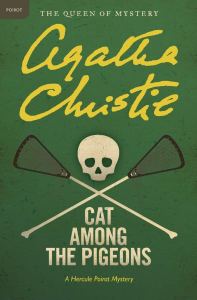
For something lighter, how about a murder mystery set at a boarding school?  Cat Among the Pigeons, by Agatha Christie, drops Hercule Poirot into the thick of a murder at a girls’ school.  There are missing gems, and tennis, and Poirot solves the crime (of course) in a decidedly squidgy way.  (If you’ve read the book, you’ll likely remember – somewhat uncomfortably – the clue that puts him onto the killer’s scent.)  Like many bookish children, I dreamed of going to boarding school.  Cat Among the Pigeons helped to cure me of that dream.  You’re welcome!

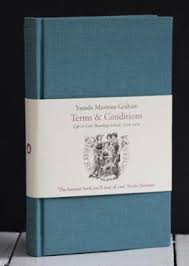
I usually try to profile only books that I’ve read in these posts.  But two that I haven’t – that I’m hoping to get to this month or next – are Mr Tibbits’s Catholic School and Terms and Conditions, both by Ysenda Maxtone Graham and published by Slightly Foxed.  (While I haven’t read these for myself – they’re on my shelf – I’ve heard good things and everything that Slightly Foxed has done has been a winner for me so far, so no reason to think these won’t be.)  Mr Tibbits profiles half a century in English history through the lens of one boys’ school, and Terms and Conditions focuses on the many changes that girls’ boarding schools experienced in the twentieth century, through about 1970.  I will report back!

What are your favorite school books?