
 Albert Corde is not exactly a self-made man; he comes from a wealthy Chicago family – as his old friend, Dewey Spangler, couldn’t fail to notice, Corde’s father drove a Packard. But even if Corde isn’t a self-made man, he did make himself into a world-reknowned journalist. And then he unmade himself. Deciding he’d had enough of current events, he returned to Chicago and took on a position as a professor, and later Dean of Students, at a local university. He married a brilliant astronomer and settled down to further his education and live a quiet life.
But circumstances have a way of interrupting, and Corde eventually found himself at the center of two maelstroms, at least in part of his own creation. He wrote two articles for Harper’s on the racial politics that were destroying his city – the slums, the corruption, the hideously graphic violence of the Cook County Jail. His articles struck a nerve with the powers that be in Chicago government and at the university – and while no one could do anything to him, exactly, the atmosphere was tense. And on top of that, Corde became involved in the trial of a local ne’er-do-well for the slaying of a married graduate student at the university. Corde identified the body (as Dean of Students, it was his responsibility). He took the slain student’s stricken wife under his wing, offered a reward for information leading to the capture of the killers, and was a fixture at the trial. Corde’s involvement in the trial embarrassed the university – especially when circumstances (again, those darn circumstances) shook down such that the accused murderer was a friend of Corde’s nephew Mason (and Mason was himself given to threatening witnesses), and Corde’s cousin Max was the defense lawyer.
With all these tribulations at home, Corde’s mother-in-law is dying in Rumania. He accompanies his wife, Minna, to “the old country,” to bid farewell to her mother. Dr. Valeria Raresh was once a dedicated Communist Party member – but she, like Corde, has fallen from grace, having left the Party and sent her daughter to America. Now, as Valeria lies on her deathbed, the Party officials are determined to punish Minna for her emigration and her mother’s defection. Corde is helpless as he and Minna try to navigate the Rumanian beaurocracy and visit Valeria as she lies dying in the hospital. As he waits – oh, yes, there is interminable waiting involved in this process – Corde reflects on the mess he’s left behind in Chicago and on his own fall from grace.
The Dean’s December is not a plot-driven book, and neither are there particularly compelling characters. (I’d have liked to know more about Minna and Tanti Gigi, but Corde himself was not particularly sympathetic, nor were his friends and relations.) To appreciate The Dean’s December, you’ve got to appreciate the raw and wrenching writing. Saul Bellow’s prose is something like a punch in the face – sharp and surprising. But still, you can enjoy the writing if you make the mental space for it. I found that I was not liking The Dean’s December at all when I tried to read it in bits, here and there, during the cacophany of lunchtime at a client site. It was when I settled in for a weekend afternoon, in the silence of my house, that I was able to allow Bellow’s prose to really work its magic on me, and then I was amazed. I read a Goodreads review that said that The Dean’s December is a “quiet book,” and it was. It was quiet in that there wasn’t much action – or even, during certain chapters, much dialogue – it was reflective. And it was also quiet in that it demanded quiet, attention, focus, and only yielded up its considerable gifts when you were devoted to delving into the text and extracting them for yourself.
For example, here’s a passage I like, from when the Dean reflects on a visit he paid to a Public Defender in the course of researching his Harper’s articles:
Anguish beyond the bounds of human tolerance was not a subject a nice man like Mr. Varennes was ready for on an ordinary day. But I (damn!), starting to collect material for a review of life in my native city, and finding at once wounds, lesions, cancers, destructive fury, death, felt (and how quirkily) called upon for a special exertion – to interpret, to pity, to save! This was stupid. It was insane. But now the process was begun, how was I to stop it? I couldn’t stop it.
Zing. No, Corde couldn’t stop. He was compelled to go forward and tell the truth that no one really wanted to hear, and of course they didn’t like it once it was told. And as he sits in Minna’s old room in Rumania, reflecting on the strange conflict that he created, Corde is able to see Chicago’s psyche as America’s psyche, and to explain how different it is back home from the world behind the Iron Curtain:
“What was the lesson? Well, they set the pain level for you over here. The government has the power to set it. Everybody has to understand this monopoly and be prepared to accept it. At home, in the West, it’s different. America is never going to take an open position on the pain level, because it’s a pleasure society, a pleasure society which likes to think of itself as a tenderness society. A tender liberal society has to find soft ways to institutionalize harshness and smooth it over with progress, buoyancy. So that with us when people are merciless, when they kill, we explain that it’s because they’re disadvantaged, or have lead poisoning, or come from a backward section of the country, or need psychological treatment…”
The prose is really extraordinary. It’s harsh and terse and jumpy, but elegant. (And to read it, you have to have a certain tolerance for strong language and violence. It’s not my cup of tea, but I’m willing to trust an author as celebrated as Bellow. Just a warning to those who aren’t – steer clear.) One more passage I like, then I promise I’ll stop. When {spoiler alert, but it’s clear from the start that it was bound to happen} Valeria dies, her old friends come out of the woodwork for the funeral. And their presence is both a comfort and a rebuke to Minna, the one that got away:
They came… well, they had their reasons. They were there to signify, to testify. They came also to remind Minna of their existence. “Yes, we’re still here, in case you wondered, and we could tell you plenty. And your mother, she got you away, and it was one of her great successes. Good for you. And for her. Now it’s over for her, and soon for us, too. And this is what turns us out, in this gloom.”
No, The Dean’s December isn’t easy. It demands that you think, and check your expectations at the door, and read with care. I think it’s good to read difficult books. I don’t read them in succession, most of the time. But it helps to read a book that makes you struggle and work a little bit. If you’re willing to make the effort, The Dean’s December will deliver. Recommended.
I am submitting this post as my first entry in the “What’s In A Name?” blog challenge hosted by Beth Fish Reads. The Dean’s December is submitted to the category “something on a calendar.”
The Dean’s December, by Saul Bellow (not an affiliate link)

 Basically nothing about The Master and Margarita is as you would have expected, which is pretty much about what I expected. A modern Russian novel that couldn’t be published during the author’s lifetime due to its controversial message, the book alternates between being hilarious and moving, fantastical and all too realistic.

 Bakerton, Pennsylvania is a mining town. It’s a town of company houses and union jobs, of church and family. Bakerton is a town that depends on its coal mines and, in the years during and after World War II, those mines are doing raging business. Baker Towers is the story of those years, told from the perspective of the Novak family: widowed Rose Novak and her five children, Georgie, Dorothy, Joyce, Sandy and Lucy. Georgie and Dorothy escape their small-town childhoods, Georgie for the Navy and then Philadelphia and Dorothy for a wartime clerical job in Washington, D.C. Joyce joins the service as well but returns to care for her ailing mother and watch over her younger brother and sister, a sacrifice which goes un-thanked. When Dorothy has a breakdown, Joyce takes responsibility for her elder sister as well, settling permanently in Bakerton to watch life pass her by. Meanwhile, Georgie has “made good” in Philadelphia but remains haunted by what could have been his life, had he stayed home and married his small-town sweetheart, and Lucy struggles with her sense of self and perspective after being spoiled by her mother all her childhood. Each of the Novak children wrestles, in his or her own way, with the legacy of growing up in the shadow of Baker Towers, the two massive piles of mine refuse that serve as the town’s most commanding landmark.
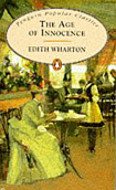 Newland Archer is Old New York. A favorite Fifth Avenue son of the Gilded Age, he moves effortlessly and seamlessly through its rigid social hierarchies. And with his impending engagement to May Welland, widely regarded as the most beautiful, elegant and unattainable of the New York belles, Newland’s place in society is secure. The union of Newland’s family with May’s will bring together New York’s two most powerful ruling clans. But May’s family, the Mingotts, in addition to being powerful, has its unconventional elements. May’s cousin, Ellen Olenska, nee Mingott, has just returned to New York, fleeing a disastrous marriage to a Polish Count. New York is scandalized by Ellen’s vaguely foreign ways and her seeming incomprehension of the delicate social balance she has upset simply by imposing her presence and asserting her right to be free from a “scoundrel” husband. Responding to calls of the family matriarch, May’s grandmother Catherine Mingott, Newland rallies around Ellen as a good soon-to-be Mingott son-in-law should. He gently smooths over her social stumblings, even using family connections to persuade the revered van der Luydens to rescue Ellen’s reputation when the rest of New York conspires to snub her. But as Newland finds himself drawn more and more into the role of Ellen’s champion, he simultaneously becomes deeply infatuated with this woman who understands art, literature, and the value of good conversation in a way that his chosen wife never can and never will. Newland chafes and struggles painfully with the bonds of New York’s expectations for him – wanting nothing more than to desert May and run away with Ellen. But is he, in the end, capable of choosing love over convention? And does he even really, in his heart of hearts, want to choose?
 covered in flour