

This is a PSA for all the other emotional pregnant ladies out there. If you’re anything like me, this book will make you flood your living room. Let’s be real here. These days I weep at Publix commercials and Barefoot Contessa episodes. So I really didn’t stand a chance when it came to reading about a little boy’s journey toward healing after his dad is killed on September 11th. Still, the back of the book promised that the journey would be touching but hilarious in parts. I never quite saw the hilarity. In fact, when I got to about page 300 or so, I turned to my husband, tears streaming down my face, and said “I don’t understand, when does it get hilarious?”
Lack of hilarity aside, Extremely Loud and Incredibly Close was sweet, moving, creative and well-written. Nine-year-old Oskar Schell (well, he’s probably nine; he has a tendency to add or subtract years as it serves his purpose, making himself older if he thinks he has a chance at kissing a lady, younger if he wants sympathy) has been stuck in his own head since his dad died on 9/11, two years previous. Oskar’s life is difficult enough, between playground bullies, a mom who seems to be moving on with her life and a psychologist who irritates Oskar with his inane-bordering-on-offensive questions. But Oskar makes it much more difficult by constantly “inventing” in his head – from silly ideas like extra-long limos to torturing himself with the ways his dad might have died. Then one day, as Oskar goes through his dad’s possessions, he finds a mysterious key in an envelope with one word written on it: “Black.” Oskar’s dad always used to give him clues and quests, so he believes the key is one last game from his dad and he sets off on a journey through New York City, looking for the lock the key opens. Oskar thinks the quest is a way for him to stay close to his dad… but in fact, it’s his path to healing. On this path he encounters New Yorkers of all ages, some of whom share their own survival and healing experiences with him. Meanwhile, Oskar’s story is interwoven with that of his grandparents, who survived the Dresden bombing in World War II but each carry their own emotional scars.
I’d never read any of Jonathan Safran Foer’s fiction works, although I liked his veggie manifesto, Eating Animals. In Extremely Loud and Incredibly Close I recognized a number of similarities to Safran Foer’s non-fiction – particularly the use of illustrations and wordplay to supplement the story. While I was a weepy mess throughout the book, I thought Oskar’s story was beautiful. Recommended.
Get the book! Extremely Loud and Incredibly Close, by Jonathan Safran Foer (not an affiliate link)
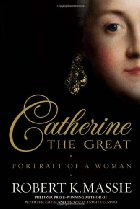 Robert K. Massie is arguably the best modern biographer of the Russian tsars. His works are richly detailed and meticulously researched, but readable. I loved his account of the last Russian Imperial family, Nicholas and Alexandra, and so I was very excited to read his newest biography, Catherine the Great.
 For hundreds of years the town of Marstal in Denmark stood between land and sea. The boys of Marstal gather to terrorize their teacher and sing their hymns beneath model schooners, knowing that one day they will be sailing on life-size ships like their fathers. The men of Marstal look to the sea – it is more than the way they make their living, it’s their destiny. The women of Marstal say goodbye to husbands, sons, brothers, knowing that many will never return – they will be swallowed by the sea. We, the Drowned tells their stories, spanning over the course of 100 years. The story begins with a sea battle in 1848, as Danish sailors take on German rebels. The Danes suffer horribly, but Laurids Madsen manages to survive the battle thanks to his boots. Not long after, however, he disappears and his son Albert searches the Pacific for years, looking for the facts behind his father’s disappearance. Years later, Albert retires to Marstal and takes a young widow, Klara, and her son Knud Erik under his wing. Klara is determined that Knud Erik should not be a sailor. When Knud Erik defies her wishes, Klara declares war on the town of Marstal and the entire sea.
 Elise Landau is part of the glittering set of Vienna in 1938. (A peripheral part, to be sure – she’s really just a kid. But a part, nonetheless.) Daughter of a famous opera singer and an avant-garde novelist, sister of an up-and-coming (and beautiful) violist, Elise is accustomed to a world of parties, champagne, silk dresses, pastries in the famous hotels and cafes of Vienna. She is steeped in culture and luxury, living a life of ease as the petted baby of a well-off family. Until she’s not. Because, you see, it’s 1938 and Vienna and Elise is Jewish. Her parents, Anna and Julian, are bound for New York; her sister Margaret and brother-in-law Robert are headed for San Francisco. But Elise is not famous – she’s not part of the intelligentsia or glitterati, and so nobody wants her. Yet she must escape Vienna and she does – on a “domestic service visa” – a means for privileged young Jewish girls from the Continent to flee to England by taking up positions as housemaids in the great country houses. Elise finds herself a place at Tyneford House, with the Rivers family – one of the oldest, most respected non-titled English families. Life as a housemaid is hard, especially for one used to getting her way in everything. Elise has to learn to work hard, keep long hours, and ignore the disrespect she is expected to absorb as a maid. She has to keep silent through petty indignities from the other staff, and real cruelty from a nasty houseguest. But while Elise’s life in England is hard, Tyneford comes to feel like home. Elise makes friends – a local girl named Poppy, and Kit Rivers, the son of the master of the house. Elise’s friendship with Kit will transform them both – but when the war escalates, everyone at Tyneford is going to have to accept the big changes that are coming.
 My first thought upon reading a few chapters of The Snow Child was: “This is like a depressing version of Little House in the Big Woods.” But oh, it quickly became much more than that. Jack and Mabel are an aging couple who have never been able to have children. They moved to Alaska to escape the judging, pitying eyes of friends and relations who wonder why they have remained a family of two, and to be alone with their sadness. But Jack and Mabel aren’t alone for long. One night they build a little girl out of snow, and soon after, a real, live, flesh and blood little girl appears in their yard. Faina, as they come to know her, is the orphaned daughter of a trapper, who flits through the forest, dancing atop the snow, killing small animals for her meals and migrating north when spring thaws the fertile Alaskan valleys. At first Faina is afraid of Jack and Mabel, but they give her space and she gradually grows closer and closer to them, until they come to love her as a daughter and she to consider them her parents. But Faina is growing up, and Jack and Mabel begin to dread the day when they will lose the only child they’ve ever had.
 I’ve been looking forward to reading Quiet: The Power of Introverts in a World That Can’t Stop Talking since it was released. But I had to wait awhile, because there was a looooooong holds queue at the library. Apparently there are a lot of introverts in Fairfax County, and we all have library cards.
 Elizabeth I is the story of two red-haired women at the end of the sixteenth and beginning of the seventeenth century. One is Queen Elizabeth I, daughter of Henry VIII and Anne Boleyn, avowed virgin and monarch during what would come to be known as a golden age for Great Britain. Elizabeth’s story begins in 1588 with the first Spanish Armada. Throughout the book, her reign is plagued by threats both internal and external – scheming courtiers, Irish rebels, and the ever-present Spanish menace over all. The other woman is Elizabeth’s “lookalike cousin” and rival Lettice Knollys. Lettice, having made no vow to remain a virgin, had seduced and married Elizabeth’s romantic interest, Robert Dudley. For that crime she was banished from court – although Dudley was eventually forgiven – and has been spending the rest of her life plotting to get back in the Queen’s good graces. Lettice’s best hope for regaining her family’s power and influence lies with her son Robert, Earl of Essex, who becomes one of Elizabeth’s favorite courtiers. But Essex is a deeply flawed man – entitled, petulant, and ultimately dangerous – and Elizabeth’s consistent overlooking of his flaws will ultimately threaten her crown.
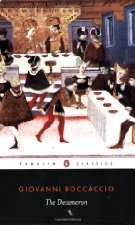 Giovanni Boccaccio’s Decameron is not a book that you can expect to dispatch with in a few days. (I’d say that’s fairly typical of medieval literature.) But it’s not a book you’ll get sick of, either. I read this book on a beach in Mexico, on the subway on my way to work, and everywhere in between, and was endlessly entertained the entire time.
 Several of the comments on the back of Paris to the Past called it a book about love. That’s exactly what it is. On every single page, Ina Caro’s love shines through – love for France, its history and people, its food, and for the husband who is by her side as she “travels through time.”
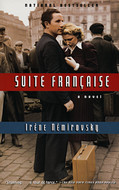 Amazing… spectacular… breath-taking… monumental… no, I give up. I just can’t think of enough superlatives to describe Suite Francaise. Irene Nemirovsky’s final work is, even in its unfinished form, one of the most important books of the twentieth century. I’d feel that way even if I didn’t know the author’s remarkable story, but having some context in which to place the book makes it that much more marvelous.
 covered in flour