Reading Round-Up: November 2013

Reading is my oldest and favorite hobby.  I literally can’t remember a time in my life when I didn’t love to curl up with a good book.  Here are my reads for November, 2013…

The Goldfinch, by Donna Tartt – Tartt’s highly anticipated, epic chunkster has been on my to-read list since before its release.  I was so excited to get it from the library, and it was just as fabulous as I expected it to be.  Theo Decker, Tartt’s protagonist, is a deeply troubled, flawed young man.  At the age of 13, Theo miraculously survived a terrorist attack that killed his mother in the Metropolitan Museum of Art.  Theo’s memories of his mother are tied to a small but ethereal Dutch master painting, The Goldfinch.  As Theo grows up, the painting draws him into a dangerous circle.  This was suspenseful, poignant and beautifully written.  My only criticism is that it was about 100 pages too long – but I didn’t even mind that, because I was so glad to spend more time in Theo’s dark, richly textured world.

The Pigeon Pie Mystery, by Julia Stuart – I loved Stuart’s previous book, The Tower, the Zoo and the Tortoise (see my review here), but I wasn’t as captivated by this one.  The characters were almost too quirky and the mystery – who poisoned a reviled member of the grace-and-favour community in Hampton Court Palace? – just didn’t grab me.  Still, it was a cute, fluffy read.

Sense and Sensibility, by Joanna Trollope – I keep reading Austen adaptations, hoping for something I’ll really enjoy, but I’ve never found it – until now.  Joanna Trollope’s adaptation of Sense and Sensibility is spot-on, modern and compelling yet true to the spirit of the original.  Elinor Dashwood is a practical architecture student, Marianne a dreamy guitarist, their mother an artist with a flair for drama.  Trollope masterfully fiddles with the elements of Austen’s original that wouldn’t quite work today (explaining away the sisters’ disinheritance, for example) and weaves contemporary elements into the classic story.  This is Austen with iPods and Facebook, and it’s a hoot.

The Thinking Woman’s Guide to Real Magic, by Emily Croy Barker – I had been waiting and waiting and itching to get my hands on this, and… I was pretty disappointed.  This is the story of one Nora Fischer, an anxiety-ridden graduate student who stumbles into an alternate world, where she quickly falls in love and is married to a prince who turns out to be a monster.  After a terrifying encounter with her husband, Nora is rescued by the magician Aruendiel, and she soon finds that if she wants to survive in this treacherous world, she must learn to do magic too – because her mother-in-law, the fearsome Ilissa, will stop at nothing to get Nora back.  I thought this book would be a blast to read, but mostly, I was just bored.  Nora spends pages and pages doing things like mucking out horse stalls, peeling potatoes, and magically mending broken bowls.  Yawn.  Even when the action picked up toward the end of the book, I had no trouble putting down the book and walking away from the climactic scene.  And worse: despite the title of the book, Nora didn’t do much, or any, thinking – she was just a pawn in the war between Aruendiel and Ilissa, and a dull one at that.  The book desperately needed an editor’s red pen – if it had been about 250-300 pages shorter, it might have held my attention.  As it was… blah.

Poet’s Pub, by Eric Linklater – Saturday Keith is a terrible poet, but a terrific publican, as he discovers when his Oxford chum’s mother, Lady Mercy Cotton, asks him to manage the newest acquisition in her brewing and pub business.  Originally called The Downish Helican, Lady Mercy’s new property has long been known as “The Downy Pelican,” and when word gets out of its new landlord, it becomes simply “Poet’s Pub.”  The first half of the book is a slow and ponderous introduction to the Pelican and its residents, told through a series of vignettes.  Things pick up, though, with a theft and a kidnapping and a hilarious car chase involving a charabanc.  I’ve heard Poet’s Pub compared to a P.G. Wodehouse novel, and it’s easy to see parallels, although they have their differences.  This little-known classic made for some fantastic reading.

Royal Blood (Her Royal Spyness Mysteries #4), by Rhys Bowen – This installment of Lady Georgie’s adventures finds our heroine suddenly beset by the most unwelcome houseguests – her wishy-washy brother Binky and his odious wife Fig, who is expecting a new little Rannoch.  Georgie escapes via a convenient request by Queen Mary: represent the British Royal Family at the Transylvania wedding of Princess Maria Theresa of Romania and Prince Nicholas of Bulgaria.  The bride – who turns out to have been Georgie’s old school chum Moony Matty – has specially requested Georgie as a bridesmaid.  Georgie is relieved at the excuse to depart London, but when she arrives at Bran Castle, all is not as it should be.  The castle is terrifyingly gloomy and forbidding – even to one who grew up in the chilly environment of Rannoch Castle.  Strange visitors are popping out of paintings in Georgie’s room at midnight, the bride might be a vampire, Georgie has accidentally become engaged to Prince Siegfried (a.k.a. Fish-Face) and a reviled wedding guest is poisoned!  Georgie is going to need all her wits about her to dodge the descendants of Vlad the Impaler and catch the murderer before someone else is bumped off and the wedding is ruined!  A fun romp, as always – I love Georgie more and more with each adventure.

November was kind of a slow month for me, reading-wise.  I’ve had my attention pulled in a number of directions lately and I spent most of the month still in a bit of a reading rut.  Some of the books I picked up this month disappointed me, more so because I thought I’d love them.  But I did have some good reading moments – the second half of Poet’s Pub, in particular, and of course I always love a visit with Lady Georgiana.  December promises to be plenty of fun, as I’ve joined up with another of Beth’s readalongs – this one of Middlemarch, which I’ve been wanting to read for a long time.  Stay tuned for plenty of book chatter next month!

ANNE OF THE ISLAND

Anne of the Island

(Image Source)

At long last, Anne has realized her cherished ambition to attend Redmond College in Kingsport, Nova Scotia, and study for her B.A.  It took two years of working and saving to come up with her tuition, but when Anne finally reaches the longed-for day, she’s reluctant to leave her beloved Prince Edward Island.  She has some company in her exile, though: Queens Academy friend Priscilla will be studying at Redmond too, as will Gilbert Blythe and Charlie Sloane from Avonlea.  Anne arrives in Kingsport and quickly reunites with Priscilla, but even with her old friends around her, she feels countrified and out of place.  If we know anything about Anne, though, it’s this: it’s impossible to keep her down for long.

Sure enough, Anne begins to put “soul-roots” into Kingsport and soon finds that the big, unfriendly city starts to feel like home.  She’s helped along the way by long rambles in a charming graveyard and by her rollicking social life with Priscilla, Gilbert, and new pal Philippa Gordon.  When Anne and Priscilla’s friend Stella (another Queens graduate) comes to join them, the girls move into a sweet, charming cottage called “Patty’s Place,” complete with two china dogs guarding their hearth and Stella’s Aunt Jamesina keeping house for them.  Patty’s place is the scene of many girlish adventures over the next few years: studies, parties, and love affairs.

Yes, romance has begun to pop up in Anne’s world!  She receives several marriage proposals: two are laughably awful, but the other two… I won’t spoil things, but Anne has some big decisions to make.  There’s Roy Gardner: handsome, rich, and charming – in short, everything Anne has always believed her Prince Charming would be.  But then there’s Gilbert, who makes no secret of the fact that he wants more than just Anne’s friendship.  The question is, are Anne’s feelings for Gilbert deepening, or will he always be just friend material?

Anne of the Island is my favorite of the Anne books, and has been since the first time I read the series.  I love seeing Anne initially out of her element, and watching her fall in love with Kingsport and grow into a serious, purposeful young woman.  The safe, cozy atmosphere of Patty’s Place is the perfect place for Anne to spread her wings, knowing her girlfriends are right there to call her on her nonsense if necessary, while they all support and cheer one another on.  Her romantic misadventures are both amusing and dramatic, and the final scenes of the book – when it becomes terribly clear to Anne just who the right man for her is, but it might be too late – are heart-stirring.  I can’t think of a single thing I’d change about Anne of the Island – basically, it’s perfect.

Buy Anne of the Island, by L.M. Montgomery, here (not an affiliate link), or support your local indie bookstore!  I’m submitting this review as part of my Classics Club challenge.

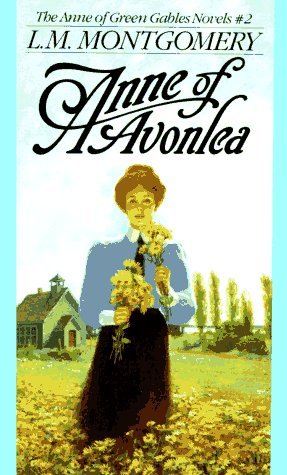
ANNE OF AVONLEA

Anne of AvonleaThis second volume of the Anne of Green Gables series will always be one of my favorites.  Anne is growing up and coming into her own.  At the end of Anne of Green Gables (spoiler alert, for those who haven’t read it!) Anne has decided to forego the prestigious scholarship she won to Redmond College and, instead, to stay home and help the aging Marilla run Green Gables.  Anne originally planned to teach at a neighboring village’s school, but her old foe Gilbert Blythe – who’d won the Avonlea school – gallantly agreed to give it up for her.  This meant several things: (1) Anne could remain with Marilla full-time; (2) Gilbert would need to live away from home and pay rent, making it harder for him to eventually put himself through college; and (3) Anne finally has the opportunity to bury the hatchet and accept GIlbert’s renewed offer of friendship.
Yay for the long-awaited Anne-Gilbert friendship!  As the two smartest kids in Avonlea, they’re made to be friends, and it was only Anne’s stubborn refusal to forgive Gilbert for calling her “Carrots” that stood in their way.  Anne glories in her new friendship, finding Gilbert an invaluable ally in their newly-founded Avonlea Village Improvement Society and a good sounding board on teaching strategies.

Of course, this being Anne, things don’t go entirely smoothly for her.  The A.V.I.S. runs into trouble when, despite its good intentions, the Avonlea Village Hall is painted a hideous shade of blue instead of the green they’d planned.  Anne struggles with one of her pupils, Anthony Pye, who is determined to dislike her because she’s a “girl teacher” and therefore can’t be any good.  (Anne, for her part, is determined to make Anthony love her.  The rest of Avonlea begs her not to waste her time – Anthony is a Pye, after all – but Anne can’t be persuaded to give up on Anthony.  In the end she wins his respect, if not his love, but not in the way she’d hoped or expected to.)  And Anne’s hands are full at home, too, because she and Marilla have done the unthinkable and adopted a pair of twins.  Davy and Dora Keith are sweet and adorable, and Davy adds plenty of spice and mischief to life at Green Gables.  No, Anne can’t escape twins, but Davy and Dora are responsible for most of the funny moments in Anne of Avonlea.

Still, although Anne is busy and sometimes frustrated, her life is sweet.  She can always count on Marilla for love, Mrs. Rachel Lynde for a spicy (but honest) remark, Diana for friendship and moonlit strolls, and Gilbert for good comradeship (although by the end of the book, Gilbert is starting to want something more).  And there are new friendships to savor: Miss Lavender Lewis and her little housemaid Charlotta the Fourth, and Anne’s sweet student Paul Irving, who has the soul of a poet.  It’s a good life in Avonlea.

I love Anne of Avonlea.  It’s up in the top three of my favorite Anne books – check back to see which others I especially love.  There’s humor, sweetness, and the very beginnings of romance.  What’s not to like?

Anne of Avonlea, by Lucy Maud Montgomery: buy it here (not an affiliate link) or support your local indie bookstore!

ANNE OF GREEN GABLES

Anne of Green GablesAnne, my much-loved Anne.  Anne of Green Gables was one of my favorite books when I was a little girl.  My grandmother had a beautiful hardcover copy, and I spent hours pouring over it whenever I visited her.  Over time, Anne and I became very good friends.  I acquired a complete set of all eight “Anne” books (there are also the Chronicles of Avonlea, in which Anne appears, but I’m just referring to the original series here) and I was – and remain – convinced that if I had known Anne in real life, we’d have been kindred spirits.

Anne of Green Gables is the story of young Anne Shirley, a dreamy orphan girl with fiery red hair and a temper to match.  When the story opens, she has just arrived on Prince Edward Island and is waiting for Mr. Matthew Cuthbert to bring her to the first home she’s ever known.  There’s been a mistake, though: Matthew and his sister Marilla had intended to adopt a boy to help with the farm work.  They have no need of a girl, and no desire to adopt one.  Anne immediately charms shy Matthew, who becomes determined to keep her.  And as Anne works her way into Matthew and Marilla’s hearts, Green Gables works its way into hers.

The last time I visited with Anne, I think, was back in college, over a summer break.  So it had been quite a few years.  I can’t remember what my thoughts were the last time I read Anne’s story, but I’m sure they were very different from my feelings upon this reading.  This reading, after all, is the first time I’ve read Anne since becoming a mom, and it was the first time I really comprehended just how lonely and starved for love little Anne was in the beginning.  Every time Anne found herself in a scrape, every time she was in “the depths of despair,” all I wanted to do was scoop her up, tell her everything would be okay, and remind her that she was loved.  All I wanted to do was mother her.

When I read Anne of Green Gables as a young reader, I thought that Anne would be the perfect friend.  I imagined rambling through Violet Vale and Lover’s Lane and the Haunted Wood with Anne and Diana, giving names to the trees and dreaming up romantic adventures for ourselves.  (My grandmother and I named different places near my parents’ lake house after Anne’s haunts – we had our own Violet Vale, our own Haunted Wood, our own Lake of Shining Waters.)  I was indignant when Gilbert Blythe called Anne “Carrots,” I worshipped Miss Stacy along with her, and I thrilled when she received her first set of puffed sleeves or when she attended her first concert.  But that was when (this) Anne and I were roughly the same age.  Now, I’m old enough to be her mama, and I considered (this) Anne less of a friend and more of a lost little girl whose life until this point has left her desperately in need of mothering.  (As Anne grows up throughout the next volumes, I expect I’ll feel more like her friend again, and less like her mom.)

I loved Anne of Green Gables just as much on this umpteenth re-read as I have every time I’ve read it before.  I still love Anne’s romanticism and I still chuckle at her penchant for getting herself into scrapes.  (The scene in which she “confesses” to losing Marilla’s amethyst brooch is one of my favorite parts of the entire series.)  But I found myself more conscious of the adult characters – adults other than Matthew, that is – this time.  There was Marilla, who loved Anne fiercely, and whom never got much credit for that from me before.  And the minor adult characters, like Miss Stacy and Mrs. Allan, who colored the Avonlea landscape so beautifully for Anne – on past reads, I enjoyed them, but this time, I could see Anne a bit more through their eyes and it was fascinating.

Anne of Green Gables will always be one of my favorite books, I think.  I love the whole series, really (and look for more posts about the books over the coming weeks).  But this reading illustrates for me the real value in re-reading: when we dust off an old favorite and read it again, at a different time in life and with a different perspective, we find so much that is new and different.  I’ll always love Anne for her starry-eyed tendency to give “poetical” names to her pet environments, and for her true love of nature, but now I have a new love for Marilla, Miss Stacy, and Mrs. Allen… and even for Mrs. Rachel Lynde (I’d forgotten what a delightful character she is, and what a good friend to Anne).  I wonder, if I read this in ten years’ time, what I’ll find?

Anne of Green Gables, by Lucy Maud Montgomery: buy it here (not an affiliate link), or support your local indie bookstore!

Reading Round-Up: September 2013

Reading is my oldest and favorite hobby.  I literally can’t remember a time in my life when I didn’t love to curl up with a good book.  Here are my reads for September, 2013…

The Weed that Strings the Hangman’s Bag (Flavia de Luce #2), by Alan Bradley – I love Flavia!  This second installment in the mystery series about an eleven-year-old diabolical chemist who helps the police solve murders (whether they like it or not) was such fun.  It was even better than the first (The Sweetness at the Bottom of the Pie), because there was no need to spend time introducing the characters.  Even so, Bradley takes his time setting up the mystery.  This might be irritating in another series, but I just enjoyed the ride here, chuckling over Flavia’s antics and her spats with her older sisters.  Of course, once the murder took place, the pace of the story picked up accordingly.  This was a perfect choice for moving weekend – light and funny reading over an emotional, tiring few days.  I’m looking forward to picking up the next in the series soon.

Anne of Green Gables (Anne of Green Gables #1), by L. M. Montgomery – Ah, Anne.  How I love thee.  Let me count the ways: your fiery red hair and your temper to match; your flights of imagination; your penchant for giving “poetical” names to every place you encounter; your talent for getting into “scrapes”; your thirst for pretty clothes; your energetic rivalry with Gilbert Blythe… Anne is an old, old friend from my childhood and I’ve been meaning to visit with her again for a very long time.  I’m working my way through the series, so look for posts about each of the eight Anne books coming soon.

Anne of Avonlea (Anne of Green Gables #2), by L. M. Montgomery – Oh, what fun.  Anne is teaching at the Avonlea school, struggling with her pupil Anthony Pye, who is convinced that a “girl teacher” can’t possibly be any good.  Anne is determined to make Anthony love her, even though the rest of Avonlea advises her not to waste her time – he’s a Pye, after all.  But other than her travails with Anthony, Anne’s life is sweet.  She’s enjoying her old friends (Diana) and new (Gilbert) alike, she’s found kindred spirits in little Paul Irving (another one of her students) and Miss Lavender Lewis (a recluse who lives in a quaint stone house).  And she and Marilla have adopted a pair of twins – no, Anne can’t get away from twins.  But these twins, Davy and Dora Keith, are full of sweetness (both) and mischief (just Davy), and they bring all kinds of additional joy to Green Gables.  Anne of Avonlea is, I think, my second favorite installment in this series.

Oryx and Crake (MaddAddam Trilogy #1), by Margaret Atwood – I couldn’t be the only person out of the loop when it comes to this trilogy, and with the third volume (MaddAddam) just released, I decided now was the time to get with the program.  Oryx and Crake opens with a scene of its main character, Snowman, sleeping in a tree.  As far as Snowman (who used to be called Jimmy) knows, he’s the only human being left on the planet after a plague has wiped out his species.  He’s surrounded by prowling animals – pigoons, wolvogs and rakunks – and has been cast in the role of protector of the Children of Crake, a tribe genetically engineered to replace humanity.  In need of supplies, Snowman travels to the Paradice Dome, the one-time domain of his erstwhile friend Crake, and Oryx, the beautiful, elusive woman beloved of both Snowman and Crake.  As he travels, Snowman reflects on his memories of Oryx and Crake and the chain of events which led to the near-extinction of humanity.  So.  That’s a long recap, but it’s a weird book, so it’s necessary.  This being Margaret Atwood, it was incredibly well-written and incredibly disturbing.  Atwood’s point is that we don’t know what will be the consequences of our current rage for scientific “improvements,” and she sprinkles in enough reality to make this a recognizable – and therefore scarier – world.  It was a page-turner, and I was up late reading it.  My only complaint: I could have done without the scenes of child abuse.  They weren’t necessary to the story, in my opinion.  (I understand the point she was trying to make: humanity was so desensitized, at this point, that it was normal.  But she could have stuck to the descriptions of televised violence that she also included, and made the point just as strongly.)  Anyway, I knew it was coming, so that helped a little (and if you want to read this book, be forewarned: you can’t avoid these parts), but it was still upsetting.  I guess that means Atwood did her job, but… Anyway, the rest of the book was just scary-disturbing enough, and provided plenty of food for thought, so I did like it.  It would have been a five-star book for me, but for the child abuse.  Prospective readers, beware.

Anne of the Island (Anne of Green Gables #3), by L. M. Montgomery – Now this one is my favorite book in the Anne series, and always has been.  Anne’s been working hard and saving her pennies for the last two years, and she finally gets to go to Redmond College!  With old friends Priscilla Grant and Gilbert Blythe, and new friend Philippa Gordon by her side, Anne learns to navigate the college scene.  She feels countrified and out of place at first, but she soon puts “soul-roots” into her new abode, and the result is four years of friendship, achievement, and… romance!  Loved every moment.

Anne of Windy Poplars (Anne of Green Gables #4), by L. M. Montgomery – In this volume, Anne has taken on the position of principal of Summerside High School, where she plans to serve three years during (spoiler alert!) her engagement to Gilbert Blythe.  She gets off to a rocky start, because the prickly Pringles, “the royal family of Summerside,” oppose her appointment as principal and decide to make her life miserable.  But thanks to kindness and a little bit of confidential information (which never hurts) Anne wins over the Pringle clan and everyone else in Summerside.  She spends three happy years under the roof of “the widows” of Windy Poplars, bantering with their housekeeper Rebecca Dew, communing with the cat, and meddling in other people’s love affairs (sometimes with good results, sometimes not).  And at the end, Anne has a store of memories to take with her into married life.

Jane Eyre, by Charlotte BronteJane Eyre has been my favorite book since I first read it, back in high school, and this read-through was no exception.  I noticed so many more things about the book than I did in previous reads.  For more, see my posts from the Septemb-Eyre readalong, hosted by Kerry of Entomology of a Bookworm, here: Chapters I-XI; Chapters XII-XXI; Chapters XXII-XXIX; Chapters XXX-End.

The Year of the Flood (MaddAddam Trilogy #2), by Margaret Atwood – I’m now completely hooked on the MaddAddam trilogy (I have the third volume, MaddAddam, out from the library right now, because I’ve got to know how this ends).  I actually liked The Year of the Flood better than its predecessor, Oryx and Crake.  It’s not a sequel so much as a companion volume; many of the events of The Year of the Flood take place simultaneously with the events of Oryx and Crake, and while the main characters differ, there is some overlap.  (Characters from Oryx and Crake that appear in The Year of the Flood include Brenda, a.k.a. Ren; Jimmy, a.k.a. Snowman; Glenn, a.k.a. Crake; Amanda; Bernice; Jimmy’s mom; Zeb, a.k.a. Spirit Bear; and Oryx, briefly.)  The Year of the Flood focuses on the God’s Gardeners, a religious sect that was mentioned a few times in Oryx and Crake.  The Gardeners, led by kindly Adam One, have long predicted a “waterless flood” that will wipe out humanity.  Now the flood has happened: a plague has all but obliterated the human race.  A few survive, however, including Toby, a God’s Gardener sheltering in the AnooYoo Spa-in-the-Park, and Ren, a trapeze dancer locked inside a quarantine zone in Scales & Tails, a high-end men’s club.  Both Ren and Toby must figure out how to make their ways through this strange new “garden” they find themselves left in.  Fascinating; still pretty violent, but without the upsetting child abuse from Oryx and Crake, and extremely chilling.  I liked The Year of the Flood much better than Oryx and Crake, and I can’t wait to read the conclusion of the trilogy!

Lexicon, by Max Barry – What a mind-bender… in a good way!  I grabbed this off the “new materials” shelf at the library and read it in just over 24 hours… couldn’t put it down.  It’s two stories going on simultaneously: that of Emily Ruff, who is snatched off the San Francisco streets and sent to a secretive high school, where she learns to “persuade” people using “word voodoo” and where the best students graduate as “poets,” take on a new name and go to work for an anonymous, but very powerful organization; and that of Wil Parke, who is brutally ambushed in an airport bathroom, jabbed in the eye, and told that he is an “outlier” immune to “segmentation” and the key to a shadowy conflict between the organization and its ex-poets.  Wil and his captor, T.S. Eliot, dodge assassins sent by Virginia Woolf.  The reader is left to piece together clues to try to determine the relationship between Eliot and Woolf, and who is really the villain.  Is it Woolf?  Eliot?  Someone else?  Nobody?  Everybody?  I kept telling hubby that I had no freaking clue what was going on in this book, but it was an awesome ride.

Anne’s House of Dreams (Anne of Green Gables #5), by L. M. Montgomery – Some of these later Anne books, I don’t remember as well.  When I was a kid, I loved the first few – telling the story of the young adult Anne – and the last, Rilla of Ingleside, about Anne’s daughter as a young woman.  I didn’t remember much of Anne’s House of Dreams, but now I think it’s going to take its place alongside Anne of the Island as one of my favorites.  There is so much in this book – humor, romance, Island atmosphere, and tragedy.  I was laughing out loud, turning pages feverishly, and soaking tissues multiple times while reading this book.  Loved.

The Rathbones, by Janice Clark – Hmmmm.  I was intrigued by the description of this novel as “The Odyssey by way of Edgar Allan Poe,” but in the end, I wasn’t as blown away as I expected to be.  The story of the Rathbone family’s fall from prominence, which mirrored the gradual disappearance of the sperm whales the Rathbone men hunted, and of the journey that young Mercy Rathbone and her cousin Mordecai take, was very well-written and intensely atmospheric, but it wasn’t as captivating as I had expected it to be.  Liked, but didn’t love.

So, there’s September for you!  I made plenty of time to read this month – even when I should have been unpacking – and I have quite a list to show for it.  Septemb-Eyre took up part of the reading schedule and was time very well spent; I still love Jane Eyre with all my heart.  But I also dove into some other, equally compelling, worlds – the Prince Edward Island of my dear old kindred spirit, Anne Shirley, and the post-apocalyptic world of Margaret Atwood’s Oryx and Crake and The Year of the Flood.  In October, I’m looking forward to cracking open MaddAddam and finishing out the trilogy, and to continuing my blissful stroll through the Anne books.  Fall 2013 is shaping up to be a very good reading season, indeed.

WHERE’D YOU GO, BERNADETTE

bernadette cover

Bernadette Fox is brilliant.  She’s a reknowned architect and the recipient of a MacArthur Genius Grant.  She’s the beloved wife of a Microsoft executive, and mom to a precocious teenaged girl, Bee.  Bernadette is also a recluse who has withdrawn so completely from society that she outsources her life to a virtual personal assistant in India.  That is, until one day, when Bernadette disappears.

Bee is convinced that – despite what everyone around her believes – her mom wouldn’t just vanish.  She’s sure that Bernadette is waiting for her somewhere, and that all she must do to find her mother is piece together a few clues.  Bee gathers emails, letters, faxes, and articles into a book, which she plans to analyze for hints as to Bernadette’s whereabouts.  It is these items, interspersed with some traditional narration wherever Bee feels the need to fill in a few story gaps, that make up Maria Semple’s charming Where’d You Go, Bernadette.

I waited for months, inching my way up the queue, to get this from the library.  Turns out, I should have just bought a copy to begin with – because I certainly will return to Bernadette’s story again and again.  Bee’s faith in her mother is incredibly touching, and the epistolary structure is one of my favorite literary devices.  Where’d You Go, Bernadette is a sweet, whimsical, and uplifting novel about the love between a mother and daughter, about facing demons and never giving up and believing in your family.  I loved it, and I’d recommend it to absolutely anyone.

Where’d You Go, Bernadette, by Maria Semple – buy it here (not an affiliate link) or support your local indie bookstore.

Reading Round-Up: July 2013

Reading is my oldest and favorite hobby.  I literally can’t remember a time in my life when I didn’t love to curl up with a good book.  Here are my reads for July, 2013…

Main Street, by Sinclair Lewis (audiobook) – I’ve been meaning to read Main Street for years and I snagged it when I saw it on the library audiobook shelf.  This book was wonderful, and it really spoke to me at this particular moment.  Barbara Caruso’s narration was perfectly in keeping with the tone of the book, as well.  Loved.

 Much Ado About Anne (Mother-Daughter Book Club #2), by Heather Vogel Frederick – I enjoyed this second installment of the series more than the first, in part because the moms were more inclusive than they were in the first book, and also perhaps due to the fact that while I like Louisa May Alcott very much, I love L.M. Montgomery.  The girls and moms read their way through the Anne of Green Gables books, take a hilarious camping trip, and have to put aside their differences and band together to help one of their own when her family’s home is threatened.

She-Wolves: The Women Who Ruled England Before Elizabeth, by Helen Castor – This non-fiction history was long and dense but worth every bit of the attention it demanded.  A fascinating history of some remarkable women, each of whom confronted the paradox of female power in England: the Empress Matilda, Eleanor of Acquitaine, Isabella of France, Margaret of Anjou, and Queen Mary I.  Highly recommended to anyone interested in English history, particularly of the Medieval and Tudor periods.

 Summer for the Gods: The Scopes Trial and America’s Continuing Debate Over Science and Religion, by Edward J. Larson – I got on a bit of a non-fiction kick and reserved this 1997 Pulitzer winner from the library because it sounded right up my alley.  Law, history, and a little religion – what’s not to like?  Unfortunately, I found myself bored, which hardly ever happens.  The middle section of the book – discussing the trial itself and the legal strategies employed by each side – was fascinating.  The beginning and ending sections, less so.  Skimming happened.

 Changes at Fairacre (Chronicles of Fairacre #18), by Miss Read – I wish Fairacre didn’t have to change!  In this eighteenth volume of the Fairacre series, Miss Read explores the many ways that life has improved for the village residents, and the ways that it hasn’t.  One major problem: the Fairacre school population is dwindling, and Miss Read has to confront the very real possibility that the school will close – unless, of course, a miracle happens.  Fortunately, Miss Read has friends in high places, and some of them are capable of delivering miracles.

The Titan’s Curse (Percy Jackson and the Olympians #3), by Rick Riordan (audiobook) – My favorite so far of this series, The Titan’s Curse sees Percy and pals departing on another adventure.  This time, Percy has teamed up with Thalia, daughter of Zeus, his buddy Grover, and two of Artemis’s maiden huntresses to rescue Artemis from captivity by the Titans – and hopefully, save Annabeth, who is also being held, in the process.  We meet Artemis and Apollo, who are both fun gods, and we see a bit of Poseidon too.  The audio production bugs me (especially the stereotypical ethnic accents the narrator read into some of the characters, which strike me as kind of insensitive and not at all required by the actual book), but I am overlooking it for the sake of the story.

Farewell to Fairacre (Chronicles of Fairacre #19), by Miss Read – Confronted with some scary health issues, Miss Read makes the difficult decision to retire from teaching at her beloved Fairacre School.  Of course, the townspeople are sad to see her go, but the good news is that she won’t be far away – she’ll be right around the corner in Beech Green, living in what will always be “Dolly Clare’s cottage.”  This was a bittersweet but lovely read.

 A Peaceful Retirement (Chronicles of Fairacre #20), by Miss Read – Ha!  Fairacre being what it is, Miss Read’s dreams for a peaceful retirement are destined to remain just that – dreams.  The entire town schemes to drag the introverted retired teacher from her well-earned and cherished solitude with offers to join in all the community volunteer activities the townspeople can dream up.  (George Annett, headmaster of Beech Green School, is the worst offender.)  But Miss Read finds ways to enjoy her retirement – traveling to Florence with Amy, fielding marriage proposals like a pro, and discovering a talent for writing.

 Dear Pen Pal (Mother-Daughter Book Club #3), by Heather Vogel Frederick – These are getting better and better.  Inspired by Jess’s offer of a full scholarship to a prestigious boarding school (fortunately located right in Concord), the girls take on Daddy-Long-Legs.  They also begin writing to a mother-daughter book club in Wyoming and take a trip to a dude ranch.  Fun!  I read Daddy-Long-Legs a looooooong time ago (back when I was about the age of the daughter half of the book club) and had forgotten most of the story, but I loved spending time with the club nonetheless.

The Burgess Boys, by Elizabeth Strout – When Susan Burgess Olson’s son lands himself in serious legal trouble, she calls on the experts – her two brothers, Jim and Bob, both New York City attorneys – to return to the small Maine town where they grew up and help their nephew.  In the course of guiding Zach through the legal and PR maelstrom, Jim, Bob and Susan must confront demons lurking in their childhood.  This was a brilliant, lyrical, disturbing read, which touched upon issues of family, power, justice, race and religion.  (It would be great for a book club – so much to chew on.)  I loved it.

Pies and Prejudice (Mother-Daughter Book Club #4), by Heather Vogel Frederick – This series gets better and better, and I’m growing to love the characters.  In this installment, the Hawthornes move to England for a year, but the book club continues via videoconference and decides to finally give a nod to Mrs. Hawthorne’s beloved Jane Austen.  Emma enjoys exploring her little town (outside Bath, of course!) despite a nasty queen bee named Annabelle (a.k.a. Stinkerbelle).  Meanwhile, Stinkerbelle’s cousins Simon and Tristan, who are living in the Hawthornes’ house for the year as part of an exchange, wreak all kinds of havoc in Concord.  Oh, and Cassidy discovers that boys might be good for something other than scrimmaging on the ice!

The Battle of the Labyrinth (Percy Jackson and the Olympians #4), by Rick Riordan (audiobook) – Annabeth gets to lead a quest!  Yeah!  Percy returns to camp for the summer to discover that Luke and his cronies have a deadly new plan – to invade Camp Half Blood via Daedalus’s famous Labyrinth.  Annabeth, Percy, Tyson and Grover must race against Luke to enlist Daedalus’s help on behalf of the Olympians.  To get there in time, they’ll need help from a surprising source – Percy’s mortal friend Rachel.  Cue the girl drama…  Too fun, although my complaints about the audio production continue.

Home for the Holidays (Mother-Daughter Book Club #5), by Heather Vogel Frederick – The book club is taking on the Betsy-Tacy books (which I just read last year – how did I not know about these growing up?) and dealing with all sorts of drama as everyone’s holiday plans go badly awry.  The book choice was lots of fun, but I hated seeing the girls bicker so much.

Wish You Were Eyre (Mother-Daughter Book Club #6), by Heather Vogel Frederick – It’s the final installment of the Mother-Daughter Book Club series (why aren’t they going all the way through high school?) and the girls take on my favorite book, Jane Eyre.  Mrs. Wong runs for mayor, Megan gets her longed-for trip to Paris with Gigi, Jess confronts an unjust accusation, Becca meets a Mr. Rochester, and Emma and Cassidy deal with boy drama in this busy final volume.  The girls “get their Jane on” as they tackle these challenges, and we’re treated to appearances by the Berkeleys, Stinkerbelle, and the Wyoming pen pals.  A fitting end to the series, even if I wish it could have continued for a few more books.

The Introvert’s Way, by Sophia Dembling – I nodded so much throughout this slim book that I started to feel like one of Dwight Schrute’s bobbleheads.  Dembling writes for those of us who need space and silence to unwind, who get stressed out in large gatherings, who prefer a book to a party, who’ve been accused of being stuck-up or unfriendly when we’re really just slow to warm up, and who sometimes surprise people who believe us to be extroverts thanks to our skill at putting on a “dog and pony show.”  I liked her mix of research and anecdote, not to mention the heaping helping of encouragement she served up.  More thoughts on introversion coming next week…

Well, I did manage to do my fair share of reading this month, in between hosting visitors and tackling a number of chores that have suddenly become urgent (more on that later).  It was mostly comfort reading, once I wrapped up those last few hefty non-fiction picks – a little Fairacre, a little Mother-Daughter Book Club, a LOT of cozy, and those reads are fast.  The comfort reading will continue through August, since I’m still very much in need of it.  On deck I’ve got some Flavia de Luce and a return to Avonlea, and I can’t wait.  Bring on the tea, the blanket, and the books.

Peanut’s Picks: GOODNIGHT MOON

Peanuts Picks Lets Read

Adults!  Here I am!  LISTEN TO ME!  Sorry I’ve been away lately.  My mom has had a lot going on, what with all of her problems at the library and posting about audiobooks and other stuff that nobody cares about.  I kept asking her, “Mommy, when do I get to write another post?” and she’d say “Soon, sweetheart” and then jam another spoonful of watery zucchini in my mouth.  I mean, really.

Goodnight Moon by Margaret Wise Brown

So, as you can see, I’m being oppressed over here.  And not just by being made to eat soft vegetables.  My mom has gotten really smug about bedtime.  Did you see what she said in my ten month update?  She called bedtime a “sweet and cuddly time” and she told you all about how we read stories and say prayers and then I go to bed like a little angel.  Well… truth is, I have been going to bed like a little angel.  So first I’d just like to apologize to all of the babies out there, because I haven’t been keeping the faith.  My bad.

Anyway, to make it up to you, today, I’d like to share a very inspiring book about a bunny who does keep the faith.  It’s called Goodnight Moon, and it’s about a little bunny who convinces his grandma that he can’t go to sleep until he says goodnight to EVERYTHING IN HIS ROOM.  Seriously.  How inspiring is that?  (Okay, it’s not as inspiring as it would be if he’d pulled this over on Mommy or Daddy.  Everyone knows Grandma is an easier sell.  But you gotta start somewhere.)

So, the story goes like this: it’s bunny’s bedtime and he sits in his bed but he doesn’t go to sleep.  Nope, instead first he takes inventory of all of his toys.  This is a really important step, because if you don’t check to see that all of your toys are in the right place, how can you make the goodnights go on all night long?  Amirite?  Okay.  Then the bunny says goodnight to everything.  And I mean everything.  His room, the moon, the cow jumping over the moon (it’s just a picture, I know, I was disappointed too), his light (lights are great!), a balloon… I could go on, but I really want you to take this and make it your own.

This is my plan: all the babies, okay, all of us are going to take back Goodnight Moon.  Okay, babies?  Stop crying when you see the book come out because it only comes out at bedtime.  USE IT.  Ready?  Let’s practice together

Goodnight room.  Goodnight curtains.  Goodnight tulips.  Goodnight library cart.  Goodnight changing pad.  Goodnight stuffed lobster from Uncle Dan.  Goodnight rocker.  Goodnight quilt.  Goodnight pink baskets.  Goodnight little girl reading to bunnies.

I can do this all night, Mommy.

Goodnight fancy wipe container.  Goodnight linking rings.  Goodnight BabyLit board books.  Goodnight knockoff Robeez from Target.  Goodnight

sleepybaby

Lesson for parents: zzzzzzzzzzzzzzzzzzzzzzzzzzzzzzzzzzzzzz.

If you’re not too tired, buy Goodnight Moon by Margaret Wise Brown here, or take your babies out to your local indie bookstore!  And then to a Gymboree class because that’s what cool moms do.

Reading Round-Up: June 2013

Reading is my oldest and favorite hobby.  I literally can’t remember a time in my life when I didn’t love to curl up with a good book.  Here are my reads for June, 2013…

Villette, by Charlotte Bronte – Read for the readalong hosted by Beth at Too Fond, and I enjoyed every minute.  I haven’t read any Charlotte Bronte in a long time, and this was a perfect way to fix that: reading with friends!  The tale of Lucy Snowe’s progression toward independence and self-sufficiency, and her resolution of her feelings for two men, is complex and provided plenty of food for discussion among the other readers participating in the #Villettealong.  If you missed my posts about Villette, you can catch up here: Volume I, Volume II, Volume III, Reading Companions.

Z: A Novel of Zelda Fitzgerald, by Therese Anne Fowler – Seeing as I have a baby at home, I haven’t been able to get out to see many movies, and I didn’t make it to “The Great Gatsby” this spring.  So I haven’t fallen headlong into Gatsby-mania like many people.  Still, I enjoyed The Great Gatsby the few times I’ve read it, and I’m generally interested in the 1920s, so it was fun to get this fluffy glimpse into the Fitzgeralds’ life.

The Sea of Monsters (Percy Jackson and the Olympians #2), by Rick Riordan (audiobook) – Percy and pals continue to enliven my commute.  In this installment, Percy learns that someone has poisoned the pine tree that guards the entrance to Camp Half-Blood.  The pine tree isn’t just any old tree: it contains the spirit of Thalia, half-blood daughter of Zeus, and it protects the magical borders of the camp.  With Thalia’s tree dying, Camp Half-Blood is dying too.  The campers are overrun with monsters, and the usual lush landscape is withering.  Meanwhile, Percy’s friend Grover is in danger.  Percy, Annabeth, and new friend Tyson set out to track down the Golden Fleece – the one thing that can save their beloved camp – and rescue Grover in the process.  These teenaged demigods are so much fun, and pretty much the only thing that keeps me from going insane while sitting in traffic on 19th Street of an evening.

Eighty Days: Nellie Bly and Elizabeth Bisland’s History-Making Race Around the World, by Matthew Goodman – I’ve been looking forward to reading this non-fiction adventure, and it didn’t disappoint.  I loved the descriptions of the two travelers’ frantic preparations, the exotic sights and tastes they experienced in foreign ports, and their dashes to the finish line.  I related more to Elizabeth Bisland – she was an Anglophile and a lover of books – and I thought she “did” the trip better than Bly, but reading both women’s journeys was fascinating.  Highly recommended; read my full review here.

Leaving Everything Most Loved (Maisie Dobbs #10), by Jacqueline Winspear – Maisie Dobbs always gives a good read.  In this tenth (!) installment of Maisie’s adventures, she has finally gotten a handle, somewhat, on that thing she does where she meddles in people’s lives.  She’s still not quite to the point of figuring out what she wants in her own life, but she’s thinking of an extended trip to India.  India comes to Maisie, though, when she is engaged by an Indian man who asks her to investigate the murder of his sister, an expat living in London.  Maisie delves into Indian culture and becomes more and more determined to travel.  (And she learns to cook Indian food – yum.)  I enjoyed this.  I wasn’t banging my head against the table the way I did in Elegy for Eddie, the last Maisie installment, and I’m really loving watching Maisie’s growth as a person.  Oh, and I do hope for a happy ending between Maisie and James.

Leonardo and the Last Supper, by Ross King – So, I thought this was a novel (not sure why) when I read about it on a book blog.  I was expecting something along the lines of The Agony and the Ecstasy, which is a novel based on Michaelangelo’s life.  In fact, Leonardo and the Last Supper is a non-fiction look at Leonardo’s life and work, through the lens of his painting The Last Supper.  It was fascinating and informative.  The author has written other, similar books, including Michaelangelo and the Pope’s Ceiling, which I am now itching to read.

The House Girl, by Tara Conklin – So, I had mixed feelings about this.  The House Girl tells two related stories: one of a young attorney in New York City, 2004, who is brought into a slavery reparations case and, in her search for a lead plaintiff discovers that some famously sensitive portraits of slaves might not have been painted by their mistress but, in fact, by her house slave.  The story of what happened to the house slave, Josephine, is interwoven with the plot involving the attorney.  I loved the historical parts of the plot – Josephine’s story was compelling and moving.  I also liked Lina, the present-day protagonist.  My only complaint was that some of the things Lina does at work are just… unrealistic.  No first-year associate in a large law firm would ever have “dozens” of briefs under her belt after only nine months.  She’d have dozens of doc review projects.  She also wouldn’t be the main drafter of an important brief: she’d get some research assignments, and if she’s lucky, may be allowed to write a paragraph or two on an unimportant, throwaway argument.  (Stuff like that is why I work for a mid-size firm, where I got to write briefs and have client contact right away, but that’s neither here nor there.)  The author was a lawyer in big firms before becoming a writer, so presumably she knows better – maybe this was her fantasy of life as a first-year associate?  My colleagues and I got some good laughs out of it.  But aside from my frustration with complaints being called “briefs” (there’s a difference) and the unrealistic portrayal of law firm life, I liked the book.  It was well-written and engaging.  Lawyers beware, though.

Beautiful Creatures (Caster Chronicles #1), by Kami Garcia and Margaret Stohl – Uh.  So.  I promised my BFF, R, that I would read this book, because she raved about it.  And I tried, I really, really did, but I just didn’t get what was so great about it.  I never really got into it, and I never really was able to work up any real interest in the characters.  The story of Ethan and Lena’s relationship just didn’t ring true for me, and I just couldn’t care less whether Lena was “claimed” for Light or Dark. Blah.  Read if you’re into teen witch stories; otherwise, give it a pass.

The Time Traveler’s Guide to Medieval England, by Ian Mortimer – Oh, this was so interesting, and so much fun.  I hadn’t even heard of Ian Mortimer before, but when NPR Books tweeted a #fridayreads with The Time Traveler’s Guide to Elizabethan England, I knew I had to check it out, and that’s how I discovered this.  It’s non-fiction and fascinating, providing a look at the life and customs of people of all stripes during the medieval times (defined for purposes of the book as the fourteenth century).  What makes it a unique history book is that it’s structured as a travel guide: where to stay in the fourteenth century, what to wear and what to do in the fourteenth century, incidentals like money and traveling arrangements – basically, everything a modern guidebook would tell you about a country.  I loved it, and I’ve got The Time Traveler’s Guide to Elizabethan England on reserve at the library – I’m sure it recommends taking in a theatre production at the Globe or the Swan, but beyond that, I can’t wait to find out everything I should see and do on my next journey to the past.

The Mother-Daughter Book Club (The Mother-Daughter Book Club #1), by Heather Vogel Frederick – I’ve been wanting to start reading this series for awhile.  It’s got such a fun, sweet premise: a group of moms form a book club for themselves and their sixth-grade daughters and spend a year reading Little Women together.  The daughters, who aren’t all running with the same crowds at school, are reluctant to join at first, but gradually they learn to put their differences aside and become friends.  It’s pretty charming middle-grade fiction; I especially loved Cassidy, the tomboy.  My only gripe was that the moms employed a pretty icky double standard, lecturing their daughters about bullying even while they bullied another mother (who was unpopular for good reason – she was a piece of work – but still, the book club moms were immature).  I was disappointed that the moms weren’t acting much like Marmee.  But I’m definitely going to keep reading, both because I really liked it otherwise, and because I’m hoping to see some personal growth on behalf of the moms.  (The girls too, but they’re twelve, so they have an excuse.)

The Most Beautiful Walk in the World: A Pedestrian in Paris, by John Baxter – Since I liked Baxter’s most recent book, The Perfect Meal, I hoped for more good stuff out of this book and for the most part, it delivered.  Baxter, an Aussie expat married to a Parisienne, explores his adopted city on foot – alone, with his wife and/or daughter, and while leading literary walking tours.  I loved reading his anecdotes about the expat writers of the 1920s – Fitzgerald, Hemingway, etc. – and I think I would have very much enjoyed one of Baxter’s tours.  Occasionally, he delved too deeply into “This is where tourists went in the 1950s for some sexytime!” and I just wasn’t as interested in that.  But for the vast majority of the book, I was hanging on Baxter’s every word and wishing I could jump a plane to Paris right this very minute.  Alas, I can’t, but The Most Beautiful Walk in the World was a good substitute.

I’ve had a really busy month at work and at home, and it’s felt like everything has piled up on me and too much has just gone wrong.  I’m hoping to get some relief soon (hoping, always hoping) but in the meantime, I’ve been escaping into books.  As reading goes, this wasn’t my best month (October 2012 still holds that title) but it wasn’t my worst, either.  There were a few books I wasn’t overly crazy about, but for the most part, I enjoyed everything I read this month.  Getting the chance to sink into a good book has been my lifesaver this month and will continue to be for at least a little while.  I’m glad that I have reading; I’ve needed it recently.

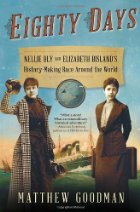
EIGHTY DAYS

Eighty Days

(Image Source)

November 14, 1889: The steamship Augusta Victoria lies in the harbor off Hoboken, New Jersey.  Soon, it will be en route to Europe, landing in Southampton, England.  Aboard is a young woman jauntily dressed in blue broadcloth, a black and white checked ulster, and a fore-and-aft cap of the kind worn by Sherlock Holmes.  That young woman is the intrepid reporter Nellie Bly, who has already gone undercover to expose shocking abuse at the Blackwell’s Island insane asylum and toppled the “Lobby King” of Albany, and she’s bound for her biggest adventure to date: a quest to circumvent the globe, by steamship and train, in less than the 80 days made famous by Jules Verne’s fictional hero Phileas Fogg.

That same day, without the fanfare attending Bly’s departure, another young woman will set off to do the same thing.  She is Elizabeth Bisland, raised on a shabby yet genteel Southern plantation, who has herself risen to a successful journalism career.  Bisland is quiet and unassuming (which Bly certainly is not), a lover of books and literature, writer of the “In the Library” column for The Cosmopolitan magazine.  She chugs west by train, since her editor believes that a western route will avoid the meteorological pitfalls he expects Bly to encounter on her Eastern route, and hopes to arrive back in New York City ahead of Bly.

The women’s “race” around the world soon captivates the attention of the entire country, thanks in large part to the skillful marketing done by Bly’s editors at The World newspaper.  And although the race took place almost 125 years ago, I found it just as thrilling.  I flipped pages at a speed worthy of Bly and Bisland, as I was just so anxious to find out who “won” (although Bly refused to acknowledge Bisland as a competitor, claiming to only be racing against Time, and Bisland stuck to her own non-competitive descriptions of the trip as a “journey” rather than a “race”).  I tried to remain neutral, but by about halfway through the book I found myself silently rooting for one particular competitor over the other.

I won’t tell you who won – that’d spoil the fun of reading the book, which you certainly should – but I’ll tell you this: in my opinion, regardless of who traveled faster, Elizabeth Bisland traveled better.  She dealt with delays in a more cheerful, adaptive fashion than Bly, she was more open-minded and more willing to experience the exotic, and although she never wanted to go on the trip in the first place – it was Bly’s idea, and Bisland’s editors strong-armed her into making it a race – she seemed to have a far more positive attitude throughout her travels.  Bly’s chapters were often devoted to describing her boredom, her attitude of American superiority, or the social injustices she didn’t care to report (despite her fame as a muckraker), while Bisland’s chapters focused instead on almost poetic descriptions of the fascinating sights which enthralled the traveler as she made her way from port to port.  I loved following Bisland through Japan and Hong Kong, and I felt a special kinship with her towards the end of her journey, when she entered her beloved England for the first time:

It was a landscape she felt she already knew from books; riding through it she was not learning but remembering.  The land seemed to swarm with phantoms from history, poems, stories.  They tramped across the fields, peered over the hedges, looked out from every window; she could hear the clang of their armor, their horses’ hoofbeats, their voices ringing out a call of welcome in the frosty winter air.

That’s pretty much how I felt the first time I visited England (although I’ve been there in September and October, respectively, and never in the winter – brrr).  Traveling at breakneck speed, jumping from ship to ship or train to train, isn’t my idea of a good way to see the world, but Bisland made the most of it, squeezing in visits to temples and ancient monuments wherever she could, and enjoying her quiet moments at sea with a book in her lap the rest of the time.  She was open and receptive to other cultures and she truly seemed to appreciate the experience, rather unlike Bly – who was the one who wanted to make the trip in the first place.  (Not that I’m completely down on Nellie Bly.  I loved the description of her first experience with curry and her tart rejections of various suitors aboard ship.  I just wish she was a little less “rah-rah-America!” about the whole experience.)  No surprise here – Elizabeth Bisland is the one who ends up making more trips overseas, over the course of her life.

Eighty Days was by turns charming, fascinating, educational and thrilling.  As I read, I found myself wishing I could travel alongside Elizabeth Bisland – other than between the pages of a book, that is – and ruminating on the current state of the world, where this kind of trip would be met with shrugs, most likely.  That strikes me as sad.  I’d like to see more daring, more adventure, in the world today.  We need more Nellie Blys and Elizabeth Bislands.  But in the meantime, at least we have Eighty Days.  Highly recommended.

Eighty Days: Nellie Bly and Elizabeth Bisland’s History-Making Race Around the World, by Matthew Goodman: Buy the book here (not an affiliate link) or support your local indie bookstore.