Reading Round-Up: April 2014

Reading Round-Up Header

Reading is my oldest and favorite hobby.  I literally can’t remember a time in my life when I didn’t love to curl up with a good book.  Here are my reads for April, 2014

The Monuments Men: Allied Heroes, Nazi Thieves, and the Greatest Treasure Hunt in History, by Robert M. Edsell – My grandmother recommended this history of a little known, not particularly organized group of American – and one British – officers who made it their mission to save Europe’s cultural treasures during and immediately after the battles of World War II.  It was dense but fascinating, and I was particularly intrigued by the story against the backdrop of some criticism about the book and film focusing on art when so many lives were being lost in horrific ways.  (I can understand the point, but I also feel that our art and culture is what makes us human, and I’m glad that the “Monuments Men” were able to save so much of it for the generations to come.)  I’d definitely recommend this, but you have to have some time, patience, and tolerance for a lot of information.

Jane and the Unpleasantness at Scargrave Manor (Jane Austen Mysteries #1), by Stephanie Barron – This was a cute and fluffy mystery of the “cozy” variety.  I’m not sure how I stumbled upon it, but it was fun.  Barron casts Jane Austen as an intrepid sleuth who solves a murder, acquits a friend, and has a Lizzie-and-Darcy-like encounter.  The writing took some getting used to (I think it’s always tough for a modern author to mimic the writing style of a past period) but it was amusing.  I’m not sure if I’ll continue on with the series – I probably will, but I’m not rushing out for the next book.

Crocodile on the Sandbank (Amelia Peabody #1), by Elizabeth Peters – The “indomitable” Amelia Peabody’s first adventure was a rollicking good ride.  A Victorian “spinster of independent means,” Amelia decides to do some traveling.  Trusty parasol in one hand, she makes for Egypt.  Along the way she picks up young Evelyn Barton-Forbes, quite literally, off the Roman pavement.  Amelia engages Evelyn as her “companion” because she wants someone to take care of, but it quickly becomes apparent that Evelyn is in charge.  The two women sail together down the Nile and stop at an archaeological dig led by brothers Radcliffe and Walter Emerson.  While they’re moored at the dig site, the women receive nighttime visitations from a mummy who seems bent on a reign of terror.  Nobody messes with Amelia, and she takes it upon herself to unmask the mummy and fix Evelyn up with Walter Emerson while she’s at it.  This was so much fun.  I recommended it to my mom, who picked it up and loved it too, and I went on to…

The Curse of the Pharoahs (Amelia Peabody #2), by Elizabeth Peters – (Unavoidable SPOILER alert!)  Amelia is now wife to Radcliffe Emerson and mother to the precocious toddler Ramses, and she and Emerson both are feeling a bit constrained by England when they receive a visit from one Lady Baskerville.  Her husband, an avid Egyptologist, was patronizing a dig when he died under mysterious circumstances, and she’d like Emerson to take over.  He agrees, grudgingly, but Amelia is looking forward to both the archaeological joys ahead, and to flexing her sleuthing muscle – because she’s convinced Lord Baskerville was murdered.  When Amelia and Emerson arrive at the dig, they discover that the matter is more complex than it seemed back in England, with no shortage of possible suspects.

The Mummy Case (Amelia Peabody #3), by Elizabeth Peters – Amelia and Emerson, accompanied by Ramses, head back to Egypt with the goal of excavating some pyramids, only to find themselves foiled by a malevolent government official.  Emerson takes out his frustration by being needlessly and annoyingly thorough in excavating the pile of rubble he does get, and Amelia turns to investigating the suspicious death of an antiquities dealer, the theft of a seemingly worthless mummy case from a collector, the possibility of a “Master Criminal” heading an antiquities theft ring, and the secretive antics of her all-too-precocious son Ramses.  Amelia is such fun, and I am loving my time spent with her and her wacky family.

Everyman’s Pocket Poets: Bronte, by Emily Bronte – As part of National Poetry Month and the Dewey’s 24-Hour Readathon, I picked up this little volume of Emily Bronte’s poetry.  I loved Bronte’s wild, weird imagery, although her fixation on the grave was a wee bit disturbing (but probably not surprising).  I definitely preferred Emily’s poems to her one novel, Wuthering Heights, which I’ve read several times and disliked more on each re-read.  Now I’d like to read her juvenilia.

Henrietta’s War: News from the Home Front 1939-1942, by Joyce Dennys – Henrietta is a doctor’s wife in a rural Devonshire village, who along with the rest of her social circle, is determined to do her part to help the effort on the Home Front during World War II.  In letters to her “childhood friend” Robert, somewhere amidst the fighting, she paints a vivid picture of the village life going bravely on.  She describes the antics of some of the local characters we all know – those people who sometimes cause us to shake our heads or roll our eyes, but who are part of the fabric of our everyday life – flirtatious Faith, bossy Mrs. Savernack, and kindly Lady B (my favorite) amongst them.  I loved Henrietta and my only complaint was that this book was much too short.  I could have happily read about Henrietta for hundreds more pages.   Recommended to anyone who enjoys epistolary novels, gentle fiction, or World War II stories.  I like all three, so this book was right in my sweet spot.

I can’t believe it’s May 14 and I’m only getting this post up now!  Sorry for the delay – I’d meant to post this on May 5, but was out of town and didn’t get it drafted ahead of time as I’d planned, and then had a crazy week at work when I returned.  Anyway… April was a fairly light month of reading.  Except for The Monuments Men, I didn’t attempt anything particularly meaty.  (Well, there’s the Bronte, too, but that was a short volume.)  Most of April was devoted to mysteries, and in particular to Amelia Peabody, so I can’t complain.  I have a post in the works about Amelia, and how she led me to a special discovery, so look for that next week.  And look for more Amelia in these monthly round-ups for many months to come, because we’re already good friends.  Henrietta provided the other April highlight, and I immediately picked up the second volume of her letters (which will be in the May round-up in just a couple of weeks).  The lighter reading was necessary as I got used to being back in the workplace.  I’m sure I’ll get back to some more challenging reads soon, but for now I’m just going easy on myself and reading whatever looks fun and not too punishing.  Which is usually mysteries, and mysteries, and mysteries.
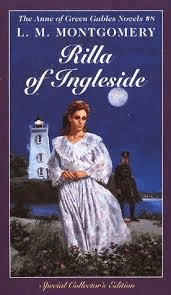
RILLA OF INGLESIDE

Rilla of Ingleside

Rilla of Ingleside marks the first time the outside world really intrudes on peaceful, idyllic Prince Edward Island.  When the novel opens, young Bertha Marilla Blythe – the youngest child of Gilbert and Anne Blythe, known to all as “Rilla” – is pondering impending womanhood.  What should she wear to an upcoming dance?  How will she get herself noticed by handsome Kenneth Ford?  And will she be able to keep herself from lisping if she does attract his attention?  These are Rilla’s worries.

But Rilla’s girlish stresses are soon chased out of the picture completely, by something much bigger: stormclouds of war, which have gathered over Europe and soon sweep Canada into the fray.  The Great War (or World War I, as we know it) is underway, and soon Four Winds and Glen St. Mary will be all but empty of their young menfolk.  Jem Blythe and Jerry Meredith are among the first to go, while Walter Blythe – disgusted by the horrors and atrocities of war – stays home for a time amidst growing criticism of his perceived “cowardice.”  (There’s a particularly sad scene in which Walter describes being given a white feather, which I didn’t remember at all.  I don’t think I knew the significance of the white feather when I read this book as a child; it was Maisy Dobbs in Birds of a Feather who explained that particularly cruel gesture.)  Of course, Walter does eventually go off to war too, like most of the youth of his time, and (hark! spoiler!) is killed in action, in the most tragic scene of the series, leaving Una Meredith to mourn all her days.

As all this goes on, Rilla is growing out of her self-centered, girlish ways, and into a more serious womanhood.  She brings a “war baby” home to Ingleside in a soup tureen – his father at the front, and his mother dead, little “Jims” has only Rilla to depend on.  Rilla determines to “bring Jims up by the book,” and embarks on a child-rearing adventure with as much rigidity and stress as any new mother.  She organizes a youth Red Cross, deals with a mean girl who seems determined to sabotage Rilla’s attempts to lead her band of volunteers, and wonders if Kenneth Ford will return home and, if he does, whether he’ll remember her.  (I won’t tell you that, nor will I tell you whether Rilla is able to keep her lisp out of any future conversations with the opposite sex.)

Rilla of Ingleside is one of my top four (four favorites out of an eight-book series isn’t too bad, right?) amongst the Anne novels.  I find it fascinating – horrifying, yes, but fascinating – to watch foreign policy and faraway events encroach steadily upon the peaceful little world of Ingleside and its surrounding areas.  I cry when Walter dies, and I cry even more when Little Dog Monday is reunited with his master after waiting faithfully at the depot and meeting every train with tail hopefully wagging.  I cheer for Rilla in her efforts to serve Canada on the home front, and for Faith Meredith, who drives an ambulance in faraway France.  And I mourn with Anne at the loss of her children’s safe, protected world.  This is a strong, often heart-wrenching, ultimately uplifting end to one of my all-time favorite series.

I’m submitting this review to the Classics Club Blog as part of my challenge to read and blog 100 classic books in five years.

Rilla of Ingleside, by L.M. Montgomery: buy the book here, or support your local indie bookstore.  (These are not affiliate links.)

Reading Round-Up: March 2014

Reading is my oldest and favorite hobby.  I literally can’t remember a time in my life when I didn’t love to curl up with a good book.  Here are my reads for March, 2014

Snobs, by Julian Fellowes – Edith Lavery is the daughter of an accountant, working at answering phones in a London office in the late 1990s, when she meets the Earl Broughton, heir to the Marquess of Uckfield, while touring his ancestral home.  Edith might have first encountered the Earl on the wrong side of the silk cord, but she soon hops across and becomes his Countess.  But Edith is honest enough with herself to admit that while she likes her new husband, Charles, she doesn’t feel passionately about anything except her new title and social position.  And it doesn’t help that her mother-in-law dislikes her, her brother-in-law is actively sabotaging her, and her husband’s friends are snobs who exclude her at every opportunity.  So it’s easy for her to be swept off her feet by a handsome actor filming a period drama at Broughton.  Will Edith’s marriage survive, or has she lost her position in the social order forever?  I found this book while browsing in the library as I waited for my literacy student to arrive for a tutoring session, and checked it out immediately.  I had no idea that Fellowes (writer of Gosford Park, and creator of Downton Abbey) had written a novel, but I figured it had to be good.  Oh, and it was.  Scathingly witty, perfectly detailed, and a nail-biter almost to the last page, Snobs is a perfect read for Downton fans.  Fellowes clearly knows both the worlds he portrays here – the world of theatre folk, and the upper-crust world of the British aristocracy – and his novel is just as good as his scripts.  Highly recommended.

Train Like a Mother: How to Get Across Any Finish Line and Not Lose Your Family, Job or Sanity, by Dimity McDowell and Sarah Bowen Shea – I read SBS and Dimity’s first book, Run Like a Mother, when it first came out – before I was even thinking about becoming a mother.  (I’d heard that even if you didn’t have kids, the Another Mother Runner girls were great at helping you find ways to work exercise into a busy schedule and, well, I’ve always had one of those.)  Now I am a mother, and a mother who happens to be looking down the barrel of a marathon in October, so I turned to SBS and Dimity again for motivation and help putting together a training plan.  (I’m not sure I’m going to use their plan, since I’ve always used Hal Higdon in the past and found he works for me, but it was still helpful to see how they recommend training for marathons, since they’re both veteran runners, and Dimity is actually an Ironman!)  I love the “practical motherly advice” they dole out, the hilarious quotes from other “mother runners,” and the down-to-earth wisdom they apply to training, nutrition, tapering, and race day.  If you’re a runner with a busy schedule (whether you’re a mom or dad, or not) let Sarah and Dimity help you get your racing act together!

Out to Canaan (Mitford Years #4), by Jan Karon – I checked this out from the library along with These High, Green Hills and was planning to return it unread, to wait for the next time I really needed some gentle fiction-style comfort reading, but it was there and I have a compulsion, so obviously I ended up reading it.  Father Tim has officially announced his retirement to his congregation, and as expected, they take it poorly.  (Ungrateful!)  Although his time leading a church is drawing to a close, he has plenty to occupy him: worrying over Dooley, who has a girlfriend; finding a buyer who will treat Fernbank (Miss Sadie’s home, which she left to Lord’s Chapel) kindly; helping baker Winnie Ivey figure out her future; searching out Pauline Barlowe’s remaining kids; and (unwisely, if you ask me) meddling in the local mayoral election keep him plenty busy.  A good read for stressful days, of which I did have a few this month.

I am Half-Sick of Shadows (Flavia de Luce #4), by Alan Bradley – Buckshaw continues to face financial difficulties, and to help them out, Flavia’s father has agreed to allow a London film company to use the premises as a movie set.  Soon hordes of actors and other film personnel descend upon the estate – including the famous Phyllis Wyvern, set to star in the movie.  When the vicar proposes that Phyllis and Desmond Duncan, her leading man, perform a scene for the benefit of the church funds, the actress surprisingly agrees.  The entire village turns up for the performance, which means there are no shortage of suspects for Flavia to question when one of the visitors is found strangled with a length of film.  These mysteries get more and more enthralling, and Flavia herself continues to charm.

Speaking From Among the Bones (Flavia de Luce #5), by Alan Bradley – Possibly the most exciting thing is about to happen to the village of Bishop’s Lacey since… well… ever – at least if you ask Flavia.  St. Tancred’s Church is about to dig up the body of its patron saint!  Of course, Flavia plans to be in the front row when the saint’s remains are exhumed, because how could she resist?  Despite the vicar’s attempts to keep her away, Flavia is the first one to see into the tomb – but it’s not St. Tancred she finds there; it’s the body of the church organist, wearing a gas mask but very much dead.  Flavia is determined to unmask the killer and finally get some recognition from Inspector Hewitt and his magnificent wife Antigone.  This was my favorite mystery yet, because I love the character of the vicar, and I just found the premise so intriguing.  The story ends with a bang (spoiler alert!): Flavia’s mother, Harriet, lost in a mountaineering accident ten years before, has been found.

The Dead in their Vaulted Arches (Flavia de Luce #6), by Alan Bradley – (caution, spoilers abound although I will try not to ruin everything) – A week has passed since the events of Speaking from Among the Bones, and Flavia is gathered with her father, sisters, Dogger, Mrs. Mullet and the entire village of Bishop’s Lacey to meet the train that is bringing her mother home.  As Flavia stands on the platform, Winston Churchill appears and asks her a cryptic question.  Then a strange man appears and requests that Flavia pass a cryptic message on to her father – and is immediately pushed under the oncoming train.  Flavia can’t really focus on these events, though, because she is dealing with some very intense emotions surrounding her mother’s return (gahhhhh, I’m trying SO hard not to give anything away) and so she doesn’t do much sleuthing.  She will learn a great deal, however, about Harriet’s history, including what exactly she was doing on that Tibetan mountain, and this information is going to change Flavia’s life forever.  I read this book in a day and was completely absorbed in it from start to finish.  Now I’m simultaneously excited to see where Bradley takes the series from here, and bummed that I have to wait – like everyone else – for the next book.  This series just keeps getting better and better.

Updated, because I’m a spazz and I forgot:

The Penelopiad, by Margaret Atwood – Back in October, when I was on a major Margaret Atwood kick (I read all three novels in the MaddAddam Trilogy, plus a collection of short stories, in short order), my mother-in-law suggested I check out Atwood’s retelling of The Odyssey from the perspective of Penelope, Odysseus’s faithful wife who waits in Ithaca for his delayed return.  Penelope, in Atwood’s hands, is far more than simply the patient wife of the myth.  She is a strong-willed, independent woman who is intensely troubled by events outside her control.  Helen of Troy, naturally, makes an appearance and is a fun character (when is Helen ever not a fun character?).  I enjoyed The Penelopiad immensely, although I know that it will color my impressions of The Odyssey when I finally get around to reading it.  (Team Penelope!)

Sorry to those of you who saw this post go up yesterday in incomplete form and were confused.  I started a new job last week and am still trying to figure out new routines, and a draft slipped through the cracks.  (I know, I know, this shouldn’t be challenging, since I’ve done the working mom thing before – but it’s been seven months and I have to adjust to having much less time on my hands than I did.)  Anyway, March was a slow, but good, month of reading.  As a big “Downton Abbey” fan (indeed, who isn’t) I loved Snobs, and I hope Julian Fellowes has more novels up his sleeves.  The other highlight of the month, of course, was Flavia.  I love a good mystery series, and the Flavia de Luce mysteries are destined for my “favorites” shelf.  That kid is just so endearing, the mysteries are absorbing, and the series is primed for a really fun new direction.  And now, on to April.  I have some library books out and I’m hoping to start a new (to me, although historically popular) mystery series, so stay tuned for more book thoughts to come next month.

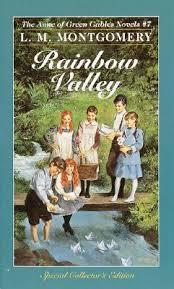
RAINBOW VALLEY

Rainbow Valley

“Rainbow Valley” is the rather romantic name, given by aspiring poet Walter Blythe, to the hollow behind Ingleside.  It’s the favorite haunt of the Blythe gang, where they play games, read, pick flowers for their mother Anne, and fry up fresh-caught fish.  The Blythes are happy playing together in Rainbow Valley, but they soon have company in the form of the Meredith kids.  Jerry, Faith, Carl and Una Meredith are the children of the new minister.  The minister is widowed, the manse is run-down, and the Meredith children run wild under the indifferent supervision of a spinster aunt.  Along the way, they pick up a runaway: Mary Vance, whose occasionally sharp tongue hides a heart of gold.

The Blythes and the Merediths quickly become “bosom friends” (as one romantic redhead would say), while Mary drifts in and out of their lives (she occasionally falls out with the crowd, but is always welcomed back).  The Merediths are the focus of most of the storytelling in Rainbow Valley.  They’re much on the minds of the local gossips, who alternate between worrying over the lack of nutrition the children receive, and trading scandalized tales of childish bad behavior in the manse.  For the Merediths can’t seem – for all their good intentions, and they are sweet, kind-hearted children – to stay out of trouble.  Even when they form a family club dedicated to the promotion of good behavior, they manage to set tongues wagging.

What the villagers all agree the manse needs is a mistress.  Reverend Meredith desperately needs a wife, and the children even more desperately need a mother figure.  The village is relieved and hopeful when the minister begins calling on Rosemary West, a local beauty who – for reasons known only to Rosemary and her sister – has never married.  But the courtship seems doomed and everyone assumes it’s because Rosemary doesn’t want anything to do with those wild Meredith children.  It’ll be up to the Meredith kids themselves to convince Miss West to give their dad a chance.

For reasons unknown to me, I enjoyed Rainbow Valley rather more than Anne of Ingleside.  Perhaps because I expected, going in, that Anne would be no more than a background figure and even that the Blythe kids weren’t the heroes of this particular installment.  (I’d apparently forgotten that Anne wasn’t the central figure in Anne of Ingleside, no matter what the title says.)  I love the story of Reverend Meredith’s curtailed courtship of Rosemary, and the ending is, of course (this being L.M. Montgomery) very satisfying.  But the best part of the book for me, by far, is the character of Faith Meredith.  Oh, I love friendly Jerry, sweet Una, and little Carl.  But it’s bright, spirited Faith who steals my heart anew on every page.  Whether she’s braving the church biddies by sitting in the manse pew without stockings (after giving her Sunday pair away to a poor girl) or marching into the home of a notorious curmudgeon and unceremoniously ordering him to return to church and contribute to her father’s salary, Faith’s heart is always in the right place even if she seems a bit brash and heedless.  Of course she desperately needs someone to gather her up and mother her – just as her siblings need – and I’m glad that (spoiler alert!) they have that in Rosemary, their new, and immediately beloved, stepmother.

Rainbow Valley is a sweet, cheerful little romp, but there are ominous moments that signal a troubling future ahead for the Blythes and the Merediths and everyone else.  Reverend Meredith talks foreign policy with Rosemary’s sister Ellen West, and the foreign policy they discuss is shadowed by gathering storm clouds in Germany and the Balkans.  But let’s not talk about that, now.  Let’s just let the Blythes, the Merediths, and Mary Vance enjoy their fresh fish, cooked over an open flame in Rainbow Valley.  The real world will intrude soon enough.

I’m submitting this review to the Classics Club Blog as part of my challenge to read and blog 100 classic works of literature in five years.

Rainbow Valley, by L.M. Montgomery: available here, or support your local indie bookstore.  (This is not an affiliate link.)

ANNE OF INGLESIDE

Anne of Ingleside

Anne is now a mother of six spirited children – little Jem, who made his appearance in Anne’s House of Dreams, is big brother to Walter, twins Nan and Di, little brother Shirley, and (born in this book) baby sister Rilla.  Anne’s days are full as she juggles the social demands of being a busy doctor’s wife with her motherly joys – telling stories, answering (seemingly endless) childish questions, soothing bumps and bruises, receiving fresh-picked bouquets, and providing infinite love.  The story bounces back and forth between Anne’s life and that of her increasingly independent children.  Each of the kids gets a chapter or two devoted to their adventures, and we’re also treated to plenty of time observing Anne’s daily life, gossiping with Miss Cornelia and Susan Baker, and smiling over the foibles of the Glen St. Mary residents.  There’s also plenty of comedy with the interminable visit of Gilbert’s Aunt Mary Maria, and the way the Ingleside clan finally gets rid of her is pure gold.

Anne’s life seems charmed, but when Gilbert becomes more and more distracted, she begins to worry that his love for her is fading.  After they encounter Christine Stuart (Gilbert’s old friend from his days at Redmond College) at a particularly unpleasant social event, Anne’s jealousy skyrockets (she rather cattily observes that Christine has put on weight and has no children, whereas she, Anne, has six and is still svelte… not Anne’s finest moment) and she also begins to worry that she has been taking Gilbert’s love for granted.  I won’t tell you how it all resolves, but rest assured (spoiler alert!) Gilbert loves Anne as much as the day they were married.

Since I’ve proclaimed that I have four favorites or near-favorites in this series (Anne of the Island, Anne of Windy Poplars, Anne’s House of Dreams, and Rilla of Ingleside) it seems only fair that I should admit that Anne of Ingleside is my least favorite Anne story.  I always love reading about Anne and her brood, of course, but I find the story a little disjointed, what with bouncing back and forth between Anne and the kids, and frankly, Anne’s attitude toward Christine (who isn’t the nicest person in the world, but let’s not fat-shame) and Gilbert bugs me a bit.  But I still love these characters and this setting.  So to say that Anne of Ingleside is my least favorite installment just means that I adore it very slightly less than the other seven, but I still adore it plenty.

I’m submitting this review of Anne of Ingleside, by L.M. Montgomery, to the Classics Club Blog as part of the Classics Club Challenge.  You can buy Anne of Ingleside, by L.M. Montgomery, here, or support your local indie bookstore.  (These are not affiliate links.)

ANNE’S HOUSE OF DREAMS

Anne's House of Dreams

Anne’s House of Dreams opens with an event that Anne fans have been waiting for over at least three books – Anne’s wedding to Gilbert Blythe!  Can I just say a few words about Gilbert?  He’s one of my all-time favorite literary leading men.  I love that he starts out as a boy who tries to tell a girl he likes her by teasing her (“Carrots!  Carrots!”), that he waits patiently in the wings and contents himself with friendship until Anne is ready to return the love he’s been offering for years, and that he and Anne grow together into a strong, united pair.

After the wedding, Anne and Gilbert depart immediately for Four Winds, a harbor town in which Gilbert has inherited a medical practice and found a “house o’ dreams” for Anne.  Anne is delighted with the little house and with the local characters who immediately turn up to welcome her – including Miss Cornelia (Four Winds’ version of Mrs. Rachel Lynde, minus the husband), and Captain Jim, an old sea dog with a tragic past.  But Anne is most fascinated by her nearest neighbor, the reclusive, reticent and beautiful Leslie Moore.  Anne sets out to win Leslie’s confidence and friendship – and it’s no easy task, but our favorite redhead has yet to meet a soul she can’t win over.

Anne and Gilbert have a mostly blissful early marriage, but one tragedy mars their newlywed years – the loss of their first baby, “wee white lady” Joyce.  I remember blazing by that part without much thought when I read these books as a child and a teenager, but this time I was a soppy mess, having had a “wee white lady” of my own.  I kept thinking, there but for the grace of modern medicine go I.  This is why re-reading is great: the more life experience you have, the more you can inform your reading and relate to the characters.  A sad storyline that made little impression on me at age 12 brought a completely different flavor to the book when I read it as a mother who had her own fragile baby.  If anything, it was a better read because I was able to relate to Anne in a new way.

Anne’s House of Dreams is… I think… my second-favorite (after Anne of the Island) of the Anne books.  It’s close, though.  As I mentioned last week, I also love Anne of Windy Poplars, and Rilla of Ingleside… so.  These are just outstanding books.  The characters are so richly realized, the settings so gloriously detailed; the more times I read them, the more I find to love.

This review is part of my challenge to read and blog about 100 classic books in five years for The Classics Club.

Buy Anne’s House of Dreams here, or support your local indie bookstore!  These are not affiliate links.

ANNE OF WINDY POPLARS

Anne of Windy Poplars

(Oops!  I finished reading the Anne books back in October, but totally dropped the ball on writing up my reviews.  Bad blogger!  Expect one each week for the next month-ish, until we get through them all.  Sorry!)

Spoilers ahead!  If somehow you don’t know how Anne’s romantic life works out and are planning to read the books for yourself, come back later.

Anne of Windy Poplars, the fourth in L.M. Montgomery’s perennially popular Anne series, finds our heroine freshly engaged to her childhood nemesis-turned-friend-turned-romance, the dreamy Gilbert Blythe.  Say it with me, ladies… FINALLY!  Gilbert, of course, has loved Anne since they were children, but it took Anne awhile to come around.  Fortunately, she has now.  Still, Gilbert and Anne have a long way to go before they will end up at the altar.  Neither of them being overly funded, they agree to a long engagement while Gilbert puts himself through medical school.  To pass the time and earn some money during the engagement, Anne accepts a job as principal of Summerside High School.

Anne’s road will be a bit rocky for her first months on the job, because it quickly becomes clear that the “first family of Summerside,” the Pringles, didn’t exactly support her candidacy.  Apparently, Anne was up against a Pringle cousin for the job, and the Pringles can’t forgive her for winning the position.  They set out to make Anne’s life miserable and drive her from Summerside, almost from the very beginning: she is turned away from almost every boarding house in town, snubbed by half the residents of Summerside (Pringles, Pringle relations, and Pringle hangers-on), and the Pringle kids make it their mission to act out and undermine her authority at school.  Smart, perky, obnoxious Jen Pringle is the ringleader of that effort, and Anne laments the fact that they’re pitted against one another, because she believes she could really enjoy and appreciate Jen if the circumstances were different.

Ultimately, Anne’s perseverance and good humor win the day – as we knew, of course, that they would.  It doesn’t hurt that Anne stumbles across a damaging bit of information about one of the most famous past Pringles, of course, but her determination not to use the information – even though the entire clan has opposed her at every turn – is what really wins the family over.  (Being “the bigger person” works sometimes!)  The Pringle storyline is one of my favorite parts of the entire series, because it’s pretty much the only time (saving, maybe, a certain young woman in Anne’s House of Dreams, but more on her next week) that Anne isn’t immediately and universally loved by everyone with whom she comes into contact.  (Yes, Marilla isn’t instantly captivated by Anne the way Matthew was in the opening chapters of Anne of Green Gables, but it really only takes her a few pages to come around.)  The fact that Anne has to work to gain the Pringles’ respect and esteem is refreshing.  Of course we all know that Anne will win their hearts – she always does – and that she and Jen Pringle will end up lifelong friends.  But it takes awhile for her to get there, and she struggles along in the meantime, and I really like the fact that – at least once – Anne has to work for her popularity.

Of course, there are consolations.  Anne lives with two delightful widows, Aunt Kate and Aunt Chatty, and their housekeeper, Rebecca Dew.  There’s a running joke throughout the book about who really runs the show in the widows’ home.  Rebecca Dew believes she does… but she might be mistaken about that.  (Read it and see, and be delighted.)  And there’s a sweet next-door neighbor, Little Elizabeth, whose life will be forever changed during Anne’s short residence in Summerside.

Anne of Windy Poplars is up there with my most beloved books of all time, and it’s one of my favorites in the series.  (Anne of the Island takes top billing, but I also love Windy Poplars, Anne’s House of Dreams, and Rilla of Ingleside.  And yes, I do realize that that’s half the series I’ve just named as favorites.  Sue me.)  Nothing much of consequence happens… Anne’s engagement to Gilbert happens before Windy Poplars opens, and the wedding isn’t until the next book.  But Anne’s newsy letters to Gilbert are lovely, the Summerside personalities charming, and the little glimpses into Anne’s life delightful.

I am submitting this review to The Classics Club as part of my challenge to read and blog 100 classic novels in five years.  Next week, my review of Anne’s House of Dreams!

You can buy Anne of Windy Poplars here, or support your local indie bookstorePsst – these are not affiliate links.

Reading Round-Up: January 2014

Reading is my oldest and favorite hobby.  I literally can’t remember a time in my life when I didn’t love to curl up with a good book.  Here are my reads for January, 2014

Little House in the Big Woods (Little House #1), by Laura Ingalls Wilder
Little House on the Prairie (Little House #2), by Laura Ingalls Wilder
Farmer Boy (Little House #3), by Laura Ingalls Wilder
On the Banks of Plum Creek (Little House #4), by Laura Ingalls Wilder
By the Shores of Silver Lake (Little House #5), by Laura Ingalls Wilder
The Long Winter (Little House #6), by Laura Ingalls Wilder
Little Town on the Prairie (Little House #7), by Laura Ingalls Wilder
These Happy Golden Years (Little House #8), by Laura Ingalls Wilder
The First Four Years (Little House #9), by Laura Ingalls Wilder

I spent the first three weeks of 2014 (give or take a few days) immersed in Laura Ingalls Wilder’s pioneer world.  I was with her in the Big Woods of Wisconsin, rode in the covered wagon with her family to Indian Territory, then to Plum Creek in Minnesota and finally to Silver Lake and De Smet in the Dakota Territory.  I watched her grow from a “Half-Pint of Sweet Cider Half Drunk Up” to a young woman and then a wife and mother.  I rejoiced in the wild beauty of the prairie, celebrated when Mr. Edwards met Santa Claus, gritted my teeth at mean girl Nellie Oleson, marveled at the bowl of violets in the buffalo wallow, shivered through the long winter, and walked hand in hand with Laura and Mary on their sunset strolls.  Reading the Little House books end-to-end like I did was a wonderful experience – more about my impressions of the series after reading it again, but for the first time as an adult, here.

The Honest Toddler: A Child’s Guide to Parenting, Written Under the Supervision of Bunmi Laditan – I am a HUGE fan of the Honest Toddler, “the internet’s most infamous tot,” and I follow her on Twitter, Facebook and Instagram, in addition to reading HT’s blog posts and the absolutely hilarious press releases put out by the Toddler Council of Everlasting Gloriousness.  (The Toddler Council’s press release on the birth of Prince George was priceless.  “To Will and Kate, we would like to wish you both a heartfelt blank stare followed by crying.”  Tears, people, I had tears running down my face.)  I am constantly trying to read HT blog posts out loud to hubby and breaking down in uncontrollable laughter after three sentences.  The Honest Toddler book was more of the same cheeky, mischievous wit and I loved it; some of the content was directly from the blog or was otherwise repetitive, but since I read HT’s blog posts over and over again, that didn’t bother me so much.  (A warning: do not allow grandparents to read this book.  My mom read it while visiting me and got an incredibly big head from the constant grandma-boosting.  And a word to Peanut: if “loving like a grandparent” means allowing you to eat cookies anytime, then don’t get any fancy ideas.  Peas for lunch, and you can complain to Nana all you want but you’re still going to eat your veggies.)

WinterSong: Christmas Readings, by Madeleine L’Engle and Luci Shaw – I’ve been dipping into this slim, but lovely, volume most days since Thanksgiving.  Although the book is billed as “Christmas Readings,” it starts with meditations on Thanksgiving and late fall, covers Annunciation, Christmas, Incarnation, and Epiphany, and finally concludes with New Year’s and early winter.  I picked a few readings each night, working my way gradually through the fall chapter around Thanksgiving, the Christmas chapters at the appropriate points in the celebration, and finally reading the New Year’s and late winter chapter over the month of January.  The poems and readings here are lovely, often poignant, and always thought-provoking.  I’ll be revisiting this one each year.  (And proving once again that we are kindred spirits, my pal Katie posted this blog about “dipping” into books just as I was finishing my two-months’ enjoyment of WinterSong.)

A Red Herring Without Mustard (Flavia de Luce #3), by Alan Bradley – Flavia just keeps getting better and better!  In this third installment, my favorite eleven-year-old sleuth/chemist/cyclist/revenge specialist finds herself involved in two separate, but possibly related, investigations.  First a Gypsy woman is brutally attacked while camping on Flavia’s ancestral estate.  Almost immediately thereafter, a local ne’er-do-well is found dead, with a lobster pick from the de Luce family silver chest sticking out of his nose.  Are the two crimes connected?  And is the attack on the Gypsy related to the case of a baby who went missing several years earlier?  One thing is clear – the police will need Flavia’s help to sort out this fishy situation.  I love Flavia more every time I crack the spine of one of her adventures.

January was all about comfort reading for me, and it was the right time for it since I spent most of the month hunkered down inside, trying to weather the Polar Vortex along with the rest of the East Coast.  (<– See what I did there?  “Weather?”)  I’d been wanting to revisit Laura Ingalls Wilder’s world for a long time, and the Little House books made for perfect winter reading – especially Little House in the Big Woods and The Long Winter, both of which have many memorable wintry scenes.  After I finished the Little House books, I continued on the comfort theme with some comedy via HT, and a cozy mystery via Flavia.  And, of course, L’Engle and Shaw dealt out plenty of lovely, comforting bedtime reads in WinterSong.  Now I’m looking forward to February and some more good reads – I’ve got a couple of books out from the library that I’ve been very excited to read, and I think I’ll also dig into some of my Christmas books.  Stay tuned…

Reading Round-Up: December 2013

Reading is my oldest and favorite hobby.  I literally can’t remember a time in my life when I didn’t love to curl up with a good book.  Here are my reads for December, 2013…

Excellent Women, by Barbara Pym – Mildred Lathbury is one of the “excellent women” of her parish.  A clergyman’s daughter in her early 30s, Mildred is unmarried but not idle.  She finds plenty to do, whether its meddling in the marriage of her new neighbors, Rocky and Helena Napier, or chatting about the minister’s new love interest with the other excellent women of the church.  This book was a relaxing, enjoyable read for this Anglophile.  I read Excellent Women as part of the Classics Challenge, and my full review can be found here.

Naughty in Nice (Her Royal Spyness Mysteries #5), by Rhys Bowen – This was my favorite of Lady Georgie’s adventures so far!  Binky and Fig have decided to leave England to winter on the French Riviera.  Georgie would love to get out of the soupy fog too, but Fig cries poverty.  A timely appeal to the Queen sees Georgie sent to Nice on assignment: to retrieve a snuffbox which the queen suspects a self-made baronet of stealing from her, and to spy on Wallis Simpson again.  Georgie traipses off to the South of France and soon finds herself modeling for Chanel, with disastrous results (of course).  And when the thieving baronet is found murdered in his own backyard, Georgie is the prime suspect.  She might have gotten out of the soupy fog, but she’s landed directly in the soup!  I had SO much fun following Georgie through this adventure… and darned if a nice armchair holiday in Nice wasn’t exactly what I needed to get me through some chilly, snowy days.

Village Christmas, by Miss Read – I wanted to revisit Fairacre this holiday season, because there’s really no place better to get some holiday spirit.  Village Christmas is a slim little book (just over 50 pages) but it’s packed with Christmas spirit.  The book focuses on the elderly Waters sisters, their new neighbors, the Emery family, and a new baby who teaches Fairacre to love their neighbors – just like another baby did 1,950 years earlier.  I love this novella – it’s one of my favorite holiday reads.  I read it last year, and I’m sure I will be reading it year after year.

The Twelve Clues of Christmas (Her Royal Spyness Mysteries #6), by Rhys Bowen – I just had to read this one before Christmas, and it was SO much fun.  Georgie escapes a dreary Christmas with Fig and Family up at Castle Rannoch by finding herself a job as hostess of a house party down in Devon.  But no sooner has Georgie arrived on the scene than a local mischief-maker is found dead, apparently accidentally, in a tree.  As the days roll by, the death toll mounts and only Georgie seems to think there is something suspicious about the parade of supposed accidents.  This was my favorite Georgie escapade so far.

Giada’s Feel Good Food: My Healthy Recipes and Secrets, by Giada de Laurentiis –  I usually don’t include cookbooks on these roundups, but this one deserves to be on the list because I actually sat down and read it cover to cover.  Giada is my favorite Food Network personality and I own all of her books.  This most recent was under the tree for me on Christmas morning and I want to make just about everything in it – especially the orange-scented almond muffins, which I can’t stop dreaming about.  Giada also shares her secrets for living a healthy, balanced life.  I’m trying not to acquire too many cookbooks while we’re living in our little rental, but I’m so glad I have this one in my collection now.

Middlemarch, by George Eliot – Loved.  Loved loved loved loved loved.  I could go on and on about how fabulous Middlemarch was, but I’ll just link you to my #Middlemarch13 posts instead: Vol. I and II; Vol. III and IV; Vol. V and VI; and Vol. VII and VIII and Finale.  Read it as soon as possible.

Heirs and Graces (Her Royal Spyness Mysteries #7), by Rhys Bowen – And with that, I’m all caught up on Georgie’s adventures.  Having absolutely nowhere to go, Georgie appeals to the Queen and gets herself an assignment: train up the recently discovered heir to the Duke of Eynsford, who has been found on the Australian outback, on the rules of high society.  It seems like an easy job until the current Duke is found dead with the heir’s hunting knife in his back.  What’s the thirty-fifth in line to the throne to do with this crowd?  Cute and fun, as usual.

No Holly for Miss Quinn, by Miss Read – Another one that I read for the first time last Christmas and had to pick up again this year.  I love the story of introverted Miss Quinn’s rediscovery of the joys of family and mess and noise at the holidays.

Well, December for me can be summed up in one word: Middlemarch.  Okay, it looks like I did read other things – including three mysteries featuring Lady Georgiana, who I have come to love.  I had plenty of fun reading this month, and I am looking forward to January, which I’ve decided to dedicate to comfort reading.  Stay tuned!

EXCELLENT WOMEN

Excellent Women

We all know them: those excellent women.  Churchgoing stalwarts, pillars of the community, hands in everyone else’s pies.  Mildred Lathbury is just one such excellent woman.  Mildred is a clergyman’s daughter in her early 30s, living in 1950s London.  Her neighborhood isn’t the best, but she’s found a niche in the All Souls parish, presided over by Father Julian Malory (with the help of his sister Winifred).  Mildred’s already-full plate becomes even more packed when new neighbors Helena and Rocky Napier move into her building and promptly involve her in their marital troubles.  Meanwhile, Father Malory has become engaged – just what he said he’d never do – and to a woman who rubs Mildred (and several of the other excellent women of All Souls) the wrong way.  And then there’s anthropologist Everard Bone, a new acquaintance through Helena, who seems at first to be stuffy and dull, but who might be more interested in Mildred than he seems.

At first, I thought of Mildred as something akin to a younger, urban Miss Read.  Mildred values her solitude and her routines, much like my favorite English schoolteacher.  And they share the same drily witty sense of humor.  (For instance, early on in the book, Mildred explains that she works part-time for a society to help aged gentlewomen who have come down in the world, a cause which is dear to her heart because she can see herself becoming one of them someday.)  But there are some key differences between Mildred and my beloved Miss Read.

For one thing, Mildred is much more of a joiner than Miss Read.  While Miss Read often finds herself pulled into church or community events, she often joins in reluctantly or restricts her participation to overseeing the children.  Miss Read does value her community and is happy to lend her considerable talents to projects as appropriate, but it’s not the be-all, end-all of her existence.  Mildred, however, defines herself based on her place in the hierarchy of excellent women.  She is constantly dashing off to church events or meetings with agendas like “decide about the Christmas bazaar.”  Miss Read would go slowly insane trying to keep Mildred’s schedule.

Another difference: Miss Read values not only her solitude, but also her singleness.  Over the course of twenty books, she is stalwart in her refusal to be drawn into any sort of matrimonial arrangements.  And not only does Miss Read not crave marriage for herself, but she loathes being involved in others’ marital disputes – most notably, those between the Garfields (better known as Amy and James) and the Mawnes.  Mildred, however, would not rule out marriage for herself, should the right man come along (although she’s remarkably dense about Everard, who seems pretty perfect for her) and even engages in some silly daydreaming about her married neighbor, Rocky Napier.  (And she’s a bit smug about her role as the comforter and tea-provider and general clearer-upper and letter-writer after Helena leaves Rocky.)  Mildred differs from Miss Read in that she does want to marry, and in the meantime, she almost gleefully adopts a role as local marriage-meddler.

Now, I don’t mean to compare Mildred with Miss Read either favorably or unfavorably, and nor do I intend to say that Excellent Women is better than the Fairacre books (or vice versa – although I think Fairacre seems a bit friendlier, not quite so catty, of a place).  I viewed Excellent Women through the lens of Fairacre because the writing styles are similar, the time setting is the same (at least for the early Fairacre books) and although the Fairacre folk are country-dwellers and Mildred and her compatriots live in London, I think these characters would find a great deal of familiarity in one another.  Anglophiles who enjoy fiction of a gentle persuasion, set in post-World War II England, will find plenty to smile over in Excellent Women.

Excellent Women, by Barbara Pym, available here (not an affiliate link) or support your local indie bookstore!

I read this book as part of the Classics Club’s Spin, and will be submitting my review for The Classics Challenge.