The Classics Club Challenge: Beloved, by Toni Morrison

Another book that has been on my to-be-read pile for years, Beloved is perhaps Toni Morrison’s best known work, in which the author re-imagines the life of Margaret Garner, a real-life runaway enslaved mother who killed one of her children and tried to kill the others in an effort to prevent them being recaptured and re-enslaved. The real-life Margaret Garner was arrested and imprisoned, and ultimately released after becoming a rallying point for abolitionists who pointed to her as an example of the horrific consequences of slavery.

Spoilers ahead!

In Beloved, Margaret Garner becomes Sethe Suggs. Sethe came to the Sweet Home plantation as a young girl and yearned for freedom. For the enslaved persons who worked there, Sweet Home was neither sweet nor a home, but it was at least livable – if barely – under the Garners. Sethe was a trusted companion to the owner’s wife, and the five enslaved men who lived on the plantation were allowed to carry guns and learn to read (if they wanted to – which they didn’t), and Sethe was allowed to marry one of the enslaved men. But when the owner died, and his wife brought her brother-in-law (“schoolteacher”) to help with the plantation, life at Sweet Home became intolerable. When a plan to run away goes awry, Sethe finds herself on the run by herself – having sent her three children ahead of her to her mother-in-law in Ohio – heavily pregnant and pursued. After a horrifying attack by schoolteacher’s nephews followed by a lonely and harrowing journey, Sethe arrives in Cincinnati with newborn daughter Denver to join her mother-in-law, Baby Suggs, and her three older children (sons Howard and Buglar, and an unnamed older baby girl). But schoolteacher catches up with Sethe – and she makes the heart-wrenching decision to kill her children and herself rather than see them all taken back to Sweet Home. She only manages to kill one of her four children – the unnamed older baby girl – and is sent to prison after schoolteacher deems her not fit to return to the plantation.

The story opens eighteen years after this tragic history. Baby Suggs has died, the boys have left, and Sethe lives alone with Denver and the ghost of the unnamed baby girl. After her release from prison, Sethe had the baby buried under a tombstone bearing the one word she could afford – “Beloved.” Now the baby ghost is Denver’s only company – until Paul D, one of the Sweet Home men (not Sethe’s husband Halle, who never made it to Ohio) moves into the house and expels the ghost. Shortly thereafter, a young woman calling herself Beloved appears out of nowhere. Sethe and Denver take her in, over Paul D’s misgivings.

Denver quickly becomes attached to Beloved, but Beloved has eyes only for Sethe. But something is off about Beloved – she came from nowhere and can explain nothing about her origins; her feet are so soft she doesn’t seem to have walked a day in her life. Eventually, Denver puts two and two together and concludes that Beloved is her dead sister, returned in the flesh – but to what end? Denver believes – hopes – it’s to provide company and relieve her loneliness.

Denver neither believed nor commented on Sethe’s speculations, and she lowered her eyes and never said a word about the cold house. She was certain that Beloved was that white dress that had knelt with her mother in the keeping room, the true-to-life presence of the baby that had kept her company most of her life. And to be looked at by her, however briefly, kept her grateful for the rest of the time when she was merely the looker.

Paul D is less accepting of Beloved. He doesn’t like her sudden appearance or her immediate adoption into the household – but it’s Sethe’s house, not his, and he has no say. Soon he finds himself involuntarily driven from the house (which he suspects has something to do with Beloved), and when a neighbor tells him what Sethe was imprisoned for eighteen years before, he leaves altogether. At first, the three women – left to their own devices – give themselves up to the enjoyment of each other. One day, Sethe finds a pair-and-a-half of ice skates, and she and her two daughters (because Sethe too has concluded that Beloved his her dead daughter come back to her) spend a sparkling day on a frozen pond.

Nobody saw them falling.

Holding hands, bracing each other, they swirled over the ice. Beloved wore the pair; Denver wore one, step-gliding over the treacherous ice. Sethe thought her two shoes would hold and anchor her. She was wrong. Two paces onto the creek, she lost her balance and landed on her behind. The girls, screaming with laughter, joined her on the ice. Sethe struggled to stand and discovered not only that she could do a split, but that it hurt. Her bones surfaced in unexpected places and so did laughter. Making a circle or a line, the three of them could not stay upright for one whole minute, but nobody saw them falling.

Each seemed to be helping the other two stay upright, yet every tumble doubled their delight. The live oak and soughing pine on the banks enclosed them and absorbed their laughter while they fought gravity for each other’s hands. Their skirts flew like wings and their skin turned pewter in the cold and dying light.

Nobody saw them falling.

The ice skating day was the end of Sethe’s brief happiness with Denver and Beloved. Soon the balance of the household is upset – Beloved is consolidated her power, growing literally larger as Sethe shrinks. Finally Denver – who has never strayed far from the house since returning from prison with her mother as an infant, who was the first to recognize and believe Beloved to be her sister, who welcomed Beloved as much-needed companionship, who always feared her mother might kill again – decides it’s up to her to save their family.

There is so much in Beloved – an unsparing look at the horrors of slavery, paired with musings on family, desperation, malicious envy, motherhood, community, redemption… In trying to think of what I would write about this book, I was overwhelmed just by the number and complexity of the themes and the richness of the text. I’m not even sure what to say – and look, I’ve written paragraphs and paragraphs just summarizing the plot. Rather than skim the surface and fail to do justice to this slim but rich narrative, I’ll just encourage you to read it right away if you haven’t already. I wish it hadn’t taken me so long to get to Beloved, with its evocative writing and heart-wrenching, unsparing story.

Have you read any Toni Morrison?

Reading Round-Up: April 2023

Reading is my oldest and favorite hobby. I literally can’t remember a time in my life when I didn’t love to curl up with a good book. Here are my reads for April, 2023.

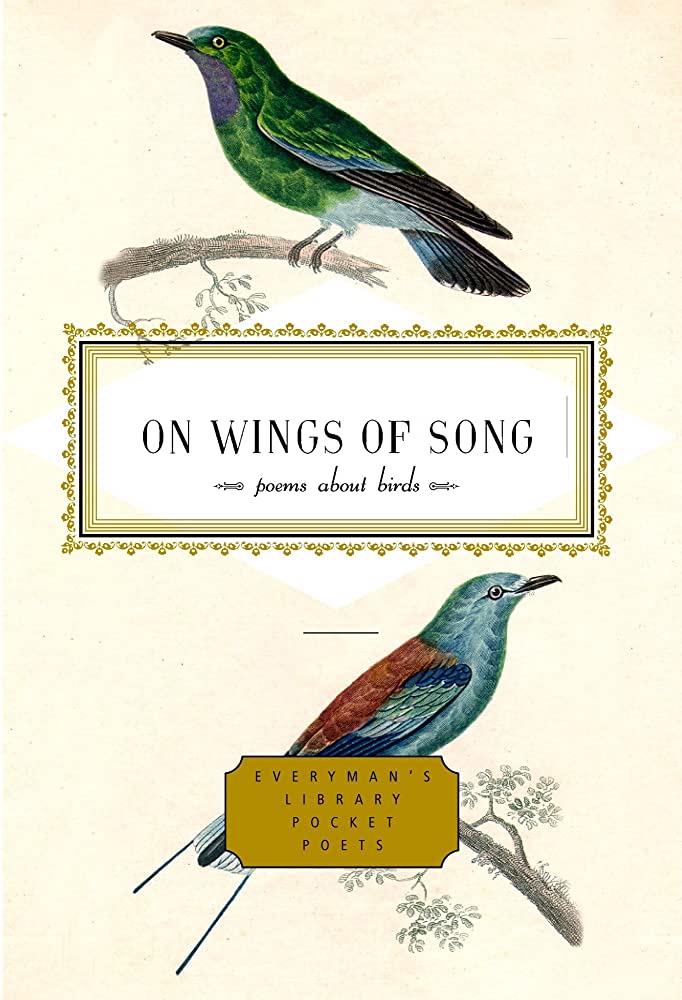
On Wings of Song: Poems About Birds, ed. J.D. McClatchy – A sweet little volume of poems all about birds felt like the very best way to welcome in April. I always enjoy the Everyman’s Library Pocket Poets books, and this one was no exception – just delightful from the first page to the last.

The New York Stories of Edith Wharton, by Edith Wharton – I love reading a book in its setting, especially when a sense of place is important to the story (or stories, as the case may be). So I knew exactly what I was bringing with me on our weekend jaunt up to New York City earlier this month – an NYRB Classics collection of Edith Wharton’s short stories set in the city. (Manhattan, mostly.) I usually have some hits and misses with short story collections, and there was definitely a range here, but I can honestly say that I enjoyed every story in this collection. (And it made me want to re-read my favorite Wharton novel, The Age of Innocence.)

Horizon, by Barry Lopez – This was a project, people. I downloaded Lopez’s ultimate travel memoir on Audible, in which he meanders through a lifetime of adventuring all over the world, because he concludes with a section about Antarctica. I had some pipe dreams of listening to that part while crossing the Drake Passage – and I could have done, if I was willing to take the book out of order, but I just don’t listen to books that way, even when it’s possible. There was a great deal to chew on and think about in here, and Lopez would certainly be an engaging travel companion (my aunt-in-law gushed about taking one of his books with her canoeing the Boundary Waters, which sounded just perfect) but by the time I made it through this nearly 24-hour-long audiobook, even listening on 1.2 speed, I was just over it all.

Beloved, by Toni Morrison – Full review to come for the Classics Club, but Beloved was an astonishing read. I think I was expecting something a little more straight historical fiction (not sure why, because the other Morrison books I have read have been heavy on magical realism, as this one was) and the ghost story was an engaging surprise.

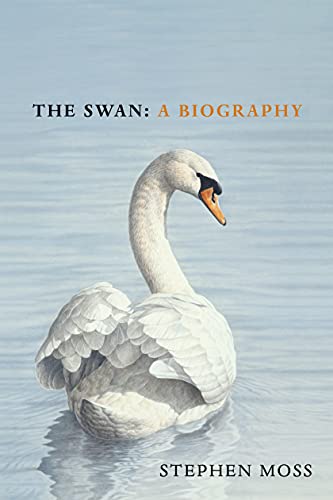
The Swan: A Biography, by Stephen Moss – Looking for something a little lighter to pick up between intense Classics Club reads, I turned to the final one (for now) of Stephen Moss’s bird biography series. While I didn’t enjoy this one quite as much as the others, that’s largely because I’m not as into swans for some reason – it was still a wonderful, beautifully written and engaging book.

The Color Purple, by Alice Walker – This is going to be one of my highlights of the year, I expect. Full review to come for the Classics Club, but briefly – I was actually nervous about reading this, worried about the abuse section of the storyline, but it ended up being a fairly small section, uncomfortable to read in the moment but important to the plot and not gratuitous, so I got through it. The story was wonderful, the characters leapt off the page, and I absolutely loved it and can see myself reading it again and again in years to come.

The Enchanted April, by Elizabeth von Arnim – I’ve read this one a few times now, always in April for obvious reasons, and it never gets old. A story of four unlikely companions who rent a crumbling Italian castle for a month away from rain and responsibilities is charming and fun to read. And perfect for spring.

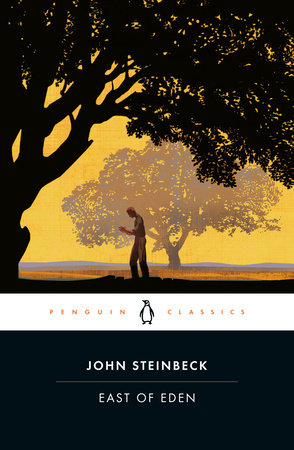
East of Eden, by John Steinbeck – This has been on my list for ages – I love Steinbeck’s writing and have read and re-read favorites like Cannery Row and The Grapes of Wrath. East of Eden is probably his magnum opus and a candidate for The Great American Novel. I found it absolutely astonishing. Full review to come for the Classics Club in the next few weeks.

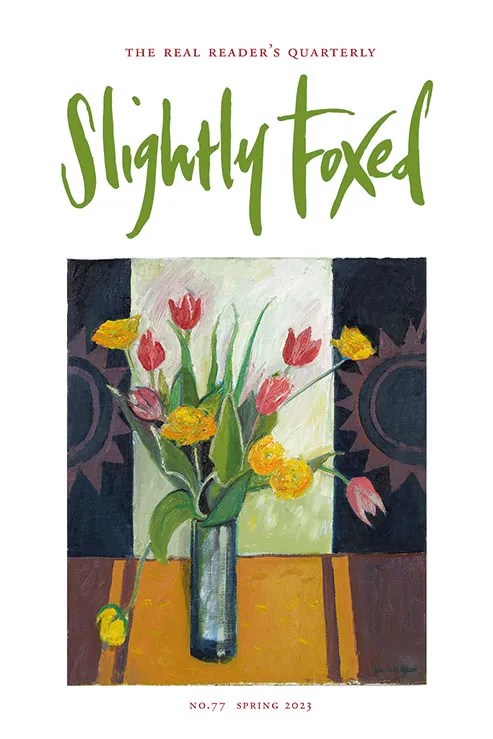
Slightly Foxed No. 77: ‘Laughter in the Library’, ed. Gail Pirkis and Hazel Wood – A new issue of Slightly Foxed is always a treat, and always adds something to my TBR. This one had me excited to read the latest Slightly Foxed Edition (True to Both My Selves, by Katrin FitzHerbert – I pre-ordered my copy and it’s on my bookshelf awaiting the right time) and to pick up Trollope’s Palliser novels once I’ve finished with the Chronicles of Barchester. Even the pieces discussing books that don’t strike my fancy are still delightful and fun to read – it’s so interesting to find out what makes different readers tick.

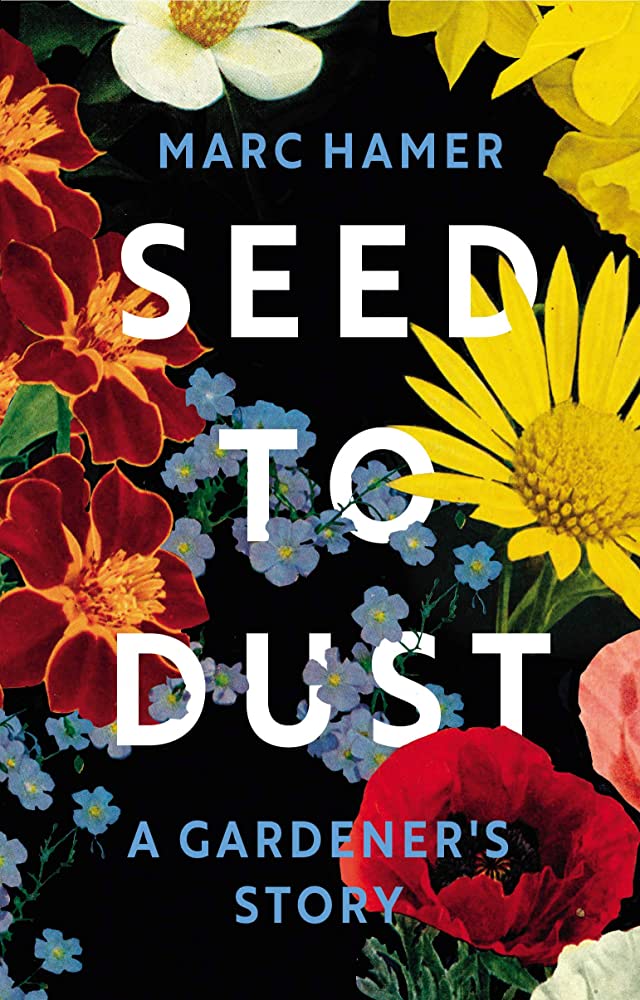
Seed to Dust: A Gardener’s Story, by Marc Hamer – I’ve been meaning to get to this and spring felt like the perfect time (although this book covers an entire year in the garden – not just the busy spring season). Marc Hamer has lived a fascinating life – thrown out by his father after his mother died, Marc was homeless and vagrant for years before eventually meeting his wife and raising a family. In this book, he follows a year in the garden that he tends (professionally, for an elderly employer he calls Miss Cashmere) and sprinkles in reflections on his personal history, his relationships with his wife and children, and the role of nature in modern life. It’s a wonderful read. (Also, that cover is spectacular.)

Quite a wonderful April in books! Three for the Classics Club – WOW – plus some lovely nature writing, a Slightly Foxed issue, and New York City-themed Edith Wharton read in situ. Doesn’t get much better than that! I’m not sure I can even pick a highlight, but if you made me… I suppose I would note that it is always wonderful to return to “The Enchanted April” and that Edith Wharton never fails. On the agenda in May… I’m hoping to knock out one more Classics Club read, and it’s a doorstopper: “The Three Musketeers.” Beyond that, I’ll probably try to keep the reading light. We’re in the middle of a stressful family project and I’m going to be needing my best comfort books to get me through. (Nothing is wrong – quite the contrary – but Steve and I are managing a lot of moving pieces right now and I’ve been losing way too much sleep over it all. Can’t wait to be out of this phase and thinking about more fun stuff, hopefully by June.) Some convalescent reading – Agatha Christie, anyone? – will be on the May book stack for sure.

How was your April in books? What are you looking forward to reading in May?

Classics Club Challenge: Great Expectations, by Charles Dickens

Great Expectations has been on my TBR pile for so long, it had almost become my white whale. As I told my friend Susan years ago, “I don’t want to read Dickens, but I want to have read Dickens.” (There’s a difference.) My grandmother loved Dickens and read his entire bibliography, and years ago she gave me her collection of his complete works bound in green leather – which I’ve been moving from house to house ever since and occasionally picked up a volume or two. But I couldn’t really get past my teenaged impressions of Dickens: A Christmas Carol is okay, at least it’s short, but I didn’t see the fuss about the rest of it. After two good Dickens reading experiences in a row, now – I loved The Pickwick Papers – I may have to revise my opinion of Dickens in general.

Great Expectations is, in its most basic terms, the story of young Philip “Pip” Pirrip and his “expectations” – with all the anticipation and reversals of fortune they bring. When the novel opens, Pip is a young boy living with his adult sister (who has “brought him up by hand,” whatever that means – it’s not clear to Pip) and her husband, blacksmith Joe Gargery. Pip is destined to be Joe’s apprentice and eventual partner in the smithy, but in the meantime he wanders the marshes around the small, unhappy family’s cottage. While loitering in the cemetery one day – visiting the graves of his long-dead parents – Pip encounters a convict, escaped and on the run from “the Hulks.” The Hulks are brooding, terrifying prison ships that dock just offshore, and occasionally a prisoner escapes, swims for shore, and makes off through the marshes. They are usually caught, and Pip’s convict is no exception – although he makes a good attempt at freedom, with Pip’s (terrified, extorted) help – namely, a Christmas pie and Joe’s metal file, with which the convict saws off his leg irons.

Pip does his best to forget the frightening experience of meeting the convict in the marshes, and his fortunes take their first turn when he is summoned to attend at the home of Miss Havisham, a wealthy old woman who lives in a mansion in the nearby town. Pip and his family are baffled at the summons, which come out of the blue – but a poor young boy with no prospects does not disobey a summons from Miss Havisham. Not knowing what to expect, Pip presents himself at Miss Havisham’s mansion, where he is let in by the elderly recluse’s adopted daughter, the beautiful Estella. Estella’s beauty appears to be only skin-deep; she is haughty and cruel, looks down on Pip as “common,” and scorns to be in the same room with him. Miss Havisham, for her part, sits in a state of suspended animation, wearing a crumbling wedding gown and surrounded by a mummified nuptial feast and a set of clocks that she has stopped at 9:20, precisely the hour she was jilted at the altar.

Miss Havisham directs Pip and Estella to play cards, and then quizzes Pip on his feelings for Estella.

“You say nothing of her,” remarked Miss Havisham to me, as she looked on. “She says many hard things of you, but you say nothing of her. What do you think of her?”

“I don’t like to say,” I stammered.

“Tell me in my ear,” said Miss Havisham, bending down.

“I think she is very proud,” I replied, in a whisper.

“Anything else?”

“I think she is very pretty.”

“Anything else?”

“I think she is very insulting.” (She was looking at me then, with a look of supreme aversion.)

“Anything else?”

“I think I should like to go home.”

(Miss Havisham would take a good deposition. That “Anything else?” – masterful exhaustion of the witness’s recollection.)

After presenting himself regularly to play cards with Estella, Pip is summarily dismissed one day when Miss Havisham declares that it is now time for him to be apprenticed to Joe, and he can expect no further help or support from her. By now, though, he is thoroughly spoiled for a blacksmith’s trade, and instead craves an education, the status of a gentleman, and the prospect of winning Estella’s cold heart for his own. Little does Pip know that his fortunes are about to shift again; one day a prominent lawyer appears on his doorstep and notifies him that he has “expectations” – a mysterious benefactor has left him a fortune and desires only that Pip should move to London and be educated as a gentleman (in keeping with his new station). The lawyer, Mr Jaggers, arranges for Pip to lodge with Miss Havisham’s cousin, Matthew Pocket, to be tutored. In London, Pip befriends his tutor’s son, Herbert Pocket, and his lawyer’s chief clerk, and speculates about who his mysterious, anonymous benefactor might be.

Everyone – Pip, Herbert, the rest of the Pockets, Estella, and Miss Havisham’s grasping relatives, believe that Miss Havisham herself is Pip’s patron. Pip latches onto the idea that he is “intended for” Estella, and that they belong together. When summoned to Miss Havisham’s side again, she quizzes him on his impressions of Estella and exhorts him to love the haughty girl.

“Is she beautiful, graceful, well-grown? Do you admire her?”

She drew an arm round my neck, and drew my head close down to hers as she sat in the chair. “Love her, love her, love her! How does she use you?”

Before I could answer (if I could have answered so difficult a question at all), she repeated, “Love her, love her, love her! If she favours you, love her. If she wounds you, love her. If she tears your heart to pieces – and as it gets older and stronger, it will tear deeper – love her, love her, love her!”

Pip persists in his understanding that Miss Havisham is his benefactor and that she intends him to marry Estella even after Herbert discloses Miss Havisham’s true designs vis-a-vis Estella. Having never recovered from being jilted at the altar – by a cruel scoundrel who ruined many lives, as the history becomes clear – Miss Havisham adopted Estella with the intent of bringing her up to break as many hearts as possible in revenge. Estella herself is cold and frequently describes herself as heartless – yet she feels something for Pip, because she actively discourages him from pressing his suit or from loving her. Estella explains to Pip that he is the only man she cannot bring herself to lead on or deceive. But she doesn’t need to – Pip leads himself on. Yet he’s not always completely lacking in self-perception.

The unqualified truth is, that when I loved Estella with the love of a man, I loved her simply because I found her irresistible. Once for all; I knew to my sorrow, often and often, if not always, that I loved her against reason, against promise, against peace, against hope, against happiness, against all discouragement that could be. Once for all; I loved her none the less because I knew it, and it had no more influence in restraining me, than if I had devoutly believed her to be human perfection.

I won’t divulge whether Miss Havisham really is Pip’s mysterious benefactor, what happens between Pip and Estella, or anything more about the plot – it would ruin the delight of speculation, if you haven’t already read this wonderful story. (I will say, because I can’t resist patting myself on the back, that I worked out for myself who Pip’s patron is.) Pip is a self-important fool who misses the obvious all around him, fails to value his earliest and truest friend – his brother-in-law Joe Gargery – and lets his sudden wealth go immediately to his head… but he’s endearing all the same, and I found myself rooting for him despite my best judgment. Estella is cold, cruel, and proud – she is exactly what Miss Havisham raised her to be – and yet I rooted for her, too. This is a meandering, engaging novel about seeing the true value in people, however humble their origins – but it’s also just a cracking good story. I’m so glad I got around to it at last.

Maybe I like Dickens after all…

Have you read Dickens? What’s your favorite of his novels?
Reading Round-Up: March 2023

Reading is my oldest and favorite hobby. I literally can’t remember a time in my life when I didn’t love to curl up with a good book. Here are my reads for March, 2023.

South Pole Station, by Ashley Shelby – While still in Antarctica, I read this fun novel set at Amundsen-Scott South Pole Station – which came recommended by Sara. The novel follows a painter who goes to the South Pole on an artists’ and writers’ fellowship and navigates tricky station politics, big questions about science, “ice” romances, and personal trauma. I loved the story, which packed a surprising amount of food for thought into a novel that read like fluffy fun – it was a good read for the Drake and the long flight back home.

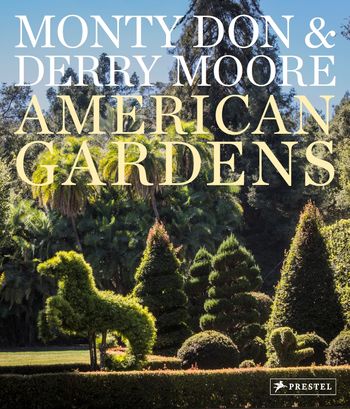
American Gardens, by Monty Don and Derry Moore – Needing to look at something green after all that (beautiful!) ice, I picked up American Gardens, a coffee table masterpiece by Monty Don, with photos by Derry Moore. Don and Moore travel the United States trying to understand the breadth and scope of American gardens. It was a delight from the first page to the last – and made me want to go on my own trip to visit some classic American gardens. (Or at least to finally get to Dumbarton Oaks, which is practically in my backyard.)

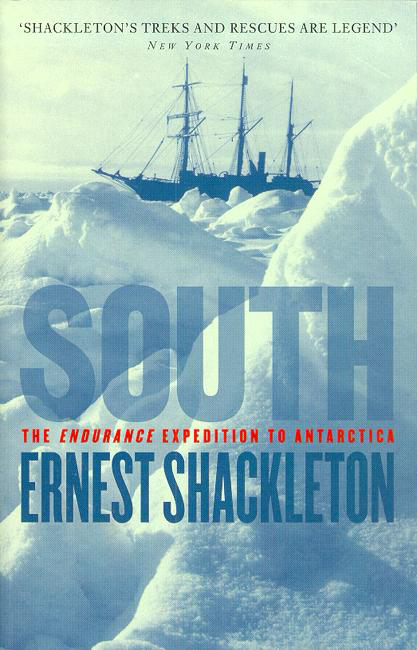
South!, by Sir Ernest Shackleton – Having read hundreds of pages on the disastrous Scott Expedition, I wanted to learn a bit about the marginally more successful Shackleton expedition. (Marginally more successful in that not quite as many people died.) It was really interesting – and Shackleton wisely confines his writing to the very exciting events of his expedition (it’s not a daily diary like Scott’s, which tended to drag) but by the time I got into this, I was kind of ready for a change from polar literature.

Great Expectations, by Charles Dickens – Read for my Classics Club Challenge, and also because I’ve had this classic novel on my TBR pile for – literally – years, I loved following the story of Pip and his “expectations.” It read like a page-turner, but was poignant and thoughtful. Full review to come in the next couple of weeks.

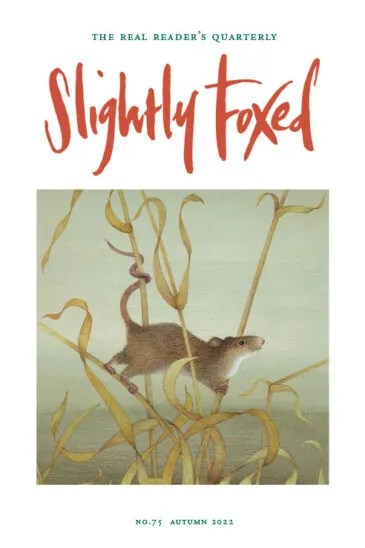
Slightly Foxed Nos. 75 and 76, ed. Gail Pirkis and Hazel Moore – After reading Great Expectations for almost two weeks straight, I wanted something bite-sized – a palate cleanser, if you will – before moving on to another doorstopper. I was also behind on my issues of Slightly Foxed, so that made perfect sense. As always, these journals were a delight to read and exploded my TBR pile.

Harry Potter and the Chamber of Secrets (Harry Potter #2), by J.K. Rowling – Nugget and I have been reading our way through the Harry Potter series before bed each night, and we wrapped up Chamber of Secrets in March. There’s nothing to say in the way of reviewing these books that hasn’t already been said before, many times. So I’ll leave it at two thoughts: the illustrated versions are such a delight, and what fun it is to experience Harry’s story anew through Nugget’s fresh eyes.

The Silmarillion, by J.R.R. Tolkein – Another one for my Classics Club challenge – I am closing in on the last few books now! Full review to come, so I won’t say much here – but this wasn’t really for me. The Silmarillion is Tolkein’s origin story and account of the “Elder Days” of Middle-Earth – the backstory behind The Lord of the Rings. Since I did not grow up reading LOTR, and was never really immersed in Tolkein’s world, most of this went over my head and I enjoyed it less as a result.

So, eight books in March. I’ll confess myself a little disappointed – I was hoping for a higher total. But everything I read was worth the time spent over it, and I can’t discount the fact that there were two Classics Club tomes in this month’s reading – Great Expectations, which I loved, and The Silmarillion, which I didn’t. Otherwise, American Gardens and the two Slightly Foxed issues were the highlights of the month, which tells me that I am definitely ready for warmer weather and garden season (and for reading in the garden season). April ahead – yay! – and I have a stack of spring books, am hoping to work in a re-read of The Enchanted April, and am planning more Classics Club reading. Check in with me for more spring reading as the season unfolds!

What were your March reading highlights?

The Classics Club Challenge: The Professor, by Charlotte Bronte

Recently, I was updating my Classics Club page with links to the reviews I posted while in Antarctica, and I realized that I never actually wrote up a review of Charlotte Bronte’s first novel, The Professor. This neglect could be due to one, or both, of two possible explanations: (1) I finished the book in December, and writing up a review got lost amid the general holiday hustle; or (2) it wasn’t very good.

Charlotte Bronte wrote The Professor alongside her sisters, Emily and Anne, who each produced a first novel of their own (Emily’s melodramatic and slightly racist Wuthering Heights and Anne’s superior Agnes Grey) and submitted them for publication around the same time. And while Charlotte went on to produce justly famous books like the remarkable Jane Eyre (one of my favorite novels of all time) and Shirley (which I read last year, and loved) – The Professor is very much a debut novel. The prose is clunky and overdone; the characters unsympathetic; the setting bland. It’s the shortest of Bronte’s novels, but still feels too long. And it’s not a very good story – really, the only reason to read The Professor is to compare it against Bronte’s other work for a complete picture of her evolution as a writer. If you’re just in it for a good yarn, skip.

The Professor tells the story of a young man, William Crimsworth, and his journey to find an income in the teaching profession. Young Crimsworth first considers going into business, and approaches his older brother, who owns a successful mill in the north of England. The elder Mr. Crimsworth agrees to take his brother on as a clerk, but warns him that he can expect no special treatment as a family member – and indeed, he works our young “hero” hard and mercilessly. When a rival mill owner starts to gossip about the perceived unfairness of Crimsworth elder to Crimsworth younger, the young man is unceremoniously fired. I think we’re supposed to feel badly for him and perceive the injustice of the older brother, etc., etc., but young Crimsworth is such a mealy-mouthed, sycophantic creep that sympathy is impossible.

The action of the story then moves to Brussels, where young Mr. Crimsworth flees in search of a better opportunity. He finds himself a role as an English teacher in a boys’ school, and supplements his income with teaching the young ladies in a neighboring sister school. He becomes infatuated with the girls’ headmistress, who leads him on mildly – but really, he reads much more into her behavior than he should – and then experiences a disappointment when he discovers that she’s, to borrow a contemporary phrase, just not that into him. Again, I think we’re supposed to feel sympathy for him, but – nope, can’t. In any event, he bounces back, starts up a creepy relationship with his star student at the girls’ school in which he is overly critical of her intellect and she seems to enjoy it (sorry, what?) and… nothing much else happens.

There ya go: I read The Professor so you don’t have to.

Lately I’ve been wondering if I… just don’t like the Brontes anymore? That feels like blasphemy, and upon reflection, I don’t think it’s accurate. While it does feel like I’ve grown out of Emily (I loved Wuthering Heights as a teenager, but as a rational adult who is allergic to drama, I can’t stand it), Anne’s novels grow more richly rewarding with every re-reading, and Charlotte’s other works are much, much better than this. It just boils down to: The Professor is a first attempt at writing a novel, and it reads like it.

Charlotte, I still love ya. But I’ll be sticking to Jane Eyre, Shirley, and Villette when I feel like re-reading your work.

Have you ever been disappointed by a favorite writer’s first lackluster effort?

Reading Round-Up: February 2023

Reading is my oldest and favorite hobby. I literally can’t remember a time in my life when I didn’t love to curl up with a good book. Here are my reads for February, 2023.

Scott’s Last Expedition, by Captain Robert Falcon Scott – This one has been on my shelf for years, waiting for its day. I finally picked up Captain Scott’s diaries detailing his doomed final expedition to the South Pole shortly before leaving for my own trip to Antarctica (which, thankfully – and as expected – went much better than Scott’s). I bogged down in quite a few places (especially the endless descriptions of weather conditions, which were certainly top of mind for Scott but which didn’t exactly hold the attention) and spent a fair amount of time lamenting Scott’s poor decision-making – especially those bad decisions that led directly to his death and the deaths of the rest of the members of his Polar Party. But it was an interesting and important read on the history of polar exploration.

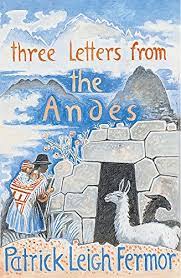
Three Letters from the Andes, by Patrick Leigh Fermor – As I thought, this book focused entirely on Peru – so not the part of the Andes I was destined to see at the southern tip of Argentina. But as with everything written by Fermor, it was a beautiful and evocative read. And Peru is quite high on Steve’s and my list of countries to visit soon (with the kids) so I’m sure I will be revisiting this slim but lovely volume.

Object Lessons: Whale Song, by Margret Grebowicz – An interesting, again slim, look at the sounds whales make, their communication, and what those phenomena mean to human culture. This left me with a lot of food for though, especially about the tendency to anthropomorphize cetaceans.

A Nature Poem for Every Winter Evening, ed. Jane McMorland Hunter – I really enjoyed Jane McMorland Hunter’s selections in A Nature Poem for Every Night of the Year, which I read a few years ago, and was delighted that she is now curating seasonal selections (in pretty hardcovers that are a bit easier to hold and read than the giant doorstopper omnibus, too). I bookmarked quite a few poems to revisit, and this volume contained some old and some new favorites. I have the spring volume sitting on my coffee table and can’t wait to dive in.

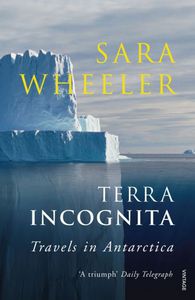
Terra Incognita: Travels in Antarctica, by Sara Wheeler – One thing about polar literature, and the literature of Antarctica especially, is that it’s very heavily male-dominated. Looking for a woman’s voice to take on my Antarctic journey, I found Sara Wheeler’s memoir of her time spent “on the ice” – a memoir the great Beryl Bainbridge describes as “essential” – and Wheeler was the perfect company for the long flights and days on the Drake Passage. I loved her description of her initial preconceptions of Antarctica as “the place where men with frozen beards competed to see how dead they could get” and her wise and funny observations of her companions at McMurdo Station and the other research stations and camps she visited over multiple trips to the icy continent. Funnily enough, Steve and I hit it off with another couple in our kayak group while on our trip, and they were both reading Terra Incognita too. We all agreed – it’s a wonderful read.

Well! This is a short list – only five books – as I was too busy having the adventure of a lifetime in Antarctica to do much reading. (Even during the long at-sea days on the Drake, I spent most of my time watching albatrosses swoop behind the ship and looking for whale spouts on the horizon.) But it was a good month of reading in that everything I did manage to read was interesting and enjoyable (or some combination!). Terra Incognita was the highlight of the month, for sure. Now that I’m home, I’m taking a break from ice and men with frozen beards and turning my attention to some springier reading. I’m definitely feeling the pull to my shelves again – I never read much when I am traveling – and looking forward to a longer booklist for March.

What were your reading highlights in February?

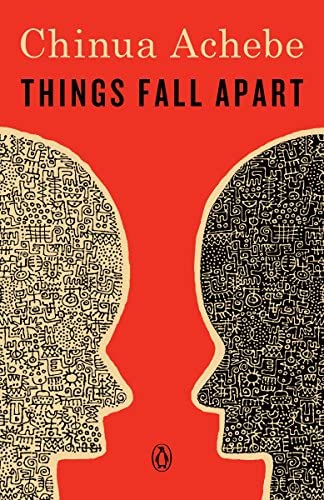
The Classics Club Challenge: Things Fall Apart, by Chinua Achebe

It’s amazing to think that Things Fall Apart is a debut novel – because it’s perfect. Perfectly formed and crafted, perfectly compact – just perfect.

When the novel opens, Okonkwo is a young man in Umuofia, a region in southeastern Nigeria. Already gaining prominence as a local wrestling champion, Okonkwo is determined to forge his own legacy and shake off the shame he feels at being the son of a ne’er-do-well father. The novel’s first section showcases Okonkwo’s determined progress from nobody to rich farmer and respected village leader. He’s a complicated character – engaging and interesting, but also brutal and misogynistic at times. (That made for an interesting dilemma to ponder while reading: Okonkwo is not an especially likeable character, but how much of my response to his behavior was directly tied to my 2020s western worldview? I try to approach each book as a learning experience and to question why I respond to certain characters in certain ways.)

As Okonkwo grows to manhood, he piles success on top of success. The reader watches as he clears hurdles, navigates setbacks – like crop losses – and comes back stronger than ever. It seems there is no challenge to which Okonkwo is not equal.

Enter white missionaries. By the end of the first section of the book, there are whisperings that white settlers have started to inflitrate the land. Okonkwo is unconcerned – at first.

But stories were already gaining ground that the white man had not only brought a religion but also a government. It was said that they had built a place of judgment in Umuofia to protect the followers of their religion. It was even said that they had hanged one man who killed a missionary.

Although such stories were now often told they looked like fairy-tales in Mbanta and did not as yet affect the relationship between the new church and the clan. There was no question of killing a missionary here, for Mr. Kiaga, despite his madness, was quite harmless. As for his converts, no one could kill them without having to flee from the clan, for in spite of their worthlessness they still belonged to the clan. And so nobody gave serious thought to the stories about the white man’s government or the consequences of killing the Christians. If they became more troublesome than they already were they would simply be driven out of the clan.

Eventually, white missionaries arrive in Okonkwo’s village and build a church. Soon, the village is divided between those who – like Okonkwo – value and continue to follow the old traditions, and those who are interested in the newly introduced Christian religion and want to see what it’s all about. Tensions rise as the village becomes more and more fractured, and when a local funeral leads to a tragic accident, Okonkwo and his family are exiled for seven years to Mbanta, his mother’s village. At first deeply depressed at the idea of leaving behind the village and all he has built there – because his farm and all his crops will be claimed by other villagers the second he departs – Okonkwo finds companionship and validation among his extended family in Mbanta. Soon he is prosperous again and is able to influence his family members to resist the colonizing newcomers and cherish their Igbo traditions, as his uncle reflects in a speech honoring Okonkwo at a family feast.

“If I say that we did not expect such a big feast I will be suggesting that we did not know how openhanded our son, Okwonko, is. We all know him, and we expected a big feast. But it turned out to be even bigger than we expected. Thank you. May all you took out return again tenfold. It is good in these days when the younger generation consider themselves wiser than their sires to see a man doing things in the grand, old way. A man who calls his kinsmen to a feast does not do so to save them from starving. They all have food in their own homes. When we gather together in the moonlit village ground it is not because of the moon. Every man can see it in his own compound. We come together because it is good for kinsmen to do so. You may ask why I am saying all this. I say it because I fear from the younger generation. for you people.” He waved his arm where most of the young men sat. “As for me, I have only a short while to live, and so have Uchendu and Unachukwu and Emefo. But I fear for you young people because you do not understand how strong is the bond of kinship. You do not know what it is to speak with one voice. And what is the result? An abominable religion has settled among you. A man can now leave his father and his brothers. He can curse the gods of his fathers and his ancestors, like a hunter’s dog that suddenly goes mad and turns on his master. I fear for you, I fear for the clan.” He turned again to Okonkwo and said, “Thank you for calling us together.”

After his seven years of exile are over, Okonkwo returns to his village to find it changed beyond recognition. The white missionaries have invaded every aspect of village life and only a few villagers seem to still hold true to their traditions. When a Christian convert unmasks a village elder during a religious ceremony – a deeply evil act – Okonkwo and a few other villagers reach the limit of their endurance and call for war against the colonizers. I won’t share more of the plot, because you really should seek this book out to read for yourself – but I will say, as anyone who has read anything about the history of colonization in Africa can guess – things don’t go well for Okonkwo.

“Does the white man understand our custom about land?

“How can he when he does not even speak our tongue? But he says that our customs are bad, and our own brothers who have taken up his religion also say that our customs are bad. How do you think we can fight when our own brothers have turned against us? The white man is very clever. He came quietly and peaceably with his religion. We were amused at his foolishness and allowed him to stay. Now he has won our brothers, and our clan can no longer act like one. He has put a knife on the things that held us together and we have fallen apart.”

I’ve had Things Fall Apart on my to-be-read list for ages, and I’m so glad I finally got to it. It was a slim volume and a fast read – I think I read it in one or two sittings – but packed full of beautiful writing and difficult concepts to consider. As we in western countries engage more and more with our own legacy of colonialism and erasure, this should be required reading. I’m sure I will revisit it, since there was so much to turn over and consider here; this is a book that will reward multiple re-readings for years to come.

Have you read any Chinua Achebe?

The Classics Club Challenge: Sylvia’s Lovers, by Elizabeth Gaskell

Not nearly as well-known as North and South or Wives and Daughters, Elizabeth Gaskell’s Sylvia’s Lovers follows along with Gaskell’s unusual (for Victorian times) featuring of a working-class heroine. Sylvia Robson is the daughter of a relatively prosperous – but by no means wealthy – farmer in northern England. When the novel opens, she is just coming into the bloom of her young womanhood, and her beauty is the talk of her local environs and responsible for enchanting her cousin Philip. Sylvia finds Philip, when she thinks of him at all, an annoyance and a bit of a pedantic.

Aside from Sylvia’s beauty, the other hot topic of conversation is the press gang. Under constant stress from Napoleon, the British Navy has turned to the shameful practice of impressment – rounding up able-bodied civilian men, kidnapping them, and forcing them to serve on Naval ships. No man, save for the very old, the very young, and the clearly disabled, was safe from roaming press gangs – although certain professions, including whalers, were supposed to be exempt from impressment. But “supposed to be” and what really happened were two different things, and the town is waiting with bated breath for the return of the “Greenland whalers” who base there in the winter. When the first ship appears in harbor, the press gang strikes and Charley Kinraid, chief harpooner, is shot and wounded. The town is abuzz with gossip about his heroism, and Sylvia is fascinated by Kinraid.

Kinraid has a reputation: he’s a bit of a womanizer and a heart-breaker. When he starts to court Sylvia – helped along by Farmer Robson’s lively interest in the whaler’s tales – Philip is dismayed. But their courtship is cut short by the press gang. Watching Charley be carried off, Philip promises to tell Sylvia what has happened to the whaler – but he says nothing. Sylvia, believing her fiance drowned, mourns and also grows up and grows more beautiful.

To be sure, it was only to her father and mother that she remained the same as she had been when an awkward lassie of thirteen. Out of the house there were the most contradictory opinions of her, especially if the voices of women were to be listened to. She was ‘an ill-favoured, overgrown thing’; ‘has as bonny as the first rose i’ June, and as sweet i’ her nature as t’ honeysuckle a-climbing round it’; she was ‘a vixen, with a tongue sharp enough to make yer very heart bleed’; she was ‘just a bit o’ sunshine wheriver she went’; she was sulky, lively, witty, silent, affectionate, or cold-hearted, according to the person who spoke about her. In fact, her peculiarity seemed to be this – that every one who knew her talked about her either in praise or blame; in church, or in market, she unconsciously attracted attention; they could not forget her presence, as they could of other girls perhaps more personally attractive. Now all of this was a cause of anxiety to her mother, who began to feel as if she would rather have had her child passed by in silence than so much noticed.

Philip’s decision to conceal Charley’s true fate from Sylvia is a fascinating plot. As a character, he is complicated. His broken promise destroys his life, Sylvia’s life, and several more lives by extension – to share more would be to spoil the plot. His motivations are the central question of the book: is it genuine love? Is it vindictiveness? Is it both? Did Philip truly love Sylvia? Did Charley?

Sylvia is a passive character. While she is operating with very imperfect information – Philip actively conceals Charley’s whereabouts from her and allows her to think he has drowned, on the flimsy basis that he’s probably going to die in some Naval battle or another, anyway – she generally just lets events happen. Now that’s partly a reflection of the realities of life in Victorian times, for a young woman – but several of Gaskell’s other heroines would have been a lot less passive. I can’t see Cynthia Kirkpatrick, for example, just sitting back and letting romantic drama grind her down. Cynthia is in charge of the romantic drama, thank you.

I think it’s Sylvia’s passivity that made this book a bit of a tepid reading experience for me. There’s a lot of dialogue, which makes the reading hard going, and Gaskell tends to veer into melodrama the longer things drag out. But that wouldn’t stand in the way of a really fabulous read if the heroine was a stronger character. Unlike the wonderful Molly and Cynthia of Wives and Daughters, or the strong and principled Margaret of North and South, Sylvia is bland and generally uninteresting. Her defining characteristic is physical beauty, and it’s on that basis – and that alone – she has two men falling at her feet. It’s hard to root for her or even to care, really, about what happens to her. Philip is the most well-rounded character – and it is interesting to consider whether he’s the novel’s hero or villain or anti-hero – and Charley comes across as little more than a plot device. It’s just all – bland.

Elizabeth Gaskell has written some of my favorite novels – Cranford in particular, and Wives and Daughters, both rank near the top of my desert island library list – but this isn’t one of them. If you’re new to Gaskell and want to start someplace, I suggest starting with one of those or with North and South.

Have you read Elizabeth Gaskell? Which of her novels is your favorite?

Reading Round-Up: January 2023

Reading is my oldest and favorite hobby. I literally can’t remember a time in my life when I didn’t love to curl up with a good book. Here are my reads for January, 2023.

Christmas Days, by Jeanette Winterson – I had this on audio and saved it for almost a year, to listen around Christmas. It was a lovely festive listen – Winterson alternates between holiday-themed short stories and sharing recipes from her personal holiday traditions (along with stories from her life). As with most volumes of short stories, some were more of a success than others – I particularly enjoyed several spooky Christmas ghost stories – and I really liked the recipe interludes.

The Children of Green Knowe, by Lucy M. Boston – Tolly goes to live with his great-grandmother at the rambling old house long known as “Green Knowe” and encounters three ghostly – and very mischievous – former residents of the house. Their adventures over Christmas are sweet and just eerie enough to be delightfully spine-tingling. There is a little bit of a time-slip adjacent element, which I love.

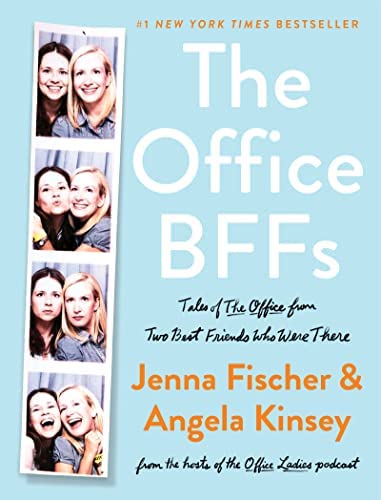
The Office BFFs: Tales of The Office from Two Best Friends Who Were there, by Jenna Fischer and Angela Kinsey – I’ve had my eye on this for ages, and it was waiting under the Christmas tree courtesy of my mom. I loved The Office when it was airing, and I really enjoy reading the oral histories of the show that are starting to come out (last year I read and loved Brian Baumgartner’s – a.k.a. Kevin’s – Welcome to Dunder Mifflin). Kinsey and Fischer’s book is also written in that tag-team style, but reviews the history of the show from the vantage point of their friendship. Knowing about their offscreen sisterhood of the heart, it’s even funnier to watch Fischer’s Pam and Kinsey’s Angela bicker and snipe. If you are a fan, do check this one out.

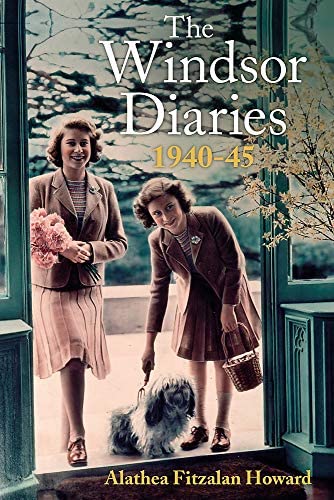
The Windsor Diaries: 1940-45, by Alathea Fitzalan Howard – Howard was a young girl living with her grandfather and aunt in an estate on the grounds of Windsor Castle during the World War II years – so she regularly encountered two other young girls in the neighborhood – the Princesses Elizabeth and Margaret, who were sheltering at Windsor during the Blitz. Howard was a year old than Princess Elizabeth and several years older than Margaret, and she took dancing and drawing lessons and socialized regularly with the Princesses, even attending sleepovers with them at the Castle several times. Her diaries from those years made for fascinating reading about the Princesses’ daily lives. Prince Philip makes an appearance (fifteen-year-old Elizabeth confides in Alathea that he is “her boy”) and Alathea especially loved Queen Elizabeth The Queen Mother, who was genuinely kind to her. I especially enjoyed reading diary entries where Alathea overthinks royal protocol – there are pages devoted to whether she should continue calling her friend “Lilibet” or whether, in their late teens, it would be more appropriate to switch over to “Princess Elizabeth” – and her somewhat snarky comments about the Princesses’ hair and clothes. Trigger warning, though – there are references to self-harm, so if that is the kind of thing that you cannot read about, skip this one.

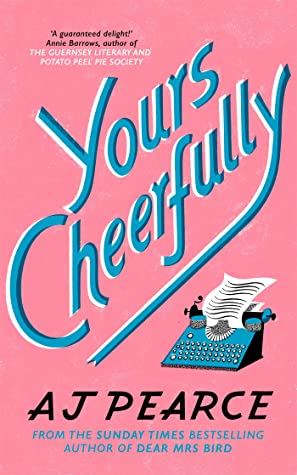
Yours Cheerfully (The Emmy Lake Chronicles #2), by A.J. Pearce – After reading Dear Mrs. Bird in December, I couldn’t wait to find out what happens next to Emmy, Bunty, Charles, and all of their friends. Yours Cheerfully finds the staff of Woman’s Friend re-shuffling after Mrs. Bird sailed off into the sunset (with all the good grace of a warship). Meanwhile, the magazine responds to a government call to help the war effort by spotlighting female war workers with the goal of recruiting more women to work at factories. But as Emmy writes up her feel0good stories, she discovers that the women’s lives in the factories are much more complicated than she is allowed to write about. Emmy’s efforts to support her new friends just might land her – and Woman’s Friend – in a whole heap of government trouble. This was a fun and delightful read.

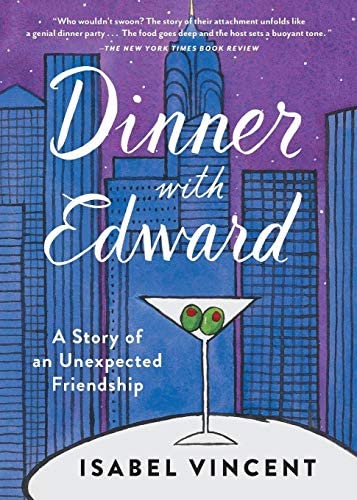
Dinner with Edward: A Story of an Unexpected Friendship, by Isabel Vincent – Isabel Vincent is a recent transplant to New York, struggling to get her arms around a new job as an investigative reporter at The New York Post and to navigate a floundering marriage, when she meets Edward. Edward is a friend’s nonagenarian father, recently widowed and struggling, himself, to find a reason to go on. Isabel’s friend Valerie asks Isabel to look in on her father and having dinner with him – “he’s quite a good cook” – and a beautiful friendship results. Edward cooks sumptuous dinners – sending me down goggle rabbit holes trying to find the exact recipe for his apricot souffle and cauliflower soup – and in the process, Isabel and Edward heal each other. It’s a beautiful read.

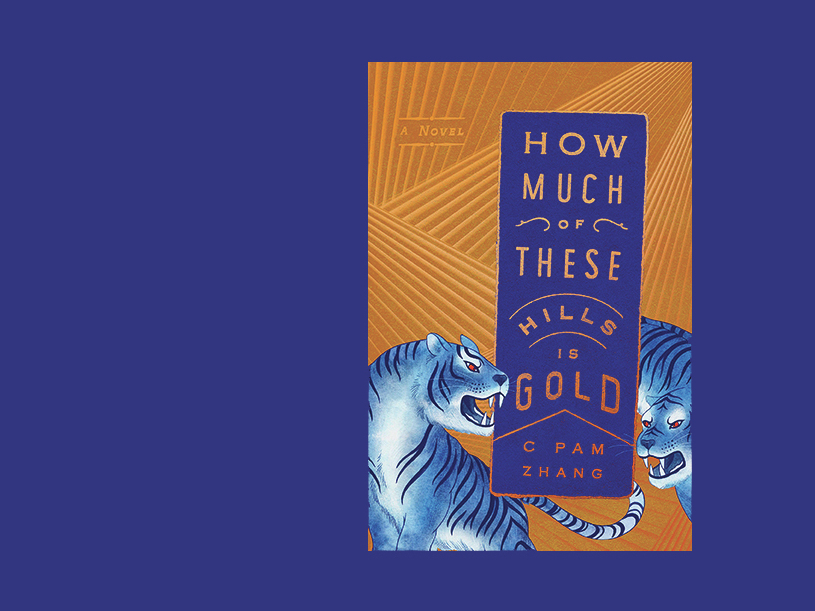
How Much of These Hills is Gold, by C. Pam Zhang – Ba is dead; Ma is gone; Sam and Lucy are on the run. Pam Zhang’s new release re-imagines the American west as a land of giant tigers and massive buffalo skeletons. This is a sibling adventure story with a light magical realism element; it is gritty and dark. Definitely worth the hype, but darker than I like (the real world is plenty dark enough).

Harry Potter and the Sorcerer’s Stone (Harry Potter #1), by J.K. Rowling – A re-read that needs no introduction from me at this point. The kids are on a major Harry Potter kick right now, and this has been Nugget’s and my bedtime reading. (We’re now on to the second one).

Philosophy for Polar Explorers, by Erling Kagge – This slim volume is a fast read but packed with wisdom. Kagge was the first person to complete the Three Poles Challenge – reaching both the North Pole and the South Pole and attaining the summit of Everest – and Philosophy for Polar Explorers collects his life lessons from those adventures. Nothing earth-shattering here, but nice to read and packed with cool photos..

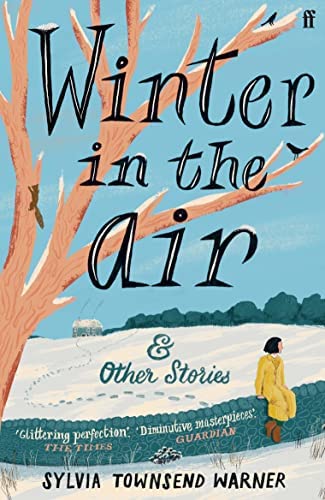
Winter in the Air, and Other Stories, by Sylvia Townsend Warner – I bought this book entirely for the cover, and apparently I was not the only person who did so. (It is gorgeous.) Happily, it’s also an excellent read. I’ve noted in weekly reading recaps that there are only a small handful of writers who can hold my attention over an entire volume of short stories, and Sylvia Townsend Warner is one of that select group. As always, not every story was a favorite, but there are so many gems in here.

Anne of Green Gables, by L.M. Montgomery – Another re-read and another read-aloud, and another one that needs no introduction for me. Over ,months now, Peanut and I have been slowly reading our way through Anne and enjoying ourselves hugely. Note for parents considering reading this one aloud – have plenty of tissues for that penultimate chapter. I sobbed my way through it as Peanut and Steve watched with concern. I knew it would be hard to read, but man. Anyway – now Peanut and I are checking our schedules to find time for her to watch the classic movie version with Meagan Followes. Am I way too excited to share that with her? Am I planning to make homemade raspberry cordial (non-alcoholic) to celebrate? Yes on both counts.

Smallbone Deceased (Inspector Hazelrigg #4), by Michael Gilbert – I love a mystery novel on audio, and this was a fun one. A body is discovered in a deed box within the office of a London solicitor, and the police have a puzzle on their hands. Who was Marcus Smallbone, and why was he killed, and what on earth was his corpse doing in a box on a law firm shelf? When the killer strikes a second time, the stakes go through the roof. While this wasn’t as wonderful as Death in Captivity, another novel by Gilbert and republished by British Library, it was a fun read and excellent on audio.

Whew! A busy month of reading and a great start to 2023. Two lovely read-alouds with two lovely kids: that’s got to be the highlight of the month. But as for the remainder of the month, there were so many other highlights – a fascinating historical diary… a beautiful collection of short stories… a riveting classic crime novel… and a fun and frothy look at one of my favorite television shows of all time. Ahead in February, I have lots of reading planned around the theme of my upcoming Antarctic adventure. Brrrrr!

What were your January reading highlights?

2022 in Books: Top Ten

(^Blast from the past! My living room is a bit more crowded these days…)

This is always a hard post to write! Over the course of a year, I average more than one hundred books – actually, I can’t remember the last year when I read fewer than 100 – and many of them are very, very good. How to pick the top ten? It’s never an easy task. And then this year, I added to the difficulty and decided to actually rank my top ten in descending order. I could go on about what a challenge it was to narrow down all the great books I read in 2022, let alone rank them, but – well, it would just be complaining. Let’s get to the books.

10. Welcome to Dunder Mifflin: The Ultimate Oral History of The Office, by Brian Baumgartner and Ben Silverman. One of the first books I read in 2022 was also one of the best. Anyone who was a fan of The Office would love this, but for Dunder Mifflin super nerds, it’s an absolute must.

9. Call Us What We Carry: Poems, by Amanda Gorman. Amanda Gorman shot to national superstardom when she read her spectacular poem, The Hill We Climb, for President Joe Biden’s inauguration. That poem is in her first collection, Call Us What We Carry, but there is so much more. I am not exaggerating when I say that when I finished this book, I hugged it.

8. Death in Captivity, by Michael Gilbert. Considering how many mysteries I read, I am kind of surprised I don’t have more on my top books of the year list. So that goes to show how excellent Death in Captivity is. It has everything – a murder, of course, but also an adventure/escape plot, lots of humor, and a poignant look at a World War II POW camp. And I didn’t guess whodunit. Definitely will be re-visiting this one.

7. Hons and Rebels, by Jessica Mitford. I’m fascinated by the Mitford sisters, and Jessica might be the most interesting one of them all – she certainly broke farther away from her family than any of the rest of them, even Nancy. Her memoir was riveting, and the writing was outstanding too (and so evocative – I loved her description of Nancy as looking like “an elegant pirate’s moll” and I’ll never be able to see Nancy any other way).

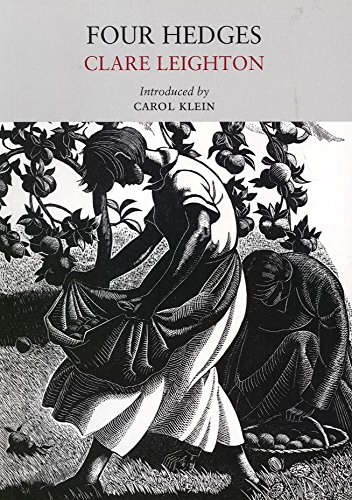
6. Four Hedges, by Clare Leighton. Leighton’s garden writing is beautiful, but what really sets this book apart is the stunning woodblock illustrations. I could stare at them for hours.

5. Just William, by Richmal Crompton. Sometimes you want to read a book and howl with laughter. Richmal Crompton’s collection of linked short stories about possibly the world’s most mischievous little boy, and the scrapes he and his friends get into, will be just the thing.

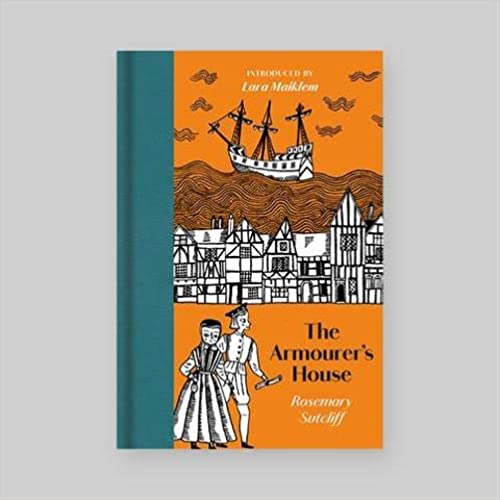
4. The Armourer’s House, by Rosemary Sutcliff. Manderley Press is a new small publisher that is reprinting classics that are especially evocative of a sense of place, and The Armourer’s House, the second volume brought out by the press, takes you right back to Tudor London. I am a big fan of Rosemary Sutcliff’s writing, and this was an especially good one. Just like her Dolphin Ring series (republished by Slightly Foxed, if you’re interested), The Armourer’s House puts you right in it. I would’ve liked it to have been three times as long.

3. Delight, by J.B. Priestley. This 75th anniversary edition of Priestley’s essays about things that delight him is a total joy to read. In addition to the writing – in essays like “Cosy Planning,” which had me nodding along – the book is beautiful and is a delight in and of itself.

2. War in Val d’Orcia: An Italian War Diary, 1943-1944, by Iris Origo. Iris Origo was a really exceptional person – an Anglo-American writer married to an Italian nobleman, she and her husband Antonio sheltered refugee children and Allied soldiers, and provided guidance and sustenance to a string of Jewish refugees, anti-Fascist partisan fighters, and escaped Allied POWs – at great personal risk to themselves. When Nazi soldiers took over their idyllic farm, Origo courageously led a string of sixty refugees, including elderly grandparents and tiny babies, through heavy fire to safety in Montepulciano. Her diaries are riveting reading, capturing what it was like to live through history and make some of it for yourself.

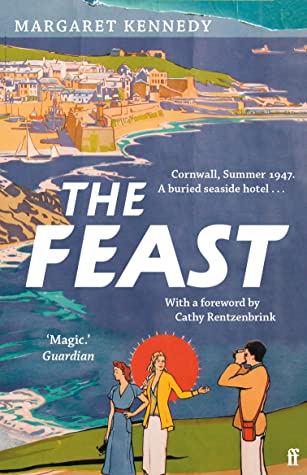
1. The Feast, by Margaret Kennedy. In a year of fantastic reads, this was the standout of all standouts. The Feast opens with a tragedy – a cliff has collapsed on a hotel in Cornwall, and everyone inside the hotel was killed. But not all of the guests were inside, and the plot rewinds to seven days before the disaster, when you see the ill-fated hotel guests arriving. The seven guests killed represent the seven deadly sins, so as the reader gets to know each of the guests and their foibles, it becomes a fascinating intellectual exercise to work out who the victims will be and who will survive (I guessed right on all counts). I was riveted from the very first page, and will read this again and again in coming years.

Whew! I can’t believe I actually did it – my top ten books of 2022, actually ranked in descending order. It was a wonderful year in reading – as they all are, of course. And now, one more lookback post for 2022 before it’s time to turn my readerly attention fully to 2023. Next week: the silliest post of the year, in which I give high school superlative awards to the books I read last year. It’s utterly ridiculous!