

Reading is my oldest and favorite hobby. I literally can’t remember a time in my life when I didn’t love to curl up with a good book. Here are my reads for May, 2016…
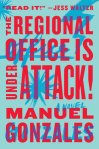 The Regional Office is Under Attack!, by Manuel Gonzales – I picked up this comedic thriller about butt-kicking, possibly sort of superpowered, female assassins on the recommendation of Rebecca from the All the Books! podcast. The premise was a lot of fun and it was certainly action-packed, but ultimately, The Regional Office is Under Attack! left me cold. I struggled with the perspective-shifting and found some of the characters incredibly grating. And the violence wasn’t my cup of tea, either.
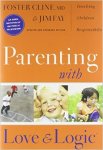 Parenting with Love and Logic, by Foster Cline and Jim Kay – I’ve been trying to avoid parenting books since I OD’ed on them last spring, but my pediatrician recommended this one, so I gave it a try. It did make some sense, and I’ve been trying out the recommended techniques with some mild success (but toddlers will be toddlers, you know). The main premise is that giving little kids choices helps them hone their decision-making abilities and empowers them, which I believe in – the trick, which makes perfect sense but which I didn’t really consider, is to make sure that you offer choices that you can live with no matter what the kid decides to do. Some of the suggestions for behavior correction won’t work for us because Peanut’s room currently doesn’t have a door, but when that eventually changes, I’ll revisit the tips for dealing with tantrums. All in all, a decent parenting book. I’m still cool on the genre, though.
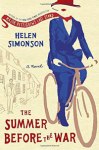 The Summer Before the War, by Helen Simonson – I haven’t read Simonson’s other book, Major Pettigrew’s Last Stand, although I own a copy and hope to get to it soon. Major Pettigrew has been popular for awhile, and I know that Simonson’s new novel was hotly anticipated by many Anglophile readers. I devoured it (and it’s a chunkster!) and really loved it. The story of two cousins, Daniel and Hugh, and their friendship with the new female Latin mistress at their aunt’s country school, was charming and moving. Daniel and Aunt Agatha irritated me a bit at first, but they quickly grew on me and I adored them both by the end. As for Hugh, Beatrice, and Celeste, they charmed me instantly. I can’t recommend The Summer Before the War highly enough, and I look forward to reading more from Simonson.
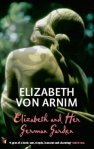 Elizabeth and Her German Garden, by Elizabeth von Arnim – After reading and loving The Enchanted April, I downloaded another von Arnim (hurray for free classics on iBooks!) – the popular Elizabeth and Her German Garden. An autobiographical novel, Elizabeth follows the title character through all four seasons in the garden she loves more than anything. I adored the beautiful descriptive writing – von Arnim evokes every season with beauty and glory – but didn’t love the book itself. Elizabeth’s marriage to “the Man of Wrath” made me sad, and her life seemed so empty and bleak – despite having piles of money, a beautiful estate, and three sweet babies. What more could you want for? And yet, I felt she was deeply unhappy throughout the entire book, and it left me sad and confused. (And distracted, trying to figure out which parts were true to von Arnim’s life and which were poetic license.) I plan to read more von Arnim – including the two Elizabeth sequels – but I can’t say that Elizabeth and Her German Garden is going to become a favorite.
 Everyone Brave is Forgiven, by Chris Cleave – Another hot new historical fiction release, Everyone Brave is Forgiven was said to be based on letters exchanged between the author’s grandparents during World War II. I’d heard quite a lot of hype and was excited to pick it up. It was well-written and engaging, and I think fans of historical fiction and World War II would find a lot to like in here – I certainly did. But I was bothered by some of the language. Mary, the female protagonist, works as a teacher in London during the war, and she takes under her wing a handful of children of color after one young evacuee returns to London due to bullying in his village. Mary’s devotion to her young students is touching, but I was bothered by the racist language that the characters – even Mary – use from time to time, and by the descriptions of the minstrel show in which the children live. I suppose the language was true to life, but Cleave invented that part of the story – it wasn’t based on his grandmother’s life – and I didn’t think it was necessary to use such demeaning language. I’m afraid it rather destroyed my enjoyment of the book.
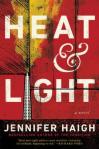 Heat and Light, by Jennifer Haigh – Haigh is always a winner for me, and especially her Bakerton books. I’ve read and loved Baker Towers and News from Heaven, so when I learned that Haigh had a new Bakerton book coming out, I was delighted and I immediately requested it from the library. Heat and Light returns to Bakerton, which is a ghost town after the last of the big mines has closed – until natural gas is discovered underneath the surrounding fields. Soon Bakerton is on the energy industry’s map again, and oil and gas giants are vying for their share of the riches in the rock. In Heat and Light we see some old friends and meet some newcomers, and I found myself drawn back into the town as I have been with Haigh’s previous novels. Heat and Light wasn’t my favorite of the Bakerton books, but any Bakerton book is a good Bakerton book. Recommended.
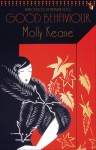 Good Behaviour, by Molly Keane – This was one of those “what to read if you’re still grieving the end of Downton Abbey” recommendations. Good Beahviour, which is probably Molly Keane’s most well-known book, follows the tribulations (no triumphs) of an aristocratic Irish family in decline. Money is trickling out of every edifice of the St. Charles family’s stately home, it’s impossible to find good help, and soon the family will be left with nothing but their icily impeccable manners. Much like Henry Green’s Loving, which I read a few years ago, something about this book just didn’t ring right for me. It was well-written, but I couldn’t love it despite my best efforts. Still looking for that perfect book to scratch the post-Downton itch.
There we have it – a bit of a slow month in May, and June isn’t looking any snappier. But I did read some good books – Heat and Light was a highlight, as was The Summer Before the War, and if I had a few flops the rest of the month, well, that’s to be expected. June promises more library reading as I continue to try to work my way through the stack and fight against urges to play outside instead of reading in my limited free time. I do have some fun picks on deck for June, so stay tuned for more recommendations.
What did you read last month?





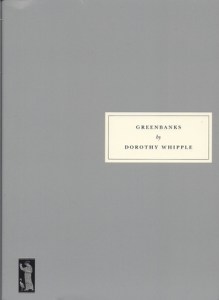 Greenbanks, by Dorothy Whipple, opens on Christmas. The Ashton family has gathered at Greenbanks, the family seat, for the holiday. There are the grown Ashton children – abrasive Jim; lovable black sheep Charles; trembling Letty and her imperious husband Ambrose; and spoiled baby of the family Laura. There are the Ashton grandchildren – including four-year-old Rachel, most beloved of the group. And they’re all gathered around Robert and Louisa, the matriarch and patriarch of the family. On the surface, they appear to be a close-knit family, but the fractures and cracks in the veneer are almost visible.
 What Is Not Yours Is Not Yours, by Helen Oyeyemi – This was my first Oyeyemi, and it was certainly creative. As is par for the course with me and short stories, I liked some of the stories more than others. The quality was evenly good; I just take a little while to connect to a narrative sometimes, and short stories don’t always work for me for that reason. But as short stories go, this was an engaging, creative volume.
 Men Explain Things To Me, by Rebecca Solnit – This was one of those reads that I think should be required for everyone. It’s a slim volume containing a selection of Solnit’s essays on feminism and other topics, including the title piece, “Men Explain Things To Me,” which starts out humorous but soon becomes much more serious as Solnit explores the ways in which women’s voices are silenced. “Men Explain Things To Me” is widely credited with first articulating the phenomenon of “mansplaining,” although Solnit doesn’t use the word itself – but she certainly describes it accurately. I’ve been “mansplained” to, and it is one of the most irritating, demeaning experiences – but I had never considered that I was being silenced as well as annoyed. Lots of thought-provoking stuff here.
 Very British Problems: Making Life Awkward for Ourselves, One Rainy Day at a Time, by Rob Temple – I’m a huge fan of Temple’s Very British Problems twitter account, and can often be heard reading his tweets aloud to Steve. This book is basically the Twitter account in print form, so a quick read. It’s a bit redundant and repeats a lot of the same jokes that can be found on Twitter, but it’s good fun – and especially after just finishing a Very Serious Read.
 Diary of a Provincial Lady, by E.M. Delafield – I loved, loved, LOVED everything about this side-splitting romp through the life of a provincial wife and mother in 1930s England. Behind the staid title is an absolutely hilarious, completely brilliant comedy of the trials and errors of an interwar housewife. She is constantly beleaguered by her husband, neighbors, houseguests and servants, not to mention by children who – adorable that they may be – have a tendency to play pop records on repeat, appear in the nude before company, and ask for a banana at the most inopportune moments. She may be broke and terrible at gardening, but the Provincial Lady is my favorite diarist. (This is a series, and I can’t wait to read more.)
 The Story of Hong Gildong, by Unknown – Hong Gildong is the son of a high government minister, but having been born to a maid in the minister’s house, he will never be able to hold high office himself, or even be acknowledged as a member of the family. After his father’s concubine tries to have him assassinated, Hong Gildong runs away and uses his superpowers (because why not?) to become the Robin Hood-esque leader of a band of outlaws, then moves on to taking over small countries (because again, why not?). Hong Gildong is a famous figure who has inspired many a movie and cartoon in Korea, but I’d never heard of him before Penguin Classics published a new translation of this classic. Since I’m trying to broaden my reading horizons this year, I picked it up, and it was enjoyable.
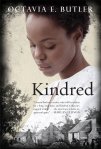 Kindred, by Octavia Butler – A blog reader recommended Kindred to me when I first switched from food blogging to book blogging, and I filed away the recommendation accordingly but just recently got to it. Dana is a modern (well, 1970s) black woman who is suddenly, and unnervingly, jerked out of her time and deposited in antebellum Maryland, where she promptly saves the life of the plantation owner’s young son. Dana and the boy, Rufus, have an inexplicable connection that causes Dana to travel unwillingly back and forth in time each time Rufus needs to be rescued, but as Dana’s visits to the past become longer and more dangerous, it becomes less clear that she will be able to complete her mission in the past and get home to a relatively more civilized era. This was a harrowing, brilliant, upsetting and engrossing read – highly recommended, but not for the faint of heart.
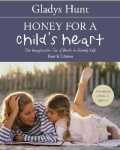 Honey for a Child’s Heart: The Imaginative Use of Books in Family Life, by Gladys Hunt – I was underwhelmed by this volume, which came highly recommended by the hosts of a reading aloud podcast that I enjoy. I don’t love parenting books that pound me over the head with a Jesus-shaped hammer, and this one did. Plus – now, it’s possible I had an outdated version; the library copy was pretty old – I bristled at the author’s describing “a wife’s job” as an unnecessary or extraneous “activity” that may need to make way for a reading aloud habit to form. Sorry, G, but not all of us are able to quit our jobs to make more time for reading aloud. Verdict: skip this one and make use of the great free resources you can find online, if you’re looking for tips and recommendations for reading aloud to kids.
 An Irish Country Doctor (Irish Country #1), by Patrick Taylor – This was a fun, gentle, amusing visit with Dr. Barry Laverty, apprentice doctor in the Northern Ireland village of Ballybucklebo. Barry arrives in town and takes up a job (with the offer of full partnership in a year – wish law firms worked that way!) as assistant doctor, and quickly learns that his newfangled medical notions and all his studying will only get him so far with this crowd. I found Barry a little insufferable (okay, a lot insufferable) but I think he’ll improve with time. As I mentioned in one of my Monday reading posts, doctor stories aren’t my cup of tea (I’m not a fan of medical shows, either) but this one wasn’t too bad. I still would have preferred if the main characters were a vicar and curate, though!
 Greenbanks, by Dorothy Whipple – How had I never read any Dorothy Whipple before? Well, I know how – she’s not exactly well-known. But I don’t think I’ve read a better English interwar family drama than Greenbanks, Whipple’s chronicle of the life and times of the Ashtons of Greenbanks. There is Louisa, matriarch of the family, staring down the fact that she is becoming increasingly obsolete; Rachel, Louisa’s favorite granddaughter; Charles, youngest son, black sheep of the family and his mother’s darling; Kate, Louisa’s companion, around whom a deep sadness hangs; Letty, Rachel’s mother, who is regretting her marriage; Ambrose, Letty’s imperious husband; and so many more characters. Louisa and Rachel are the stars of the story, but every single character – from the main duo down to the most minor of side characters – is so fully realized and alive, it’s just astonishingly good. More people need to read Dorothy Whipple. Greenbanks was a perfect place to start, and I’m already plotting a Persephone order so I can get my hands on a few more of her novels.
 Journey to Munich (Maisie Dobbs #12) – I’ve read every one of the Maisie books, and this was one of the best. Still mourning her husband and child, Maisie has returned to England and is contemplating reopening her investigations business when she is swept back into the British Secret Service and tasked with a vitally important mission that will take her into the heart of Nazi Germany. Maisie swears that she will not undertake any more missions after this one is complete, but I hope she’s wrong. Maisie may not enjoy it, but I love seeing her get mixed up in espionage, and goodness knows there will be more opportunities for spying coming her way…
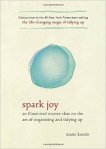 Spark Joy: An Illustrated Master Class on the Art of Organizing and Tidying Up, by Marie Kondo – Kondo’s companion to The Life-Changing Magic of Tidying Up, through which I snickered last summer, was more useful than the original. She shares tips and tricks and provides an illustrated guide to folding, and answers many of the questions that readers posed after reading the first volume (like “if I throw out my Neosporin because it doesn’t spark joy, what will happen if I skin my knee?”… no? just me?). It’s still silly and a little insane from time to time, but I actually found Spark Joy… dare I say… helpful? But I will continue to struggle with KonMari’s insistence that by balling up my socks, I am crushing their spirits.
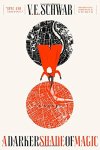 A Darker Shade of Magic (Shades of Magic #1), by V.E. Schwab – Kell is one of two remaining Travelers, powerful magicians with the ability to move between parallel worlds. Kell lives in Red London, a thriving and healthy kingdom in which magic is ripe for use by anyone. His job, as adopted son to the king and queen, is to carry messages to Grey London, a dreary realm with no magic and a mad king (George III), and to White London, where magic has become too powerful and is gradually destroying the population. Kell also is a smuggler, carrying trinkets back and forth between worlds – and that is (predictably) what gets him into trouble. I’ve been reading a lot more fantasy lately, and this was a good addition. I’m looking forward to the next volume (which is out now – I’m just waiting for my library hold to come in, no surprise there).
 The Immortal Life of Henrietta Lacks, by Rebecca Skloot – I had been meaning to read this one for years, and once I finally got to it, I was blown away. Henrietta Lacks was a cancer patient in Baltimore in the 1950s. Shortly before she died – from a particularly vicious strain of cervical cancer – and unbeknownst to Henrietta, doctors harvested a few of her cancerous cells. Up until Henrietta, no cells had ever managed to survive more than a few days after being harvested. Henrietta’s were special – they lived forever, dividing and dividing and dividing. HeLa, as the cells were named, went on to be instrumental in some of the most important scientific discoveries of the twentieth century. They were used in testing some of our most prevalent drugs. They were blown up in atomic bombs and shot into space. And all the while, Henrietta’s family had no idea that her cells lived on. They only discovered HeLa’s existence in the 1970s – more than twenty years after Henrietta’s death. To this day, they have not been paid for the cells, which were extracted without Henrietta’s knowledge or consent. And many of Henrietta’s descendants cannot afford health insurance. Henrietta Lacks is all the more amazing – and disturbing – of a story for being true. In Skloot’s capable hands, the reader comes to care deeply about Henrietta, her family, and the unfair system that has allowed some to profit handsomely from her cells while her family goes without insurance. My only complaint was Skloot’s occasional penchant for describing people by their weight – I don’t need to know that a particular individual was “a substantial woman, about 200 pounds,” or that another individual was 400 pounds. It wasn’t germane to the book and seemed a bit disrespectful. But that is my only (minor) quibble with the book – overall, I thought it was spellbinding and fascinating. Henrietta Lacks should be required reading for all human beings.
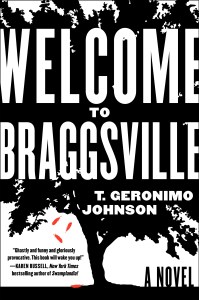 Welcome to Braggsville, by T. Geronimo Johnson – Daron Davenport is a son of the South, away from home for the first time as a student at UC Berkeley. When he mentions in a class that his hometown, Braggsville, stages an annual Civil War reenactment, Daron’s friends seize on the idea of a performance protest. They traipse to Braggsville for spring break and proceed to stick out like sore thumbs everywhere they go – but their antics take a quick turn from comedic to tragic. So… I liked Braggsville, but didn’t love it. The plot was intriguing, but something about the writing style just didn’t resonate with me. You ever read one of those books where you can appreciate that the writing is excellent, but it’s just not grabbing you? That was my experience with Braggsville. I found it hard to get invested in the story as a result. Still a worthwhile read and particularly interesting during Black History Month.
 March: Book One, by John Lewis – March is going to be a trilogy of graphic memoirs recounting the life of Congressman John Lewis and his role in the Civil Rights Movement. This first volume described Congressman Lewis’ rural Southern boyhood, his college years in Nashville, and the beginnings of his involvement with nonviolent protest. I found it riveting and powerful – the graphic novel format was a really unique way to tell the story, and Lewis’ voice comes through beautifully. I immediately checked the second volume out from the library.
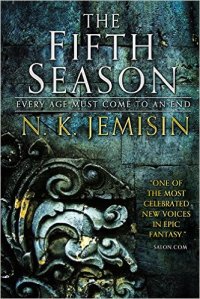 The Fifth Season (The Broken Earth #1), by N.K. Jemisin – I don’t know how to describe this book without going on for paragraphs and paragraphs, giving away the story, or both… but I’ll try. The Stillness is a vast continent that is plagued by seismic events – earthquakes, tsunamis, disasters of all stripes. Resident on the Stillness, amongst the ordinary “stills,” is a race of people called “orogenes,” who can sense and control the geologic environment. The orogenes are feared and hated for their powers, but the stills also need their skill, and so the entire group has been suborned to the point of slavery – until a few orogenes decide that they’ve had enough. I don’t want to say any more, because I don’t want to risk spoiling the many surprises. The Fifth Season was my first N.K. Jemisin experience, and I was incredibly impressed with her world-building and her beautiful writing. I’ll be reading her entire backlist now, kthanksbye.
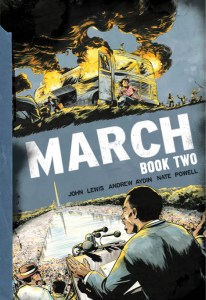 March: Book Two, by John Lewis – I couldn’t leave March this month, so I returned to Congressman Lewis’ memoirs for the second volume. The Congressman finds himself in more and more volatile of a situation as he assumes a leadership role, first in the Freedom Rides, and then in SNCC, the nonviolent student organization he helped to found. The volume concludes with the March on Washington and Dr. Martin Luther King’s “I Have a Dream” speech, and it is incredibly moving and powerful. What a wonderful way to tell such an important story – everyone should read March. I’m now impatiently waiting for the third and final volume.
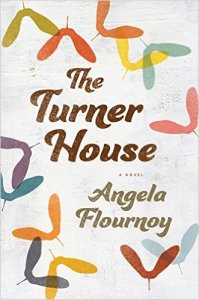 The Turner House, by Angela Flournoy – The Turner house stands on Yarrow Street in a crumbling Detroit neighborhood. For years, the house has sheltered Francis and Viola Turner and their thirteen children, from Cha-Cha, the responsible eldest son, to Lelah, the baby of the family. Now Francis has passed away and Viola is dying. The house – all but abandoned – is only worth about $4,000, but Viola still owes $40,000 on it. Against this bitter backdrop, the Turner children gather to debate what should be done with their family home. As the discussion unfolds, the children deal with their own private dramas. Cha-Cha believes that he is being haunted, and the “haint” is causing both Cha-Cha and his marriage to unravel. Twelfth child, Troy, is determined to buck his elder brother and take the house’s fate into his own hands. And Lelah, the youngest, is coming undone – evicted, recently backslid into a gambling addiction she had worked hard to break, and at odds with her only daughter. I loved this book. Each of the Turners felt so real – the characterization was absolutely masterful. Cha-Cha, in particular, was such a wonderful character, and I rooted for him to confront both his haint and the pressures of being the new family patriarch. I simply can’t believe that The Turner House is a debut novel – if this is Angela Flournoy’s first effort, I can’t wait to see what she does next.
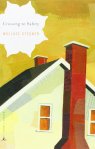 Crossing to Safety, by Wallace Stegner – I’d been meaning to read Stegner since at least 2007 (when a friend with great taste told me she loved his books) and now I just wish it hadn’t taken me so long. Crossing to Safety was a quiet but deceptively dramatic novel about friendship, and how it ebbs and flows through life’s changing seasons, and the mark that really deep friendship leaves on all of us. I was astounded.
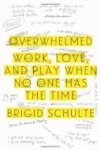 Overwhelmed: Work, Play and Love When No One Has the Time, by Brigid Schulte – Seems like an odd pick, but Overwhelmed is the book that I can’t stop thinking about. Schulte writes about that delicate balance we’re all trying to strike, between work, love, and leisure – how we fall short, how to do it better, and how the odds are stacked against us. She’s an incredible writer – she brought me to tears describing the causes and consequences of America’s broken child care system – but the real reason that this book resonated with me so powerfully was that every.single.word seemed to speak directly to my life. Schulte is a working mom, like me – but if that’s not you, it doesn’t matter and you should still read Overwhelmed. Anyone who is busy, and that’s everybody I know, will find useful information in here.
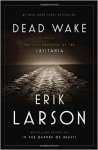 Dead Wake, by Erik Larson – Dead Wake was the book that busted me out of my reading slump in early 2015. Larson’s history of the last crossing of the Lusitania was absolutely masterful. He sets the stage with foreboding – as I told Steve, the image of the Lusitania chugging out of New York Harbor with smoke pouring out of only three smokestacks was one of the most chilling images of my entire 2015 in books. And the crescendo toward which he builds is fierce, dramatic, and heart-pounding. It’s history at its best, and it kept me feverishly turning pages even with a newborn in the house.
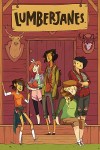 Lumberjanes, Vol. 1 and 2, by Noelle Stevenson – Until I picked up Lumberjanes, I swore I would never read comics, that the medium just wasn’t for me. Jo, April, Mal, Molly, Ripley, Jen and Rosie changed all that. I loooooooooved their adventures – mythical monsters! anagrams! math! dinosaurs! three-eyed foxes! weird old ladies! creepy boy scouts! These comics were fun, hilarious, and so smart. I can’t wait for the third volume. Ripley is my favorite – “I was a fastball!” Lumberjanes is fun TO THE MAX.
 The Elephant Whisperer, by Lawrence Anthony – My mom recommended The Elephant Whisperer after her entire book club loved it, and I can see why – Lawrence Anthony’s memoir of his time gaining the trust of a “rogue” elephant herd was moving and powerful. Anthony agrees to take the herd onto his game reserve after it becomes clear that he’s their last hope. He has to throw out the book and learn to relate to the herd on their own terms, and it’s absolutely riveting.
 The Royal We, by Heather Cocks and Jessica Morgan – This is Will and Kate fanfiction, and it is AMAZING. Another one that kept me turning pages instead of napping when my newborn napped, so you know it was good. The Royal We is the story of Nick, second in line to the British throne, and Bex, his American fiancee. The best part? When the future King of England signs off a conversation with his soon-to-be girlfriend’s dad by solemnly telling him, “Go Cubs.” It’s fun and fabulous and,
  In the Unlikely Event, by Judy Blume – Blume’s first adult novel in some 17 years, In the Unlikely Event is a fictionalized account of real events that happened when Blume was a teenager and a series of planes crashed in her hometown of Elizabeth, New Jersey, in the span of just a few months. Because this is Judy Blume, the cast of characters is massive – but you’ll get everyone sorted out quickly, and you’ll come to care about all of them. I rooted for Miri and her friends, I got a sickening feeling when I could tell they were about to get bad news (Judy Blume does foreshadowing as well as Erik Larson does it) and I cried as the whole town grieved tragedy after tragedy. It sounds like an insanely depressing book, and parts of it were, but it was uplifting and fascinating too, and I couldn’t stop turning the pages.
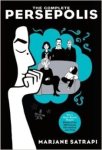 The Complete Persepolis, by Marjane Satrapi – Satrapi’s graphic memoir of her time growing up in Iran was moving, horrifying in parts, and completely illuminating. I’ve always been intrigued by stories of growing up in foreign countries, and Iran is one of the most closed societies, hard for Americans to picture. Enter Satrapi. Her black and white illustrations perfectly conveyed the story, and I was completely riveted by her life story.
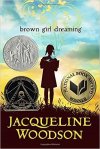 Brown Girl Dreaming, by Jacqueline Woodson – Gorgeous. Gorgeous gorgeous gorgeous memoir in poetry by an insanely talented young adult writer. Woodson writes of growing up as a person of color in both the North and the South, feeling like she didn’t belong in either world, and finally finding a home in Harlem. I read Brown Girl Dreaming on vacation this summer and finished it in a day – but it took up prime real estate in my brain for much longer than that. I loved every one of Woodson’s poems, but the one about her grandfather’s garden was my very favorite. I could feel the sun-baked soil and taste the warm products of Daddy’s labor and it was so beautiful.
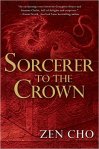 Sorcerer to the Crown, by Zen Cho – I first heard of Cho’s debut novel on the All the Books! podcast, when Rebecca Schinsky raved about it. My taste doesn’t always collide with Rebecca’s, but it did here – I devoured it. Cho has built an alternate Victorian England that is awash in color and teeming with magic, and her diverse cast moves through the world gracefully. I recommended the book to my BFF (another Rebecca!) and she’s loving it on audio right now. Everyone should read Sorcerer to the Crown!
 covered in flour