

Reading is my oldest and favorite hobby. I literally can’t remember a time in my life when I didn’t love to curl up with a good book. Here are my reads for October, 2016…
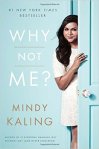 Why Not Me?, by Mindy Kaling – My mom told me that she is starting a tradition of giving me a comedienne’s memoir or book every Christmas. In 2014, I got Yes Please!, by Amy Poehler, and this past year it was Mindy Kaling’s second book, Why Not Me? In Why Not Me?, Mindy continues to mine her life for material – coming up with essays on her brief stint as a sorority girl, a day-in-the-life describing just how insanely busy she actually is, a list of things to bring to her house for a dinner party, and more. (The best: a series of emails between alternate existence Mindy, a hard-partying Latin teacher at a posh NYC private school, and her disapproving colleagues.) I laughed through the whole book and loved every minute.
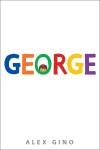 George, by Alex Gino – This is a charming and sweet middle-grade story about the experience of being a transgendered pre-teen. George knows deep in her heart that she is really Melissa. And thanks to an accepting best friend and school principal, she concocts a plan to let her community see who she really is. I read George in one sitting and loved it (although I agree with my friend A.M.B. that the title really should be Melissa) and I think it’s going to be a tremendously important book to trans kids just beginning to grapple with their gender identity. I’m so glad this book is in the world.
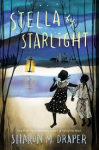 Stella by Starlight, by Sharon M. Draper – Stella is a young African-American girl living in the Jim Crow South, who sneaks out one night and sees something she was never meant to see: a KKK practice rally across the lake near her house. What Stella sees will shake her community to its core. I thought this was an incredibly powerful and well-written YA novel taking on some very difficult subjects. Of course, because the intended audience is children, it shies away from the most frightening. Although bad things happen (spoiler alert!) no one dies and the ending is hopeful, if not completely happy. But it’s a beautiful book and a worthy addition to a diverse young adult library.
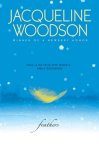 Feathers, by Jacqueline Woodson – I read Woodson’s memoir in verse, Brown Girl Dreaming, last summer and was astounded by her beautiful writing. Feathers wasn’t quite in that class, but it was still excellent. Telling the story of a few weeks in the life of Frannie, a young African-American girl, and her friends Samantha and the Jesus Boy, Feathers takes on issues of faith, friendship, bullying and more. Frannie deals with issues at home – her beloved older brother is deaf and Frannie feels his disability deeply; her father, a truck driver, is rarely home, and her mother is pregnant again after several miscarriages. There’s no real resolution to most of the story lines; the book is really just a snapshot in the life of these characters. But the writing is lovely and lyrical, and I can’t wait to read more from Woodson.
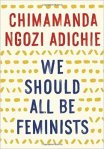 We Should All Be Feminists, by Chimamanda Ngozi Adichie – I’ve had Adichie’s much-lauded essay (adapted from a TED talk) on my to-read list for ages now, and I’m embarrassed to say that the only thing holding me back from reading it was the fact that none of the library systems to which I have belonged seem to have it in their collections. (Is that embarrassing for me, or for the library?) Finally I wised up and downloaded it to my kindle, and I read it in less than an hour – it’s only about 45 pages, after all. Adichie combines memoir with feminist philosophy and it’s absolutely wonderful. We should all be feminists, indeed, and we should all read We Should All Be Feminists.
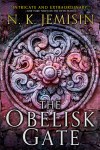 The Obelisk Gate (The Broken Earth #2), by N.K. Jemisin – In my quest to read more books by diverse authors this year, N.K. Jemisin stands out as a new favorite. I read the first in her Broken Earth trilogy – The Fifth Season – back in February and loved it, so I reserved the second as soon as it came out. As I mentioned in one of my weekly reading posts, there are a couple of story lines – well, really, they are elements to the main character’s back story – that upset me (as a mom, and particularly as a mom to a boy – I’ll leave it at that). But the world-building is great and Jemisin’s writing pulls you into the story in a very satisfying way. As I mentioned a couple of weeks ago, I’m getting a little burnt out on the sci-fi genre (and will probably read less of it in 2017). But I’m glad not to have missed The Obelisk Gate.
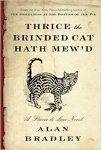 Thrice the Brinded Cat Hath Mew’d (Flavia de Luce #8), by Alan Bradley – How I love a good cozy mystery! I think that the Flavia de Luce series is my favorite currently-in-progress mystery series. I just love Flavia’s voice, and all the supporting characters. (I wish Flavia had a better relationship with Daffy, though. I could see them making a great crime-solving and trouble-causing duo.) In this installment, Flavia has returned to Buckshaw from a short stint at Miss Bodycote’s Female Academy in Toronto – and she arrives to find that her father is in the hospital, and no one will let her see him. Flavia is despondent, until the discovery of a corpse cheers her up. She dives into the mystery surrounding the death and identity of an elderly woodcarver. Meanwhile, it’s clear that Flavia is starting to grow up – there are a few references to her getting older, and it’s poignant. The book ends sadly, but I won’t tell you how. Even with the slightly darker storyline, I’m loving Flavia’s journey and eagerly awaiting the next book.
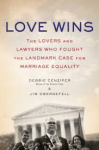 Love Wins: The Lovers and Lawyers Who Fought the Landmark Case for Marriage Equality, by Debbie Cenziper and Jim Obergefell – I remember the day the Obergefell v. Hodges case was decided. Like many, I was waiting anxiously for the decision, and I cried tears of joy as I read Justice Kennedy’s opinion striking down same sex marriage bans across the country. “Love wins!” became the slogan of the triumphant gay community and their allies, and Love Wins is the title of this wonderful, wonderful book celebrating the case. It begins with Jim Obergefell and his dying husband, John Arthur (have tissues ready) and the story wends its way through law offices, living rooms and courtrooms until they finally reach the hallowed halls of SCOTUS. You don’t have to be a lawyer to follow the book, though, and I encourage everyone to read it. Just expect to cry, because you will – at the descriptions of John’s difficult childhood, as the story of his diagnosis and death is told, at the depiction of Jim sitting alone in the courtroom, at the ultimate triumph, and at so many more points. This book is fantastic and I hope it’s taught in law schools all over the country.
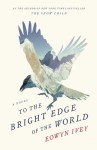 To the Bright Edge of the World, by Eowyn Ivey – I was sort of putting this off, because it’s a tome with small print and densely packed pages. But I loved Ivey’s first (much shorter) novel, The Snow Child, and her sophomore publication has already gotten raves, so I picked it up. Golly, what a gorgeous book. It tells the story of Colonel Allen Forrester, leading the first exploratory expedition into the newly acquired Alaskan Territory, and his young wife Sophie, left back at the Vancouver, Washington barracks. The story is told primarily through Allen’s and Sophie’s personal journals, but interspersed with other journals, articles and correspondence and sprinkled liberally with pictures.
October was a good reading month! I got through some great books, particularly toward the end of the month – Love Wins and To The Bright Edge of the World were the highlights for sure. I’m particularly proud that I managed to tick off nine books in a very busy month – packed with family activities on the weekends, and jammed up at work during the weeks. It’s all good busy, and I’ve been able to squeeze in reading, so I can’t complain. As for what’s next, I’m midway through My Brilliant Friend, so stay tuned to find out if I catch Ferrante Fever! And after that, I have a massive stack of library books and more on hold to pick up, so November is looking like a busy month. I’ll be checking in, of course, with my weekly reading recap posts and it’s looking like another massive round-up for you at the end of the month. Check back!
What was the best thing you read in October?
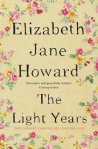 The Light Years (Cazalet Chronicles #1), by Elizabeth Jane Howard – The Cazalet family is gathering at the family estate in Sussex for their annual family summer holidays. The Brig and the Duchy, family patriarch and matriarch, cast their benevolent gaze over their sons Hugh, Edward and Rupert, daughters-in-law Sibyl, Villy and Zoe, and daughter Rachel, and the legions of grandchildren. As the family soaks up the sun and plays together, there are marital concerns, cousinly squabbles, unrequited love, sunny picnics on the beach, new babies and childish games. But it’s 1937 and the coming war casts a long shadow – Hugh and the Brig both worry about the unrest in Europe, while Edward turns a blind eye, young granddaughter Polly frets about the family’s fate if there is a war, and cousins Simon and Christopher wonder what effect the international situation will have on their plan to run away and thereby avoid going back to school. The Light Years was everything I could have wanted – comforting, engaging, and a joy to read from start to finish. My only complaint was that there were way too many characters – it took me fully a third of the book to get straight which children belonged to which couple, and then a whole new family was introduced, leaving me wondering if I should start an Excel spreadsheet. But I have the Cazalets straight now, and I can’t wait to dive into the next volume of the series.
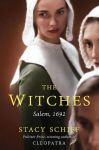 The Witches: Salem 1692, by Stacy Schiff – Schiff is a really well-regarded narrative nonfiction writer (her biography of Cleopatra won the Pulitzer Prize) and The Witches, her latest, got all kinds of raves when it was first released. I’ve always been particularly fascinated by Salem and the “dark and mysterious” season of the witch trials, and I’d heard such wonderful things about The Witches that I had to pick it up. It really was wonderful – it really was. Beautifully, engagingly written, and clearly meticulously researched. It just was so dense that it was actually hard for me to get through – and I usually have no trouble with dense history books at all – bring ’em on. But I loved it, and even though it sat partially read on my nightstand for literally months, it was worth the time I took over it.
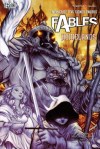 Fables, Volume 6: Homelands, by Bill Willingham – It had been awhile since I’d visited the denizens of Fabletown, so I had to remind myself of the preceding events before I was able to sink into the story in Volume 6. Fabletown is still reeling from its battle with an army of wooden soldiers that broke through from the Homelands in service of the Adversary. Baba Yaga is dead, slain by Frau Totenkinder, but Bigby Wolf is missing and Boy Blue has disappeared back into the Homelands in search of his lost love, Red Riding Hood. This volume showcases Boy Blue’s swashbuckling journey through the Homelands, interspersed with a storyline in which Prince Charming, Beauty and the Beast ferret out another of the Adversary’s spies (rather more competently than you would expect – the Beast in particular is proving a decent successor to Bigby, amazingly). But Boy Blue is the hero of the story, and it turns out there is a lot more to him than meets the eye. The volume ends with the revelation of the Adversary’s identity – meant to be a big shock, but it wasn’t for me, as I guessed it correctly in volume 5. Still, I think this was my favorite volume of Fables yet – I loved Boy Blue’s adventures and the dynamic between Prince Charming and his new administrative staff. There wasn’t nearly enough Bigby or Snow, but I’m hoping future volumes will feature them heavily again. Overall, I’m loving this series and can’t wait to find out what happens.
 Alias Grace, by Margaret Atwood – I have had Alias Grace on my TBR for years and finally got to it. It’s a (rather uncharacteristic for Atwood) historical fiction novel featuring Grace Marks, who was (I think?) a real Canadian historical figure. Grace, a housemaid, was convicted of being accessory to the killing of her gentleman employer and his lover, the housekeeper. When the novel opens, Grace has served eight years in prison and done time in a mental institution as well. A group of her champions is seeking a pardon for her and enlists the help of a young American psychiatrist to probe into Grace’s past and awaken her recollection of the murders, of which she steadfastly claims to have no memory. As the young doctor and Grace move through Grace’s life story, the sense of foreboding deepens even while the doctor finds himself more and more drawn to Grace as a woman. So, I absolutely loved every word of Alias Grace – I read it much more slowly than usual, even though I was itching to find out the end, because I wanted to take my time over every perfectly crafted paragraph. Alias Grace has toppled MaddAddam from the top spot on my personal “best of Atwood” chart, and I’m recommending it to everyone I meet.
 Little Victories: Perfect Rules for Imperfect Living, by Jason Gay – My mom gifted me this slim volume last Christmas; I think she’d either read a review in the newspaper or someone had recommended it to her. I enjoyed it. Gay switches effortlessly from hilarious (his rules for his fictional Little League team, the Zen Cubs, are a riot – and more people should take his relaxed attitude towards kids’ sports) to touching, as when he writes about the loss of his father and his own battles with cancer and infertility. It was a sweet book, and I love any book that can make me laugh and cry on the same page.
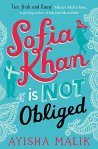 Sofia Khan is Not Obliged, by Ayisha Malik – Sofia Khan is a hip urbanite book publicist living in South London. She’s also a devout Muslim, a hijabi, who prays five times daily, fasts for Ramadan, and blogs about life as a modern Muslim. Yet when Sofia proposes a “Muslim dating book” to her boss, she’s shocked when her boss loves the idea and presents Sofia with a publication deal to write the book herself. Sofia, you see, doesn’t think she knows much about Muslim dating. She’s recently broken up with her ex, because he wanted her to marry him and move into his house with “a hole-in-the-wall” – and if you’re wondering why that was an issue, you’ll have to read the book. Her friends don’t seem to have it together, either. Hannah wants to become a second wife, Fozia is struggling with the implications of her past divorce on her current relationship, and Suj is hiding her relationship with a black man from her family. Meanwhile, Sof’s sister Maria is getting married, her parents are in a state of advanced wedding mania, and Sof herself is trying to sort out her feelings for ex-boyfriend Imran, new flame Naim, and the surly tattooed next door neighbor. There are musings on everything from samosas to hijab fashion to terrorism (the scene in which Sofia’s parents offend a potential new boyfriend by asking his parents if he’s a fundamentalist is comedy gold) and throughout the book I kept thinking, “Sofia Khan is the Muslim Bridget Jones, except with way more substance!” I loved Sofia Khan is Not Obliged and am delighted that there is a sequel (“this time, it’s matrimonial!”) – or will be, when the kindle edition gets around to the U.S. Thanks to my friend
 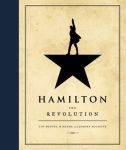 Hamilton: The Revolution, by Lin-Manuel Miranda and Jeremy McCarter – The “Hamiltome,” as Lin-Manuel and the legions of #Hamilfans call it, has been on my TBR for awhile, and recently I was lucky enough to get a copy as a gift (another present for my mom, who thought I had been working hard and deserved a special treat – thanks, Mom!). I saved it for a Friday night, then dove in and spent the entire weekend immersed in the gorgeous photographs of the Hamilton cast, crew and set, the fascinating story of how the musical came to be, and of course the perfect lyrics and brilliant annotations (by Lin himself!). I’m a HUGE Hamilton fan – not a day goes by, lately, where I don’t quote it at some point – and I’m delighted to have the book on my shelf now. I’ll be dipping back in and out for years, I know.
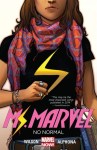 Ms. Marvel, Volumes 1-5, by G. Willow Wilson – Pictured here is volume 1 only, because this would be the longest reading round-up ever if I showcased all five. The last week of September was a bit of a doozy. I had some very stressful stuff going on, and I was quite worried and losing a lot of sleep as a result – so I knew my reading had to provide the perfect escape, and Ms. Marvel fit the bill nicely. Kamala Khan is a regular teenaged nerd from Jersey City when she sneaks out to a party, stumbles into a mysterious mist, and wakes up with superpowers. Wahoo! This is cooler than even her most upvoted Avengers fanfic! But along with the awakening of Kamala’s powers came the awakening of dark forces that threaten the teens of Jersey City. It’s a good thing there’s a new Ms. Marvel on the block to protect JC! Whether she’s defending the Circle Q convenience store from inept robbers, unbrainwashing a herd of teenagers, or shepherding her neighbors through the end of the world, Kamala is on the scene wherever she’s needed! And she even manages to balance her superhero duties with her schoolwork, an overly religious older brother (who grew on me, I must say) and a best friend who wants to be something more – now that’s superpowers. I’ve been hearing about Ms. Marvel for ages now, and it didn’t take long before I could absolutely see what all the fuss was about. Kamala Korps 4 lyfe! Now when does the sixth trade come out, again?



 Wild Strawberries (Angela Thirkell’s Barsetshire #2), by Angela Thirkell – I really enjoyed this follow-up to High Rising, the first in the series of cozy novels set in Angela Thirkell’s version of Anthony Trollope’s Barsetshire (confused yet?). Wild Strawberries focuses on the Leslie family, who live in luxury at the stately Rushwater House. Lady Emily is the vague, kindly matriarch, presiding over a family that includes her adult children John, Agnes and David. John has a deep tragedy in his past; Agnes is preoccupied with her children; and David is the handsome, rakish playboy of the family. When Agnes’ impoverished niece, Mary, comes for a visit, trouble brews as Mary falls for the flirtatious David – while Lady Emily and Agnes scheme a match between Mary and John. This being Angela Thirkell, there’s no question of the right match being made in the end – but who that will be, and how it comes about, is the joy of the story. So as I said, I really enjoyed this – with one caveat. As I mentioned last month with High Rising, there’s some completely unnecessary stereotypical language that simply does not stand the test of time. It’s really a shame and kind of puts a damper on what would otherwise be my raging love for Angela Thirkell. I don’t think it’s worth throwing out the baby with the bathwater, and based on the Thirkell resurgence that seems to be going on, others feel the same. But this would have been a perfect book had it not been for one offensive scene, and that bums me out quite a lot.
 August Folly (Angela Thirkell’s Barsetshire #4), by Angela Thirkell – I skipped the third, The Demon in the House, because Virago didn’t publish it for some reason. But all of these Barsetshire books stand alone, so I don’t think I missed any necessary information. August Folly tells the story of Richard and Margaret Tebben, home on holidays to their parents’ modest dwelling in the village of Worsted, just in time to be part of the annual summer play. Richard falls head over heels in puppy love with the sister of the squire’s wife (who is much older, married and has nine children – the eldest of whom are older than Richard) and Margaret strikes up a romance of her own. There are references to Jane Austen, the Greek playwrights, and other literary lights, a hilarious scene involving a bull and heroics that may or may not be heroic, and many appearances by a donkey named Modestine or Neddy. So, I loved the literary references and this was a fun read (and only one problematic word – we’re getting better). My only complaints were: (1) the bulk of the action focused on Richard, who was beyond annoying); and (2) I could.not.read.this without getting the Fountains of Wayne song “Stacy’s Mom” in my head every time Richard was “onstage” with Mrs. Dean and/or her daughter Helen, which was most of the time. Stacy’s Mom has got it goin’ on / She’s all I want and I’ve waited so long / Stacy can’t you see, you’re just not the girl for me / I know it might be wrong, but I’m in love with Stacy’s Mom.
 Harry Potter and the Cursed Child: Parts I and II, by J.K. Rowling, Jack Thorne and Some Other Guy Whose Name I Forget – Meh. Sigh. What to say about this? I liked it, I guess, because I love Harry Potter and I love J.K. Rowling’s wizarding world and I am always happy to go back there. But this was just weird. The story left me a little flat, and it didn’t seem to really be Rowling’s work, which makes sense, because it isn’t. It’s fan-fiction by Jack Thorne and That Other Guy, and J.K. Rowling sort of approved it and maybe helped a little? Anyway, I didn’t love the story, and I agreed with some of the media reviewers who pointed out feminism issues with Hermoine’s character during a part of the story line (which I won’t spoil, for those of you who haven’t gotten to it yet) and the whole thing just seemed strange to me. Maybe I’ll have a whole blog post in me at some point after I let it settle a bit more. I wouldn’t have missed it for the world, but… meh.
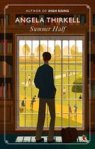 Summer Half (Angela Thirkell’s Barsetshire #5) – Okay, this one was my favorite! Edged out Wild Strawberries based on lack of objectionable language – wahoo! Angie, I knew you could do it! Summer Half tells the story of Colin Keith, a well-to-do younger son who is marked for law practice but decides to become a schoolmaster instead, to save his father having to support him while he “reads law.” (Colin’s father doesn’t need the income savings.) Colin finds himself a job as a junior classics master in a boys’ boarding school, despite being sort of terrified of boys, where he immediately makes an enemy of one of the other teachers (who is jealous that his airhead fiancée is flirting with Colin – completely unencouraged by Colin). Everyone agrees that this should really just be a temporary thing, Colin included, and boarding school hijinks ensue in a careless atmosphere in which all relevant participants are aware that Colin is neither keeping, nor trying to keep, this job for longer than a term. Tony Morland (of High Rising fame) is a major character, and much improved – I quite enjoyed him – and Colin’s younger sister Lydia’s eccentricities keep everyone on their toes. There are picnics, teas, cricket, motoring, and basically everything you would expect from Thirkell. It’s pure fun from the first page to the last.
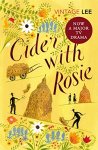 Cider with Rosie, by Laurie Lee – I’ve had Laurie Lee’s memoir of his Cotswold boyhood on my to-read list for ages, and I put it on my summer list as well. I finally got around to reading it, and as expected it was absolutely beautiful. Lee’s vivid descriptions of the natural world, his fond remembrance of his sisters, his spirited invocation of the village school, of caroling shenanigans at Christmas and games of “fox and hounds” spanning the reach of the entire county on hot summer nights… I fell deep and dreamily into this stunning book and several times found myself surprised to be at my metro stop when I had just been in an English village circa 1915. Magic, pure magic.
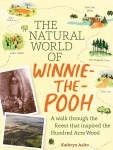 The Natural World of Winnie-the-Pooh: A Walk Through the Forest That Inspired the Hundred Acre Wood, by Kathryn Aalto – Post edited because I somehow left this out in the original version – oops! I now have a new career goal: literary naturalist. That’s basically what Kathryn Aalto does, and better yet, she does it in England! In The Natural World of Winnie-the-Pooh, Aalto takes readers on a deep dive into Christopher Robin’s world, starting with extensive histories of the lives of both A.A. Milne and E.H. Shepard, and how their boyhood wanderings inspired Milne’s descriptive writing about the Hundred Acre Wood, and Shepard’s iconic illustrations. From there, Aalto guides the reader into the Wood itself, with a gorgeous depiction of Ashdown Forest, the Milnes’ estate there, and the particular quirks of the landscape that might have inspired specific spots in the Pooh books. We visit, for instance, Eeyore’s Gloomy Spot, the Sandy Pit Where Roo Plays, the North Pole, and the Enchanted Place, among others, and speculate on where Pooh and Piglet may have set their Heffalump Trap. After visiting all the important spots, Aalto concludes with a discussion of the flora and fauna of the Hundred Acre Wood. It was such a fun read (how did I forget to blog it?) and I am now obviously stalking kayak.com for flights to Heathrow so I can visit Ashdown Forest for myself (which has actually been on my bucket list for ages).
 The Warden (Chronicles of Barsetshire #1), by Anthony Trollope – After all that Angela Thirkell, I was itching for a visit to the original Barsetshire – that famous sun-dappled land of Trollope’s creation. Thirkell was famously a Trollope fangirl who decided to set her novels in the imaginary county made famous in Trollope’s Chronicles of Barsetshire. I’d never read anything by Trollope, but he’d been on my list for awhile, and when I found absolutely gorgeous hardcover editions of his Barsetshire novels on amazon.co.uk (yes, I really ordered them from England because the editions I liked weren’t available in the Colonies) I took it as a sign. The Warden tells the story of the Rev. Mr. Septimus Harding, warden of a hospital (a.k.a. almshouse) from which he takes an income of 800 pounds per year, while the twelve elderly bedesmen who reside in the hospital receive much less. The bedesmen – egged on by rich local do-gooder John Bold – decide that they should really be getting a lot more money from the charity, and they commence a lawsuit. Mr. Harding, initially concerned with his responsibilities to the hospital, soon becomes racked with doubt as to the question of whether his income really is fair and legitimate, and the novel centers on his inward struggle to find out and do the right thing. It’s the slimmest of Trollope’s Barset novels by far, but every word is elegant and perfect. I loved, loved, LOVED my first foray into Trollope’s world, and I will be returning there just as soon as I can. (I have Barchester Towers, the second in Trollope’s Barset series, on my nightstand now, for when I have ticked off one of my other current reads.) My only complaint about The Warden is that it was way too short – but since the rest of the Barsetshire novels are about three times the length, I expect I will be well satisfied with them.
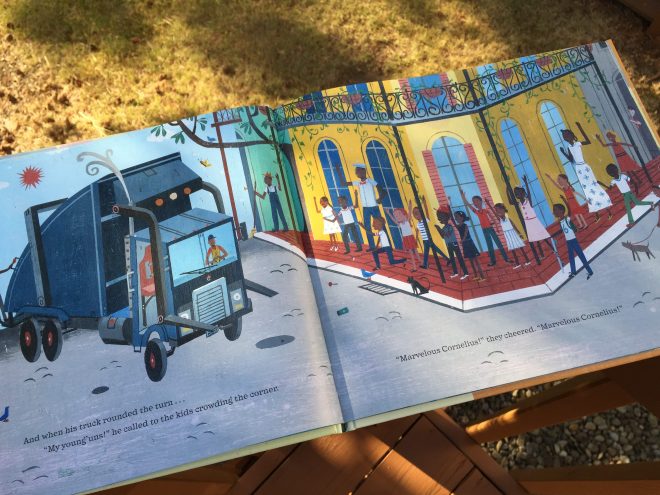
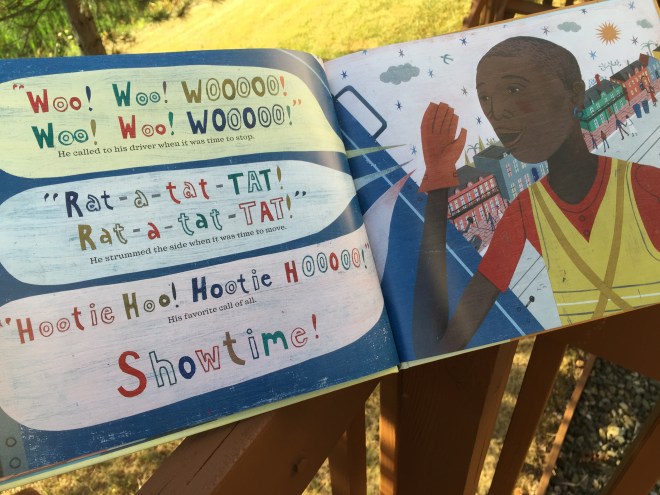
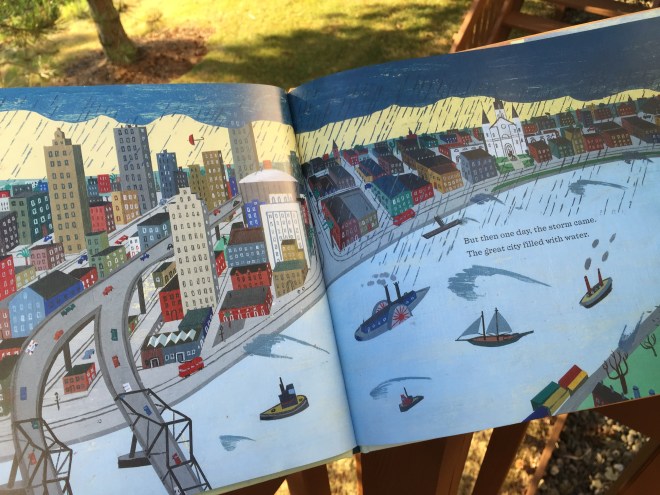
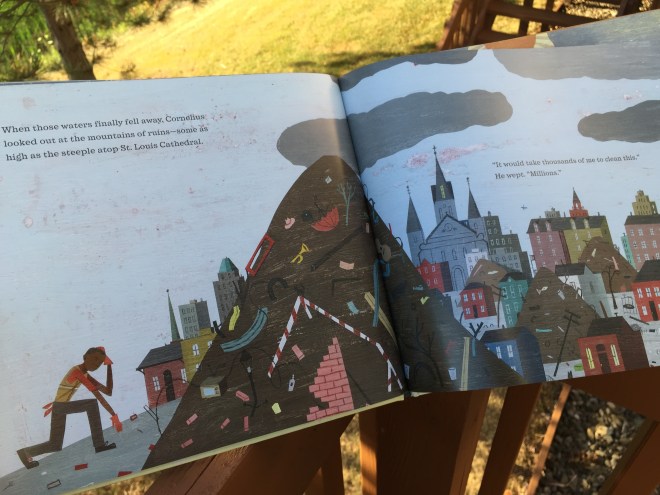
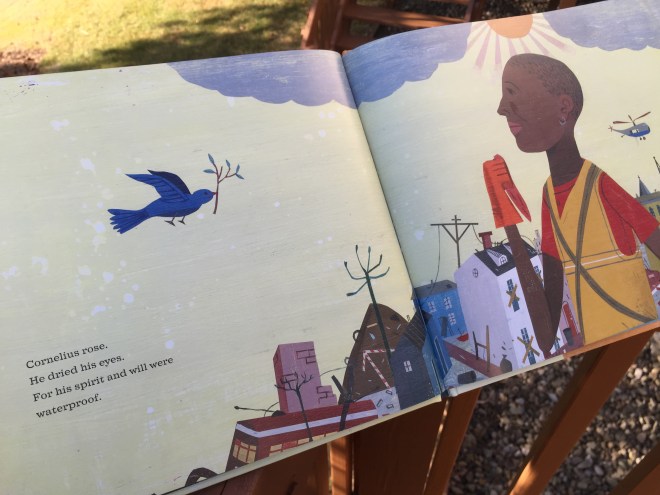
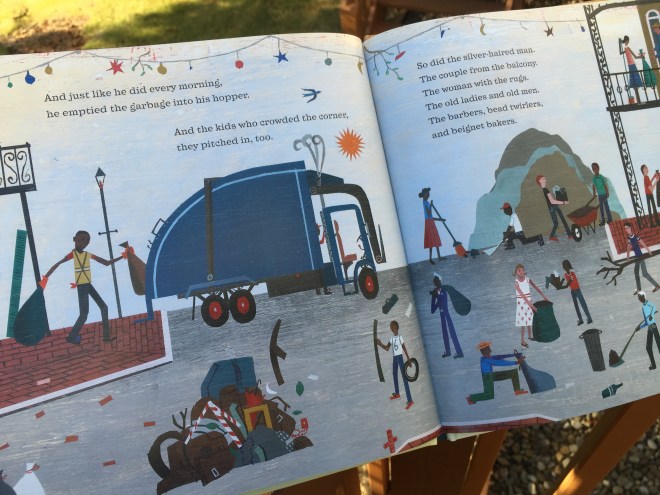
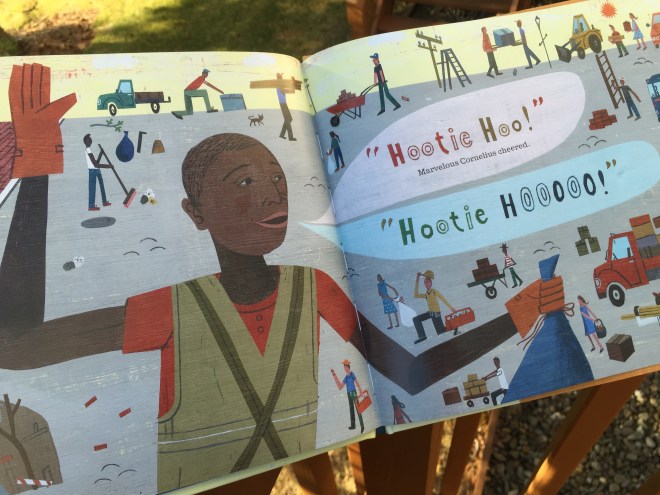
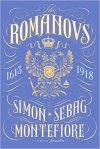 The Romanovs: 1613-1918, by Simon Sebag Montefiore – I was clamoring to read this doorstopper of a new release even before it came out – because I’m always down for a new Romanov biography. (And it seems like lately there’s been one ever year? Keep ’em coming, I say.) Montefiore’s contribution is truly epic and ambitious, profiling twenty Romanov Tsars and Tsarinas from Michael I (who ascended the throne in 1613 as the first Romanov ruler) to Michael II (the younger brother of Tsar Nicholas II, who ruled for all of one day after his elder brother abdicated and who was one of the first Romanovs to be murdered by the Bolsheviks). At more than 600 densely-packed pages, this book was an effort, but it was fascinating and thorough.
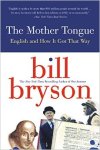 The Mother Tongue: English and How it Got That Way, by Bill Bryson – I actually started this (one of Bryson’s first books) on audio, but returned it to Audible when I decided that I didn’t like it enough to keep it in my audio library. It was interesting, but not as funny as Bryson’s travelogues, and since I was expecting to be laughing throughout, I was slightly disappointed. But I was still really interested in the subject matter, so I borrowed a copy from the library to finish after I returned the audiobook. It was an interesting and very thorough exploration of the English language, and I picked up a lot of cool facts; just wish that it had delivered more laughs. (Word of warning if you do listen on audio: at one point, the “N” word is used. It’s not gratuitous, but it is jarring, and I wish I’d had some warning, because I often listen to audiobooks with my kids in the car.)
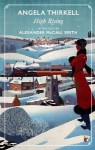 High Rising (Barsetshire #1), by Angela Thirkell – High Rising introduces us to Thirkell’s Barsetshire and to the villages of High Rising and Low Rising, through the eyes of author Laura Morland, who makes her living by writing “good bad books” and is popularly considered to be the alter ego of Thirkell herself. Laura and her young train-obsessed son, Tony, descend upon Laura’s cottage at High Rising for the Christmas holidays and periodically thereafter, where Laura works on her next book, Tony roams the train depot, and several of the characters band together to arrange marriages and save their friend and another local author from a social-climbing secretary (the horrors!). Thirkell’s books are like comfort food – not taxing, perfect for curling up with over a cup of tea on a dark evening. My one caution: they are very much of their time, and there are several stereotypical comments about a Jewish character that did not age well at all. I’ve heard this warning about Thirkell – that she’s delightful comfort reading (albeit of uneven quality) but that every so often language creeps in that is extremely jarring to the modern reader. I don’t think it’s something to throw out her books over – I’ve had the same concern about other classics, like The Scarlet Pimpernel – but it’s definitely a problem with an otherwise enjoyable read.
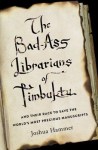 The Bad-Ass Librarians of Timbuktu: And Their Race to Save the World’s Most Precious Manuscripts, by Joshua Hammer – When Al-Qaeda in the Islamic Mahgreb occupied Timbuktu, they didn’t reckon on Abdel Kader Haidara. Haidara was a longtime Timbuktu resident who had been instrumental in collecting and preserving hundreds of thousands of ancient, priceless African manuscripts; the libraries of the city were filled with treasure thanks to him. Although the terrorists pledged that they would not destroy Timbuktu’s treasured manuscripts, Haidara knew they would not keep their word as they worked their path of destruction through Mali’s traditional values of tolerance and literacy. Gathering his network of cousins, neighbors, fellow librarians and concerned citizens, Haidara oversaw a massive heist in which 300,000 priceless manuscripts were smuggled out of Timbuktu’s libraries and into safe hiding spots until the terrorists were defeated by French forces. This was a fascinating true story, and Haidara deserves a place in history as a hero and champion of knowledge.
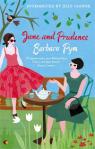 Jane and Prudence, by Barbara Pym – Although I didn’t love Pym’s most acclaimed work, Excellent Women, I fell hard and fast for Jane and Prudence. Jane is a clergyman’s wife who has recently taken up residence in a rural parish. Prudence is Jane’s former student, now younger friend, who is living the single life and going from love affair to love affair in London. When Jane decides it’s time for Prudence to marry, she makes the worst possible choice for her friend – but really, is Jane’s taste in Prudence’s boyfriends any worse than Prudence’s own? This was a charming read – I loved flighty, affable Jane and rooted for Prudence to find happiness, whatever her personal definition may be. And now Pym is officially rescued for me, and I’ll be seeking out more of her books.
 Homegoing, by Yaa Gyasi – I was nervous about this one. I knew it was going to be intense, and I was also worried that it wouldn’t live up to the hype it has been getting. Well, it was intense, but it did live up to the hype. Homegoing is the story of a dynasty, starting with Maame and her two daughters, born in the 1800s in Ghana. Effia, the elder, is married off to a white British colonial officer and lives in luxury in the Cape Castle. Esi, the younger – of whom Effia is unaware – is captured by slavers, imprisoned in the dungeons of the same castle where her sister is living, and ultimately shipped to America. The story follows both Effia’s and Esi’s descendants down through the generations, reading like a series of interconnected short stories and touching upon African wars, the Civil Rights struggle in America, and many other themes. It’s upsetting (particularly Ness’s story) but well worth reading. This is one of the important fiction debuts of the year, and I can’t wait to see what Yaa Gyasi will do next.
 Belgravia, by Julian Fellowes – After Homegoing, I needed to read something light and not taxing, and Belgravia fit the bill. In 1815, the Duchess of Devonshire hosts a ball on the eve of the Battle of Waterloo. The events of that night will change the destiny of two families. Twenty-five years later, as the titled aristocracy has to come to terms with the proximity of the nouveau riches, secrets buried since the Duchess’s ball will begin to trickle out. So, this was classic Julian Fellowes upstairs-downstairs drama. It was completely predictable – I guessed every single twist chapters ahead of time – completely far-fetched, and excellent fun. I just wish that I’d read it when it was first released – in eleven installments, via an app, like a modern-day Dickens novel. What a cool concept! I hope he does that again, and I will be more on top of things next time.
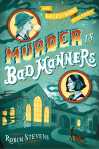 Murder is Bad Manners (Wells and Wong #1), by Robin Stevens – This recent American release of a YA detective series got some rave reviews on the bookish internet, but I confess I didn’t like it. I found the boarding school narrative a little blah, the murder was not shocking, and the characters bugged me. As one Goodreads reviewer lamented (and I agreed after reading), Daisy Wells is a bully and Hazel Wong’s self-loathing was depressing. I usually try to give a mystery series a couple of books, because in my experience it sometimes takes awhile to get going, but I’m probably not going to continue with this one.
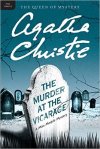 The Murder at the Vicarage (Miss Marple #1), by Agatha Christie – The cure for a disappointing mystery novel is Agatha. Always Agatha. I bought my favorite mystery novel of all time on audio and had a blast listening to it on my commutes over the second half of the month. The murder of generally despised Colonel Protheroe is just as mystifying, the herrings just as red and the solution just as ingenious as ever. I dearly love brilliant, unassuming Jane Marple.





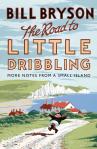 The Road to Little Dribbling: More Notes From a Small Island, by Bill Bryson – Starting off on a funny note, I absolutely adored Bryson’s follow-up to his classic Notes from a Small Island for its twentieth anniversary of publication. Bryson travels around his adopted home country and sprinkles his hilarious observations with funny family anecdotes and fascinating bits of history and general knowledge. He can be crass occasionally, but that’s (mostly) part of his charm.
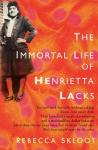 The Immortal Life of Henrietta Lacks, by Rebecca Skloot – This nonfiction bestseller had been on my to-read pile for ages, and I finally got to it in February, and WOW was I ever blown away. Skloot tells the story of Henrietta Lacks, a cancer patient in the 1950s whose cells were harvested, without her knowledge, and became HeLa, a famous strain of cells which keep perpetuating themselves. HeLa cells have been shot into space, blown up in atomic bombs, and made billions for the medical industry – and Henrietta’s descendants can’t afford health insurance. It was a stunning, sobering look at medical ethics and race, and it should be required reading for everyone.
 March: Book One and March: Book Two, by Congressman John Lewis – I’m cheating a bit and adding both of the currently available volumes of Congressman John Lewis’s graphic memoir of growing up and becoming involved in the Civil Rights movement. The books are fascinating, poignant, upsetting and uplifting – and feel more relevant than ever, in our current racial climate. Lewis is still serving his country, doing important work – like leading a sit-in on the floor of the House, to demand gun control legislation. The third and final volume of this wonderful graphic memoir is coming out soon and I can’t wait to get a copy.
 Greenbanks, by Dorothy Whipple – This was my first Dorothy Whipple (and the only one of her books that my library had in its collection) but certainly not my last. I loved this quiet, unassuming, but powerful family drama set in England around the time of World War I and between the wars. The strength in the book was in its characters – so perfectly drawn that they were fully alive – particularly matriarch Louisa and her young granddaughter Rachel. I closed the book reluctantly when I was finished, because I wanted much, much more time with these people.
 Kindred, by Octavia Butler – Back when I first started book blogging, a reader recommended Octavia Butler to me and told me to start with Kindred. I finally got to it, and it was an amazing reading experience. Deeply visceral and troubling – Butler does not shy away from describing the brutality of slavery – but incredibly engaging and powerful. I had a major book hangover after finishing Kindred, and I’m already looking forward to my next Butler.
 Diary of a Provincial Lady, by E.M. Delafield – Another one that had been on my list for awhile (which seems to be a theme for this year) I picked up Diary of a Provincial Lady and was laughing about three sentences in – and I didn’t stop laughing until the final line. The humor was dry and British – just how I like my humor – and had me absolutely rolling. The Provincial Lady describes all the tribulations of her life – French nannies, bad food, persistent lack of funds, hothouse flowers that won’t grow, and children who play the same pop song on repeat for days on end – and it’s one of those books where nothing much happens but it’s all wildly entertaining.
 Journey to Munich, by Jacqueline Winspear – A new Maisie Dobbs mystery is always an occasion for celebration, and this was a good one. Maisie is tapped by the British O.S.S. for a secret mission into the heart of Germany, to retrieve an English political prisoner being released in Munich. While Maisie is in Munich, she also takes on the task of persuading the daughter of an acquaintance to return to her family – a painful task, because the woman in question is the person Maisie holds responsible for her husband’s death. Maisie confronts her personal demons while feeling increasingly troubled by the trajectory toward war that she is witnessing in Europe. This was one of the best Maisie stories I’ve read – I love it when Maisie gets involved in spying – and I can’t wait to see what she gets up to next. However, I have a request: it’s been two books now with hardly any Billy. That needs to change in the next book!
 A Tyranny of Petticoats, ed. Jessica Spotswood – I absolutely loved this volume of short stories about “belles, bank robbers and other badass girls,” collected from acclaimed YA authors such as Elizabeth Wein and Marissa Meyer. Short story collections sometimes – usually – fall flat for me, but this one was an exception. Every story had me on the edge of my seat – but The Red Raven Ball, a spy story set in Civil War era Washington, D.C., was my favorite.
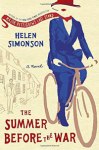 The Summer Before the War, by Helen Simonson – The new release from the author of the perennial favorite Major Pettigrew’s Last Stand (which I still haven’t read – must correct that) was hotly anticipated, and I was excited to get my hands on a library copy. It tells the story of Beatrice Nash, new Latin mistress (which is apparently a scandalous thing?) in the village of Rye (a real place). Beatrice quickly falls in with the two beloved nephews of her patroness, and before long the three are good friends. Meanwhile, refugees descend on the village, the boys go off to war, and love blooms. It was a wonderful, sad, lyrical story.
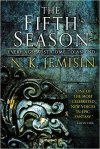 The Fifth Season, by N.K. Jemisin – This was the first Jemisin I read (although I have a copy of The Killing Moon somewhere, and it looks amazing) and is the start of a new trilogy. I had to press through about fifty pages before I understood what the h-e-double-hockey-sticks was going on, but once I got accustomed to the world-building and to the writing style, I was hooked. By the end of the book I was in tears and clamoring for more, and I insisted that my BFF Rebecca (an avid reader who loves science fiction and fantasy) download it to her kindle and read it IMMEDIATELY so we could discuss it. (She did, and she loved it too.) I won’t even try to describe the plot, because it would take paragraphs – I’ll just say that it was captivating and I’m anxiously awaiting the second book.
 Every Man For Himself, by Beryl Bainbridge – Funny story on how I decided to read this one. I am constantly
 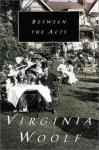 Between the Acts, by Virginia Woolf – Sigh. I keep trying and trying and trying to fall in love with Virginia Woolf’s writing, and so far, I’m failing at it. Between the Acts, her final novel, seemed like a good bet – I liked the premise (all the action – such as it is – unfolds on a single day around the presentation of a village pageant) and had heard that it was slightly less experimental than some of her other fiction (To The Lighthouse, I’m looking at you). It was… okay… but I wouldn’t say I loved it. So far, my favorite Woolf book has been The Voyage Out, one of her earliest works and before she adopted her signature wackadoo writing style. So maybe I’m just not cut out for Woolf? I’ll probably keep trying until I’ve read them all.
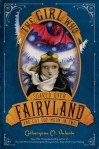 The Girl Who Soared Over Fairyland and Cut the Moon In Two (Fairyland #3), by Catherynne M. Valente – September is back! Diving out of Nebraska and into Fairyland, much to the chagrin of her unwilling Blue Wind escort, September is immediately branded a Professional Revolutionary and Criminal of the Realm, awarded custody of Aroostook the Model A, and pushed off on an adventure to the Moon, which is peopled with crustaceans and bedeviled by Ciderskin the giant Moon Yeti. All September wants is to be reunited with her friends, Saturday the Marid and A-Through L the Wyverary, and to skip all the unpleasant adventuring stuff and just loll about Fairyland eating pie. After her efforts in the first two books, it does seem she’s earned a vacation. Sadly, this is not to be, as she is immediately dispatched to deal with the Yeti (who, like everything else in Fairyland, turns out to be a surprise – have I said too much?). Anyway, I obviously loved The Girl Who Soared Over Fairyland, because hello, Fairyland, but I must agree with the Goodreads reviewers who said that this wasn’t the strongest of the series. There’s not nearly as much adventuring as one hopes for in Fairyland, as September spends most of the book standing around and listening while various characters deliver lectures in her general direction. (Some of the lectures are more enjoyable to read than others – I did love Almanack, whose musings on providing for her inhabitants were so like motherhood.) The ending was a jolt, and I can’t wait to return to Fairyland and see what other adventures September, Saturday and Ell get up to. (And please, September, KISS SATURDAY ALREADY.)




 covered in flour