

Reading is my oldest and favorite hobby. I literally can’t remember a time in my life when I didn’t love to curl up with a good book. Here are my reads for June, 2017…
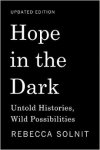 Hope in the Dark, by Rebecca Solnit – Solnit wrote Hope in the Dark back in the 2000s, in response to the Bush Administration and its wars in Iraq and Afghanistan, and she recently updated it and made it available at a reduced price for those who need a dose in 2017, which I call very decent of her. Making the case for hope even when sanity and community seem to have fled the world, Solnit works her way through the recent history of the global social justice movement, explaining how so much more has been achieved than we realize, and how the journey is a victory in and of itself. Solnit argues against making the perfect the enemy of the good and holds up examples of successes as reasons to celebrate – reminding readers that while, yes, the goal is a perfectly just society, and of course we’re nowhere near it, we’ve achieved great things already. The book is a perfect antidote to the storms raging in our political landscape right now. It took months to read because I downloaded it to my phone (and reading for more than a few minutes on my phone gives me headaches) but it was well worth it and I am sure I will come back to this slim but comforting book.
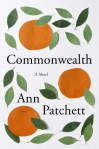 Commonwealth, by Ann Patchett – Patchett’s latest novel was hotly anticipated and widely acclaimed. The book opens when Bert Cousins shows up uninvited at a Christening party for little Franny Keating, kisses Franny’s mother, and sets in motion the dissolution of two marriages and the combining of the Keating and Cousins families. Franny and her sister Caroline grow up spending their summers in Virginia with their mother and Bert, and they bond with Bert’s children over a mutual dislike of their parents – then one day, tragedy strikes. Years later, grown-up Franny begins an affair with an elderly author. When she tells him about her life, he decides that it should be a book… and Franny loses control of the narrative. So – I liked, but did not love, Commonwealth. None of the characters were particularly likeable, and I found it hard to care what happened to them. I appreciated the skill with which the novel was written, but it didn’t really do anything for me.
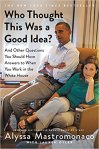 Who Thought This Was A Good Idea? And Other Questions You Need Answers To When You Work In The White House, by Alyssa Mastromonaco – I’d been eyeing Mastromonaco’s memoir of her years in the Obama White House and was planning to check it out of the library when I realized that the audiobook was read by the author and used an Audible credit to grab it. I started listening immediately and loved it. Mastromonaco is chatty and engaging, and her memoir of her career is fascinating. She has worked for Bernie Sanders, John Kerry’s Presidential campaign, and of course for President Obama. Mastromonaco doesn’t tell her life story in chronological order, but instead shares her stories in chapters organized around traits and values that she believes helped her succeed in her working life. Of course she was right at the center of things for many years, and she delivers plenty of fascinating insider details about the Kerry campaign and the Obama campaign and White House, which she intersperses with terrific career and professional advice. The audio production was wonderful as well. I think this is a memoir I’ll definitely listen to over again.
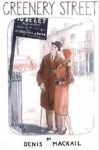 Greenery Street, by Denis Mackail – When we meet Ian and Felicity Foster, they are a young couple planning their marriage, looking for their first home and plotting out their new life together – which makes them perfect candidates for Greenery Street. Greenery Street, almost a character in and of itself, is a small side street in London that makes it a specialty to lure young married couples to set up housekeeping there. The street is charming, lined with houses that are just the right size for a couple starting out in life (and a few servants, of course). But every couple who sets up housekeeping on Greenery Street has their departure preordained; the moment the word “nursery” creeps into conversation, the house will begin to seem small and Greenery Street will be expelling the new family – on to a bigger home for them and on to a new young couple for the street. Greenery Street follows Ian and Felicity through their first year of marriage, before they too add a baby and depart from the street, and it is simply a joy to read. Funny, engaging, and simply delightful – we sympathize with Ian and Felicity through Family Drama, Rude Neighbors, Money Worries, and Problems With The Servants (that last being the most hilarious). We learn what Ian and Felicity read, what they eat, and how obsessed they are with their dog. Nothing much happens, and I could have stayed in the Greenery Street world happily for months. (There are two sequels, Tales from Greenery Street and Ian and Felicity, but they’re next to impossible to find – so here’s my official request that Persephone publishes the whole series and not just the first!)
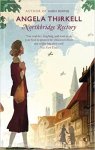 Northbridge Rectory (Angela Thirkell’s Barsetshire #10) – Oops. For some reason I thought Northbridge Rectory was next up in Angela Thirkell’s Barsetshire series and ended up skipping from six to ten. Luckily, these are books that can be read out of order. I loved Northbridge Rectory (and got a huge kick out of the fact that I was reading Greenery Street at the same time – which was written by Thirkell’s brother Denis Mackail). Northbridge Rectory follows the inhabitants of the village of Northbridge for several months during one WWII autumn and Christmas season. The Rectory is the focal point and we get to know Verena Villars, the Rector’s wife, particularly well. Mrs. Villars is responsible for supporting her husband in his ministry as well as hosting a group of billeted officers – one of whom is quietly in love with her. (She has no idea and would be astonished if she knew.) We watch, along with Mrs. Villars, as the village prepares for war and the rest of the residents of Northbridge find themselves in and out of all sorts of matters of the heart. It was a delightful read and I can see why the WWII novels are some of Thirkell’s most popular.
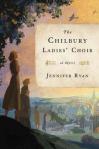 The Chilbury Ladies’ Choir, by Jennifer Ryan – I’d heard so much about this debut novel and it didn’t disappoint. Defying the Vicar’s order that the church choir be disbanded since all of the men are off at war, the women of Chilbury reorganize themselves as the Chilbury Ladies’ Choir. The book follows several of them for one summer – sweet Mrs. Tilling; scheming Miss Paltry; wild Venetia Winthrop; and more – as they navigate the new wartime reality of their lives. There are squabbles over loves, there are tragic losses, and there is a lot of singing. The Chilbury Ladies’ Choir was a lovely and ringing testament to the power of community to help us through the darkest times. I couldn’t put it down, and ended up finishing it in two days – much to my disappointment, because I’d have liked to spend a lot more time with the choir.
 Lincoln in the Bardo, by George Saunders – This was one that I felt compelled to read because of all the buzz it was getting. Young Willie Lincoln has died of typhoid and been interred at Oak Ridge Cemetery in Georgetown. On the night of Willie’s funeral, his father, President Lincoln, pays a visit to the cemetery and holds his son’s body. The result – a battle for Willie’s soul – is told via a cacophony of voices, as excerpts from both real and imagined historical accounts of Lincoln’s life and presidency as well as in a structure reminiscent of a play, with the players being the other shades who are present with Willie in the cemetery on the night of the President’s visit. Well – I certainly appreciated the wildly creative nature of Lincoln in the Bardo, and I cried buckets while reading it. I can understand the buzz and hype and I don’t think they’re misplaced. For me, though, I am at a stage where I really want comfort reading, and Lincoln in the Bardo is very much not comfort reading (especially if you have children). I couldn’t put it down, and I thought it was astonishingly well-done, but it gave me nightmares.
A bit of a slow June – seven books, including one audiobook. That seems to be par for the course in the summertime. But there were certainly some gems amongst the handful this month – Greenery Street, The Chilbury Ladies’ Choir, and Northbridge Rectory were all delights. (I’d probably rank Northbridge Rectory the highest if you absolutely made me pick a favorite this month, but please don’t make me.) Next month will probably be more of the same type of reading – I’m on a major comfort zone reading jag, and not even mad about it – but I’m hoping to post a better number for you, since we’re not going out of town again for awhile. (Not that my weekends won’t be packed with activity, because they always are.) Check back!
What was the best thing you read in June?

 Time of Wonder, by Robert McCloskey. Naturally starting with a classic! Time of Wonder is an absolutely gorgeous book – one of the tribe of children’s books that is more like poetry than prose, and the accompanying illustrations are perfect as well. Time of Wonder is perhaps less well-known than some of McCloskey’s other works, like Blueberries for Sal and Make Way for Ducklings, but it is a treasure. Written in the second-person singular, it meanders through late spring, when “you” arrive on “your island” in Penobscot Bay, through summer’s high season, through a hurricane, and finally to the end of the season and a bittersweet goodbye (don’t forget to pack your toothbrush!) until next season. The night-boating scene is simply gorgeous, and the approach of the hurricane is one of the most beautifully written suspense scenes I’ve read in any literature.
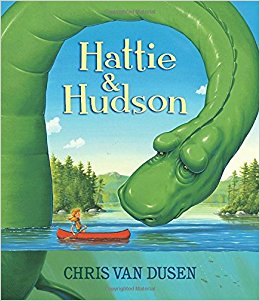 Hattie and Hudson, by Chris Van Dusen. From an old favorite to a new favorite! We recently brought Hattie and Hudson home, and the kids are OBSESSED. Hattie is a young girl who loves to explore in her canoe, and Hudson is a lake monster who is lured out of his isolated cave and to the surface when he hears Hattie singing one day. The two immediately become good friends, but their friendship seems as if it may be short-lived when the townspeople discover Hudson’s presence and decide to remove him from their lake. Can Hattie save her new friend? It’s a beautifully illustrated book – not to mention a sweet story about getting to know someone before you judge them – and as we prepare to head to my parents’ lakeside camp for a mini-break this summer, the kids are having so much fun reading it (and speculating on the possibility that there might be a Hudson in the Sacandaga…).
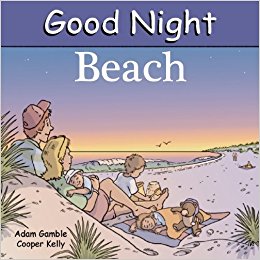 Good Night Beach, by Adam Gamble. The Good Night Our World series gets a lot of airtime in our house. We have a stack of them now – everything from Good Night California to Good Night Mermaids. Both kids love them, but Nugget is particularly into Good Night Beach. He’s a total beach bum, and when he can’t actually be splashing in the waves, he is always happy to relive the glory days through Gamble’s fun writing and Cooper Kelly’s joyful illustrations. As with the other Good Night books, Good Night Beach begins with a “Good morning!” and “Are we ready to share a wonderful day?” It progresses through a day of sandcastle-building, tidepool-watching and sandwich-munching until the sun sets and we sleepily murmur, “Good night, beach. Thank you for sharing a wonderful day.”
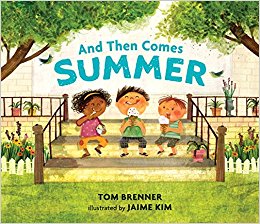 And Then Comes Summer, by Tom Brenner. I just discovered Brenner’s books last fall, and And Then Comes Summer is his newest. Rather like Time of Wonder, it’s almost more poetry than prose. There’s no plot to speak of – it’s just page after page of gorgeous writing celebrating the season, accompanied by sweet, happy, and utterly captivating illustrations. Brenner’s neighborhood kids sell lemonade, visit the ice cream stand, ride their bikes to a Fourth of July parade, and beat the heat at the lake – sounds like a perfect summer to me!
 A Field Guide to Awkward Silences, by Alexandra Petri – Petri (“pea-try, like a vegetable that’s making an effort”) is a political humor and satire columnist for The Washington Post, a Congressman’s kid, a long-time Washingtonian, and seriously one of the funniest women alive. She’s justifiably famous inside the Beltway and deserves to be better known outside. Her book, A Field Guide to Awkward Silences, is her memoir of all the embarrassing things she’s done in less than 30 years on the planet – from winning an international pun championship to losing at Final Jeopardy with the question “Who is that dude?” – and it’s brilliant.
 Barchester Towers (Chronicles of Barsetshire #2), by Anthony Trollope – Finally, after several times putting it aside in favor of pressing library deadlines, I was able to sit down with Barchester Towers and actually finish it. As I knew I would, I loved it. The continuation of the stories of Dr Grantly, Mr Harding, Eleanor and other old friends from The Warden – sprinkled in with wonderful new characters like the Proudies, the Stanhopes, and the Thornes – especially eccentric Miss Thorne! – was such a joy to read. Many moments of humor and delight, coupled with a really engaging narrative, made for the perfect reading experience. Loved, loved, loved, and can’t wait to pick up Doctor Thorne.
 The Hate U Give, by Angie Thomas – Well, The Hate U Give was pretty much the opposite of Barchester Towers, except that it was also a stunning reading experience. Starr Carter is a sixteen-year-old girl who witnesses the shooting of her childhood best friend at the hands of a police officer. Starr’s journey in coming to terms with her role as “the witness,” her devastation when a white friend suggests that the victim had it coming, her horror at the media and justice system’s treatment of her friend, and her gradual awakening into an activist role, makes for a gut-wrenching but absolutely necessary read. Worth every bit of the hype.
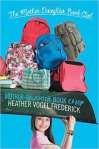 Mother-Daughter Book Camp (Mother-Daughter Book Club #7), by Heather Vogel Frederick – I needed something a lot lighter after The Hate U Give, and a return to the Mother-Daughter Book Club seemed in order. Frederick had previously said that book 6 would be the last book in the series, and I’m so glad she rethought that. Mother-Daughter Book Camp is a wonderful and fitting end to a great reading journey. Emma, Jess, Megan, Cassidy and Becca are off for a summer working as camp counselors before leaving for college, and the book club is reconvened as a perfect antidote to the homesickness some of their little campers feel. We get to find out where each book clubber is headed for college, and to read one more book – Understood Betsy – in their company. It was such a fun read, and a perfect send-off for the girls.
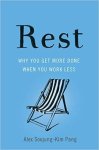 Rest: Why You Get More Done When You Work Less, by Alex Soojung-Kim Pang – So, this was an interesting read (although I was a bit too tired while reading it to keep up with all of the science of rest and the brain, which might have been a little bit ironic) but I don’t know how relevant it really was to my life. Pang discusses the role that active and purposeful rest played in the careers of some of the most illustrious figures of the modern age – from Charles Darwin to famous composers to wildly successful entrepreneurs – and concludes that a morning routine of focused work, followed by an afternoon of focused rest (napping and walking around in nature while thinking deep thoughts) is the ideal formula for success and inspiration. With sabbaticals every now and again, for an extra jolt of rest. That’s true, I’m sure, but try telling that to your average law firm employer. Interesting read, but I have no idea how I’m supposed to actually apply it and still meet my billable hour requirement. No rest for the wicked, I guess!
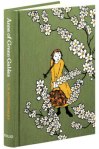 Anne of Green Gables (Anne of Green Gables #1), by L. M. Montgomery – It seemed like as good a time as any to revisit this childhood favorite. After I watched (and balked at) the first episode of Anne With an E, I needed both a palate cleanser and a reminder of the book I really loved. Plus, my spring list included a prompt to re-read Anne via my beautiful new Folio Society edition – no time like the present. I love the Anne books, as you all know – so I don’t need to tell you about why they’re great. But I can tell you (and I know this is a bit controversial) I thought the Folio Society editions were just lovely. The “cartoonish” illustrations didn’t bother me one whit; I appreciated the riot of color and the great joy in the story that the artist portrayed. Glad I took the plunge on the Anne collection from Folio (and I hope they continue on with all seven).
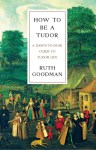 How to Be a Tudor: A Dawn-to-Dusk Guide to Tudor Life, by Ruth Goodman – After reading and enjoying Goodman’s How to Be a Victorian, I immediately placed a library hold on How to Be a Tudor. One really wants to be prepared for involuntary time-travel into any era, amirite? How to Be a Tudor follows the same format as Victorian – starting with waking up, Goodman takes the reader through every moment of a typical Tudor day, discoursing along the way on everything from the best bed materials to how to lace a kirtle to what might be on the lunch table to why pop culture’s representations of Tudor dancing are off-base. As expected, it was a bit of a dense read but good fun all around.
 A Gentleman in Moscow, by Amor Towles – Towles’ sophomore novel follows Count Alexander Rostov, sentenced by the Bolshevik to house arrest in the grand Metropol hotel, over the tumultuous decades in the middle of the twentieth century in Moscow. Count Rostov, an “unrepentant aristocrat,” is forced to live in a small attic room and confined to the hotel for decades. In his new role, he meets an extraordinary cast of characters, takes a job as a waiter, becomes paramour to a famous actress and raises a young girl. This was another one, like Barchester Towers, that I had to keep laying aside in favor of library deadlines, but when I finally had some breathing space I was able to finish it and just loved it. The world of the Metropol is gorgeous and evocative, Count Rostov is a wonderful character, and I was truly moved by the lovely writing.
 A Traveller in Time, by Alison Uttley – Another lovely edition of a children’s classic, brought out by the Folio Society! Somehow, even though I love children’s classics and I love time travel books, this sweet story of a young country-house guest who finds herself transported back to Elizabethan times and involved in the Babington Plot (to assassinate Queen Elizabeth and place Mary, Queen of Scots on the throne – although, being a children’s novel, A Traveller in Time glosses over the assassination part of the plot and focuses pretty much exclusively on the liberation part) had passed me by up until now. I read it slowly and allowed myself to be really deeply drawn into the beautifully-sketched period details – both in young Penelope’s home time period and in the Elizabethan period she repeatedly visits. It was a delight and a joy – although laced throughout with foreboding, because of course both Penelope and the reader know that the Babington Plot is not going to work out for the plotters. I can’t wait to share it with my little readers in a few years.
 The Body in the Library (Miss Marple #3), by Agatha Christie – When Colonel and Mrs Bantry wake up to a house in confusion and the body of a young woman they’ve never seen before on the floor of their library, there is only one person who can sort out the mess – Mrs Bantry’s friend, Jane Marple. Miss Marple applies her trademark knowledge of human nature to solve a particularly confusing crime. One of the things I love about Christie is that she doesn’t conceal clues. You have to be smart to sort out the correct clues and solve the puzzle, but you’ll never read a Christie sleuth declaring “I knew ___ was the murderer as soon as I discovered that [insert clue the reader is learning about for the first time here].”
 A Circle of Quiet (The Crosswicks Journals #1), by Madeleine L’Engle – I’ve long been a fan of L’Engle’s work – remind me someday to tell you about the time I met her, when I was twelve, and she gave me writing advice – but my experience with her was pretty much restricted to her writing for children and young adults (the Time Quintet, the Austin Family series), aside from one Christmas compilation. So I figured it was time to read L’Engle for adults. A Circle of Quiet is indeed quiet, but lovely, ruminative, and containing so many gems. I can’t wait to read the other three Crosswicks Journals books.
 The Princess Diarist, by Carrie Fisher – Having always liked Star Wars, I was intrigued to read Fisher’s memoir of filming A New Hope. I’ve never read any of her other memoirs, but this one has gotten great reviews, and like everyone else I was unabashedly curious about the relationship Fisher calls “Carrison.” An affair between Fisher and Harrison Ford had long been speculated, but neither party confirmed it – until now. Fisher takes the reader through her painfully awkward first encounters with Ford and shares every thought that was in her mind for the duration of the affair. It was a fascinating – if sometimes confusing – read, which is par for the course with Fisher, I hear.
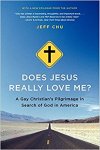 Does Jesus Really Love Me?: A Gay Christian’s Pilgrimage in Search of God in America, by Jeff Chu – I’d been meaning to read this book for awhile, because I thought it sounded interesting, but when it was given as an example for the “person of color goes on a spiritual journey” category in the 2017 Book Riot Challenge, I bumped it up to the top of my list. It was a fascinating journey indeed – Chu travels the country speaking to everyone from the leaders of gay churches to “fallen” pastors and homophobic megachurch members, all in an effort to reconcile his strict Christian upbringing with his sexuality. I did find myself wishing the book was just a little bit shorter, but I think that was more to do with the fact that I was exhausted and overwhelmed with work while reading it, and less to do with the book itself, which was comprehensive and excellent.
 Emily’s Quest (Emily #3), by L.M. Montgomery – The final installment in Montgomery’s Emily Trilogy is one of her darkest books, not only in the trilogy but, I think, overall. Emily is back home at New Moon after graduating from high school, and trying to make her way as a writer while her friends Ilse, Perry and Teddy are conquering the world. She spends a lot of time lonely, gets engaged to a man she doesn’t love, and experiences some difficult losses. I wrote about the book
  Pachinko, by Min Jin Lee – Another one I read for the Book Riot Challenge (multiple points of view, all people of color), Pachinko follows three generations of a family of Korean expats in Japan before, during and after World War II. At the heart of the story is Sunja, a young woman and only daughter who finds herself pregnant out of wedlock; Isak, a minister who marries her to save her from ruin and then falls in love with her; Hansu, Sunja’s wealthy lover, who watches her from afar during her marriage to Isak and reenters her life after Isak’s death; Yoseb and Kyunghee, Sunja’s brother- and sister-in-law; Noa and Mosazu, her sons; and Solomon, her grandson. It’s a beautifully written tour-de-force and I did enjoy it – I just keep forgetting that multigenerational family sagas aren’t my favorite genre.
 Hag-Seed (Hogarth Shakespeare), by Margaret Atwood – I absolutely LOVED Hag-Seed, Atwood’s take on The Tempest. Felix Phillips is a washed-up theatre director. Once lord of his realm of the Makeshiweg Theatre Festival, his second-in-command betrayed him and Felix found himself out on his ear, living in a hovel and mourning his daughter Miranda, alone (or is he?) for twelve years. Then one day he takes over leadership of a literacy program at a local prison and begins teaching the inmates Shakespeare. After a few seasons, he gets the idea for a spectacular revenge on his betrayers, aided by the Fletcher Correctional Players in their own rendition of The Tempest. Hag-Seed was astonishingly creative (I’d expect nothing less from Atwood) and such good fun. I haven’t even read The Tempest, but just being moderately familiar with the plot I was able to spot dozens of parallels – I can’t imagine how many more inside jokes I’d have caught if I knew the play well. What a delight, and a great way to end a month’s reading.
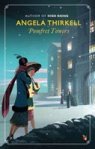 Pomfret Towers (Barsetshire #6), by Angela Thirkell – Continuing with my recent binge on
 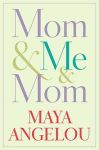 Mom & Me & Mom, by Maya Angelou – Having read I Know Why the Caged Bird Sings in high school, I somehow only recently discovered that Maya Angelou wrote a stack of other memoirs. Mom & Me & Mom was one, and it was powerful and joyful. Opening in Angelou’s early childhood, during which she was raised by her grandmother, Angelou discusses returning to her mother’s side at age 13 and spending her adolescence in San Francisco, living with a mother she barely knew. Angelou’s relationship with her mother, whom she calls “Lady,” is – of course – the focal point of the book, and it’s beautiful to watch her love for, and trust in, Lady blossom and grow over time. Lady, for her part, explains that she is a terrible mother to young children but a great one to young (and not-so-young) adults, and that does seem to be the case. From a foundation of mistrust and resentment, a beautiful mother-daughter relationship blooms.
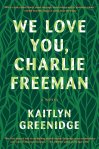 We Love You, Charlie Freeman, by Kaitlyn Greenidge – The Freeman family is proud and honored to have been selected as part of an experiment at the Toneybee Institute, a scientific foundation studying the communication of apes and other primates. The Freemans will leave their home, move into the institute, and live in an apartment there with Charlie, a young chimp who was abandoned by his mother. The purpose of the experiment is for the Freemans – who all speak sign language – to teach Charlie to sign, and to fold him into their family and overcome his feelings of abandonment, first by his mother and then by various institute staff as they turn over in the normal course of business. Soon the stress of the experiment begins to overwhelm the family, who all deal with their emotions in various – mostly unhealthy – ways, and what was a close family starts to unravel. Against this backdrop, teenaged daughter Charlotte – the main protagonist – discovers some unsettling facts about the early history of the Toneybee and its racist beginnings. The novel, on the surface about the undoing of a family, is an interesting allegory about – as the jacket copy describes it – America’s failure to find a language in which to talk about race. So, I liked this. It was well-written and thoughtful. I found it hard to connect to the plot, though, and couldn’t love it – that’s probably my own thing, since this book is getting raves from everyone else. “Undoing of a family” stories aren’t really my jam, and that ultimately couldn’t overcome my interest in reading a story about the language of conversations about race – but it’s a book very worth reading, and I do recommend it.
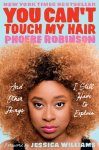 You Can’t Touch My Hair: And Other Things I Still Have to Explain, by Phoebe Robinson – Robinson is a stand-up comedienne, a podcast maven, an all-around hilarious lady, and a black woman. In this memoir, she describes her experiences and encounters with race during her childhood and young adulthood – and she folds quite a lot of thought-provoking introspection and wisdom in with some truly hilarious material. Whether describing the hours she spent sitting on the kitchen chair while her mother took pains over her with a hot comb so Robinson wouldn’t “go to school looking like Frederick Douglass,” or recounting awkward encounters with tone-deaf white people’s unconscious racism, Robinson is real, and thoughtful, and smart – as well as funny. I’ve long been a fan of stand-up as a way to tell truths about our current society, where we need to go and how we need to get there – in a light-hearted but intelligent way, and Robinson seems like a comic that I’d really love. You Can’t Touch My Hair was an uncomfortable read at times, but should be required reading as it takes on big issues and pulls no punches while doing so.
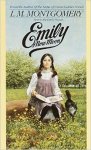 Emily of New Moon (Emily #1), by Lucy Maud Montgomery – I won’t get too into detail here, as you’ve already read my thoughts about re-reading my childhood favorite book
 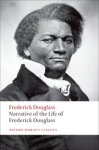 Narrative of the Life of Frederick Douglass, an American Slave, by Frederick Douglass – I’d been meaning to read this classic for awhile, and had been eyeing it as a perfect pick for Black History Month, when a certain tone-deaf and evidently uneducated world leader (#notmypresident) referenced Douglass in a manner that suggested he had no idea who Douglass actually was. (Has been doing a very good job? Getting recognized more and more? Are you KIDDING ME?) Since reading is apparently how I #resist, my first stop on the internet, after reading that embarrassment, was my library website to put Douglass’s memoir on hold. It came in shortly thereafter, and I blazed through the slim but incredibly powerful volume. As expected, it’s far from an easy read – the events it recounts are nothing short of horrifying. Douglass’s powerful voice comes across in a ringing attack on the very system of slavery – I can only imagine how astonishing he must have been as a speaker. If I was to create a list of books that I think should be required reading for all Americans, this would have to be on it.
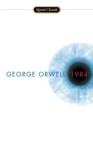 1984, by George Orwell – Another one I added to my library holds after seeing it in the news, dystopian novel 1984 started trending – actually selling out on Amazon – thanks to Kellyanne Conway and Sean Spicer and their “alternative facts,” which seemed right out of the regime of Big Brother. Orwell’s classic focuses on Winston Smith, a 39-year-old bureaucrat in the superstate of Oceana. Winston works at the Ministry of Truth, which is concerned with “rectifying” publications so that they reflect the desired standpoints of the ruling elite – whatever those happen to be at the moment – and in the process, obliterating history and memory. Big Brother, the unseen leader of the regime, is always watching through mandatory “telescreens,” which are everywhere. Love, sensuality, memory, and any questioning of authority are prohibited acts of “thoughtcrime.” I read Orwell’s other well-known dystopia, Animal Farm, in high school, but had never made it to 1984, so I jumped on the bandwagon with everyone else and read it this month. It was distressing, upsetting, engaging and frighteningly relevant to today’s political climate.
 Simplify: Seven Basic Principles to Help Anyone Declutter Their Home and Life, by Joshua Becker – Has there ever been a more New Years-y book to start off a year? This was hanging out half-finished on my kindle, so I polished it off on the first day of the year. Inspiring, for sure, as Steve and I begin a year-long quest to purge and declutter. But a little short on specific tips and pointers.
 The Wangs vs. The World, by Jade Chang – This debut novel, about a Chinese-American businessman who loses his fortune in the Great Recession, and how his family handles the loss, was one of the big buzz novels of 2016. I enjoyed it, although not as much as I expected. It took me awhile to warm up to the characters, and while I finished the novel liking the kids, I didn’t really feel connected to any of the characters. I also spent a lot of my time scratching my head and trying to understand how Charles Wang could have lost all of his millions and all of his holdings in one stroke of a pen. Didn’t he have financial advisors? Wasn’t he diversified? I get the point that he took a big risk and it didn’t pan out, but the plot just rang sort of false to me.
 Mr. Churchill’s Secretary (Maggie Hope #1), by Susan Elia MacNeal – I had been meaning to dive into the Maggie Hope mysteries and now, with a brand new installment just hitting the shelves, seemed like as good a time as ever to pick up the series. In the first installment, Maggie – a British citizen raised in America – has just taken a job as the newest typist at 10 Downing Street. A mathematical genius, Maggie has applied to be a private secretary but is frustrated to find that she is barred from the more intellectually rigorous work on account of being female. She’ll have plenty of material to which she can devote her considerable brainpower – between solving the mystery of what happened to the murdered typist she replaced, delving into long-buried questions about her family, decoding a threat against the Prime Minister, and debating whether England should get more involved in the brewing conflict with Nazi Germany, Maggie is busy indeed. I loved this introduction to a new-to-me sleuth and can’t wait to continue on with the series.
 The Underground Railroad, by Colson Whitehead – Another big 2016 buzz book, The Underground Railroad lived up to all the hype. When Oprah gets involved and speeds up the release date of a book, you know it’s going to be big – and it was. The Underground Railroad is the story of Cora, a slave from Georgia who escapes with a fellow slave, Caesar, and runs for the north with the help of the Underground Railroad. The bit that’s new? In Whitehead’s imagination, the Underground Railroad is an actual railroad running underground. Cora and Caesar descend onto a subterranean platform and make for freedom in a train car. As Cora travels from state to state, her journey is fraught with all kinds of terrors. Whitehead doesn’t mince words about the horror of slavery, and it’s not an easy read. But it’s a stunning, sweeping work of genius that everyone should read.
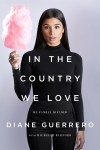 In the Country We Love: My Family Divided, by Diane Guerrero – Diane Guerrero was only fourteen years old, a freshman in high school, when she came home from school to find her house empty and her undocumented immigrant parents seized for deportation. In the weeks, months and years that followed, Diane drifted from one friend’s house to another. No social worker, no immigration official, bothered to check on Diane or make any provision for her – a minor and a U.S. citizen – after she was left completely alone in the United States. Through sheer force of will, she finished high school, worked her way through college and became an actress, all the while hiding from all but her closest friends the truth about her parents and her past. I have not seen Diane act – she’s one of the stars of Orange is the New Black, but I don’t watch the show – but I am now a fan and can’t wait to see what she does next. I hope that, at some point, she will be able to reunite her family.
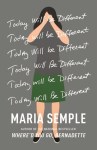 Today Will Be Different, by Maria Semple – I’ve been looking forward to a new book from Maria Semple since 2013, when her last book – one of my all-time favorites, Where’d You Go, Bernadette – was published. Sadly, I found Today Will Be Different to be a disappointment, and not up to my expectations after reading and loving Bernadette so many times. Eleanor Flood, a graphic artist and mom living in Seattle, decides that today will be different. She will live her best life, be a loving wife and mom, and generally have her ish together. Of course, it all goes haywire almost immediately. Eleanor was as neurotic as Bernadette (and her past was more harrowing, so she had more reason for being neurotic) but somehow, she lacked Bernadette’s charm. I did enjoy the one shoutout to Bernadette and Galer Street School – but beyond that, sadly, I was underwhelmed.
 March: Book Three, by Representative John Lewis, Andrew Aydin and Nate Powell – I’ve been eagerly anticipating the third and final volume of Rep. John Lewis’ graphic memoir, after the first two volumes blew me away when I read them last February. It was a long wait for the release date, and even longer until my name cycled to the top of the library holds queue, but the conclusion of March was worth the wait. In it, Rep. Lewis describes his work registering voters, organizing on behalf of the Voting Rights Act, and finally leading the march from Selma to Montgomery in support of voting rights. It’s a stunning and powerful finale to the graphic memoir, but of course, it doesn’t depict the end of Rep. Lewis’ astonishing career. I happened to be reading March: Book 3 both during Rep. Lewis’ testimony against the Sessions nomination, and on Martin Luther King Day, and while that was serendipity, it felt very right. Can’t recommend the series highly enough – especially these days.
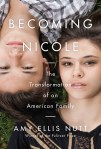 Becoming Nicole: The Transformation of an American Family, by Amy Ellis Nutt – Nicole Amber Maines is in many ways a typical teenaged girl. She grew up loving Barbie and The Little Mermaid, aspiring to be an actress, and sharing a special connection with her twin brother Jonas. But in a major respect, Nicole is very special – she was not born Nicole Amber Maines. She was born Wyatt Benjamin Maines. Nicole always knew that she was really a girl, and her mom, Kelly, knew as well – as did Jonas. Becoming Nicole is the stunning, powerful story of how Nicole became who she is, her legal fight against a school district that failed to protect her from bullying, and her dad Wayne’s journey to full acceptance and celebration of Nicole’s identity. It was a beautiful family story, interspersed with well-researched and fascinating scientific information about gender identity and the brain. We are still learning about the gender spectrum and the full range of gender identities, and I think Becoming Nicole does an incredible amount to further the discussion and add to our knowledge of the subject. I laughed, cried, and hugged the book when I was done.
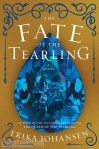 The Fate of the Tearling (The Queen of the Tearling #3), by Erika Johanssen – In this conclusion to the Queen of the Tearling fantasy trilogy, Kelsea Raleigh Glynn has been captured by the Red Queen and dragged to Demense, the capital of Mortmesne. Kelsea has left her kingdom in the hands of the Mace, her head guard, and he is sparing no effort to get her back. Meanwhile, rebellion is brewing in Mortmesne, led by a mysterious rabble-rouser named Levieux, and a dark evil stalks the border between Mortmesne and the Tearling. The imprisoned Kelsea strikes up an uneasy alliance with the Red Queen of Mortmesne and continues to fall into trances in which she sees visions of the Tearling’s past – which, if she can understand them, might give her the key to saving her kingdom once and for all and creating a lasting peace in William Tear’s Better World. So, the third book in the trilogy, like its predecessors, was fine. It’s an interesting and engaging story and it’s well-written. For some reason, though, I just can’t see what all the fuss is about with any of the Tearling books. They’re good, and they’ve certainly got a following, but I wasn’t feeling it. During the really exciting, climactic parts, I just read placidly on, where with other books I’d be rushing through page after page in a frenzy to find out what happens. With the Tearling books, they were pleasant enough diversions, but I couldn’t bring myself to care overmuch – that, coupled with the fact that the ending was flat-out weird, meant that these were sort of a miss for me. But they do have legions of fans, so I’m probably wrong and totally missing out.
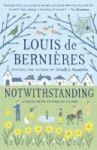 Notwithstanding: Stories From an English Village, by Louis de Bernieres – I can’t remember how I became aware of this short story collection, but I put it on hold at the library and then took forever to get to it. The Guardian described it as akin to “being wrapped in a tartan blanket and handed a nice mug of cocoa,” and I found that was true some of the time and not true other times. There was certainly whimsy overload, and I really enjoyed some of the stories – but others were much less cosy than I was led to expect they would be. Some of the stories were downright upsetting – for instance, if you decide to pick this up and you’re either soft-hearted or weak-stomached – or both, as I am – learn from my mistake and skip the story entitled The Rabbit. Trust me on that one. In any event, it was a well-written book and parts of it were really quite enjoyable, but it wasn’t quite what I was looking for at that particular moment. I was wanting something really and truly cosy, not cosy on the surface with an undercurrent of tragedy. That’s not the fault of this really very good book. It just was bad timing.
 The Little White Horse, by Elizabeth Goudge – Now here is something really and truly cosy. I ordered an absolutely gorgeous edition of The Little White Horse from The Folio Society and could hardly wait to read it when it arrived from England. The book itself, first of all, is a dream to read. The full-color illustrations were breathtaking and the cover (that’s my edition to the left there) is pure magic. The story itself was an absolute delight. It is the tale of Maria Merryweather, a thirteen-year-old girl on the cusp of womanhood who finds herself orphaned and sent to live with her father’s second cousin, Sir Benjamin Merryweather, at the family estate of Moonacre Manor. At first blush everything about Moonacre seems like a pleasant dream – each discovery more beautiful than the next, everyone perfectly kind, the food delicious and the activity delightful. But Maria soon discovers that Moonacre and its surrounding environs are troubled by a bad decision made generations ago, and it is up to her to fix the mistakes of her forebears and make things right again. This she sets out to do with determination, and you never have any doubt that she will succeed, nor any real fear for her safety from the wicked Men From the Dark Woods. The only recurring complaint that I read in Goodreads reviews was that the book (which was written in the 1940s and sought to approximate Victorian literature) was too heavy on the descriptions. Every single one of Maria’s outfits or meals, the outfits worn or meals enjoyed by side characters, every bit of architecture, room décor or natural beauty is painstakingly described over multiple paragraphs or pages. I can see how that could be tiresome – but it was just what I loved most about the book. I say, bring it on. Tell me everything about Maria’s midnight blue riding habit. Spare no detail. Take all the time and words in the world and don’t forget to describe any crystal beads not immediately visible to the eye. I’m with J.K. Rowling – I adored this book. Can’t believe I’d never read Elizabeth Goudge before, and can’t wait to read more of her books.
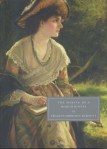 The Making of a Marchioness, by Frances Hodgson Burnett – FHB wrote one of my childhood favorite books, The Secret Garden. I must have read that, and A Little Princess, dozens of times. Yet despite that, I find myself amongst the legions of Mary Lennox and Sara Crewe fans scratching their heads and expressing amazement that (1) FHB wrote books for adults, too, and (2) we didn’t know about them until just recently. Thanks to Persephone reprints, I got to discover and enjoy this wonderful book (and there’s another FHB reprint, which I also own, to which I still look forward to reading). The Making of a Marchioness is a two-part tale of a decidedly unromantic, undramatic hero and heroine, and the romantic and dramatic things that happen to them. Emily Fox-Seton is a “gently bred” Englishwoman. A poor relation of a grand family who ignores her, she earns her living by running errands and doing odd jobs for rich women including one Lady Maria Bayne. When Lady Maria asks Emily to help out at a house party, she rejoices at the thought of escaping her drab life for a period of time in the country. Present at the party is the Marquis of Walderhurst, an eligible widower to which all the young society beauties have set their prettily adorned caps. Walderhurst is in his mid-50s, so not doddering, but not young either, and he has the decided idea that if he must take a wife, he would like one who will not be too much work or bother – so definitely not a society beauty. I’m sure you can guess what happens – Walderhurst discovers Emily and proposes to her, unromantically, over a bucket of fish. (Saw that one coming.) The courtship, culminating in engagement, comprises the first part of the book, and the second part discusses Emily’s adjustment to life as the new Marchioness of Walderhurst, the deepening of her feeling for her husband from gratitude to love (and his for her, likewise, from admiration to love) and, because this is a Victorian novel, a plot against Emily’s life by the distant relation who was Lord Walderhurst’s heir presumptive until the splendidly healthy Emily came on the scene. It was a fun and delightful read, and I stayed up way too late turning pages.
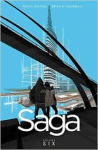 Saga, Volume 6, by Brian K. Vaughn and Fiona Staples – The most recent trade paperback installment of Saga found our heroes, Marko and Alana, reunited with each other but separated from their daughter Hazel and her grandmother, who are imprisoned on Landfall. The story alternates between their efforts to get her back with her own experiences in the prison. The end is both sad and hopeful – par for the course with Saga. I’m still really enjoying this comic series and looking forward to seeing what happens next.
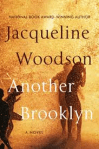 Another Brooklyn, by Jacqueline Woodson – Woodson’s newest book is her first for adults in awhile. In it, she explores the relationship between August, the narrator, and her three friends over the course of their youth in 1970s Brooklyn. It’s a hardscrabble coming-of-age story, beautifully written – as always with Woodson – and ultimately hopeful. I still loved Woodson’s memoir in verse, Brown Girl Dreaming, the best – but Another Brooklyn is a wonderful addition to her bibliography.
 A Countess Below Stairs, by Eva Ibbotson – After a few intense reads in a row, I was really looking for something fluffy, and A Countess Below Stairs (also published with the alternate title The Secret Countess) fit the bill perfectly. It was light, frothy, and utterly predictable in a completely delightful way. Anna is Russian aristocracy who has been displaced, along with her mother, brother and faithful English governess, by the Bolsehvik revolution. Seeking to earn her way, she takes a temporary job as a housemaid in an English great house and – of course! – falls in love with the young Earl. There are a few problems standing in their way: Anna is impoverished and so, pretty much, is the Earl; plus, he’s engaged to an heiress (who is astoundingly beautiful and heinously awful). But Anna is basically a Disney princess – really, I think little birds help her on with her housemaid’s uniform every morning – so you know everything is going to work out just fine. I guessed how it would all turn out before I was a quarter done with the book, and I still loved every second.
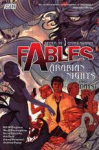 Fables, Volume 7: Arabian Nights (And Days), by Bill Willingham – In the seventh trade volume of Fables, the Eastern version of the Fables arrive from their own version of the Homelands, bringing with them a djinn and a lot of trouble. Flycatcher creates an international incident, Boy Blue is still imprisoned, Prince Charming is hating life as Fabletown’s new mayor, and the Beast is settling into his role as sheriff. It’s a fun addition to the series, and Frau Totenkinder continues to be totes awesome.
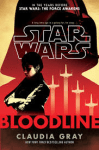 Bloodline, by Claudia Gray – This newly released addition to the Star Wars canon focuses on Princess Leia’s political career as a Senator in the New Republic. The Senate is fracturing at the seams, divided between Populists (who want the individual planets to have ample freedom) and Centrists (agitating for a stronger central government). Leia is the most well-known Populist, but she has to join forces with a Centrist Senator to investigate an upstart crime cartel in a distant system. As Leia and her new ally cautiously explore the hornet’s nest outside the New Republic, it soon becomes clear that the crime cartel is connected to something more sinister – the rise of the First Order. This was a great addition to the canon and I loved reading about Leia in her element as a politician. Of course, I’m saddened by the cover now that we have lost the great Carrie Fisher – but reading Bloodline (which I did earlier in the month, before her heart attack) seems like a good way to celebrate her life and her most famous role.
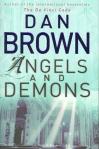 Angels and Demons (Robert Langdon #1), by Dan Brown – I’d been meaning to read more of Dan Brown’s books; the only one I had read so far was The Da Vinci Code (everyone has read that one, right?). Angels and Demons was about as ridiculous as you would expect it to be, and I had way too much fun reading it. It took me right back to a Thanksgiving many moons ago, when my extended family got into a knock-down, drag-out fight about which Dan Brown book was more likely to be true: Angels and Demons or The Da Vinci Code. That is a thing that actually happened.
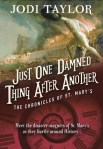 Just One Damned Thing After Another (The Chronicles of St. Mary’s #1), by Jodi Taylor – I read this on
 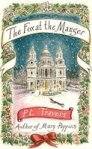 The Fox at the Manger, by P.L. Travers – Due to my excessive library stack (why does that always happen to me?) I wasn’t able to do much Christmas reading this month. But I did manage to squeeze in this very slim volume by P.L. Travers, the author of the Mary Poppins books, and it was delightful. A harried mother, taking her son and his two friends to a Christmas service at St. Paul’s Cathedral in London, is surprised when one of the children asks her if there were any wild animals present for the birth of Jesus. Mummy is prepared with a delightful tale of a fox who stops by the manger with a special gift for the newborn baby and a lesson for the domesticated animals who believe themselves to be the only beasts with a right to celebrate the Savior’s birth. Delightful.
 Barkskins, by Annie Proulx – I had been waiting and waiting and waiting, more and more impatiently, for my copy of Barkskins to arrive on the library holds shelf. Annie Proulx’s new release (and magnum opus!) follows the descendants of two indentured servants who arrive in French Canada in the 1600s. Rene Sel remains with his master, marries (against his will) a local Native Canadian woman, and lives a hardscrabble life until it is somewhat gruesomely cut short. Charles Duquet runs away, makes his fortune trading furs, and ultimately establishes a logging business that lasts for many generations. The Sels and the Duquets – later Dukes – mix and mingle throughout history, utterly unconscious of the fact that the founders of both of their lines once shared a wooded cabin (very briefly). So, I was lukewarm on Barkskins after waiting so long. The writing was wonderful and the scope of the story was impressive – but at over 700 pages, the book was too long. It was clear that, by about 100 pages from the end, even Proulx herself was exhausted by these people. A good pick for anyone with lots of time on their hands or an avid interest in lumberjacks – but I have neither of those things and I couldn’t help thinking how many other books I could be reading instead.
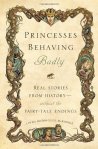 Princesses Behaving Badly: Real Stories from History – Without the Fairy Tale Endings, by Linda Rodriguez McRobbie – This short and highly entertaining volume has been on my to-read list for ages, and I really enjoyed it. From Alfhild, the princess who (temporarily) took up piracy, to Margaret, the princess who caused a bank robbery, McRobbie explores the darker side of royalty, away from the Disney fantasy lands. Princesses posing nude, making romantic conquests, murdering family members, giving political advice, usurping their husbands and sons to rule in their own right, leading military coups and going insane – hopefully not all at once – what’s not to love?

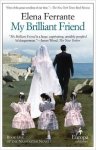 My Brilliant Friend (The Neapolitan Novels #1), by Elena Ferrante – My second attempt at catching Ferrante Fever was much more successful! I’d tried to read My Brilliant Friend awhile back and gave it up after about 50 pages. This time, I pushed through to that magic 100-page mark and found, just as I’d hoped, that the story hooked me. Elena and Lila are two friends growing up in a tough Naples neighborhood in the 1950s and 60s. My Brilliant Friend follows them through childhood and adolescence, as Lila changes from the scrappy ugly duckling into the beautiful, desired swan, and Lena struggles to hold onto her own identity outside of the friendship. I loved this and can’t wait to whittle down my library pile so I can get to the next in the series.
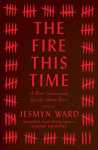 The Fire This Time: A New Generation Speaks About Race, ed. Jesmyn Ward – I’d heard great things about this book of essays, collected from some of the most brilliant writers of color working today, and it was every bit as astonishing as I’d been told. The Fire This Time is a hard look at the experience of being black in today’s America, and it can be fairly uncomfortable to read as a white reader. But I am firmly of the opinion that we all need to be made uncomfortable periodically, and that The Fire This Time is a necessary, bold, brilliant book that should be on every American’s reading list, no matter the color of their skin – but especially those out there who need to be reminded of the personhood of others. Which, sadly, seems to be a lot of people these days.
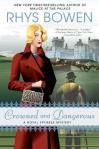 Crowned and Dangerous (Her Royal Spyness #10), by Rhys Bowen – As I often do after finishing a particularly hard or wrenching read, I reached for a cozy mystery as a palate cleanser. This time, it was Crowned and Dangerous, the most recent installment in the adventures of Lady Georgianna Rannoch. When we last left Georgie, she was speeding toward Gretna Green with her true love, Darcy O’Mara. Sadly, this volume finds Georgie and Darcy foiled in their attempts to elope when Darcy spots a newspaper article reporting that his father has been arrested for murdering the rich American to whom the ancestral O’Mara home – Kilhenny Castle – has been sold. Darcy immediately rushes off to Ireland to see what can be done for Lord Kilhenny, and Georgie follows soon after. I love Georgie and Darcy as a crime-solving duo, and this was a fun ride. Can’t wait to see what Georgie gets up to next! (Can she move back into Kensington Palace, please?)
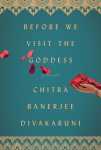 Before We Visit the Goddess, by Chitra Banerjee Divakaruni – I’d read another of Divakaruni’s lovely, lyrical novels – The Palace of Illusions – a few years ago and was delighted to learn of this new release. Before We Visit the Goddess tracks the relationships of three generations of mothers and daughters – Sabatri, elderly and ailing back in India; Bela, recently divorced and lonely in America; and Tara, Bela’s lost and dysfunctional daughter. It was a slim but lovely novel, bittersweet throughout.
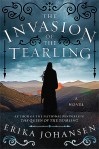 The Invasion of the Tearling (The Queen of the Tearling #2), by Erika Johansen – When we left the Tearling, the Mort army was at its gates, provoked into war by Queen Kelsea’s rash decision to undo a treaty signed by her mother, Queen Elyssa, which required the Tear to provide slaves to neighboring Mortmesne on a monthly basis. Now the invasion has begun and as Queen Kelsea struggles to manage her court and evacuate her people from the Morts’ path, she begins to have visions of a time before the Crossing, and a woman named Lily. Lily’s story is missing from Kelsea’s history books, but it is clear there is some connection between them, and this connection may hold the key to Kelsea’s ability to save the Tearling from destruction. I really enjoyed The Invasion of the Tearling – after liking, but not loving, the first in the trilogy, I found this second installment riveting. The Lily segments were particularly enthralling, bringing the dystopic elements of the story to the forefront as they did (and scaring me senseless after the election). Now I am itching to read the conclusion of the trilogy (and have only Googled “The Fate of the Tearling release date” approximately seventeen million times).
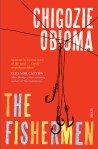 The Fishermen, by Chigozie Obioma – Four young brothers, taking advantage of their father’s extended absence for work, steal away from school to fish on the banks of a nearby river. One day, the brothers encounter the local madman, who makes a prophecy that convinces the eldest of the brothers that he’s destined to be murdered by one of his other brothers. The Fishermen takes the story of Cain and Abel and transplants it into Nigeria of recent times. It’s a gory, blood-spattered story that only gets gorier and more blood-spattered as the pages turn. I read it with my eyes popping out of my head and couldn’t look away, although it was not my usual reading material and definitely not for everyone. (If you have a weak stomach, as I do, be forewarned.) The Fishermen was very hyped around the time of its publication, and while it wasn’t really my cup of tea, I appreciated the outstanding writing and can definitely understand the accolades it received.
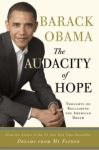 The Audacity of Hope: Thoughts on Reclaiming the American Dream, by Barack Obama – President Obama’s musings on the American dream and public policy had been on my to-read list for awhile, and I finally grabbed it from the library in mid-November. I was craving some words of sanity after a completely insane election, and the President’s thoughtful, reasoned discussions of all aspects of American life, and the policies that govern them, were just what I needed to read. It was fascinating to consider this book from the perspective that I now have, after eight years of the Obama Administration, knowing what he was able to achieve (same sex marriage! eliminating bin Laden!) in light of all the opposition with which he had to contend. (And his words on the failure of the Republican legislators to make the compromises necessary to govern seemed clairvoyant.) The Audacity of Hope gave me plenty to consider – and now I can’t wait for the presidential memoir that I’m sure is in the offing.
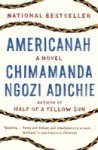 Americanah, by Chimamanda Ngozi Adichie – Americanah is the story of two lovers. Obinze is Ifemelu’s first love, and he hers, but time has passed. Ifemelu has been living in America, studying for advanced degrees and writing a popular blog called Raceteenth, examining race relations in America from the perspective of an outsider. Obinze spent time in London but is now home in Nigeria and has made his fortune, married and welcomed a daughter. When Ifemelu decides to return to Nigeria, she must confront changes in the country itself, and mirroring changes in her relationship with Obinze. So, this was a beautifully written and completely engrossing book. Adichie’s musings on race, class, immigration, politics and more are fascinating and well-formulated. My only complaint was that the book was a bit too long – in my opinion, the plot – while excellent – wasn’t quite hefty enough to carry almost 500 pages of text. Still, I loved every moment of the reading, and can’t recommend it highly enough.
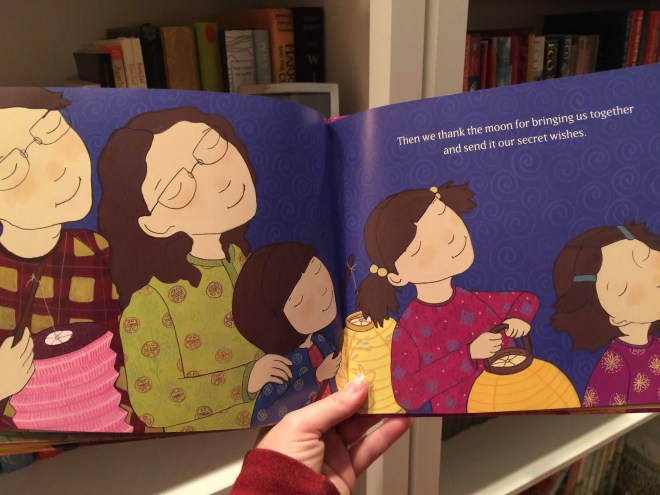
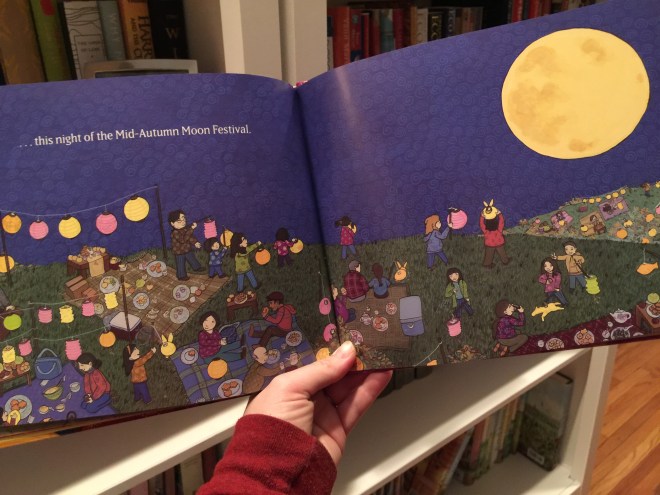
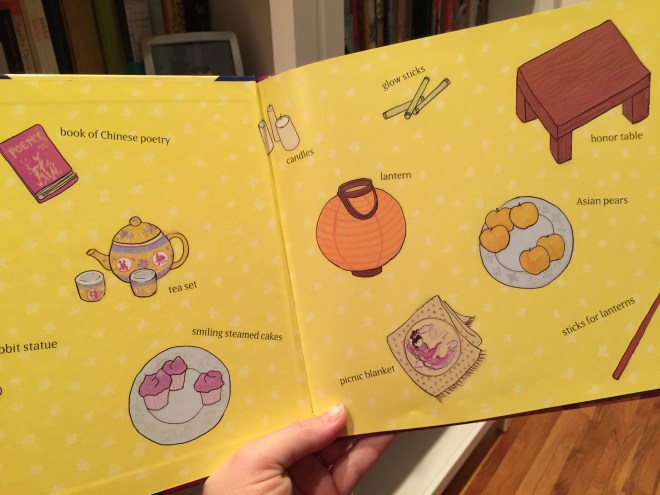
 covered in flour