

Reading is my oldest and favorite hobby. I literally can’t remember a time in my life when I didn’t love to curl up with a good book. Here are my reads for May, 2018…
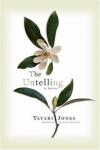 The Untelling, by Tayari Jones – While I wait (and wait, and wait) for my library hold to come in on An American Marriage, Jones’ new release, I picked up The Untelling from her backlist. The Untelling is the story of Aria, a young woman whose family was torn apart when her father and baby sister died in a car accident when Aria was a young girl. Aria, her mother and her sister survived the accident. Now in her twenties and working as a literacy instructor, Aria believes she has put the past behind her and found a way to uneasily coexist with her remaining family members. But when she discovers that she may be pregnant, wheels are set in motion that will eventually bring a reckoning for everyone. Well – The Untelling was beautifully written, but left me a bit cold. It may be library deadline reading, which is never a great way to read. But I felt that the plot was a bit contrived – the only way to have a book was to have Aria make a long string of terrible and illogical decisions, and it began to feel farfetched. I mean, no one makes that many insane choices.
 Second Class Citizen, by Buchi Emecheta – I’ve been trying to read more classic African writers, and I’d never read anything by Emecheta – plus this immigrant narrative looked really interesting. The story focuses on Adah, a resourceful young Nigerian woman who is driven by a dream to live in England. Adah will do anything to make her dream come true – even marry a gigantic jerk. She does make it to England and, of course, finds that the immigrant life is much harder than she expected. Adah is strong and could probably have thrived even in the very foreign London of the 1960s, had she a partner who was deserving of her. But her husband Francis is a cruel and lazy man, who insists on Adah single-handedly supporting the family even as she has baby after baby. Spoiler alert, and warning: don’t read this if you need a tidy ending. By the end of the story I was very invested in Adah getting away from Francis and becoming her own woman, and the end was singularly unsatisfying.
 Sailing Alone Around The Room: Collected Poems, by Billy Collins – I’ve been reading this collection in snatches (on my phone) for a couple of months now, and meh. I didn’t really like it. Some of the poems were quite lovely and thoughtful, but a lot more were just Collins drinking orange juice, listening to records and thinking about naked ladies. I know that he has quite the fan base and was the poet laureate of the United States, but Collins just didn’t do it for me. I like my poetry touched with the sublime, and this collection was just too mundane for my taste. I have heard that it’s not his best, and that there are better examples of Collins’ writing out there. Maybe at some point I will seek one out, but I don’t see that happening soon. I’m more content to wander hedgerows with Betjeman or charge through Camelot with Tennyson.
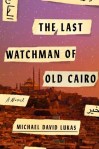 The Last Watchman of Old Cairo, by Michael David Lukas – Finally, four books in, I hit on a May read that I just loved. This was totally expected, because I adored Lukas’ first novel, The Oracle of Stamboul, but I’d have been crushed if The Last Watchman of Old Cairo was disappointing. Happily for me, it was even better than its predecessor. Lukas can spin a tale, no doubt, and he does so here – following three sets of characters through three time periods – Ali al Raqb, the first watchman of the Ben Ezra synagogue in Old Cairo in 1300 AD; two sisters from Cambridge who travel to Cairo to save priceless documents that are being looted from the synagogue’s geniza in 1875; and Yusuf al Raqb, the son of the last watchman of the synagogue, who has just passed away and left his son with a mysterious scrap of paper and a lot of grieving to reconcile. I loved every second of this gorgeous story and have been telling everyone I meet to go read it immediately. So I will tell you: GO READ IT. IMMEDIATELY.
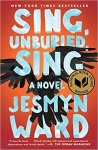 Sing, Unburied, Sing, by Jesmyn Ward – I’d been waiting months to get the latest from Ward; the library holds list was a mile long. (I live in a city of readers, which I love, even if it does mean that I sometimes have to wait for the anticipated new release.) Ward tells the story of Jojo, a young boy on the cusp of manhood; Leonie, Jojo’s tormented mother; and Richie, a ghost. When Leonie learns that Jojo’s father is about to be released from prison, she packs up Jojo and his sister and drives with a friend up to collect him. Perspectives switch back and forth between Jojo and Leonie, and eventually Richie, in a sad and spellbinding story. So – this was not a comfortable reading experience, especially the Richie parts. My aunt picked it up after she asked me what I was reading and I told her and she texted me a few chapters in: “Is it this depressing the whole time?” The answer is yes, but it’s also beautiful.
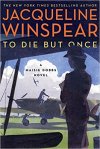 To Die But Once (Maisie Dobbs #14), by Jacqueline Winspear – World War II has officially begun, but when the latest installment in the Maisie Dobbs series opens, London is in the throes of “the Bore War” – the early days, before the Blitz, when most of England just baked in the sun and stewed with apprehension, wondering when something (anything!) would happen. (Eventually, something does: the Dunkirk evacuation, which catches a few of the characters up in it.) Maisie and Billy are investigating the disappearance of a neighbor’s son who was apprenticed to a painting company working with untested flame-retardant paint in a top secret location. Meanwhile, Maisie is working on formally adopting her orphaned refugee, Anna, and trying to be present for Billy and Priscilla as they worry about their sons, who are old enough to go to war. The Maisie novels keep getting better, and I tore through this one as usual.
 Brensham Village (Brensham Trilogy #2), by John Moore – The second installment in the Brensham Trilogy (of lightly fictionalized memoirs about the market town where Moore grew up and the constellation of villages and hamlets that surrounded it) was a dream to read. I loved Portrait of Elmbury, and Brensham Village was, if anything, even better. The book opens with Moore and his three friends (“the young varmints”) discovering Brensham Hill, which rises above its namesake village about four miles outside of Elmbury (where Moore lives). There is a folly on top of the hill, complete with hermit, and there are “lolloping” hares and a mad Lord (who was one of my favorites amongst Moore’s cast of delightful characters). Having conquered Brensham Hill, Moore looks down over the thatched rooftops of the village and dreams of being part of the life there – and as a young man, he fulfills that dream by joining the cricket team and being informally adopted as one of Brensham’s own. He trades jokes with the landlords of the Adam and Eve and the Horse Narrow pubs; plays darts and scampers over the outlying areas in search of insects with his old Latin teacher, Mr Chorlton (a beloved character from Portrait of Elmbury), mourns with the villagers when a freak frost destroys their fruit crops, and shudders at the shady Syndicate that is quietly buying up land around the village. Brensham isn’t a real place – it’s an amalgamation of villages around Tewkesbury – but in Moore’s hands, it breathes and teems with life.
 Rocket Men: The Daring Odyssey of Apollo 8 and the Astronauts Who Made Man’s First Journey to the Moon, by Robert Kurson – There are a few books that I just can’t resist, and “dad books” about the golden age of space travel are in that category. In Rocket Men, Kurson covers Apollo 8 with aplomb. I thought I knew pretty much what there was to be known about Apollo 8 after reading Lost Moon (which was retitled Apollo 13 after the movie came out) but there was a lot more to tell, it seems. Kurson digs up every interesting, funny, hair-raising or disgusting anecdote he can find (and I kept stopping Steve in whatever he was doing so I could read them aloud). My favorite was definitely the anecdote about Bill Anders flipping the bird at a Soviet flight while stationed in Iceland, and the Soviets’ months-delayed response. This was a lot of fun, and I enjoyed every minute. (It would also make a great Father’s Day gift for the nonfiction-inclined dads out there.)
Pretty good May in books, if I do say so myself! There were some excellent highlights – The Last Watchman of Old Cairo, the new Maisie, Brensham Village and Rocket Men all come to mind. I had a couple fall a bit flat, but them’s the breaks, sometimes. Looking ahead, I have a few books on the go already now, at the start of June, and I think it’s going to be another good reading month. Tootle pip!
 Behind the Lines, by A. A. Milne – I have only ever read Milne’s children’s work – Winnie-the-Pooh and progeny – but have been wanting to read some of his writing for adults for a very long time. When I saw (on a book blog, and I can never remember which) this book of poems about Milne’s experience on the home front during the first nine months of World War II, I snapped it up. All the quintessential Milne whimsy is present, but the themes are all grown up. (For a sample, look no further than one of my poetry Friday posts –
  Consider the Years, by Virginia Graham – Looks like I started April on a WWII poetry kick. Consider the Years arrived, wrapped in brown paper, straight from Persephone Books in London and just in time for National Poetry Month. I loved Graham’s lyrical writing and evocative choice of subjects – so much that I chose one of the poems in the collection, Evening, to feature as part of my tribute to National Poetry Month (read it
  84, Charing Cross Road, by Helene Hanff – People have been telling me to read this book for literally years, and I am so very glad that I finally picked it up. I had a pretty red edition from Slightly Foxed, which enhanced the reading experience – but really, no enhancement is needed, because the book is enchanting. Hanff’s decades-long correspondence with all the staff of a London used bookshop is just a delight to read (and inspired me to get out my pen and writing paper –
 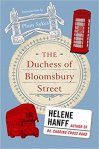 The Duchess of Bloomsbury Street, by Helene Hanff – 84, Charing Cross Road is a touch bittersweet, because a recurring theme is Hanff’s desire to travel to London (she lives in New York) to meet her friends, but her continuing financial straits make her unable to do so before Frank, her primary correspondent, passes away. The Duchess of Bloomsbury Street is Hanff’s journal from her decades-in-the-making trip to London (for the launch of 84) and it’s delightful, naturally, but with an undercurrent of sadness as she never was able to meet Frank in person.
 It’s Hard to be Hip Over Thirty, and Other Tragedies of Married Life, by Judith Viorst – Another Persephone poetry pick for April! I liked this, although not as much as Consider the Years. Viorst is funny, punchy, and a bit sour – and while many of her poems about marriage are a bit rooted in the 1950s and ’60s, they’re still plenty of fun. There’s an element of discontent that runs though the collection, though, and at the end I wasn’t entirely sure how I felt about it. Still enjoyed the reading experience, and I’m sure I’ll come back to it – but yes, a bit sour from time to time.
 Space Opera, by Catherynne M. Valente – I’d been looking forward to this one for months; pre-ordered it and was delighted to find it on my doorstep on release day. “The Hitchhiker’s Guide to the Galaxy meets Eurovision” was the tagline and – do you really need to know any more than that? If so, know this – it was glam, glittery, weird, hilarious, kooky, heartfelt, sad, sweet, absurd, and there is lipstick and a dirt bar and a “sexy C-3PO costume,” so you’ll probably just want to go read this one. Also, if you do, let me know, because WE NEED TO TALK ABOUT CHAPTER 29.
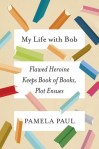 My Life with Bob: Flawed Heroine Keeps Book of Books, Plot Ensues, by Pamela Paul – First off, if you’re less astute than I am and you’re wondering who Bob is, Bob is literally the author’s “Book of Books.” Get it? So, I heard about this on the Tea Reads podcast episode about bibliomemoirs and the title alone was enough for me to reserve a copy at the library. The title is, however, just the beginning of the charm. Paul is a delightful and funny “flawed heroine” and while our reading tastes do occasionally diverge, she’s a charming writer who has had several people’s share of adventure – always with a book in her bag.
 Slightly Foxed No. 57: A Crowning Achievement, ed. Gail Pirkis – It’s always a cause for great glee and rejoicing when the current issue of Slightly Foxed arrives in my mailbox. I’m also slowly reading my way through the back issues, but this was the spring 2018 issue and it was a good ‘un. Highlights were Laura Freeman on A. A. Milne’s memoir It’s Too Late Now (which sounds both charming and heartbreaking) and Roger Hudson on the letters of Lady Mary Wortley Montagu (sadly out of print, but I’m hunting for a reasonably priced secondhand copy – so far, no joy). No matter what, a new Slightly Foxed is always a treat.
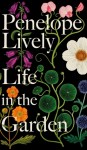 Life in the Garden, by Penelope Lively – I have Slightly Foxed to thank for this one, too – I’d seen the book pop up here and there on Instagram but thought it looked like a novelty book and didn’t give it much attention until the Foxes profiled it alongside A Late Beginner (which I own and for which Lively contributed the introduction). That was enough to induce me to research and I discovered that it was a literary and historical exploration of gardens in culture, with the author’s memories of the gardens she has known woven in. Sold. Plus – just look how gorgeous. Clearly, I needed this on my shelf, and it was a lovely and ruminative spring read.
 Northanger Abbey, by Jane Austen – I read this for my book club; it was my choice and I’m a little nervous about how it will be received (but I’ll find out when we meet tonight). But for me at least, Northanger Abbey will always be a favorite – I’ve lost count of how many times I’ve read it; it’s my second most-beloved of Austen’s novels (nothing can touch Pride and Prejudice, but Catherine Morland and Henry Tilney hold a cherished place in my heart). I love the story of Catherine’s overactive imagination and her fighting off frenemies and toxic males to find real sympathy in the Tilney siblings.
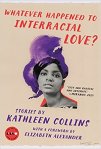 Whatever Happened to Interracial Love?, by Kathleen Collins – I’m not sure how I happened upon this slim volume of short stories, but I’m glad I did. Collins was an African-American playwright and filmmaker, apparently quite widely known, and very well-regarded, in the world of drama, theatre and film. Since that is decidedly not my world, I’d never heard of her until I learned of this book, published posthumously. In it, Collins writes of people like herself – artists, living in New York City, making their way through relationships and ambition and the social scene. The writing is luminous and the characters are fully realized, which is a hard thing to do in the short story format. Short stories are, as you all know, not my favorite – but I really enjoyed this.
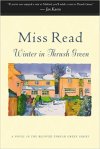 Winter in Thrush Green (Thrush Green #2), by Miss Read – There is really nothing I like better than a big cup of tea and a meander through one of Miss Read’s beautifully drawn English villages. In this installment of the Thrush Green series, the reader is taken through a change of seasons in the village, and with it, some changes in the faces from the last book. As autumn settles in, Ben and Molly Curdle are married but gone, off traveling with Curdle’s Fair. Dr. Lovell has taken over the medical practice, married Ruth, and the two are expecting their first baby. There’s drama – a new neighbor and a possible romance for the vicar, plus someone has bashed the schoolteacher over the head and stolen her jewelry box; Paul Young suspects Sam Curdle. There’s joy in the Lovells’ new little one and in love for the widowed vicar at last. And once winter settles in, there’s snow and a daring rescue of Dotty Harmer from her cottage. In short, everything you could want.
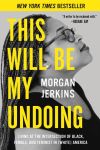 This Will Be My Undoing: Living at the Intersection of Black, Female, and Feminist in (White) America, by Morgan Jerkins – Hmmmm. What to say about this book? I had heard wonderful things and it mostly lived up to the hype. I like the personal essay as a literary genre, and I am particularly interested in reading about the experiences of women of color. There’s no doubt that Jerkins is an incredibly talented writer, and I found most of the essays in this collection informative and moving. I thought that her essays about race were the best; the female and feminism-focused essays were not quite as strong, in my opinion. I did try to keep in mind that I was reading about someone else’s experience, and that her reactions to certain things (like breakups) were different from what mine would be because she was coming to them with a different set of life experiences. There was one essay, though – about a medical procedure, and you’ll know what I’m referring to if you’ve read the book – that I cannot un-read. And I really wish I could.
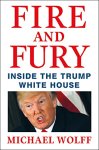 Fire and Fury: Inside the Trump White House, by Michael Wolff – So, I just had to read this because everyone in D.C. is talking about it. I’m not sure what to say about it here, though – seems to me that everything has been said. I’ll just note that while certain details in the book (i.e. confusing Mike Berman and Mark Berman in the Four Seasons breakfast scene, and misidentifying Wilbur Ross as the nominee to head DOL, when in fact he was nominated for Commerce) are incorrect – likely a function of rushing the book to publication – if even a third of what Wolff writes is true, dayum. And not in a good way. I really wish I hadn’t had occasion to read Fire and Fury. I wish I worked in a Washington, D.C. that was going about its regular business under President Hillary Clinton. I wish my friends who are career government employees (and I know a lot of them – thanks to law school and my own stint at DOL I have friends or acquaintances at DOL, Commerce, Justice, Education, State, GSA and quite a few of the smaller agencies) weren’t so downtrodden and depressed, and that the rest of us weren’t constantly reevaluating our emergency plans. But I wasn’t not going to read this book.
 Young Jane Young, by Gabrielle Zevin – I was heartily sick of politics by the time I finished Fire and Fury, but library deadlines dictated that I had to tackle Young Jane Young next. Fortunately, it was a fast and fun read and it only took me a day. Jane Young wasn’t always Jane Young. Years ago, she was Aviva Grossman, a Congressional intern who had an affair with her married boss. The affair came to light, of course, as they so often do, and Aviva took the fall while the Congressman emerged unscathed. Finding herself unemployable, Aviva changed her name, moved to Maine and became a wedding planner. But now she has decided to run for Mayor of her small town – against a notorious local jerk – and the truth is bound to come out. So, I found Young Jane Young engaging but the central plot was kind of unbelievable. Not the affair part – see above, I live in D.C., I can totally believe that everyone in Congress is having affairs – but I just couldn’t believe that Jane ran for public office. I get that she loved politics and that the other guy would’ve been a nightmare, but she spent eighteen years keeping her head down and her identity a secret, and then threw it away? Does not compute.
 Beyond Words: What Animals Think and Feel, by Carl Safina – This one had been on my list for a long time. Safina is a conservationist writer who is clearly passionate about what he does and has some serious writing skill, too. Beyond Words is organized into four sections: there are sections on elephants, wolves, and killer whales, and somewhat confusingly a section on Safina’s dogs and the sea birds near his home (interesting, but could have been condensed into an introduction or epilogue; jammed in the middle as it was, it kind of broke up the rhythm). Safina analyzes animal social behaviors and spends considerable time interviewing experts to conclude that these animals are “who” animals – they have their own family lives, means of communicating (killer whales have distinct language that varies by group, which is a documented fact), and emotions. I thought Beyond Words was beautiful, moving, sad and inspiring.
 African Short Stories, ed. Chinua Achebe – I have been meaning to read Achebe’s classic, Things Fall Apart, but I thought this collection of short stories, collected and edited by him and to which he contributed one story, would be a good place to start. I liked, but didn’t love it. The main weakness of the collection is that the quality of the stories is extremely uneven. There are some – such as Achebe’s offering, and one by Jomo Kenyatta – that are really breathtaking and outstanding. There are others that are sort of middling, and a few that are just really, really bad and one that was completely unreadable – as if the idea was to go for a Ulysses-style effect, but without the skill or panache of James Joyce (and I am not a Bloomfan). It’s a short book, so not a huge time commitment, but I have to think there are better collections featuring African writers.
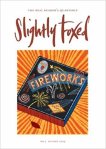 Slightly Foxed, Volume 3: Sharks, Otters and Fast Cars, ed. Gail Pikris – My slow read-through of all the back issues of Slightly Foxed continues. To be honest, I don’t remember much about this one, beyond the titular essay on a biography of Gavin Maxwell, who sounds like a real character. (It didn’t make me want to seek out the biography, but I did note that the Folio Society publishes Maxwell’s A Ring of Bright Water and Slightly Foxed has his memoir.) The other essays were a little less memorable – I think the magazine is still hitting its stride in issue 3, and clearly it has done so, as issue 57 just arrived on my doorstep not long ago. But Slightly Foxed does offer reliably excellent writing, and each issue contributes a few more titles to my inflated TBR.
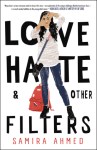 Love, Hate and Other Filters, by Samir Ahmed – I came to this one hoping it would be 2018’s answer to The Hate U Give. I’m not sure it’s quite in those heights, but it was still excellent. Maya Aziz is a high school senior who loves filmmaking, dreams of studying at NYU, and is crushing on the captain of the football team (of course). But she’s also Indian, and she’s not sure how to tell her strict parents that she doesn’t want to go to college close to home and become a lawyer. (Don’t be a lawyer, Maya!) And she’s Muslim, and finds herself and her family in danger when a terrorist attack a few hundreds of miles away brings out the latent hate in her own community. So – I liked this, but as I said, it wasn’t quite at the level of The Hate U Give. There was a tiny bit too much romance – I counted three possible love interests for Maya – and it distracted from the more important issues that Maya was dealing with. Still a great read, and I blew through it in 24 hours.
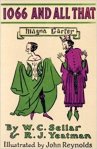 1066 and All That: A Memorable History of England, by W.C. Sellar and R.J. Yeatman – I had kind of a rough week at the end of the month – nothing serious, just a couple of disappointments – and needed some levity, and 1066 and All That fit the bill perfectly. Sellar and Yeatman present a madcap journey through British history, from the Romans to World War II. Along the way we learn about the Magna Charter (a Good Thing), efforts to amuse Queen Victoria (a Good Queen), Mary Queen of Hearts (a Romantic Queen), Anne of Cloves, and more. There were also “test papers” after each chapter, asking questions like “What convinced you that Henry VIII had VIII wives? Was it worth it?” It was a lot of fun, and I giggled throughout.
 Salvage the Bones, by Jesmyn Ward – Esch lives with her brothers on a hardscrabble patch of land called the Pit. Life is tough. Esch’s mother died in childbirth and her father is usually drunk and mostly absent. Salvage the Bones tells the story of approximately two weeks leading up to, and encompassing, Hurricane Katrina. Esch is fourteen and newly pregnant, her father has snapped out of a fog and is obsessively preparing for the hurricane – which doesn’t really concern any of the kids – Esch’s brother Skeet is worrying over his pitbull’s new puppies and her other brothers are trying to carve out a place for themselves. Salvage the Bones was a gritty book – grittier than I usually read. There was a dogfighting scene which I knew was coming and was able to avoid, but the rest of the book was nearly as brutal. It was well-written but hard to read.
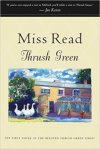 Thrush Green (Thrush Green #1), by Miss Read – There’s nothing like Miss Read to counteract the effects of a particularly tough book. Thrush Green is the first in a series of the same name, and introduces the reader to the village of Thrush Green and its inhabitants, and those of a larger market town, Lulling, nearby. All the events of the book take place on a single day – May 1, when Curdle’s Fair visits and sets up on the village green. Through the day, we meet many of the characters who will recur throughout the Thrush Green series – sweet, sad Ruth, gentle Dr. Lovell, mischievous Paul, bustling Dimity, blustering Ella, kind Dr. and Mrs. Bailey… and we see the town through the eyes of Mrs. Curdle, the fair’s proprietress, and her grandson and heir apparent, Ben, who is in love with a Thrush Green girl. Not to prattle on, but it was such a delight. A re-read for me, I loved reacquainting myself with Thrush Green and its environs – like an English spring day, it’s pure refreshment.
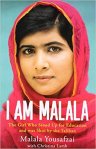 I Am Malala: The Story of the Girl Who Stood Up for Education and was Shot by the Taliban, by Malala Yousafzai – This one had been on my list for a very long time, and I finally got around to checking it out from the library. It was a powerful story, indeed. I was already acquainted with Malala’s story, in general, as most are – she is now, after all, a global celebrity. But I really wanted to read her story in her own words. So, I thought that I Am Malala was wonderful, but with one reservation. The book was co-written, naturally, and I felt that the word choices sometimes strayed too far into the territory of making the voice sound like a young girl’s. I found myself wondering how much was authentically Malala, and how much was the co-writer imposing what she thought should be Malala’s style. That said, I wouldn’t have missed this for the world, and especially once Malala starts her activism, the narrative takes off and becomes absolutely riveting. It’s an important read and well worth picking up.
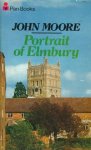 Portrait of Elmbury (Brensham Trilogy #1), by John Moore – I’ve collected the first two volumes of the Brensham Trilogy from Slightly Foxed (the third is due to be released this summer) and have been so excited to dig in. In this first volume, Moore captures the heart and spirit of an English market town from the late Edwardian period through to World War II. Occasionally gritty, occasionally sentimental, most often real, Moore presents “Elmbury” (the thin disguise he gives his actual hometown of Tewkesbury) warts and all. He starts the book by rhapsodically describing the high street outside the window of “Tudor House” (the splendid home where he grew up) then pivots directly into a down-and-dirty portrayal of the domestic squabbles of the residents of the hardscrabble alley across the street. But even while being unabashedly real and portraying country town life in all its darknesses and difficulties, you can sense a real affection behind Moore’s portrayal of the town and its inhabitants. I loved it. (Word of caution: as with so many books of the period, there are a few sentences that are extremely jarring and offensive to the modern reader. At some point, I am contemplating a post about babies and bathwater. For now, reader be forewarned. This one, I think, is worth the comparatively little problem language.)
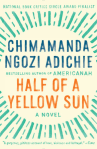 Half of a Yellow Sun, by Chimanda Ngozi Adichie – In my quest to read through Adichie’s backlist, Half of a Yellow Sun was next up. This is Adichie’s book about the Biafran War, a subject which seems to be close to her heart (I did some research into Adichie and she hails from the section of Nigeria which was once Biafra). The narrative follows three main characters – Ugwu, a houseboy; Olanna, the wealthy lover of Ugwu’s master; and Richard, an expat who becomes friends with Olanna and her lover, Odenigbo. Olanna and her twin sister, Kainene – Richard’s lover – are the daughters of a rich and important chief, and all of the characters (Ugwu, perhaps, excepted) begin the novel in great domestic comfort and end it barely surviving (or maybe not surviving – it’s not entirely clear, in one case) the horrors and privations of the Biafran War. This is a period in history, and a region, that I am sorry to say I know very little about, and I was shocked and heartbroken at Adichie’s portrayal of the suffering that attended Biafra’s three-year secession from Nigeria. Adichie, as always, writes extremely powerfully and beautifully, and while there are some hard passages, Half of a Yellow Sun was an astonishing read.
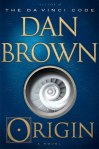 Origin (Robert Langdon #5), by Dan Brown – Always fun to see what the first read of the year is going to be. Brown’s latest is a romp through Spain, focused on the theme of science, religion, and the battle over who gets to definitively answer humanity’s biggest questions: Where do we come from? Where are we going? Brown delivers all the expected tangents into architecture, art history, literature, science history and anything else that happens to interest him (so that’s everything) but I was a little bummed there weren’t more references to the Mickey Mouse watch and Langdon’s swimming hobby.
 Period Piece: The Cambridge Childhood of Darwin’s Granddaughter, by Gwen Raverat – I just recently became aware of Raverat, and she is a really fascinating character. As the subtitle confirms, she is the granddaughter of Charles Darwin, and she grew up in Victorian-era Cambridge. She was also a pioneering woodcut artist whose book illustrations carried a distinctive style, and she was one of the few women to become a successful artist in her own right. Period Piece is illustrated with Raverat’s own wood engravings, which add great life and levity to the text, and she’s also a charming and engaging writer who looks back at her childhood with humor and fun. I would normally hesitate to make predictions in early January – but I think Period Piece is going to be in my top ten books for 2018. Just watch.
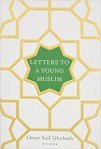 Letters to a Young Muslim, by Omar Saif Ghobash – Ghobash is (was?) the UAE’s Ambassador to Russia, and Letters to a Young Muslim is comprised of letters to his son Saif about everything from the roles of men and women in Islam and society, to extremism, to making up your own mind about matters of faith instead of placing blind trust in authorities who may deceive. It was a beautiful and thoughtful book that reminded me a bit of Ta-Nehisi Coates’ Between the World and Me (also letters, or one long letter, from a father to his young son).
 Slightly Foxed No. 2, ed. Gail Pikris – I’m on a mission to read my way through the back issues of Slightly Foxed. This is going to take some time, since they’re currently on issue 56. But I’m loving the quest, because each journal is such a treasure. Issue number 2 wasn’t my favorite – the heady novelty of issue number 1 has worn off but I didn’t think the journal had quite hit its stride yet, and the last piece, “A Subscriber in California Writes,” rubbed me the wrong way. But it’s always a treat to spend time curled up on the couch with Slightly Foxed‘s lovely cream pages.
 Cranford, by Elizabeth Gaskell – As I mentioned, I’m on a mission to read more classic novels this year, since they’re on my shelves and I’m craving their comfort. I decided to start with a visit to Gaskell’s Cranford, a relatively short but lovely volume about the residents of an English village in the Victorian era. The narrator, Mary Smith, is something of an outsider – more financially privileged than most of the residents of Cranford, but loving, protective and affectionate towards them – while never condescending. Cranford is mostly a series of vignettes or interludes in the life of the village, as either observed by or told to Mary. Aside from the fact that an alarming number of people die, it’s quite warm and fuzzy. I’ve actually tried to read Cranford before and couldn’t get into it, and I’m not sure why – perhaps the time wasn’t quite right? This time, I couldn’t put it down, loved every moment spent with Mary, Miss Matty, Miss Pole, Lady Glenmire and all the rest, and was genuinely sad when it ended.
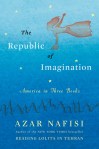 The Republic of Imagination: America in Three Books, by Azar Nafisi – I think this is Nafisi’s latest (right?) and it’s basically the same format as Reading Lolita in Tehran, but focusing specifically on American literature and Nafisi’s immigrant experience. Nafisi discusses three novels she considers as representative of the American experience – The Adventures of Huckleberry Finn, Babbit, and The Heart is a Lonely Hunter – and devotes an epilogue to James Baldwin. I enjoyed The Republic of Imagination, but didn’t love it. I didn’t agree with Nafisi’s choices of the three books representing America – which is fine; as the writer, it’s her prerogative to choose, of course – and I found the narrative a bit disjointed and some of the connections she was drawing to be a bit tenuous. A fun read, but if you’re looking to read Nafisi’s work – no question she writes gorgeously – go for Reading Lolita in Tehran instead.
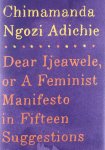 Dear Ijeawele, or A Feminist Manifesto in Fifteen Suggestions, by Chimamanda Ngozi Adichie – I just loved this short but sweet collection of “suggestions” Adichie put together in response to a friend’s question about how to raise her newborn daughter as a feminist. Adichie opens by wryly noting how easy it is to dispense parenting advice when you don’t have children of your own (she has since welcomed a baby daughter) and then goes on to deliver 63 pages of absolute gold. My favorite piece of advice was to encourage her to love books, because of course! Books!
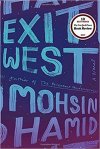 Exit West, by Mohsin Hamid – I was prompted to pick this one up despite all the hype, when I saw that President Obama had included it on his list of the best books he read in 2017. I’m always a little nervous about hype, and generally magical realism doesn’t speak to me, but if President Obama says it’s good I’m willing to trust him. Of course he was quite right – Exit West was enthralling and felt very relevant to today’s world, as it spoke to the global refugee crisis to which we are currently bearing witness. I flew through it and just loved both of the main characters – fierce Nadia and sensitive Saeed – and their journey, which binds them together even as they are emotionally drawing apart. Lovely and luminous.
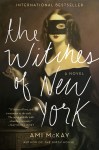 The Witches of New York, by Ami McKay – Read on my BFF’s recommendation, The Witches of New York was definitely more successful than the last book she recommended to me (which I hated so much I actually found myself folding laundry in order to avoid reading, which NEVER happens). Anyway, I really enjoyed this one. You’re Beatrice Dunn. You’re a witch, and you’re not to be trifled with. This is the advice given to young Beatrice, shopgirl and communer-with-spirits, by her very slightly older witchy mentors, Eleanor St. Clair and Adelaide Thom. Eleanor and Adelaide are the proprietresses of “Tea and Sympathy,” a small tea shop specializing in herbal remedies and palmistry in Gilded Age New York. But as charming as the shop is, there is evil afoot and it is targeting their new employee. So – this was the perfect combination of Rebecca’s and my reading tastes, because she can’t resist witches and I can’t resist Gilded Age New York. It was a little slow in parts, there was some brutality just for shock value (not my cup of tea) and not every plot point was tied up as neatly as I’d have liked, but I did enjoy it very much.
 Amina’s Voice, by Hena Khan – Amina Khokar has just started middle school and she has a lot on her plate. Painfully shy, Amina clings to her best friend Soojin, but Soojin seems to be pulling away – about to become a U.S. citizen, she’s considering changing her name to Melanie, and she’s hanging around with Emily, a popular girl who made both Amina and Soojin’s life miserable in elementary school. Life at home isn’t much calmer. Amina’s brother Mustafa is on a collision course with their parents over basketball, and then her father’s much-older brother arrives from Pakistan for an extended visit to the family. Amina’s parents are stressed out by the effort to impress their visitor, and Amina is worried about the Q’uran reciting competition that her dad signed her up for in order to show her uncle what good young Muslims he is raising. But all of her worries seem small when her mosque is vandalized, which devastates Amina, Mustafa and the whole community. Amina will learn who her real friends are as she and her faith community work to put the pieces back together. This was a lovely story – luminous and sweet. I wanted to gather Amina, Soojin and Emily up and give them all huge hugs. But the biggest hug for Amina.
 Jane Austen, the Secret Radical, by Helena Kelly – I had this one out from the library and was looking forward to reading it, when my friend
 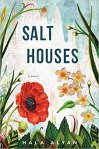 Salt Houses, by Hala Alyan – Salt Houses explores the life, movements, dramas and loves of a Palestinian family starting in 1965, with the wedding of their patriarch and matriarch, and extending to 2014. Along the way, the reader lives through wars, displacements, and the smaller – almost petty – tribulations of family life in the latter half of the twentieth century. It’s a beautifully written book, with luminous prose… but… it didn’t really speak to me. This is entirely ME, and not the book. Family sagas are not my thing, and vignettes are also not my thing, and a family saga written entirely in vignettes (a scene in 1965, then we jump ahead for one scene in 1967, and then one scene in 1977, etc.) is pretty much a guaranteed miss as far as I’m concerned. I’ve heard wonderful things about the book and I can see why people loved it, but it wasn’t for me. If you like linked short stories (which this really was), multi-generational family sagas, or both, Salt Houses will appeal. If you don’t, you may want to look for something else.
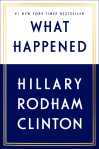 What Happened, by Hillary Rodham Clinton – I knew immediately that I was going to want to read this. While I still feel raw sadness over the election, I also believe that the first-person narrative by the first woman ever to be nominated for President by a major political party is an important historical document and a story that needed telling. I also think that those who want Hillary to “be quiet” and “go away” are indulging in short-sighted misogyny. (Does the same angry dismissiveness dog Mitt Romney and John McCain whenever they speak out about politics? Of course not.) What Happened was wrenching, but it was thoughtful, meticulously crafted, and quietly brilliant – in short, it was very Hillary. It made me cry, but I loved it.
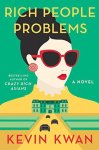 Rich People Problems (Crazy Rich Asians #3), by Kevin Kwan – Needing something light and frothy in the extreme after the sobfest gut-punch that was What Happened, I turned to the final chapter in the saga of Nick Young, Rachel Chu, Astrid Leong and the whole gang. Nick and Astrid’s beloved grandmother, Shang Su Yi, is on her deathbed and the entire family has come out of the woodwork to jockey for position in case she changes her will at the last minute. Nick doesn’t care about his inheritance, but he travels to Singapore at Rachel’s urging so that his grandmother doesn’t pass away before they have healed their rift, only to find when he gets there that his grasping cousin, Eddie – hoping to inherit the estate in Nick’s place – has barred him from the house. Rich People Problems is as full of twists, drama and designer label name-dropping as its predecessors, and it was so much fun.
 Slightly Foxed No. 56: Making the Best of It, ed. Gail Pikris – I have been a Slightly Foxed subscriber for a little over a year now, but somehow I just discovered that when you sit down and read an issue cover to cover, it counts as a book on Goodreads. (Who knew?) I figure if it counts there, it should count here, too – and a 96-page volume of personal essays about books (which is what every Slightly Foxed issue is) should be considered a book in any event. So – the latest issue! I read a few essays at a time and loved them all, as usual, but my favorite was the essay about the Chalet School books, which I am planning to read – at least some – in 2018.
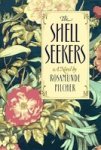 The Shell Seekers, by Rosamunde Pilcher – My mom couldn’t believe I hadn’t read this before, because my grandmama had a copy and had loved Pilcher. It took awhile – other library deadlines kept interfering in November – but I very much enjoyed the story of Penelope Keeling and her useless children. (The kids really were the worst, which diminished Rebecca’s enjoyment of the book after I recommended it to her, I am sorry to report.) I just adored it for its atmospheric setting and lush writing. No detail was spared – and I didn’t want any details spared. I wanted to know absolutely everything about what Penelope made Danus for lunch and how the wine was when she and Richard went on their date and what she grows in her garden and how she decorates her kitchen and solarium and, I mean, tell me all of the things. I am only sorry that it had to end.
 Slightly Foxed No. 1: Kindred Spirits, ed. Gail Pikris – I’m on a roll! I’d been wanting to go back and read through the back issues (which I have been collecting, little by little, for the past two years) and I really enjoyed this first issue of the journal. The essay Ex Libris starts the volume off strong, and I loved the short bits describing woodcut bookplates (since wood-cutting is one of my favorite art forms).
 Christmas at Thrush Green, by Miss Read – There is a 2018 #MissReadalong going on over on Instagram, and they actually began in 2017 with Christmas at Thrush Green. I don’t know that it was the best place to begin, because it was assumed that the reader knew most of the characters and was familiar with their stories and how they met their spouses, and for the most part, I wasn’t. (I read Thrush Green, the first in the series, a couple of years ago but don’t remember much about it.) But it was a quiet, comforting, warm and cozy way to spend a few evenings reading by the light of my Christmas tree, and for that, totally worth it. I’ll probably revisit it next December and I’ll bet I enjoy it even more then, after I’ve read through the series as I am planning to do.
 London War Notes, by Mollie Panter-Downes – This collection of Panter-Downes’ “Letters from London” to The New Yorker between 1939 and 1945 had been lingering on my “currently-reading” shelf for way too long, thanks to intervening library deadlines. It’s no reflection on the book, which is heart-rending and utterly captivating. Panter-Downes writes with equal parts pathos and humor about the experiences of living through the Blitz, rationing, and long periods of waiting with bated breath for news of an ally or updates from the front. She, and her fellow Londoners, are stoic and determined, but also set on finding enjoyment and laughter where they can. If nonfiction about World War II can be delightful, this is.
 Christmas at High Rising, by Angela Thirkell – A quick collection of short stories featuring the Morlands and their friends at High Rising, this was the work of an evening and was delightful. Tony Morland goes ice-skating and falls in and out of a crush on a French girl, everyone goes to the pantomime, Tony rides a horse – in short, it’s all the High Rising drama you could wish. My only complaint was that despite the title, there was nothing particularly Christmassy about it. There is a story that focuses on Valentine’s Day, a story about Tony’s summer holidays, but only one Christmas story that was not even set in Barsetshire. I think I’d read that somewhere but forgotten. Calling the book Holidays in High Rising would have been more accurate and I’d have been less disappointed then.
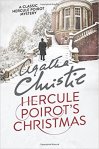 Hercule Poirot’s Christmas, by Agatha Christie – Here’s a book that is definitely about Christmas! Poirot is called in to investigate a murder that takes place on Christmas Eve in an old English manor house. Yes, please! The victim, Simeon Lee, is the much-hated squire of the county. He’s a well-known womanizer who delights in setting his children against one another, and – as always – there are no shortage of possible killers with both motive and opportunity. (I love the cozy mysteries where the victim is so vile that you need not feel guilty for enjoying the story.) Naturally, Poirot unravels the mystery, and the solution is quite surprising. I enjoyed myself immensely in reading this on Christmas itself and for a couple of days after.
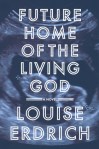 Future Home of the Living God, by Louise Erdrich – Having loved Erdrich’s Birchbark House series for children, I wanted to try one of her adult novels and figured I’d start with her new release. She is clearly a breathtaking writer, but Future Home of the Living God fell flat for me (which from what I hear was a common experience). The story focuses on a pregnant woman who is on the run after evolution mysteriously stops and the government begins seizing all pregnant women and, later, women of childbearing age. It’s an interesting premise, but I felt like I was reading The Handmaid’s Tale again (with a couple of slight differences) and was also frustrated that there wasn’t more exposition of the apocalyptic event. I’m perfectly willing to suspend disbelief while reading – especially dystopias and fantasies – but you need to tell me what I am suspending disbelief about, or at least give me a hint. I’m going to try one of Edrich’s really highly acclaimed novels, like The Round House and LaRose, and I suspect I’ll like those better.
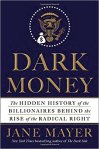 Dark Money: The Hidden History of the Billionaires Behind the Rise of the Radical Right, by Jane Mayer – I picked up Dark Money on the recommendation of a coworker, and it was fascinating and truly eye-opening. As a person who follows the news, I was aware of the Koch brothers and their political machine, but I had no idea how extensive the shadowy “Kochtopus” actually is, nor was I aware of many of the other wealthy families and individuals who have been quietly driving American politics. Mayer’s reporting is excellent, and she shines sunlight into quite a few dark corners that – if I was missing them, I think most people are missing them. I was particularly appalled to read about Ed Gillespie’s role in the gerrymandering that has taken place over the past decade – so that felt quite timely, since we were in the final days of the Virginia gubernatorial election when I was reading this. After learning about Gillespie’s activities on behalf of the radical right-wing, I was even more relieved that Dr. Northam will be my next governor.
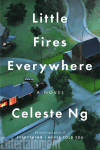 Little Fires Everywhere, by Celeste Ng – Having just read Everything I Never Told You last month, I was particularly excited to get my hands on Ng’s new book. Little Fires Everywhere, like its predecessor, takes place in suburban Ohio, opens dramatically, and presents a family saga as a page-turner. When we first meet the Richardson family, their house is burning to the ground – the fire set by the youngest daughter, Izzy Richardson. Izzy built “little fires everywhere” – setting up a campfire on each of her siblings’ beds “like a demented Girl Scout.” The story then rewinds several months, and the reader learns how Izzy got to the point of setting her house on fire and running away. It’s a twisting narrative of friendship, race, family and art, as Izzy and her siblings fall in with a mother and daughter who are newcomers to the town, and the entire community is shaken by a legal dispute over an adoption. As with Everything I Never Told You, I blazed through Little Fires Everywhere, reading breathlessly and – at times – tearfully. Ng is really a masterful writer – I can’t wait to see what she does next.
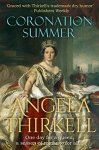 Coronation Summer, by Angela Thirkell – Not one of Thirkell’s Barsetshire books, Coronation Summer is a standalone novel about a young woman who, accompanied by family and friends, travels to London to join in the festivities surrounding Queen Victoria’s coronation. It’s a very funny novel – particularly when it comes to the relationship between Fanny, the main character and narrator, and her best friend Emily, who is traveling with her. Fanny likes Emily but doesn’t have much respect for her, and she drops snarky little asides about Emily, her speech and behavior, onto almost every page. They’re rude in the most hilarious way. Of course, Fanny’s satirical eye falls on almost everyone in her traveling group at some point. Meanwhile, the reader is treated to an ongoing parade of activities – operas, concerts, parties, club breakfasts, melodramatic reveals of love poems hidden in books – the works. And of course, Queen Victoria herself is spotted in a carriage. It’s all good fun and utterly engrossing.
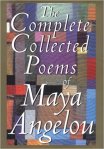 The Complete Collected Poems of Maya Angelou, by Maya Angelou – I’ve read a few of Angelou’s poems before – the more well-known ones, like Phenomenal Woman, Still I Rise, and On the Pulse of Morning – but had felt more drawn to her memoirs, especially the classic I Know Why the Caged Bird Sings. So I’d never before sat down with her poetry and read her works one after the other. On their own, they’re gorgeous, but read as a collection, they’re absolutely breathtaking. I paged through this collection reading one poem after the next, and found myself awed, humbled, moved, and deeply sorry that the experience ended so quickly – a couple of days is clearly not enough time to spend with Angelou. While every poem was meticulously crafted and beautifully moving, I think I still have the same favorite, and even the same favorite lines: You may shoot me with your words, You may cut me with your eyes, You may kill me with your hatefulness, But still, like air, I’ll rise.
 The Origin of Others, by Toni Morrison – I was in the middle of another book and had intended to finish it first, but after checking The Origin of Others out of the library, I couldn’t wait and had to dive right in. This is a collection of lectures Morrison gave at Harvard University, speaking about race and “otherness” in literature and life. Of course, it’s completely brilliant. (And has the added benefit of being introduced by another writer I deeply admire, Ta-Nehisi Coates.) Morrison tackles big topics such as the construction of the “other” and who it benefits to have a class of “others” or “strangers,” discusses the real historical events behind her most acclaimed novel, Beloved (which, to my detriment, I have not yet read – but I’m going to correct that soon), and sprinkles in bits of memoir and reflection on her own interesting life. Coates, meanwhile, ties Morrison’s not-overtly-political lectures into current events, which gives an important perspective. I read The Origin of Others in a couple of sittings over one morning – it’s a short book, but full of wonder – and was moved and inspired by every well-chosen word.
 The Flight of the Maidens, by Jane Gardam – Three friends (Hetty, Una, and Lieselotte) learn that they have received prestigious state scholarships to attend universities. Hetty is off to London to study literature, while Una and Lieselotte are bound for Cambridge and, respectively, physics and modern languages. The Flight of the Maidens follows each of them as they go their separate ways over their last summer at home and the rest of the world adjusts to peacetime after years of World War II. Hetty, who is nominally the main character, heads off to the Lake District to stay at a B&B and make some headway on her reading list; Una explores her budding womanhood with her Communist boyfriend, Ray, in a series of youth hostels; and Lieselotte – a Jewish refugee who has been living with Quakers in Yorkshire for seven years – doesn’t fly the coop so much as finds herself snatched away and “adopted” first by an elderly London couple and then by an eccentric American aunt. So – I enjoyed this, but not as much as I’d expected to. It was beautifully written, but I wasn’t engaged. I expect that’s mostly a function of feeling like I had to read it (thanks to a library deadline) – so it seemed like work. But I didn’t really enjoy any of the characters, with the possible exception of Lieselotte – everyone else just bugged me.
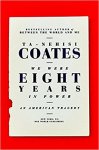 We Were Eight Years in Power: An American Tragedy, by Ta-Nehisi Coates – Like many, I was avidly anticipating the new Ta-Nehisi Coates, and he didn’t disappoint. We Were Eight Years in Power is a look at the issues and conversations that were going on during the eight years of the Obama presidency (please come back!) via eight of Coates’ essays published in The Atlantic. Each of the essays is prefaced with a short piece Coates wrote from the perspective of 2017, which read almost like blog posts. I loved the essays – I’d actually read the last three: The Black Family in the Age of Mass Incarceration; My President Was Black; and The First White President – in The Atlantic, so I was familiar with them already, but they greatly reward re-reading. The best part, though, was the introduction Coates wrote for each piece. He looks at each of his essays with a critical eye and is quite straightforward about what portions of each essay work well (in his opinion) and what he thinks could have been improved or stood the test of time. It was fascinating to get a glimpse into the self-critical thought process of one of the major writers of our day. Dare I say – I think I liked We Were Eight Years in Power even better than Between the World and Me. (Don’t @ me! Just read them both!)
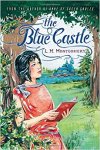 The Blue Castle, by L.M. Montgomery – There is an ever-dwindling handful of L.M. Montgomery books I have not yet read, and The Blue Castle was, until recently, among them. I have been trying to parcel them out so they last me awhile, but I knew there would never be a better opportunity than when
  The Stone Sky (The Broken Earth #3), by N.K. Jemisin – The final installment of the story of Essun, Nassun, and the war between Earth and humanity, orogene and “still,” stone-eater and comm-dweller, is equal parts confusing and satisfying. I am not normally a reader who insists on all installments in a series being published before I will read the series, but I can see the merit in that position, especially with a series like The Broken Earth Trilogy. The books start out confusing, since the world is so complex and foreign and the terminology so unrecognizable, and reading them with long gaps in between doesn’t help. I did read all three this year, I know, but it’s been months since I read the second book, The Obelisk Gate, and other than rough outlines, I’d pretty much forgotten what happened in it (and don’t ask me any questions at all about The Fifth Season, the opening installment, because I dunno). I spent most of the book scratching my head and trying to remember who was who and what had come before in the narrative, and with a story as complicated and confusing as this trilogy, that really put me behind. I did enjoy it, and did think that the ending was satisfying (won’t spoil it!) but a word of advice – these are all out now, so if you want to read the series, start from the beginning and read them in close succession.
 Mr. Popper’s Penguins, by Richard and Florence Atwater – I don’t think I mentioned reading this during my Monday reading posts, because it wasn’t my regular Metro- and post-bedtime-reading – it was so much better! Mr. Popper’s Penguins was the first long chapter book that I read aloud to Peanut! We have been working our way through it slowly, one chapter at a time, for about two months – reading a chapter most but not all evenings. I chose it for a few reasons – (1) I hadn’t read it myself and thought it would be fun to experience something new along with Peanut; (2) the chapters are fairly short; and (3) Peanut and I have tickets to see the play version at the Kennedy Center in a couple of weeks. The story was utterly charming and we had so much fun reading together and laughing at the penguins’ silly antics. (And oh, that poor, forbearing Mrs. Popper…) I loved the whole experience of reading a chapter book aloud to Peanut – that was something I’d been dreaming of and looking forward to since before she was born – and this was a perfect first readaloud.
 China Rich Girlfriend (Crazy Rich Asians #2), by Kevin Kwan – I had sort of forgotten about Crazy Rich Asians, but with the publication of the third and final book in the trilogy and the announcement of the cast for the movie, I decided to revisit Rachel Chu, Nick Young, Astrid Leong, Kitty Pong, and the whole crew. China Rich Girlfriend picks up a few years after Crazy Rich Asians ends. It is virtually the eve of Nick and Rachel’s wedding, and Nick has not spoken to his mother since he and Rachel left Singapore, nor forgiven her for the way she treated Rachel. Astrid has patched things up with her estranged husband, Michael, who has made it big and finally hit his first billion – but the money has changed him, and not in a good way. Kitty, meanwhile, has thrown over Alistair Cheng and married a reclusive billionaire, but is finding it hard to break into high society in Hong Kong. The plot is pretty thin, and the name-dropping of luxury brands is as obscene as it was in the first book, but GOLLY these are such good fun – and pure fantasy wish fulfillment for those of us who will never fly in our own private jets. I’m rooting so hard for Nick, Rachel and Astrid, and even starting to have some sympathy for Kitty (who is a LOT of fun to read) as she stumbles through society (getting the better of everyone in the end, I might add!). I have Rich People Problems, the third in the trilogy, on my library stack and I can’t wait.
 Something True, by Karelia Stretz-Waters – Tate Grafton is a barista who has given up her own career to help prop up the coffee shop that saved her when she was a teenager who’d been kicked out of her mom’s house. She’s trying to make her peace with the fact that her life is passing her by, when Laura Enfield walks into the coffee shop and asks if there is a “women’s bar” nearby. Laura is looking for a one-night stand, and she draws Tate in – but things get extremely complicated when their paths cross again. So, I picked this up to fulfill a task for the Book Riot Challenge – read an LGBTQ romance. It was okay – the writing was good, the plot was engaging and the ending satisfying – but what I realized is, romance is not my genre. (I already knew this.) I certainly wanted to know what was going to happen, and I kept reading even while shaking my head over the characters’ terrible decision after terrible decision. So I’m glad I gave it a shot, but it didn’t turn me into a romance reader.
 The Golden House, by Salman Rushdie – This book, Rushdie’s answer to the 2016 election, was heavily hyped and I was really excited to read it. The book centers upon a young filmmaker named Rene who becomes one of the few people allowed into the inner sanctum of the reclusive Golden family – patriarch Nero, his young Russian supermodel wife Vasilisa, and his three troubled sons. Rene watches as the Golden family begins to collapse. Meanwhile, the Joker – of comic book fame – announces his candidacy for President of the United States and amasses legions of followers who respond to his insane proclamations with a chant of “Ha! Ha! Ha!” So – the Joker parts were the most interesting to me, and there were not nearly enough of them. The Goldens themselves didn’t really interest me, with the possible exception of Vasilisa. It seems like, try as I might – and I do try mightily – I can’t seem to get Rushdie.
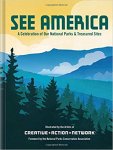 See America: A Celebration of Our National Parks and Treasured Sites, by the Creative Action Network – I picked this book up on a whim, off an endcap at the library. The artists of the Creative Action Network have put together a collection of “See America” illustrations – one for every legacy national park and most of the smaller NPS-managed sites – in the style of the “See America” posters created to advertise the national parks during FDR’s Works Progress Administration. The posters all echo the WPA posters in style, and each is accompanied by a one-paragraph description of the park and a map showing where it is located. As with any art book, some of the illustrations were more to my liking than others, but I really loved most of them – no surprise there, because I love the national parks. The only thing that bugged me about the book was that there were a few careless typos. For instance, one national monument was noted as having been designated “by President Barack Obama in 2008” – well, President Obama was not sworn into office until January of 2009; I don’t think President-elects have the power to designate national monuments during the transition period. And Cape Cod National Seashore was referred to as being in “Texas and Oklahoma” – which, no. It was correctly located in Massachusetts on the map, but the text was wrong. I felt that careful editing should have caught both of those, since they jumped off the page at me and I wasn’t reading for typos. But other than that irritant, I really enjoyed the book.
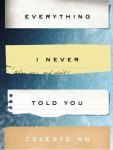 Everything I Never Told You, by Celeste Ng – I tore through this family saga, which opens with perhaps the most gripping line of any literary novel: “Lydia is dead, but they don’t know it yet.” (Right? How can you not keep reading after that?!) The book follows the Lee family – parents James and Marilyn, whose mixed-race marriage in the 1950s caused seismic waves that are still reverberating years later, and their three children, Nathan, Lydia and Hannah. Lydia is the favorite, and struggles with the weight of parental expectations piled upon her shoulders, while Nath and Hannah fade into the background. When she disappears and is later found dead, each member of the family copes differently. Everything I Never Told You is a family story disguised as a thriller disguised as a family story and is completely and utterly captivating. I was turning pages at a breakneck pace, wanting to smack both of the parents and hug Nath and Hannah tight. I think I finished the book in less than 24 hours – I just couldn’t put it down.
 Nimona, by Noelle Stevenson – Nimona is a bloodthirsty sixteen-year-old shapeshifter who walks into the lair of local villain Lord Ballister Blackheart and offers herself up as a sidekick. Blackheart is initially skeptical, but agrees to take Nimona on – she doesn’t really give him a choice – and she instantly ups his villain cred and gives him a leg up in his ongoing dispute with his archnemesis, Sir Ambrosius Goldenloin. It doesn’t take Nimona long to both announce her presence and to discover that Goldenloin’s employers are up to some shady dealings. Blackheart, for his part, is not nearly as villainous as he’s made out to be by the people he supposedly terrorizes, and Goldenloin is far from the golden hero. As Blackheart and Nimona launch a plot to expose the Institute of Heroes for what it truly is, Blackheart finds himself caring almost paternally for Nimona. (Awwwww…) So, I just loved this. It was sweet, funny, silly and touching. Blackheart was my favorite, and I was cheering for him to get some resolution – and Nimona kept everyone, including the reader, on their toes throughout. A total delight.
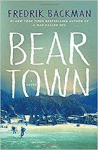 Beartown, by Fredrik Backman – Backman’s books have gotten so much hype and buzz, that I felt compelled to give him a try. Perhaps it was all that buzz, but I liked – but didn’t love – Beartown. It should have been a story right up my alley – Beartown is a small rural hamlet that shares one obsession: hockey. The town’s hopes and dreams for the future are completely invested in its junior hockey team, which is about to play in a major semifinal match, and the town elders hope that if the juniors win, it will bring the town enough attention to attract a hockey academy and rescue the sagging local economy. It’s a lot of pressure to put on a group of kids, and it’s unsurprising that the semifinal match leads to a violent incident that ends up ripping the town apart. So – it was certainly a gripping novel, and some of the characters – Amat, Peter, Bobo and Maya in particular – really did draw me in and make me care about them. But overall, I sort of wanted more.
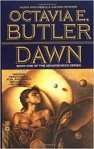 Dawn (Xenogenesis/Lilith’s Brood #1), by Octavia Butler – I have been wanting to read more of Butler’s work since I read the splendid Kindred last year, and there seemed like no better time to check out Lilith’s Brood after the announcement that there will be a dramatic adaptation. Lilith Iyapo is one of a handful of survivors of an apocalyptic event that has all but eradicated the human race. She and her fellow survivors have been plucked off Earth by a group of aliens, and kept in a suspended animation state while the aliens cleaned up the planet and prepared to reintroduce humanity. But the aliens are far from disinterested benevolent helpers, and they plan to exact a price for their assistance to the residents of Earth. Lilith is chosen as their emissary to humanity, and the repercussions are violent and terrifying. Well – obviously, because this is Octavia Butler – Dawn was brilliantly written and astonishingly creative. It was also pretty violent and weird, and while I loved the book and certainly plan to continue reading the series, I’m probably not going to want to see it play out visually on a TV screen.
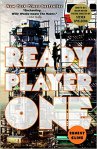 Ready Player One, by Ernest Cline – Another majorly hyped book, and one that has been on my TBR for ages. I didn’t want to find myself avoiding the movie on account of not having read the story first, so I finally made the effort to get a copy from the library. Ready Player One tells the story of Wade Watts, a teenager in 2044, whose life is consumed by a virtual video-gaming platform called “The Oasis,” and a hunt for an “Easter Egg” that was hidden deep within the system by its creator – the finder of whom will be the heir to an enormous fortune. Years go by after the creator’s death with no progress, but one day, Wade finds the first clue – and all hell breaks loose. Ready Player One was tons of fun – and would have been even more fun if I had gotten more than 10% of the 1980s pop culture and gaming references. I tore through it in two days, and recommended it to Steve and my BFF, both of whom also devoured it. And now we’ll be ready for the movie.
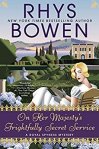 On Her Majesty’s Frightfully Secret Service (Her Royal Spyness #11), by Rhys Bowen – Lady Georgianna Rannoch is cooling her heels in Ireland, waiting at Kilhenny Castle for her beloved’s return, when she receives two letters forwarded from her brother’s house. One is a plaintive missive from her best friend, Belinda, who is pregnant and alone in Italy. The other is from the Queen, summoning Georgie to Buckingham Palace to discuss Georgie’s wish to surrender her place in the line of succession and marry Darcy O’Mara, a Catholic. Georgie rushes to London to meet with the Queen, who seems willing to agree to Georgie’s marriage, but – typical! – has a little task for Georgie in the meantime: spy on the Prince of Wales and make sure he doesn’t secretly marry Wallis Simpson during a house party in Italy. It’s a good opportunity for Georgie to make the Queen happy while fitting in a visit to Belinda, so Georgie willingly agrees. But it’s 1935, times are troubled, and there is more at stake than any royal marriage – several of the attendees at the party are highly placed Nazi and Italian Fascist operatives, and Georgie finds herself conscripted into spying on more than one fellow party guest – and then when one of the guests is murdered, things get really interesting. As always, I was absolutely delighted with the latest Lady Georgie mystery. I love where Bowen is taking all of the characters, and I can’t wait to find out what’s next for Georgie, Darcy, Belinda and all the gang.
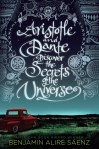 Aristotle and Dante Discover the Secrets of the Universe, by Benjamin Alire Saenz – Aristotle “Ari” Mendoza is looking ahead to a long and boring summer of bumming around town with no friends when he meets Dante Quintana at the pool. The boys bond and quickly become best friends, and their parents become friendly too. At the end of the summer, an accident prompts Dante to declare his feelings for Ari – feelings that go beyond friendship. The rest of the story shows how Ari comes to terms with Dante’s love for him, and gradually realizes that he loves Dante. I listened to the audiobook of this highly acclaimed young adult novel, and the narration by Lin-Manuel Miranda added even more depth and emotion to the story. Although it took me almost the entire book to really feel invested (likely because of my habit of listening to audiobooks in short bursts and then letting days or weeks go by without returning to the story) by the end I could absolutely see what all the fuss was about. This was a beautiful book.
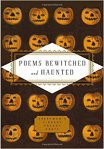 Poems Bewitched and Haunted, ed. John Hollander – Looking to both read something spooky at the end of the month and check off another Book Riot Challenge task (a collection of poems in translation on a subject other than love – not all of the poems in this collection are in translation, but enough are that I think it counts) I grabbed Poems Bewitched and Haunted off my shelf. With offerings from everyone from Homer to Shakespeare to Emma Lazarus, and on subjects ranging from witches to haunted houses to “dangerous wooers,” there’s something for every poetical taste in here, and it’s all deliciously spooky and Halloween-y. Such a fun way to spend the last couple of days of the month – shivers abound.
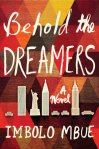 Behold the Dreamers, by Imbolo Mbue – I quickly rushed to my library website to reserve a copy of Behold the Dreamers after the news broke that it was the next Oprah Book Club pick. (I got in just in time, because I was able to get a copy fairly quickly, but the holds queue is now a mile long.) It was a wonderful, heart-rending, riveting story and I was glued to the book, reading feverishly and fighting the temptation to skip ahead and see what would happen in the next few chapters. Mbue tells the story of two marriages – Jende and Neni Jonga, Cameroonian immigrants working to carve out a place for themselves in America, and Clark and Cindy Edwards, wealthy New Yorkers whose marriage and life is upended by the financial crisis. Jende works as Clark’s chauffer, and Neni does temporary stints as a maid in their summer home, and both become unwillingly drawn into the collapsing Edwards home while struggling to stay afloat themselves and obtain legal immigration status for Jende. I won’t say much about the ending, because I don’t want to spoil the book for anyone who has not yet had the pleasure of reading it – other than to tell you that there are a couple of surprising twists, and the book ends differently from many others in the immigration narrative sub-genre (but still in a satisfying way). Go read it!
 A Room With a View, by E.M. Forster – I was in the mood for a classic, but not something too terribly long or challenging, and A Room With a View fit the bill perfectly. I’ve been moving my Barnes & Noble Classics edition from house to house since high school and I finally made the time to acquaint myself with Lucy Honeychurch, Charlotte, the Emersons, Mr Beebe, and the rest of the gang. The book opens with Lucy traveling in Italy, chaperoned by her older spinster cousin Charlotte (who is a bit of a wet blanket and not a very good judge of character). In Florence, they meet the Emersons, a father and son traveling together who have, for some inexplicable reason, been shunned by the rest of the guests at their small hotel. As Lucy gets to know the Emersons, she begins to realize that her own social circle leaves much to be desired, and she starts to develop feelings for George Emerson, the son. Of course, she can’t acknowledge any of this, and so she winds up engaged to a man of her social class and previous acquaintance, who happens to be a big jerk. (SHOCK.) Lucy’s journey toward shaking off social expectations and learning what will make her truly happy is fun to read, even if I did want to smack her from time to time.
 Anusha of Prospect Corner, by A.M. Blair with Maram Ken and Samira Ken – Full disclosure, first of all. The
 Barchester Towers, by Anthony Trollope – The second volume in Trollope’s celebrated Barchester series returns us to our old friends Eleanor and Mr Harding. The cataclysmic waves that reverberate through Barchester after the Bishop dies and a new Bishop with a completely different philosophy takes over are riveting. Wonderful new characters – Mrs Proudie, the Thornes, the Stanhopes and more – enter the world and it’s just a delight all around. I laughed out loud in nearly every chapter and enjoyed every second of this book – probably my favorite of the year so far.
 The Making of a Marchioness, by Frances Hodgson Burnett – A romance between two decidedly unromantic characters – what could be better? Emily Fox-Seeton, a gentlewoman in reduced circumstances, unwittingly and unintentionally charms one of the most eligible aristocratic bachelors in all of England. The proposal – over a fish bucket! – is an absolute gem.
 Hidden Figures: The American Dream and the Untold Story of the Black Women Mathematicians who Helped Win the Space Race, by Margot Lee Shetterly – If you had no idea that black women worked at NASA in huge numbers (as “computers” – mathematicians) and that they were responsible for the calculations that kept WWII planes in the air and brought Neil Armstrong and Buzz Aldrin to the moon and back home, then you are just like me. This was a fascinating book that deserves all the attention it got. I haven’t seen the movie yet, but I want to!
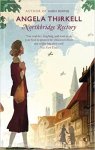 Northbridge Rectory, by Angela Thirkell – I mistakenly skipped a couple of novels in the series and ended up in the middle of WWII, and it turns out it’s totally true what Thirkell bloggers say – the WWII books are the best. This one follows Verena Villars, wife of Vicar Gregory Villars, and a surrounding cast of neighbors, friends and billeted officers. It was delightful and I was truly sorry when it ended.
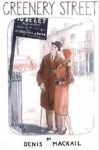 Greenery Street, by Denis MacKail – A rare novel indeed, Greenery Street tells the story of a happy marriage. Ian and Felicity Foster tie the knot and set up their first home in Greenery Street, where they tackle all of the common travails of newlywed-hood: Money Concerns; Family Drama; Rude Neighbors; and Problems With The Servants. (What, you haven’t had that last one? Ha!) It’s a joy and a hoot.
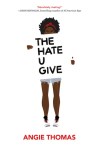 The Hate U Give, by Angie Thomas – Starr Carter, aged sixteen, is on her way home from a party with her oldest friend Khalil when they are stopped by the police. Moments later, Khalil is dead – a victim of police shooting – and Starr’s life is changed forever. Starr deals with her legal limbo as “the witness”; her grief over losing her friend; and the different reactions of others in her neighborhood and school communities. It’s a powerful, heart-rending read.
 Hag-Seed, by Margaret Atwood – Atwood’s contribution to the Hogarth Shakespeare Project follows a washed-up old theatre director who takes his revenge on the former underling who betrayed him in the most Atwood-Shakespearean way possible: with a psychedelic and terrifying production of The Tempest, performed by a local correctional facility’s inmates. Like ya do.
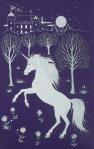 The Little White Horse, by Elizabeth Goudge – Maria, orphaned but not alone, arrives at Moonacre Manor to live and claim her birthright. On her first moonlit drive in, she sees a magical white horse. Maria discovers that Moonacre is a lovely, magical place but with a tinge of old sadness, and she sets about correcting a generations-old mistake and righting the wrongs of the past. Lovely and charming.
 A Gentleman in Moscow, by Amor Towles – Count Alexander Rostov is in his thirties when he is found to be an unrepentant aristocrat and sentenced by the Bolshevik to a lifetime of imprisonment in the grand hotel he calls home. Count Rostov’s sphere of movement is limited but he comes into contact with fascinating and wonderful characters from every walk of life, while Soviet history takes place right outside his window. I just adored Count Rostov and every other resident of the Metropol.
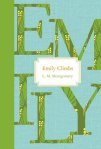 Emily Climbs, by L.M. Montgomery – A re-read of my favorite installment from my favorite series, Emily Climbs follows Emily Starr as she leaves New Moon to attend high school in Shrewsbury. Like with any good L.M. Montgomery novel, there are parties and social events, a healthy dose of academic competition, and a whole lot of gorgeous descriptive writing.
 covered in flour