

Reading is my oldest and favorite hobby. I literally can’t remember a time in my life when I didn’t love to curl up with a good book. Here are my reads for November, 2018…
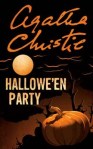
Hallowe’en Party, by Agatha Christie – A fun one to read on Halloween (and for a day or so after, as it turned out). Ariadne Oliver, the celebrated mystery writer, is at a children’s Hallowe’en party when one of the party guests is found murdered. Mrs. Oliver knows that her friend Hercule Poirot can unravel the mystery – but will he solve it in time to prevent the murderer striking again? Agatha Christie always delivers, and this was a blast.
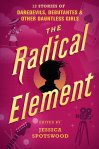
The Radical Element: 12 Stories of Daredevils, Debutantes and Other Dauntless Girls (A Tyranny of Petticoats #2), ed. Jessica Spotswood – I loved the first entry into this series, and The Radical Element delivered exactly the same joys. There were stories of a young Mexican-American woman using magic to pass as white in 1920s Hollywood, a Jewish girl willing to risk everything to learn about her faith, a gay teenager who runs away with the circus, and more. Every story was heartfelt and beautiful.
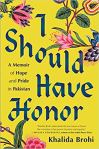
I Should Have Honor: A Memoir of Hope and Pride in Pakistan, by Khalida Brohi – This was a stirring and powerful memoir by a still-young woman who has risked her life over and over again to empower women and girls and to fight the custom of honor killing in Pakistan. I couldn’t stop turning the pages.


The Shooting Party, by Isabel Colegate – I read this for the fall Tea and Tattle book club – to be honest, I was sold when Miranda explained that it inspired Julian Fellowes in creating Downton Abbey and Gosford Park. I could see it, too: the same upstairs/downstairs dramas and complex characters. The Shooting Party was a slim but lovely read, about an eventful gathering of a group of aristocrats for a shooting party at a great house on the eve of World War I.
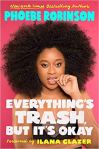
Everything’s Trash, But It’s Okay, by Phoebe Robinson – Meh. So, I really enjoyed Robinson’s first collection of essays, You Can’t Touch My Hair (And Other Things I Still Have To Explain), but Everything’s Trash felt like more of the same. I kept thinking to myself: I feel like I’ve already read this. And there was a weird braggy interlude in the middle about how she met Bono twice and he made her a piece of original artwork.
My So-Called Bollywood Life, by Nisha Sharma – I was excited to read this YA novel about a young girl navigating high school with the help of her favorite Bollywood movies, but it was kind of a let-down. The central storyline revolved around a prophecy that the main character had received as a baby, about marrying someone with a name that starts with “R” who would give her a silver bracelet, so her entire family was super committed to making sure she married her boyfriend Raj, who gave her a silver bracelet because he felt like he had to after hearing so much about the prophecy. And then there was a love triangle, which is my least favorite YA trope ever. It just wasn’t for me.

The House By The Lake: One House, Five Families, and A Hundred Years of German History, by Thomas Harding – I loved this. I can never pass up a history told through an interesting lens or with an unusual hook, and The House by the Lake sure delivered. The book begins with Harding visiting a ramshackle, falling-down cottage on the shores of Gross Glienecke Lake – just outside of Berlin – that once belonged to his great-grandparents. Seeking to save the cottage from being razed by the government, he weaves together the house’s fascinating history, from his Jewish great-grandparents, who were forced to leave the house and its contents behind when they fled for England at the beginning of World War II, through the families who either summered or lived there year-round under the brutal East German regime until the fall of the Berlin Wall, and all the way to present day. Harding’s quest to prove the cottage’s historic significance seems quixotic at first, even to his family, but his zest for the mission eventually wins him the support of the local historical society – but will it be enough? You’ll have to read it and find out.
Four Seasons in Rome, by Anthony Doerr – Several years ago, Anthony Doerr received a fellowship to live in Rome and work at an American writers’ collective in the city for a year. He moved his wife and their six-month-old twin boys to the ancient city and they attempted to learn Italian and live as Romans while he worked on a novel about World War II. Unsurprisingly, the book writing does not go well – Doerr spends most of the year nauseatingly exhausted from parenting (been there) and disoriented from the foreignness of Rome – which is fascinating when you know with 20-20 hindsight that the book that was going so badly at the time eventually turned out to be the stunningly beautiful All The Light We Cannot See. This memoir was beautiful too – Doerr is an incredibly evocative writer.
Angle of Repose, by Wallace Stegner – I’ve been meaning to read this since about 2007, when a friend with excellent literary taste told me that Stegner was her favorite writer. (This friend was from Utah originally and had made it her mission to read all the literature of the American West.) Angle of Repose is widely regarded as Stegner’s masterpiece, although it’s not without controversy – part of the book includes letters from the main character, who was inspired by a real historical figure, and Stegner lifted whole letters from that actual figure after her family was kind enough to share them with him for research purposes, and published them in the book. (Whoops.) Anyway, if you’re reading between the lines, you’ve probably guessed that I didn’t love this. Liked it, but didn’t love it. I found the central plot – the marriage of the narrator’s grandparents – to be hard to believe; they were just too different and I understand that divorce wasn’t a “thing” in Victorian times, but meh. I just couldn’t buy into the central relationship because I didn’t find it believable that they were in love in the first place. I was disappointed, because I loved Crossing to Safety (another Stegner) so much – but Angle of Repose fell a little flat for me.
Autumn (Seasonal Quartet #1) by Ali Smith – I wanted to read this book (hailed as the “first Brexit novel”) after seeing it all over my Instagram feed. It makes for gorgeous photographs, but I didn’t love the book. Ali Smith is a genius, no doubt, and I was suitably impressed by the things she did with language. The problem was that I couldn’t lose myself in the story (of an elderly man and his devoted young neighbor) because I was constantly aware that Ali Smith was Doing Impressive Things With Language.
Belonging: A German Reckons With Home and History, by Nora Krug – Soooooooo so so so so good. I absolutely loved this graphic and pictorial family history. Nora Krug, like many Germans of the younger generation, has grown up under the shadow of World War II. Finally, after moving to America and marrying a Jewish man, Krug feels brave enough to confront her family history and ask the question about her grandparents that she’s never been able to get satisfactorily answered: were they Nazis? Krug delves into her family history, and the history of the towns in which they lived, and the result is half-scrapbook, half-graphic memoir – and totally fascinating.
Slightly Foxed No. 59: Manhattan Moments, ed. Gail Pirkis – Just in time for the special 60th issue to arrive on my doorstep, I finished this fall’s Slightly Foxed. It was full of literary delights, as usual.
The Nature Fix: Why Nature Makes Us Happier, Healthier, and More Creative, by Florence Williams – Another one I’ve had on my TBR for awhile; I liked, but didn’t love, The Nature Fix. It was interesting, if a bit more focused on neuroscience than I was expecting – I’d have liked a little psychology or nature writing to mix it up. The one thing that really bothered me was the author’s near-constant ragging on DC. I get it: DC isn’t for everyone, and she moved from Colorado, which is just a different world for someone who likes outdoor adventure (I know, my brother lives there). But one or two complaints about DC (the noise, the air quality, the lack of access to trails, blah, blah, blah – it’s not actually that bad here) would have sufficed to make her point. Complaints in every chapter got tiresome.
WOW, what a busy reading month November was! Part of that was because I changed jobs – I had three days of “funemployment” between gigs, plus ramp-down and ramp-up time on either side of that, when work wasn’t keeping me crazy busy. That time coincided with some disgustingly awful weather, so instead of hiking as I had planned to do with my “funemployment” I spent two entire days on the couch, reading. It was pretty blissful. As for enjoyment, I was all over the place. Belonging was the clear highlight, but I also loved The House By the Lake, The Shooting Party, and Four Seasons in Rome, and a new Slightly Foxed quarterly is never unwelcome. There were some duds, too, but even with those I was enjoying the act of reading, itself, so no regrets. Here’s hoping for a strong finish to the year!
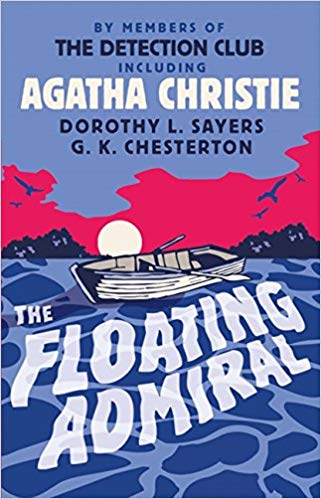 In his introduction to The Floating Admiral, Simon Brett describes the book as a sort of parlour game – as all the best detective novels are, really. But even amongst golden age crime novels, The Floating Admiral is unique, having been team-written by a collection of mystery-spinning luminaries the likes of which the literary world never saw before and likely will never see again: the original Detection Club.





 The Woman Next Door, by Yewande Omotoso – I had to read this book after I heard it described on the Book Riot Podcast as “Golden Girls, but woke and in South Africa.” It was a lot of fun. Hortensia and Marion are next-door neighbors, rivals and frenemies. Both successful businesswomen, both fairly recently widowed, when they are thrown together by an unexpected event they find that they have more in common than they originally thought – and maybe, just maybe, the seeds of a friendship are there? I enjoyed this, and it was a fun read, but I didn’t find myself particularly drawn to either of the main characters. I suppose that’s to be expected, since they were both written to be crotchety old ladies. But I would have enjoyed it more if at least one of them was slightly less caustic.


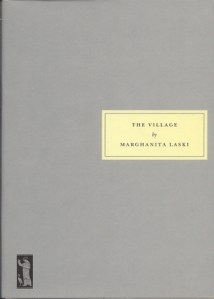
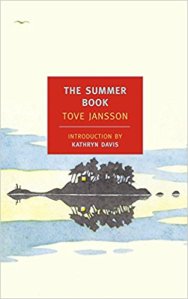
 There comes a point in the life of a classic literature fan where – while you may not have completely worked your way through “the canon,” such as it is – you start looking for the different, the less-known, the forgotten. I’ve always felt a strong connection to classics by women – your Jane Austen, your L.M. Montgomery, your Edith Wharton, your Bronte sisters, your Elizabeth Gaskell, etc. – so it was only a matter of time before I discovered




 Howards End, by E.M. Forster – Here’s one that’s been on the TBR for ages, which I finally picked up because (1) there’s a new adaptation and I wanted to watch it but I really wanted to read the book first; and (2) I got a pretty hardcover copy from Hodder & Stoughton. The story of the clashes and intersections between the Schlegel sisters and the Wilcox family were absorbing from beginning to end – and, predictably, I identified with Margaret and found Helen mildly exasperating.
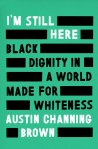 I’m Still Here: Black Dignity in a World Made for Whiteness, by Austin Channing Brown – I’m not sure if lately there are more memoirs about the experience of living as a woman of color, or if I’m just more aware of them, but I’ve read several now and this is a standout. Brown writes compellingly about names, identity, work, religion and more. The section in which she details the microaggressions of a typical workday was really eye-opening and made me all the more determined to be a good ally. (My friend
 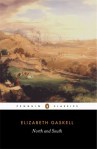 North and South, by Elizabeth Gaskell – Another one that I’ve been meaning for a long time to read. I picked this up while in the first shock of grieving for a loved one who had enjoyed this book, and it was the only thing that made me feel better. Asked to describe it midway through the reading experience, I said it was “Pride and Prejudice and labor unrest,” and I hold to that elevator pitch – but man, it is SO good. For some reason I’d had it in my head that Elizabeth Gaskell would be a difficult read, but that can’t be further from my experience. I’ve now read two of her books – the other being Cranford – and loved both. I can’t wait to wend my way through the rest.
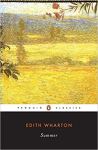 Summer, by Edith Wharton – Sometimes described as “the hot Ethan,” Summer tells the story of young Charity Royall’s awakening during an affair with the cousin of a neighbor, visiting from the city. Typical for Wharton, the writing is spare and elegant and the scene-setting is atmospheric. I enjoyed it all the more for having just been in Lenox, where Wharton had her country estate, earlier in the month. (The Mount has long been on my to-do list. I must make it happen sooner than later.)
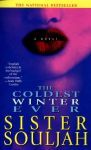 The Coldest Winter Ever, by Sister Souljah – I picked this up because it was described as a “classic of urban literature” and was recommended on PBS’ The Great American Read. But man alive, how I hated it. Winter Santiaga is the spoiled eldest daughter of a Brooklyn drug kingpin, but her world comes crashing down when her father is arrested. Winter decides she is going to do whatever she has to do in order to survive, but surviving for Winter appears to mean finding a man to take care of her, or alternatively, coming up with her own crime schemes to get money quick so she can buy designer clothes. For a short time she comes within the orbit of Sister Souljah, a Harlem activist who comes across as completely self-righteous and sanctimonious. Midnight, the only man Winter can’t get, and Rashida, one of Winter’s acquaintances at a group home she resides in temporarily, are the only characters I found at all worthwhile in the book. For awhile I tried to equate Winter with other unsympathetic anti-heroines – namely Scarlett O’Hara – but it didn’t work. Scarlett at least had something she loved outside of herself – Tara, her father’s plantation – and her schemes were all centered around her purpose of saving and keeping Tara. Winter was only interested in Winter. But I plugged away at it and finally finished, and it’s been a long time since I’ve been so glad to be done with a book.
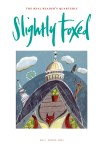 Slightly Foxed No. 5: A Hare’s Breath, ed. Gail Pirkis – After the 400-page miseryfest that was The Coldest Winter Ever, I needed some quick comfort, and fortunately I had a few essays left to read in the fifth volume of Slightly Foxed (as I am reading my way through the back issues at the meditative pace of an essay or two a night, unless I need a palate cleanser from a terrible reading experience). I think I should read through more quickly, though, because the essays at the end, when I was steaming along, made more of an impression than the earlier essays I read in snatches. Particular highlights were an introduction to a princess who followed her Decembrist husband to Siberia, and a meander through the gardening literature of Vita Sackville-West (which is already on my Amazon wish list).
 News from Thrush Green (Thrush Green #3), by Miss Read – I was still in need of comfort reading after finishing the Slightly Foxed issue described above, and there’s nothing like Miss Read for that. I’d been saving this third installment in the Thrush Green series and I happily dove right back into that world. In this one, marital problems abound. Nelly Piggott leaves her husband Albert after he grouses about her cooking one too many times, and a newcomer arrives in the village with a sweet son but no husband (!!!!!) which, naturally, sets tongues wagging. There are other domestic disturbances, too – the Baileys host an irritating family member for an extended visit and Dotty Harmer has kittens to give away. Thrush Green is a sweet, slow-paced world where the problems are slight and you’re guaranteed that everything will turn out fine in the end. Just what the doctor ordered.



 The Explosive Child, by Dr. Ross Greene – Always looking to add to my arsenal of parenting knowledge. I took a long break from parenting books, though, because at best I found most of them unhelpful (with the exception of The Happiest Baby on the Block, which is a miracle) and at worst they made me feel like a rotten mother. This one was decidedly meh – I didn’t throw it across the room – but I also didn’t take much from it in the way of practical tips. The book sets forth a method for dealing with “chronically inflexible, easily frustrated children” – well, I have one of those, but I didn’t learn much about how to relate to this particular kid, at least, not in a way that I think would be effective. So all in all, not much help.
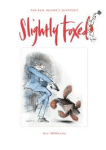 Slightly Foxed No. 4: Now We’re Shut In For The Night, ed. Gail Pirkis – No issue of Slightly Foxed ever disappoints! I’m gradually (but enthusiastically) working my way through the back issues of the quarterly, while keeping up with the current issues as well, and it’s almost hard to find anything new to say because they’re so consistently delightful. Even when I’m not inclined to rush out and buy a copy of the book that a particular essayist is profiling, the writing in the essays is invariably delightful and I can just sink into one happily. It really is a perfect literary magazine.
 Scenes of Clerical Life, by George Eliot – I’ve read Middlemarch twice, but had never read anything else by Eliot, so I decided it was time to change that. To be honest, the cover attracted me to this one (this is the edition I have) and I also can’t resist a Victorian clergy novel. Kryptonite, I tell ya. Anyway, this is actually a collection of three novellas featuring clergymen and their families. I enjoyed the second – The Love-Story of Mr Gilfil – most, but all three were good reads. (And on more than one occasion I found myself in tears over a character and a bit befuddled by that, because I didn’t realize I cared that much! George Eliot, you sly minx.)
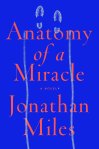 Anatomy of a Miracle, by Jonathan Miles – I think I noticed this one in the Shelf Awareness newsletter, or else on some other new release list. The premise is: Cameron Harris, Iraq vet, has been paralyzed and wheelchair-bound since coming home from the war – until one day when, in the parking lot of a convenience store, he stands up and walks. Cameron’s seemingly impossible recovery becomes big news and soon the Vatican investigator descends, followed in short order by a reality television crew. So – I enjoyed this, but I bogged down in it a little bit, which was probably a function of reading it against a library deadline and not because it was what I was really craving at the moment. It was good, but also reminded me a lot of The Jesus Cow, which I liked better.
 covered in flour