Reading Round-Up: June 2019

Reading is my oldest and favorite hobby. I literally can’t remember a time in my life when I didn’t love to curl up with a good book. Here are my reads for June, 2019

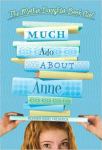
Much Ado About Anne (Mother-Daughter Book Club #2), by Heather Vogel Frederick – I am enjoying my second read-through of the Mother-Daughter Book Club series so much.  Things are getting crazy at work, and a visit to Emma, Jess, Megan, Cassidy, Becca, and their moms is just what the doctor ordered.  My heart breaks for Cassidy in this volume, as her mother moves on and finds love again while Cassidy is still grieving for her dad.  But there’s plenty of lightness too, and the girls read one of my favorite books – Anne of Green Gables.

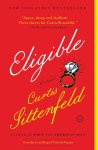
Eligible (The Austen Project), by Curtis Sittenfeld – As I told Steve, I had to read Eligible because a teacher told me to.  Peanut’s kindergarten teacher pressed it into my hands (and just in case I forgot about the assignment, her “This Book Belongs to: E. Shaw” bookplate reminded me every time I opened the cover).  I didn’t really like it – I think Pride and Prejudice is a tough story to “update” for modern times, because the choice is no longer marry or starve for most women.  It was okay, but nothing I would have sought out for myself.

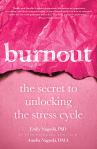
Burnout: The Secret to Unlocking the Stress Cycle, by Emily Nagoski and Amelia Nagoski – I sought this one out at the library after listening to Meghan and Kelly recommend it highly on the Sorta Awesome podcast, and it was more than just “sorta” awesome.  Twin sisters Emily and Amelia Nagoski share some groundbreaking advice, solidly based in science, for breaking through the cycle of stress and overwhelm.  I’m trying to put their advice into practice and I am starting to notice some differences.  This book should be required reading for every woman trying to make it in 2019.

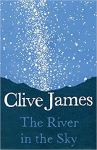
The River in the Sky, by Clive James – This was an impulse buy, based on the cover alone, at the new indie bookstore in Old Town.  (Can I say how much I love Old Town Books?  Y’all, we have NEEDED this.)  It’s an epic poem, written by Australian-born, Cambridge-dwelling James as he nears the end of his life.  It could be sad, but instead it’s just lovely, ruminative, and poignant.  There’s no real structure to the narrative; you’re just washed along on a wave of memory.  I gave myself over to the experience, and it was wonderful.

Our Castle By the Sea, by Lucy Strange – Can’t remember how I heard about this one, but the story seemed right up my alley.  Lighthouse?  Check.  Magic?  Check.  World War II?  Check.  It was good, an absorbing story with wonderful characters, but for some reason I had a hard time getting through it.  I blame work craziness and car commuting.

1939: The Last Season, by Anne de Courcy – I blazed through 1939: The Last Season, a snapshot of England on the brink of World War II.  De Courcy alternates between luscious descriptions of glittering parties attended by socialites and royals, and the tenuous political situation at 10 Downing Street as the world hurtled toward all-out war.  I loved every word.  Also, it was important that I say “Anne de Courcy” in a snooty Trollope-esque accent.

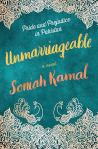
Unmarriageable, by Soniah Kamal – Two P&P adaptations in a month!  Who dis?  I liked Unmarriageable more than I liked Eligible.  Kamal sets her version of Austen’s classic in Pakistan in 2001; the Bennet sisters become Jena, Alys, Mari, Qitty and Lady Binat – stuck in a backwater after their paternal uncle betrayed their father and ruined the family’s reputations, but their lives change when they meet Farhat “Bungles” Bingla and Valentine Darsee at a society wedding.  Unmarriageable was a lot of fun, and I loved the shoutouts to all of literature teacher Alys’s favorite reads.

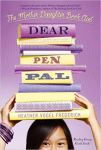
Dear Pen Pal (Mother-Daughter Book Club #3), by Heather Vogel Frederick – Continuing my re-read of this series – and I’m still having so much fun. The girls and their moms read Daddy Long Legs by Jean Webster, while Jess experiences mirroring events as a mysterious benefactor makes it possible for her to attend the local boarding school. Meanwhile, Cassidy’s family is growing and Emma delves into a new relationship with Stewart. Yes, the storylines are implausible – but these books are fun and sweet and totally worth it.

“Only” eight books this month – seems slow.  With no metro, a lot going on at work, and preparing for a big adventure in July – more soon – reading time took a hit.  But in the time I did have, I read some great ones! It’s always fun to visit with the Mother-Daughter book club.  And I had a great non-fiction month with Burnout and 1939.  Onward to July!

What did you read this month?


Reading Round-Up: May 2019

Reading is my oldest and favorite hobby. I literally can’t remember a time in my life when I didn’t love to curl up with a good book. Here are my reads for May, 2019

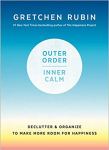
Outer Order, Inner Calm, by Gretchen Rubin – The newest Gretchen Rubin was short and sweet – I read it over one day’s commuting – and pretty much common sense, but I really enjoyed it nonetheless.  Rubin, guru of happiness and habits, writes about how cultivating outer order in one’s surroundings can lead to inner peace.  It was nothing I hadn’t heard and read a thousand times before, but the voice and the layout were engaging and Rubin is always good for a dose of inspiration.

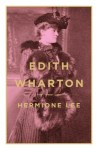
Edith Wharton, by Hermione Lee – It took weeks, since this doorstopper biography was way too big to haul on the Metro, but I finally churned through Edith Wharton – and finished it on the very day it was due back to the library, too.  I was really impressed with how much material Lee was able to pull together from the notoriously private and enigmatic Wharton’s life, and I really liked the combination of literary analysis and criticism with traditional biography.  Reading Lee’s take on Wharton’s most famous works juxtaposed with the events of her life at the time she was writing them was a fascinating exercise.

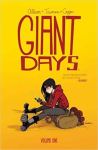
Giant Days, Volume I, by John Allison – Another one-day read, I’ve been meaning to get to Giant Days for years now, and I finally picked up the first volume at the library.  I loved meeting Susan, Daisy and Esther, and reading about their exploits made for a good escape from reality.  It was such a joy, although Esther was definitely the closest to my heart, and if you’ve read the comic, I’ve now told you way too much about myself as a teenager.

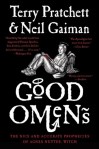
Good Omens: The Nice and Accurate Prophecies of Agnes Nutter, Witch, by Terry Pratchett & Neil Gaiman – This was a re-read, but it had been quite a few years.  I was hoping that it would hold up, and did it ever.  I loved Good Omens just as much the second time around, and it made me even more excited to watch the adaptation.  Still love Aziraphale and Anathema the most, still entertained by Crowley and charmed by the Them.

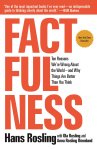
Factfulness: Ten Reasons We’re Wrong About the World – And Why Things Are Better Than You Think, by Hans Rosling – I’ve been wanting to read this since I saw it on President Obama’s reading list (also, how much do we miss having a President who reads? #pleasecomeback).  Rosling is a global health professor who breaks down trends in living standards across the world to make the case that – while we still have a long way to go – things have never been better.  I wasn’t sure what to expect, but his relentless optimism was infectious, and he had the stats to back up his argument.  Good stuff.

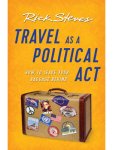
Travel As a Political Act, by Rick Steves – Steve and I have been huge fans of Rick Steves for years now – we’ve watched his show, carted his guidebooks around Europe, and Steve even travels with a Rick Steves backpack (#nerdalert) – but somehow I hadn’t gotten around to reading Rick’s travel manifesto.  Once I finally picked it up, I blazed through it and loved every second.  Rick makes an impassioned case for getting outside your comfort zone as a traveler, meeting real people and considering global and domestic issues in the context of actual lives.  My only complaint?  I got a sore neck from nodding along so much.

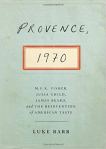
Provence, 1970: M.F.K. Fisher, Julia Child, James Beard, and the Reinvention of American Taste, by Luke Barr – As a fan of Fisher, Child and Beard, I was really excited to read this interesting take on a brief time in their lives when they all came together for a few weeks in the south of France, written by Fisher’s nephew.  It was a delight, and I especially loved the food descriptions – and it made me want to pick up my copy of The Art of Eating again, and to whip up some dishes from Mastering the Art of French Cooking and Beard on Pasta.

Alexandria Ocasio-Cortez and the Freshman Force: New Party, Who Dis?, by Josh Blaylock – Okay, I know that AOC is a pretty polarizing figure.  It seems like everyone has an opinion, and the whole world either loves her or hates her.  As for me, I’m solidly in the love camp.  I think her story’s fascinating, it’s obvious she worked insanely hard to get to Congress, and I love that she has big ideas and she doesn’t shy away from talking about them.  So clearly I was all in on this limited edition comic, which collects a bunch of graphic novel-style short stories about AOC and her friends on the Freshman Force (although there was not nearly enough Ilhan).  It was fun, different, and had me pumping my fists.

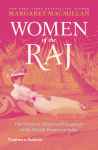
Women of the Raj, by Margaret MacMillan – I reserved a copy of this nonfiction study of the women who followed their husbands – or who traveled alone with an eye to catching a man – to India during the British Raj, after Claire recommended it.  It was fascinating, and I found it to be a really enjoyable and engaging book, but I think it caught me at the wrong time.  I was reading against a library deadline and was feeling something fiction, but had to knock it out – never a recipe for falling in love with a book.  Still, it was obviously well-researched, very well-written, and a good solid read.

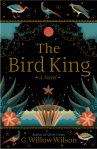
The Bird King, by G. Willow Wilson – Let’s just go ahead and get this out of the way: everything G. Willow Wilson does is perfect.  Right?  Has she ever written something that wasn’t sweep-you-off-your-feet fantastic?  I mean, this is the woman who gave us Kamala Khan and Alif the Unseen.  Along with Catherynne M. Valente, Wilson is one of my must-reads, and The Bird King, a fantastical tale of a mapmaker with mystical powers and his loyal friend, a beautiful palace concubine, in Spain at the time of the Moors, was just wonderful.  I don’t know if it topped Alif the Unseen, which was one of my favorite books read in 2018, but it’s up there.  Go ahead and just sign me up for anything G. Willow Wilson writes, okay?

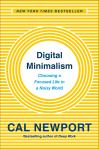
Digital Minimalism: Choosing a Focused Life in a Noisy World, by Cal Newport – I’ve been wanting to read this since Meghan and Kelly discussed it on Sorta Awesome, but I wasn’t the only one – there was a library wait list for months.  I finally got my hands on it, and it was really good.  Inspiring, thoughtful, and realistic, all at once.  I don’t know if I’m going to do the recommended thirty-day tech cleanse, but I’ve definitely come away with some tips for reducing my phone use (just haven’t put them into practice yet – I’ll get there) and a solid dose of inspiration.

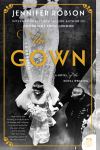
The Gown: A Novel of the Royal Wedding, by Jennifer Robson – After seeing The Gown all over Goodreads and Instagram, I had to pick it up.  I won’t say it’s going to be one of the highlights of the year, but I really enjoyed it.  Ann and Miriam were delightful characters, and I loved following their journeys.  I had the same (small) complaint as I had with The Lost Vintage, though – Heather, the present day character, seemed unnecessary and was my least favorite.  I think these books that travel back and forth in time, between characters, are not my cup of tea.  I’d much rather authors just focus on the historic storylines without adding a present-day character to the mix.

Wow!  Twelve books in May – makes sense, because it’s a long month.  But it was also a month that saw a little travel – down to Virginia Beach for Memorial Day weekend – and the closing of my Metro stop until Labor Day (oof).  Still, even with those hiccups, I got a lot of reading in, so much that I’m not even sure I can come up with highlights, but I’ll try.  The Bird King was wonderful, like everything G. Willow Wilson does.  And Good Omens, a re-read, was just as good the second time through.  The one thing I’d have liked would have been to get to more classics, although I did finish up the doorstopper biography of Edith Wharton that I started back in April.  Hoping for some Gaskell or Austen in June, though.  Or maybe even some Trollope – I’m greedy.

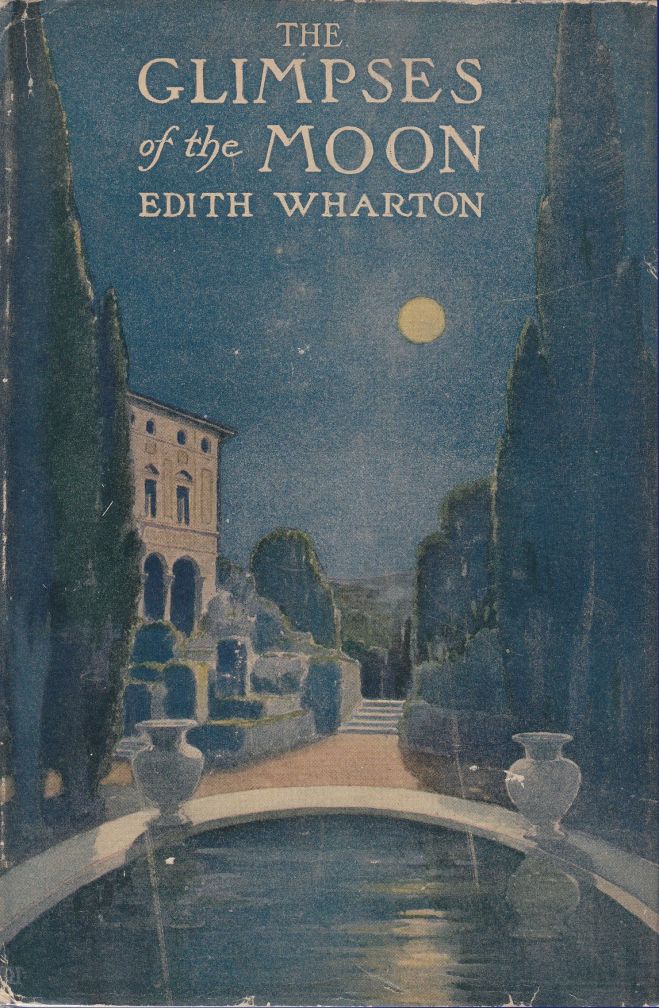
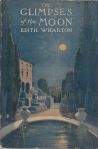
The Glimpses of the Moon, by Edith Wharton

Edith Wharton was already at the height of her powers and acknowledged as one of the most important American writers of an age – maybe ever – when she first published The Glimpses of the Moon in 1922.  Most of her best-known works, including the big three – The House of MirthThe Custom of the Country, and The Age of Innocence (my favorite) – were behind her.  Yet, for some reason, The Glimpses of the Moon is shrouded in semi-obscurity even as Wharton’s better-known works continue to be read and discussed.  I’m not sure why.  If anything, I’d have expected Moon to be one of the most enduring, as it has all of the hallmarks of Wharton – her characters traipse around Europe, flit in and out of drawing rooms, have relationship agonies on Venetian balconies, and shop for furs – but (spoiler alert!) it ends happily.  (Of course, I’d disagree with those who believe that The Age of Innocence ends unhappily.  I think Newland Archer ends up with exactly the right person, and the only tragedy in the book is the fact that he’s too dim to realize it.  FIGHT ME.  But I realize that’s an unpopular opinion, and I won’t deny that Innocence is poignant.)

The Glimpses of the Moon spins the tale of a marriage conceived as a business arrangement but that soon takes on a greater significance.  Nick and Susy Lansing decided on a whim to marry.  They were good friends, liked each other immensely, and there was an undeniable spark – but the marriage itself was something between a big joke and a limited liability partnership.  Both the “poor relations” in their group of friends, both social hangers-on, they concocted a scheme to marry, collect lots of wedding checks, and spend a year honeymooning in their rich friends’ villas, palaces and manor houses.  If at any point in the marriage, one of them caught wind of an opportunity for something better – a wealthy spouse, for instance – they’d part as friends, no hard feelings, and give one another a leg up.

The suggestion, at first, had seemed to Lansing as mad as it was enchanting: it had thoroughly frightened him.  But Susy’s arguments were irrefutable, her ingenuities inexhaustible.  Had he ever thought it all out? She asked.  No.  Well, she had; and would he kindly not interrupt?  In the first place, there would be all the wedding presents.  Jewels, and a motor, and a silver dinner service, did she mean?  Not a bit of it!  She could see he’d never given the question proper thought.  Checques, my dear, nothing but checques–she undertook to manage that on her side: she really thought she could count on about fifty, and she supposed he could take up a few more?  Well, all that would simply represent pocket-money!  For they would have plenty of houses to live in: he’d see.  People were always glad to lend their house to a newly-married couple.  It was such fun to pop down and see them: it made one feel romantic and jolly.  All they need do was to accept the houses in turn: go on honey-mooning for a year!  What was he afraid of?  Didn’t he think they’d be happy enough to want to keep it up?

I’m sure you see where this is going.

Although both entered into the partnership with eyes wide open, the business side of things falls away fairly quickly.  Spending the first part of their honeymoon at their friend Charlie Strefford’s villa on Lake Como, Nick and Susy become deeply attached to one another.  And then Nick starts to feel squeamish about the foundations on which they’ve built their relationship.  There are little squabbles to start – how Nick hates Susy’s habit of referring to her sponging off rich friends as “managing” – and then a big blowup when Nick realizes how far Susy has had to bend ethics to make their plan come to fruition.  It’s not so much that Nick suddenly acquires scruples, as that he doesn’t really consider how the arrangement is going to work until they’re in the thick of it.  And when he finally looks the situation full in the face, he can’t handle it and he bolts.

And that’s just the first third of the book!  Nick and Susy spend the bulk of the novel separated from one another, each missing the other horribly but afraid or unwilling to admit it.  Susy drifts from rich friend to rich friend and nearly becomes engaged to their old friend Streff, suddenly and unexpectedly elevated to the peerage.  And Nick has his own flirtation with possibility when he becomes private secretary to a fabulously wealthy family and their daughter confesses her love for him.  Yet deep down, each knows that their hearts are not free and never will be.  But they will need to do a lot of growing before they can realize it.

Susy’s growth happens gradually over the course of the novel.  She gradually becomes disenchanted with the glittering social world she moves in, disgusted by her so-called friends’ loose morals and shifting definitions of marriage, and disillusioned by the pointlessness of it all:

That was the way of the world they lived in.  Nobody questioned, nobody wondered any more — because nobody had time to remember.  The old risk of prying curiosity, of malicious gossip, was virtually over: one was left with one’s drama, one’s disaster, on one’s hands, because there was nobody to stop and notice the little shrouded object one was carrying.  As Susy watched the two people before her, each so frankly unaffected by her presence, Violet Melrose so engrossed in her feverish pursuit of notoriety, Fulmer so plunged in the golden sea of his success, she felt like a ghost making inaudible and imperceptible appeals to the grosser senses of the living.

“If I wanted to be alone,” she thought, “I’m alone enough, in all conscience.”  There was a deathly chill in such security.

Nick, meanwhile, has his own growing to do.  It’s far easier to sympathize with Susy than with Nick, who had eyes wide open at the beginning of the deal but who deserts Susy with no explanation when she is at her most vulnerable, and who lets months go by without delivering the letter he had promised to send within a few days.  Nick will come to his own realizations, but I don’t want to tell you about them, because I don’t want to take away the delights of how it all comes together.

It’s no secret that I love Edith Wharton – all the more for feeling as though I need to make up for lost time with her.  When I first read Wharton, in high school – Ethan Frome as a class assignment and The Age of Innocence on my own – I didn’t care for her at all.  I was bitterly disappointed, because I so wanted to love Wharton’s books.  I knew that she had made a home in western Massachusetts, just a short distance from where I grew up in upstate New York.  But her books left me profoundly disappointed.  Then years later, in my late twenties, I picked up The Age of Innocence again, and fell hard and fast for it.  My friend Susan has a theory: she believes that teenagers are incapable of enjoying Wharton, or George Eliot for that matter, because they write about adults not being able to do whatever they want – and that is the last thing a teenager wants to know about.  Certainly I was unable to appreciate Wharton when I first tried (I never even attempted Eliot until my thirties) and now, she’s a favorite.  The Glimpses of the Moon was a wonderful read.  It didn’t eclipse (<–pun intended, #sorrynotsorry) The Age of Innocence for me, but it is solidly in second place.  I think that Nick and Susy wouldn’t disagree.

Have you read Wharton?  What’s your favorite?

The Classics Club Challenge: Three Men on the Bummel

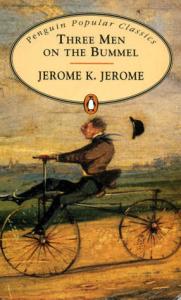
Three Men on the Bummel is the sequel to Jerome K. Jerome’s hilarious Three Men in a Boat.  In Bummel, the same set of three friends – J., Harris and George – convene for another madcap vacation.  On their first adventure, they punted the Thames from Kingston to Oxford, encountering all kinds of characters, engaging in various hijinks, and bickering companionably all the while.  This time, they’ve decided to work out their energies – pent-up from days spent toiling in their various Victorian offices – via a bicycle tour through Germany.

A few things have changed since the boating holiday.  George remains a bachelor, but Harris and J. have both acquired wives and children, and the reader is treated to a particularly funny chapter in which the men strategize about how to get their wives to agree to their planned journey.  They’re successful, of course, or the book would have ended around chapter three… but the conversations don’t go entirely as planned and while Harris and J. are quite agreeably pleased with the results, the reader is left with a sneaking suspicion that Mrs. Harris and Mrs. J. had something up their sleeves all the while.

The wives’ permission secured, the fellas set to planning their trip and discuss overhauling their bicycles, in another of the funnier scenes from the book.  J. is absolutely determined not to have his bicycle overhauled, feeling strongly that you can either overhaul a bicycle or you can ride it, but you can’t do both, and for his part, he prefers to ride.

I have had experience of this ‘overhauling.’  There was a man at Folkestone; I used to meet him on the Lees.  He proposed one evening we should go for a long bicycle ride together on the following day, and I agreed.  I got up early, for me; I made an effort, and was pleased with myself.  He came half an hour late: I was waiting for him in the garden.  It was a lovely day.  He said:—

‘That’s a good-looking machine of yours.  How does it run?’

‘Oh, like most of them!’ I answered; ‘easily enough in the morning, goes a little stiffly after lunch.’

He caught hold of it by the front wheel and the fork, and shook it violently.

I said: ‘Don’t do that; you’ll hurt it.’

I did not see why he should shake it; it had not done anything to him.  Besides, if it wanted shaking, I was the proper person to shake it.  I felt much as I should feel had he started whacking my dog.

He said: ‘This front wheel wobbles.’

I said: ‘It doesn’t if you don’t wobble it.’  It didn’t wobble, as a matter of fact–nothing worth calling a wobble.

He said: ‘This is dangerous; have you got a screw-hammer?’

I ought to have been firm, but I thought that perhaps he really did know something about the business.  I went to the tool shed to see what I could find.  When I came back he was sitting on the ground with the front wheel between his legs.  He was playing with it, twiddling it round between his fingers; the remnant of the machine was lying on the gravel path beside him.

He said: ‘Something has happened to this front wheel of yours.’

‘It looks like it, doesn’t it?’ I answered.  But he was the sort of man that never understands satire.

In further preparation for their trip, they discuss the schedule and make some very high-minded resolutions about getting early starts every day, including at the beginning of their trip, leading to my favorite chapter of the book.  George spends the final evening before departure at Harris’ house, and J. muses on the dangers of being a houseguest in a home with children.  I read the chapter on the Metro and attracted quite a few stares with my weeping, which was due to a combination of mirth and desperate resignation: it seems that Victorian children were just as apt to get up before dawn and make a ruckus as present-day children are.  The more things change, the more they stay the same.

I knew that if he slept at ‘Beggarbush’ he would be up in time; I have slept there myself, and I know what happens.  About the middle of the night, as you judge, though in reality it may be somewhat later, you are startled out of your sleep by what sounds like a rush of cavalry along the passage, just outside your door.  Your half-awakened intelligence fluctuates between burglars, the Day of Judgment, and a gas explosion. You sit up in bed and listen intently.  You are not kept waiting long; the next moment a door is violently slammed, and somebody, or something, is evidently coming downstairs on a tea-tray.

‘I told you so,’ says a voice outside, and immediately some hard substance, a head one would say from the ring of it, rebounds against the panel of your door.

By this time you are charging madly around the room for your clothes.  Nothing is where you put it overnight, the articles most essential have disappeared entirely; and meanwhile the murder, or revolution, or whatever it is, continues unchecked.  You pause for a moment, with your head under the wardrobe, where you think you can see your slippers, to listen to a steady, monotonous thumping upon a distant door.  The victim, you presume, has taken refuge there; they mean to have him out and finish him.  Will you be in time?  The knocking ceases, and a voice, sweetly reassuring in its gentle plaintiveness, asks meekly:

‘Pa, may I get up?’

You do not hear the other voice, but the responses are:

‘No, it was only the bath–no, she ain’t really hurt,–only wet, you know.  Yes, ma, I’ll tell ’em what you say.  No, it was a pure accident.  Yes; good-night, papa.’

Then the same voice, exerting itself so as to be heard in a distant part of the house, remarks:

‘You’ve got to come upstairs again.  Pa says it isn’t time yet to get up.’

Eventually, the trio departs for Germany and, despite protestations that this is not a travel book and the reader would do well to look elsewhere for detailed descriptions of scenery, we are treated to some lovely passages about the cities the friends tour during the trip.  As expected, there are more shenanigans – such as an encounter with a man with a watering hose while out cycling in the countryside and a scheme to convince George to give up drinking German beer.

I found Three Men on the Bummel enjoyable, for the most part, but it suffered in comparison to its predecessor.  Three Men in a Boat felt really fresh and new; Bummel felt like a sequel seeking to capitalize on the success of the prior book.  (I have no idea if that’s true, but it did read that way.)  It became repetitive, and there were certain tropes and scenes that have not aged well.  These flaws took the book from a four-star read to a three-star read for me.

I still liked it.  It’s hard not to like a visit with George, Harris and J., and it’s hilarious to eavesdrop on their bickering.  There are some truly genius throwaway likes (such as when J. nonchalantly notes that when his Uncle Podger tries to leave the house in the morning, he’s always surrounded by a gaggle of children, and the child with the stickiest face is “always the most affectionate.”).  But for future Victorian hilarity, I think I’ll revisit Three Men in a Boat.

Three Men on the Bummel, available here (not an affiliate link).


Reading Round-Up: April 2019

Reading is my oldest and favorite hobby. I literally can’t remember a time in my life when I didn’t love to curl up with a good book. Here are my reads for April, 2019

Moon Tiger, by Penelope Lively – I’ve been wanting to read more Lively and I thought I’d begin with her classic Booker prize-winning novel.  Claudia Hampton, a famous and bestselling popular history author, is on her deathbed, but her mind is still churning away.  Claudia thinks she is going to write a kaleidoscopic history of the world, but instead her memory turns through the significant events and people in her life, when she was much younger, all sharp edges and flaming hair.  The fixed, central point of Claudia’s life is her love affair with a tank commander in Egypt during World War II.  Moon Tiger was beautiful, heartbreaking, frustrating at times (Claudia could be maddening) and unlike anything else.

A City of Bells (Torminster #1), by Elizabeth Goudge – Captain Jocelyn Irvin is looking for a place to heal his body and soul and decide on his next step in life, and he settles upon Torminster, a cathedral city where his grandfather is a canon.  The city of Torminster adopts Jocelyn and immediately starts dictating his life and before he knows it, he finds himself set up as a bookseller, enjoying the company of two of his precocious little cousins and falling in love.  But there is a dark mystery that preoccupies Jocelyn, his love, his grandfather and his cousin Henrietta and Jocelyn soon finds that he can’t rest until he has solved it.  I really enjoyed this story, but as with Goudge’s other work, the best parts are her gorgeous descriptive passages on houses, gardens, and the beauties of nature.

The American Agent (Maisie Dobbs #15), by Jacqueline Winspear – I love every visit with Maisie and this one was a good installment in the series.  Maisie has been tapped to investigate the murder of an American journalist with a complicated past.  Was Catherine Saxon killed because she asked the wrong questions in her reporting, or was her murder something personal?  While Maisie tries to untangle the knots, she is – as always – dealing with a host of personal issues, including the pending adoption of her evacuee, Anna; her worries about a dear friend; and the possibility that she might be ready to open her heart to a new relationship.  I always enjoy a visit with Maisie, and this was a good one.

The Familiars, by Stacey Halls – You know how you pick up a book that looks like it is going to be right in the middle of your wheelhouse, and you’re SO worried that it will disappoint?  The Familiars occupied a heavily overlapped space in my personal Venn diagram, and it did NOT disappoint.  The Middle Ages, a women-centered story, pregnancy, witchcraft – check, check, check, check.  I loved it.  Bonus: while the book itself is fictional, all of the main characters – Fleetwood, Alice, Richard – and many peripheral characters were all real people, sending me down a fascinating rabbit hole of actual historical documents online.

Another Self, by James Lees-Milne – I knew that I should have stayed focused on my library stack, which constantly grows more and more out-of-control, but my recently acquired copy of James Lees-Milne’s memoir of his childhood years and of being a young man proved impossible to resist.  Lees-Milne, for those who don’t know him, is largely responsible for making the National Trust what it is today, for preserving lots of English national treasures, and for being one of the snarkiest diarists of the twentieth century.  His memoir was excellent fun, and I can’t wait to read the diaries now.

The Handsome Man’s De Luxe Cafe (No. 1 Ladies Detective Agency #15), by Alexander McCall Smith – I’ve fallen behind on the adventures of Mma Ramotswe, but I always enjoy a visit and a cup of red bush tea with her.  As with many of the No. 1 Ladies Detective Agency books, the actual mystery took a backseat to stories about the agency and the characters associated with it.  Mr. J.L.B. Matekoni has had to lay off one of his employees, and Mma Ramotswe comes up with an idea to soften the blow, but it might (probably will) backfire spectacularly.  Meanwhile, Mma Makutsi is trying to start a new business, and it turns out that 97% at the Botswana Secretarial College might not give her everything she needs to run a successful restaurant.  It’s a good thing Mma Ramotswe always has everyone’s backs.  This wasn’t my favorite installment in the series, but it was still delightful.

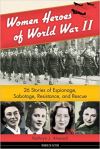
Women Heroes of World War II: 26 Stories of Espionage, Sabotage, Resistance and Rescue, by Kathryn J. Atwood – I’ve been reading a lot about World War II lately, it seems.  I stumbled upon this book while looking for more information about one of the women profiled in Last Hope Island, and it was fascinating – and distressing.  I’d love to read more about so many of these brave women.

The Glimpses of the Moon, by Edith Wharton – I really enjoyed this lesser known work of Wharton’s – it didn’t eclipse (<–pun, not sorry) my love for The Age of Innocence, but it was a solid second.  The story of the mercenary marriage between Nick Lansing and Susy Branch, and the unexpected turns their relationship takes, was such fun to read.  I love Wharton’s writing, and this one was particularly atmospheric as the characters drifted between Lake Como, Venice, Paris, and London.  I can see myself re-reading it before long.

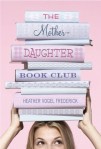
The Mother-Daughter Book Club (Mother-Daughter Book Club #1), by Heather Vogel Frederick – A re-read for me, I was craving something light and wholesome during a stressful month at work, and a visit with Emma, Jess, Megan, Cassidy and their moms was just what the doctor ordered.  I’ve read the entire series before, and each book is better than the last.  I think I’m going to work my way through the whole series again – I need it – and I am already looking forward to Much Ado About Anne.

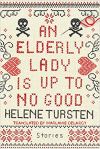
An Elderly Lady is Up to No Good, by Helene Tursten – I was a bit skeptical, but decided to give this short collection of inter-related short stories a try, and MAN am I glad I did.  Maud is a crotchety octogenarian who just wants her peace and quiet, a cheese plate, and to surf the web and travel the world.  Unfortunately, circumstances are always conspiring to steal away her peace – whether by noisy or interfering neighbors, ex-lovers’ engagement announcements, or shady antique dealers.  But Maud is up to any challenge and she’s not above committing a little murder.  I loved this!

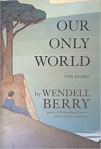
Our Only World: Ten Essays, by Wendell Berry – I’ve been meaning to read Berry’s essays for some time now, and thought I’d give them a try via the library before committing to the new Library of America collection.  I’m glad I went the library route, because… I didn’t love them.  Some of the points about land use and conservation were incredibly wise, but Berry lost me with his essay “Caught in the Middle,” in which he rambles about abortion and gay marriage.  I forced myself to continue, because I think it’s valuable to read other perspectives.  But his rantings about abortion, in particular, struck me as ill-informed and poorly constructed, with the added insult of being totally sanctimonious.  The only reason I didn’t throw the book at the wall was that I was reading it on the metro.  I may try Berry’s fiction at some point, but I’m not in a rush, and I’ll be taking a pass on any more essay collections.

In general, a really good April!  I read a lot of good stuff, and there were some contenders for the annual top-ten list – especially the Lees-Milne memoir, the adventures of a bloodthirsty elderly lady, The Glimpses of the Moonand The Familiars.  I also spent a chunk of April reading Hermione Lee’s doorstopping biography of Wharton, which I am hoping to finish up in the next week – so you’ll be seeing more references to Edith soon.  I’m looking forward to May reading – I have some excellent library checkouts to read through, and I think I have the library stack under control enough that I might actually get to read something from my own shelves.  Wouldn’t that be a treat?

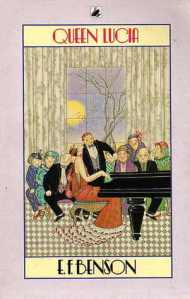
The Classics Club Challenge: Queen Lucia and Miss Mapp

(Busted – that’s a picture from Chipping Camden, not from Rye, the village of E.F. Benson’s residence and, famously, his inspiration for “Tilling.”  But can’t you just imagine these windows right into a 1920s series about conniving social climbers in an English village?)

Prepare for social domination… domination… domination

E.F. Benson’s Mapp and Lucia novels are classics of comedic British literature – such that it’s really appalling that it’s taken me this long to find my way to the series and read all the way through.  Benson famously resided in Rye (also home to literary luminary Henry James) in a stately city house much like the one where Elizabeth Mapp perches all-seeing in her sweet little bow window.  From that undeniably fertile ground, Benson has raised personalities such as Miss Mapp, unmatched in her conjectures and schemes; Lucia Lucas, cultural guru of neighboring Riseholme; and supporting characters such as Major “Benjy” Flint, Georgie Pillson, Godiva Plaistow, Daisy Quantock – and the list goes on.

Queen Lucia introduces us to Emmeline “Lucia” Lucas, her husband “Peppino,” best chum Georgie Pillson and frenemy Mrs. Quantock.  When the book opens Lucia is the undisputed Queen of her small village, Riseholme.  She is a benevolent ruler, treating her subjects to garden parties and evenings listening to Lucia play the first movement of the Moonlight Sonata – not the second or third, though, because they are really more “afternoon” and “midnight.”  She goes so far in thinking of their well-being that in the opening scene, she walks home from the train station after a visit to London, so that the villagers will have something to talk about when they see her luggage arrive home without her.  But there are revolutionary rumblings threatening Lucia’s throne – her frenemy Daisy Quantock has brought a “Guru” from London to teach her yoga and mindfulness.  Lucia quickly determines that she must “annex” the “Guru” before Daisy usurps her position as arbiter of all things cultural and/or interesting.  No sooner has Lucia carried off this feat than an opera prima donna arrives in town and begins hosting “romps,” and Lucia’s loyal lieutenant, Georgie, begins to harbor revolutionary feelings of his own.  What is a self-proclaimed village cultural ruler to do?

In Miss Mapp, we meet the denizens of Tilling for the first time.  Elizabeth Mapp reigns supreme over the high street – or at least, she’d like to think she does.  She certainly has a gift for seeing what her neighbors are up to and connecting the dots to ferret out all their disagreeable little secrets.  But Miss Mapp gets her comeuppance time and again – whether in the form of accidental twinning with her archrival “Diva” Plaistow, curtsying to a man she mistakenly believes to be the Prince of Wales, being threatened with false and defamatory rumors about drunkenness, or having nothing to do with a duel that comes to nothing.  Every time Mapp gets into a social scrap, the reader finds herself torn between rooting for her and hoping that she embarrasses herself – again.  Each of the characters surrounding Miss Mapp – from the ostentatious social climber Mrs. Poppit to the exhibitionist fishmonger – is a delight.

There are four more novels in the Mapp and Lucia series – and that’s just the originals, by E.F. Benson, not even counting the continuation of the series by Tom Holt.  I’m saving them for a future day – they’d make wonderful summer reading on the back patio, with a glass of lemonade.  The anticipation of the earth-shaking social tremors that are sure to happen when Mapp and Lucia encounter one another for the first time gives me the shivers.

A combined edition of Queen Lucia and Miss Mapp is available here (not an affiliate link).

Old New York, by Edith Wharton

Old New York is a collection of four novellas, each telling a story of a different decade in New York society.  In False Dawn, Wharton explores the stormy relationship between a son and his domineering father, and the bittersweet consequences when the son attempts to stretch his wings.  The Old Maid portrays two cousins who share a heartbreaking secret, and The Spark is a portrait of a wealthy banker who is both admired and ridiculed.  New Year’s Day, the final novella in the collection, was – I thought – the best of the set.  It tells the story of a married woman who is engaged in an affair, and how her efforts to keep the affair secret after she and her lover are spotted fleeing a hotel fire – but there is a surprising twist I won’t tell you about, because I don’t want to spoil this wonderful book.

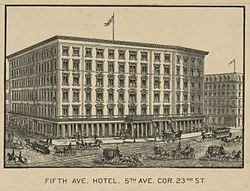
Wharton classes each of the novellas as a story of a different decade – the 1840s, 1850s, 1860s and 1870s.  By virtue of this march through time, certain characters and families reappear – Sillerton Jackson, for instance, is a minor character who first appears in The Old Maid (1850s) as a potential suitor to one of the three principal characters.  By New Year’s Day (1870s) he is a venerable and inscrutable old gentleman who spies the main character, Mrs. Hazeldean, in her guilty escape from the burning Fifth Avenue Hotel.  There are recurring references to the same old New York families in both False Dawn and The Old Maid, as well.

As I often do when reading a collection that is comprised of multiple stories, I had a range of reactions.  I didn’t really get the point of The Spark, the 1860s contribution.  The summary promised a tale of a young man whose moral retribution is “sparked” by a chance encounter with Walt Whitman, but that didn’t really happen.  One of the characters does encounter Whitman in an Army hospital during the Civil War, but it’s not a centerpiece of the narrative; most of the action takes place in the 1890s (confusingly, since The Spark is supposed to be a story of the 1860s) and centers upon the wealthy banker, Hayley Delane, taking in his ailing father-in-law.  There didn’t seem to be much of a plot and the characters didn’t engage me; The Spark was the shortest of the four novellas and the least developed.

False Dawn and The Old Maid presented more of a contrast and showcased Wharton’s masterful writing.  False Dawn was particularly evocative in its description of the Raycie family’s grand Long Island estate – I could see the house lights glittering on the Sound and feel the summer heat.  And The Old Maid presented a beautiful, bittersweet portrayal of two women’s desperate bargain in order to avoid scandal.

But New Year’s Day was the crown of the collection.  The novella opens with a young man being chastised by his mother for speaking the name of Lizzie Hazeldean in front of his impressionable sisters.  Because Lizzie Hazeldean was bad – she met men in the Fifth Avenue Hotel – or so the narrator’s mother claims.  The action then quickly jumps to a winter’s day on Fifth Avenue in the 1870s.  The Fifth Avenue Hotel is ablaze, and it seems that half of New York society is comfortably watching the conflagration from behind the draperies of a grand house across the street.  Out of the burning hotel, nearly but not quite lost in the crowds, run Lizzie Hazeldean and Henry Prest, and New York society is scandalized.  Over the course of the day, Mrs. Hazeldean agonizes over whether her acquaintances recognized her in the press of people and whether her invalid husband, who had dashed out to see the fire engines, had spotted her.  There is a twist, which I won’t reveal, but it takes the novella from a breathless tale of scandal, wonderful on its own, into truly poignant and tragic territory.  I loved it.

Old New Yorkby Edith Wharton, available here (not an affiliate link).

The Classics Club Challenge: Doctor Thorne

Every time I read another Trollope, I wonder what took me so long to start with him, and why I let so much time go by in between visits to his world.  Doctor Thorne is the third installment in the six-novel Chronicles of Barsetshire series, which just keeps getting better and better.  This is also the first installment to take the reader outside the rarefied world of Barchester clerical leadership and into another part of the county and another echelon of society; although there is one brief shoutout to the Bishop of Barchester, the action lies elsewhere.

The novel opens with an evocative description of the Barsetshire village of Greshamsbury, the manor house of the same name, and the family of squire Gresham.  We learn all about the present squire’s failed stint in Parliament and his financial woes, driven by his avaricious and snobbish wife, Lady Arabella Gresham.  The action really begins with the twenty-first birthday celebration of Frank Gresham the younger, son of the current squire.  It’s a celebration, but a bit of a somber one, because the estate is in dire straits and the townspeople have lost a deal of respect for the squire.  It’s hard to keep a twenty-one-year-old’s spirits down, though, and young Frank is feeling pleasantly flirtatious.  His attentions are focused on his lovely neighbors Patience Oriel and Mary Thorne.

Frank, as the author explains, might be viewed by some as the hero of the story, and he is destined to play the romantic lead:

It is he who is to be our favorite young man, to do the love scenes, to have his trials and his difficulties, and to win through them or not, as the case may be.  I am too old now to be a hard-hearted author, and so it is probable that he may not die of a broken heart.

Trollope has his (misguided) detractors, and one of their frequent complaints is his tendency to insert the authorial voice into the storytelling.  The reader is never permitted to forget that there is an author behind the words.  I can understand the critique, but I personally enjoy Trollope’s little asides.  They feel conspiratorial, as though author and reader are sharing a cuppa and a little joke.

Anyway – back to the young people.  If Frank Gresham is our romantic hero, Mary Thorne is his leading lady.  Mary is the niece of one of the village doctors.  Her birth is something of a matter of mystery – her father was Doctor Thorne’s ne’er-do-well brother, and her mother, well, Mary doesn’t actually know.  The result of this mystery is that, even though Mary is loved and well-cared-for by her uncle, she is essentially without name or fortune.  She’s been brought up as a gentlewoman, but without the expectations of ever being able to marry a gentleman.  Mary is conscious of the precariousness of her own position, and is at pains to discourage young Frank in his attentions – as she believes, like everyone else, that a union with the squire’s son would be impossible.  There are two insurmountable obstacles to such a match: Mary’s utter lack of social position, and her utter lack of funds.

Because Frank – as his mother and her aristocratic relations keep reminding him – has a duty to the estate: “Frank must marry money.”  It’s the only way to solve the financial problems that have beset the estate in recent years.  Frank’s father inherited a robust property, but has run through the family fortune in less than one generation – financing repeated unsuccessful runs for Parliament and other demands of his wife.  Lady Arabella is at the root of all the Greshams’ problems, but naturally she doesn’t see it that way.

Frank has a stubborn streak, and the more he is told (by everyone in the book, Mary included) that he can’t have Mary, the more he is determined that she is the only one for him.  Lady Arabella and her relations conspire to drag him off to Courcy Castle, the family seat of Frank’s mother’s family, and throw him in the way of Martha Dunstable, a fabulously wealthy heiress nine years his senior.  Frank resists the entire time, but he is no match for his Aunt de Courcy – and a good thing, too, because Miss Dunstable is one of the best characters I’ve encountered so far in all of English literature.  Witty, a little acerbic, discerning enough to know when she’s being pursued for her money, Miss Dunstable spends most of her visit to Courcy Castle in rejecting suitors – gently or harshly, as the situation requires.  She sees immediately that Frank is being goaded into a proposal, and she also perceives that he’s no more interested in marrying her than she is in him – which she confirms after he finally proposes and immediately confesses that he’s in love with his pretty neighbor.  And with that, Miss Dunstable becomes Frank and Mary’s biggest cheerleader and, often, Frank’s only source of support in pursuing the match.

Unbeknownst to the young lovebirds, wheels are turning that could change everything.  Doctor Thorne’s richest patient, Sir Roger Scatcherd, is dying.  Sir Roger was once a humble tradesman, but his brilliance in engineering and business made him a fortune and saw his elevation to baronet – a hereditary title – but also contributed to his untimely demise from alcoholism.  Sir Roger calls Doctor Thorne to his bedside and divulges that he wishes to leave his fortune to his alcoholic son, Louis, but if Louis should die before attaining the age of 25, the fortune should pass to the eldest child of Sir Roger’s sister, Mary.  What Doctor Thorne knows, but Sir Roger does not, is that Mary Scatcherd’s eldest child is – Mary Thorne.  And this sets up the novel’s central ethical problem: Doctor Thorne is committed, by virtue of the norms of his profession and a promise to Sir Roger, to keeping Louis alive and healthy so he can inherit, but he knows that if Louis dies, Mary will inherit the fortune and could – if Lady Arabella doesn’t ruin everything – finally have a clear path to happiness with Frank.

I won’t tell you how it all plays out, but it’s Trollope – so you can probably guess.  He’s as committed to happy endings as his predecessor Jane Austen.  What I really want to talk about is how funny this book is.  Trollope’s excellent sense of humor might be one of the best and least known characteristics of his writing.  A series of 600+ page novels about Victorian clergy doesn’t sound like it would be a laugh-fest, but Trollope’s fans are well-supplied with jokes all the same.  There was one scene that made me laugh out loud just as Nugget was reaching the punch line of one of his toddler jokes, and he was delighted with his humor’s reception – until he realized that it was the book Mommy was laughing at, not him.  It’s a scene early on in the book, in which Frank has solicited the advice of his cousin, the Honorable George, on speech-giving.  The Honorable George advises Fred to fix his gaze on a bottle, but there are so many bottles on the table that Frank gets overwhelmed:

Up he got, however, and commenced his speech.  As he could not follow his preceptor’s advice as touching the bottle, he adopted his own crude plan of ‘making a mark of some old covey’s head,’ and therefore looked dead at the doctor.

‘Upon my word, I am very much obliged to you, gentlemen and ladies, ladies and gentlemen I should say, for drinking my health, and doing me so much honour, and all that sort of thing.  Upon my word I am.  Especially to Mr Baker.  I don’t mean you, Harry, you’re not Mr Baker.’

‘As much as you’re Mr Gresham, Master Frank.’

‘But I am not Mr Gresham, and I don’t mean to be for many a long year if I can help it; not at any rate till we have had another coming of age here.’

‘Bravo, Frank, and whose will that be?’

‘That will be my son, and a very fine lad he will be; and I hope he’ll make a better speech than his father.  Mr Baker said I was every inch a Gresham.  Well, I hope I am.’  Here the countess [de Courcy] began to look cold and angry.  ‘I hope the day will never come when my father won’t own me for one.’

‘There’s no fear, no fear,’ said the doctor, who was almost put out of countenance by the orator’s intense gaze.  The countess looked colder and more angry, and muttered something to herself about a bear-garden.

The image of Frank blundering through his speech with his gaze fixed intensely on poor Doctor Thorne, while the countess grumbles in the background, slayed me.  And it’s the beginning of many laugh-out-loud moments to come: Lady Scatcherd (another wonderful character) hiding in the pantry and squabbling with her housekeeper about who has to go upstairs to receive an unwanted guest; the sometimes scathingly witty marriage rejections doled out by the fabulous Miss Dunstable; and Sir Roger’s roaring “put him under the pump!” when visited by the odious Doctor Fillgrave – hilarious.

But between the funny moments, Doctor Thorne is a sweet story of a boy growing into a man, with a man’s constant love for the friend of his childhood; of a doctor struggling between his ethics and his desire to see his niece happy; of a father grieving the burdens his mismanagement has placed on his son; of an epic battle between an aristocratic snob and a young woman whose mild demeanor hides her spine of steel; of the pulls between money, social position, and love.  In short – it’s vintage Trollope.

Doctor Thorne, by Anthony Trollope, available here (not an affiliate link).


Reading Round-Up: January 2019

Reading is my oldest and favorite hobby. I literally can’t remember a time in my life when I didn’t love to curl up with a good book. Here are my reads for January, 2019


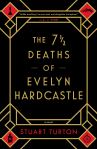
The 7 1/2 Deaths of Evelyn Hardcastle, by Stuart Turton – If there was one word to describe this murder mystery, it was this: BONKERS.  Every day, Aiden Bishop wakes up in a new body, but every day his mission is the same: Evelyn Hardcastle will be murdered at 11:00 p.m. tonight.  Find out who kills her.  Aiden has eight days to solve the mystery; if he figures out the answer, he’ll be released from this bizarre game.  If he fails, he’ll start all over again.  Evelyn Hardcastle was like nothing I’ve read before, and I’m still trying to decide if I liked it or not.  It gets major points for keeping me guessing and turning pages.  Bonus for the fun of discussing it with Katie, who read it a few days after I did.  (One question remains unanswered: the UK title is The Seven Deaths of Evelyn Hardcastle.  I still don’t understand why Evelyn had to die an extra half a time in ‘Murica.)

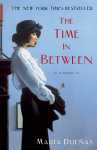
The Time in Between, by Maria Duenas – I’ve had this popular recent novel of a Spanish dressmaker who turns spy in World War II, on my TBR for awhile, and I enjoyed it.  It’s a lot of fun, very engaging, with a cast of complex, living characters who seem to leap off the page.  I loved the evocative Morocco scenes, and the spy parts were good fun – as World War II spy novels often are.  My one complaint: at 609 pages, it was too long.  There was more backstory than I needed or wanted, and I found myself wondering when we’d be getting to the espionage parts.  Once we finally did get there, the author had to rush to get through the plot; it did seem that the book could have benefited from a touch more editing and a more even pace.

I‘ll Be There for You: The One About Friends, by Kelsey Miller – I think I saw this on Instagram first, and I knew I had to read it.  This new nonfiction release is a deep dive into the cultural phenomenon of Friends, a television show that I – like everyone else – love.  Miller explores the history behind the show, how it came to be made, the relationships between the cast members, and how the show came to represent a generation.  She doesn’t shy away from the more problematic aspects of Friends – the gay jokes, fat jokes, and lack of diversity that dismay the modern viewer for good reason – but even when she turns a critical eye on these elements, the reader can tell that it comes from a place of loving the show.  Seeing it for what it is, but loving it nonetheless.  Any fan of Friends will definitely want to pick this one up.
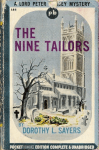
  

The Nine Tailors (Lord Peter Wimsey #11), by Dorothy L. Sayers – I loved the winter selection of the Tea & Tattle Book Club!  I’m always glad to visit with Lord Peter Wimsey, but I usually prefer the installments in which his lady friend, mystery novelist Harriet Vane, appears.  The Nine Tailors doesn’t feature Harriet, but I didn’t have time to miss her what with all the bell-ringing and corpse-finding.  The book opens on New Year’s Eve with Lord Peter, attended by his faithful valet Bunter, driving his car off the road near the parish of Fenchurch St. Paul.  The parish’s kindly rector, the Rev. Mr. Venables (OF COURSE) takes Lord Peter and Bunter in and conscripts Lord Peter into assisting with all-night bell-ringing, as one does.  Two months later, a disfigured corpse turns up in the churchyard (again: OF COURSE) and Lord Peter returns to solve the crime.  There are references to bell-ringing, secret identities, missing jewels (WHY NOT) and more fun.

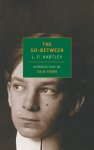
The Go-Between, by L.P. Hartley – I’ve been meaning to read this classic bildungsroman for ages now, and finally made time for it this month.  The Go-Between is the story of young Leo Colson, who visits a school friend’s wealthy family for the summer and finds himself swept up in the adults’ machinations, with tragic results.  Ian McEwan was influenced by it while writing Atonement (which I love) and it’s easy to see why.  So – I liked, but didn’t love, The Go-Between.  The plot was engaging and the writing evocative, except that I found it hard to buy into the central relationship.  And Hartley did one of my pet peeves – he explained his use of symbolism.  I haaaaaate it when authors explain what they’re doing.  I’m a smart lady; have a little faith that I can put two and two together on my own without having it banged over my head repeatedly, thank you.  The best part of the book was Leo’s relationship with Marcus, which was so true to life and absolutely hilarious.

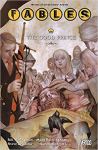
Fables, Vol. 10: The Good Prince, by Bill Willingham – The Fables series gets better and better, and The Good Prince was a delight.  The Fables are preparing for war against the Adversary, but before the hostilities begin, there’s a respite as the reader follows the adventures of Prince Ambrose, a/k/a The Frog Prince.  Ambrose’s memories have been buried for centuries, but he has begun to recall how the Adversary’s troops murdered his family, and he decides to get revenge.  But because Ambrose is possibly the sweetest character ever written, his method of getting revenge is… different.  Accompanied by the ghost of Lancelot of the Lake, and wielding Excalibur, Ambrose enters the Homelands at the head of a ghost army, builds a new kingdom called Haven, and promptly sends an envoy to needle the Emperor and proclaim that Haven’s doors are open to refugees from the Empire.  Throughout the adventure, Ambrose – now King Ambrose of Haven – remains as pure-hearted as ever, and the result is that it’s a really lovely read.
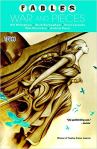
  

Fables, Vol. 11: War and Pieces, by Bill Willingham – Volume 11 picks up right where Volume 10 leaves off, and we see the war between Fabletown and the Empire.  Fabletown – in a surprise move – strikes first, catching the Empire off guard.  Prince Charming directs the war from the skies, the Big Bad Wolf commands the rear guard, and a secret weapon moves into the heart of the capital city.  It’s an exciting volume, full of lots of bravery and some sad moments as the Fables’ side experiences losses.  I am loving this incredibly imaginative comic.

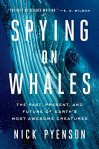
Spying on Whales: the Past, Present and Future of Earth’s Most Awesome Creatures, by Nick Pyenson – This was a really interesting take on popular science around cetaceans.  Pyenson is a paleontologist and the head of marine mammal paleontology at the Smithsonian, and he approaches the subject of whales from that perspective.  Most of the literature I’ve consumed about cetaceans is written by conservationists and marine mammologists, and Pyenson’s focus on how whales evolved and where they came from sheds a fascinating new light on where they may be going.

How Long ’til Black Future Month?, by N.K. Jemisin – This one was spotty for me, which I think was mostly a function of short stories not being my jam.  I often find them hard to get into, and I can never bring myself to care as much about short story characters as I would care about characters in novel-length fiction (probably not surprising).  Some of the stories, I really enjoyed – L’AlchemistaThe Effluent Engine, and Cuisine des Memoires were my favorites.  Others made no sense at all, and one I couldn’t even get through – I have no ability to read about bad things happening to kids, and I could tell immediately that I was going to be upset by the story Walking Awake, so I skipped it.  Other stories, I think, suffered from not having enough pages for Jemisin to flex her world-building muscles.  The best stories in the collection were those that took place in a somewhat fantastical version of a real place – for instance, The City Born Great (New York), or The Effluent Engine and Sinners, Saints, Dragons, and Haints, in the City Beneath the Still Waters (both New Orleans).
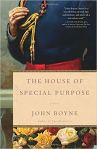
   

The House of Special Purpose, by John Boyne – Georgy Jachmenev and his wife Zoya have lived in London since they fled Russia (by way of Paris) after the Bolshevik Revolution.  Now it is 1981, and Zoya lies dying in hospice, while Georgy reflects back on their life together.  Georgy was in service to the last Tsar of Russia – as a companion and bodyguard to the Tsarevich Alexei – and his memories of his life with the Imperial Family, and their demise, still haunt him.  So – this was a fun book to read, if you didn’t squint too hard at the details.  It was engagingly written, and both Georgy and Zoya are sympathetic characters.  But you really have to suspend disbelief at Georgy’s knack for being present at pivotal historical moments (he helped dispose of Rasputin’s body and was the witness to the Tsar’s abdication papers?!) and if you know much about the Romanovs, you’ll spot a lot of historical inaccuracies.  From what they ate (Georgy describes the family at one of their “typically sumptuous meals” but in reality, they were big on the traditional food of Russian peasants – lots of brown bread) to the way things transpired at the Ipatiev House, it was really farfetched.  (I’ve read a fair amount about the Romanovs, so maybe I’m a poor example.)  The inaccuracies notwithstanding, this book was a page-turner and a lot of fun to read.

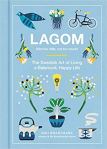
Lagom (Not Too Little, Not Too Much), by Niki Brantmark – I think Lagom is supposed to be the next hygge?  I’ve seen this and a couple of other books on the topic on #bookstagram, so I grabbed it from the library.  It was a really, really pretty book – lots of lovely and restful pictures.  But it was kind of also a lot of common sense.  Did you know that you should take breaks from work, use your vacation time, eat reasonable portion sizes, and spend time in nature?  Not exactly earth-shattering stuff.  But a nice restful way to spend a day’s reading.

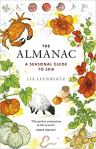
The Almanac: A Seasonal Guide to 2018, by Lia Leendertz – I know you’re thinking that’s a typo, but it isn’t.  Jac, why would you read a 2018 almanac in 2019?  Excellent question.  The answer is: I am still waiting for my 2019 edition to arrive, but in the meantime, the 2018 edition was on Amazon Prime and packed with lovely nature writing, delicious-looking recipes, and sweet line drawings of garden treats, fauna, and more.  I read it in a day and I’m not even a little bit sorry I gave the time to a 2018 almanac in 2019.

Swimming With Giants: My Encounters With Whales, Dolphins and Seals, by Anne Collet – I’ve had my eye on this one for some time now.  Anne Collet is a famous marine mammologist and cetacean specialist, and Swimming With Giants is her memoir of a fascinating career.  The translation is a bit shaky in parts, but Collet’s voice comes through charmingly, and her career is so interesting and envy-inspiring.  Obviously swimming with whales and dolphins is frowned upon now, so I’m glad to have gotten to live vicariously through Collet’s 1970s experiences.

Well, that escalated quickly.  Thirteen books to start off 2019!  And a bit of a mixed bag.  The highlights were definitely The Nine TailorsI’ll Be There For You, and The Almanac 2018, but there were other fun ones mixed in as well.  Not as many classics as I’d have liked to see at the beginning of a new year, but I’m not worried.  I have eleven more months to read all the classics my heart desires.


Reading Round-Up: December 2018

Reading is my oldest and favorite hobby. I literally can’t remember a time in my life when I didn’t love to curl up with a good book. Here are my reads for December, 2018


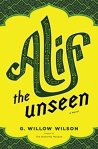
Alif the Unseen, by G. Willow Wilson – I love Wilson’s work on Ms. Marvel, but hadn’t picked up Alif the Unseen because I didn’t think I could adore any of her characters as much as I adore Kamala Khan.  But this story – of a young hacker in a fictional Middle Eastern city, his pious next door neighbor, and their encounters with thugs and djinn, was so much fun.  I was completely entranced by the world, laughed with and cried for the characters, and was thoroughly delighted with every page and sad to see it end.

The Lost City of Z, by David Grann – This nonfiction story of exploration and obsession in the Amazon has been on my to-read list since I first heard Liberty pitch it on the All the Books! podcast, so I was delighted when my book club chose it for the December read (pushed to January, since no one could make the December meeting, and we’ll finally get to talk about it TONIGHT!).  The author skillfully interweaves the histories of the Amazon and of the intrepid British explorers who mapped the world with his own quest to find out what happened to the most daring of them all, and whether there was any truth to the rumors of a vast civilization hidden deep in the Amazonian jungle.  It was a fascinating book – I’d have liked a bit more discussion on colonialism and its effects, but all in all, a great read.

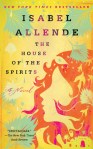
The House of the Spirits, by Isabel Allende – Another one off the deep TBR, and my first Allende.  Magical realism is not my genre (to paraphrase my friend Susan, it doesn’t follow the rules, everything seems normal except that someone lives to be 500 years old for no reason) but I’ve wanted to read some Allende, and I thought I’d begin with her best-known classic.  I did enjoy the book, although it took me awhile to get into it and then it took me awhile to get through it.  As I told a couple of friends, it was what I’d have liked One Hundred Years of Solitude to be.


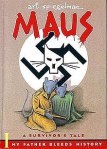
Maus I: My Father Bleeds History, by Art Spiegelman – Ever since I started reading comics and graphic novels a few years ago, I’ve heard about Maus – how powerful and wrenching it is, and how it’s a classic of the form.  I finally decided that December was the time to read the first volume (of two) and picked it up from the library.  I can definitely see why it’s a classic.  It was an incredibly compelling – and very upsetting – book.  I think I’m going to need a long break before I can pick up the second volume, but it’s a classic for very good reason.

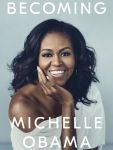
Becoming, by Michelle Obama – After Maus, I needed something powerfully uplifting and joyful, and clearly that meant I needed Michelle.  I preordered Becoming months ago, knowing that the wait for a library hold would be painfully long and that it was going to be something I’d want on my permanent shelf anyway.  And WOW, was it incredible.  Michelle’s voice is so fresh and real, and I was immediately swept up in her life.  I read the scene in which she and Barack got ice cream, early in their dating life, on a cold night’s commute on the DC metro – and I remember looking up from the book and being surprised to find myself (1) at my metro stop, and (2) in suburban DC, in the dark, on a cold night in December.  I really thought I was in Chicago, walking down the sidewalk on a sweltering summer’s day with Miche and Barack, trying not to let my ice cream drip on the pavement.

In Love and Trouble: Stories of Black Women, by Alice Walker – A quick, but powerful and beautifully written, collection of short stories about the experience of being a black woman in twentieth century America.  I haven’t read any other Alice Walker books, although I’ve been meaning to.  Her stories were so evocative and compelling – I can’t wait to seek out more.


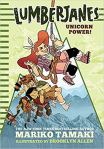
Lumberjanes: Unicorn Power!, by Mariko Tamaki – I needed something light and fun to get me through the last busy days before going out of town for Christmas, and the first Lumberjanes novel – which I had sitting on my shelf – fit the bill perfectly.  I knew the characters already, from reading the comic, and so it was easy to plunge right back into their magical summer camp adventures.  In this first novel installment, April discovers a mountain that is sometimes there and sometimes not, and she convinces Jo, Mal, Molly and Ripley to climb it with her in pursuit of their Extraordinary Explorer pins.  Of course, when they get to the summit, things aren’t quite as they seemed.  Also, there are unicorns!

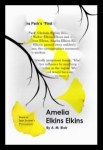
Amelia Elkins Elkins, by A.M. Blair – Full disclosure: the author is a cherished friend of mine, and I’m already disposed to like anything she writes.  But Amelia Elkins Elkins would be a delight even if I didn’t know and like her creator.  This is a retelling of Persuasion from a modern vantage point, centered around a wrongful death lawsuit after the main character’s mother takes her own life following a medical implant gone wrong.  Blair’s take on Anne Elliot feels very true to life, and her twist on the familiar story is fascinating.  Highly recommended.

Christmas Pudding, by Nancy Mitford – I’d been saving Christmas Pudding for holiday reading, and it was exactly what I was looking for.  Christmas in the true Mitford style is witty, a little dramatic, with lots of Merrie England-ing and a good deal of booze.  And it was GREAT.  I don’t think anyone would argue that Christmas Pudding is up to the standard of Nancy’s classic The Pursuit of Love, but it was a rollicking good read.  The Christmas Day chapter was one of my favorite reads of 2018, and I laughed at it until I cried.


Christmas Poems, ed. John Hollander – I just love everything about the Everyman’s Library Pocket Poets collection – the size, the design, the curation, everything – and Christmas Poems was a delight to dip in and out of all season long.  I particularly loved the poems on Advent and the Nativity – Dorothy Parker’s take on a maidservant at the Inn where Mary and Joseph were turned away was especially poignant – and the carols, of course.

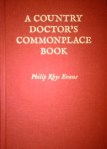
A Country Doctor’s Commonplace Book, by Philip Rhys Evans – As I mentioned in my Christmas book haul post, this was one of the books I found under the tree.  It’s a slim little book and I read it in a day, but I LOVED EVERY SECOND.  Steve could tell, too, because I kept interrupting whatever he was doing to read snippets of it to him, and we were both howling at some of the selections.  (The parish newsletter notices – oh. my. goodness.)  This is going to become a favorite, and I know I’ll be going back to it whenever I need a little lift after a long, tough day.

And so ends another year of reading!  2018 was a good one, and December was a particularly good month.  There was holiday hilarity, thanks to Nancy Mitford and Philip Rhys Evans, there was excellent fantasy in Alif the Unseen, and the Lumberjanes book was a joy.  I finally made time to read my dear friend A.M.B.’s book and it was just as wonderful as I knew it would be, and I was riveted by Becoming.  There wasn’t a single dud this month, and I just had a lovely, joyful end to the reading year.  And now – on to 2019!