Introducing Themed Reads, A New Blog Series

It’s probably fairly obvious, but I’ve been trying to transition this space into more of a book-focused blog, and less of a family-and-life-potpourri.  I’ve got a number of reasons for this, which maybe I’ll go into at some point, but in the meantime – I’ve been scouting around for more, and different, ways to feature books and reading (two of my favorite subjects) here.  Recently I happened upon the archives of NPR’s “Three Books” series, which seems to have ended around 2013 from what I can tell, and it recalled to me something similar that Book Riot used to do (or might still do?).  And it also recalled to me the monthly “Seasonal Reads” episodes that I’ve been enjoying via the From the Front Porch podcast.  All of which inspired me to put my own spin on the idea and tackle themed book flights here.

So – meet “Themed Reads,” a new blog series.  Each month I’ll feature mini reviews of three books, all on the same theme, from my library.  And if you have any ideas, or want to co-host and make this a more formal endeavor, do reach out.

 Check in on Friday for the first Themed Reads post – three books about feisty families, to get you all riled up in time for Thanksgiving!


Reading Round-Up: October 2019

Reading is my oldest and favorite hobby. I can’t remember a time in my life when I didn’t love to curl up with a good book. Here are my reads for October, 2019

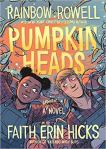
Pumpkinheads: A Graphic Novel, by Rainbow Rowell and Faith Erin Hicks – I was saving this one for October, and I gulped it down in one day and loved every second.  Would Josiah talk to the Fudge Shoppe Girl?  Would Deja get her snacks?  I had to know.  It was a delight from the first page to the last – sweet, charming, and cozy.

The Lion, the Witch and the Wardrobe, by C.S. Lewis – Our new tradition, to start off the school year, was family storytime.  Every evening we’ve all been piling onto the couch together and reading our way through classic children’s novels.  First up was The Lion, the Witch and the Wardrobe, because Steve and I both loved it as kids.  I’m pleased to report that the magic holds.  There’s not much to say about Narnia that hasn’t already been said, but on this read-through I was especially enchanted by the homespun details and the beautiful descriptive language.

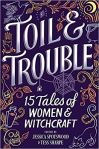
Toil and Trouble: 15 Tales of Women and Witchcraft, ed. Jessica Spotswood and Tess Sharpe – Spotswood and Sharpe continue to knock it out of the park whenever they collaborate on a short story collection.  As you all know, short stories are generally not my jam, but I do really enjoy these girl-forward, diverse and queer-positive collections.  The historical fiction stories were winners for me in this collection – I preferred them to the ones set in present day, although each story had its merits.

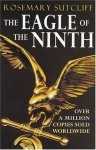
The Eagle of the Ninth (Roman Britain #1), by Rosemary Sutcliff – Sometimes you pick up a book and you know within the first paragraph that it’s going to be one of your highlights of the year.  The Eagle of the Ninth was that for me.  I found it so utterly captivating that I couldn’t put it down, and my only complaint was – I wish it was longer!  I could have accompanied Marcus and Esca on a dozen more adventures and not gotten bored.

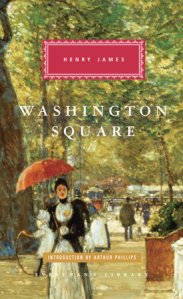
Washington Square, by Henry James – Having never read any Henry James before, I wasn’t entirely sure what to expect – but Washington Square was approachable and readable.  I enjoyed sinking into Gilded Age New York again (kept expecting to meet Edith Wharton’s characters in the streets and drawing rooms) and appreciated James’ dry wit and wonderful writing.  By the end I wanted to slap all of the characters, but I’m pretty sure that’s exactly what the author intended.

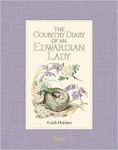
The Country Diary of an Edwardian Lady, by Edith Holden – I saw this one on #bookstagram and knew immediately that it would be right up my street – and it was.  Other than the butterfly and moth illustrations (shudder) I loved pouring over Holden’s beautiful artwork and reading her diary entries from a year of wandering the fields and hedgerows of England and Scotland.

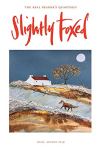
Slightly Foxed No. 63: Adrift on Tides of War, ed. Gail Pirkis and Hazel Wood – In a particularly busy week, the only reading material that held my attention was the current issue of Slightly Foxed, but it was a good one.  Even if I am not interested in the particular book that a given essayist is reviewing, I love the warm writing and sparkling literary commentary.  Also, I need to read Noel Streatfield.  It’s really beyond time.

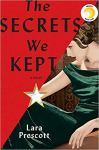
The Secrets We Kept, by Lara Prescott – Sally, Irina and Olga were my companions throughout a stressful week of business travel, and they were good ones.  I loved their courage and fire, and it was particularly fun to read about Washington, D.C. in the 1950s.  (Prescott had clearly done her homework – the characters’ bus routes through the city all made sense, and there were shouts to D.C. institutions like the Hay-Adams Hotel and Hecht’s department store that told me she had either lived here or researched thoroughly.  Since one of my bookish pet peeves is incorrect details about D.C., I appreciated Prescott’s accuracy.)  I probably could have done without the third of the book that focused on Olga, even though she was a wonderful character – I just loved Sally and Irina, and their Cold War D.C. haunts, more.

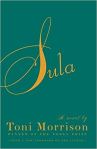
Sula, by Toni Morrison – My first Morrison fiction (I’ve read some of her essays) was a good one.  I found Sula easy to follow and absorbing, if depressing.  Morrison created such a rich world with her words; we are so privileged to have them in the world.

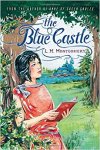
The Blue Castle, by L. M. Montgomery – My book club’s read for this month (my selection!) was a re-read for me, and I loved it just as much the second time as the first.  I found myself delighting in Valancy’s wit and mischief (“Say damn.  You’ll feel better.”) and in her relatives’ shocked, stumbling reactions to her transformation.  And, as always, the nature writing spoke directly to my heart.

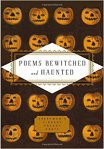
Poems Bewitched and Haunted, ed. John Hollander – Another re-read to close out the month and to celebrate Halloween – of course!  I love the Everyman’s Library poetry collections, and this one is such fun.  By turns spooky, wistful, and playful – I blew through it and just wished I was reading it outside, under a brooding sky and a gnarled tree with golden leaves.  That’s really the only thing that could improve the reading experience.

Eleven titles strikes me as pretty darn good for a month in which I worked about fourteen hours a day, every day.  What the list doesn’t show when presented this way is that the books were mostly front-loaded toward the beginning of the month; after my birthday, I was much slower in turning pages.  There are also a few easy ones on there – a graphic novel, a journal, and two re-reads – but hey, I’ll take whatever I can get.  It’s hard to choose highlights, because I had so many wonderful reading experiences this month.  Pumpkinheads was a delight from start to finish, and The Eagle of the Ninth took my breath away.  L. M. Montgomery is always a winner, and always a good choice for comfort reading, which I needed this month.  And I thoroughly enjoyed my visit to 1950s D.C.  It really was hard to go wrong this month!  For November, I’m looking ahead to cozy nights with a blanket, peppermint tea, and my favorite classics.  Catch you on the flip side!

What did you read last month?

The Classics Club Challenge: Washington Square, by Henry James

The best word to describe Catherine Sloper would be “stolid.”  The only daughter of a wealthy doctor, Catherine is an heiress and should be a sought-after socialite – but she isn’t.  Tall, plain, and painfully shy, not especially witty or brilliant, Catherine’s one great quality (aside from her expectation of a great deal of money) is her constancy and steadfastness.  Unfortunately, since steadfastness is, by definition, not especially flashy, Catherine’s value is largely unappreciated by the people closest to her.

Catherine lives with her father, Doctor Sloper, and his widowed sister, Lavinia Penniman.  The doctor is a caustic and sarcastic man – he can be very funny, but he can also be very cruel (and enjoy it).  Aunt Penniman is flighty and impulsive, and when a young fortune-hunter sets his sights on Catherine (and her inheritance), Aunt Penniman casts the two as the stars in her own private romantic drama, with herself as the puppetmaster.

Mrs. Penniman delighted of all things in a drama, and she flattered herself that a drama would now be enacted.  Combining as she did the zeal of the prompter with the impatience of the spectator, she had long since done her utmost to pull up the curtain.  She, too, expected to figure in the performance – to be the confidante, the Chorus, to speak the epilogue.  It may even be said that there were times when she lost sight altogether of the modest heroine of the play in the contemplation of certain great scenes which would naturally occur between the hero and herself.

The “hero” of Aunt Penniman’s imaginings is Morris Townsend, whom Catherine meets at an engagement party.  Morris is handsome, charming and witty – but has nothing else, really, to recommend him.  He is lazy and indolent, and it’s obvious to everyone with clear eyes that he’s only interested in Catherine’s money.  The only people who don’t see right through Morris are the infatuated heiress herself, and her silly aunt.

Catherine’s father is not deceived, but he’s not especially active in separating the two lovers either – and therein lies the central conflict of the novel.  Doctor Sloper does not want a lazy grifter for a son-in-law – quite understandably.  He’s not particular about Morris having money or not; after all, Doctor Sloper was once poor before he married a wealthy heiress himself.  But where Doctor Sloper had ambition and intellectual interests, Morris’s sole ambition seems to be to marry a rich woman and then spend her money.  But Doctor Sloper’s character flaw, which will get in the way of his protecting his daughter’s interests, lies in his general lack of respect for women.

The doctor eyed [Morris’s sister, Mrs. Montgomery] a moment.  ‘You women are all the same!  But the type to which your brother belongs was made to be the ruin of you, and you were made to be its handmaids and victims.  The sign of the type in question is the determination – sometimes terrible in its quiet intensity – to accept nothing of life but its pleasures, and to secure these pleasures chiefly by aid of your complaisant sex.  Young men of this class never do anything for themselves that they can get other people to do for them, and it is the infatuation, the devotion, the superstition of others that keeps them going.  These others, in ninety-nine cases out of a hundred, are women.  What our young friends chiefly insist upon is that someone else shall suffer for them; and women do that sort of thing, as you must know, wonderfully well.’

Unfortunately, since he doesn’t respect his daughter, Doctor Sloper waits too long to deal with the Morris situation, and by the time he actually takes an interest – even then more of a curious interest, because he’s intrigued by the question of whether Catherine will “stick” – it’s too late to break them up – at least, without permanently damaging Catherine’s relationship with her father.  Catherine is implacably devoted to Morris, and he’s determined to wait out the doctor, with Aunt Penniman’s incorrigible encouragement.  Perhaps if Doctor Sloper respected women more (he strikes me as a less-charming Mr Bennet, if Mr Bennet sort of placidly disliked Lizzy) he might have made the situation better, not worse.

In the end (spoiler alert!) no one ends up satisfied – which struck me as about the right result.  Both Doctor Sloper and Morris were dreadful people in their own ways (if they lived in 2019, they’d both be horrible mansplainers), Aunt Penniman was the worst sort of adult who never actually grew up, and even Catherine took steadfastness too far and turned it to stubbornness.  Catherine was by far the most sympathetic character of the book, but by the end, I wanted to slap her, too.

It may seem as if I disliked Washington Square – but I didn’t.  I actually liked it quite a lot.  The characters were intensely real, the scene-setting was wonderful, and the writing was delightful and witty.  Doctor Sloper, when he wasn’t being awful, and Catherine, when she wasn’t being maddening, could really be quite funny.  I loved watching Catherine’s courage and humor develop, and while I’d have liked to see a happier ending for her, James gives the story the ending that is fitting.  I’ll definitely be seeking out more Henry James novels.

Have you read any Henry James?

The Classics Club Challenge: Everything that Rises Must Converge, by Flannery O’Connor

The older I get, the better I know what I want to read, and the less patience I have with books that just don’t give me what I’m looking for.  My reading time is limited – curtailed by work, parenting, other responsibilities, not to mention that there are other things I want to do in the little bit of spare time I have.  So I’m choosy about the books I spend time with.  When I read a classic, it’s because they’re generally dependable for me – I know I’m going to enjoy the book and find that the reading experience was worth my time.  But there are exceptions to every rule.

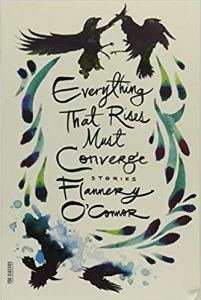
It pains me to say this, because I’ve been meaning to read Flannery O’Connor for years, but – I did not like Everything that Rises Must Converge.  I went into it knowing nothing about what I’d be getting, except that O’Connor wrote a lot about race and religion – but just based on that, I figured I’d find plenty in the book to engage.  After a few of the stories, though, I realized that there was a recurring theme beyond race, morality, or faith – and it was [spoiler alert] horrible people dying horrible deaths.

The first story, the titular “Everything that Rises Must Converge,” was not so bad.  A reprehensible woman and her self-righteous (but also reprehensible in his own way) son ride the bus.  The woman, a casual racist, has an encounter with an African-American fellow transit rider, in which she exposes how ignorant and tone-deaf she is.  The African-American woman hits the reprehensible woman with her purse, and the reprehensible woman promptly has a stroke and dies.  And I found myself not even a little bit sorry.

That was just a foretaste.  The deaths got gorier and the characters more reprehensible as the stories marched grimly on – and I stopped paying close attention, mostly rushing through to get to the end.  (I’d have abandoned this book after the third story, “A View of the Woods,” had it not been on my Classics Club list.)  Sometimes O’Connor strayed from her main theme and delved into bad things happening to kids, which was even worse than horrible people dying horrible deaths.  In general, what I can say is: this book was very, very, very, very much not for me.

Since I was committed to reading it, I made a superhuman effort to appreciate O’Connor’s spare, elegant prose, the construction of her stories, and the witty descriptions she often assigned to her characters.  For instance, on the main character in “Greenleaf,” O’Connor muses:

She thought the word, Jesus, should be kept inside the church building like other words inside the bedroom.  She was a good Christian woman with a large respect for religion, though she did not, of course, believe any of it was true.

That just cuts right to it, doesn’t it?  Or the county official who marries two characters in “Parker’s Back,” and could be any disgruntled municipal worker anywhere:

The Ordinary was an old woman with red hair who had held office for forty years and looked as dusty as her books.  She married them from behind the iron-grill of a stand-up desk and when she finished, she said with a flourish, “Three dollars and fifty cents and till death do you part!” and yanked some forms out of a machine.

I did appreciate the writing and the characterization, when the characters weren’t being despicable or being murdered or murdering someone else.  And every so often I saw flashes of grace – a character who suddenly realizes that all of her meticulously defined social classes will be equal before God, for instance.  But those moments were not enough to make this a good reading experience for me.  I’m sure it’s me, and that I’m missing some vital message here – but my job and parenting life are demanding enough as it is, and when I read I want to be uplifted.  I’ll willingly struggle along for a bit, but at the end of the day I want to close a book feeling joyful – or if not joyful, exactly (looking at you, Edith Wharton) at least as though, when the final accounting comes, I’ll be glad to have given that time to that book.  I didn’t feel that for Everything that Rises Must Converge.  Again – it’s probably me.  But this book just wasn’t for me.  I can’t see myself picking up any of O’Connor’s other work or recommending it to friends.

What do you think of Southern gothic fiction?

Reading Round-Up: September 2019

Reading is my oldest and favorite hobby. I literally can’t remember a time in my life when I didn’t love to curl up with a good book. Here are my reads for September, 2019

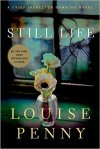
Still Life (Chief Inspector Gamache #1), by Louise Penny – My Aunt Maria has been encouraging me to read Louise Penny’s “Three Pines” mysteries for ages now, and I finally picked up the first one.  Wow – I loved it, and can’t believe I let myself wait so long!  (I had thought Louise Penny would be too scary.  Turns out I had her mixed up with Tana French.)  Penny sets her scenes so beautifully, and I loved her writing, the characters, the pacey plot – even if I did guess the identity of the killer.  I can’t wait to read the next one, but since it’s set around Christmas I’m saving it for December.

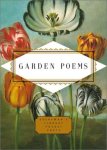
Garden Poems, ed. John Hollander – I’ve been picking my way through this little anthology of poems about gardens and flowers for months now.  As always with the Pocket Poets series, there are some really beautiful selections.  It was a light and calming read.

Leia, Princess of Alderaan, by Claudia Gray – I have really enjoyed delving back into the Star Wars universe with the new movies and some of the new books.  After reading Bloodline, I was excited to pick up Leia: Princess of Alderaan, by the same author.  Both were wonderful, although I think I liked Bloodline a bit better.  (I did enjoy the Narnia reference in Princess of Alderaan.)  Now we need a Holdo novel!

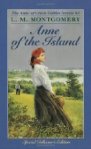
Anne of the Island (Anne of Green Gables #3), by L. M. Montgomery – A perennial read for back-to-school season, I pulled out my favorite volume in the eight book Anne series and spent a day happily wrapped up in Anne’s studies at Redmond College and life at Patty’s Place.  There’s not much to say about Anne that hasn’t already been said, but – I just love everything about this book.  I laughed, cried, and hugged the book at the end – gently, because I was reading my treasured first edition.

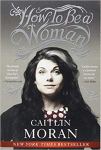
How to Be a Woman, by Caitlin Moran – Probably wouldn’t have picked this one up if my book club hadn’t been reading it (yes, we’re trying to start up again).  Caitlin Moran is not nearly as well-known here in the Colonies as she is on the other side of the Pond, but I found her funny and relatable.  (Although her childhood was horrifying.)

A Poetry Handbook, by Mary Oliver – I’ve been on a total poetry kick lately, in case you haven’t noticed, and I really wanted to read some more about the technical aspects of the craft, to better appreciate what I’ve been reading.  I’m not sure how much I really retained, but Oliver’s down-to-earth style broke down and explained the different styles and methods of poetry writing in a really approachable way.

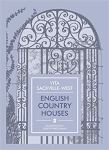
English Country Houses, by Vita Sackville-West – Grabbed off my shelf on a whim, and I enjoyed this book-length essay about the traditional English “country house.”  Sackville-West wrote English Country Houses as a piece of World War II propaganda, and soldiers carried it with them as a reminder of the traditions and charms of the country they were defending.  It’s well to read this with that in mind, because Sackville-West tends to get a bit sniffy about other countries and a bit defensive of Great Britain’s fundamental superiority over every other country – which could be annoying, if you happened to forget that this was wartime propaganda “to keep the spirits up.”

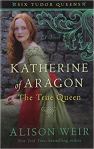
Katherine of Aragon: The True Queen (Six Tudor Queens #1), by Alison Weir – I think I saw the “Six Tudor Queens” series on Instagram and, to be honest, a six-book series of six-hundred page novels about the lives of Henry VIII’s wives is very much my jam.  I really enjoyed the first one, focusing on Katherine of Aragon – although man, was it sad.  My only complaint was that the book was too long.  Weir is a historian by training and a writer of historical biographies, and it shows – both the good (so well-researched) and the less good (probably don’t need details of every tapestry hanging in Katherine’s room in every palace where she ever lived).  I thought the book could have benefitted from an editor’s red pen and would have been perfect if it was about 400 pages.  But I still had a good time over it, and I’ll certainly keep reading.  (Inquiring minds want to know how Weir is going to squeeze 500+ pages out of Anne of Cleves.)

Everything that Rises Must Converge, by Flannery O’Connor – Read for my Classics Club list, and I’ll be reviewing it in full here shortly, so I’ll keep this short and just say: I HATED EVERY WORD.  Perhaps I’m just not smart enough to “get” O’Connor, but I didn’t see the point to this parade of horribles at all.  It was just a long slog of horrible people dying in horrible ways, with the occasional bad stuff happening to kids, just to keep you on your toes.  A miserable reading experience.

Slightly Foxed No. 7: Waist High in Kale, ed. Gail Pirkis – Slightly Foxed always delivers!  I am working my way through back issues slowly, so as to savor them, and issue number 7 was a particular winner.  The essays on George Eliot and Angela Thirkell were my favorites, obviously.  (I am nothing if not predictable!)

Washington Black, by Esi Edugyan – This was another one that I saw all over social, and was a little worried about picking up – on account of all the hype.  It was good, but not great.  I really liked the concept – a young slave boy is plucked from his brutal and heartbreaking life and thrust into a life of travel, adventure, art and science.  Parts of the book were really wonderful, but the story wasn’t as smooth or as pacey as I’d expected it to be, with such a fabulous concept.  A good, solid read, but won’t be in my top ten.

 Home Fires, by Julie Summers – Spotted on a blog (I forget which) and well worth the time and effort it took to read – Home Fires (published as Jambusters in the U.K.) told the story of the massive contribution made by local Women’s Institutes during World War II.  It was a book that demanded a surprising amount of attention and close reading, but worth it.

Whew!  Nine TWELVE (edited thanks to the lovely Zandria, and hey – I never claimed to be a mathematician) books in September – a good total, given how busy and overwhelmed I’ve been at work.  Some of the added reading time is attributable to having the Metro back – hurray!  It was a bit of a roller-coaster as far as enjoyment went.  One book I absolutely loathed, a few solid but not amazing reads, and Anne Shirley and Chief Inspector Armand Gamache on the other end of the spectrum.  I have some fun Halloween-ish books in the queue for October, so just hoping I get to them – it’s going to be a particularly crazy month at work, which I am sort of dreading.  I’ll need lots of books to keep me sane.

Reading Round-Up: August 2019

Reading is my oldest and favorite hobby. I literally can’t remember a time in my life when I didn’t love to curl up with a good book. Here are my reads for August, 2019

The Butterfly Mosque, by G. Willow Wilson – I’ve been a fan of Wilson’s writing since first meeting Kamala Khan as Ms. Marvel, and I’ve been curious about Wilson’s conversion to Islam and her life in Egypt for some time now.  Her memoir of moving to Cairo, converting, and falling in love with an Egyptian man was beautiful and intimate.

Pies & Prejudice (Mother-Daughter Book Club #4), by Heather Vogel Frederick – Sometimes you just need a little sweetness, and re-reading the Mother-Daughter Book Club series is definitely providing that for me – much like the pies the girls bake for their new business venture in this volume.  When the book opens, Emma and her family are moving to England for a year and the other book clubbers are facing their own growing pains.  The gang pulls together and starts a pie-baking business to earn enough money to buy Emma a plane ticket home for spring break, and they all reunite in England for a fabulous summer vacation.  It’s good fun, as always.

Silas Marner, by George Eliot – Read for the Classics Club, and I really enjoyed my third venture into Eliot’s world.  (In my review, here, I wrote that while I’d read Middlemarch a few times, I’d not tried any of Eliot’s other work – then in scanning my bookcases, I realized I’ve also read Scenes of Clerical Life.  Too many books to remember!)  I found Silas Marner slow to begin with, but it really picked up when Silas adopted Eppie – and by the end, I adored it.
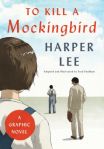
To Kill a Mockingbird: The Graphic Novel, by Harper Lee and Fred Fordham – Having heard good things about Fred Fordham’s new graphic novel adaptation of To Kill a Mockingbird, I grabbed it when I saw it on a library endcap.  I really enjoyed it – it was nice to experience an old favorite in a bit of a different way, and the illustrations were wonderful and really harmonized with Lee’s story and language.

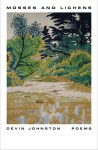
Mosses & Lichens: Poems, by Devin Johnston – Grabbed on a whim from the poetry shelf at the small but wonderfully curated Old Town Books, I read Mosses & Lichens in one sitting and loved Johnston’s sensitive renderings of everyday images and experiences.

Slightly Foxed No. 62: One Man and His Pigs, ed. Gail Pirkis – Figured I should get around to the current issue of Slightly Foxed before the fall issue arrives on my doorstep!  As always, the journal was a smorgasbord of bookish delights, from the lead article on Lord Emsworth and his pigs – especially his prize pig, the Empress of Blandings – to a tribute to English food writer Jane Grigson and a struggle with Sense and Sensibility, I found plenty to enjoy (and added a few books to my to-be-acquired list).
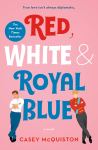
Red, White & Royal Blue, by Casey McQuiston – Unless you’ve been living under a rock, you’ve heard about this charming romance featuring the First Son of the United States and a younger son of the Princess of Wales – and I can tell you, it lives up to the hype.  When the book opens, Alex Claremont Diaz, son of President Ellen Claremont, is preparing for his mom’s 2020 reelection campaign when he, his sister, and a contingent from the White House attend a royal wedding across the Pond.  Alex gets into an argument with Prince Henry, younger son of Catherine, Princess of Wales, and in an effort to do some damage control, the Palace and the White House coordinate a fake friendship to convince the world’s media that the two young men are actually good pals.  What happens next, no one bargained for: Alex and Henry fall in love.  But their romance – sweet, lovely, and wistful – threatens to sink President Claremont’s reelection chances and jeopardize the Crown.  Gosh, you guys – I just loved this.  I loved Alex, Henry, Alex’s sister June and best friend Nora, Henry’s sister Bea and best friend Pez, and the constellation of characters that buzz around them in the White House and at Buckingham Palace.  It was just a delight from the first page to the last.  Go read it!

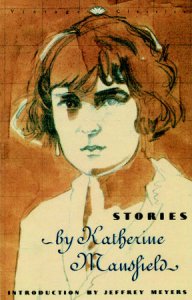
Stories, by Katherine Mansfield – Another one to check off the Classics Club list!  I’ve been meaning to read Mansfield’s classic short story The Garden Party for ages, and it was the jewel of the collection – as expected.  I also loved her long-form short stories The Prelude and At the Bay, and devoured The Stranger.  But, as with many short story collections, for every story I enjoyed there were three or four that fell flat for me.  I keep trying, but short stories just aren’t my genre.  (Fully reviewed here.)

Whisper Network, by Chandler Baker – Looming library deadlines made this mandatory reading, which is usually a recipe for not liking a book, but I loved this one.  I whipped through Whisper Network in two days and convinced the work wife to read it so we could discuss.  (She tore through it in one day and we had a good book gushing session over coffee on Monday morning.)  The story of three in-house attorneys who accuse their boss, the General Counsel, of sexual harassment just as he is poised to become CEO of their company was a total page-turner, but my favorite parts were the Greek Chorus of women who opened many chapters lamenting about the challenges of being a working woman and mother, especially in the legal field.  Those laments were all too familiar.

Love and Death Among the Cheetahs (Her Royal Spyness #13), by Rhys Bowen – When you’re looking for a reliably fun mystery novel, Lady Georgianna Rannoch delivers every time.  I loved the latest installment, featuring Georgie and Darcy, finally married, off on their honeymoon in Kenya and tracking both a notorious jewel thief and Wallis Simpson (like you do).  The mystery was satisfying, as always, but I was disappointed in one aspect of the book: all of Bowen’s references to Georgie feeling tired, headachy, and nauseous had me convinced that a little O’Mara was on the way – spoiler alert! – but the pregnancy reveal I was expecting never happened.  Maybe in the next book!  Probably not, given how long Bowen made us wait for the wedding, but hope springs eternal.  The people want a Georgie and Darcy baby!

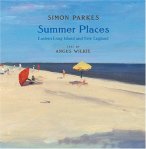
Summer Places, by Simon Parkes and Angus Wilkie – I’ve had this art book, featuring landscape paintings by artist Simon Parkes, for years and flipped through it many times, but this was the first time I actually sat down and read it cover to cover.  Angus Wilkie’s essays about the plein air painting tradition, the Eastern shore of Long Island, and the New England hideaways Parkes favors for his paintings were ruminative and beautifully written, and in between essays, Parkes paintings beckon the reader to summer shores.  It was a perfect way to go into Labor Day weekend.

Daisy Jones and the Six, by Taylor Jenkins Reid – I kept hearing all the hype about Taylor Jenkins Reid’s new(ish – I’m late to the party) book, a fictionalized account of the rise and fall of a Fleetwood Mac-esque rock band in the late seventies.  It didn’t sound entirely like my thing – I’m not especially interested in the seventies, and I’ve never really listened to Fleetwood Mac, unless you count the Practical Magic soundtrack.  I liked the story, but didn’t love it – a bit too much drugs and angst, but I guess that’s rock ‘n roll, right?  But where it might have been a bit of a miss for me just based on the story, the audio production put the book over the top.  The audiobook is read by a full cast of unique voices (and some big names – Benjamin Bratt, Jennifer Beale…) and was absolutely wonderful.  I’d definitely recommend this one, but get the audio version – it’s worth the extra time to listen.

The Tenth Muse, by Catherine Chung – Another hyped one, I liked but didn’t love The Tenth Muse.  I was expecting something more mythical, and didn’t find the story – of a young woman coming of age as a mathematician in the 1960s – all that compelling.  It was good, but not great, and sometimes I felt that it was almost too self-consciously feminist.  (Look, I totally agree with the case the book was making about equality and the unfairness of the choices women have had to make, and the sacrifices asked of us that are not asked of the men in our professional fields – but I am already living that life, and it was a little bit exhausting to read about it on every page.)  I found the story itself decently engaging but not as compelling as I’d expected.  Solidly good, but not a home run – for me.

A pretty darn good month of reading, especially with no metro, if I do say so myself!  Vacation – a long car ride and several evenings of beach house reading definitely helped – as did the good selection this month.  I almost can’t pick highlights, because there were so many – but I suppose any visit to Atticus, Scout, Jem and Boo is bound to be one.  Whisper Network and Red, White & Royal Blue both lived up to the hype in a big way, and the Slightly Foxed Quarterly and a Lady Georgianna installment are reliably good reads, too.  Really – everything was good, and no major duds.  A successful August, indeed!  Now – on to September reading.  And I’m hoping that the metro will be up and running, and with it my commute-time reading, soon too.  Onward!


The Classics Club Challenge: Stories, by Katherine Mansfield

Katherine Mansfield’s short story The Garden Party is widely regarded as a masterpiece of the form, and the author herself as something of a rival Virginia Woolf.  I’d never read any Mansfield, which I suppose is unsurprising given my well-documented preference for the novel form (or poetry, or essay, or history, or memoir, or basically anything) over the short story form.  I just find it hard to get into a short story, hard to care about the characters or to buy into the world of the narrative in anything shorter than a novella.  The only short story author whose work has ever really captivated me is Eudora Welty, but since the Classics Club Challenge is all about broadening horizons, I resolved to give some famous short stories a chance.

What I learned: Mansfield is indeed a master of the form, but short stories are just not for me.  With just a few exceptions, I bogged down even in the capable hands of an expert storyteller.  That’s not to say that Mansfield’s writing isn’t wonderful, because it is.  Y’all know I love a good descriptive paragraph, and Mansfield excels at them.  For instance, from The Prelude:

As they stood on the steps, the high grassy bank on which the aloe rested rose up like a wave, and the aloe seemed to ride upon it like a ship with the oars lifted.  Bright moonlight hung upon the lifted oars like water, and on the green wave glittered the dew.

I mean – I can see that.  Can’t you?

As with any short story collection, there were hits and misses for me.  I really liked The Stranger, and all three of the stories featuring the Burnell family – The PreludeAt the Bay, and The Doll’s House.  But there were quite a few stories mixed in, in which I had NO idea what was going on.  And again, because: short story, I was not really invested in deciphering the confusing parts.

As expected, though, The Garden Party stands head and shoulders above the rest of the stories on offer.  It’s a simple, limited world – but so much happens.  The Garden Party is the story of an upper class family on the day of – what else? – a garden party.  When the story begins, the family is sitting around the breakfast table making preparations for the party, and Laura – the “artistic” one – is dispatched to oversee construction of a marquee on the lawn.  As Laura goes about her party preparations, her day is upended by the news that one of the villagers – a near neighbor, geographically speaking, but not socially – has been killed in an accident.  Laura is staggered, and immediately thinks it would be best to call off the party, but the rest of her family disagrees.

“Mother, a man’s been killed,” began Laura.

Not in the garden?” interrupted her mother.

“No, no!”

“Oh, what a fright you gave me!” Mrs. Sheridan sighed with relief, and took off the big hat and held it on her knees.

Laura is outvoted, and the party goes on – and she convinces herself to forget the tragedy next door and concentrate on the party.  (I was reminded of Scarlet O’Hara: “I won’t think about that now.  I’ll think about it tomorrow.”)  After the party ends, Laura is elected emissary to deliver leftover party food to the bereaved home, where she encounters the corpse and the family.

As I said, it’s a simple, constrained story – limited in time and scope – but contains masterful writing and plotting within.  I won’t say that Katherine Mansfield converted me to a fan of the short story form; I’ll never enjoy it as much as I enjoy other literary forms.  But I could definitely appreciate her phrasing, her plot twists, and the imagery in her lovely paragraphs.

Are you a reader of short stories?

The Classics Club Challenge: Silas Marner

George Eliot’s short novel, Silas Marner, reads like a parable or a fairy tale – uplifting, redemptive, a little sad.  When the novel opens, Silas is a young man who has been swept up into a closed religious community – Lantern Yard – in his hometown.  He is happy and content, with a fiance he loves, a pastor he trusts, and a best friend from whom he is inseparable – until he loses it all to a false accusation of theft.  Bereft of his love and driven out of his community, Silas wanders until he loses himself in a small community called Raveloe, where he sets up as a weaver in an isolated cottage.  The villagers view Silas – pale, nearsighted, with a tendency to fall into trances – with suspicion and a great deal of fear.
When Silas is engaged to weave for a local resident and receives his first payment, he cleaves to the money – having lost everything that matters to him.  Silas is unused to having money to call his own; nearly all of his wages used to be paid to his religious community.  He begins to hoard the payments he receives for his work, and because he is an excellent weaver, his money stash grows and grows – until the day that he is robbed.

Silas’s loss has the unexpected result of bringing him closer to the community.  After living on the outside looking in, Silas finds himself an object of sympathy, and the villagers’ curiosity about him takes a more gentle turn.  But the true change comes one day when Silas loses himself in a trance, only to find a golden-haired toddler on his hearth.  The nearsighted Silas imagines, at first, that the heap of gold he sees is his money returned to him; when he gets a closer look and discovers that it’s actually a little girl, he is smitten.

Marner took her on his lap, trembling with an emotion mysterious to himself, at something unknown dawning on his life.  Thought and feeling were so confused within him, that if he had tried to give them utterance, he could only have said that the child was come instead of the gold – that the gold had turned into the child.  He took the garments from Dolly, and put them on under her teaching; interrupted, of course, by Baby’s gymnastics.

The baby’s mother has frozen to death in the road outside Silas’s door, so Silas adopts the little one and names her Eppie.  With his decision to take Eppie to his heart, the villagers’ goodwill – which was already flowing into Silas’s little cottage – overflows.  Eppie connects Silas to his neighbors, and the whole town is irrevocably changed.

Unlike the gold which needed nothing, and must be worshipped in close-locked solitude – which was hidden away from the daylight, was deaf to the song of birds, and started to no human tones – Eppie was a creature of endless claims and ever-growing desires, seeking and loving sunshine, and living sounds, and living movements; making trial of everything, with trust in new joy, and stirring the human kindness in all eyes that looked on her.  The gold had kept his thoughts in an ever-repeated circle, leading to nothing beyond itself; but Eppie was an object compacted of changes and hopes that forced his thoughts onward, and carried them far away from their old eager pacing towards the same blank limit – carried them away to the new things that would come with the coming years, when Eppie would have learned to understand how her father Silas cared for her; and made him look for images of that time in the ties and charities that bound together the families of the neighbours.  The gold had asked that he should sit weaving longer and longer, deafened and blinded more and more to all things except the monotony of his loom and the repetition of his web; but Eppie called him away from his weaving, and made him think all its pauses a holiday, reawakening his senses with her fresh life, even to the old winter-flies that came crawling forth in the early spring sunshine, and warming him into her joy because she had joy.

Silas Marner started slow for me, and some of the scenes – especially a long scene in the local pub, the Rainbow, during which peripheral characters spent two chapters discoursing over something irrelevant – made me think that Eliot may have originally intended a longer, more developed story, more Middlemarch-ian in scope.  In the end, I’m glad Eliot focused on the pared-down story of Silas, Eppie, and their connection to the local squire’s family.  This core of the novel was the most interesting and moving part, and the narrative really picked up steam when Eppie arrived on the scene and the village started to open its heart to Silas.

The one thing that I found really distracting about the book was the constant description of Silas as being nearsighted, groping around and practically blind.  I know that he was supposed to seem like a mole or some other underground creature – symbolism, y’all.  But all I could think was – I know glasses existed in Victorian times, and the village had a doctor (he appears in several scenes).  Why did no one suggest that Silas wear glasses?

That’s a minor gripe, though.  Altogether, I loved Silas Marner.  I found it sweet, sad, and profoundly moving.

In old days there were angels who came and took men by the hand and led them away from the city of destruction.  We see no white-winged angels now.  But yet men are led away from threatening destruction: a hand is put into theirs, which leads them forth gently toward a calm and bright land, so that they look no more backward; and the hand may be a child’s.

Reading Round-Up: July 2019

Reading is my oldest and favorite hobby. I literally can’t remember a time in my life when I didn’t love to curl up with a good book. Here are my reads for July, 2019

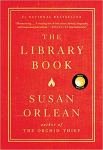
The Library Book, by Susan Orlean – One morning in the spring of 1986, a fire broke out at the main branch building of the Los Angeles Public Library.  The fire spread quickly and swallowed up hundreds of thousands of books, including some irreplaceable treasures.  To this day, how the fire started and who was responsible is a mystery.  Susan Orlean dives into that mystery and spins a fascinating narrative – part history of the LA public library system, part true crime exploration of the possible 1986 arson, and part personal memoir of her own love affair with libraries.  I confess I was reluctant to read this one because of the hype surrounding it, but I’m so glad I picked it up – it was a wonderful read from the first page to the last.

In Morocco, by Edith Wharton – After reading about Wharton’s high maintenance travel habits in Hermione Lee’s doorstopping biography Edith Wharton, I was anxious to check out some of Wharton’s travel writing.  (I also thought it would be fun to read some of Wharton’s wonderful writing without getting depressed at the end.)  I downloaded both In Morocco and A Motor-Flight Through France for my kindle and decided on In Morocco first.  It was enjoyable and atmospheric, but I can definitely see the problems with it – namely, Wharton is very Eurocentric, pro-Colonial, and a little racist.  I read it as a product of its time, and was able to appreciate it for what it was.

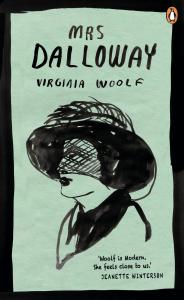
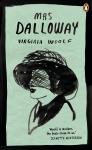
Mrs. Dalloway, by Virginia Woolf – I won’t say too much, because I’ve already posted a full review here, but I’m so glad I finally made time for Mrs. Dalloway.  I’ve had mixed experiences with Woolf (who hasn’t?) but I think the story of Clarissa Dalloway’s day is a new favorite – I might like it even better than Between the Acts.  I was swept along by Woolf’s style and masterful use of language, and I found myself empathizing with almost all of the characters (didn’t really see the point of Septimus Smith, I have to admit) and loved every moment.

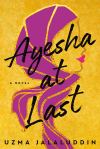
Ayesha at Last, by Uzma Jalaluddin – This has been the summer of Pride and Prejudice updates – first I read Eligible, then Unmarriageable, and now Ayesha at Last.  Ayesha was my favorite of the three – I loved that I could spot the Austen influence, but Jalaluddin put so much of her own spin on the story that it really felt like reading something new.  The story of Ayesha, her self-centered cousin Hafsa, and religious neighbor Khalid, was fresh and sweet.  There’s a twist for Hafsa, which I saw coming but enjoyed all the same, and I delighted in the solid and supportive friendship between Ayesha and her college BFF, Clara.  Overall, just a charming and lovely reading experience.

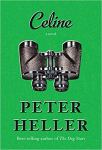
Celine, by Peter Heller – I kept hearing Heller’s name come up and decided to give him a try when I read a blurb billing Celine as a “missing persons novel in Yellowstone National Park.”  It was, but there was a whole lot more going on than that.  I really liked Celine overall, but bogged down in certain parts.  Heller spends an inordinate amount of time on Celine’s backstory, which was mostly relevant but didn’t warrant every other chapter dedicated to it.  I often found myself thinking, ugh, can we get back to the mystery, please?  The chapters where Celine and her husband Pete are working to track down their quarry – a National Geographic photographer who disappeared in the park 23 years prior; the official story was that a bear killed him, but his daughter never believed it – moved much faster and were more fun to read.  The best part was the characters – I absolutely loved Celine and Pete.  Celine is an aristocratic elderly private eye – think Miss Marple, but New York WASP and packing heat.  She was completely bad@$$ and I loved her.  (There’s a scene in a rough biker bar where septuagenarian Celine single-handedly takes down a misogynistic biker who assaults a waitress.)  I loved the relationship between Celine and taciturn but loving and supportive Pete – who is described as always dressing as if he’s repairing a boat in Maine – and between the elderly characters and their young client Gabriela, and Celine’s son Hank.  Just a joy.

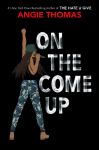
On the Come Up, by Angie Thomas – I’d been looking forward to Angie Thomas’s sophomore effort, On the Come Up, pretty much since I read her debut novel, The Hate U Give, but I was underwhelmed.  The Hate U Give was a brilliant book – timely, urgent, and with a compelling main character who was easy to root for and care about.  On the Come Up didn’t feel like any of those things.  I understood the book’s central message – the hypocrisy of people who believe that guns are just fine in the hands of white people, but view people of color with suspicion even without guns.  I agree with the point Thomas was making, but it just didn’t work as well as THUG.  The book didn’t feel like it was especially timely or of the moment, and the main character – Bri – was an obnoxious kid who made terrible choice after terrible choice and treated her family and friends horribly.  I’ll still read anything Thomas writes, but this one fell a little flat for me.

July was a short, light, somewhat slumpy reading month.  Part of this month’s low book total – only six! – can be attributed to a vacation earlier in the month, on which I didn’t really read anything.  Steve and I were kayaking in the Salish Sea and I was trying hard to pack light.  Anything that wasn’t strictly necessary did not make it into the boats – so, no books; I even left my birder’s journal and Audubon marine mammal guide back on shore.  And since I don’t like to read on my phone (headaches) I spent the week watching sunsets and chatting with new friends instead.  Hashtag worth it.  The rest of the month was slow because of my weird commute.  You never really appreciate what you have until it’s gone, right?  Come back soon, Metro!  I need that hour of reading time every day!  But even with the slow month, I managed to squeeze in some good books, with the best ones front-loaded at the beginning of the month.  Mrs. Dalloway was the highlight of the month, and I also loved The Library Book.  Here’s to a good bookish month in August!  I have a great one on the go right now, and a beach trip coming up later in the month – so while I’ll choose watching the waves (and lifeguarding the kids) over reading on the sand, I’m looking forward to a long car ride and a week’s worth of post-sunset evenings in which to get my book on.

What were your July reading highlights?

The Classics Club Challenge: Mrs. Dalloway

Clarissa Dalloway is having a party.  She doesn’t go in much for religion, but parties are her church and her art form, and Virginia Woolf’s classic quotidian novel focuses on the day of one such party.  As the novel begins, Mrs. Dalloway has walked out to buy flowers for a party she is throwing that evening.  Throughout the day, as the bells of Big Ben toll the hours one by one (and the half hours, and the quarter hours) Mrs. Dalloway muses on the past, on love, on her marriage, and on what might have been.  Meanwhile, as she goes about her day, the reader skims from Clarissa’s thoughts to the thoughts and contemplations of her husband, daughter, servants, ex-flame, and others she encounters or nearly misses each hour.

Somehow, I had not managed to read Mrs. Dalloway before – as I mentioned to a work colleague, I think many people hit these modern classics in college, but I majored in industrial relations.  I mostly read economics textbooks and labor studies during the school year, and I really only had the summers to catch up on fiction.  I’ve read a few Virginia Woolf novels before – Between the ActsTo the LighthouseNight and Day and The Voyage Out come to mind – and while I liked some of them (especially Between the Acts) I can’t say I really “got” Woolf.  I still probably don’t “get” her entirely, but I loved Mrs. Dalloway.

There’s so much in Mrs. Dalloway, I can see myself reading it again and again and again and taking something new away with me each time.  On this first reading, what I was most struck by was the widening gulf between Clarissa Dalloway and her nearly-grown daughter, Elizabeth.

As Clarissa walks down the London street on her flower-buying errands, she muses on the state of being mid-life.  She will never be a bride again, or a new mother.  Instead, she looks ahead at a stretch of years unbroken by any more milestones except the final milestone – death.  (And Clarissa has been ill – some trouble with her heart.)  Perhaps that’s why she cares so much for her parties:

Well, how was she going to defend herself?  Now that she knew what it was, she felt perfectly happy.  They thought, or Peter at any rate thought, that she enjoyed imposing herself; liked to have famous people about her; great names; was simply a snob in short.  Well, Peter might think so.  Richard merely thought it was foolish of her to like excitement when she knew it was bad for her heart.  It was childish, he thought.  And both were quite wrong.  What she liked was simply life.

“That’s what I do it for,” she said, speaking aloud, to life.

Elizabeth, by contrast, stands at the very beginning of her life.  She is just recently “out” and has sprouted into a beautiful young woman.  Men are starting to notice her, heads are beginning to turn, but she’s not interested in the glittering city life that her mother thrives in.

And Elizabeth waited in Victoria Street for an omnibus.  It was so nice to be out of doors.  She thought perhaps she need not go home just yet.  It was so nice to be out in the air.  So she would get on to an omnibus.  And already, even as she stood there, in her very well cut clothes, it was beginning. . . . People were beginning to compare her to poplar trees, early dawn, hyacinths, fawns, running water, and garden lilies, and it made her life a burden to her, for she so much preferred being left alone to do what she liked in the country, but they would compare her to lilies, and she had to go to parties, and London was so dreary compared with being alone in the country with her father and the dogs.

Elizabeth, in short, is nothing like her mother – she is her father’s daughter in every respect.  Richard Dalloway is a good, kind man, who loves his wife and daughter but struggles to speak Clarissa’s language – and Clarissa always wonders whether she made the right choice, when she married security and steadfastness in Richard, instead of fire and passion in Peter Walsh.  And Clarissa can’t reach Elizabeth any more than Richard can reach Clarissa.

(She was like a poplar, she was like a river, she was like a hyacinth, Willie Titcomb was thinking.  Oh, how much nicer to be in the country and do what she liked!  She could hear her poor dog howling, Elizabeth was certain.)  She was not a bit like Clarissa, Peter Walsh said.

Of course, the reader doesn’t need to wonder what it’s like for Clarissa and Elizabeth, since Woolf takes you inside their minds and thoughts – a mother and a daughter thinking and speaking past each other and wanting different things always.  Having a daughter myself, I was fascinated by this dual perspective, and Woolf does it so well.  You can feel Clarissa’s mild melancholy and twinges of envy and misunderstanding; you can feel Elizabeth straining at the strings binding her to the city and wishing she was in the country – you can see the gap between mother and daughter widening.

I’ll be coming back to Mrs. Dalloway over and over again, I know.  I wonder what I’ll find there next time.