Reading Round-Up: January 2020, Part Two

Reading is my oldest and favorite hobby. I can’t remember a time in my life when I didn’t love to curl up with a good book. Here is part two of two posts sharing my reads for January, 2020

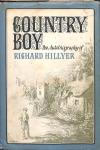
Country Boy, by Richard Hillyer – One of the greatest delights of my reading life in recent years has been finding Slightly Foxed, and I have enjoyed every reading experience this gem of a publisher has provided me.  Country Boy, a memoir of growing up desperately poor and falling in love with books, was no exception.  Hillyer’s writing about his country neighbors was sensitive and loving, but honest too.
Wonder Woman, Vol. 1: The Just War, by G. Willow Wilson – I am a fan of everything Wilson does, and I anxiously awaited her take on my favorite superhero, Wonder Woman.  As expected, she delivered a wonderful story, with nods to mythology and legend, and clearly Diana Prince is safe in Wilson’s capable hands.

Whose Body? (Lord Peter Wimsey #1), by Dorothy L. Sayers – Wanting to catch up on some of the golden age crime novels I hadn’t yet read, I downloaded the first Peter Wimsey to my kindle and read it on the plane, en route to New Orleans for a business trip.  It was good fun, although I like the Harriet Vane novels, and The Nine Tailors, better.

The Siren Years: A Canadian Diplomat Abroad 1937-1945, by Charles Ritchie – I picked up this recommendation from The Captive Reader, and it was a joy to read.  Ritchie knew everyone, and his insights into war and the nature of diplomacy were as interesting to read as his accounts of country house weekends.  I can’t wait to continue on with his diaries.
Madensky Square, by Eva Ibbotson – I actually had a hard time getting into Madensky Square, and ended up leaving it home in favor of my kindle while I was in New Orleans on business, then picking it up again when I returned.  It was beautifully written, uplifting in parts and heartbreaking in others, and I ended up loving the characters – Frau Susanna, Gernot, Nini, Daniel, little Sigi, the Schumacher family, and all the residents of the Square.  (The people want a book about Nini and Daniel!)
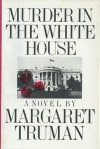
Murder in the White House (Capital Crimes #1), by Margaret Truman – I have had Margaret Truman’s DC mystery series on my list for the longest time.  Truman was the daughter of President Harry S. Truman, so she was well-placed to write about the inner workings of the Washington scene, and she does so in a completely captivating way.  (She also gets her DC details right, obviously, and as longtime readers know, nothing irritates me more than authors who get their facts wrong about my adopted hometown.)  This first installment was a lot of fun.
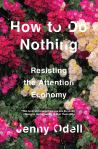
How to Do Nothing: Resisting the Attention Economy, by Jenny Odell – I picked this one up because President Obama loved it.  Of course, as we all know, President Obama is a genius and the rest of us, mostly, are not.  How to Do Nothing went almost completely over my head, except for the parts about birds, which I did understand.  It might have been a case of right book, wrong time – coming at the end of a long, busy and stressful month at work and at home – but I found it a bit opaque.
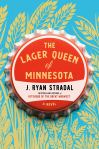
The Lager Queen of Minnesota, by J. Ryan Stradal – I had loved Stradal’s debut novel, Kitchens of the Great Midwest, but was pretty underwhelmed by this sophomore effort.  The premise was good – Grandmas brewing beer! – but the characters were wooden and the ending felt clunky and rushed.  I’ll still read Stradal’s next book, but this one was a miss for me.

Whew!  That wraps up a big month of reading.  I had a wonderful month of turning pages, I really did.  The clear highlight from the second half of the month was The Siren Years, which I devoured.  But it’s always fun to visit with Lord Peter Wimsey and Wonder Woman (there’s a sentence I never though I’d write) and to curl up with another Slightly Foxed Edition.  And now – onward to February!  I have a stack of library books to get through, but I’m also enjoying reading from my own shelves more often, so expect another mix of both next month.

What are you reading these days?
Reading Round-Up: January 2020, Part One

Reading is my oldest and favorite hobby. I can’t remember a time in my life when I didn’t love to curl up with a good book. Here is part one of two posts sharing my reads for January, 2020

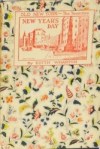
New Year’s Day (Old New York #4), by Edith Wharton – I thought it would be fun to re-read Edith Wharton’s novella, New Year’s Day, on actual New Year’s Day… and it was.  I love this melancholy and ruminative story about things that are not what they seem, and I think I may make an annual re-read a tradition.

One Woman’s Year, by Stella Martin Currey – Another fun one to start off the year, I finished up this recent Persephone reprint, which combines commonplace book, diary, recipe collection and humor.  It’s such fun to revisit a slower, more seasonal time in my reading.

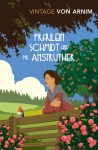
Fraulein Schmidt and Mr Anstruther, by Elizabeth von Arnim – Loved, loved, loved this novel in letters (one-sided) from the titular heroine, Rose-Marie Schmidt, to the vapid and useless Roger Anstruther.  Rose-Marie is a thoroughly wonderful character, and her letters to Mr Anstruther – who cannot at all appreciate what a gem his pen-pal is – are a delight.  Everything is in here – lovely nature writing, musings on books, elder-sisterly advice… I loved every page.

Great Goddesses, by Nikita Gill – I tore through this collection of poetry updating the Greek myths for modern times, and it was everything I want in a book of poems.  Often sad, always beautiful and thought-provoking, and very relevant.  Gill has another collection of poems and prose poems based on fairy tales, and I expect I will be seeking that out soon.

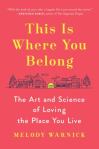
This is Where You Belong: The Art and Science of Loving the Place You Live, by Melody Warnick – This came recommended by Anne Bogel on her short-form podcast One Great Book, and I did enjoy it.  Some of Warnick’s lamenting about her struggles to love living in Blacksburg, Virginia – I have a friend there, and it’s actually a beautiful area – did come across as a bit tone-deaf and unaware of her privilege, but I mostly tuned that part out and focused on her practical suggestions (many of which would have come in more handy for me when I was miserable and homesick in Buffalo – I don’t really need help loving northern Virginia).

More to the Story, by Hena Khan – After loving Khan’s first middle-grade book, Amina’s Voice, I was eager to check out her homage to Little Women (with a Pakistani spin).  It was absolutely wonderful.  Jameela and her sisters felt so real – their struggles and heartaches and the love they had for each other, too – and I wanted to gather each one up for a big hug.

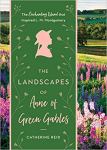
The Landscapes of Anne of Green Gables, by Catherine Reid – I’ve been staring at this book on my shelf since my dear friend Susan gave it to me for Christmas 2018, and I finally got around to reading it – and staring wide-eyed at the gorgeous photographs.  It was absolutely stunning, and made me hanker for a return trip to PEI – my grandparents took me there on vacation when I was twelve, and I have never forgotten the beautiful scenery or the breathless excitement of being in “Anne’s house.”

The Almanac: A Seasonal Guide to 2020, by Lia Leendertz – I have come to cherish and eagerly look forward to Leendertz’s yearly almanacs, with their gorgeous nature writing and beautiful pen and ink illustrations – not to mention the garden tips, recipes and lore bursting from the pages.  I read 2020’s installment in one gulp, although I expect I will revisit it each month all year long – the new addition of a monthly section on what’s going on in the hedgerow was my favorite part.

Well, that takes us to about January 11th.  I meant to recap my entire month’s reading, but there were sixteen titles and I want to be respectful of your time and attention.  So I’ll do the rest next week and going forward either split each month to come into two parts or do just one omnibus recap at the end of the month as dictated by my reading list.  Anyway!  January got off to a strong start, as you can see – I enjoyed everything I read, to the point of finding it near impossible to pick a highlight.  Fraulein Schmidt and Mr Anstruther was definitely one, and The Landscapes of Anne of Green Gables was another, but really – the whole month was filled with one readerly delight after another.  In 2020 I have decided to worry less about buzzy new releases or literary trends and just read what makes me happy, and you can see the results – sixteen books (eight here and eight more to come), all of which I enjoyed.

How was your January’s reading?


Themed Reads: Slow and Seasonal

The more frenetic and hectic life gets, the more I want to slow down, focus on things that are real and tangible, and live in a more mindful, seasonal way.  In many ways, that’s just not possible – but in many ways, it is, with a little attention.  At any time of year – but never more so than in January – I am devouring books about living seasonally and embracing the changes and delights that each month of the year brings.  Here are three.

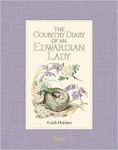
The Country Diary of an Edwardian Lady, by Edith Holden, is a gorgeous tour de force through the seasons.  Holden, the titular Edwardian lady, is an artist and naturalist who records the flora and fauna she observes on her regular tramps through her Warwickshire home all year long (and on one delightful holiday in Scotland and the north of England).  The book is organized in a month-by-month format, so you can follow along with Holden as her favorite fields and hedgerows burst into bloom and then out of it again.  Holden’s artwork is the highlight of the book (although I skipped hastily past the butterfly and moth illustrations, which will not surprise anyone), but her delightful “nature notes” are such fun to read.  I found myself wishing I could go back in time and join her on one of her expeditions.
One Woman’s Year, by Stella Martin Currey, will be irresistable to anyone who – like me – loves a good housewifely diary.  Persephone Books, which recently republished it, describes it as “a mixture of commonplace, diary, short story, recipes – and woodcuts.”  YES, I love all of these things.  As with The Country Diary of an Edwardian LadyOne Woman’s Year is organized into a monthly format.  Each month begins with an essay (or short story – I suspect it’s a mix of fact and fiction) about something on the housewife’s mind, whether that’s choosing books for your children or redecorating your house on a shoestring budget.  The story/essay is followed by features including a recipe of the month (very 1950s recipes, too), the most- and least-liked jobs of the month, and a recommended outing for the children – everything from visiting the Tower of London to exploring the local telephone exchange.  Some of the descriptions – for instance, of Currey, her indulgent husband, and their two sons attempting to plant a new lawn in March – are absolutely hilarious.  And the whole thing, taken together, is a lovely and winding meander through a year.

The Almanac: A Seasonal Guide to 2020, by Lia Leendertz, is the third of Leendertz’s monthly almanacs.  The first one was published in 2018; I’ve bought them each year, and they just keep getting better.  (Do check out the past years’ guides, as well.  While some things – like tide tables and dates for holidays and equinoxes and such – change from year to year, the garden task lists, monthly recipes, songs and legends are all evergreen.)  Each year’s almanac is a little different from the others’ the 2020 guide has a strong focus on the moon and also includes a new section on “what’s going on in the hedgerow” that was a delight to read for each month.  I read the 2019 guide month-by-month all year long, but blew through the 2020 guide in one gulp; either method works, and I’m sure I will be coming back to the 2020 almanac to test out the monthly recipes and gardening tips all year long.  I love slow, seasonal, nature-focused books and the Almanac series is a gorgeous addition.

Do you like reading about the changes of seasons?

2019 in Books, Part II: Top Ten

In a year that saw travel, adventure, some drama, and months on end of work craziness, I’m kind of amazed that I managed to read anything at all, let alone that I read so many wonderful books.  In times of stress and overwhelm, I turn to classics and old friends – nothing new there.  And the result is that I do find myself turning the pages of many, many fantastic books.  2019 was no exception.  And while this is always a hard post to write (I! Hate! Decisions!) here’s my very best of the best.

Doctor Thorne (Barsetshire #3), by Anthony Trollope – I have been slowly making my way through Trollope’s Barsetshire and liking each installment in the series better than the last.  I adored Doctor Thorne – laughed a LOT, cried a little, and enjoyed every single page.

The Murder of Roger Ackroyd (Hercule Poirot #4), by Agatha Christie – For some reason, I’d been thinking I had not read Roger Ackroyd before, but after figuring out the identity of the murderer, I now think maybe I did?  Either way, it was riveting and absolutely great.

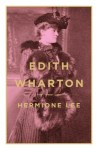
Edith Wharton, by Hermione Lee – It took me a long time to get through this doorstopper of a biography of the enigmatic queen of American letters.  Lee’s exhaustive research was beyond impressive.  And fascinating.

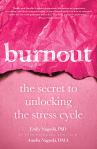
Burnout: The Secret to Unlocking the Stress Cycle, by Emily Nagoski and Amelia Nagoski – This might be the most important book I read this year.  Life seems to get harder and harder, and I am feeling the effects of all that stress piling up on my shoulders.  The Nagoski sisters are full of tea and sympathy and tried and true scientific strategies for coping.  I’m already thinking of a reread.

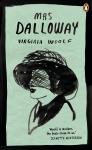
Mrs. Dalloway, by Virginia Woolf – For the longest time I have been someone who wanted to like Virginia Woolf.  I tried.  A LOT.  Mrs. Dalloway finally broke the barrier for me.  I was enthralled.

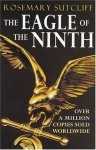
The Eagle of the Ninth (Roman Britain #1), by Rosemary Sutcliff – Ostensibly a book for younger readers, Sutcliff’s first installment in her Roman Britain series was exciting, heart-wrenching, and completely page-turning.  My reading experience was enhanced by the gorgeous Slightly Foxed Cubs edition I had, but really – there’s everything to love about this book.


The Country Diary of an Edwardian Lady, by Edith Holden – I can’t resist a nature diary, especially a richly illustrated one, and Holden had been on my list for so long.  It was gorgeous and luminous and everything I was looking for.

Anne of the Island (Anne of Green Gables #3), by L. M. Montgomery – It seems like cheating to include Anne on here, but anytime the fabulous Miss Shirley puts in an appearance, she’s a highlight.  Anne of the Island is my favorite, and probably most frequently reread, of the series.

I Was A Stranger, by General Sir John Hackett – One of the last books I read in 2019 was also one of the best.  Hackett, then a Brigadier General with the British Forces in World War II, was parachuted into the Netherlands shortly before the disastrous Battle of Arnhem.  I Was A Stranger is his memoir of several months he spent recuperating from his wounds and being hidden behind enemy lines by a family of mild-mannered ladies.  It’s a beautifully written, contemplative, tense and exciting book and a testament to Hackett’s gratitude to Aunt Ann, Aunt Cor, and Aunt Mien, who took unimaginable personal risks to shelter a stranger who became one of the family.

Wives and Daughters, by Elizabeth Gaskell – It’s hard, but I think this is my book of the year.  I loved everything about Wives and Daughters and already am thinking of rereading it.  For years I had an unfair prejudice against Gaskell and I’m so glad I’ve rid myself of that nonsense.

2019 was many things, not all of them great, but it was a WONDERFUL year in reading.  Old friends, new-to-me classics, rediscovered favorites, and lots of happy, cozy moments spent turning pages.  What more can you ask for?

Next week, my book superlatives – one of my favorite posts of the year!

Reading Round-Up: December 2019

Reading is my oldest and favorite hobby. I can’t remember a time in my life when I didn’t love to curl up with a good book. Here are my reads for December, 2019

Anne Boleyn: A King’s Obsession (Six Tudor Queens #2), by Alison Weir – I really enjoyed the second installment in Alison Weir’s historical fiction series about the six queens of Henry VIII.  Anne Boleyn has always fascinated me, and Weir did her justice – providing a sympathetic, yet realistic, portrayal and imagining scenes that rang true.  Anne Boleyn was quite a bit pacier than the series opener, Katherine of Aragon: The True Queen, and by the end I found myself holding my breath and frantically flipping pages.  It made for good reading on a rainy late fall weekend.

The Almanac: A Seasonal Guide to 2019, by Lia Leendertz – Thanks are due to Instagram for introducing me to Lia Leendertz and her beautiful almanacs.  I blazed through the 2018 edition – the first in the series – back at the beginning of the year and then savored 2019’s, month by month, all year long.  The recipes, garden tips, and lore are delightful reading and I’ve had such fun dipping in and out of this as the seasons have changed over the course of the past twelve months.

Not That It Matters, by A.A. Milne – It’s hard to find any Milne in my library, other than the Winnie-the-Pooh books (which I own, anyway), so I jumped at the chance to read this book of essays.  It was diverting and enjoyable, as expected.  Not every essay was a winner for me, but many were – and a handful made me laugh out loud.

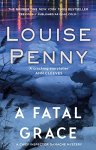
A Fatal Grace (Chief Inspector Gamache #2), by Louise Penny – I enjoyed my second visit to the village of Three Pines, Quebec – but I think I actually preferred the first novel.  I’d saved Fatal Grace for December, because it takes place around the holidays – the victim is electrocuted in the middle of a frozen lake, while watching a curling tournament, surrounded by the entire population of the town just after Christmas.  V. mysterious!  I actually guessed who the killer was, which I never mind – makes me feel like a smarty – but my one complaint was the author’s insistence on describing everyone’s body type, which I found distracting and unnecessary.  Especially the victim’s daughter, a young girl, who was repeatedly described as grotesquely obese.  It seemed unkind, and took away from my enjoyment of the book, which was in all other respects a lot of fun.

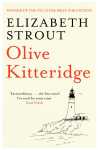
Olive Kitteridge (Olive Kitteridge #1), by Elizabeth Strout – This one has been on my TBR for way too long, and now that there is a sequel, I really wanted to get to it.  Strout’s writing is so evocative, and I just loved Olive.  (Her son Christopher was another matter.)  As with any story collection, there were hits and misses for me – any story featuring Olive at its center was better than a story in which she was just peripheral.

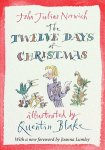
Twelve Days of Christmas: A Correspondence, by John Julius Norwich – This was ten absolutely rollicking, delightful minutes.  Edward and Emily are a newly engaged couple and Edward gets the inspired idea to send his betrothed the gifts from the classic Christmas carol.  Emily is delighted by the partridge in the pear tree and by the two turtle doves, but things quickly go downhill after that.  I laughed until I cried.

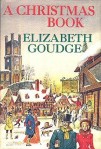
A Christmas Book, by Elizabeth Goudge – Saw this one on Instagram and quickly added it to my library holds queue, and it came in with plenty of time to read over the Christmas season.  I liked it, but didn’t love it – mainly because the book was made up largely of extracts of Christmas scenes from other books that Goudge wrote, and the scenes suffered from my lack of familiarity with all the characters and their backstories.  The trademark Goudge descriptive writing was wonderful, though.

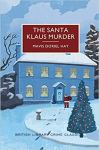
The Santa Klaus Murder, by Mavis Doriel Hay – Finally, I got around to one of the BL Crime Classics holiday mysteries I had heaped up on my shelf!  I really enjoyed this.  It was a fun Christmas murder mystery, and I guessed the killer’s identity, which always makes me feel smart.  My only complaint is that the synopsis on the back cover gave away a fairly substantial twist and allowed me to eliminate a major suspect before I even opened the book, which seems like it could have been better though out.

Home For the Holidays (Mother-Daughter Book Club #5), by Heather Vogel Frederick – I’d been saving the fifth installment in my re-read of the Mother-Daughter Book Club series for December, and it was such fun to visit with the girls and the moms over the holidays.  As always, it also made me want to revisit the classics that the book club reads – the Betsy-Tacy books, in this case.

Noel Streatfeild’s Christmas Stories, by Noel Streatfeild – This was a fast, fun read and really lovely.  I’ve never read any Noel Streatfeild before (I know, what is wrong with me?) and this slim little volume was a perfect companion for my commute on December 23.  I enjoyed each story, but I think “The Chain” was my favorite.

A Country Doctor’s Commonplace Book, by Philip Rhys Evans – After I unwrapped this wonderful, fun book on Christmas morning 2018, I decided that I should make it a tradition to read it every Christmas Day, and this was the second annual reading.  I laughed my way through it, as I did in 2018 as well.

A Christmas Party, by Georgette Heyer – My first Georgette Heyer was a fun murder mystery!  Grumpy old family patriarch Nathaniel Herriard is found stabbed to death on Christmas Eve in a locked bedroom.  There’s no shortage of motives among Herriard’s unwilling Christmas guests, but who had the opportunity, and how did they get in and out of the locked bedroom?  Again, I guessed the killer – which I love – and while I didn’t figure out the exact solution to the locked room mystery, I spotted the trail of clues that ultimately led to the answer.  So fun!

I Was A Stranger, by General Sir John Hackett – It was time to take a break from Christmas reading, so I piled up a big stack of books – some from my own shelves, and some new books from Christmas morning – to read over New Year’s week (provided I found any time…) and this was the first.  I’ve had this incredible World War II memoir on my TBR for ages, and it was one of the best things I read all year.

A Nature Poem for Every Day of the Year, ed. Jane McMorland Hunter – Finally!  I’ve been reading this in spurts all year long – well, since February, anyway.  The idea was to dip in each day and read the poem for that day; there were stretches where I did just that, and other stretches where I got behind and then caught up in a big gulp.  I love nature poetry, and this was a lovely book to spend the year with.

Quite a finish to 2019 reading!  It was a wonderful year – lots of classics, poetry, well-drawn characters, beautiful writing, really the whole picture.  The highlight this month had to be I Was A Stranger – a great way to finish off an excellent year of bookishness.  And now onward!  I have plans for more classics, more poetry, and more happy and contented bookworm moments in 2020.

How was your last month of 2019 reading?

The Books of the Decade

So the sun is setting on this decade and rising on a new one, with all the mixed feelings that brings – optimism, hope, maybe some trepidation, and the expected amounts of nostalgia for the past ten years.  A lot happened in my life in the 2010-2019 decade.  I had two babies, traveled to Europe twice, moved five times, changed jobs three times – and read consistently throughout it all.  And read a lot of really good books – books that engaged me, that made me laugh and cry (sometimes on the same page), books with characters that became friends, books I’d read a dozen times or more and books I read for the first time.  And while this seems like an impossible undertaking, I’m going to do my best to give you the best of the best here: one for each year.

2010: A Year in Provence, by Peter Mayle.  This was a light year of reading for me.  With two years under my belt at my first law firm, I was starting to do more complicated work and was focused on climbing the career ladder.  But I did read a bit, and the highlight has to have been reading Peter Mayle’s A Year in Provence as Steve and I actually traveled through Provence.

2011: As Always, Julia: The Letters of Julia Child and Avis de Voto, by Julia Child and Avis de Voto. I read a lot of good books in 2011, but the one that stands out as my book of the year has to be As Always, Julia: The Letters of Julia Child and Avis de Voto, because it was reading that book at around the same time that led Katie and me to begin a snail mail correspondence that lasted for several years (and continues as an online-and-in-person-when-we-can friendship to this day).

2012: Wolf Hall, by Hilary Mantel. My reading numbers took a big jump in 2012, which is surprising because that was the year I became a mother.  In many ways, it was a hard year – between pregnancy complications and an early delivery, I really needed a lot of comfort reading, but when I look back on my book choices, I read mostly contemporary literary fiction (which I like, but which isn’t all that comforting).  One book that stayed with me was Wolf Hall by Hilary Mantel (I also read Bring Up the Bodies in 2012, and rated both five stars on Goodreads).  Wolf Hall was a wonderful reading experience, but brings back additional associations for me, because that was the book I was in the midst of reading when we finally got the coveted NICU discharge.  I remember returning from the mothers’ lounge, Wolf Hall in one hand and a container of pumped milk in the other, to see Steve smilingly announce that the doctor had just signed Peanut’s discharge papers.

2013: Where’d You Go, Bernadette, by Maria Semple. This was a year of upheaval – our first full year of parenthood, and we pulled up stakes and moved from northern Virginia to Buffalo, New York.  The move was a huge adjustment for the whole family, and I’d be lying if I said I didn’t really struggle with it.  (You could probably have guessed that if you didn’t already know, because we moved back to Virginia just three years later.)  I took refuge in my beloved classics, re-reading old favorites like the entire Anne of Green Gables series and Jane Eyre and delving into Middlemarch for the first time (which I have since re-read).  But the book that has stayed with me was one that was everywhere in 2013 – Where’d You Go, Bernadette by Maria Semple.  I’ve read it multiple times since that first reading and it both makes me laugh and wrings out my heart.

2014: Crocodile on the Sandbank, by Elizabeth Peters. I had a lot going on in 2014 (seems to be the theme of the decade – more each year).  I started a new job, got pregnant with Nugget, and we moved to what we thought was our forever house.  With all of these changes, it’s no wonder I struggled through a reading slump for much of the fall.  But one very good thing came out of my 2014 reading: I met Amelia Peabody for the first time, in Elizabeth Peters’ The Crocodile on the Sandbank.  In addition to being a wonderful character, Amelia gave me another connection with my bookworm grandmama – I fell in love with Peters’ books independently, only to learn afterwards, from my mother, that Grandmama was a devoted Amelia Peabody fan.

2015: Dead Wake, by Erik Larson. It was hard to pick a book of the year for 2015; there were several candidates vying for the top spot.  All the Light We Cannot See, which was lyrical and gorgeous?  Station Eleven, which kept me company in several doctor’s office waiting rooms as my second pregnancy wound to a close?  Lumberjanes, Vol. I, which taught me that I could enjoy comics?  All solid candidates, but there was one book that held my attention and actually kept me riveted even through the fog of days with a newborn and a toddler: Erik Larson’s Dead Wake.

2016: To the Bright Edge of the World, by Eowyn Ivey. More upheaval!  After three years of trying to carve out a life and a place for ourselves in Buffalo, Steve and I decided it was time to go home, so we pulled up stakes again – moving first into temporary housing in January, and then back to Alexandria in July.  The move was a relief, but spending almost a full year without my books (they went into storage while we sorted out the final move, and then it took me awhile to get through my unpacking) was a total bummer.  I read some fabulous books, including my first Trollope (The Warden) and my first Persephone (Greenbanks) but nothing kept me riveted quite like Eowyn Ivey’s sophomore novel, To the Bright Edge of the World.

2017: Barchester Towers, by Anthony Trollope. Finally, after what felt like years of a nomadic existence, we stayed in one place all year long.  Work was hard and stressful in many ways, and I turned to books – as always – to keep me sane.  I read some great ones this year, but the best by far – not even a question – was Barchester Towers, by Anthony Trollope.  It was funny and entertaining, and the pages flew by; not something you expect from a Victorian doorstopper.  The best part, though, was reading it at the same time as my friend Susan, and discussing it.  There’s nothing like a like-minded friend to give even more spice to your reading life.

2018: Period Piece, by Gwen Raverat. I had a wonderful 2018 in books – revising old friends like Bernadette Fox, Catherine Morland and Anne Shirley, and exploring genre novels outside my comfort zone.  This is another one where it’s just hard to pick a “winner” – there were so many winners, which means the real winner is me.  North and South helped me through the loss of a beloved family member.  And 84, Charing Cross Road was a serious contender for my top spot, because books about books always hold a special place in my heart.  But ultimately I think the best reading experience of the year was also one of the first – a January book – Period Piece, by Gwen Raverat.

2019: Wives and Daughters, by Elizabeth Gaskell.  Bringing us to the year just ended!  I’ve churned through 124 books so far in 2019, which was high even for me – and there are still five days left in the year, so plenty of time for more.  Read through a lot of life ups and downs again, and turned to books for comfort whenever things just seemed to be getting really complicated – which did happen.  I read more classics than usual in the past year, which is how you can tell that I’ve been overwhelmed; that’s my comfort reading.  And it’s between two classics that I’ve had to struggle to name a book of the year.  I loved everything about the experience of reading The Eagle of the Ninth, by Rosemary Sutcliff, and I see myself revisiting her Roman Britain again and again.  But ultimately I think my book of the year has been Wives and Daughters, which cemented Elizabeth Gaskell as my favorite Victorian writer.

It was HARD to name just one top book to represent each year of the past decade!  But that’s a good problem to have.  I loved looking back on a decade’s worth of reading.  There were a few duds in there, but there were many, many more wonderful books.  Reading is a comfort to me in the hard times, and a joy always.

What were your books of the decade?

Themed Reads: Three Christmas Laugh-Fests

The sparkly season is upon us, and with it, the season of reading All The Christmas Books.  I have a stack of holiday-themed murder mysteries to take me through to New Year’s, which should show you about where I am this year.  But I’m planning to introduce some levity with a few funny books, too.  Blood on the mistletoe is all well and good, but some Christmas slapstick never hurts.

Christmas Pudding, by Nancy Mitford is the holiday in true Mitford style – a little snark, a little booze, and a lot of old-fashioned English wit.  Lady Maria Bobbin is hosting Christmas at her country estate, and a hodgepodge of “Bright Young Things” has gathered to celebrate the season.  There’s a featherbrained heiress, a shabby-chic couple sponging off wealthy friends, and an unfortunate sap who’s just published a tragic novel that no one understands (it’s been hailed by critics as the funniest farce of the year).  There’s politics, explosions (kind of), sticky sweets, horses, and a Christmas Day chapter that’s one of the funniest holiday send-ups I’ve read.  It includes a fake “attack” on an insufferable M.P. that leads to hilarious slapstick action, punctuated by a maiden aunt getting political, which you know is a recipe for disaster.

 The Country Doctor’s Commonplace Book, by Philip Rhys Evans will delight fans of the longstanding commonplace book tradition.  Evans’ collection of snips and press clippings is so much fun.  I loved seeing a spoof email about the re-colonialization of the United States that first went around after the 2000 election (in light of your inability to govern yourselves, The Queen is resuming sovereignty over the United States, except for New Jersey, which she does not fancy) and which never fails to make me snort-laugh.  My favorites were the hilarious parish notices, such as: “Ladies, don’t forget the rummage sale.  It’s a chance to get rid of all those things not worth keeping.  Don’t forget your husbands.”  SNORT.  Not to mention “Low self-esteem support group will meet Thursday at 7 p.m., please use the back door.”

The Twelve Days of Christmas, by John Julius Norwich contains laughs in inverse proportion to its length.  Just 32 pages long, and most of those pages taken up with Quentin Blake’s delightful illustrations, Norwich’s reimagining of the popular Christmas song (which I confess to loving – it’s one of my favorites) is hilarious.  Edward and Emily are a young couple, in the first flush of love, when Edward gets the inspired idea to send Emily a whimsical series of Christmas gifts.  Emily is utterly enchanted by the partridge in the pear tree, and the two turtle doves.  She’s a bit befuddled by the three French hens (Emily and Mummy don’t have a chicken coop, but she expects they’ll find one somewhere) and she has to confess that the four calling birds make telephoning very difficult.  While she loves the five golden rings (who wouldn’t?!) the six geese a-laying simply ruin the croquet lawn (I hate when that happens) and by the time the nine ladies dancing arrive, Emily is decidedly Not Amused: “all I can say is that judging from the way they dance, they’re certainly not ladies.”  Emily’s patience, wearing thin by day four, is ultimately exhausted, and the final letter (spoiler alert!) is an official missive to the hapless Edward, from Emily’s lawyer.  If you need a quick break and to laugh for ten solid minutes, Norwich is your man.

Sometimes it feels like for all the joy there is surrounding this season of the year, laughs are in short supply.  There’s just so much rushing around – so much to do, with closing out the year at work (for those of us on a calendar year schedule, which includes both Steve and me), travel, and making sure that everyone else has a magical time.  If you’re like me, you need a laugh now and again.  Mitford, Evans, and Norwich are here for you.

Reading Round-Up: November 2019

Reading is my oldest and favorite hobby. I can’t remember a time in my life when I didn’t love to curl up with a good book. Here are my reads for November, 2019


Plague Land (Somershill Manor Mystery #1), by S.D. Sykes – Murder mysteries set in historical times are very much my jam, so I was intrigued to check out this new-to-me series featuring an English Lord in a Kentish village just after the Plague.  I liked, but didn’t love it – Sykes doesn’t shy away from picturing the brutality of medieval life, which I mostly tolerate, but lately I’ve been craving gentler fiction.  The mystery also felt like a convenient device more than a plot driver.  I will probably continue with the series, but need a break first.

Slightly Foxed No. 8: Cooking with a Poet, ed. Gail Pirkis and Hazel Wood – At least to a certain extent, I can measure the success of an issue of Slightly Foxed by how many of the featured titles end up either on my Amazon wishlist or in my Abebooks cart.  In the case of issue number 8, there were a few, and there would have been more except for the fact that I already owned a few of the books the contributors profiled (like Another Self and Period Piece).  There’s not much that’s as comforting as curling up with a cup of tea and an issue of Slightly Foxed, and it was just what I needed.

Wives and Daughters, by Elizabeth Gaskell – It took me awhile, mainly because I was reluctant to lug the giant doorstopper volume I have (it’s a beautiful Folio Society hardcover) on the Metro – but Wives and Daughters was wonderful and worth every minute spent with it.  It’s a testament to how marvelous Gaskell’s storytelling is that I closed the book reluctantly, wishing it wasn’t over – after more than 650 pages.  My new favorite Gaskell!  Fully reviewed here.

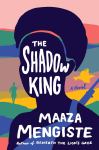
The Shadow King, by Maaza Mengiste – I’d heard good things about this historical novel of Ethiopia in World War II, but try as I did, I couldn’t get into it.  Part of it was the author’s decision not to use quotation marks, which made it hard to follow the dialogue – but mostly, this was just the wrong time for me to read this book.  After months on end of extreme work stress, I am craving something gentler and calmer, and a book about a brutal war was never going to work for me at this time.  It was beautifully written but not for me, at least not for me right now.

The Stationery Shop, by Marjan Kamali– After feeling like my previous read was just too much, I approached The Stationery Shop with trepidation, but ended up really enjoying it.  There was a little violence, but most of the book focused on family interactions and cultural traditions – interspersed with luscious descriptions of Persian food – and it was wonderful.

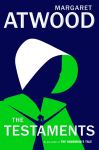
The Testaments (The Handmaid’s Tale #2), by Margaret Atwood – This is an unpopular opinion, but I preferred The Testaments to The Handmaid’s Tale.  There is no question that The Handmaid’s Tale is the better book of the two, but The Testaments had a more hopeful feel and a pacier plot.  I found The Handmaid’s Tale deeply distressing – which was the intent, of course, so it did its job – and have never felt compelled to re-read it.  But for a gripping, plotty reading experience… I actually really liked The Testaments.

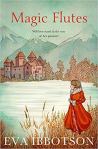
Magic Flutes, by Eva Ibbotson – Having heard that Magic Flutes is not one of Ibbotson’s strongest offerings, I had low expectations, and they were mostly met.  The story was fine, if formulaic, and the characters mostly the same.  Ibbotson clearly drew her hero in the Bronte mold (there’s even a reference to him being in “one of his Mr. Rochester moods”) and the older I get, the less alluring I find Bronte-style heroes.  What I really disliked about this book was its portrayal of a Jewish character.  I tried to remind myself that the book was a product of its times, but it left a very sour taste in my mouth.  If I didn’t know that Ibbotson’s other books are better, I’d probably be turned off the author completely.  As it is, I’ll definitely read more Ibbotson (if only because I love her settings – like Vienna and an Austrian castle, here), but won’t re-read Magic Flutes.

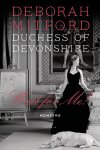
Wait for Me!, by Deborah Mitford, Duchess of Devonshire – I can’t get enough details and gossip about the Mitford family, and have had Debo’s memoirs on my list to read for years.  The youngest of the six Mitford sisters (and Tom, can’t forget about Tom – everyone does), Deborah Mitford married the younger son of the Duke of Devonshire, only to become a Duchess-in-waiting when her brother-in-law was killed in World War II.  Debo’s memories of growing up in one of the most famous families of the day, and of her years as a Duchess, are fascinating reading – even if she’s not as good of a writer as her elder sister Nancy.  (Debo also professes not to be a reader, but I think she should give herself more credit – in addition to Nancy and Jessica, her memoirs mention Anthony Trollope, E.F. Benson, Evelyn Waugh – who did not enjoy his stay with the Devonshires – and Patrick Leigh Fermor, to name just a few of the literary lights with whom Debo mixed.)

Poems of Gratitude, ed. Emily Fragas – I really enjoy making my way through the slim poetry collections in the Everyman’s Library Pocket Poets series, but I think Poems of Gratitude has been my favorite thus far.  Fragas’ editorial decisions – for instance, to mix up the time periods instead of progressing chronologically in each section, and to include more works by women, non-native English speakers, people of color, and First Nations people – were really inspired.  Poems of Gratitude was wonderful reading on Thanksgiving.

Nine books seems like a relatively small achievement for November, which is a longer month.  But it was a busy month – lots of work and preparation for traveling over Thanksgiving and one Victorian doorstopper (also the highlight of the month) – made for slow going for a while there.  But I made up for it with a luxurious weekend of reading four books over Thanksgiving, which was wonderful.  Now on to the holiday season; I suspect my December list will look a little paltry as well, since I have a lot on my plate at work and at home.  But I’ll be turning to holiday books all month and I can’t wait.

The Classics Club Challenge: Wives and Daughters, by Elizabeth Gaskell

Well, all I can say is, never be the heroine of a mystery.  That you can avoid, if you can’t help being an accessory.

The more I experience of the worlds created by Elizabeth Gaskell, the more I love her work.  While she’ll never knock my beloved Jane Austen and L.M. Montgomery off the pedestal they share, she’s stepped right over her dear friend Charlotte Bronte’s place in my affections.  I’m sorry to say I clung to a teenaged prejudice against Gaskell for too long, based entirely on her responsibility for the sanitized Life of Charlotte Bronte, the very idea of which (because I haven’t actually read it) my high school self found offensive.  But a few years ago I decided it was time I gave Gaskell a try, so I picked up Cranford and was captivated and delighted.  Then last year, grieving a family member who had appreciated Gaskell, I turned to North and South to ease the loss, and it was just what I needed.

Wives and Daughters is my third Gaskell, and I think it’s my favorite so far.  It’s pure joy from the first page to the last.  When the story opens, we meet young Molly Gibson, daughter of a respected country doctor, on her way to her first foray into society – for a garden party at Cumnor Towers, the local seat of the Earl and Countess of Cumnor.  While at the Towers, Molly falls ill – too much excitement, not enough food – and is bundled off to rest in the bedroom of the younger Cumnor ladies’ governess, a woman named Clare.  Clare promises to retrieve Molly in time for her to go home, then promptly forgets that Molly exists at all.  When Molly awakens, it’s dark, and she has to spend the night at the Towers – the first night she’s spent away from home, and away from her widowed father.  She’s distraught and forlorn, and your heart breaks for her immediately – and you want to throttle the thoughtless Clare.

Fast-forward a few years: the teenaged Molly is just as innocent as the young lamb who found herself lost and forgotten at Cumnor Towers, but now she’s the recipient – unwittingly, though – of her first love correspondence.  Mr. Gibson intercepts a letter from one of his medical students, professing his (somewhat embarrassing) undying love for Molly.  Mr. Gibson panics, packs the young offender (he’s a ginger! the horror!) off to his relatives, fires the housemaid from whom he intercepts the message, and sends Molly to Hamley Hall, residence of the local squire, to be out of the way.  At Hamley, Molly endears herself to the squire and his wife – especially his wife.  And she develops a girlish crush on the poetic elder son of the house, Osborne, and a quiet respect and admiration for his younger brother Roger.

Meanwhile, Mr. Gibson, still in a dad-panic, decides there’s only one thing to be done: he needs to marry again, and fast.  Molly clearly needs a mother, someone dependable and loving, who can guide her as she transitions from girlhood into young womanhood.  It doesn’t much signify that Molly doesn’t want a stepmother intruding on her intimacy with her father – in fact, Mr. Gibson doesn’t even ask her opinion.  (Mr. Gibson is a man of many wonderful qualities, but his one major failing is a tendency to have knee-jerk reactions and freak out and make really dumb decisions.)  In his search for a steadying influence on Molly (who doesn’t actually need steadying) Mr. Gibson chooses the worst possible candidate: one Hyacinth Kirkpatrick, a pretentious social-climbing widow, who in her more youthful days was none other than the self-centered Clare – the very same, whose forgetfulness was at the root of Molly’s one and only traumatic childhood memory.  Whoops!

Mrs. Kirkpatrick, who sees a good thing and quickly becomes Mrs. Gibson, is a terrible choice for a stepmother.  She’s hardly the sobering influence Mr. Gibson has in mind.  Molly dreads her entry into the family and suffers a great deal of heartache around her father’s wedding, and it’s immediately apparent from the new Mrs. Gibson’s tone-deafness when it comes to her stepdaughter (insisting on being called “Mamma,” stripping the house of Molly’s memories of her real mother…) that Mr. Gibson has made an awful mistake.  But the reader is fortunate, because Mrs. Gibson, with all her pretentions and aspirations, is one of the best comedic characters I’ve ever read, and she also ushers the blooming Cynthia into the story.

Cynthia is Mrs. Gibson’s daughter from her first marriage.  She’s everything Molly is not – flirtatious to Molly’s quiet serenity, gaudily beautiful to Molly’s restrained elegance, underhanded to Molly’s straightforwardness and forthrightness.  But Molly immediately adores Cynthia, and Cynthia, to her credit, adores Molly.  And somehow – it works.  Molly is Cynthia’s staunch ally, and Cynthia is Molly’s devoted friend, and their relationship quickly becomes as close as if they were really sisters – even when Cynthia catches the eye of Roger Hamley, which Molly discovers she doesn’t quite appreciate, somehow.

Cynthia looked lovelier than ever to him for the slight restriction that had been laid for a time on their intercourse.  She might be gay and sparkling with Osborne; with Roger she was soft and grave.  Instinctively she knew her men.  She saw that Osborne was only interested in her because of her position in a family with whom he was intimate; that his friendship was without the least touch of sentiment; and that his admiration was only the warm criticism of an artist for unusual beauty.  But she felt how different Roger’s relation to her was.  To him she was the one, alone, peerless.  If his love was prohibited, it would be long years before he could sink down into tepid friendship; and to him her personal loveliness was only one of the many charms which made him tremble with passion.  Cynthia was not capable of returning such feelings; she had too little true love in her life, and perhaps too much admiration to do so; but she appreciated this honest ardour, this loyal worship that was new to her experience.  Such appreciation, and such respect for his true and affectionate nature, gave a serious tenderness to her manner to Roger; which allured him with a fresh and separate grace.  Molly sat by, and wondered how it would all end, or rather, how soon it would all end, for she thought that no girl could resist such reverent passion; and on Roger’s side there could be no doubt – alas! there could be no doubt.

It’s worth mentioning the relationship between Osborne and Roger, as it parallels the relationship between Cynthia and Molly in many ways.  Osborne and Roger are as different as two brothers can be – yet once again, it works.  Their genuine affection for one another, as with Cynthia and Molly, overcomes their differences in personality.  Roger steadfastly loves and supports his brother through any number of troubles, and it’s beautiful.

Because Osborne does have some troubles – or more to the point, some secrets.  And so does Cynthia.  Molly becomes party to both of their secrets, and she is resolved to help Cynthia out of a “scrape” that the latter has been concealing.  Help she does, but…

Scandal sleeps in the summer, comparatively speaking.  Its nature is the reverse of that of the dormouse.  Warm ambient air, loiterings abroad, gardenings, flowers to talk about, and preserves to make, soothed the wicked imp to slumber in the parish of Hollingford in summer-time.  But when evenings grew short, and people gathered round the fires, and put their feet in a circle – not on the fenders, that was not allowed – then was the time for confidential conversation!

Molly is observed undertaking some actions to help put Cynthia’s life in order, and her well-intentioned comings and goings are misconstrued and misinterpreted by the idle ladies of Hollingford.  And then – as Gaskell puts it – Molly finds a champion, in Lady Harriet Cumnor, one of the best secondary characters in the book.  (Side note: I’d like to read a book starring Harriet as a lady adventurer.  She and the fabulous Miss Dunstable, of Trollope’s Doctor Thorne, could go mountaineering together, or maybe excavate some tombs like Victorian lady Indiana Joneses.  Will someone please write that?  Perhaps I’ll have to.)  The quick-witted Lady Harriet, overhearing her parents’ gossiping about Molly, immediately puts two and two together, figures out what’s really going on, and single-handedly saves Molly’s reputation in the fearless way that only a woman who knows she’s on a high enough pedestal to have nothing to fear from gossips can do.  But no sooner is Molly’s reputation on the mend, than tragedy strikes – and that, I won’t divulge, because you need to read Wives and Daughters and let Elizabeth Gaskell spin this tale for you.

Wives and Daughters should be more widely read – for the beauty of the language, the diversion of the story, and the wonderful characters.  And of course, the great tragedy of the book is that it’s unfinished – Gaskell died suddenly, just before writing the last chapter.  But the reader knows how it’s all going to end – there’s only one possible outcome at that point.  I’ll let you work it out for yourself.

Team Gaskell, amirite?

Themed Reads: Three Feisty Family Stories for Thanksgiving

Ahhhh – Thanksgiving!  That quintessential celebration of parades, mashed potatoes, Detroit Lions football, and family squabbling.  We’re celebrating with my folks, as usual, and anticipating a quiet and peaceful holiday.  But if you’re already gritting your teeth in anticipation of a shouting match over the pumpkin pie, here are three stories of family drama, featuring a spectrum of heroes and heroines from passive to feisty.

The Blue Castle, by L. M. Montgomery – Valancy Sterling is the heroine we all need.  Twenty-nine, unmarried, living under the thumb of her domineering mother and a slew of disapproving relatives, Valancy’s entire grim existence changes when she receives a diagnosis of a terminal heart condition.  Determined not to waste any more time of the year-odd remaining to her, Valancy decides she is going to say what she’s thinking and please herself for the first time in her life.  Her staid, stiff relatives are shockedshocked I tell you, when Valancy’s wit and snark comes out for the first time at a family dinner.  They react in true Ron Burgundy stunned style – Baxter, I’m not even mad, that’s amazing – and the shocks keep coming as Valancy takes herself off to keep house for a local ne’er-do-well and his disgraced daughter, then pulls the biggest surprise of all.  The Blue Castle is required reading for anyone who has ever wanted to lob a grenade right into the middle of the Thanksgiving table.
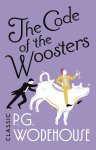
The Code of the Woosters, by P.G. Wodehouse – If you have ever had a domineering aunt, Bertie Wooster’s plight will be so real it hurts.  Really hurts, because Bertie has not one, but two, of those estimable relatives.  Aunt Agatha is sternly proper and upright, constantly despairing of Bertie’s flighty nature, embarrassing friends, and apparent failure to close the deal with any of the upper class young women she selects for his bride.  Aunt Dahlia seems better, at first, but she can’t seem to help herself enlisting Bertie in her schemes – of revenge against people who have slighted her, to keep her cook Anatole in good spirits, or for funding for her self-published magazine Milady’s Boudoir.  This despite having no great opinion of Bertie’s mental faculties.  In The Code of the Woosters it’s Aunt Dahlia who is the bane of Bertie’s existence – sending him into deep undercover to steal a cow-creamer.  Fortunately, Bertie has the incomparable Jeeves at his side, and all will be set to rights.  Are you intrigued?  Of course.  And look at it this way – when your aunts and uncles are driving you crazy over the Thanksgiving table, at least you can be thankful that none of them have ever manipulated you into committing petty larceny, probably.

 Wives and Daughters, by Elizabeth Gaskell – Families are complicated, right?  And it only gets more complicated when you start adding step-parents and step-siblings into the mix, as the widower Doctor Gibson discovers when he decides – in a panic after his daughter attracts a suitor for the first time in her life – that what young Molly needs most is a mother to guide her.  He doesn’t bother to ask young Molly what she thinks of this plan (or to let her in on the secret crush that he intercepts) and he doesn’t make the best choice of a second wife, either.  Hyacinth Clare Kirkpatrick, former governess to the local earl’s daughters, is self-centered and a bit ridiculous.  Really, the only benefit to the new Mrs. Gibson is that she comes with a daughter, Cynthia, who proves to be a built-in pal for Molly.  Cynthia is beautiful and high-spirited, and she tends to suck up all the local male attention, but Molly adores her and Cynthia’s great redeeming characteristic is that she adores Molly, too.  Of course she introduces all sorts of complications, but it’s a Victorian novel, so what else can you expect?

There you have it – three stories of feisty families to make you grateful that you don’t have a raft of stick-in-the-mud cousins, an aunt with criminal leanings, or a stepmother who schemes to marry your stepsister off to the local squire’s son.  Unless you do have one or all of these family situations, in which case my advice is: bourbon.