
 Sanditon is one of Jane Austen’s two unfinished novels – the other being The Watsons – and it’s somewhat better known as a result of the Masterpiece series (which I have yet to watch – should I?). Unlike The Watsons, which Austen set aside for unknown reasons, Sanditon was interrupted by the author’s untimely death (sob). Various authors (and now television showrunners) have tried to guess where Austen may have been headed with the characters – she only got twelve chapters in, so it’s hard to say – but I chose not to read past the point at which Austen laid down her pen.
So, how far does that get a reader, exactly? Far enough to get a flavor for the characters and the setting – the fictional seaside town of Sanditon. The book opens with an accident on the road. Mr. and Mrs. Tom Parker are traveling to the town of Willingden, looking to poach a doctor to add to the population of their adopted hometown, Sanditon. Mr. Parker’s great ambition is to make Sanditon one of the great holiday towns of the English coast, and he thinks having a doctor in residence will draw more visitors. (This is largely because his hypochondriac sisters refuse to visit.) Unfortunately, Mr. Parker finds himself in need of a doctor when his chaise runs off the road and he sprains his ankle. Alas, there’s no doctor in Willingden – Mr. Parker had read of a dissolution of a medical partnership in the town, but it turns out that was a different Willingden, whoops – but there is the large and jolly Heywood family, who take the Parkers in while Mr. Parker’s ankle heals enough for him to travel. As Mr. Parker rests and recuperates, he tries to entice the Heywoods to visit Sanditon, which has every advantage:
Nature had marked it out, had spoken in most intelligible characters. The finest, purest sea breeze on the coast – acknowledged to be so – excellent bathing – fine hard sand – deep water ten yards from the shore – no mud – no weeds – no slimy rocks.
Oh, good, no one likes slimy rocks.

Mr. Parker has invested heavily in Sanditon and sees himself as something of a club promoter for the town. As he was boasting of Sanditon’s advantages and his own perspicacity in developing it, I kept envisioning him as something of a Georgian version of Tom Haverford.

Tom Haverford Parker spends two weeks resting his ankle and trying in vain to convince the Heywoods to take a vacation – but Mr. and Mrs. Heywood are the ultimate homebodies. They have no objection to their children traveling, though, and so when the Parkers finally shove off for Sanditon, they have Charlotte Heywood, one of the daughters of the family, in tow.

As the Parkers and Charlotte drive to Sanditon, Mr. Parker regales Charlotte with a lengthy description of the town and its inhabitants – including his fellow Georgian club promoter, Lady Denham, who it actually turns out is super cheap; his sisters and younger brother Arthur, who went to the Mr. Woodhouse school of self-diagnosis; and his other brother, Sidney:
Sidney says anything, you know. He has always said what he chose, of and to us all. Most families have such a member among them, I believe, Miss Heywood. There is someone in most families privileged by superior abilities or spirits to say anything. In ours, it is Sidney, who is a very clever young man and with great powers of pleasing, He lives too much in the world to be settled; that is his only fault. He is here and there and everywhere. I wish we may get him to Sanditon. I should like to have you acquainted with him.
I see you, Jane Austen. It seems pretty clear that Sidney is intended to be Charlotte’s love interest, but he doesn’t turn up until near the end of Austen’s chapters. What kind of love interest would Sidney be? Hard to say – from this description he could be a Bingley, a Darcy, or a Wentworth type, probably not a Tilney or Knightley. But it does appear that Austen has Sidney in mind for the romantic hero, especially after Charlotte meets the other eligible bachelor of the neighborhood, the young baronet Sir Edward Denham, who turns out to be (a) somewhat ridiculous; (b) hard up for cash and therefore required to marry for money; and (c) into someone else. Sir Edward’s step-aunt, the dowager Lady Denham, grills Charlotte about her intentions in a slightly watered down Lady Catherine de Bourgh manner (but with more satisfaction than Lady “I should have been a great proficient” Catherine gets out of Lizzy in Pride and Prejudice).
‘Indeed! He is a very fine young man, particularly elegant in his address.’
This was said chiefly for the sake of saying something, but Charlotte directly saw that it was laying her own to suspicion by Lady Denham’s giving a shrewd glance at her and replying, ‘Yes, yes, he is very well to look at. And it is to be hoped that some lady of large fortune will think so, for Sir Edward must marry for money. He and I often talk that matter over. A handsome young fellow like him will go smirking and smiling about and paying girls compliments, but he knows he must marry for money. And Sir Edward is a very steady young man in the main and has got very good notions.’
‘Sir Edward Denham,’ said Charlotte, ‘with such personal advantages may be almost sure of getting a woman of fortune, if he chooses it.’
This glorious sentiment seemed quite to remove suspicion.
See, Lady Denham, you have nothing to worry about.
Because there’s really no plot to speak of – Austen died before she got there – the real enjoyment factor in Sanditon is the characters. Their dialogue is just as sparkling as in Austen’s finished novels, and I found myself laughing out loud at the Parker family’s and the other characters’ foibles, and especially at Charlotte’s gently clear-eyed reactions to them. Mr. Parker being Tom Haverford, I saw Charlotte as the Ann Perkins of the crew. Essentially good-hearted, definitely cute, polite to a fault, and always getting dragged into weird exchanges with people.

(Is this entire review just an excuse to post Parks and Recreation gifs? Maybe. It might be.)
Anyway – Austen spends the first twelve chapters getting all her pieces into their places. The Parker sisters show up, bringing their hypochondria with them, and also a family from the West Indies, or a girls’ school, or both?, with the sickly heiress of Lady Denham’s dreams, Miss Lambe (also one of the only people of color in all of Austen’s work – and I imagine Austen was quite ahead of her time in writing this character), and Sidney Parker pops up as well. Just as it seems the action is about to get going – it stops. And we’ll never know exactly what Austen had in mind for these characters. Would Sir Edward Denham get dragged into a marriage of convenience with Miss Lambe, or would he successfully seduce Miss Clara Brereton, his rival for Lady Denham’s fortune? Would Sidney Parker turn out to be the hero after all? Would Charlotte Heywood, with her wit and good sense (like a combination of Lizzy Bennet and Elinor Dashwood) fall for Sidney Parker, if he is in fact the hero? Would the Parker sisters and Arthur ever get over their hypochondria? Would club promoter Mr. Parker make Sanditon the hippest destination on the coast? We don’t get to find out – but we can use our imaginations.
Now I’m down to just The Watsons and my volume of Jane Austen’s letters. I don’t know how I am going to live in a world where I’ve read everything that Austen has written. Send wine, folks.



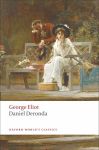 Daniel Deronda, by George Eliot – Eliot’s final novel is often regarded as her masterpiece, although I will confess myself still partial to Middlemarch. I did love this novel, though. In Daniel Deronda, Eliot leaves behind her usual village territory (from epics like Middlemarch as well as shorter fiction such as Silas Marner and Scenes of Clerical Life) for London. Most, although not all, of the action in Daniel Deronda takes place in the capital. The novel follows the loves and very different fortunes of two main characters, the titular Deronda and the striking local beauty Gwendolen Harleth. Gwendolen is fiercely independent but agrees to marry a rich man to provide for her newly-impoverished family; her loveless marriage proves devastating to her mental health and sense of worth, and she leans on Deronda as a moral savior – but Deronda may be too preoccupied with questions about his own history and culture to intervene for Gwendolen before it is too late. Fully reviewed
 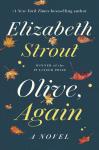 Olive, Again (Olive Kitteridge #2), by Elizabeth Strout – While I’m not trying to keep up with all the buzzy new releases these days, I did want to stay up-to-date with Elizabeth Strout, since I think she’s one of the most talented American writers working today. Olive, Again is – clearly – a return to Crosby, Maine and the world of grouchy but fundamentally good-hearted Olive Kitteridge, retired math teacher and truth-talker. As with Olive Kitteridge, Olive, Again is a series of linked short stories, in all of which Olive appears to varying degrees. As with Olive Kitteridge, I preferred the stories in which Olive is a focal point to those in which she only appears briefly. Strout was at her best when portraying Olive settling into her second marriage, and facing the indignities of aging – but there were a few stories which seemed to mostly be included for shock value (and in which Olive was not a main character), which I didn’t like. Overall, recommended, but some skimming is possible.
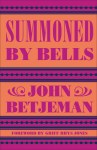 Summoned by Bells, by John Betjeman – Betjeman was a Poet Laureate of the United Kingdom and one of the most recognizable English voices of the twentieth century, and this is his memoir in verse, covering his boyhood through his university years. Betjeman used to get a bad rap for being a bit too Oxbridge, C of E, cricket, tea-and-crumpets – but I think he’s enjoying a moment these days (I came across him first on #bookstagram) and in uncertain, stressful times there’s nothing like a little comfort and nostalgia. I enjoy a good memoir in verse, and this one certainly didn’t disappoint, with evocative descriptions of the churches Betjeman wandered into over the course of his youth (he does enjoy a church), the natural Hampstead landscape of his childhood, his joy in books, and more. It’s a fast read and well worth devoting an hour to.
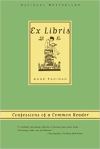 Ex Libris, by Anne Fadiman – I adore books about books – it might be my favorite non-fiction genre? – and Anne Fadiman’s classic Ex Libris has been on my TBR since I read an excerpt (Fadiman’s essay “Marrying Libraries”) in the very first issue of Slightly Foxed. I had such a lovely time over this delightful collection – Fadiman muses over everything from compulsive editing (oh, I know about this so well) to the joys of long words and reading a book in the place where it is set, to a childhood growing up surrounded by books (Fadiman used her father’s complete set of Trollope as building blocks, which she lovingly describes in “My Ancestral Castles.”). I loved every word of Fadiman’s slim collection and am already looking forward to re-reading it one evening.
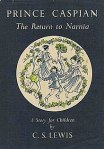 Prince Caspian (The Chronicles of Narnia, #2 in publication order), by C.S. Lewis – We’ve been trying to establish a family tradition of reading a chapter a night from a childhood classic; we get on good stretches in which we remember to do this consistently and then we fall off the wagon for weeks at a time. Because of this falling-off-the-wagon problem, it took us ages to get through Prince Caspian, but we finally finished it. (Steve and I both have fond memories of reading the Chronicles of Narnia as kids, which is why we decided to read the series for family story hour. I think Peanut and Nugget are enjoying the books.) I love Prince Caspian – the scene in which Peter, Susan, Edmund and Lucy explore the ruins of Cair Paravel and finally realize where they are is one of my favorite parts of the entire series. (And the D.L.F.!)
 The Priory, by Dorothy Whipple – As with Jane Austen and Anthony Trollope, I am rationing Dorothy Whipple books because I don’t want to live in a world in which I have read everything Whipple will ever write. (This is why I have not read The Watsons, and why I am slowly making my way through Barchester.) Once I do eventually read all of Whipple’s novels, I suspect The Priory might be my favorite. I cannot resist an English country house story, nor a story about unconventional aristocrats or sisterhood. The Priory is all of these. (Christine and Penelope Marwood, blissfully trotting along through life in their nursery until Christine falls in love and gets married, would find a lot in common with Cassandra and Rose Mortmain, although the Marwood sisters’ stepmother, Anthea, is very different from Topaz.) I adored all of the characters (except Bertha and the Major), but Christine was my favorite – after almost 600 pages, I was sad to say goodbye to her.
 The Mitford Murders (The Mitford Murders #1), by Jessica Fellowes – If the last name Fellowes is ringing a bell, that is because Jessica is the niece of Julian Fellowes, creator of Downton Abbey, Gosford Park, and Belgravia (all of which I love). If anyone was going to write a murder mystery series starring Nancy Mitford, it would be Julian Fellowes’ niece! As expected, The Mitford Murders was fun and frothy – not destined to become a crime classic, but an enjoyable romp. Main character Louisa accepts a job as nursery maid to the Mitford children, and quickly bonds with sixteen-year-old Nancy. When a woman is murdered on a train, Nancy and Louisa team up to solve the crime, of course. I enjoyed this, and will definitely continue on with the series.
 Girl, Woman, Other, by Bernardine Evaristo – The 2019 Booker Prize winner (because I agree with the criticism that The Testaments, enjoyable as it was and much as I like Margaret Atwood’s work, is not in the same league and shouldn’t have shared in the award) was really unusual and an incredible achievement. This collection of sixteen linked stories about black women (some LGBTQ+, some not) was unlike anything I have read before. I was a little worried, picking it up, because I’d heard that “the punctuation was unusual” and I often find that detracts from the reading experience – but in this case, it just made the stories more like poetry than anything else. While it was not exactly a low-stress thing to be reading at the beginning of a pandemic, it was wonderful and I’m so glad that I did read it.
 Sanditon, by Jane Austen – I am chipping away at the Jane Austen-penned words I have left to read, sadly. (I’m down to The Watsons and her letters now.) Sanditon was on my classics club list and it was the clear choice for reading as the world turned inside out. (Because while Austen says there is nothing like staying home for real comfort, I say there is nothing like Austen for real comfort when you’ve got to stay home because of a global health crisis.) Austen never finished Sanditon, her portrayal of characters living in and visiting a small seaside town – but even the unfinished novel showcases her wit, her powers of characterization, and her sense of place. I chose not to read one of the versions that were “finished by Another Lady,” because I wanted to set the book down where Austen did, and let the characters live on in my imagination and not someone else’s. Full review (for the Classics Club) to come.
 Lucia in London (Mapp & Lucia #3), by E. F. Benson – Still looking for comforting classics to read (because: pandemic) I decided there was no time like the present to dive back into Lucia’s world. Lucia in London opens with Lucia and Peppino bereaved (sort of): Peppino’s elderly aunt has died. Even though Aunt Amy lived in a nursing home (she was gaga, dear) and they never saw her, Lucia and Peppino put on a good show of grief for awhile, then get on with the business of enjoying their inheritance – a doubling of their income, a house in London, and some pearls (but don’t talk about the pearls). Off to London they go, for Peppino OF COURSE, and Lucia promptly takes the town by storm, as only Lucia can do. (The listening-in device! The morsel of Stravinsky! The duchesses – too many duchesses!) Lucia is a hopeless snob, but you can’t help rooting for her. Full review (for the Classics Club) to come.
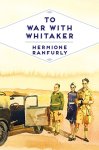
 Slightly Foxed No. 65: Asking the Right Questions, ed. Gail Pirkis and Hazel Wood – There’s nothing like a new issue of Slightly Foxed. Or, more specifically, there’s nothing like a new issue of Slightly Foxed and a cup of tea – or some good chocolate – for the greatest bookish delight. This latest issue, like all the others, was a joy to read. Turning the heavy cream-colored pages is always a source of comfort, and even if the book being profiled in any given essay isn’t destined to immediately jump to the top of my list, I enjoy reading about what others enjoy reading. On this occasion, I wouldn’t say my TBR grew exponentially, but I loved reading about To War with Whitaker – the latest Slightly Foxed Edition, which I’ve ordered and which I look forward to receiving once the pandemic stabilizes and the Foxes are back at Hoxton Square – and about The Outermost House, one of my favorite pieces of nature writing.
 Meet the Frugalwoods: Achieving Financial Independence Through Simple Living, by Elizabeth Willard Thames – I know the Frugalwoods have a dedicated online following, but I just recently started reading their blog and I was curious to learn more about their story. It was a quick read, and enjoyable. It was not a guide to personal finance or a collection of money tips (which many Goodreads reviewers seemed to have been expecting) so a reader who is looking for that sort of thing would be well advised to look elsewhere. This is a memoir of two people who figured out how to save a huge percentage of their incomes at a young age, and put those savings toward the big (and unusual) goal of buying a homestead in rural Vermont. Not for everyone, but I like reading about people who are living all sorts of lives and the Frugalwoods’ story was interesting to me.
 Mapp and Lucia (Mapp & Lucia #4), by E. F. Benson – Finally, finally, the long-awaited cataclysmic encounter of Elizabeth Mapp and Emmeline “Lucia” Lucas! I’ve been waiting four books for these two forces of nature to meet one another, and it was worth the wait. Recently widowed (Nooooo! Peppino! Say it isn’t so!), Lucia is in deep hibernation at The Hurst when the book opens – but not for long. It’s been almost a year, and Lucia’s faithful (most of the time) deputy, Georgie Pillson, takes it upon himself to bring her back into the life of the village. The next major social event is an Elizabethan fete that Daisy Quantock has been planning, and having not been cast as Queen Elizabeth I, Lucia clearly can’t be in the vicinity of Riseholme when it happens. Luckily she has seen a newspaper advertisement for a house to rent in Tilling – and it’s Mallards, Miss Mapp’s strategically situated abode (which was based on E. F. Benson’s house in Rye). And so Mapp and Lucia finally come into contact – like two flints, and there are instant sparks. I think this was my favorite of the series so far; I won’t say any more, because: full review (for the Classics Club) to come.
 Dorothy Whipple is completely underrated! One of the coterie of “middlebrow” writers of the Interwar period, her books have been famously slighted by
 Home Fires: The Women’s Institute at War, 1939-1945, by Julie Summers (also published as Jambusters) explores the significant role British women played on the Home Front as they organized into local Women’s Institutes for the purposes of serving, learning, and socializing. The Women’s Institute movement started as a flicker, but soon caught fire, with local WI groups forming in almost every community. Interest and participation in the WI movement went up to the very highest levels of society: Queen Elizabeth (later to become The Queen Mother) was an honorary chair of the Windsor branch of the WI. While the WI was best known for their efforts at food preservation – especially jam-making – which made a substantial difference during the long years of rationing and food shortages, they were heavily involved in all sorts of war efforts and provided a natural mechanism for women who were not employed in wartime industries or involved in the armed forces to pool their skills and make a difference.
 Women Heroes of World War II: 26 Stories of Espionage, Sabotage, Resistance and Rescue, by Kathryn J. Atwood is technically a young adult title, although it has appeal to every age group. I happened across it in my library while looking for books about Marie-Madeleine Fourcade, a heroine of the French Resistance (this was before the publication of Madame Fourcade’s Secret War, which I own but have not yet read). Madame Fourcade is profiled in Women Heroes of World War II, but so are twenty-five other women, of every age and nationality, whose acts of courage helped to win the war. Daring women took great risks to rescue fugitives from the Nazis, carry messages to the Allies, sabotage Axis efforts, and more. In this age of political disaffection and polarization, it’s refreshing and bracing to read about women who banded together, often at great personal risk, to do what is right.
 Consider the Years, by Virginia Graham, offers a contemporary perspective on the war years – and the long drab decade that followed – through a different lens: poetry. Graham was a well-off young woman when the war began, and evacuated with her family to avoid the danger of living in London during the Blitz. She writes movingly of daily life; I featured my favorite poem from this slim Persephone-published collection,
 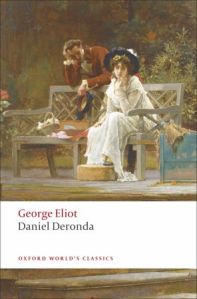 Daniel Deronda was George Eliot’s final and most ambitious novel – even more ambitious than her most famous work, Middlemarch. Like Middlemarch, Daniel Deronda follows two main characters on parallel paths that occasionally join up. But while in Middlemarch Dorothea Brooke and Dr. Tertius Lydgate rarely encounter one another until the end – they are in different social spheres, with Lydgate being a fairly prosperous but still middle class country doctor, and Dorothea an heiress and member of the local gentry – the two focal points of Daniel Deronda, the titular Deronda and local beauty Gwendolen Harleth, are thrown into one another’s company regularly even as they follow their separate paths.
 Life Among the Savages, by Shirley Jackson – I’ve never read anything by Shirley Jackson before, because I am not really into psychological suspense or horror, so The Haunting of Hill House and We Have Always Lived in the Castle and Jackson’s other work struck me as probably too scary. But Jackson is a major American literary figure and I did want to give her a try – and her lightly fictionalized memoir of living in a rambling Vermont farmhouse with her bumbling husband and hilariously mischievous children was much more my speed. I laughed until I cried, especially at the antics of Jackson’s two elder children, Laurie and Jannie, although I was disappointed to discover that Jackson’s husband was actually a controlling, cheating jerk, who was considerably sanitized in her memoir. All things told, though, LOVED. Fully reviewed
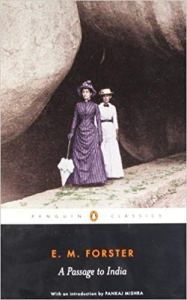
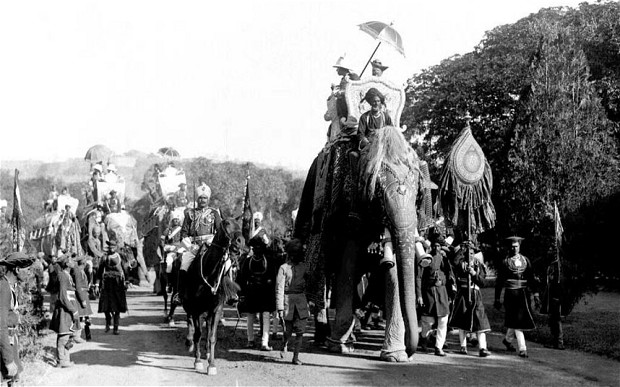
  A Passage to India, by E. M. Forster – I am gradually working my way through Forster’s bibliography and enjoying each book more than the last. I liked A Room with a View, loved Howard’s End, and was enthralled by A Passage to India. Forster’s last novel – and masterpiece, in my opinion, although I know Howard’s End has its champions – he explores the race relations of an outpost in the India of the British Raj. Adela Quested, a young woman contemplating marriage to a colonial government official, arrives with her prospective mother-in-law – both keen to see the “real India.” They soon encounter a number of local characters, including Aziz, a Muslim doctor, who invites them to picnic at an area landmark. The day goes wrong, and in a very confusing way, and leads to a momentous accusation that upends the city and throws its tenuous balance completely off-kilter. It’s a beautifully written book, I think quite ahead of its time, and I thought it was wonderful. Full review to come on Friday.
 Wish You Were Eyre (Mother-Daughter Book Club #6), by Heather Vogel Frederick – Frederick intended this volume to conclude the Mother-Daughter Book Club series, and she wraps up each of the characters’ stories neatly at the end. (Of course, she ended up writing a seventh book – I think people were too curious about where the girls ended up going to college.) Wish You Were Eyre picks up pretty much where Home for the Holidays left off – it’s now January, and Concord has put away its Christmas finery and settled in for a loooooong winter. Several of the book clubbers are looking forward to spring vacation travel – Megan to Paris with her grandmother, and Becca to Mankato, Minnesota, with hers – and all are facing change and upheaval. Megan’s family is growing in unexpected, and not entirely welcome, ways. Cassidy is experiencing boy trouble for the first time ever, Jess is unfathomably accused of cheating on a test, and Emma is struggling with jealousy. Also, Mrs. Wong is running for mayor! I’d vote for her.
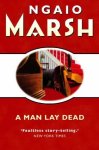 A Man Lay Dead (Roderick Alleyn #1), by Ngaio Marsh – Marsh is a New Zealand writer, a contemporary of Agatha Christie and Dorothy Sayers, and one of the only “Queens of Crime” I’d not yet read. A Man Lay Dead is the first in a series featuring Marsh’s most famous sleuth, Scotland Yard detective Roderick Alleyn. It’s a classic country house mystery – there are parlor games turned deadly and witty repartee. Alleyn is called to investigate a murder that took place during a game of “Murder” (because of course) and arrives on the scene to find that all of the possible suspects have alibis. Now, how can that be? There was an exciting subplot involving a Russian secret society and a reveal with a flourish (once again I guessed the who but not the how). I can see how Marsh can be a bit more difficult going than the other Queens of Crime – some of her tropes have not aged well. But I’ll definitely continue with the Roderick Alleyn mysteries.
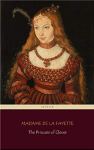 The Princess of Cleves, by Madame de Lafayette (translated by Nancy Mitford) – I was attracted to this obscure classic because of the title, so let’s get this out of the way first: this is not about Anne of Cleves. It does take place during the Tudor period – Mary I is on the throne – but the titular princess is a French noblewoman and the action takes place in and around Paris. So if you’re thinking, “Excellent! Something else to add to my Henry VIII reading list!” (just me?) stop thinking that. Okay, that out of the way: the best part of the book was the hilarious and witty introduction by Nancy Mitford. The rest of it… I just felt sort of blah about it. The Princess of Cleves is a little too beautiful and too well-behaved, and I found myself unable to care about her marriage or about the unfulfilled love affair with her husband’s friend, which is the subject of the book. None of the characters resonated with me, and while I liked the little gems of wit in Mitford’s translation, I just found it hard going and impossible to invest.
 American Royals (American Royals #1), by Katharine McGee – I’ll be honest, I probably wouldn’t have thought to pick this up had I not seen it all over social media, so: congratulations, marketing team, you have succeeded with me. American Royals was fun. The premise is great: at the end of the American Revolution, when soldiers and politicians begged George Washington to become king, he said – yes. And the Washington family has occupied the throne of America ever since. American Royals tells the story of the present-day royals – Princess Beatrice, eldest daughter and in line to be the first ever Queen Regnant of America, and her younger siblings, twins Jefferson and Samantha. The story was engaging enough and I found the pages flying pleasantly by, but I think the most fun part was McGee’s imagination of what an America governed by a royal family and an aristocracy would look like – there were Dukes of Boston, Tidewater, etc., Telluride was an American version of Klosters, and so forth. It was a total hoot and I will definitely read on in the series.
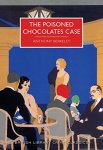 The Poisoned Chocolates Case, by Anthony Berkeley – While Berkeley is one of the most renowned golden age detective fiction writers – and the founder and leader of the Detection Club that also included Agatha Christie, Dorothy L. Sayers, and others among its members – I haven’t really seen much of his writing in libraries and bookstores. The Poisoned Chocolates Case, recently republished in the British Library Crime Classics series, was a delightful introduction to Berkeley’s writing. The premise is great fun – an informal group of writers and practitioners interested in sleuthing (a nod to Berkeley’s Detection Club) take on the task of solving a mystery that has baffled police. Starting from the limited set of facts available to Scotland Yard, they take it in turns to present their solutions to the crime on successive nights, and each one comes up with a different answer to the puzzle. The BL Crime Classics paperback includes two new theories at the end of Berkeley’s original text. It was a unique and different approach to detective fiction.
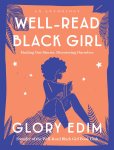 Well-Read Black Girl: Finding Our Stories, Discovering Ourselves, ed. Glory Edim – Well-Read Black Girl began as a t-shirt that Glory Edim’s supportive partner had made for her, turned into a thriving book club and literary discussion circle in New York City, and is now a wonderful book. Edim gathers together some of the most vivid and brilliant voices in literature, drama, poetry, activism, and more, and challenges each to answer the question: when did you first see yourself in literature? The essays and oral responses she received, from lights such as Jacqueline Woodson, Jesmyn Ward, Rebecca Walker, N.K. Jemisin, Tayari Jones and others, are beautiful and moving to read. I’ve read some of the words these well-read black women have put out in the world, but not enough, and Edim’s thoughtfully curated reading lists, sprinkled throughout the book, and the lovely essays collected herein, exploded my TBR.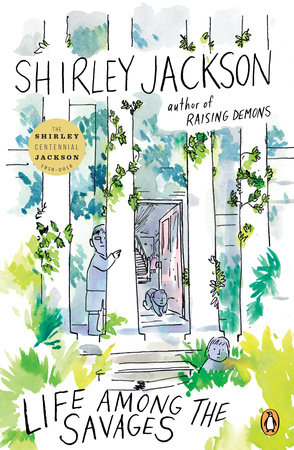

 Kindred, by Octavia Butler – First of all, no Black History Month time travel post would be complete without the classic time travel novel by a black woman author. Octavia Butler is one of the most inimitable voices in science fiction and speculative writing, and while these are not my normal genres, Kindred is basically required reading. Dana, a modern (1970s) black woman in California, finds herself involuntarily wrenched back through time to antebellum Maryland. The first time, she saves the life of a young white boy, son of the plantation master – only later realizing that the boy is her own ancestor. Dana’s connection to the boy she saves is inexplicable, and every time he finds himself in trouble, Dana finds herself dragged back through time to save him. As she goes back and forth between her own time and her ancestors’ lives, the trips become more and more dangerous – for Dana, and for everyone around her. Kindred is intense, gripping, and heart-wrenching – required reading indeed.
 Their Eyes Were Watching God, by Zora Neale Hurston – Another required reading;
  Jam on the Vine, by LaShonda Katrice Barnett – I read this one years ago, but it stayed with me. Ivoe Williams, precocious daughter of a Muslim cook, steals a newspaper and immediately falls in love with journalism. Jam on the Vine is the story of Ivoe’s coming of age, from eager young girl to founder of the first black female-owned newspaper, along with her former teacher – turned lover – Ona. Ivoe and Ona struggle to survive in a brutal world that has no tolerance for black women with powerful voices and the will to use them. Nurtured by their love for one another, they create a home and life together that sustains them against the buffeting they have to endure from bigoted and hateful people, who want nothing more than to grind them down. At times, the story can be quite disturbing – Ivoe survives a horrific arrest and attack – but this is ultimately a hopeful story of love and bravery.
 covered in flour