
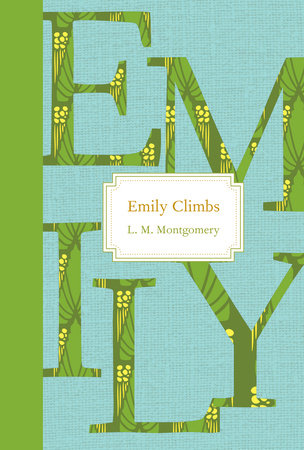
Emily of New Moon opened with its heroine having her life pulled up by the roots – and Emily Starr is a particularly rooted character, one who forms deep attachments to both the people she lives with or near, but also to the places she lives. When the trilogy begins, young Emily loses her beloved Father, and then her beloved home, in the span of just a few weeks. Suddenly orphaned, she is sent to live with her Aunt Elizabeth, Aunt Laura, and Cousin Jimmy at New Moon Farm – a place she’s never heard of, let alone seen.
Eventually Emily’s grief at her father’s death loses some of its sharp edge, life holds some interest again (or tang, as Emily might say) and she begins to fall in love with New Moon. She makes friends – wild Ilse Burnley, sweet Teddy Kent, and ambitious Perry Miller (oh, and that old creeper Dean Priest). She finds true sympathy in Cousin Jimmy and steadfast love in all the older residents of New Moon, and she begins to make the region of Blair Water her new home, granting picturesque names – just as her literary sister Anne would – to the landmarks around the farm.
Emily Climbs sees Emily on the move again, this time to attend Shrewsbury High School and board with her horrid (well, maybe…) Aunt Ruth. Unlike her first move, this time, Emily does truly want to go. She desperately craves an education, which she hopes will equip her for her life’s goal of climbing “the Alpine Path” and writing at its summit “a woman’s humble name.” And her friends are going – Ilse, Teddy and Perry have all found their ways of getting to Shrewsbury High School. Aunt Elizabeth, who initially refuses Emily’s plea, eventually relents (after extracting a promise from Emily that she will not write any fiction during her three years in Shrewsbury) and Emily is off. But Emily discovers that even a move you wanted can mean homesickness.
“This room is unfriendly–it doesn’t want me–I can never feel at home here,” said Emily.
She was horribly homesick. She wanted the New Moon candle-lights shining out on the birch trees–the scent of hop-vines in the dew–her purring pussy cats–her own dear room, full of dreams–the silences and shadows of the old garden–the grand anthems of wind and billow in the gulf–the sonorous old music she missed so much in this inland silence. She missed even the little graveyard where slept the New Moon dead.
“I’m not going to cry.” Emily clenched her hands. “Aunt Ruth will laugh at me. There’s nothing in this room I can ever love. Is there anything out of it?”
She pushed up the window. It looked south into the fir grove and its balsam blew into her like a caress. To the left there was an opening in the trees like a green, arched window, and one saw an enchanting little moonlit landscape through it. And it would let in the splendour of sunset. To the right was a view of the hillside along which West Shrewsbury struggled: the hill was dotted with lights in the autumn dusk, and had a fairy-like loveliness. Somewhere near by there was a drowsy twittering, as of little, sleepy birds swinging on a shadowy bough.
“Oh, this is beautiful,” breathed Emily, bending out to drink in the balsam-scented air. “Father told me once that one could find something beautiful to love everywhere. I’ll love this.”
I’ll love this. Emily forms one of her deep connections to the fir grove, which she names the “Land of Uprightness,” and where she goes to walk, study, dream and write for the next three years. (Aunt Ruth cannot understand this at all, and is convinced that Emily must be up to something devious.)

I’ll love this. Like Emily, I have moved a fair amount. Some of the moves – like my most recent move home to northern Virginia – have been joyously welcomed. Others, like our purchase of a house in Elma, New York, back in 2014, brought a sense of relief and hopefulness. Still others, like the original move to Buffalo – I was dragged kicking and screaming, more or less. But everywhere I’ve lived, starting from when I first read Emily Climbs and took Douglas Starr’s advice into my heart just as his daughter did – my first order of business has been to find something to love, and then to exhale and say, just as Emily did, I’ll love this.
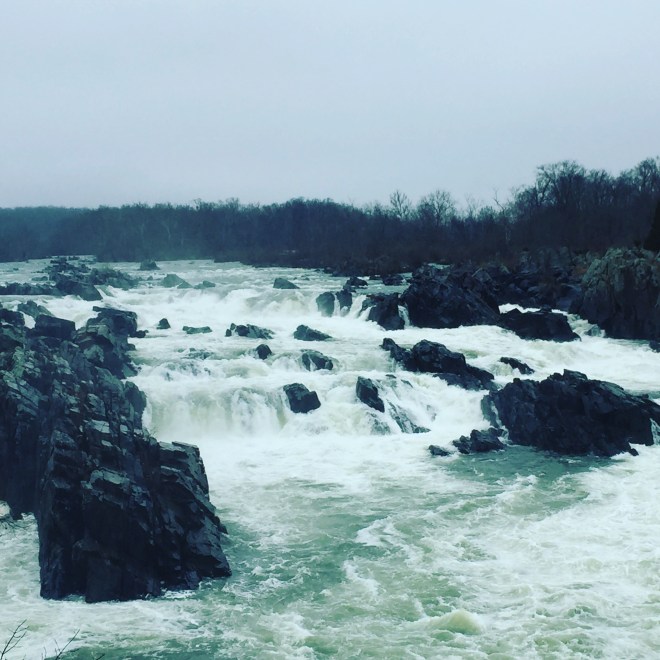
I have loved outdoor places – like the windswept vista, above, that was the view from my living room in Elma. Or the little, fussy, landscaped garden behind my rental house in Buffalo. I’d have preferred a small yard – there was no green space appropriate for Peanut to play in, so we had to walk to a nearby park to get her antsies out – but I spent many an evening sitting on the back porch, sipping tea and watching the shadows play in the corners of that pocket-sized garden.
I have loved indoor places – the white built-in bookshelves in Buffalo, which I filled with all my friends… the dreamy kitchens in Mount Vernon and in Elma, where I cooked and baked to my heart’s content… the nursery corners in multiple houses in multiple states, where I rocked my babies to sleep more times than I can count.
Only once did I never find anything to love – unless you count the aforementioned rocking chair corner. From January to July of 2016, we lived in a non-descript townhouse in an apartment complex in Williamsville, while we worked out the details, planned and carried out our move back to northern Virginia. I couldn’t love anything there – not the miniscule kitchen, not the strange floor plan, not the way our furniture jutted out at odd angles all over the apartment, not the early-90s fixtures, not the bland view from the back deck. It was the first place I’d ever lived where I was unable to find anything about which to say I’ll love this. Still I had dreams of making the place a home, filling it with laughter and memories during the short time we lived there – but in the end, it was just a waypoint. Even with the great relief that I felt to leave the place for the last time, I turned on my way out the door and said a silent thank you to the apartment for sheltering my family and keeping the rain off our heads while we figured out what our future held.

Now I’m in another rental, but one that couldn’t be more different. This place, too, is just a waypoint – although we will stop here longer, a few years at least – before we move (what I hope will be) one final time, to our forever house. But there is so much I can love here. I love the little white flowers that I saw peeking up at me from the slope of our tiny front lawn just this week… I love the breezy white kitchen, where I pack lunches, scramble eggs, make tea, jump out of the path of a careening giraffe scooter… I love the little corner in the living room, where I have set up my console table and arranged my favorite family photos in a grid on the wall above… I love our alley, and I love wondering about the lives being lived behind each of the friendly lighted windows… I love the twinkling lights in the trees, which I can just see over the top of a row of houses. I’m not sure that Emily would feel quite at home in my urban environment, but I do know that she would find things to love about this house.
I’ll love this. There are many scenes in the Emily trilogy, which made great impressions on me as a child – but none quite as much as Emily’s first disappointed look around her room in Shrewsbury, her squaring her shoulders, turning to the window and saying those three words in Emily Climbs. If you were to ask me, as a young reader, to describe one scene from the Emily books – the one scene that was most memorable, most important – I’d have described that, and I’d have quoted you Emily’s decision that “I’ll love this.” I had no idea how important those three small words would be over the years – how important they still are – but even as a young reader who had never moved (when I first read Emily Climbs, I was still living in the charming little house my parents owned when I was born) something in my heart extended to Emily in that scene, more than any other, and said, “Oh, yes, I recognize you. I also need something to love.”
This post is my contribution to Naomi‘s #ReadingEmily readalong. For more thoughts on Emily Climbs, check out the #ReadingEmily hashtag on Twitter.
























 Pomfret Towers (Barsetshire #6), by Angela Thirkell – Continuing with my recent binge on
 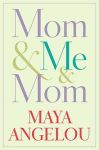 Mom & Me & Mom, by Maya Angelou – Having read I Know Why the Caged Bird Sings in high school, I somehow only recently discovered that Maya Angelou wrote a stack of other memoirs. Mom & Me & Mom was one, and it was powerful and joyful. Opening in Angelou’s early childhood, during which she was raised by her grandmother, Angelou discusses returning to her mother’s side at age 13 and spending her adolescence in San Francisco, living with a mother she barely knew. Angelou’s relationship with her mother, whom she calls “Lady,” is – of course – the focal point of the book, and it’s beautiful to watch her love for, and trust in, Lady blossom and grow over time. Lady, for her part, explains that she is a terrible mother to young children but a great one to young (and not-so-young) adults, and that does seem to be the case. From a foundation of mistrust and resentment, a beautiful mother-daughter relationship blooms.
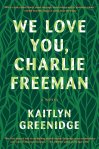 We Love You, Charlie Freeman, by Kaitlyn Greenidge – The Freeman family is proud and honored to have been selected as part of an experiment at the Toneybee Institute, a scientific foundation studying the communication of apes and other primates. The Freemans will leave their home, move into the institute, and live in an apartment there with Charlie, a young chimp who was abandoned by his mother. The purpose of the experiment is for the Freemans – who all speak sign language – to teach Charlie to sign, and to fold him into their family and overcome his feelings of abandonment, first by his mother and then by various institute staff as they turn over in the normal course of business. Soon the stress of the experiment begins to overwhelm the family, who all deal with their emotions in various – mostly unhealthy – ways, and what was a close family starts to unravel. Against this backdrop, teenaged daughter Charlotte – the main protagonist – discovers some unsettling facts about the early history of the Toneybee and its racist beginnings. The novel, on the surface about the undoing of a family, is an interesting allegory about – as the jacket copy describes it – America’s failure to find a language in which to talk about race. So, I liked this. It was well-written and thoughtful. I found it hard to connect to the plot, though, and couldn’t love it – that’s probably my own thing, since this book is getting raves from everyone else. “Undoing of a family” stories aren’t really my jam, and that ultimately couldn’t overcome my interest in reading a story about the language of conversations about race – but it’s a book very worth reading, and I do recommend it.
 You Can’t Touch My Hair: And Other Things I Still Have to Explain, by Phoebe Robinson – Robinson is a stand-up comedienne, a podcast maven, an all-around hilarious lady, and a black woman. In this memoir, she describes her experiences and encounters with race during her childhood and young adulthood – and she folds quite a lot of thought-provoking introspection and wisdom in with some truly hilarious material. Whether describing the hours she spent sitting on the kitchen chair while her mother took pains over her with a hot comb so Robinson wouldn’t “go to school looking like Frederick Douglass,” or recounting awkward encounters with tone-deaf white people’s unconscious racism, Robinson is real, and thoughtful, and smart – as well as funny. I’ve long been a fan of stand-up as a way to tell truths about our current society, where we need to go and how we need to get there – in a light-hearted but intelligent way, and Robinson seems like a comic that I’d really love. You Can’t Touch My Hair was an uncomfortable read at times, but should be required reading as it takes on big issues and pulls no punches while doing so.
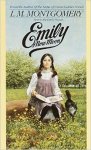 Emily of New Moon (Emily #1), by Lucy Maud Montgomery – I won’t get too into detail here, as you’ve already read my thoughts about re-reading my childhood favorite book
 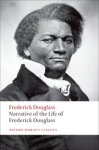 Narrative of the Life of Frederick Douglass, an American Slave, by Frederick Douglass – I’d been meaning to read this classic for awhile, and had been eyeing it as a perfect pick for Black History Month, when a certain tone-deaf and evidently uneducated world leader (#notmypresident) referenced Douglass in a manner that suggested he had no idea who Douglass actually was. (Has been doing a very good job? Getting recognized more and more? Are you KIDDING ME?) Since reading is apparently how I #resist, my first stop on the internet, after reading that embarrassment, was my library website to put Douglass’s memoir on hold. It came in shortly thereafter, and I blazed through the slim but incredibly powerful volume. As expected, it’s far from an easy read – the events it recounts are nothing short of horrifying. Douglass’s powerful voice comes across in a ringing attack on the very system of slavery – I can only imagine how astonishing he must have been as a speaker. If I was to create a list of books that I think should be required reading for all Americans, this would have to be on it.
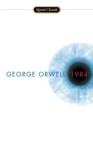 1984, by George Orwell – Another one I added to my library holds after seeing it in the news, dystopian novel 1984 started trending – actually selling out on Amazon – thanks to Kellyanne Conway and Sean Spicer and their “alternative facts,” which seemed right out of the regime of Big Brother. Orwell’s classic focuses on Winston Smith, a 39-year-old bureaucrat in the superstate of Oceana. Winston works at the Ministry of Truth, which is concerned with “rectifying” publications so that they reflect the desired standpoints of the ruling elite – whatever those happen to be at the moment – and in the process, obliterating history and memory. Big Brother, the unseen leader of the regime, is always watching through mandatory “telescreens,” which are everywhere. Love, sensuality, memory, and any questioning of authority are prohibited acts of “thoughtcrime.” I read Orwell’s other well-known dystopia, Animal Farm, in high school, but had never made it to 1984, so I jumped on the bandwagon with everyone else and read it this month. It was distressing, upsetting, engaging and frighteningly relevant to today’s political climate.
 covered in flour