
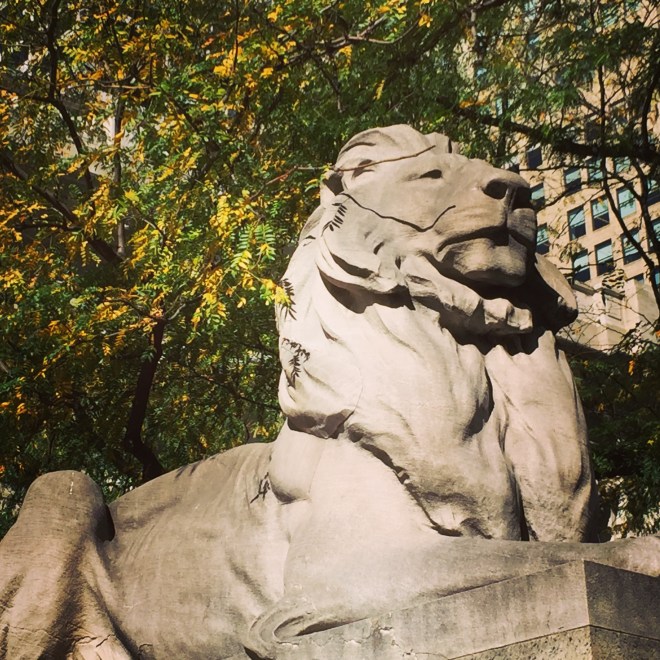
This is always a hard post to write! Reading around 100 books every year (give or take) it’s a tall order to whittle that down to a list of the ten best of the best. I usually enjoy the books I am reading – by now, I know my tastes well enough that I do a decent job of choosing what to pick up in the first place – and I give a lot of four and five star ratings on Goodreads. Plus, how do you decide how to “rank” the books you read? There are as many schools of thought on this as there are readers, no doubt, but my approach is to choose the ten I enjoyed most – regardless of critical opinion, objective merit, or any other trait. So, with that preamble and in no particular order – my best of the best, read (but not necessarily published) in 2017:
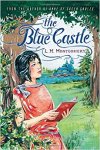 The Blue Castle, by L.M. Montgomery – I delighted in this LMM novel for adults. Valancy Stirling, the heroine, is an absolute joy, and her progression from cowed and cowering soul to free spirit was one of my favorite things to read all year. The scene in which Valancy shocks her buttoned-up relatives by saying exactly what she is thinking at a dinner party was pure fun, and the nature writing is – as expected – superb. I felt as though I was tramping with Valancy and Barney through witchy November woods and skating with them under a riotous January sky. Oh, to go back there right now.
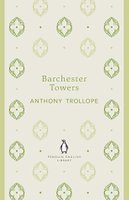
 Barchester Towers, by Anthony Trollope – While I read The Warden in 2016, last year was really the year I discovered how delightful Trollope actually is. The second in his Chronicles of Barsetshire, Barchester Towers focuses on the local upheaval after elderly Bishop Grantly passes away. While a novel about ecclesiastical succession in a backwater cathedral town could be dull, Barchester Towers is anything but – it’s absolutely hilarious. The dinner party scene! The “Countess” on her chaise! Miss Thorne and her medieval sports! You have to read it.
 London War Notes, by Mollie Panter-Downes – It took me months to read, but that was because of intervening library deadlines, and not a reflection on the book itself. Panter-Downes’ collection of “letters from London,” originally published in The New Yorker between 1939 and 1945, is a glimpse into wartime London, equal parts bracing, funny, and terrifying. Panter-Downes doesn’t shy away from the hard stuff, but she captures the indomitable British wartime spirit. My favorite bit was her send-up of the village of “Mugborne” and its war preparations, but really the entire book is one gem after another.
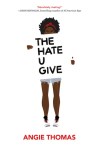 The Hate U Give, by Angie Thomas – I think this book is going to be on a lot of “best books of 2017” lists, and for good reason. The Hate U Give is a stunning tour-de-force. Starr Carter is thrust into a nightmare when she witnesses the shooting of her best friend at the hands of a police officer. Now “the witness,” Starr must come to terms with a legal system that doesn’t want justice, with the latent racism of her private school community, and with her own feelings about family, community, and right. It’s gorgeous and powerful.
 A Gentleman in Moscow, by Amor Towles – I didn’t read Towles’ debut, but I surely will, because I loved this. Count Alexander Rostov, judged an unrepentant aristocrat and sentenced to “house arrest” in the attic of the hotel where he makes his home, is one of the most delightful literary characters I met all year. The cast of supporting parts surrounding him in the hotel was nearly as delightful. Count Rostov’s job in the hotel restaurant was completely fitting (and made me hungry) and his exploits with Nina and, later, Sofia, were utterly charming. And the ending was edge-of-your-seat exciting.
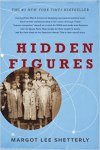 Hidden Figures, by Margot Lee Shetterly – I still haven’t seen the movie (it’s on my list!) but I just loved this history of the heretofore unsung black female NASA mathematicians whose calculations helped win World War II and send men to the moon. Shetterly’s history is gentle, yet focused, and her real-life characters leap off the page. I could barely stop myself from cheering when one “computer” removed a “whites only” sign from the cafeteria. Hidden Figures was a spellbinding story of a group of American heroines who are finally getting their due.
 Hag-Seed, by Margaret Atwood – On a scale of one to Handmaid’s Tale, Hag-Seed barely registers. It has none of the trademark Atwood disturbing-ness, but it’s still vintage and completely weird. Atwood’s contribution to the Hogarth Shakespeare project sends up The Tempest via a psychedelic performance by a group of correctional center inmates – and it’s all part of an elaborate plot to get revenge on the government official who ousted their director from his previous post as head of a summer theatre. See? I told you. Totally weird. And totally great.
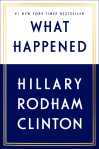 What Happened, by Hillary Rodham Clinton – Another one that will probably be on lots of “best of 2017” lists. I wish What Happened had never had occasion to be written, because I wish Secretary Clinton was sitting in the Oval Office instead. But since we have what we have, we get What Happened instead, and it’s sad, illuminating, thoughtful, meticulous, and everything we expect from Clinton. And to think, we could have had that thoughtfulness in the White House.
 March: Book Three, by Representative John Lewis – Lewis is a civil rights icon, a movement leader and an American treasure. It’s fitting that he should share a memoir of the most formative moments of his life – which coincide with some of the most formative moments of American history – but his approach, through the medium of a three-part graphic novel, is fresh and fascinating. I read the first two volumes back in 2016, and happened to be reading the third over MLK weekend in 2017, which felt fitting.
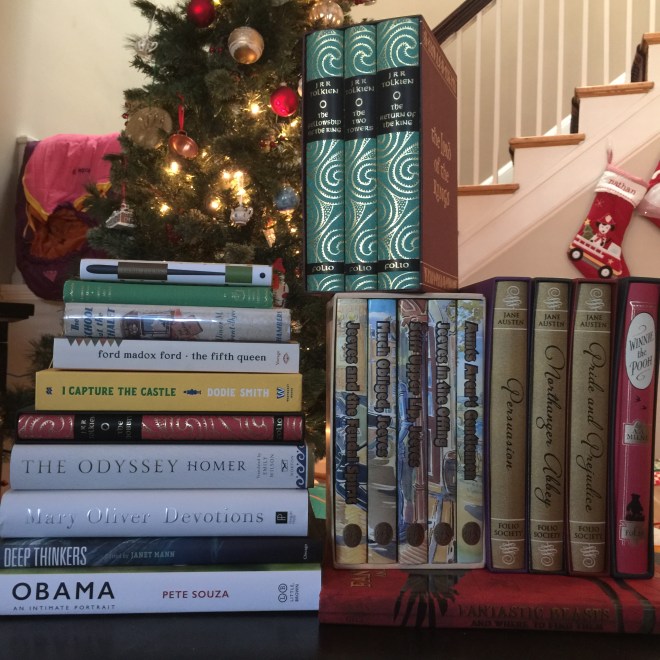
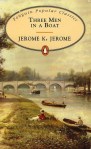 Three Men in a Boat, by Jerome K. Jerome – Don’t let the author’s name turn you off, because Three Men in a Boat is really such a romp. I read a newly reprinted edition from The Folio Society, and the whimsical cartoon illustrations added an extra pop of fun to the story of – you guessed it – three friends who take a boating holiday up the Thames in Edwardian England. They make tea, bicker, have trouble packing, and get into all sorts of mischief on the river, and it’s way too delightful.
Well, there you have it – ten favorites from my 2017 reading! This is never an easy task, and it felt harder than usual because last year I read so many delightful books. The ten above were the highlights, but man – there are so many that deserve honorable mentions. What a year.
What were some of your favorite reads of 2017?























 Rich People Problems (Crazy Rich Asians #3), by Kevin Kwan – Needing something light and frothy in the extreme after the sobfest gut-punch that was What Happened, I turned to the final chapter in the saga of Nick Young, Rachel Chu, Astrid Leong and the whole gang. Nick and Astrid’s beloved grandmother, Shang Su Yi, is on her deathbed and the entire family has come out of the woodwork to jockey for position in case she changes her will at the last minute. Nick doesn’t care about his inheritance, but he travels to Singapore at Rachel’s urging so that his grandmother doesn’t pass away before they have healed their rift, only to find when he gets there that his grasping cousin, Eddie – hoping to inherit the estate in Nick’s place – has barred him from the house. Rich People Problems is as full of twists, drama and designer label name-dropping as its predecessors, and it was so much fun.
 Slightly Foxed No. 56: Making the Best of It, ed. Gail Pikris – I have been a Slightly Foxed subscriber for a little over a year now, but somehow I just discovered that when you sit down and read an issue cover to cover, it counts as a book on Goodreads. (Who knew?) I figure if it counts there, it should count here, too – and a 96-page volume of personal essays about books (which is what every Slightly Foxed issue is) should be considered a book in any event. So – the latest issue! I read a few essays at a time and loved them all, as usual, but my favorite was the essay about the Chalet School books, which I am planning to read – at least some – in 2018.
 The Shell Seekers, by Rosamunde Pilcher – My mom couldn’t believe I hadn’t read this before, because my grandmama had a copy and had loved Pilcher. It took awhile – other library deadlines kept interfering in November – but I very much enjoyed the story of Penelope Keeling and her useless children. (The kids really were the worst, which diminished Rebecca’s enjoyment of the book after I recommended it to her, I am sorry to report.) I just adored it for its atmospheric setting and lush writing. No detail was spared – and I didn’t want any details spared. I wanted to know absolutely everything about what Penelope made Danus for lunch and how the wine was when she and Richard went on their date and what she grows in her garden and how she decorates her kitchen and solarium and, I mean, tell me all of the things. I am only sorry that it had to end.
 Slightly Foxed No. 1: Kindred Spirits, ed. Gail Pikris – I’m on a roll! I’d been wanting to go back and read through the back issues (which I have been collecting, little by little, for the past two years) and I really enjoyed this first issue of the journal. The essay Ex Libris starts the volume off strong, and I loved the short bits describing woodcut bookplates (since wood-cutting is one of my favorite art forms).
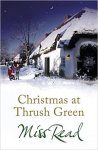 Christmas at Thrush Green, by Miss Read – There is a 2018 #MissReadalong going on over on Instagram, and they actually began in 2017 with Christmas at Thrush Green. I don’t know that it was the best place to begin, because it was assumed that the reader knew most of the characters and was familiar with their stories and how they met their spouses, and for the most part, I wasn’t. (I read Thrush Green, the first in the series, a couple of years ago but don’t remember much about it.) But it was a quiet, comforting, warm and cozy way to spend a few evenings reading by the light of my Christmas tree, and for that, totally worth it. I’ll probably revisit it next December and I’ll bet I enjoy it even more then, after I’ve read through the series as I am planning to do.
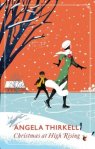 Christmas at High Rising, by Angela Thirkell – A quick collection of short stories featuring the Morlands and their friends at High Rising, this was the work of an evening and was delightful. Tony Morland goes ice-skating and falls in and out of a crush on a French girl, everyone goes to the pantomime, Tony rides a horse – in short, it’s all the High Rising drama you could wish. My only complaint was that despite the title, there was nothing particularly Christmassy about it. There is a story that focuses on Valentine’s Day, a story about Tony’s summer holidays, but only one Christmas story that was not even set in Barsetshire. I think I’d read that somewhere but forgotten. Calling the book Holidays in High Rising would have been more accurate and I’d have been less disappointed then.
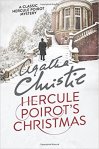 Hercule Poirot’s Christmas, by Agatha Christie – Here’s a book that is definitely about Christmas! Poirot is called in to investigate a murder that takes place on Christmas Eve in an old English manor house. Yes, please! The victim, Simeon Lee, is the much-hated squire of the county. He’s a well-known womanizer who delights in setting his children against one another, and – as always – there are no shortage of possible killers with both motive and opportunity. (I love the cozy mysteries where the victim is so vile that you need not feel guilty for enjoying the story.) Naturally, Poirot unravels the mystery, and the solution is quite surprising. I enjoyed myself immensely in reading this on Christmas itself and for a couple of days after.
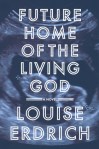 Future Home of the Living God, by Louise Erdrich – Having loved Erdrich’s Birchbark House series for children, I wanted to try one of her adult novels and figured I’d start with her new release. She is clearly a breathtaking writer, but Future Home of the Living God fell flat for me (which from what I hear was a common experience). The story focuses on a pregnant woman who is on the run after evolution mysteriously stops and the government begins seizing all pregnant women and, later, women of childbearing age. It’s an interesting premise, but I felt like I was reading The Handmaid’s Tale again (with a couple of slight differences) and was also frustrated that there wasn’t more exposition of the apocalyptic event. I’m perfectly willing to suspend disbelief while reading – especially dystopias and fantasies – but you need to tell me what I am suspending disbelief about, or at least give me a hint. I’m going to try one of Edrich’s really highly acclaimed novels, like The Round House and LaRose, and I suspect I’ll like those better.
 covered in flour