
https://www.instagram.com/p/BcQd1M0DVjKwbvMvNcVk9d1zCNCUu8LSXyMoTM0/?taken-by=backyardyogini
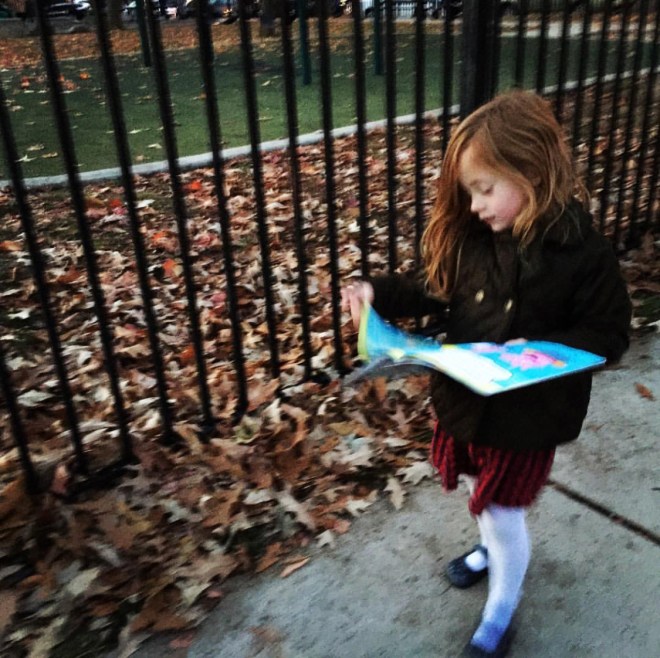
From the moment I found out that I was expecting Peanut, one of the things that I was most looking forward to doing with her – and any future sibling that came along, as Nugget later did – was sharing books. I couldn’t wait to introduce her to the classic children’s books that I remembered listening to and thumbing through with my mom – books like Blueberries for Sal, Make Way for Ducklings, Go Dog Go, Angelina Ballerina and so many more. But more than that, even, I was looking forward to sharing my favorite books for older readers. Especially, of course, my beloved L.M. Montgomery. As it turned out, I read Montgomery to her sooner than I expected – when she was only a few weeks old. Perched on a chair next to her isolette, as lights flashed and alarms beeped all around us in the NICU at Fairfax Children’s Hospital, I read Emily of New Moon to her. Together we journeyed to Blair Water and New Moon Farm, sitting in the garden with Emily, Ilse and Teddy and listening to Cousin Jimmy recite his poetry over a crackling campfire while the Wind Woman darted through the trees.
After she finally came home from the hospital, I read to her from my own books – Miss Read, mostly, but sometimes whatever I had checked out from the Fairfax County Library – and from Winnie-the-Pooh. I knew that hearing my voice was good for her, and reading aloud was less awkward for me than pretending to make conversation with a baby.

It comes as no surprise, I’m sure, that as she got older she was rarely far from a book. My mission to make a reader has been going very well indeed.
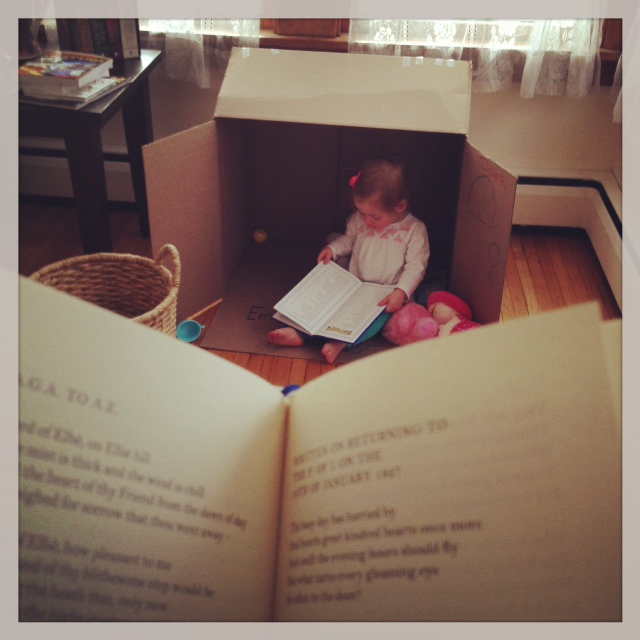
Now we find ourselves poised at two crossroads. Peanut is on the cusp of a major breakthrough in her own reading abilities – she can sound out simple words, recognize sight words, and read very easy beginning readers on her own (when she wants to). Getting to this point has been something of a battle, because while she loves books and would like nothing more than to be able to read on her own, she also is hard-wired to resist anything an adult appears to want her to do (don’t get me started on potty training; you don’t want to know how long it took) and she has stagnated a bit over her final year of pre-kindergarten, since she’s pretty much mastered the skills but the curriculum doesn’t have her moving to the next level yet. I’m trying to work with her at home, but I have to pick my moments – if she’s hungry, tired, or interested in doing something else I just won’t be able to sell an easy reader to her. (And who could blame her? Reading A blue car. A yellow car. A red car. A green car. and so forth… well, it’s not the most absorbing text.)
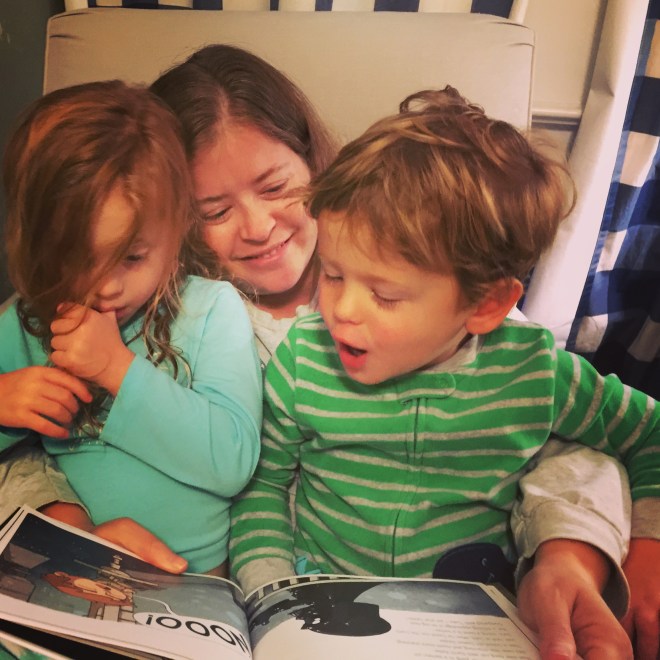
The second crossroads is – in our read-aloud time, we’re moving on to chapter books, more and more. Peanut still asks for favorite picture books, and I’m glad to read them. But she’s always had a long attention span for listening to stories (for instance, she has more tolerance for some of the epically long Robert McCloskey books – like One Morning in Maine and Time of Wonder – than her dad, who groans when she requests them, which happens quite often as both are favorites). So little by little, we have been adding chapter books to the reading diet.
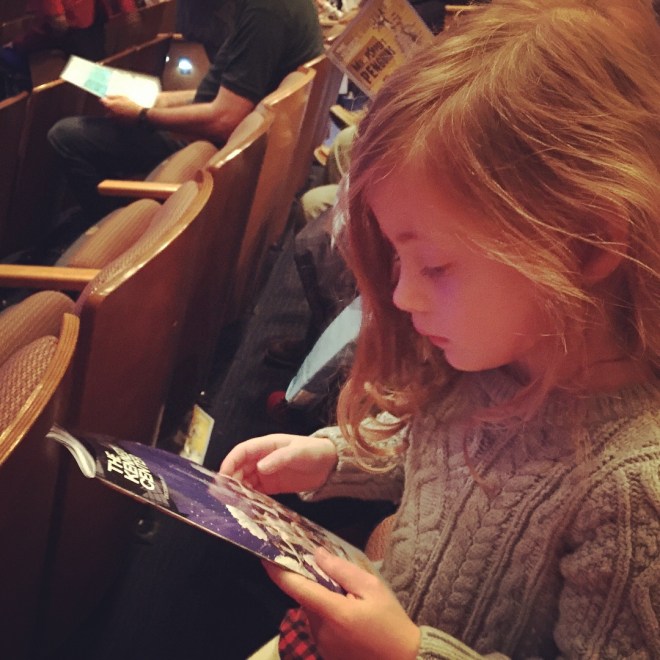
We started with Freckle Juice, by Judy Blume. I had fond memories of it, and it was so short – it seemed like a good place to begin. Most of the story went over Peanut’s head; she doesn’t have any freckles and the classroom storyline was a bit out of her experience. But she felt like such a proud big kid with her book that was mostly words (and just a few pictures) and she started carrying it with her to school, coming home pleased as punch one day when a few of the older kids told her it was one of their favorite books, too. It was easy to sell her on more chapter books after that, and I made a conscious effort to choose short ones with lots of pictures, to keep it fun and on her level. The Princess in Black books have been a big hit, and so have some of the American Girl chapter books. I took a leap of faith and pulled out Mr. Popper’s Penguins to read before we saw the show at the Kennedy Center in December, and we worked our way through it, a chapter at a time, as our bedtime reading for weeks.

Her most recent request – well, recurring request really, she begged for months – was for Harry Potter and the Sorcerer’s Stone. I was a little unsure about that one. The chapters are longer than what she’s been used to, and the end of the story (even the first book) is a little intense. But I have the gorgeous illustrated edition, and she asked and asked and asked, so we jumped in. Reactions have been a bit of a mixed bag. Some of the chapters – especially at the beginning – have tested even Peanut’s superhuman patience for long stories. And she waited, and waited, and waited, AND WAITED for Hermione to finally become friends with Harry and Ron. (We’re there at last.) I’m still not entirely sure if we will be able to actually get through the whole book – snuffing out her budding love for Harry Potter is the last thing I want to do.
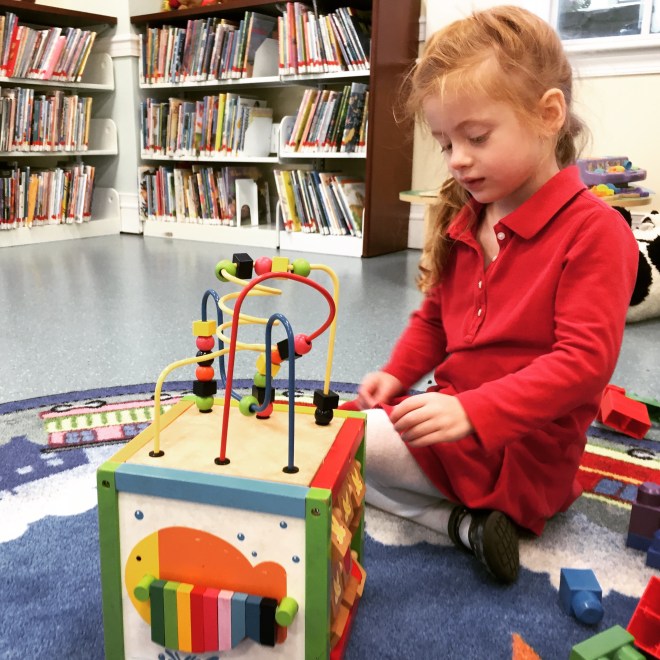
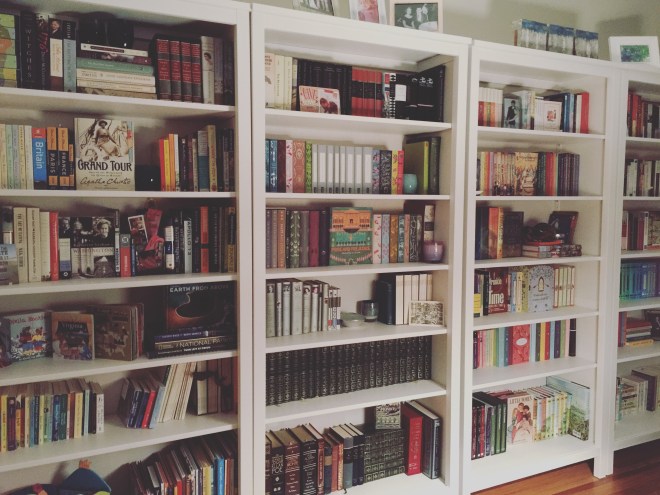
But she’s taken to carrying her chapter books around and flipping through them, intently studying even the pages with no pictures. (She says she likes looking at the words.) And I told her that when she learned to read, she could read anything from the bookshelves at home – nothing will be off limits – and she threw her arms around my neck and screamed with joy. And I think that’s half the battle. The skills will come with time and patience. The desire to read and the love of books – that’s already there, so I feel like 99% of the battle is already won.
Now is the part where I hit you up for recommendations. What are your best tips for making the leap to chapter books? And what are your favorite chapter books for budding readers and pre-readers with a long attention span?


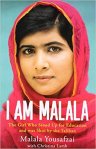
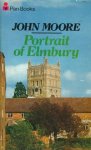













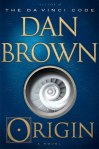 Origin (Robert Langdon #5), by Dan Brown – Always fun to see what the first read of the year is going to be. Brown’s latest is a romp through Spain, focused on the theme of science, religion, and the battle over who gets to definitively answer humanity’s biggest questions: Where do we come from? Where are we going? Brown delivers all the expected tangents into architecture, art history, literature, science history and anything else that happens to interest him (so that’s everything) but I was a little bummed there weren’t more references to the Mickey Mouse watch and Langdon’s swimming hobby.
 Period Piece: The Cambridge Childhood of Darwin’s Granddaughter, by Gwen Raverat – I just recently became aware of Raverat, and she is a really fascinating character. As the subtitle confirms, she is the granddaughter of Charles Darwin, and she grew up in Victorian-era Cambridge. She was also a pioneering woodcut artist whose book illustrations carried a distinctive style, and she was one of the few women to become a successful artist in her own right. Period Piece is illustrated with Raverat’s own wood engravings, which add great life and levity to the text, and she’s also a charming and engaging writer who looks back at her childhood with humor and fun. I would normally hesitate to make predictions in early January – but I think Period Piece is going to be in my top ten books for 2018. Just watch.
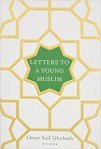 Letters to a Young Muslim, by Omar Saif Ghobash – Ghobash is (was?) the UAE’s Ambassador to Russia, and Letters to a Young Muslim is comprised of letters to his son Saif about everything from the roles of men and women in Islam and society, to extremism, to making up your own mind about matters of faith instead of placing blind trust in authorities who may deceive. It was a beautiful and thoughtful book that reminded me a bit of Ta-Nehisi Coates’ Between the World and Me (also letters, or one long letter, from a father to his young son).
 Slightly Foxed No. 2, ed. Gail Pikris – I’m on a mission to read my way through the back issues of Slightly Foxed. This is going to take some time, since they’re currently on issue 56. But I’m loving the quest, because each journal is such a treasure. Issue number 2 wasn’t my favorite – the heady novelty of issue number 1 has worn off but I didn’t think the journal had quite hit its stride yet, and the last piece, “A Subscriber in California Writes,” rubbed me the wrong way. But it’s always a treat to spend time curled up on the couch with Slightly Foxed‘s lovely cream pages.
 Cranford, by Elizabeth Gaskell – As I mentioned, I’m on a mission to read more classic novels this year, since they’re on my shelves and I’m craving their comfort. I decided to start with a visit to Gaskell’s Cranford, a relatively short but lovely volume about the residents of an English village in the Victorian era. The narrator, Mary Smith, is something of an outsider – more financially privileged than most of the residents of Cranford, but loving, protective and affectionate towards them – while never condescending. Cranford is mostly a series of vignettes or interludes in the life of the village, as either observed by or told to Mary. Aside from the fact that an alarming number of people die, it’s quite warm and fuzzy. I’ve actually tried to read Cranford before and couldn’t get into it, and I’m not sure why – perhaps the time wasn’t quite right? This time, I couldn’t put it down, loved every moment spent with Mary, Miss Matty, Miss Pole, Lady Glenmire and all the rest, and was genuinely sad when it ended.
 The Republic of Imagination: America in Three Books, by Azar Nafisi – I think this is Nafisi’s latest (right?) and it’s basically the same format as Reading Lolita in Tehran, but focusing specifically on American literature and Nafisi’s immigrant experience. Nafisi discusses three novels she considers as representative of the American experience – The Adventures of Huckleberry Finn, Babbit, and The Heart is a Lonely Hunter – and devotes an epilogue to James Baldwin. I enjoyed The Republic of Imagination, but didn’t love it. I didn’t agree with Nafisi’s choices of the three books representing America – which is fine; as the writer, it’s her prerogative to choose, of course – and I found the narrative a bit disjointed and some of the connections she was drawing to be a bit tenuous. A fun read, but if you’re looking to read Nafisi’s work – no question she writes gorgeously – go for Reading Lolita in Tehran instead.
 Dear Ijeawele, or A Feminist Manifesto in Fifteen Suggestions, by Chimamanda Ngozi Adichie – I just loved this short but sweet collection of “suggestions” Adichie put together in response to a friend’s question about how to raise her newborn daughter as a feminist. Adichie opens by wryly noting how easy it is to dispense parenting advice when you don’t have children of your own (she has since welcomed a baby daughter) and then goes on to deliver 63 pages of absolute gold. My favorite piece of advice was to encourage her to love books, because of course! Books!
 Exit West, by Mohsin Hamid – I was prompted to pick this one up despite all the hype, when I saw that President Obama had included it on his list of the best books he read in 2017. I’m always a little nervous about hype, and generally magical realism doesn’t speak to me, but if President Obama says it’s good I’m willing to trust him. Of course he was quite right – Exit West was enthralling and felt very relevant to today’s world, as it spoke to the global refugee crisis to which we are currently bearing witness. I flew through it and just loved both of the main characters – fierce Nadia and sensitive Saeed – and their journey, which binds them together even as they are emotionally drawing apart. Lovely and luminous.
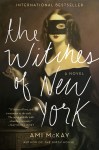 The Witches of New York, by Ami McKay – Read on my BFF’s recommendation, The Witches of New York was definitely more successful than the last book she recommended to me (which I hated so much I actually found myself folding laundry in order to avoid reading, which NEVER happens). Anyway, I really enjoyed this one. You’re Beatrice Dunn. You’re a witch, and you’re not to be trifled with. This is the advice given to young Beatrice, shopgirl and communer-with-spirits, by her very slightly older witchy mentors, Eleanor St. Clair and Adelaide Thom. Eleanor and Adelaide are the proprietresses of “Tea and Sympathy,” a small tea shop specializing in herbal remedies and palmistry in Gilded Age New York. But as charming as the shop is, there is evil afoot and it is targeting their new employee. So – this was the perfect combination of Rebecca’s and my reading tastes, because she can’t resist witches and I can’t resist Gilded Age New York. It was a little slow in parts, there was some brutality just for shock value (not my cup of tea) and not every plot point was tied up as neatly as I’d have liked, but I did enjoy it very much.
 Amina’s Voice, by Hena Khan – Amina Khokar has just started middle school and she has a lot on her plate. Painfully shy, Amina clings to her best friend Soojin, but Soojin seems to be pulling away – about to become a U.S. citizen, she’s considering changing her name to Melanie, and she’s hanging around with Emily, a popular girl who made both Amina and Soojin’s life miserable in elementary school. Life at home isn’t much calmer. Amina’s brother Mustafa is on a collision course with their parents over basketball, and then her father’s much-older brother arrives from Pakistan for an extended visit to the family. Amina’s parents are stressed out by the effort to impress their visitor, and Amina is worried about the Q’uran reciting competition that her dad signed her up for in order to show her uncle what good young Muslims he is raising. But all of her worries seem small when her mosque is vandalized, which devastates Amina, Mustafa and the whole community. Amina will learn who her real friends are as she and her faith community work to put the pieces back together. This was a lovely story – luminous and sweet. I wanted to gather Amina, Soojin and Emily up and give them all huge hugs. But the biggest hug for Amina.
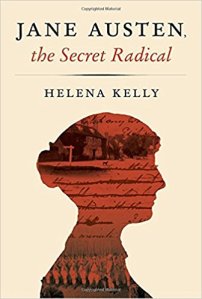
 Jane Austen, the Secret Radical, by Helena Kelly – I had this one out from the library and was looking forward to reading it, when my friend











 covered in flour