
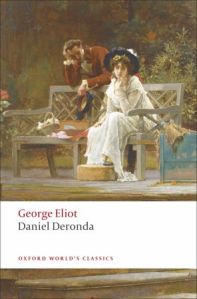
 Daniel Deronda was George Eliot’s final and most ambitious novel – even more ambitious than her most famous work, Middlemarch. Like Middlemarch, Daniel Deronda follows two main characters on parallel paths that occasionally join up. But while in Middlemarch Dorothea Brooke and Dr. Tertius Lydgate rarely encounter one another until the end – they are in different social spheres, with Lydgate being a fairly prosperous but still middle class country doctor, and Dorothea an heiress and member of the local gentry – the two focal points of Daniel Deronda, the titular Deronda and local beauty Gwendolen Harleth, are thrown into one another’s company regularly even as they follow their separate paths.
The novel opens with a memorable scene: Gwendolen, a tall, striking and classic beauty, is at the roulette table, winning spectacularly – until she feels the disapproving eyes of a stranger upon her, and begins to lose spectacularly. At a ball later that night, she asks about the stranger and is told that his name is Daniel Deronda. Gwendolen is fascinated by the handsome and enigmatic Deronda, but before she is able to finagle an introduction she receives word that her family has lost all their fortune (whoops) and she must return to England immediately. She quickly pawns a necklace to get money for the journey, but is surprised to find the necklace promptly restored to her; someone has freed it from the pawn shop and sent it back to her anonymously. With no actual evidence of her benefactor’s identity, Gwendolen suspects Deronda.
The reader is then, somewhat confusingly, whisked back in time to the previous year, when Gwendolen, her mother, and her four half sisters arrive at Offendene, a country house of middling size that is to be their new home (as it is close to the recently widowed mother’s sister and brother-in-law, who is obviously a rector, #someonegottadoit). Gwendolen quickly captivates the community and, in particular, attracts the attention of her cousin Rex Gascoigne, as well as Henleigh Grandcourt, cousin and heir to the local baronet, Sir Hugo Mallinger. Gwendolen isn’t especially interested in marriage, and she quickly throws cold water on Rex’s suit, but Grandcourt, with more to offer, is a more enticing prospect, to the degree that it promised freedom from the social constraints of singledom.
Of course marriage was social promotion; she could not look forward to a single life; but promotions have sometimes to be taken with bitter herbs–a peerage will not quite do instead of leadership to the man who meant to lead; and this delicate-limbed sylph of twenty meant to lead. For such passions dwell in feminine breasts also. In Gwendolen’s, however, they dwelt among strictly feminine furniture, and had no disturbing reference to the advancement of learning or the balance of the constitution; her knowledge being such as with no sort of standing-room or length of lever could have been expected to move the world. She meant to do what was pleasant to herself in a striking manner; or rather, whatever she could do to strike others with admiration and get in that reflected way a more ardent sense of living, seemed pleasant to her fancy.
Grandcourt has an oily and obnoxious personal secretary, Mr. Lush, who – for his own reasons – does not want to see Gwendolen marry his employer, so he engineers a meeting between Gwendolen and a figure from Grandcourt’s past, who reveals a secret about Grandcourt’s character and elicits a promise from Gwendolen never to marry the man. Gwendolen flees England for Leubronn, Germany – where she first encounters Deronda, in that memorable opening scene. Eventually, it becomes apparent that Deronda has connections to Gwendolen’s neighborhood: Deronda turns out to be something of a ward or protege of Sir Hugo, and Gwendolen wonders why she finds him so fascinating.
“I wonder what he thinks of me really? He must have felt interested in me, else he would not have sent me my necklace. I wonder what he thinks of my marriage? What notions has he to make him so grave about things? Why is he come to Diplow?”
These questions ran in her mind as the voice of an uneasy longing to be judged by Deronda with unmixed admiration–a longing which had its seed in her first resentment at his critical glance. Why did she care so much about the opinion of this man who was “nothing of any consequence”?
With no fortune left, and no prospects of anything better than a position as a governess, Gwendolen is persuaded to accept Grandcourt’s offer of marriage when he renews his pursuit of her. She does so against her scruples (which are, admittedly, limited) and against her better judgment (also limited) and the newlywed couple decamps first for Grandcourt’s stately house, where Gwendolen receives a horrifying shock (which extinguishes any affection Grandcourt may have had for her) and then, eventually for London.

Gwendolen is catastrophically disappointed in her marriage. Her expectations that she would be able to use her feminine influence over Grandcourt to right old wrongs is sadly mistaken, as Grandcourt proves more than equal to her efforts to master him. The next time Deronda encounters Gwendolen, she is a shadow of her pre-marriage self.
But a man cannot resolve about a woman’s actions, least of all about those of a woman like Gwendolen, in whose nature there was a combination of a proud reserve with rashness, of perilously-poised terror with defiance, which might alternately flatter and disappoint control. Few words could less represent her than “coquette.” She had a native love of homage, and belief in her own power; but no cold artifice for the sake of enslaving. And the poor thing’s belief in her power, with her other dreams before marriage, had often to be thrust aside now like the toys of a sick child, which it looks at with dull eyes, and has no heart to play with, however it may try.
Lest you be tempted to hate Grandcourt, George Eliot – who has to be George Eliot, after all, surprising no one who read Middlemarch – makes sure to remind you that he has a perspective, too:
And Grandcourt might have pleaded that he was perfectly justified in taking care that his wife should fulfill the obligations she had accepted. Her marriage was a contract where all the ostensible advantages were on her side, and it was only one of those advantages that her husband should use his power to hinder her from any injurious self-committal or unsuitable behavior. He knew quite well that she had not married him–had not overcome her repugnance to certain facts–out of love to him personally; he had won her by the rank and luxuries he had to give her, and these she had got: he had fulfilled his side of the contract.
(When reading the above passage, I was reminded of nothing so much as the chapter that Eliot devotes to defending the sepulchral and cold Casaubon, after spending about 300 pages persuading the reader that he is a grossly unworthy husband to the beautiful and brilliant Dorothea.)
Meanwhile, what is our friend Daniel Deronda up to? He is rescuing half of London, it seems – the saintly Deronda can’t seem to stop himself saving people from themselves. Most consequentially, he happens across a young woman on the verge of drowning herself. Deronda talks her off the riverbank, installs her with the mother and sisters of his college friend Hans, sets her up with a career as a singing teacher and drawing-room performer, and then takes it upon herself to track down her long-lost brother and mother. Meanwhile, he becomes captivated by Mordecai, a consumptive philosopher and Jewish nationalist, who is himself convinced that Deronda is going to carry on his life’s work after Mordecai’s imminent death. Between Mordecai and Mirah – the young woman Deronda saves from drowning herself, who is also Jewish – Deronda experiences a cultural awakening. He is drawn to Mordecai’s philosophy and begins to seek answers about his parentage. But as Deronda navigates his growing feelings for Mirah and his fascination with Mordecai, he has no one to turn to for support, having always been the pillar of strength for others.
Perhaps the ferment was all the stronger in Deronda’s mind because he had never had a confidant to whom he could open himself on these delicate subjects. He had always been leaned on instead of being invited to lean. Sometimes he had longed for the sort of friend to whom he might possibly unfold his experience: a young man like himself who sustained a private grief and was not too confident about his own career; speculative enough to understand every moral difficulty; yet of equality either in body or spiritual wrestling;–for he had found it impossible to reciprocate confidences with one who looked up to him.
Basically, that’s Deronda’s problem: everyone looks up to him, so he has no one to confide in. Even Gwendolen relies on Deronda as a sort of confessor and moral guide (and he does give decent advice, even though he often only has half of the story). Deronda is a little too saintly (essentially, he is Dorothea Brooke without the forbidden crush), so it’s nice to have Gwendolen – who is a sort of more complex version of Middlemarch‘s local siren Rosamund Vincy – to add a bit of salt to the narrative (and even Grandcourt, who is a gigantic jerk, is fun to read about).
Overall, I loved Daniel Deronda, although I can’t say it will replace Middlemarch as my favorite of Eliot’s novels. Deronda himself is almost annoyingly perfect, but he’s well-balanced by Grandcourt, as Mirah is balanced by Gwendolen. The parlor and country-house scenes are impeccably drawn and the London setting makes for a fun change from Eliot’s usual village territory. Daniel Deronda was a commitment, for sure, but well worth the time and energy it demanded.




 Reading. After several weeks of telling you I’m making progress on Daniel Deronda, guys, I promise!, I have a busy week in books to recap for you. I finished Daniel Deronda on Wednesday (see, I told you I was making progress) – review coming to you this Wednesday. Next, with a library deadline breathing down my neck, I flew through Olive, Again – Elizabeth Strout’s new collection of linked short stories about Olive Kitteridge. For the weekend, I was in the mood for some comfort reading; it’s been a hectic few weeks, and it’s not going to let up for at least two more weeks. And I was also in the mood to read from my own shelves, and not from the library stack. So I picked up Ex Libris on Friday night, read that over the course of Friday evening and Saturday evening, then followed it up with Summoned by Bells (John Betjeman’s memoir-in-verse) in one sitting on Saturday night. Ended the weekend with The Priory, by Dorothy Whipple – I’m about 120 pages in as of the writing of this post, and loving it so far.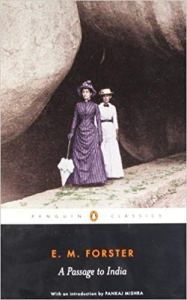

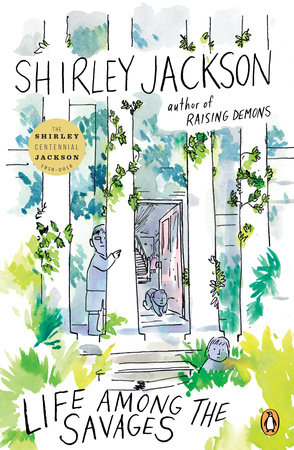
 Life Among the Savages, by Shirley Jackson – I’ve never read anything by Shirley Jackson before, because I am not really into psychological suspense or horror, so The Haunting of Hill House and We Have Always Lived in the Castle and Jackson’s other work struck me as probably too scary. But Jackson is a major American literary figure and I did want to give her a try – and her lightly fictionalized memoir of living in a rambling Vermont farmhouse with her bumbling husband and hilariously mischievous children was much more my speed. I laughed until I cried, especially at the antics of Jackson’s two elder children, Laurie and Jannie, although I was disappointed to discover that Jackson’s husband was actually a controlling, cheating jerk, who was considerably sanitized in her memoir. All things told, though, LOVED. Fully reviewed
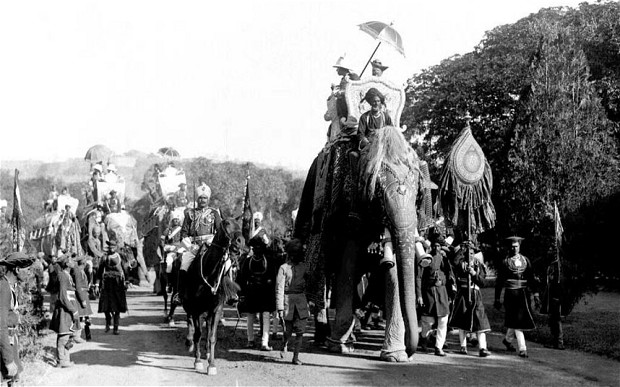
  A Passage to India, by E. M. Forster – I am gradually working my way through Forster’s bibliography and enjoying each book more than the last. I liked A Room with a View, loved Howard’s End, and was enthralled by A Passage to India. Forster’s last novel – and masterpiece, in my opinion, although I know Howard’s End has its champions – he explores the race relations of an outpost in the India of the British Raj. Adela Quested, a young woman contemplating marriage to a colonial government official, arrives with her prospective mother-in-law – both keen to see the “real India.” They soon encounter a number of local characters, including Aziz, a Muslim doctor, who invites them to picnic at an area landmark. The day goes wrong, and in a very confusing way, and leads to a momentous accusation that upends the city and throws its tenuous balance completely off-kilter. It’s a beautifully written book, I think quite ahead of its time, and I thought it was wonderful. Full review to come on Friday.
 Wish You Were Eyre (Mother-Daughter Book Club #6), by Heather Vogel Frederick – Frederick intended this volume to conclude the Mother-Daughter Book Club series, and she wraps up each of the characters’ stories neatly at the end. (Of course, she ended up writing a seventh book – I think people were too curious about where the girls ended up going to college.) Wish You Were Eyre picks up pretty much where Home for the Holidays left off – it’s now January, and Concord has put away its Christmas finery and settled in for a loooooong winter. Several of the book clubbers are looking forward to spring vacation travel – Megan to Paris with her grandmother, and Becca to Mankato, Minnesota, with hers – and all are facing change and upheaval. Megan’s family is growing in unexpected, and not entirely welcome, ways. Cassidy is experiencing boy trouble for the first time ever, Jess is unfathomably accused of cheating on a test, and Emma is struggling with jealousy. Also, Mrs. Wong is running for mayor! I’d vote for her.
 A Man Lay Dead (Roderick Alleyn #1), by Ngaio Marsh – Marsh is a New Zealand writer, a contemporary of Agatha Christie and Dorothy Sayers, and one of the only “Queens of Crime” I’d not yet read. A Man Lay Dead is the first in a series featuring Marsh’s most famous sleuth, Scotland Yard detective Roderick Alleyn. It’s a classic country house mystery – there are parlor games turned deadly and witty repartee. Alleyn is called to investigate a murder that took place during a game of “Murder” (because of course) and arrives on the scene to find that all of the possible suspects have alibis. Now, how can that be? There was an exciting subplot involving a Russian secret society and a reveal with a flourish (once again I guessed the who but not the how). I can see how Marsh can be a bit more difficult going than the other Queens of Crime – some of her tropes have not aged well. But I’ll definitely continue with the Roderick Alleyn mysteries.
 The Princess of Cleves, by Madame de Lafayette (translated by Nancy Mitford) – I was attracted to this obscure classic because of the title, so let’s get this out of the way first: this is not about Anne of Cleves. It does take place during the Tudor period – Mary I is on the throne – but the titular princess is a French noblewoman and the action takes place in and around Paris. So if you’re thinking, “Excellent! Something else to add to my Henry VIII reading list!” (just me?) stop thinking that. Okay, that out of the way: the best part of the book was the hilarious and witty introduction by Nancy Mitford. The rest of it… I just felt sort of blah about it. The Princess of Cleves is a little too beautiful and too well-behaved, and I found myself unable to care about her marriage or about the unfulfilled love affair with her husband’s friend, which is the subject of the book. None of the characters resonated with me, and while I liked the little gems of wit in Mitford’s translation, I just found it hard going and impossible to invest.
 American Royals (American Royals #1), by Katharine McGee – I’ll be honest, I probably wouldn’t have thought to pick this up had I not seen it all over social media, so: congratulations, marketing team, you have succeeded with me. American Royals was fun. The premise is great: at the end of the American Revolution, when soldiers and politicians begged George Washington to become king, he said – yes. And the Washington family has occupied the throne of America ever since. American Royals tells the story of the present-day royals – Princess Beatrice, eldest daughter and in line to be the first ever Queen Regnant of America, and her younger siblings, twins Jefferson and Samantha. The story was engaging enough and I found the pages flying pleasantly by, but I think the most fun part was McGee’s imagination of what an America governed by a royal family and an aristocracy would look like – there were Dukes of Boston, Tidewater, etc., Telluride was an American version of Klosters, and so forth. It was a total hoot and I will definitely read on in the series.
 The Poisoned Chocolates Case, by Anthony Berkeley – While Berkeley is one of the most renowned golden age detective fiction writers – and the founder and leader of the Detection Club that also included Agatha Christie, Dorothy L. Sayers, and others among its members – I haven’t really seen much of his writing in libraries and bookstores. The Poisoned Chocolates Case, recently republished in the British Library Crime Classics series, was a delightful introduction to Berkeley’s writing. The premise is great fun – an informal group of writers and practitioners interested in sleuthing (a nod to Berkeley’s Detection Club) take on the task of solving a mystery that has baffled police. Starting from the limited set of facts available to Scotland Yard, they take it in turns to present their solutions to the crime on successive nights, and each one comes up with a different answer to the puzzle. The BL Crime Classics paperback includes two new theories at the end of Berkeley’s original text. It was a unique and different approach to detective fiction.
 Well-Read Black Girl: Finding Our Stories, Discovering Ourselves, ed. Glory Edim – Well-Read Black Girl began as a t-shirt that Glory Edim’s supportive partner had made for her, turned into a thriving book club and literary discussion circle in New York City, and is now a wonderful book. Edim gathers together some of the most vivid and brilliant voices in literature, drama, poetry, activism, and more, and challenges each to answer the question: when did you first see yourself in literature? The essays and oral responses she received, from lights such as Jacqueline Woodson, Jesmyn Ward, Rebecca Walker, N.K. Jemisin, Tayari Jones and others, are beautiful and moving to read. I’ve read some of the words these well-read black women have put out in the world, but not enough, and Edim’s thoughtfully curated reading lists, sprinkled throughout the book, and the lovely essays collected herein, exploded my TBR.










 Kindred, by Octavia Butler – First of all, no Black History Month time travel post would be complete without the classic time travel novel by a black woman author. Octavia Butler is one of the most inimitable voices in science fiction and speculative writing, and while these are not my normal genres, Kindred is basically required reading. Dana, a modern (1970s) black woman in California, finds herself involuntarily wrenched back through time to antebellum Maryland. The first time, she saves the life of a young white boy, son of the plantation master – only later realizing that the boy is her own ancestor. Dana’s connection to the boy she saves is inexplicable, and every time he finds himself in trouble, Dana finds herself dragged back through time to save him. As she goes back and forth between her own time and her ancestors’ lives, the trips become more and more dangerous – for Dana, and for everyone around her. Kindred is intense, gripping, and heart-wrenching – required reading indeed.
 Their Eyes Were Watching God, by Zora Neale Hurston – Another required reading;
 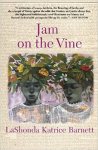 Jam on the Vine, by LaShonda Katrice Barnett – I read this one years ago, but it stayed with me. Ivoe Williams, precocious daughter of a Muslim cook, steals a newspaper and immediately falls in love with journalism. Jam on the Vine is the story of Ivoe’s coming of age, from eager young girl to founder of the first black female-owned newspaper, along with her former teacher – turned lover – Ona. Ivoe and Ona struggle to survive in a brutal world that has no tolerance for black women with powerful voices and the will to use them. Nurtured by their love for one another, they create a home and life together that sustains them against the buffeting they have to endure from bigoted and hateful people, who want nothing more than to grind them down. At times, the story can be quite disturbing – Ivoe survives a horrific arrest and attack – but this is ultimately a hopeful story of love and bravery.
 covered in flour