Three Months Without a Library Card

Are you guys ready to have your minds blown?

It’s been three months since we packed up and moved one county over (to the land of bigger yards, lower rent, and awesome public schools).  In that three months, I’ve enrolled the kids in public school, updated my voter registration, found the nearest Wegmans, and done a bunch of unpacking.  What I have not done: gotten a library card.

know, right?  Can you believe it?  Who even am I?

Clearly, this is not a forever situation.  I know exactly where the local library is and I’ve driven by its welcoming doors and serene native flower garden many times since we moved.  I have every intention of getting a library card and using the bejeezes out of it, like I did in Alexandria (and Buffalo, and every town I’ve lived in before that…).  But at the moment, I’m actually enjoying not having a library card.  Because I’ve had no choice but to read these:

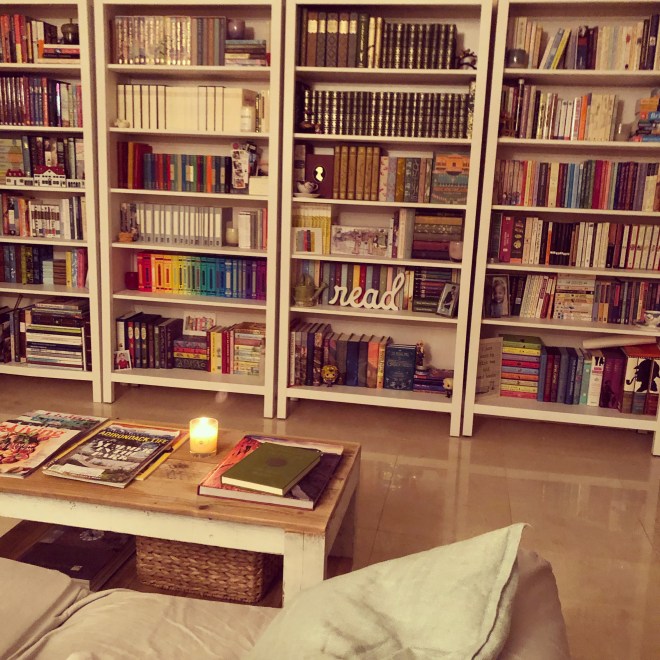
My own books.  Cue angels singing!  Now that I have the space, I’ve spread my library out over the entire living room and I’ve been spending evenings curled up on my slipcovered couch, with a candle burning and one of my own books in my hands.  I’ve wandered from Roman Britain to Victorian London to Miss Quinzilla Thiskwin Pennyquiquil Thistle Crumpet’s Camp for Hardcore Lady-Types.  And it’s been awesome.  When I’m “between” books (a matter of seconds only) instead of sighing heavily and looking over at a stack of books that I have to read for a library deadline, I wander over to my shelves, run my fingers over the spines, and choose something that I feel like reading in that moment.  Revolutionary.  Mind-blowing.

I’ll get a library card again, and soon – never fear.  I can’t live without the library for long.  And I have a hefty list of books that I want to check out when I do.  But for once, I’m in no big hurry.  I’m happy to make my way through my own shelves, curated to suit my own very specific taste.  For years, I’ve been saying that I am going to try to read more from my own shelves, and now – I’m doing it!  I’m really doing it!

Are you a library junkie, too?

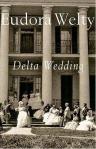
The Classics Club Challenge: Delta Wedding, by Eudora Welty

(Image source: YMD.org)

“You can’t drink wine and not eat cake!” said Battle.  “Look here.  What kind of house is this?”

I’ve written before, here, about my love for Eudora Welty’s writing.  My high school freshman English teacher introduced me to Welty – insisting my mother buy me a copy of One Writer’s Beginnings, which she promptly did.  I immediately fell for Welty’s voice and proceeded to tear through her short stories and most of her novels – but Delta Wedding was my favorite.  I read it multiple times in high school, but hadn’t re-read it in years.  I often find myself craving Welty during the dog days of summer, and it was time to dive back into her world of the Yazoo Delta and Dabney Fairchild’s wedding preparations.

(Image source: Eudora Welty Collection, National Endowment for the Humanities)

The novel begins on a hot September day in 1923.  Nine-year-old Laura McRaven is arriving in Fairchilds, Mississippi, on the Yazoo Delta, aboard a train called the Yellow Dog.  She is en route to attend the wedding of her seventeen-year-old cousin Dabney Fairchild, at Shellmound, the Fairchild family’s plantation.  When Laura arrives, she is met at the station by a gaggle of Fairchild cousins, and is immediately swept back into family life.  The events leading up to Dabney’s wedding are told through a series of vignettes, all of which are gorgeously crafted – Welty is at her best when recording, in minute detail, the incidents of everyday life and the natural landscape.

Grass softly touched her legs and her garter rosettes, growing sweet and springy for this was the country.  On the narrow little walk along the front of the house, hung over with closing lemon lilies, there was a quieting and vanishing of sound.  It was not yet dark.  The sky was the color of violets, and the snow-white moon in the sky had not yet begun to shine.  Where it hung about the water tank, back of the house, the swallows were circling busy as the spinning of a top.  By the flaky front steps a thrush was singing waterlike notes from the sweet-olive tree, which was in flower; it was not too dark to see the breast of the thrush or the little white blooms either.  Laura remembered everything, with the fragrance and the song.

It would be impossible for Welty to focus on every Fairchild – there are so many of them.  So a few characters – Ellen, Laura, Dabney, Shelley, George and Robbie – get the most attention, while others – Battle, the aunts, the younger cousins, baby Bluet – are more sketchily filled in.  As a teenager, reading Delta Wedding for the first time, I was most drawn to Shelley Fairchild.  One year older than the teenaged bride Dabney, marriage couldn’t be further from Shelley’s mind.  She wants to travel and to write, and she is forever finding herself saddled with the little ones – schlepping Laura and India on a mission to inquire about her mother Ellen’s lost brooch, stopping off at the store and forgetting the groceries.

Part of the delight of Delta Wedding, indeed, is that there are so many characters – there is always someone with whom to identify, no matter your stage in life – and there is always a character to draw you in.  I’ve been Shelley, the eldest child longing to flee the nest.  I’ve been Laura, the young visitor, and Robbie, the unwelcome interloper.  (Indeed, on this reading, Robbie touched my heart more than she used to do.)

This time, though, the character who most interested me was Ellen.  Married to the eldest brother – Battle – and lady of the house at Shellmound, Ellen is both of the Fairchilds and apart from them.  To an outsider like Robbie, Ellen is just as much Fairchild as the rest of them.  But there are little droplets of mentions and implications that Ellen is not Fairchild.  It’s repeatedly brought up that Ellen is “from Virginia” and thereby, a little bit “snooty.”  Ellen herself feeds into this – while she has mostly settled down to become a Fairchild baby machine, she can’t help but mention that the “Dabney” china (her family’s) is the good china.  And at one point, she muses about the strangeness of life’s paths, making her the matriarch of a big country family when she is more suited to a bookish life in the city.  (It’s an interesting juxtaposition – Robbie, who has married George, the youngest Fairchild brother, and is living a luxurious life in the city, couldn’t be more discontent with her lot.  Ellen would have thrived there, for all she has made life work at Shellmound.)  I was interested in the contrasts between Robbie and Ellen – both married into the family, but Ellen has been accepted wholeheartedly, if acknowledged as a snooty Virginian, while Robbie is persona non grata.  Why?  Is it because Ellen has been around longer, or because she was from a fancy Virginia family instead of a poor Mississippi family, or because she has made so many Fairchild babies, or because she married eldest brother Battle instead of beloved baby George, or something else?  Was Ellen immediately accepted or did she have to earn her Fairchild stripes?  I could read a whole book about Ellen.

I can’t conclude this review without mentioning the setting – physical and temporal.  As with any book set in the 1920s on a plantation in the deep South, you can expect to encounter racial issues.  There’s not much strife at Shellmound, and I think that’s largely because the characters of color are side characters to this particular narrative.  (Whether or not they should be given a more central place in the narrative is above my pay grade: it’s a story about a wedding in a gigantic family, so maybe Welty just couldn’t cope with any more central characters; several of the family members also get short shrift.)  The characters relate to one another in a fairly standard way and, for the times, it’s nowhere near the most cringeworthy thing I’ve ever read.  It would make this review much too long to address the subject of race relations in classic novels and I’m not sure I am up to taking that topic on, anyway.  Suffice it to say I think there’s value in reading these older works from a contemporary perspective, recognizing that things have improved and there is yet more work to be done, and acknowledging the literary merit apart from the social issues.

This is not a story about race relations – there is much more class tension than race tension.  Both George (with Robbie) and Dabney (with Troy) are considered to have married, or be marrying, “beneath” them and “beneath” the Fairchilds.  Troy has an easier time getting accepted by the family, although none of them are over-thrilled with the match.  Indeed, that class tension is the driving focus of the narrative – something I missed completely when I first read Delta Wedding at sixteen – and is personified in the three in-law characters, who are rather more interesting than the Fairchilds themselves.  Ellen, Troy and Robbie – the ways in which they are similar (not Fairchild) and the ways in which they diverge (pretty much everything else) – represent that class tension between the Fairchilds and the rest of the world.  And of course, Eudora Welty is the writer to explore that, with her telescopic focus on the small details of everyday life.

A brown thrush in a tree still singing could be heard through all the wild commotion, as Dabney and Troy drove away, scattering the little shells of the road.  Ellen waved her handkerchief, and all the aunts lifted theirs and waved.  Shelley began to cry, and Ranny ran down the road after the car and followed it as long as it was in hearing, like a little puppy.  Unlike the mayor’s car that had come up alight like a boat in the night, it went away dark.  The full moon had risen.

Have you read any Eudora Welty?  Which is your favorite?

It’s Monday! What Are You Reading? (September 14, 2020)

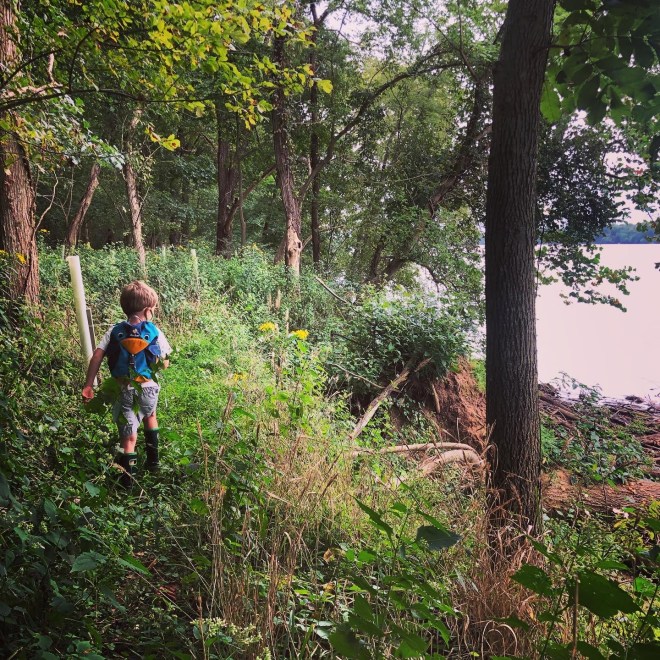
Morning, everyone, how were your weekends?  Ours was nice – really nice – although we didn’t get as much outdoor time as I’d have liked.  The weather forecasts were for slightly better (but still a bit grey) weather on Saturday, so we headed to a new-to-us local park to squeeze in a hike.  (The joke was on us, because Sunday’s weather turned out to be much better – sunny and cool – ah, well.)  We explored a trail by the river, talked about kayaking there one of these days, and kept eyes out for birds.  (We met a father and son birding duo who had their binoculars trained at the treetops; the father told me that they were watching yellow-billed cuckoos; sadly, I didn’t spot any, so no new birds for the life list this weekend.)

The rest of the weekend was more productive than playful, but still satisfying in its way.  Both Steve and I had to get some work done, after a less-than-productive week last week.  (The hope is that both kids will become more independent and less needy during their school days…)  And I spent a lot of the weekend rushing around the house, getting art hung and boxes unpacked and hauled out of our space.  I’ve set a goal to be unpacked and settled in by September 22 – the fall equinox.  Steve thinks I’m insane, but I am determined to do it.  I’m exempting the playroom from this; it needs a lot more help than one more weekend’s worth of work.  And I’ve accepted that I won’t be able to get all of the donations out of the house until COVID-19 is over and the libraries are accepting again.  But other than that – I’m determined.  Lots of progress was made on Sunday, and I fell asleep with that satisfyingly exhausted feeling, like when you’ve spent the day doing lots of physical work.  Love that feeling.

Reading.  Good reading week!  I finished A Memoir of Jane Austen, which was hilariously inaccurate, mid-week.  Then spent the latter part of the week with Georgie Codd and a lot of fish, in We Swim to the Shark, which I LOVED.  I’ll have much more to say about it in the next couple of weeks, so won’t go into great detail now, and will just say that I have a strong suspicion that it’s going to end up on my top-ten books of the year.  Finished the weekend with September, by Rosamunde Pilcher, and am settling in for a long haul of reading this week.

Watching.  Since it was Nugget’s half-birthday weekend, we let him choose the movies for family movie night on Saturday and Sunday.  As a result, we all watched half of Star Wars: The Force Awakens and half of Ratatouille.  Other than that, we probably watched an episode or two of Rock the Park this week, but I don’t recall specifics.  Since the kids are now on the computer for big chunks of the day – doing school – we are trying to limit their screen time otherwise.  (Without taking away TV entirely, because COVID-19 is not their fault, and it’s also not their fault that school is online this year, so they shouldn’t be punished by having all TV taken from them when they’ve already lost so much fun this year.)

Listening.  Not much; music on the way to the grocery store this week – taking a break from podcasts – and an hour or so of an audiobook.  After all the screaming matches I’ve been listening to, I downloaded Peaceful Parent, Happy Siblings: How to Stop the Fighting and Raise Friends for Life.  Here’s hoping.

Making.  A lot of progress in the house – especially hanging art, which always makes such a big difference.  The sunroom is also starting to take shape, which is so satisfying.  Tonight I’m tackling the dining room, and tomorrow I’ll take the evening “off” – so to speak; I have to go to the grocery store to pick up my curbside order after the kids are in bed on Tuesday.  I’m really determined to have the house fully set up and a relaxing space by next weekend.

Moving.  Oof.  Not as much as I would have liked to do.  I hit my Garmin’s goal for active minutes for the week on Monday, thanks to Labor Day hiking at Shenandoah National Park (always a favorite!).  Other than that – nothing until Saturday’s hike and a run on Sunday morning.  Balancing work with the first week of school took every spare moment I had from Monday through Friday.  I hope it gets better soon, because last week I was burning the candle at both ends and it was not sustainable.

Blogging.  Another bookish week!  I have a Classics Club review for you on Wednesday – of Delta Wedding – and then on Friday, I’m musing about the surprising fact that I have lived in this house for three months and have not yet gotten a library card.  Who even am I?  Check back to find out.

Loving.  I’m almost embarrassed to admit this, but this section is all about telling you guys what is making my life better right now, in this moment, and that is: I finally got a wireless mouse.  I know, you have questions.  Haven’t you been working from home for seven months now?  What were you using before?  Told you it was embarrassing.  I have a wireless mouse at the office, but it never occurred to me to get one for home; for the past seven months, while I’ve worked first at the kitchen table and later in the dining room, I have just been using the trackpad on my laptop.  It’s awkward and cumbersome, but it literally never crossed my mind to get a mouse – until I ordered the kids each a wireless logitech mouse to make their online school days easier.  (Peanut chose a mouse that is festooned with flamingos; Nugget’s looks like a little owl.)  They were literally $20 each on Amazon, arrived the next day, and took thirty seconds to set up.  As Nugget comfortably navigated around his virtual classroom with his mouse while I awkwardly swiped around the track pad doing document review, I thought to myself: why don’t I have one of these?  So I’m now the proud owner of my own logitech wireless mouse.  While I was tempted by one with martini glass designs, I acted my age and went for a serene blue.  My only regret is that it took me so long to make this connection for myself.  File this with the rest of the examples of Mom putting literally everyone else before herself.

Asking.  What are you reading this week?

Themed Reads: School Daze

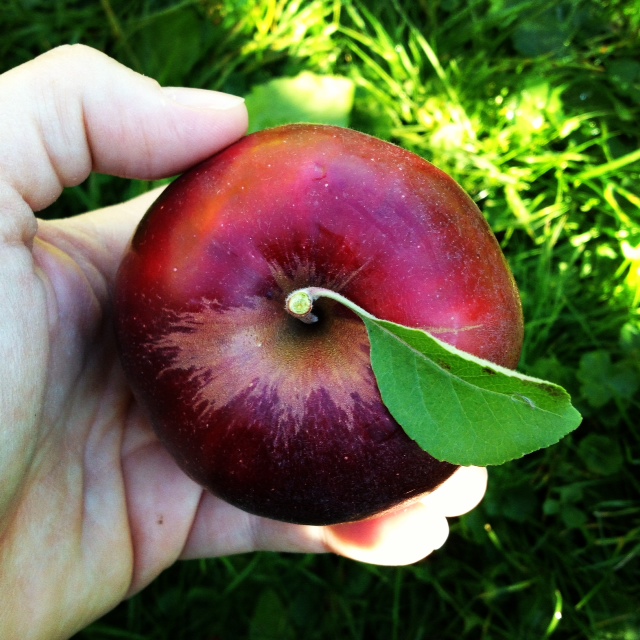
September!  It doesn’t look like the usual September, that’s for sure.  While the scent of fresh apples and newly-sharpened pencils is in the air – for sure, that hasn’t changed – my kids will not be getting on the school bus this year.  There will be no huddling on tiny chairs at “Back to School Night,” no Halloween parades or holiday concerts, no crumpled art projects in little backpacks.  What there will be instead, for me, is a five-year-old “office mate” sitting next to me, interacting with his classmates on Google Classroom while I try to squeeze work into his math and language arts lessons (Peanut will be doing the same downstairs, at her little desk in the family room next to Steve).  September is a nostalgic month of the year for me every year, as I think back on my own school days.  This year, more than any other, I want to visit books about the way school used to look, and the way it may look again (in some cases).

First of all, when it comes to education, no one is more committed than Malala.  I Am Malala: The Girl who Stood Up for Education and was Shot by the Taliban, by Malala Yousafzai, is a stunning memoir of a story that is widely known around the world.  Malala grew up in the Pakistani mountains, the daughter of a progressive father who valued girls’ education – and became a youth advocate for girls’ education herself.  One day, armed Taliban stormed onto a bus, demanded to know which one of the girls was Malala, and then shot her.  In her memoir, Malala – who just graduated from Oxford University – tells the story of her childhood, her horrifying ordeal, and her ultimate triumpg.  All because she wanted to go to school and learn – something that many children take for granted, but many others can only dream.

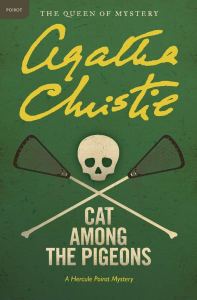
For something lighter, how about a murder mystery set at a boarding school?  Cat Among the Pigeons, by Agatha Christie, drops Hercule Poirot into the thick of a murder at a girls’ school.  There are missing gems, and tennis, and Poirot solves the crime (of course) in a decidedly squidgy way.  (If you’ve read the book, you’ll likely remember – somewhat uncomfortably – the clue that puts him onto the killer’s scent.)  Like many bookish children, I dreamed of going to boarding school.  Cat Among the Pigeons helped to cure me of that dream.  You’re welcome!

I usually try to profile only books that I’ve read in these posts.  But two that I haven’t – that I’m hoping to get to this month or next – are Mr Tibbits’s Catholic School and Terms and Conditions, both by Ysenda Maxtone Graham and published by Slightly Foxed.  (While I haven’t read these for myself – they’re on my shelf – I’ve heard good things and everything that Slightly Foxed has done has been a winner for me so far, so no reason to think these won’t be.)  Mr Tibbits profiles half a century in English history through the lens of one boys’ school, and Terms and Conditions focuses on the many changes that girls’ boarding schools experienced in the twentieth century, through about 1970.  I will report back!

What are your favorite school books?

The Classics Club Challenge: Mary Barton, by Elizabeth Gaskell

The early trains for Liverpool, on Monday morning, were crowded by attorneys, attorneys’ clerks, plaintiffs, defendants, and witnesses, all going to the Assizes.  They were a motley assembly, each with some cause for anxiety stirring at his heart; thought, after all, that is saying little or nothing, for we are all of us in the same predicament through life; each with a fear and a hope from childhood to death.  Among the passengers there was Mary Barton, dressed in the blue gown and obnoxious plaid shawl.

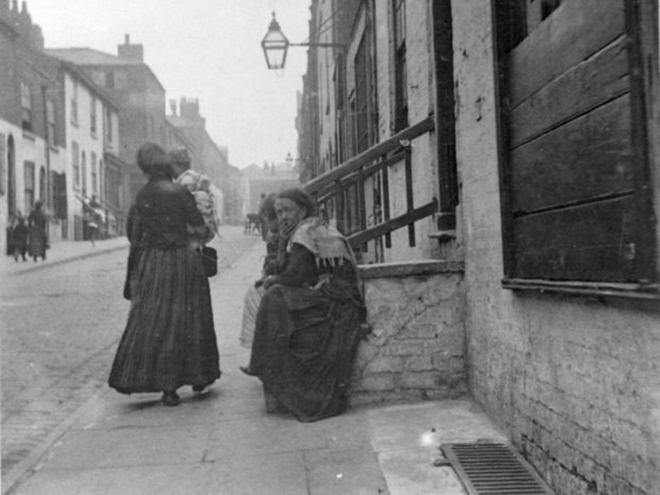
Mary Barton was Elizabeth Gaskell’s first novel – not as polished as North and South (arguably her most famous) or Wives and Daughters (her final, unfinished work), it’s still a poignant, marvelous read.  The novel’s origins are sad: mourning the death of her nine month-old son, Gaskell was contemplating distracting herself with a writing project.  She was planning a historical novel, but was overcome by the idea of the hidden romances and sorrows behind the blank faces that pushed by her in the Manchester streets.

(Image source: The Independent)

It is a pretty sight to walk through a street with lighted shops; the gas is so brilliant, the display of goods so much more vividly shown than by day, and of all shops a druggist’s looks the most like the tales of our childhood, from Aladdin’s garden of enchanted fruits to the charming Rosamond with her purple jar  No such associations had Barton; yet he felt the contrast between the well-filled, well-lighted shops and the dim gloomy cellar, and it made him moody that such contrasts to exist. They are the mysterious problem of life to more than him.  He wondered if any in all the hurrying crowd had come from such a house of mourning.  He thought they all looked joyous, and he was angry with them  But he could not, you cannot, read the lot of those who daily pass you by in the street.  How do you know the wild romance of their lives; the trials, the temptations they are even now enduring, resisting, sinking under?

This quote, more than any other, explains why Gaskell chose to write the story of Mary Barton instead of the historical narrative she was planning.  But the novel is also revolutionary: it was one of the first novels to feature a working-class heroine (instead of an upper middle-class or gentry heroine).  Gaskell’s narrative stood for the idea that working-class people have stories that are worth telling.

When the novel opens, times are good.  We first meet Mary with her family – her father, John Barton, and mother, Mary Barton Sr. – on a soft spring day.  The family is out in nature (a contrast with the sooty city life they lead in Manchester) enjoying a rare day of leisure with their good friends, the Wilsons.  The teenaged Mary is blooming like one of the spring flowers they are out enjoying, and the Wilsons’ eldest son, Jem, is captivated by her – but Mary couldn’t be less interested in Jem.

The good times don’t last forever.  Manchester’s textile works lead a volatile existence, and their fates are tied to “the masters” — the mill employers, who set wages and hours, and with that, make the difference between surviving and starving (or “clemming,” as the workers call it).  This being an Elizabeth Gaskell novel, the bad times descend quickly and most of the combined Barton-Wilson clan is in the grave by the time the first half of the book is over.

Meanwhile, both Mary and Jem are growing up.  Jem gets a job in a foundry and works his way up to a supervisory position; Mary finds a place in a dressmaker’s shop.  Her father is determined that she will not become a factory girl, and Mary has no interest in that life.  Yet at the same time, John Barton worries that Mary will become dissatisfied with her life and end up like her mother’s sister Esther, who vanished one evening and broke her family’s hearts.  Mary, however, is young and thoughtless, a flirt, and she soon attracts the attention of a rich young man – the son of her father’s employer.

Yes! Mary was ambitious, and did not favor Mr Carson the less because he was rich and a gentleman.  The old leaven, infused years ago by her aunt Esther, fermented in her little bosom, and perhaps all the more, for her father’s aversion to the rich and the gentle.  Such is the contrariness of the human heart, from Eve downwards, that we all, in our old Adam state, fancy things forbidden sweetest.  So Mary dwelt upon and enjoyed the idea of some day becoming a lady, and doing all the elegant nothings appertaining to ladyhood.

Mary finds herself deeper and deeper in with young Harry Carson, and relying on his good will, she declines a marriage proposal from Jem.  After all, Harry’s mother was a factory girl, and the elder Mr Carson worked his way up to become a mill owner.  Harry is not so above Mary in stature that it’s impossible to consider he might genuinely fall in love with her; money is the main thing that divides them, but their family backgrounds are more similar than it would appear at first blush.  So Mary indulges her fantasies of becoming Mrs Carson and playing Lady Bountiful to her former near neighbors.  But it soon becomes clear that Mr Carson’s intentions are hardly honorable – and Mary discovers that she actually had feelings for Jem all along.  Whoops!

(Image source: Manchester Evening News)

Meanwhile, as Mary works through her romantic tribulations with the dubious help of her similarly inexperienced friend Margaret, John Barton is being swept up in a more macro struggle – that age-old divide (and favorite topic of Gaskell’s) between labor and capital.  Barton is active in his union, and when work at the mills dries up he is impacted by the poverty and misery of his compatriots.  When the employers rebuff the union representatives in their efforts to negotiate, the union decides to take a drastic step – an assassination of someone associated with the employers.

John Barton’s overpowering thought, which was to work out his fate on earth, was rich and poor; why are they so separate, so distinct, when God has made them all?  It is not His will that their interests are so far apart.  Whose doing is it?

The victim is Harry Carson – son of the mill owner.  Mary is secretly a little relieved, because Harry’s attentions had become intolerable to her.  But her relief turns to agony when suspicion immediately falls on Jem Wilson, who was overheard arguing with Harry – over Mary, as it turned out – just a few days before the murder.  Jem is arrested on suspicion, and Mary throws herself into proving his innocence when even their mutual friends are convinced of his guilt.  (I won’t give away the verdict, although if you read the table of contents, you’ll know how the trial turns out even before you read the first line – thanks for that, Liz G.)

Having read other Gaskell works, I can certainly tell that Mary Barton is an earlier effort.  It lacks the balanced complexity of North and South and the humor of Cranford or Wives and Daughters.  It also takes longer to get off the ground than the other Gaskell novels – the action doesn’t really take off until midway through the book (although Gaskell starts killing off characters earlier than that; she’s worse than J.K. Rowling that way).  But once things get going, they really get going – by the time Jem was charged with murder, I was so into the book that I stayed up feverishly turning pages until midnight.

All in all – I loved the fourth Gaskell I’ve read as much as I loved the first three.  With only two novels left (I don’t count the sanitized Life of Charlotte Bronte) I am starting to think I’d better ration.

What’s your favorite Elizabeth Gaskell novel?  I have loved them all, but I think I’m still partial to Cranford.

It’s Labor Day Monday! What Are You Reading? (September 7, 2020)

Good Monday morning to all of you, happy long weekend to my American friends, and happy new week to everyone!  We’re only 2/3 of the way through our weekend over here and off on a hiking adventure today, but so far it’s been nice and balanced – some activity, some rest, some productivity.  I wasn’t actually planning to do any unpacking or organizing over the weekend, but Nugget woke up on Saturday morning inspired to create “our bird-watching headquarters” in the sunroom, and he spent the better part of two days cleaning and organizing.  (Is he 5 or 50, you guys?)  The sunroom has become the repository for boxes yet-to-be-unpacked and a lot of stuff I still have to find homes for, so it needed a lot of work.  Between us, Nugget and I probably unpacked a dozen boxes and set up and cleaned our Adirondack chairs (which were on our front porch in Old Town and were decidedly grimy with city dust and dirt).  We took a break to hike at one of our local parks, which was fun except that on the way to the park I got weirdly carsick – not a problem I usually have – and it took pretty much the entire hike to stop feeling queasy.  I recovered just in time to head out and run some errands to pick up a few things the kids need for school.  So that was Saturday.

Sunday was a bit more weighted to the “fun” side of the scales, although Nugget and I both put in some time in the sunroom, and I worked a tiny bit – I have a couple of action items that are due this week and stressing me out, and I got started on one of them to make myself feel better.  In the morning, Peanut and I drove into Arlington to meet up with her BFF for a playdate.  S’s mom suggested a new-to-us park that had a field and a creek for the girls to explore.  While S stood fastidiously on the bank, Peanut shouted “ALASKA!” and leapt into the deepest part of the running stream, getting drenched to her waist.  It was glorious.  We headed home for lunch, then back out for what is becoming our Sunday tradition – paddling.  This time, we kayaked from Fletcher’s Cove and Peanut was my boat buddy.  It was less dramatic than when I had her in my boat at Riverbend Park, but it’s definitely a workout; she doesn’t help paddle at all.  Meanwhile, Nugget and Daddy were in a paddling rhythm, crushing the current like it was no big thing.  We finished the day with takeout, and then at 6:45 p.m. the kids reminded me that I promised to build a fire pit so we could make s’mores.  Over Steve’s full-throated objection I found myself in the garage, screwing together a new fire pit, then building a full-on campfire for the kids at bedtime.  Hey, it’s the last weekend before school starts.  If not now, when?

Reading.  What a week!  I feel like my reading was at pre-pandemic levels of volume and excitement this past week.  It’s a good feeling!  Early in the week, I finished up The Pickwick Papers, which I thoroughly enjoyed.  Review – for the Classics Club – coming later this month, but I have a couple of books in line ahead of it.  After Pickwick, I wanted to read something a bit shorter, so I grabbed one of my new acquisitions: Down in the Valley, a slim little volume that reads like an oral history, and is basically an edited transcription of a tour of Laurie Lee’s home region, given by the author himself to a filmmaker.  It was lovely to read.  Moving right along!  Since it’s the last weekend of official “summer” around here (although it will still be warm for several weeks yet), I figured I’d better get to One Fine Day, which I’ve been meaning to read this season.  It was gorgeous and I loved every word.  Ended the weekend with another one I’ve been meaning to get around to for some time now: A Memoir of Jane Austen, by the author’s nephew James Edward Austen-Leigh.  I’m still in early chapters, but it’s an interesting read.

Watching.  With all of that reading, watching was minimal – as expected.  A few episodes in our family re-watch of Rock the Park (including Wrangell-St. Elias, which was the episode that gave Peanut the aforementioned idea to shout “ALASKA!” and do “the Polar Plunge” into the creek on her playdate.  Otherwise, not much – just a couple of videos from Miranda Mills’ YouTube channel – on her new life in Yorkshire, summer reads, and favorite books from spring.  Her book recommendations are always winners for me, so I enjoyed that.

Listening.  Still binge-catching-up on The Mom Hour.  I listened to an old (early pandemic) episode full of encouragement for supervising distance learning, a few episodes about this weird summer we are having, and now I’m midway through an episode on “decluttering for the weirdest fall ever.”  It’s such a well-made podcast and I can listen to Meagan and Sarah for hours (obviously) but I probably should make a dent in some of the other shows that are piling up on my podcatcher.

Moving.  It was sort of an all-over-the-place kind of week.  I squeezed in a couple of runs – now that the weather is finally cooling off a little bit (not a lot; it’s still hot here) I am more inspired to get out there, but of course the schedule is about to tighten again.  A paddling afternoon on Sunday, naturally.  And a lot of that “functional fitness” from chasing the kids around, gardening, cleaning the house, hauling boxes, building fire pits – you know, the usual.

Making.  About that fire pit!  It’s a thing of beauty, isn’t it?  Pretty pleased with myself for whipping up both the fire pit and the fire itself (that Girl Scout experience helped).  My only complaint about the fire pit is it’s so shallow that it required constant feeding to keep the fire going.  It’s not going to be easy to build a fire, kick back and drink a beer with Steve.  But the kids LOVED it and their s’mores.  Worth every drop of sweat in screwing the thing together in the garage on a hot September night, and in running back and forth between the fire pit and the woodpile to keep it going!

Blogging.  Bookish week coming atcha!  I have a Classics Club review for you on Wednesday, and a Themed Reads post for September on Friday.  I’m excited to share both, so do visit me again then.

Loving.  I suppose I can’t talk about my fire pit since I just went on and on about it above.  Oooh!  But can I tell you about my new bird feeders?  Over the last week I’ve shifted my feeder stations around again.  First, I am delighted to report that birds are eating at the tray feeder I hung last week.  We’ve had chickadees, tufted titmice, and a few cardinals all popping by to grab a snack here and there.  I’m still getting the hang of keeping the tray feeder clean and dry, but it’s nice to see the bigger birds that can’t fit at my tube feeder.  Then the nyjer (thistle) feeder in the backyard suddenly became a hot spot!  I was starting to despair of it, when I noticed a chickadee pop by to grab some thistle.  Within a day after the first chickadee, the goldfinches and the other chickadees descended on the backyard.  At one point, I saw four of them all clustered on the nyjer feeder!  YAY, it’s working!  I am loving watching all of my backyard birds.  I know it’s total pandemic cliche, but I don’t even care.  BIRDS 4EVER.

Asking.  What are you reading this week?

Fall Learning: Making the Best of a Bad Situation

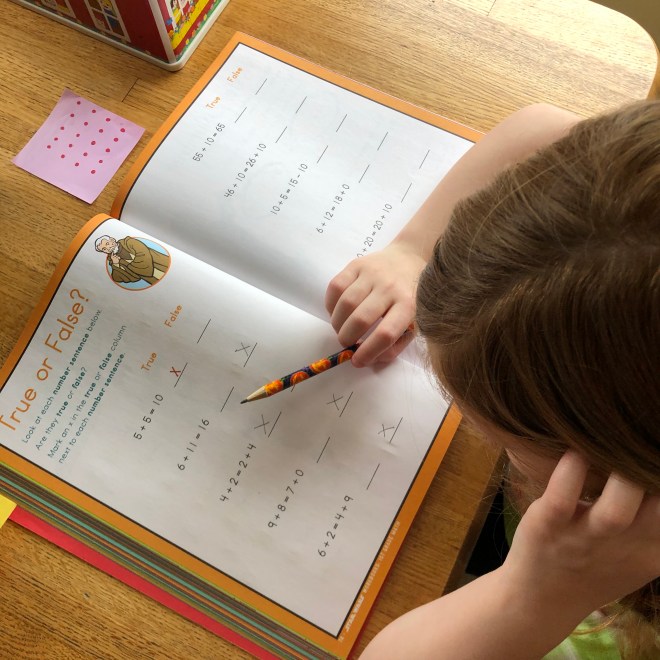
Over the last month, I’ve been thinking a lot about fall and what I want it to look like.  When we started this sort-of-homeschooling journey last March, I wasn’t really sure what to expect.  We were sent home for an “early spring break” with distance learning packets to open “if we weren’t able to come back to school right away.”  But we all figured, I think, that the time at home would be short-lived.  When it became clear that it wasn’t going to be short-lived, we made the first subconscious, and then conscious, decision to check out of the kids’ school and do our own thing.  The kids both hated the Zoom sessions with their classes, which were disorganized and chaotic.  And I wasn’t motivated to force it on them, because I was already so disillusioned and checked out of their school that seeing anyone affiliated with the place was the last thing I wanted.  So we pretty much did our own thing.  We worked our way through most of the materials the school sent home and supplemented with our own enriching activities.  Throughout the spring, I didn’t really know if I was “doing it right” or if they were getting what they needed, but I figured they’d be in a new school in September – we had plans to move to a better school district over the summer – and we’d figure it out then.

This fall is going to be different.  We made our move out to a neighboring county (with world-class public schools) in June and promptly got the kids enrolled.  And then it came time to make a decision about what the fall would look like.  Our new school district advised us that everyone would be starting the year online, and may never make it back into the classroom.  If they do begin to bring kids back for in-person learning – and that’s if – it will be two days a week, with another two days a week on the computer.  And no guarantees that in-person will stay in-person; everyone could end up back home if there is a big outbreak of COVID-19.

Steve and I weighed our options and there’s really no good choice.  The way I see it, fall could look any number of ways, none of them good:

  1. Elect the in-person option.  At first, I thought this would be my choice – school is still serving a dual purpose of education and child care, and two days a week is better than none.  Plus I hated the idea of little Nugget, who is a very social little dude, doing kindergarten on a computer.  (Peanut is more introverted and while she hates technology, except for TV, I think she’d be less impacted socially.)  But I would still have to deal with distance learning, their education would be disrupted when schools closed again – and I do believe that’s a when, not an if – and I didn’t feel that the school district’s plans contained enough detail about how they would keep the kids safe.
  2. Elect the distance learning option.  Another bad choice.  Like I said above, I hated the idea of little Nugget doing kindergarten on a computer.  And the idea of an entire school year of trying to balance two full-time working parent schedules with full-time online school, with no help, gave me hives.  But ultimately this seemed like the safer and less disruptive choice, challenges aside.
  3. Hire a teacher and pod with another family.  I like this idea, but I don’t know any retired teachers in the area, and we’re new to the school and don’t know any families, either.  This may be an option later in the year, once we get to know some of the other families in our classes, but finding these people in August felt very daunting, if not impossible.  And the idea of paying someone to educate the kids when the entire reason we moved here was for the public schools seems… frustrating.
  4. Homeschool.  From an educational and social/emotional perspective, this might be the best choice.  But it’s not really doable with my work schedule – not long-term, anyway.  And I found it very stressful to be the one responsible for deciding what we were going to do every day; I know many families find it freeing, but I felt very ill-equipped to create lesson plans and make sure the kids were learning what they were supposed to be learning.  I like the idea of incorporating some homeschooling into our school year for added enrichment, but having it be the sole source of education doesn’t seem like a good choice for our family.

Basically, none of these options are good.  They are all equally terrible, in different ways.  I don’t blame the school or the school district; I do blame the federal lack of leadership for their criminally inept response that left school districts – even big, well-funded ones like ours – to grope around in the dark for solutions.  Schools in other countries have found ways to make it work, but they have had more support from their national leadership.  Ultimately, in our area of the country, both the school district and the individual families had to make decisions with incomplete information.  Not knowing what the school year would look like (cohorts? pods? how would social distancing and masking work for little kids?) I didn’t feel comfortable signing up for it.  Steve and I had a family discussion and discovered that we both felt the same way – online learning all year, while a terrible option, seemed like the safe choice.

I told Steve that I want to give the public school distance learning program a fair effort and really try to make it work – which we didn’t really do last spring.  As I mentioned above, I was terribly disillusioned with the kids’ private school, and their approach to online learning was well-intentioned but chaotic.  Those two factors combined led us to essentially check out and opt for doing our own thing.  This is different – we chose this school district, and they have had time to plan for online learning.  I am hoping that the kids will stay in this school pyramid through high school, and I want to get off on the right foot.  But I also want to continue doing our own thing.  The hardest part of our spring homeschool, for me, was the planning – I was never really sure I was going in the right direction, or that the kids were getting what they needed from me.  But with better direction from school, combined with our own enrichment activities that are not the primary source of material, I think… we could make it work?

I’ve already written too many words about this, and we are just figuring out our structure for the year, so I won’t say much more right now.  We’ve decided that instead of dividing and conquering the day – as we did last spring and all summer, working in shifts – we will divide and conquer the kids.  So Peanut will have a desk next to Steve in the family room, and Nugget will be my new “office mate” in the dining room.  The hope is that as the online learning and the technology becomes more familiar, they will settle into a routine that allows us to work while our designated kid is watching a lesson or doing an activity with classmates.  It isn’t a perfect solution (that would be a vaccine and a return to full-time in-person school) but it’s what we’ve come up with for now – and if it doesn’t work, we’ll try something else.

Meanwhile, I am scouting around for enrichment activities to build into the kids’ days.  I have a couple of nature-based homeschool resources and I’ve purchased some math lessons that can be taught outdoors; we haven’t put them into practice yet, so I will wait until we do and we know what’s working before writing about that.  I’m envisioning a fall semester in which the kids get their main education from the public school, but we combine it with things like “observations” at the neighborhood frog pond, dry erase math on the kitchen windows, lots of reading aloud, and teachable moments sprinkled into our family time.  At the end of the day, if they’ve learned basically what they need and we end the fall still liking each other, I’ll have done my job.

How are you preparing for another season at home?

Reading Round-Up: August 2020

Reading Round-Up Header

Reading is my oldest and favorite hobby.  I literally can’t remember a time in my life when I didn’t love to curl up with a good book.  Here are my reads for August, 2020

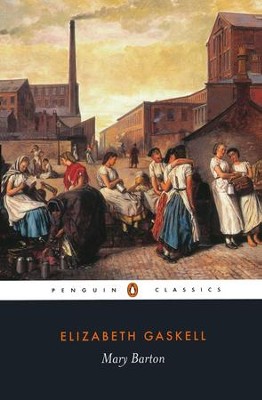
Mary Barton, by Elizabeth Gaskell – Elizabeth Gaskell’s first novel sets the stage for her later works – especially North and South – and fixes on one of her favorite themes: the conflict between labor and capital, between the working classes and their employers.  It’s a revolutionary novel in that its heroine, Mary Barton, is a working-class girl; the novels of the time did not lend much credence to the romances, loves, pain, or joy of laborers and their families.  It’s also vintage Gaskell: a whole mess of people bite it, and if only everyone would just sit down and have tea together, labor and capital could solve all of their problems, I mean, really.  Heh… I really did enjoy this; it was slow-moving for the first half or so, but really picked up speed about midway through the novel, when it turned into a courtroom drama.  Full review (for the Classics Club) to come, so I’ll save the rest of my thoughts for that.

The Fixed Stars: A Memoir, by Molly Wizenberg – I had such mixed feelings about this one.  On the one hand, Molly’s writing is as elegant as ever and I flew through the book.  But on the other hand, this felt too personal, to the point that reading it felt voyeuristic.  I know that she put these words out in the world, and that she wanted people to buy her book and read it, and that she got royalties (or at least credit toward her advance) from my purchase of the kindle version, but – still, actually reading about the demise of her marriage, and her sexual awakening as a queer woman, a part of my brain kept nagging me, “This is private.  This is not for you.”  (A separate part of my brain knows it’s important that queer stories are out in the world, and also that no one forced Molly to write and publish this particular book, and she no doubt wanted people to purchase and read it.)  Molly acknowledges that memoir is something of an act of violence to the people in the memoirist’s life, but it also struck me as topsy-turvy that the only “main character” who got to keep some privacy was “Nora,” Molly’s problematic first girlfriend, who gets the coverage of a pseudonym while Molly, Brandon, Ash, and June are all out there with their real names.  (I know it wouldn’t be possible to give Brandon and June pseudonyms; anyone who has read Molly’s other writing already knows about them.)  Molly is clearly holding back a lot of details about her relationship with Ash (understandably, and I think rightfully); Brandon doesn’t always come off very well, but he is an adult who agreed to and supported the project.  But I do wonder how her daughter will feel in ten years, having the demise of her parents’ marriage and these very personal details in print for all of her classmates to read.  Having a blog myself, I have given a lot of thought to how I portray my children; they are a part of my life and so they’re around this space, but I intentionally don’t use their real names or show recent photos of their faces, and I don’t share details (either about them or about myself) that might cause them pain or embarrassment later.  Everyone is different, obviously – what I’m comfortable with isn’t the “right” way or what everyone has to do, and I get that.  I’m not going to clutch my pearls and shout “Think of the children!” – and Molly is clearly a very thoughtful person, who I’m sure considered the ramifications to June of having her parents’ personal tumult in print for all to read, and balanced them against her need to write the story.  Still, permission notwithstanding – I felt a bit like I was pressing my nose against a window, looking in at a family’s pain that didn’t concern me, and I just felt vaguely wrong and weird about that.

Delta Wedding, by Eudora Welty – It had been a long time – years – since the last time I re-read Delta Wedding, which was one of my favorite books in high school.  I was definitely worried that it wasn’t going to hold up with my “2020 vision” – would I love it as much as I remembered, or would it be full of cringeworthy moments and dated words about characters of color?  Being a 1923 book, it was of its time, certainly – but race is not the focal point of the story (class is – something I realized for the first time on this read-through) and while Welty’s characters behave like a white Southern landowning family in the 1920s, it could be much worse.  The descriptions of nature and the telescopic focus on a few family members makes this book what it is – a series of gorgeous vignettes, still a wonderful read years after I first picked it up.

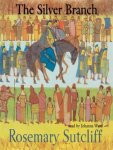
The Silver Branch (The Dolphin Ring Cycle #2), by Rosemary Sutcliff – Having loved The Eagle of the Ninth, I had high expectations for the second novel in Rosemary Sutcliff’s classic series about Roman – and later Saxon and Norman – Britain, and they were met and exceeded.  The events of The Silver Branch take place about 200 years after The Eagle of the Ninth and focus on two young Romans – Flavius, a Centurion (and descendant of Marcus Flavius Aquila) and his cousin Justin, a Cohort Surgeon.  When the young men uncover a plot to overthrow the Emperor of Britain, they quickly find themselves neck-deep in intrigue and adventure.  Yay, plotting!  Yay, intrigue!  Yay, battles!  Yay, danger!

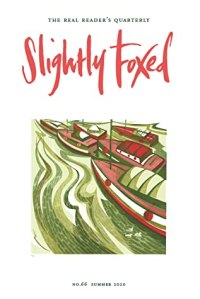
Slightly Foxed No. 66: Underwater Heaven, ed. Gail Pirkis and Hazel Wood – Figured I’d better get around to the current issue of Slightly Foxed before the autumn issue comes out!  I always enjoy this journal and often come away with a long TBR after reading writers on their favorite books and authors.  I didn’t feel a great compulsion to pick up any of the books that were profiled in the summer issue, this time, but it occurred to me that the journal is almost stronger when that’s the case – because if I’m not interested in the underlying book but still find the essays in the journal to be wonderful reads, worth enjoying for their own sake, the journal must be impressive indeed.

And that’s a wrap on August.  It looks like a light month of reading, but what you don’t see is that I spent considerable time with two Victorian doorstoppers last month.  When I started the month, I was partway into Mary Barton, and that took up a good two weeks to finish.  (So good, though!)  Then I cruised through a few shorter books before picking up The Pickwick Papers.  As of the publishing of this post, I am nearly done with it, so it will appear on September’s (hopefully longer) book list.  But it ate up a lot of reading time in August and into September.  Everything I read in August was well-written and engaging, but there were definite highlights.  The Silver Branch was, I think, my favorite book of the month, and I am so stoked that Slightly Foxed is continuing to publish the series.  Mary Barton was wonderful, too, and I don’t even want to think about the fact that I have only two unread Elizabeth Gaskell novels left.

How was your August in books?

It’s Monday! What Are You Reading? (August 31, 2020)

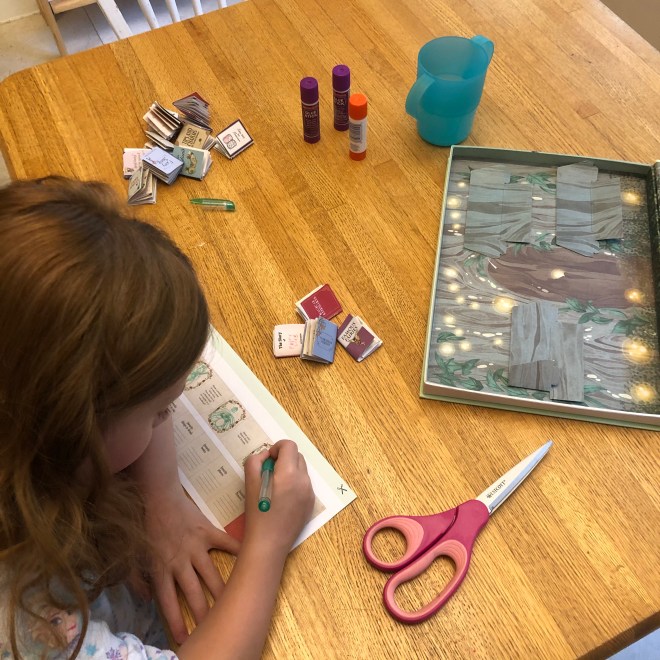
Yawwwwwwwn.  Mornin’ everyone.  How were your weekends?  Mine was kind of up and down – nothing extreme, just up a little and down a little.  Saturday was rainy – we were getting remnants of the hurricane from down in Texas and Louisiana, not wind but just rain in our case.  We decided to have a cozy day indoors, and I had big plans to get some organizing done around the house.  But those plans involved a trip to IKEA to pick up another couple of bookcases (for family books and games) and when it became clear that the bookcases were not going to fit in my car, I had to reshuffle.  I ended up spending the morning helping Peanut make a fairy library (an ill-advised birthday gift – she wants these craft kits but she always ends up getting frustrated along the way) and the afternoon making runs to the Container Store and Target to try to cobble together a toy storage solution for the playroom.  The kids have trashed the playroom to the point that they don’t even play in there anymore because it’s not fun.  I had to haul several garbage bags full of old broken toys and abandoned art projects out to the bins just so I could see floor.  I think I have the beginnings of something coming together, but it’s a long way to go and I was (am) frustrated – lots of frustration on Saturday, it seems – by their lack of respect for our space and their expectation that we are just going to follow them around cleaning up after them.

Sunday was better than Saturday, in every respect.  The weather was beautiful – sunny but not too terribly hot – and aside from breaking up the usual number of screaming matches, it was a good day.  On Sunday morning I had a virtual relay race to run as part of the second “Love the Run You’re With” series I am doing through Another Mother Runner.  I was runner #3 and was scheduled to run from 8:00 to 9:00.  So off I went at the stroke of 8:00, and other than my Garmin dying 24 minutes in, it was a great run.  Came home and slugged several big carafes of water, then fed the kids lunch and got them ready for our afternoon adventure – kayaking at Key Bridge.  I forgot my phone at home, so no pictures.  But we had a lovely paddle, saw an egret, and came home tired and happy.  A good day.

Reading.  It was a good reading week.  I finished the latest issue of Slightly Foxed on Monday evening – just in time, too, as the fall issue releases tomorrow and will be on its way to me soon.  The rest of the week, I spent with Mr. Pickwick & Co.  That may seem like a slow reading week, but Pickwick is about 950 pages and I am actually making good progress.  I’ve been lighting a candle and reading in the living room every evening for the last week, and it’s been lovely.  Although – I’m just shy of 600 pages in and starting to be ready to wrap it up.  This week, for sure.

Watching.  Very little this week.  After four days of the Democratic National Convention last week, which is much more TV than I usually watch in a week, I was burned out on screens and spent most of the week in the company of books instead.  No complaints!  We watched a few episodes of Rock the Park with the kids; that’s it.

Listening.  I’m continuing to binge through back episodes of The Mom Hour.  The show ran a two part special on school decisions for the fall, which was a wonderful conversation.  Steve and I had already made our decision for the kids by the time I got around to listening, but I still found it so helpful and validating to listen in as Sarah and Meagan weighed different options (and concluded, like everyone else, that all of the choices are bad).

Making.  A little of this, a little of that.  A few dinners – including risotto with Beyond sausages last night, yum.  (I had designs on maple-apple dumplings, but that will have to wait until next weekend, or the following weekend.)  A little bit of progress toward an organized playroom, but not as much as I’d hoped.  And several miniature books for Peanut’s fairy library (and a lot of deep breathing).

Moving.  Pretty good week on this front!  I got out for several weekday runs in preparation for my hour of running for team “Smiles, Strides and Spatulas” in the AMR Relay.  Then there was the relay itself, which – other than the aforementioned tech issues – was great.  I felt strong and had a grin on my face for much of the hour.  And there was the Sunday paddle, which is becoming a summer tradition and I love it.

Blogging.  August reading recap coming for you on Wednesday – not too many books this month, but I found myself with a lot to say about one of them, so check in with me then.  And a little more about our school choices on Friday, and how the year is starting to come together in my mind.

Loving.  I tackled a couple of organizing projects last week, one of which was to get my cookbooks unpacked and set up on a bookcase in a corner of the kitchen.  It was a small, underutilized space before, but it’s now my favorite corner of the kitchen – all those brightly colored spines lined up side by side (under a painting of a basket of blueberries, courtesy of my grandmother) ready to inspire me to cook and bake.  I’m sort of loving sitting at my kitchen table right now – I’ve got a view of cookbooks on one side and my bird feeder on the other; it’s so restful!  A far cry from the kitchen table at my old house, which was jammed into a corner by the back door, and I was constantly tripping over piled-up shoes and boots as I tried to set dinner out.  I would never have thought how happy it would make me to have a place to gather in the kitchen!

Asking.  What are you reading this week?

Garden Chronicles: Baffled (August 2020)

It’s garden tiiiiiiiiiiime!  And unlike last month, I actually did (a few) things and have (a couple) things to report.
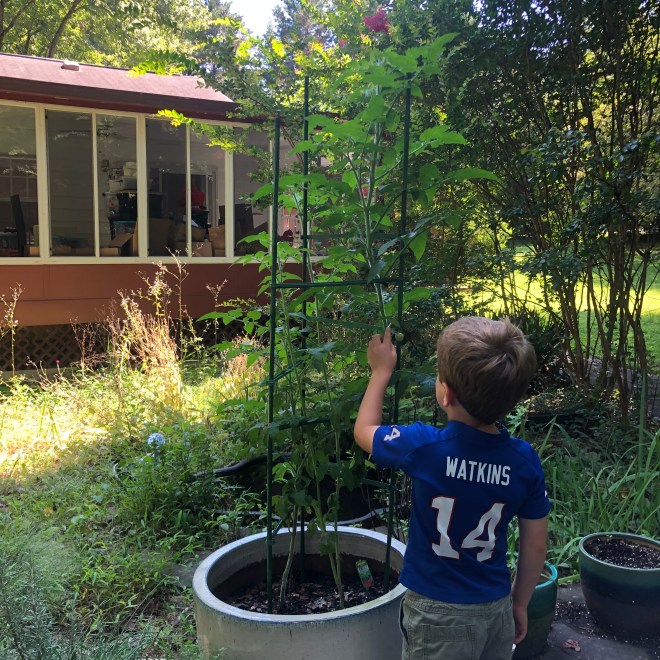
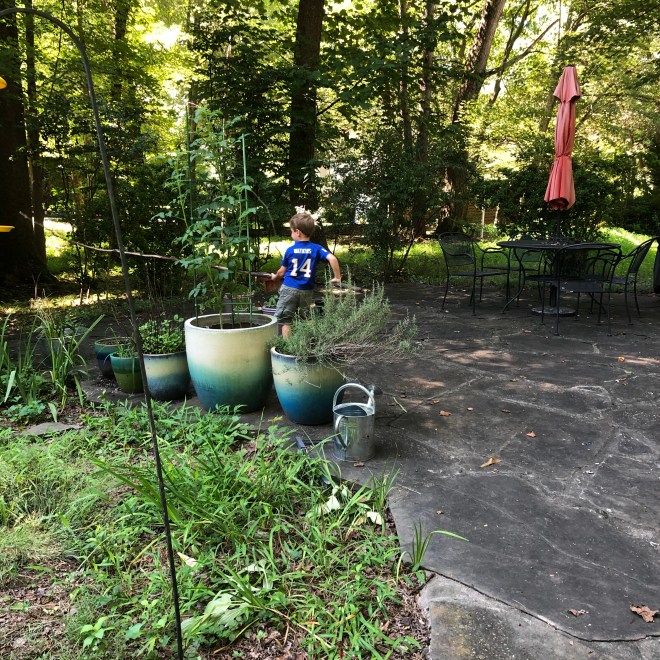
First of all: tomato update!  The tomato plant that Peanut victimized is recovering nicely and is almost as tall as its planter-mate now.  And both have started to sprout green tomatoes – about time, too, it’s only late August in Virginia, I mean, jeez.

(Side note: if you are looking at the picture above and thinking Nugget’s football jersey seems a little too small, it’s a 2T.  And Watkins doesn’t even play for the Bills anymore.  Any tips on how to get a little boy to agree to upgrade his favorite shirt?)

Look how cute, though!
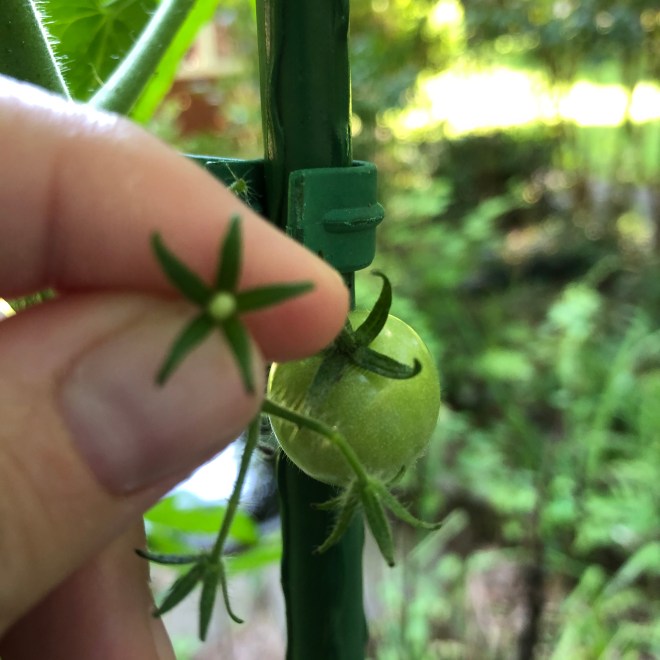
Apparently this is what they look like immediately post-blossom phase.  Tiniest! Tomato! Ever!  I find this totally fascinating.
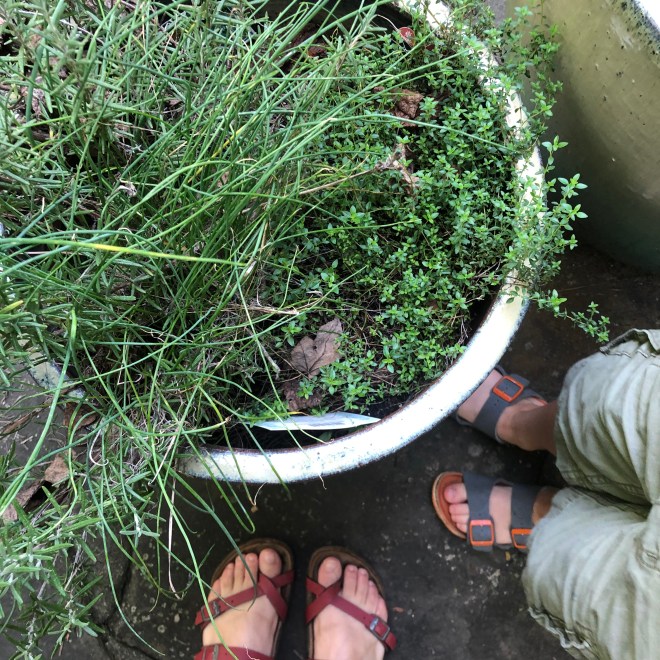
The herbs are doing pretty well, although this pot could stand to be tidied up a bit, and I should really harvest more often.  (Why have this pot of herbs if I don’t cook with them?)  Also, please note that my assistant gardener and I both chose Birkenstocks for this all-important garden surveying.

Also note, Zoya’s housewarming gift to me is still alive!  Huzzah!

August Gardening Tasks

So, I teased above: I actually took care of a couple of gardening tasks, or at least got started on them, this month.  This is a departure from last month, when I just reported to you which things thrived (or at least survived) under my “benign neglect” strategy and which things (apparently – read on) gave up the ghost.  While I am still slammed beyond belief and don’t really have time, I didn’t want to just let the entire garden go off, so I pulled out my tools one afternoon and did a little work.
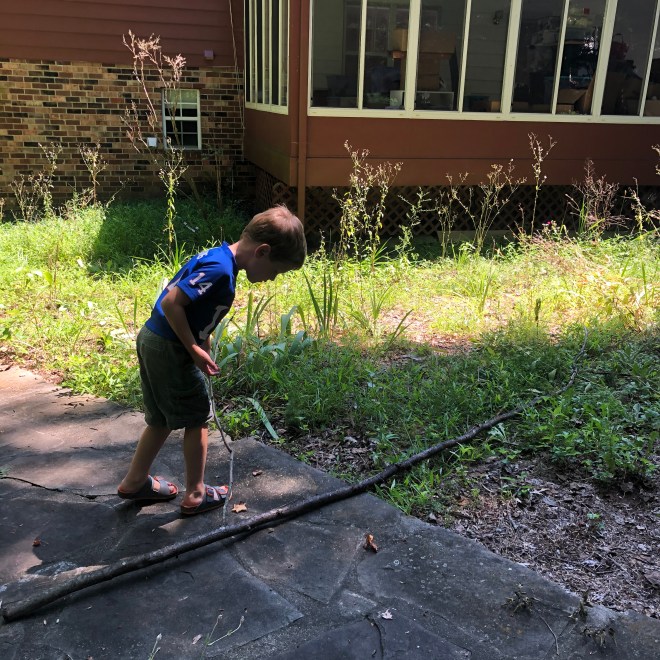
First things first, my assistant gardener and I gathered up a bunch of sticks and dragged them over to the woodpile, which is growing ever larger (I need to buy a fire pit; these sticks have to be good for something and I’m committed to the idea of backyard campfires).

To be perfectly clear, I did most of the stick-gathering.  My assistant gardener was really only interested in the biggest, most ridiculous branches.  Run-of-the-mill cleaning: less enticing.

We also did some pruning.  I noticed recently that Jesus Mint lives!  New sprouts and leaves seemed to be growing from the roots that were already in the pot, but weren’t doing all that well because they were being choked out by the old, leggy, dead sections.  So I got out my pruners and cleaned up the pot.
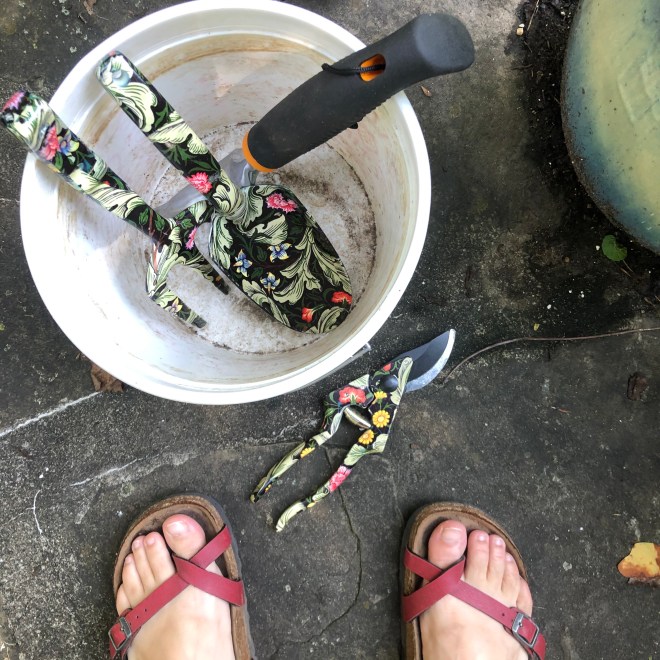
Side note: aren’t my gardening tools pretty?  Or, at least, the spade and rake and pruners?  The weeder isn’t all that cute, but hot damn it is functional.  Nugget was super into cleaning out the mint pot, so he worked on that while I took the weeder around and uprooted dandelion plants.  So satisfying.
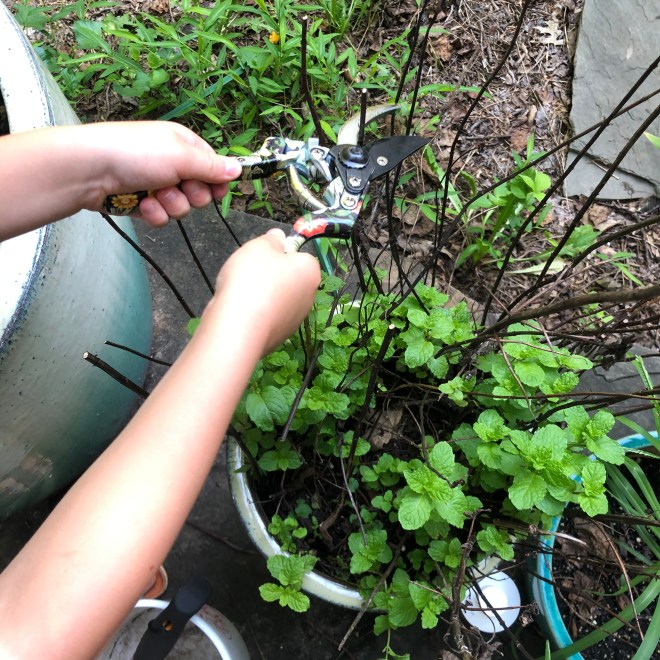
(Don’t worry, I supervised him.)
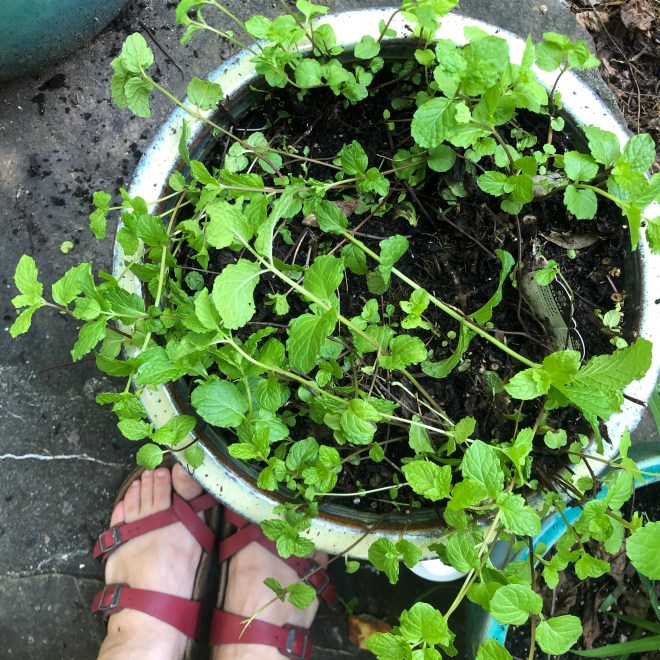
Much better!  Jesus Mint looks like it actually has some room to breathe now.  Hoping this means mojitos are in my future.  Grow, Jesus Mint, grow!

Fairy Follies
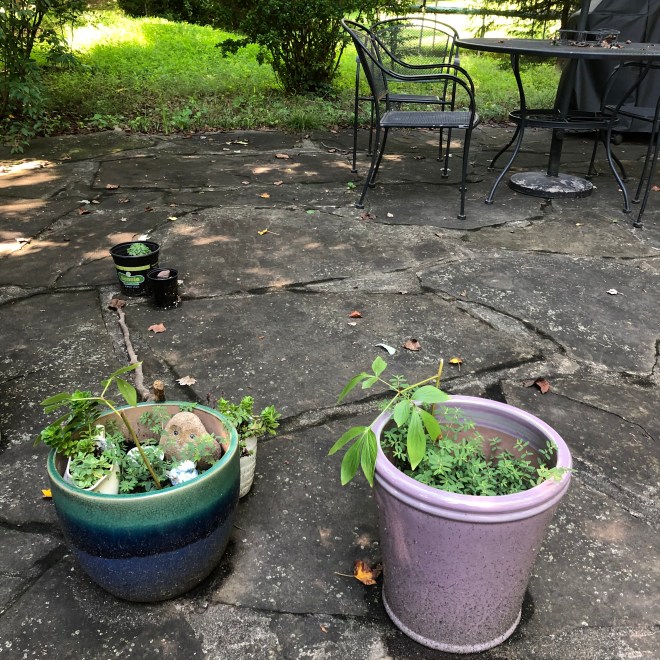
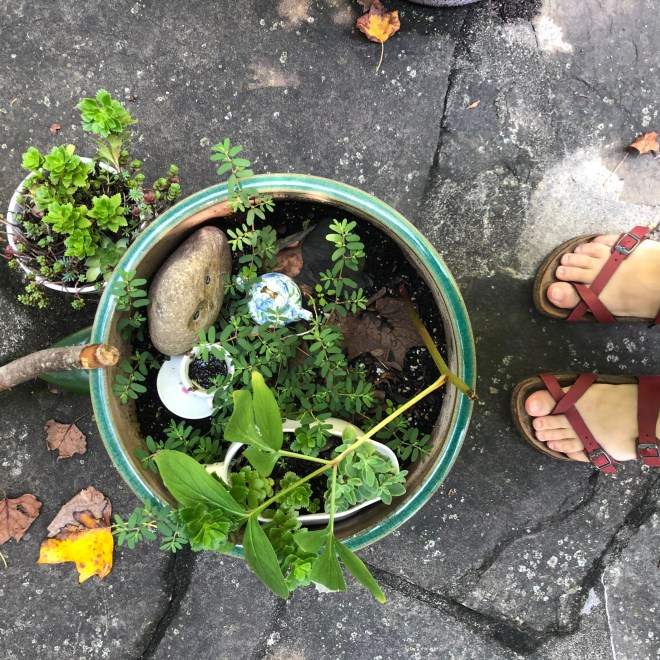
In addition to “Mom’s garden,” the kids have been making their own fairy garden.  (Or “fairy village,” as I was told by a voice dripping with scorn and derision at my ignorance.)  The fairy village has grown from one pot to six, and there are bridges and roads.  Several garden ornaments were stolen from me, including the gravy boat (which was part of Zoya’s gift) and the stone owl (which I bought to put near the pond and which has been moved around on a daily basis ever since, not by me).
A Baffling Anniversary Present

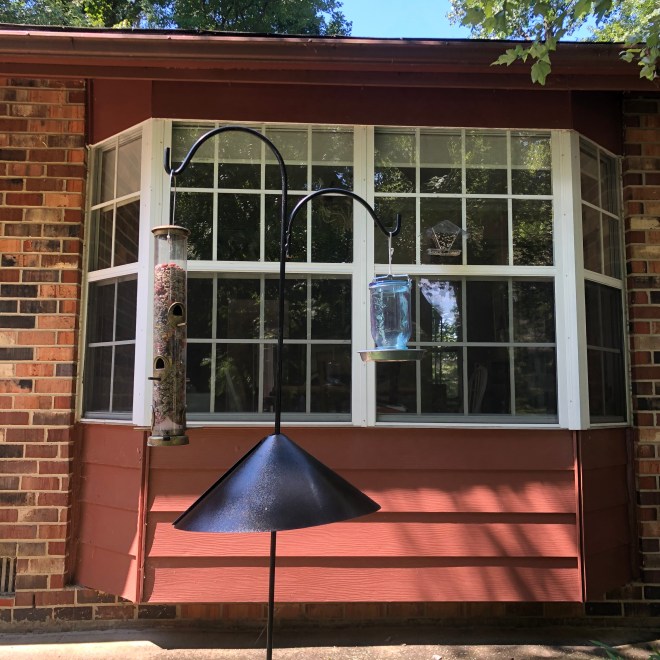
Finally!  You may be wondering about the title of this post.  Friends: I am delighted to report that I am now the proud owner of a squirrel baffle.
BOOM.

I mentioned in this post that Steve and I are planning to buy touring kayaks as our anniversary gift to each other.  We’ve wanted them for a long time now and it seemed like the right kind of gift for a milestone anniversary.  Unfortunately, because of the STUPID CORONAVIRUS (side note: it is a rule in our house that everyone is allowed to call the coronavirus stupid) there’s no stock at all to be had in the type of kayaks that we’re interested in.  And we’re both interested in demoing a few different boats before we make a decision, which doesn’t seem wise in these times.  So we’re waiting, probably until spring, to make that purchase.  But in the meantime, Steve wanted me to have something to mark the day (isn’t he sweet?) so on our anniversary he led me to the window and pointed out the squirrel baffle that he had bought and installed.

Verdict?  It’s a little early to tell, but so far the squirrels have not defeated it.  They were all over the tube feeder before Steve installed the baffle, and so far since it’s been in use, they haven’t even tried.  So that’s encouraging!  And – the chickadees and tufted titmice have been coming to the feeder in huge numbers!  Pre-baffle, they were around, but not nearly as frequently as the goldfinches (who are also still regular visitors).  But now I’m seeing so many more, and they’re sticking around longer at the feeder perches, instead of just grabbing a seed and flying off to the tree.  Maybe they were scared of the squirrels?  Who knows.  I love learning about my backyard critters, and I’m delighted with my new baffle.
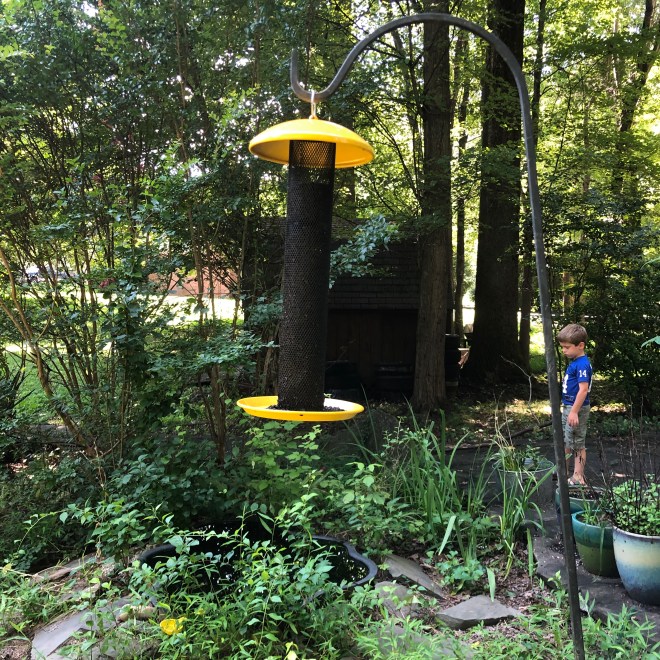
In other bird-feeding news, I moved the nyjer feeder to the shepherd’s hook in the backyard.  No takers yet, but I’m hoping some of the goldfinches find it, since I know they like nyjer seed.  They’re always welcome at my front yard feeder, of course, but it would be nice to see their sunny yellow colors around the patio too!
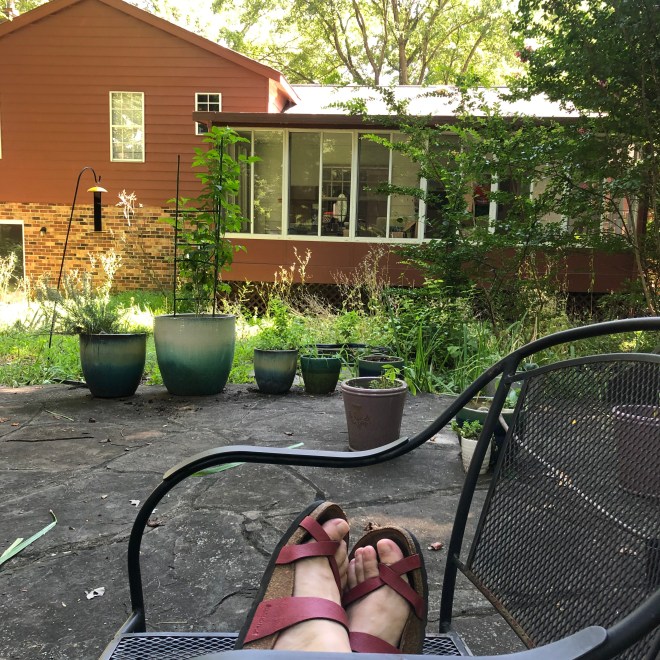
And that’s about it for August!  Kudos to those of you who have hung with me this far.  Unfortunately, there’s no prize.

Looking ahead to September, I’d like to get things a bit more cleaned up, get a fire pit for the backyard (both because it’s fun and to burn some of that woodpile), figure out how to attack the patio jungle area, and maybe even eat one of my homegrown tomatoes, if I can get to a ripe one before the squirrels do.

How are your gardens looking in late summer?