Reading Round-Up: June 2023

Reading is my oldest and favorite hobby. I literally can’t remember a time in my life when I didn’t love to curl up with a good book. Here are my reads for June, 2023.

My Garden World, by Monty Don – The last book on my spring stack (although this one would be a good candidate for reading throughout the year as it follows twelve months in Monty Don’s gardens): I enjoyed this so much. I am a huge fan of Monty Don’s gardening programs – we binge-watch them on Britbox – and he is a beautiful writer.

The Wisteria Society of Lady Scoundrels (Dangerous Damsels #1), by India Holton – This was an audiobook listen, mainly during commutes last month, and it was a lot of fun. A bit confusing to start out – it’s an alternate Victorian England where houses fly and lady pirates do magic and swashbuckle – but once you get into it, it’s a lot of fun. Warning for the prudes among us (raises hand): there is once scene that made me blush tomato red.

Crying in H Mart, by Michelle Zauner – This was a book club pick, and while we found a lot to discuss, I personally had a hard time with the structure. It felt a little disorganized and chaotic, which may have been an intentional choice but it makes for a difficult reading experience for me.

Poems for Happiness, intro Rev. Richard Coles – After Crying in H Mart I really needed to read something uplifting and a collection of poems around the theme of happiness was just what the doctor ordered. I was already familiar with some of the selections, others were new to me, and each poem was a delight.

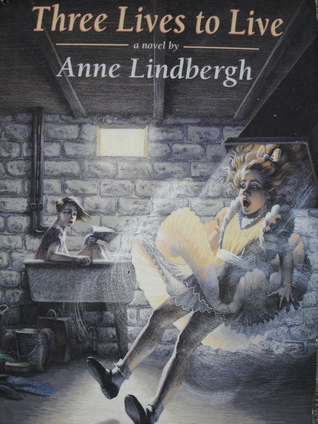
Three Lives to Live, by Anne Lindbergh – This is one of my childhood favorites – one of the first time-slip novels I ever read, and I still love that genre – and I read it aloud to Peanut this past month. Mainly, I wanted to read it to her because there’s some stuff in there about siblings that I thought would be good to discuss with her. Bonus, though, we both really enjoyed it.

The Widening Stain, by W. Bolingbroke Johnson – I love reading in situ and when I heard – on an episode of the Shedunnit podcast – about this murder mystery that is set in a library at a fictionalized version of Cornell, I knew it was the obvious choice to read over Reunion weekend. I even spent an hour or so reading it in the actual library that forms the setting for the murders. (You don’t have to be a Cornellian to enjoy this, by the way – it was a lot of fun, the plot moved quickly and the main sleuth was a delight.) My only complaint was that while the author technically played fair with the conclusion, you don’t stand a chance of working out the solution unless you have a lot of esoteric knowledge about opera. I don’t, so once again I guessed whodunit but not why or how.
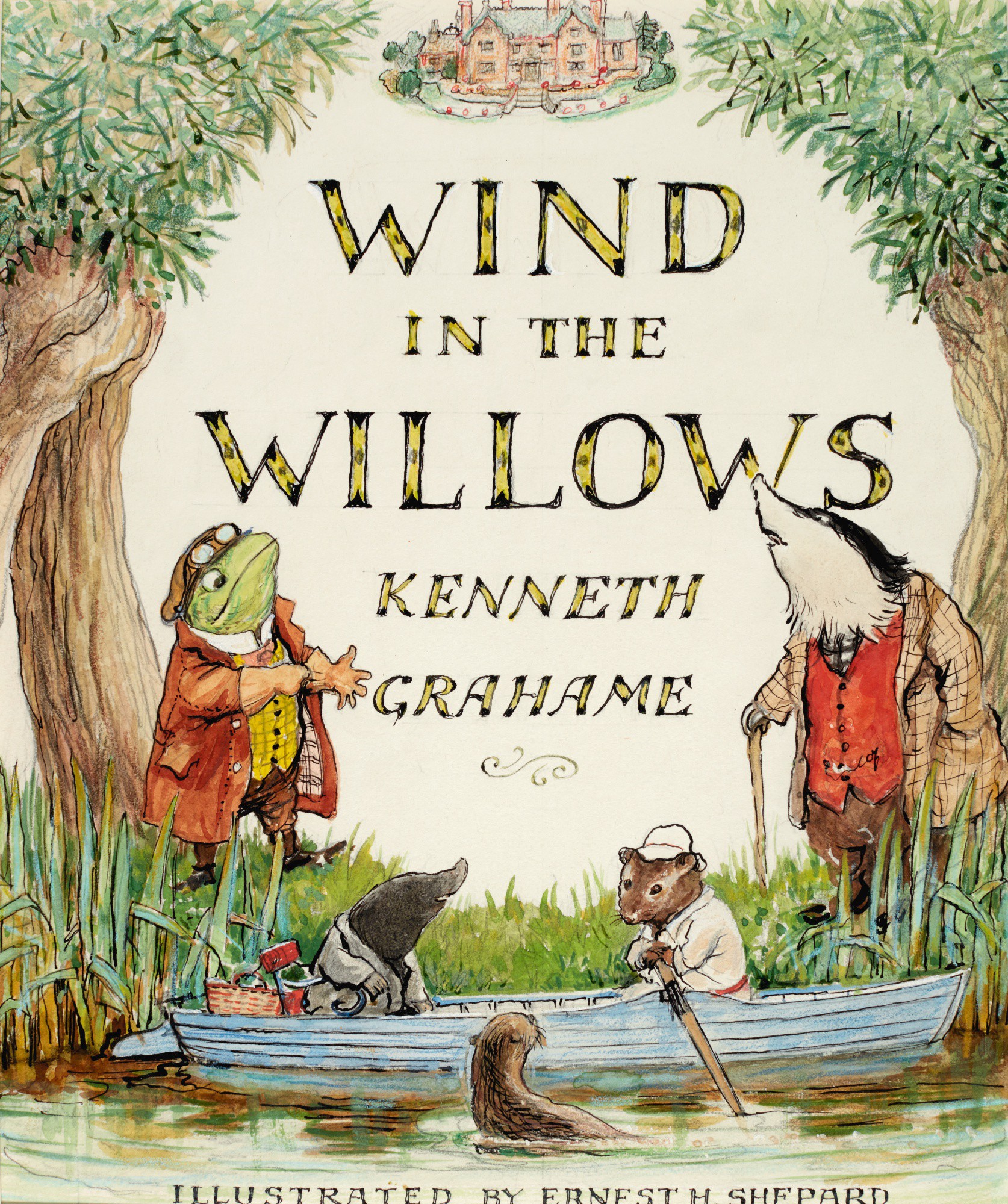
The Wind in the Willows, by Kenneth Grahame – A re-read for me, but the first time listening on audio: it was as fun as it always is to revisit Mole, Ratty, Otter, Badger, and of course Toad. I do have a soft spot for that wild and irresponsible Toad.

The Small House at Allington (Chronicles of Barsetshire #5), by Anthony Trollope – I won’t say much here as a full review is coming for the Classics Club. This is the penultimate in Trollope’s Barsetshire novels and also the penultimate in my Classics Club reading challenge. It was the first Trollope I’ve read that did not include a tidy and conventionally happy ending, and I’m still deciding how I feel about that.
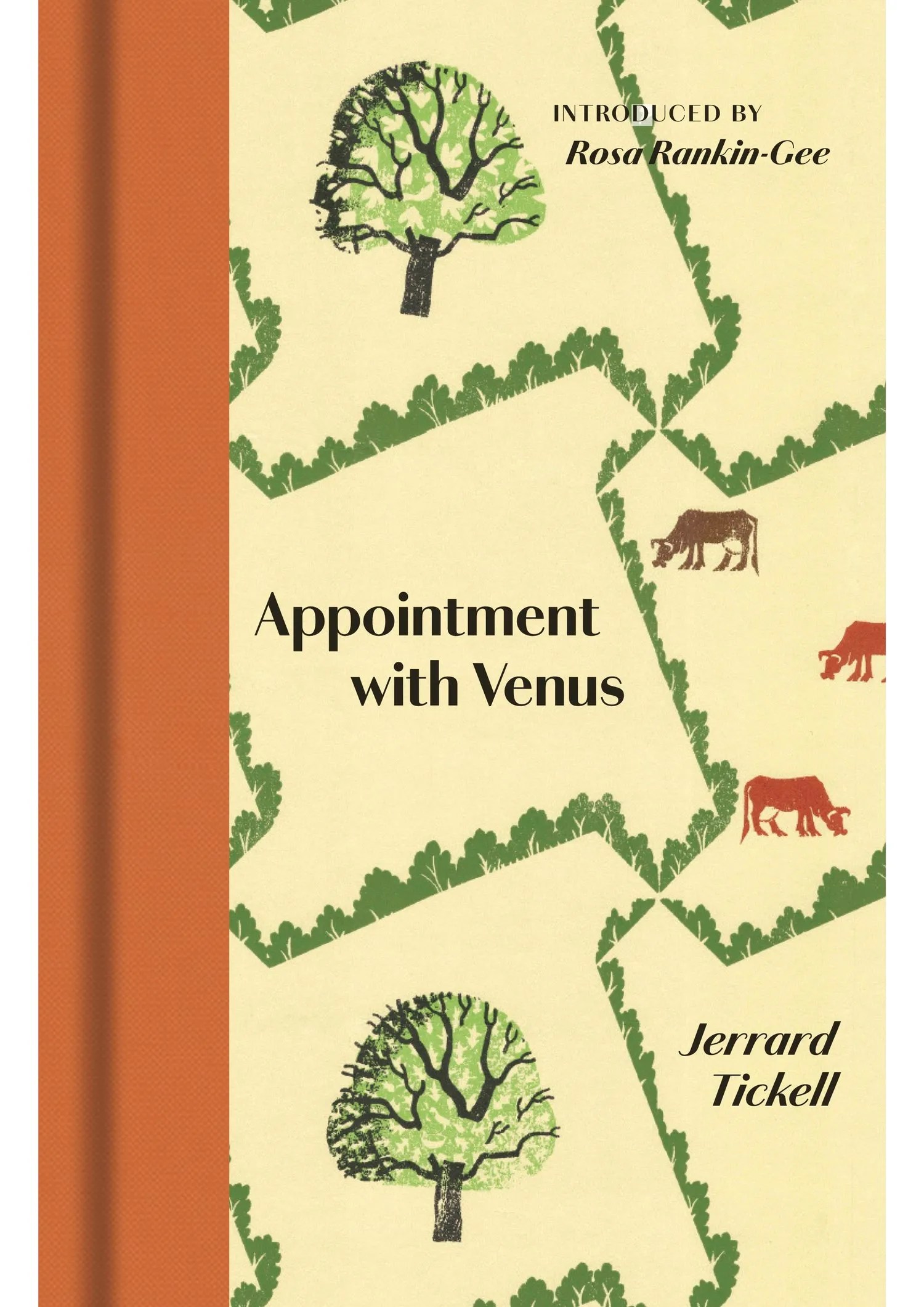
Appointment with Venus, by Jerrard Tickell – I’ve had this on my shelf to read in June (although most of the action, as it turns out, actually happens in September) for ages – and I can’t believe I waited so long. A World War II story of a daring rescue… of a prize COW… on the Channel Islands, this is funny, page-turning, and moving by turns. I read it in the midst of a move and could barely put it down.

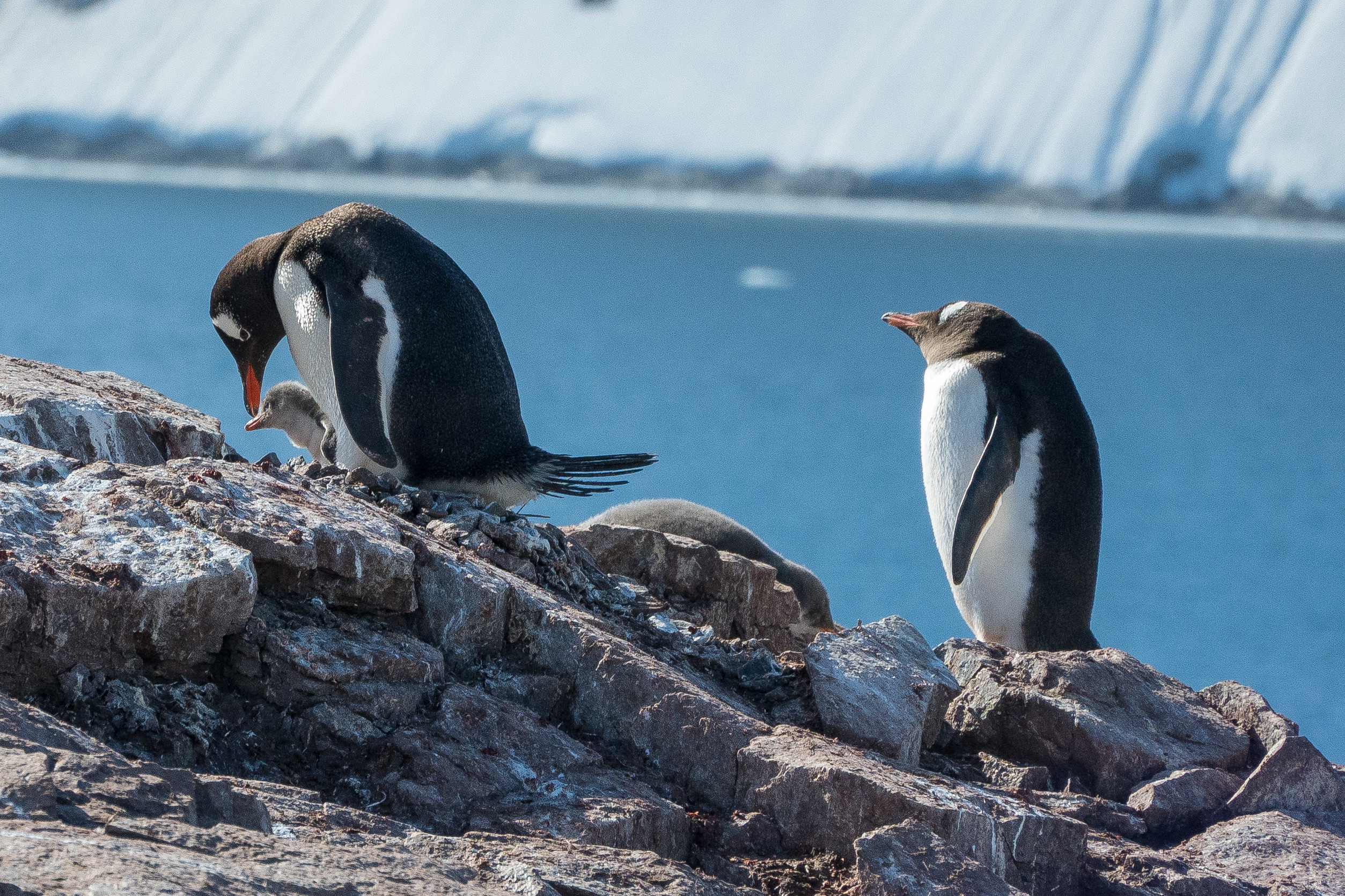
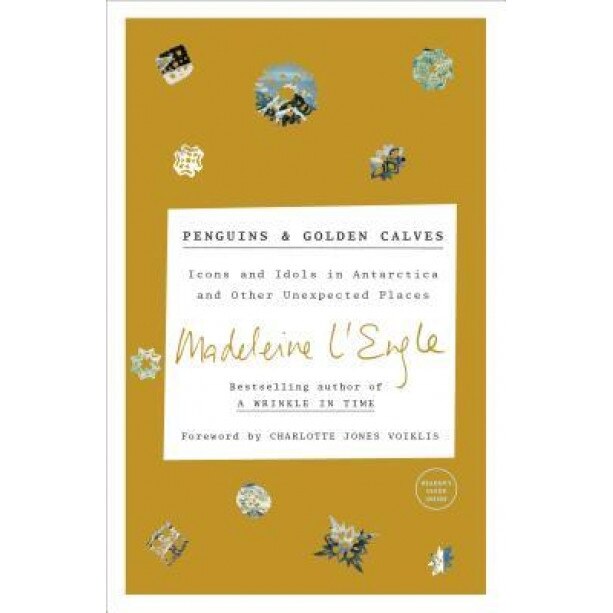
Penguins and Golden Calves: Icons and Idols in Antarctica and Other Unexpected Places, by Madeleine L’Engle – Three audiobooks this month! That has to be some kind of record. So, this was okay but I didn’t love it. (I did, however, press through and listen to the whole thing.) I knew that it was one of L’Engle’s theology/philosophy books, but was still expecting a heavy dose of Antarctica and that wasn’t really there. And some of L’Engle’s comments about race and gender hit a little differently in 2023. For instance, at one point she muses “We can get a little silly about inclusive pronouns.” I couldn’t disagree more – there is nothing silly, in my view, about acknowledging the lived truth about a person’s deepest identity. It’s not all that surprising that a book written in 1993 by a 75-year-old doesn’t quite hit it on 2023 values, but between that and the insufficient Antarctica content, I think I’ll stick to L’Engle’s fiction.

Whew! What a month. If you’re still with me – thanks for hanging in. It was a busy June with not one, but two, moves – office in the middle of the month and house at the end. But through the chaos I still read – I will always read through the chaos – and had a couple of wonderful highlights. Appointment with Venus was definitely the high point of the reading month, and will probably be on my top-ten list for the year. And reading The Widening Stain at Cornell was such fun. (I wish the author had written more – I’d love to follow sleuth Gilda Gorham through more literary crime-solving.) In July, I’ve already finished a couple of good books, I have an excellent audiobook on the go, and I’ve got more summery reads on my stack. Happy summer reading, friends!

What were your June reading highlights?

The Week in Pages: July 3, 2023

Welp. I’ve moved! New house, who dis? Unpacking is going to be a looooooong process – I’ve only just gotten started, really. The kids have basically unpacked and set up their rooms, which is the good news, and Steve and I have churned our way through about two-thirds of the reusable boxes that we rented; we still have a ways to go but things are looking good for all of the reusable boxes being empty when the rental company comes to pick them up a week from today. The bad news is that my books are all still in a sea of cardboard and will be for awhile yet – I wish unpacking books was a priority but I’ve got to get the kitchen and closets done. The result of all that is, predictably, I didn’t get much reading done last week.

I spent most of the week over A Sultry Month, which was really well-written and interesting, but probably not the best choice to engage my limited attention during moving week. I finally wrapped it up on Saturday and spent the weekend over The Thirty-First of June. How you can tell that reading time and energy is limited: at full power, I’d read that in one sitting and it would take me less than two hours; a comedic novella about time travel is very my jam. I did really love it, but it just took me longer to read than normal. (Also not helping: the lighting situation in my soon-to-be-set-up reading space is not finalized yet; once the sun goes down all I have is my cordless floor lamp, and the kids left that on and drained the batteries so the light was too dim to read last night. Blah.)

Anyway, I finally finished The Thirty-First of June over my coffee this morning and moved on to The Last Chronicle of Barset, unpictured in the gallery above because I started it today. It’s the last book in my Classics Club challenge – final reviews coming over the next few weeks – and it might be the longest at 930 pages. I’m on page 14, so. Won’t be finishing this one in a week.

Does this picture say “summer” or what? I’m setting a goal to find the best soft-serve in northern Virginia this season. Nugget and I made our first ice cream mission of the season on Saturday, to Nathan’s Dairy Bar in Manassas. Creamsicle-vanilla twist with rainbow sprinkles FTW. Do you say sprinkles, or jimmies?

What are you reading this week?

Antarctica and Patagonia 2023: Petermann Island, Part II – Land Explorations

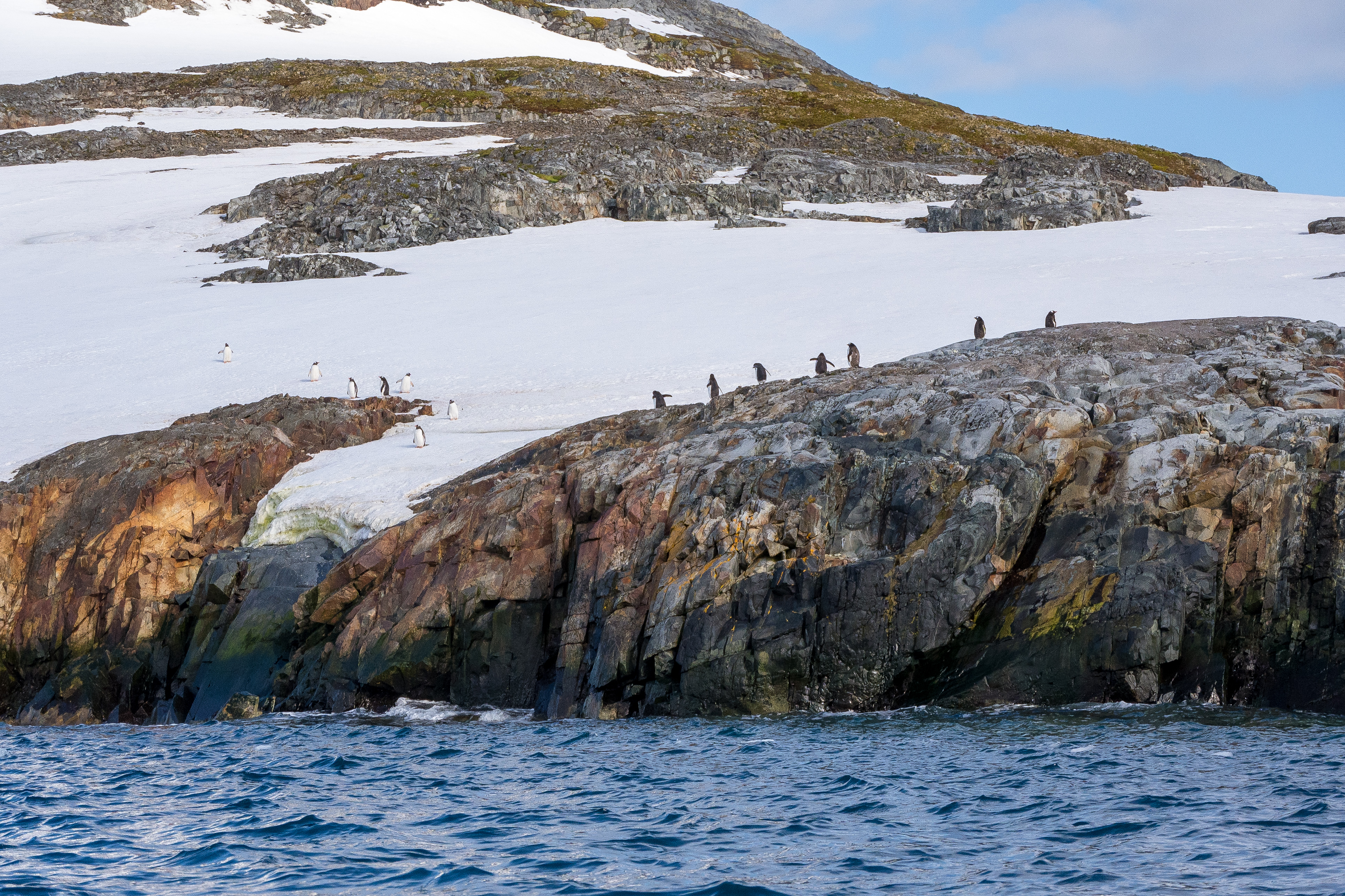
After a blissful hour spent gazing at whales (HEAVEN!) we turned our zodiac towards Petermann Island for our turn at a shore landing. As we cruised past the exposed rocks, we pointed delightedly at adorable penguins waddling around on the ice.

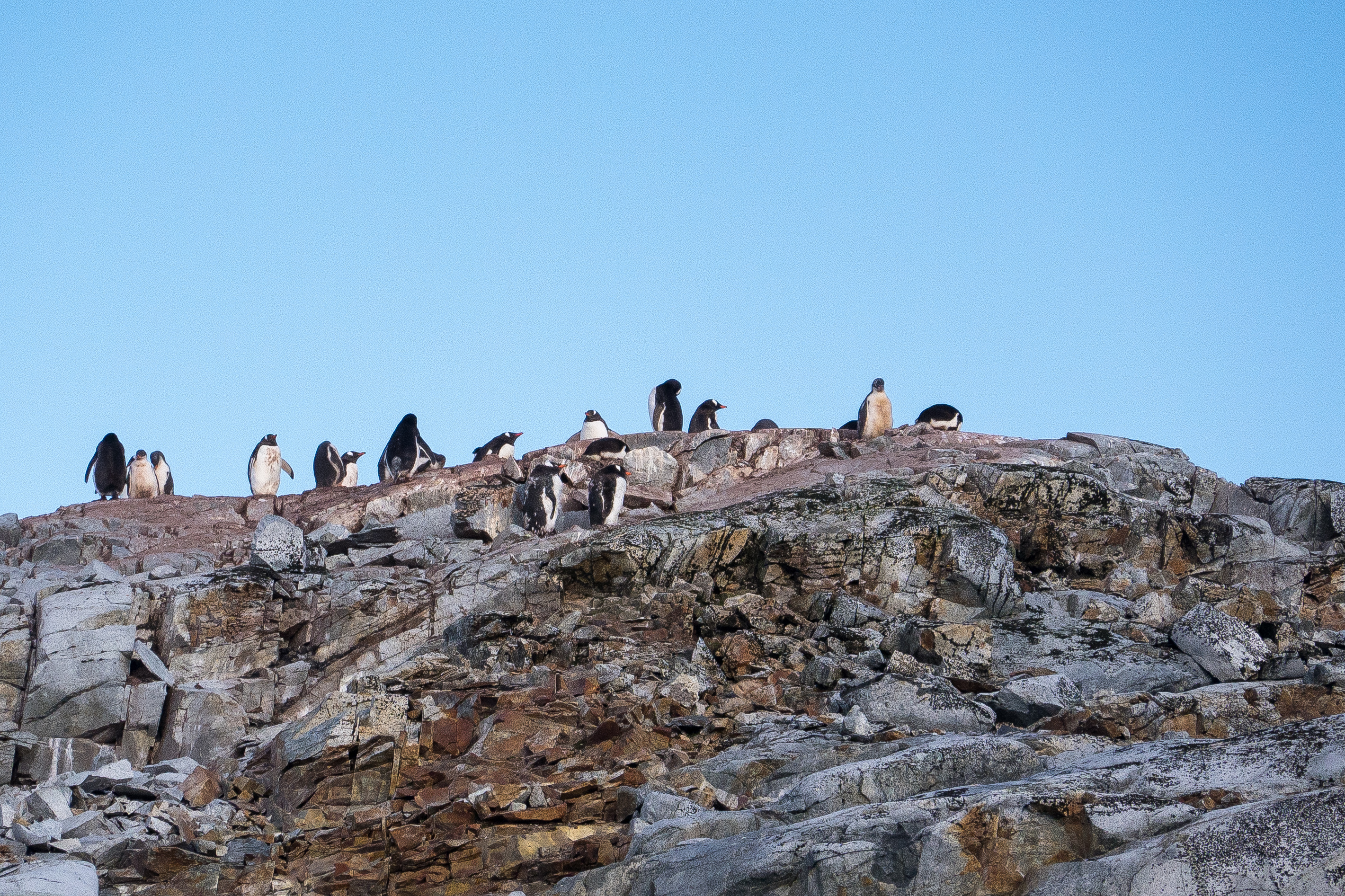
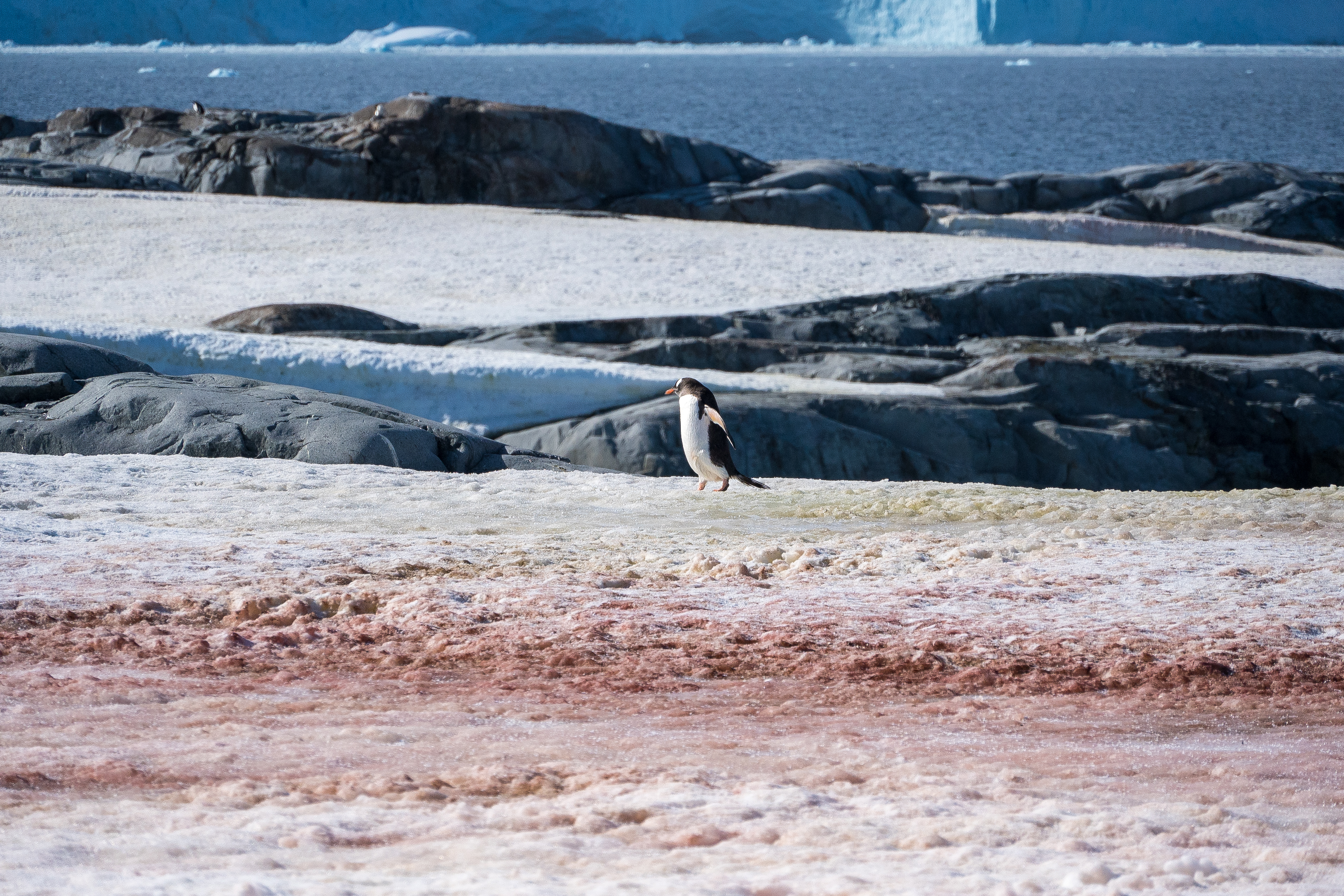
The vast majority of the penguins on Petermann Island were gentoos – the same type of penguins we’d seen at Port Charcot two days before.

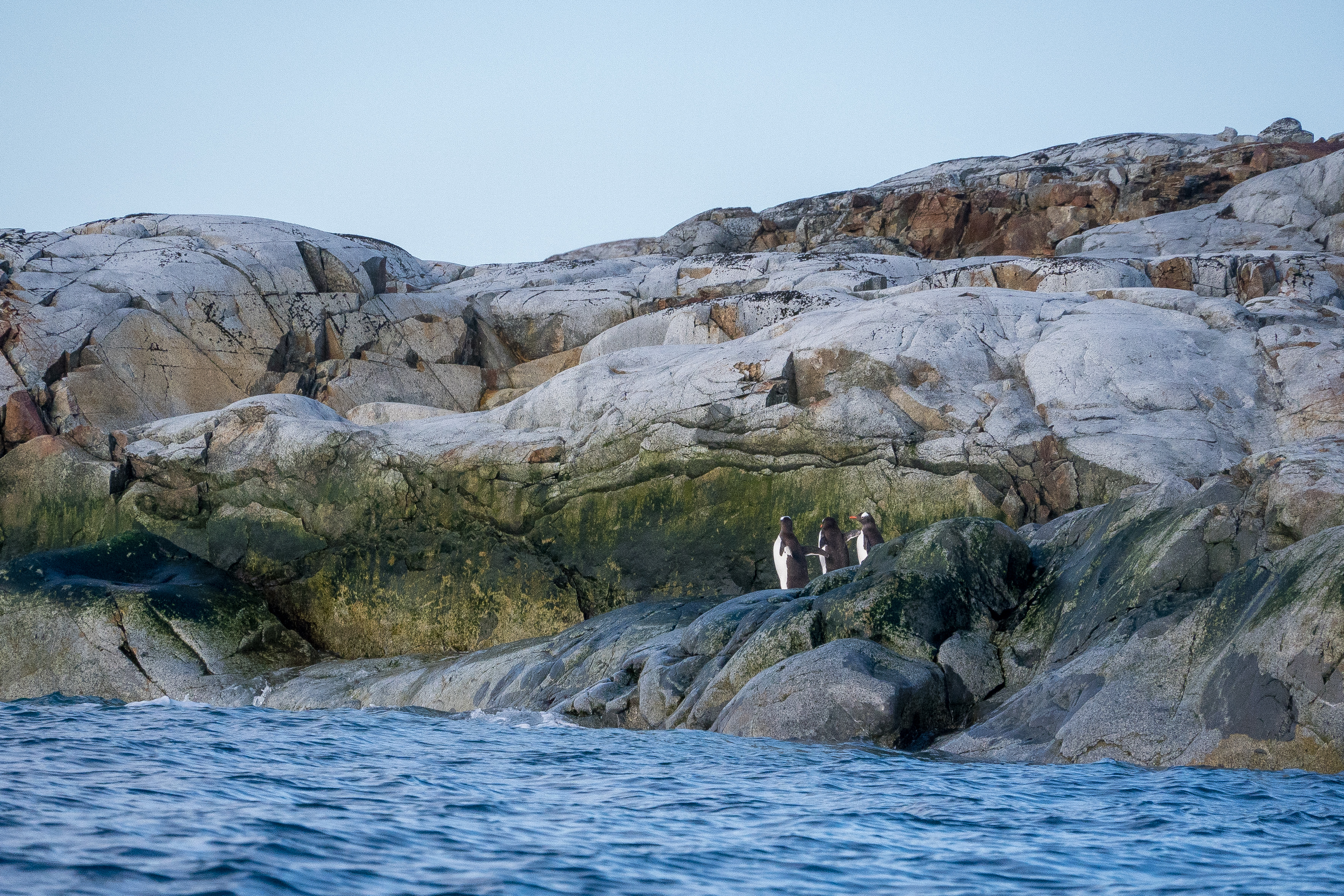
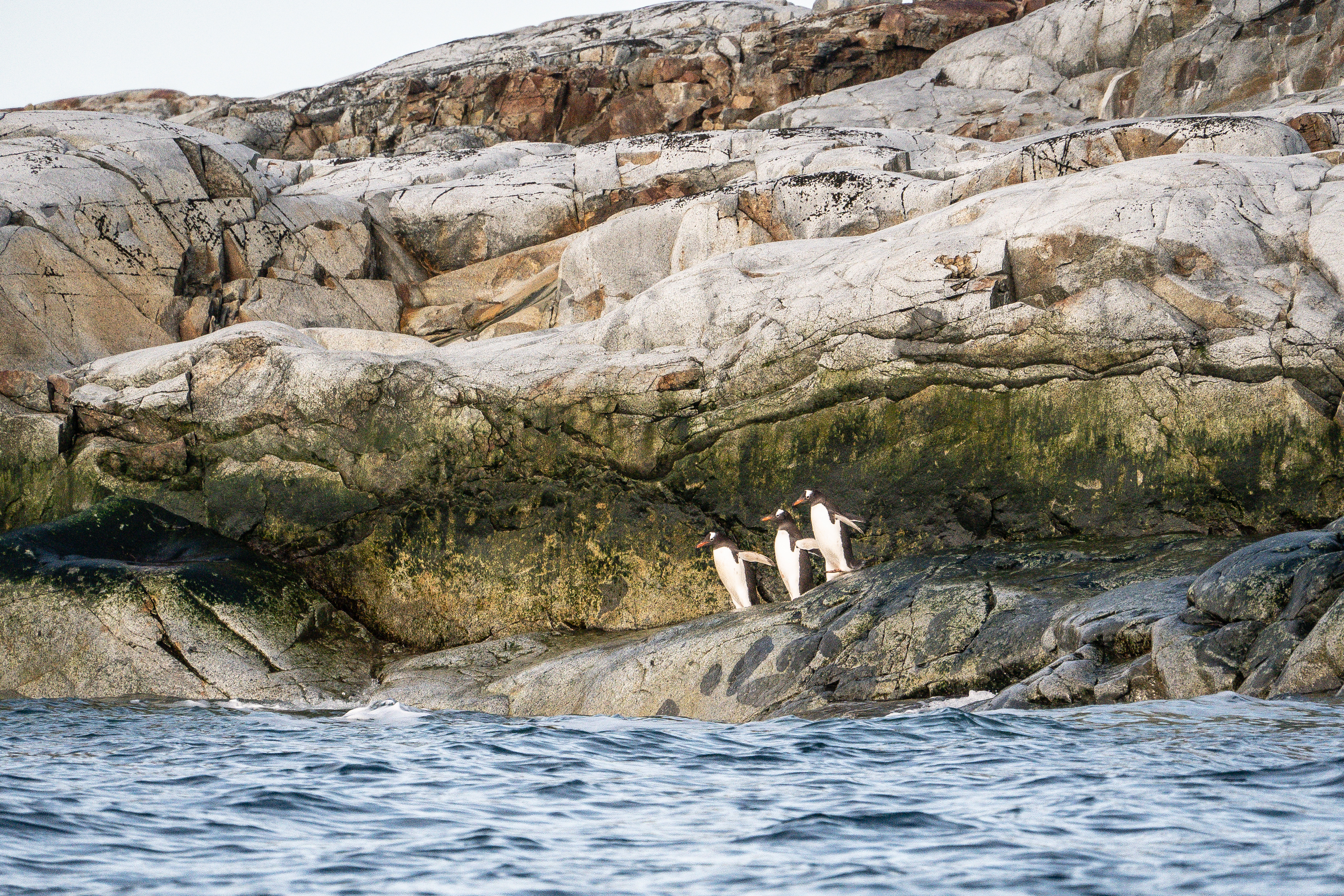
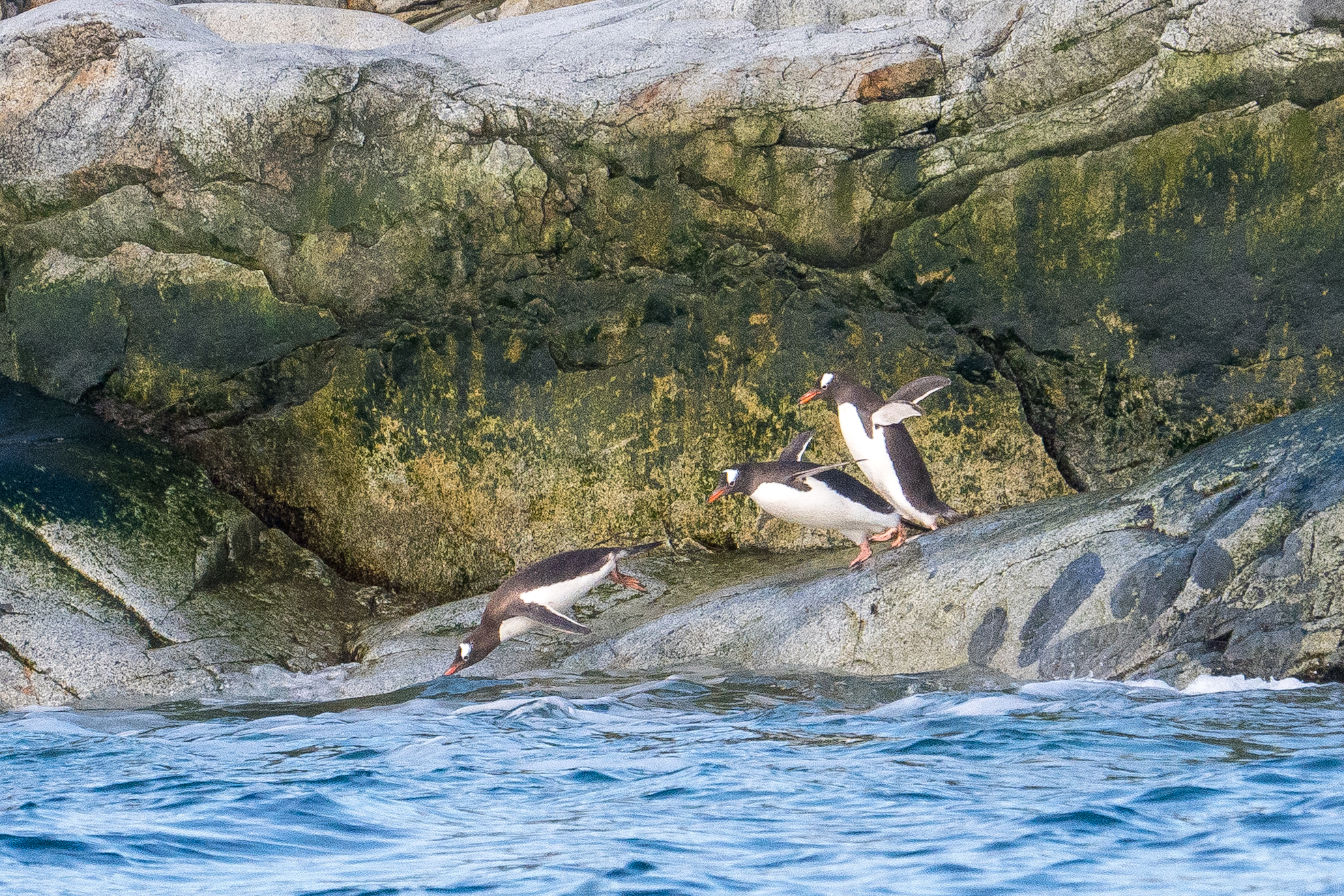
One of my hopes for Antarctic wildlife viewing: to see a group of penguins dive in sync. Penguins generally don’t do anything individually – they are group-oriented animals – so the odds were good. I just thought it would be a neat thing to witness. And by neat, I mean… CUTE. Very, very CUTE.

Here’s a likely looking group. Are they contemplating a swim, maybe?

Everybody in formation!

AND GO.

We cruised up to the landing beach and – after a brief spot of trouble with our engine – hopped out and got to our land-based explorations.

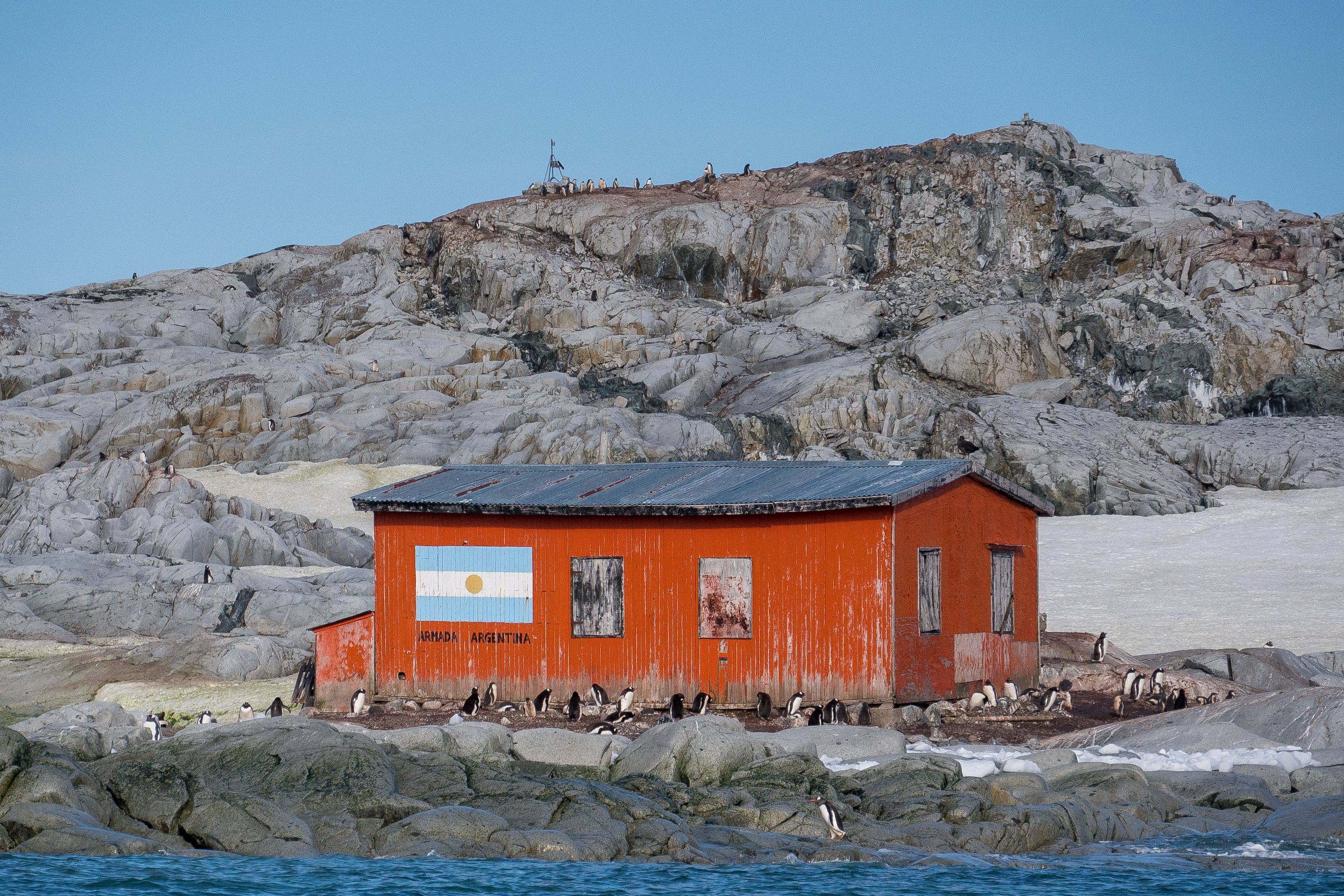
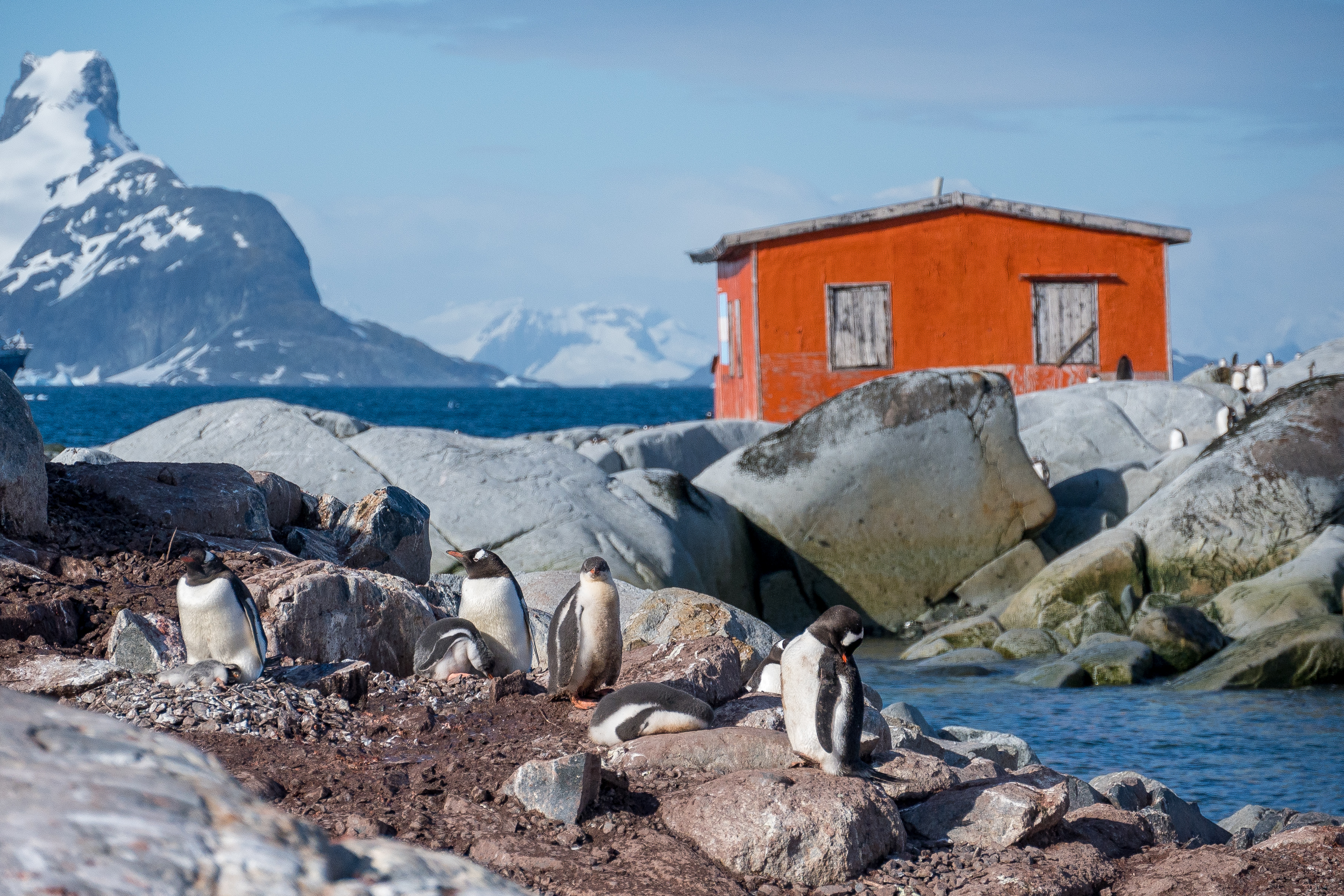
Petermann Island is home to one of the many “refuge huts” scattered around Antarctica – this one is maintained by Argentina. The refuge huts contain food and hydration and some first aid and personal supplies in case of emergency. Travelers are warned to stay away from the refuge huts (unless you actually need them, in which case things have gone wrong) but no one told the penguins.

They just view the refuge huts as a nice sheltered spot to build their nests, apparently.

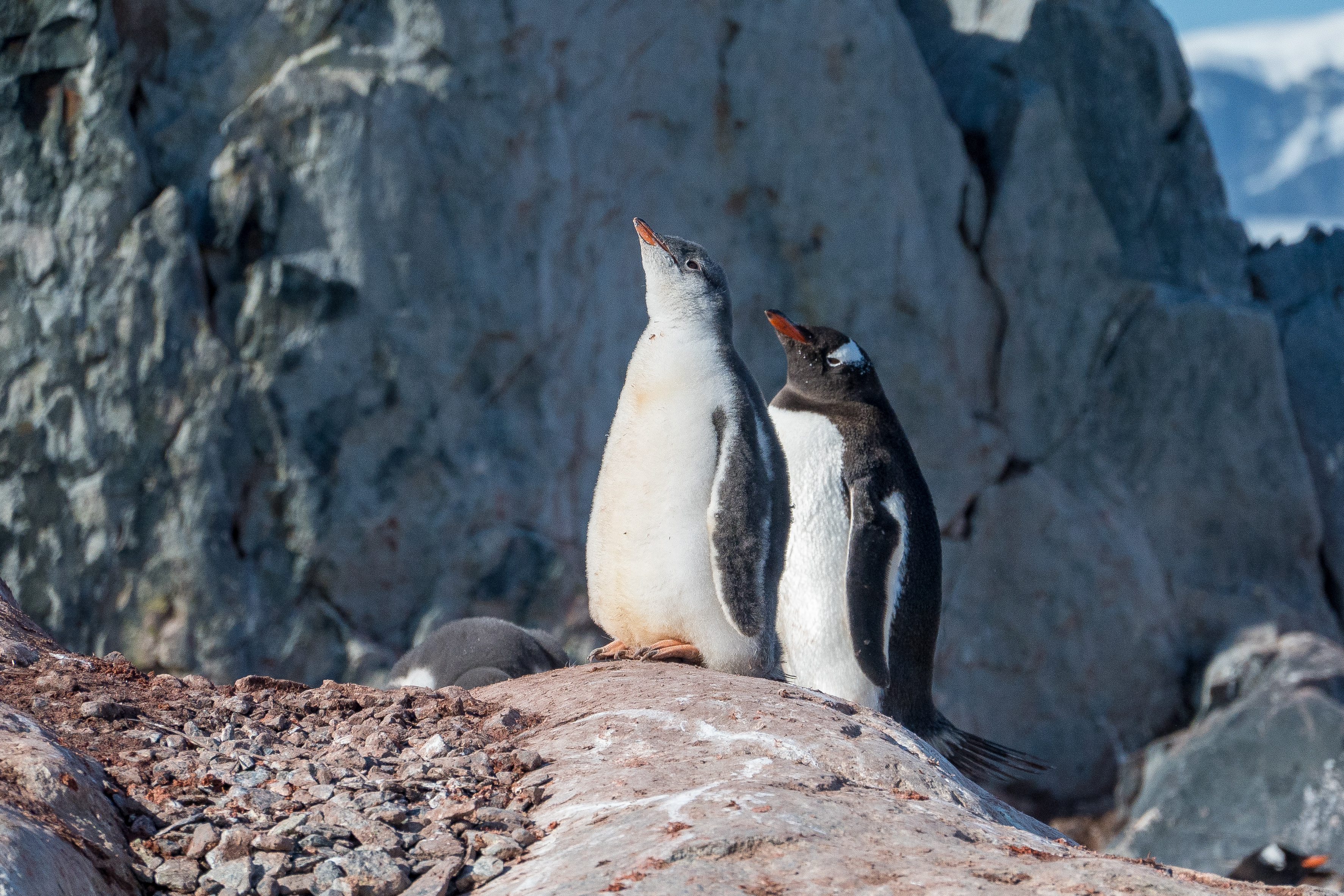
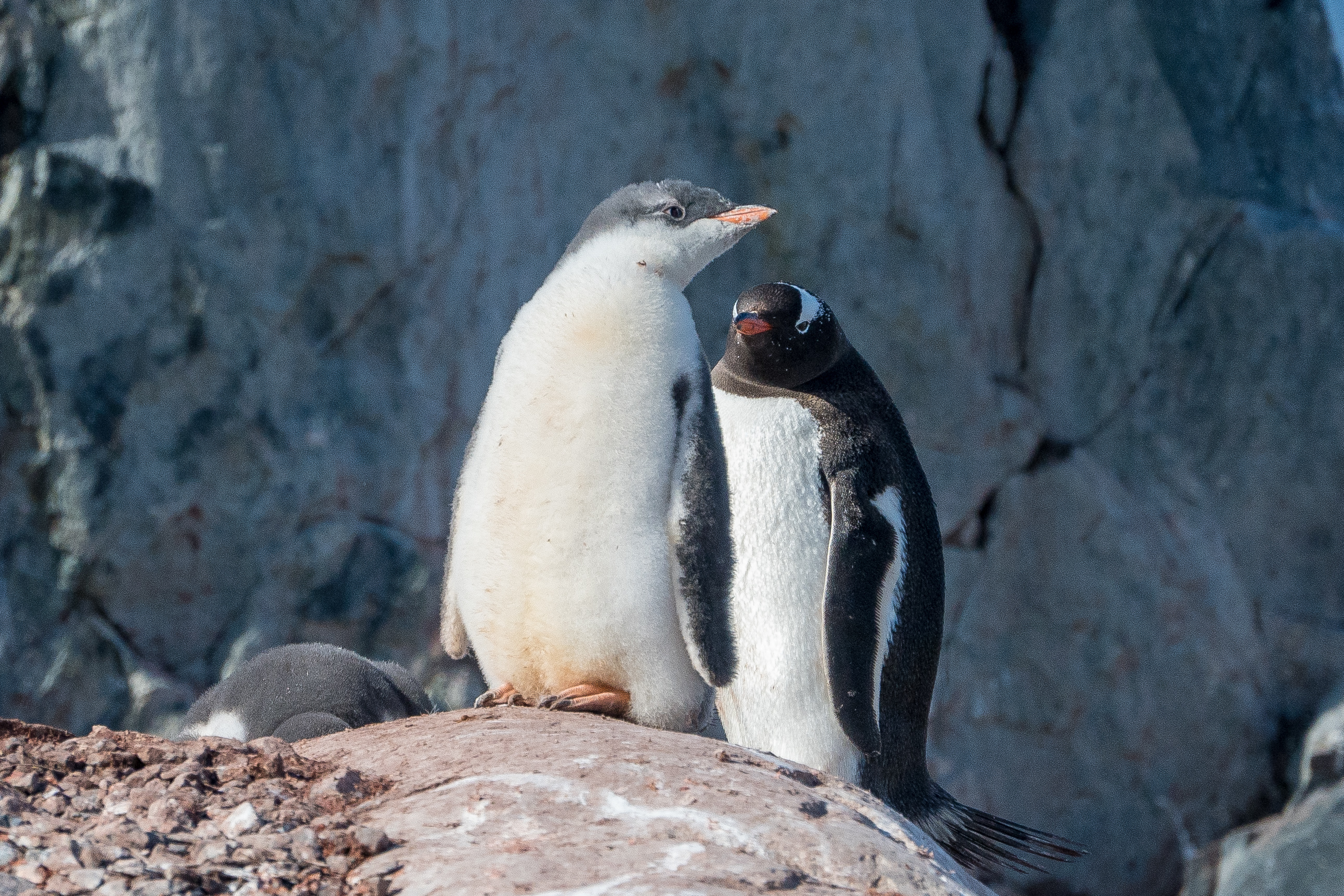
Chicks! As with every other landing spot, the chicks this year were a wide range of ages and sizes. This one was older. And very chubby and fuzzy and cute.

Ready for my close-up!

This landscape! It was incredible.

Just awesome. Emphasis on awe.

To protect the natural landscape and wildlife, the expedition guides would plot out walking routes on the landing sites before guests got on shore. There was always plenty to see and enjoy on the routes, and the expedition guides would be posted strategically around to answer questions and talk about the incredible natural beauty we were all experiencing.

The penguins, of course, do not pay attention to the flagged walking routes. They go wherever they darn well please.

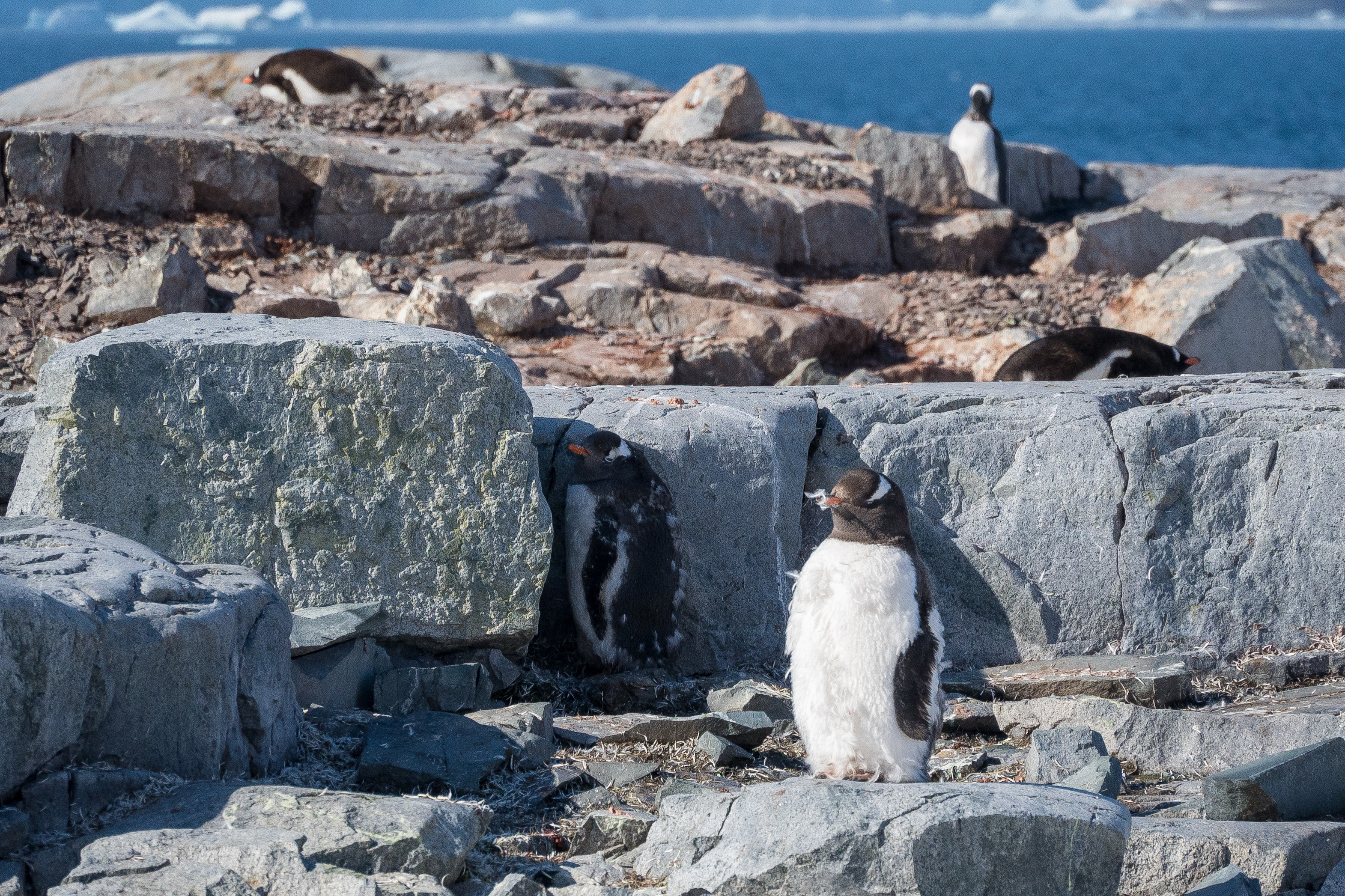
Many of the penguins in Antarctica were undergoing a “catastrophic molt,” where they shed all of their feathers and regrow new ones. Penguins that are molting cannot swim, and so they mostly sleep and pick at their feathers.

They looked so itchy and uncomfortable. I felt bad for them! But it’s natural and happens every year and they were just getting on with it.

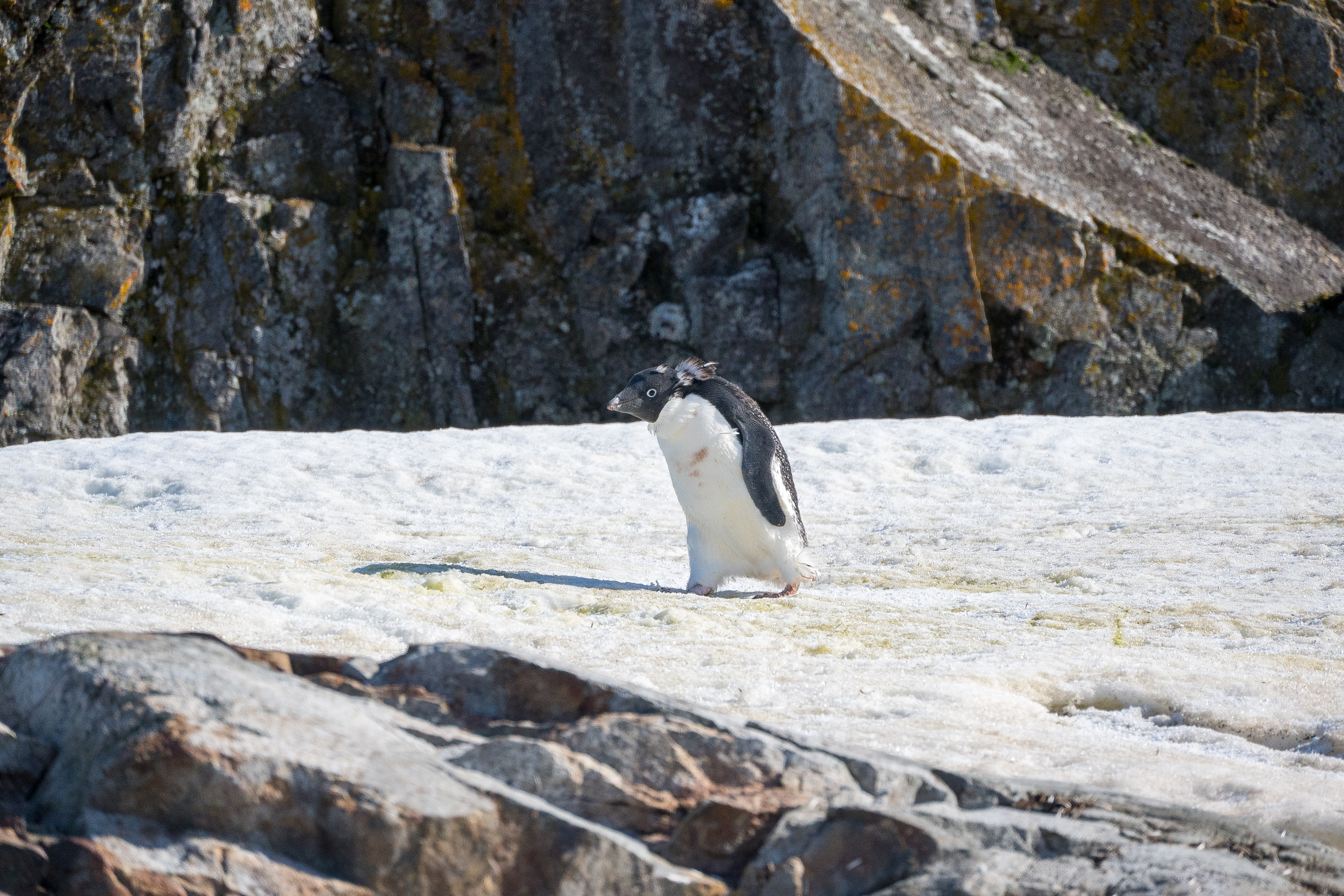
While we had been seeing exclusively gentoos, the trip ornithologist told us there was a small handful of adelie penguins on the island. Adelies are my favorites (because of Disney Nature: Penguins, of course) so I was beyond excited.

These little terrors are so full of sass and attitude. I just love them. Case in point: as I excitedly fiddled with my camera lens to try to get it in focus, this adelie bent over and…

It was disgusting. I was so happy.

He’s ashamed of himself.

All right, back to the gentoos.

Most of the chicks in this colony were older, and they were full on into “fat and happy” stage. And I learned something interesting: when the chicks get to be this age, the parents won’t feed them right away – instead they make them chase for their meals. This is intentional: it’s to help them develop the muscles and endurance they will need once they start to swim.

Welcome home, Dad! Did you bring me anything?

Dad! Dad!

Dad! Dad! Dad! Dad!

(Also could have been Mom. Male and female penguins are indistinguishable.)

Disney Nature: Penguins showed this chasing behavior, but didn’t explain it. So it was fun to learn that it’s an actual teaching mechanism and not just over-enthusiastic penguin babies and harassed parents.

This post is getting absurdly long, and I promise I’m almost done (see why I decided to break it into two?) but I can’t end without sharing with you the most adorable resident of Petermann Island. Yes, even cuter than the penguin chicks.

Meet the world’s roundest Weddell seal.

This guy (or gal) was stretched out on the ice on a little rise just off the beach where we were landing our zodiacs, just enjoying the sunshine. Fam. You have no idea how much I wanted to cuddle. If it wasn’t for my twin goals of Not Interfering With Antarctic Wildlife and Not Getting Bitten, I might even have tried. Because SO! CUTE!

See how close he was to the walking path? And just couldn’t have cared less about us. That’s a good nap.

What a wonderful, magical morning – truly one I’ll remember for the rest of my life.

Next week: we finally get our paddles wet – it’s time for our first kayak expedition!

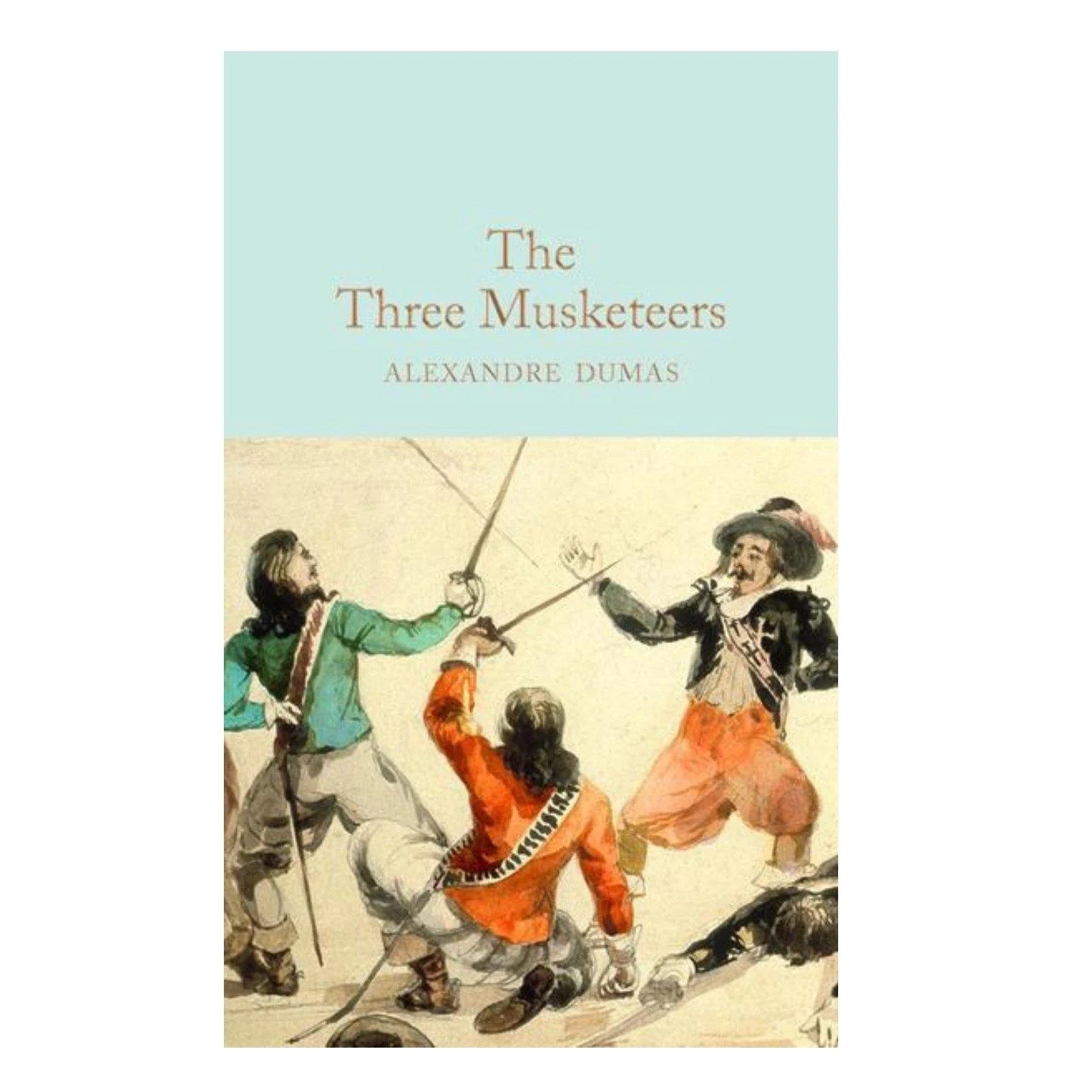
The Classics Club Challenge: The Three Musketeers, by Victor Hugo

Victor Hugo is best known for two novels: the ponderous and earnest Les Miserables (which I read when I was an earnest high schooler) and the swashbuckling, silly The Three Musketeers. I’d missed this one up until now, and am glad to have finally made the time to read it.

The Three Musketeers follows the adventures of a young member of the King’s Guards, d’Artagnan, and his friends Athos, Porthos and Aramis – members of the King’s Musketeers. When the novel opens, d’Artagnan is making his way to Paris on a bright yellow horse, carrying a letter of introduction to the commander of the Musketeers, who hails from the same part of France. D’Artagnan is a fiery-tempered, quick-to-anger (but not exactly quick-witted) young man, and he immediately finds himself in a fight when a mysterious man insults the color of his buttercup-yellow horse. This is something of a theme with d’Artagnan – he duels first and asks questions later. In the fight, he loses his letter of introduction – but no worry, he proceeds to Paris anyway and gets the attention and patronage of the leader of the Musketeers, then promptly insults the three Musketeers and gets himself challenged to three duels in three hours. Whoops!

It’s no spoiler to tell you that d’Artagnan survives these first encounters with the Musketeers – since it happens right at the beginning of the very long book, he’d have to – unless this was a ghost story, which it isn’t. More than survives, he winds up their particular friend, and spends the rest of the book having swashbuckling adventures and engaging in romance and court intrigue with them. D’Artagnan falls in love with his landlord’s wife – a seamstress at the Louvre, who has the confidence of Anne d’Autriche, the Queen, and her lover the Duke of Buckingham. D’Artagnan’s lady love is kidnapped several times, at the machinations of Milady de Winter, a femme fatale and ally of the treacherous Cardinal Richelieu – but no fear, the Three Musketeers stand ready and willing to help their friend rescue his paramour. And to get falling-down drunk along the way, as much as humanly possible.

“Are you wounded?” he asked.

“Me? Not in the least. I’m dead drunk, that’s all, and never has a man done better at it. Good God, mine host, I must have drunk at least a hundred and fifty bottles on my own!”

“Mercy!” cried the host. “If the valet drank only half what the master did, I’m ruined.”

“Grimaud is a well-born lackey, who would never allow himself the same fare as I. He drank only from the kegs. Wait, I think he forgot to turn off the spigot. You hear? It’s running.”

D’Artagnan let out a burst of laughter that turned the host’s shivering into a hot fever.

At the same time, Grimaud appeared in turn behind the master, the musketoon on his shoulders, his head wagging, like the drunken satrys in Rubens’s paintings. He was soaked front and back in a thick liquid that the host recognized as his best olive oil.

The Three Musketeers is a fun, silly, page-turner of a book. D’Artagnan is always getting himself into and out of duels and love affairs, and the Musketeers are always getting themselves into and out of barrels of wine. (One of my favorite scenes takes place when d’Artagnan, the Musketeers, and their servants engage in a picnic on a battlefield, holding off English soldiers and stealing the weapons of hordes of the Cardinal’s men – while drinking a whole lot and having a generally noisy and raucous time.) But there are also some surprisingly thought-provoking moments among the carousing.

The center of the narrative revolves around the love affair between Anne d’Autriche and the Duke of Buckingham, and the machinations of Cardinal Richelieu. The Three Musketeers, and especially d’Artagnan, are really just pawns in these luminaries’ high-stakes games. But they risk death – and become killers themselves – for a queen and her lover and a Cardinal’s political gamesmanship. Which, when you cut through the swashbuckling silliness and the barrels upon barrels of French wine – is deeply distressing and wrong. So wrong that event d’Artagnan, leaving a would-be assassin with a sword through his chest as he makes his way to London to warn the Duke of Buckingham about Cardinal Richelieu’s latest plot, reflects on the unfairness of it all.

Then, casting a last glance at the handsome young man, who was barely twenty-five years old and whom he left lying there, insensible and perhaps dead, he heaved a sigh over the strange destiny that leads men to destroy each other for the interests of people who are strangers to them and who often do not even know that they exist.

The Three Musketeers and d’Artagnan are soldiers, trained to follow orders without questioning them, but even they stop to think – but why? Why am I expected to lay down my life for these people who don’t even know I’m alive? Not for a concept, like the freedom to be oneself and live without fear of persecution. Not for the protection of innocent lives. But for a Queen and her lover, or for a political puppetmaster’s power-grabbing games. And the injustice of that – that’s Hugo’s message.

That and also this: wine is delicieux.

Have you read The Three Musketeers? What did you think?

The Week in Pages: June 26, 2023

Happy Monday to all – and happy moving week to me! I can’t believe it’s here – we bought our forever house six weeks ago but have not moved in yet (partly because we were doing renovations and partly because our movers weren’t available anyway). It’s a busy time – last week I was on a business trip in Seattle from Tuesday through Friday, the weekend was jam-packed with moving-related errands, and I threw Nugget a belated birthday party – because when you’re three months late already, the weekend before moving houses is the perfect time for a party, right? (Don’t answer that…)

All that’s to say: reading time was limited last week. I did finish two books, started two more, and made progress on one other…

  • I finally, finally finished The Small House at Allington – downloaded a free copy of the ebook to take with me on my business trip so that I could continue to read but without lugging a heavy hardcover book on the plane. Have to say – this one was not my favorite of Trollope’s Barsetshire books. The heroine was absolutely maddening.
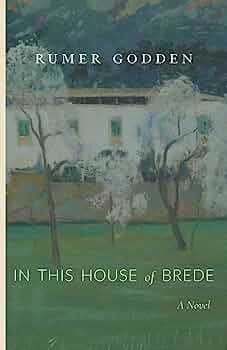
  • After finishing The Small House at Allington on the plane home, I tried to turn to my audiobook – but my earbuds weren’t working. So, facing the untenable choice between starting a new book on my kindle and staring into space listening to my seatmate cough for the rest of the flight, I decided to start In this House of Brede on my kindle. It’s gorgeous and I am loving it, but I wanted to switch back to paper books when I got home – so I’m saving Brede for the next time an ebook would be more convenient (I have another business trip next month, or I might turn back to this even sooner, depending on move logistics).
  • Still working my way through Penguins and Golden Calves on audio – with less progress made than I had hoped, thanks to the broken earbuds. I have about two-and-a-half hours left in the audiobook, so between commutes and packing/unpacking for my move, I expect I’ll finish up this week.
  • Laying aside Brede, I picked up Appointment with Venus and managed to finish it despite all the errands, packing and party-throwing over the weekend – it was that much of a page-turner. I couldn’t stop reading – and looked forward to the evenings so I could sit down with it – because I was so invested in the characters. I wrapped it up on Sunday evening and was sad to say goodbye – and wished the author had written a sequel.
  • Finally, just at the outset, I started A Sultry Month: Scenes of London Literary Life in 1846. It takes place in a heat wave from mid-June through mid-July of 1846 and follows several literary figures as their paths cross during those few weeks. It’s early pages yet – I’ve just finished through the end of the first chapter, but it’s a really interesting premise and I’m enjoying the reading so far.

It’s a busy week for everyone! In addition to moving houses and everything that entails, Peanut has scheduled some time to be spontaneous, make lasting childhood memories, and amend her will. ROTFL.

What are you reading this week? Any good home- or moving-focused recommendations for me?

Antarctica and Patagonia 2023: Petermann Island, Part I – More Whales!

We arrived at Petermann Island early in the morning, and while the kayak guides still didn’t feel the ocean conditions were right for our first paddle of the trip, we were relieved to hear that excursions were going forward otherwise. We suited up in our waterproof pants and regulation yellow parkas and joined our zodiac group to explore Petermann Island. Our group was cruising first and landing second, and we couldn’t have been more excited – especially when our zodiac guide, Nicole, said as we boarded the small boat: “Who wants to go see some whales?” There was a rousing cheer, and she said, “Good, because I was taking you over there whether you wanted to see whales or not!” We all laughed.

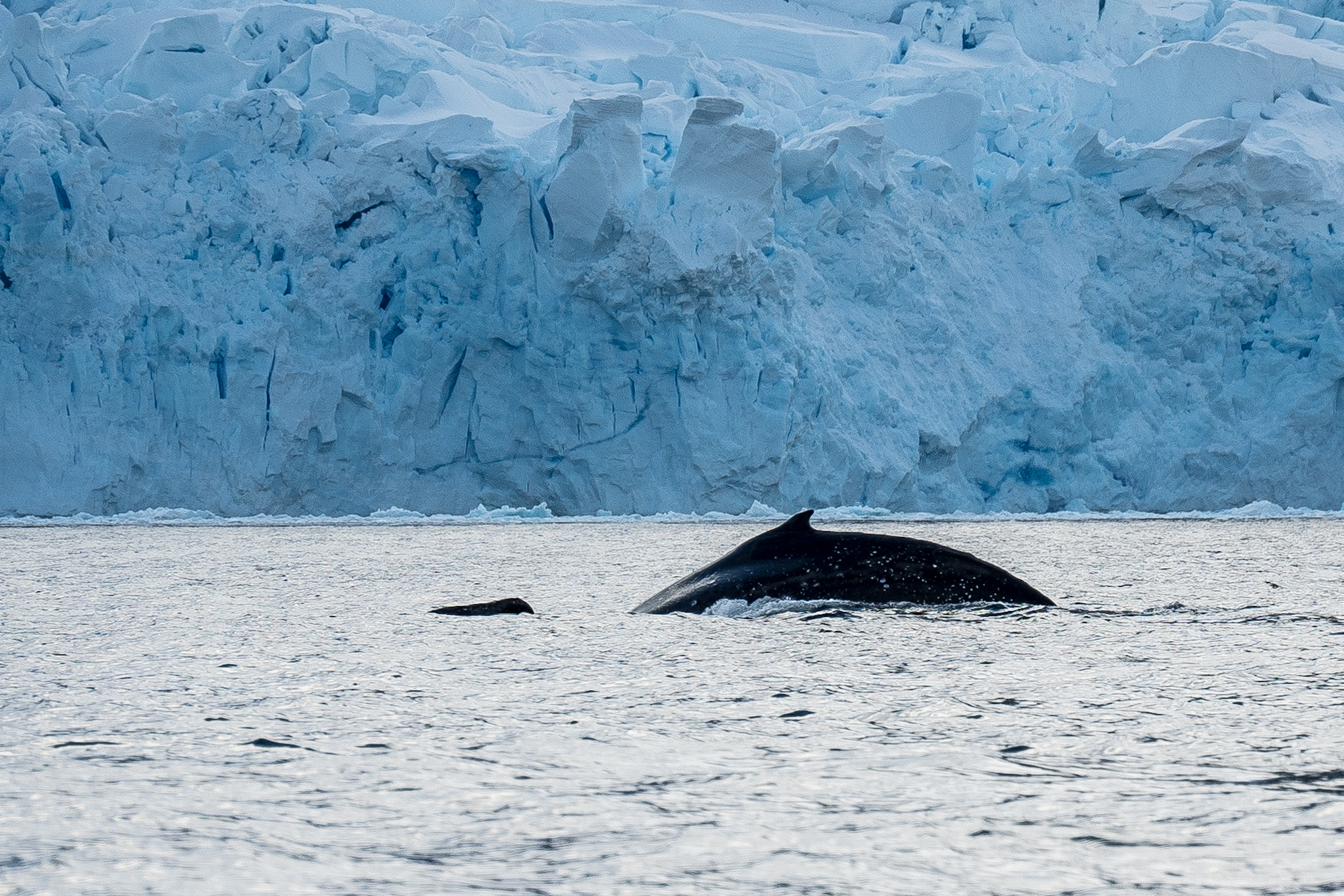
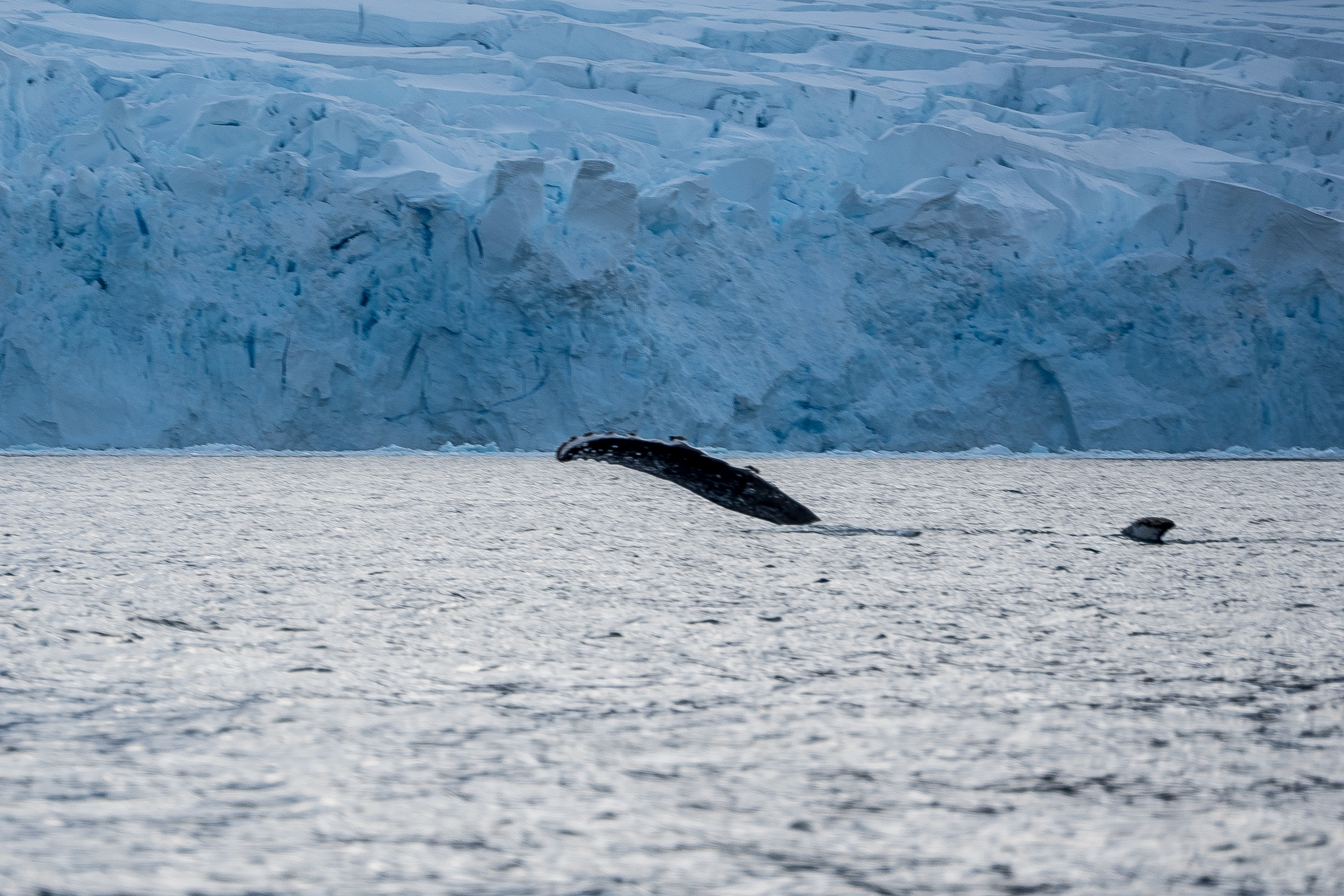
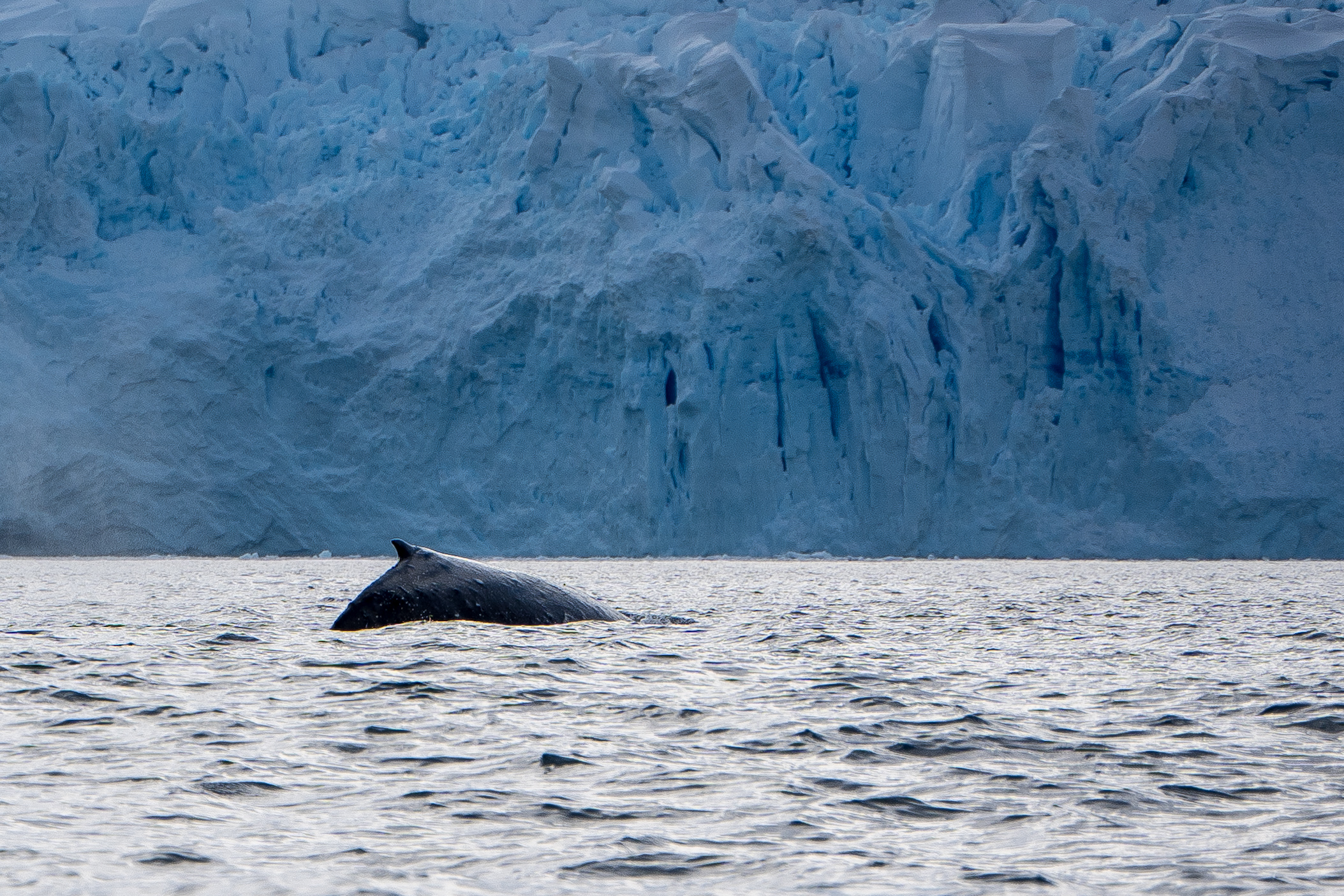
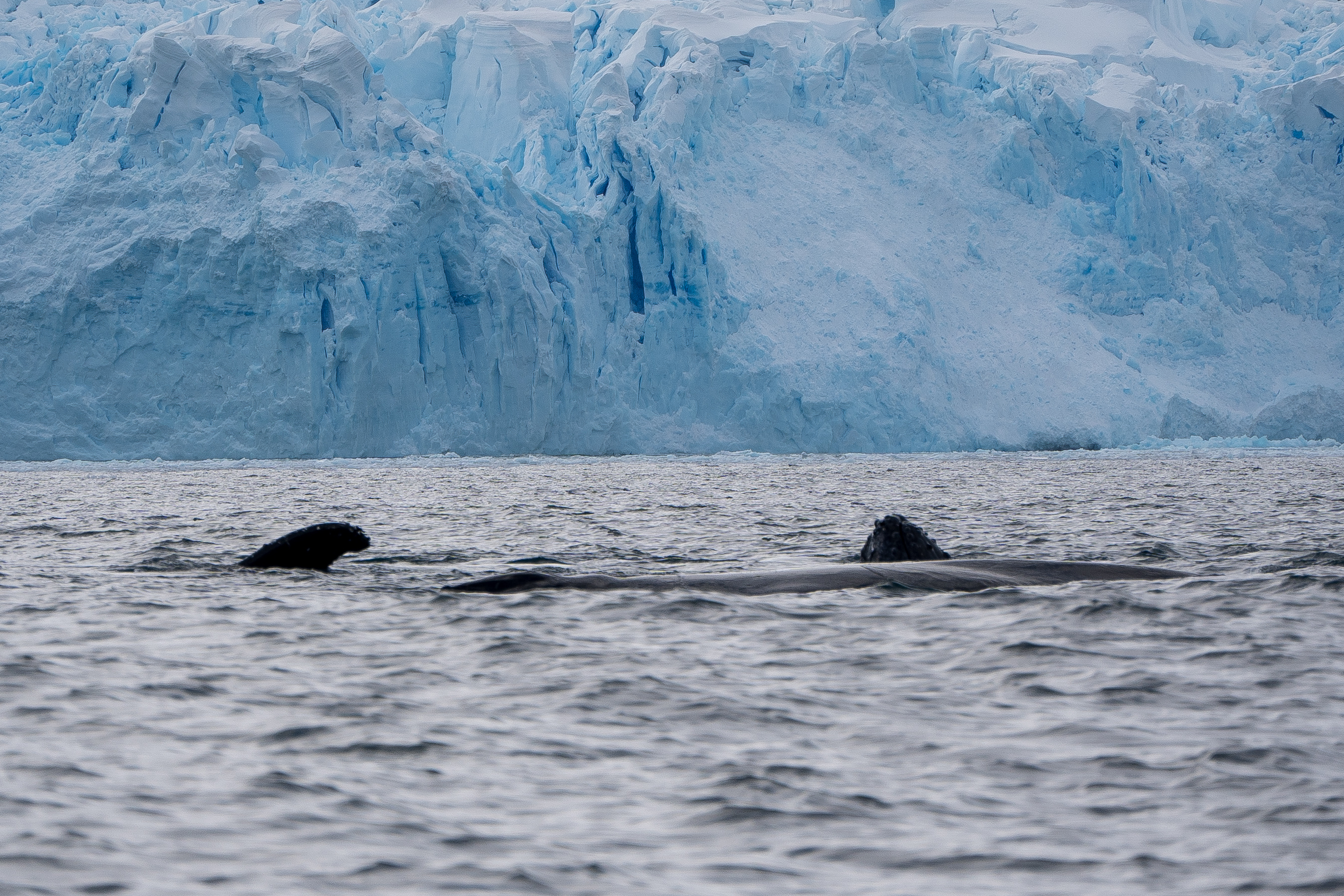
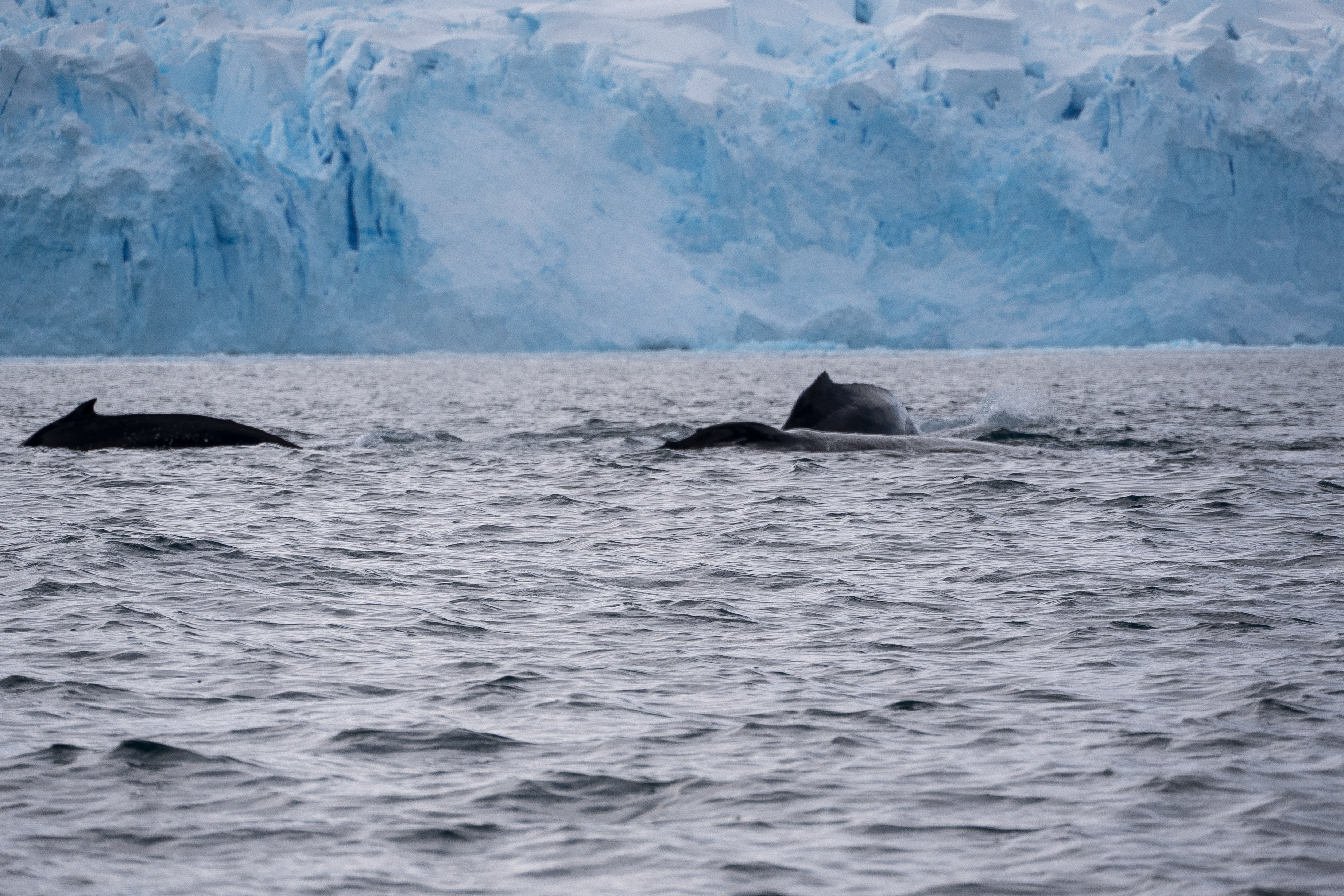
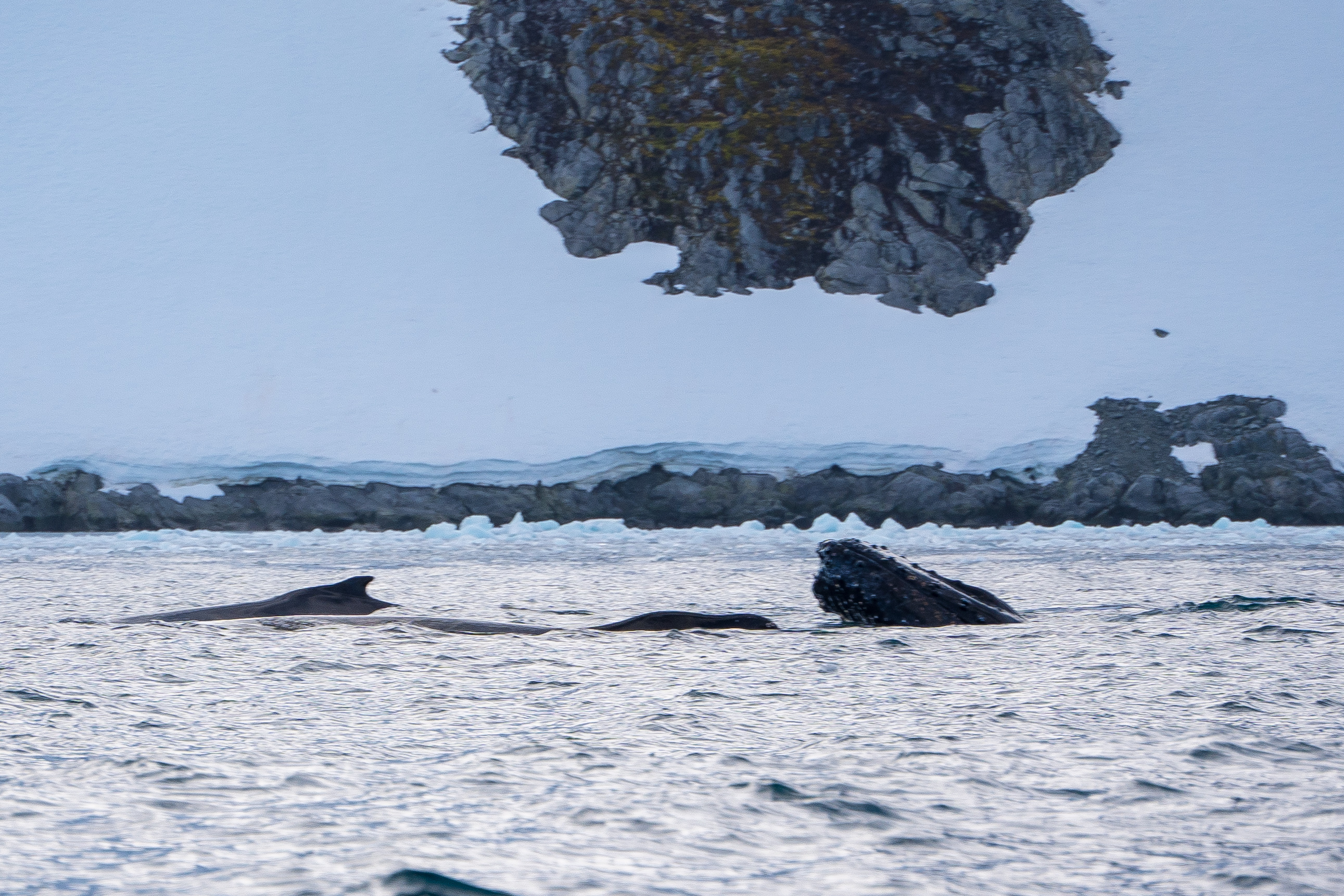
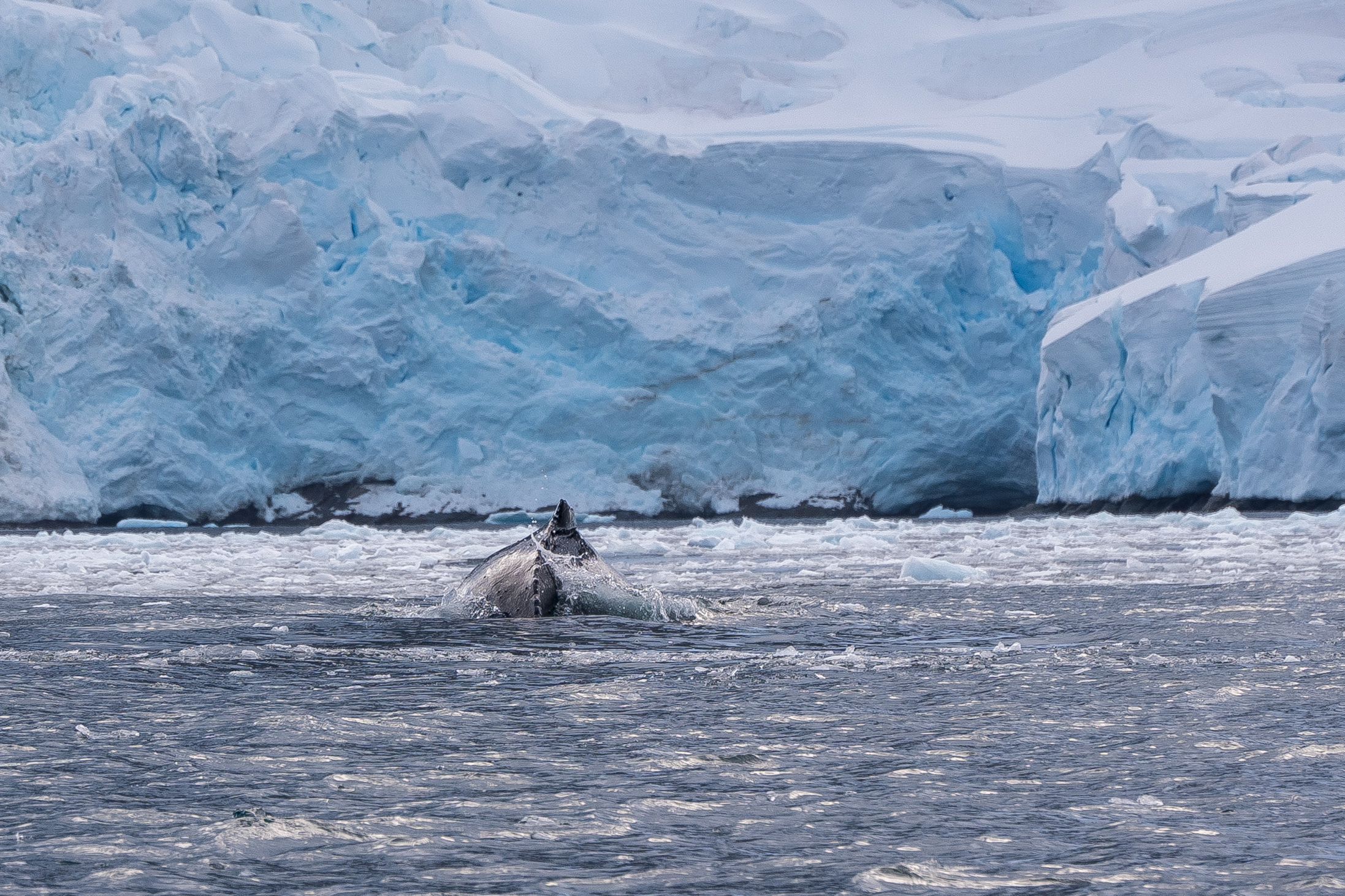
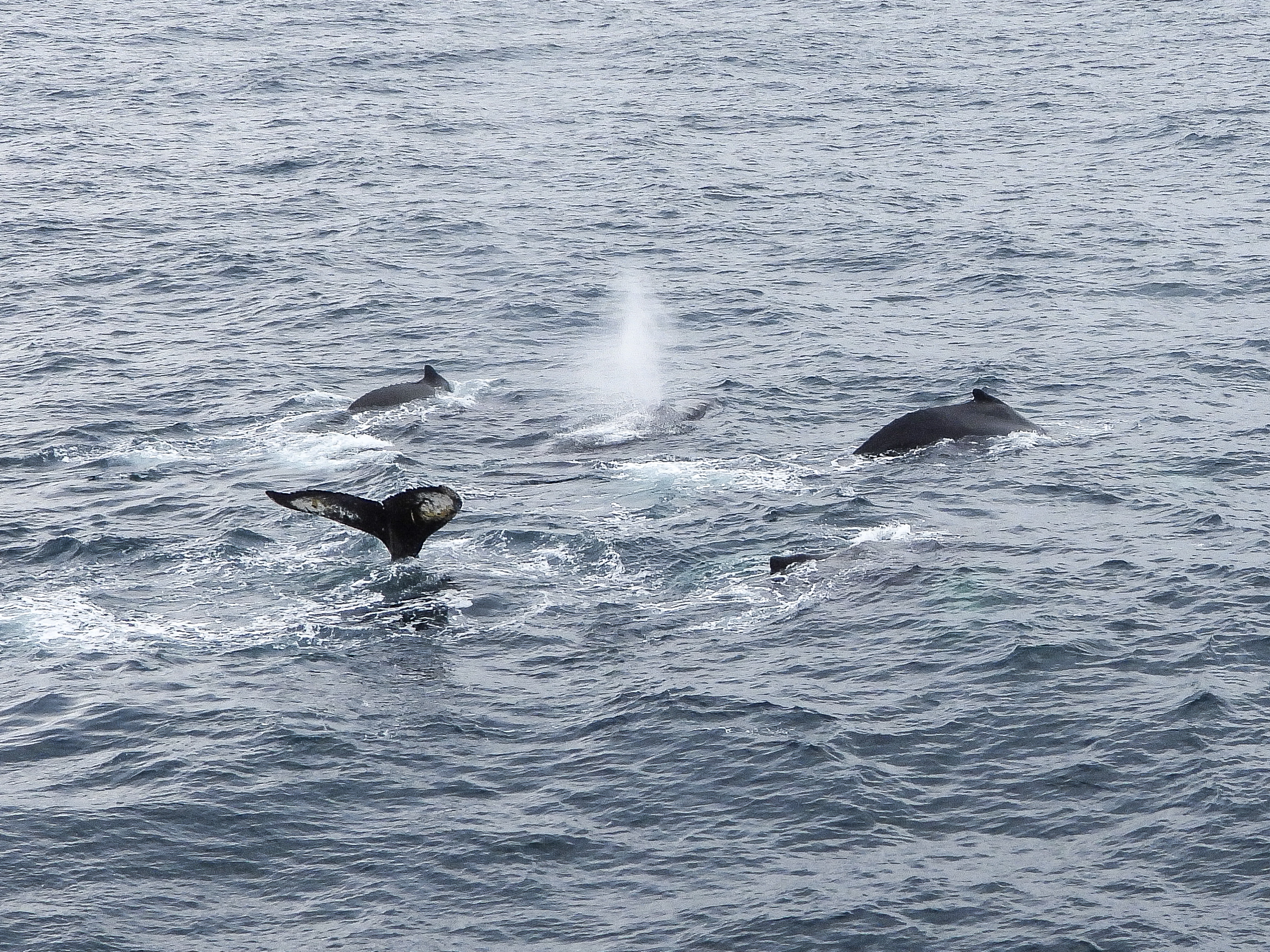
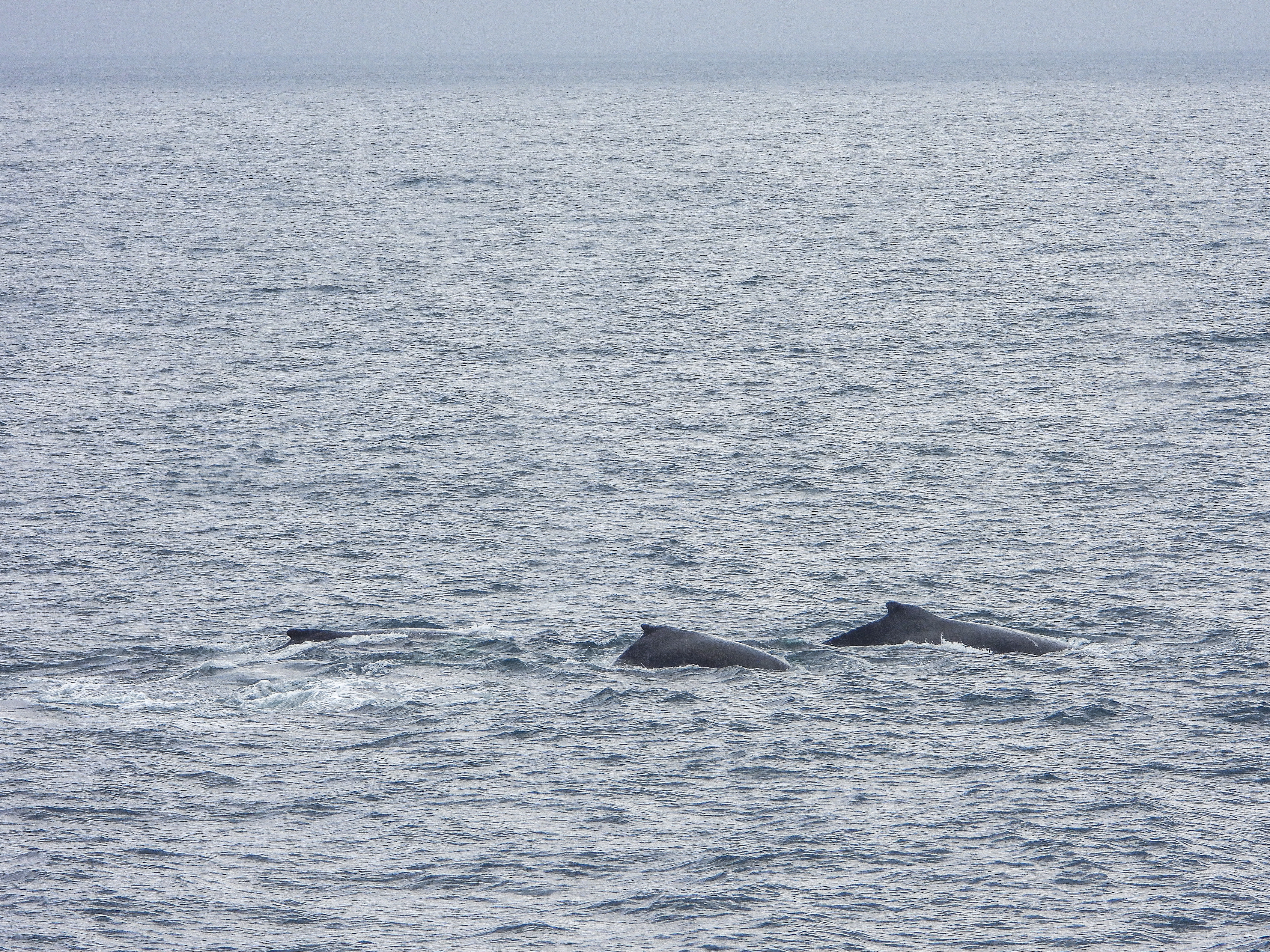
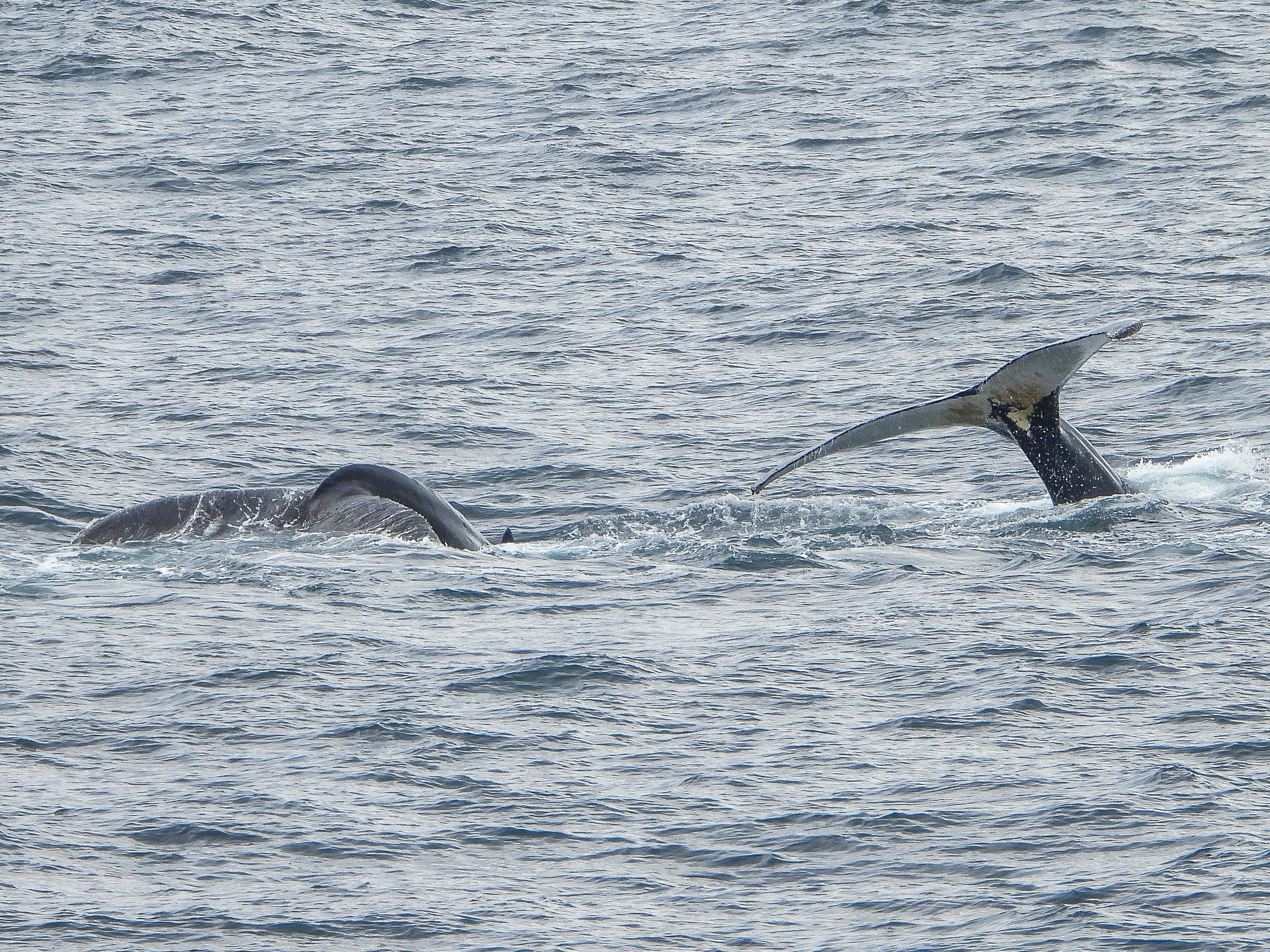
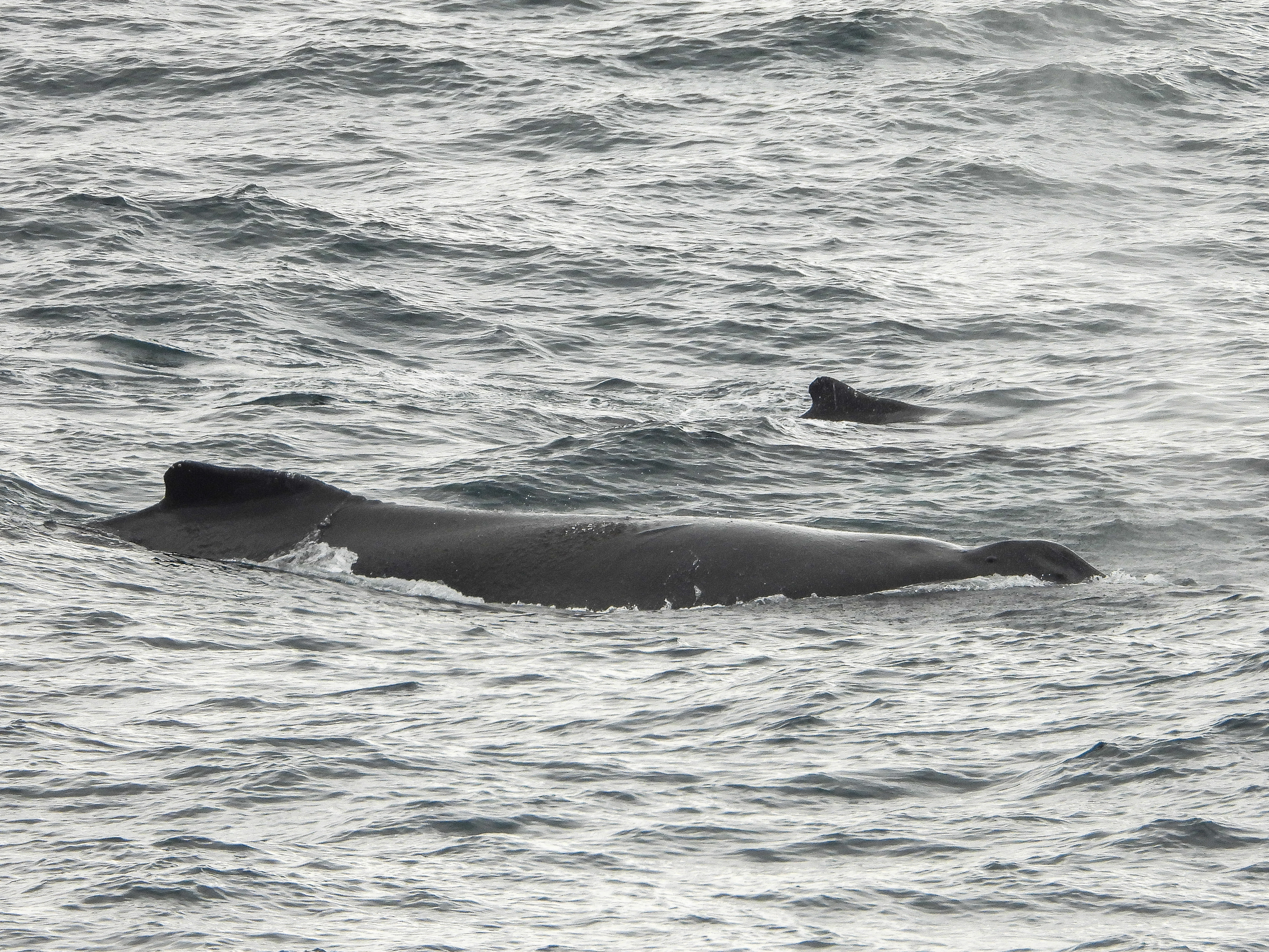
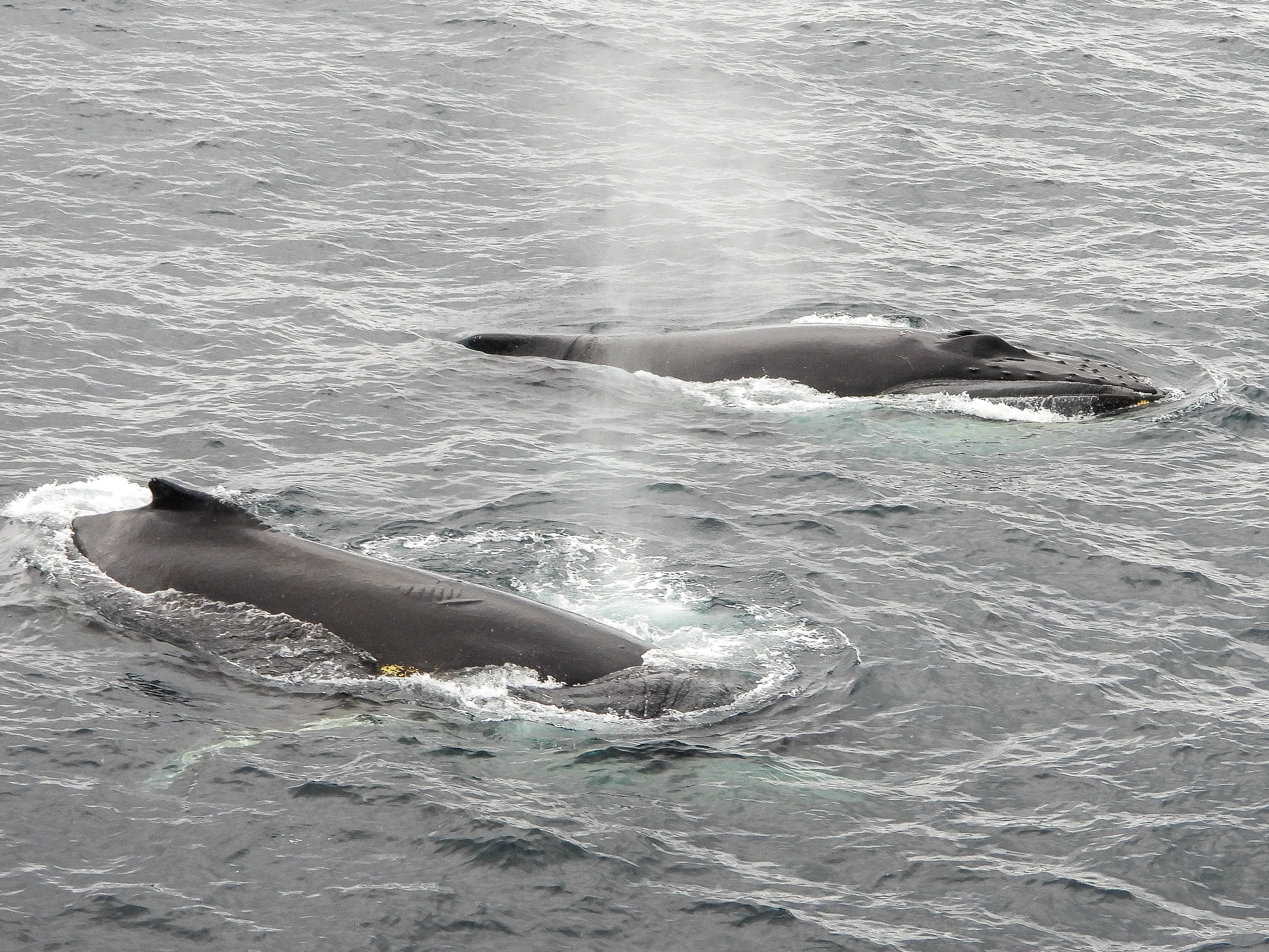
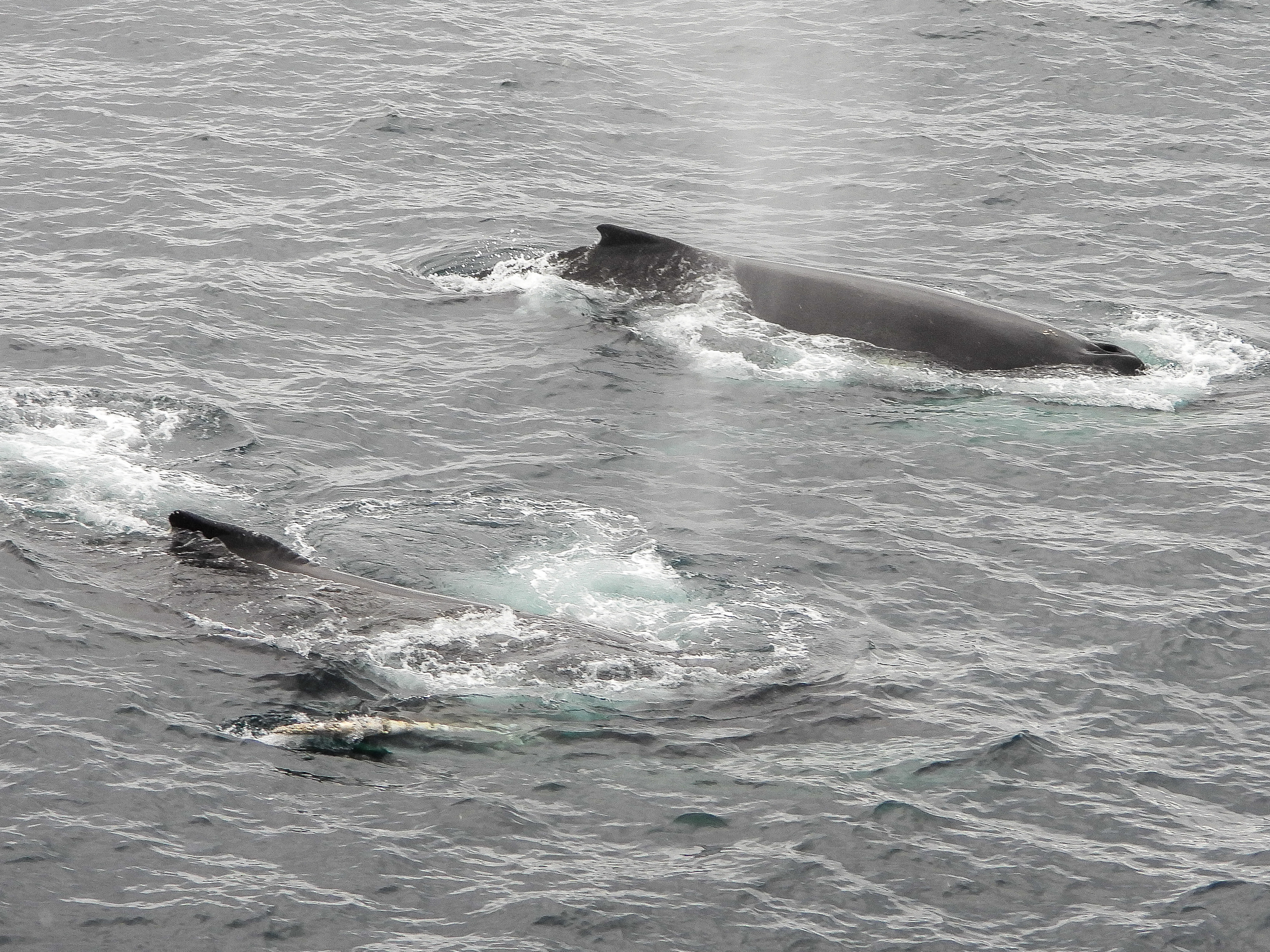
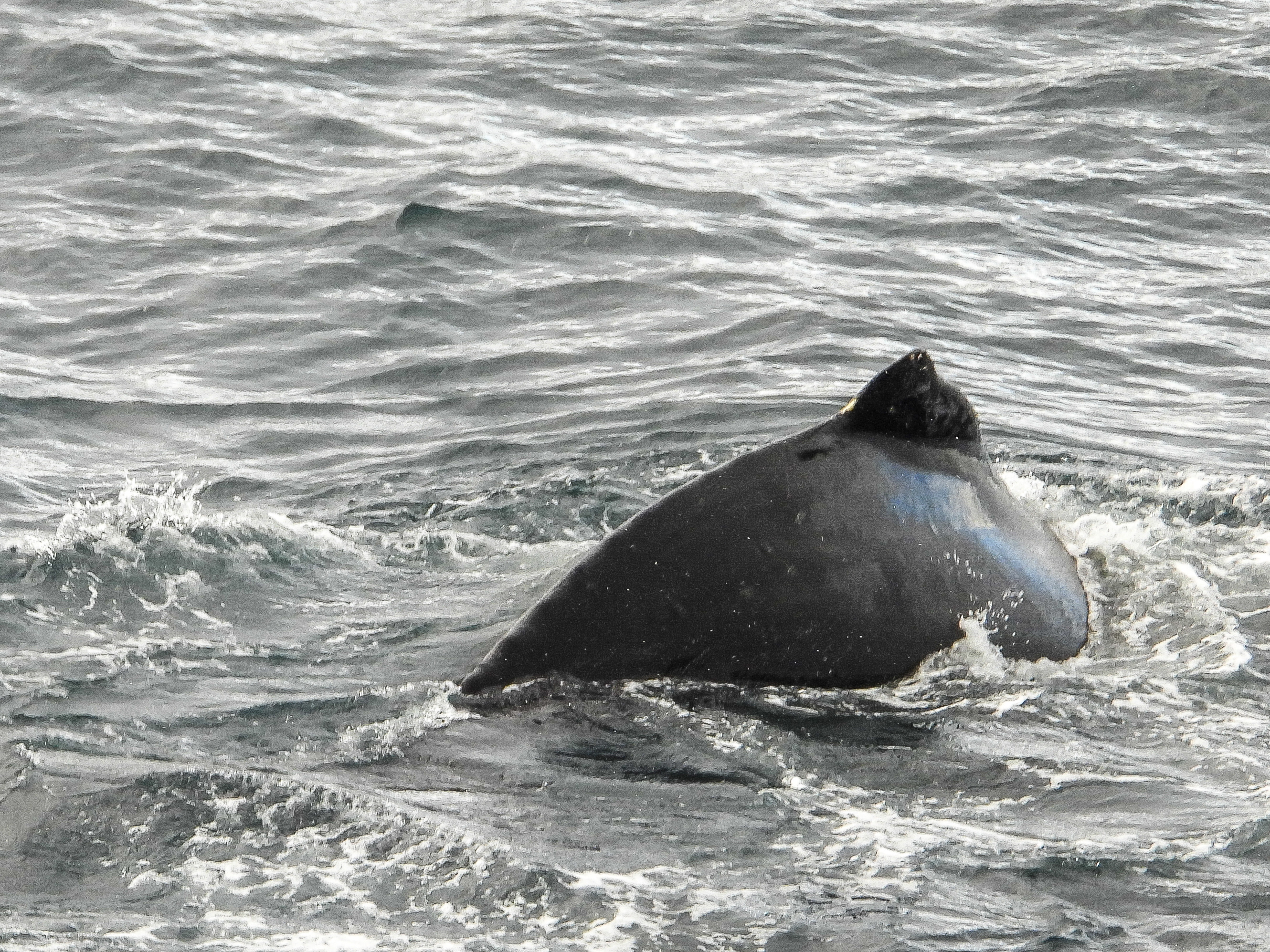
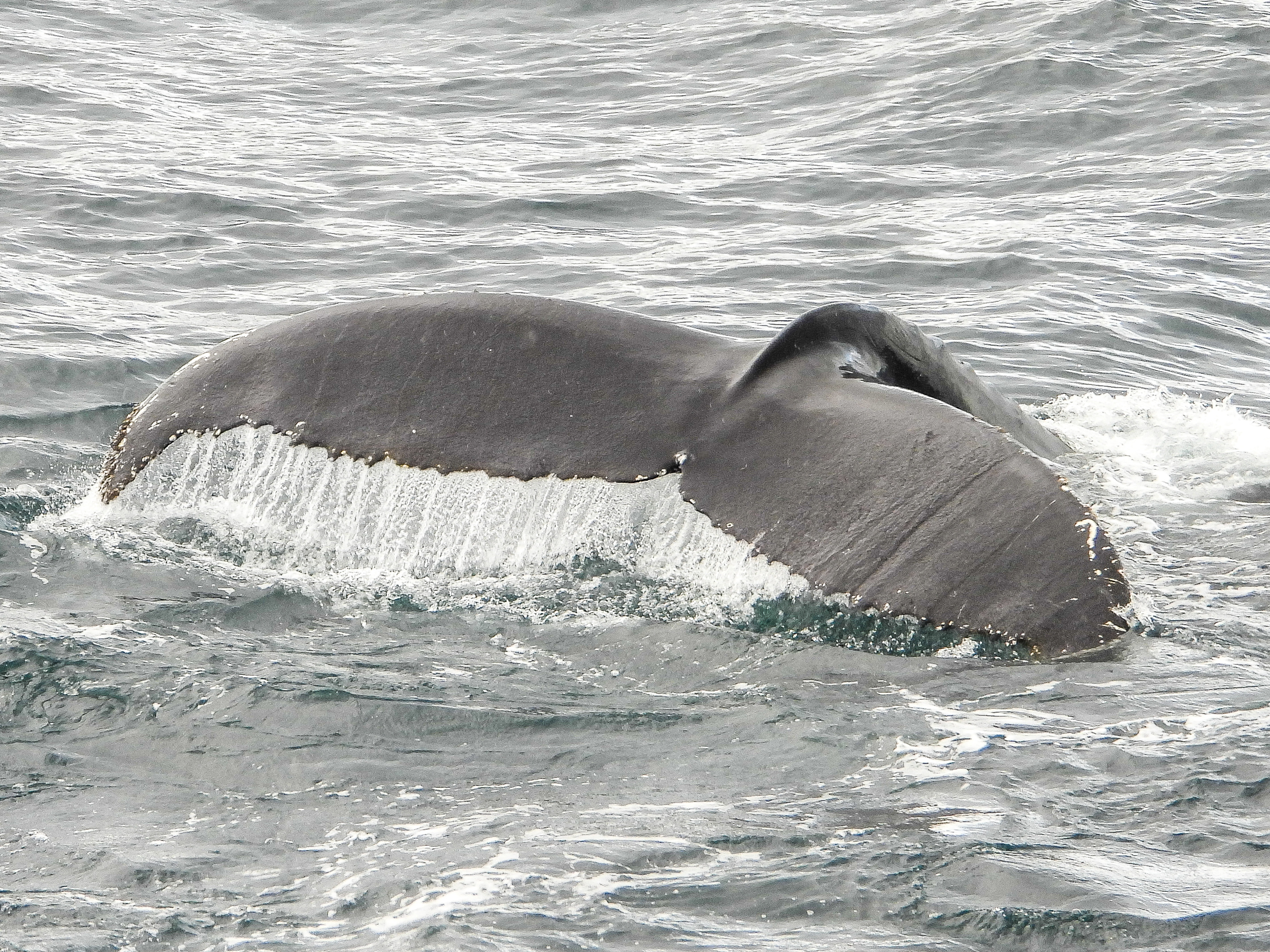
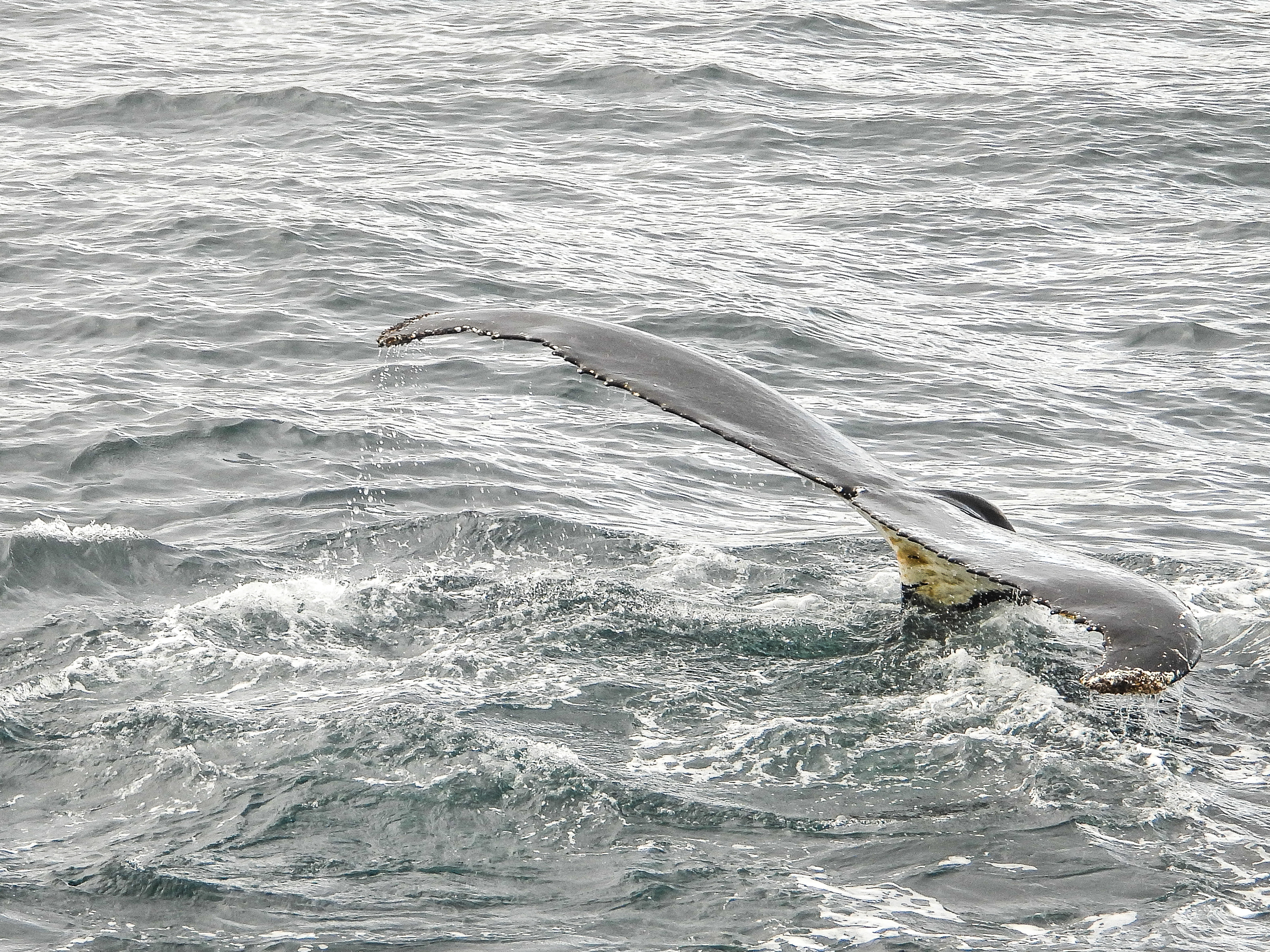
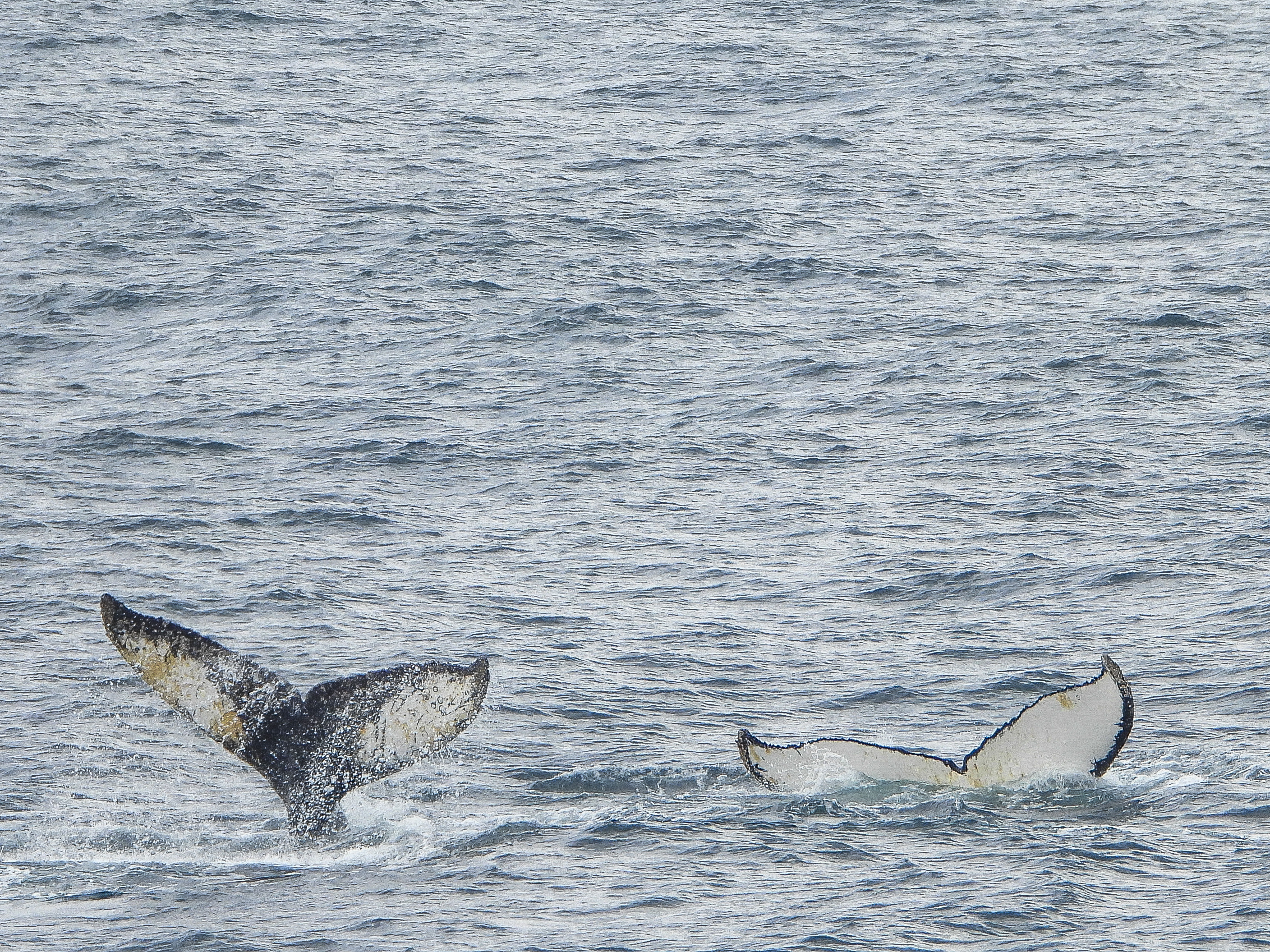
A few other zodiacs were already in the water, floating quietly while a group of humpback whales surfaced and dove for their all-you-can-eat krill banquet.

The whales were busily eating, but they took a moment to wave to us.

I couldn’t get enough of the spectacular iceberg backdrop, either.

I’ll let the pictures speak for themselves for a minute, shall I?

A spout!

A fluke!

Dorsals!

Pictures hardly do these creatures justice: it’s impossible to capture in an image – and nearly impossible to convey in words – how massive and majestic they are. My friends and coworkers love to joke about my whale obsession (I recently painted my kitchen cabinets “whale grey” based entirely on the color name… to quote a work friend, “Because OF COURSE you did.”) but to see them is to love them. I fell in love with these magical beings at six years old and they’ve had my heart and imagination ever since.

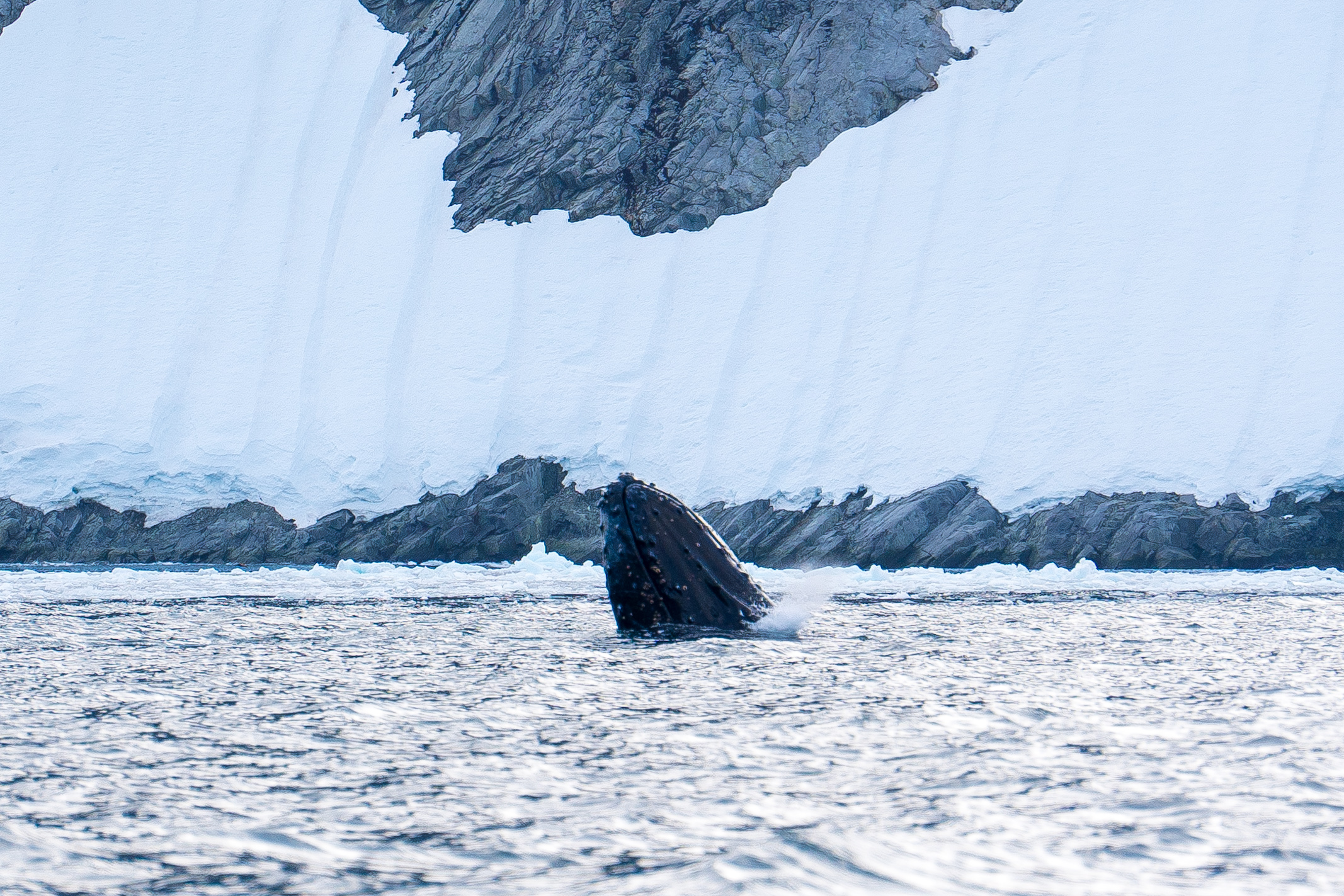
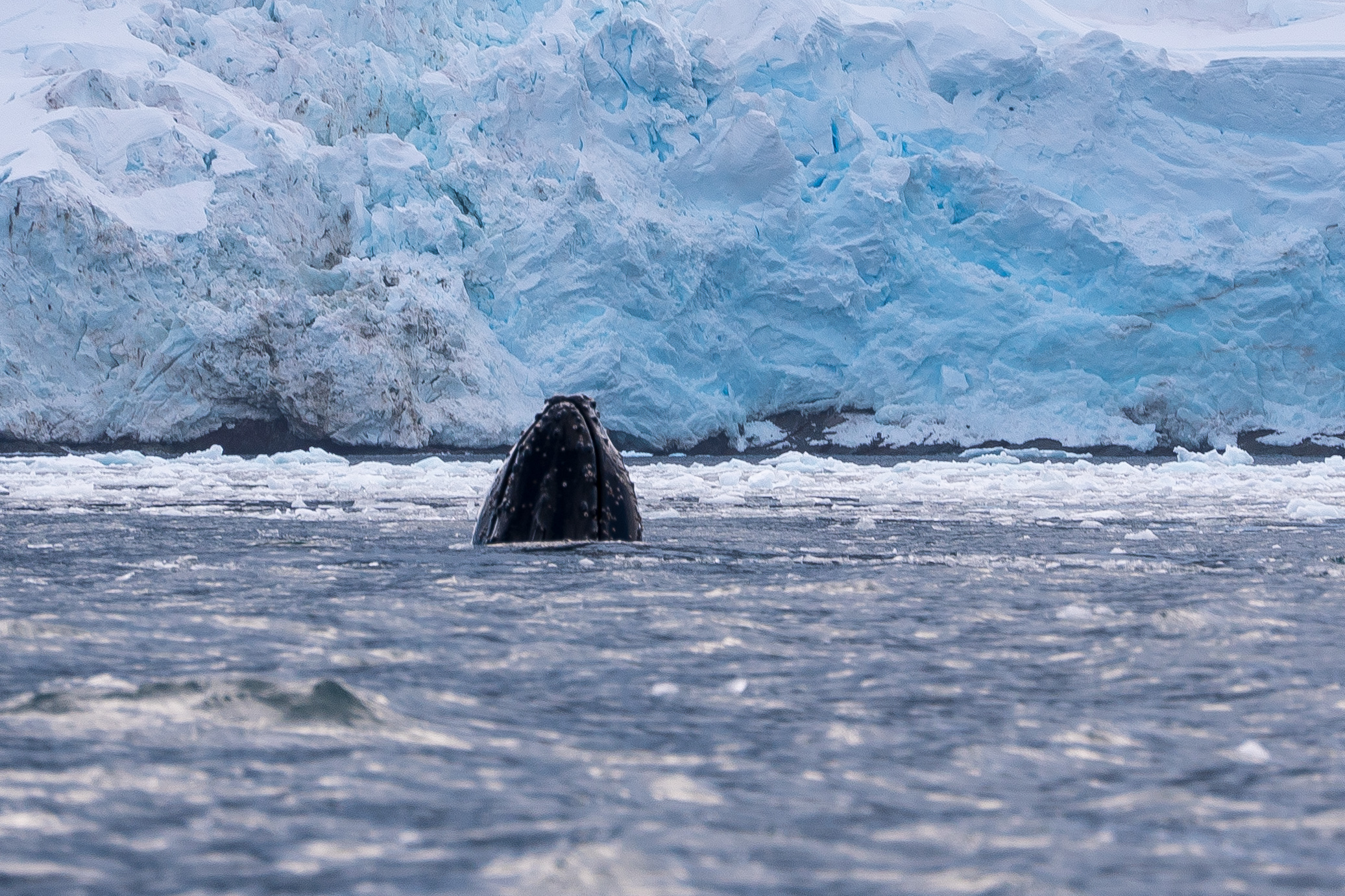
After we’d watched the whales feeding for awhile, Nicole decided we should probably cruise around and see some more of the island. We bid the whales a reluctant goodbye and started to look at the scenery – but just as we were about to leave, Nicole said: “Oh, I see a little rostrum poking out over there.” The whales were spyhopping! Clearly, we couldn’t leave.

Whale, hello there!

I’m whaley glad to see you too!

It’s krill nice to meet you! (I’ll show myself out.)

I had intended to do one post about Petermann Island, but as I uploaded my pictures – only the best ones, mind – I realized there were too many. So we’ll save the penguins and seals for another post, and really do them justice. I know that none of you was mad about more whales.

Next week: still exploring Petermann Island – some synchronized diving, a very rude Adelie, a very chonky Weddell seal, and more!

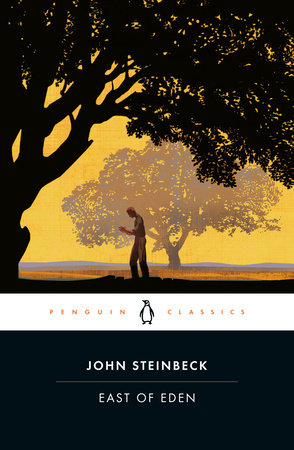
The Classics Club Challenge: East of Eden, by John Steinbeck

A review I read on Goodreads of John Steinbeck’s classic East of Eden assured the reader that they need look no farther: this is the Great American Novel. No doubt. Well – I don’t know if we can proclaim that status completely unequivocally, but it’s certainly a fair statement, arguably true and definitely defensible.

I’ve been a fan of Steinbeck’s work for a long time – I have read and loved both The Grapes of Wrath and Cannery Row multiple times, among his other novels and novellas – but somehow never made it to East of Eden. This is a multi-generational saga about two families that are doomed to repeat the Cain and Abel story in every generation. It’s gorgeous, epic, bruising, and true.

“It’ll be – who knows? maybe in our lifetime,” they said.

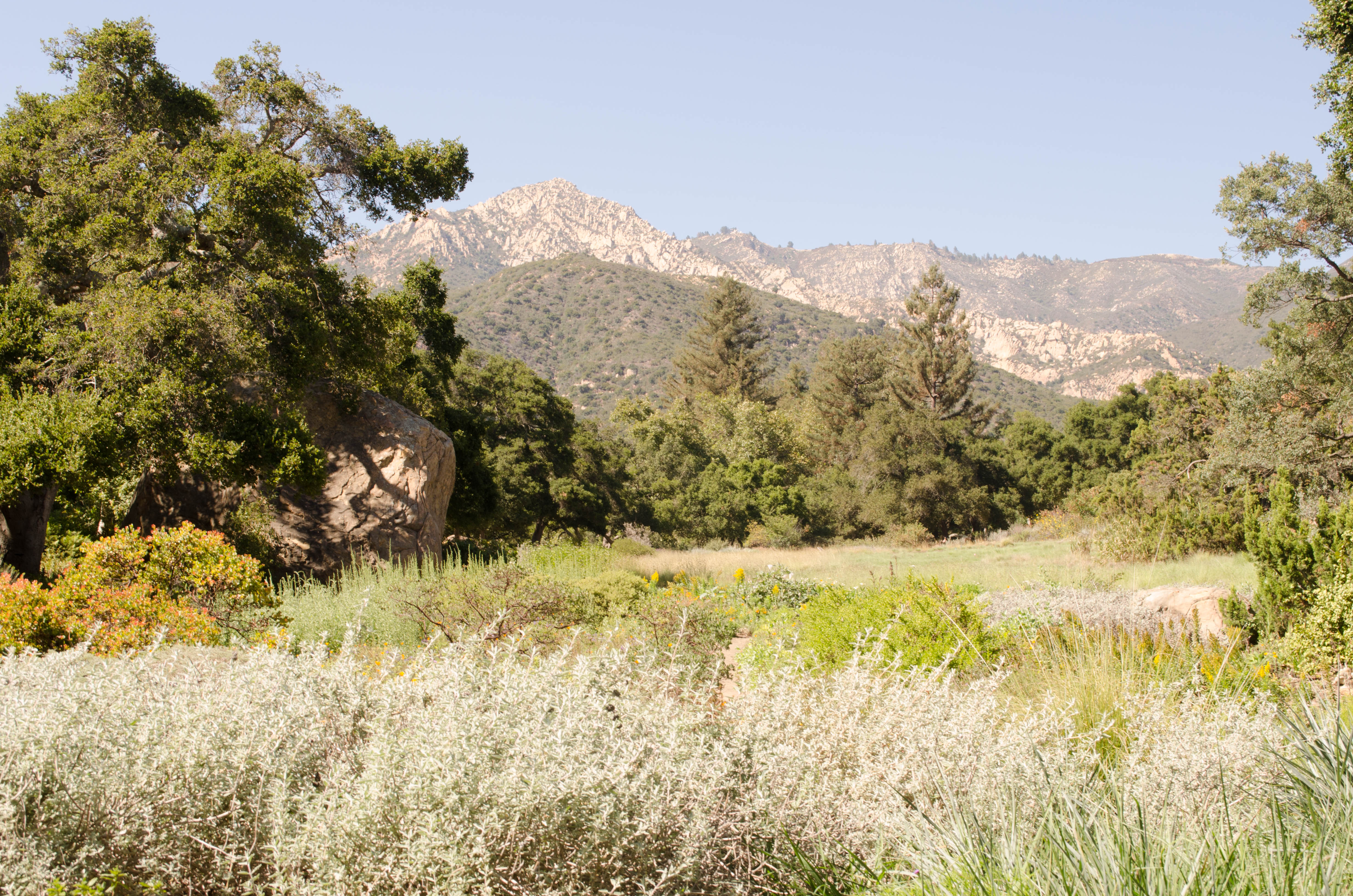
And people found happiness in the future according to their present lack. Thus a man might bring his family down from a hill ranch in a drag – a big box nailed on oaken runners which pulled bumping down the broken hills. In the straw of the box, his wife would brace the children against the tooth-shattering, tongue-biting crash of the runners against stone and ground. And the father would set his heels and think, When the roads come in – then will be the time. Why, we’ll sit high and happy in a surrey and get clear into King City in three hours – and what more in the world could you want than that?

What in the world, indeed.

The main plot focuses on Adam Trask. Adam grows up on the East Coast, but after a terrifying fight with his brother Charles and a stint in the Army, he marries a mysterious woman named Cathy and brings his bride to California. Cathy – now pregnant – schemes to get back East; she’s more than capable of getting her way and has no qualms about drawing blood and ruining lives, literally. When she gives birth to twin sons she immediately leaves Adam (and leaves him with a remembrance of her that I won’t spoil here, in case you want to read the book) and runs away to a house of women pursuing… the oldest profession. Adam pines for Cathy (who has renamed herself Kate and is giving way to all of her vilest, most murderous plans) but after a year of this pointless grieving, a local friend stages an intervention and forces Adam back to reality.

Adam chooses the names Caleb and Aaron – soon shortened to Cal and Aron – for his sons (rejecting his neighbor, Samuel’s, suggestion that he name them after Biblical brothers Cain and Abel). The generations of brothers with names beginning with C and A is maybe the one area where Steinbeck gets a bit heavy-handed. He makes it abundantly clear that his narrative is the Cain and Abel story repeated over and over (in slightly different ways) – but perhaps to the point where the reader gets a bit exasperated. We get it, we get it.

“Two stories have haunted us and followed us from our beginning,” Samuel said. “We carry them like invisible tails – the story of original sin and the story of Cain and Abel. And I don’t understand either of them. I don’t understand them at all but I feel them. Liza gets angry with me. She says I should not try to understand them. She says why should we try to explain a verity. Maybe she’s right – maybe she’s right. Lee, Liza says you’re a Presbyterian – do you understand the Garden of Eden and Cain and Abel?”

“She thought I should be something, and I went to Sunday School long ago in San Francisco. People like you to be something, preferably what they are.”

Adam said, “He asked you if you understood.”

Steinbeck’s point, of course, is that none of us really understand Cain and Abel. Some may think they do, but they don’t. (I am only vaguely familiar with the Old Testament, so I definitely don’t – other than a passing knowledge that Cain and Abel were two of Adam and Eve’s sons and Cain killed Abel.) But in any event, it’s here that the story really picks up: with the entry of Cal and Aron. While Adam is consumed with mourning the end of his relationship with Cathy, the boys remain vague shadows. After Samuel and family servant Lee stage their intervention, Adam begins to take an interest in his sons – and the reader gets to know them for the first time.

Maybe the difference between the two boys can be described in this way. If Aron should come upon an anthill in a little clearing in the brush, he would lie on his stomach and watch the complications of ant life – he would see some of them bringing food in the ant roads and others carrying the white eggs. He would see how two members of the hill on meeting put their antennas together and talked. For hours he would lie absorbed in the economy of the ground.

If, on the other hand, Cal came upon the same anthill, he would kick it to pieces and watch while the frantic ants took care of their disaster. Aron was content to be a part of his world, but Cal must change it.

Adam’s business does well and the boys grow up with every advantage that money can buy. And as they do, these differences become apparent. Aron is blonde, cherubic, adored by everyone around him. Cal is dark-haired, brooding, viewed with distrust and even dislike, while his father is respected and Aron is loved. It’s only too easy for Cal to feel the injustice of this and to grow up resentful.

This is where the story gets really interesting, and where Steinbeck turns the Cain and Abel story on its head. The reader starts out feeling an affinity for sweet Aron. You see shades of Adam’s violent brother Charles in Cal, and you dislike Cal for it. But when Adam makes the decision to leave his ranch and move his family – the boys and Lee, who has transcended the status of servant and is basically a member of the family at this point – to Salinas (where the reader knows Cathy is still living – a decision you know can’t possibly end well) you gradually start to feel more compassion for Cal. He desperately wants his father’s approval; he adores his brother; he is torn apart by grief at having been labeled as the bad one. Everything Cal does goes wrong in some way – even when he goes successfully into business for himself as a young man with the goal of presenting Adam with his earnings, Adam angrily rejects the money Cal has honestly earned, crushing Cal’s spirit. (That part broke my heart. I just wanted to hug Cal.)

I won’t tell you what happens between Cal and Aron, because you should definitely read it for yourself if you haven’t already. But if you have read it – or when you do – you’ll understand what I mean when I say that it’s all much more complicated than the Bible tale. And this is the genius of East of Eden – you begin the book thinking, “Of course, Aron is the good brother and Cal is the bad brother, and Cal is going to do something terrible to Aron.” But as you gradually begin to love Cal and cool on Aron, even knowing they’re going to repeat this Biblical story somehow, you start to ask so many questions. Who in my life am I labeling, wrongly? What has that done to them? Who has labeled me, and how did that change my behavior? Why was I originally drawn to Aron, why did I prefer him? When did that change? What would change in this story if the characters were more clear-eyed about both Cal and Aron? Where should I try to be more clear-eyed in my own life? They’re not comforting questions.

Adam sighed deeply. “It’s not a comforting story, is it?”

Lee poured a tumbler full of dark liquor from his round stone bottle and sipped it and opened his mouth to get the double taste on the back of his tongue. “No story has power, nor will it last, unless we feel in ourselves that it is true and true of us. What a great burden of guilt men have!”

This is certainly a story with truth and power. (To press home the point, Steinbeck even has himself appear as a minor character in the narrative. That might be the book’s only weakness: Steinbeck definitely doesn’t let you forget that this is the story of Cain and Abel, and that it’s one of humanity’s great truths. If you forget it’s a Cain and Abel tale, the characters will drink whiskey and discuss Cain and Abel. If you forget it’s true, the characters will go visit Olive Steinbeck so that young John can answer the door and remind you.) But it does what great literature – and maybe the Great American Novel – does; it pulls you into the narrative, makes you love and grieve for the characters, and gives you questions to ask about your own life. I adored it, couldn’t stop turning the pages, cried for Cal, and wished I’d read it a long time ago.

What is your favorite John Steinbeck novel?

The Week in Pages: June 19, 2023

Good morning, all – first things first, I wish you a peaceful and contemplative Juneteenth, and I hope the dads had a wonderful weekend being celebrated! We were busy – more about that below – and as a result, my week’s reading was a bit scattered, and heavily audio (nothing wrong with that!). First off, I finished up The Widening Stain on Thursday; it definitely took me longer to read than it otherwise would have because of my lack of time and attention this week – pre-move projects, plus business travel upcoming, plus Father’s Day planning – but I enjoyed it. I did figure out whodunit, but not why or how, so there were still surprises. Then over the weekend I wrapped up The Wind in the Willows, which was a re-read for me but the first time I listened to it on audio. It was mostly a companion for my commutes last week, but I was working on a kitchen project and listened to the last few hours of audio while I primed and painted cabinets in my new house. (New appliances are arriving on Friday and while I will not get around to having the cabinet doors and drawers painted before the appliances are installed, I really wanted the base cabinets themselves done – I just have one more coat to go, this afternoon. Progress!)

After wrapping up The Widening Stain, I turned back to The Small House at Allington, which has been rather slow going. I adore Trollope, but have had a hard time getting into this one largely because of the aforementioned lack of time and attention. I do have a couple of long plane flights ahead of me, so perhaps then. And with more painting to do, I immediately started another audiobook: Penguins and Golden Calves: Icons and Idols in Antarctica and Other Unexpected Places, by Madeleine L’Engle. It’s been a long time since I read any of her works of theology/philosophy and I admit I’m struggling with it a little bit. I was really looking for more Antarctica and less philosophy, but L’Engle’s trip to Antarctica – while the catalyst for writing this book that she’d evidently been thinking of for some time even before traveling to her seventh continent – is pretty deep background. I’m still listening though.

No real plans for what’s next, I’m afraid – I’m not far enough into either The Small House at Allington or Penguins and Golden Calves to have occasion to consider what’s to follow. I do have a small stack of books that take place in June, and I’d like to get to those between now and the end of the month (they’ll be moved separately so as not to be buried in a box when I want them next week) but with all of the activity and long task lists between now and the beginning of July, I don’t really know how realistic that is. One day at a time, though.

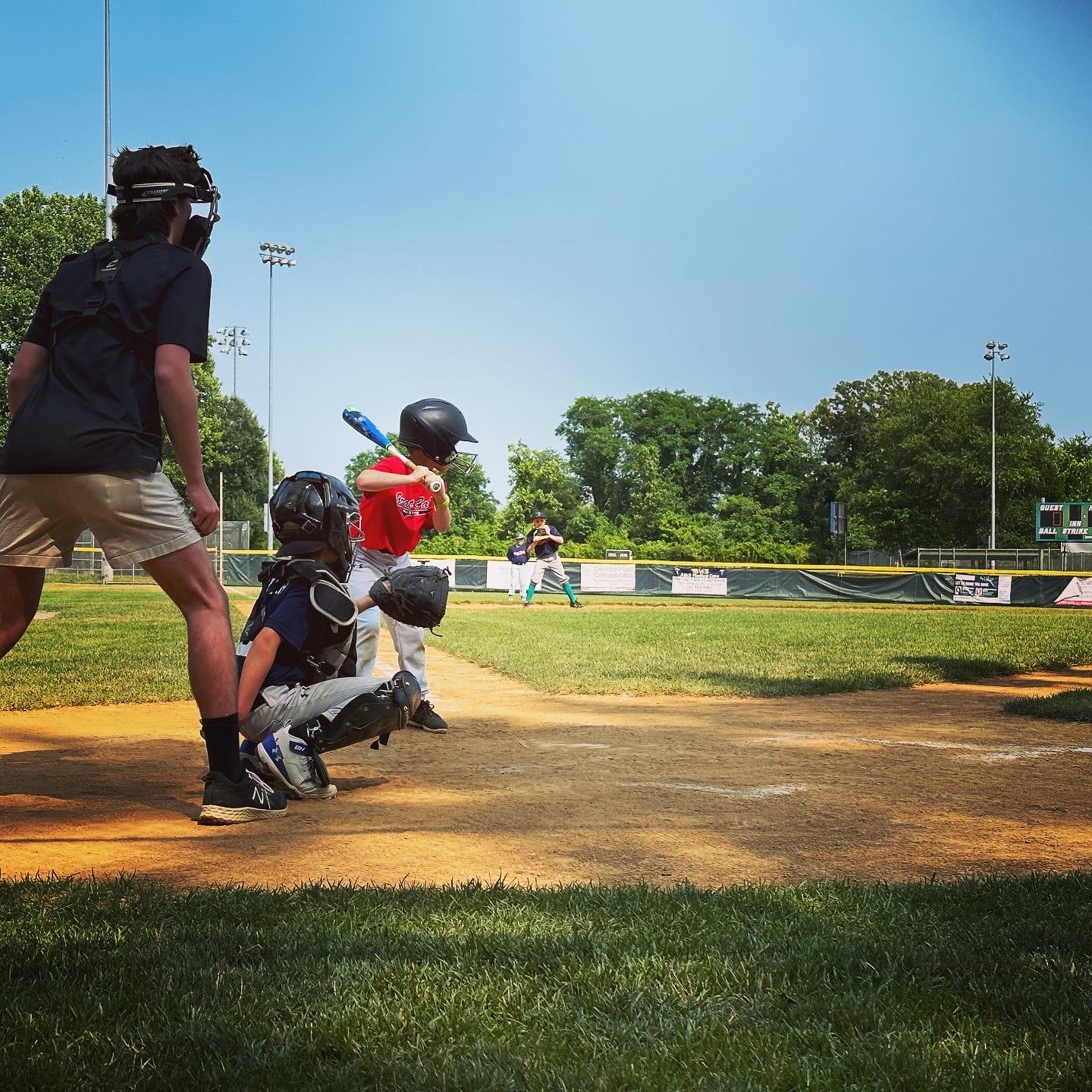
I think Steve had a nice Father’s Day! He spent Saturday getting moving-related tasks (like duct-taping the kids’ climbing dome…) done around the house, while I was over at the new house preparing and then painting kitchen cabinets. But we made time for a very baseball-centric Father’s Day celebration: Nugget was chosen to play in the Little League all-star game for our town! It was quite the professional outfit; they even had custom jerseys for the boys with their names on the backs. We had fun cheering on Nugget and his other teammates who were playing in the game and chatting with his coach about the upcoming travel baseball season (Nugget’s AA coach will also be coaching 9U this season – we are so happy, because he’s a wonderful coach and a lovely guy). All discipline went out the window, but Nugget played a great game – he made a clutch double play from second base, then took the mound and allowed no runs in the final inning, and then took part in a massive and wild comeback rally in which his team scored five runs and ended up winning the game 10-9. What a whirlwind! Steve loved his Father’s Day at the ballpark.

What did you read last week?

Antarctica and Patagonia 2023: Crossing the Antarctic Circle – with WHALES!

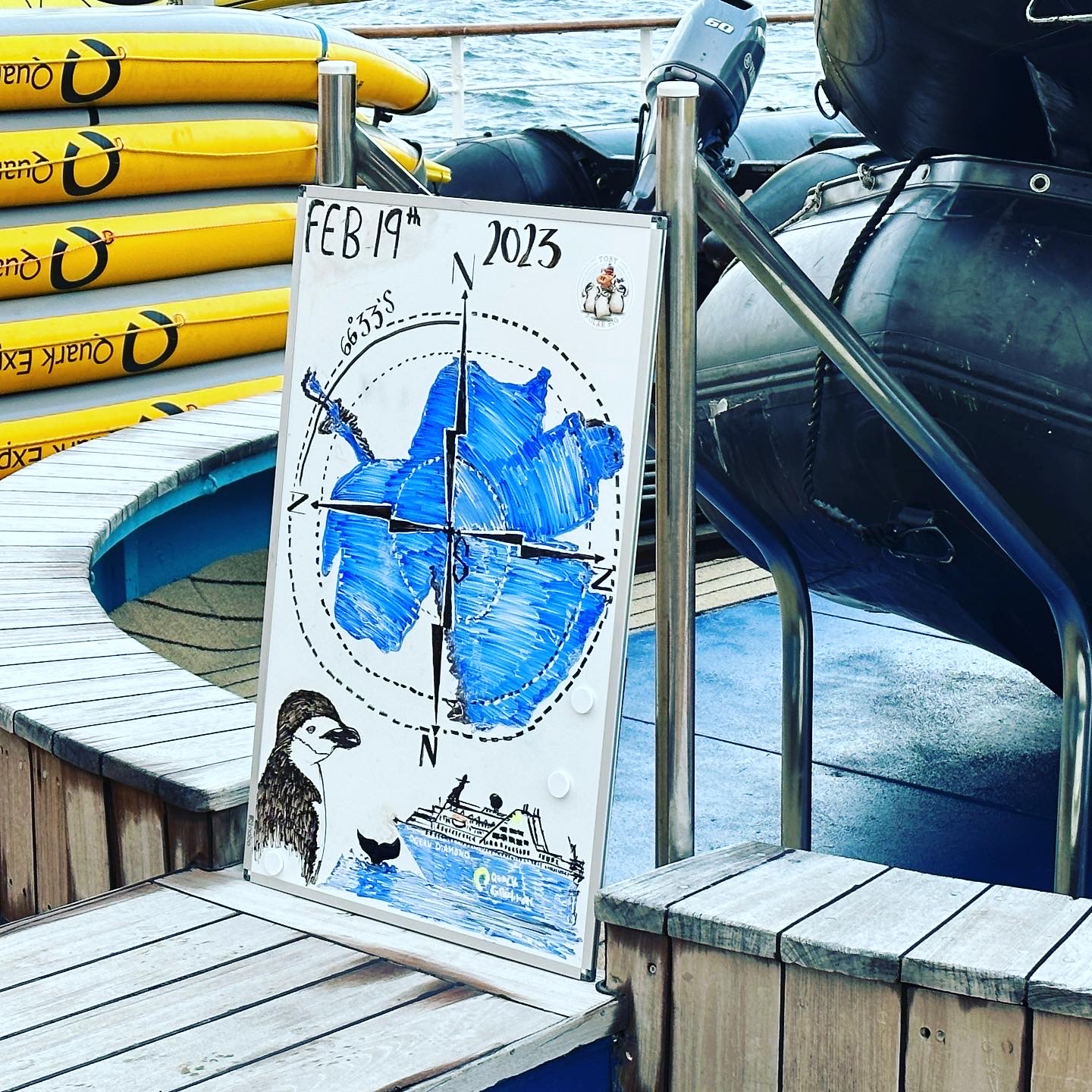
Our second day in Antarctica brought an exciting milestone – at just after 7:00 a.m., our ship crossed the Antarctic Circle, 66 degrees 33 minutes South. This latitude is farther south than most Antarctic tourist expeditions go, and for many of our fellow travelers it was the highlight of our trip. Our voyage was called “Crossing the Circle: Southern Expedition,” and the marquee moment of the itinerary was crossing the Circle, as you can imagine from the name. A sizeable minority of our fellow passengers had booked this particular expedition – as opposed to one of the other itineraries – for this particular reason. We didn’t – we booked it because it was the time of year we wanted to visit Antarctica (whale migration season) and a good duration with six days on the Continent. Crossing the Antarctic Circle was not our main goal, but it was a very cool achievement.

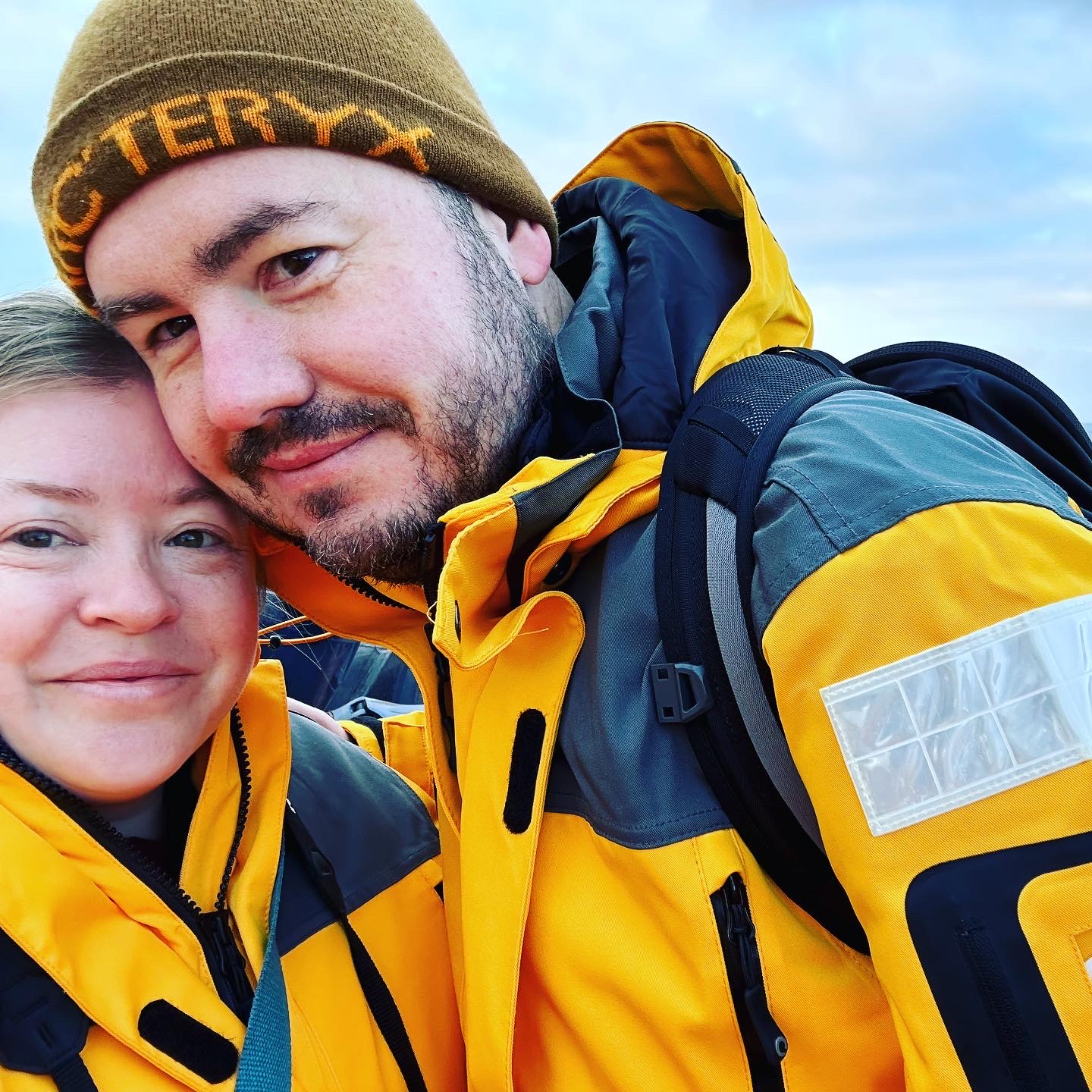
Happy explorers, waving from further south than 99% of other Antarctic travelers will ever go! As our expedition leader announced that we’d crossed the Circle officially, a loud cheer went up and we all toasted with our hot cocoa. (Since it was so early in the day… that evening we’d have a proper toast with champagne.)

Two humpback whales escorted us across the Circle, but they were too far from the ship for me to get a good picture of them. The icebergs that far south were absolutely massive, though.

Even with the exciting event of crossing the Antarctic Circle, the day started to take a bit of a downhill turn – thanks to the weather. Our afternoon landing the previous day had already been scrubbed, and the expedition staff made the hard decision to cancel both outings on the second day as well. Having lost three outings in a row, the mood on the ship started to become decidedly salty. I was up in the observation lounge on the seventh deck when the announcement came through that the afternoon expedition was cancelled, and ominous rumblings started to circle the lounge – even from people who’d been quite sanguine about the weather the day before. As my fellow passengers grumbled, I looked out over the water and suddenly saw a spout. I jumped up and headed onto the upper deck, and a few people trickled out behind me. Moments later, a curious humpback whale surfaced near the ship, followed by another – and another – and another…

As word circulated that there were whales in the neighborhood, passengers and expedition staff alike started streaming out of every door onto the deck, phones and cameras ready.

There were five or six whales – I lost count; there could have been more, even. They swam around the ship for over an hour – spouting, diving, fluking and spyhopping.

The captain kept the ship carefully stationary, turning it occasionally to allow people on the port side to catch a glimpse of the whales (who had appeared to starboard and seemed happy to stay there).

I’ll let the pictures speak for themselves…

Some of the whales came so close to the ship that we could practically see down their blowholes and count the bumps on their rostrums.

Spout action!

I was giddy. People come to Antarctica with all kinds of wildlife hopes – some want to see penguins, others seals – for me, it was all about the whales. We chose to travel in February, as I’ve mentioned, to coincide with the humpback whale migration season. While I would have loved to see minkes and orcas, and I had a pipe dream of seeing a southern right whale, I was really there for the humpbacks.

I joked to Steve (who had rushed up to the seventh deck to watch the show with me) that our expedition leader owed the whales a big tip – they completely turned the mood of the ship around. All of the grumbling about cancelled landings stopped, and the chatter all evening was whales, whales, and more whales.

It felt like the whales brought a turning point for the whole trip, actually – not just the mood. After their appearance, the weather cleared up and became glorious, and stayed glorious for the rest of the trip; we didn’t miss a single adventure after their visit. The sun shone and the ocean behaved and Antarctica put on its best face for us. Almost like the whales had given us their blessing.

An incredible day and a memory that will last a lifetime.

Next week: headed to Petermann Island – more whales! And more penguins! And a very fat seal!

The Classics Club Challenge: The Color Purple, by Alice Walker

Alice Walker’s acclaimed novel, The Color Purple, has been on my to-read list for years. A classic of the epistolary format – one of my favorite reading formats – it should have cycled to the top long before now; in any event, I’ve finally read it and found it as absolutely brilliant and jaw-droppingly beautiful as expected.

The novel follows two sisters with very different lives: Celie, who grows up poor before becoming a downtrodden child bride, and Nettie, who moves to Africa with missionaries and spends most of her adult life there. Celie’s husband, a widower, had originally wanted to marry Nettie, but their father insisted he take Celie instead, so she begins her married life as an unwanted consolation prize, destined to be a household drudge and free childcare for her new husband’s children from his first marriage. Celie finds some comfort in writing letters to God, in the sympathy of her new sisters-in-law, and in her dreams of meeting famous local singer Shug Avery. Celie’s sister-in-law, Kate, takes her shopping for a new dress – the first time anyone has shown Celie any love or care since her marriage.

He look at me. It like he looking at the earth. It need somethin? his eyes say.

She go with me in the store. I think what color Shug Avery would wear. She like a queen to me so I say to Kate, Somethin purple, maybe little red in it too. But us look an look and no purple. Plenty red but she say, Naw, he won’t want to pay for red. Too happy lookin. We got choice of brown, maroon or navy blue. I say blue.

I can’t remember being the first one in my own dress. Now I have one made just for me. I try to tell Kate what it mean. I get hot in the face and stutter.

She say, It’s all right, Celie. You deserve more than this.

Maybe so, I think.

While Celie tries to navigate her new marriage and household responsibilities, Nettie falls into the company of a missionary family preparing to travel to Africa. (I won’t tell you how Nettie meets the missionaries or what her connection is to them, since that would reveal an important plot point.) As Nettie’s world expands beyond the tiny circle of her poor hometown, she makes sense of her new experiences by writing long, newsy and thoughtful letters to Celie – unaware that Celie’s husband is preventing Celie from receiving any of them. (Vindictively, he had told Nettie that she would never speak or write to Celie again – but Nettie still holds out hope that her letters might get through.) In her missives to Celie, Nettie reflects on the culture shock she experiences in Africa, and especially on her horror at discovering practices like facial mutilation and female circumcision among the people she is trying to convert to Christianity (and, by extension, to a Western worldview).

The world is changing, I said. It is no longer a world just for boys and men.

Our women are respected here, said the father. We would never let them tramp the world as American women do. There is always someone to look after the Olinka woman. A father. An uncle. A brother or nephew. Do not be offended, Sister Nettie, but our people pity women such as you who are cast out, we know not from where, into a world unknown to you, where you must struggle all alone, for yourself.

So I am an object of pity and contempt, I thought, to men and women alike.

Meanwhile, back home, Celie has realized her dream of meeting the singer Shug Avery – who, it turns out, is an old flame of her husband’s. Shug turns up on their doorstep one day, sick and mean, and Celie patiently nurses her back to health – falling in love with her in the process. Shug, for her part, falls in love with Celie too – as much as she can, at least. Shug isn’t meant for one man or one woman, but Celie becomes the love of her life. Together, they explore each other’s bodies and minds, talking through their doubts and fears and joys and beliefs.

I is a sinner, say Shug. Cause I was born. I don’t deny it. But once you find out what’s out there waiting for us, what else can you be?

Sinners have more good times, I say.

You know why? she ast.

Cause you ain’t all the time worrying bout God, I say.

Naw, that ain’t it, she say. Us worry bout God a lot. But once us feel loved by God, us do the best we can to please him with what us like.

You telling me God love you, and you ain’t never done nothing for him? I mean, not go to church, sing in the choir, feed the preacher and all like that?

But if God love me, Celie, I don’t have to do all that. Unless I want to. There’s a lot of other things I can do that I speck God likes.

Like what? I ast.

Oh, she say. I can lay back and just admire stuff. Be happy. Have a good time.

Well, this sound like blasphemy sure nuff.

Alice Walker famously said that The Color Purple is a book about religion. There’s certainly plenty of material to chew on, between Nettie’s experiences with the missionaries and Celie’s homespun reflections. But the story that captivated me was a story of community, more so than religion. Nettie, surrounded by community – both her small community with the missionary family and her experience of a larger, and very different, community in the African village where they live – is, for all intents and purposes, alone. As a Western woman come to spread Christianity, she cannot be truly a part of the community in the village. But neither does she belong to the missionaries; indeed, she starts to fall apart from them when the missionary wife becomes jealous and suspicious of Nettie’s relationship to her husband. Nettie’s only solace is the community she creates for herself in the letters to Celie – letters she knows are almost certainly not even being delivered.

Celie, meanwhile, starts out the book virtually alone – married off at a young age to a man who does not love her and has only taken her on to be his drudge. Called ugly, forced to watch children who do not respect her, Celie could easily fall into loneliness and despair. But she seems to attract community – it grows up around her almost organically. First, there are her husband’s sisters, who seem to recognize that Celie is downtrodden but deserving of far more than her husband believes. Then Celie’s stepson grows up and marries a fiery woman, Sofia, who brings her own community to their home. And there’s Mary Agnes – called Mouse – who starts as an intruder to the family but becomes an important part of the community, and – above all others – there’s Shug. Celie, poor and at first unloved by any but Nettie, builds herself a life in which she is surrounded by community, and especially by female community. It’s a compelling story of the power of female friendship, support, and love.

It has taken me weeks to find the words to write this review, because this book was just so wonderful it left me astonished. I do need to give a trigger warning if you’re planning to read it, as part of the plot hinges on an act of abuse and incest. (This is crucial to the story and not gratuitous, is treated sensitively, and is over quickly – but it’s important to note.) And there really are no words to express how very special this book is, and all of these characters. I just adored them all – even the characters who began their story arcs as unpleasant people have their redemptions. I can see myself returning to The Color Purple again and again and taking some new treasure with me each time.

Have you read The Color Purple? What did you take from it?