Our fourth day in Antarctica dawned bright and sunny, with calm seas and blue skies – perfect kayaking weather! The excitement was palpable as people checked the daily schedule and saw the plan for the day – morning was to be a shore landing at Neko Harbour. This was what many of our fellow passengers had been waiting for: what the expedition staff was calling a “continental landing.” Up to this point, our shore landings had been on islands – still Antarctica, but the Neko Harbour landing would have us stepping foot on the mainland. For the people who had come to Antarctica dreaming specifically of a mainland landing – and there were quite a few of those folks – this was the day they’d been waiting for.
I was excited about a mainland landing, too, but even more excited to paddle the glassy waters of Neko Harbour (with just enough brash ice to keep things interesting…) under these towering black and white mountains.
We loaded up into our kayaks and set off. The solo travelers in the group were taking turns paddling single kayaks; Steve and I stuck together in a double, as did the two other married couples in the sea kayak group. We both prefer to paddle a single, but we can paddle together – we survived five days in a double kayak in the Salish Sea in 2019 and lived to tell the tale, after all – so we were happy enough to share and let the people who felt more strongly about wanting the single kayaks have them.
Sitting in the front seat, I was the designated photographer, and I also got the best views of these incredible glacial walls.
Just look at that blue!
We didn’t have any major wildlife sightings while paddling Neko Harbour, but I wasn’t disappointed at all – I was content just to listen to the sounds of calving glaciers and my paddles slipping in and out of the water. What a glorious day!
Next week: Neko Harbour, Part II – stepping foot on mainland Antarctica!
My old library! So many happy hours turning pages in this spot… they’re all in cardboard right now, but one day I’ll see these books again.
I can’t say that I am especially given to collecting things, but books are definitely the exception. A home library with built-in bookshelves – white ones, or maybe blue – extending from floor to ceiling, with brass goose-necked lamps and a rolling ladder, and a couch or maybe a recliner with a table for my teacup: that’s the dream. And of course it needs to include books. Plenty of them, in beautiful editions, with all of my favorite authors represented.
There are a few pangs that are uniquely known to book collectors. The series books that are slightly different heights: why? Or a series design that inexplicably changes midway through – with a new look for the spine, or just one book dust-jacketed while all the rest are not. Again, why? Or, possibly the worst, the publisher that starts re-printing a favorite classic author or series and then stops without finishing the collection. All of these misfortunes have befallen me at one time or another.
And then there’s the book collecting misfortune that you bring on yourself.
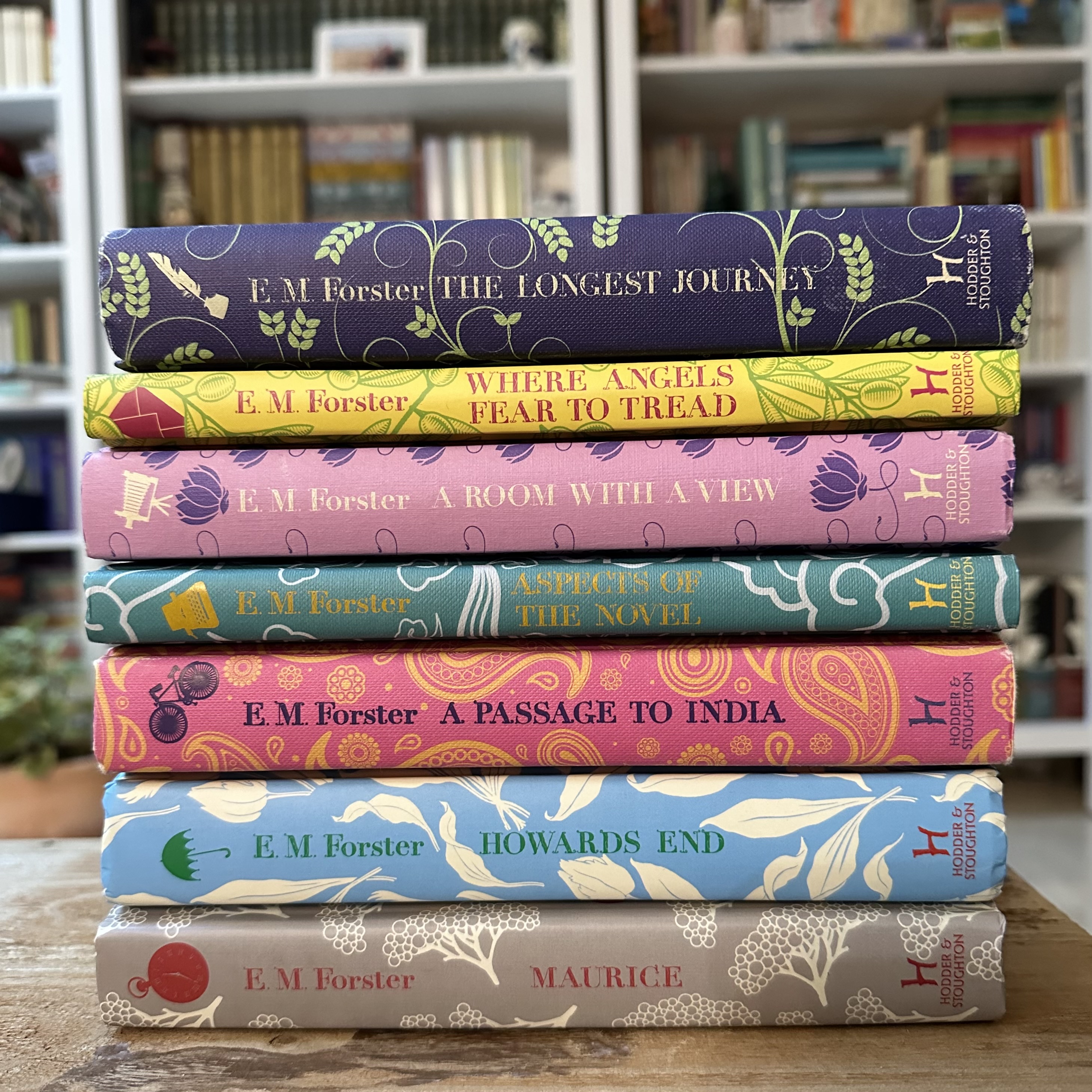
A few years ago, I discovered – thanks, Bookstagram! – this gorgeous set of clothbound hardcover editions of E.M. Forster’s novels. Now, I adore Forster; A Room with a View and A Passage to India are two of my favorite books. And these pretty, colorful hardcover designs were irresistible. I was charmed by the little umbrellas on the cover of Howards End and the pretty pink and yellow colors of Where Angels Fear to Tread and my favorite, A Passage to India. Hodder published this collection around 2011, and for a time they were all over bookish Instagram. I thought it’d be simple to complete my collection, and I wasn’t in a rush.
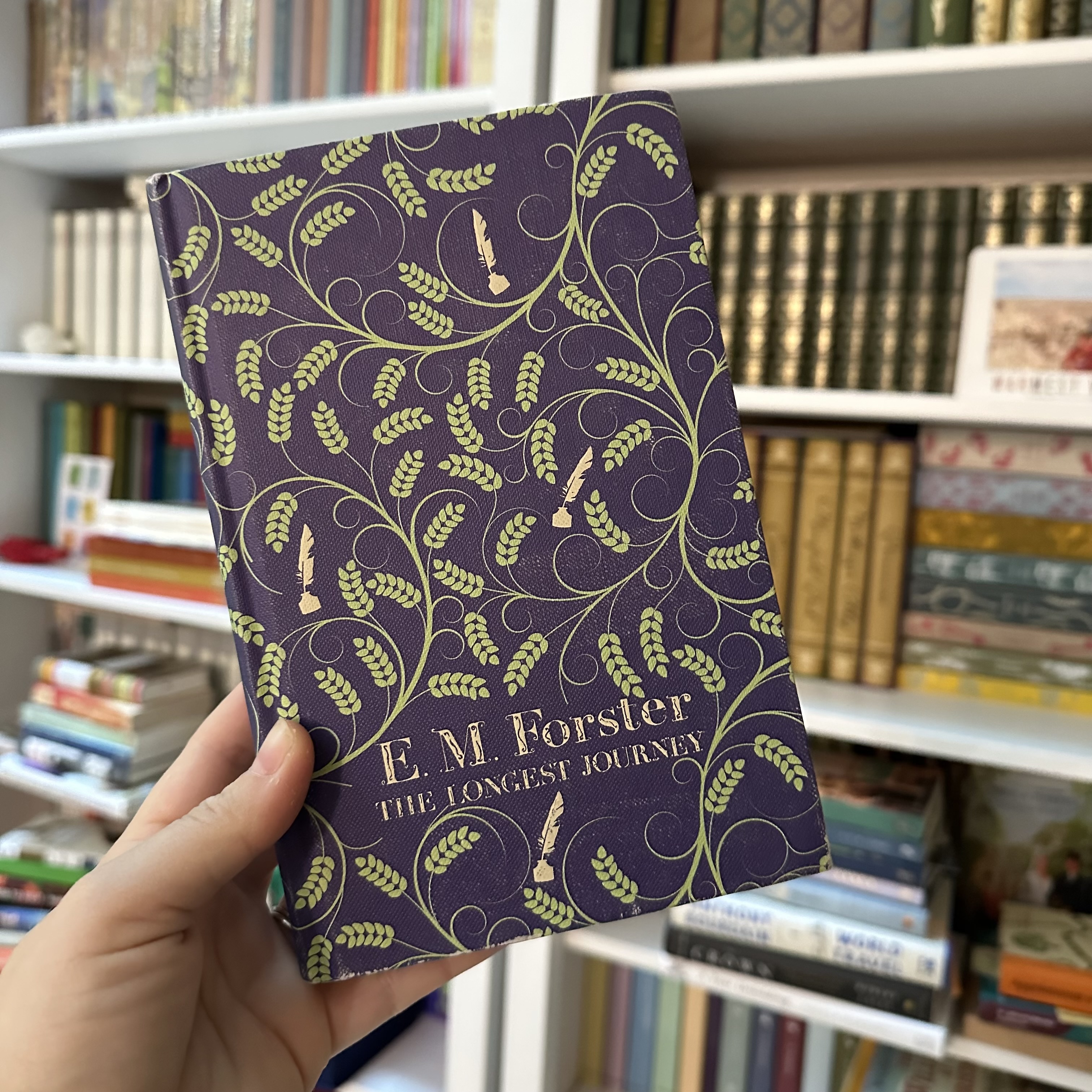
Then I hit a snag. I’d acquired this stack of six books, all reasonably priced and new, with no trouble at all, and in no hurry. But when I tried to complete the collection with the final book, The Longest Journey – not one of Forster’s most popular novels, and not one I’d read – I struck out. Everywhere, and repeatedly. Amazon didn’t have it. Abebooks didn’t have it. Etsy, eBay, Alibris, Blackwell’s – no, no, no, no. In desperation, I almost paid an exorbitant price to buy it from a Swiss academic bookstore’s website – only deciding not to, in the end, because I wasn’t convinced I’d receive the exact edition I wanted (and the idea of paying that much money and then opening a different edition was my book collecting nightmare). I set up google alerts and “wants” on various websites with the Hodder edition’s ISBN, and I waited. I waited for years.
Every so often, Abebooks would alert me that it had “found the book I want!” But it was never The Longest Journey. It was always Angel, by Elizabeth Taylor (the Virago Modern Classics hardcover edition, which I also collect and which I have still not bought). And then one day, I opened my gmail and found another Abebooks alert. Figuring it was Angel again, I opened the email without much hope.
You knew this was going to be a happy ending, right? But it almost wasn’t. I almost didn’t buy this, because it was listed as “acceptable” condition (I usually don’t buy anything below Very Good+) and while it was in the price range I had set, it was more than I really wanted to pay for that condition. But I’d been trying to buy this book for three years; I figured I’d jump on it while I could, and if it wasn’t in the kind of shape I wanted I’d keep looking out for a better copy. But when the book arrived, it was certainly acceptable to me; other than one small black line on the bottom page edge, and a tiny bit of corner bumping – better than I’d seen in other used books with a better condition rating – it was pretty much perfect. And now I had my complete set, just five years after I started the little stack.
Is that not a thing of beauty?
My grand takeaway from this years-long saga was this: YOLO. Life is short. Buy the book. If I’d just jumped on it back in 2019, I’d have had a complete collection all this time. But I was waiting and trying to be sensibly gradual about it and – you see where it got me: years of fruitless searching.
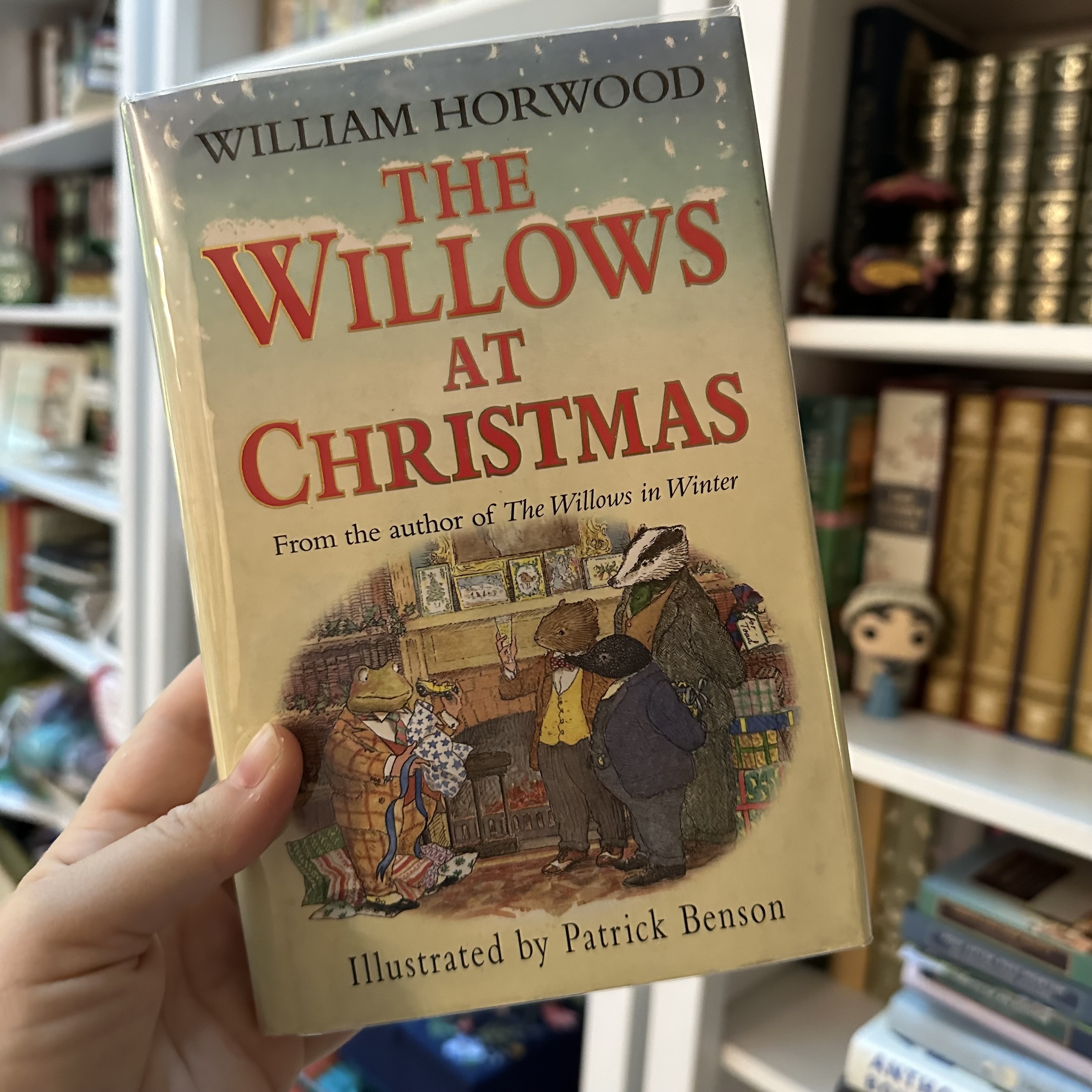
So when I recently became aware of a series of Wind in the Willows sequels – all written and published in the 1990s and now out of print – I decided not to make the same mistake. I love The Wind in the Willows and have read it multiple times, but I was unaware of a series of sequels which are supposed to be as charming as the original. So, I learned from my E.M. Forster experience and I just bought the books. I didn’t space them out at some arbitrary interval. I just found copies that were within what I decided was the price range I was willing to spend to add these sweet books to my library, and then I didn’t overthink it.
And given that this hardcover copy of The Willows at Christmas was the only one on Abebooks, I am glad indeed that I didn’t overthink it. If I had decided to wait until Christmas to buy it – which does sound like something I would do – I am sure it would have been gone, and I’d have repeated the long wait to complete a book collection.
Instead, I’ll be curling up with a cup of cocoa and reading this book by the light of my Christmas tree come December, and I’m delighted by this.
Whew – another busy week, last week! I was out of town on a business trip – internal meetings with my team – and those weeks never have time for much reading. (The last business trip, in June, I blocked off one evening with no social or networking obligations and just read, and that was wonderful. But not possible this time.) But I still managed to get through two books and start a third, so not too shabby!
Late last Sunday night, I started Swallows and Amazons – really not even enough to claim it on the prior week’s reading list; I had finished two books on the plane on my way to my business trip, and I just can’t stand to be between books, so I read a few pages before crashing that night. Any reading time I had over the week, I devoted to the Swallows and their Amazon pirate friends, and they kept me going. It was a delightful read and I can’t wait to follow along on the next adventure. When I finished that, I felt I’d set myself up enough for my next work book club book, House Woman. To be honest, I didn’t love this one – mainly because thrillers are just not my jam, and I didn’t care enough about any of the characters to feel at all tense or worried about them. I’ll think of something positive to say for book club, but for my friends here – I just wasn’t into it, and it felt like a chore to read. I did make it through the entire book, though, and finished it up Sunday early afternoon – then rewarded myself with a book I’ve been wanting to read for quite some time now: The Jasmine Farm, by Elizabeth von Arnim. I love Elizabeth von Arnim and this novel is supposed to be even more delightful than the utterly charming Father. I’m only about 35 pages into it so far, so plenty of fun in store. Yay!
I expect another busy workweek, so I’m planning for The Jasmine Farm to take up most of my limited reading time and attention. But I already have a plan for when I finish it: my mom loaned me Trevor Noah’s Born a Crime, which I inexplicably have not yet read. I’ll be correcting that next.
We hiked a new-to-us loop trail past several pretty waterfalls on Sunday! This pretty hike was tucked away behind a business park: talk about a hidden gem.
Another of my hopes for our Antarctic adventure was the chance to see the sun set in one of the most remote landscapes on Earth. This wasn’t a given; first of all, the weather’s gonna weather, and I didn’t know if the skies would cooperate with a spectacular sunset at all. And second, the sun sets late this far south – well after 10:00 p.m. – and I wasn’t even sure I’d be awake. But there were a few nights when I made it to sunset, and on one night in particular it was just gorgeous. I stood on the stern of the ship and watched as the sun dipped lower and lower in the sky while we cruised over calm seas.
The orange to blue ombre effect of the Antarctic summer sky – might be the happiest color combination there is.
I stayed out in the biting cold wind as long as I could, watching the orange of the sky deepen and burnish all of the craggy mountaintops.
I finally went in when the sun was gone, although it still wasn’t dark and wouldn’t be dark for a few more hours. Antarctica is spectacular in every light, but there is something very special indeed about sunset.
Next week: paddles back in the water at Neko Harbour!
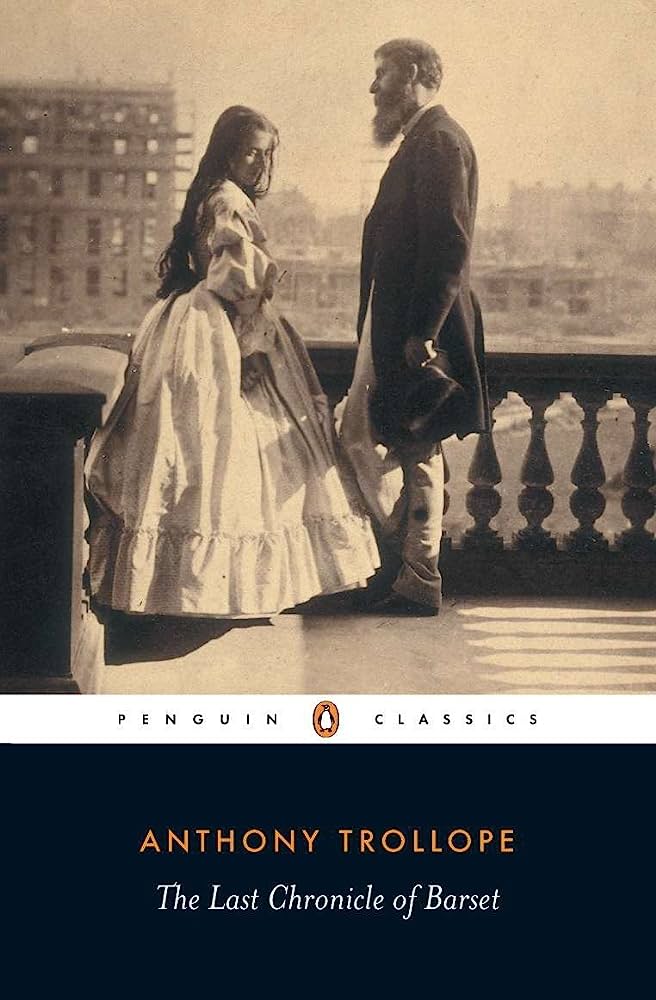
Well – I can’t believe I am actually sitting down to write this post. A review of the sixth and final novel in Trollope’s Barsetshire series, and my very last review for the Classics Club Challenge (this round anyway; I’m not planning any future rounds, but never say never). This was a fitting book to end on, both the Barsetshire books and the reading challenge. Trollope did it right.
The Last Chronicle of Barset focuses its main plotline on the Crawley family. Rev. Josiah Crawley, Perpetual Curate of Hogglestock, first made his appearance in the fourth Barset novel, Framley Parsonage. His role in that story is small – he mostly exists as a counterpoint and occasional sense-talker for his much wealthier neighbor, Mark Robarts, the Vicar of Framley. In Framley Court Trollope explains that Rev. Crawley is an educated but impoverished clergyman, plucked from the obscurity of a poor diocese in Cornwall and established at Hogglestock by his old friend Mr Arabin, Dean of Barchester Cathedral. Hogglestock is meant to be a more comfortable living for Mr Crawley than his Cornish parish, but even so it’s not exactly an Eden. The poorest part of the county, its parishioners are mostly rough farm laborers and brickmakers at Hoggle End. And the living is small – not really enough for Mr Crawley to support his family, and they are often reduced to accepting charitable gifts (mostly of food) from their more well-off friends – the Robarts and Lufton families, mostly. This is a source of intense shame and humiliation to Mr Crawley. When The Last Chronicle opens, Mr Crawley seems to have finally been broken – he is accused of stealing a check for twenty pounds. Brought before a panel of magistrates, Mr Crawley cannot explain where he got the check from; his brain has become muddled by years of crippling poverty and worry. But he refuses to engage a lawyer to defend him, and the local magistrates have no choice but to commit him for trial at the next assizes. And with that, Mr Crawley and the check become the talk of Barchester, and the biggest scandal to sweep the county – a clergyman thief! – in years.
Everybody in the county was talking about Mr Crawley. At home, at Framley, there was no other subject of discourse. Lady Lufton, the dowager, was full of it, being firmly convinced that Mr Crawley was innocent, because the bishop was supposed to regard him as guilty. There had been a family conclave held at Framley Court over the basket of provisions which had been sent for the Christmas cheer of the Hogglestock parsonage, each of the three ladies, the two Lady Luftons and Mrs Robarts, having special views of their own, How the pork had been substituted for beef by old Lady Lufton, young Lady Lufton thinking that after all the beef would be less dangerous, and how a small turkey had been rashly suggested by Mrs Robarts, and how certain small articles had been inserted into the bottom of the basket which Mrs Crawley had never shown to her husband, need not be told at length. But Mr Robarts, as he heard the two grooms talking about Mr Crawley, began to feel that Mr Crawley had achieved at least celebrity.
(Young Lady Lufton, of course, is our old friend Lucy Robarts, whose love story with Lord Lufton and overcoming the opposition of his mother, the elder Lady Lufton, is the main storyline of Framley Parsonage.)
Mr Crawley’s presumed disgrace seems to concern everyone in the county, and the fate of his entire family hangs in the balance. Mrs Crawley is most concerned for her husband’s mental strength, but she also worries about how she and her younger daughter, Jane, will live if Mr Crawley goes to prison – as indeed it seems likely he will, unless he can remember and explain how he obtained the stolen check. The Crawleys also have an elder daughter, Grace, and her entire future is hanging in the balance of her father’s trial. Grace has met, befriended, and fallen in love with Major Henry Grantley, the younger son of Archdeacon Grantly – a wealthy clergyman, perpetual opponent of Bishop Proudie, and one of the main characters in The Warden and Barchester Towers, the first two books of the series. Archdeacon Grantly has added to his wealth and lands over the years with the intent of passing it all down to his children. His daughter Griselda needs nothing, having made a brilliant marriage – she is now a Marchioness. His elder son, Charles, is climbing the episcopal ranks, married a noblewoman, and is ambitiously aiming at a bishop’s palace of his own. Major Grantly, the youngest, is a widower with a young daughter and his father’s cherished ambition is to make a wealthy landowner and squire of him. But Major Grantly is now in love with the daughter of the shabbiest, poorest curate in Barsetshire – who is probably going to prison for theft. Both Archdeacon and Mrs Grantly are dismayed by their son’s announcement that he plans to pursue Grace Crawley no matter what happens to her father, and they threaten to cut off his income and transfer his entire inheritance to his brother if he takes this drastic step.
I won’t go into any more detail about the plot than I already have. I won’t solve the mystery of the stolen check for you, or tell you if Mr Crawley’s story ends poorly or happily. I won’t tell you if Grace Crawley finds happiness with Major Grantly or if she falls ingloriously with her father, and I won’t tell you if Lily Dale and John Eames – who also make re-appearances in this story – finally end up together or not. I won’t tell you what happens to the Bishop and Mrs Proudie, to the Arabins or the Grantlys or Mr Harding or any of the other characters. You should read the whole series, befriend these people, and then enjoy following their stories to the natural conclusion; I’m not going to ruin it for you.
All I want to say is this: The Last Chronicle of Barset was the perfect ending to the series. I’d read that it is the darkest of the six novels, and that might be true (although I personally feel that The Small House at Allington was darker). But I still found it a joy to read – while the central plot (how did Mr Crawley get the check, and will he escape prison?) is compelling and kept me turning pages, what really made this book for me was the many appearances of characters who have become old friends. It seemed that everyone was here: Mr Harding, the Arabins, the Grantlys, the Proudies, the Dales, Dr and Mrs Thorne (the former Miss Dunstable, still fabulous!), the Greshams, the Robartses, the Luftons… everyone got at least a cameo, and several got their own story arcs and endings. Not every story was tied up neatly, with a bow, but that was okay – every character got a fitting conclusion, even if it wasn’t always what I would have chosen for them. This made the book a massive 930 pages, but it was worth it.
Actually, my one complaint about the book does relate to its length: Trollope includes a side plot about John Eames’ romantic adventures in London, and this was just unnecessary in my view. He introduces new characters, none of whom are very nice, and a plotline that is a little boring. He does tie it rather loosely to John’s love for Lily, but it felt unnecessary. I’d have rather had Trollope remove that plot altogether and cut some length from the book, or devote those pages to more about the Greshams, who only got the very shortest of cameos, or the Arabins’ adventures abroad. But really, this is a minor complaint: I was happy for Trollope to take me on this journey, one last time, through the cobbled streets of Silverbridge and Barchester, the winding country lanes of Barset, and into the drawing rooms of my favorite characters and the light-dappled nave of Barchester Cathedral.
And now, if the reader will allow me to seize him affectionately by the arm, we will together take our last farewell of Barset and of the towers of Barchester. I may not venture to say to him that, in this country, he and I together have wandered often through the country lanes, and have ridden together over the too well-wooded fields, or have stood together in the cathedral nave listening to the peals of the organ, or have sat together at good men’s tables, or have confronted together the angry pride of men who were not good. I may not boast that any beside myself have so realized the place, and the people, and the facts, as to make such reminiscences possible as those which I should attempt to evoke by an appeal to perfect fellowship. But to me Barset has been a real country, and its city a real city, and the spires and towers have been before my eyes, and the voices of the people are known to my ears, and the pavement of the city ways are familiar to my footsteps. To them all I now say farewell. That I have been induced to wander among them too long by my love of old friendships, and by the sweetness of old faces, is a fault for which I may perhaps be more readily forgiven, when I repeat, with some solemnity of assurance, the promise made in my title, that this shall be the last Chronicle of Barset.
Have you read Trollope’s Chronicles of Barsetshire? Which is your favorite? It’s still Doctor Thorne for me, but I did love this fitting finale.
Happy Monday… afternoon, whoops. Another late post, sorry guys – it’s just one of those seasons of life. Last week was as busy as they always are, between the camp schedules and work and unpacking and house projects, just, yikes. (I feel like I write the same thing every Monday. Last week was crazy! But I still found time to read for my sanity, so yay!)
Anyway – I did find time to read, and quite ample time, although three books doesn’t look like it. Over the majority of the week, I worked my way methodically through The Last Chronicle of Barset. I think I mentioned last week that I wasn’t sure I’d enjoy it as much as I have some others, but I ended up really loving it. Full review to come for the Classics Club, but the tl;dr is that it was a fitting conclusion to the series, with lots of much-loved characters from earlier books making appearances, and with a satisfying ending. After wrapping up Barset, I went back to my kindle to finish up In this House of Brede, which I’d had lingering on my currently-reading shelf since my business trip in June. It was wonderful, heart-wrenching, tragic, uplifting – just a total reading experience. Lots more to say about that. And finally, on audiobook, I wrapped up the last four hours of One Summer: America 1927, which I’ve been recommending to everyone. Again, lots more to say about that – but it’s fun, fascinating, and very engaging on audio.
This week: back to regularly scheduled summer reading. I’m finally getting to Swallows and Amazons! More soon.
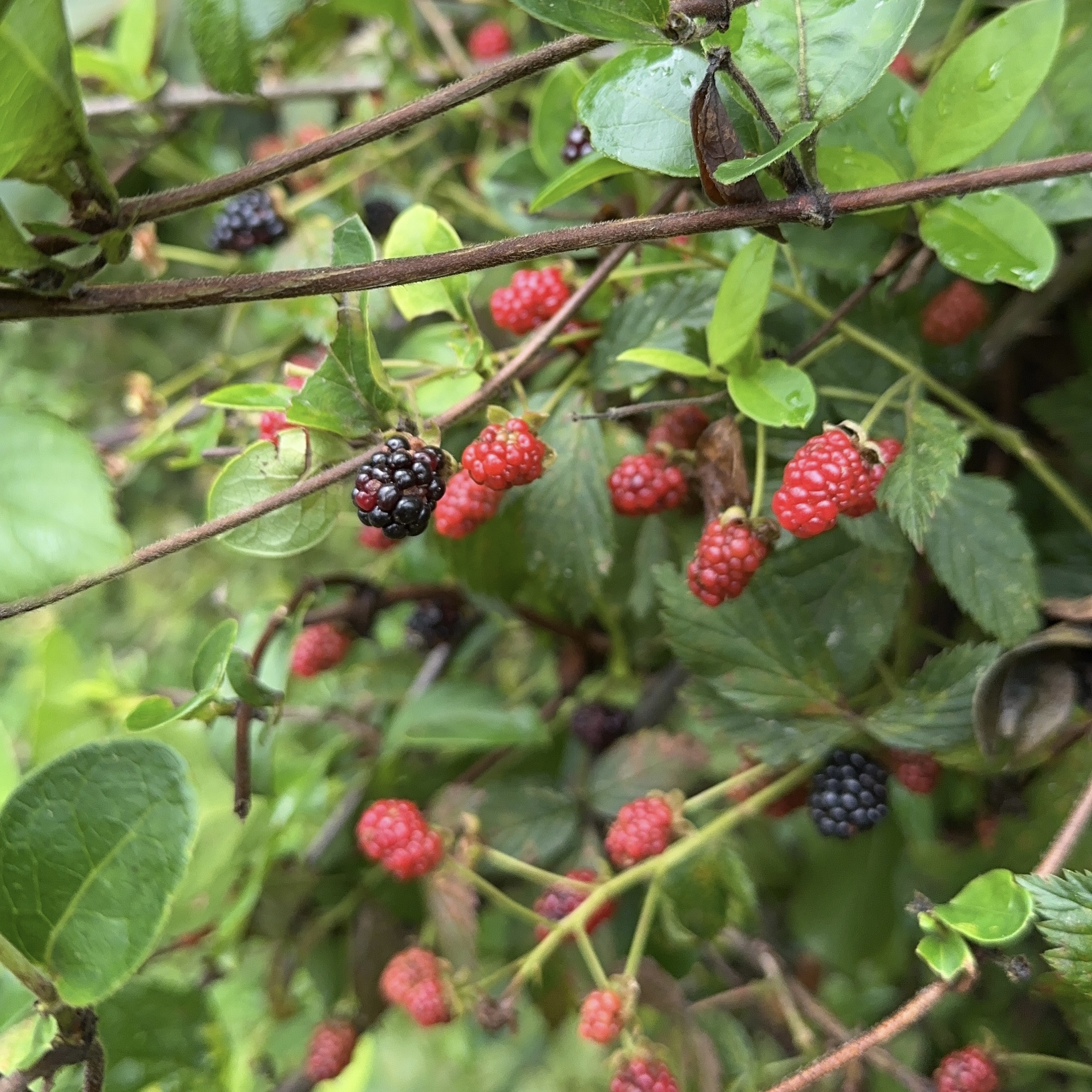
Nugget and I went for a neighborhood stroll (he enjoys commenting about our neighbors’ decks because he’s eight going on forty) and we found BLACKBERRIES! This news was less exciting to the other members of our family.
As we worked our way north from our adventures south of the Antarctic Circle, our Expedition Leader came on the PA and announced to the ship that we were going to sail the Lemaire Channel again. When we’d sailed it southwards, it was early in the morning and still a bit foggy. Now the sun was out and there were no other ships trying to make the passage – so basically, just for fun, we were going to do it again. Absolutely no one complained, because why would anyone ever not want to sail this?
The water was sparkling and the sunlight was dancing along the ridgelines of the ice-crusted mountains. It was absolutely otherworldly.
The glaciers were spectacular and impressive. I think I mentioned in a previous post that I’d never seen a glacier before Antarctica. No such thing as starting small.
At one point, a gaggle of gentoo penguins swam past us, porpoise-style, cresting the water and then diving gracefully below. I hoped they were catching plenty of fish for their chicks back at the colony!
Just a short little detour for you today, as this was just a short little detour through the Lemaire Channel. But when it’s there, and the sun’s out, this glory is unmissable.
Next week: speaking of glory, I’ve got an Antarctic sunset for you!
The penultimate novel of Trollope’s Chronicles of Barsetshire introduces us to yet another outlying area of the region: Allington and Guestwick. Previous chronicles introduced us to the clerical lights of Barchester itself – Bishop Proudie and his wife, Dean and Mrs Arabin, kindly Mr Harding; to the Grantly family of Plumstead Episocpi; the Thornes of Ullathorne and Chaldicotes; the Greshams of Greshamsbury and Boxall Hill; the Robarts and Lufton families of Framley; and the leading families of the region, the de Courcy family and the Duke of Omnium. Now we’re taken to Allington and introduced to Squire Dale. The old squire never married – he was unlucky in love and the Dales are known for their constancy; his heir is a nephew, Captain Bernard Dale, and he has two nieces and a widowed sister-in-law living in a dowager’s house on his property. Squire Dale’s own residence is the Great House, and Mrs Dale and her two daughters live in the Small House. As the reader might easily guess, the action revolves around the Small House and its three residents.
Caution: spoilers ahead!
Bell and Lily Dale are widely regarded as two of the prettiest young ladies in the area. They’re not rich, but would-be suitors assume their uncle plans to make some provision for them when they marry. And that’s the state of things when Bernard visits and brings with him a young friend, Adolphus Crosbie. Mr Crosbie is a government clerk, but proves to be something of an “Apollo,” as a first derogatory and then soon admiring Lily puts it. For his part, this Apollo is struck by Cupid’s arrow and quickly becomes infatuated with Lily – and with the idea that she will have a large dowry courtesy of Uncle Christopher. Against his own better judgment, and ignoring private fears that a wife and houseful of children will mean the end of the freewheeling lifestyle he enjoys – he proposes, and is accepted. And he’s immediately conflicted. Lily is pretty and her adoration is flattering. But when Squire Dale expresses his disinclination to settle any money at all on Lily – meaning she’ll be bringing only her own very modest income to the marriage home – he’s dismayed.
The squire is nurturing a fond wish that Bernard will marry his cousin Bell, and he plans to settle all of his disposable riches on them. Bernard is willing, but Bell has someone else in mind. Squire Dale’s fury at his pet matrimonial project being stymied – and Mrs Dale’s steadfast refusal to do anything to influence her daughter in favor of Bernard – lead to the two houses splitting, temporarily, in anger. Mrs Dale threatens to move out – a financially disastrous idea, because she has no money of her own and is living rent-free in great comfort – and Bell and Lily egg her on. Squire Dale refuses to budge and the result is that the Small House is thrown into upheaval as the three Dale ladies prepare to move. Being mid-move myself when I read this, the following passage really resonated with me:
Who does not know how terrible are those preparations for house-moving;–how infinite in number are the articles which must be packed, how inexpressibly uncomfortable is the period of packing, and how poor and tawdry is the aspect of one’s belongings while they are thus in a state of dislocation? Nowadays people who understand the world, and have money commensurate with their understanding, have learned the way of shunning all these disasters, and of leaving the work to the hands of persons paid for doing it. The crockery is left in the cupboards, the books on the shelves, the wine in the bins, the curtains on their poles, and the family that is understanding goes for a fortnight to Brighton. At the end of that time the crockery is comfortably settled in other cupboards, the books on other shelves, the wine in other bins, the curtains are hung on other poles, and all is arranged. But Mrs Dale and her daughters understood nothing of a method of moving such as this.
Meanwhile, all is not well for Lily either. Mr Crosbie, dismayed by her lack of fortune, attends a house party at Courcy Castle and finds himself manipulated into proposing to a daughter of the house, Lady Alexandrina de Courcy. Now the character who is least inclined to marriage in, possibly, all of Trollope – has two fiancees. Whoops! There’s no jilting a de Courcy, so Lily’s love is sacrificed on the altar of Crosbie’s ambition. Lily is, understandably, devastated – and she spends the rest of the book mourning her lost love and committing to her new plan of never marrying anyone at all. Despite all evidence of Crosbie’s character, she insists she loves him and will have no one else – which is tough luck on her childhood friend Johnny Eames, who has loved her since they were schoolchildren but didn’t feel able to tell her of his love until he had a means to provide for her. Eames’s star is finally on the rise (thanks to a lucky break with a bull and an Earl), but he’s too late to win Lily.
Before picking up this book, I’d read that Lily Dale was Trollope’s least likable heroine. Now that I’ve read it, I wouldn’t say she is unlikable, necessarily (although she’s no Eleanor Harding, Mary Thorne or Lucy Robarts) but darned if she isn’t the most frustrating. This being Trollope, I assumed she would eventually come to her senses and marry John Eames – rewarding his steadfast love and being rewarded, herself, with his more than solid financial status. Up until The Small House at Allington, all of the Trollope novels I’ve read have had more or less conventionally happy endings.
Enter Lily Dale.
We are told repeatedly through the book that the Dales are known for their constancy. I’d edit that to pig-headedness. While Squire Dale eventually accepts that Bernard and Bell are not meant to be, his newfound (and frankly pretty paltry) flexibility is too late to secure a marriage between Lily and Mr Crosbie, and Lily will have no one else. She would literally rather spend her entire life an old maid than marry her newly rich childhood sweetheart. This level of stubborn idiocy actually deserves what it gets.
Mrs Dale is almost as frustrating. She refuses to intercede in her daughters’ love lives – a fair and laudable position to take unless you consider that marriage was the one means a woman had in Victorian times of securing her financial position. She’s staking their entire comfort later in life on Uncle Christopher, but she’s also willing to fight with him to the point of moving out of the house – a step that would have irreparably broken their relationship had she gone through with it, which fortunately she was prevented from doing by Lily’s illness after being jilted by Mr Crosbie. Had Mrs Dale and the girls actually left the Small House, their futures would have been bleak indeed.
When I read Trollope, I often think of Jane Austen. His books often have a very similar feel, even though they were written a few decades later. Austen would, I suspect, have had no sympathy for Lily or Mrs Dale. Mrs Dale is the anti-Mrs Bennet – reluctant to a fault to interfere in her daughters’ lives. While Mrs Bennet makes for an object of ridicule at first, when you stop to think about it, she’s a far more successful mother by the standards of the day. I’ve written about Mrs Bennet before – in a world in which the choice was often between marriage and literal destitution, Mrs Bennet got five fortune-less daughters married, two of them to very rich men, and secured her entire family’s financial futures. Meanwhile, Mrs Dale has one daughter married to a poor country doctor and as for the other – well, she could have married an Earl’s heir but instead the Dales are well on their way to becoming the Mrs and Miss Bates of Barsetshire. (Imagine if Lizzy had refused to marry Darcy even after finding out what a complete rogue Wickham is, just because she liked Wickham first.) I couldn’t help but think that had Austen been writing The Small House at Allington, either Bell would have eventually fallen for Bernard or Dr Crofts would have fallen into a large surprise inheritance, and Lily would have ended up with John Eames.
Don’t think, though, that I didn’t like The Small House at Allington – it seems impossible for me to dislike anything Trollope does. I find his writing so absorbing, his characters and settings so compelling, and his stories so compulsively readable that no matter how disappointed I am in a character’s maddening stubbornness, I still loved every page.
Lily Dale is a dip, though, and needs remedial life coaching from Lizzy Bennet.
Have you read the Chronicles of Barsetshire? Which is your favorite? For me, it’s still “Doctor Thorne.”
Monday again – and the start of a busy week, after a busy weekend, that followed a previous busy week. There’s no rest for the wicked, is there? Unpacking continues to be a slow and laborious process; today our reusable moving boxes are being picked up, so getting them all emptied out and stacked up in the garage was the top priority and everything else – other house projects I wanted to do, and of course reading – took a backseat. I’m glad to report that we did finish with the reusable boxes and I rewarded myself with an hour on the couch reading Trollope.
Right, so about reading. The Thirty-First of June is on here because I actually turned the final page on Monday of last week. But in reality, the week’s reading was devoted to two books: The Last Chronicle of Barset – my final Classics Club Challenge read, WOW – in hardcover, and One Summer: America 1927 on audio. The Last Chronicle of Barset would’ve been a good winter read, as the action largely takes place between November and February, and it’s the darkest of the series. This would have been useful information to consider when I was deciding to save the final two Barsetshire novels to read during the summer as a treat. Whoops. Still really enjoying it, though – many, many characters from previous Barsetshire books make appearances and I’m holding out hope for a happy ending for at least some of them. I will report back.
And on audio, I’m a little more than a third of the way through One Summer and enjoying it immensely. This one certainly is a seasonally appropriate read, and every detail – from the main plotlines (for lack of a better word – this is nonfiction) to the many interesting little tangents Bryson just loves – has been so interesting. The audiobook is read by the author and wonderfully engaging; I am finding myself looking for excuses to run errands so I can listen more.
On deck for this coming week – more of the same. I’m not quite halfway through The Last Chronicle of Barset and even if I read one hundred pages a day (generally an achievable pace for me, but not always in a busy season) I won’t get through the book before next weekend. So I’m nowhere near ready to think about what’s next. And the same goes for One Summer. It’s a long book and the audiobook is a commitment, and even at nearly 40% of the way through I still have nine hours and change to go. (I’ll be down in the eights after camp pickup today…) Commutes and errands aren’t going to take me that long, so I’ll still be listening to One Summer this time next week – but that’s fine. I can already tell that this is one of those books which, long as it is, I’ll be sad to see end.
This past weekend wasn’t ALL work and no play. On Saturday we went to a Washington Nationals game – the tickets were Steve’s gift for Father’s Day, but we all like going to baseball games. This was a good one, too, at least for awhile. The Nats hit four home runs in three innings and were leading 8-0 when the skies opened up and sent all of the fans scurrying for cover. The rain was coming down in such buckets that they covered the field and called a rain delay, and we left. As it turns out, we saw all the best plays of the game in those three innings; they resumed some hours later and the Nats ended up winning 8-3. We all had fun, but Nugget was the happiest of all; he had the biggest grin and nearly jumped out of his seat at every home run. He’s already looking forward to his next baseball practice so he can tell his coach all the details of the game.
On the afternoon of our third day in Antarctica, it was finally time for the moment we’d been anticipating for years – the first dipping of our kayak paddles into Antarctic waters! Our sea kayaking group had met several times for briefings and gear checks, but we’d been stymied until now in our efforts to actually get out on the water. But finally, the weather and ocean conditions were good enough that the sea kayak guides, YT and Jess, decided that we could go out. YAY!
The Yalour Islands were scheduled to be a zodiac cruise only, so there was no shore landing. So as all of our fellow passengers lined up to board their zodiacs, we zipped each other into dry suits and neoprene booties, shimmied into kayak skirts, and clambered into Big Bertha, an oversized zodiac that was piled with paddles and dragging about a dozen or so sea kayaks, ducky-style, behind it. Mark, our zodiac driver, motored us out to a secluded spot where YT – the lead guide – decided it was calm enough to launch.
I’m not sure what my fellow kayakers were most nervous about, but for me the biggest worry was this – launching from the zodiac. I have launched kayaks in all different ways – from beaches, docks, and knee deep water – but the idea of a zodiac launch was nerve-wracking. I was picturing a graceless tumble over the huge inflated pontoon, ending at best in an unattractive slide into the kayak cockpit and at worst in a capsized boat, an embarrassing splash, and me in the water with one or more of my new friends. Fortunately – none of that happened, and launching from the zodiac was easier and quicker than I feared.
And before we knew it, we were all launched, bobbing gently in the rolling waves, and waiting to set off on our first sea kayaking adventure!
I’m planning a Q&A post for later in this series, and I’ll explain more about the mechanics of the sea kayaking experience then – so just briefly, for now, sea kayaking is an add-on adventure for most Antarctic tour companies (including ours). We paid extra for the experience and the idea was that we would kayak as much as possible on the voyage, going out whenever weather and ocean conditions permitted. Kayaking replaced zodiac cruising but we’d still have shore landings – we would just unload our kayaks at Big Bertha and zodiac to shore, then catch whatever zodiac we could to head back to the ship after a landing. On days like this one, where no shore landing was planned, we’d kayak the entire time.
I could immediately tell that kayaking in Antarctica was going to be like nothing I had ever experienced. We paddled through brash ice and past towering glacier walls and icebergs. (Giving the icebergs a wide berth, because as YT explained, if one decided to roll over while we were paddling past: “Death. Death. Death. Death. Human crushers.” Got it.) And almost right away, we experienced another of the amazing experiences kayaking in Antarctica brings: close-up wildlife encounters.
We spotted a crabeater seal hauled out and enjoying a nap on a little slab of pancake ice. In our almost silent kayaks, we glided up to the closest spot where we could watch and still be safe and respectful of international wildlife viewing laws. The seal didn’t seem to notice us or care about our presence at all.
This paddle was one of the most fun experiences of my life – that’s not hyperbole, that’s true. Between the sparkling brash ice (such fun to paddle; it was like kayaking in a giant slushee), the amazing scenery, the napping crabeater seal… it was just totally different, unique, and such, such fun.
Little known to us, this was just the first of eight kayaking adventures on this trip – the most of any voyage all season. We were truly blessed in the weather and ocean conditions. So – plenty more paddling pictures to come!
Next week: we go through the Lemaire Channel again, because why not? But this time, there’s SUNSHINE! Check in with me then…





























 covered in flour