

Reading is my oldest and favorite hobby. I literally can’t remember a time in my life when I didn’t love to curl up with a good book. Here are my reads for April, 2016…
 What Is Not Yours Is Not Yours, by Helen Oyeyemi – This was my first Oyeyemi, and it was certainly creative. As is par for the course with me and short stories, I liked some of the stories more than others. The quality was evenly good; I just take a little while to connect to a narrative sometimes, and short stories don’t always work for me for that reason. But as short stories go, this was an engaging, creative volume.
 Men Explain Things To Me, by Rebecca Solnit – This was one of those reads that I think should be required for everyone. It’s a slim volume containing a selection of Solnit’s essays on feminism and other topics, including the title piece, “Men Explain Things To Me,” which starts out humorous but soon becomes much more serious as Solnit explores the ways in which women’s voices are silenced. “Men Explain Things To Me” is widely credited with first articulating the phenomenon of “mansplaining,” although Solnit doesn’t use the word itself – but she certainly describes it accurately. I’ve been “mansplained” to, and it is one of the most irritating, demeaning experiences – but I had never considered that I was being silenced as well as annoyed. Lots of thought-provoking stuff here.
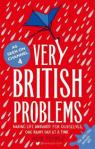 Very British Problems: Making Life Awkward for Ourselves, One Rainy Day at a Time, by Rob Temple – I’m a huge fan of Temple’s Very British Problems twitter account, and can often be heard reading his tweets aloud to Steve. This book is basically the Twitter account in print form, so a quick read. It’s a bit redundant and repeats a lot of the same jokes that can be found on Twitter, but it’s good fun – and especially after just finishing a Very Serious Read.
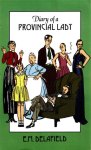 Diary of a Provincial Lady, by E.M. Delafield – I loved, loved, LOVED everything about this side-splitting romp through the life of a provincial wife and mother in 1930s England. Behind the staid title is an absolutely hilarious, completely brilliant comedy of the trials and errors of an interwar housewife. She is constantly beleaguered by her husband, neighbors, houseguests and servants, not to mention by children who – adorable that they may be – have a tendency to play pop records on repeat, appear in the nude before company, and ask for a banana at the most inopportune moments. She may be broke and terrible at gardening, but the Provincial Lady is my favorite diarist. (This is a series, and I can’t wait to read more.)
 The Story of Hong Gildong, by Unknown – Hong Gildong is the son of a high government minister, but having been born to a maid in the minister’s house, he will never be able to hold high office himself, or even be acknowledged as a member of the family. After his father’s concubine tries to have him assassinated, Hong Gildong runs away and uses his superpowers (because why not?) to become the Robin Hood-esque leader of a band of outlaws, then moves on to taking over small countries (because again, why not?). Hong Gildong is a famous figure who has inspired many a movie and cartoon in Korea, but I’d never heard of him before Penguin Classics published a new translation of this classic. Since I’m trying to broaden my reading horizons this year, I picked it up, and it was enjoyable.
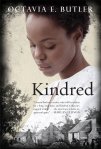 Kindred, by Octavia Butler – A blog reader recommended Kindred to me when I first switched from food blogging to book blogging, and I filed away the recommendation accordingly but just recently got to it. Dana is a modern (well, 1970s) black woman who is suddenly, and unnervingly, jerked out of her time and deposited in antebellum Maryland, where she promptly saves the life of the plantation owner’s young son. Dana and the boy, Rufus, have an inexplicable connection that causes Dana to travel unwillingly back and forth in time each time Rufus needs to be rescued, but as Dana’s visits to the past become longer and more dangerous, it becomes less clear that she will be able to complete her mission in the past and get home to a relatively more civilized era. This was a harrowing, brilliant, upsetting and engrossing read – highly recommended, but not for the faint of heart.
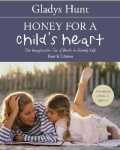 Honey for a Child’s Heart: The Imaginative Use of Books in Family Life, by Gladys Hunt – I was underwhelmed by this volume, which came highly recommended by the hosts of a reading aloud podcast that I enjoy. I don’t love parenting books that pound me over the head with a Jesus-shaped hammer, and this one did. Plus – now, it’s possible I had an outdated version; the library copy was pretty old – I bristled at the author’s describing “a wife’s job” as an unnecessary or extraneous “activity” that may need to make way for a reading aloud habit to form. Sorry, G, but not all of us are able to quit our jobs to make more time for reading aloud. Verdict: skip this one and make use of the great free resources you can find online, if you’re looking for tips and recommendations for reading aloud to kids.
 An Irish Country Doctor (Irish Country #1), by Patrick Taylor – This was a fun, gentle, amusing visit with Dr. Barry Laverty, apprentice doctor in the Northern Ireland village of Ballybucklebo. Barry arrives in town and takes up a job (with the offer of full partnership in a year – wish law firms worked that way!) as assistant doctor, and quickly learns that his newfangled medical notions and all his studying will only get him so far with this crowd. I found Barry a little insufferable (okay, a lot insufferable) but I think he’ll improve with time. As I mentioned in one of my Monday reading posts, doctor stories aren’t my cup of tea (I’m not a fan of medical shows, either) but this one wasn’t too bad. I still would have preferred if the main characters were a vicar and curate, though!
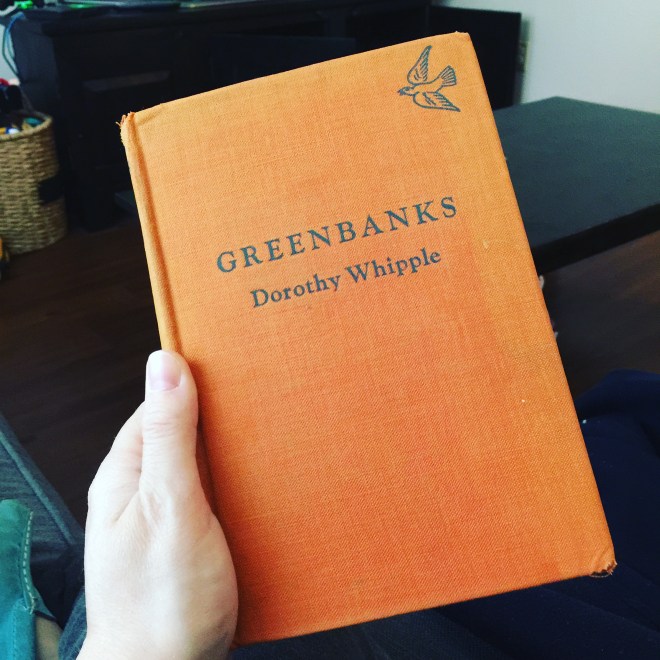
 Greenbanks, by Dorothy Whipple – How had I never read any Dorothy Whipple before? Well, I know how – she’s not exactly well-known. But I don’t think I’ve read a better English interwar family drama than Greenbanks, Whipple’s chronicle of the life and times of the Ashtons of Greenbanks. There is Louisa, matriarch of the family, staring down the fact that she is becoming increasingly obsolete; Rachel, Louisa’s favorite granddaughter; Charles, youngest son, black sheep of the family and his mother’s darling; Kate, Louisa’s companion, around whom a deep sadness hangs; Letty, Rachel’s mother, who is regretting her marriage; Ambrose, Letty’s imperious husband; and so many more characters. Louisa and Rachel are the stars of the story, but every single character – from the main duo down to the most minor of side characters – is so fully realized and alive, it’s just astonishingly good. More people need to read Dorothy Whipple. Greenbanks was a perfect place to start, and I’m already plotting a Persephone order so I can get my hands on a few more of her novels.
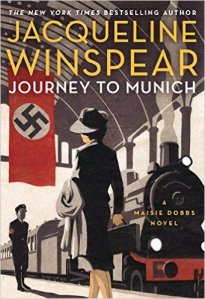
 Journey to Munich (Maisie Dobbs #12) – I’ve read every one of the Maisie books, and this was one of the best. Still mourning her husband and child, Maisie has returned to England and is contemplating reopening her investigations business when she is swept back into the British Secret Service and tasked with a vitally important mission that will take her into the heart of Nazi Germany. Maisie swears that she will not undertake any more missions after this one is complete, but I hope she’s wrong. Maisie may not enjoy it, but I love seeing her get mixed up in espionage, and goodness knows there will be more opportunities for spying coming her way…
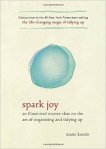 Spark Joy: An Illustrated Master Class on the Art of Organizing and Tidying Up, by Marie Kondo – Kondo’s companion to The Life-Changing Magic of Tidying Up, through which I snickered last summer, was more useful than the original. She shares tips and tricks and provides an illustrated guide to folding, and answers many of the questions that readers posed after reading the first volume (like “if I throw out my Neosporin because it doesn’t spark joy, what will happen if I skin my knee?”… no? just me?). It’s still silly and a little insane from time to time, but I actually found Spark Joy… dare I say… helpful? But I will continue to struggle with KonMari’s insistence that by balling up my socks, I am crushing their spirits.
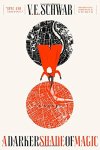 A Darker Shade of Magic (Shades of Magic #1), by V.E. Schwab – Kell is one of two remaining Travelers, powerful magicians with the ability to move between parallel worlds. Kell lives in Red London, a thriving and healthy kingdom in which magic is ripe for use by anyone. His job, as adopted son to the king and queen, is to carry messages to Grey London, a dreary realm with no magic and a mad king (George III), and to White London, where magic has become too powerful and is gradually destroying the population. Kell also is a smuggler, carrying trinkets back and forth between worlds – and that is (predictably) what gets him into trouble. I’ve been reading a lot more fantasy lately, and this was a good addition. I’m looking forward to the next volume (which is out now – I’m just waiting for my library hold to come in, no surprise there).
Whoa… TWELVE books this month?! TWELVE?!?! I don’t think I’ve ever had a month in which I’ve read this many books, since I started book blogging. It was a bit of an up and down month – a couple of underwhelming choices, many that were fine but not revelatory, and a few really outstanding picks. The highlights of the month have to be discovering the Provincial Lady and Dorothy Whipple, and I am looking forward to spending a great deal more time with them over the coming months. Kindred was a wonderful (although difficult) read as well, and of course I always enjoy a visit with Maisie. I can’t complain about April’s reads, that’s for sure!
What did you read last month?







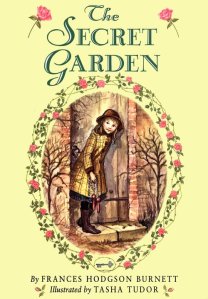 My first pick, of course, has to be The Secret Garden, by Frances Hodgson Burnett. For many of us – me included – it is the definitive spring read. Young Mary Lennox is sent from India, the only home she has ever known, to be ward in the house of a wealthy, but reclusive, uncle. “Mary Mary Quite Contrary” is bored and resentful – until she gets “a bit o’ earth” to nurture. Soon Mary discovers a walled garden, neglected since the mistress of the house passed away. With the help of local boy Dickon, Mary gradually comes out of her own shell and then turns her attention to drawing out her fretful, hypochondriac cousin Colin. Soon the crisp spring air, warm sunshine, cheerful robins and budding garden are working miracles on both lonely children – but what will happen if Mary, Dickon and Colin are discovered in the forbidden garden?
 In The Enchanted April, by Elizabeth von Arnim, four strangers (or near-strangers) rent an Italian castle together, and their souls are healed by “wisteria and sunshine.” On a rainy day in Hampstead, Lotty Wilkins spies an advertisement for an Italian castle for rent for the month of April. Dreaming of escaping the cold weather and an even colder marriage, Lotty allows herself to fantasize about a month in paradise – but actually renting the castle seems out of reach. That changes quickly when Lotty sees Rose Arbuthnot, a casual acquaintance, sighing over the same ad. Lotty convinces a reluctant Rose to come along for the ride and together the two women convince Mrs. Fisher, an elderly (and rather grumpy) widow, and young socialite Lady Caroline Dester, to combine forces and funds. At first, the project seems to be going poorly – there is some squabbling, mainly spearheaded by Mrs. Fisher, over garden access. But the Italian countryside soon works its magic over all of the ladies. Lotty and Rose spend hours sitting in one of the gardens that Mrs. Fisher permits them to use, and rambling through the wilderness. Lady Caroline (“Scrap,” to her friends) dozes in the sunshine and soon comes out of her shell as well, and even cantankerous Mrs. Fisher finds herself soothed and calmed by the peaceful retreat.
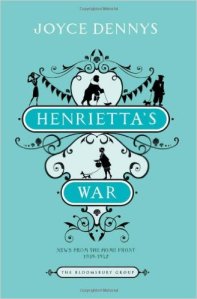 Henrietta is the wife of a Devonshire doctor, mother of two grown children, and feeling useless when we first meet her in Henrietta’s War, by Joyce Dennys. World War II has broken out and she is generally disqualified from the war work that most other women in the village are doing, as her role is to “take care of the doctor” and she simply can’t be spared for anything else. As a result, Henrietta is bored and embarrassed by her seeming uselessness, and she spends quite a lot of time pottering about in her garden and relating her activities therein to her “dear childhood’s friend” Robert, to whom she writes breezy, newsy letters to cheer up his service at the front. Henrietta is far from useless in the village, but she actually is rather useless in the garden, which is refreshing, and her tribulations are quite funny. Anyone who has struggled to keep plants alive (coughTHISgirlcough) will recognize Henrietta’s frustration, and nod along in relief – we’re not the only black thumbs out there!






 covered in flour