
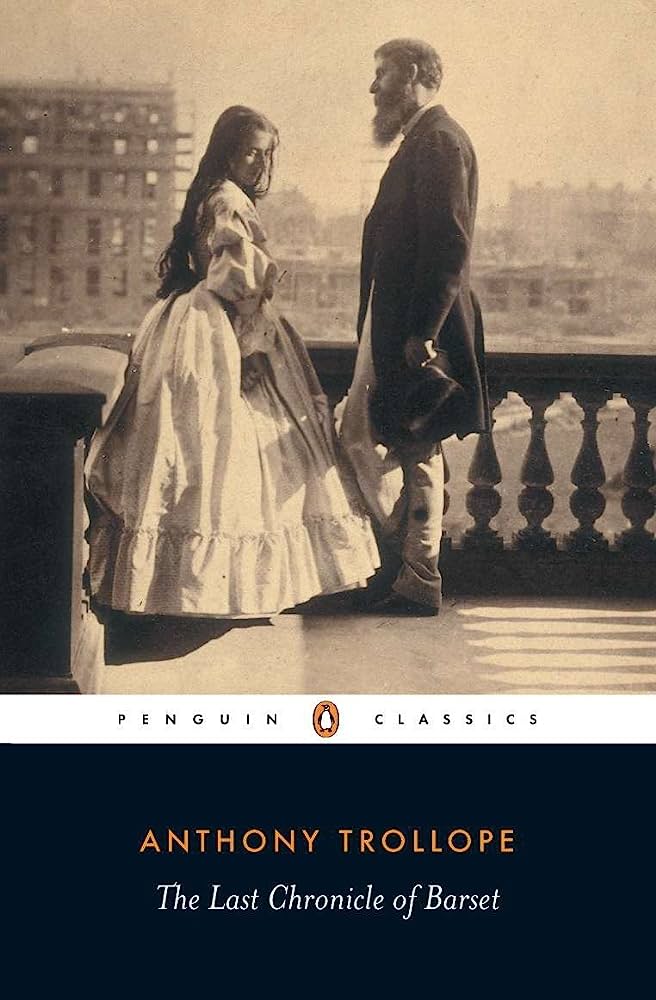
Well – I can’t believe I am actually sitting down to write this post. A review of the sixth and final novel in Trollope’s Barsetshire series, and my very last review for the Classics Club Challenge (this round anyway; I’m not planning any future rounds, but never say never). This was a fitting book to end on, both the Barsetshire books and the reading challenge. Trollope did it right.
The Last Chronicle of Barset focuses its main plotline on the Crawley family. Rev. Josiah Crawley, Perpetual Curate of Hogglestock, first made his appearance in the fourth Barset novel, Framley Parsonage. His role in that story is small – he mostly exists as a counterpoint and occasional sense-talker for his much wealthier neighbor, Mark Robarts, the Vicar of Framley. In Framley Court Trollope explains that Rev. Crawley is an educated but impoverished clergyman, plucked from the obscurity of a poor diocese in Cornwall and established at Hogglestock by his old friend Mr Arabin, Dean of Barchester Cathedral. Hogglestock is meant to be a more comfortable living for Mr Crawley than his Cornish parish, but even so it’s not exactly an Eden. The poorest part of the county, its parishioners are mostly rough farm laborers and brickmakers at Hoggle End. And the living is small – not really enough for Mr Crawley to support his family, and they are often reduced to accepting charitable gifts (mostly of food) from their more well-off friends – the Robarts and Lufton families, mostly. This is a source of intense shame and humiliation to Mr Crawley. When The Last Chronicle opens, Mr Crawley seems to have finally been broken – he is accused of stealing a check for twenty pounds. Brought before a panel of magistrates, Mr Crawley cannot explain where he got the check from; his brain has become muddled by years of crippling poverty and worry. But he refuses to engage a lawyer to defend him, and the local magistrates have no choice but to commit him for trial at the next assizes. And with that, Mr Crawley and the check become the talk of Barchester, and the biggest scandal to sweep the county – a clergyman thief! – in years.
Everybody in the county was talking about Mr Crawley. At home, at Framley, there was no other subject of discourse. Lady Lufton, the dowager, was full of it, being firmly convinced that Mr Crawley was innocent, because the bishop was supposed to regard him as guilty. There had been a family conclave held at Framley Court over the basket of provisions which had been sent for the Christmas cheer of the Hogglestock parsonage, each of the three ladies, the two Lady Luftons and Mrs Robarts, having special views of their own, How the pork had been substituted for beef by old Lady Lufton, young Lady Lufton thinking that after all the beef would be less dangerous, and how a small turkey had been rashly suggested by Mrs Robarts, and how certain small articles had been inserted into the bottom of the basket which Mrs Crawley had never shown to her husband, need not be told at length. But Mr Robarts, as he heard the two grooms talking about Mr Crawley, began to feel that Mr Crawley had achieved at least celebrity.
(Young Lady Lufton, of course, is our old friend Lucy Robarts, whose love story with Lord Lufton and overcoming the opposition of his mother, the elder Lady Lufton, is the main storyline of Framley Parsonage.)
Mr Crawley’s presumed disgrace seems to concern everyone in the county, and the fate of his entire family hangs in the balance. Mrs Crawley is most concerned for her husband’s mental strength, but she also worries about how she and her younger daughter, Jane, will live if Mr Crawley goes to prison – as indeed it seems likely he will, unless he can remember and explain how he obtained the stolen check. The Crawleys also have an elder daughter, Grace, and her entire future is hanging in the balance of her father’s trial. Grace has met, befriended, and fallen in love with Major Henry Grantley, the younger son of Archdeacon Grantly – a wealthy clergyman, perpetual opponent of Bishop Proudie, and one of the main characters in The Warden and Barchester Towers, the first two books of the series. Archdeacon Grantly has added to his wealth and lands over the years with the intent of passing it all down to his children. His daughter Griselda needs nothing, having made a brilliant marriage – she is now a Marchioness. His elder son, Charles, is climbing the episcopal ranks, married a noblewoman, and is ambitiously aiming at a bishop’s palace of his own. Major Grantly, the youngest, is a widower with a young daughter and his father’s cherished ambition is to make a wealthy landowner and squire of him. But Major Grantly is now in love with the daughter of the shabbiest, poorest curate in Barsetshire – who is probably going to prison for theft. Both Archdeacon and Mrs Grantly are dismayed by their son’s announcement that he plans to pursue Grace Crawley no matter what happens to her father, and they threaten to cut off his income and transfer his entire inheritance to his brother if he takes this drastic step.
I won’t go into any more detail about the plot than I already have. I won’t solve the mystery of the stolen check for you, or tell you if Mr Crawley’s story ends poorly or happily. I won’t tell you if Grace Crawley finds happiness with Major Grantly or if she falls ingloriously with her father, and I won’t tell you if Lily Dale and John Eames – who also make re-appearances in this story – finally end up together or not. I won’t tell you what happens to the Bishop and Mrs Proudie, to the Arabins or the Grantlys or Mr Harding or any of the other characters. You should read the whole series, befriend these people, and then enjoy following their stories to the natural conclusion; I’m not going to ruin it for you.
All I want to say is this: The Last Chronicle of Barset was the perfect ending to the series. I’d read that it is the darkest of the six novels, and that might be true (although I personally feel that The Small House at Allington was darker). But I still found it a joy to read – while the central plot (how did Mr Crawley get the check, and will he escape prison?) is compelling and kept me turning pages, what really made this book for me was the many appearances of characters who have become old friends. It seemed that everyone was here: Mr Harding, the Arabins, the Grantlys, the Proudies, the Dales, Dr and Mrs Thorne (the former Miss Dunstable, still fabulous!), the Greshams, the Robartses, the Luftons… everyone got at least a cameo, and several got their own story arcs and endings. Not every story was tied up neatly, with a bow, but that was okay – every character got a fitting conclusion, even if it wasn’t always what I would have chosen for them. This made the book a massive 930 pages, but it was worth it.
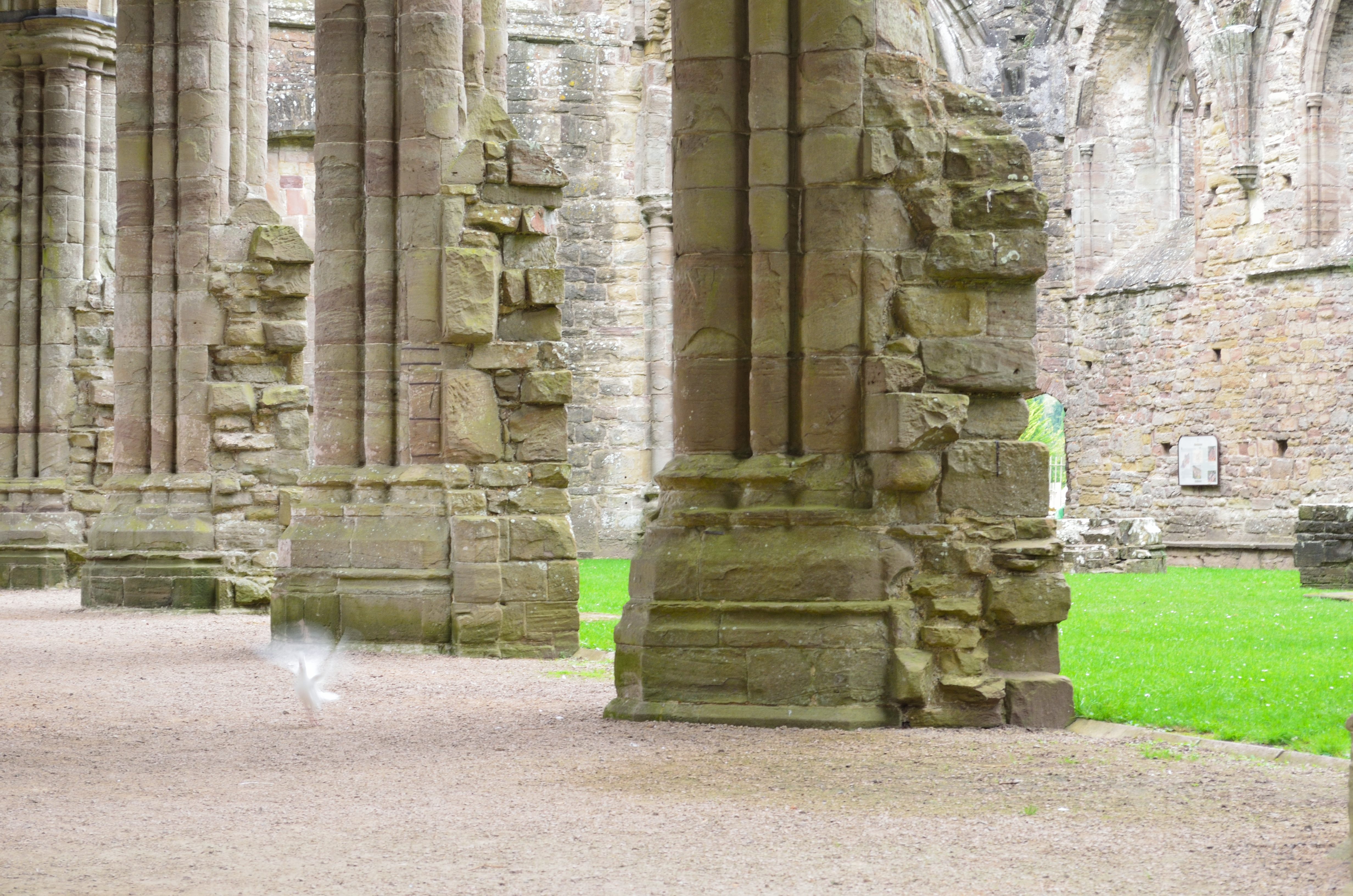
Actually, my one complaint about the book does relate to its length: Trollope includes a side plot about John Eames’ romantic adventures in London, and this was just unnecessary in my view. He introduces new characters, none of whom are very nice, and a plotline that is a little boring. He does tie it rather loosely to John’s love for Lily, but it felt unnecessary. I’d have rather had Trollope remove that plot altogether and cut some length from the book, or devote those pages to more about the Greshams, who only got the very shortest of cameos, or the Arabins’ adventures abroad. But really, this is a minor complaint: I was happy for Trollope to take me on this journey, one last time, through the cobbled streets of Silverbridge and Barchester, the winding country lanes of Barset, and into the drawing rooms of my favorite characters and the light-dappled nave of Barchester Cathedral.
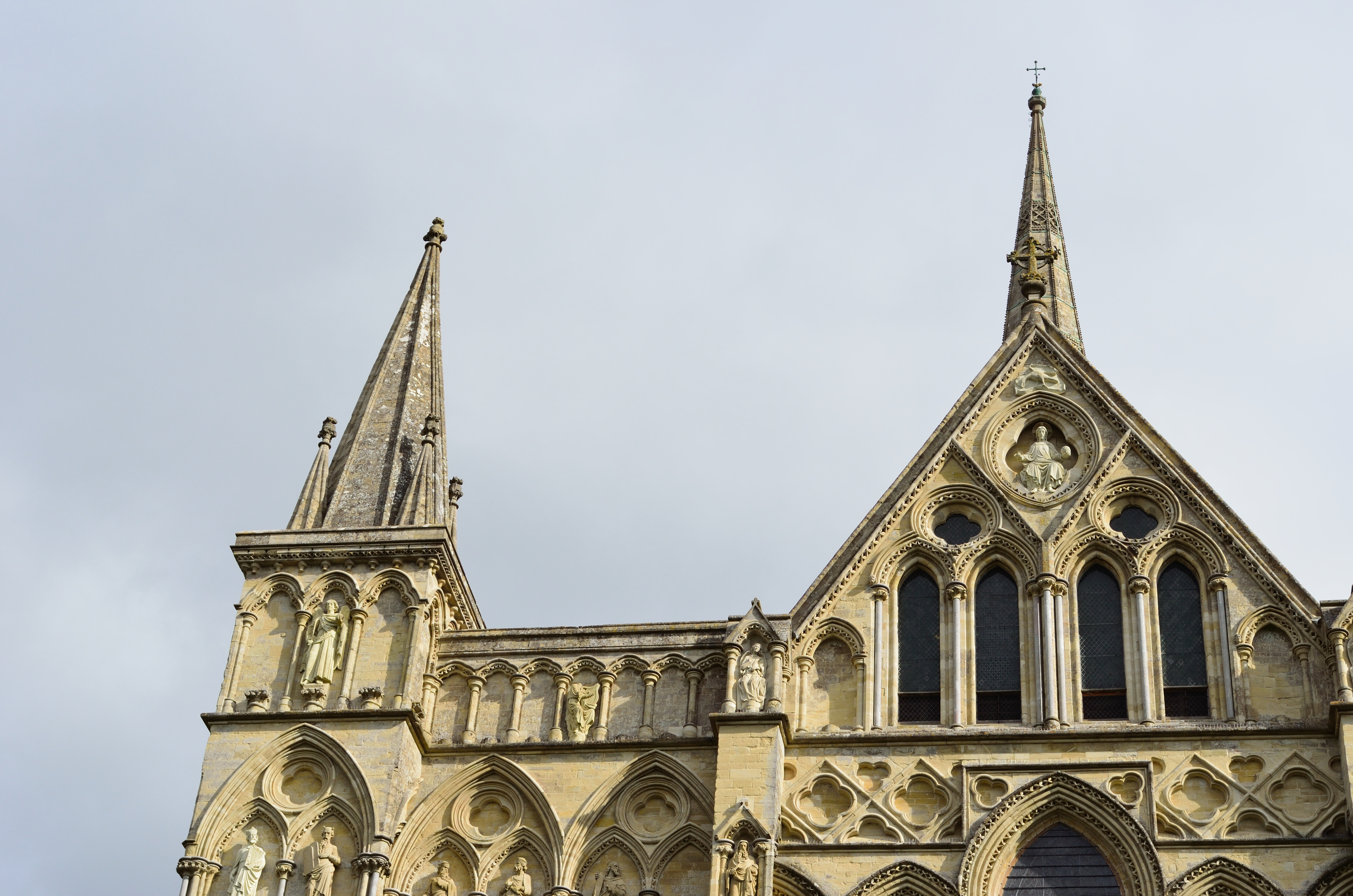
And now, if the reader will allow me to seize him affectionately by the arm, we will together take our last farewell of Barset and of the towers of Barchester. I may not venture to say to him that, in this country, he and I together have wandered often through the country lanes, and have ridden together over the too well-wooded fields, or have stood together in the cathedral nave listening to the peals of the organ, or have sat together at good men’s tables, or have confronted together the angry pride of men who were not good. I may not boast that any beside myself have so realized the place, and the people, and the facts, as to make such reminiscences possible as those which I should attempt to evoke by an appeal to perfect fellowship. But to me Barset has been a real country, and its city a real city, and the spires and towers have been before my eyes, and the voices of the people are known to my ears, and the pavement of the city ways are familiar to my footsteps. To them all I now say farewell. That I have been induced to wander among them too long by my love of old friendships, and by the sweetness of old faces, is a fault for which I may perhaps be more readily forgiven, when I repeat, with some solemnity of assurance, the promise made in my title, that this shall be the last Chronicle of Barset.
Have you read Trollope’s Chronicles of Barsetshire? Which is your favorite? It’s still Doctor Thorne for me, but I did love this fitting finale.
 covered in flour
I read them years ago and loved them all. They helped me get through a difficult winter. My favourite was The Last Chronicle. Thanks for writing about them here–a wonderful reminder of a favourite series.
Thank you for this comment! I’m so glad that you enjoyed my review – these are really wonderful books. I’m looking forward to reading the Palliser series soon.
I haven’t read the Palliser novels yet–I sort of feel as if I’m saving them. Not sure what I’m waiting for. I’ll be keen to hear what you think of the series!
Pingback: Reading Round-Up: July 2023 – covered in flour