
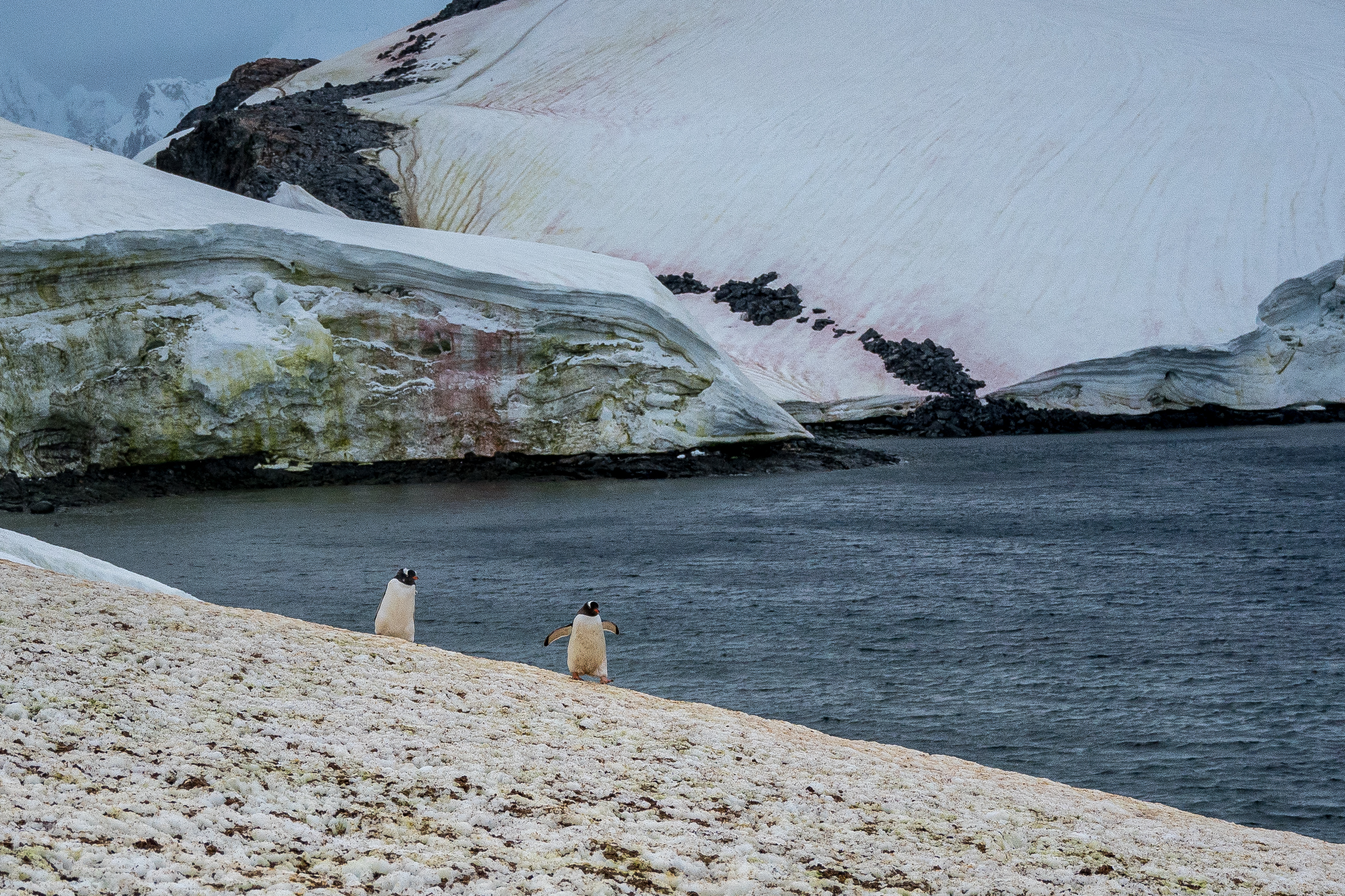
After our morning cruise through the Lemaire Channel, everyone on the ship was anxious to get our muck boots onto the ice. I think the expedition crew was, too, because they wasted no time at all in getting our anchor dropped and the zodiacs in the water at Port Charcot.
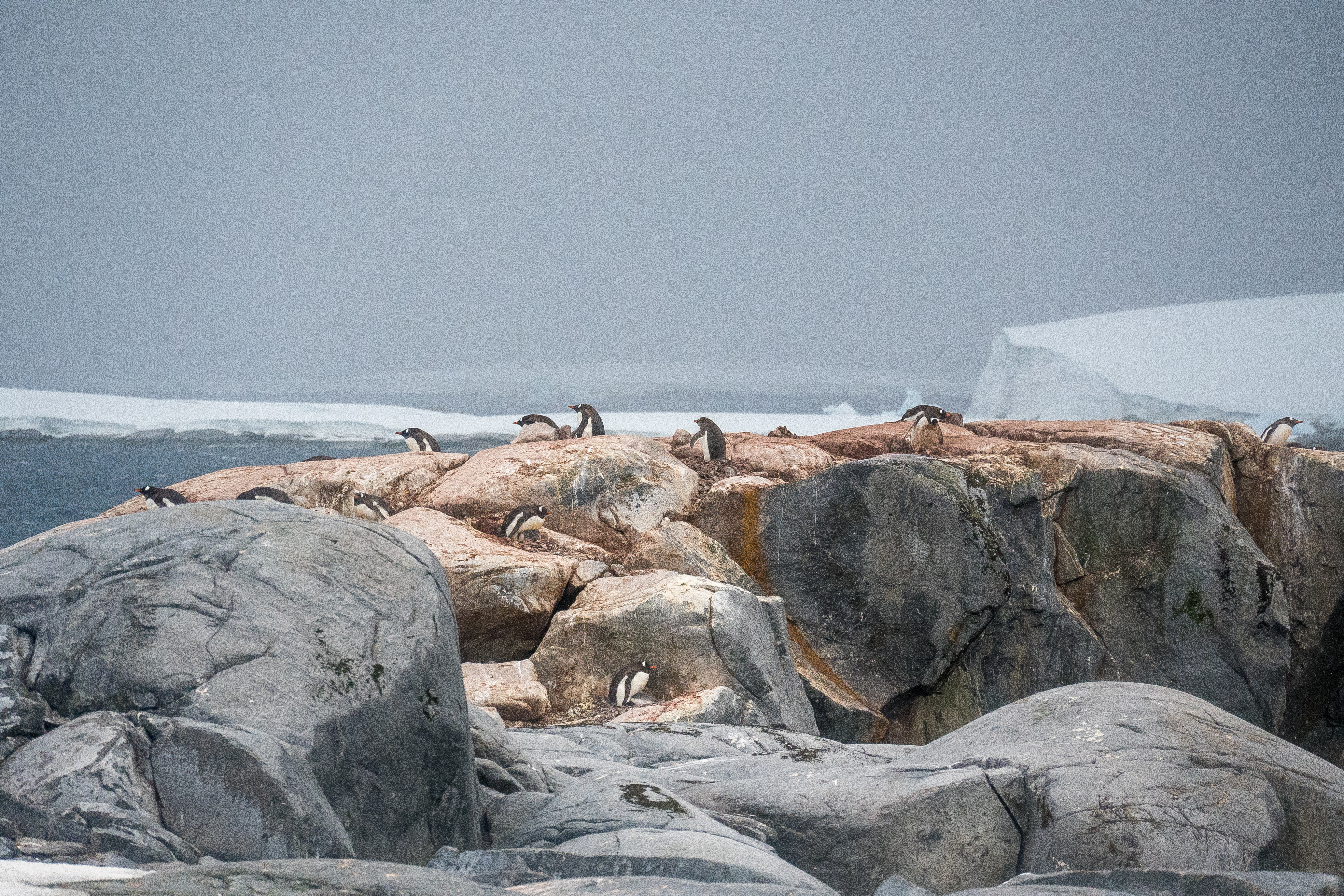
I was beyond giddy at the prospect of seeing my first penguin colony!

The island we were exploring was home to a good-sized colony of gentoo penguins. I learned a few things right away: first, you can smell a penguin colony before you see it. It’s an unmistakable odor (the word aroma is really too pleasant). Good thing they’re so darn cute!
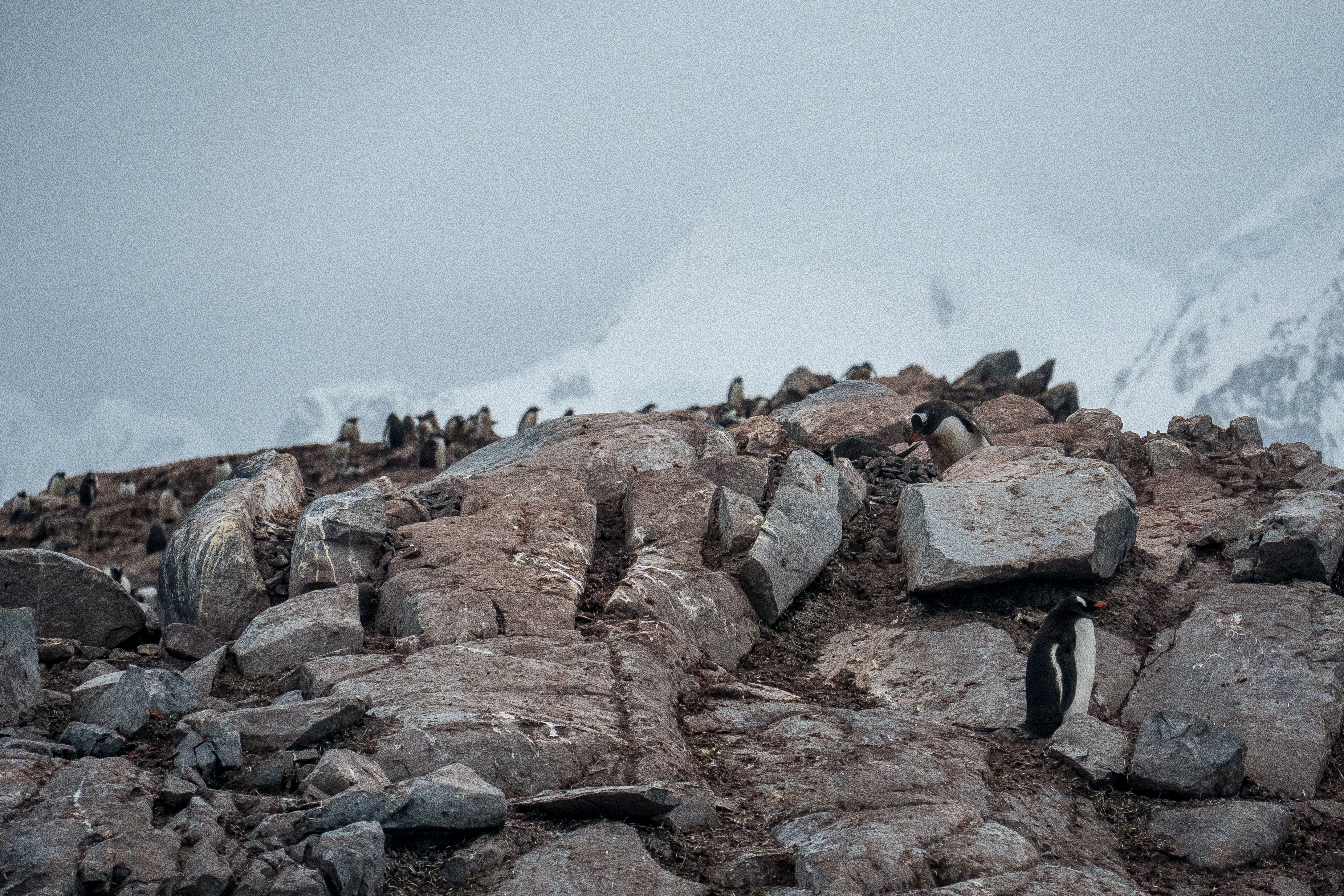
Second, I learned that penguins are obsessive remodelers. The nest is never finished!
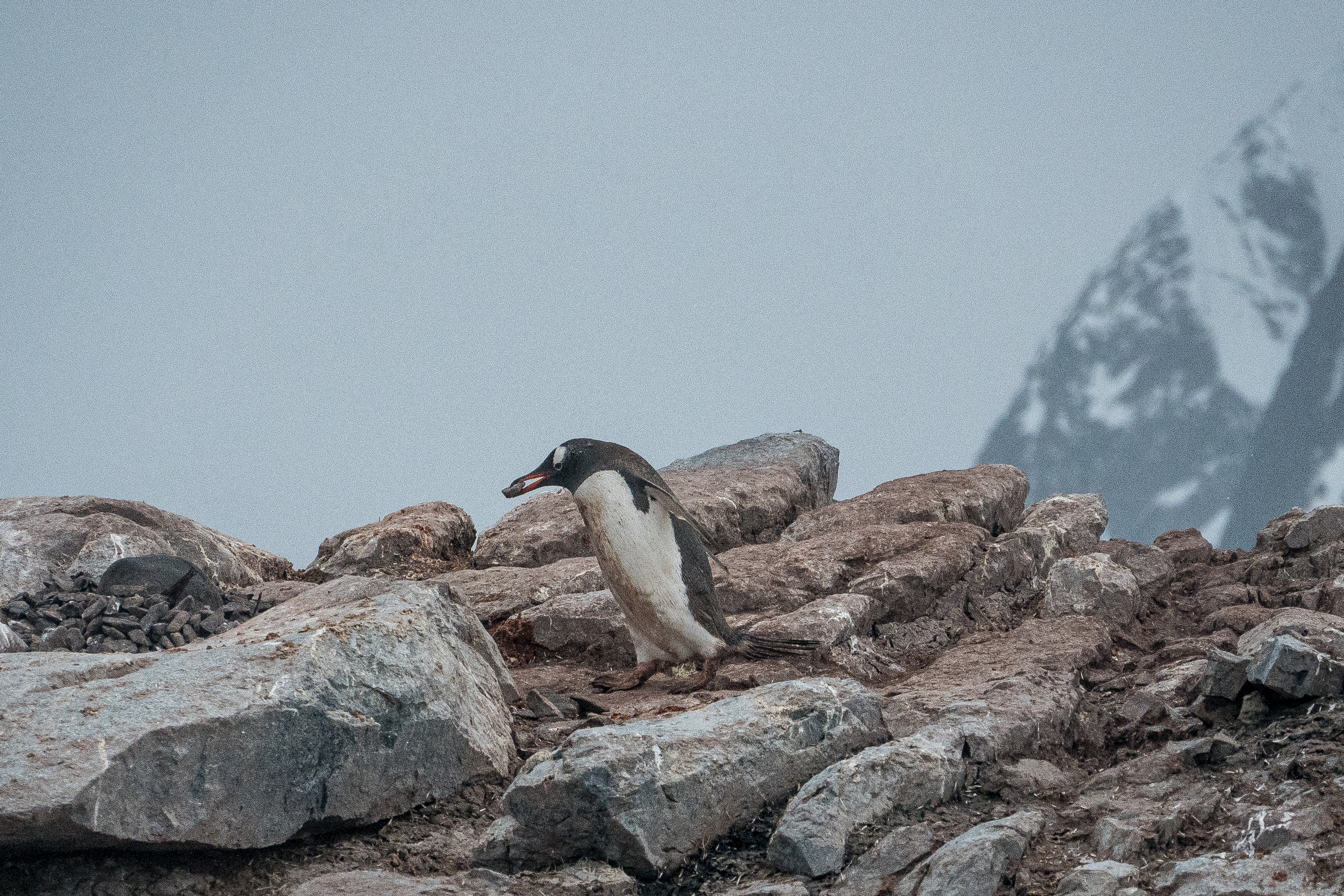
For instance, I watched this guy (or gal – you can’t tell) going back and forth with rocks to add to the nest, over and over and over and… over.
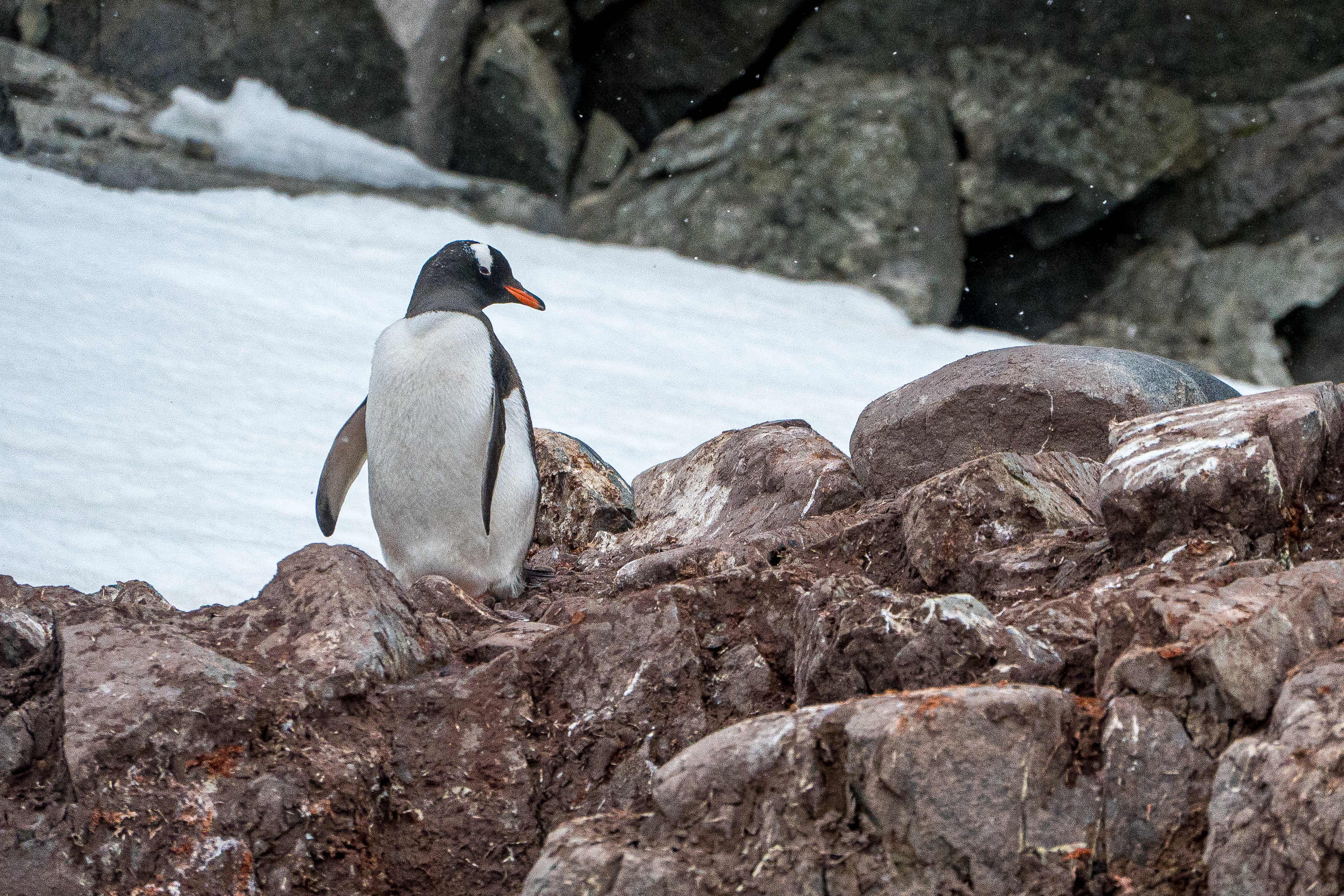
Ready for my close-up!
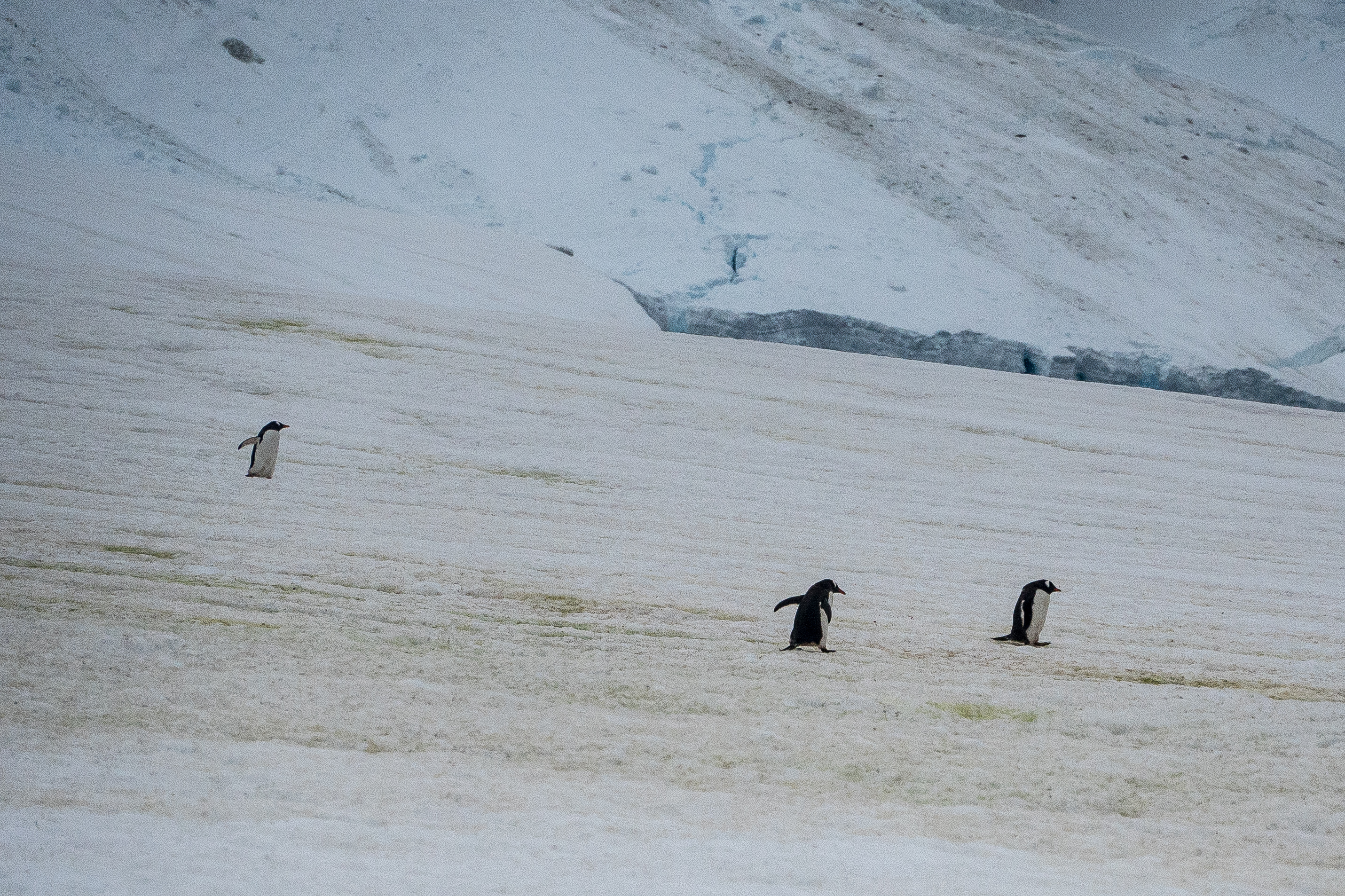
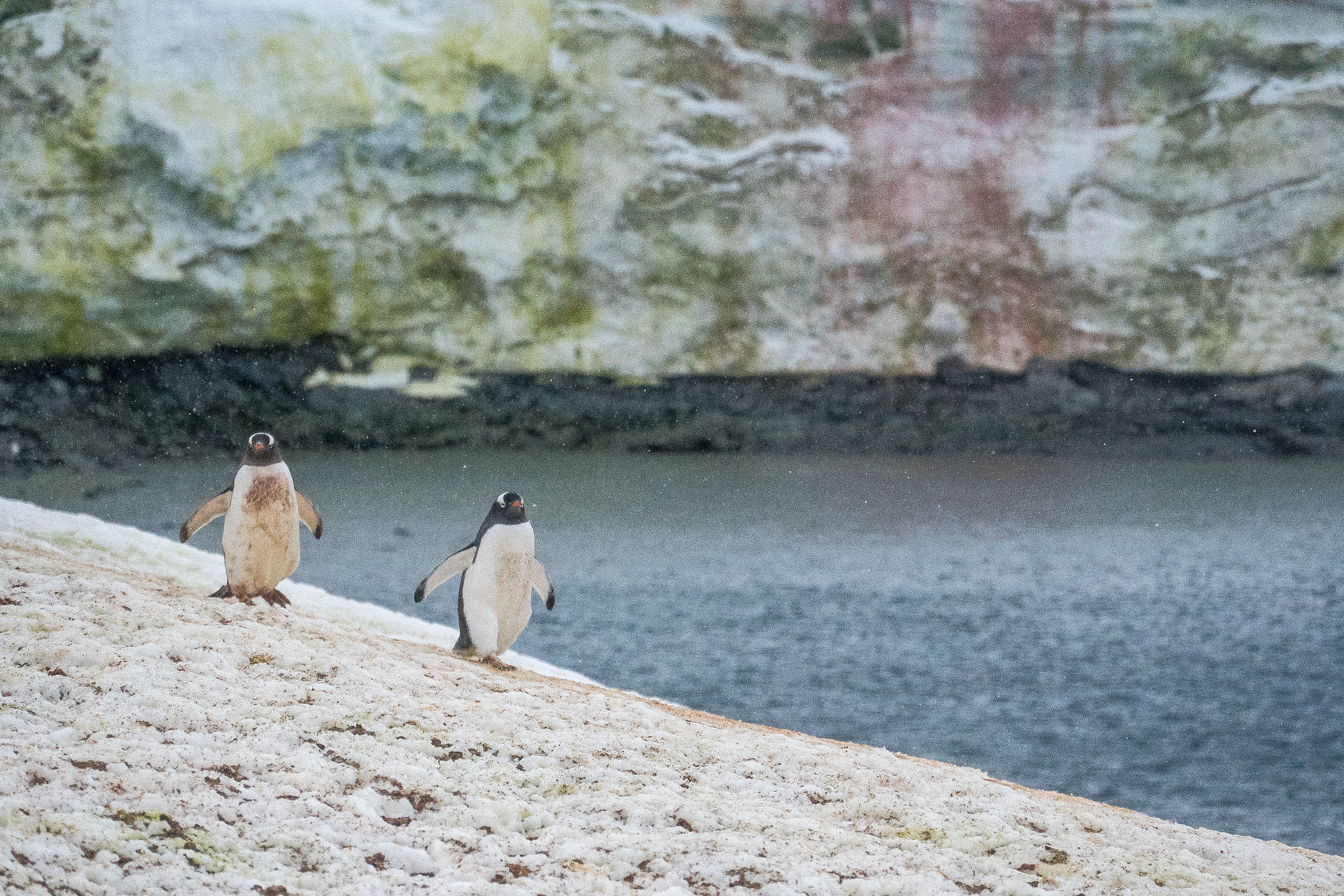
Penguins often establish their routes from the colony to the beach and back and continue to travel the same exact paths, wearing deep divots known as “penguin highways” into the ice. There weren’t really any of these highways on our first island visited, although we’d see some examples at future landings. Here, the penguins just waddled around a long expanse of snow, ice and slush.
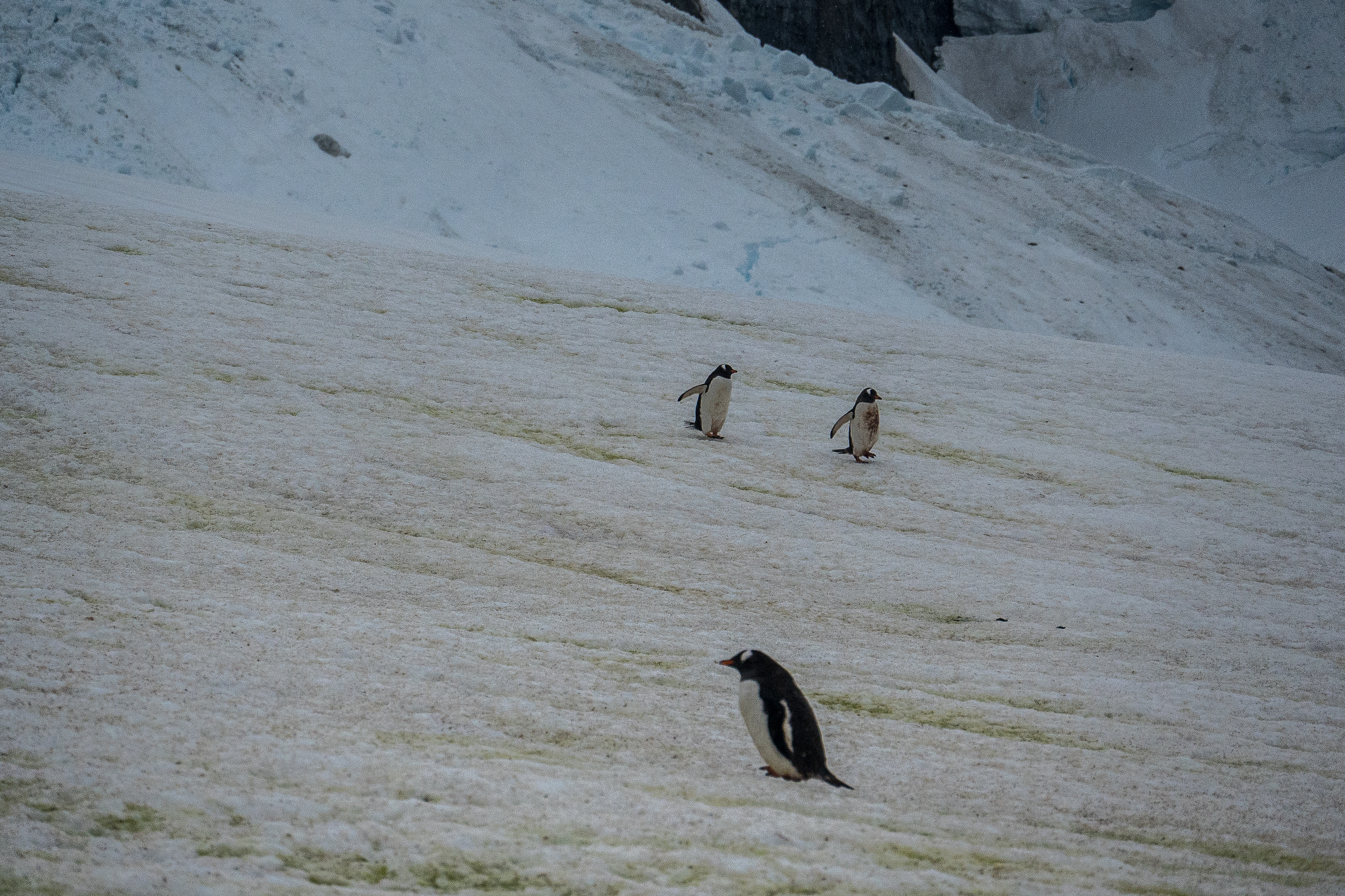
If you’re wondering about the colors – no, it’s not dirty snow, and my camera wasn’t malfunctioning. The green and red colors in the ice are from snow algae. Early in the season, there’s almost none to be spotted, but by February – late summer, when we visited – the nutrients provided by penguin droppings over several months of trekking back and forth to the colonies, and the slightly warmer temperatures, result in weirdly colorful snow. Who knew?!
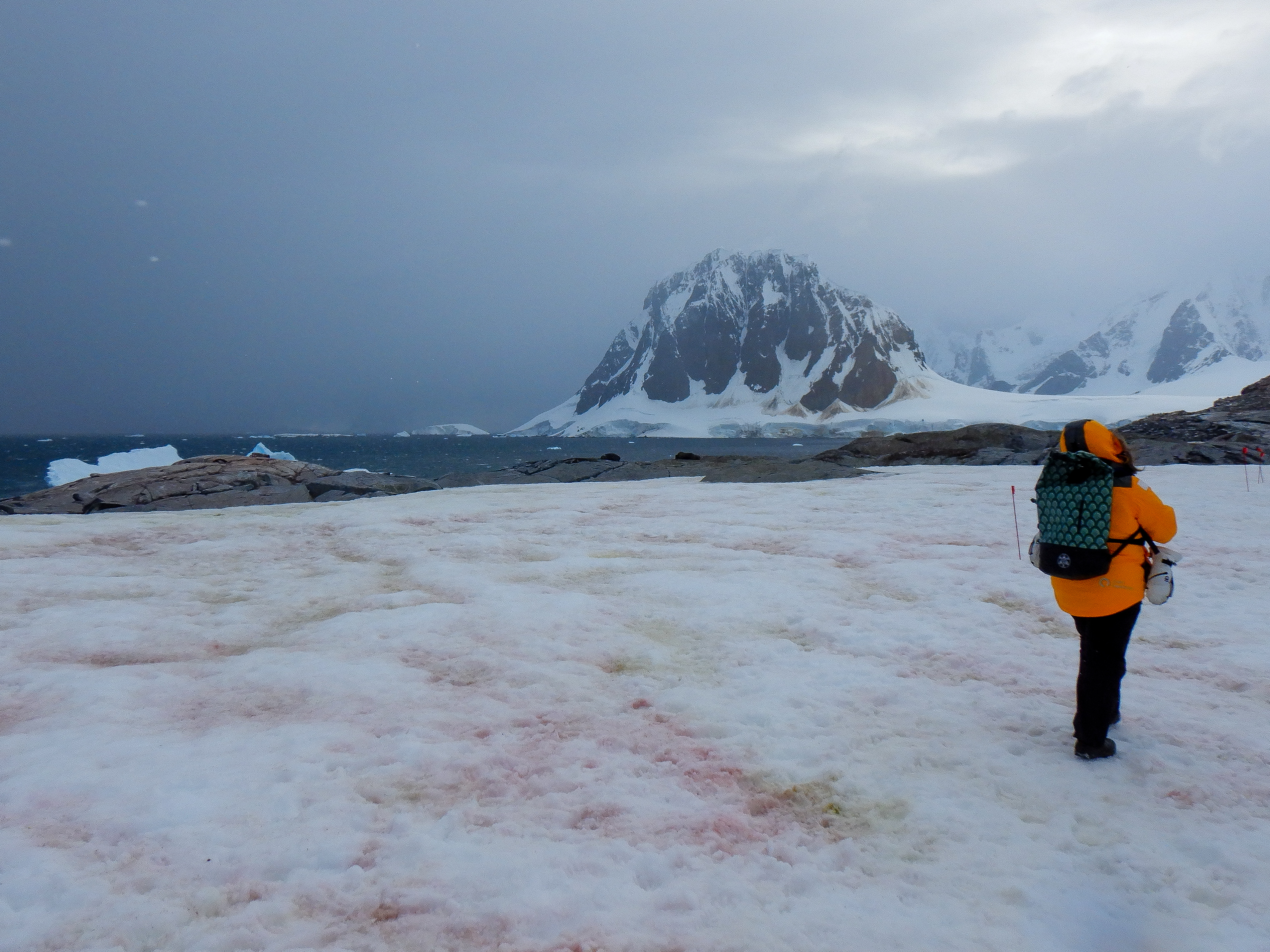
It’s even in the layers of ice cliffs!

Penguins weren’t the only critters at Port Charcot! We stopped and watched these Antarctic fur seals for awhile. They couldn’t have cared less about our presence.

Well – maybe this one did. He seemed to view us – and our cameras – as a good opportunity for striking a pose. Show-off.
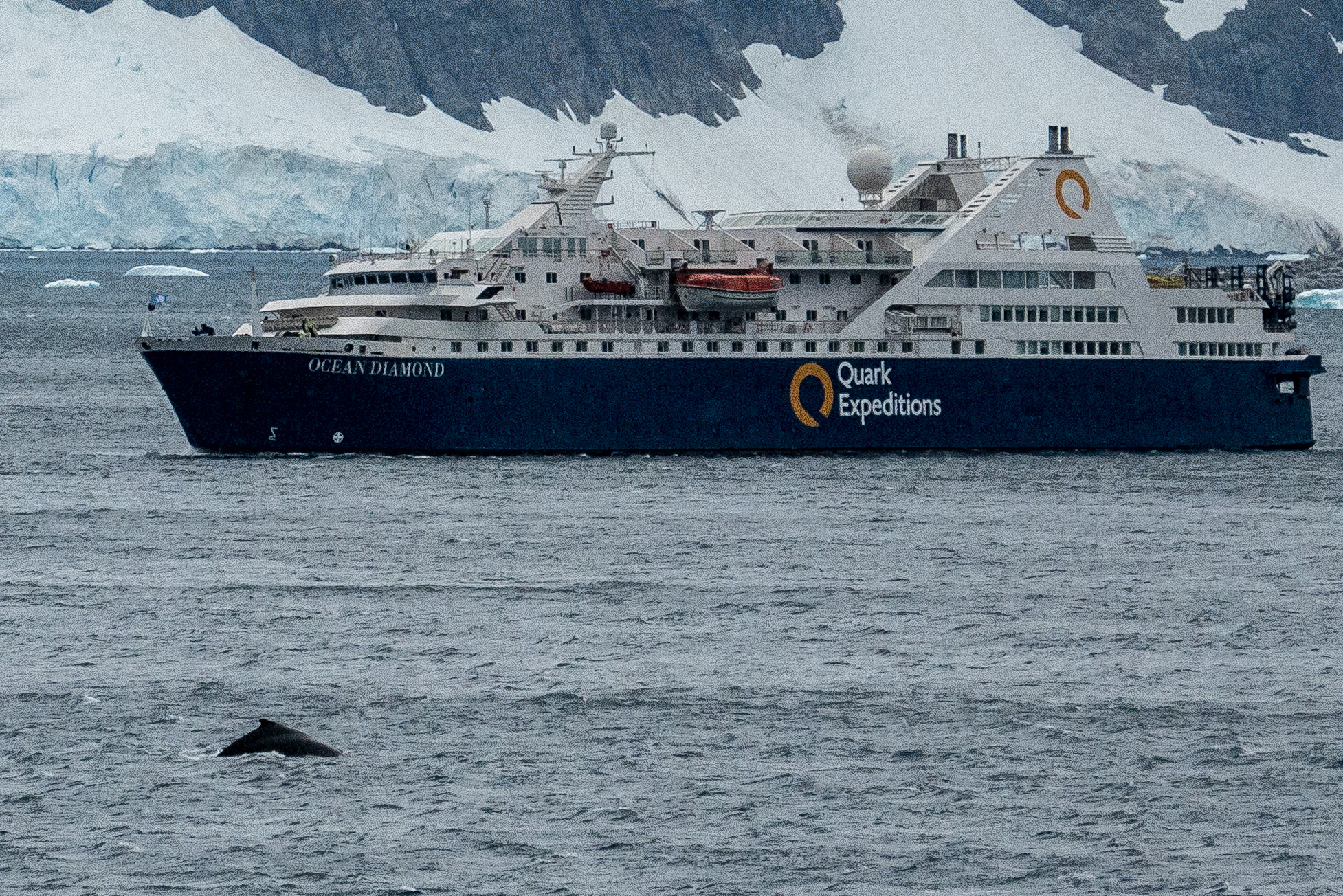
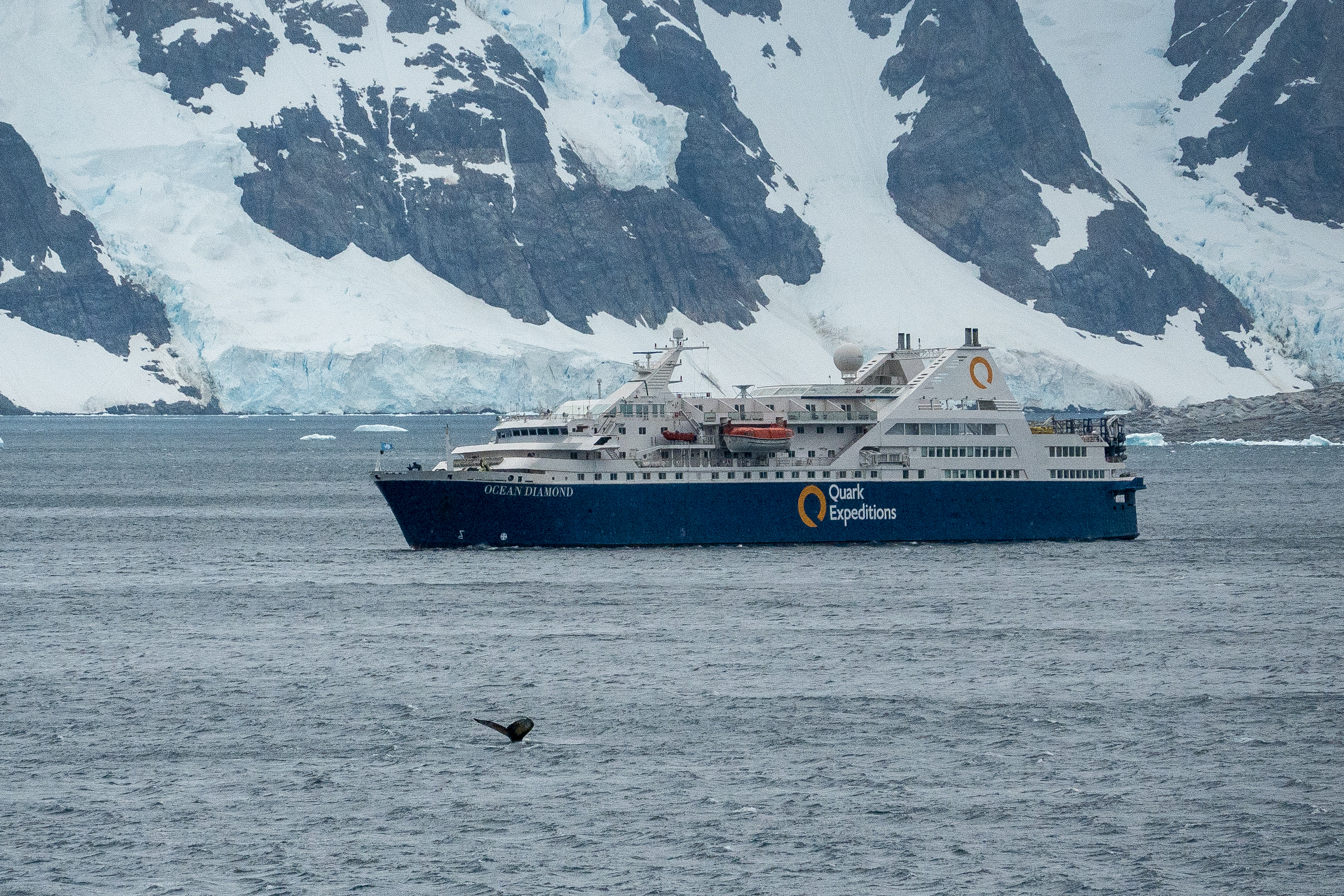
Meanwhile, out in the harbor – another humpback! This whale attracted a big group of fans on shore, cameras and mittens pointed excitedly as it fluked and dove.
But back to the penguins, who were the undisputed stars of the landing. I found another small group of penguins nesting on their own rocky outcropping, a little ways from the main colony. And these had – chicks!

I wasn’t expecting to see baby penguins – they’re usually spotted in December and January; February, when we traveled, is whale season, not penguin chick season. But the ornithologist on board our ship explained that this had been a strange nesting season: instead of all of the penguin eggs hatching within two or three days of each other, as is common, eggs were hatching at all different times for months. The result was that we got to see young penguins of all ages – from very new babies to roly-poly juveniles. Fun for us, but alarming for the penguins: the really young chicks we were seeing would probably not be molted in time to join their parents in the water at the end of the season, and would be abandoned and die before reaching adulthood. (Nature is brutal, fam.) That was a sobering thought – but they were still adorable. I was in love with the chick above (and really hope it’s old enough to make it through the Antarctic winter!). I stood for probably twenty minutes snapping picture after picture of this cuteness. SO FLUFFY.
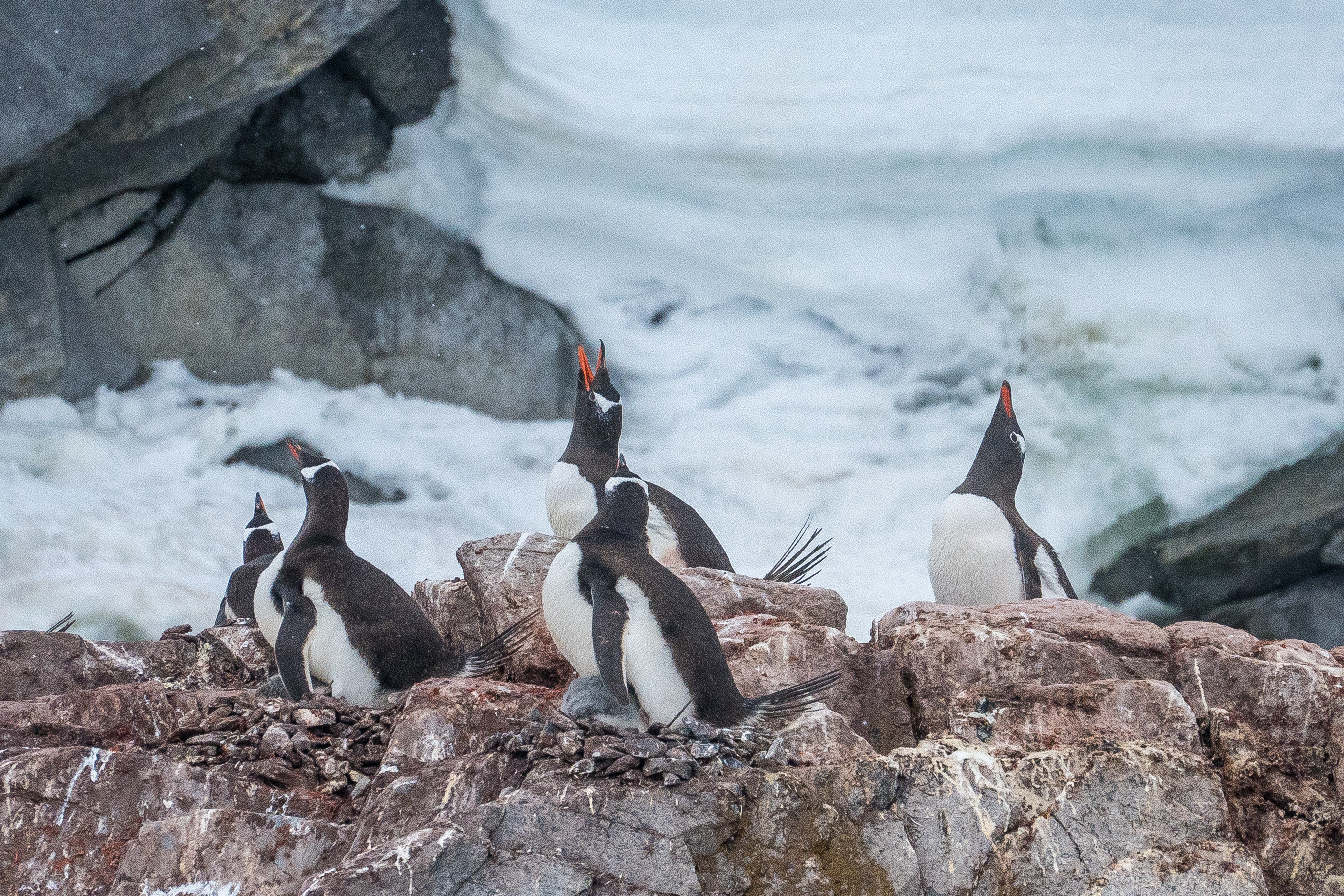
As I clicked away, I started to see the adults exhibiting some different behavior: first one, then two penguins turned their beaks to the air and started honking loudly. Soon all of the adults were doing it. Weird, I thought – and then I saw.

A skua! Antarctic skua gulls will predate penguin eggs and chicks. This one clearly had its eye on one of the several fluffy grey balls of feathers in the rocky nests.

Oh no, you don’t! I watched with my heart in my throat as the skua got lower and lower – and closer and closer to those darling fluffy babies. Way too close for comfort.

Luckily for the penguins (and for me; I didn’t really want to see a predation event) a gust of wind came up just at the right time and blew the skua sideways and away from the nests.

What a relief!

It felt like no time had passed at all before the expedition guides were calling to us to make our way back to the zodiacs.
International law prohibits Antarctic tour operators from landing more than 100 people on the continent at once. That’s why you generally don’t see 3,000-guest behemoth cruises in Antarctica (although they’re starting to get more common, unfortunately): no one would get any meaningful amount of time on shore. Reputable Antarctic tour companies generally don’t run ships with more than 200 guests on board; our ship had the capacity for 188 guests but was a little under-sold this time, with just over 160 of us. Even so, we had to divide into two groups for shore landings: one group would land immediately and explore while the other group went “zodiac cruising” and then the groups would switch. Zodiac cruising is fun and fascinating in itself, so it’s definitely not the short end of the stick. Although we were sorry to leave the penguins and the seals behind, we were excited about our first zodiac cruise.

Our guide, Kim, promised some really spectacular icebergs – and she delivered.

Gorgeous! And those colors – incredible! I couldn’t get enough of the spectacular ice formations and infinite shades of blue.

However, the combination of wind and waves on this particular day meant that it was a bit of a wild ride – and it turned out I was sitting in “the wet seat.” At the bow of the zodiac, on the starboard side, is apparently where all of the water hits – and I mean all of the water. I spent the entire hour squinting at the icebergs while what felt like buckets of freezing water slammed me in the face over and over. (Since I like to look at the bright side, I noted two important things: one, my waterproof pants were definitely waterproof; and two, I was ready for the polar plunge, since it felt like I’d already done one!)

Don’t mind the buckets of ice cold water – have some more tropical blue icebergs!

What an awesome day! Getting feet on Antarctica and finally seeing penguins was the culmination of years of dreaming. And this was just the beginning – there was so much adventure to come…
Next week: we cross the Antarctic Circle and are visited by a gang of humpback whales!
 covered in flour
Pingback: Antarctica and Patagonia 2023: Neko Harbour, Part II – A Shore Landing on the Mainland – covered in flour