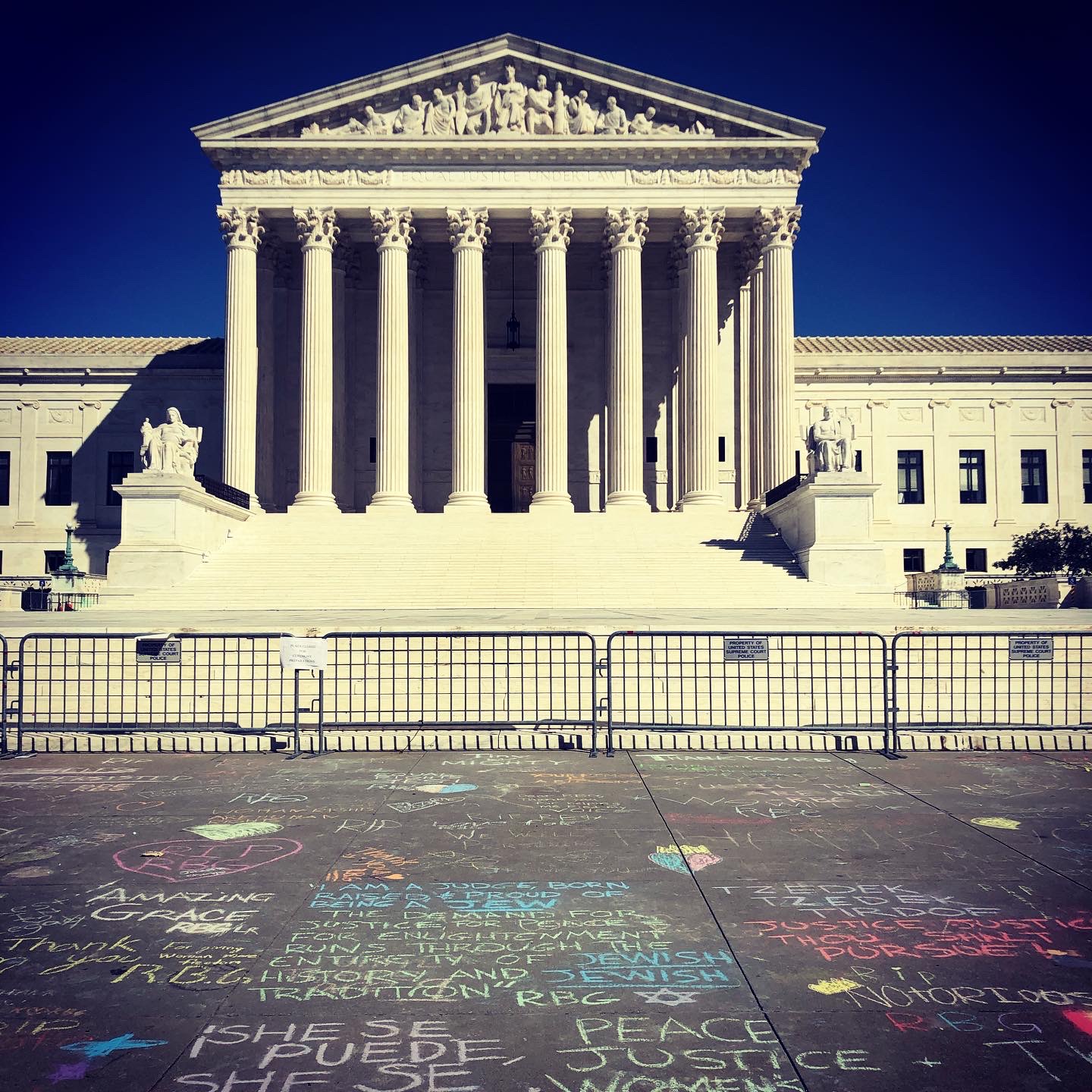
I mostly try to avoid talking politics on this little blog about books and travel and small joys. But I do have opinions that I’ve occasionally been unable to keep in. This past week has been a hell of a week – I think that’s probably not a controversial statement, right? (I hate it in this timeline, by the way. How do we leave?) Whether you’re happy with the rulings that have come out of SCOTUS over the past seven days or not, it’s been an onslaught of news and think pieces and I am exhausted. What it all boils down to, for me, is this: the patriarchy sucks and must be smashed. In the meantime, here are some books about how terrible the patriarchy is, if you needed to be reminded. Solidarity, sister.
Everyone already knows how boundary-pushing Charlotte Bronte was – Jane Eyre is recognized as one of the foremost pieces of feminist literature of all time, and Shirley, which I am reading now, features a protagonist who unashamedly calls herself “Captain” and occasionally uses masculine pronouns. (Yes, really!!) What is not always recognized is that Charlotte’s younger sister Anne Bronte was just as boundary-pushing, maybe more. The Tenant of Wildfell Hall, my favorite Bronte novel of all, features a woman who escapes an abusive husband in a time when divorce was unheard-of. It’s a moving, galvanizing, unsettling read.
Again, everyone already knows about The Handmaid’s Tale and its profound, maybe (hopefully not) prophetic influence. Less well-known is Margaret Atwood‘s fictionalized account of a real-life murder case: Alias Grace. In 1843, Thomas Kinnear and his housekeeper were victims of a gruesome murder. Two of Kinnear’s other servants, Grace Marks and James McDermott, were convicted of the crime – but the evidence against Grace was flimsy and based on unreliable recollections and narratives. Alias Grace is Atwood’s re-imagining of the crime, during the writing of which she revised her opinion of Grace Marks and her story. It’s a deeply alarming account of what happens when women are not believed.
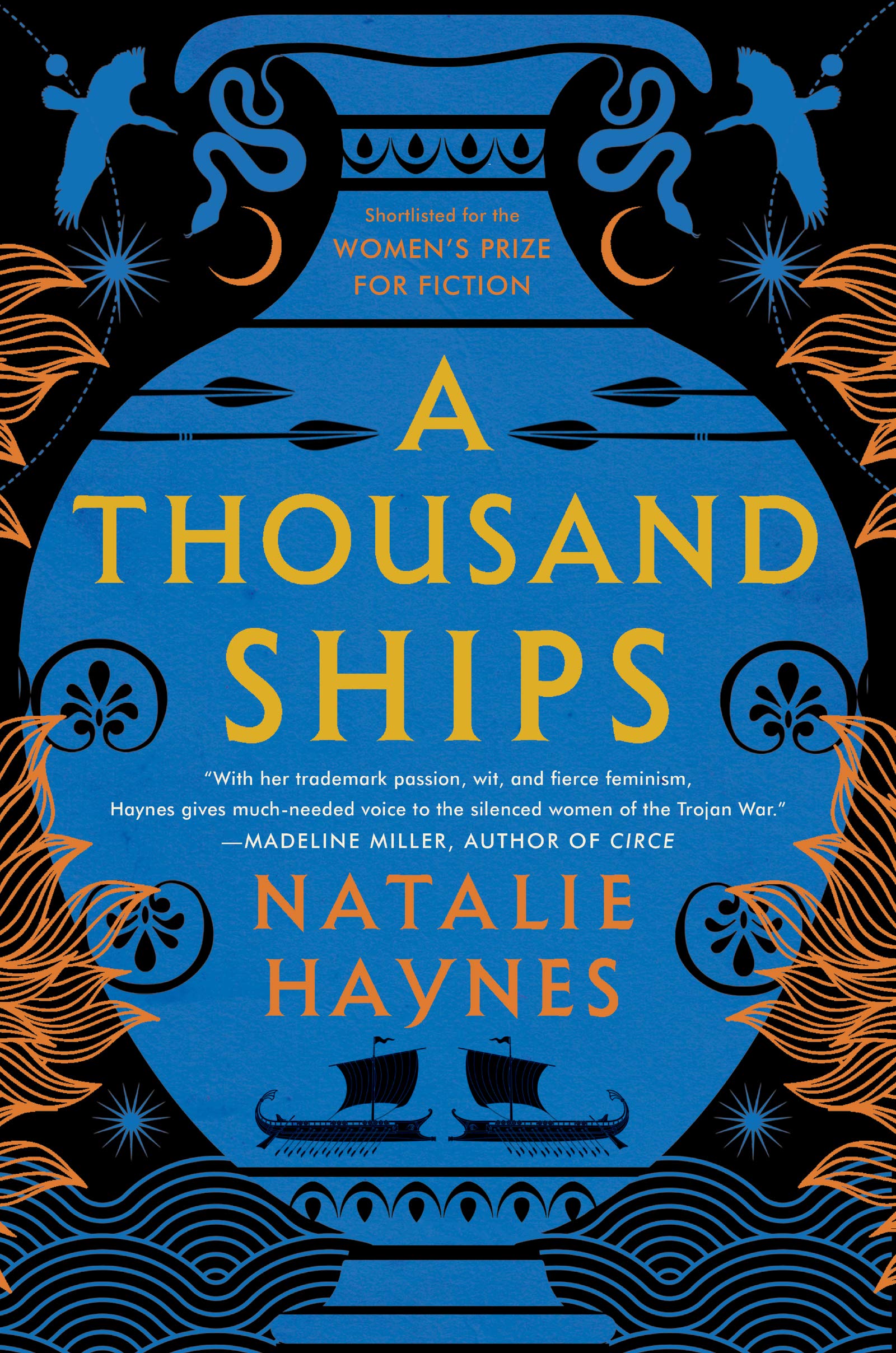
For something more recent, the brilliant Natalie Haynes explores a group of people whose voices have been silenced for millennia – the women of Homer’s epics Iliad and Odyssey. A Thousand Ships is a tragic, violent, often gruesome, sometimes inspiring but usually devastating, look at the quiet background characters who were ignored in favor of Achilles’ tantrums and Agamemnon’s bloodlust and Odysseus’ refusal to pull over and ask directions. Read it with a box of tissues. Because the patriarchy sucked then and it sucks now.
No need for a gallery today, because the only book I spent any time with – and it wasn’t much time, to be perfectly clear – over the last week was Shirley, by Charlotte Bronte, which I started last weekend. So I’m now at over a week and counting, and still only maybe a third of the way through? In my defense, it’s been an eventful week in the world – much doomscrolling has happened, and I’ve got to get back to putting my phone on its charging cradle in another room so that I can focus on my book. Multiple evenings last week I was either scrolling through my Washington Post app, researching how to move to Canada, or escaping into long phone conversations with friends or family members. What I was not doing: reading Shirley.
Also in my defense, Charlotte Bronte takes over a hundred pages to introduce the title character. Why?!
Anyway – summer is about to get super busy in these parts, and I don’t want to be toting my gigantic omnibus edition of Charlotte and Emily Bronte’s novels (especially since the publisher made the terrible judgment call of excluding the best Bronte, Anne) – so I need to get after it. I still have several nights of reading left in the book, and that’s best case scenario where I don’t doomscroll at all, so we’ll see how well I even do with that. No idea what’s up next in the book department, either, although I do have the audio version of Agatha Christie’s A Caribbean Mystery downloaded and ready to go, and I think that will be in my earbuds before too long.
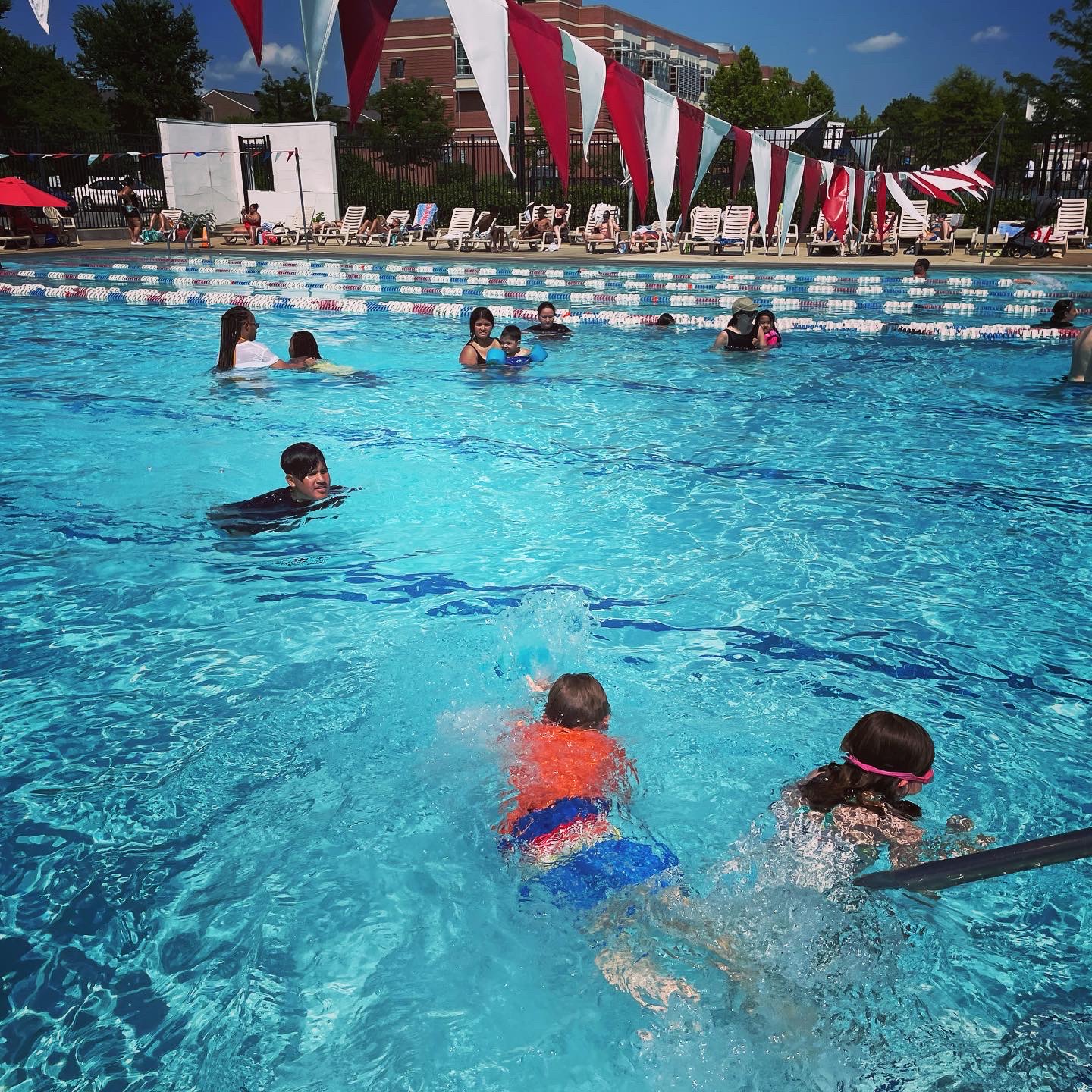
It’s officially H-O-T in Virginia! Good thing we have somewhere to beat the heat.
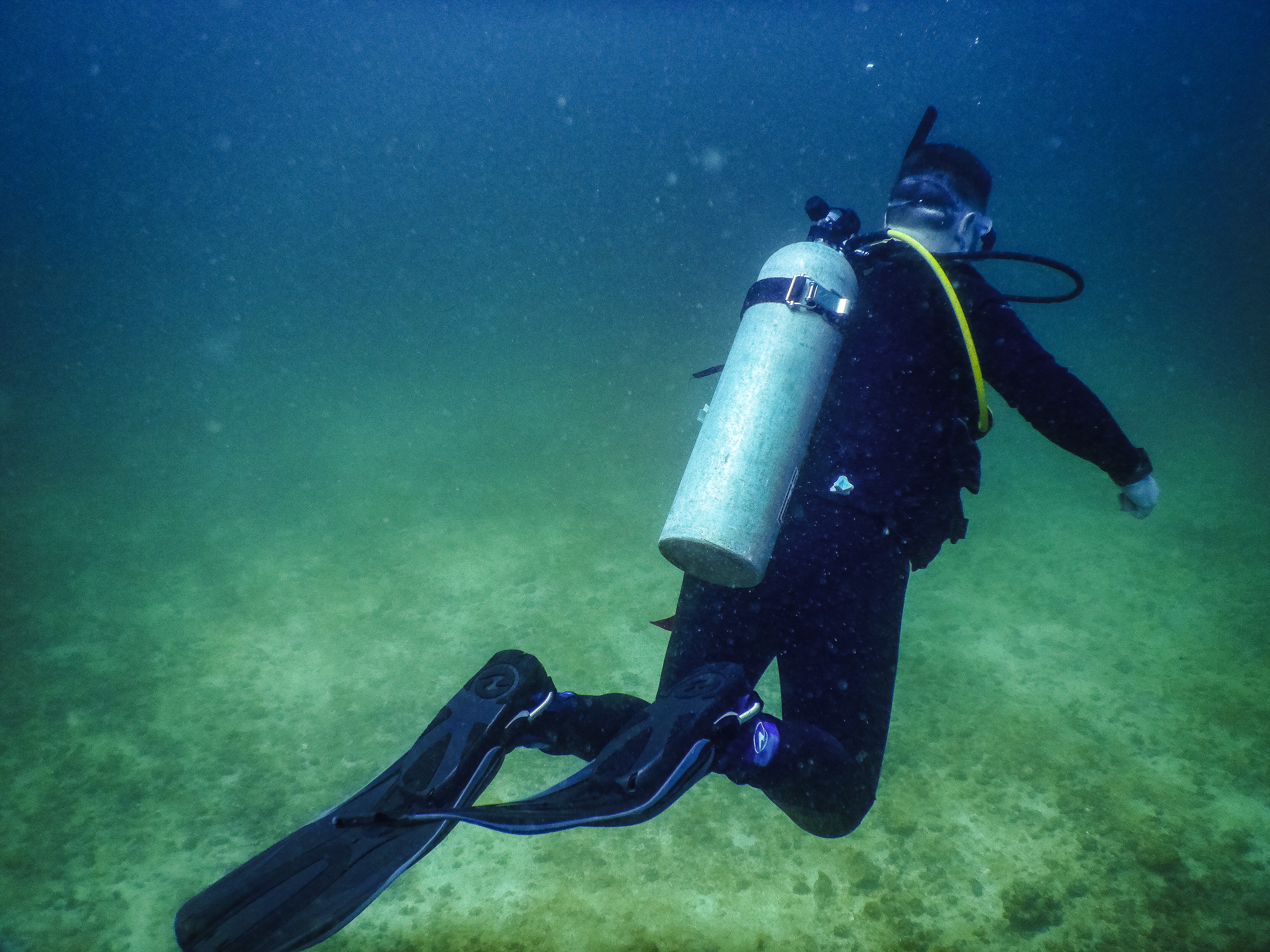
After eight pool dives and two open water dives on our first full day in Osa, we staggered down to the dining pavilion after another ridiculously early wakeup for the third and fourth ocean dives and – hopefully – our certification as fully-qualified PADI open water divers.
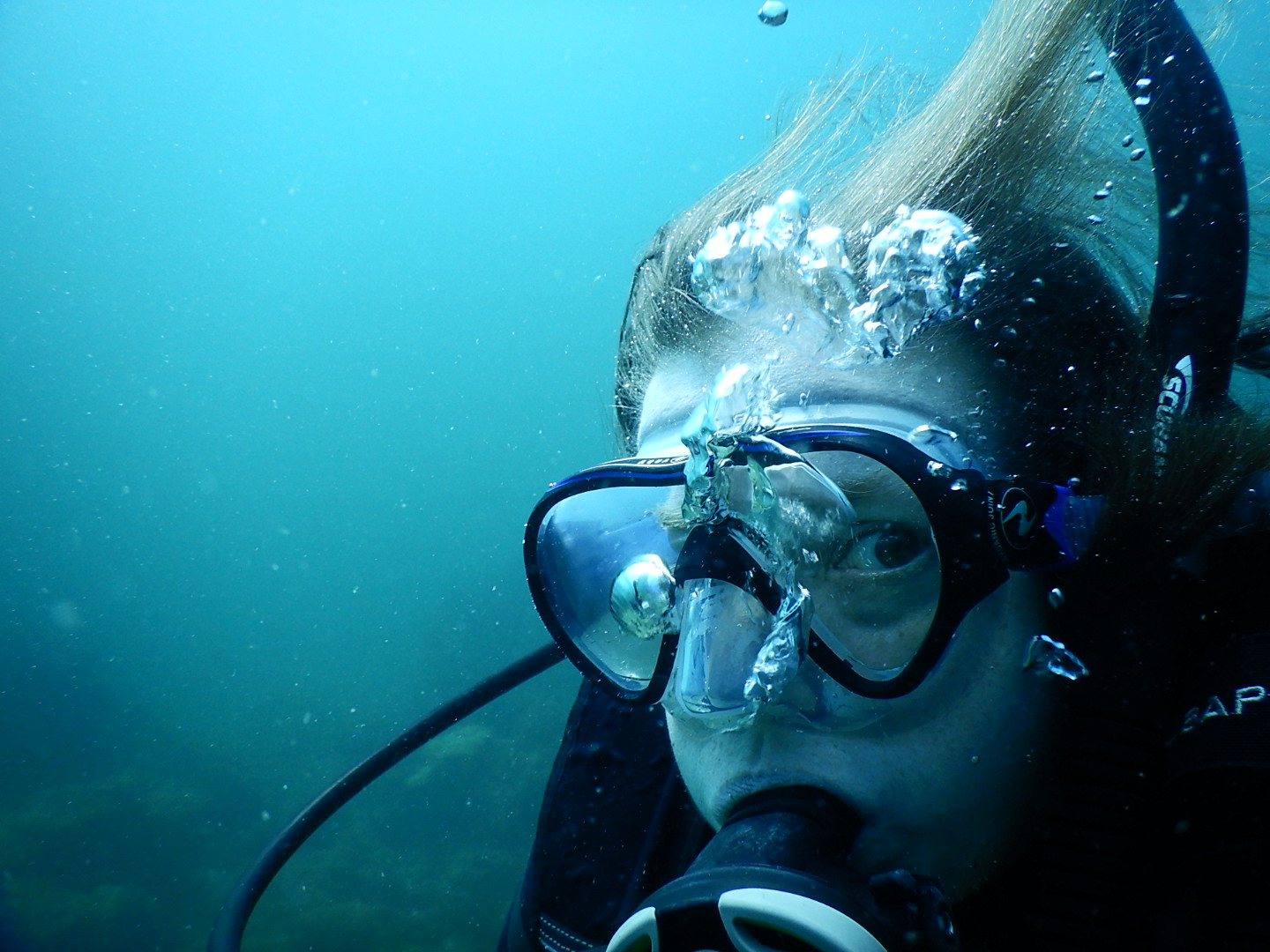
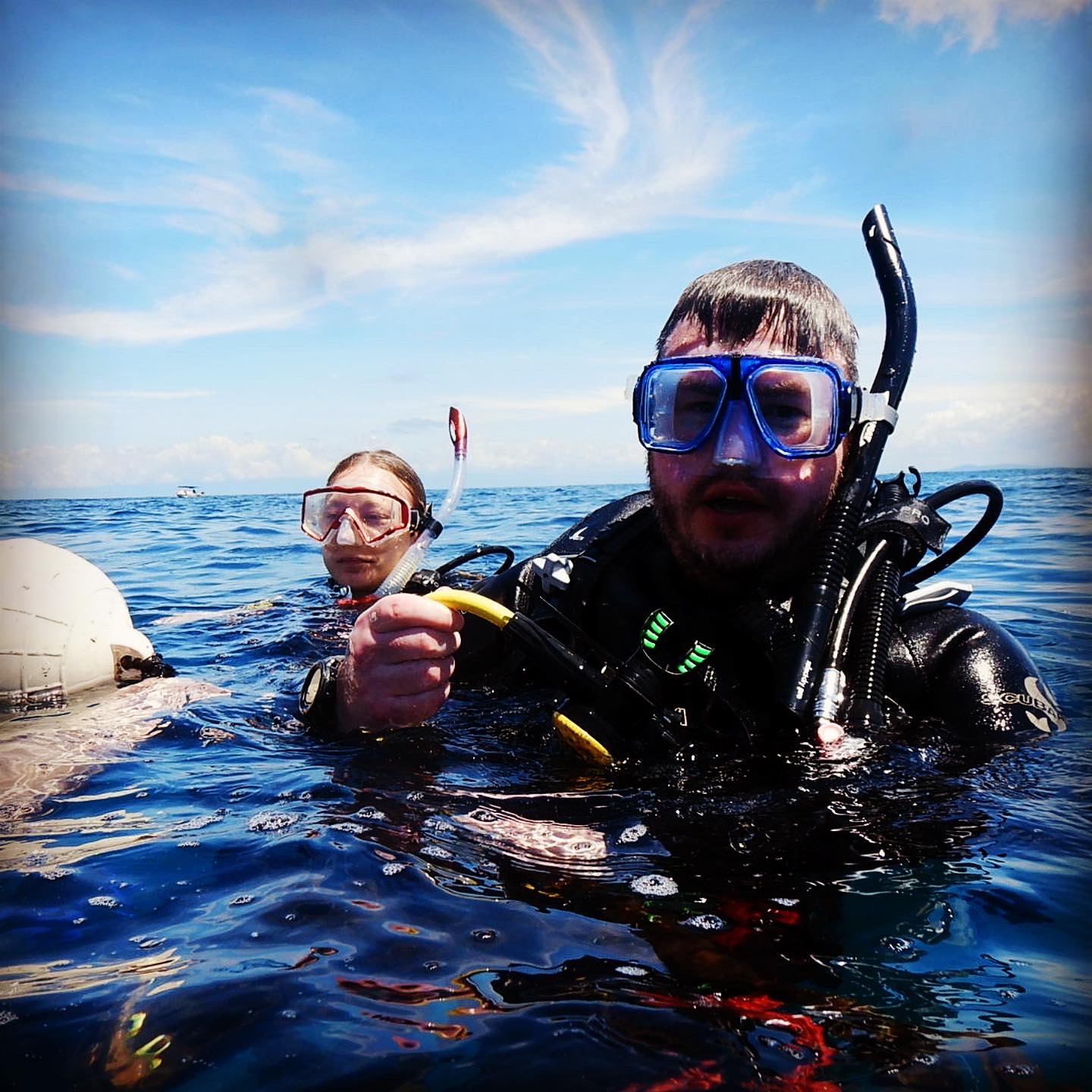
Full disclosure: the dives are such a blur in my memory, and the photos so mingled, that I am not 100% sure these are all from the second day of diving. Just go with it – and if it feels a little mixed up, well, that was the experience. I was really just trying to not die, okay? But I do know that the above selfie was from the second day of diving, taken while I clung to the anchor line and waited for Steve to fix a mask issue and descend to meet me. Also full disclosure: I did not mean to take this selfie; it was an accident.
I think it was the second day that I figured out I could hook my camera’s wrist strap to my BCD buckle. Game. Changed.
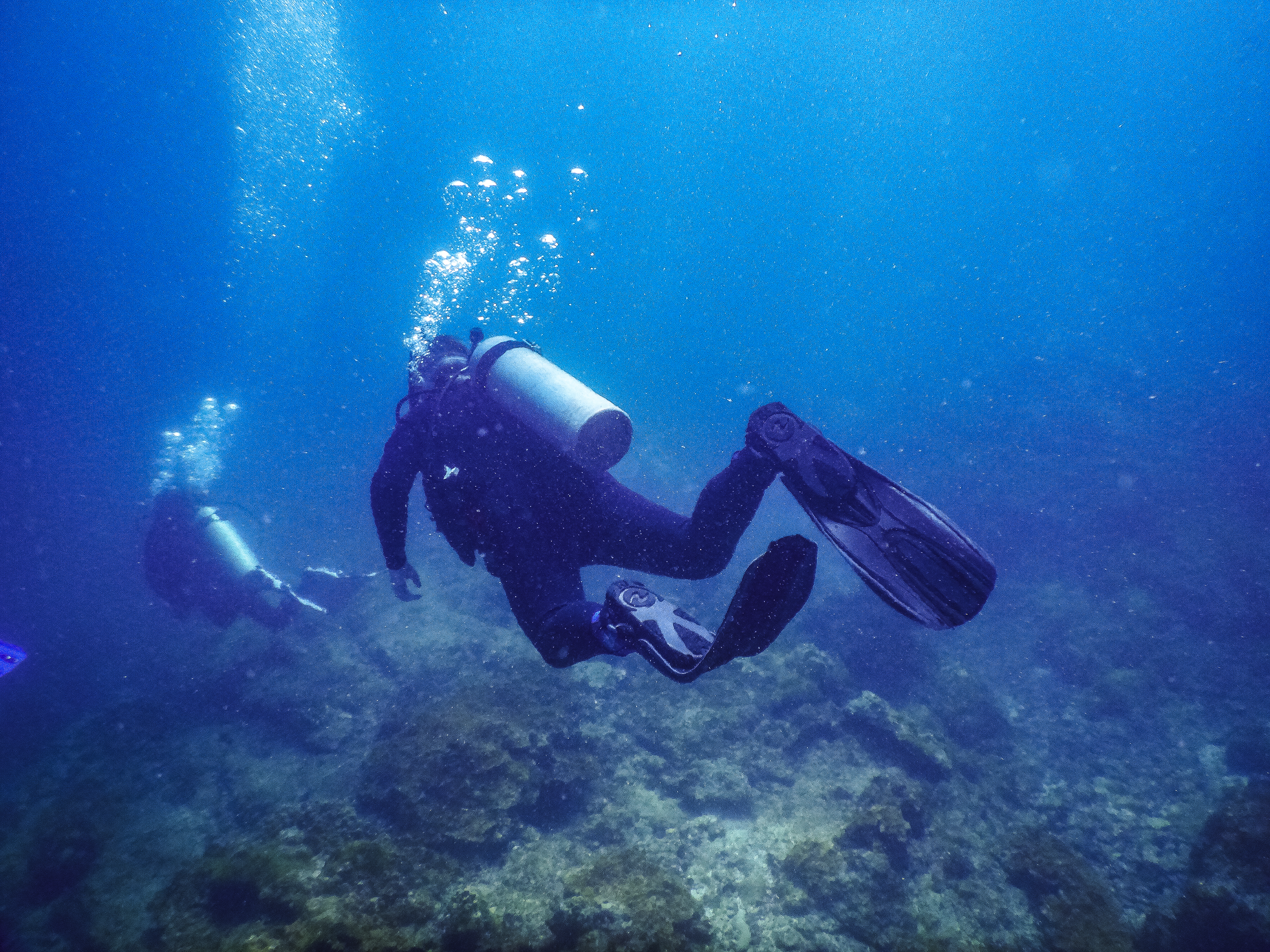
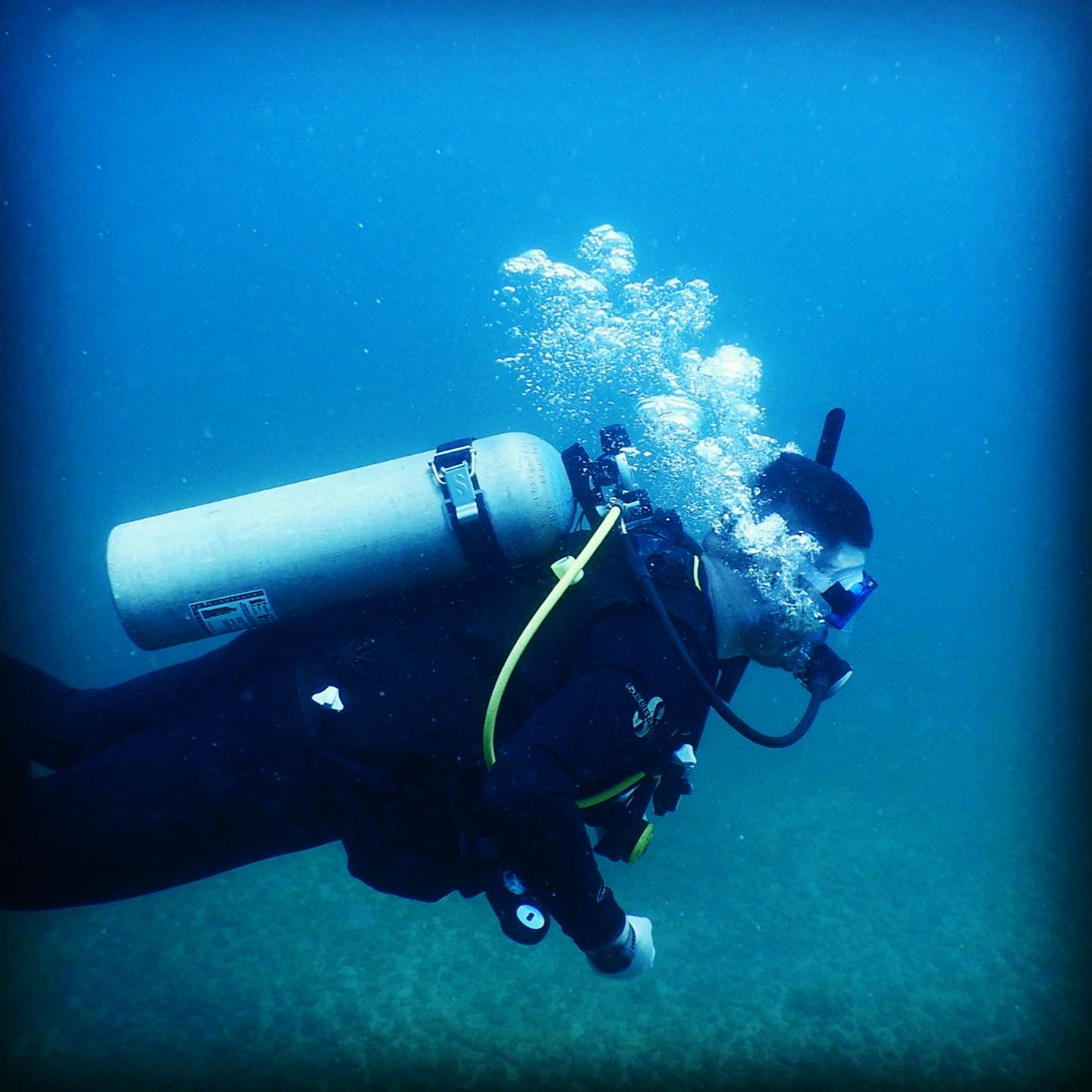
Dive buddy!
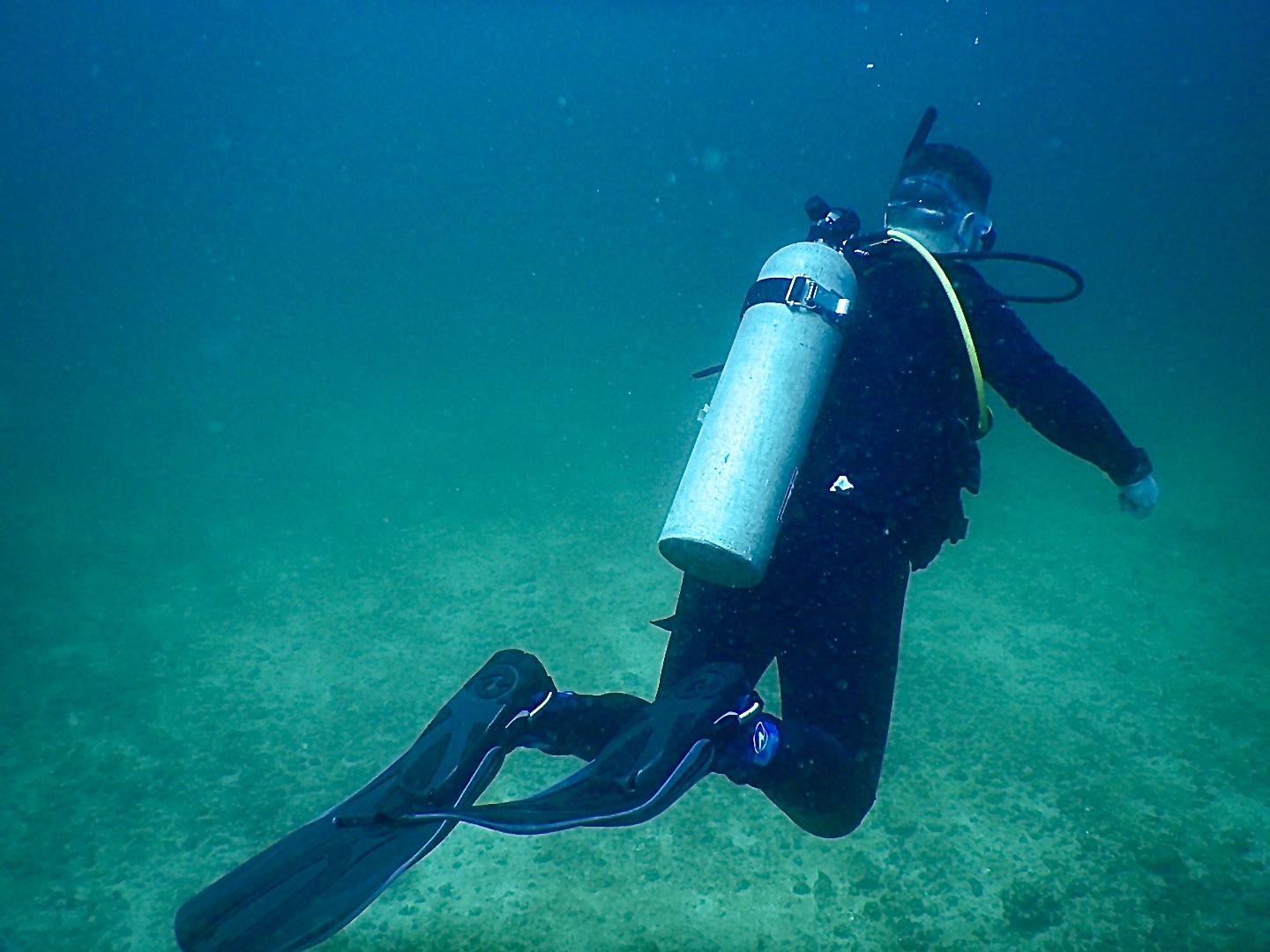
So much fun exploring below the waves with this guy. I can’t wait for our next dive adventure – more about that soon.
Also can’t say enough about what a wonderful divemaster and guide Quique was. I know I already waxed lyrical about his bubble-blowing and wildlife-spotting skills, and how safe we felt in the water with him. The only downside is that he set such a high bar that we’ll be measuring every future divemaster against him.
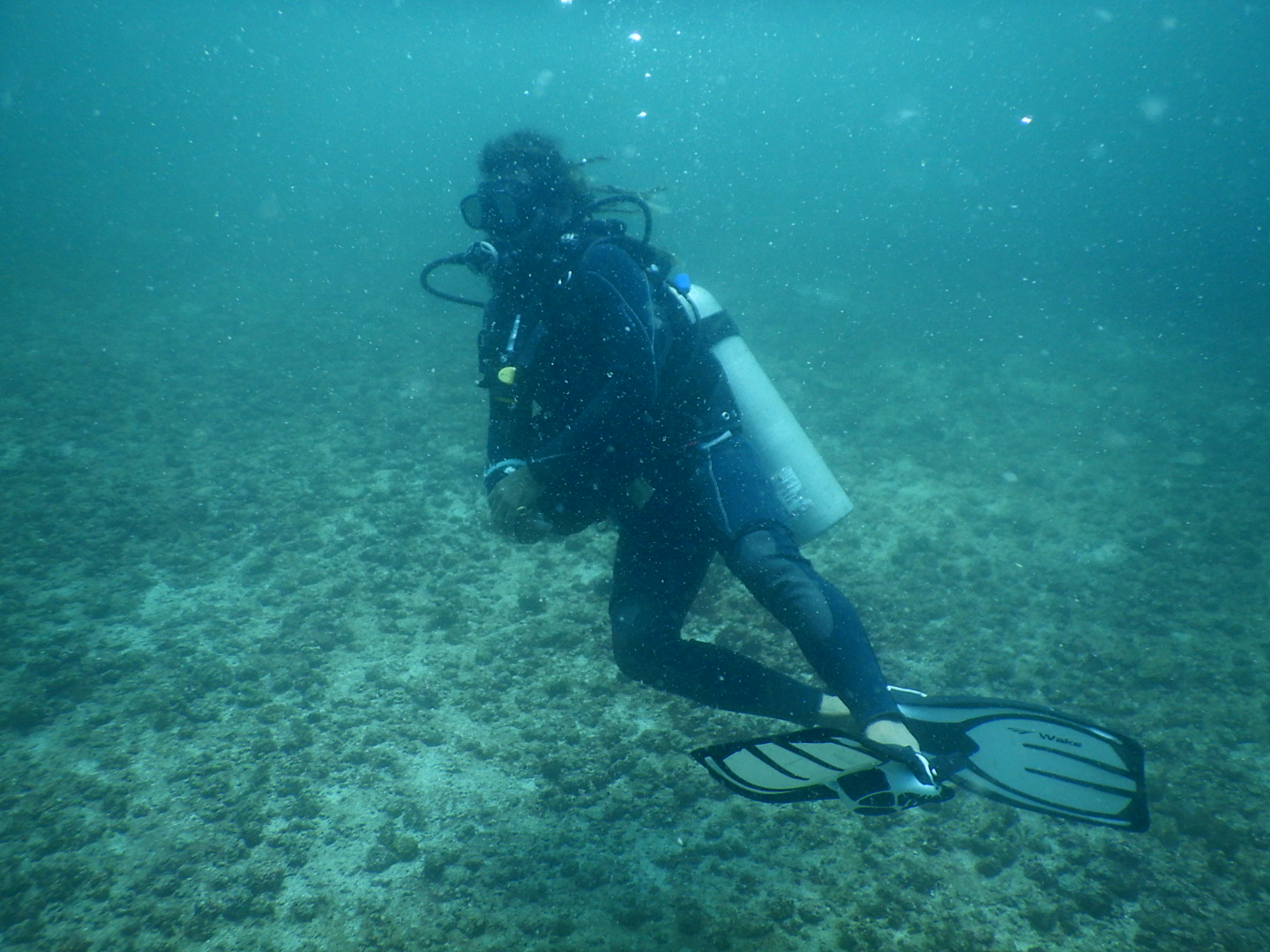
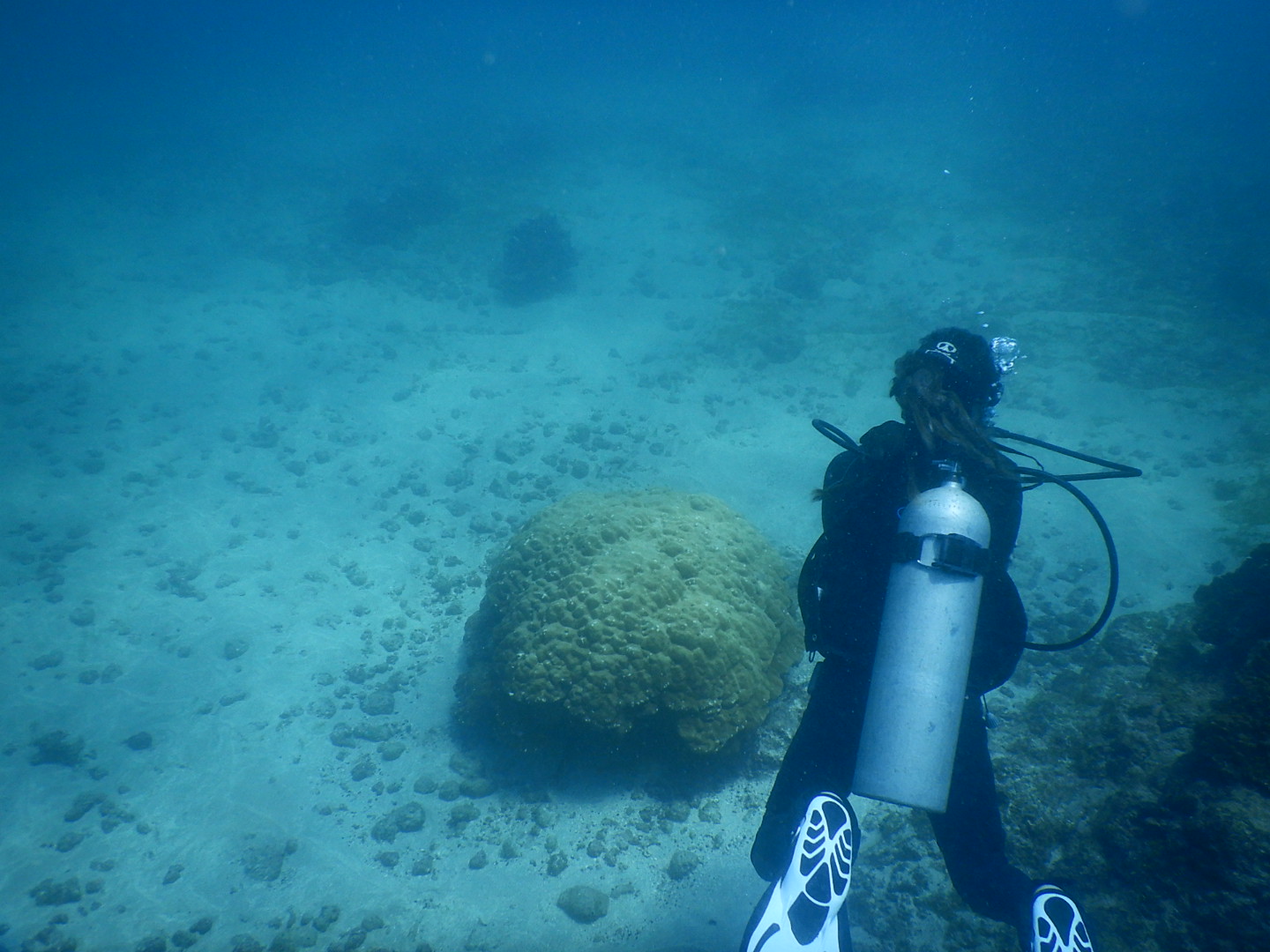
(That’s Quique’s fin in the upper left corner. See what I meant about his perfect buoyancy? No one else could get that close to the coral and never touch it. Amazing.)
While we were diving, all I could hear was the sound of my own breath – a long breath in, followed by a very bubbly exhale. But when we surfaced between the two dives of the day, Garry asked: “Did you hear all that noise?” Donna and I shook our heads and looked confused, but Steve said he had heard it – something like a shrill squeaking call? Quique and the boat captain told us that there were false killer whales in the area (!!!!!) and we’d been hearing them – sometimes faint, sometimes much louder/closer. Except that Donna and I hadn’t heard them at all. We got echolocated, and we didn’t even know it.
To be fair, I was a little distracted by something else that happened on the second day.
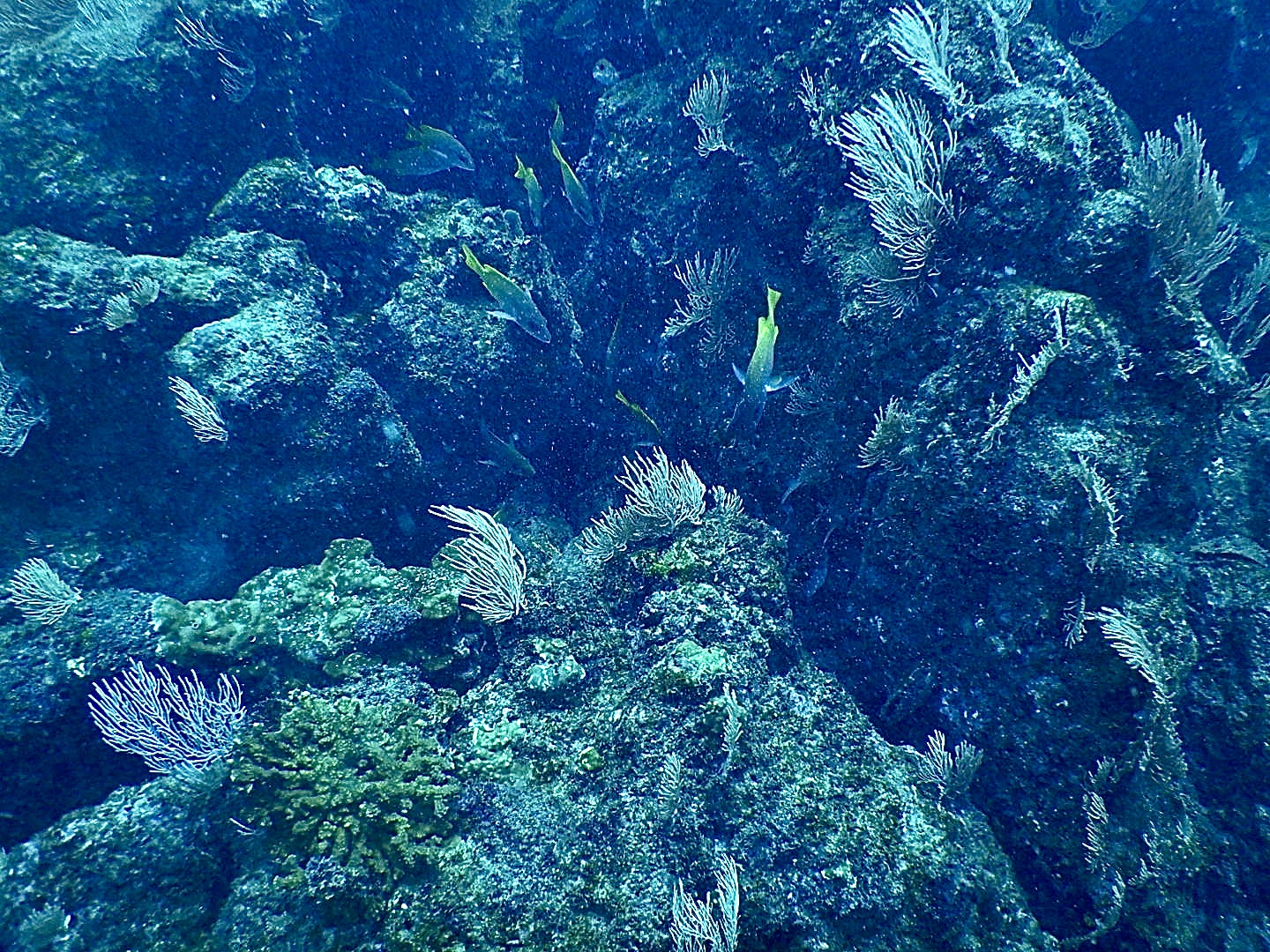
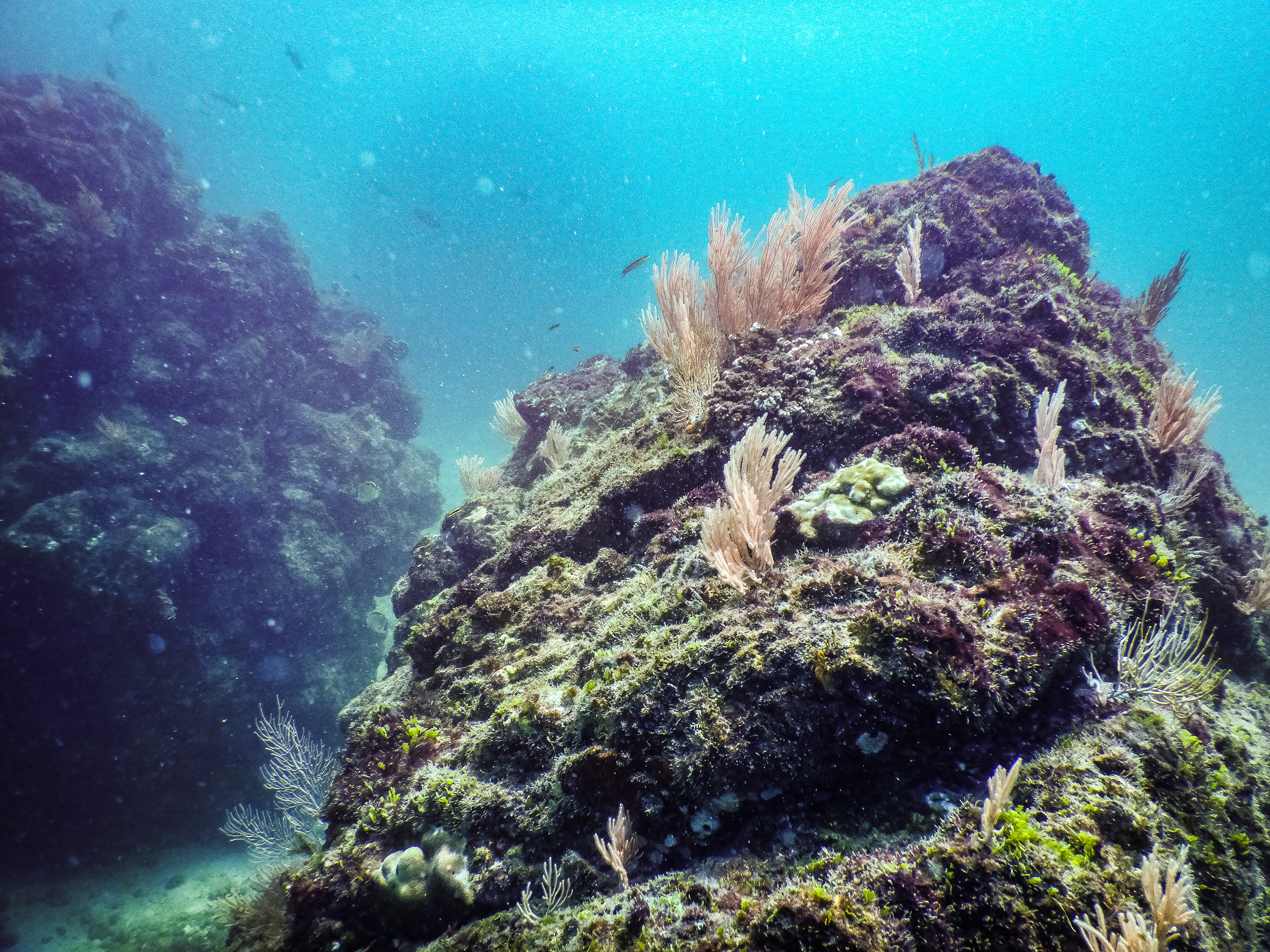
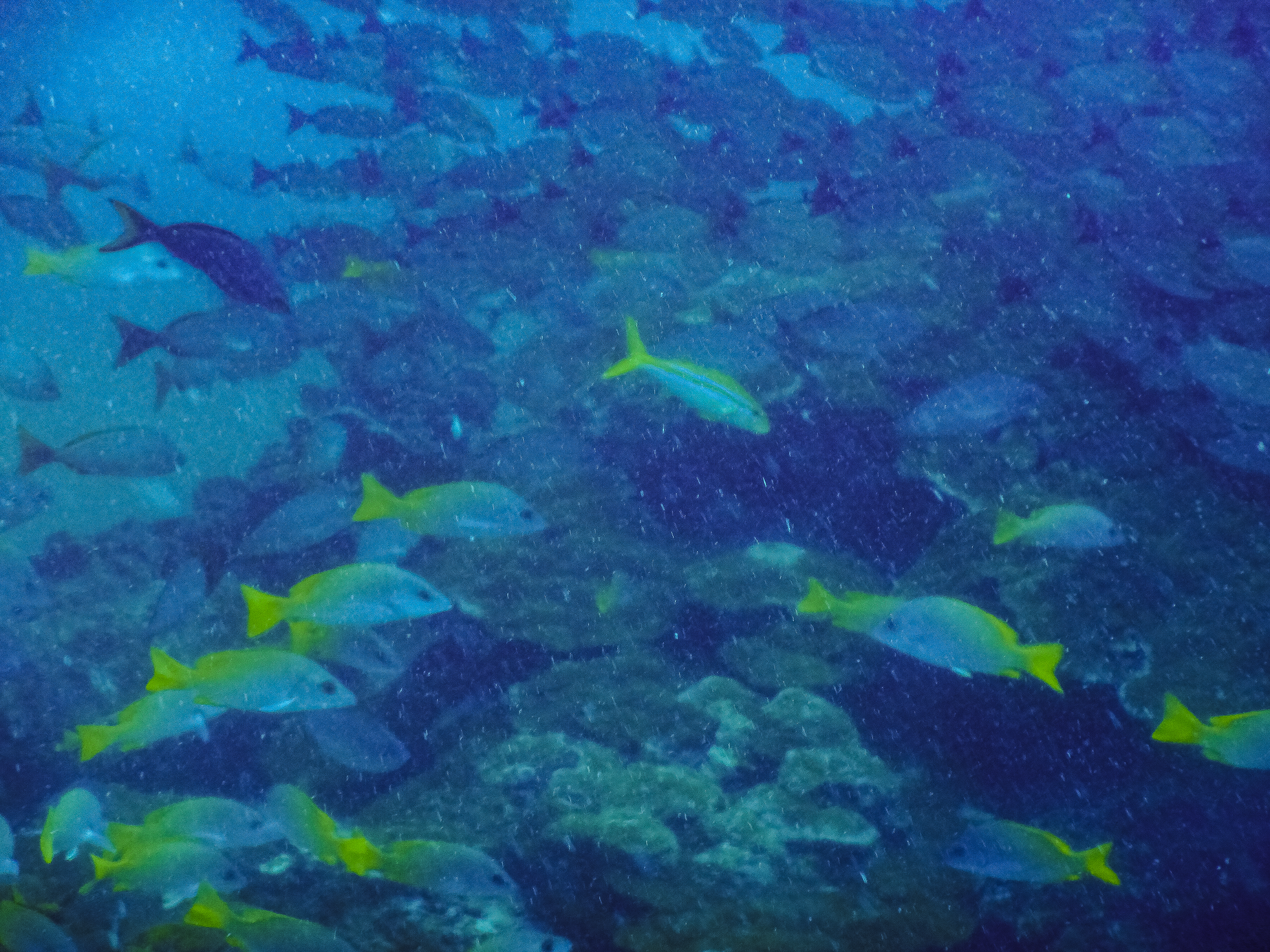
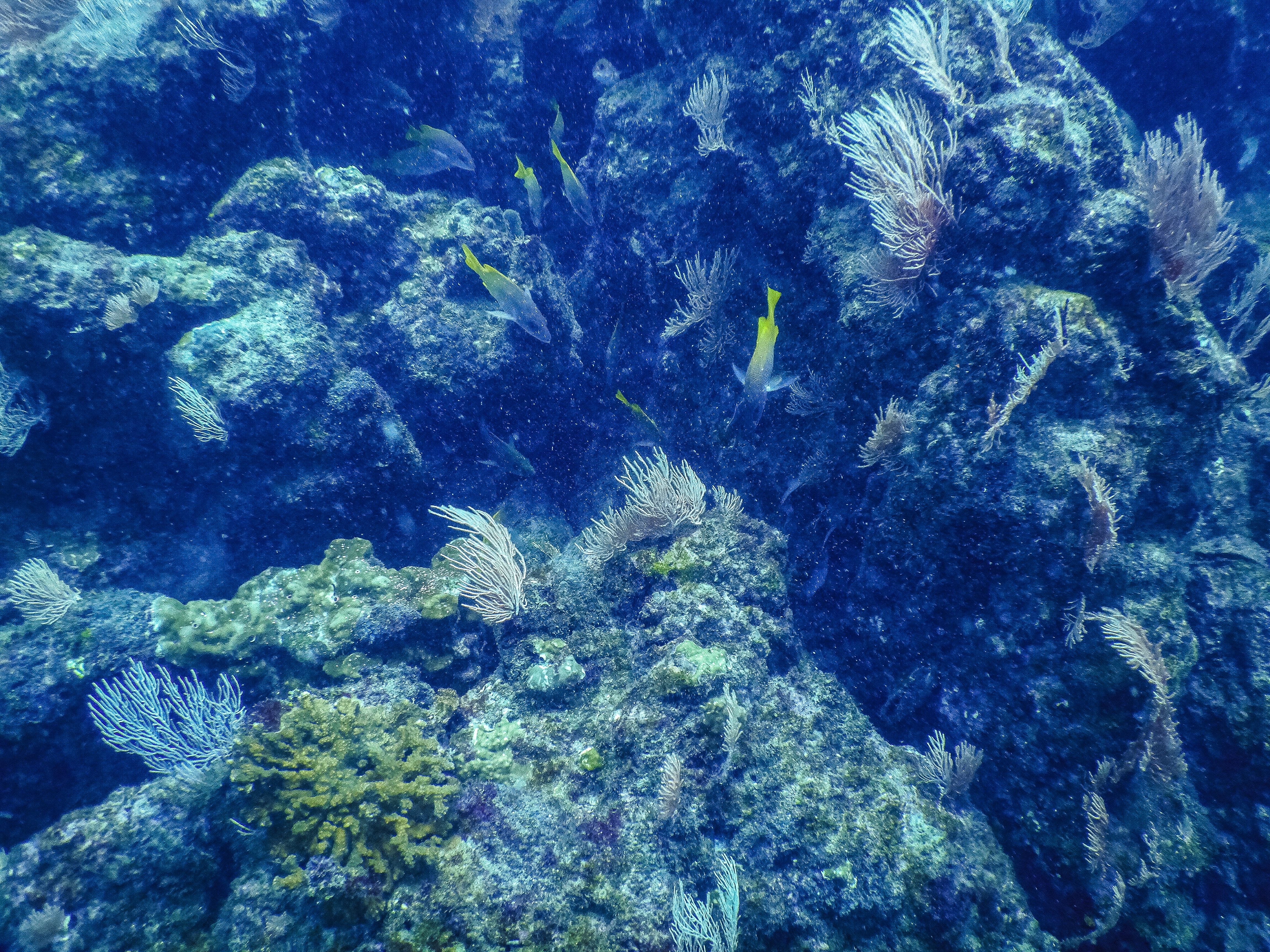
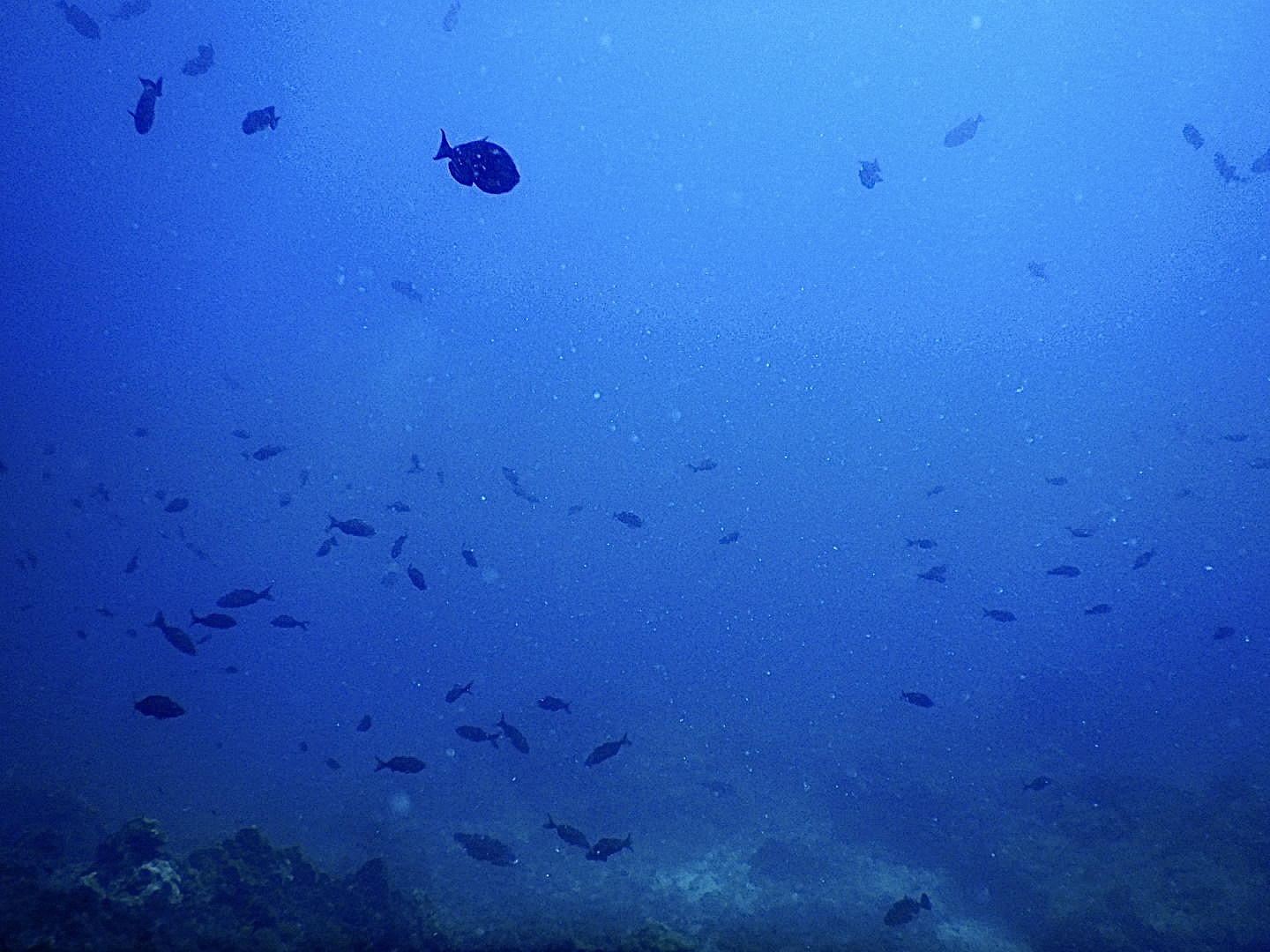
Quique had us swimming around a couple of tall, coral-encrusted rock formations and through a narrow-ish “swim-through” formation, when suddenly we were surrounded by a school of hundreds – maybe thousands – of fish.
Being surrounded by fish was exactly what I was worried about – that was what had made me panic when snorkeling. But my neoprene theory held true, and I surprised myself, again, by being totally at peace. I just floated in place, looked at the fish – and even took pictures.
Most of the fish didn’t get close to us. As Donna said, they were thinking “Let’s just get away from these sea lions – or dolphins – or whatever these large mammals are that look like they might eat us.” But knowing that they were not interested in getting up in my grill doesn’t mean believing it in the moment – so I was really pleased and proud of myself that being surrounded by fish didn’t bother me. (Thank you, neoprene!)
Steve and I demonstrated a few more skills for Quique (while Garry and Donna followed his direction to “swim around that rock and then come back”) and before I was ready to say goodbye to the underwater world, we were ascending, making our safety stop, and breaking the surface of the dive site. Back at the dock, Quique told us that we were naturals and had passed our skills with flying colors, and that we were now certified to dive as deep as eighteen meters – the deepest we’d gone in the two days. We sat with Garry and Donna late into the night (even knowing we all had an extra-early wake-up call the next morning) going over every moment of the four dives. The false killer whales that had echolocated us without Donna or me noticing a thing. The stingray’s threat display from the first day. The school of fish that surrounded us. The narrow swim-through. The reef sharks that we saw both days (I got video!) and all the sea turtles. Donna marveled that we had seen every animal I said I wanted to see, and made me promise to bring my magic wildlife summoning powers to Corcovado National Park the next day.
I was the one who wanted to get scuba certified, but I surprised myself by loving it as much as I did. Steve and I agreed – we couldn’t wait for our next dive adventure, although we didn’t know when or where that would be. (We had the added complication of needing to arrange childcare in order to go diving – something Garry and Donna gleefully were not contending with themselves.) We know where our next dives are coming from now, so keep watching this space for more salty content in the next few months – but first, we may have been saying goodbye to the underwater world but there was a lot more of Costa Rica to explore!
On June 6, 2021, I was walking up the hill to my house after rambling for a few miles around my neighborhood, and my Garmin watched buzzed on my wrist. I looked down at a message congratulating me for reaching my step goal (10,000 steps on the day) three days in a row – and winning the “3-day Goal Getter” badge. There’s not much that motivates me more than a badge – or a sticker, or a gold star. So, curious, I clicked on the badge icon in my Garmin Connect app. What’s this now? There was also a 7-day Goal Getter badge, a 30-day Goal Getter badge, and a 60-day Goal Getter badge. The 60-day badge was worth a whopping four points on the Garmin leaderboards (and if there’s anything that motivates me almost as much as a badge, it would be beating my former co-worker, Jose, on the Garmin leaderboards). Walking the last few steps up my driveway, I decided my new mission would be to keep my streak going long enough to capture the 60-day Goal Getter badge.
The first week, it rained almost every day. I made good use of my treadmill, walking my last few thousand steps in the evenings after the kids were tucked away in bed, listening to a podcast or watching my favorite YouTube channel (Miranda Mills). The steps ticked away and I was feeling pleased with myself as I widened the gap between me and Jose. (Peace and blessings, Jose, but you’re going down!) And then one evening, as I settled into a comfortable stride, the treadmill bucked – or felt like it bucked – and I went flying off the back. A moment’s exploration revealed that the belt was torn (I’d had the treadmill for over a decade and used it to train for several half marathons, so I guess this was bound to happen at some point). Y’all, do you know what’s expensive? Replacing a worn treadmill belt. It’s almost as much as a new treadmill. And considering that my treadmill, which was older than my firstborn, has been distinctly rickety for a few years – hey, it’s been well loved – it seemed like replacing the belt just wasn’t worth it. But I didn’t really want to bring a big new piece of exercise equipment into the house when we’re planning to move soon. So I needed a new plan – a plan that didn’t involve the treadmill – to keep my brand new 10,000 steps-per-day streak going.
New plan: lots and lots (and lots) of neighborhood walks; runs on my favorite section of the local bike path; local hiking; and when necessary, marching in place in the kitchen. I’m not proud. Sixty days came and went, and the badges stacked up (you can’t repeat the 3-, 7-, or 30-day Goal Getter badges, but you can repeat the 60-day Goal Getter badge up to 250 times) – and so did the points. And along the way, I decided that I really liked my 10,000 steps-per-day streak, and that I’d keep it going as long as I could. My new goal became a yearlong streak.
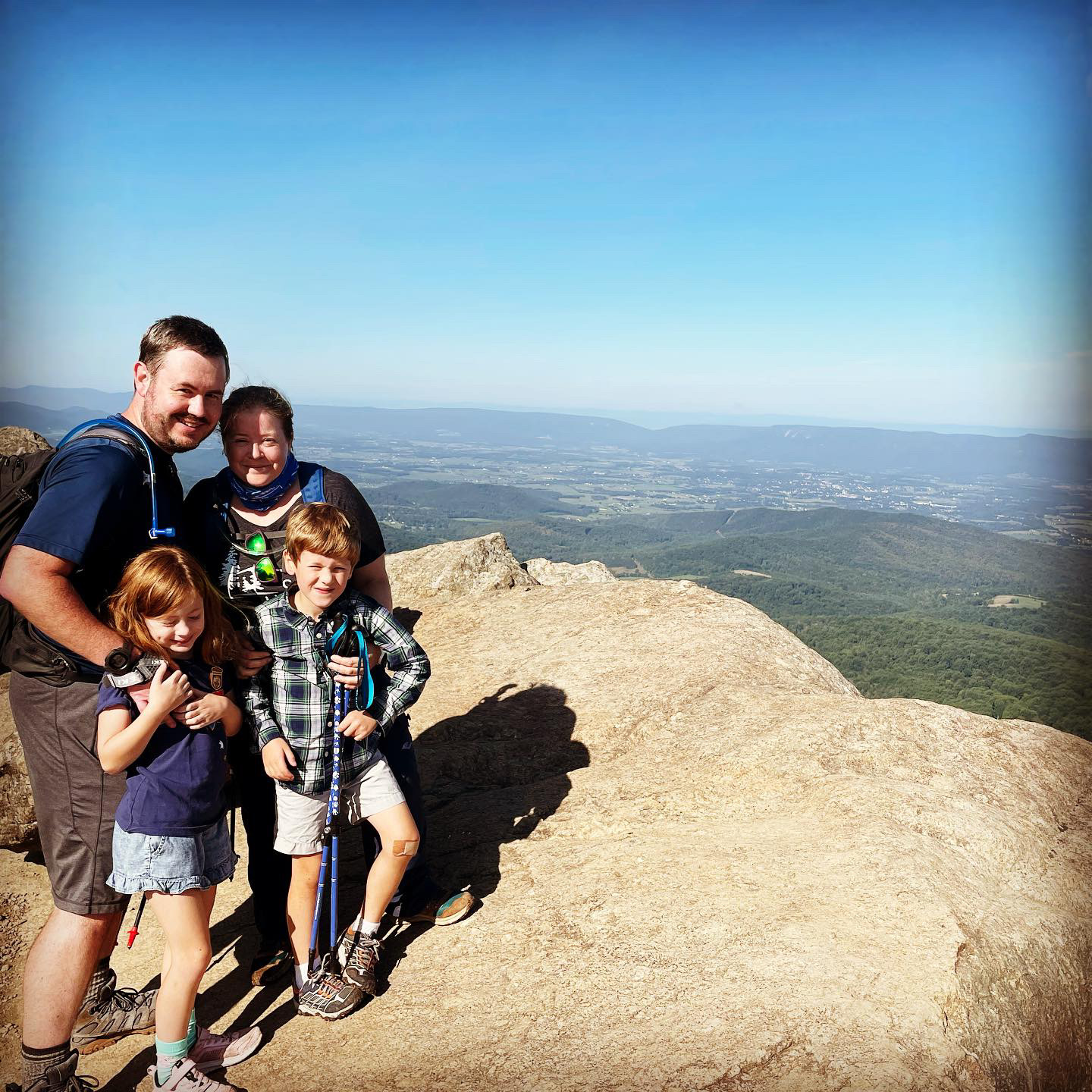
In a year, my feet carried me through miles and miles (and miles… and miles…) around my neighborhood and bike path and local parks – and up mountains, several of them, at my home NPS park, Shenandoah.
And they took me farther afield, to spectacular places – pebbly beaches and mossy rainforests in the Pacific Northwest; on runs around the Space Needle and down the Alaskan Way seawall on work trips to Seattle; to American icons in Colorado and Utah – including the spectacular Delicate Arch – and on wildlife rich hikes around four national parks in Costa Rica.
Along the way, I racked up lessons along with the steps.
All steps count, even the ugly ones. Even walking loops around my living room couch. Even marching in place in my kitchen, or in the family room while watching TV. Like I said above, I’m not proud.
A safe place to walk would be a nice perk. My street is a pass-through between two busier roads (or what passes for busier roads in my little exurb) and there’s a blind corner where I’ve seen my life flash before my eyes a few too many times as cars blew through the (clearly visible) stop sign and careened around the corner at ten or fifteen miles above the speed limit. On my grumpier days, I have been known to shout things like “Slow down!” or “This is a residential street!” Related: I can’t wait to move. Onto a nice, quiet cul-de-sac, please.
Walking works, but a run will knock those steps out faster. Obviously. And if your neighborhood isn’t great for running (see above) find your local bike path access point. Finding my favorite spot to hop on the W&OD trail (easy, free parking plus decent scenery equals winning) was a game changer for weekday runs.
Once in the habit, it feels weird – not a good weird – to not take 10,000 steps a day. If I get to evening without hitting my step goal, I feel twitchy and stiff until I get some movement in.
A walk doesn’t actually take that much time, and a run takes even less (that’s bang for the buck) but it’s worth the time. And I usually have time for it. There are very few work tasks that can’t wait for me to get back from a walk or run that I’ve planned. Responding to an email in an hour – not ten minutes – is actually fine.
Related: I have to plan for the walk or run, or it might not happen. I do have the time but often I need to affirmatively claim it for myself (and block it on my calendar). A little planning works wonders.
Beautiful scenery – like national parks – and good company is nice, but a neighborhood walk with one of my favorite podcasts in my ears is delightful too.
Survival mode is gradually (slowly) dissipating, energy levels are gradually (slowly) returning, and it was a pretty good week in books. I wrapped up A Room of One’s Own early in the week and then spent a few days over Rhododendron Pie, Margery Sharp’s light and funny first novel. I didn’t love it as much as Cluny Brown, but that’s not really saying much because I absolutely adored Cluny Brown. Still really loved Rhododendron Pie.
By the end of the week, I – somewhat surprisingly – had enough brainpower to make a doorstopper actually realistic, and I’ve been meaning to get to Charlotte Bronte’s Shirley (off the Classics Club list – see me cruising?). I’m just at the very beginning, but Bronte’s “workaday” novel of “Monday morning” is promising indeed. Basically, it seems to be North and South, but make it Bronte? I’m interested.
Not sure what’s on deck after Shirley, because it’s way too soon to tell. I’m sure I’ll be wanting something short, but what it will be – time will tell.
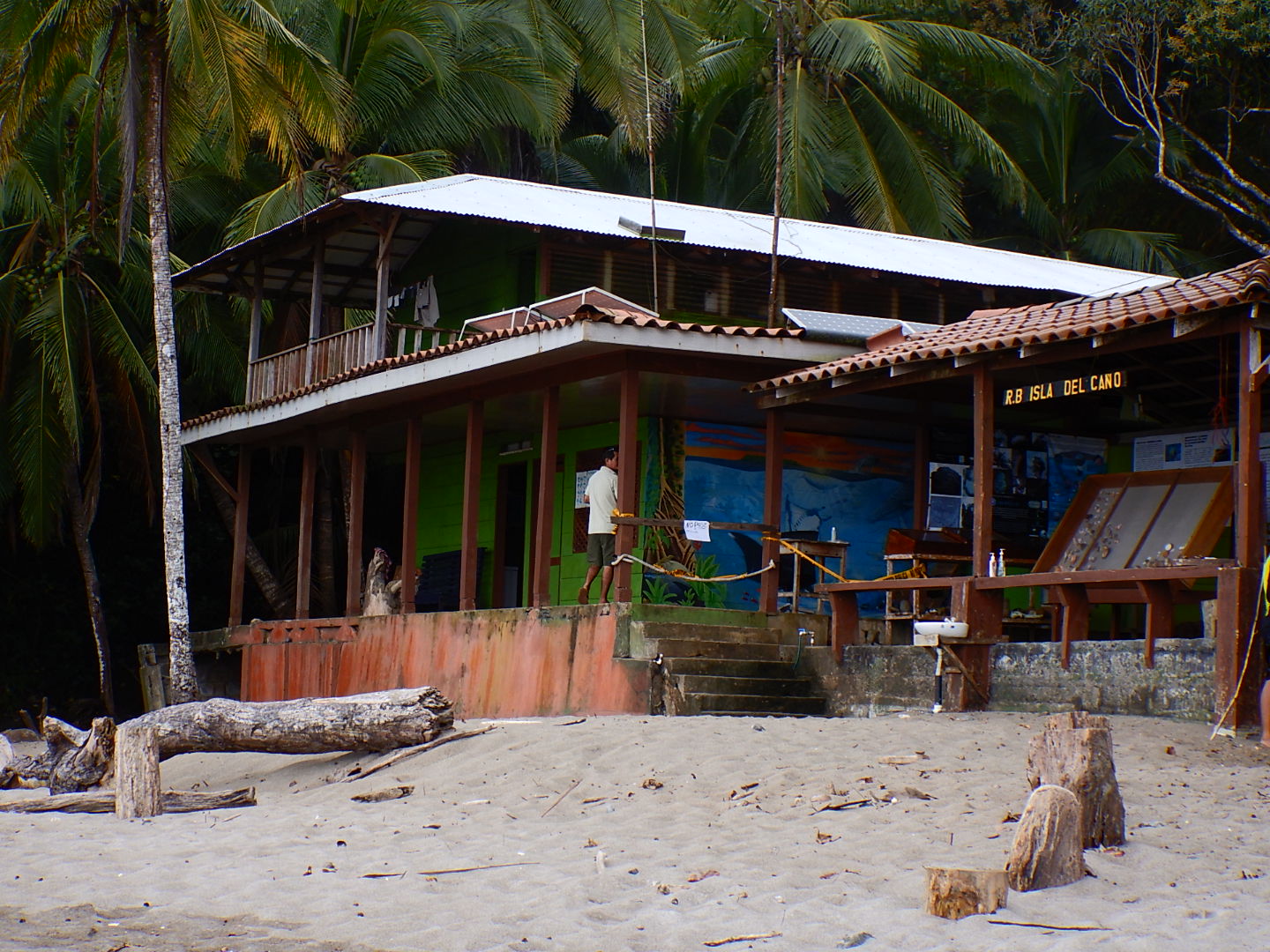
In dive lingo, a “surface interval” is exactly what it sounds like: a break at the surface between dives. There’s a good reason for doing a surface interval – your body builds up nitrogen bubbles while submerged, and you need to give yourself time to clear them from your system in order to safely dive again. (This is also the reason for that safety stop, otherwise known as “Quique holds onto Jaclyn and Steve’s BCDs for dear life.”) Our dive excursion each day included two dives, with a safety stop in between at the absolutely breathtaking Isla del Cano National Park.
Hard to find a better spot to decompress – quite literally, actually – between dives, right?
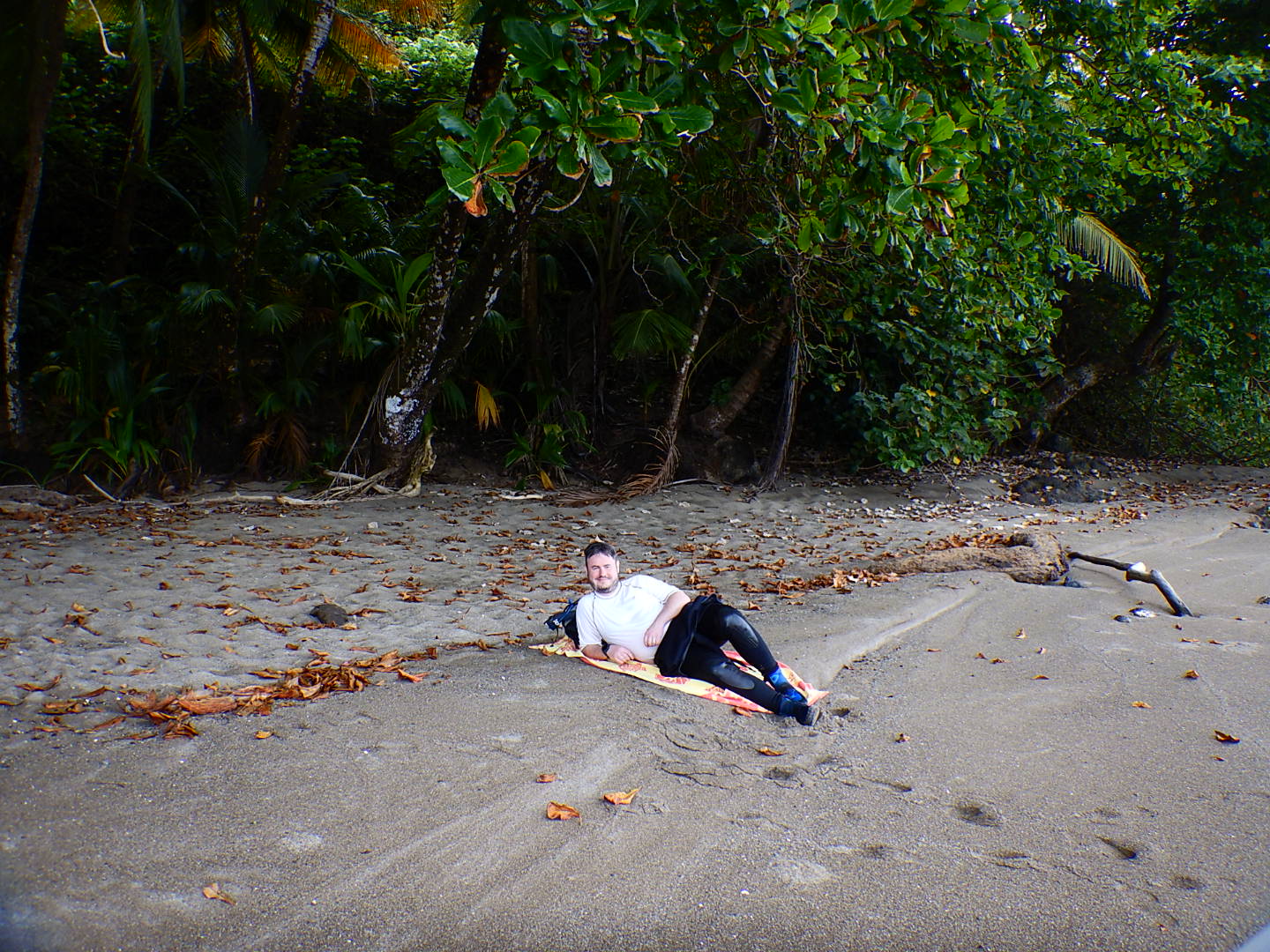
We pulled up in the little cove alongside about ten other boats, all of which were letting hikers, swimmers, snorkelers, divers and beach-goers off at this magical place. Quique, our divemaster and guide, rattled off our options – we could hang out on the beach, swim, or hike uphill to a pretty overlook. Steve and I were tired from an early wakeup call and an hour-long certification dive, and we wanted to conserve our energy for the next underwater adventure, so we opted to hang out on the sand.
Carefully selected lounging spot: as I mentioned last week, Quique was adamant that we were not to lay our towels out under a palm tree. We giggled a little at the fact that he seemed to be much more afraid of falling coconuts than he was of sharks and stingrays – until we saw a couple next to us nearly have their vacation ruined by a falling coconut. Y’all. Those things are like ROCKS.
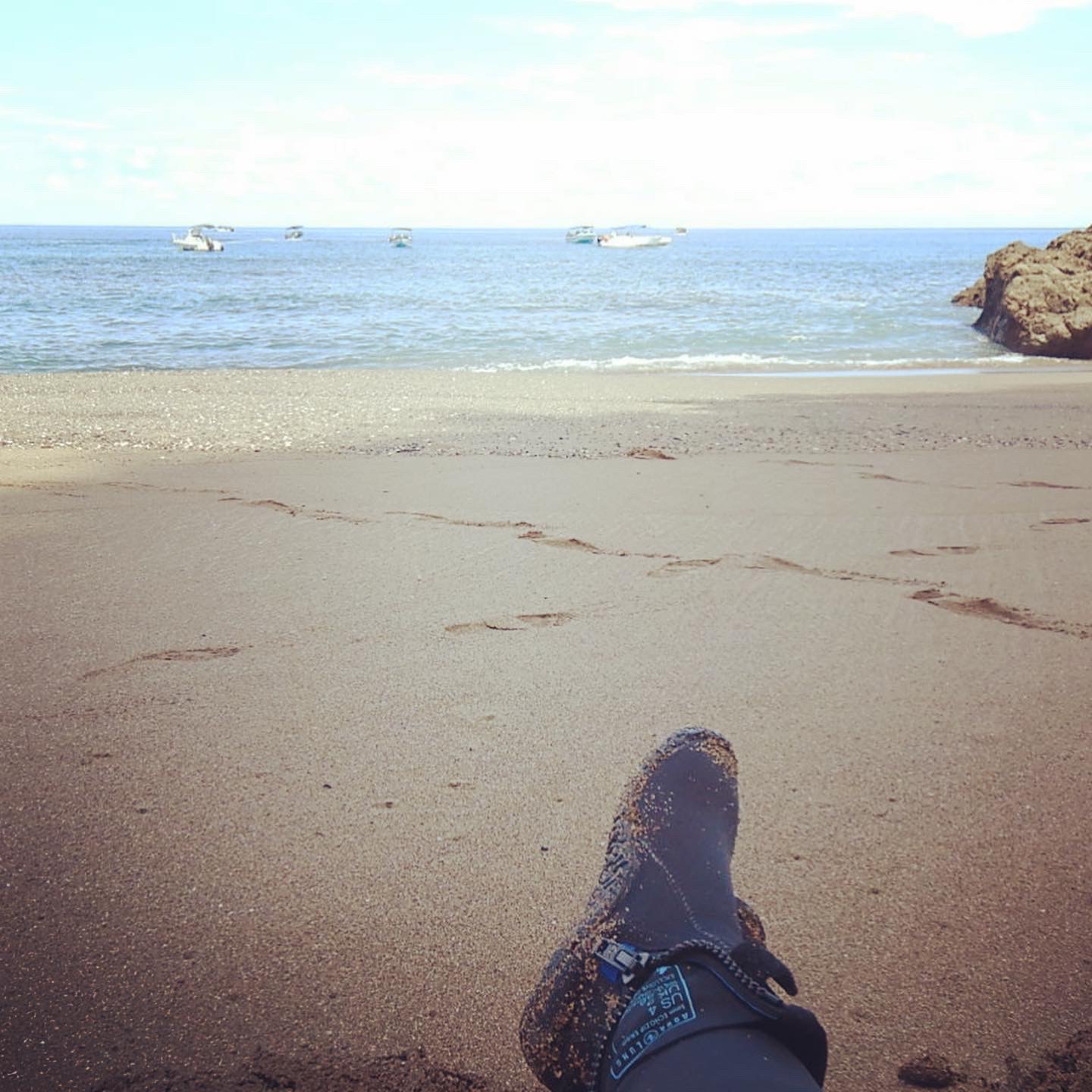
Taking in that view – not bad, not bad at all. All of the couples on the boat had gone their separate ways – the two snorkeling couples were snoozing in the sun, and Garry and Donna had wandered off to find a quiet spot – and we just enjoyed the sight of the waves rolling in.
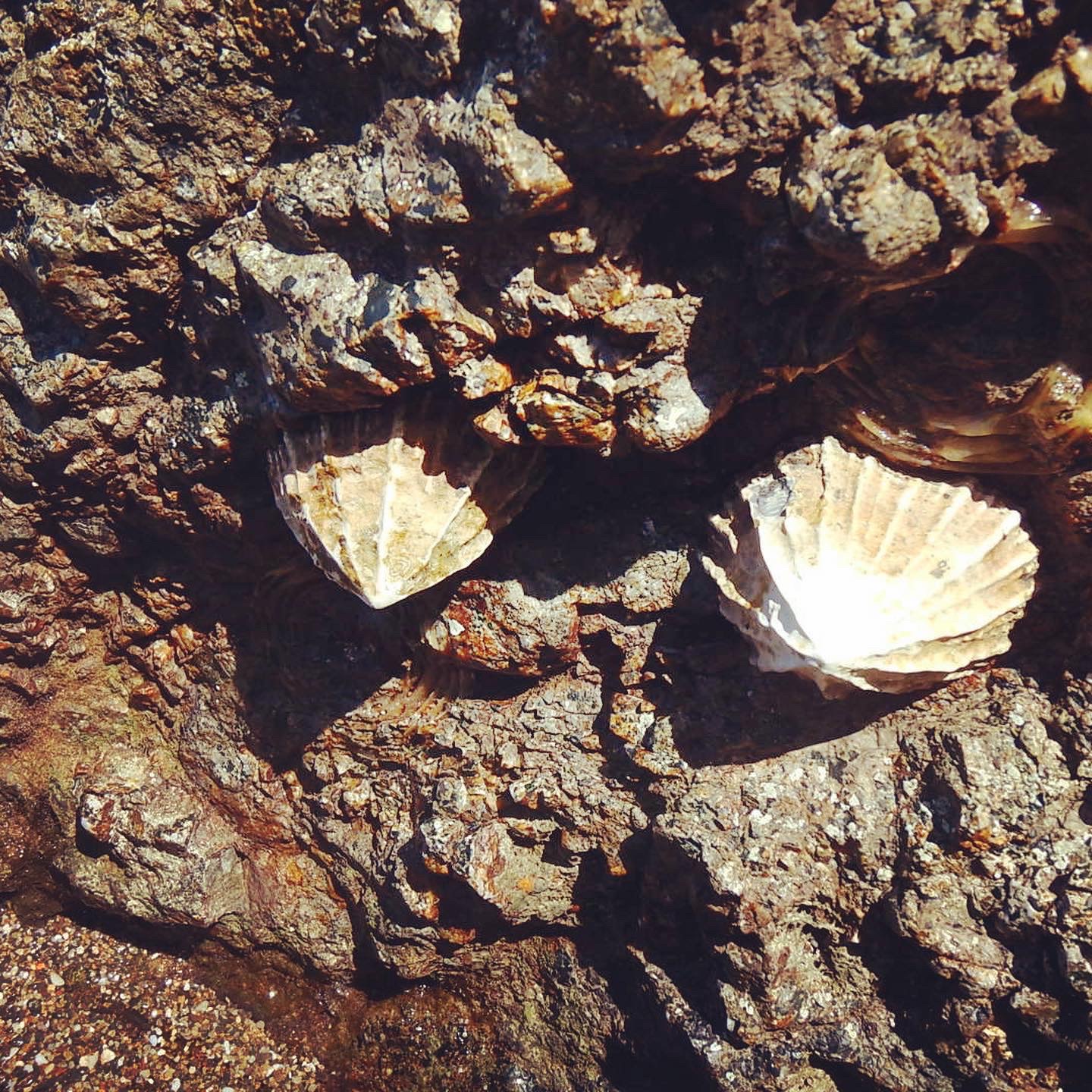
I am, however, notoriously high energy and I couldn’t sit still for long before getting up to poke barnacles and explore down by the waterline.
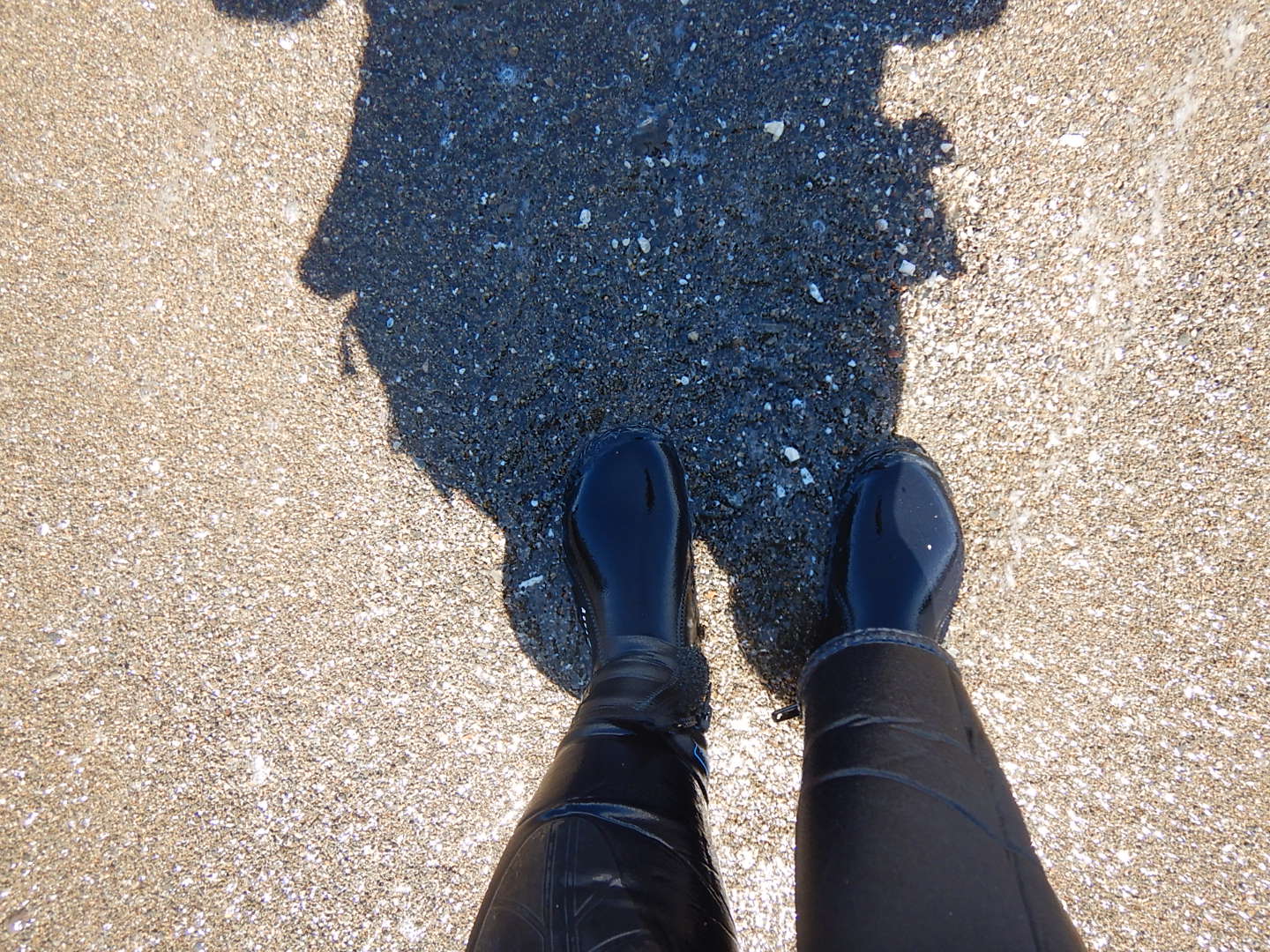
Five millimeters of neoprene, plus dive boots – I think this is the most fabric I’ve ever had on at the beach?
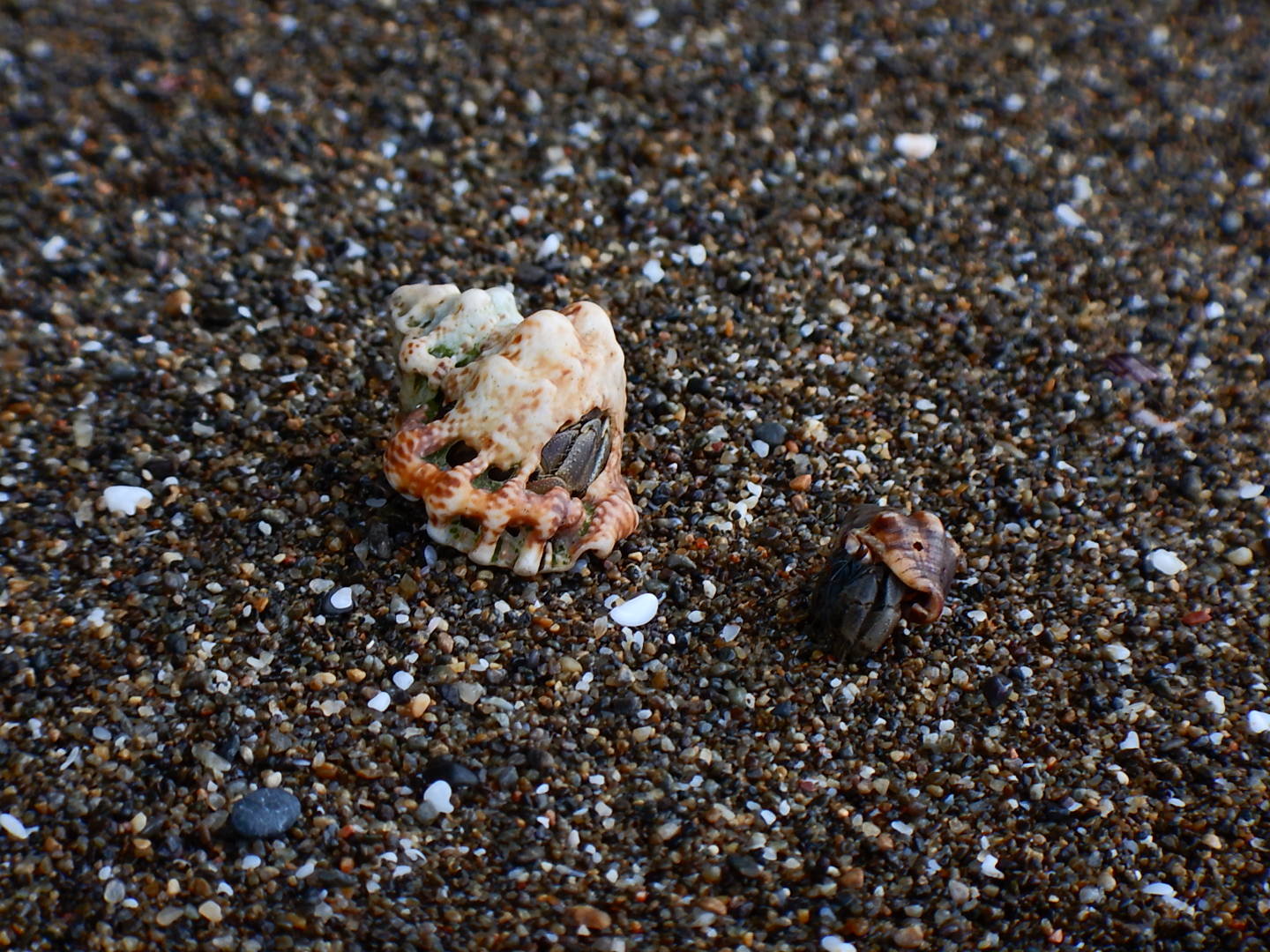
Back at the towel, Steve and I watched these hermit crabs scuttling around, trying to get as far away from us as they could. If you know Steve “IRL” you may know that he has an absolutely hilarious “critter voice.” He had me rolling on the sand, laughing until I almost couldn’t breathe.
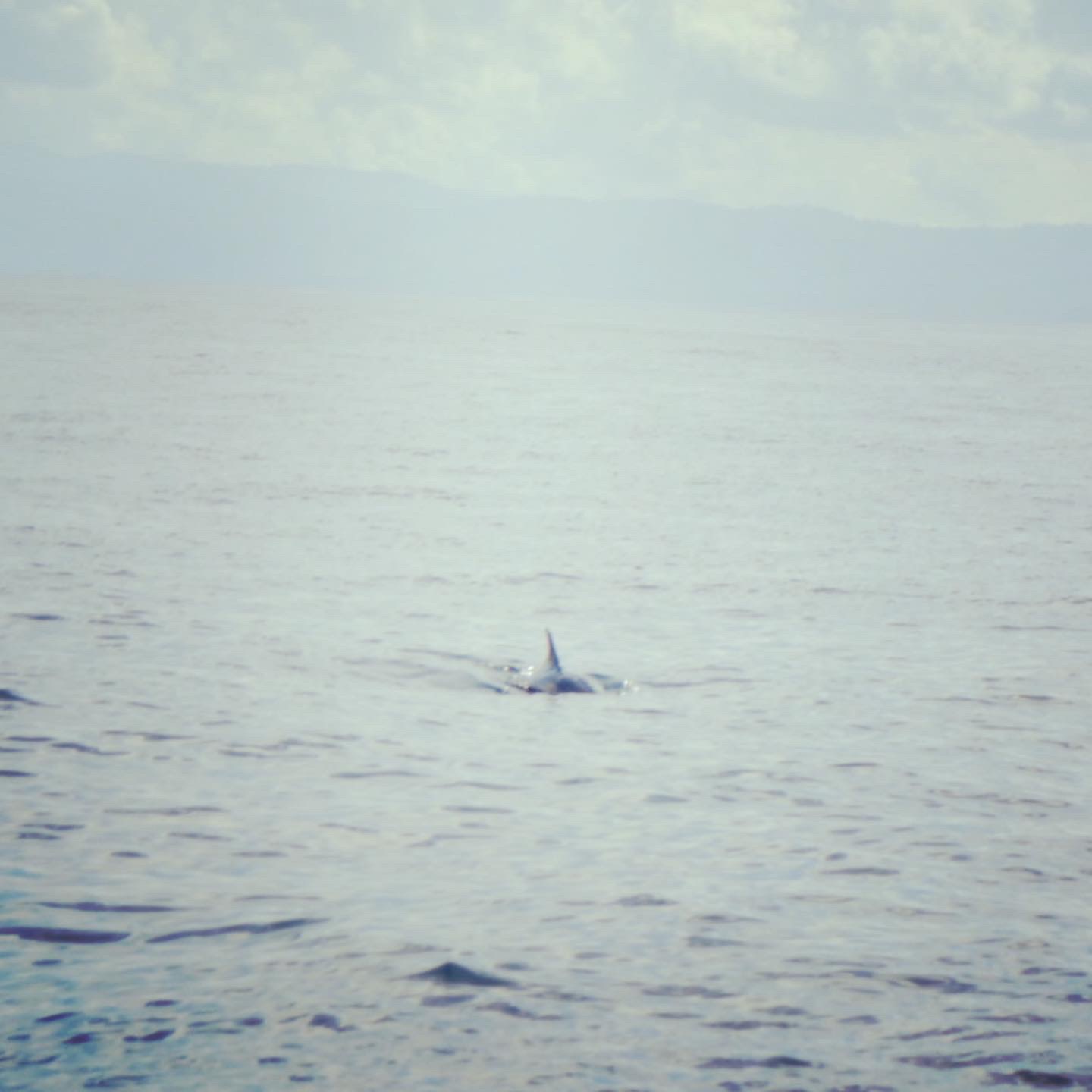
Back on the boat, our surface interval continued with what will always be the most exciting sight for me, anytime I’m out on the water: cetaceans!
Blurry picture alert, but you can see the dorsal fin: these are pantropical spotted dolphins! A new one for my “Marine Mammals of the World” logbook. #nerdalert.
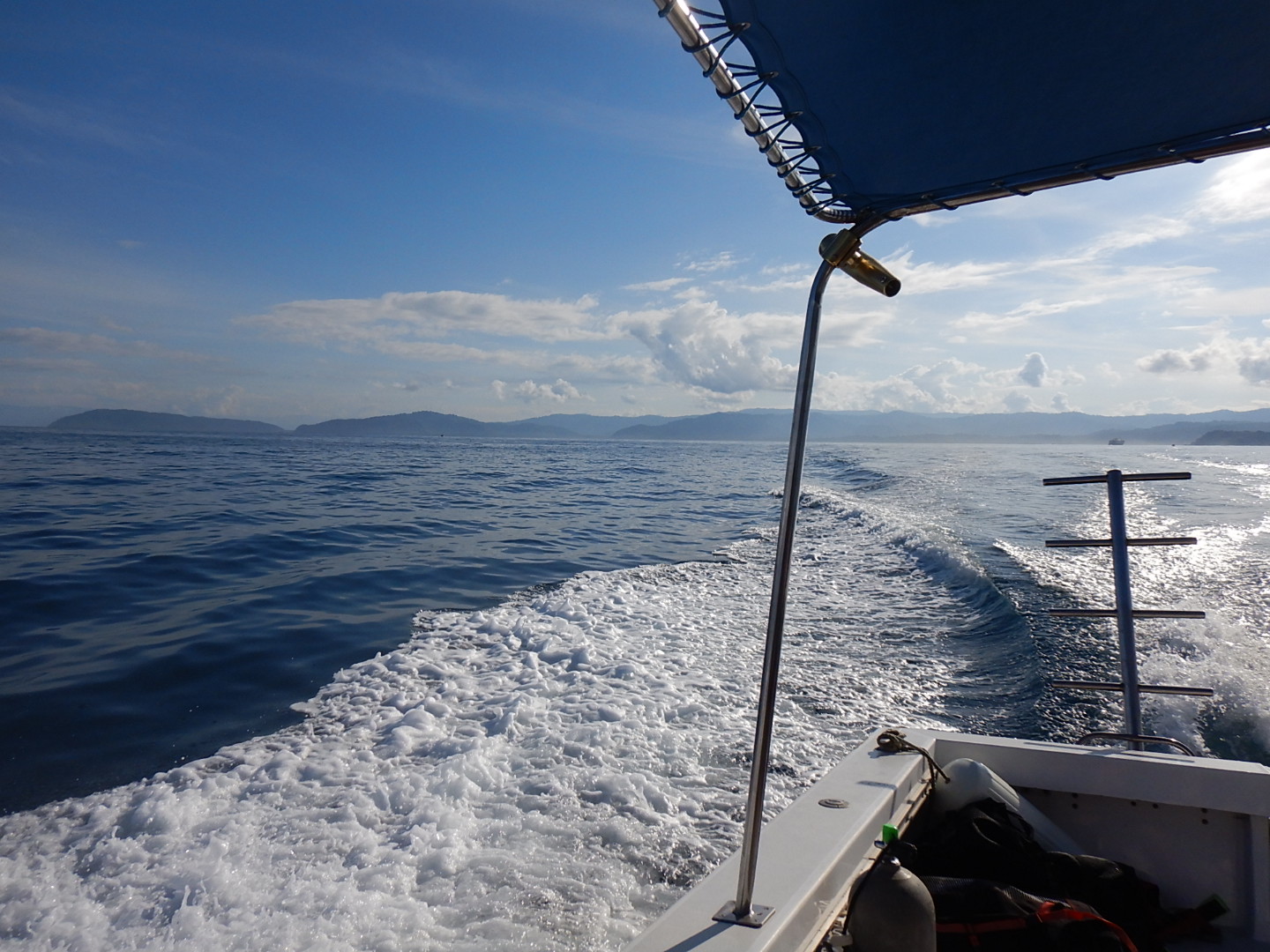
As exciting as dolphins – a new-to-me species, no less – were, we had an even bigger treat in store for us the next day. Our dive boat was called the “Ballena” – Spanish for “Whale” – and I was hoping that it was a good omen. February is prime humpback whale calving season in Costa Rica, as the whales come to the warm waters to give birth and let their calves build up strength and stamina before making their long migrations. We didn’t have a whale watch on the agenda, but we would be on the water enough that I was hoping for a sighting. Sure enough, the next morning – as we steamed toward Isla del Cano for a second day of diving – the boat’s captain pointed at the horizon and shouted “Ballena!”
No matter how many times I see these gentle giants, it’s never anything less than miraculous.
This was a humpback whale mom and baby traveling together. They were very relaxed and chill – couldn’t have been less interested in us, and no breaching either. I could have watched them for hours, but we had another day of diving to get to.
Next week – we’re giant-stepping back into the water for a second day of diving – completing our open water certifications!
The Song of the Lark is technically the second book in Willa Cather’s “Great Plains” trilogy, although it stands alone perfectly well, and you don’t need to read the first book (O, Pioneers!) or the third (My Antonia) to follow and enjoy this unrelated story. Considered to be the most autobiographical of Cather’s novels, The Song of the Lark follows young Thea Kronborg, a talented pianist and singer, from her childhood in a small village in rural Colorado, through her musical education in Denver and Chicago, and her awakening as a stage artist.
As a young girl, Thea knows that she is special. Her mother encourages and facilitates her gifts (even through her siblings’ jealousy and her father’s preoccupation with his religious vocation). Thea attracts the attention of older men in the town – the local doctor, a railway worker who (rather creepily in my 2022 eyes) wants to marry her, a migrant laborer from Mexico. It’s a little strange, this fixation that older men have on Thea, but nothing horrifyingly inappropriate happens (thank goodness) and a few of these relationships lead Thea to leave her small-town home to study and experience music in the big city.
In Denver, and later – especially – Chicago, Thea is a fish out of water. She struggles to concentrate in her lessons and she fights against constant, grinding poverty. Thea does find friends everywhere she goes – a few, good friends – but she also finds a lot of indifference and discouragement. But there are moments of light, when she begins to awaken to her art, lose her heavy guard, and the reader sees the potential artist.
She was not ready to listen until the second number, Dvorak’s symphony in E minor, called on the programme, “From the New World.” The first theme had scarcely been given out when her mind became clear; instant composure was upon her, and with it came the power of concentration. This was music she could understand, music from the New World indeed! Strange how, as the first movement went on, it brought her back to that high tableland above Laramie; the grass-grown wagon-trails, the far-away peaks of the snowy range, the wind and the eagles, that old man and the first telegraph message.
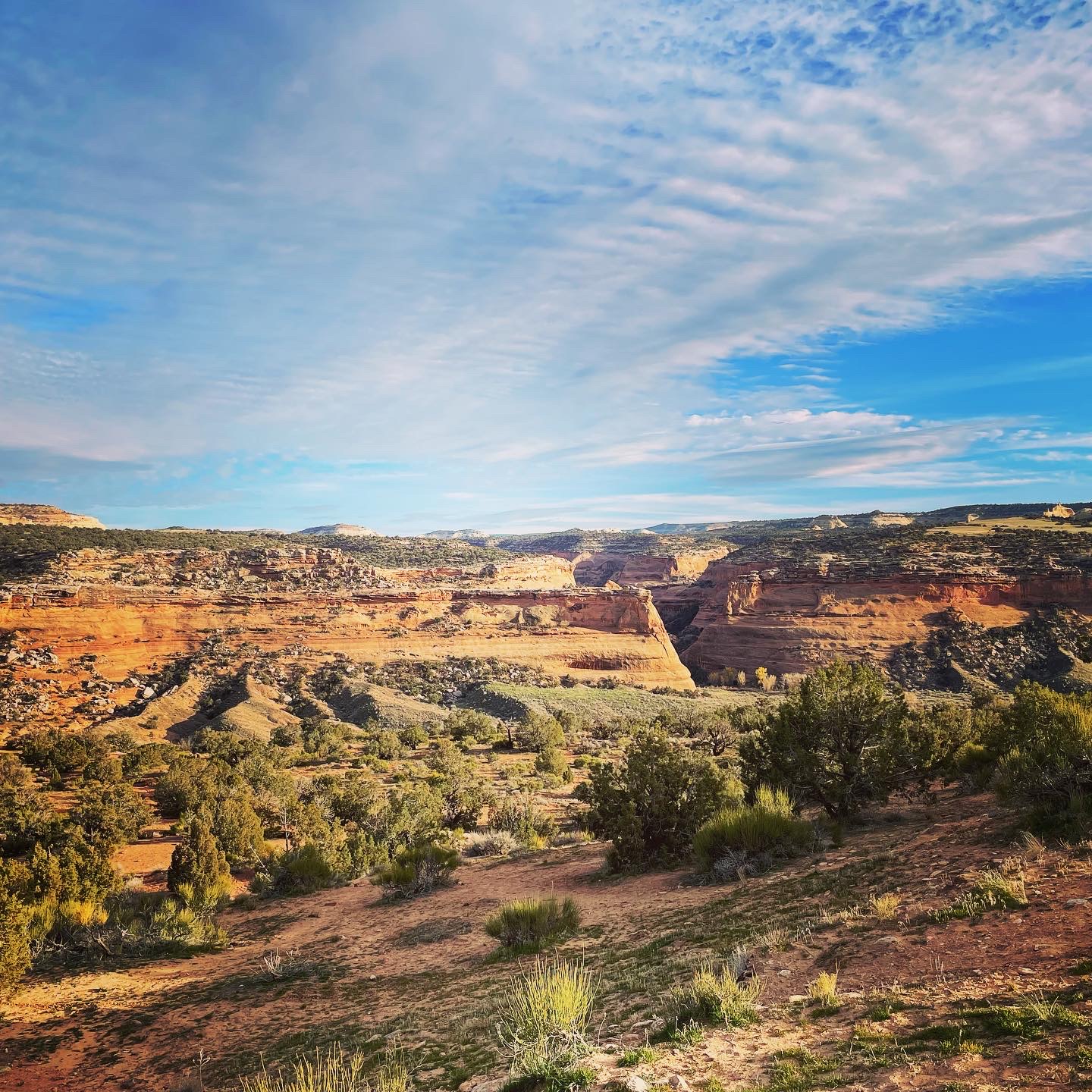
Side note: while context clues made it clear that Thea hails from somewhere around Fort Collins (or thereabouts) Cather’s gritty, glittering descriptions of the landscape called to mind the western slope of Colorado, where my brother lives, and I couldn’t shake that picture.
Wire fences might mark the end of a man’s pasture, but they could not shut in his thoughts as mountains and forests can. It was over flat lands like this, stretching out to drink the sun, that the larks sang – and one’s heart sang there, too. Thea was glad that this was her country, even if one did not learn to speak elegantly there. It was, somehow, an honest country, and there was a new song in that blue air which had never been sung in the world before. It was hard to tell about it, for it had nothing to do with words; it was like the light of the desert at noon, or the smell of the sagebrush after rain; intangible but powerful. She had the sense of going back to a friendly soil, whose friendship was somehow going to strengthen her; a naive, generous country that gave one its joyous force, its large-hearted, childlike power to love, just as it gave one its coarse, brilliant flowers.
I have not read Willa Cather in many years – I think I read My Antonia back in college, and not since, and I’d never read any other Cather. I bought The Song of the Lark at the Strand in New York City at least ten years ago and have been moving it from house to house ever since, so it was long past time. My (admittedly very shady) memory of My Antonia was that I loved Willa Cather’s gorgeous writing about the western landscape, but didn’t find the characters as compelling as I’d expected to – and the experience of reading The Song of the Lark was the same. I certainly rooted for Thea to find her way in a big world; my eyes welled up when one character died in a horrific accident; I liked Thea’s “beer prince” boyfriend and her sad sack piano teachers (both of them) – but I didn’t find the characterization that powerful. This may have been due to the fact that I read The Song of the Lark while I was sick and had some other (private, personal) stuff distracting me – I definitely didn’t give the book my full attention, or really anywhere near as much attention as it deserved, and I’ll bet I’d have had a better, more fulfilling reading experience if I had. Even operating at only half strength, though, I still thought The Song of the Lark was a lovely read, gorgeously written and well worth the time I spent on it. I’ll have to revisit it soon at my full readerly powers and see if the experience expands – like the western landscape – as a result.
Y’all, I have been living in survival mode in a big way. Last Sunday, Steve was out at a concert, and then he was down and out with tummy troubles (not COVID, and he’s fine now) and then by the time he started to feel better he had to shove off for his twentieth law school reunion while I stayed home to wrangle the kids. The workweek was a gauntlet of mediations almost every day, which meant I had to work late most nights to stay on top of my regular and project work. Through all of this, the anklebiters were limping to the finish line of the school year, with everything that goes along with that – school events, class parties (that I had to procure and send candy for), and a year’s worth of artwork, math worksheets, and random detritus coming home every day. We were all tired and more than a little emo, and staring down a weekend of solo parenting. I did my best to make it fun and exciting for the kids – I called it The Great Summer Kickoff and kept a weekend of fun rolling – but guys, I am exhausted. And as you can imagine, there wasn’t much reading.
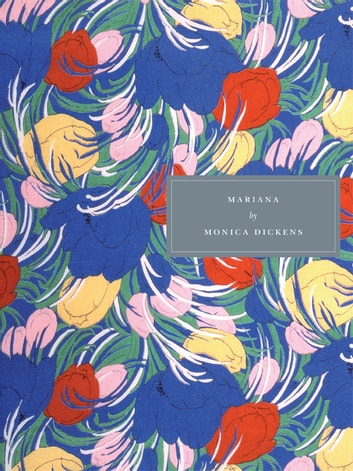
Most nights of the week, my eyes were so tired from staring at zoom.gov all day – and I was handling dinner, cleanup, evening and bedtime alone, with no help – and Mariana stayed unopened on my nightstand. I might manage to limp through twenty pages on a good day, but that was the best I had in me all last week, until I finally got to sit down and read the last eighty or so pages on Sunday afternoon. It was not at all the fault of Mariana, which was delightful (with the exception of one or two offhand comments that ring jarring to the modern reader, sadly all too common in books of that time period). I loved the main character, Mary, and rooted for her as she found her calling and stumbled through bad romances until she met her match.
On Sunday evening, after finishing Mariana, I was planning to pick up something off my Classics Club list, but couldn’t face a long book. I tried a few pages of The Silmarillion, put it down, tried a few pages of Sylvia’s Lovers, put it down. Finally went for a non-Classics Club Challenge book, largely because it was short – A Room of One’s Own, which I’ve been meaning to pick up for ages now. Hoping for a more book-friendly week ahead: I don’t have any mediations, Steve is back from his trip to Cornell, and the kids are off to their respective day camps (theatre for Peanut, baseball for Nugget). So the dream is: settling into a summer groove and putting up some page totals.
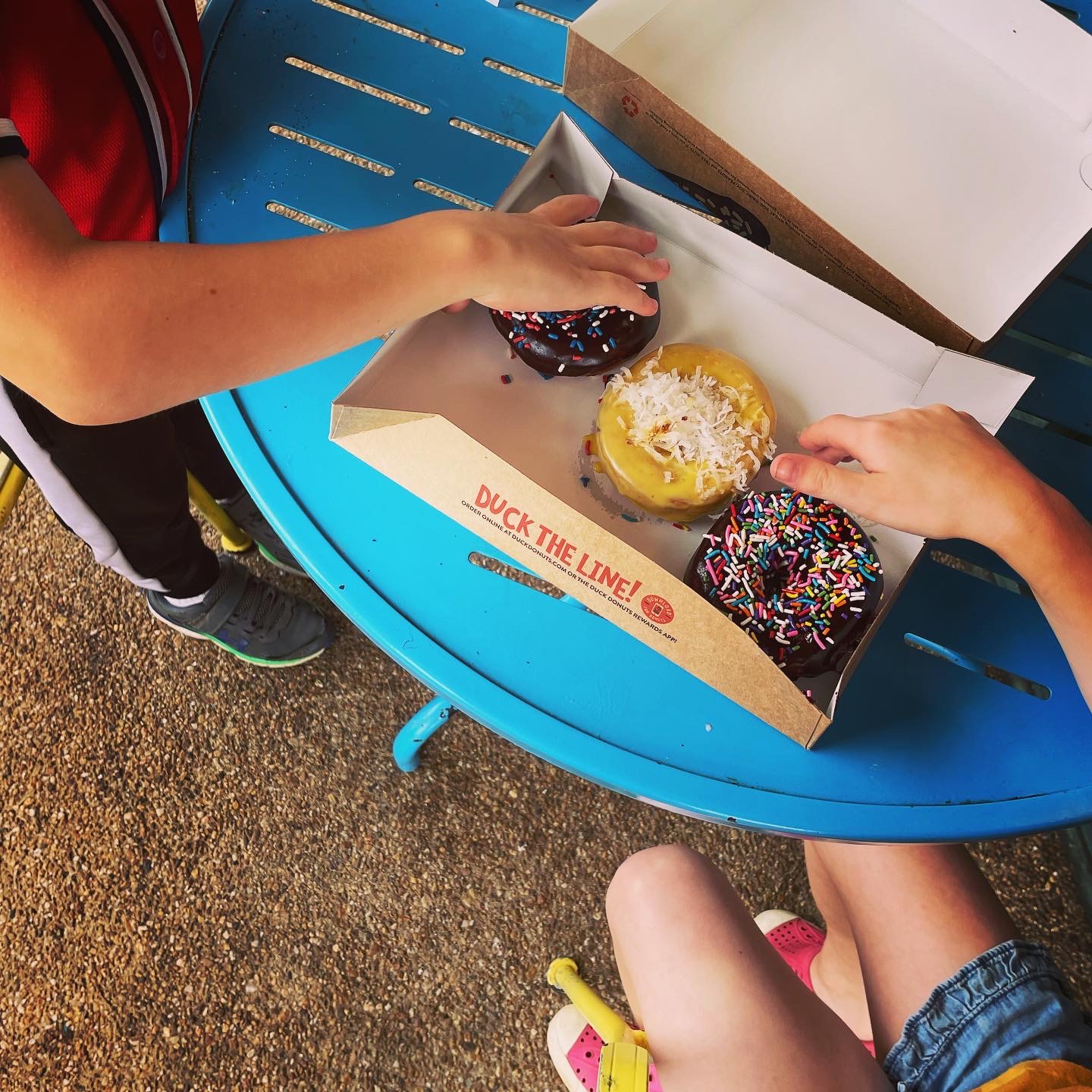
Duck Donuts for breakfast on the first day of summer vacation. It’s a thing.
Fifteen hours of PADI e-learning. Eight pool dives over two Saturdays. It all came down to this: stepping onto our dive boat (the Ballena, which I hoped would be a good omen) and steaming off through Drake Bay toward Isla del Cano National Park and the first of our open water certification “checkout” dives.
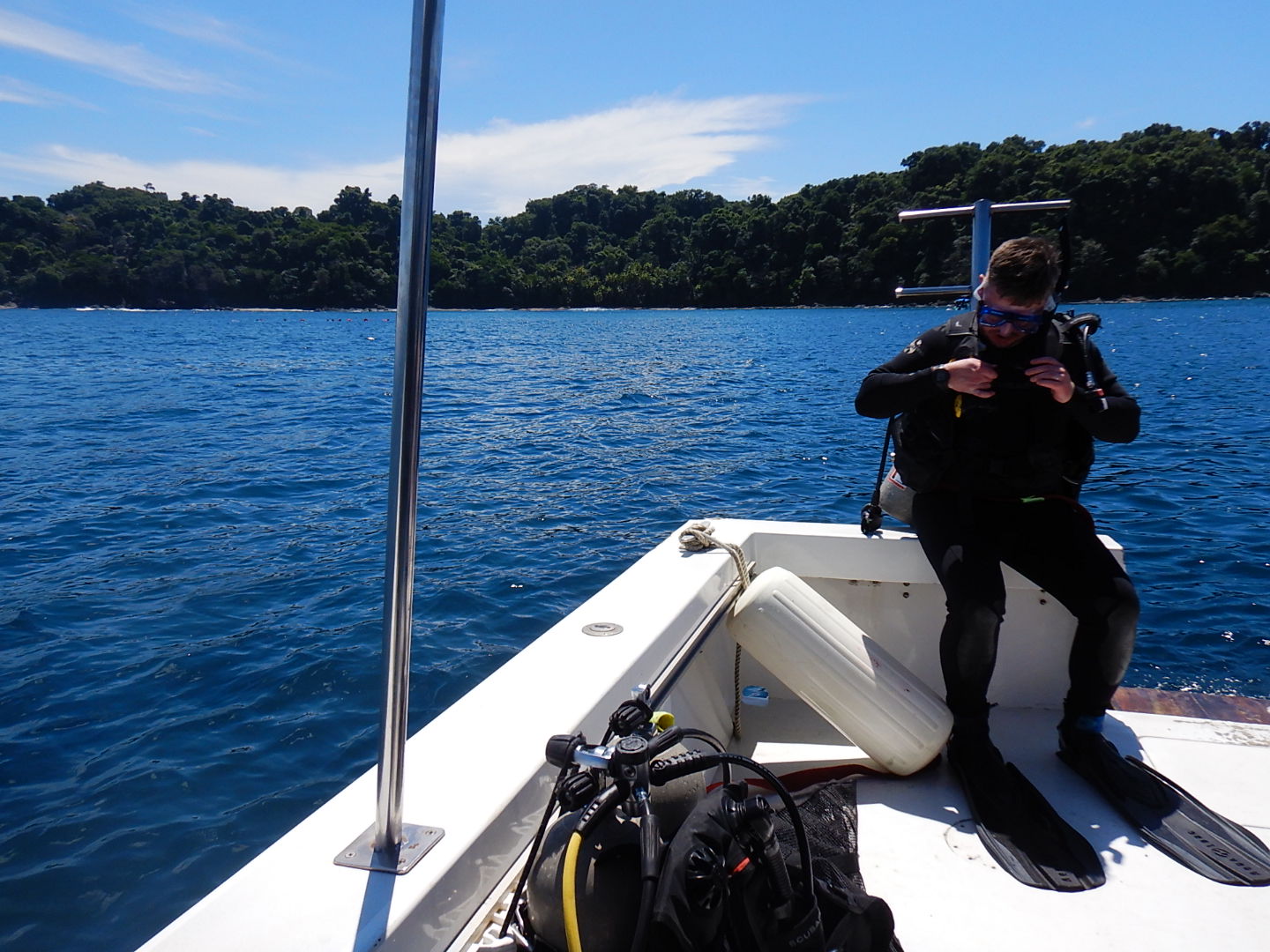
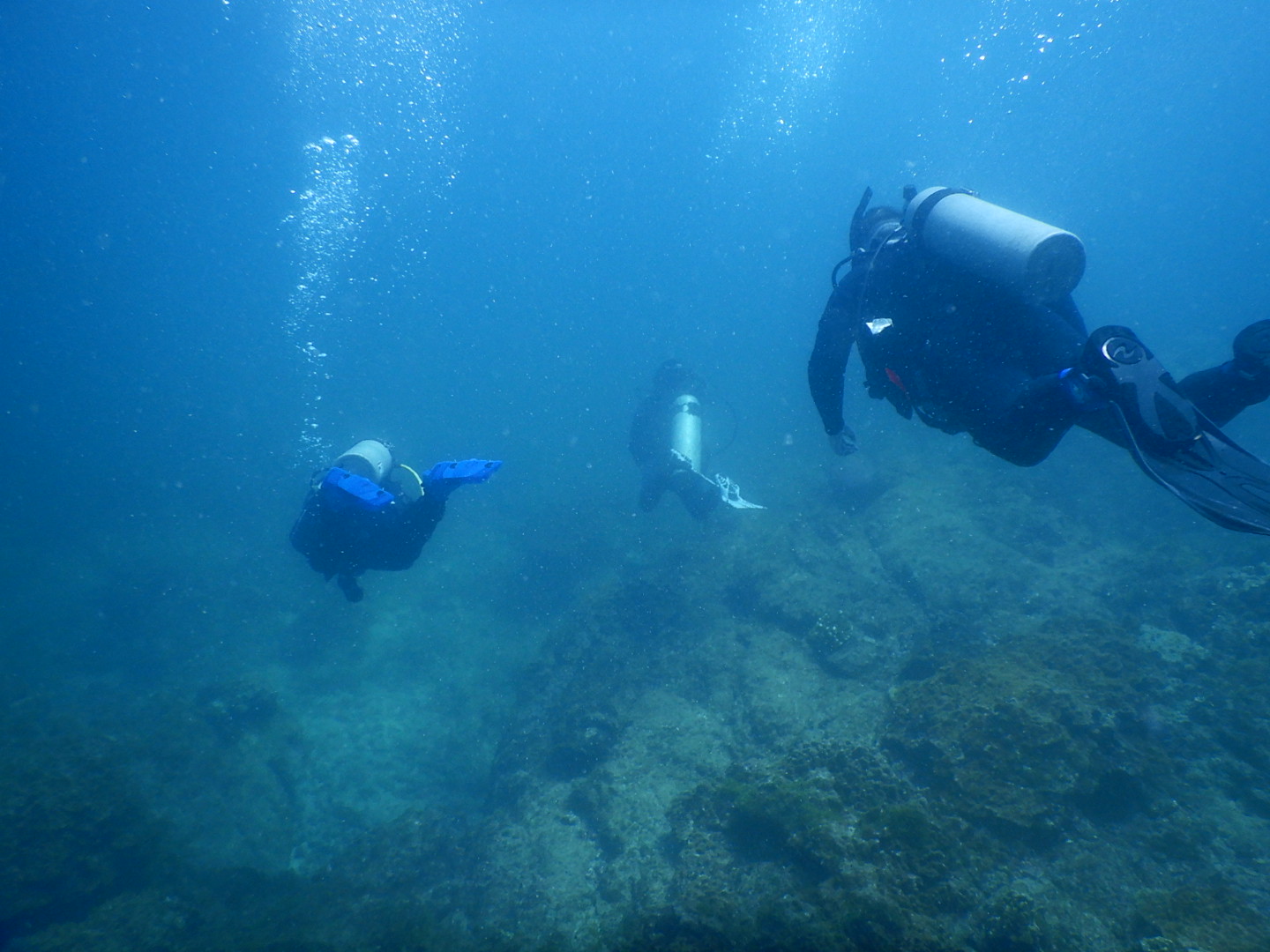
There was a whole party’s worth of adventurers on the boat: four scuba divers (Steve and me, and our new best friends Garry and Donna), two couples planning to snorkel, the boat captain, a guide for the snorkelers, and our PADI-certified divemaster and instructor, Quique.
Quique’s relaxed demeanor put us instantly at ease – he clearly knew every inch of the dive sites we’d be visiting, and he was friendly and calm. I liked him immediately, and breathed easier knowing we’d be in his charge for our first dives. In addition to guiding us around the dive sites, Quique would be testing Steve and me on our dive skills and deciding whether or not we’d pass our checkout dives and become officially certified open water divers. I hoped I’d impress him – at least enough to pass.
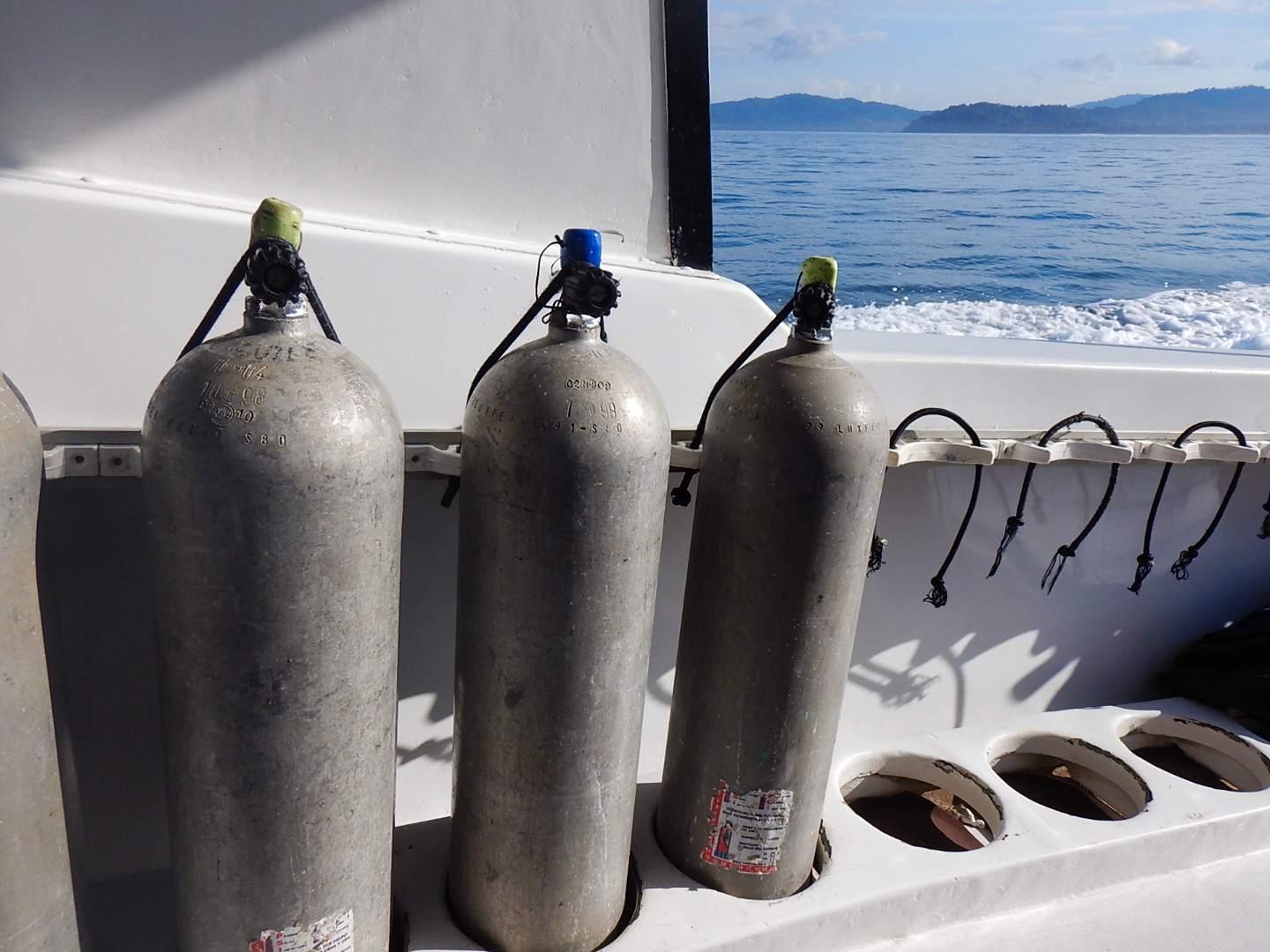
Suiting up and ready to giant-step into the water. Begin (BCD), With (Weights), Review (Releases), And (Air), Friend (Final Check) – and we’re ready. I left my camera on the boat for the first dive – wanting no distractions and no extra gear to keep track of. I figured if the first dive went well, I’d take my waterproof camera down for the next dive. And the first dive did go well. I calmly flooded and cleared my mask – a skill I was worried about, since I wear contact lenses – and demonstrated retrieving a loose regulator. The skills and the dive were over before I knew it, and we were reuniting with the snorkelers for a surface interval on Cano Island. As Steve and I sat on the sand in a carefully selected spot (Quique was much more nervous about us being brained by a coconut than he was about losing us underwater, for some reason) we agreed – we could definitely see how people could get addicted to this.
The surface interval (necessary so our bodies could clear nitrogen before we headed back underwater) felt like it dragged on forever – but it ended eventually and we were back on the boat, and soon, back under the surface.
Is it just me, or does my hair look freaking amazing?
I made it my mission to never, ever, EVER lose sight of Quique.
Quique led us expertly around the dive site. I felt like I was never quite where he wanted me to be. He had such perfect buoyancy that he could hover an inch above sensitive coral without touching it. Me, on the other hand? Not so perfect buoyancy. The last thing I wanted was to hurt a coral or damage sensitive seafloor, so I was erring on the side of swimming higher above the reef. Quique kept motioning to me to come down. Eventually I did get my buoyancy more consistent.
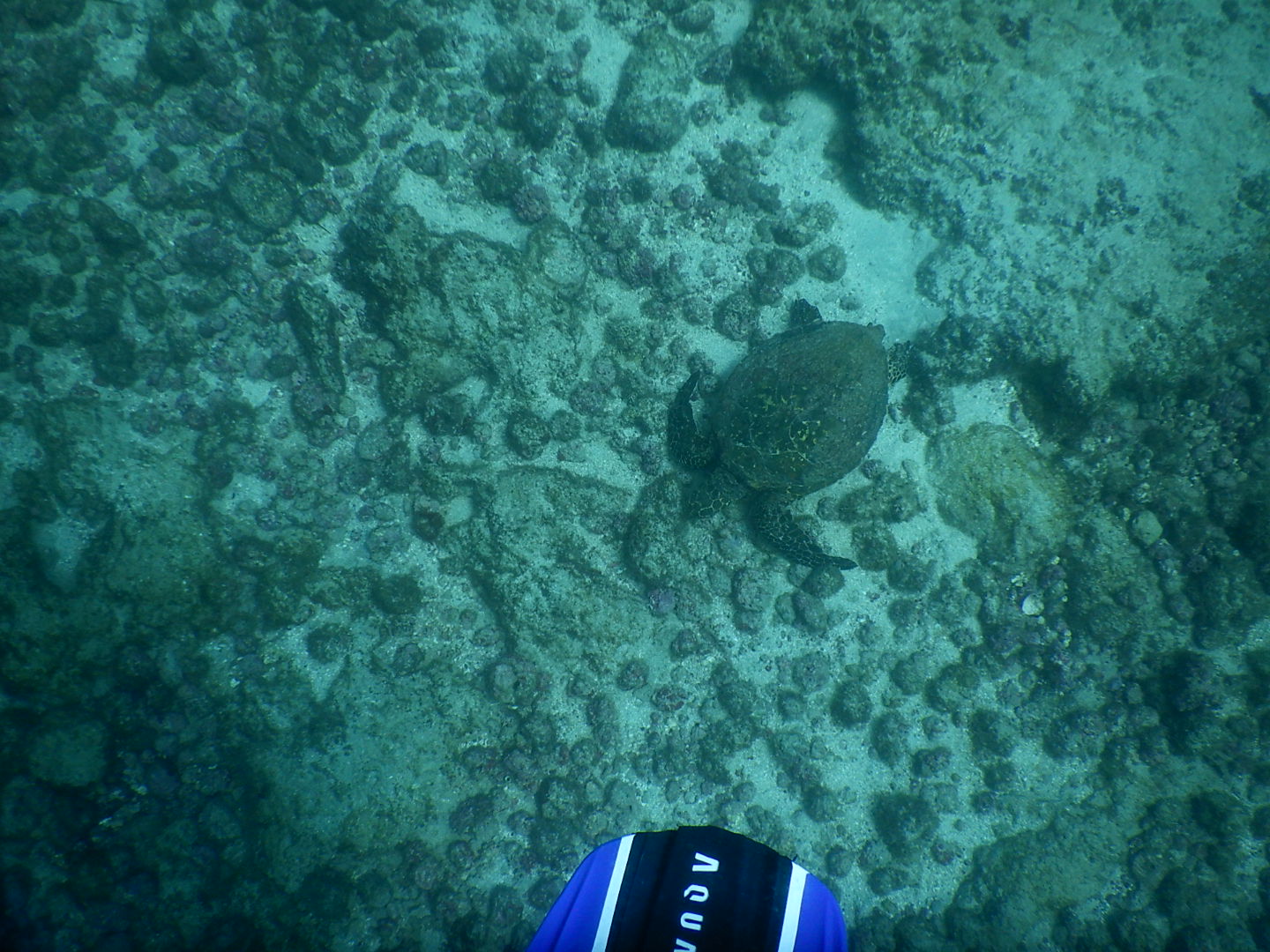
In addition to guiding us around the dive sites and testing us on our open water dive skills, Quique was invaluable in blowing bubble rings (seriously so impressive) and pointing out wildlife. See what’s down there below my fin?
How about now?
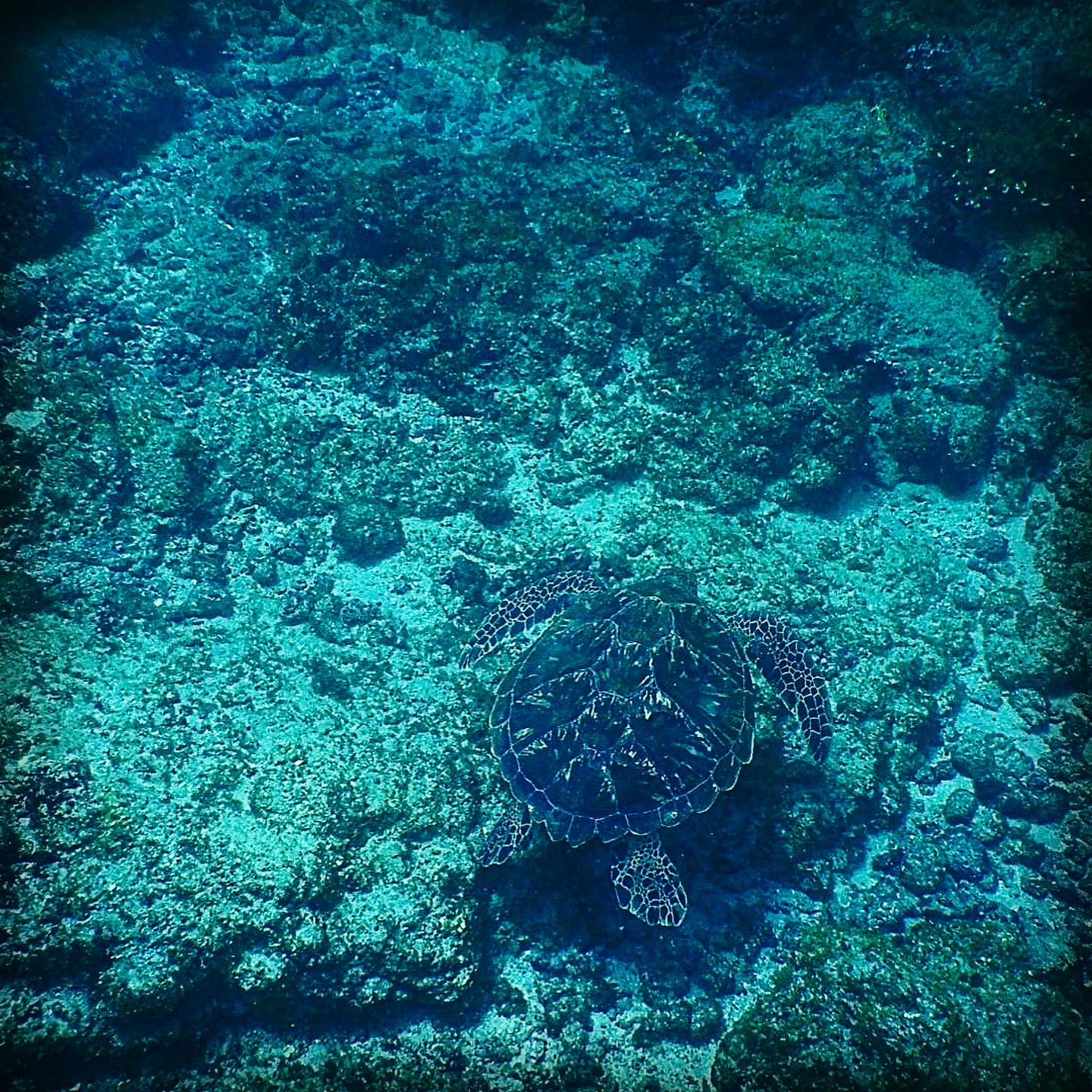
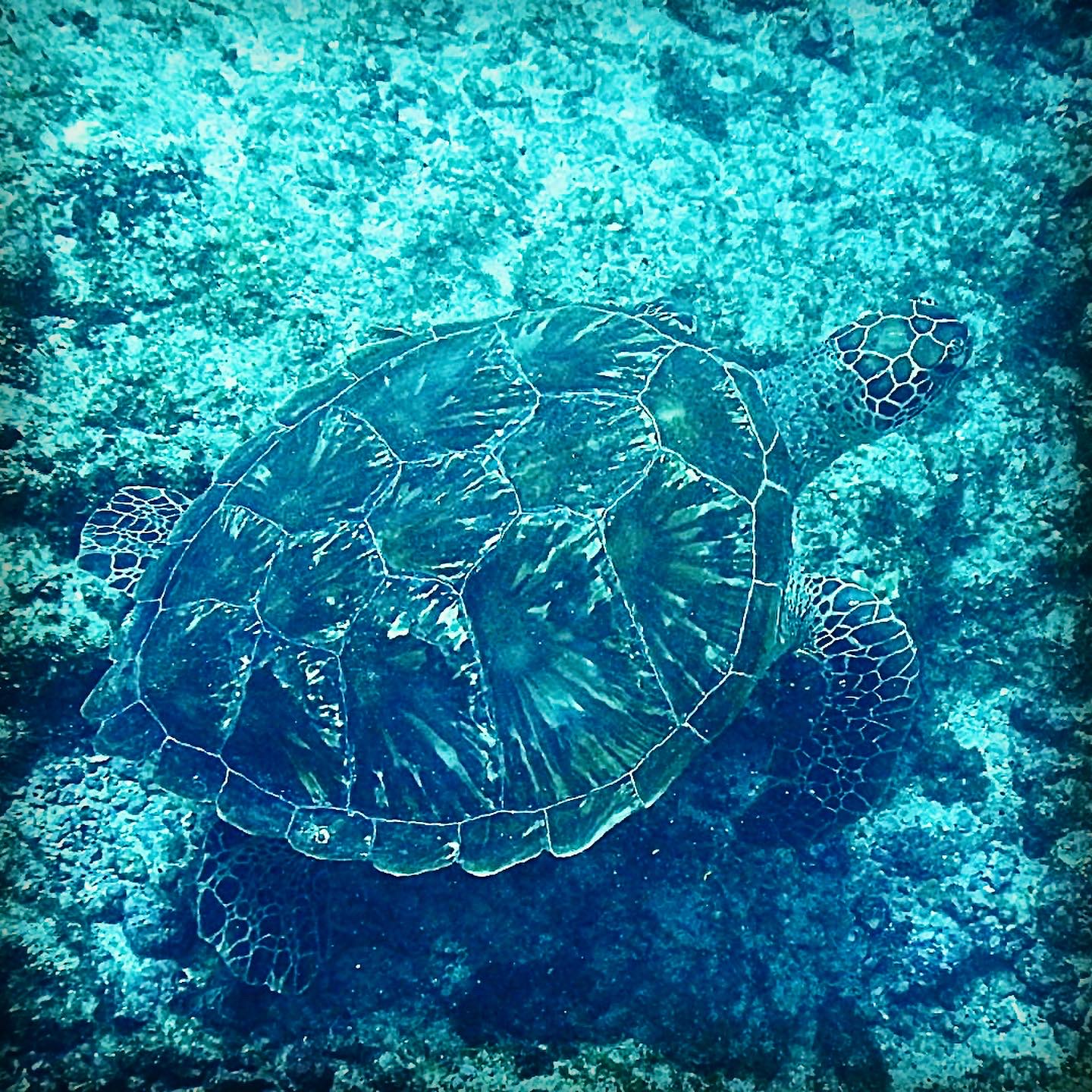
I love sea turtles, and I could barely contain my excitement. I thought I’d be hyperventilating with panic at the idea of a fish brushing up against me, but the closest I came to hyperventilating was out of wild joy. Swimming alongside a sea turtle was – hands-down – one of the coolest experiences of my life.
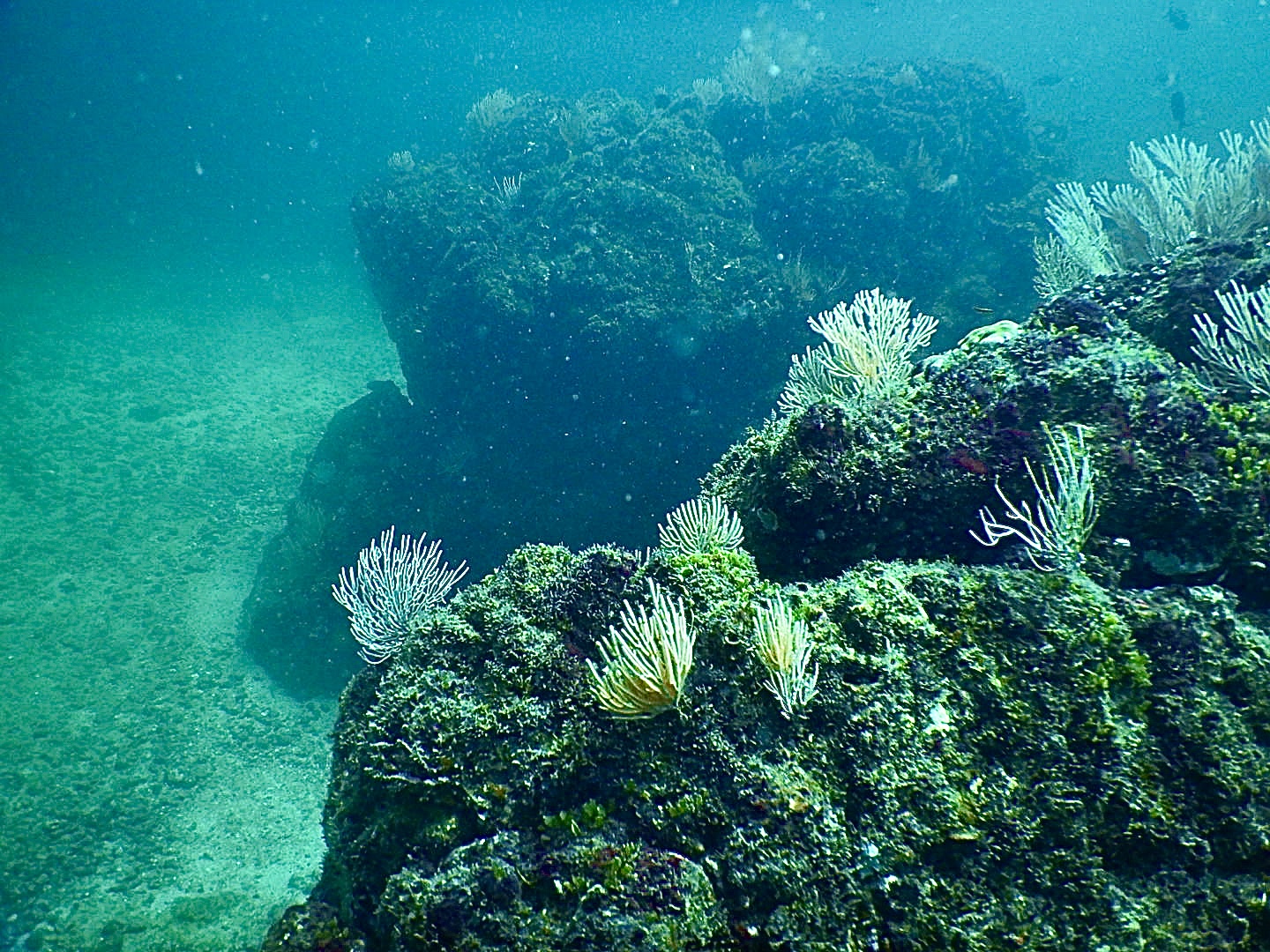
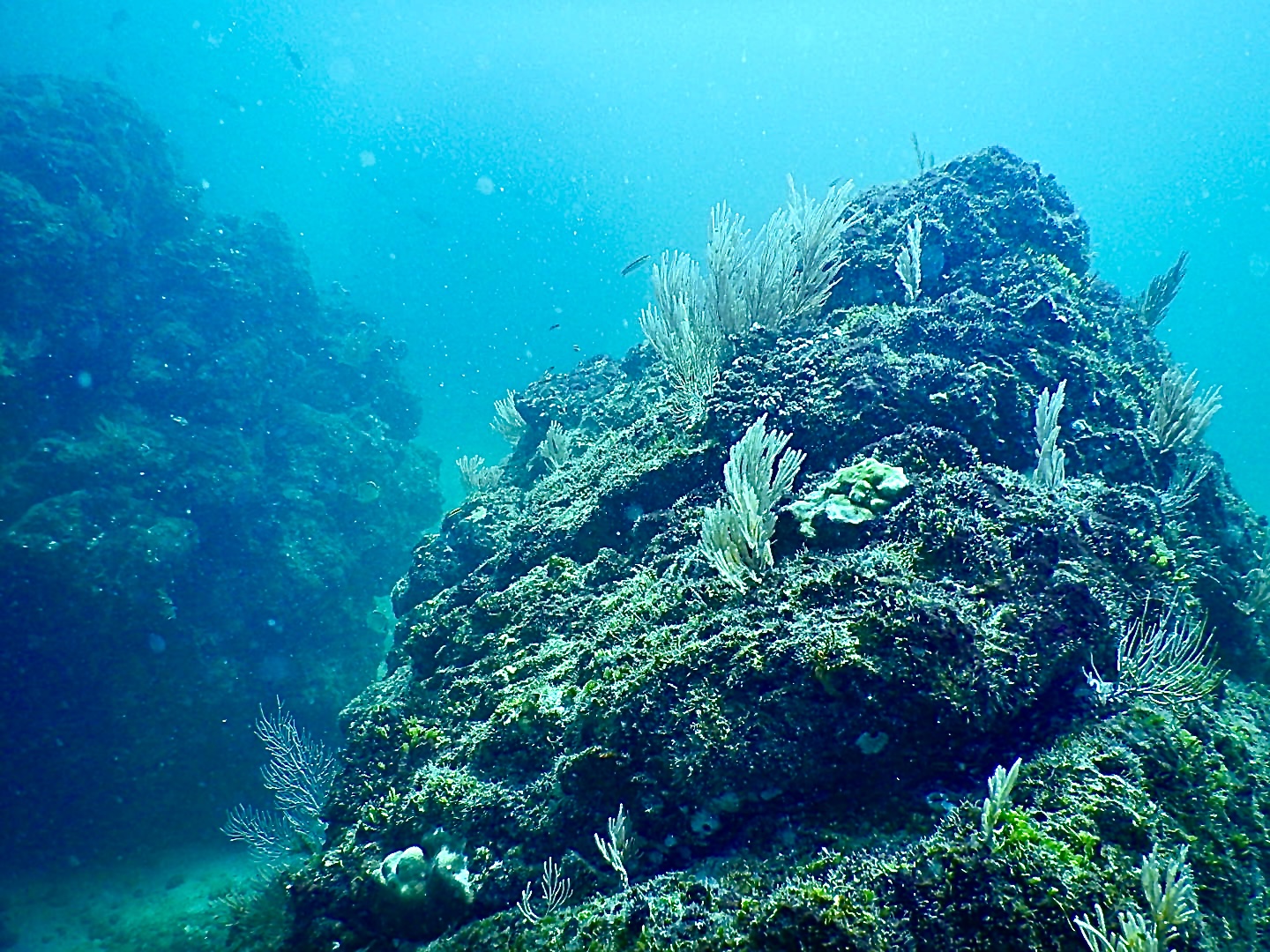
Oh, and there was coral too.
And my dive buddy!
The visibility wasn’t awesome – apparently it can be a bit variable and this was pretty much as bad as it gets – but the cloudy water was the result of a lot of plankton and other tiny creatures that the fish and other animals fed on. Can’t begrudge them a meal! And honestly, cloudy or not, our first ocean dives were such an incredible experience that we couldn’t have wished for anything more.
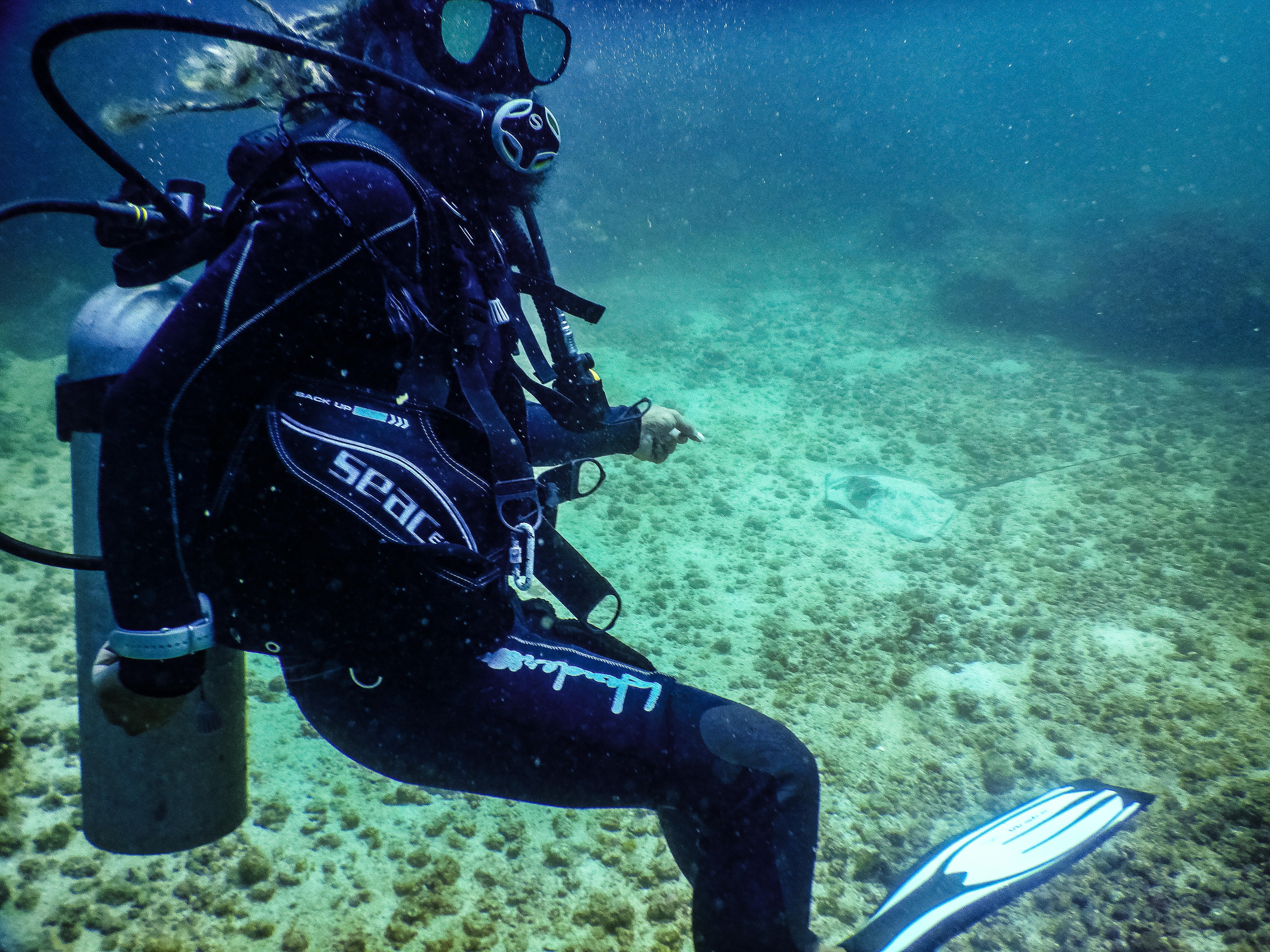
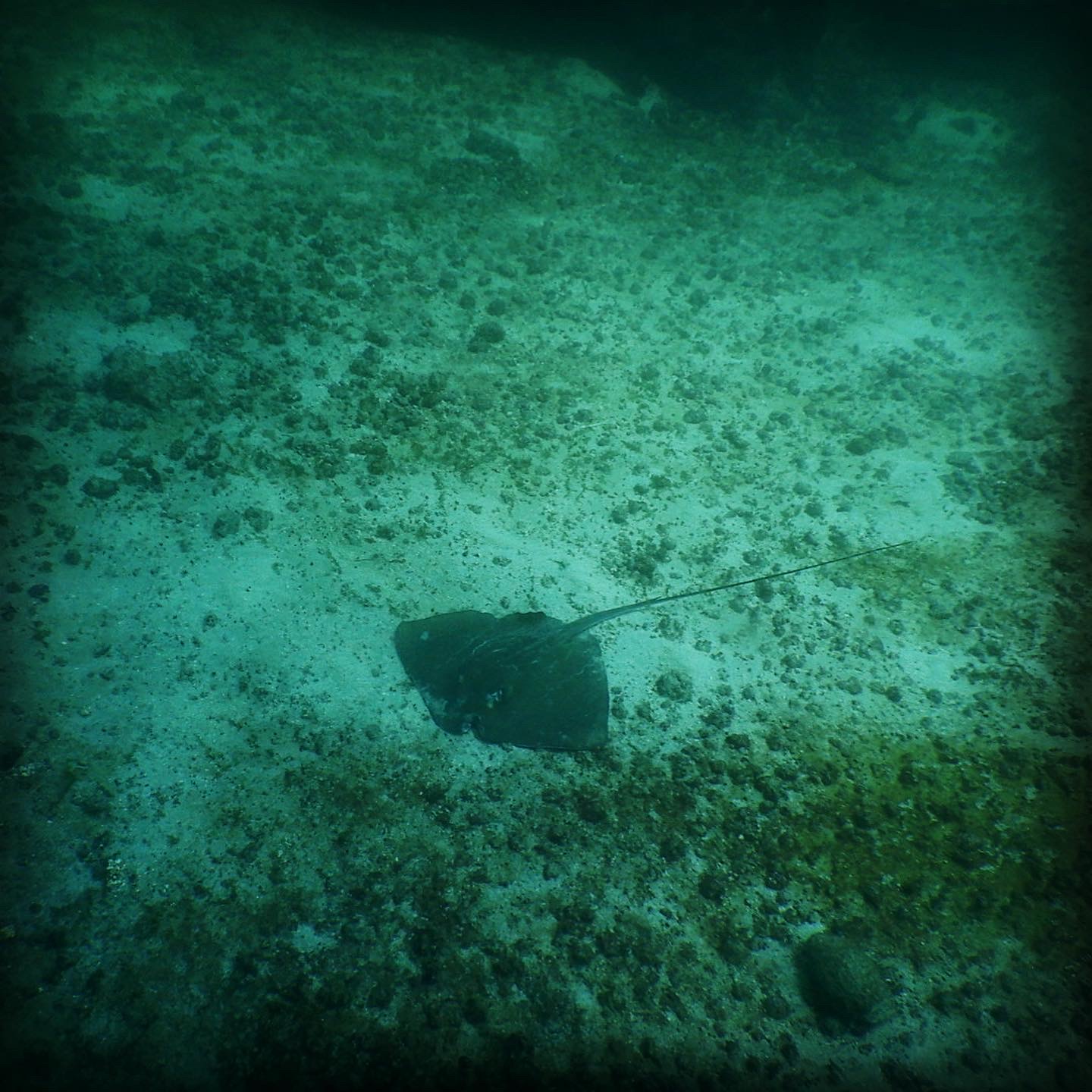
Only thing that was a bit scary: a few stingrays, including one that definitely did not like us being there. He flicked his tail up in a definite GO AWAY, and we skedaddled.
(It was not this guy; it was one of his cousins. This guy was much more chill. But still – I gave them a wiiiiiiiiiiiide berth.) Kind of surprised myself by being as anxious about the rays as I was; we were surrounded by fish and even saw a few reef sharks, but it was the rays that really unnerved me. Go figure.
Absolutely incredible experience, being in this alien and yet familiar world.
We went through a few more skills and paused for a safety stop under Quique’s watchful eye. (He had an iron grip on our BCDs during the safety stop. As Donna quipped later, “He would have had to do so much paperwork if you’d gone popping up to the surface…”) And then before we knew it – and definitely before we were ready for the dive to end – we were breaking the surface of the water and switching from regulators to snorkels.
And already so stoked for our next day of diving!
Next week: a surface interval at Isla del Cano National Park, one of the most beautiful spots on the planet!
My “IRL” friends know that there are two types of critters that really – and I mean really – freak me out. One is butterflies. (I cannot. Don’t @ me. I just cannot with them.) The other is fish. I know – that one seems weird, right? I love the ocean.
I love the sunlight sparkling on the waves, the feeling of sand between my toes, the warm sunshine and the cool, salty surf. And I do love many of the creatures that call the ocean home. Especially the really big ones. The bigger, the better, actually.
Whales are my favorite animal on the planet – land or sea. (Followed by elephants in second place. I just like really, really big critters.) But I love other cetaceans – dolphins and porpoises – almost as much, and I have a real soft spot for sea turtles. Fish, though, that was another story. Since I was a little kid I’ve had a very strong revulsion reaction (see above re: butterflies) and fish triggered it. My parents pushed me to snorkel to try to get over it, but that just made it worse. (Sorry, Mom and Dad.) But a few years ago, I started to think seriously about trying to get past my fear of fish. (Or “thing about fish,” really. It’s not a fear – it’s a revulsion at the idea of them touching me or brushing up against my skin. And yes, I know they don’t actually want to touch me. I didn’t say it was rational.) It just felt like, loving the ocean as I do, I was missing out on experiencing it in a truly special way.
I started thinking about learning to scuba dive as a way to get over my fear. I know – that seems weird too, right? Because if snorkeling freaked me out so deeply, why would scuba be better? Stick with me here. I thought about it a lot and figured out that my issue, thanks to that revulsion reflex, was with the idea of a fish touching me. The idea of fish scales and slime brushing against my bare leg or arm gave me the creeps in a very intense way (still does, actually). But if I was covered from head to toe with neoprene, so that I couldn’t feel the sensation that was so scary to me, could I interact with the ocean as I really wanted to?
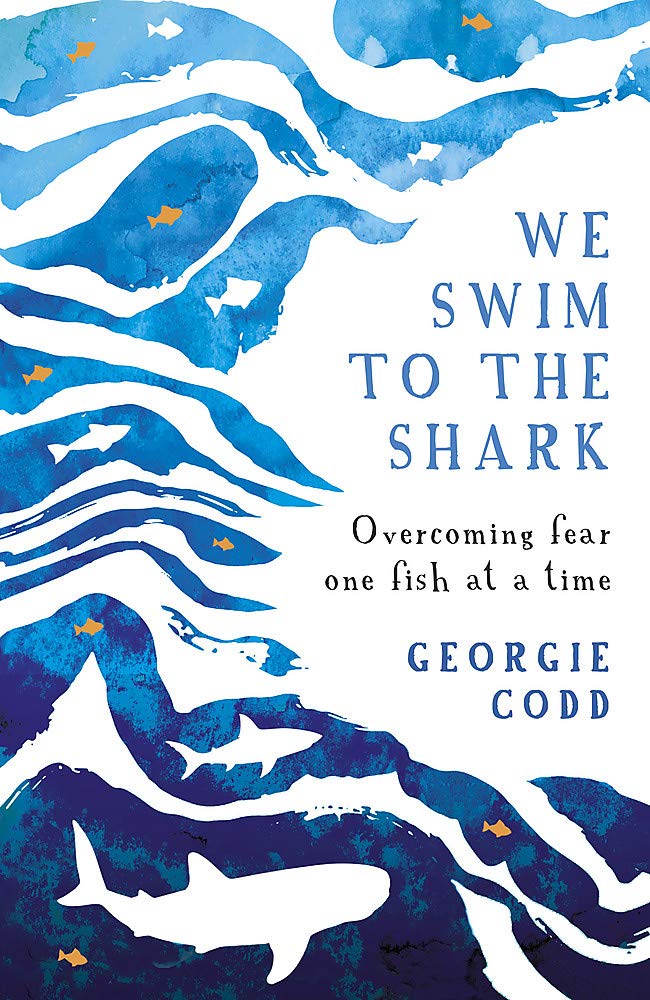
As I thought about these things, I found others – a few others – considering the same questions. Jack Steward, host of one of my favorite travel/nature/adventure shows, “Rock the Park,” described his nerves before a night dive with manta rays: “I really don’t like critters up in my business. But I also pride myself on my ability to, you know, find my peace and just really take in an experience.” (Or something along those lines; I may have gotten the exact wording wrong, but that was the gist and I really identified with it.) And Georgie Codd, who struggled with full-blown ichthyophobia – much more debilitating than my “ick” reaction – learned to dive and set herself the goal of swimming with a whale shark as a way of conquering her fear. Her book about her journey, We Swim to the Shark, floored me.
So I told Steve I wanted to get scuba-certified. He’s generally on board with whatever I want to do, no matter how out of the blue or seemingly crazy (I know, what a guy, right?) and he was immediately interested. We kicked the idea around for awhile, but it was low on the list because we were planning our Antarctica trip. (It turns out you actually can dive off Ushuaia, Argentina – so stay tuned.) But when Antarctica got postponed, and we started scouting around for another adventure, diving bobbed back up to front-of-mind.
We kicked the idea around for a little while, but when we decided that Costa Rica would be our consolation for postponing Antarctica, we figured – why not go for it? So we signed up for the PADI (Professional Association of Diving Instructors) open water certification course. And then – well, I can’t speak for Steve, but – immediately questioned our sanity.
The first phase of PADI open water training was a fifteen-hour online course. Fifteen hours. It wasn’t so much the time commitment (I crammed it into about seven evenings) as the sheer volume of information. So much to remember – acronyms, equipment, routines – and so many ways things can go really alarmingly wrong. Even as I passed every quiz and unit final exam with flying colors, I freaked out that there was no way I’d ever be able to remember all this. And what if the thing I forgot turned out to be the thing I really needed to know – for safety?
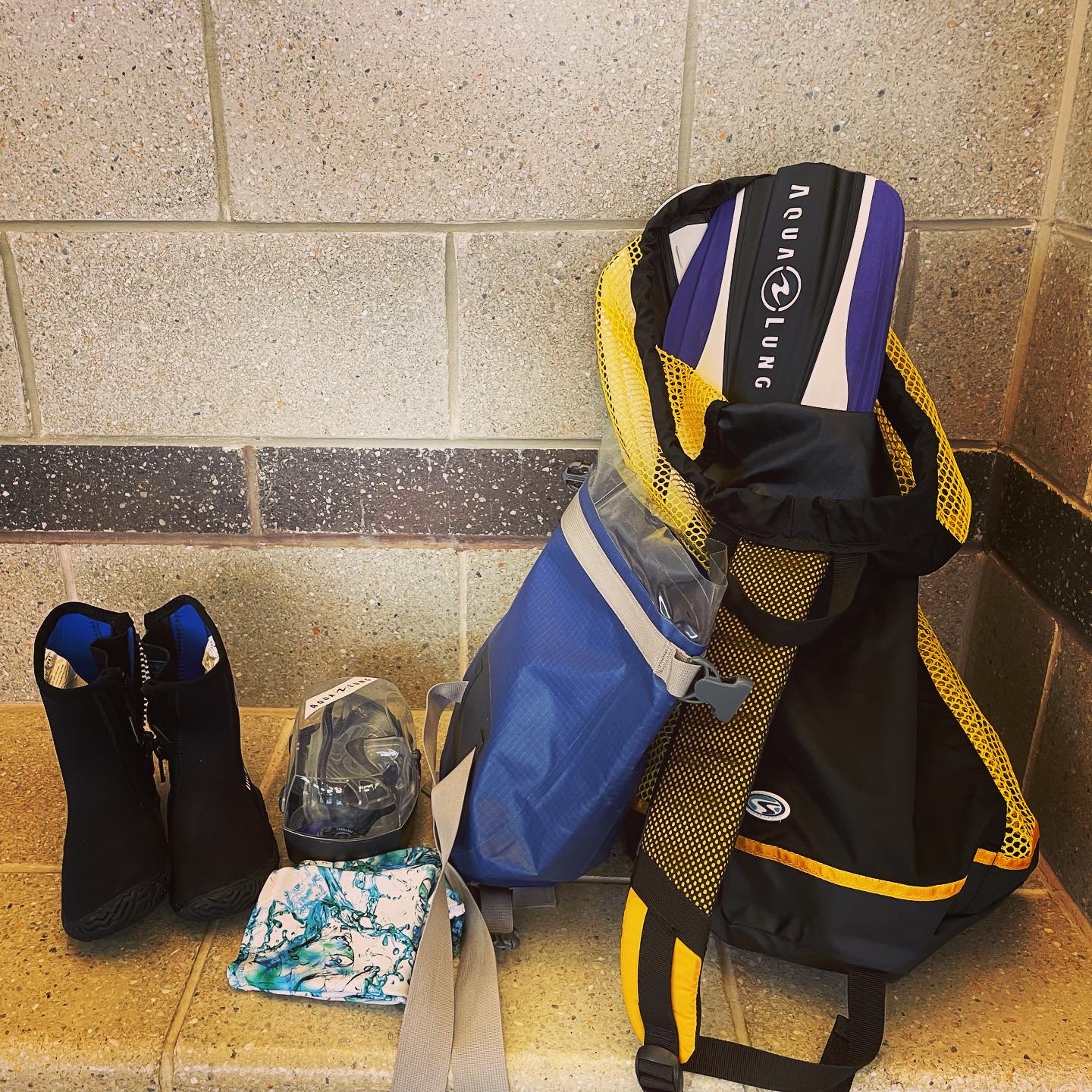
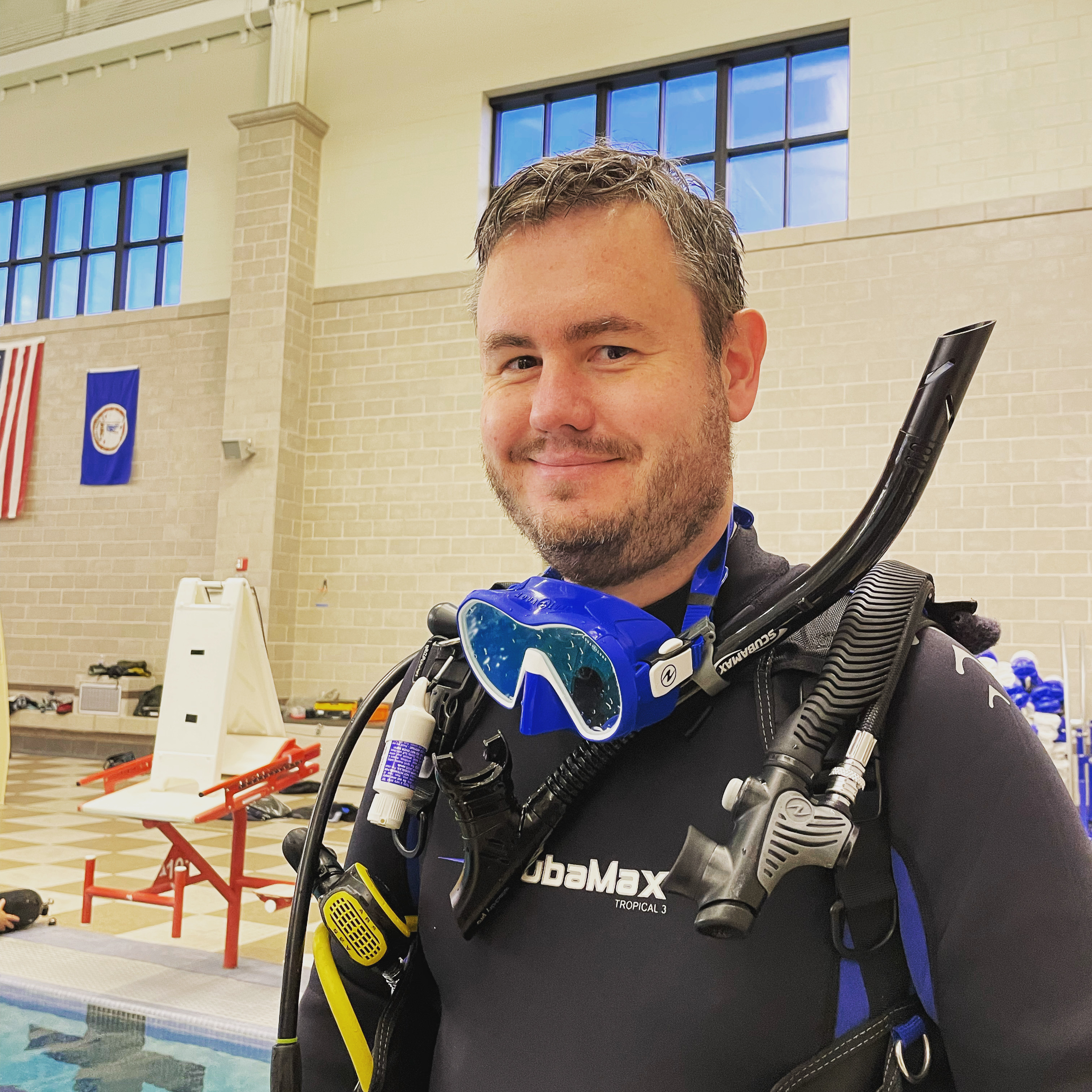
It was scary thinking about how complicated (not to mention expensive) this new hobby was going to be. But as I was getting more and more nervous and questioning my decisions, Steve was getting more and more excited. We suited up with the most bare minimum of basics – fins, masks, snorkels, dive boots and socks, and mesh bags to tote it all in – and on a frigid December day, we headed to the pool at Dulles Community Center.
Begin With Review And Friend. #IYKYK.
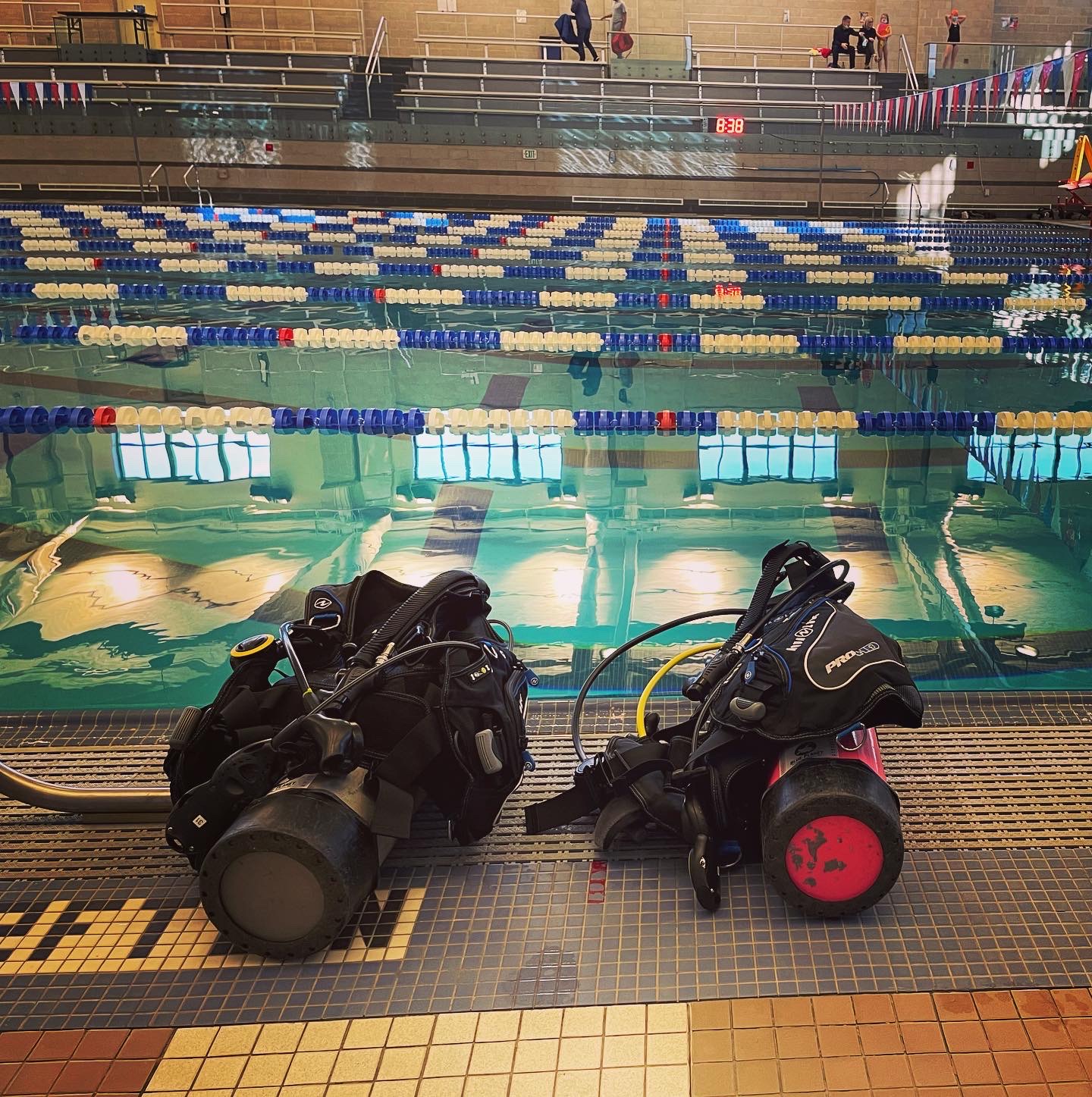
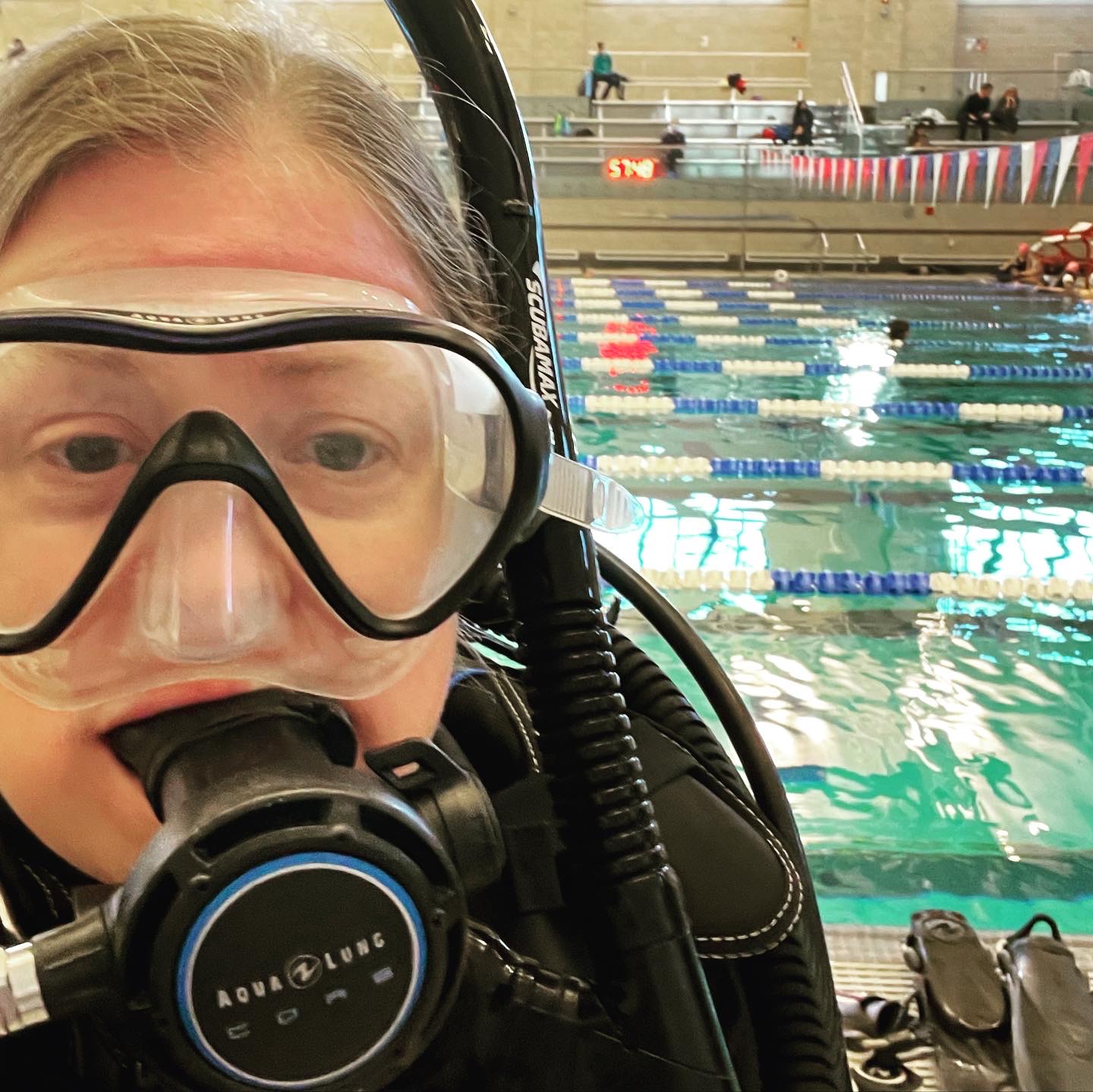
We suited up in wetsuits borrowed from the local dive shop that was also providing instruction for the pool component of our training, flopped awkwardly around the pool deck in our fins, strapped on our (also borrowed) BCDs and tanks, and giant-stepped into a new world.
The PADI open water e-learning notes for newbie divers that: “Your first breath underwater is an exhilarating experience.” I didn’t know what to expect, but I was really nervous. As I sank below the shallow-end pool water with my regulator in for the first time, all of the disaster scenarios ran through my head on a loop. And then I settled onto the pool floor with Steve and the rest of our dive class and took that first breath, and – it was exhilarating, yes, but the sensation that flooded from the top of my head to the tips of my toes was pure peace.
It is silent underwater (at least, it is in a pool). I looked up and could see lap swimmers making their way through their evening workouts, but they appeared to be moving in slow motion and I couldn’t hear their kicks and splashes. The only sound that broke the silence was my own breath. Another thing the PADI e-learning drives home is that it’s critical that you never hold your breath while diving. I was worried about the opposite: that I would freak out and hyperventilate (as I have done while snorkeling). But the experience couldn’t have been more different. It was like meditating – on another planet. I felt serene, and joyful, and filled with a sense of well-being. I was completely, totally, at peace.
The word you are looking for is: elegant.
The pool classes were exhausting. Two consecutive Saturdays, seven hours each day. It was a big time commitment and a lot of babysitter dollars. We left the pool wrinkled like prunes (and my hands were itchy and irritated from dry winter skin spending hours in chlorine). And I actually found the instructor really off-putting. But all of the worries about forgetting something important disappeared when I slipped under the surface of the water and took a breath. I was still worried that I would panic in the actual ocean – but that was a problem for another day.
Check back on Friday and I’ll tell you how the first day of certification dives went…



































 covered in flour