
“From the beginning?” Miss Bart gently mimicked her. “Dear Gerty, how little imagination you good people have! Why, the beginning was in my cradle, I suppose – in the way I was brought up, and the things I was taught to care for. Or no – I won’t blame anybody for my faults: I’ll say it was in my blood, that I got it from some wicked pleasure-loving ancestress, who reacted against the homely virtues of New Amsterdam, and wanted to be back at the court of the Charleses!” And as Miss Farish continued to press her with troubled eyes, she went on impatiently: “You asked me just now for the truth – well, the truth about any girl is that once she’s talked about she’s done for; and the more she explains her case the worse it looks. – My good Gerty, you don’t happen to have a cigarette about you?”
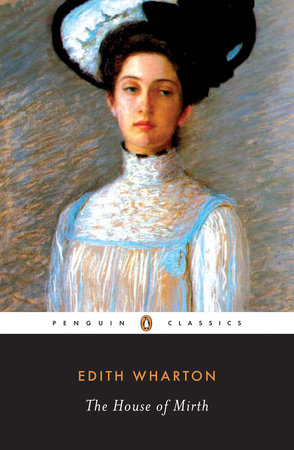
There are a few authors I’ve been rationing, and Edith Wharton is one of them. Having read The Age of Innocence (one of my all-time favorite novels); The Custom of the Country; Ethan Frome; Summer; and some of Wharton’s travel writing, I’m conscious of the fact that I don’t have much left to go, and The House of Mirth is regarded by many as her masterpiece – so I was saving it. Still, I’d like to go to The Mount, Wharton’s home in Lenox, Massachusetts, this summer. And I figured it would be good to read The House of Mirth before I do.
The House of Mirth is the story of a falling star. Lily Bart – beautiful, elegant, witty – is the toast of Gilded Age Manhattan. Drifting from New York to Newport to Rhode Island, Lily can be found wherever the most exclusive party is gathering. But life at the center of Old New York is expensive, and Lily is poor. Although raised in a wealthy household, her parents frittered away their entire fortune, leaving Lily with no assets other than her beautiful face. (Note: Lily is described as having “bright” hair. I originally envisioned her as a blonde, but it’s later mentioned that her hair is red. At that point, Amy Adams took over the role of Lily Bart in my mental movie.)
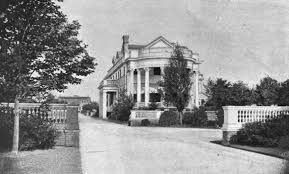
When the novel opens, Lily is awaiting a train. She’s heading to Bellomont, the home of her best friend, Judy Trenor, for a weekend of champagne-quaffing and bridge-playing. While there, Lily is hoping to close an important deal: an engagement to the fabulously wealthy (and deathly dull) Percy Gryce. It’s do or die time; in Lily’s gilded circles, a woman who is still unmarried at 24 is on the shelf. Lily is 29.
While waiting for her train, Lily accompanies Lawrence Selden, a young lawyer on the fringes of fashionable Manhattan life, to tea in his apartment. Both Lily and Selden know that he could never be a serious suitor, but they’re drawn to one another regardless. Lily takes the opportunity to grill Selden about collecting “Americana” – known to be Percy Gryce’s only real interest – and then departs for Bellomont, where she employs all her charms on Gryce. But what the reader comes to learn about Lily is this: she’s terrible at angling. After hooking her fish, Lily never manages to reel it in – instead, inexplicably, she always throws it back.
She had been bored all the afternoon by Percy Gryce – the mere thought seemed to waken an echo of his droning voice – but she could not ignore him on the morrow, she must follow up her success, must submit to more boredom, bust be ready with fresh compliances and adaptabilities, and all on the bare chance that he might ultimately decide to do her the honour of boring her for life.
The entire point of the weekend at Bellomont was for Lily to hook Percy Gryce. But this is Lily Bart, so something always happens. This time, what happens is: Lawrence Selden shows up, distracts Lily from her occupation, and the big fish escapes, only to be promptly captured by a luckier angler, Evie Van Osburgh. Lily makes a half-hearted attempt to recapture Gryce, but everyone knows it’s never going to happen. And that’s Lily all over – freewheeling from near-miss to near-miss, trying to keep up with the fashionable set on a pitifully poor and sporadic income.
Looking to shore up her funds while she plans her next move on the marriage market, Lily looks to another market – the stock market. Pressing her friend Judy’s husband Gus for a “tip,” she allows Gus to invest what she believes is her own money, and she receives a handsome payout, to her delight. Unfortunately, Lily soon discovers that she’s been duped; Gus didn’t speculate with her money – he simply gave her some of his, and he expects a return on his “investment.” Lily is disgusted at the idea of being indebted to Gus, and she has no intention of becoming his paramour – but repayment is complicated, because she spends the money before she discovers Gus’s treachery.
Meanwhile, the rest of Lily’s family – including her stick-in-the-mud aunt – gets wind of her card-playing. Things are about to get really unpleasant for Lily, but she’s rescued (sort of) by Bertha Dorset, another member of the Manhattan smart set, who whisks Lily off on a Mediterranean cruise. Lily’s purpose is to distract Bertha’s husband George while Bertha flirts with another of the couple’s guests. It’s all going swimmingly (pun intended) until things begin to sour between Bertha and George – and Lily becomes the casualty. By the time she gets back to Manhattan, her name is mud.
Lily is a compelling, but frustrating, character. At turn after turn, she makes terrible decisions that sabotage her plans and, ultimately, her well-being. I think we’re supposed to root for Lily to give up on her aspirations of “keeping up with the Joneses” and realize that true happiness would lie in an upper middle-class life as Mrs. Lawrence Selden. But realistically – Lily is never going to make that leap. So I was rooting for her to land a big fish, even though I knew (spoiler) that she would not succeed, and it was all going to end badly. And really, in the end, Lily is her own worst enemy. Blowing off Percy Gryce is the first instance in the book, but Wharton assures the reader this is perfectly in keeping with Lily’s character, and not the first time she’s gotten 95% of the way to closing an engagement deal, only to flake and cause it to all fall apart. (There was an Italian prince with a handsome stepson…) And it’s not just with the gentlemen – when Bertha throws Lily under the proverbial bus during the Mediterranean cruise, Lily’s best hope for keeping her reputation intact is to beat Bertha back to New York and be the one to break the story. Despite clearly knowing this, Lily dawdles in London – with the result that Bertha beats her home, controls the narrative, and shreds Lily’s reputation to tatters by the time Lily’s ship arrives in New York Harbor. Lily’s problems are all the more tragic – and infuriating – for being so generally avoidable.
I loved the character of Lily, and the side characters are wonderful, too. Eminently decent Selden and his kind-hearted cousin Gerty Farish; deliciously vile Bertha Dorset and Gus Trenor; sad sack George Dorset; plucky, scheming Carry Fisher; dull Aunt Julia. The entire book is vintage Wharton – between the glittering settings and the snarky wit. I obviously loved the descriptions of Gilded Age mansions and parties, but I think my favorite part was Wharton’s bitchy (sorry, but that’s really the best word for it) wit. For instance, the nasty little aside that a certain character, like all “unpunctual persons,” disliked to be kept waiting – burn. The best example, though, might be Lily’s derisive observations of her fellow guests at Bellomont, early in the book:
She looked down the long table, studying its occupants one by one, from Gus Trenor, with his heavy carnivorous head sunk between his shoulders, as he preyed on a jellied plover, to his wife, at the opposite end of the long bank of orchids, suggestive, with her glaring good-looks, of a jeweler’s window lit by electricity. And between the two, what a long stretch of vacuity! How dreary and trivial these people were! Lily reviewed them with a scornful impatience: Carry Fisher, with her shoulders, her eyes, her divorces, her general air of embodying a “spicy paragraph”; young Silverton, who had meant to live on proof-reading and write an epic, and who now lived on his friends and had become critical of truffles; Alice Wetherall, an animated visiting-list, whose most fervid convictions turned on the wording of invitations and the engraving of dinner-cards; Wetherall, with his perpetual nervous nod of acquiescence, his air of agreeing with people before he knew what they were saying; Jack Stepney, with his confident smile and anxious eyes, half way between the sheriff and an heiress; Gwen Van Osburgh, with all the guileless confidence of a young girl who has always been told that there is no one richer than her father.
OMG. I can’t handle this sick burn. Mrs. Fisher, with “her shoulders, her eyes, her divorces.” Poor Alice, “an animated visiting-list.” Can’t you just see Gus Trenor, “preying” on his dinner? And his wife, glittering gaudily like “a jeweler’s window lit by electricity”? This is masterful snark. Edith Wharton, my hat is off to you. Please teach me.
The House of Mirth was fabulous. I’m so glad I read it, and I can understand why it’s considered Wharton’s masterpiece (although I think I still personally prefer The Age of Innocence). I’ll be re-reading it for sure – just as soon as my tear-sodden copy dries out.
What’s your favorite Edith Wharton?
 covered in flour