
I had a different theme in mind for this month – I was going to write about my favorite Jane Austen heroes in honor of Valentine’s Day. But then I read this article in the Washington Post – “Amanda Gorman clearly has talent. But there’s more to her meteoric rise.” And it got me thinking about contemporary Black voices, and Black History Month.
The article begins by discussing Ms. Gorman’s by now well-known and appreciated talent, poise and grace, and goes on to note that throughout history we have had megastar poets, and we’re actually long overdue for a celebrity bard of this generation.
But there’s a caveat. Gorman absolutely deserves her flowers, said [Salamishah] Tillet, who is also co-founder of A Long Walk Home Inc., a nonprofit that uses art to end violence against girls and women, but the reverence Gorman’s receiving doesn’t extend to those who resemble her.
Nneka McGuire, “Amanda Gorman clearly has talent. But there’s more to her meteoric rise,” The Washington Post, February 8, 2021
The article went on to note that while Ms. Gorman is being showered with completely deserved acclaim, a nine-year-old Black girl was pepper-sprayed by police in Rochester, New York. And other young Black girls, with dreams just as valid and beautiful as Ms. Gorman’s, are ignored and disregarded. “The admiration Gorman, poet par excellence, has garnered ‘doesn’t translate into nurturing and uplifting the Amanda Gormans everywhere,’ Tillet added.”
Wow – and so true. So in honor of Amanda Gorman and Black History Month, I thought I would suggest three other Black women writing today – probably not news to anyone, but here are three contemporary novels by Black women that I have loved. Let’s all read these women and then encourage and nurture the next Amanda Gorman.
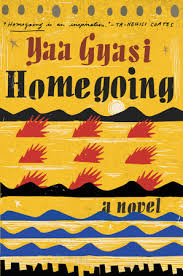
Yaa Gyasi‘s debut novel, Homegoing, was a huge hit a few years ago, but if you missed it then, do check it out now. (She has a new book out – or relatively new – that I have not yet gotten to, but I plan to do so soon.) Homegoing is a kaleidoscopic journey through centuries and across continents. It starts with two sisters in west Africa several centuries ago; one is kidnapped and transported to the United States on a slave ship while the other sister remains in Africa. The narrative switches between branches of the family, profiling each sister’s descendants through the decades and centuries. I am not a huge fan of family sagas or of switching narratives, so it should say something that I absolutely loved this.
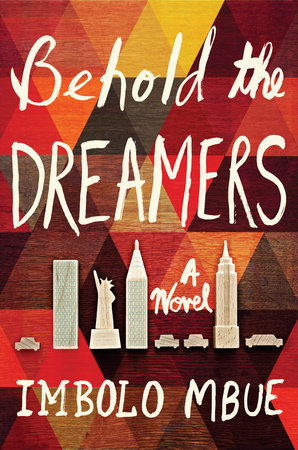
Another debut novel that had a huge moment a few years ago, Behold the Dreamers, by Imbolo Mbue, explored the immigrant experience in New York City through the eyes of one couple, Jende and Neni Jonga. The Jongas, recent immigrants from Cameroon who both work for an affluent Manhattan family, are swept up into the global financial crisis after the collapse of Lehman Brothers. Behold the Dreamers has been described by NPR as “compulsively readable” – and it is. If you haven’t picked this one up yet – do. Mbue has another novel out now, How Beautiful We Were, which sounds wonderful; another one for my TBR.
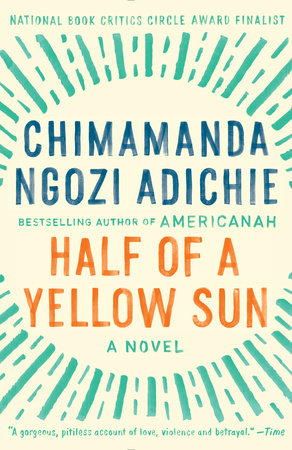
I think pretty much everyone who follows contemporary literary fiction already knows about Chimamanda Ngozi Adichie, and especially about her mega-hit novel Americanah. After loving Americanah, I started working my way through Adichie’s backlist – both her essays and other novels – and I found Half of a Yellow Sun, which explores the Nigerian Civil War from 1967 to 1970, largely from the Biafran perspective. I think I’ve written about it here before, and noted that it was a compelling look into a history that I knew next to nothing about. Purple Hibiscus is the next Adichie on my TBR and I plan to tackle it soon.
There are so many talented Black women writing today – it was so hard to choose only three books here. I could have included Jesmyn Ward; Helen Oyeyemi; N. K. Jemisin – so many others. How about you? What contemporary Black women writers have you read and loved lately?
 covered in flour