The Classics Club Challenge: Sanditon, by Jane Austen

Sanditon is one of Jane Austen’s two unfinished novels – the other being The Watsons – and it’s somewhat better known as a result of the Masterpiece series (which I have yet to watch – should I?).  Unlike The Watsons, which Austen set aside for unknown reasons, Sanditon was interrupted by the author’s untimely death (sob).  Various authors (and now television showrunners) have tried to guess where Austen may have been headed with the characters – she only got twelve chapters in, so it’s hard to say – but I chose not to read past the point at which Austen laid down her pen.

So, how far does that get a reader, exactly?  Far enough to get a flavor for the characters and the setting – the fictional seaside town of Sanditon.  The book opens with an accident on the road.  Mr. and Mrs. Tom Parker are traveling to the town of Willingden, looking to poach a doctor to add to the population of their adopted hometown, Sanditon.  Mr. Parker’s great ambition is to make Sanditon one of the great holiday towns of the English coast, and he thinks having a doctor in residence will draw more visitors.  (This is largely because his hypochondriac sisters refuse to visit.)  Unfortunately, Mr. Parker finds himself in need of a doctor when his chaise runs off the road and he sprains his ankle.  Alas, there’s no doctor in Willingden – Mr. Parker had read of a dissolution of a medical partnership in the town, but it turns out that was a different Willingden, whoops – but there is the large and jolly Heywood family, who take the Parkers in while Mr. Parker’s ankle heals enough for him to travel.  As Mr. Parker rests and recuperates, he tries to entice the Heywoods to visit Sanditon, which has every advantage:

Nature had marked it out, had spoken in most intelligible characters.  The finest, purest sea breeze on the coast – acknowledged to be so – excellent bathing – fine hard sand – deep water ten yards from the shore – no mud – no weeds – no slimy rocks.

Oh, good, no one likes slimy rocks.

Mr. Parker has invested heavily in Sanditon and sees himself as something of a club promoter for the town.  As he was boasting of Sanditon’s advantages and his own perspicacity in developing it, I kept envisioning him as something of a Georgian version of Tom Haverford.

Tom Haverford Parker spends two weeks resting his ankle and trying in vain to convince the Heywoods to take a vacation – but Mr. and Mrs. Heywood are the ultimate homebodies.  They have no objection to their children traveling, though, and so when the Parkers finally shove off for Sanditon, they have Charlotte Heywood, one of the daughters of the family, in tow.

As the Parkers and Charlotte drive to Sanditon, Mr. Parker regales Charlotte with a lengthy description of the town and its inhabitants – including his fellow Georgian club promoter, Lady Denham, who it actually turns out is super cheap; his sisters and younger brother Arthur, who went to the Mr. Woodhouse school of self-diagnosis; and his other brother, Sidney:

Sidney says anything, you know.  He has always said what he chose, of and to us all.  Most families have such a member among them, I believe, Miss Heywood.  There is someone in most families privileged by superior abilities or spirits to say anything.  In ours, it is Sidney, who is a very clever young man and with great powers of pleasing,  He lives too much in the world to be settled; that is his only fault.  He is here and there and everywhere.  I wish we may get him to Sanditon.  I should like to have you acquainted with him.

I see you, Jane Austen.  It seems pretty clear that Sidney is intended to be Charlotte’s love interest, but he doesn’t turn up until near the end of Austen’s chapters.  What kind of love interest would Sidney be?  Hard to say – from this description he could be a Bingley, a Darcy, or a Wentworth type, probably not a Tilney or Knightley.  But it does appear that Austen has Sidney in mind for the romantic hero, especially after Charlotte meets the other eligible bachelor of the neighborhood, the young baronet Sir Edward Denham, who turns out to be (a) somewhat ridiculous; (b) hard up for cash and therefore required to marry for money; and (c) into someone else.  Sir Edward’s step-aunt, the dowager Lady Denham, grills Charlotte about her intentions in a slightly watered down Lady Catherine de Bourgh manner (but with more satisfaction than Lady “I should have been a great proficient” Catherine gets out of Lizzy in Pride and Prejudice).

‘Indeed!  He is a very fine young man, particularly elegant in his address.’

This was said chiefly for the sake of saying something, but Charlotte directly saw that it was laying her own to suspicion by Lady Denham’s giving a shrewd glance at her and replying, ‘Yes, yes, he is very well to look at.  And it is to be hoped that some lady of large fortune will think so, for Sir Edward must marry for money.  He and I often talk that matter over.  A handsome young fellow like him will go smirking and smiling about and paying girls compliments, but he knows he must marry for money.  And Sir Edward is a very steady young man in the main and has got very good notions.’

‘Sir Edward Denham,’ said Charlotte, ‘with such personal advantages may be almost sure of getting a woman of fortune, if he chooses it.’

This glorious sentiment seemed quite to remove suspicion.

See, Lady Denham, you have nothing to worry about.

Because there’s really no plot to speak of – Austen died before she got there – the real enjoyment factor in Sanditon is the characters.  Their dialogue is just as sparkling as in Austen’s finished novels, and I found myself laughing out loud at the Parker family’s and the other characters’ foibles, and especially at Charlotte’s gently clear-eyed reactions to them.  Mr. Parker being Tom Haverford, I saw Charlotte as the Ann Perkins of the crew.  Essentially good-hearted, definitely cute, polite to a fault, and always getting dragged into weird exchanges with people.

(Is this entire review just an excuse to post Parks and Recreation gifs?  Maybe.  It might be.)

Anyway – Austen spends the first twelve chapters getting all her pieces into their places.  The Parker sisters show up, bringing their hypochondria with them, and also a family from the West Indies, or a girls’ school, or both?, with the sickly heiress of Lady Denham’s dreams, Miss Lambe (also one of the only people of color in all of Austen’s work – and I imagine Austen was quite ahead of her time in writing this character), and Sidney Parker pops up as well.  Just as it seems the action is about to get going – it stops.  And we’ll never know exactly what Austen had in mind for these characters.  Would Sir Edward Denham get dragged into a marriage of convenience with Miss Lambe, or would he successfully seduce Miss Clara Brereton, his rival for Lady Denham’s fortune?  Would Sidney Parker turn out to be the hero after all?  Would Charlotte Heywood, with her wit and good sense (like a combination of Lizzy Bennet and Elinor Dashwood) fall for Sidney Parker, if he is in fact the hero?  Would the Parker sisters and Arthur ever get over their hypochondria?  Would club promoter Mr. Parker make Sanditon the hippest destination on the coast?  We don’t get to find out – but we can use our imaginations.

Now I’m down to just The Watsons and my volume of Jane Austen’s letters.  I don’t know how I am going to live in a world where I’ve read everything that Austen has written.  Send wine, folks.

It’s Star Wars Day! What Are You Reading? (May 4, 2020)

Happy Star Wars Day, fellow geeks!  May the Fourth be with you!  Beware, if we are friends on Facebook, I will be re-posting Drunk Austen’s Colin-Firth-with-a-lightsaber mashup pic.  Every year.

So, how were your weekends?  For a quarantine weekend, ours was pretty nice.  It got started early – on Friday afternoon we took a ride over to our new house to meet with the realtor, do a walk-through and pick up the keys.  There are a few small maintenance items that we’re asking the landlord to take care of before we move in, and the place needs a good cleaning.  But it was fun to see it again and to be able to really start planning how we’re going to use the space.  While I’m going to miss our sweet row house in Old Town, the new place is an upgrade in pretty much every way (the only exceptions being walkability and the kitchen).  Anyway – after the house appointment, we headed home for leftovers and The Mandalorian.

Saturday was absolutely gorgeous outside, and we took advantage of it by spending almost the entire day outdoors.  First up was a family walk – our goal was the waterfront, but Peanut asked to stop by the library (which is closed; she just wanted to gaze at the building, and yes she is definitely my daughter) and the kids ended up having so much fun running around the courtyard there that we never made it any further.  We just hung out at the library running sprints and playing tag and “What Time Is It, Mr. Fox?”.  (There’s a sentence I never thought I’d write.)  After lunch we were back outdoors – or at least, Nugget and I were.  This is very exciting: we rode together on the bike path!  Up to now I’ve been taking both kids out and walking alongside them as they ride.  Nugget can get to a decent clip but Peanut is a glacier and I couldn’t ride with them and also keep track of two kids with very different paces.  But I determined that Nugget is fast enough to allow me to ride with him without falling off from going too slow, and I decided that this was the weekend.  Dream come true, you guys!  I definitely still rode the brakes and stopped a lot; he’s fast for a five-year-old but he’s not faster than a carbon-framed road bike.  I’m going to have to break him of the habit of looking behind him to make sure I’m still there; I assured him repeatedly that he could go as fast as he wanted and I’d have no problem keeping up.  Anyway – this was so much fun.  I love cycling; longtime readers might remember when I had more spare time and rode in a few distance events, like the Skyride in Buffalo and the Five Boro Bike Tour in New York City.  And I grew up cruising the bike paths with my parents and my brother.  So I’ve been looking forward to riding as a family for ages now.  It’s not possible yet – I need to build Peanut’s confidence and get Steve a bike of his own.  But this was a good start.  We spent the rest of the day on our back patio; I cleaned up a bunch of weeds and dead plants and started getting the garden ready to move, and the kids messed around in the sandbox.  I think the only time I went indoors all day was to bake bread.  Definitely a good day.

Whew!  And that was just Saturday.  Sunday was more low-key, for sure.  I got out for a run in the morning and got in some good patio time in the afternoon, but it rained in between.  And we had three – count ’em – FaceTime dates on the schedule for Sunday.  Social at a distance FTW.  First Peanut spent about an hour and a half gabbing and giggling with her bestie, S, who lives one county away – over in Arlington.  It had been too long since they got to talk, and I’m so glad we made this happen.  And I even got the phone away from her for a few minutes at the end, so I had a very quick catch-up session with S’s mom, Rachel.  Just a brief check-in and planning for the next FaceTime play date and real-life hugs as soon as possible.  In the afternoon, we had two more FaceTime appointments – Steve’s mom, followed immediately by my brother and sister-in-law.  It was good to see all of their faces.  And that was Sunday.  I am beat, and also so content.

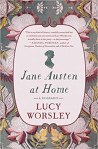
Reading.  It was another slow reading week, but I’m glad to report that things picked up near the end.  I spent most of the week half-heartedly plodding my way through The Vegetable Gardener’s Handbook, which is an absolutely wonderful book that I’ll use to great effect as a reference volume, but isn’t especially well-suited for reading cover to cover.  I think it broke through my slump, though, so it’s a winner.  On Friday evening I picked up Where Angels Fear to Tread, another title from my Classics Club Challenge list, and read it in a few big gulps between Friday night and Sunday morning.  Finally, wanting another non-fiction title, I picked up Jane Austen at Home.  I borrowed it from my friend Susan ages ago, and it has been sitting on my shelf making me feel guilty ever since.  I’ve only got one unread library book left on my stack, and I’d love to get through the small pile I borrowed from Susan before I move.  Steve would tell you there is literally no length to which I will not go in order to avoid reading my own books, but that’s not it at all.  It’s just that these shiny new borrowed books are everywhere I look.  I can’t help myself.

Watching.  So much great watching this week!  (I never say that.)  Several episodes of The Mandalorian – even Peanut is into it now, and Steve, Nugget and I are ob. sessed.  We’re six episodes in now and my only complaint is: not enough Cara Dune!  The people want more Cara Dune!  (Also, do I love Cara more than Jyn Urso?  Possibly.  Evidently I like a strong female character with a chip on her shoulder and a healthy disrespect for authority.)  Other great watching of the week: the Parks and Recreation special reunion episode, which was everything I wanted it to be and more, and Miranda Mills’ tour of the bookshelves in her home office, via YouTube, on Tuesday (my designated TV night, apparently).  Although I did get a touch of the motion sickness when Miranda tried to hold the camera while simultaneously extracting a book from her packed – and fabulous – shelves.  And lastly – you’ll have to read my “loving” section.

Listening.  Not as much listening, because I didn’t do great with my running this week.  Only got out a few times, listening to episodes of The Mom Hour each time.  And I tried to put on R.E.M. while we were hanging out at the patio, but was promptly smacked down by Peanut, who asked in a voice absolutely dripping with scorn, “Mom.  What is this?  It sounds like moaning.”  Two things: she is seven going on seventeen, you guys, and that sound you heard was my nineties-kid heart shattering into a million pieces.  WHO DOES NOT LIKE R.E.M.???  I cannot.

Moving.  Didn’t do as well as I wanted to, but I got out for a couple of runs, and several morning walks, and had the aforementioned amazingly wonderfully happy joyful bike riding afternoon with my little buddy.  The good news, other than HAPPY JOYFUL BIKE SATURDAY, was that my run on Sunday felt great.  I felt strong, breathing was easy, and I had a huge smile on my face the whole time.  The AMR training plan is definitely doing something.

Making.  The usual.  Sourdough bread, requested by Steve.  And progress on a couple of back family yearbooks that I want to finish before the next Shutterfly sale.  A lot of clean dishes and wiped-down counters, and a growing pile of homeschool work product.  I’m trying so hard not to let the kids see that I am stressed, and to make this a happy and memorable time for them.  Some days, I do this better than other days.  This weekend was good.

Blogging.  I have a Classics Club Challenge review post for you on Wednesday – I’m way behind on reviews, but still trotting along with the books themselves.  And then some real talk about quarantine on Friday.  All stuff I think everyone is feeling at this stage.

Loving.  I can’t stop watching this, you guys – the Cornell Lab of Ornithology’s FeederWatch Live Cam at the Treman Bird Feeding Garden.  Between the breeze in the leaves, the sparkling water just behind the feeder, and the winged visitors, it might be the most peaceful thing I’ve ever seen.  I sat and stared at it for chunks of time all weekend, and saw red-winged blackbirds, American goldfinches, mourning doves, cardinals, common grackles, blue jays downy and red-belled woodpeckers, and more, visit for a snack.  Literally.  Can’t.  Get.  Enough.

Asking.  What are you reading this week?

Reading Round-Up: April 2020

Reading is my oldest and favorite hobby. I can’t remember a time in my life when I didn’t love to curl up with a good book. Here are my reads for April, 2020

Mrs Palfrey at the Claremont, by Elizabeth Taylor – First off, this is Elizabeth Taylor the Important British Writer, not Elizabeth Taylor the Hollywood Ingenue.  Okay!  That disclaimer done and dusted, I really enjoyed Mrs Palfrey at the Claremont.  The titular character, Mrs Palfrey, widowed and well-off but generally ignored by her family, moves into the Claremont Hotel, London, to spend her golden years surrounded by a cast of other cast-offs, where she befriends a young writer.  This is one of those books in which not much happens, plot-wise, but it’s beautifully written and the characters are superb.  It’s a moving portrait of aging and inter-generational friendship.

Heidi, by Joanna Spyri – I was looking for some comfort reading, and picked up Heidi for the first time since I was a child.  I was immediately immersed in the world of the Swiss Alps – surrounded by craggy snow-covered peaks, mountain wildflowers, and bleating goats.  It was a lovely respite, and made me crave a trip to Switzerland.

Lodestars Anthology: Switzerland, by Various Authors – Not ready to say goodbye to Switzerland after turning the last page of Heidi, I picked up the Lodestars Anthology issue featuring the country and spent a blissful evening reading all about the travel and cultural experiences on offer there (interspersed with stunning photographs).  It was such a treat, but it made the wanderlust even more intense.

Elizabeth and Her German Garden, by Elizabeth von Arnim – This was a re-read for me.  I adore Elizabeth von Arnim’s work and I’ve been slowly collecting early editions of many of her books, including her Elizabeth trilogy.  When I first read Elizabeth and Her German Garden a few years ago, I loved it but was saddened by her description of her husband, the Man of Wrath.  This time, I found he didn’t feature as prominently as I’d thought he did, and I got the sense that Elizabeth was rolling her eyes at some of his pompous pronouncements and that he was indulging her in turn.

The Solitary Summer, by Elizabeth von Arnim – Elizabeth and the Man of Wrath make a bet: she claims that if she is given a summer to be completely solitary in her garden, she will not get lonely.  He thinks she won’t last a week.  (Elizabeth is a Baroness, so “completely solitary” doesn’t actually mean completely solitary; there is a staff of gardeners, house servants, her three daughters – the April Baby, the May Baby and the June Baby, also sometimes just known as April, May and June – and their nanny.  And she occasionally has to do her duty by visiting the villagers and billeting a soldier.)  Who wins the bet?  Well, you’ll have to read and see if Elizabeth gets lonely.  The garden and nature writing is gorgeous, and I want to be friends with Elizabeth.

The Adventures of Elizabeth in Rugen, by Elizabeth von Arnim – Elizabeth takes it into her head to walk the circumference of Rugen, a German island in the Baltic Sea, where you can (apparently?) swim with luminescent starfish and jellies.  Unfortunately, being a Proper German Woman, she can’t just wander off alone, and none of her friends will sign on to a multi-day hike.  (Call me, Elizabeth!)  So Elizabeth ends up taking along her placid servant, Gertrud, and an excitable carriage-driver, August, and hijinks ensue.  Midway through the trip, she bumps into a relative and even more hijinks ensue.  This was the funniest of the Elizabeth books – I was shaking with laughter during the scene in which Elizabeth and Gertrud fall out of the carriage and August drives off pell-mell, not realizing that his horses are pulling an empty carriage.  And it also caused me to lose an evening to reading travel guides to Rugen and planning yet another trip.

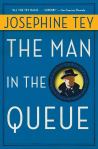
The Man in the Queue (Inspector Alan Grant #1), by Josephine Tey – Let’s get this out of the way first: there are no dinosaurs.  I know, you’d think Alan Grant…  Okay, I can’t keep that up.  The Man in the Queue is the introductory book in a series featuring Inspector Alan Grant of Scotland Yard.  Inspector Grant is tapped to investigate the murder of a man standing in a theatre queue.  The man, who has no identification, was stabbed in the back in the midst of a crowd of potential witnesses, yet no one saw the crime.  How do you track an invisible murderer of a nameless man?  So – I enjoyed this, but I found it hard going at times (blame the pandemic); I think I’ll like Tey’s other works even more.

To War with Whitaker, by Hermione, Countess Ranfurly – Dan and Hermione Ranfurly had been married a year when World War II broke out.  Dan, the Earl of Ranfurly, was a member of a Yeomanry unit, and His Majesty’s Army had an odd rule that regular Army wives could follow their husbands to war, but Yeomanry wives could not.  Mothers, grannies, sisters, aunts, and servants – all welcome, but wives, no.  (And that’s where the title To War with Whitaker comes in.  Whitaker was Lord Ranfurly’s portly valet, who accompanied him to the war.  When Dan announces that they would be joining his unit, Whitaker responds: “To the war, my Lord?  Very good, my Lord.”)  Lady Ranfurly, 25, adventurous, and madly in love with her husband, decides that she’s not staying home, and she essentially bandits the war – and To War with Whitaker is her diary recording the experience.  There’s a lot more to be said about this wonderful book; I will be writing a full review here because I loved every word and am not ready to say goodbye to Hermione, Dan, Whitaker or any of their friends.

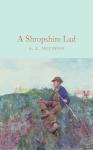
A Shropshire Lad, by A. E. Housman – What I thought I would be reading: 63 poems about nature and the changing of the seasons in a classic English region.  What I actually read: 63 poems about death, murder, executions and war.  All very accomplished, no doubt.  But not what I was really looking for.  I knew there was going to be some death, but I also thought there would be more… I don’t know, cricket with the Vicar?  Clearly the fault lies with me, but if this is on your list, maybe wait for less anxious times.

Wicked Autumn (Max Tudor #1), by G. M. Malliet – Nether Monkslip is the quintessential English village, the kind that you’d do well to avoid according to Crime Reads.  So it should be no surprise that the unpopular head of the local Women’s Institute is murdered in the Village Hall at the “Harvest Fayre.”  The death looks like an accident, but Max Tudor – the handsome Vicar of the village church and ex-MI5 agent – knows better.  So!  I didn’t actually guess the killer on this one, but I got 85% of the way there and I probably would have figured it out had I been reading this book with more than 30% of my attention.  I did like it, and will definitely continue with the series.  The village was a complete cliche, and I loved that.

Well, that does it for another month of quarantine reading.  Despite my plans to read through my Classics Club list, I have not actually dug into many weighty tomes during this time, and I’ve felt decidedly blah about reading in general – I think to the point that I might be experiencing a reading slump.  I’m in good company, I know.  The fact that there are so many books on this list is a testament to how little TV I watch (and that, at least this month, was largely because we only have one TV and someone else is always monopolizing it).  I’m sad that, while there are so many wonderful books on this list, I struggled to pick them up.  It’s always nice to visit with Elizabeth von Arnim, of course, and To War with Whitaker is destined to be one of my favorites of the year.  But this has really been a little bit of a half-hearted month of reading.

What did you read in April?