

Reading is my oldest and favorite hobby. I can’t remember a time in my life when I didn’t love to curl up with a good book. Here are my reads for March, 2020…
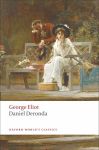 Daniel Deronda, by George Eliot – Eliot’s final novel is often regarded as her masterpiece, although I will confess myself still partial to Middlemarch. I did love this novel, though. In Daniel Deronda, Eliot leaves behind her usual village territory (from epics like Middlemarch as well as shorter fiction such as Silas Marner and Scenes of Clerical Life) for London. Most, although not all, of the action in Daniel Deronda takes place in the capital. The novel follows the loves and very different fortunes of two main characters, the titular Deronda and the striking local beauty Gwendolen Harleth. Gwendolen is fiercely independent but agrees to marry a rich man to provide for her newly-impoverished family; her loveless marriage proves devastating to her mental health and sense of worth, and she leans on Deronda as a moral savior – but Deronda may be too preoccupied with questions about his own history and culture to intervene for Gwendolen before it is too late. Fully reviewed here.
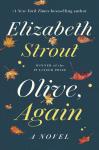 Olive, Again (Olive Kitteridge #2), by Elizabeth Strout – While I’m not trying to keep up with all the buzzy new releases these days, I did want to stay up-to-date with Elizabeth Strout, since I think she’s one of the most talented American writers working today. Olive, Again is – clearly – a return to Crosby, Maine and the world of grouchy but fundamentally good-hearted Olive Kitteridge, retired math teacher and truth-talker. As with Olive Kitteridge, Olive, Again is a series of linked short stories, in all of which Olive appears to varying degrees. As with Olive Kitteridge, I preferred the stories in which Olive is a focal point to those in which she only appears briefly. Strout was at her best when portraying Olive settling into her second marriage, and facing the indignities of aging – but there were a few stories which seemed to mostly be included for shock value (and in which Olive was not a main character), which I didn’t like. Overall, recommended, but some skimming is possible.
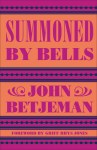 Summoned by Bells, by John Betjeman – Betjeman was a Poet Laureate of the United Kingdom and one of the most recognizable English voices of the twentieth century, and this is his memoir in verse, covering his boyhood through his university years. Betjeman used to get a bad rap for being a bit too Oxbridge, C of E, cricket, tea-and-crumpets – but I think he’s enjoying a moment these days (I came across him first on #bookstagram) and in uncertain, stressful times there’s nothing like a little comfort and nostalgia. I enjoy a good memoir in verse, and this one certainly didn’t disappoint, with evocative descriptions of the churches Betjeman wandered into over the course of his youth (he does enjoy a church), the natural Hampstead landscape of his childhood, his joy in books, and more. It’s a fast read and well worth devoting an hour to.
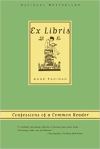 Ex Libris, by Anne Fadiman – I adore books about books – it might be my favorite non-fiction genre? – and Anne Fadiman’s classic Ex Libris has been on my TBR since I read an excerpt (Fadiman’s essay “Marrying Libraries”) in the very first issue of Slightly Foxed. I had such a lovely time over this delightful collection – Fadiman muses over everything from compulsive editing (oh, I know about this so well) to the joys of long words and reading a book in the place where it is set, to a childhood growing up surrounded by books (Fadiman used her father’s complete set of Trollope as building blocks, which she lovingly describes in “My Ancestral Castles.”). I loved every word of Fadiman’s slim collection and am already looking forward to re-reading it one evening.
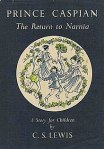 Prince Caspian (The Chronicles of Narnia, #2 in publication order), by C.S. Lewis – We’ve been trying to establish a family tradition of reading a chapter a night from a childhood classic; we get on good stretches in which we remember to do this consistently and then we fall off the wagon for weeks at a time. Because of this falling-off-the-wagon problem, it took us ages to get through Prince Caspian, but we finally finished it. (Steve and I both have fond memories of reading the Chronicles of Narnia as kids, which is why we decided to read the series for family story hour. I think Peanut and Nugget are enjoying the books.) I love Prince Caspian – the scene in which Peter, Susan, Edmund and Lucy explore the ruins of Cair Paravel and finally realize where they are is one of my favorite parts of the entire series. (And the D.L.F.!)
 The Priory, by Dorothy Whipple – As with Jane Austen and Anthony Trollope, I am rationing Dorothy Whipple books because I don’t want to live in a world in which I have read everything Whipple will ever write. (This is why I have not read The Watsons, and why I am slowly making my way through Barchester.) Once I do eventually read all of Whipple’s novels, I suspect The Priory might be my favorite. I cannot resist an English country house story, nor a story about unconventional aristocrats or sisterhood. The Priory is all of these. (Christine and Penelope Marwood, blissfully trotting along through life in their nursery until Christine falls in love and gets married, would find a lot in common with Cassandra and Rose Mortmain, although the Marwood sisters’ stepmother, Anthea, is very different from Topaz.) I adored all of the characters (except Bertha and the Major), but Christine was my favorite – after almost 600 pages, I was sad to say goodbye to her.
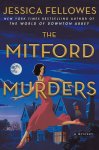 The Mitford Murders (The Mitford Murders #1), by Jessica Fellowes – If the last name Fellowes is ringing a bell, that is because Jessica is the niece of Julian Fellowes, creator of Downton Abbey, Gosford Park, and Belgravia (all of which I love). If anyone was going to write a murder mystery series starring Nancy Mitford, it would be Julian Fellowes’ niece! As expected, The Mitford Murders was fun and frothy – not destined to become a crime classic, but an enjoyable romp. Main character Louisa accepts a job as nursery maid to the Mitford children, and quickly bonds with sixteen-year-old Nancy. When a woman is murdered on a train, Nancy and Louisa team up to solve the crime, of course. I enjoyed this, and will definitely continue on with the series.
 Girl, Woman, Other, by Bernardine Evaristo – The 2019 Booker Prize winner (because I agree with the criticism that The Testaments, enjoyable as it was and much as I like Margaret Atwood’s work, is not in the same league and shouldn’t have shared in the award) was really unusual and an incredible achievement. This collection of sixteen linked stories about black women (some LGBTQ+, some not) was unlike anything I have read before. I was a little worried, picking it up, because I’d heard that “the punctuation was unusual” and I often find that detracts from the reading experience – but in this case, it just made the stories more like poetry than anything else. While it was not exactly a low-stress thing to be reading at the beginning of a pandemic, it was wonderful and I’m so glad that I did read it.
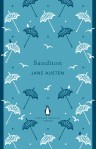 Sanditon, by Jane Austen – I am chipping away at the Jane Austen-penned words I have left to read, sadly. (I’m down to The Watsons and her letters now.) Sanditon was on my classics club list and it was the clear choice for reading as the world turned inside out. (Because while Austen says there is nothing like staying home for real comfort, I say there is nothing like Austen for real comfort when you’ve got to stay home because of a global health crisis.) Austen never finished Sanditon, her portrayal of characters living in and visiting a small seaside town – but even the unfinished novel showcases her wit, her powers of characterization, and her sense of place. I chose not to read one of the versions that were “finished by Another Lady,” because I wanted to set the book down where Austen did, and let the characters live on in my imagination and not someone else’s. Full review (for the Classics Club) to come.
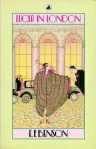 Lucia in London (Mapp & Lucia #3), by E. F. Benson – Still looking for comforting classics to read (because: pandemic) I decided there was no time like the present to dive back into Lucia’s world. Lucia in London opens with Lucia and Peppino bereaved (sort of): Peppino’s elderly aunt has died. Even though Aunt Amy lived in a nursing home (she was gaga, dear) and they never saw her, Lucia and Peppino put on a good show of grief for awhile, then get on with the business of enjoying their inheritance – a doubling of their income, a house in London, and some pearls (but don’t talk about the pearls). Off to London they go, for Peppino OF COURSE, and Lucia promptly takes the town by storm, as only Lucia can do. (The listening-in device! The morsel of Stravinsky! The duchesses – too many duchesses!) Lucia is a hopeless snob, but you can’t help rooting for her. Full review (for the Classics Club) to come.
 Slightly Foxed No. 65: Asking the Right Questions, ed. Gail Pirkis and Hazel Wood – There’s nothing like a new issue of Slightly Foxed. Or, more specifically, there’s nothing like a new issue of Slightly Foxed and a cup of tea – or some good chocolate – for the greatest bookish delight. This latest issue, like all the others, was a joy to read. Turning the heavy cream-colored pages is always a source of comfort, and even if the book being profiled in any given essay isn’t destined to immediately jump to the top of my list, I enjoy reading about what others enjoy reading. On this occasion, I wouldn’t say my TBR grew exponentially, but I loved reading about To War with Whitaker – the latest Slightly Foxed Edition, which I’ve ordered and which I look forward to receiving once the pandemic stabilizes and the Foxes are back at Hoxton Square – and about The Outermost House, one of my favorite pieces of nature writing.
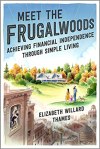 Meet the Frugalwoods: Achieving Financial Independence Through Simple Living, by Elizabeth Willard Thames – I know the Frugalwoods have a dedicated online following, but I just recently started reading their blog and I was curious to learn more about their story. It was a quick read, and enjoyable. It was not a guide to personal finance or a collection of money tips (which many Goodreads reviewers seemed to have been expecting) so a reader who is looking for that sort of thing would be well advised to look elsewhere. This is a memoir of two people who figured out how to save a huge percentage of their incomes at a young age, and put those savings toward the big (and unusual) goal of buying a homestead in rural Vermont. Not for everyone, but I like reading about people who are living all sorts of lives and the Frugalwoods’ story was interesting to me.
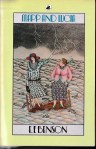 Mapp and Lucia (Mapp & Lucia #4), by E. F. Benson – Finally, finally, the long-awaited cataclysmic encounter of Elizabeth Mapp and Emmeline “Lucia” Lucas! I’ve been waiting four books for these two forces of nature to meet one another, and it was worth the wait. Recently widowed (Nooooo! Peppino! Say it isn’t so!), Lucia is in deep hibernation at The Hurst when the book opens – but not for long. It’s been almost a year, and Lucia’s faithful (most of the time) deputy, Georgie Pillson, takes it upon himself to bring her back into the life of the village. The next major social event is an Elizabethan fete that Daisy Quantock has been planning, and having not been cast as Queen Elizabeth I, Lucia clearly can’t be in the vicinity of Riseholme when it happens. Luckily she has seen a newspaper advertisement for a house to rent in Tilling – and it’s Mallards, Miss Mapp’s strategically situated abode (which was based on E. F. Benson’s house in Rye). And so Mapp and Lucia finally come into contact – like two flints, and there are instant sparks. I think this was my favorite of the series so far; I won’t say any more, because: full review (for the Classics Club) to come.
March – what a strange month it was. We all feel like different people now than we were on March 1, don’t we? This month was heavy on classics, because I’ve been stressed in different ways all month long. When March 1 roared in, I was preparing for a federal jury trial and was anxious and overwhelmed with work. By the end of the month I, like everyone else, was reeling from this crazy, scary, uncertain world situation. It’s clear from my reading over the course of the month – starting with George Eliot and concluding with E. F. Benson – I was looking for solid, comforting reads, for books that I could sink into and forget the world for awhile, and that’s always classics for me. In a month that was full of worry, reading was a highlight, and everything I picked up was good. The highlights, though, have to be E. F. Benson and Jane Austen – naturally. Looking to April, the world situation is getting more frightening by the day, so I predict my book lists will look like more of the same: as familiar and comforting as a well-loved quilt.
How are you holding up? And what books got you through March?
 covered in flour