

Reading is my oldest and favorite hobby. I literally can’t remember a time in my life when I didn’t love to curl up with a good book. Here are my reads for November, 2018…
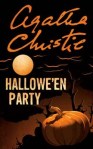
Hallowe’en Party, by Agatha Christie – A fun one to read on Halloween (and for a day or so after, as it turned out). Ariadne Oliver, the celebrated mystery writer, is at a children’s Hallowe’en party when one of the party guests is found murdered. Mrs. Oliver knows that her friend Hercule Poirot can unravel the mystery – but will he solve it in time to prevent the murderer striking again? Agatha Christie always delivers, and this was a blast.
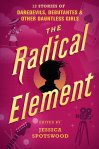
The Radical Element: 12 Stories of Daredevils, Debutantes and Other Dauntless Girls (A Tyranny of Petticoats #2), ed. Jessica Spotswood – I loved the first entry into this series, and The Radical Element delivered exactly the same joys. There were stories of a young Mexican-American woman using magic to pass as white in 1920s Hollywood, a Jewish girl willing to risk everything to learn about her faith, a gay teenager who runs away with the circus, and more. Every story was heartfelt and beautiful.
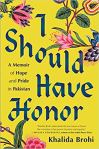
I Should Have Honor: A Memoir of Hope and Pride in Pakistan, by Khalida Brohi – This was a stirring and powerful memoir by a still-young woman who has risked her life over and over again to empower women and girls and to fight the custom of honor killing in Pakistan. I couldn’t stop turning the pages.


The Shooting Party, by Isabel Colegate – I read this for the fall Tea and Tattle book club – to be honest, I was sold when Miranda explained that it inspired Julian Fellowes in creating Downton Abbey and Gosford Park. I could see it, too: the same upstairs/downstairs dramas and complex characters. The Shooting Party was a slim but lovely read, about an eventful gathering of a group of aristocrats for a shooting party at a great house on the eve of World War I.
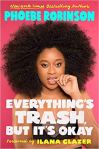
Everything’s Trash, But It’s Okay, by Phoebe Robinson – Meh. So, I really enjoyed Robinson’s first collection of essays, You Can’t Touch My Hair (And Other Things I Still Have To Explain), but Everything’s Trash felt like more of the same. I kept thinking to myself: I feel like I’ve already read this. And there was a weird braggy interlude in the middle about how she met Bono twice and he made her a piece of original artwork.
My So-Called Bollywood Life, by Nisha Sharma – I was excited to read this YA novel about a young girl navigating high school with the help of her favorite Bollywood movies, but it was kind of a let-down. The central storyline revolved around a prophecy that the main character had received as a baby, about marrying someone with a name that starts with “R” who would give her a silver bracelet, so her entire family was super committed to making sure she married her boyfriend Raj, who gave her a silver bracelet because he felt like he had to after hearing so much about the prophecy. And then there was a love triangle, which is my least favorite YA trope ever. It just wasn’t for me.
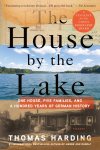

The House By The Lake: One House, Five Families, and A Hundred Years of German History, by Thomas Harding – I loved this. I can never pass up a history told through an interesting lens or with an unusual hook, and The House by the Lake sure delivered. The book begins with Harding visiting a ramshackle, falling-down cottage on the shores of Gross Glienecke Lake – just outside of Berlin – that once belonged to his great-grandparents. Seeking to save the cottage from being razed by the government, he weaves together the house’s fascinating history, from his Jewish great-grandparents, who were forced to leave the house and its contents behind when they fled for England at the beginning of World War II, through the families who either summered or lived there year-round under the brutal East German regime until the fall of the Berlin Wall, and all the way to present day. Harding’s quest to prove the cottage’s historic significance seems quixotic at first, even to his family, but his zest for the mission eventually wins him the support of the local historical society – but will it be enough? You’ll have to read it and find out.
Four Seasons in Rome, by Anthony Doerr – Several years ago, Anthony Doerr received a fellowship to live in Rome and work at an American writers’ collective in the city for a year. He moved his wife and their six-month-old twin boys to the ancient city and they attempted to learn Italian and live as Romans while he worked on a novel about World War II. Unsurprisingly, the book writing does not go well – Doerr spends most of the year nauseatingly exhausted from parenting (been there) and disoriented from the foreignness of Rome – which is fascinating when you know with 20-20 hindsight that the book that was going so badly at the time eventually turned out to be the stunningly beautiful All The Light We Cannot See. This memoir was beautiful too – Doerr is an incredibly evocative writer.
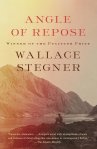
Angle of Repose, by Wallace Stegner – I’ve been meaning to read this since about 2007, when a friend with excellent literary taste told me that Stegner was her favorite writer. (This friend was from Utah originally and had made it her mission to read all the literature of the American West.) Angle of Repose is widely regarded as Stegner’s masterpiece, although it’s not without controversy – part of the book includes letters from the main character, who was inspired by a real historical figure, and Stegner lifted whole letters from that actual figure after her family was kind enough to share them with him for research purposes, and published them in the book. (Whoops.) Anyway, if you’re reading between the lines, you’ve probably guessed that I didn’t love this. Liked it, but didn’t love it. I found the central plot – the marriage of the narrator’s grandparents – to be hard to believe; they were just too different and I understand that divorce wasn’t a “thing” in Victorian times, but meh. I just couldn’t buy into the central relationship because I didn’t find it believable that they were in love in the first place. I was disappointed, because I loved Crossing to Safety (another Stegner) so much – but Angle of Repose fell a little flat for me.
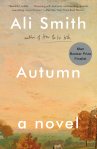
Autumn (Seasonal Quartet #1) by Ali Smith – I wanted to read this book (hailed as the “first Brexit novel”) after seeing it all over my Instagram feed. It makes for gorgeous photographs, but I didn’t love the book. Ali Smith is a genius, no doubt, and I was suitably impressed by the things she did with language. The problem was that I couldn’t lose myself in the story (of an elderly man and his devoted young neighbor) because I was constantly aware that Ali Smith was Doing Impressive Things With Language.
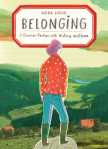
Belonging: A German Reckons With Home and History, by Nora Krug – Soooooooo so so so so good. I absolutely loved this graphic and pictorial family history. Nora Krug, like many Germans of the younger generation, has grown up under the shadow of World War II. Finally, after moving to America and marrying a Jewish man, Krug feels brave enough to confront her family history and ask the question about her grandparents that she’s never been able to get satisfactorily answered: were they Nazis? Krug delves into her family history, and the history of the towns in which they lived, and the result is half-scrapbook, half-graphic memoir – and totally fascinating.
Slightly Foxed No. 59: Manhattan Moments, ed. Gail Pirkis – Just in time for the special 60th issue to arrive on my doorstep, I finished this fall’s Slightly Foxed. It was full of literary delights, as usual.
The Nature Fix: Why Nature Makes Us Happier, Healthier, and More Creative, by Florence Williams – Another one I’ve had on my TBR for awhile; I liked, but didn’t love, The Nature Fix. It was interesting, if a bit more focused on neuroscience than I was expecting – I’d have liked a little psychology or nature writing to mix it up. The one thing that really bothered me was the author’s near-constant ragging on DC. I get it: DC isn’t for everyone, and she moved from Colorado, which is just a different world for someone who likes outdoor adventure (I know, my brother lives there). But one or two complaints about DC (the noise, the air quality, the lack of access to trails, blah, blah, blah – it’s not actually that bad here) would have sufficed to make her point. Complaints in every chapter got tiresome.
WOW, what a busy reading month November was! Part of that was because I changed jobs – I had three days of “funemployment” between gigs, plus ramp-down and ramp-up time on either side of that, when work wasn’t keeping me crazy busy. That time coincided with some disgustingly awful weather, so instead of hiking as I had planned to do with my “funemployment” I spent two entire days on the couch, reading. It was pretty blissful. As for enjoyment, I was all over the place. Belonging was the clear highlight, but I also loved The House By the Lake, The Shooting Party, and Four Seasons in Rome, and a new Slightly Foxed quarterly is never unwelcome. There were some duds, too, but even with those I was enjoying the act of reading, itself, so no regrets. Here’s hoping for a strong finish to the year!
 covered in flour
Hurray! Someone else who didn’t completely love Autumn. I thought I was the only one. You are right, it just didn’t pull me in. The House by the Lake sounds just my cup of tea. I am going to look for a copy of that.
I think you’d definitely enjoy The House by the Lake! I thought it was fascinating, and such a neat lens through which to view history. And yes – not really a fan of Autumn. I appreciated the skill of the writing and all, but it was just lacking for me.